Known originally as the Supermarine N.113, the Scimitar F.1 was a large single-seat, twin-engined naval carrier-borne interceptor fighter and strike aircraft for the Royal Navy. The Royal Navy’s first single seat fighter capable of supersonic flight.
The Scimitar has mid-set sweptback wings, with slight anhedral, and dog-tooth leading edges. Blown trailing edge flaps are fitted. There are swept back tail surfaces with 10 degrees of anhedral on the tailplane. Conventional ailerons, rudder and one-piece all-moving tailplane are fitted. Engine air intakes are on each side of the fuselage by the cockpit. A tricycle undercarriage has single wheels on each unit, the mains retracting into the fuselage and the nosewheel retracts rearward. Internal tanks can be supplemented by four underwing tanks of up to 800 Imp.Gal total capacity. A flight refuelling probe can be fitted on the starboard side of the nose. The original armament was four 30mm Aden guns.
1957
The prototype flew for the first time on 19 January 1956 and deck-landing trials were successfully completed on HMS Ark Royal in July 1957.
Scimitar F.1
The first of 76 production aircraft flew on 11 January 1957 and the first operational squadron (No 803) was formed in June 1958 and embarked on HMS Victorious in the following September.
Scimitar F.Mk 1 Engine: 2 x Rolls-Royce Avon 202 turbojet, 50.04kN / 11,250 lb Max take-off weight: 15513 kg / 34200 lb Empty weight: 10869 kg / 23962 lb Wingspan: 11.33 m / 37 ft 2 in Length: 16.87 m / 55 ft 4 in Height: 5.28 m / 17 ft 4 in Wheel track: 14 ft 1 in Wing area: 45.06 sq.m / 485.02 sq ft Max. speed: 1143 km/h / 710 mph Cruise speed: 14020 km/h / 8712 mph Ceiling: 14020 m / 46000 ft Range: 2288 km / 1422 miles Armament: 4 x 30mm cannons, 4 x 454kg bombs or missiles Crew: 1
Earlier experience with the T-58VD design, manufacturing and flight testing gave the design bureau the capability to design a STOL aircraft, designated T6-1, which became the first new-generation attack aircraft. Conceptual design work began in 1965. For the first time in the history of the Design Bureau, the loft technique was used for structural assembly coordination.
In one of the design rooms was a 49 ft 3 in (15 m) long drawing board, installed vertically and covered with a reference grid, on which a reduced scale aircraft side view was drawn. This drawing included external aircraft lines, air ducts, boundary layer air bleed wedges, additional air intakes and nozzle units, fuel tank contours, engine contours, radio equipment, aircraft system units contours, aircraft and engine control circuits, electrical wiring, hydraulic and pneumatic pipelines, fuel pipelines and ventilation system ducts and some structural members, including the landing gear assemblies in a retracted position. In addition, all of this information was plotted on fuselage cross section lofts in full-scale.
A T6-1 prototype was manufactured by the summer of 1967. It flew for the first time, with Vladimir Ilyushin at the controls, on July 2. It was planned to display the aircraft at the Domodedovo air show. However, the aircraft was not fully developed and it did not fly at Domodedovo.
In 1969, after intensive tests, the R-27F2-300 cruise engines of the T6-1 were replaced by Arkhip Lyulka AL-21 Fs. For this purpose, the rear fuselage was reworked. This involved not only the external contours but also the structure. The air brake panels, which had been placed on the rear fuselage, were removed. As a result of the flight tests, to improve directional stability characteristics, the wing tips were turned down and ventral strakes were installed on the fuselage bottom.
Because of the radar designer’s requirement, the fuselage nose radome dimensions were changed. Initially, the radome dimensions were chosen to meet the required supersonic performance. The radome became shorter and more obtuse. Tests proved the aircraft, with the new radome, to be capable of the required speed.
Sukhoi T6-1A more precise definition of the requirements for the new generation of attack aircraft along with the T-58VD and T6-1 flight test results and the theoretical analysis of twelve different aerodynamic shapes resulted in the Chief Designer abandoning the hybrid powerplant. Thus began the design of a variable-geometry attack aircraft. Further tests of aircraft with lift engines were stopped and the T6-1 was used as a test bed for radio equipment. From 1967 until 1970, the aircraft flew approximately 120 test flights. From 1971 until 1974, it was used more efficiently and flew more than 200 flights. In 1974 its service career was over. Today, the composite powerplant T6-1 prototype is an exhibit at the aircraft museum in Monino.
The Sukhoi PAK FA is a twin-engine jet fighter being developed by Sukhoi OKB for the Russian Air Force. The first prototype flew in 2010.
T-50
In 1979, the Soviet Union outlined a need for a next-generation aircraft intended to enter service in the 1990s. The project was designated the I-90 (Russian: Истребитель, Istrebitel, “Fighter”) and required the fighter to have substantial ground attack capabilities and would eventually replace the MiG-29s and Su-27s in frontline tactical aviation service.
The subsequent programme resulted in Mikoyan’s selection to develop the MiG 1.44. The MiG 1.44 was subsequently cancelled and a new programme for a next-generation fighter, PAK FA, was initiated. In 2002, Sukhoi was selected over Mikoyan as the winner of the PAK FA competition and would lead the design of the new aircraft.
To reduce the PAK FA’s developmental risk and spread out associated costs, as well as to bridge the gap between it and older previous generation fighters, some of its technology and features, such as propulsion and avionics, were implemented in the Sukhoi Su-35S fighter, an advanced variant of the Su-27. The Novosibirsk Aircraft Production Association (NAPO) is manufacturing the new multi-role fighter at Komsomol’sk-on-Amur along with Komsomolsk-on-Amur Aircraft Production Association (KnAAPO), and final assembly is to take place at Komsomol’sk-on-Amur. Following a competition held in 2003, the Tekhnokompleks Scientific and Production Center, Ramenskoye Instrument Building Design Bureau, the Tikhomirov Scientific Research Institute of Instrument Design (NIIP), the Ural Optical and Mechanical Plant (UOMZ) in Yekaterinburg, the Polet firm in Nizhny Novgorod and the Central Scientific Research Radio Engineering Institute in Moscow were selected for the development of the PAK-FA’s avionics suite. NPO Saturn is the lead contractor for the interim engines; Saturn and MMPP Salyut were to compete for the definitive second stage engines.
The Su-57 has a blended wing body fuselage and incorporates all-moving horizontal and vertical stabilizers; the vertical stabilizers toe inwards to serve as the aircraft’s airbrake. The aircraft incorporates thrust vectoring and has adjustable leading–edge vortex controllers (LEVCONs) designed to control vortices generated by the leading edge root extensions, and can provide trim and improve high angle of attack behaviour, including a quick stall recovery if the thrust vectoring system fails. The advanced flight control system and thrust vectoring nozzles make the aircraft departure-resistant and highly maneuverable in both pitch and yaw, enabling the aircraft to perform very high angles of attack maneuvers such as the Pugachev’s Cobra, along with doing flat rotations with little altitude loss. The aircraft’s aerodynamics and engines enable it to achieve Mach 2 and is also capable of flying supersonic flight without afterburners, or supercruise. The Su-57 has a climb rate ranging from 330 m/s (1,100 ft/s) to 361 m/s (1,180 ft/s).
Weapons are housed in two tandem main weapons bays between the engine nacelles and smaller bulged, triangular-section bays near the wing root. Advanced engines and aerodynamics enable the Su-57 to supercruise, sustained supersonic flight without using afterburners. Combined with a high fuel load, the fighter has a supersonic range of over 1,500 km (930 mi), more than twice that of the Su-27. Extendible refueling probe is available to further increase its range. In the Su-57’s design, Sukhoi addressed what it considered to be the F-22’s limitations, such as its inability to use thrust vectoring to induce roll and yaw moments and a lack of space for weapons bays between the engines, and complications for stall recovery if thrust vectoring fails.
The airframe incorporates planform edge alignment to reduce its radar cross-section (RCS); the leading and trailing edges of the wings and control surfaces and the serrated edges of skin panels are carefully angled to reduce the number of directions the radar waves can be reflected. Weapons are carried internally in weapons bays within the airframe and antennas are recessed from the surface of the skin to preserve the aircraft’s stealthy shape. The infrared search-and-track sensor housing is turned backwards when not in use and its rear is treated with radar-absorbent material (RAM) to reduce its radar return. To mask the significant RCS contribution of the engine face, the partial serpentine inlet obscures most of the engine’s fan and inlet guide-vanes (IGV). The production aircraft incorporates radar-absorbing materials on the walls of the air ducts and radar blockers in front of the engine fan to hide it from all angles. The fuselage of the aircraft is to also use RAM to absorb radar emissions and reduce the reflection back to the source.
The combined effect of airframe shape and RAM of the production aircraft is estimated to have reduced the aircraft’s RCS to a value thirty times smaller than that of the Su-27. Sukhoi’s patent for the Su-57’s stealth features cites an average RCS of approximately 0.1 to 1 sq.m, compared to the Su-27’s of approximately 10 to 15 sq.m. Like other stealth fighters, the Su-57’s low observability measures are chiefly effective against high-frequency (between 3 and 30 GHz) radars, usually found on other aircraft. The effects of Rayleigh scattering and resonance mean that low-frequency radars, employed by weather radars and early-warning radars are more likely to detect the Su-57 due to its size. Such radars are also large, susceptible to clutter and are less precise.
Pre-production T-50 and initial production batches of the Su-57 were to use interim engines, a pair of NPO Saturn izdeliye 117, or AL-41F1. Closely related to the Saturn 117S engine used by the Su-35S, the 117 engine is a highly improved and uprated variant of the AL-31 that powers the Su-27 family of aircraft. The 117 engine produces 93.1 kN (21,000 lbf) of dry thrust, 147.1 kN (33,067 lbf) of thrust in afterburner, and has a thrust to weight ratio of 10.5:1. The engines have full authority digital engine control (FADEC) and are integrated into the flight control system to facilitate maneuverability and handling.
The two 117 engines incorporate thrust vectoring (TVC) nozzles whose rotational axes are each canted at an angle, similar to the nozzle arrangement of the Su-35S. This configuration allows the aircraft to produce thrust vectoring moments about all three rotational axes, pitch, yaw and roll. Thrust vectoring nozzles themselves operate in only one plane; the canting allows the aircraft to produce both roll and yaw by vectoring each engine nozzle differently. The engine inlet incorporates variable intake ramps for increased supersonic efficiency and retractable mesh screens to prevent foreign object debris being ingested that would cause engine damage. The 117 engine is to also incorporate infrared and RCS reduction measures. In 2014, the Indian Air Force openly expressed concerns over the reliability and performance of the 117 engines; during the 2011 Moscow Air Show, a T-50 suffered a compressor stall that forced the aircraft to abort takeoff.
The T-50 prototype has two tandem main internal weapon bays each approximately 4.6 m (15.1 ft) long and 1.0 m (3.3 ft) wide and two small triangular-section weapon bays that protrude under the fuselage near the wing root. Vympel was developing two ejection launchers for the main bays: the UVKU-50L for missiles weighing up to 300 kg (660 lb) and the UVKU-50U for ordnance weighing up to 700 kg (1,500 lb).
The main bays can also accommodate air-to-ground missiles as well as multiple 250 kg (550 lb) KAB-250 or 500 kg (1,100 lb) KAB-500 precision guided bombs. For missions that do not require stealth, the Su-57 can carry stores on its six external hardpoints.
The aircraft has an internally mounted 9A1-4071K (GSh-30-1) 30 mm cannon near the right LEVCON root. The cannon has a 50 kg weight, and can fire up to 1,800 rounds per minute. The cannon can fire blast-fragmentation, incendiary and armor-piercing tracer rounds and is effective against even lightly armored ground, sea and aerial target up to 800 m for aerial target and 1,800 m for ground target. The cannon is equipped with autonomous water cooling system, where water inside barrel jacket vaporized during operation.
The aircraft canopy is made of composite material and 70-90 nm thick metal oxide layers with enhanced radar wave absorbing to minimize the radar return of the cockpit by 30% and protect the pilot from the impact of ultraviolet and thermal radiation.
The Su-57 has a glass cockpit with two 38 cm (15 in) main multi-functional LCD displays similar to the arrangement of the Su-35S. Positioned around the cockpit are three smaller control panel displays. The cockpit has a wide-angle (30° by 22°) head-up display (HUD). Primary controls are the joystick and a pair of throttles. The aircraft uses a two-piece canopy, with the aft section sliding forward and locking into place. The canopy is treated with special coatings to increase the aircraft’s stealth.
The Su-57 employs the NPP Zvezda K-36D-5 ejection seat and the SOZhE-50 life support system, which comprises the anti-g and oxygen generating system. The 30 kg (66 lb) oxygen generating system will provide the pilot with unlimited oxygen supply. The life support system will enable pilots to perform 9-g maneuvers for up to 30 seconds at a time, and the new VKK-17 partial pressure suit will allow safe ejection at altitudes of up to 23,000 m (75,000 ft). In November 2018, the system is said to be at the final stage of test -the stage of state flight tests- and the test pilots are already flying in this equipment. The pilot gear also consisted of a digital helmet which connected to on-board photo and video cameras to improve pilot’s situational awareness. It also features pupil’s movement detection system to allow automatic targeting unlike previous Soviet fighters. There also a survival kit consisting a pan, antenna, signal mirror, 16 cubes of sugar, first aid kit, two match boxes, a signal pistol with charges, 1.5-liter bottle of water, machete knife, radio beacon, and portable radio. The pilot could use the survival kit’s container as a boat or water-proof sleeping bag if necessary.
The main avionics systems are the Sh121 multifunctional integrated radio electronic system (MIRES) and the 101KS Atoll electro-optical system.
The Sh121 consists of the N036 Byelka radar system and L402 Himalayas electronic countermeasures system.
On 8 August 2007, Russian Air Force Commander-in-Chief (CinC) Alexander Zelin was quoted by Russian news agencies that the programme’s development stage was complete and construction of the first aircraft for flight testing would begin, and that by 2009 there would be three fifth-generation aircraft ready. The prototype’s maiden flight was repeatedly postponed from early 2007 after encountering unspecified technical problems. In August 2009, Alexander Zelin acknowledged that problems with the engine and in technical research remained unsolved. In 2009, the aircraft’s design was officially approved. The fighter is designed to have supercruise, supermaneuverability, stealth, and advanced avionics to overcome the prior generation fighter aircraft as well as ground and naval defences. The Su-57 is intended to succeed the MiG-29 and Su-27 in the Russian Air Force. On 28 February 2009, Mikhail Pogosyan announced that the air-frame was almost finished and that the first prototype should be ready by August 2009. On 20 August 2009, Pogosyan said that the first flight would be by year’s end. Konstantin Makiyenko, deputy head of the Moscow-based Centre for Analysis of Strategies and Technologies said that “even with delays”, the aircraft would likely make its first flight by January or February, adding that it would take five to ten years for commercial production.
In 2007, Russia and India agreed to jointly develop the Fifth Generation Fighter Aircraft Programme (FGFA) for India. In early 2018 India pulled out of the FGFA project, which it believed did not meet its requirements for stealth, combat avionics, radars and sensors by that time. This news lead some observers to question the future of the whole Su-57 project. The izdeliye 30 powerplant is designed to be a drop-in replacement for the 117 with minimal changes to the airframe.
The first taxi test was successfully completed on 24 December 2009. Flight testing began with T-50-1, the first prototype aircraft, on 29 January 2010. Piloted by Sergey Bogdan, the aircraft’s 47-minute maiden flight took place at KnAAPO’s Dzemgi Airport in the Russian Far East. The first production aircraft was expected to be delivered in 2019 with a second to follow in 2020.
On the first prototype, composites comprise 25% of the structural weight and almost 70% of the outer surface. Second stage prototype was to increase the usage of composite material, as well as stronger airframe, elongated tail, wider wingspan and the possibility to install newer engines.
Sukhoi T-50, 2010
The second aircraft was to initially start flight testing in late 2010; this was delayed until early 2011. On 3 March 2011, the second prototype, T-50-2, completed a 44-minute test flight. The first two prototypes lacked radar and weapon control systems. On 14 March 2011, the fighter achieved supersonic flight at a test range near Komsomolsk-on-Amur. The T-50 was displayed publicly for the first time at the 2011 MAKS Airshow. On 3 November 2011, the fighter reportedly performed its 100th flight. More than 20 test flights were made in the next nine months.
In 2011, the Russian Defence Ministry planned on purchasing the first 10 evaluation aircraft after 2012 and then 60 production standard aircraft after 2016. In December 2014, the Russian Air Force planned to receive 55 fighters by 2020. Russian Deputy Minister of Defence Yury Borisov stated in 2015 that the Air Force would slow production, reduce its initial order to 12 fighters, and retain large fleets of fourth-generation fighters due to the nation’s economy.
T-50 at the MAKS 2011 air show
On 22 November 2011, the third prototype, T-50-3, took its first flight from KnAAPO’s airfield in Komsomolsk-on-Amur, piloted by Sergey Bogdan. The aircraft spent over an hour in the air, and was subjected to basic stability and power-plant checks. It differs from the other prototypes by lacking a pitot tube. At this time all 14 test aircraft were expected to fly by 2015. T-50-3 was the first prototype to fly with an AESA radar. Originally scheduled for the end of 2011, these flights occurred in August 2012, and showed performance comparable to existing radars.
The fourth prototype had its first flight on 12 December 2012 and joined the other three aircraft in testing near Moscow a month later. By the end of 2013, five prototypes were flown, with the fifth prototype having its first flight on 27 October 2013; with this flight the programme has amassed more than 450 flights. The first aircraft for State testing was delivered on 21 February 2014.
The 929th State Flight Test Centre (GLITS) received its first T-50 prototype for further testing and state trials in March 2014, and external weapon trials started in May 2014.
On 10 June 2014, the fifth flying prototype, aircraft T-50-5, was severely damaged by an engine fire after landing. The pilot managed to escape unharmed. Sukhoi stated that the aircraft will be repaired, and that the fire “will not affect the timing of the T-50 test program”.
T-50
On 8 February 2018, then Deputy Minister of Defence Yury Borisov said that the first stage of state trials had been concluded and that the combat trials were on schedule. He also reported that the contract for an initial batch of 12 aircraft was to be signed in 2018. First two serial units were ordered in August 2018, with term of delivery by 2020. State trials were to be complete in 2019.
The fifth prototype, T-50-5 hull number 055, was severely damaged by an engine fire after landing in June 2014. The aircraft was returned to flying condition after cannibalizing components from the unfinished sixth prototype.
The sixth prototype first flew on 27 April 2016.
On 5 December 2017, the first flight of the second Su-57 prototype (T-50-2, bort no. 052) fitted with the izdeliye 30 engine took place at the Gromov Flight Research Institute. The 17–minute test flight was carried out by Sergei Bogdan, Sukhoi chief test pilot. The izdeliye 30 engine was installed on the port-side engine position while the izdeliye 117 engine remained on the starboard side. The izdeliye 30 features a new serrated nozzle compared to flat one on 117, and is slightly shorter than the izdeliye 117 nozzle.
On 21 February 2018, two Su-57s were spotted landing at the Russian Khmeimim air base in Syria. The aircraft were deployed along with four Sukhoi Su-35 fighters, four Sukhoi Su-25s, and one Beriev A-50 AEW&C aircraft. Three days later two more Su-57s were reported to have arrived in Syria. On 1 March 2018, the Russian Defence Minister Sergey Shoygu confirmed that the two Su-57s spent two days in Syria and successfully completed a trials program, including combat trials during which parameters of weapons work were monitored. On 25 May 2018, the Russian Defence Ministry revealed that during the February 2018 deployment to Syria, a Su-57 fired a cruise missile in combat, likely a Kh-59MK2.
On 18 November 2018, the Russian Defence Ministry posted a video of the fighters’ flights on Twitter, and announced that Su-57 performed 10 flights during its trip to Syria. However, the video did not specify when the test flights took place.
In April 2018, it was reported that India is withdrawing from the program. India has become increasingly disappointed with the project’s progress after years of negotiations, delays, and struggles with Russia. India is also not satisfied with the capabilities of Su-57, the basis of the FGFA with one of the main issues being the Su-57’s insufficient stealth design.
117 engine compressor stall at MAKS-2011
On 22 August 2018, during the International Military-Technical Forum «ARMY-2018», the Russian Defence Ministry and the JSC Sukhoi signed the first contract for delivery of two serial Su-57 fighters. The deliveries of the first two such aircraft are scheduled for 2019 and 2020, respectively.
In January 2019, the third flyable Su-57 prototype (bort. no 053) was being actively used as a flying laboratory for testing of onboard radio-electronic systems of the new sixth-generation Sukhoi Okhotnik UCAV.
On 28 March 2019, the export version of the Su-57, dubbed Su-57E, “E” for Eksportny (“Export”), was first promoted to international customers during the 2019 Langkawi International Maritime and Aerospace Exhibition. The aircraft was officially unveiled at the 2019 MAKS International Aviation and Space Salon.
On 15 May 2019, Russian President Vladimir Putin announced that 76 aircraft will be purchased and delivered to the Air Force by 2028. This came after the price of the Su-57 and equipment was reduced by 20%. The contract for the 76 aircraft was formally signed on 27 June 2019 at the International Military-Technical Forum «ARMY-2019».
Russia’s Sukhoi Su-57, entered serial production under the terms of a contract signed June 2019 United Aircraft Corporation was to produce 76 Su-57s, with the first jet likely to enter service before the end of 2019. JSC Sukhoi started the serial production of the aircraft in late July 2019.
The Su-57 will also be a launch platform for the Kinzhal (“Dagger”) hypersonic missile.
The Su-57 entered service with the Russian Air Force in December 2020 after years of testing under its prototype designation, T-50. It boasts advanced avionics, supercruise capability, and a design intended to minimize its radar signature.
Russian state media and defense officials have claimed its RCS falls between 0.1 and 1 square meter.
T-50-1 Fuselage number 051 First flyable prototype; first flight on 29 January 2010.
T-50-2 Fuselage number 052 Second flyable prototype; first flight on 3 March 2011, first supersonic flight on 24 March. First prototype flight-tested with an izdeliye 30 engine, first flight on 5 December 2017.
T-50-3 Fuselage number 053 Third flyable prototype; first flight on 22 November 2011. In 2012, became the first prototype to be equipped with AESA radar, first tested in flight on 8 August 2012.
T-50-4 Fuselage number 054 Fourth flyable prototype, and the first one equipped with the complete set of avionics; first flight on 12 December 2012.
T-50-5 / T-50-5R Fuselage number 055 Fifth flyable prototype, first flight on 27 October 2013. Heavily damaged by fire in June 2014, repaired and renamed to T-50-5R, first flight after repairs on 16 October 2015.
T-50-6 Cannibalized for parts to repair T-50-5.
T-50-6-1 Second-stage prototype for static ground testing.
T-50-6-2 (also called T-50-6) Fuselage number 056 Sixth flyable prototype (first flyable second-stage prototype); first flight on 27 April 2016. The fuselage cover panels are partially replaced by composite materials. The rear part of the fuselage (in which the EW complex is located) was elongated, the shape of the lower fuselage in the tail section, the hatches and airbleed doors were also changed.
T-50-8 Fuselage number 058 Seventh flyable prototype (second flyable second-stage prototype); first flight on 17 November 2016.
T-50-9 Fuselage number 509 Eighth flyable prototype (third flyable second-stage prototype); first flight on 24 April 2017. Testing final version of avionics intended for serial production.
T-50-10 Fuselage number 510 Tenth flyable prototype, first flight on 23 December 2017. It is supposed to be the last prototype.
T-50-11 Fuselage number 511 Ninth flyable prototype, first flight on 6 August 2017. Testing version of the airframe intended for serial production.
T-50 Engines: 2 × Saturn AL-41F1 (initial production) turbofans with thrust vectoring, 93.1 kN (20,900 lbf) thrust each dry, 147.2 kN (33,100 lbf) with afterburner 2 × izdeliye 30 (later production) turbofans with thrust vectoring, 107.9 kN (24,300 lbf) thrust each dry, 176.6 kN (39,700 lbf) with afterburner Wingspan: 13.95 m (45 ft 9 in) Length: 19.8 m (65 ft 0 in) Height: 4.74 m (15 ft 7 in) Wing area: 78.8 sq.m (848 sq ft) Empty weight: 18,000 kg (39,683 lb) Typical mission weight, 29,270 kg (64,530 lb) at full load Max takeoff weight: 35,000 kg (77,162 lb) Fuel capacity: 10,300 kg (22,700 lb) internally Maximum speed: Mach 2 (2,120 km/h; 1,320 mph) at altitude Supercruise: Mach 1.6 (1,710 km/h; 1,060 mph) at altitude Range: 3,500 km (2,200 mi, 1,900 nmi) subsonic, 4,500 km from 2 outboard fuel tanks Supersonic range: 1,500 km (930 mi, 810 nmi) Service ceiling: 20,000 m (66,000 ft) g limits: +9.0 Wing loading: 317 kg/sq.m (65 lb/sq ft) typical mission weight Thrust/weight: AL-41F1: 1.02 (1.19 at typical mission weight) izdeliye 30: 1.15 – 1.2 (1.36 at typical mission weight) Guns: 1 × 30 mm Gryazev-Shipunov GSh-30-1 autocannon in right LEVCON root Hardpoints: 12 hardpoints (6 × internal, 6 × external) Crew: 1
Engines: 2 x 147 kN AL-41F1 turbofans Max Take-off weight: 37000 kg / 81571 lb Empty weight: 18500 kg / 40786 lb Wingspan: 14 m / 46 ft 11 in Length: 19.8 m / 66 ft 0 in Height: 6.05 m / 20 ft 10 in Wing area: 78.8 sq.m / 848.20 sq ft Max. speed: 2100-2500 km/h / 1305 – 1553 mph Ceiling: 20000 m / 65600 ft Rate of climb: 350 m/sec
The Sukhoi SuperJet 100 made its international airshow debut at Paris in 2009. Avialeasing ordered 24 of the regional jets while Hungary’s Malev signed an MoU for 30.
The 1984 upgrade of Su-25 attack plane. Evolution included Su-25T (anti-tank, flew on August 17, 1984), and Su-25TM (modified, flew in 1996). Externally it differs by hunch behind the cockpit and TV sight in the nose.
Su 39 Shturmovik Engines: 2 x Soyuz R 195, 43292 N Length: 50 ft 11 in / 15.33 m Height: 17 ft 1 in / 5.2 m Wingspan: 47 ft 1 in / 14.52 m Wing area: 30.10 sq.m / 323.99 sq ft Max take off weight: 47407.5 lb / 21500.0 kg Max. speed: 513 kt / 950 km/h / 590 mph Landing speed : 127 kt / 235 km/h Take off distance : 2297 ft / 700 m Landing distance : 2297 ft / 700 m Initial climb rate : 11417 ft/min / 58.0 m/s Service ceiling: 32800 ft / 10000 m Maximum range: 1350 nm / 2500 km Range (max. weight) : 140 nm / 260 km Crew: 1 Armament: 1x 30mm GSh-2-30 Gun, 6000kg ext 11pods
The designation Su-37 was first used to market a truely multi-role version of the Su-35 (Su-27M) to the United Arab Emirates (UAE) air force. The Su-37MR (MR for multi-role) that was offered would have French-built instrumentation equipment and a number of changes in the avionics. Sukhoi Design Bureau and KnAAPO export company selected the series produced T10M-11 (Su-27M pre-production test aircraft) for conversion, which had already been testing the multi-mode N011M phased array radar. However the UAE preferred the Mirage 2000-9 and it was decided to use the T10M-11 as flying test-bed for the engine thrust vector control (TVC) system. The Su-37 designation was retained.
The TVC system enables the aircraft to direct its thrust produced by the AL-31F engines in a different angle than the flight path on the vertical axis. In high angles of attack, normally an aircraft would stall and the pilot would lose control because of the disrupted airflow over the control surfaces. Also at very low airspeeds, the control surfaces no longer function effectively. With TVC the aircraft can still be controlled under these circumstances by using the engines thrust instead of the airflow.
The new Su-37 made its first flight fitted with the TVC engines on 2 April 1996 by Sukhoi’s test pilot Yevgeny Frolov. The aircraft was nicknamed Terminator.
The Su-37’s TVC system is integrated into the aircraft’s fly-by-wire system, giving the aircraft controllability at beyond-critical angles of attack and near-zero speeds. The Su-37 was able of performing aerobatics unmatched by any contemporary fighter. Examples include vertical somersault while retaining the flight path (Frolov’s chakra), forced tight radius turns, controlled spin. This super-manoeuvrability stunned the public at the Farnborough airshow in September 1996, Le Bourget in June 1997 and MAKS in August of 1997.
The Su-37 engine nozzles swivelled only vertically (2D vectoring). Lyulka-Saturn further developed the vectoring nozzle which resulted in the AL-31FP thrust vector control engines capable of moving in both vertical and horizontal axes (3D vectoring). The AL-31FP engine was offered to foreign customers on more advanced developments of the Su-30MK such as the Su-30MKI of the Indian Air Force and as an option for customized versions of the earlier Su-35 ‘Super’ Flanker.
The Su-37’s life ended when T10M-11 (serial 711) was lost in a crash on flying a ferry flight in Russia. The aircraft was not fitted with the TVC engines at the time of the crash. No other Su-27Ms have been converted to Su-37 specifications, nor has the Su-37 design entered production. The Su-37 was never an official designation recognized by the Russian Air Force. The crash of 711 effectively means the end of the Su-37 as we have known since 1996. The possibility remains that the designation Su-37 will be re-used in the future for other Flanker derivatives. Reportedly, localized Su-35 (Su-27BM) airframes for the Russian Air Force will re-use the Su-37 designation.
Su-37 Terminator Powerplant: two 142 kN (31,924 lb st) Saturn Lyul’ka AL-31FU TVC afterburning turbofans Length 22.183m (72 ft 9 in) Height 6.43m (21 ft 5 in) Wing span 14.7m (48 ft) Empty weight 18400 kg (40,564 lb) Max Take-Off Weight 34000 kg (74,956 lb) Max level speed high altitude Mach 2.35 / 2500 km/h / 1,553 mph Max level speed sea level 1400 km/h / 870 mph Service ceiling 18,000m (54,000 ft) Armament: one GSh-301 30mm cannon with 150 rounds Bombload: 8000 kg (17,637 lb) Hardpoints: 12
The Su-27M (factory designation T-10M) was conceived as a new upgraded variant of the Su-27 ‘Flanker’ incorporating a true air-to-surface capability. Although the capability to carry air-to-surface weapons had been added to the baseline Su-27S, it was limited to ‘dumb’ bombs and unguided rockets. The Su-27’s fire control system lacked a dedicated ground target acquisition and identification capability. Although Su-27M remained the Russian military designation, the Su-27M later received the Su-35 designation to enter the global fighter market. Having failed to attract any orders for the Su-35 between 1992 and 2002, Sukhoi started a new development program for the modernization of the single-seat Su-27 in 2002 under the bureau/factory designation of T-10BM (Bolshaya Modernizatsiya – Big Modernization). This latest Flanker derivative also aimed at the export market retained the Su-35 designation of its predecessor, despite significant differences between the two Flanker derivatives.
The Su-27M was equipped with the upgraded RLSU-27 radar system. The system was composed of the new forward-looking N011 radar with slotted-array and the smaller N012 rear-looking radar, the latter is located in the central tailboom. Compared to the RLPK-27 system with the N001 radar of the basic Su-27 variants, the RLSU-27 system offered extended target acquisition range, air-to-surface stand-off attack capability, simultaneous tracking of more targets, surveillance and tracking of targets in the rear hemisphere and improved counter ECM. The new radar system also provided terrain-mapping, enabling nap-of-the-eartch (NOE) flying and obstacle avoidance.
Later it was concluded that the slotted-array would be outdated soon, and a phased array variant of the N011 radar, designated N011M, was fitted to the Su-27M. The phased array enabled a greater radar range, wider zones of tracking and engagement, increase in number of simultaneously tracked and engaged targets, and the employment of more advanced weapons.
In addition to the radar, the Su-27M featured other advancements in its avionics suite compared to the Su-27. New components were the electro-optical sighting/navigation system, communications suite, instrument guidance equipment, new FBW system, IFF and digital computer. The aircraft was equipped with an advanced self-defence suite consisting of new RWR systems, Sorbtsiya ECM pods, and APP-50 chaff/flare dispenser.
The instrument panel layout was changed to accomodate three high-res multifuction monochrome CRT displays and an improved HUD, reducing the number of electro-mechanical instruments. The Su-35 was also offered with multifunction colour LCD displays. The IRST sensor was moved to the right off the line of symmetry to improve visibility from the cockpit. The ejection seat was elevated and declined at 30 degrees to enable the pilot to better withstand high G manoeuvering. The pilot would wear a helmet with the Shchel-3UM helmet-mounted target designator.
The Su-27M airframe incorporated a new nose section, new central tailboom, canards, and uprated AL-31FM engines. The wings panels were fitted with larger fuel cells and the enlarged fins have internal fuel cells as well increasing the aircraft’s combat radius. Furthermore the Su-27M was fitted with a retractable in-flight refueling probe and the provision to carry two 2,000-litre underwing drop tanks to further extend its range. The aircraft’s structure and undercarriage was strengthened to cope with the increased weight of the aircraft caused by the new equipment. The single nose wheel was replaced by two smaller wheels.
The new systems enabled the Su-27M to be capable of using modern air launched weapons. The most important addition for the air-to-air role was the medium-range active radar homing R-77 (export designation is RVV-AE) air-to-air missile, the Russian equivalent of the AIM-120 AMRAAM. Up to twelve of these missiles could be carried or ten when equipped with wingtip ECM pods. The Su-27M retained the capability to be armed with the older R-27 semi-active radar, R-27E IR homing medium-range missiles as well as the short-range R-60 and R-73 IR homing missiles. All of which have since been developed into more effective versions.
These new systems and weapons capabilities made the Flanker a true multi-role fighter. Following the collapse of the Soviet Union, the Su-27M development slowed down and prospects of any significant production for the Russian air force soon vanished. Owing to its true multi-role capability, large action radius and reasonable price tag, the Su-27M was considered a good candidate for export. The Su-27M designated Su-35 was first shown at Farnborough international air show in 1993. Early attempts included the Su-35 based Su-37MR, which was marketed to the United Arab Emirates (UAE)). After the initial series production of three Su-27Ms had been completed for state trials, the Komsomolsk-on-Amur aircraft manufacturing association (KnAAPO) suspended production and refocused on meeting the requirements of possible export customers. Among the customization options was the possibility to equip the Su-35 with AL-31FP TVC engines, which were developed following the successful Su-37 trials with the first generation of AL-31FU TVC engines. Other improvements for the export Su-35 also included an open architecture avionics suite incorporating the latest digital computers and display systems.
Su-35
Another step towards meeting future customer requirements was to develop a twin-seat combat trainer variant of the Su-35. Sukhoi and KnAAPO developed the Su-35UB. The first Su-35UB prototype (bort number 801) built by KnAAPO made its first flight on August 7, 2000. It was first shown at the MAKS 2003 air show and subsequently served as a technology demonstrator and test aircraft for various avionics, including the Zhuk-MSE radar.
Despite efforts by Sukhoi and KnAAPO to market the Su-35, it did not receive any orders. The Su-35 had been considered by a number of nations for their next generation fighter program. These include South Korea, Singapore, Australia and Brazil. Apart from Brazil, the Su-35 failed to get shortlisted by these countries.
Brazil however was forced to postpone the decision, but had shortlisted the Su-35 together with the Mirage 2000BR and the Saab Gripen initially. Sukhoi/KnAAPO introduced the designation Su-35BR for the customized Su-35s that could be developed for Brazil. Before completition of the second round the Brazilian F-X program was cancelled.
Another South American candidate for the Su-35 emerged in the form of Venezuela soon after. The country was effectively forced to consider Russian fighters to replace its F-16 fleet, following the US arms embargo that was imposed on it in May 2006. The Su-35 was one of the options considered, however the multi-role Su-30MK variant had matured over the years incorporating some of the improvements of the Su-27M. More importantly, the Su-30MKK and Su-30MKK2 had entered full production at KnAAPO for China. The FAV quickly opted for the Su-30MK2.
In total 17 Su-27M aircraft were built by Sukhoi and KnAAPO; five prototypes converted from Su-27s, two static test airframes, six pre-production test aircraft, three production aircraft, and one Su-35UB prototype. Although the Su-35 (Su-27M) had no success on the global fighter market, the Su-27M line greatly contributed to the development of the Flanker family, both in terms of aerodynamics and avionics. The Su-27M saw the introduction of canards and 3D fly-by-wire control for enhanced manoeuvrability. The final two preproduction aircraft T10M-11 and T10M-12 (bort numbers 711 and 712) tested the N011M phased-array radar. Aircraft ‘711’ went on to become the Su-37 and was soon after converted to thrust vector control (TVC) demonstrator, fitted with AL-31FU and modified FBW system.
All of the aforementioned innovations were subsequently further developed to be fitted to Irkut’s Su-30MKI for India, and subsequently the Malaysian Su-30MKM and Algerian Su-30MKA. KnAAPO’s Su-30MKK and Su-30MK2 versions inherited the enlarged tailfins providing additional fuel capacity of the Su-27M.
Although the Russian Air Force never ordered more Su-27Ms to enter production for operational service, the handful of early Su-27M types continue to serve the air force. Five of the preproduction and production aircraft have been assigned to the Russian Knights display team, since the state trials of the type were suspended in the mid 1990s.
Su-27M ‘710’ (T10M-10) continued to serve the company as a flying testbed in 2004-2006, flight testing the advanced AL-31F derivative by NPO Saturn, dubbed 117S (AL-41F), the new turbofan will power the next Su-27 derivative, which will also carry the Su-35 designation.
Sukhoi realized by 2002 that the original Su-35 (Su-27M) would no longer be able to compete with comtemporary and future foreign fighters. Furthermore, the Sukhoi-owned KnAAPO plant had been struggling to compete with its Su-30MK2 against the more advanced Su-30MKI derivatives of the Irkut Corporation, its rival Flanker producer only partially owned by Sukhoi. Sukhoi started development of a new ‘intermediate fighter’ to fill the gap between its “fourth generation” Su-30MK and the upcoming “fifth generation” fighter in development under the PAK-FA (Perspektivnyi Aviatsionnyi Kompleks Frontovoi Aviatsii – Future Air System for Tactical Aviation) program, while offering a KnAAPO alternative to Irkut’s Su-30MKI line. Contrary to earlier reports, the resulting “4++ generation fighter” has materialized as a new Su-27 derivative as opposed to upgrade of the Su-27M. Re-using the Su-35 sans suffix designation, the Su-27 Bolshaya Modernizatsiya (‘big modernization’, factory designation T-10BM) differs significantly from the Su-27M, having been redesigned from the basic Su-27 configuration incorporating the improvements developed for the Su-27SM2 upgrade program.
The designation Su-35 had already been used from 1992 onwards to market the company’s modernized Su-27M “Super Flanker” (bureau designation T-10M). Developed in the late 1980s for the Soviet Air Force, the Su-27M incorporated a modified aerodynamic configuration, uprated engine, and upgraded avionics. Sukhoi realized by 2002 that it would no longer be able to compete with comtemporary and future foreign fighters. The single-seat Flanker needed to be drastically upgraded, including a major redesign of its airframe. Furthermore, the Sukhoi-owned KnAAPO plant had been struggling to compete with its Su-30MK2 against the more advanced Su-30MKI derivatives of the Irkut Corporation, its rival Flanker producer which is only partially owned by Sukhoi. Sukhoi started development of a new ‘intermediate fighter’ to fill the gap between its “fourth generation” Su-30MK and its upcoming “fifth generation” fighter in development under the PAK-FA (Perspektivnyi Aviatsionnyi Kompleks Frontovoi Aviatsii – Future Air System for Tactical Aviation) program, Sukhoi developed a new “4++ generation” Su-27 derivative, internally known as T-10BM. The Su-27 Bolshaya Modernizatsiya (‘big modernization’) utilizes a redesigned airframes based on the standard Su-27 and is fitted with the latest Russian avionics, advanced weapons and new engines. Re-using the Su-35 sans suffix designation, it is primarily aimed at the export market, but Sukhoi also hopes to produce localized versions for the Russian Air Force.
Unlike the Su-27M and Su-30MKI, the new Su-35 features the same aerodynamic configuration as the basic Su-27, but with larger wings and engine intakes. The Su-35 is not fitted with canards. The flight performance and manoeuvrability will instead be improved by the advanced KSU-35 fly-by-wire system. It also lacks the larger vertical tails of the Su-27M. Internal fuel capacity has been increased by redesigning the airframe internal volumes. The Su-35 can carry 11,500kg of fuel, which can be increased to 14,300 kg using two underwing drop tanks. Like previous Su-27 derivatives, it has also been fitted with a retractable refueling probe. The new Su-35 lacks the Su-27’s large upper air brake owing to advanced rudder control by the KSU-35 system. Perhaps the most significant improvement is the extensive use of titanium alloys, which increases the aircraft’s service life from 4,000 to 6,000 hours, with the time between overhauls growing to 1,500 hours. Another significant improvement is the use of radar absorbing materials (RAM) in various parts of the airframe reducing the fighter’s X-band radar cross section within the +/- 60 degree sector.
The Su-35 is powered by the NPO Saturn’s izdeliye 117S, the new engine is a much improved derivative of the Su-27’s AL-31F turbofan based on the company’s earlier AL-41F. In its current form the 117S (designated AL-41F1A) offers 16% more thrust than the standard AL-31F, providing 14,500 kgf in afterburner mode and 8,800 kgf in maximum dry setting. The engine’s service life has been increased from 1,500 to 4,000 hours, with time between overhauls increasing from 500 to 1,000 hours. Flight testing started in March 2004 with the 117S fitted to the Su-27M ‘710’ testbed. Two production standard 117S engines now power the first Su-35 prototype. Additional engines are being produced for the next two Su-35 prototypes, while development of even more powerful variants of the engine continues. Production of the 117S is shared between the NPO Saturn plant in Rybinsk and the Ufa Engine Production Association (UMPO) in Ufa.
The Su-35 new fire control system consists of the N035 Irbis multifunction radar system and the OLS-35 electro-optical search-and-track system. The N035 Irbis (Irbis-E for export) is an X-band radar with a 900mm passive phased array. Developed by the Tikhomirov NIIP institute the Irbis radar is a derivative of the N011M Bars radar with wider search zone, increased detection range, wider range of operating frequencies and improved resistance to jamming.
The N035’s computing system consists of two Russian Solo-35 processors. A new two-stage mechanical drive mounts the phased array. The passive electronic array scans 60° in azimuth and elevation, while the mechanical steering enables the array to rotate an additional 60° for a wider search zone. The Irbis-E is capable of tracking of up to 30 aerial targets in track-while-scan mode and allows simultaneous engagement of two targets using semi-active radar homing missiles or up to eight targets using active radar homing missiles. The Irbis-E is advertised to be capable of detecting and tracking a fighter-sized target head-on at 350-400 km range using its long-range detection mode within a limited sector. It is also claimed to be capable of detecting ‘super-low-observable’ targets with 0.01 sq.m RCS at 90 km range.
Su-35S
For ground attack, the radar is capable of terrain mapping and target acquisition in different resolutions using Doppler beam sharpening and synthetic aperture focusing modes. In combined ground and air mode, the radar is capable of tracking aerial threats with sufficient precision to engage with active radar homing missiles. Future options for the Su-35 might include a rear-facing radar such as the N012 to be fitted in the tailboom, but the current Su-35 does not contain such equipment.
Developed by the UOMZ (Ural Optical and Mechanical Plant) in Yekaterinburg, the OLS-35 infrared/laser search-and-track (IRST) system provides the second major sensor of the Su-35’s fire control system. The OLS-35 combines a scanning infra-red direction finder and thermal imaging module for target detection and identification with a laser rangefinder/designator and TV camera. The OLS-35 offers sigficant improvements over the OLS-27 of previous Su-27 versions, owing to the use of more advanced electronics, algorithms and software. Information regarding detection ranges and detection/tracking zones vary across sources. The estimated range for detection from a tail-on aspect has been reported to be 70-90 km and up to 40-50 km for head-on engagement for non-afterburning targets. The detection and tracking zone is 55-60 ° upwards, 15 ° downwards, and between 60° and 90° in azimuth. The laser is capable to range aerial target up to 20 km and ground targets at 30 km with a precision of five meters. Alternatively, the Su-35 may be fitted with one of the new electro-optical systems developed by NIIPP (Scientific Research Institute of Precision Instruments Engineering) for the MiG-35.
As with all 4th and 5th generation fighter aircraft, the human-machine interface received considerable attention from its designers. The integrated avionics suite is controlled by the central information and control system. The ‘open architecture’ system’s main components are two central digital computers, digital databus and the ‘glass cockpit’ display system. The latter consists of two 15″ (9×12″) MFI-35 full-colour multifunction LCD with 1400×1050 pixels, a multifunction control panel with built-in display unit, IKSh-1M wide-angle collimator HUD and control display unit. The Su-35 cockpit retains the conventional central stick and throttle arrangement of the Su-27, but incorporates the HOTAS principle.
Just like previous Su-27 derivatives, the Su-35 is capable of carrying a maximum payload of 8,000 kg on its 12 external hardpoints. The weapons suite has been further expanded with upgraded variants of existing weapons as well as several new long-range missiles.
The Su-35’s air-to-air suite will comprise advanced R-27 versions (R-27ET1, R-27ER1, R-27EP1) and the active R-77 and new R-77M for medium range missiles, the R-73 and new R-74M short range missiles. Up to 12 R-77/R-77M can be carried, with two pairs placed between the nacelles. The Su-35 will also be able to equip up to five long-range missiles. Dubbed ‘very-long-range’ air-to-air missile, the K-100-1 (izdeliye 172S, 172S-1) has been developed by Novator in Yekaterinburg from its earlier K-172, which was first developed in 1991 for the Su-27M. The missile has a range of 300-400km and is capable of reaching speeds up to 4,000km/h pulling up to 9Gs to attack targets flying at altitudes ranging from 3m to 30,000m.
Air-to-surface missiles include up to six Kh-29T/L AGM, Kh-31A AShM, Kh-31P ARM, or up to five Kh-59MK longe-range AShM, Kh-58UShE extended range ARM, or up to three Kalibr-A long-range AShM, or one Yakhont heavy long-range AShM. Other air-to-surface weapons include a wide selection of guided bombs as well as unguided bombs and rockets. Laser-guided rockets are also planned to be added to the Su-35’s arsenal.
Sukhoi’s ‘intermediate fighter program’ has already seen several delays. Sukhoi originally planned to start series production of the new type in 2007. The deadline was then changed to 2009 and the second prototype was scheduled to be ready in mid-2007 and to be fitted with the Irbis-E in August 2007. However by August 2007, Sukhoi and KnAAPO were barely able to unveil the first Su-35 prototype in the static show at the MAKS 2007 air show. On February 19, 2008, the first prototype Su-35-1 ‘901’ finally made its maiden flight and Sukhoi issued a press release reporting 2010-2011 for the start of series production. The second prototype Su-35 ‘902’ made its maiden flight on 2 October 2008, flown by Sergey Bogdan from the KnAAPO factory’s Dzemgi airfield at Komsomol’sk-na-Amur. KnAAPO announced on March 23, 2009, that the first two prototypes had completed 100 flights, finalizing testing of the flight control system.
The third prototype built is solely used for ground testing. The fourth aircraft built would be the third flying prototype, but it was destroyed on April 26, 2009, prior to its scheduled first flight the next day. The aircraft ran off the runway at Komsomol’sk-na-Amur during high-speed taxi tests, hitting an obstacle causing a destructive fire. Test pilot Eugene Frolov was able to eject and escape unhurt.
The Su-35-1 ‘901’ prototype did not feature the full mission systems suite. The second and third prototypes were planned to receive full mission equipment, with ‘902’ devoted to mission systems and integration testing. Following the incident with the third flying prototype, KnAAPO stated the development programme should not be affected by the loss due to the success with the first two aircraft.
As the original Russian procurement budget for 2007-2015 did not provide funding for the acquisition of new fighter aircraft, Sukhoi originally envisaged the Su-35 mainly for export customers. Only provisions had been made for PAK-FA development and the Su-27SM upgrade program of the existing fleet of Su-27s. Having been introduced to the new Su-35 and also MiG-35 at MAKS 2007, premier Putin suggested a revision of the defence procurement budget to include these new aircraft. After the five-day war with Georgia during the summer of 2008, the Russian Air Force need for modernization became even more apparent. Due to delays in the PAK-FA development programme, the Russian Air Force wanted to buy Su-35s as interim fighter. With the global economic crisis the Russian government also decided to boast the Russian economy by investing in the defence sector. For Sukhoi this materialized in a $80 billion Rubles ($2.5 billion USD) contract for 12 Su-27SM3, four Su-30M2, and 48 new-built Su-35s, signed on August 18, 2009. All 48 Su-35 are to be delivered by 2015. Sukhoi announced on November 17, 2009, that KnAAPO had begun component production for the initial production batch. Assembly of the first series production aircraft for the Russian Air Force is planned to start in 2010. The domestic version is reportedly designated Su-35S and will differ from export versions by having local IFF, electronic warfare and communication systems. The Irbis radar is also likely to have additional operating modes compared to its export version.
Su-35 / Su-27BM Powerplant: two 142.2 kN (31,970 lb st) NPO Saturn / UMPO AL-41F1 (izdeliye 117S) afterburning turbofans Length 21.9 m (71 ft 10 in) Height 5.9 m (19 ft 4 in) Wing span 15.3 m (50 ft 2.5 in) Empty weitht 18,400 kg (40,570 lb) Normal Take-Off Weight 25,300 kg (55,780 lb) Max Take-Off Weight 34,500 kg (76,060 lb) Internal Fuel: 11,500 kg (25,350 lb) Max level speed at 11,000m (36,000 ft) Mach 2.25 or 2,400 km/h (1,490 mph) Max level speed sea level 1,400 km/h (870 mph) Service ceiling 18,000 m (59,000 ft) G-limit: +9 Armament: one GSh-301 30mm cannon with 150 rounds Crew: 1 Bombload: 8,000 kg (17,640 lb) Hardpoints: 12
Su-27M Powerplant: two 142 kN (31,924 lb st) Saturn Lyul’ka AL-31FM (AL-35F) afterburning turbofans Length 22.183m (72 ft 9 in) Height 6.43m (21 ft 5 in) Wing span 14.7m (48 ft) Empty 18400 kg (40,564 lb) Max Take-Off Weight 34000 kg (74,956 lb) Max level speed at high altitude Mach 2.35 or 2500 km/h (1,553 mph) Max level speed at sea level 1400 km/h (870 mph) Service ceiling 18,000m (54,000 ft) Armament: one GSh-301 30mm cannon with 150 rounds Bombload: 8000 kg (17,637 lb Hardpoints: 12
The Su-27 was designed by Sukhoi OKB as a heavy fighter for the Soviet Air Force (Voenno-Vozdushmiy Sily – VVS) and National (Homeland) Air Defense Forces (Protivo-Vozdushnoi Oborony – PVO) to regain air superiority over the F-15 Eagle operated by the US Air Force. In fact, the requirements were based on the performance of the F-15 adding ten percent. The Sukhoi design fulfilled the requirements and beyond.
The main feature for the success of the Su-27 design is its aerodynamic configuration, known as ‘integrated aerodynamic concept’ by its designers. This configuration is one with extremely blended wing and fuselage. The low-aspect ratio trapezoidal midwing is fitted with large leading-edge root extensions (LERX) and blending into the fuselage creating a single lifting body.
The aircraft has a near-zero static stability and thus require a fly-by-wire system. The SDU-10 pitch-only fly-by-wire system controls the pitch of the aircraft to ensure stability and controllability for the pilot, increase aerodynamic performance, limit overload and angle of attack when needed and decrease the airframe aerodynamic load.
Two AL-31F afterburning turbofans are placed in seperate, widely spaced engine nacelles that are mounted under the lifting body. The air intakes are fitted with variable ramps.
The Su-27 has twin vertical fins fitted on the outer sides of the fuselage and twin central fins underneath. The airbrake is placed in the center of the mid-section of the aircraft behind the cockpit. The tricycle landing gear of Su-27 and Su-27UB has a single wheel on each strut. The nose wheel is fitted with a mudguard to protect against foreign object damage (FOD).
Su-27
The basic Su-27 is fitted with the SUV-27 fire control system, which incorporates the RLPK-27 radar sighting system, OEPS-27 electro-optical sighting system, SEI-31 integrated indication system, IFF interrogator and built-in test system. The fire control system in integrated with the PNK-10 flight navigation system, radio command link, IFF system, data transmission equipment and EW self-defence system.
The RLPK-27 system and is controlled by the Ts-100 digital computer and includes the N001 pulse-Doppler lookdown-capable radar with a range of 80-100 km in the front hemisphere and 30-40 km in the rear hemispehere for a fighter-sized target. It can simultaneously track up to ten aerial targets in track-while-scan mode and provide interception of the top priority target.
The OEPS-27 electro-optical sighting system consist of the OLS-27 infrared/laser search-and-track system (IRST) and the Shchel-3UM helmet-mounted target designator and is controlled by the Ts-100 digital computer. The OLS-27 sensor is placed forward of the cockpit canopy in the centre. The system acquires and tracks aerial targets by their thermal signatures. The helmet-mounted sight and the laser range finder of the IRST can also be used to visually acquire and determine coordinates of air and surface targets.
The SEI-31 integrated indication system provides flight, navigation and sighting data on the ILS-31 head-up display (HUD) and CRT. The EW self-defence systems provides warning to the crew when illuminated by enemy radar and employs both passive and active countermeasures. The aircraft is equipped with the SPO-15 Beryoza RWR and APP-50 IR decoy dispenser. Chaff dispensers are placed in the tail section between the engine nozels. In addition, the aircraft can carry the Sorbtsiya active ECM pods on its wingtips.
The cockpit is fitted with the K-36DM Series 2 ejection seat. The seat-back is being inclined at an angle of 17 degrees. In the two-seat Su-27UB version, the seats are placed in tandem with the rear-seat being elevated to ensure good forward vision. The basic Su-27 cockpit layout consist of analogue instruments, HUD and CRT display to display data from radar and electro-optical sight (IRST). On both sides of the HUD control panel, there are sensors for the helmet-mounted target designator system. On the right side below the CRT display the RWR indicator is placed.
The Su-27 is fitted with one GSh-301 automatic single-barrel 30mm cannon fitted inside the starboard wing LERX. It can be armed with up to 150 high explosive incendiary or armour piercing tracer rounds. The basic Su-27’s primary armament consists up to six R-27R/ER semi-active radar homer or R-27T/ET heatseeking homer medium range air-to-air missiles, as well as four R-73 IR agile all-aspect short range air-to-air missile. The basic Su-27 has only a limited air-to-surface capability consisting of only unguided bombs and rockets.
As the T-10 the aircraft made its maiden flight on 20 May 1977 and was allocated the provisional reporting name ‘Ram-K’ and then the full NATO reporting name ‘Flanker-A’.
The aircraft suffered many problems, including excessive drag, inadequate structural strength, flutter and excess weight. It had to be totally redesigned (as the T-10S) before it could be put into production. The redesigned aircraft received the reporting name ‘Flanker-B’. The aircraft’s large size gives it a massive internal fuel capacity, and a correspondingly long range. It can also carry up to 10 air-to-air missiles (six long-range AA-10 ‘Alamo’ and four short-range AA-11 ‘Archer’), in addition to its built-in 30mm cannon.
Deployment of the Su-27 Flanker air superiority fighter began in early 1986, but only 15 were operational by 1987, according to US estimates. Delays have been caused by devel¬opment difficulties, the USA states, and one unofficial source suggests that the problem concerns the Flanker’s pulse-Doppler radar.
For training Su-27 pilots, a tandem two seat training version was developed under the designation Su-27UB. The single-seat Su-27 (Flanker B) and two-seat Su-27UB (Flanker C) are standard production aircraft and both carry an on-board armament of a single 30-min cannon and external locations for air-to-air missiles. In 1990 they were operational only with the Soviet AF.
China is so far the only export customer for the Su-27, although the break-up of the USSR has meant that it serves with several former Soviet States, including Russia and the Ukraine. There have been a host of experimental versions of the basic Su-27, including the P-42, which smashed many of the time-to-climb records set by the F-15.
Танец Су-27 Dance Su-27
The Russian Air Force received its first batch of upgraded Su-27s in 2006. The air force seems to have settled for the mid-life upgrade offered by KnAAPO based on the Su-30MK2, which brings the aircraft up to Su-27SM standard. The Su-27SM is equipped with an upgraded fire control system including the improved N001V radar with phased array antenna, which offers improved performance and air-to-surface mode. The new system enables the use of the RVV-AE (R-77) medium range air-to-air missile and a wide selection of guided air-to-surface bombs and missiles. Another heavily updated feature is the cockpit, which is upgraded with three MFD, new HUD, satellite receiver and new communications set. The aircraft’s self-defense suite has also been upgraded.
The Russian Air Force plans to upgrade its entire fleet to Su-27SM standard, but the exact number of aircraft involved remains unclear.
The Su-27SM is based on earlier proposed upgrades for the Su-27SK export version. The Su-27SMK as it is designated has seen two attempts, with at the basis a different radar system (N001M and N001VEP respectively). China was seen as the premier customer for an upgrade package. However China opted to expand its Flanker fleet with multi-role Su-30MKK and Su-30MKK2 instead of upgrading its Su-27SK and J-11 single-seaters. Instead China planned an indigenous upgrade for its J-11s. Other clients also preferred two-seat Su-30MK/MK2. From 2002 onwards, Sukhoi and KnAAPO developed a new deeply modernized single-seat Su-27 derivative known as Su-27BM. Designated Su-35, it will be offered for new export orders, replacing the previously offered Su-35, which was based on the Su-27M and offered in the 1990s.
Sukhoi were awarded a contract to develop a long-range interceptor based on the Su-27 for service on board the USSR’s new generation of aircraft-carriers, while Mikoyan were given responsibility for developing a smaller multi-role strike-fighter based on their MiG-29. The resulting Su-27K was in many respects a minimum-change version of the basic series production Su-27, with the same avionics and intercept-optimised weapons system. It was fitted with canard foreplanes, was structurally strengthened, and had folding wings and tailplanes, an arrester hook and corrosion protection. The end of the Cold War and the break-up of the Soviet Union left Russia with only one of the planned four carriers, and it was decided to equip this ship with a single aircraft type. Inexplicably, the Su-27K was selected as that type, despite its large size (limiting the number that can be carried), high cost and lack of versatility. It has since been re-designated Su-33. To fulfill the very long-range, long-endurance intercept role, Sukhoi developed the Su-27PU, a two-seater based on the Su-27UB with provision for inflight refuelling, systems proved for extended operation, and with provision to carry an intercept controller in the rear cockpit to enable the aircraft to act as a mini-AWACS. The aircraft has since been re-designated Su-30. The derived Su-30M (Su-30MK for export) adds ground attack capability, and compatability with a wide range of guided air-to-surface weapons.
In 1985 the first conceptual design for a navalized version of the Su-27 fighter was approved to provide the navy’s new carriers with an air superiority fighter for air defense. The carrier-borne aircraft was designated Su-27K (K = Korabelny, Ship-Borne) , factory designation T-10K and was later given the Su-33 designation by Sukhoi. Unlike the Russian Air Force which was reluctant to adopt the OKB’s designations for advanced Flanker derivatives, the Russian Navy officially adopted the Su-33 designation for its ship-borne Su-27Ks. NATO/ASCC reporting name for the navalized Su-27 was ‘Flanker-D’.
Changes from the shore-based Su-27 were the addition of canards, re-profiled leading-edge root extensions, redesigned folding outer wing panels, seperately controlled aileron and flaps. These changes were supported by an upgraded fly-by-wire control system and hydraulic system.
The Su-27K airframe and landing gear was strengthened to cope with the additional stress from carrier landings. The nose gear was changed to a twin-wheeled one with a telescopic strut and features an additional landing light and three-colour indicator lights for the carrier’s flight controller’s reference regarding glide-patch and landing speed.
The aircraft was equipped with a retractable hook system. The AL-31F engines were uprated to enable the pilot to recover from a failed hook up.The drag chute was removed from the tail boom. The boom itself was shortened and flattened. The wings, the horizontal stabilisers as well as the nosecone were made to fold up to reduce the aircraft’s dimensions. Other visible changes included the addition of two hardpoints and a retractable in-flight refuelling probe on the port side forward of the cockpit. The IRST sensor was shifted to the starboard side.
The fighter’s navigation, landing and fire control systems were all upgraded for the new environment. The SUV-27K fire control system enables the fighter to intercept aerial targets with the support of the aircraft carrier’s command and control.
The 24 series produced Su-27Ks were deployed with the Northern Fleet and were assigned to the Admiral Kuznetsov aircraft carrier, which deployed on her first long-term ocean cruise in 1995 with 13 Su-27K naval fighters onboard.
To train Su-27K pilots the Su-27KUB (Su-33UB) was developed. The Su-27KUB is a combat capable trainer which features a side-by-side cockpit similar to the Su-27IB (Su-32/34) bomber. This layout was needed because the Su-27UB tandem cockpit gave not sufficient visibility for the instructor to make a safe carrier landing.
The Su-27KUB has a larger wing area, canards, ventral fins, rudders and horizontal stabilisers. These changes enable lower approach speeds and a smoother and thus safer landing. The nose section has considerably been modified to fit the side-by-side cockpit, but retains the circular nose. The pilots enter the cockpit via the nosewheel bay. The IRST is, unlike on the Su-27K, centered in front of the cockpit and the IFR probe is placed on the port side just below the canopy. The gear, air intakes, fins, hook, etcetera remained the same as on the Su-27K. The maiden flight, first carrier landing and take off all took place in 1999. In the following years, the Su-33UB has successfully completed testing and certification, which enables the type to enter series production.
The Su-27KM (Su-33M) is a proposed upgrade of the Su-27K. In the past the proposed upgrade was based on the Su-27M, but is now thought to evolve into a more advanced upgrade based on the air force’s Su-27SM2 and the latest Su-35 (Su-27BM) export derivative. With upgraded fire control system the fighter is able to deploy the latest RVV-AE (R-77) air-to-air missile and guided air-to-surface weapons, including laser and TV guided missiles and the Moskit heavy anti-ship missile. Other features include updated navigation, communication, ECM and cockpit with LCD screens and modern HUD. There were also plans for a modernised export version of the Su-33 designated Su-33MK, which could be revived now China has shown interest.
Su-33
Su-33KUB: The Su-33KUB (Korabel’nyi uchebno-boyevoi) is the latest twin-seat (side-by-side) shipboard development of the Su-27 family. Fitted with dual controls, the aircraft is suitable for training or all-weather combat tasks. First flight took place on 29 April 1999. The aircraft incorporates interesting improvements over previous Su-27 derivatives. The so-called ‘smart’ (intellektual’noye) adaptive wing is redesigned and is of larger area. New control systems result in almost completely automatic navigation, flight, powerplant (two navalised AL-31F with thrust vectoring) and combat regimes. Crew workload is much reduced, and the glass ‘dark’ cockpit is equipped with colour flat-screen displays. The Su-33KUB is the first Russian aircraft to have an onboard oxygen and nitrogen generator, designed (as with other improvements) to reduce dependence on ground or deck facilities. Future use of Su-33KUB is not restricted to shipboard operations. Its high power-to-weight ratio gives short take-off and landing (STOL) performance on minimal landing strips and the folding wings permit storage in standard aircraft shelters.
Su-33
The Su-33 future seemed to be limited to the Russian Navy’s fleet of 24 Su-33s operating from its sole aircraft carrier Kuznetsov.
Su-30MKK
The Su-27PU (later known as Su-30) was developed in the late 1980s as a long range interceptor and airborne command post for the Soviet Air Defense Forces. The two-seat Su-27UB combat trainer was selected as a basis for this variant because it had the performance of a single-seat Su-27 and the benefits of having a two-men crew.
To adapt the Su-27UB to its new role the aircraft was fitted with an in-flight refuelling system to increase range and the aircraft’s avionics were changed, fitting special communications and guidance equipment to command formation flights of single-seat Su-27 interceptors. The rear cockpit received a large CRT display which provides the formation leader with tactical information regarding targets and interceptors. The navigation and fly-by-wire systems were also upgraded.
Su-33
The Su-30 is a two-seat (tandem) long-range combat aircraft and trainer. Financial stringency has restricted the total to date in Russian service to 5. The Su-30 was designed for mission of 10 hours or more with two in-flight refuellings, including group missions with Su-27s where only the Su-30 would operate its radar, assigning targets to Su-27s by radio datalink. It is fitted out to carry bombs and rockets, but not guided air-to-surface weapons. Canards and thrust vectoring are optional. The export designation is Su-30K. The K stands for kommercheskii (export) in Russian.
In addition to the small quantity of Su-30 in Russian service, the Irkutsk Aircraft Production Association reports that the Su-30 (as well as Su-27UB) is the model delivered to China, and will be delivered to Vietnam, though these aircraft are likely to be standard Su-27UBs. China has a further requirement for Su-30s, but Russia is reportedly unwilling to supply the requested new-generation very long-range AAMs. China would almost certainly require the multirole Su-30M, not basic Su-30s.
The Su-30 has the Su-27UB’s tandem seating and new avionics. Its configuration is similar to the Su-27UB, with unstable aerodynamic characteristics, as are its structure and equipment, bar its flight refuelling probe and buddy refuelling capability. The two crew sit in tandem in identical cockpits, on K-36 zero/zero ejection seats, with the rear seat raised. Systems are as per the Su-27UB, except gaseous oxygen for 10 hours’ flight. It is offered with a NIIP N001 Myech (‘Slot Back’) coherent pulse Doppler look-down/shoot-down radar. The ability to track 10 targets and engage two simultaneously is offered, but this is probably not on current aircraft. Su-30 has a new navigation system based on GPS, Loran and Omega. The integrated fire-control system enables radar, infrared search and track (IRST) and laser rangefinder to be slaved to pilot’s helmet-mounted target designator and displayed on wide-angle head-up display (HUD). There is provision for fitting foreign-made airborne and weapon systems at customer’s request.
The Su-30 self-defence fit consists of a SPO-15LM Beryoza 360º radar warning system and chaff/flare dispensers.
Su-30M: A two-seat multirole fighter with canards and AL-37PP engines with thrust vectoring. Improvements include compatibility with stand-off air-to-surface weapons, a more accurate navigation system, and ability to carry pods for laser designation or anti-radiation missile (ARM) guidance. Western avionics, guidance pods and weapons can be fitted optionally. In production for India; China showed interest during 1998 in acquiring 50. The standard export variant is known as the Su-30MK.
Since series production of the Su-30 started in 1991, the first aircraft being test flown on 14 April 1992, only a handful have entered service with the Russian Air Force.
In 1993 Sukhoi converted the first series produced Su-30 into a demonstrator to market the multi-role version designated Su-30MK. MK standing for Modernizirovannyi Kommercheskiy (‘modified commercial’) indicating that this new version was developed especially for the export market. Centerpoint of the new version would be an upgraded multirole fire control system, depending on the customer’s requirements. The air-to-ground capability of the aircraft is effectively greatly enhanced and a large variety of new guided missiles and bombs were added to the armament options. For the air-to-air role, the new RVV-AE (R-77) medium-range active radar homing missile was added to the options.
The first customer for the multi-role Su-30MK was India. To meet the customer’s demands the Su-30MKI variant was developed. The Su-30MKI differs substantially from the original Su-30MK demonstrator. The new variant is fitted with canards and new thrust vector controlled (TVC) engines to boast the aircraft’s manoeuvrability. The nozzles of the AL-31FP engines are able to vector up to 15 degrees in both vertical and lateral direction.
The Su-30MKI is fitted with the NIIP N011M multimode phased array radar, which is also the radar of the Su-35/37 advanced single-seaters. The IRST system was replaced with an updated version – OLS-30. The head-up display and navigation systems were replaced with systems from the French manufacturer Sextant Avionique. The first prototype Su-30MKI (Su-30I-1) was first flown on 1 July 1997, the second prototype on 23 April 1998. Both of these were converted from series produced Su-30s. The first batch of Su-30s for the Indian Air Force was however delivered in the spring of 1997. These were of the Su-30K type (‘commercial’ version of the basic Su-30), sometimes also designated Su-30MK since some limited upgrade work had been done. The Su-30K/MK fleet will be replaced by new Su-30MKI aircraft, with Russia buying back the Su-30Ks.
An IAF SU-30 aircraft takes off during the Aero India Show 2009 at Yelahanka
India’s orders for the Su-30MKI count 32 aircraft produced by Irkut, 140 license-built by HAL, 18 Irkut produced Su-30MKIs as Su-30K replacements, and an additional batch of 40 license-built aircraft is being considered. As of mid-2007, at least 50 Su-30MKIs including the first 32 produced by Irkut, are believed to have entered service.
Su-30MKI: Version for India in four configurations, sometimes referred to as Su-30MKI, MKII, MKIII and MKIV. The first eight were delivered in March 1997 to basic Su-30PU standard (or even as Su-27UBs), with AL-31F engines. Eight delivery in 1998 were expected to have French Sextant avionics, Israeli electronic warfare (EW) equipment and a rearward-facing radar in the tailcone, but these were delayed by an Israeli embargo in wake of India’s nuclear tests. The 12 deliveries planned for 1999 are meant to have added canards, as on the Su-37. The final 12 in 2000 will have AL-37FP engines, with single-axis thrust-vectoring nozzles inclined out 32° from the centreline. The AL-37PP is claimed to offer 3-D thrust vectoring. A further 10 aircraft ordered in late 1998 will be delivered to full MKI standards, with the first 28 aircraft being upgraded to a similar standard by Sukhoi under a rolling programme. HAL have an option to produce up to 120 aircraft under license within five years.
The Su-30MKK multi-role twin-seat fighter was developed for China. Like the Su-30MKI it gas a twin-seat cockpit with modern multifuction displays and is equipped with an in-flight refuelling system. In addition to these updates, the aircraft is also fitted with the larger fins of the Su-35 design to accomodate more fuel. However it does not have the canards and TVC engines for super manoeuvrability. The aircraft carries the N001VE radar which is compatible with the RVV-AE missile. Like other Su-30MK derivatives it carries a wide arrange of air-to-air and air-to-surface weapons on 12 hardpoints. The take-off weight however has been increased to 38,000 kg by airframe and landing gear strengthening. This makes the Su-30MKK the only Su-27 derivative which is capable of both maximum payload and maximum fuel carriage.
In 1999 Sukhoi converted the T10PU-5 (first Su-30 prototype) into the first Su-30MKK, first flying on 9 May 1999. It was quickly followed on 19 May 1999 by the first production Su-30MKK ‘501’ built by KnAAPO made its maiden flight. In the summer of 1999 another production Su-30MKK was rolled out, this aircraft carrying serial ‘502’ was painted in similar colors as the Chinese Su-27SK/UBK fleet. Series production has begun of about 50 aircraft destined for the PLAAF. Follow up orders consist of the updated Su-30MK2 and Su-30MK3 specification (alternative designations are Su-30MKK2 and Su-30MKK3 respectively).
The multi-role two-seat Su-30MK variant are attractive candidates for many countries that are in the market for a fourth generation fighter. Indonesia followed India and China by obtaining two Su-30MKK variants. No official designation has been appointed to this variant. They are believed to be equivalent to the PLAAF Su-30MKK and/or Su-30MK2 variants. Earlier, Indonesia cancelled a contract for single-seat Su-30s (see below) because of monetary issues. The selection of the Su-30MK seems more to be an issue of having a modern combat-capable trainer, since Indonesia also obtained two single-seat Su-27SK in the same deal, than to have a multi-role two-seater. Indonesia plans to place a follow-up order of 6-8 aircraft to establish a full Flanker squadron, but the order is yet to be placed. It remains to be seen which variant will be chosen.
Vietnam also placed on order for a slightly modified version of the Su-30MK2, reportedly designated Su-30MK2V and featuring upgraded communications suite and improved ejection seats. The four two-seat aircraft were delivered in November 2004.
Malaysia signed a contract for 18 Su-30MKM fighters in 2003. The Su-30MKM is another multi-role Flanker variant based on the Su-30MKI, tailored to the customer’s requirements with regards to its avionics suite. For example, Israeli-produced ECM systems as seen fitted on the Su-30MKI are replaced by Russian and South African systems. Two of Sukhoi’s Su-30MKI pre-production aircraft (bort numbers 04 and 05) served as Su-30MKM prototypes. The Su-30MKMs are being manufactured at the Irkutsk Plant and the first two aircraft were formally handed over to the RMAF in April 2007 at Irkutsk, before arriving in Malaysia on June 18, 2007. Two more examples quickly followed, with all aircraft to have been delivered in 2008.
Su-30MKI
The Su-30MKM proposal was pitted against the Boeing F/A-18 Super Hornet. Malaysia opted to order the Su-30MKM first, but is still considering to buy Super Hornets and have a mixed fleet. Alternatively, additional Su-30MKMs may be ordered. Malaysia currently operates a mixed fighter fleet, with both the Russian MiG-29N Fulcrum and F/A-18D Hornet. RMAF officials were quick to counter early reports that the new Su-30MKM aircraft would replace the Fulcrums, saying that the MiG-29s will remain in service as a pure air defense fighter.
In 2005, Thailand formally requested information for the possible acquisition of the Su-30 (probably for the two-seat multi-role Su-30MK). The Russian offer is believed to include a minimum of ten aircraft. Thailand is also reviewing advanced block F-16s and the Gripen.
In 2006, Venezuela ordered 24 Su-30MK2 AMV (also known as Su-30MKV) multi-role Flankers with the first deliveries taking place in late 2006. The Su-30MKV is based on the Su-30MK2, produced by KnAAPO.
In January 2006, Algeria signed a contract for 28 Su-30MKA. The Su-30MKA is a variant based on India’s Su-30MKI and Malaysia’s Su-30MKM developed by Sukhoi OKB and Irkut and produced by the Irkut Aircraft Production Association plant in Irkutsk. The Su-30MKA will feature French avionics, probably including the Thales Damocles laser designation and targetting pod, but is said to be closer to the Su-30MKI than the Su-30MKM. Production is underway and the first two aircraft have been handed over to Sukhoi design bureau for flight-testing in July 2007. Irkut plans to deliver the first six aircraft before the end of 2007.
KnAAPO started development of an upgrade programme for the single-seat Su-27SK in 1995, then designated Su-27SMK. The upgrade would improve range and combat effectiveness by making it multi-role. The first phase of this upgrade resulted in the Su-30KI single-seat tactical fighter in 1998. Based on the Su-27SK, it was fitted with IFR probe, satnav receiver, ILS/VOR navigation and landing systems, RVV-AE missile capability. The next phase implements new advanced avionics, computers, phased array and weapons.
The Su-30KI (No 40-02) prototype being converted from the Su-27SMK demonstrator, first flew on 28 June 1998. The aircraft is painted in a grey-black-blue paintjob and first was revealed at the MAKS ’99 international aerospace show.
Earler in 1997 Indonesia placed an order for 24 Su-30KI fighters, believed to be the same standard as the ‘Su-30KI upgrade’ although some sources say it was specifically developed for Indonesia. The order was cancelled.
The Irkutsk Aircraft Industrial Association (IAIA), jointly with Sukhoi Design Bureau, “Russkaya Avionika” Design Bureau and Russia’s Air Force developed an upgrade for operational two-seat fighters, the Su-27UB, Su-30 and Su-30K. The Su-30K prototype was upgraded to Su-30KN standard. The first phase of the upgrade enables the aircraft to operate guided ASM and bombs by adding a new mission computer, upgrading the N001 radar and weapons control system. The cockpit has been equipped with colour MFDs. It also adds to the RVV-AE (R-77) missile to its inventory. This first phase can be followed up by a second stage upgrade which enhances the air-to-air capabilities by replacing the slotted antenna with a phased-array antenna. Other suggested improvements include modern avionics and bigger MFDs.
In 1983 the first conceptual design for a new tactical bomber was made. The new aircraft was planned to replace the third generation fighter-bombers and tactical bombers; the Su-17, MiG-27, Su-24 and their derivatives, in the 1990s. The Su-27 would serve as the basis for the new aircraft, designated Su-27IB (factory designation T-10V). IB standing for Istrebitel-Bombardirovshchik or fighter-bomber. The Su-27IB incorporates the heavy payload and combat radius of the tactical bomber and the high manoeuvrability and speed of the fighter, so it could be deployed against ground, naval and also airborne targets.
The design was considerably changed from the basic Su-27/Su-27UB. To improve interoperability between the pilot and navigator, the cockpit arrangement was completely changed by side-by-side placed K-36DM ejection seats. In addition the cockpit has been pressurized. The crew is able to lie down or prepare some food in the area behind the cockpit. To improve sanitary conditions the aircraft has also been fitted with a toilet. The cockpit is accessed via a hatch and ladder in the front nosegear well, which was placed more forward and is retracted backwards into the well.
To accomodate the new cockpit configuration, additional equipment and increased fuel internal fuel load, the fuselage has changed drastically. The nose section is shaped elliptical, which gave the aircraft the nickname ‘Platypus’. The fuselage midsection has been changed to accomodate the increased size No 1 fuel tank. The engine intakes were changed from variable to fixed geometry air intakes. Also the rear of the aircraft underwent changes in the shape, the most recognisable is the new enlarged central tailboom. The wing panels and canards of the Su-27M were adapted for improved flight characteristics and larger fuel cells. All these changes meant an 1.5 increase of the take-off weight. The maximum take-off weight increased from 28 tonnes of the basic Su-27 to 45 tonnes. To cope with the increased weight the mid section was strengthened and a new undercarriage was fitted, the main landing gear single-wheels have been replaced by two wheels placed in tandem.
The aircraft carries a multifunction phased array radar and built-in IRST/sighting system with incorporated TV and laser detection and guidance capability. A thermal imaging system for night operation would however be carried externally. Also the aircraft has been fitted with powerful ECM equipment and a rearward-looking radar, like the Su-35. The new systems ensured day and night, all-weather capability against both surface and airborne targets.
As common with Su-27 derivatives, also the Su-27IB has been given an alternative designation by Sukhoi and aviation press. The Su-27IB has also been known as the Su-34 since its maiden flight.
The first prototype built from an Su-30 tandem two-seat trainer reconfigured with a side-by-side seated cockpit made its maiden flight on April 13, 1990. The second prototype, completely built from the ground up, took to the air on December 18, 1993.
When however the Su-34 was sent to its first international airshow, Le Bourget in 1995, the aircraft was given the designation Su-32FN. This commercial designation was adopted by Sukhoi, to stress the aircraft’s potential as a shore-based maritime patrol and strike aircraft for potential export customers in search of a fast aircraft to be deployed against ships and submarines. The design called for special equipment and weapons to detect and destroy waterborne targets. No customer have been found yet, and the specific variant has remained on the drawing board.
In 1999, the Su-34 was now presented as Su-32MF on the MAKS 1999 Moscow International Air Salloon. This time to stress its multi-role capability. MF standing for the Russian equivalent of Multi Function. Though, no export customers have been found yet.
In 2003 it was reported by Western aviation press, that the Russian military adapted the Su-32 designation for the Su-27IB variant. However this was soon contradicted by other sources, and Russian Air Force officials have been using the Su-34 designation ever since.
Reportedly the NATO/ASCC reporting name for the Su-34 is Fullback.
Su-32FN
Although after the break-up of the Soviet Union funding has been limited for a new tactical bomber, the development has continued at a slow pace. After the two prototypes (T-10V-1 converted from a Su-27UB, bort number ’42’, and T-10V-2 bort number ’43’), two more prototype Su-34s have been series-produced in 1994/1995 (Su-34 ‘343’ carrying bort number ’44’ and Su-32FN ‘349’ bort number ’45’). Later at least one more flying prototype was produced by NAPO, carrying number ’47’. These were based at the Sukhoi OKB testing base for flight trials until state trials began. The Su-34 was successfully tested in the Chechênia according to Russian authorities, and it also participated in combat exercises at Ashuluk in 1999.
In December 2003, the Russian Air Force revised the specification requirements for production aircraft. Low-rate initial production of two production Su-34 by NAPO for the Russian Air Force was started in 2005. The first production aircraft was rolled by NAPO on July 6, 2006, making its maiden flight on October 12, 2006. This aircraft believed to have been the eighth Su-34 produced (bort number 48) and the second production aircraft (bort number 49) were handed over to the Russian Air Force on December 15, 2006, after having been painted and recoded ‘Red 01’ and ‘Red 02’. The two aircraft were slated for delivery to he 4th TsBP I PLS (4th Combat and Aircrew Conversion Training Centre) in Lipetsk for state acceptance trials.
On August 3, 2007, the first production standard aircraft was delivered to to Lipetsk officially starting operational evaluation followed by conversion training.
Between 2007-2015 the Russian Air Force will procure a large number of upgraded Su-34 bombers, to replace the Su-24 ‘Fencer’ fleet in primarily the strike attack role. The first aircraft are expected to enter operational service before the end of 2009. Initially it was planned to acquire six aircraft in 2007 followed by ten aircraft in 2008. In 2010, 24 Su-34 would have been delivered for the first air regiment to be based at Voronezh and a total of 58 Su-34s would be in service by 2015, equipping two or three bomber regiments, said Deputy Prime Minister and defence minister, Sergey Ivanov on March 23, 2006, on a visit to the NAPO plant.
However when full-rate production of the type was started in January 2008, a slightly different schedule was announced. It was announced that at least five aircraft would be produced in 2008, building up to a maximum of 20 aircraft per year with around 70 Su-34 to be acquired by 2015.
Considering these new plans, it now seems unlikely that the first regiment will have its full complement as early as 2010.
The aircraft has set a number of world records for flight altitude and payload capabilities.
The Su-27M (redesignated Su-35 during 1992) was developed as a successor to the Su-27 in PVO and Frontal Aviation service. Sharing the same basic airframe as the standard ‘Flanker’, with minor refinements including taller, square-tipped tailfins, the. Su-27M introduced many changes under the skin. A new radar and fire control system have been adopted, along with a modern glass cockpit with three multi-function CRT displays. The fly-by-wire control system has also been redesigned. Critical economic problems led to the abandonment of the Su-27M’s intended shorter-range, lower-cost, and more versatile counterpart, the MiG-29M, leaving it as the sole Russian tactical fighter programme for the 1990s.
Based on the Su-35 (Su-27BM), the Su-27SM2 upgrade is on offer to the Russian Air Force for the second phase of its Su-27 mid-life upgrade program. The Su-27SM2 upgrade will give Russia’s existing Su-27s a similar avionics and weapons suite as offered on the Su-35 (Su-27BM). The Russian Air Force has expressed interest in the Su-35, but it remains to be seen whether this will include new airframes or be limited to the Su-27SM2 upgrade.
Upgraded Su-27 Flankers for the Russian Air Force are also planned to be fitted with upgraded engines. Both MMPP Salyut and NPO Saturn have developed modernized and more powerful AL-31F variants. In December 2006, the MMPP Salyut’s AL-31F-M1 turbofan passed state acceptance tests for use on the Su-27SM. The AL-31F-M1 produces 132.4 kN (29,765 lb) of thrust in an additional mode, 9.8 kN (2,203 lb) more than the standard AL-31F turbofan. It will be followed by the AL-31F-M2 and the even more powerful AL-31F-M3 with 147.1 kN (33,069 lb) of thrust is also under development to compete for the first stage of the PAK-FA program, Russia’s future fifth generation fighter. Rival NPO Saturn meanwhile developed the izdelye 117S, another AL-31F derivative based on the AL-41F which produces 142.2 kN maximum thrust. Co-funded by Sukhoi and UMPO, the 117S will enter series production both at Saturn and UMPO to power the Su-35 export fighters. On Febuary 19, 2008, the first Su-35 prototype made its maiden flight powered by two 117S. NPO Saturn is also competing to power the PAK-FA with a further modified 117S. Pending a decision on the powerplant selection for the ‘first stage’ of the PAK-FA program, it remains to be seen which of the options will power the Su-27SM/SM2 upgrades.
The two-seat aircraft will most likely be upgraded to Su-27UBM. Although IAPO offered such an upgrade demonstrated on the Su-30KN, it remains unclear whether the Russian Air Force has opted for this upgrade or plans to have KnAAPO update the two-seaters under a similar program as the Su-27SM/SM2.
The Su-27M (factory designation T-10M) was conceived as a new upgraded variant of the Su-27 ‘Flanker’ incorporating a true air-to-surface capability. Although the capability to carry air-to-surface weapons had been added to the baseline Su-27S, it was limited to ‘dumb’ bombs and unguided rockets. The Su-27’s fire control system lacked a dedicated ground target acquisition and identification capability. The air-to-air capability would also be improved to restore the balance with the contemporary F-15C and F-16C. Although Su-27M remained the Russian military designation, the Su-27M later received the Su-35 designation to enter the global fighter market. Having failed to attract any orders for the Su-35 between 1992 and 2002, Sukhoi started a new development program for the modernization of the single-seat Su-27 in 2002 under the bureau/factory designation of T-10BM (Bolshaya Modernizatsiya – Big Modernization). This Flanker derivative also aimed at the export market retained the Su-35 designation of its predecessor, despite significant differences between the two Flanker derivatives.
The Su-27M was equipped with the upgraded RLSU-27 radar system. The system was composed of the new forward-looking N011 radar with slotted-array and the smaller N012 rear-looking radar, the latter is located in the central tailboom. Compared to the RLPK-27 system with the N001 radar of the basic Su-27 variants, the RLSU-27 system offered extended target acquisition range, air-to-surface stand-off attack capability, simultaneous tracking of more targets, surveillance and tracking of targets in the rear hemisphere and improved counter ECM. The new radar system also provided terrain-mapping, enabling nap-of-the-eartch (NOE) flying and obstacle avoidance.
Later it was concluded that the slotted-array would be outdated soon, and a phased array variant of the N011 radar, designated N011M, was fitted to the Su-27M. The phased array enabled a greater radar range, wider zones of tracking and engagement, increase in number of simultaneously tracked and engaged targets, and the employment of more advanced weapons.
In addition to the radar, the Su-27M featured other advancements in its avionics suite compared to the Su-27. New components were the electro-optical sighting/navigation system, communications suite, instrument guidance equipment, new FBW system, IFF and digital computer. The aircraft was equipped with an advanced self-defence suite consisting of new RWR systems, Sorbtsiya ECM pods, and APP-50 chaff/flare dispenser.
The instrument panel layout was changed to accomodate three high-res multifuction monochrome CRT displays and an improved HUD, reducing the number of electro-mechanical instruments. The Su-35 was also offered with multifunction colour LCD displays. The IRST sensor was moved to the right off the line of symmetry to improve visibility from the cockpit. The ejection seat was elevated and declined at 30 degrees to enable the pilot to better withstand high G manoeuvering. The pilot would wear a helmet with the Shchel-3UM helmet-mounted target designator.
The Su-27M airframe incorporated a new nose section, new central tailboom, canards, and uprated AL-31FM engines. The wings panels were fitted with larger fuel cells and the enlarged fins have internal fuel cells as well increasing the aircraft’s combat radius. Furthermore the Su-27M was fitted with a retractable in-flight refueling probe and the provision to carry two 2,000-litre underwing drop tanks to further extend its range.
The aircraft’s structure and undercarriage was strengthened to cope with the increased weight of the aircraft caused by the new equipment. The single nose wheel was replaced by two smaller wheels.
Su-34
The new systems enabled the Su-27M to be capable of using modern air launched weapons. The most important addition for the air-to-air role was the medium-range active radar homing R-77 (export designation is RVV-AE) air-to-air missile, the Russian equivalent of the AIM-120 AMRAAM. Up to twelve of these missiles could be carried or ten when equipped with wingtip ECM pods. The Su-27M retained the capability to be armed with the older R-27 semi-active radar, R-27E IR homing medium-range missiles as well as the short-range R-60 and R-73 IR homing missiles. All of which have since been developed into more effective versions.
The Su-27M armament suite also included guided air-to-surface missiles and bombs. Aside from the unguided rockets already on the basic Su-27’s weapons list, the Su-27M was now also capable of the Kh-29 TV-guided, Kh-31P anti-radiation, and Kh-31A anti-ship missiles. In addition to the increased number of “dumb” free-fall, retarded, incendiary, and cluster bombs, the TV-guided and laser-guided KAB-500 bombs were planned to be integrated.
These new systems and weapons capabilities made the Flanker a true multi-role fighter. Following the collapse of the Soviet Union, the Su-27M development slowed down and prospects of any significant production for the Russian air force soon vanished. Owing to its true multi-role capability, large action radius and reasonable price tag, the Su-27M was considered a good candidate for export. The Su-27M designated Su-35 was first shown at Farnborough international air show in 1993. Early attempts included the Su-35 based Su-37MR, which was marketed to the United Arab Emirates (UAE), After the initial series production of three Su-27Ms had been completed for state trials, the Komsomolsk-on-Amur aircraft manufacturing association (KnAAPO) suspended production and refocused on meeting the requirements of possible export customers. Among the customization options was the possibility to equip the Su-35 with AL-31FP TVC engines, which were developed following the successful Su-37 trials with the first generation of AL-31FU TVC engines. Other improvements for the export Su-35 also included an open architecture avionics suite incorporating the latest digital computers and display systems.
Su-35
Another step towards meeting future customer requirements was to develop a twin-seat combat trainer variant of the Su-35. Sukhoi and KnAAPO developed the Su-35UB. The first Su-35UB prototype (bort number 801) built by KnAAPO made its first flight on August 7, 2000. It was first shown at the MAKS 2003 air show and subsequently served as a technology demonstrator and test aircraft for various avionics, including the Zhuk-MSE radar.
Despite efforts by Sukhoi and KnAAPO to market the Su-35, it did not receive any orders. The Su-35 had been considered by a number of nations for their next generation fighter program. These include South Korea, Singapore, Australia and Brazil. Apart from Brazil, the Su-35 failed to get shortlisted by these countries.
Brazil however was forced to postpone the decision, but had shortlisted the Su-35 together with the Mirage 2000BR and the Saab Gripen initially. Sukhoi/KnAAPO introduced the designation Su-35BR for the customized Su-35s that could be developed for Brazil. Before completition of the second round the Brazilian F-X program was cancelled.
Another South American candidate for the Su-35 emerged in the form of Venezuela soon after. The country was effectively forced to consider Russian fighters to replace its F-16 fleet, following the US arms embargo that was imposed on it in May 2006. The Su-35 was one of the options considered, however the multi-role Su-30MK variant had matured over the years incorporating some of the improvements of the Su-27M. More importantly, the Su-30MKK and Su-30MKK2 had entered full production at KnAAPO for China. The FAV quickly opted for the Su-30MK2.
In total 17 Su-27M aircraft were built by Sukhoi and KnAAPO; five prototypes converted from Su-27s, two static test airframes, six pre-production test aircraft, three production aircraft, and one Su-35UB prototype. Although the Su-35 (Su-27M) had no success on the global fighter market, the Su-27M line greatly contributed to the development of the Flanker family, both in terms of aerodynamics and avionics. The Su-27M saw the introduction of canards and 3D fly-by-wire control for enhanced manoeuvrability. The final two preproduction aircraft T10M-11 and T10M-12 (bort numbers 711 and 712) tested the N011M phased-array radar. Aircraft ‘711’ went on to become the Su-37 and was soon after converted to thrust vector control (TVC) demonstrator, fitted with AL-31FU and modified FBW system.
All of the innovations were subsequently further developed to be fitted to Irkut’s Su-30MKI for India, and subsequently the Malaysian Su-30MKM and Algerian Su-30MKA. KnAAPO’s Su-30MKK and Su-30MK2 versions inherited the enlarged tailfins providing additional fuel capacity of the Su-27M.
Although the Russian Air Force never ordered more Su-27Ms to enter production for operational service, the handful of early Su-27M types continue to serve the air force. Five of the preproduction and production aircraft have been assigned to the Russian Knights display team, since the state trials of the type were suspended in the mid 1990s.
Su-27M ‘710’ (T10M-10) continued to serve the company as a flying testbed in 2004-2006, flight testing the advanced AL-31F derivative by NPO Saturn, dubbed 117S (AL-41F), the new turbofan will power the next Su-27 derivative, which will also carry the Su-35 designation.
Sukhoi realized by 2002 that the original Su-35 (Su-27M) would no longer be able to compete with comtemporary and future foreign fighters. Furthermore, the Sukhoi-owned KnAAPO plant had been struggling to compete with its Su-30MK2 against the more advanced Su-30MKI derivatives of the Irkut Corporation, its rival Flanker producer only partially owned by Sukhoi. Sukhoi started development of a new ‘intermediate fighter’ to fill the gap between its “fourth generation” Su-30MK and the upcoming “fifth generation” fighter in development under the PAK-FA (Perspektivnyi Aviatsionnyi Kompleks Frontovoi Aviatsii – Future Air System for Tactical Aviation) program, while offering a KnAAPO alternative to Irkut’s Su-30MKI line. Contrary to earlier reports, the resulting “4++ generation fighter” has materialized as a new Su-27 derivative as opposed to upgrade of the Su-27M. Re-using the Su-35 sans suffix designation, the Su-27 Bolshaya Modernizatsiya (‘big modernization’, factory designation T-10BM) differs significantly from the Su-27M, having been redesigned from the basic Su-27 configuration incorporating the improvements developed for the Su-27SM2 upgrade program.
Su-34
Russia’s Su-34 Fullback fighter-bombers are experiencing unsustainable losses in the Ukraine war, with at least 35 of the original 140 aircraft confirmed destroyed. Ukrainian multi-layered air defenses, including F-16 fighter jets, are proving highly effective against these advanced aircraft when operating at low to medium altitudes. Initially developed for the Soviet Air Forces in the 1980s, the fall of the Soviet Union and subsequent financial issues with the Russian government stalled the development of the Su-34. The program was later revived, and the Su-34 formally entered service in 2014.
Russian Military Su-34
The Fullback is powered by a pair of Saturn AL-31FM1 turbofan engines, giving the aircraft a maximum speed of Mach 1.8+ (1,381 mph) when fully loaded. The aircraft has a combat range of about 680 miles, and the airframe can withstand turns of 9+ gs.
It carries a 30 mm Gryazev-Shipunov GSh-30-1 autocannon with 180 rounds and has a dozen hardpoints for loading 26,000-31,000 pounds of an assortment of bombs and missiles.
At the start of the Russian invasion, the Russian VKS had about 140 Su-34 Fullbacks in their air fleet. They’ve lost at least 35 Su-34s in combat and Ukrainian drone attacks on Russian airbases, as well as saboteur attacks, may have accounted for even more lost airframes.
In March 2024, Russia lost eight Su-34s in 12 days, three of them in one day. In October, the Russians lost a Su-34 to an American-made F-16, as the Ukrainians reported and pro-Kremlin military bloggers in Russia repeated.
T-10 bureau designation for first two Su-27 prototypes. NATO ASCC codename FLANKER-A
T-10S bureau designation for revised design with redesigned wings, fuselage nose section, gear placement and tail section. NATO ASCC codename FLANKER-B
Basic Su-27 series:
Su-27S standard version based on T-10S design, with original air-to-ground capability. Often designated Su-27 without -S. Powerplant: 2x AL-31F Thrust – afterburner: 122.58 kN / 12,500 kgf Thrust – max dry: 7,770 kgf Overall length: 21.935 m Wing span: 14.7 m Wing area: 62.04 sq.m Height: 5.932 m Empty weight: 16,300 kg Normal take-off weight: 23,000 kg Internal fuel: 9,400 kg / 11,975 lt Max warload: 4,000 kg Max speed high altitude: 2,500 km/h Max speed sea level: 1,400 km/h Max Mach number: 2.35 Service ceiling: 18,500 m Max G load: 9 Range high altitude: 3,900 km Range sea level: 1,400 km Take-off run: 650 m Landing roll: 620 m Crew: 1
Su-27P standard version but without air-to-ground weapons control system and wiring. Often designated Su-27 without -P. Powerplant: 2x AL-31F Thrust – afterburner: 122.58 kN / 12,500 kgf Thrust – max dry: 7,770 kgf Overall length: 21.935 m Wing span: 14.7 m Wing area: 62.04 sq.m Height: 5.932 m Empty weight: 16,300 kg Normal take-off weight: 23,000 kg Internal fuel: 9,400 kg / 11,975 lt Max warload: 4,000 kg Max speed high altitude: 2,500 km/h Max speed sea level: 1,400 km/h Max Mach number: 2.35 Service ceiling: 18,500 m Max G load: 9 Range high altitude: 3,900 km Range sea level: 1,400 km Take-off run: 650 m Landing roll: 620 m Crew: 1
Su-27PD Sole Su-27P prototype fitted with inflight refuelling probe. Later it was used by the ‘Test Pilot’ aerobatic display team, its radar and combat capabilities having been removed.
Su-27UB basic training two seater version Powerplant: 2x AL-31F Thrust – afterburner: 122.58 kN / 12,500 kgf Thrust – max dry: 7,770 kgf Overall length: 21.935 m Wing span: 14.7 m Wing area: 62.04 sq.m Height: 6.357 m Empty weight: 17,500 kg Normal take-off weight: 24,000 kg Internal fuel: 9,400 kg / 11,975 lt Max warload: 4,000 kg Max speed high altitude: 2,125 km/h Max speed sea level: 1,400 km/h Max Mach number: 2.0 Service ceiling: 17,500 m Max G load: 9 Range high altitude: 3,000 km Range sea level: 1,300 km Take-off run: 750 m Landing roll: 650 m Crew: 2
Su-27SK export version of Su-27S, N001E radar, modified IFF system, payload upgraded to 8,000 kg, strengthened front wheel and different tyres for the main gear. Gardenia ECM system optional instead of the Sorbitsya. Also with various localization options. Powerplant: 2x AL-31F Thrust – afterburner: 122.58 kN / 12,500 kgf Thrust – max dry: 7,770 kgf Overall length: 21.935 m Wing span: 14.7 m Wing area: 62.04 sq.m Height: 5.932 m Empty weight: 16,870 kg Normal take-off weight: 23,430 kg Internal fuel: 9,400 kg / 11,975 lt Max warload: 8,000 kg Max speed high altitude: 2,500 km/h Max speed sea level: 1,400 km/h Max Mach number: 2.35 Max rate of climb: 330 m/s Service ceiling: 18,500 m Max G load: 9 Range high altitude: 3,680 km Range sea level: 1,370 km Take-off run: 450 m Landing roll: 620 m Crew: 1
J-11/J-11A Chinese designation for license-built Su-27SK.
Su-27UBK export version Su-27UB, with payload and wheel strengthening improvements identical to the Su-27SK
Su-27SMK Proposed modernized export version based on the Su-27SK variant incorporating some of the improvements of the Su-27K and Su-27M. Phase I: increase internal fuel capacity to 9965 kg by fitting larger fuel cells, enable two 2,000 litre drop tanks, retractable refueling probe, increase number of hardpoints from 10 to 12, and modified N001M radar with R-77 capability. Phase II: integration of guided air-to-surface weapons and externally mounted weapons control system pod. Additional options included the Zhuk-27 radar, uprated engines, upgraded FBW control system and canards. One prototype converted by KnAAPO in 1995 from Su-27SK fitting the IFR probe.
Su-27SMK Second try for a multi-role Su-27SK, largely similar to the earlier Su-27SMK. Instead of Zhuk-27 radar, it is fitted with the N001VEP radar and firecontrol system, which has identical capabilities as the Zhuk-27 system. The cockpit is similar to the Su-30MKK with a third MFD. Powerplant: 2x AL-31F Thrust – afterburner: 122.58 kN / 12,500 kgf Thrust – max dry: 7,770 kgf Overall length: 21.935 m / 72 ft 0 in Wing span: 14.7 m / 48 ft 3 in Wing area: 62.04 sq.m / 667.79 sq ft Height: 5.932 m / 21 ft 10 in Normal take-off weight: 24,000 kg Max take-off weight: 34000 kg / 74958 lb Internal fuel: 9,400 kg / 11,975 lt Max warload: 8,000 kg Max speed sea level: 1,400 km/h Max. speed high alt: 2125 km/h / 1320 mph Max Mach number: 2.15 Service ceiling: 17,750 m / 57400 ft Max G load: 9 Range high altitude: 3,530 km Take-off run: 450 m Landing roll: 700 m Armament: 1 x 30mm cannon Crew: 1
Su-27SM Russian domestic version of the Su-30MK2-based SMK mid-life upgrade, with N001V radar which has an additional search/detection mode with greater range. Entering service.
Su-27SM2 Stage two of the Su-27SM upgrade program. The Su-27SM2 upgrade package on offer to the Russian air force includes the NIIP Irbis radar, weapons system and engines of the Su-27BM (Su-35).
Su-27UBM upgraded version for PVO/VVS of Su-27UB, based on Su-30KN but without the IFR probe, 10 aicraft have to be rebuild until the end of 2001
Su-27UBM1 Upgraded version for Belarus of Su-27UB developed by 588th Aircraft Repair Plant and Russian Avionics design bureau. Similar to the Su-30KN upgrade: improved interface, digital control systems, air-to-ground precision guided weapons, RVV-AE air-to-air missiles, 5x 5in MFD instead of the monochrome TV display, upgraded N001 with new modes and improved detection ranges. So far two aircraft have been upgraded.
Su-27RV six replacement ‘Test Pilot’ display aircraft with westernised communications and inflight refuelling probes.
Su-27KRT (‘Razvedchik Tseleukazatel’ or recon/target acquisition), proposed version
Su-30 series:
Su-27PU/Su-30 retractable air refueling probe, modified radar radar N001 (can attack 2 targets with R-27 simultaneously), upgraded navigation system, datalink APD-518, tactical displey SEI-31 in rear cockpit, rear seat position as mission commander for formations of single seat Su-27P/S, actually are upgraded on standard Su-30KN Powerplant: 2x Saturn Lyul’ka AL-31F afterburning turbofans Thrust – afterburner: 122.58 kN / 12,500 kgf Thrust – max dry: 7,770 kgf Overall length: 21.935 m / 72 ft 9 in Wing span: 14.7 m / 48 ft Wing area: 62.04 sq.m Height: 6.357 m / 21 ft 5 in Max Take-Off Weight 33000 kg / 72,752 lb Empty weight: 17,700 kg / 39,021 lb Internal fuel: 9,400 kg / 11,975 lt Max warload: 8,000 kg / 17,637 lb Hardpoints: 8 Armament: one GSh-301 30mm cannon 150 rounds Max speed high altitude: 2,125 km/h / 1,320 mph Max speed sea level: 1,400 km/h / 870 mph Max Mach number: 2.0 Service ceiling: 17,500 m / 57,410 ft Max G load: 9 Range high altitude: 3,000 km Range sea level: 1,300 km Range with one IFR: 5,200 km Take-off run: 750 m Landing roll: 650 m Crew: 2
Su-30I (‘Istrebeitel’ or fighter) test aircraft with canards added.
Su-30K export version of Su-30, 8 sold to India in 1997, but only in standard Su-27UB with retractable air refueling probe, next 10 with some French and Israeli systems in 1999, aicrafts from both batches will be rebuild to Su-30MKI standard
Su-30K2 planned training version, side by side seats like Su-27KUB, assembling works on first prototype started in 1998, but was abandoned
Su-30KI KnAAPO/Sukhoi proposed single seat export version for Indonesia, incorporating the Su-27SMK phase I changes. Prototype rebuilt by KnAAPO from its Su-27SMK demonstrator, first flown on June 28, 1998. Further plans included improved avionics, cockpit, phased array, 12 hardpoints and extending the weapons suite. The Su-30KI prototype was also used by the RuAF for testing the R-77 in particular and served as yardstick for its Su-27 fleet mid-life upgrade.
Su-30KN testbed for Irkut developed upgrade of Su-27UBs on UBM/BM and Su-30/Su-30K Powerplant: 2x AL-31F Thrust – afterburner: 122.58 kN / 12,500 kgf Thrust – max dry: 7,770 kgf Overall length: 21.935 m Wing span: 14.7 m Wing area: 62.04 sq.m Height: 6.357 m Normal take-off weight: 24,780 kg Internal fuel: 9,400 kg / 11,975 lt Max Mach number: 2.0 Max G load: 8 Range high altitude: 3,000 km Range with one IFR: 5,200 km Crew: 2
phase radar with A-G and mapping modes, added guided A-G weapons, GPS, single colour MFD`s MFI-55
phase avionics from MiG-29SMT, Mil Std. 1553B, 2-3 bigger MFDs MFI-68 in each position, stronger engines
Multi-Role Su-30 family:
Su-30M upgraded avionics, added full A-G capability, 12 hardpoints, first real multi-role aircraft in Su-27 family
Su-30MK initial export designation for the multi-role Su-30M marketed by Sukhoi
Su-30MKK KnAAPO produced Su-30MK for China with Su-27M vertical tails. Improved N001VE radar and IRST for the upgraded fire control system with air-to-surface modes. Armaments include R-77, Kh-29T, Kh-59MK, Kh-31A, TV guided KAB series, R-27 and R-73 series. Reportedly designated J-13 in China. Powerplant: 2x Saturn Lyul’ka AL-31F afterburning turbofans Thrust – afterburner: 122.58 kN / 12,500 kgf / 27,550 lb st Thrust – max dry: 7,770 kgf Overall length: 21.935 m / 72 ft 9 in Wing span: 14.7 m / 48 ft Wing area: 62.04 sq.m Height: 6.43 m / 21 ft 5 in Empty weight:18400 kg / 40,564 lb Max Take-Off Weight: 38000 kg / 83,775 lb Normal take-off weight: 24,900 kg Internal fuel: 9,640 kg / 12,280 lt Max warload: 8,000 kg / 17,637 lb Max speed high altitude: 2,120 km/h / 1,320 mph Max speed sea level: 1,350 km/h Max Mach number: 2 Service ceiling: 17,300 m / 57,410 ft Max G load: 9 Range high altitude: 3,000 km Range sea level: 1,300 km Range with one IFR: 5,200 km Take-off run: 550 m Landing roll: 750 m Armament: one GSh-301 30mm cannon 150 rounds Hardpoints: 12 Crew: 2
Su-30MKI unofficial designation for the two MKKs types sold to Indonesia, not to be confused with Irkut’s Su-30MKI for India.
Su-30M2 upgraded Su-30MK with ESA radar N011M and avionics from Su-37, with canards and optionable with thrust vectoring engines
Su-30MK2 Su-30MKK with upgraded electronics that enabled support for antiship missiles. Upgraded radar called N001VEP. Also intended to work with SAPSAN-E and Kupol M400 reconnaissance pods. Delivered MKKs is expected to be upgraded to this standard. Powerplant: 2x AL-31F Thrust – afterburner: 122.58 kN / 12,500 kgf Thrust – max dry: 7,770 kgf Overall length: 21.935 m Wing span: 14.7 m Wing area: 62.04 sq.m Height: 6.43 m Internal fuel: 9,720 kg / 12,380 lt Max warload: 8,000 kg Max speed high altitude: 2,100 km/h Max speed sea level: 1,400 km/h Max Mach number: 2 Service ceiling: 17,300 m Max G load: 9 Range high altitude: 3,000 km Range sea level: 1,300 km Range with one IFR: 5,600 km Take-off run: 550 m Landing roll: 750 m Crew: 2
Su-30MK2V Su-30MK2 variant for Vietnam with minor modifications. Modifications include an upgraded communications suite and improved ejection seats.
Su-30MK2 AMV Su-30MKV Aviacion Militar Venezolana (AMV – Venezuelan Military Aviation) version of the KnAAPO-produced Su-30MK2 for Venezuela. First delivered in December 2006. Also known as Su-30MKV.
Su-30MK no official designation: Proposed Su-30MKK upgrade with NIIP Panda radar (N001VEP + Pero phase array).
Su-30MK3 Su-30MKK with Zhuk-MSE radar. Support for Kh-59MK antiship missile. Developed for or in cooperation with China, reportedly cancelled due to dispute or concerns regarding technology/knowledge transfer.
Su-30MKI Irkut produced export version for India with indigenous computers, French HUD Sextant VEH3000, nav. sys Totem INS/GPS, MFDs and some Israeli systems (RWR and ECM), 32 will be build in Russia, 140 in HAL company in India, first serial aicraft was flown on 26 November 2000, and then shown on Aero India. Powerplant: 2x Saturn Lyul’ka AL-31FP TVC afterburning turbofans Thrust – afterburner: 130 kN / 29,400 lb st Overall length: 21.935 m / 72 ft 9 in Wing span: 14.7 m / 48 ft Wing area: 62.04 sq.m Height: 6.357 m / 21 ft 5 in Empty weight: 18,400 kg / 40,564 lb Normal take-off weight: 25,700 kg Internal fuel: 10,000 kg / 12,780 lt Max warload: 8,000 kg / 17,637 lb Max Take-Off Weight: 34000 kg / 74,956 lb Max speed high altitude: 2,125 km/h / 1,320 mph Max speed sea level: 1,400 km/h / 870 mph Max Mach number: 2.0 Service ceiling: 17,300 m / 57,410 ft Max G load: 9 Range high altitude: 3,000 km Range sea level: 1,300 km Range with one IFR: 5,200 km Take-off run: 550 m Landing roll: 650 m Armament: one GSh-301 30mm cannon 150 rounds Hardpoints: 12 Crew: 2
Su-30MKM Irkut produced version for Malaysia based on the Su-30MKI with significant avionics changes. Israeli-produced systems are replaced by Russian- and South African-manufactured systems, with in particular ECM systems, such as the MAW-300 missile approach warning system, LWS-310 laser illumination warning system, SAAB Avitronics EWC electronic warfare controller. Also the Indian display processing unit of the Su-30MKI has been replaced by a Russian unit. Furthermore the Thales Damocles LD/TGP has been integrated.
Su-30MKA Irkut produced version of its Su-30MK for Algeria. The Su-30MKA is similar to India’s Su-30MKI and Malaysia’s Su-30MKM, but fitted with some alternative avionics. Like the Su-30MKM the French Thales Damocles LD/TGP is being integrated. First two examples commenced flight-testing in August 2007. Delivery of the first two aircraft started in December 2007 with official hand-over in January 2008. Sometimes the aircraft are referred to as Su-30MKI(A)
Navalized Su-27K series:
Su-27K/ Su-33 navalized fighter version, airframe with canards, folding wing and horizontal stabilizers, arrested hook, “navalized” avionics, auto-landing systems, retractable air refueling probe, can carry buddy container UPAZ-A Sachalin, 12 hardpoints. Powerplant: 2x Saturn Lyul’ka AL-31F3 afterburning turbofans Thrust – afterburner: 125.5 kN / 13,300 kgf / 28,220 lb st Overall length: 21.185 m / 69 ft 6 in Wing span: 14.7 m / 48 ft 2.5 in Wing span- folded: 7.4 m Wing area: 67.8 sq.m Height: 5.72 m / 18 ft 9.25 in Empty weight: 18400 kg / 40,564 lb Normal take-off weight: 25,000 kg Max Take-Off Weight: 33,000 kg / 72,752 lb Internal fuel: 9,500 kg / 12,100 lt Max warload: 6,500 kg Max speed 11,000m / 36,000 ft: 2,300 km/h / 1,430 mph / Mach 2.165 Max speed sea level: 1,300 km/h / 807 mph / Mach 1.06 Max Mach number: 2.165 Service ceiling: 17,000 m / 55,780 ft Max G load: 8 Range high altitude: 3,000 km Range sea level: 1,000 km Take-off run: 105 m carrier ramp Landing roll: 90 m arrestd Landing approach speed: 240 km/h Armament: one GSh-301 30mm cannon 150 rounds Crew: 1
Su-27KM/ Su-33M planned navalized multi-role version of Su-27M
Su-27KU proposed training version (seats side by side)
Su-27KUB/ Su-33UB navalized multi-purpose combat training version, new bigger wing with area 70 sq.m (older 62 sq.m), wing span 16m (14,7m) with better aerodynamics (15-20% longer range with the same amount of fuel), bigger canards and horizontal stabilizers, radar N010-27.
Su-27KRC proposed recon version of Su-27KUB
Su-27KPP proposed ECM version of Su-27KUB
Su-33MK proposed multi-role version of Su-27K for export, might be revived for China
Su-27K Designation unknown, proposed upgrade of the Su-33 based on the Su-27SM2. Possibly the same as Su-33M. Because the Su-27SM2 is a gradual upgrade, might result in Su-33M2.
Multi role Su-27M series:
Su-27M/ Su-35 upgraded airframe with canards, digital FBW, bigger radome and sting, ` higher vertical fins, 14 hardpoints, retractable air refueling probe, internal fuel 10250 kg, can carry 2 drop tanks each 2000 l, upgraded avionics, radar N011, rear looking radar N012 in sting, full A-G capability, glass cocpit (3 –4 monochrome MFDs) Powerplant: 2x AL-31FM Thrust – afterburner: 142 kN Overall length: 22.18 m Wing span: 14.7 m Wing area: 62.04 sq.m Height: 6.43 m Empty weight: 18,400 kg Normal take-off weight: 25,700 kg Internal fuel: 10,250 kg / 13,055 lt Max warload: 8,000 kg Max speed high altitude: 2,500 km/h Max speed sea level: 1,400 km/h Max Mach number: 2.35 Service ceiling: 18,000 m Max G load: 9 Range high altitude: 3,200 km Range sea level: 1,450 km Range with one IFR: 6,500 km Take-off run: 750 m Landing roll: 600 m Crew: 2
Su-37MR Proposed export version of the Su-27M with French avionics for UAE. Su-27M preproduction aircraft T10M-11 served as Su-37MR demonstrator.
Su-27MP/ Su-37 ESA radar N011M, thrust vector control system, 4 colour MFDs
Su-27UM/ Su-35UB Two-seat combat capable training version of the Su-27M aimed at export market. One prototype built, first flown on August 7, 2000. Received bort number ‘801’. Later fitted with Zhuk-MSE radar for testing.
Bomber Su-27IB series:
Su-27IB/ Su-32/ Su-34 / T-10B completely changed airframe, seats side by side, canards, bigger sting, flat radome, main undercarriage with two tandem wheels, 12 hardpoints, ESA radar B004, rear looking radar N012 in sting, new navigation sys., internal fuel 12 100 kg, max G limit 7G, can carry 3 drop fuel tanks each with 3000 l/ 2400 kg fuel, titan armour used on cockpit, some fuel tanks and partialy engines of weight 1480 kg, fixed geometry air intakes, without air brake, without ventral fins, retractable air refueling probe, added some stealth features and RAM, digital FBW, together 6 prototypes were built (2 used only for ground tests) Powerplant: 2x Lyulka AL-31F afterburning turbofans Thrust – afterburner: 122.58 kN / 12,500 kgf / 27,577 lb st Thrust – max dry: 7,770 kgf Overall length: 23.34 m / 76 ft 6.5 in Wing span: 14.7 m / 48 ft 3 in Wing area: 62.04 sq.m Height: 6.36 / 6.09 m Empty weight: 22,500 kg Normal take-off weight: 38,240 kg Max take-off weight: 45000 kg / 99209 lb Internal fuel: 12,100 kg / 15,400 lt Max warload: 8,000 kg / 17,637 lb Hardpoints: 12 Max speed high altitude: 1,900 km/h / 1181 mph / Mach 1.8 Max speed sea level: 1,400 km/h / 870 mph Max Mach number: 1.8 Service ceiling: 15,000 m / 49200 ft Max G load: 7 / 9 Range high altitude: 4,000 km / 2486 miles Range with one IFR: 7,000 km Take-off run: 1,260 m Landing roll: 950 m Armament: one GSh-301 30mm cannon with 180 rounds Crew: 2
Su-27R planned recon version of Su-27IB, probably the same equipment like Su-27KRC
Su-27IBP planned ECM version of Su-27IB, probably the same equipment like Su-27KPP
Su-32FN naval attack aircraft with SeaDragon FC system, MAD in place of N012, acoustic search system , sono buoys in pods, missiles Kh-31, Kh-35 Uran, Kh-41 Moskit, Yachont/Oniks, torpedoes, depth charges, rocket torpedos, prototype was T10V-5 introduced in FN standard in Le Bourget 1995, but was probably equipped with basic avionics
Su-32MF proposed export version of Su-27IB
Chinese developed J-11 derivatives:
J-11B Chinese developed Flanker derivative based on the Su-27SK (J-11) with 70% Chinese produced parts. Status unknown. Plans call for integration of the Chinese WS-10A turbofan. Possibly incorporating avionics from the Su-30MKK.
J-11BS Planned two-seater version of the J-11B, probably to be developed from a Russian-supplied Su-27UBK or Su-30MKK/MK2.
Su-34MF
4++ Generation Su-35 series:
Su-35 / Su-27BM New Su-27 derivative (factory designation T-10BM) with NPO Saturn AL-41F1 (izdeliye 117S) engines and improved avionics, including the new NIIP Irbis-E radar, to be built around a rotatable passive phased array. Unveiled at MAKS 2007. First prototype designated Su-35-1 with bort number 901 first flew on February 19, 2008. Replaces the previous Su-35 (Su-27M) on the export market, retaining the Su-35 designation. Powerplant: 2x AL-41F Thrust – afterburner: 142.2 kN / 14,500 kgf Thrust – max dry: 8,800 kgf Overall length: 21.9 m Wing span: 15.3 m Height: 5.9 m Normal take-off weight: 25,300 kg Internal fuel: 11,500 kg / 14,650 lt Max warload: 8,000 kg Max speed high altitude: 2,400 km/h Max speed sea level: 1,400 km/h Max Mach number: 2.25 Max rate of climb: >280 m/s Service ceiling: 18,000 m Max G load: 9 Range high altitude: 3,600 km Range sea level: 1,580 km Ferry range: 4,500 km Take-off run: 400-450 m Landing roll: 650 m Crew: 1
Su-34P / Su-27IBP
Su-35S Russian Air Force version of the Su-35 (T-10BM). Differs from the export Su-35 standard by having local IFF, EW, communication systems and Irbis radar with more advanced operating modes. 48 on order as interim fighter until PAK-FA, to be delivered by 2015. Series production starting in 2010.
NATO (ASIC/ASCC) reporting name:
FLANKER-B Su-27/Su-27SK (J-11)
FLANKER-C Su-27UB/UBK
FLANKER-D Su-27K (Su-33)
FLANKER-E Su-27M (Su-35, Su-37)
FLANKER-F Su-27PU (Su-30), Su-30K, Su-30M
FLANKER-G Su-30MKK, Su-30MK2
FLANKER-H Su-30MKI, Su-30MKM, Su-30MKA
FULLBACK Su-27IB (Su-32, Su-34)
Su-27 Flanker Family Events 1969 – Start research for new generation fighter by Sukhoi, Mikoyan and Yakovlev 1969 – Sukhoi made first outlines for the fighter’s configuration 1970 – Initial variant of the fighter’s layout worked out by Sukhoi 1971 – USSR government authorization of the Prospective Tactical Fighter (PFI) programme 1971 -Pavel Sukhoi orders official start of concept development designated T-10 1971 – Air Force issues specifications for the PFI based on F-15 data 1972 – Conceptual design finished for both ‘integrated’ and ‘classic’ aerodynamic configurations 1972 – Evaluations of PFI proposals Su-27, MiG-29, Yak-45, Yak-47 1972 – In-depth development of the conceptual design and T-10 prototype 1973 – Naum Chernyakov appointed chief designer 1975 – Basic design completed, start of prototype production by the Kulon Machine-building Plant 15 Sept 1975 – Pavel Sukhoi passed away 1976 – CPSU Central Committee and USSR government authorise Su-27 production 1976 – Mikhail Simonov appointed chief designer 1977 – Completion of T10-1 initial Su-27 prototype construction 20 May 1977 – First flight T10-1 prototype flown by Vladimir Ilyushin Aug 1977 – Swiss magazine ‘International Defense Review’ reported MiG-29 prototype, but it was T10-1 Late 1977 – US satellites pictures Su-27 (coded RAM-K) and MiG-29 (coded RAM-L) at Ramenskoye (in fact GLII) 1978 – Second prototype T10-2 built 1978 – Conceptual design stage for ship-borne variant Su-27K (T-12) 7 July 1978 – T10-2 crashed, killing test pilot Yevgeny Solovyov 1978 – T10-3 and T10-4 production completed at Komsomolsk-on-Amur plant 1978 – Production of experimental batch of five Su-27 started at Komsomolsk-on-Amur plant Mar 1979 – Final assembly T10-3 completed at Zhukovsky Mar 1979 – Pentagon releases first information concerning the new Sukhoi 23 Aug 1979 – First flight T10-3 31 Oct 1979 – First flight T10-4 Late 1979 – T-10S improved redesign Dec 1979 – Artyom Kolchin appointed chief designer 1980 – Production of initial T-10S prototypes T10-7, T10-12 and static T10-8 1980 – Sukhoi OKB makes T-10U twin-seat draft design June 1980 – Komsomolsk-on-Amur completes T10-5 (No 02-02) and static test airframe No 02-01 Late 1980 – Komsomolsk-on-Amur completes T10-6 (No 02-03) and T10-9 (No 02-04) Late 1980 – Sukhoi plant completes new design prototype T10-7 or T-10S-1 (No 04-03) 1981 – Komsomolsk-on-Amur completes T10-10 (No 03-01) and T10-11 (No 03-02) 20 April 1981 – First flight T10-7, flown by Vladimir Ilyushin 3 Sept 1981 – T10-7 crashed, Vladimir Ilyushin ejected safely 23 Dec 1981 – T10-12 crashed, killing Aleksandr Komarov 1981 – Aleksei Knyshev appointed chief designer 1982 – Komsomolsk-on-Amur delivers initial series-built T10-15, T10-16, T10-17 and static T10-14 1982 – Su-27 designation first used in Western press, NATO ASCC callsign Flanker given 2 June 1982 – First flight T10-15, series-built Su-27, by Aleksandr Isakov 24 July 1982 – T10-3 starting trials taking off from the T-1 ramp at the Nitka complex 1983 – Komsomolsk-on-Amur delivers nine more aircraft for tests and trials 1983 – Sukhoi develops improvements and upgrades for Su-27M version 21 Jan 1983 – Minister of Aircraft Industry orders conceptual design of new fighter-bomber 1983 – Conceptual design for new fighter-bomber based on Su-27UB, designated Su-27IB (factory T-10V) 29 Dec 1983 – Government authorises Su-27M development 1984 – Sukhoi and Komsomolsk-on-Amur complete Su-27UB static test model (01-01) 25 Sept 1984 – T10-25 starts trials taking off from T-2 ramp at the Nitka complex 11 Nov 1984 – T10-25 crashed, pilot Nikolai Sadovnikov ejected 1985 – Joint Offical Tests concluded 1985 – Full scale series production started 1985 – T10-1 prototype moved to Monino Air Force Museum, Moscow 1985 – Su-27M conceptual design completed Feb 1985 – Su-27K (T-10K) ship-borne fighter conceptual design approved 7 Mar 1985 – First flight T10U-1 two-seater, flown by Nikolai Sadovnikov 22 June 1985 – First unit to receive Su-27 is PVO fighter regiment at Dzemgi AB, 20 aircraft delivered 1985 – Initial Su-27 batch enteres service with VVS 1986 – T10-24 fitted with canards starts Nitka trials 1986 – Komsomolsk-on-Amur completes T10U-2 (No 02-01) and T10U-3 (No 02-03) two-seaters 1986 – Su-27UB series production moved to Irkutsk aircraft plant 1986 – T10-15 stripped and converted to P-42 record-breaker 19 June 1986 – CPSU Central Committee and USSR Council of Ministers authorise Su-27IB production 10 Sept 1986 – First flight T10U-4, first series-produced Su-27UB, flown by G.Ye. Bulanov and N.N. Ivanov Late 1986 – Delivery series-produced Su-27UB trainers start 27 Oct 1986 – 2x Time to climb to 3,000m set by P-42 piloted by Victor Pugachov 15 Nov 1986 – 2x Time to climb to 6,000m set by P-42 piloted by Victor Pugachov 1987 – First Su-27M prototype T10M-1 assembled on the basis of series-produced Su-27 No 16-40 1987 – Conceptual design for Su-27IB with new modifications finished 20 Jan 1987 – T10-24 crashed, pilot A. Puchkov ejected. Mar 1987 – T10U-2 (Su-27UB prototype) fitted with IFR and arrestor hook starts Nitka trials 10 Mar 1987 – 4x Time to climb records set by P-42 piloted by Nikolay Sadovnikov 11 Mar 1987 – 3x Time to climb records set by P-42 piloted by Nikolay Sadovnikov 31 Mar 1987 – 2x Time to climb records set by P-42 piloted by Evgeny Frolov April 1987 – First photo of series-produced Su-27 (no. 21) published in Western press 10 June 1987 – Altitude in level flight record set by P-42 piloted by Nikolay Sadovnikov 17 Aug 1987 – First flight Su-27K prototype T10K-1 (no.37), flown by Victor Pugachov 13 Sept 1987 – Su-27 (numer 36) collided with a Norwegian P-3B over the Barents Sea, both landed safely 22 Dec 1987 – First flight Su-27K second prototype T10K-2 (no.39), flown by Nikolai Sadovnikov 1988 – “Glasnost” declared in the Soviet Union 19 April 1988 – 2x Time to climb records set by P-42 piloted by Oleg Tsoi 17 May 1988 – 6x Time to climb records set by P-42 piloted by Oleg Tsoi 28 June 1988 – First flight Su-27M prototype T10M-1 (no. 701), piloted by Oleg Tsoy Aug 1988 – Su-27 unveiled to public for the first time, taking part in air parade over Moskva river near GLII 25 Aug 1988 – First flight Su-27K prototype T10K-1 (no. 37) with folding wings 28 Sept 1988 – T10K-1 ’37’ crashed, Nikolai Sadovnikov ejected but deceased from trauma later Early 1989 – Su-27 officially declassified 18 Jan 1989 – Second Su-27M prototype T10M-2 (no. 702) enters flight testing June 1989 – Su-27 (foreign) airshow debut at Le Bourget, Paris, Su-27 ‘388’ (T10-41) and Su-27UB ‘389’ 19 Aug 1989 – Su-27 taking part in Zhukovsky air parade 20 Aug 1989 – Su-27 national airshow debut at the Tushino air festival Aug 1989 – Su-27 ’22’ and Su-27UB ‘389’ exhibited at Moscow Central Airfield (Khodynka) Aug 1989 – Su-27 ’31’ placed on display at National Aviation Museum 1 Nov 1989 – First deck landing of the Su-27K on the Tbilisi (Adm. Kuznetsov) aircraft carrier, pilot Victor Pugachov 2 Nov 1989 – First Su-27K take off from the Tbilisi (Adm. Kuznetsov) aircraft carrier, pilot Victor Pugachov 1989 – Sukhoi OKB begins naval combat trainer design, designated Su-27KU (T-10KU) 1989 – ‘Yuri Gagarin plant’ at Komsomolsk-on-Amur renamed Komsomolsk-on-Amur Aircraft Production Association (KnAAPO) 1990 – Sukhoi OKB finishes Su-27IB design and starts converting a Su-27UB 17 Feb 1990 – First flight T10K-3, first series-built Su-27K, piloted by Igor Votintsev 13 April 1990 – First flight Su-27IB prototype, T10V-1 (no. 42), piloted by Anatoly Ivanov 1990 – KnAAPO produced six more Su-27Ks, T10K-4 thru T10K-9 23 Aug 1990 – Soviet government declares Su-27 standard fighter for VVS and PVO 1990 – Su-27 Asian airshow debut at the Asian Aerospace ’90 in Singapore summer 1990 – Su-27 American airshow debut at Everett air festival near Seattle summer 1990 – Su-27 ’14’ crashed in Italy, killing pilot Rimantes Stankyavicius and a security guard in the fireball 1991 – Series production of export Su-27SK for China began at KnAAPO 1991 – Series production of export Su-27UBK for China began at IAPO 1991 – Series production of twin-seat Su-30 (10-4PU) began at IAPO Mar 1991 – Official tests of the Su-27K begin 5 April 1991 – Russian Knights aerobatic team is created, flying Su-27 and Su-27UB 11 July 1991 – T10K-8 crashed, pilot Timur Apakidze ejected safely 18 Aug 1991 – First public Su-27K demonstration during Air Fleet anniversary parade 20 Nov 1991 – First automatic arrested landing at the Nitka complex by Victor Pugachov flying the T10K-4 1992 – Break-up USSR, former CIS countries inherit combat aircraft, including Su-27 1 April 1992 – First flight T10M-3 ‘703’, first series-produced Su-27M 14 April 1992 – First flight series produced Su-27PU (Su-30), crew G. Bulanov and V. Maksimenkov June 1992 – First Su-27SKs delivered to China Aug 1992 – Mosaeroshow ’92 held at GLII field at Zhukovsky included LII test pilot team flying Su-27P and Su-27PU Aug 1992 – Su-27IB unveiled at the Mosaeroshow ’92 static show 1992 – Su-27M (as Su-35) unveiled at the Farnborough airshow 1993 – First Su-30 (No 01-01) converted to Su-30MK demonstrator numbered 603 April 1993 – First four Su-27K entered the inventory of the naval fighter regiment 20 May 1993 – 2x Time to climb records set by P-42 piloted by Victor Pugachov 20 May 1993 – Altitude with 1,000 kg payload record set by P-42 piloted by Victor Pugachov 20 May 1993 – Greatest mass carried to 15,000m set by P-42 piloted by Victor Pugachov June 1993 – Su-30MK concept first unveiled at Le Bourget by Su-27UB ‘321’ (formerly ‘389’) Autumn 1993 – NAPO completes T10V-2 (number 43) second Su-27IB prototype 18 Dec 1993 – First flight T10V-2 prototype, flown by Igor vitintsev and Yevgeny Revunov Mar 1994 – Actual Su-30MK ‘603’ first unveiled abroad at FIDAE ’94 in Chile Late 1994 – First series-built Su-34 (T10V-5) completed Dec 1994 – Su-27K official testing program ends with recommendations to field it 28 Dec 1994 – First flight T10V-5 series-built Su-34, piloted by Yevgeny Rudakas and Yevgeny Revunov 1995 – KnAAPO starts Su-27SMK programme 1995 – Painted T10V-5 number ’45’ was presented at Le Bourget as Su-32FN with number ‘349’ carried May 1995 – First batch of five Su-27 and one Su-27UBK delivered to Vietnam Dec 1995 – Admiral Kuznetsov carrier first ocean cruise, 13 Su-27K fighter onboard 12 Dec 1995 – Three Russian Knight fighters crashed into mountain due to adverse weather, four killed 1996 – First three production Su-35s (numbers 86, 87, 88) delivered to the Russian Air Force 1996 – Kazakhstan receives first Su-27s in return for Tu-95MS bombers 2 April 1996 – First flight Su-37 ‘711’ with TVC engines, flown by Yevgeny Frolov 31 July 1996 – Su-37 ‘711’ unveiled to the public at GLII Sept 1996 – Su-37 foreign debut at Farnborough airshow 30 Nov 1996 – India and Russia sign contract for 40 Su-30MKI fighters 6 Dec 1996 – China granted approval for license production of 200 Su-27SK Mar/Apr 1997 – First eight Su-30K delivered to India 21 June 1997 – Russian Knight ’15’ belly-landed (gear restracted) at SIAD 97 Air Show, Bratislava, Slovakia. 1 July 1997 – First flight first Su-30MKI ’01’ prototype (Su-30I-1, Su-30MK-1), flown by Vyacheslav Averyanov Aug 1997 – Indonesia signs contract for 12 Su-30KI Late 1997 – Indonesia cancels contract for Su-30KI 6 Dec 1997 – An-124 loaded with two Su-27UBK destined for Vietnam crashed near Irkutsk 23 April 1998 – First flight second Su-30MKI ’06’ prototype (Su-30MK-6, converted from T10PU-6) 28 June 1998 – First flight single-seat Su-30KI prototype (No 40-02) at KnAAPO, pilot Yevgeny Revunov 31 Aug 1998 – Su-27K service entry made official, formally redesignated Su-33. Nov 1998 – Su-30MKI ’01’ first unveiled at AeroIndia ’98 airshow, Bangalore Nov 1998 – First Su-27SK (reworked RuAF Su-27) delivered to Ethiopia. Dec 1998 – First flight two Chinese-built Su-27SK, designated J-11 1999 – Roll-out Su-27KUB naval combat trainer at Sukhoi plant 6 Jan 1999 – First Ethiopian Su-27SK loss while performing demonstration at Debrizey AB 29 April 1999 – First flight Su-27KUB prototype, pilots Victor Pugachov and Sergei Melnikov 9 May 1999 – First flight series-built Su-30MKK ‘501’, piloted by Vyacheslav Averyanov 12 June 1999 – Su-30MKI (Su-30MK-1) ’01’ crashed at Le Bourget, crew ejected safely 28 July 1999 – Three altitude/weight records set by Su-32MF, crew Igor Votintsev and Aleksandr Gaivoronsky 3 Aug 1999 – Two altitude/weight records set by Su-32MF, crew Vyacheslav Petrusha and Aleksandr Oshchepkov 19 Aug 1999 – Three altitude/weight records set by Su-32MF, crew Igor Solovyov and Vladimir Shendrik Aug 1999 – Su-30KI demonstrated at MAKS ’99 Aug 1999 – KnAAPO completes series-built Su-30MKK ‘502’ 3 Sept 1999 – First arrested Su-27KUB landing at the Nitka complex 6 Sept 1999 – First take-off Su-27KUB from Nitka ramp 6 Oct 1999 – First carrier landing and take-off Su-27KUB from Adm. Kuznetsov Nov 1999 – Su-30KI unveiled abroad at LIMA ’99 airshow in Malaysia Dec 1999 – China signs contract for at least 20 Su-27UBKs produced by IAPO 1999 – KnAAPO recovered the name of Yuri Gagarin for its plant 20 Mar 2000 – President Putin flies Su-27UB ’17’ from Krasnodar to Chechnya, piloted by Aleksandr Kharchevsky 29 Mar 2000 – Five of the Su-32MF records registrered as official aviation world records Summer 2000 – False reports of Su-27 deliveries to Syria appear in aviation press 7 Aug 2000 – First flight Su-35UB prototype (no. 801). 28 Dec 2000 – Agreement signed for local production of up to 140 Su-30MKI by HAL 22 June 2002 – First two Su-30MKIs produced by IAPO arrive in India 27 July 2002 – Ukrainian Su-27UB crashed L’vov-Sknilov airshow, two pilots ejected, 83 spectators killed, 115 injured 27 Sept 2002 – First ten Su-30MKIs enter service, with IAF No.20 Sqn 27 Dec 2002 – First flight Su-27SM, mid-life upgrade for Su-27S by KnAAPO Jan 2003 – China signs contract for 24 Su-30MK2 5 Aug 2003 – Malaysia signs $900 million contract for 18 Su-30MKM 27 Aug 2003 – First two Su-27SK delivered to Indonesia, soon to be followed by two Su-30MK 14 Sept 2003 – First post-delivery flights of both Indonesian Su-27SK, flown by Alexander Pulenkov (Sukhoi OKB) 16 Sept 2003 – Post-delivery flight testing of Indonesian Su-30MKs completed 14 Oct 2003 – Four Lipetsk Su-27s visit Bodo (Norway), Norwegian pilots get familiarisation flights on Su-27UB 26 Dec 2003 – First five KnAAPO-upgraded Su-27SM delivered to RuAF at Lipetsk to undergo trials Feb 2004 – First batch of Su-30MK2 delivered to China 16 Feb 2004 – IAF Su-30K meet USAF F-15C in dissimilar air combat training during Exercise Cope India 04 16 Mar 2004 – First Chinese Su-30MK2 crash, pilot ejected safely 16 Aug 2004 – Su-33s return to Admiral Kuznetsov carrier after its 4-year overhaul Nov 2004 – KnAAPO delivers four Su-30MK2V to Vietnam ordered in late 2003 28 Nov 2004 – HAL completes first indigenously assembled Su-30MKI for Indian Air Force Dec 2004 – First batch of upgraded Su-27SMs entered service Feb 2006 – India orders 18 Su-30MKI to replace the 18 Su-30K. 2 July 2006 – Two KnAAPO-owned Su-30MK demonstrators (501 and 502) arrive in Venezuela for demonstration. 5 July 2006 – Two Su-30MK demonstrators take part in Independence Day celebrations in Caracas, Venezuela. 6 July 2006 – First production version Su-34 rolled out by NAPO. 25 July 2006 – Venezuela orders 24 Su-30MK2 for the Venezuelan Air Force (Su-30MKV). 12 Oct 2006 – First flight first production Su-34. 30 Nov 2006 – First delivery of two Su-30MKV for the Venezuelan Air Force. 10 Dec 2006 – FAV Su-30MKVs make public debut in Venezuela during the independence day parade. 14 Dec 2006 – First two Su-30MKM completed and flight-tested. 15 Dec 2006 – Official handover first two production Su-34s (‘Red 01’ ‘Red’ 02) for RuAF trials. 20 Dec 2006 – Second pair of Su-30MKVs arrived in Venezuela. 23 Feb 2007 – Mexican Navy announces decision to abandon Su-27 acquisition plans. 24 May 2007 – First two Su-30MKM officially handed over to the Royal Malaysian Air Force in Irkutsk. 18 Jun 2007 – First two Su-30MKM arrive in Malaysia, delivered at Kong Kedak Air Base by an An-124-100. 28 Jun 2007 – Six IAF Su-30MKIs deploy to the UK to train with the RAF in Exercise Indradhanush II. Aug 2007 – KnAAPO completes first new Su-35 prototype, bort number 901. 3 Aug 2007 – First production Su-34 joins the 4th TsBP I PLS at Lipetsk to undergo operational evaluation. 9 Aug 2007 – Announcement that Sukhoi completed design of new PAK-FA fifth-generation Su-27 replacement, KnAAPO will start production of a first prototype, anticipated to fly in 2009. 21 Aug 2007 – Sukhoi/KnAAPO unveil new Su-35 (Su-27BM) at MAKS 2007. 21 Aug 2007 – Indonesia signs MOU for delivery of three Su-27SKM and three Su-30MK2 in 2008-2010. 14 Jan 2008 – Sukhoi announces start of Su-34 full-rate production by NAPO. 19 Feb 2008 – First flight Su-35 ‘901’, flown by Sergey Bogdan at Zhukovsky. 2 Oct 2008 – First flight Su-35 ‘902’, flown by Sergey Bogdan from KnAAPO factory airfield at Komsomol’sk-na-Amur. 12 Nov 2008 – Rosoboronexport announces Indonesia deal for three Su-27SKM and three Su-30MK2 has been finalised. 26 Dec 2008 – First two Su-30MK2 for Indonesia arrive at Saltan Hassanuddin air base, Makassar. 17 Jan 2009 – Third and final Indonesian Su-30MK2 ordered on 21 Aug 2007 arrives. 2 Feb 2009 – Indonesia officially accepts the three Su-30MK2 ordered on 21 Aug 2007.
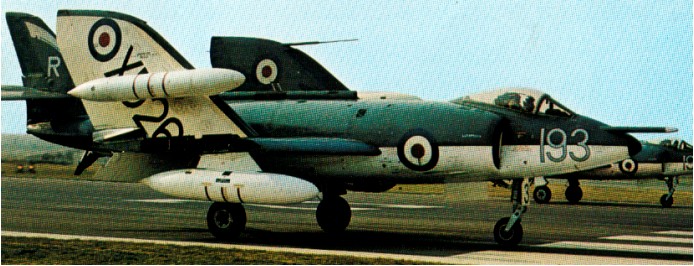
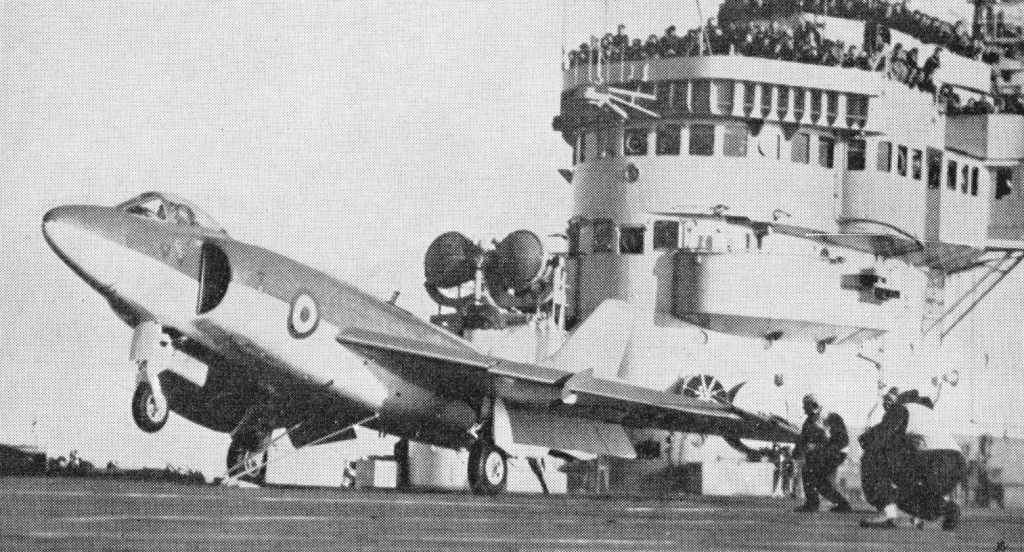


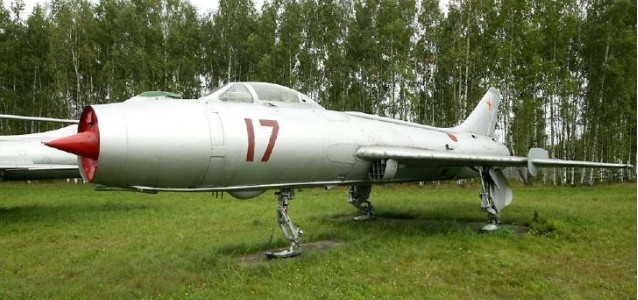

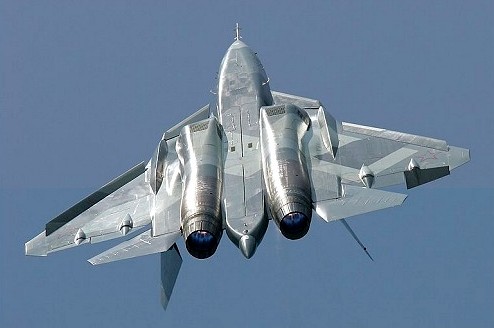
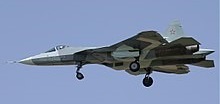
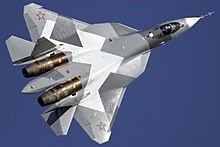

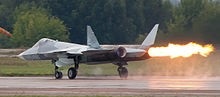


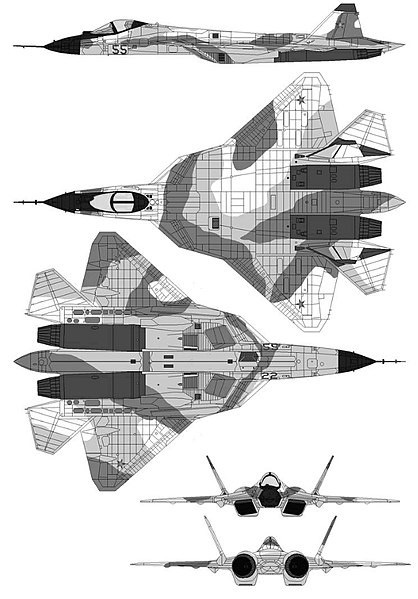

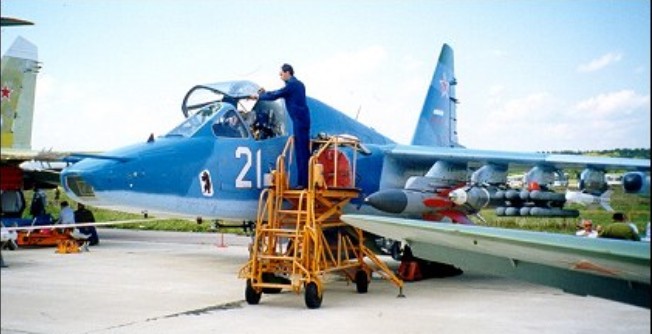


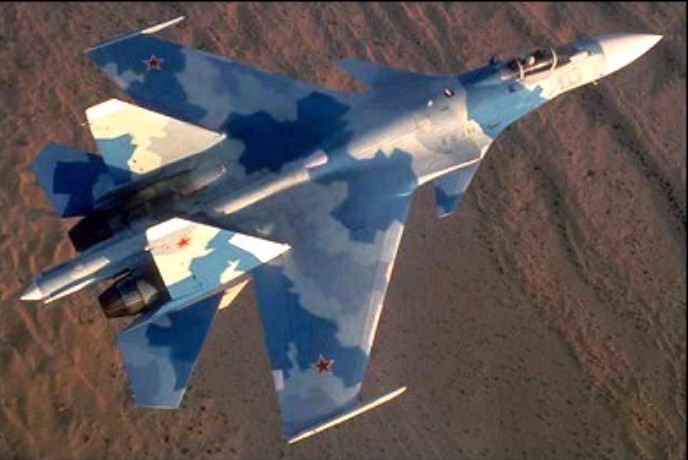
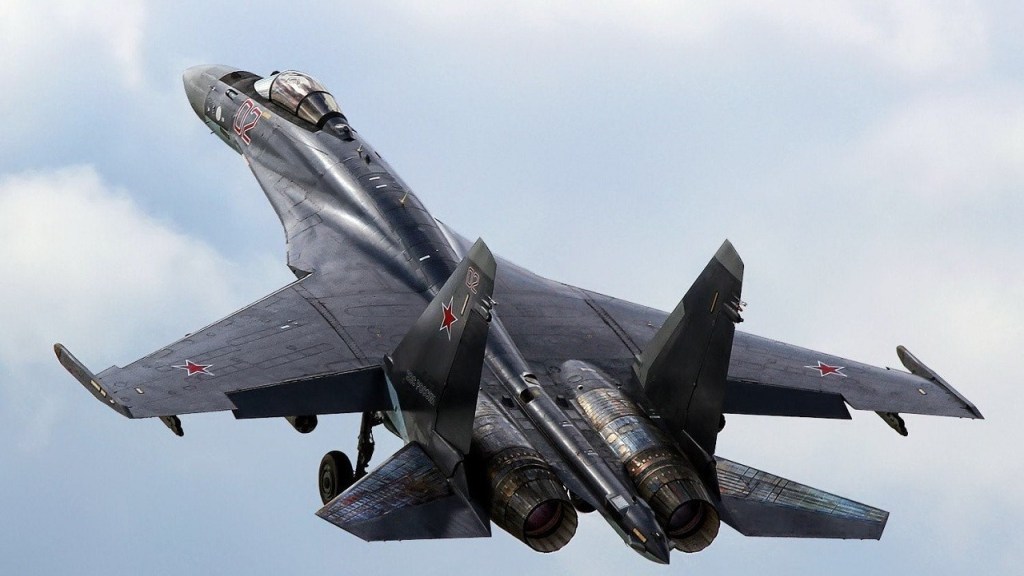
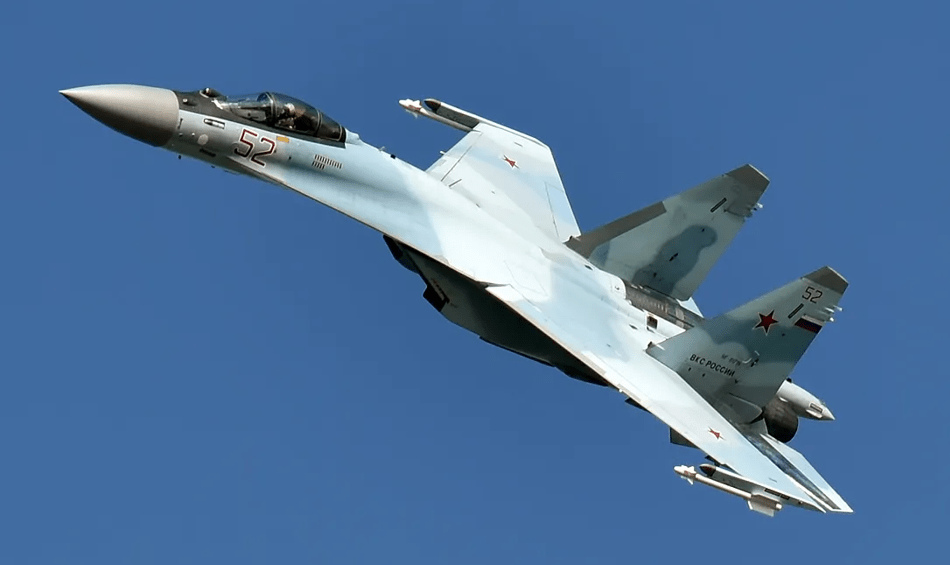
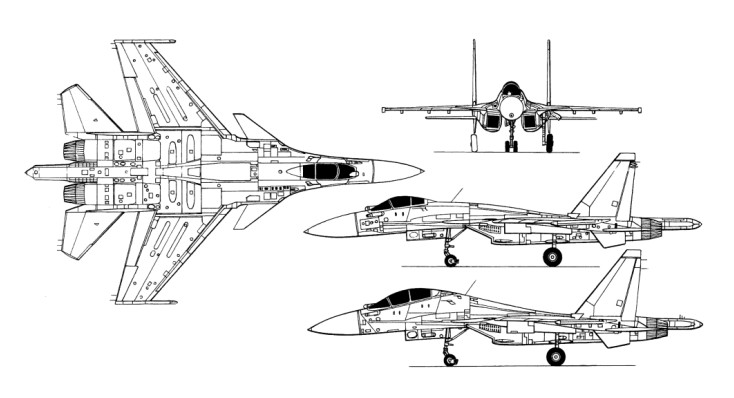
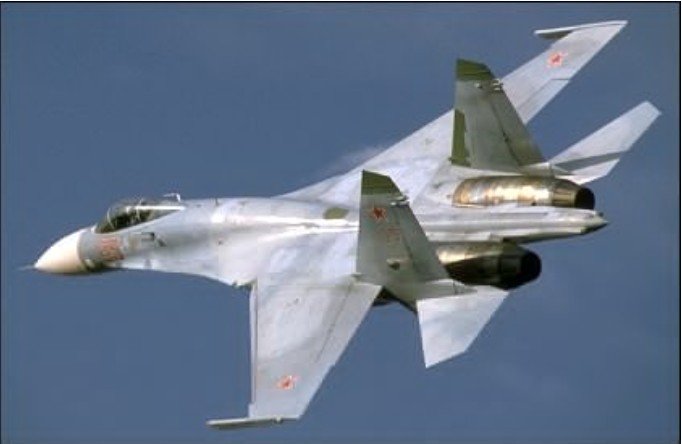
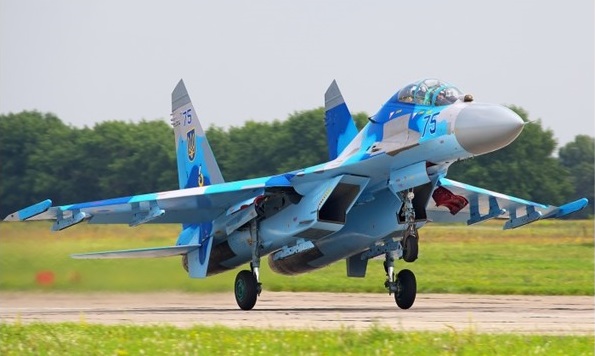
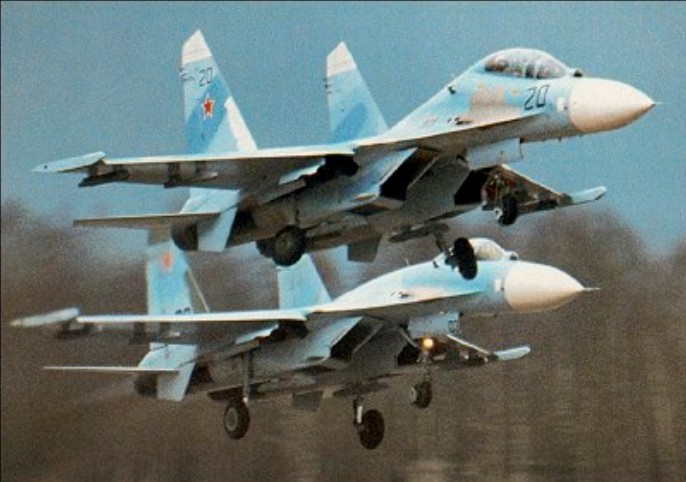


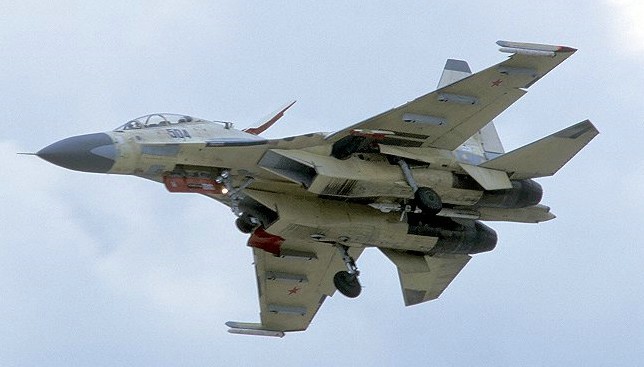
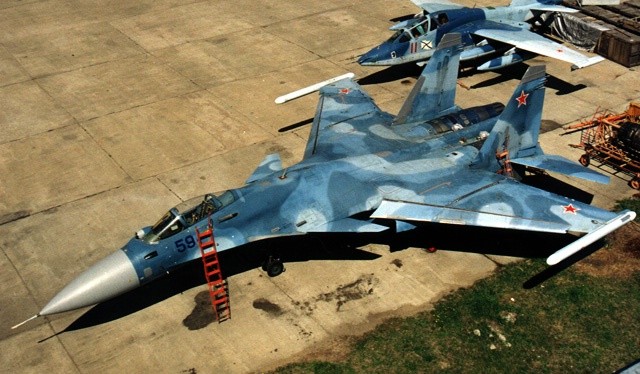
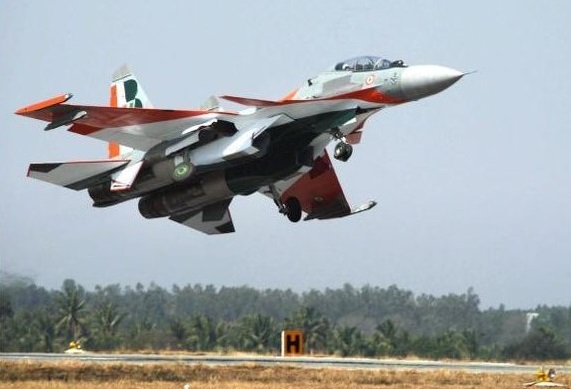
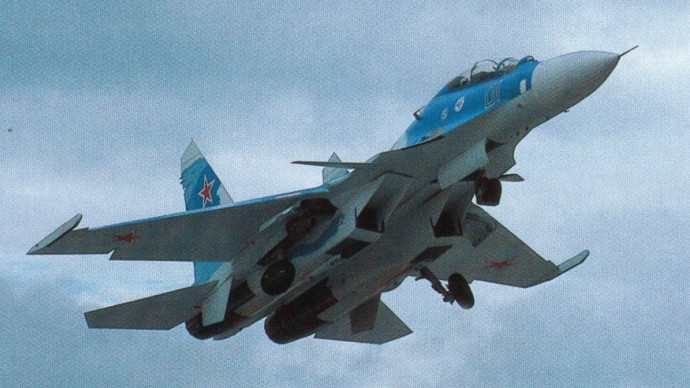
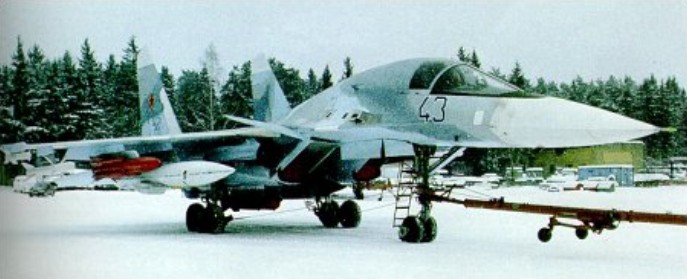

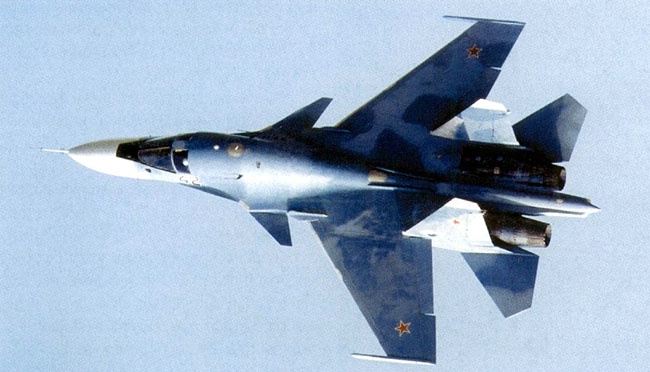

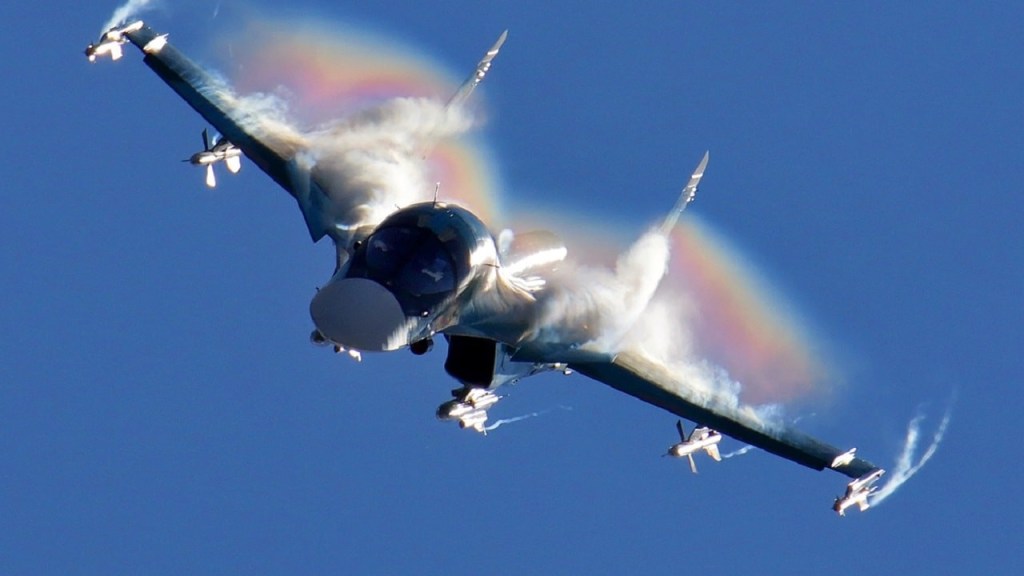
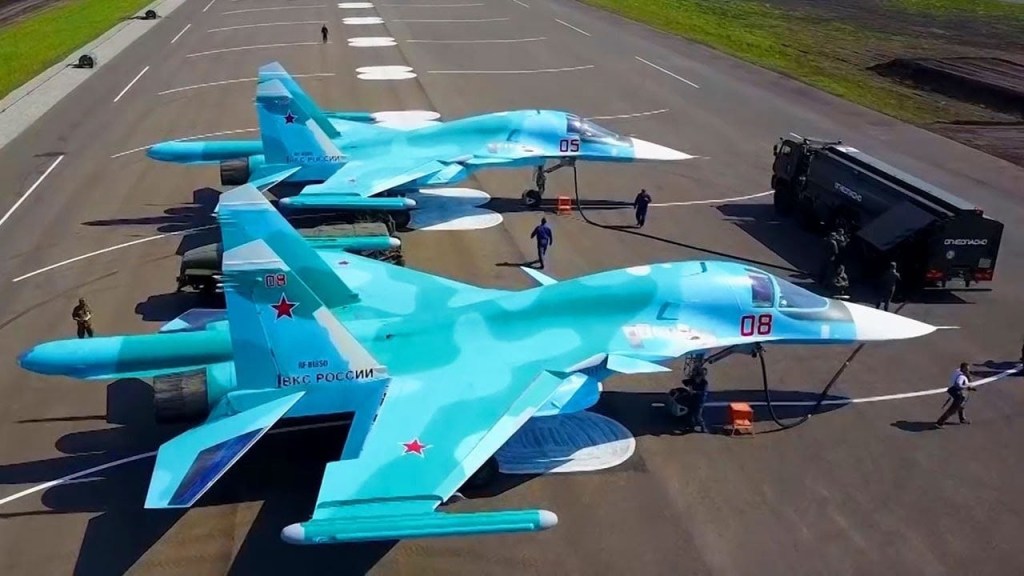

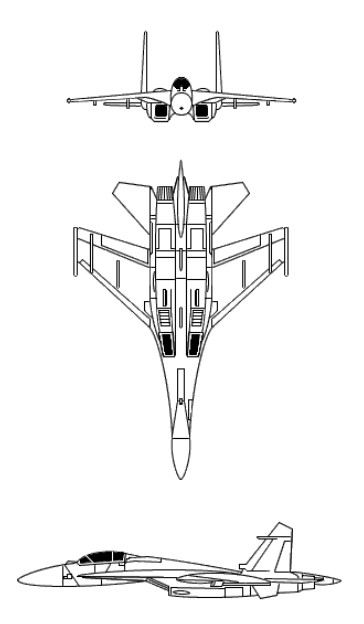
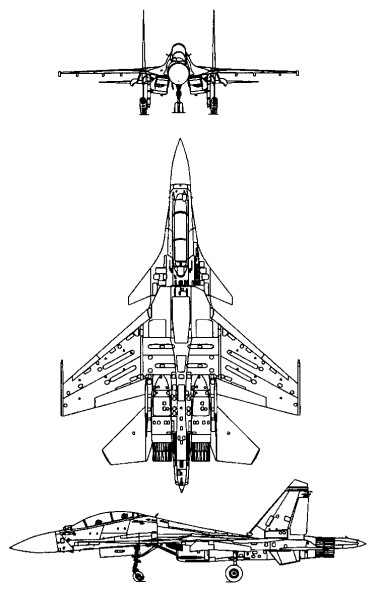

 All Aero