Sud-Aviation SA321 Super Frelon / Sud-Aviation SE.3200 / Sud-Aviation SA.3210 Frelon / Changhe Z-8

SA321F

SA 321 Super Frelon development stemmed from the prototype – but not accepted for production – SA 3200 Frelon built to a French military specification. In a joint effort between Sud Aviation and Sikorsky, the base SA 3200 Frelon was developed into the “Super Frelon” (with Frelon translating into “Hornet”). The result was a rather large troop transport version that would go onto to be produced into three different variants.

At the end of the fifties, the French armed forces issued a specification for a heavy helicopter for troop transport and Sud-Aviation initiated the SA.3200 Frelon project. Sud-Aviation was formed on 1 March 1957 from the Sud-Ouest and Sud-Est Aviation companies. One of its first major projects was the Frelon, a large helicopter of conventional layout powered by three Turbomeca Turmo III turboshaft engines mounted above its cabin. Two are side-by-side in front of the rotor shaft and, the third behind the rotor shaft. Each engine supplied independent drive to the rotor head, thus ensuring twin-engined capability if one unit should fail. The first SE.3200 prototype flew on 10 June 1959. All fuel is carried externally in two tanks mounted to each side of the cabin.
Both the main and tail rotors are four-bladed and there is a variable-incidence tail control surface on each side of the rear fuselage. Standard equipment includes dual controls, radio and full night-flying equipment, with provision for an automatic pilot.
The Frelon cabin is ventilated and sound-proofed and measures 7m in length, with a width of 1.90m, and head-room of 1.83m. The entire tail assembly swings to the right to permit direct loading into the cabin. Normal entry is via large sliding doors on each side of the fuselage. Trials of the SA.3200 were suspended in 1963 in favour of the SA.3210 Super Frelon programme.

SA321 Super Frelon Article

Sud-Aviation SE.3200

The planned production version was the SA.3210 powered by three 932kW Turmo IIIC engines. Development of the Frelon lapsed in favour of the SA.3210 (now SA.321) Super Frelon.

The SA321 was designed as an improved version of the SA 3200 Frelon (hornet) with the suport of Sikorsky, who were largely responsible for the rotor system.

Fiat, in Italy, were responsible for producing the main gearbox and transmission. Prototypes were produced as land-based troop trans­port accommodating up to 30 troops, and as naval anti-submarine type forming the basis of the SA 321G initial production model.

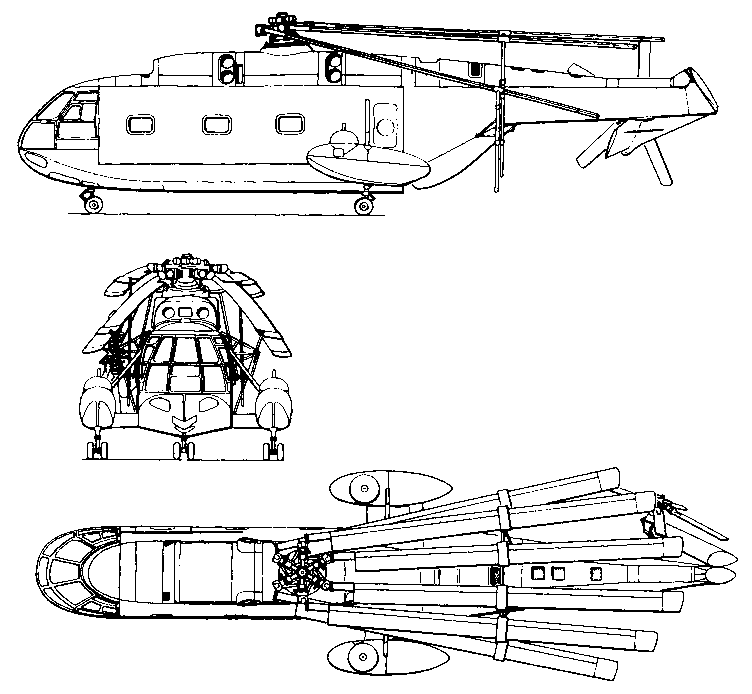
The basic structure of the Super Frelon was no different from the original model but for the US-built rotor system with six blades folded back automatically with the extreme rear of the tailboom, the watertight boat-type hull with a rear-loading ramp, and the three turbines were located side-by-side above the fuselage and the landing gear was of the fixed tricycle type. The two prototypes were followed by two pre-production models with Turmo III turbines and other variants with civil registrations.

The first prototype of the Super Frelon (originally designated SA 3210-01 (F-ZWWE) flew on 7 December 1962, powered by three 985kW Turmo IIIG-2 engines, represented the troop transport version and (with a modified fuselage and retractable landing gear) in July 1963 set up three speed records: 341.23km/h over 3km; 350.47km/h over 15/25km (unbeaten until 1967); 334.28km/h over 100km. The second prototype, flown on 28 May 1963, was representative of the naval version, with stabilising floats on the main landing gear supports incorporating search radar, dipping sonar and other anti-submarine equipment.

The cabin of the Super Frelon in the military transport version is 7m long and can take two jeeps or two DCA 20mm cannon. For casualty evacuation it can take 15 stretcher cases with two medical attendants. The rear loading ramp is hydraulically operated and can remain open even in flight. In 1962 the tri-turbine SA 3210 Super Frelon set three international records: 211.12 mph over 3 km; 217.53 mph on 15 to 25 km dash; and 197.41 mph for 100 km.
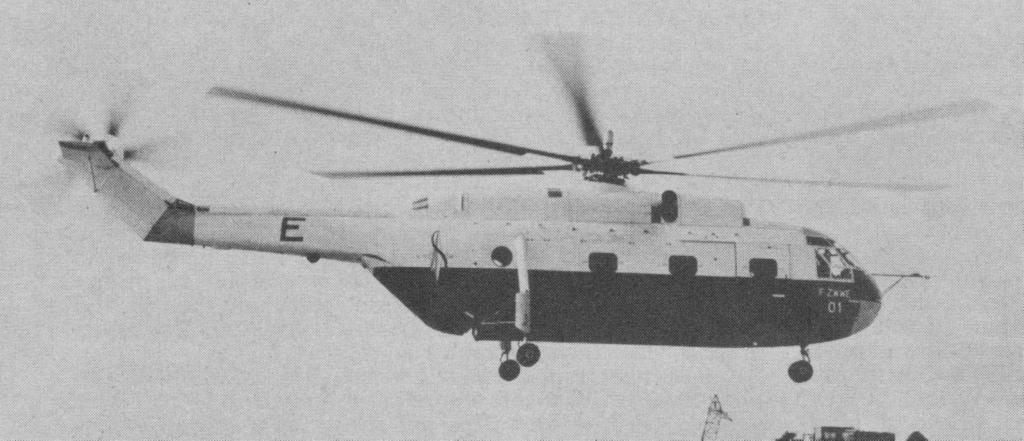
1963 record setter

Four pre-production aircraft followed, and the French Government ordered an initial production series of 17, designated SA (AS) 321G, in October 1965, which entered service in 1966. The first flight of the first production machine was on 30 November 1965. By mid-1967, twenty-five were in service. These are a mixture of SA.321G’s, which can carry four homing torpedoes or other antisubmarine stores, or gear for mine-sweeping, minelaying or ship towing and were equipped with two Sylphe radars, all-weather navigation systems, an automatic stabilization system; and pure-transport versions capable of airlifting up to 30 troops, 18 casualty litters or 4000kg of cargo over 200km stage lengths. Five SA.321 transports have also been supplied to the Heil Avir le Israel, and delivery of sixteen Super Frelons to the South African Air Force began in July 1967.
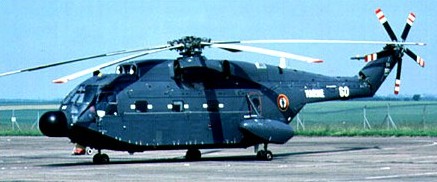
SA321G

Carrying weapons in addition to search radar and sonar, the SA 321Gs were used to patrol the seaward approaches to the French navy’s nuclear submarine base at Brest. Some were later modified with nose-mounted radar and Exocet missiles for anti-ship attack, and the SA 321Ga was delivered for utility transport duties. In French naval service the Frelon equiped three units: 33F and 20S at St Mandrier and 32F based at Lanveoc.

The French Navy utilized the SA 321G, which was fitted in a maritime configuration with a dunking sonar system, torpedoes and other anti-submarine warfare equipment. These specialized versions would later be relegated to search and rescue roles in the navy capacity.

Only 24 SA 321Gs were built, but the production total was boosted by small-scale production of other variants, including the SA 321K assault transport for Israel (12 helicopters) and the SA 321J/ L/M transport exported to China, South Africa, and Libya. Israel re-engined eight of its Super Frelons and sold them to Argentina.

Iraq used Super Frelons, equipped with Omera radar and AM39 Exocet missiles, in anti-shipping strikes against Iran.

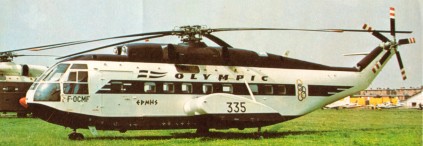
A commercial ‘air utility’ version, the SA.321J, was in production, eighteen were completed up to the end of September 1967. This can be used as a 27-seat passenger transport, as a freighter with a 2500kg payload, or for firefighting, flying crane or other duties; at least one is acting as a supply transport to offshore oil drilling operations. Certificated on 20 October 1967, the SA.321J is powered by Turmo IIIC5 engines. On 7 April 1967, the prototype SA.321F (F-WMHC) made its first flight. This is an enlarged passenger version with a 19.4m fuselage seating up to 37 occupants, a gross weight of 12,000kg, and large sponson-type fairings amidships which act as baggage holds. The one-off SA.321F commercial transport version, test-flown in 1968, is powered by three 1400shp Turmo IIIC3 shaft turbines. It had an air-conditioned, soundproofed cabin, a sliding door on the starboard side and a rotor head fairing. The two stub wings at the sides of the fuselage were used as baggage holds, and airline-style seating provided for 34-37 passengers.

The SA 321 has six-blade main rotor and five-blade anti-torque tail rotor, with rearward folding of all six main rotor blades of SA 321G accomplished automatically by hydraulic jacks, simultaneously with automatic folding of the tail rotor pylon. The rotor can be stopped within 40 seconds by a boosted disc-type rotor brake fitted to this shaft.

The main rotor blades of all-metal construction, with D-section main spar forming leading-edge. The tail rotor is of similar construction to main rotor. The boat-hull fuselage is of conventional metal semi-monocoque construction, with watertight compartments inside planing bottom. On the SA 321G, there is a small stabilising float attached to the rear landing gear support structure on each side. The tail section of the SA 321G folds for stowage. Small fixed stabilisers on starboard side of tail rotor pylon on all versions. The SA 321F has large external fairings on each side of the centre-fuselage which serve a similar purpose to stabilising floats and also act as baggage containers.

The landing gear is of non-retractable tricycle type, by Messier-Hispano-Bugatti, with twin magnesium alloy wheels on each unit. Hydraulic disc brakes are on the mainwheels and the nosewheel unit is steerable and self-centring. Fuel is in flexible tanks under the floor of the centre-fuselage, with a total standard capacity of 3,975 litres in SA 321G/H and 3,900 litres in SA 321Ja. Optional auxiliary fuel tankage comprises two 500 litre external tanks on all models, two 500 litre internal tanks in the SA 321G, and three 666 litre tanks in the 321H/Ja.

The military version has a crew of two on the flight deck, with dual controls and advanced all-weather equipment. The SA 321G carries three other flight crew, and has provision for 27 passengers. SA 321H transport accommodates 27-30 troops, 5,000kg of internal or external cargo, or 15 stretchers and two medical attendants.

The SA 321F has airliner seats for up to 37 passengers (34 if toilets are installed) in three-abreast rows with centre aisle, while the SA 321Ja has seating for up to 27 passengers in the personnel transport role. As a cargo transport, external loads of up to 5,000kg can be suspended from the cargo sling. Loading of internal cargo (up to 5,000kg) is via rear ramp doors, with the assistance of a Tirefor hand winch.

The ASW SA 321G operates normally in tactical formations of three or four aircraft, each helicopter carrying the full range of detection, tracking and attack equipment, including a self-contained navigation system associated with a Doppler radar, a 360° radar with transponder and display console, and dipping sonar. Four homing torpedoes can be carried in pairs on each side of the main cabin. Both the SA 321G and H can be fitted with an anti-surface vessel weapon system, consisting of two Exocet missiles and launch installation associated with an Omera-Segid Heracles ORB 31D or ORB 32 radar for target designation. Other equipment is provided for secondary duties such as towing and minesweeping. Rescue hoist of 275kg capacity standard.

Argentina received several SA 321 from Israel. Argentine versions were Israeli-owned and refitted with the General Electric GE T58 powerplants. South African versions were noted for not being the full amphibious versions of the Super Frelon type.

The triple-turbine-powered Changhe Z-8  (Zhishengji-8 / Vertical take-off aircraft 8) design work began in 1976, but was suspended from 1979 to mid-1984. Chinese equivalent of Aerospatiale Super Frelon, of which 16 supplied to PLA Navy in 1977-78. The Z-8 features a six-blade main rotor and five-blade tail rotor: boat-hull fuselage with watertight compartments inside planing bottom; stabilising float at rear each side, attached to small stub-wing; small, strut-braced fixed horizontal stabiliser on starboard side of tail rotor pylon. Search radar in nose ‘thimble’ on SAR version.

Pitch control fitting at root of each main rotor blade; drag and flapping hinges for each blade mounted on rotor head starplates; each main blade also has a hydraulic drag damper. Fully redundant flight control system, with Dong Fang KJ-8 autopilot.

Stressed skin metal fuselage, with riveted watertight compartments; gearboxes manufactured by Zhungnaii Transmission Machinery Factory.

A non-retractable tricycle undercarriage, with twin wheels and low-pressure oleo-pneumatic shock-absorber on each unit. Small tripod tailskid under rear of tailboom. Boat hull and side floats permit emergency water landings and take-offs.

Power is from three Changzhou (CLXMW) WZ6 turboshafts, each with maximum emergency rating of 1,156kW and 20% power reserve at S/L, ISA. Two engines side by side in front of main rotor shaft and one aft of shaft. Transmission rated at 3,072kW.

Standard internal fuel capacity 3,900 litres, in flexible tanks under floor of centre-fuselage. Auxiliary fuel tanks can be carried inside cabin for extended-range or self-ferry missions, increasing total capacity to 5,800 litres.

Crew of two or three on flight deck. Accommodation in main cabin for up to 27 fully armed troops, or 39 without equipment; up to 15 stretchers and a medical attendant in ambulance configuration; a BJ-212 Jeep-type vehicle and its crew; or other configurations according to mission. Entire accommodation heated, ventilated, soundproofed and vibration-proofed. Forward-opening crew door on each side of flight deck. Rearward-sliding door at front of cabin on starboard side. Hydraulically actuated rear-loading ramp/door.

First flown on 11 December 1985, a second prototype flew in October 1987. Domestic type approval was awarded on 8 April 1989 and the first Z-8 was handed over to FLA Naval Air Force for service trials on 5 August 1989. Initial production was approved and the final design approval granted on 12 November 1994.
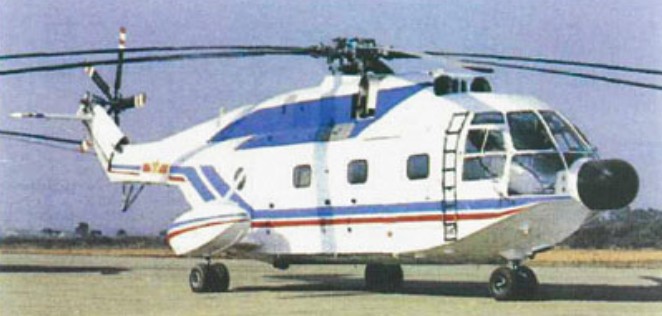
Up to 20 were delivered to PLA Navy by the end of 1999. There was no firm evidence of production status since then, but the type was still being promoted by CATIC in 2002. The sole operating naval unit was Shipborne Helicopter Group within East Sea Fleet at Dachang (Shanghai).
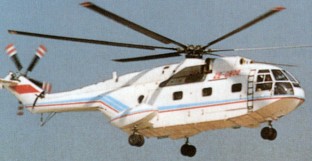
Z-8

Gallery

Principal versions:

SE.3210 / SA.321 Super Frelon
Larger development of SA.320 with boat hull and outrigger floats, rear loading doors, boom tail, six-blade main rotor driven by three 1320shp Turbomeca Turmo IIIC turboshafts. Prot. F-ZWWE FF 7 Dec. 1962.

SA 321B
Standard French Air Force/Army Super Frelon.

SA 321D
Standard French Navy Super Frelon.

SA 321F
Commercial airliner with streamlined external sponsons, designed to carry 34-37 passengers. The prototype was designed in accordance with US FAR Pt 29 regulations and flew for the first time on 7 April 1967. Type certification was granted by the SGAC on 27 June 1968 and by the FAA on 29 August 1968.

SA 321G
Anti-submarine helicopter able to carry 27 passen¬gers or freight in its alternative transport role. First version to enter production. The first SA 321G flew on 30 November 1965 and deliveries began in early 1966. Twenty-four built.

SA 321H
Simplified military version for air force and army service, without stabilising floats or external fairings on each side of lower fuselage. Turmo IIIE_6 engines instead of Turmo IIIC_6 in other versions. No de-icing equipment fitted.

SA 321Ja
Utility and public transport version, intended to fulfil the main roles of personnel and cargo transport. Designed to carry a maximum of 27 passengers or 11,023 lb/5,000 kg of freight. External loads of up to 5,000kg can be suspended from the cargo sling. The SA 321Ja prototype flew for the first time on 6 July 1967. A French certificate of airworthiness was granted in December 1971.

SA 321K
Israeli assault transport, later re-engined with Gen¬eral Electric T58 turboshafts

SA 321L
Develop¬ment of the SA 321K for other export markets

SA 321M
Libyan version of the SA 321L

Changhe Z-8
Standard Chinese development

Changhe Z-8A
Reported designation of upgraded version, with Turbomeca Makila 2A engines matched to Turmo gearbox. Pratt & Whitney Canada also a candidate for any re-engining programme. Two Z-8As reportedly delivered to PLA Army Aviation for evaluation in 2001, camouflaged; lack nose radome and side-mounted floats.

Changhe Z-8F
Improved and more powerful version, for which the 1,380kW P&WC PT6B-67A turhoshaft was selected in November 2002. Additional 671kW of power expected to enhance ‘hot-and-high’ performance, including increase in service ceiling to 4,700m at MTOW and increased payload capacity. Other improvements said to include new (composites) main rotor blades, with anti-icing; new avionics and mission equipment. Duties envisaged are search and rescue, general utility missions and logistics support.

Specifications

S.E.3200 Frelon
Engines: 3 x Turmo IIIB turboshaft, 750/800shp
Main rotor diameter: 15.0 m
Length, blades folded: 14.9 m
Width, blades folded: 5.2 m
Height: 4.7 m
Weight empty: 4500 kg
Max useful load: 3500 kg
Normal loaded weight: 7500 kg
Max loaded weight: 8000 kg
Max ferrying range: 1300 km

SA 321 Super Frelon
Engine: 3 x Turboméca Turmo III C 6, 1529 shp / 1156kW
Length: 63.648 ft / 19.4 m
Length with rotors: 23.03 m
Height: 21.85 ft / 6.66 m
Width: 5.2 m
Rotor diameter: 62.008 ft / 18.9 m
Max takeoff weight: 27562.5 lb / 12500.0 kg
Weight empty: 14420.7 lb / 6540.0 kg
Max. speed: 130 kt / 240 km/h
Cruising speed: 124 kt / 230 km/h
Service ceiling: 11647 ft / 3550 m
Maximum range: 583 nm / 1080 km
Range (max. weight): 351 nm / 650 km
Rate of climb: 12.0 m/s
Hovering ceiling: 2170 m
Crew: 2
Payload: 30 Pax / 4500kg
Fuel: 3975 kg

SA321G Super Frelon
Engines: 3 x Turbomeca Turmo 111C6 turboshafts, l,570-shp / 1,171-kW
Maximum speed: 154 mph (248 kph) at SL
Initial climb rate: 984 fpm (300 m/min)
Service ceiling: 10,170 ft (3,100 m)
Cruising speed: 248 km/h (154 mph)
Endurance in ASW role: 4 hr
MTOW: 28,660 lb (13,000 kg)
Empty weight: 15,130 lb (6,863 kg)
Height: 22 ft 2 in (6.76 m)
Main rotor diameter: 62 ft (18.9 m)
Main rotor disc area: 3,019.94 sq ft (280.55 sq.m)
Length overall, rotors turning: 75 ft 6.75 in (23.03 m)
Range 3500 kg (7,716 ¬lb) load: 1020 km (633 miles)
Armament: up to four homing anti¬submarine torpedoes or two AS.39 Ex¬ocet anti ship missiles.

SA321H
Engines: 3 x Turbomeca Turmo IIIE-6 turboshaft

Changhe Z-8
Engine: 3 x Changzhou WZ6, 1,156kW
Instant pwr: 1156 kW
Main rotor diameter: 18.90m
Tail rotor diameter: 4.00m
Length overall, rotors turning: 23.035m
Height overall, rotors turning: 6.66m
Width over main gear sponsons: 5.20m
Empty weight equipped: 7550kg
Max take-off weight, standard fuel: 10592kg
Max take-off weight, with auxiliary fuel: 13000kg
Max cargo payload (internal): 4000kg
Max cargo payload (external sling): 5000kg
Never-exceed speed: 315km/h
Max cruising speed: 266km/h
Econ cruising speed: 255km/h
Rate of climb: 690m/min
HIGE: 18,045 ft / 5500m
HOGE: 14,435 ft / 4400m
Service ceiling: 19,685 ft / 6000m
Max range: 880 km
Range max fuel / TOW 9000kg: 430km
Endurance max fuel: 2 h 31 min
Crew: 2
Pax: 27
Sud-Aviation SA315 Lama

SA315B Lama

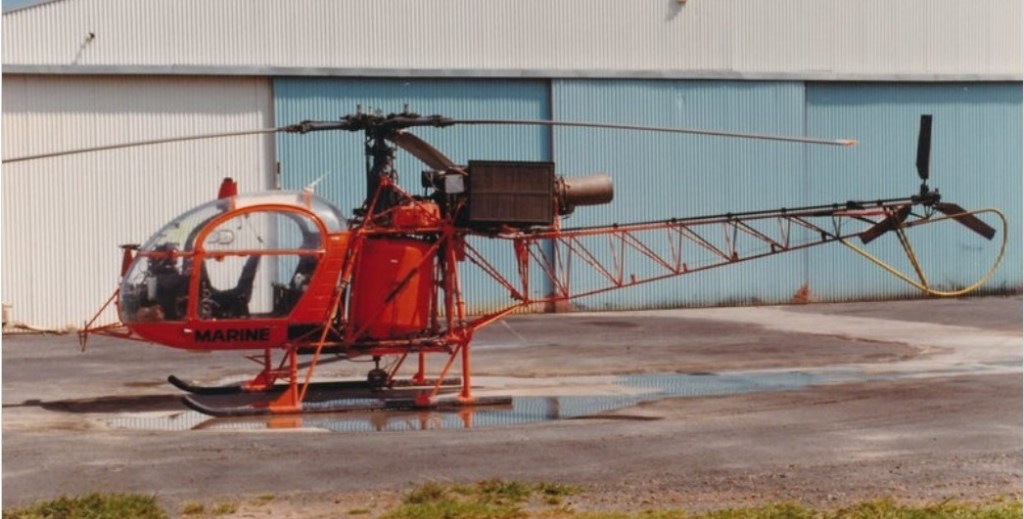
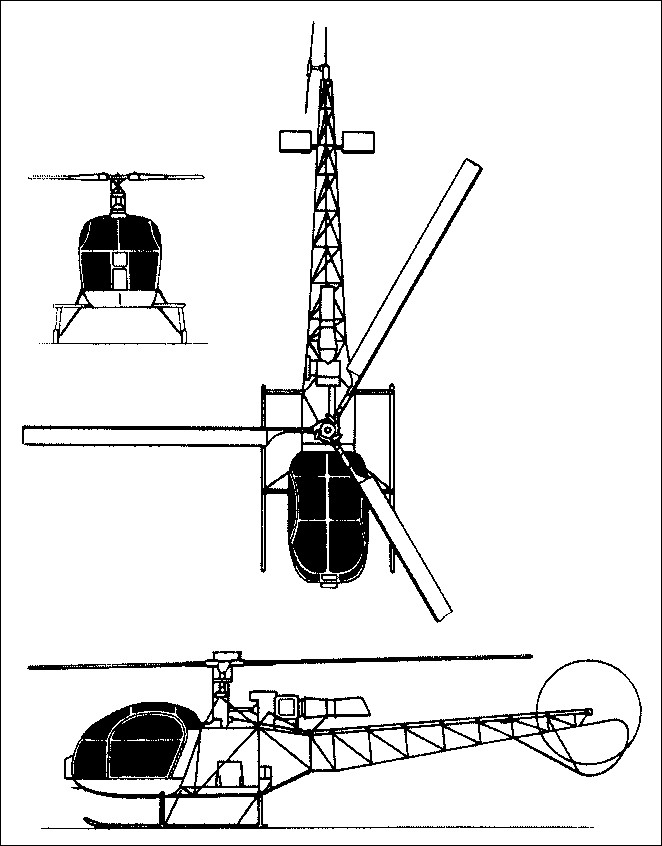
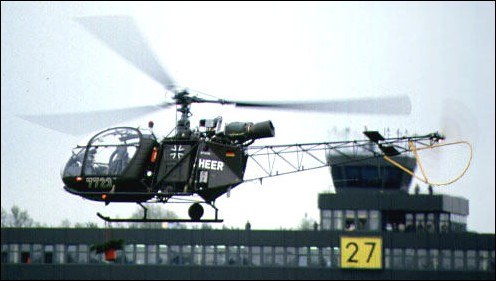
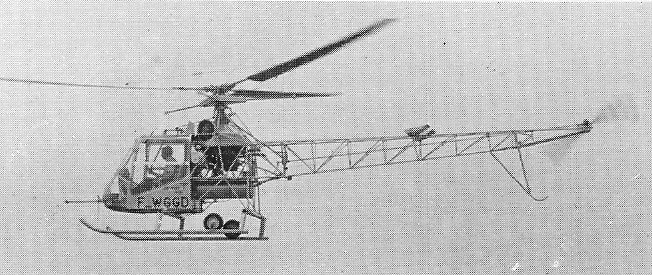
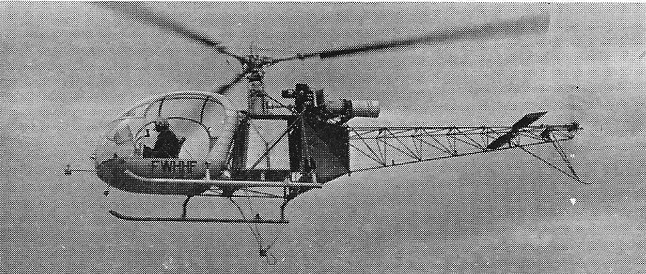
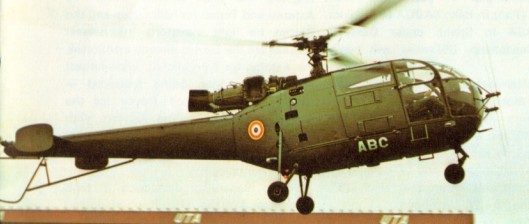
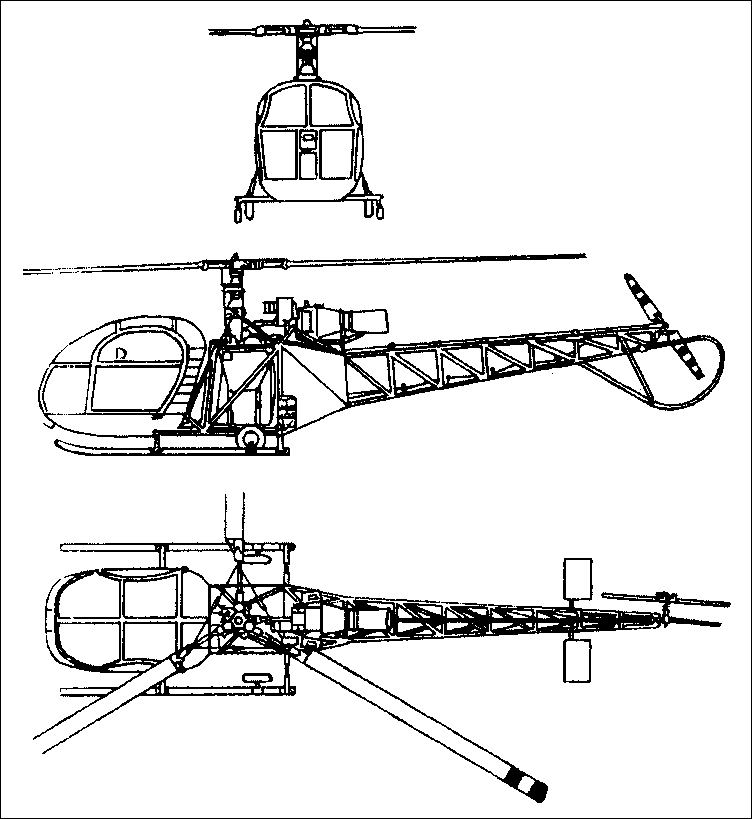
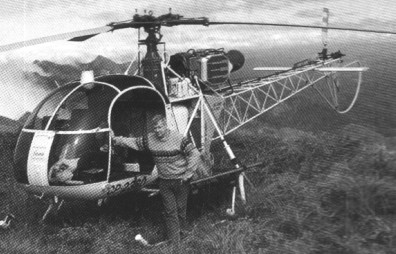
When production of the Alouette II ended, after more than 1,300 airframes had been completed, Sud (which later became part of Aerospatiale) concentrated on building the Lama. Initially evolved to meet an Indian armed forces requirement of 1968 and intended primarily for operations in ‘hot-and-high’ conditions, the basic design of the Aerospatiale SA 315B Lama combines a reinforced Alouette II airframe with SA 316B Alouette III dynamic components, including its Artouste power-plant and rotor system. The SA 315 prototype was first flown on 17 March 1969, received the French Certificate of Airworthiness on 30 September 1970, and given the name Lama in July 1971. Able to lift one tonne on the hook and excellent lifting properties have been put into good effect throughout the world. Although used throughout the world, the Lama was not produced in large quantities, with fewer than 400 built from 1970 to 1982.

SA-315B Lama ZK-HSK

From the outset the SA 315B excelled in load-to-altitude performance. In 1971 arrangements were completed for licence production of the SA 315B by HAL at Bangalore in India. The first Indian-assembled Lama flew on 6 October 1972, with deliveries commencing in December 1973. The HAL-produced Lama is renamed Chetak.
On 21 June 1972 a Lama, with just a pilot on board, set an absolute height record for helicopters of 12442m / 40,814 ft.

The SA315B was available with either the Turbomeca Artouste IIIB of 858 shp or the Artouste IIA of 550 shp.

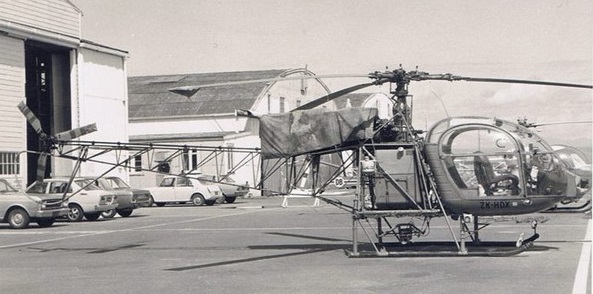
Aerospatiale SA315B Lama ZK-HDX

The SA 315B Lama can be fitted out for various commercial roles, such as a light passenger transport or for agricultural tasks, while the military variants include conversions for liaison, observation, photography, air/sea rescue (hoist capacity 160kg), transport (maximum external load 1135kg), ambulance (two stretchers and one medical attendant), and other tasks. Its altitude performance makes the SA 315B particularly suited for mountainous districts: the production Lama can transport underslung external loads of up to 1000kg at an altitude of 2500m. Another factor is its universal landing gear consisting of skids with removable wheels for ground handling, provision for floats for normal operations from water and emergency flotation gear, inflatable in the air.

In 1978 agreement was reached between Aerospatiale and Helibras in Brazil for the assembly of SA 315B Lama helicopters, leading to full licence production as the Gaviao, using French components.

SA-315B Lama
Engine: Turbomeca Artouste IIIB, 858 shp
TBO: 2500 hrs
Rotor diameter: 36.155 ft / 11.02 m
Seats: 5
Length: 42.388 ft / 12.92 m
Height: 10.1 ft / 3.09m
Fuselage length: 10.26m
Underslung load: 1135kg
Max ramp weight: 4300 lb
MTOW: 4300 lb / 1950.0 kg
Standard empty weight: 2244.7 lb / 1018.0 kg
Max useful load: 2034 lb
Max landing weight: 4300 lb
Max sling load: 2500 lb
Disc loading: 4.2 lb/sq.ft
Power loading: 5 lb/hp
Max rate of climb: 1083 fpm
Max usable fuel: 1018 lb
Service ceiling: 17,720 ft
Hover in ground effect: 16,565 ft
Max speed: 113 kts / 210 km/h
HOGE: 15,100 ft
Normal cruise @ 3000 ft: 103 kts / 190 km/h
Fuel flow normal cruise: 369 pph
Range: 275 nm / 510 km
Endurance normal cruise: 2.6 hr
Crew: 1
Passengers: 4

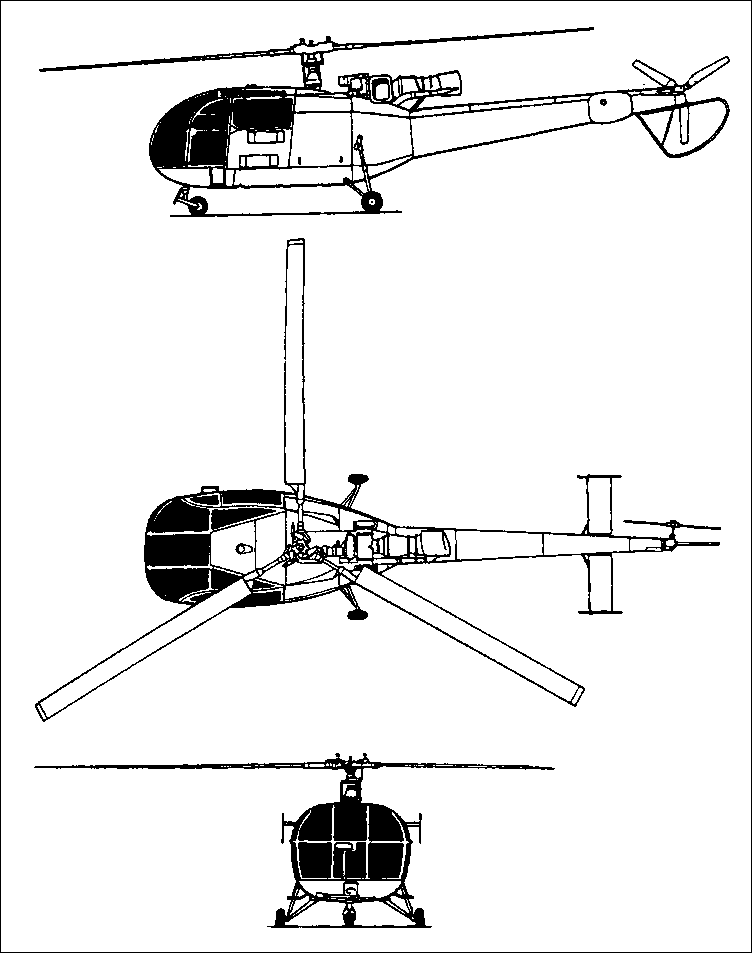
Sud-Est SE 3140 / Aerospatiale SE-313B / SA-316 Alouette III / SA-318C Alouette II / SA-319 Alouette III / SA-3180

Alouette II

The SE.3120 Alouette I three-seat utility helicopter was designed primarily as an agricultural aircraft, but external panniers could be fitted. Powered by a 200 hp Salmson 9 NH engine, it first flew on 31 July 1951.

SE.3120 Alouette I

The basic airframe of the Sud-Est SE-3120 Alouette was completely redesigned to take the 269kW Turbomeca Artouste II turboshaft, and the first of two prototypes, designated SE 3130, was flown on 12 March 1955.

Following were three pre-production aircraft in 1956 as the Alouette II. This was granted a French Certificate of Airworthiness on 2 May 1956. Three months after the first flight the Alouette II set a new helicopter altitude record of 8209m. In 1957 Sud-Est merged with Sud-Aviation, at which time the designation of the Alouette II was altered to SE 313B, remaining unchanged after Sud’s take-over by Aerospatiale.
It has three blade rotor with three degrees of freedom, pitch, in-plane motion and vertical flapping. Pitch is controlled by means of a stabilizing gyroscope.
Even before flight testing had been completed, the Alouette II was showing its abilities as a mountain rescue aircraft. The second prototype Alouette II was in the Alps for performance tests in July 1956 when the test team learned that a climber was dying after having a heart attack in the Vallot Mountain refuge, one of the highest in Europe at 4362m.
The first attempt at a rescue was unsuccessful, but the second worked: within five minutes of landing the helicopter had transported the climber to hospital in Chamonix, thereby saving his life.
During the period 9-13 June 1958, an Artouste-powered Alouette II set up a helicopter altitude record of 10981m for all classes, and a height record of 9583m in the 1000/1750kg category. By September 1960 598 Alouette IIs had been ordered by customers in 22 different countries and the type was being assembled by Republic in the USA and Saab in Sweden although few were built.

SE 313 Alouette II

Production aircraft were delivered initially to fulfil orders from the French forces and civilian customers, but when production ended nine hundred and twenty-three of the Artouste-powered Alouette II’s had been built for customers in thirty-three countries. Three-hundred and sixty-three of these were built for the French services — particularly the Aviation Legere de I’Armee de Terre – and a further two hundred and sixty-seven were built for the Federal German Heeresfliegerei. Other large military operators of the Alouette II include the Belgian Army (thirty-nine), Swiss Army (thirty), all three Swedish air arms (total twenty-five), and Britain’s Army Air Corps (seventeen) as Alouette AH.2. Alouette II’s were also delivered to the air forces of Austria (sixteen), Cambodia (eight), Congo Leopoldville (three), Dominican Republic (two), Indonesia (three), Israel (four). Ivory Coast (two), Laos (two), Lebanon (three), Mexico (two), Morocco (seven), Netherlands (eight), Peru (six), Portugal (seven) and South Africa (seven). In all, at least 1,305 Alouette II were built.
Alouettes of the ALAT have carried out firing trials using Nord AS.10 or AS.11 anti-tank missiles, while some of the Aeronavale’s machines have been used to carry homing torpedoes.
A development of the Alouette II with a 298kW Turbomeca Turmo II engine, with the designation SE 3140, was announced in May 1957 and flown on 16 May 1957 but did not reach the production stage.

SE.3130 Alouette II

The SE.3150 an Artouste-powered development of it of which two were built.
From the Alouette II, the SE.3131 Gouverneur executive version was derived.

The first version of the Alouette III, the SE 3160 prototype flew in 1959. Production of the SA 316A (SE 3160) began in 1960 and remained in production until 1968. It was replaced by the SA 316B.

Sud Aviation / Aerospatiale Alouette Article

The Turbomeca Artouste IIIB turboshaft engine was the original variant produced, the Alouette III is recognized for its mountain rescue and adaptability for land and ship based applications. The Argentine Navy purchased 14 helicopters, 3 of the original design SE3160, 7 with the more powerful engine and strength upgrades in the SA316B and 4 machines of the SA319B with more power than the other two versions.

The Alouette III entered in service with the French Armed forces in 1960. Many were used by the Foreign Legion from 1964-1967. Three machines were delivered from France for local assembly in Australia, and were used by Royal Australian Air Force (RAAF).

Pakistan purchased 35 machines and used them in the Indo-Pakistani War of 1971. Two planes of the PAF were shot down in the war, and the Portuguese Colonial War, during 60’s and 70’s used large numbers of helos in Angola, Mozambique and Guinea, where it proved its qualities for use in dusty and hot flying conditions. One SA316B purchased by Argentina was on board the ARA General Belgrano when she was sunk by the HMS Conqueror S48 during the Falklands War with Great Britain in 1982.

Basically, the SE.3160 Alouette III is an enlarged and more powerful development of the Alouette II, with an Artouste IIIB turboshaft engine of 870/550shp and a strengthened transmission system. The cabin is enlarged to accommodate a pilot and 6 passengers, and the tailboom is an enclosed, all-metal semi-monocoque fuselage. The prototype, F-ZWVQ, first flew on 28 February 1959. The SE.3160 was revised in 1968 and redesignated SA.316A Alouette III for the first production series.

In 1963 Ireland ordered three Alouette III’s, two for delivery in 1963 and one in 1964.

A close-support version, the SA.3164 Alouette III Armee with a stepped windshield, was flown on 24 June 1964. This carried a 20mm cannon in front of the left-hand seat, and can be armed with 7.92mm machine-guns, pods of 18 or 36 HVAR rockets or Nord AS.11 or AS.12 anti-tank missiles on mountings on each side of the cabin. A naval version with a mooring harpoon and all-weather capability is being developed for anti-submarine and other shipboard roles.
Various experimental developments followed, including an all-weather variant which made its initial flight on 27 April 1964. The SA.319 Alouette III prototype, F-ZWVQ, was basically an SA.316 fitted with a 600shp Turbomeca Astazou XIV turboshaft.

SA.319B Alouette III

The subsequent SA 316B, first flown on 27 June 1968, featured strengthened main and tail rotor transmissions and was generally slightly heavier, but could carry more payload. It became the principal production version, with first deliveries made in 1970, and was an immediate export success.
Two versions have been built, the SA 316B with one 870 shp Turbomeca Artouste IIIB turboshaft engine derated to 570 shp, and the SA 319B with one 870 shp Turbomeca Astazou XIV turboshaft derated to 600 shp. The first experimental SA 319B prototype was completed and flown in 1967, but full production did not start until 1973. Those in service in an anti-armour role can carry a variety of cannon, machine-guns, rockets, and wire-guided missiles. Naval versions can deploy wire-guided missiles, but those intended specifically for an ASW role carry two homing torpedoes, or one torpedo and MAD equipment. The Alouette III has an external sling for loads up to 750kg or a rescue hoist which can lift 175kg.
Another derivative, powered by the more economical Astazou IIA turboshaft engine and featuring a new centrifugal clutch, was far more successful. The first prototype, designated SA 3180, was flown on 31 January 1960 and after thorough trials an extension of the Alouette II French Certificate of Airworthiness was granted on 18 February 1964. Production, as the SA 318C with the Artouste IIID derated to 600shp, commenced in the same year, with first deliveries taking place in 1965.
The SA 318C had a slightly higher level speed, longer range and was capable of lifting heavier loads, but is less suitable for operations in higher altitudes. The success of the basic Alouette II design was reflected in the growing number of civil and military customers: by 1 June 1967 a total of 988 Alouette IIs (including those with Astazous engines) had been ordered (and 969 delivered); by 21 May 1970 the total had increased to 1,200 (923 with Artouste and 277 with Astazou engines); this total included 450 Alouette IIs delivered to the French air force, army and navy as well as private customers. By the spring of 1975, when the production of this helicopter was terminated, the number of Alouette IIs sold had reached 1,300, and it was used by 126 civil and military operators in 46 countries.
Production of the SE.3130 (which was redesignated SE.313B in 1967) has been gradually running down since about 1964, but output is still maintained of the SA.318C (originally SE.3180) which first flew on 31 January 1961 and received domestic type approval on 18 February 1964. This is basically the same airframe, but with a 550shp Astazou IIA shaft turbine (derated to 360shp) and the strengthened transmission system of the Alouette III. An initial fifteen Alouette II Astazou’s were built for the ALAT; by September 1967 orders had reached seventy-eight, for the Gendarmerie, the Federal German police force and other customers. A lighter-weight ‘long-life’ version was being developed during 1967, and one Alouette II Astazou was testing the Bolkow rigid-rotor system. It flew in this configuration on 24 January 1966.
Production ended in 1975, by which time over 1300 had been built.

The SA 316B and the SA 319B both remained in series production up to the early 1980s, when the main production line in France was closed down. However, HAL of India continued to licence-build Alouette IIIs as the Chetak. In 2004, most of the Alouette III were retired from the French Air Force after 32 years of successful service, to be replaced by the Eurocopter EC 355 Ecureuil 2. In the same year, the Swiss Armed Forces announced the retirement of the Alouette III, from the front line by 2006, and entirely by 2010. Venezuelan Air forces retired their Alouette IIIs in the late 90s.

Hindustan Licence-manufactured SA-315B Lama and SA-316B Alouette III helicopters at Bangalore as Cheetah and Chetak respectively up to 1998 under a licence agreement finalised in 1962. Production gave way to the indigenously developed Advanced Light Helicopter (first flown August 1992).
The first Indian-assembled Alouette III was flown on 11 June 1965.
More than 250 had been completed at Bangalore in India for civil and military use.
In addition to a number of military export customers, the USSR purchased eight Chetaks for civil use. A version for the Indian Navy is armed with two Mk.44 torpedoes and has a harpoon moor¬ing system and folding rotor blades for ship¬board operations. A podded magnetic anomaly detector may also be carried in place of one of the torpedoes. An armed variant for the Indian Air Force is equipped with four air-to-surface missiles, and has a roof mounted periscope sight.

Also built under licence in Roumania by CNIAR were the IAR-316 and IAR-317 Airfox. The IAR-316B Allouette III first flew on 13 November 1971. Production of the Alouette III continued in Romania for domestic and export customers in 1987.
The IAR-317 Airfox is a Romanian developed light attack/training version of the Aérospatiale Alouette III helicopter. Its recon¬figured front fuselage has two seats in tandem, the rear seat raised for improved visibility; a hard nose; a fixed forward firing armament of two 7.62mm machine-guns in the lower front fuselage; six external weapons pylons; and armour protection for the crew and fuel tanks in the combat variant. The IAR-317 was due to enter production for the Romanian armed forces in 1986.
The first flight took place in 22 September 1983, and two more prototypes were completed by the end of 1985. To the rear of the main rotor mast the Airfox is essentially an Alouette III, retaining the latter’s tail rotor and Turbomeca Artouste IIIB power plant. Performance is improved by the lighter, more streamlined nose, with a maximum cruise speed of 190km/hr (102kt) at maximum take-off weight, a 525km range on internal fuel, and 810km with two external tanks fitted. Service ceiling is more than 6,200m (20,350ft).
Licence production in Switzerland by FFA totalled 60.

Designations:
SE 3130 Alouette II
SE 3140
SE.3150
SE.3160 Alouette III
SA.3164 Alouette III Armee
SA.3180 Alouette
SE.3180
SE 313B Alouette II
SA.316A Alouette III
SA.316B Alouette III
SA.316C Alouette III
SA 318C
SA.318C Alouette Astazou
SA.319 Alouette III
SA.319B Alouette III
Alouette AH.2
Hindustan Aeronautics Ltd. HSA.316B Alouette III
Hindustan Aeronautics Ltd. HSA.316B Chetak
IAR-316B Alouette III
IAR-317 Airfox

Gallery

SE.3120 Alouette I
Engine: 200 hp / 150kW Salmson 9 NH
Rotor diameter: 38 ft / 11.60m
Length: 34 ft 3 in / 10.45m
Height: 9 ft 6 in
Empty weight: 1650 lb / 750kg
Loaded weight: 2750 lb / 1150kg
Max speed: 78 mph / 125km/h
Cruise: 62 mph
ROC: 500 fpm
Service ceiling: 4000m
Range: 225km

Sud-Est SE 3130 B Alouette II / SA.313B
Engine: Turboméca Artouste II C 6, 400 shp
Length: 31.824 ft / 9.7 m
Width of hull: 6.824 ft / 2.08 m
Height: 9.022 ft / 2.75 m
Rotor diameter: 33.465 ft / 10.2 m
MTOW: 3307.5 lb / 1500.0 kg
Weight empty: 2149.9 lb / 975.0 kg
Max. weight carried: 1157.6 lb / 525.0 kg
Max. speed: 92 kts / 170 km/h
Initial climb rate: 826.77 ft/min / 4.20 m/s
Service ceiling: 12959 ft / 3950 m
Range: 302 nm / 560 km
Endurance: 3 h
Crew: 1
Payload: 4 Pax

SE 313 Alouette II Artouste
Engine: Turbomeca Artouste IIC6, 530shp(derated to 360shp)
923 built

Aerospatiale SE-313B Alouette II
Engine: 1 x Turbomeca Artouste II C6 turboshaft, 395kW
Main rotor diameter: 10.2m
Length blades folded: 9.7m
Height: 2.75m
Take-off weight: 1600kg
Empty weight: 895kg
Max speed: 185km/h
Cruising speed: 165km/h
Service ceiling: 2150m
Range with max fuel: 565km
Range 390kg payload: 300km
Crew: 1
Passengers: 2

SA316B
Engine: Astazou IV, 600 shp
Fuselage length: 10 m / 33 ft
Rotor dia: 36 ft 1.25 in / 11.02 m
Max speed: 130 mph / 210 km/h

SA 316 Alouette III
Engine: 1 x Turbomeca Artouste IIIB turboshaft, 570shp
Length: 42.13ft (12.84m)
Width: 36.15ft (11.02m)
Height: 9.84ft (3.00m)
Maximum Speed: 130mph (210kmh; 113kts)
Maximum Range: 298miles (480km)
Rate-of-Climb: 885ft/min (270m/min)
Service Ceiling: 7,379ft (2,249m)
Accommodation: 2 + 5
Hardpoints: 2
Empty Weight: 2,474lbs (1,122kg)
Maximum Take-Off Weight: 4,850lbs (2,200kg)

Aerospatiale SA.316B Alouette III
Engine: 1 x Turbomeca Artouste IIIB turboshaft, 649kW
Main rotor diameter: 11.02 m
Length rotors turning: 10.03 m
Height: 3.0 m
Take-off weight: 2200 kg
Empty weight: 1143kg
Max speed: 210km/h
Cruising speed: 185km/h
Service ceiling: 3200m
Range max fuel: 540km
Crew: 1
Passengers: 7

Aerospatiale SA 316B Alouette III
Engine: Turbomeca Artouste IIIB, 850 hp (derated to 570 shp)
Main rotor dia: 36 ft 1.75 in / 11.02 m
Length rotors turning: 42 ft 1.5 in / 12.84 m
Disc loading: 4.74 lb/sq.ft
Pwr loading: 5.65 lb/hp
Max TO wt: 4850 lb / 2200 kg
Empty wt: 2474 lb 1122 kg
Equipped useful load: 2321 lb
Payload max fuel: 1322 lb
Range max fuel/ cruise: 191 nm/ 1.9 hr
Range max fuel SL: 258 nm / 298 mi / 480 km
Service ceiling: 13,125 ft / 4000 m
Max cruise SL: 101 kt / 115 mph / 185 kph
Max range cruise: 96 kt
Max ROC SL: 885 fpm / 270 m/min
HIGE: 9510 ft
HOGE: 4920 ft
Max sling load: 1650 lb / 750 kg
Fuel cap: 999 lb
Seats: 7

SA318C Alouette II Artouste
Engine: Turbomeca Astazou IIA turboshaft, 530shp derated to 360 shp
Main rotor diameter: 33 ft 5 5/8 in / 10.20m
Fuselage length: 32 ft 0 in / 9.75m
Empty weight: 1961 lb / 890 kg
MTOW: 3630 lb / 1650 kg
Max cruise SL: 97 kt / 112 mph / 180 kph
ROC SL: 1300 fpm / 396 m/min
Service ceiling: 10,800 ft / 3300 m
Range max fuel SL: 388 nm / 447 mi / 720 km
Range with 1058 lb / 480 kg payload: 161 nm / 186 mi / 300 km
Seats: 5
External load capacity: 1322 lb / 600 kg

SE 3160 Allouette III / Aerospatiale SA 319B Alouette III
Engines: Turbomeca Astazou XIVB, 858 hp derated to 600 shp
Rotor diameter: 36.155 ft / 11.02 m
Length: 32.841 ft / 10.01 m
Width of hull: 8.497 ft / 2.59 m
Height: 9.744 ft / 2.97 m
Max TO wt: 4960 lb
Empty wt: 2486 lb
Equipped useful load: 2412 lb
Payload max fuel: 1413 lb
Disc loading: 4.8 lb/sq.ft
Pwr loading: 5.78 lb/hp
Range max fuel/ cruise: 264 nm / 2.4 hr
Service ceiling: 13,125 ft
Max. speed: 113 kts / 210 km/h
Max cruise: 107 kt
Max range cruise: 90 kt
ROC: 900 fpm
HIGE: 10,400 ft
HOGE: 5900 ft
Max sling load: 1800 lb
Fuel cap: 999 lb
Seats: 7

HAL SA-315B Cheetah
Engine: 1 x Hindustan Aeronautics/Turbomeca Artouste IIIB
Instant pwr: 420 kW
Rotor dia: 11.02 m
MTOW: 2200 kg
Payload: 325 kg
Useful load: 780 kg
Max speed: 113 kts
Max cruise: 104 kts
Max range: 560 km
HIGE: 20,010 ft
HOGE: 19,026 ft
Service ceiling: 20,993 ft
Crew: 2
Pax: 3

HSA.316B Alouette III
Engine: 1 x Hindustan Aeronautics/Turbomeca Artouste IIIB
Instant pwr: 420 kW
Rotor dia: 11.02 m
MTOW: 2300 kg
Payload: 465 kg
Useful load: 920 kg
Max speed: 113 kts
Max cruise: 100 kts
Max range: 500 km
HIGE: 12,136 ft
HOGE: 8036 ft
Service ceiling: 15,580 ft
Crew: 2
Pax: 5/6

Alouette II
Alouette III

AIDC F-CK / Ching Kuo

In the 1980s the United States of America tried to improve its relations with China, and part of this policy prevented the US government from delivering of the Northrop F-20 Tigershark or General Dynamics F-16 Falcon to Taiwan in 1982.
Taiwan decided to develop a fighter itself to supplement and replace its fleet of F-5E Tiger IIs and F-104s and develop a BVR capability.

AIDC F-CK / Ching Kuo Article

The program, Indigenous Defensive Fighter (IDF), was based on extensive cooperation between the Taiwanese aerospace industry and several US companies, including General Dynamics, Westinghouse, Honeywell and Lear. The Taiching based Aerospace Industrial Development Corporation (AIDC) was the main contractor. Formed for the development of the engine was the International Turbine Engine Corporation (ITEC), a joint venture between AIDC and Allied Signal.
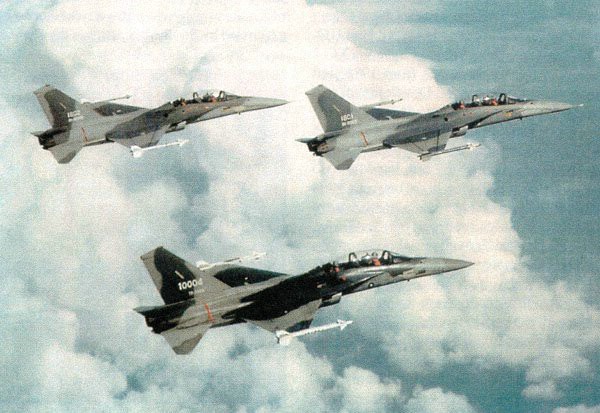
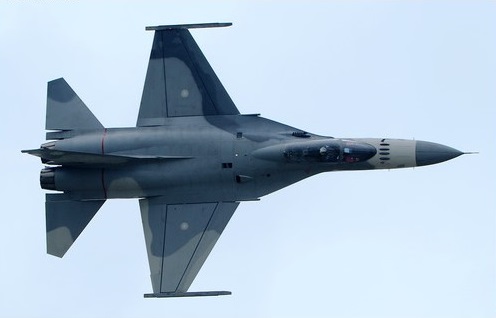
Commencing development in 1982 at the Aero Industry Development Center (AIDC) at Taichung, the Chiang Ching-Kuo indigenous air defence fighter was named F-CK-1 “Ching-Kuo” after a former president of Taiwan.
The aircraft’s primary mission is that of air defense carrying the indigenous Tien Chien (Sky Sword) I Sidewinder-equivalent and the Beyond Visual Range (BVR) Tien Chien II. The multi-role aircraft can also be used in the ground attack role or the martitime attack role using its multi-mode Golden Dragon GD-53 radar, which is a license built version of the Westinghouse AN/APG-67(V). For the martime attack role the aircraft can be equipped with up to three indigenous Hsing Feng II AShM. Internally the Ching-Kuo carries the M61A1 Vulcan 20mm cannon.

Three single-seat F-CK-1A and one two-seat F-CK-1B prototypes were ordered and on 10 December 1988 the first IDF prototype was rolled out. On 28 May 1989 the first, a single-seater, made its first flight. In total four prototypes were built, three single-seat and one two-seat variant. The first (A-1) incurring damage on a very public landing attempt. The second A-2 prototype was lost altogether in a Mach 1 speed trials test. After having completed another 10 pre-production aircraft, full production began and deliveries started early 1994. In December 1994 the first squadron of IDF or Ching-Kuo fighters was formed, achieving initial operational capability in 1995.
The Ching-Kuo fighter was powered by two Garrett TFE 1042-70 turbofans, produced in Taiwan by the International Turbo Engine Company and developed in afterburning form under the Yun Han (Cloud Man) programme, each providing 3783kg with maximum afterburning.
The airframe was developed in collaboration with General Dynamics under the Ying Yang (Soaring Eagle) programme; the avionics were acquired and integrated under the leadership of Lear Siegler under the Tien Lei (Sky Thunder) programme, and the primary missile armament was evolved under the Tien Chien (Sky Sword) programme. The cockpit is equipped with a wide angle HUD, two MFD, a side stick, HOTAS and has a 30 degree declined Martin Baker Mk.12 ejection seat.
Armament consisted of one 20mm M61A Vulcan rotary cannon and, for the intercept role, four Sky Sword I short-range and two Sky Sword II medium-range AAMs, the maximum external stores load being 4082kg. The first of 10 pre-production Ching-Kuos (a two-seater) flew in 1992, when production of up to a further 130 was being planned.

In 1998, in service F-CK-1s were rotated to AIDC for a limited post-production upgrade, including GEC-Marconi Combined Interrogator/Transponder (CIT), Litton Improved Radar Warning Receivers (IRWRs), and Rockwell Collins Instrument Landing System (ILS).

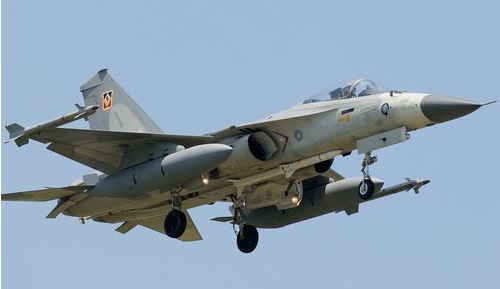
Production ended late 1999 at 130. Reportedly 102 single-seaters and 28 two-seaters had been produced. Taiwan had decided to purchase the F-16 when the Bush administration authorized the sale of more military technology to Taiwan. Having already acquired Mirage 2000 fighter from French to fill the gap, no more IDF aircraft were needed. Subsequently plans for more powerful engines were scrapped.
The 130th aircraft was delivered on 14 January 2000 and entered service in July. Taiwan operated two wings of Ching-Kuo fighters based at Ching Chuan Kang AB (Taicheng) and Tainan AB.
In 2001, AIDC started development of the upgraded F-CK-1C/D. On October 9, 2006, flight testing of the upgraded F-CK-1 IDF began when first single-seat F-CK-1C prototype (10005/958136) undertook its maiden flight from AIDC’s facility at Taichung. On March 27, 2007, the first two-seat F-CK-1D prototype (10006/96-8137) was also unveilled at a ceremony, attended by president Chen Shui-bian, who formally named the new variant Hsung Ying (Goshawk), instead of the earlier announced name of Shiang-Seng.
The F-CK-1C/D upgrade features a new BAE 32-bit flight control computer, improved mission computer and head-up display, advanced fire control radar system and improved weapons capability. Structural enhancements enable it to carry four instead of two Tianchien II (Skysword II) medium-range air-to-air missiles and strengthen the undercarriage. The upgrade also includes two additional fuel tanks in the form of conformal tanks mounted dorsally on the fuselage, first seen on the F-CK-1D prototype.

Gallery

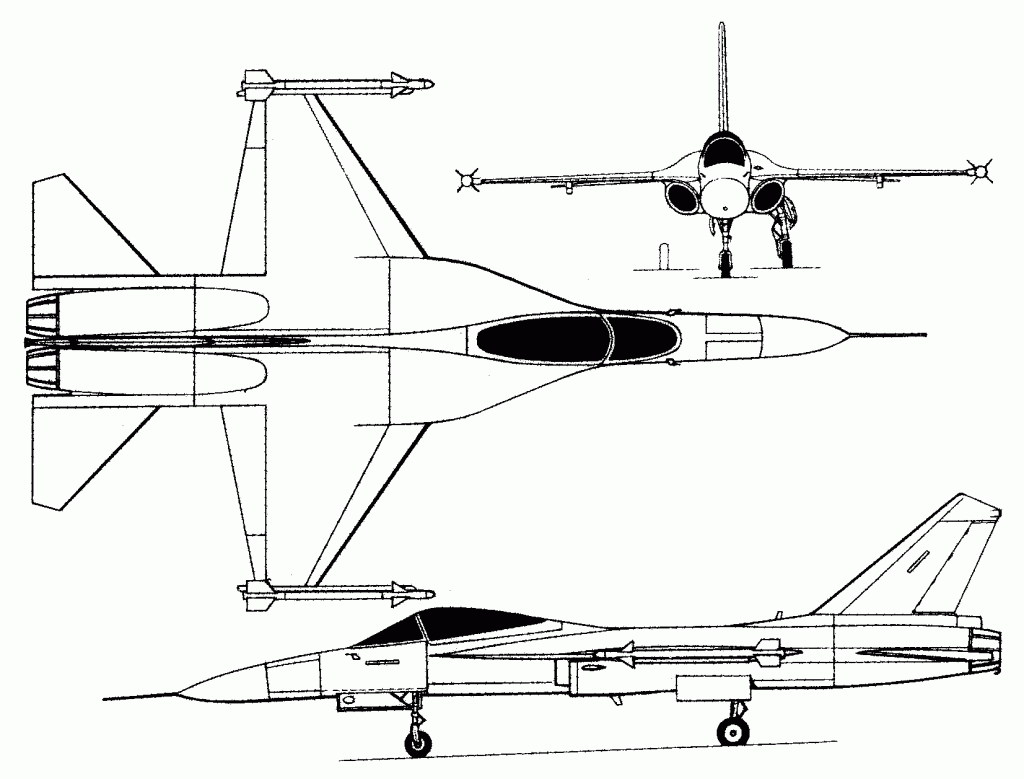
Variants: F-CK-1A, F-CK-1B, F-CK-1C, F-CK-1D

F-CK-1A Ching-Kuo
Engines: 2 x ITEC (Garrett/AIDC) TFE1042-70 (F125) afterburning turbofans, 42.08 kN /9,460 lb st
Length: 15.98m / 46 ft 7.75in
Height: 4.72m /15 ft 6 in
Wing span: 9.42m / 30 ft 10.25in
Wing area: 24.20 sq.m / 260 sq.ft
Empty weight: 6486 kg / 14,300 lb
Max Take-Off: 9.526 kg / 21,000 lb
Maximum Speed: 805mph (1,295kmh; 699kts)
Rate-of-Climb: 50,000ft/min (15,240m/min)
Service Ceiling: 50,000ft (15,240m)
Armament: one M61A1 Vulcan 20mm multi-barrel cannon
Pylons: 4 x underwing, 2 x wingtip, 1 or 2 fuselage stations
Accommodation: 1

AIDC AT-TC-3 Tse Tchan / AT-3 

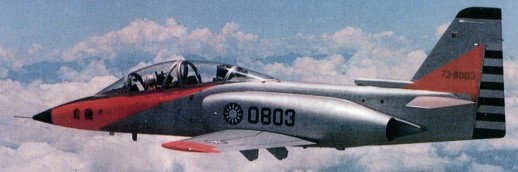
With development and design by AIDC begun in 1975, with assistance from Northrop, the first XAT-3 prototype flew on September 16, 1980. The aircraft is a twin-turbofan tandem-seat trainer with an unswept wing of supercritical section. Power is from two Garrett TFE731 engines, each giving 15.57kN thrust. For weapons training and light attack duties a semi-recessed gun pack with twin 0.5in machine-guns can be installed in a weapons bay beneath the rear cockpit, and external stores can be carried on four under-wing and one under fuselage hardpoints. Wingtip launch rails for AIM-9J Sidewinders are provided. Total external weapons avaiable load is 2,720kg (6,000lb). An A/A37U-15TTS aerial target system can be carried on the centreline pylon.

AIDC AT-TC-3 Tse Tchan / AT-3 Article

Deliveries of the AT-TC-3 to the Republic of China Air Force began in March 1984, and more than 50 were on order for use as basic and advanced trainers, replacing the Lockheed T-33 trainers. Production aircraft totaling 60 were delivered from 1984 through 1990.

AIDC AT-3A Tzu-Chiang
Engine: 2 x Garrett (Honeywell) TFE731-1-2L turbofan, 3,500lbs
Length: 42.32ft (12.9m)
Wingspan: 34.32ft (10.46m)
Height: 14.30ft (4.36m)
Wing area: 235.732 sq.ft / 21.9 sq.m
Empty Weight: 17,505lbs (7,940kg)
Maximum Speed: 562mph (904kmh; 488kts)
Cruising speed: 476 kt / 882 km/h
Landing speed: 90 kt / 167 km/h
Maximum Range: 1,417miles (2,280km)
Rate-of-Climb: 10,100ft/min (3,078m/min)
Service Ceiling: 48,064ft (14,650m)
Armament:
2 x 12.7mm semi-recessed gun packs in internal weapons bay (optional), 1900kg ext
Hardpoints: 6
Accommodation: 2

AT¬-TC-3
Engine: 2 x Garrett TFE731
Installed thrust: 31.1 kN
Span: 10.5 m
Length: 12.5 m
Wing area: 21.9 sq.m
Empty wt: 3855 kg
MTOW: 7485 kg
Warload: 2270 kg
Max speed: 900 kph
Initial ROC: 2440 m/min.
Ceiling: 14,600 m
T/O run: 458 m
Ldg run: 671 m
Fuel internal: 1630 lt
Range: 2297 km
Endurance: 3.2 hr
Hardpoints: 5+2 wingtip
Armament: 1 x .5 in, 2 x AAM.

Aero Design & Engineering Jet Commander 1121

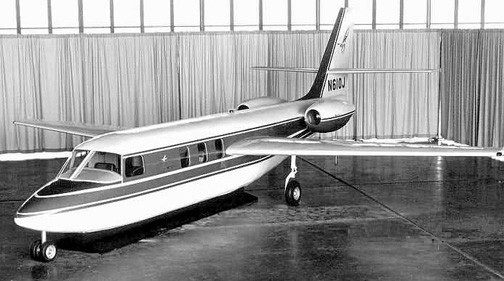
In 1960 the first production Jet Commander flew (GE CJ610 engines) and was sold to the Japanese newspaper chain Ashai.
When North American and Rockwell merged in 1967, the Justice Department insisted that the new firm divest itself of Rockwell’s rights to the Jet Commander. The Government felt that common ownership of two bizjet designs the Commander and North American’s existing Sabreliner – would give North American Rockwell a dominance on the market. For a variety of reasons (the Sabreliner’s origin as a military project was mentioned most frequently), the Government decreed that the Commander must go.
The entire project, including tooling, was bought by Israeli Aircraft Industries. The Aero Commander introduced Model 1121, was modified to become the Israel Aircraft Industries 1123 and in 1976 was offered by IAI with Garrett turbofan engines as the 1124 Westwind and its successor, the Westwind 1.

Aerocomp Comp Air Jet

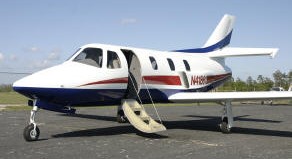
This pressurized single-engine jet is all carbon-composite fibre and is powered by 3,400-pound thrust AI-25 jet engine used in the L-39 Albatross and the Yak 40. The cabin (70×68-inches) can be configured in a variety of seating arrangements for up to 8 people. Cabin altitude of 10,000 feet is available at the aircraft’s maximum certified ceiling of 29,900 feet.

Engine: Al25 fanjet
Length: 35ft
Wingspan: 44ft
Wing Area: 297 sq.ft.
Empty Weight: 5900 lb
Gross Weight: 10,900 lb
Cruise: 375 mph
Rate of Climb: 2000 fpm
Stall Speed: 71 mph
Range: 1,270 nm
TO Dist: 2700 ft
Landing Roll: 2000 ft
Fuel Capacity: 450 USG
Seats: 8
Undercarriage: nose or tail
Kit price 2008: US$499,000

Aerocentre NC.1080

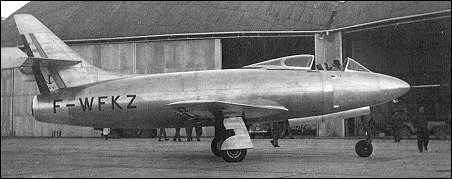
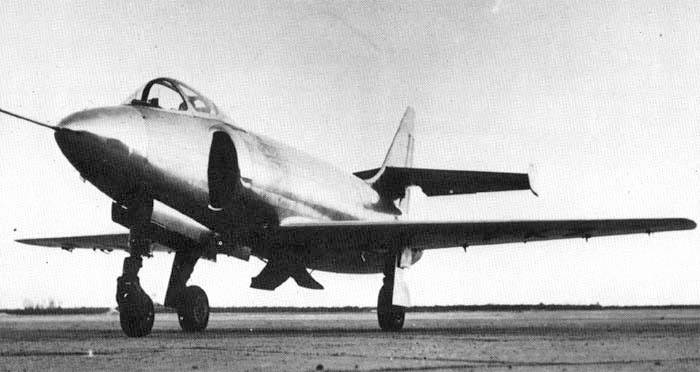
In June 1946, the Service Technique Aeronautique issued a preliminary requirement for a shipboard fighter armed with three 20mm or 30mm cannon and capable of carrying two 500kg bombs or eight 90mm rockets. Responding to this requirement, the SNCA du Nord tendered the Nord 2200, in competition with the Aerocentre NC 1080 and the Arsenal VG 90.

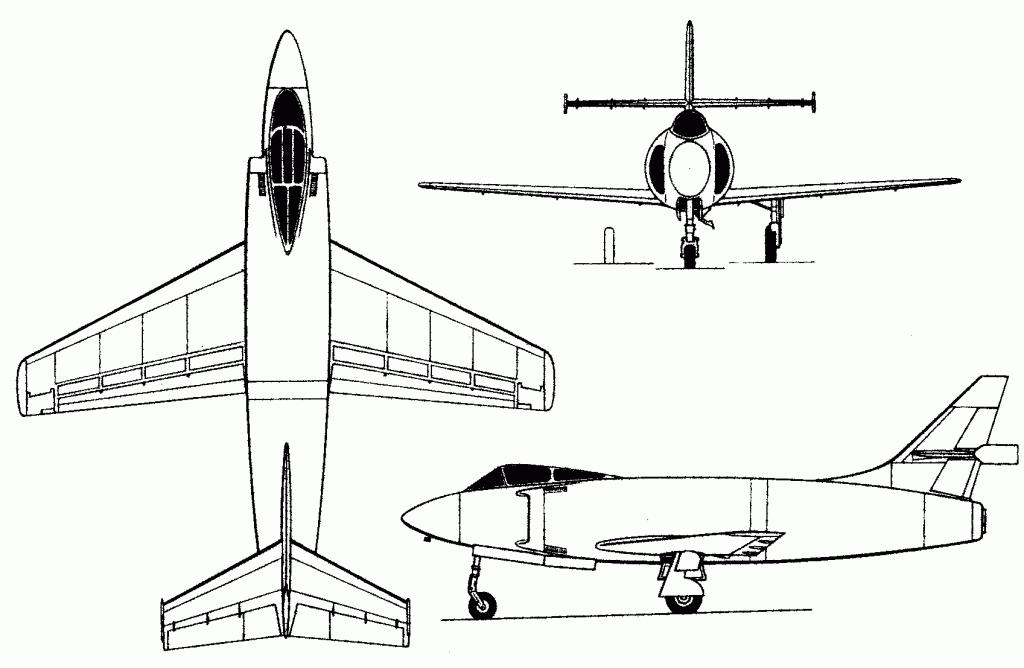
Designed under the direction of Ingenieur Pillon and built by the SNCA du Centre (Aerocentre), the NC 1080 was powered by a 2268kg Rolls-Royce Nene turbojet, featured 22 deg 30 min wing sweepback at quarter-chord and was intended to mount an armament of three 30mm cannon.

The prototype was flown on 29 July 1949, and modifications were immediately found necessary to the spoilers and tail surfaces. The Aerocentre had meanwhile been dispersed, but testing of the NC 1080 continued at Bretigny and Villaroche, servo controls being fitted in February-March 1950, and the aircraft being destroyed in an accident (the cause of which was never ascertained) on 10 April. No further development was undertaken.

Max take-off weight: 7700 kg / 16976 lb
Empty weight: 5141 kg / 11334 lb
Wingspan: 12.00 m / 39 ft 4 in
Length: 12.87 m / 42 ft 3 in
Height: 4.70 m / 15 ft 5 in
Wing area: 28.40 sq.m / 305.69 sq ft
Max. speed: 978 km/h / 608 mph
Range: 1550 km / 963 miles