The Atlas Cheetah came about through a need by the South African Air Force to update / replace its series of aging fighters while its bordering neighbors were receiving updated Soviet Bloc aircraft. Embargos limited the options available and the decision was made to modify existing SAAF Mirage III’s to a new standard.
It is believed that Atlas received some level of assistance from IAI of Israel. This brought the South African Mirage III to a new standard, implementing various proven Israeli avionics and computer systems and to the airframe, canards.
Though retaining roughly 50 percent of the existing Mirage III airframe, the Cheetah was basically an all-new aircraft. The aircraft would appear in a few variants including single-seat and twin-seat derivatives. A static inflight refueling probe was added and additional underfuselage hardpoints (wingtip hardpoints were trialed successfully for the Mirage IIIR2Z which would have become the “Cheetah R” dedicated reconnaissance platform but these never put into production). More powerful engines were also added.
Armament was centered around twin 30mm DEFA cannons and air-to-air and air-to-surface munitions of various types. The definitive Cheetah would become the single seat “Cheetah C”.
The first Cheetah conversion was revealed in July 1986, and resembles the IAI Kfir in appearance, although Atlas denies any overseas assistance with the programme. Intake mounted canards and dog-tooth leading edges are among a number of structural modifications which, together with upgraded flight systems, significantly improve the aircraft’s manceuvring performance.
Mirage 3/5/50, some having been upgraded to Cheetah standard. There are about 16 Cheetah-E conversions (all out of service); 38 Cheetah-C conversions; 16 Cheetah-D conversions; and one Cheetah-R conversion.
The Cheetah is set to be replaced in the South African Air Force beginning with the arrival of the Saab JAS J39 Gripen, of which an initial batch were ordered in 1999.
Atlas Cheetah EZ Engine: 1 x SNECMA Atar 9C turbojet, 13,670lbs thrust with afterburner. Length: 50.85ft (15.5m) Wingspan: 26.97ft (8.22m) Height: 14.76ft (4.50m) Empty Weight: 14,568lbs (6,608kg) Maximum Take-Off Weight: 30,203lbs (13,700kg) Maximum Speed: 1,453mph (2,338kmh; 1,262kts) Maximum Range: 746miles (1,200km) Rate-of-Climb: 8,666ft/min (2,641m/min) Service Ceiling: 55,774ft (17,000m) Armament: 2 x 30mm DEFA 552 cannons Hardpoints: 7 Crew: 1
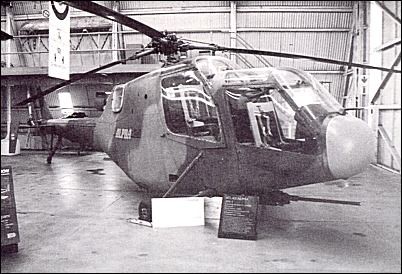
Relying on their own resources, due to trade embargoes with South Africa, Atlas Aviation produced an experimental tandem-seat attack helicopter. Based on the Aérospatiale Alouette III, the Alpha XH-1 tandem-seat attack helicopter was developed under a Government design and manufacture contract signed in 1981.
The Alpha XH-1 was purely a test-bed for weapon and cockpit systems. It was fitted with a GA-1 Rattler 20mm cannon in a steerable turret, linked to a Kukri helmet-mounted sight. During 1987, the first of two XTP-1 Puma-based test-beds were built and used to evaluate engines, avionics, optronics, weapons and associated control systems for the larger airframe. These test-beds also included the use of locally-produced composite materials used in both airframe and rotor systems.
The XH-1 first flew on February 3, 1985. Engine and transmission systems are from the Alouette III, but apart from the tail boom the airframe is a completely new design. Stub wings for weapons carriage were a projected development, while the gun turret is able to accept an alternative arrangement of four 7.62mm machine guns.
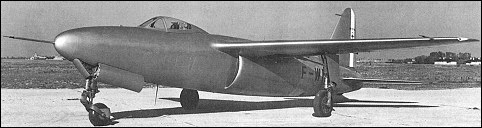
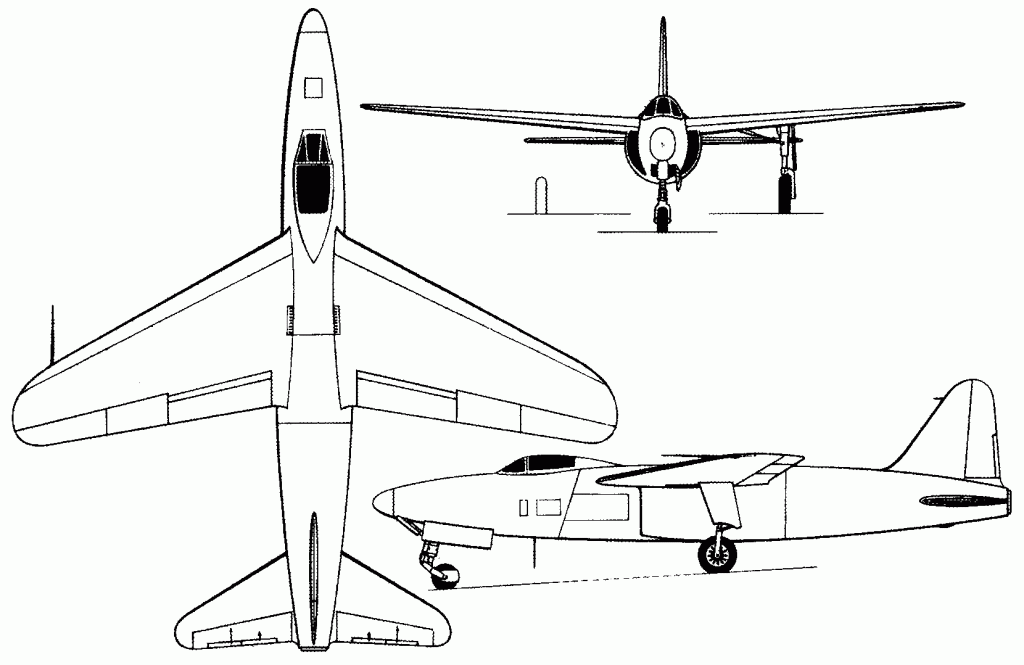
The VG.90 naval prototype was developed from the VG.70 as part of a single-seat shipboard interceptor and strike fighter development programme in competition with the Aerocentre NC 1080 and the Nord 2200. Designed by Vernisse and Galtier, the first two VG.90 prototypes were built of wood, and the first of these made its maiden flight on 27 September 1949 and the second in June 1951: both aircraft were lost in accidends. Powered by a 2268kg Rolls-Royce Nene turbojet, the VG 90 had an all-metal fuselage, and the wing and tail surfaces were metal structures with plywood skinning. Planned armament comprised three 30mm Hispano-Suiza cannon and provision was made for underwing ordnance loads, such as two 500kg bombs. The second prototype had provision for two 20mm cannon, two 7.7mm machine guns and 36 RAC 50 rockets internally, plus 16 T10 or 80 RAC 50 rockets on wing racks. A third all-metal prototype, which was to be powered by a 4000kg SNECMA Atar 101F turbojet, never flew and was abandoned. Full performance trials were not completed and the following data are manufacturer’s estimates for the VG 90 with a 2850kg version of the Hispano-Suiza-built Nene.
Take-off weight: 8090 kg / 17835 lb Empty weight: 5100 kg / 11244 lb Wingspan: 12.60 m / 41 ft 4 in Length: 13.44 m / 44 ft 1 in Height: 3.55 m / 11 ft 8 in Wing area: 30.7 sq.m / 330.45 sq ft Max. speed: 920 km/h / 572 mph Range: 1550 km / 963 miles
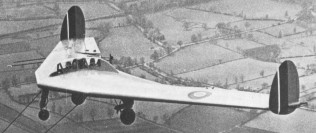
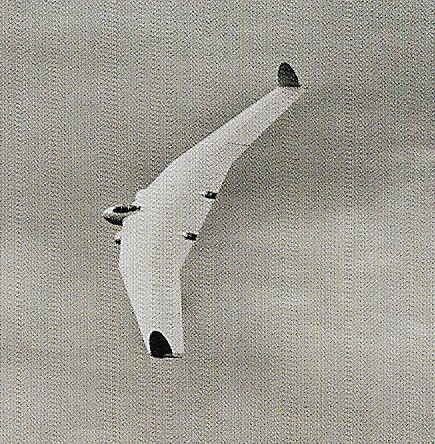
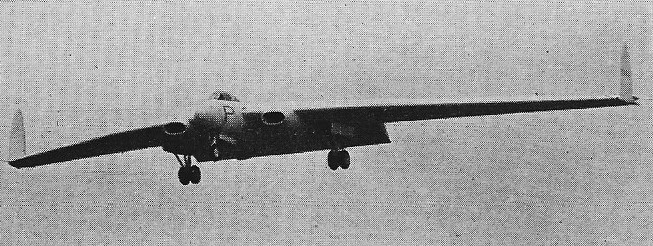
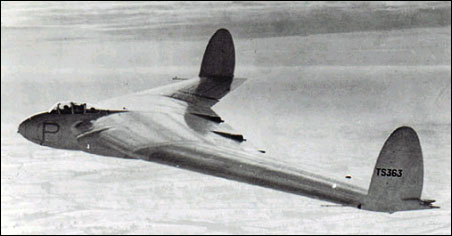
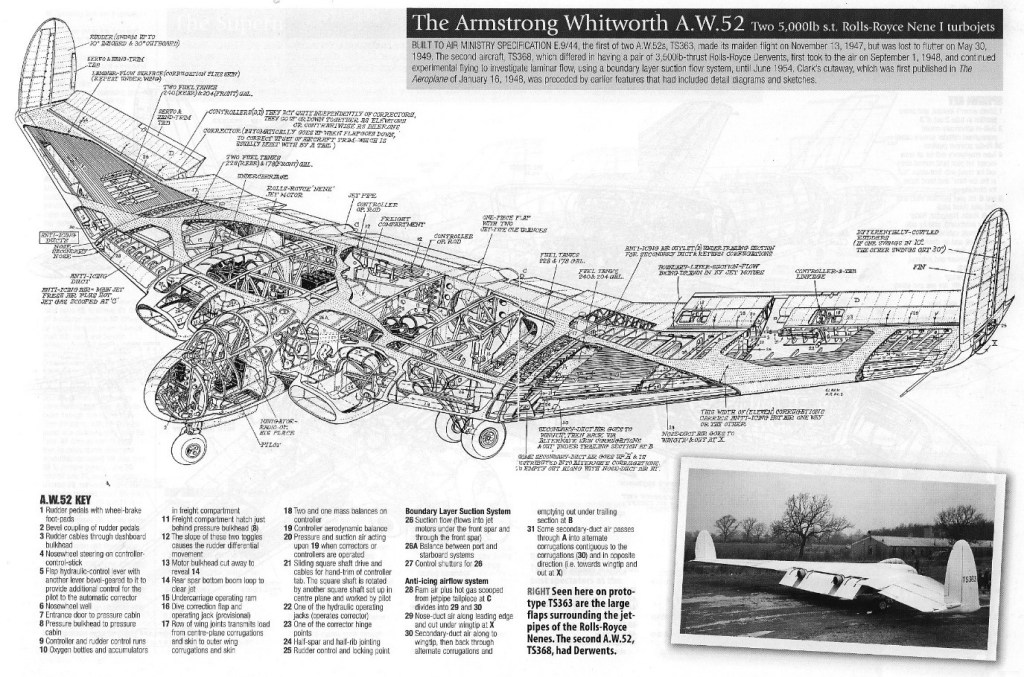
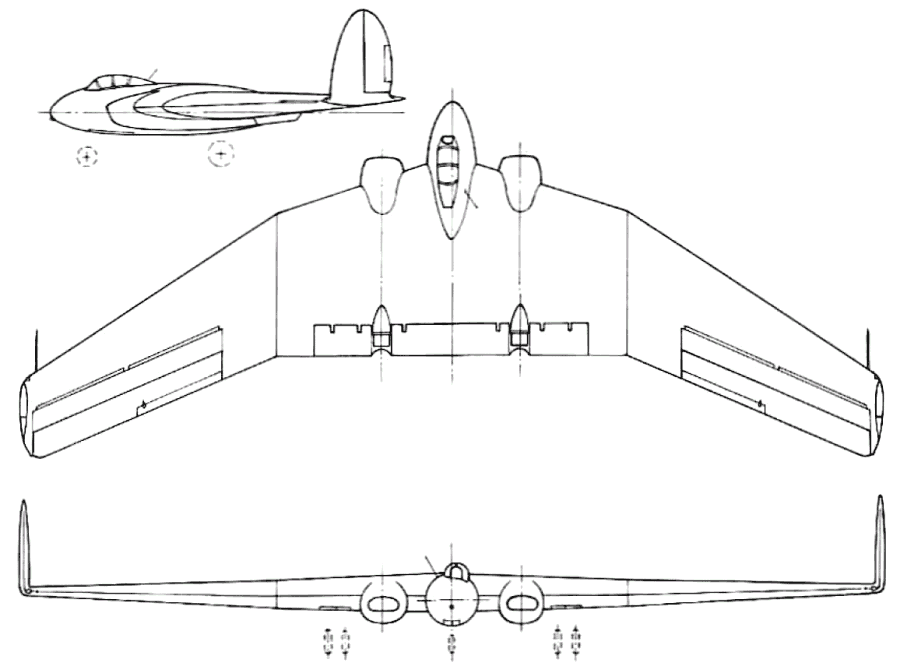
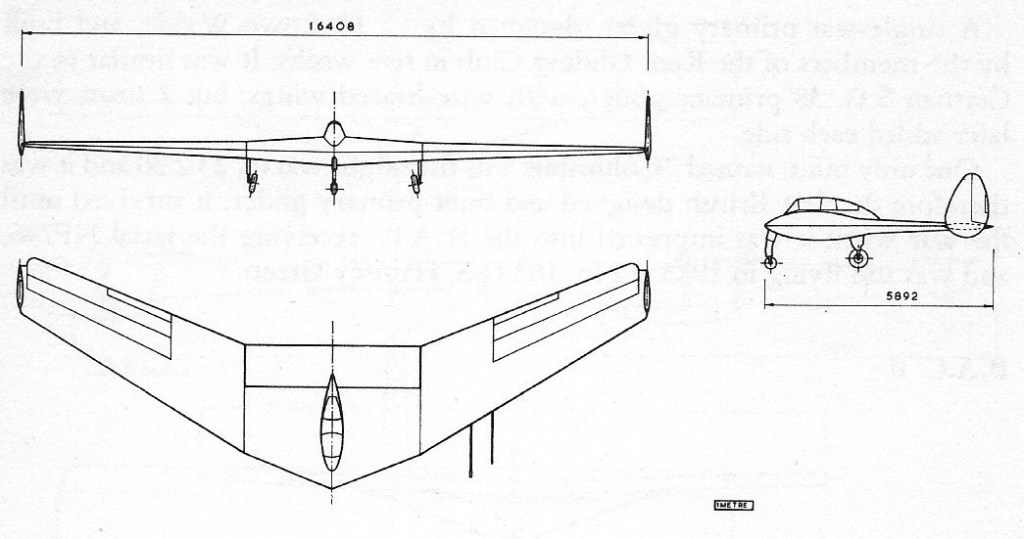
The Armstrong Whitworth A.W.52 was a flying wing type that was also intended to evaluate a configuration for a transport aeroplane with six jet engines. The basic design was validated in the A.W.52G glider.
The AW.52G was of conventional construction, but covered with “Plymax” material (1/16in ply and 22 SWG “Alclad” light alloy sheet). No airbrakes were fitted, but a central trailing-edge flap. The undercarriage was tricycle. Only one, RG324, was built. After testing was completed it remained at the company office until burnt in the mid-sixties.
The first of two A.W.52s with two 5000-lb (2268-kg) thrust Rolls-Royce Nene turbojets flew on 13 November 1947.
The first prototype, TS363, was lost in May 1949, its pilot being the first in the UK to use a Martin-Baker ejection seat in an emergency.
A.W.52 TS363, 1948 SBAC Display, Farnborough
A second prototype, powered by Rolls-Royce Derwents, was destroyed early in its flight test programme.
Although benefits were possible with such aircraft, financial problems finally curtailed the programme in 1950.
AW.52
Engines: 2 x 2270kg Rolls-Royce Nene Wingspan: 27.43 m / 90 ft 0 in Wing area: 122.07 sq.m / 1313.95 sq ft Length: 11.38 m / 37 ft 4 in Height: 4.39 m / 14 ft 5 in Take-off weight: 15490 kg / 34150 lb Empty weight: 8917 kg / 19659 lb Max. speed: 805 km/h / 500 mph Range: 2414 km / 1500 miles ROC: 4800 fpm
AW.52G Wingspan: 16.40 m / 53 ft 10 in Length: 5.89 m / 19 ft 4 in Wing area: 41.14 sq.m / 443 sq.ft Aspect ratio: 6.58 Wing section: NACA 2017 Empty weight: 2017 kg / 4451 lb AUW: 2720 kg / 6000 lb Max speed: 402 kph / 250 mph Landing speed: 104 kph / 65 mph
The full scaled F+W N-20 aircraft was estimated to have a maximum speed of 1,095 km (680 mph), but the initial converted Mamba, the SM-1, which was test-flown under a de Havilland Mosquito in 1948 and was the first turbofan to fly, did not generate adequate thrust. Considerable further work was required for the definitive two-shaft SM-5 engine, which was meant to generate 14.7 kN (3,300 lbf) thrust. The prototype N-20 was completed in 1952 and, fitted with four SM-1 engines, flew briefly during a taxi test on 8 April 1952, but the development of the engine and the N-20 aircraft was cancelled soon afterwards.
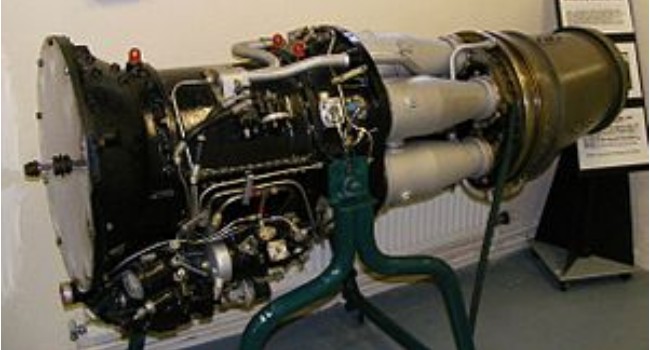
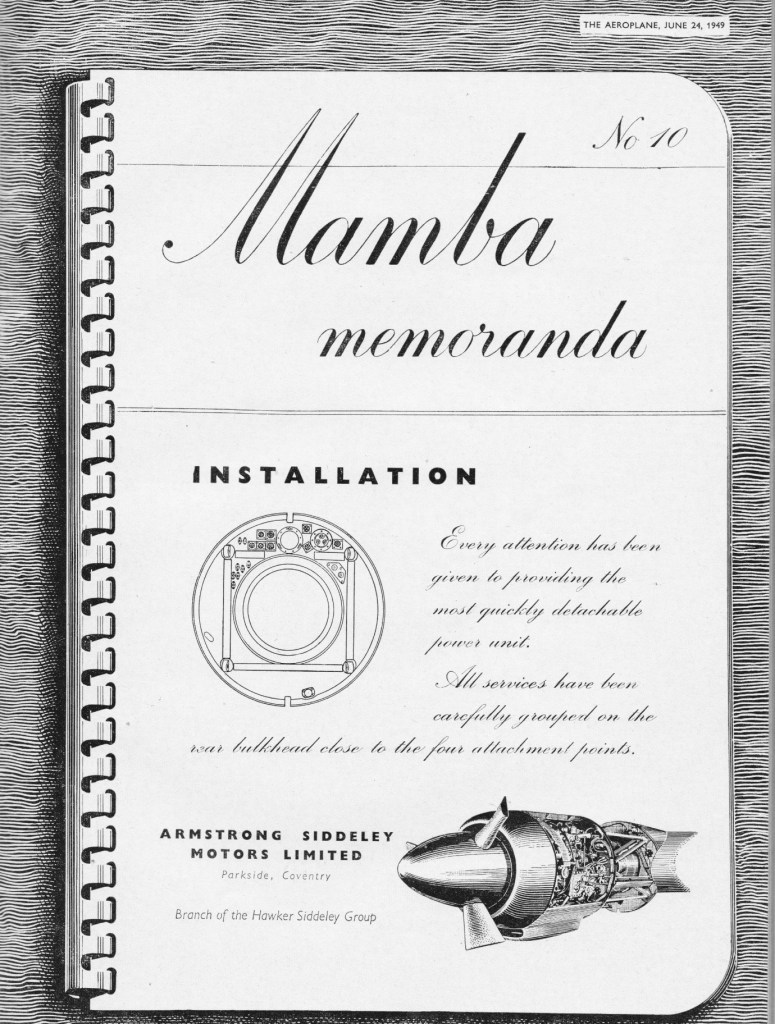
The Mamba was a compact engine with a 10-stage axial compressor, six combustion chambers and a two-stage power turbine. The epicyclic reduction gearbox was incorporated in the propeller spinner. Engine starting was by cartridge. The Ministry of Supply designation was ASM (Armstrong Siddeley Mamba). First run in April 1946, the ASM.3 gave 1,475 ehp and the ASM.6 was rated at 1,770 ehp. A 500-hour test was undertaken in 1948 and the Mamba was the first turboprop engine to power the Douglas DC-3, when in 1949, a Dakota testbed was converted to take two Mambas.
The Mamba was also developed into the form of the Double Mamba, which was used to power the Fairey Gannet anti-submarine aircraft for the Royal Navy. This was essentially two Mambas lying side-by-side and driving contra-rotating propellers separately through a common gearbox.
A turbojet version of the Mamba was developed as the Armstrong Siddeley Adder, by removing the reduction gearbox.
Variants and applications:
ASM.3 Mamba Armstrong Whitworth Apollo Avro Athena Boulton Paul Balliol Breguet Vultur Miles M.69 Marathon II Douglas C-47 Dakota
ASM.6 Mamba Short Seamew
Specifications:
ASM.3 Type: Turboprop Length: 87.3 in (2217.4 mm) Diameter: 29 in (737 mm) Dry weight: 780 lb (354 kg) Compressor: 10 stage axial flow Combustors: 6 combustion chambers Turbine: 2 stage Maximum power output: 1,320 shp plus 405 lbf (1.80 kN) thrust (1,475 eshp) Overall pressure ratio: 5.35:1 Specific fuel consumption: 0.8 lb/h/eshp Power-to-weight ratio: 1.9 eshp/lb
Design evolution of the Sapphire started at Metropolitan-Vickers (Metrovick) in 1943 as an offshoot of the F.2 project. With the F.2 reaching flight quality at about 1,600 lbf (7,100 N), the Metrovick engineers turned to producing larger designs, both an enlarged F.2 known as the Beryl, as well as the much larger F.9 Sapphire, the names being chosen after they decided to use gemstones for future engine names. The Beryl was soon running and eventually developed 4,000 lbf (18 kN) thrust, but the only project to select it, the Saunders-Roe SR.A/1, was cancelled.
By this point the F.9 MVSa.1 was developing about 7,500 lbf (33 kN), more than its competitor from Rolls-Royce, the Avon. A number of companies expressed interest in the F.9, and it was considered as either the main or backup powerplant for most late-40s/early-50s British designs.
At about the same time, Metrovick exited the jet engine industry, with their design team being quickly acquired by Armstrong Siddeley. Although Armstrong Siddeley already had a turbine development of their own, the ASX, they were primarily focused on turboprops and the Metrovick team was a welcome addition.
Work on the F.9 continued, now renamed the ASSa.5, and was delivered at 7,500 lbf (33,000 N) ratings. First run on 1 October 1948. This early engine was used only on the English Electric P.1.A, prototype for the famed Lightning. The fit was not entirely a happy one, and the afterburning ASSa.5R did little to address this, delivering an improved 9,200 lbf (41,000 N) “wet”, but doing so in an unreliable fashion that demanded a short period of “no use” while the problems were addressed. Future versions of the Lightning would be powered by the Avon instead.
The engine was soon passing tests at ever-increasing power settings. The ASSa.6 increased power to 8,300 lbf (37,000 N), and powered the Gloster Javelin FAW Mk.1, Hawker Hunter F.Mk.2 and F.Mk.5, and the prototype Sud Ouest SO 4050 Vautour. The dramatically more powerful ASSa.7 at 11,000 lbf (49 kN) was the first British engine to be rated above 10,000 lbf (44 kN), powering the Gloster Javelin FAW Mk.7, Handley Page Victor B.Mk.1 and a prototype Swiss fighter-bomber, the FFA P-16.
Afterburners of limited pergormance, (given the colloquialism “weeheat”, were also added to the ASSa.7, producing the 12,390 lbf (55,100 N) wet ASSa.7LR, used on some Gloster Javelin FAW Mk.8’s. An improved model produced 15,000 lbf (67 kN) above 20,000 ft (6,100 m), appearing on other FAW Mk.8’s and all FAW Mk.9’s.
Curtiss-Wright purchased a license for the Sapphire in 1950, with plans to have the production lines running in 1951. However a series of delays led to its service introduction slipping a full two years, by which point the Pratt & Whitney J57 was on the market and took many of the J65’s potential sales.
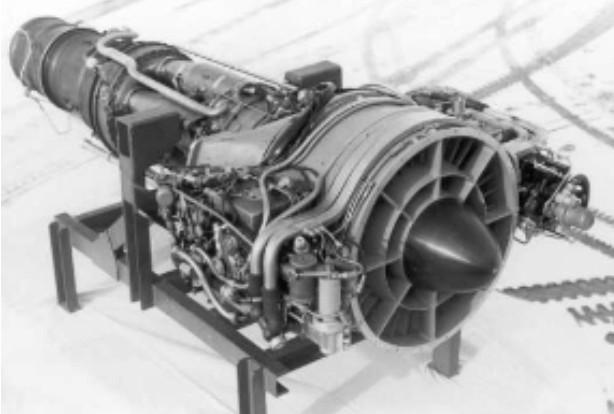
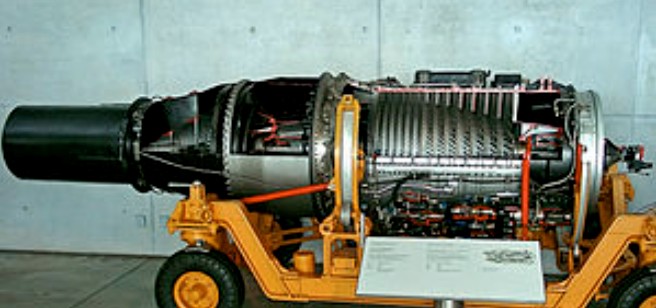
Sectioned Wright J65
Nevertheless, once it entered production it proved to be as good as the British versions, and along with the Martin B-57, its original target, the J65 went on to power versions of the North American FJ Fury, Douglas A-4 Skyhawk, Republic F-84F Thunderstreak, and the two Lockheed XF-104 Starfighter prototypes.
A 6,500-10,380ehp turboprop version of the J65 (Sapphire) was developed by Curtiss-Wright as the Wright T49.
Variants:
MVSa.1 Ministry of supply designation of the original Metropolitan-Vickers F.9 Sapphire, derived from the Metropolitan-Vickers F.2/4 Beryl, design work on this much larger engine started in 1943.
Metropolitan-Vickers F.9 Sapphire Company designation for the MVSa.1
ASSa.5 Early Armstrong Siddeley developed Sapphire engines.
ASSa.5R Reheated engines fitted to the English Electric P.1A with limited success.
ASSa.6 Later engines developed for the Gloster Javelin FAW Mk.1, Hawker Hunter F.Mk.2, F.Mk.5 and the prototype Sud Ouest SO 4050 Vautour
ASSa.7 Rated at 11,000 lbf (49 kN), powering the Gloster Javelin FAW Mk.7, Handley Page Victor B.Mk.1 and the prototype FFA P-16.
ASSa.7LR Engines with a 12% augmentation reheat system for use above 20,000 ft (6,100 m) for use at altitude, powering the Gloster Javelin FAW Mk.8.
Wright J65 Licence production in the United States by Wright Aeronautical
Applications: Sapphire English Electric P.1.A FFA P-16 Gloster Javelin Handley Page Victor Hawker Hunter
Wright J65 Douglas A-4 Skyhawk Grumman F-11 Tiger Martin B-57 Canberra Lockheed XF-104 North American FJ-3 Fury North American FJ-4 Fury Republic F-84F Thunderstreak
Specifications:
ASSa.7 / 7LR Type: ASSa.7 Turbojet, ASSa.7LR Augmented turbojet Length: ASSa.7 125.2 in (3,180 mm), ASSa.7LR 293 in (7,442 mm) Diameter: 37.55 in (954 mm) Dry weight: ASSa.7 3,050 lb (1,383 kg), ASSa.7LR 3,180 lb (1,442 kg) Compressor: 13 stage axial flow Combustors: Annular with 24 hockey-stick vaporisers Turbine: Two stage Fuel type: Avaition kerosene to DERD 2482 or DERD 2486 Oil system: Flood feed, minimum oil pressure 12 psi (83 kPa), tank capacity 18 imp pt (10 l), oil grade to DERD 2487. Maximum thrust: ASSa.7 11,000 lbf (49 kN) at sea level at 8,000 rpm, ASSa.7LR 12,390 lbf (55 kN) above 20,000 ft (6,096 m). Specific fuel consumption: 0.885 lb/hr/lb (90.214 kg/kN/hr) at Take-off rating Thrust-to-weight ratio: 3.607 lbf/lb (0.035 kN/kg)
The ASX was an early axial flow jet engine built by Armstrong Siddeley that first ran in April 1943. Very little information on the engine is available, and it appears it was never put into production. A turboprop version as the ASP was somewhat more successful, and as the Armstrong Siddeley Python saw use in the Westland Wyvern. The ASX was unique in layout. The inlet to the 14-stage compressor was placed near the middle of the engine, the air flowing forward as it was compressed. From there it fed into 11 flame cans arranged around the outside of the compressor, flowing back past the inlet, and finally through the turbine. This layout allowed the compressor and combustion areas to be “folded” together to make the engine shorter, although the overall reduction in the case of the ASX appears to be fairly limited. Additionally this makes it more difficult to service the compressor, although in modern designs it is the “hot section” that generally requires most servicing. The ASX was flight tested fitted to the bomb bay of a modified Avro Lancaster, ND784, the first flight taking place on 28 September 1945. At full power the engine ran at 8,000 rpm and developed 2,600 lbf (12 kN) of thrust at sea level. For cruise the engine ran at 7,500 rpm and developed 2,050 lbf (9.1 kN). It weighed 1,900 lb (865 kg). The ASP conversion used a second turbine stage to drive the propeller through a gearbox, producing 3,600 shp, as well as 1,100 lbf (4.9 kN) of leftover jet thrust. Beyond this, little has been published about this engine. Armstrong Siddeley appears to have given up on the design just after the war, and took over the Metrovick F.9 Sapphire design instead.
Components: Compressor: 14-stage axial reverse-flow compressor Combustors: 11 stainless steel can combustion chambers arranged around the compressor Turbine: 2-stage axial Fuel type: Kerosene (R.D.E. / F / KER) Oil system: pressure feed to bearings, dry sump, 80 S.U. secs (10.2 cs) (D.E.D. 2472D) grade oil
ASX Type: Axial flow turbojet Length: 167 in (4,241.8 mm) Diameter: 42 in (1,066.8 mm) Dry weight: 1,900 lb (861.8 kg) Maximum thrust: 2,600 lbf (11.57 kN) at 8,000 rpm at sea level Overall pressure ratio: 5:1 Turbine inlet temperature: 1,220 °F (660 °C) Specific fuel consumption: 1.03lb/lbf/hr (104.98 kg/kN/hr) Thrust-to-weight ratio: 1.37 lbf/lb (0.0134 kN/kg) Military thrust, static: 26,000 lbf (115.65 kN) at 8,000 rpm at sea level Cruising, static: 2,050 lbf (9.12 kN) at 7,500 rpm at sea level Idling, static: 130 lbf (0.58 kN) at 3,000 rpm at sea level
The Adder, a pure-jet derivative of the Armstrong Siddeley Mamba ASM3 airscrew gas-turbine, was originally developed as an expendable engine to power the Jindivik 1 target drone. The engine, first run in November 1948, was then developed into a longer-life engine before evolving into the more-powerful Armstrong Siddeley Viper.
The ASA.1 Adder was flight tested in the rear-turret position of the Avro Lancaster III SW342, the aircraft also having been previously modified and used for icing trials of the Mamba by Armstrong Siddeley’s Flight Test Department at Bitteswell.
Applications:
GAF Pika Saab 210 Folland Midge
Specifications: Type: Turbojet Compressor: Axial Flow Maximum thrust: 1,050 lb Max continuous power: 900 lb / 409 kg Diameter: 28 in / 71,12 cm Length: 73.3 in / 1,84 m Net dry Weight: 580 lb / 263 kg Take-off power: 1,100 lb / 500 kg Fuel burn max continuous: 1.2 lb/lb th/h






 All Aero