Boeing 737 / P-8 Poseidon / C-40 / T-43 / E-7

Boeing 737-500

As originally conceived, the Boeing 737 series 100 could accommodate sixty to eighty-five passengers but after talks with Lufthansa this was increased to around 100 seats. The newly designed wing was required to give good lift and have excellent low speed characteristics for short-field operations, around 870nm. The engines selected were two Pratt & Whitney JT8D-1 turbofans, each of 14,000 pounds thrust, but following negotiations with Lufthansa the more powerful JT8D-7 turbofan was chosen for it could maintain the same thrust at higher ambient temperatures. The aircraft has almost the same fuselage cross-section as the longer 707 and 727, designed so that maximum use could be made of 727 tooling and components to keep initial costs low. The aircraft is powered by the JT8D turbofan engine developed for the 727, and has the 727’s high-lift system. The 737 utilised the same nose and fuselage section as the 727. Wing sweepback on the 737 is 25 degrees. The prototype 737-100 first flew on 9 April 1967 and was so successful that by 15 December 1967 FAA certification was complete and Lufthansa took delivery of their first machine on 28 December 1967. They made their first scheduled 737 passenger flight on 10 February 1968. Only 30 of the -100 series were built.

Boeing 737 Article

United Airlines launched the 737-200 with a 1.82m fuselage stretch, first flown on 8 August 1967. The -200 was added to the 737-100 type certificate on 21 December 1967, and first delivery to United Air Lines on 29 December 1967.

In production from 1966 to 1988 (1114 aircraft), the 737-100 offered 85 – 90 seats and a maximum take-off weight of 110,000 lb initially with two JT8D-7 of 14,000 lb thrust. The Dash 9 engine of 14,500-lb thrust was also available. The -200 Series offered a maximum take-off weight of 115,500 lb, rising to 128,100 lb for the Advanced version. Engine types available were the Dash 7, the 9A with 14,500 lb, the l5A with 15,500 lb and the l7A with 16,000 lb thrust.

The T-43As being navigation trainers and the C-40A being the 737-NG model 700. Boeing has delivered the 19th and final T-43 Navigator Trainer aircraft to the USAF’s Air Training Command in 1974. The aircraft, a military derivative of the 737-200 twinjet, flew to Mather AFB, Sacramento, California. Boeing says the T-43 programme was completed on schedule and within the $81.7m contract which Boeing won in May 1971. Deliveries began in 1973.

In 1978 British Airways ordered 19 737-200 Advanced, which entered service in February 1980. More followed in 1980/1981, and another batch of 16 was ordered in Autumn 1983, with the last delivered in spring 1985, bringing the fleet to 44 aircraft. In October 1988 new orders were announced, which included firm placements for 24 737s, with built in flexibility to choose from the 737-300, or the new -400 or -500 models. British Airways eventually opted for the larger -400. Eleven options were also included and soon taken up, with the new type introduced into service in October 1991.

A maritime surveillance version of the 737-200, the Surveiller is equipped with a Motorola side-looking modular multi-mission radar (SLAMMR), linked to two 5m-long antennae mounted on each side of the upper rear fuselage. The radar has a typical range of 185km on each side of the aircraft at a patrol height of 9,150m (30,000ft). B737-219 is a quick change variant, from freight to passengers.

Boeing 737-2A6 ZK-NEE

The last of 1,114 Boeing 737-200s (and 30 737-100s) was delivered in August 1988. The total includes 19 T-43A navigation trainers for US Air Force (subsequently redesignated CT-43A) and three Surveillers for Indonesian Air Force.

In the end it was the rather noisy JT8D-15 engines that prompted Boeing to look for a replacement for the 737-200 advanced. Already operators throughout the world were turning to Europe for replacement jets such as Airbus and the Hawker Siddeley 146 both of which offered quieter and more fuel efficient engines. Initial design analysis showed that the new high by-pass ratio turbofans were all too big and Boeing prompted the development of the smaller diameter CFM-56 which offered 20,000 lbs thrust. The new aircraft retained about 70 percent commonality with the previous 737-200. The biggest changes, apart from the engines, were the increased fuselage length and minor changes to the wing tip. The larger turbofans did need new pylons and Boeing, with the help of CFM, redesigned the arrangement of auxiliary units inside the pod so that instead of fitting them symmetrically around the engine they were arranged on the sides giving the 737-300 engine pods that characteristic squashed look.

Production go-ahead for the Series 300 was given in March 1981 at the first flew on 24 February 1984, the 737-300 powered by CFM56-3 engines was FAA certified on 14 November 1984 and Boeing made the first delivery to USAir on 28 November 1984.

Boeing 737-341 PP-VOO

On 8 January 1989, a newly-delivered 737-400 belonging to British Midland crashed onto the M1 motorway at Kegworth, UK, during an emergency landing attempt, killing 32 people. The crew believed that an engine was on fire, but incorrectly wired cockpit systems may have given them false information.

Approval for 120-minute ETOPS given November 1986, but withdrawn July 1989 due to concerns related to operation in heavy rain and hail; approval restored 14 September 1990.
Commonwealth of Independent States Interstate Aviation Committee certified the Boeing 737 family with P&W or CFM engines 18 January 1993 and the first delivery for Russian Federation and Associated States (CIS) registration (737-300 to National State Aviacompany Turkmenistan) was on 12 November 1992.
A 737-300 for Ansett Worldwide (and subsequent lease to British Midland Airways) rolled out at Renton on 19 February 1990 (as 1,833rd 737); 737 orders passed 3,000 when Southwest Airlines ordered 34 in third quarter 1992.
The 2,500th 737 rolled out 16 June 1993; 3,000th Classic’ 737, a 737-400 for Alaska Airlines (N793AS) first flew on 16 January 1998. Production of Classic’ averaged 9.5 per month during 1998.

Further developments at Boeing resulted in the even larger 737-400 which was first announced in June 1986 and the first example flew on 19 February 1988. Considerably longer than the 737-300 (3.05 metres). Announced June 1986, the first rolled out on 26 January 1988 and first flew on 19 February 1988.

Certified for up to 188 passengers on 2 September 1988, the first delivery (to Piedmont Airlines) was on 15 September 1988.

A high gross weight structure variant rolled out on 23 December 1988; certified by the FAA and delivered to first customer 21 March 1989. ETOPS approval was granted on 14 September 1990. Russian Federation and Associated States (CIS) certification with CFM engines was on 18 January 1993, as for the 737-300.

Initially known as 737-1000 and then announced as the 737-500 on 20 May 1987, the -500 first flew on 20 June 1989; certified 12 February 1990 after 375 hour test programme; and first delivery (to Southwest Airlines) 28 February 1990. ETOPS approval was given on 14 September 1990. Russian Federation and Associated States (CIS) certification with CFM engines was given on 18 January 1993, as for 737-300 and -400. Smallest, and exactly the same size as the original 737-200, is the turbofan powered 737-500. Capable of carrying 108 passengers in comfort, the 737-500 consumes up to 20 percent less fuel per seat-mile than a comparably loaded 737-200. The 737-500 went into regular service in March 1990 with SouthwestAirlines.

Boeing 737s up to and including -500 are known as Classic' series to differentiate them from ‘Next-Generation’ variants beginning at -600.
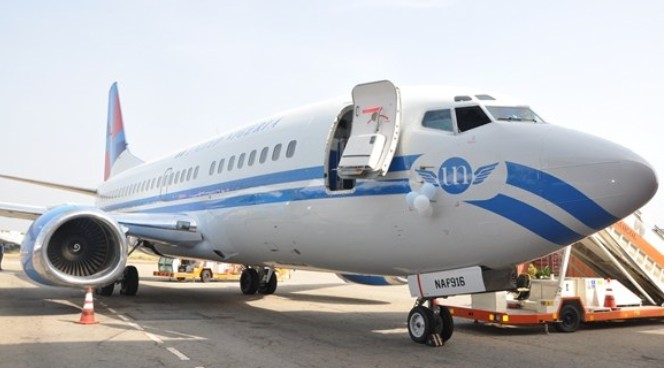
United Nigeria – B737-500 – NAF 916

In 1996 the Lufthansa fleet included 89 Boeing 737 and 26 Boeing 747s.

The 737-700 first flew on 9 February 1997, was delivered to Southwest and entered service on 18 January 1998.

Boeing 737-700BBJ M53-01

In 2003, the Australian Defence Force’s first 737-700 “Wedgetail” aircraft had installed a multi-role electronically scanned array antenna, 35.5 ft long and weighing over 3 tonnes, the antenna was described a “the critical sensor aboard the aircraft”. The Royal Australian Air Force Wedgetail airborne early warning and control (AEW&C) aircraft entered service in 2009. Six Boeing 737 NGs were modified to accommodate sophisticated mission systems and radars that will increase Australia’s surveillance and air combat capability, provide air defence support for the naval fleet, and assist in civil operations such as border protection and search and rescue. The Wedgetail AEW&C aircraft were operated by No 2 Squadron from RAAF Base Williamtown, near Newcastle.
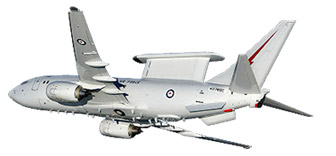
The first two Wedgetails were modified in the United States of America, with the remaining four modified at RAAF Base Amberley, near Brisbane.

Boeing E-7A Wedgetail Article

In February 2006 Boeing delivered the 5000th 737, a 730-700 for Southwest Airlines and 38 years after the first example was delivered. At the time of handover 541 operators were flying over 4100 737s and total sales exceeded 6150.

In January 2007 the first 737-700ER was rolled out, this available in normal airliner form or as in 48-seat all business class configuration with a maximum range of 5510 nm / 10,200 km if fitted with maximum fuel.

The B737-800, essentially a stretched version of the earlier B737-400 seating up to 189 passengers, earned its type certification from the FAA on 13 March 1998. The 737-800NG was launched by Boeing on 5 September 1994. The first delivery of the type was to Hapag-Lloyd on 22 April 1998. Boeing announced on 18 February 2000 that it would offer the blended winglet version of the B737-800NG to customers – a new, advanced technology winglet that has become a standard option. First deliveries of the winglet jet commenced in May 2001. The winglets can be retrofitted and, because of commonality through the 737 range, the blended winglet will be an option for other models that have the B737-800 wing, including the B737-700C/QC and the B737-900. A winglet-equipped 737 is able to fly further, burn less fuel and carry additional fuel than one without winglets. Each winglet is 2.5m long and 1.2m in width at the base, narrowing to approximately 0.6m at the tip. They add approximately 1.5m to the airplane’s total wingspan taking it to 35.8m (all next-generation 737 models have the same wingspan of 34.3m). Each winglet weighs about 60 kg and the overall increase is about 170 kg. Structural modifications to accommodate the winglet include strengthening of the wing’s centre section.
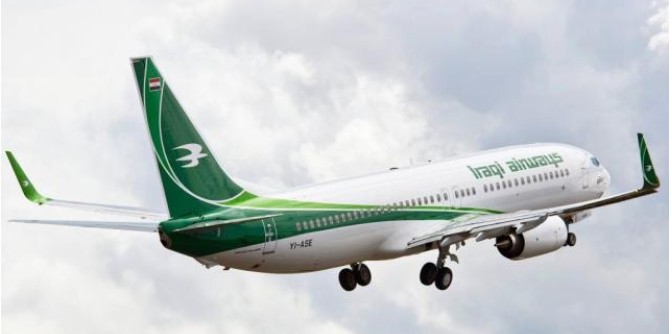
Boeing 737-800

On 26 July 1993 Boeing delivered the 2000th 737NG family example – a 737-700 to Southwest Airlines, eight years after the first one was delivered to the same airline. Total 737NG orders were about 3400, eclipsing the combined total of the first two 737 generations.

The B737-BBJ is a high performance derivative combining the fuselage of the 737-700, strengthened in the aft section, with the centre-section, wing and landing gear of the 737-800. The 737-BBJ is operated by the USAF as the C-40C.
The BBJ combines the fuselage of the Boeing 737-700 aircraft with a strengthened aft section, and the centre-section, wing and landing gear of the 737-800 aircraft. Winglets are standard, affording 5 to 7 per cent reduction in cruise drag, resulting in 4 to 5 per cent increase in range. The BBJ features the same panel as the Boeing 777 and also adds a heads-up display. A variety of fuel tank configurations allow the BBJ to have a more than 6,000 nm range. With a customized interior, some of which feature a conference room and a gymnasium, the BBJ approaches a $50 million total acquisition cost.
Increased fuel capacity is provided by the installation of between three and nine auxiliary tanks in the underfloor baggage holds, providing a maximum range of 6200 nm / 11,485 km.

With the minimum number of three auxiliary tanks installed, range is reduced to 5025 nm / 9310 km but payload increases, allowing about 50 passengers to be carried with full fuel. The first BBJ flew on 4 September 1998, joint FAA/JAA certification was awarded the following month and the first delivery was made in November 1998 to General Electric. The 100th 737-based BBJ – for the Indian Government – flew in November 2006.

A stretched version (19 feet longer) of the original BBJ, the BBJ2 offers 25% more cabin space and 100% more baggage space. First delivery of the larger Boeing Business Jet was in early 2001.
Two Boeing 737 BBJ (Boeing Business Jet) special purpose aircraft are operated by the Royal Australian Air Force’s No 34 Squadron, based at Defence Establishment Fairbairn in Canberra. Both BBJs are permanently converted to VIP configuration, comprising two conference tables and seating for 30 passengers. The BBJs joined the VIP fleet in July 2002.
The 737-900 first flew on 3 August 2000, from Boeing Field. The 900 retains the same wing and engines (CFM56-7s) as the 600, 700, and 800 models. Two fuselage plugs, ahead and aft of the wing box increase the fuselage length by 8ft 8in (2.6m) over that of the 800, for 177 passengers in a two-class configuration, 15 more than the 800. Because of emergency exit requirements, the maximum seating number of 189 is the same as for the 800. Two aircraft were used for FAA and JAA certification. The launch customer being Alaska Airlines with an order for ten placed in November 1997.
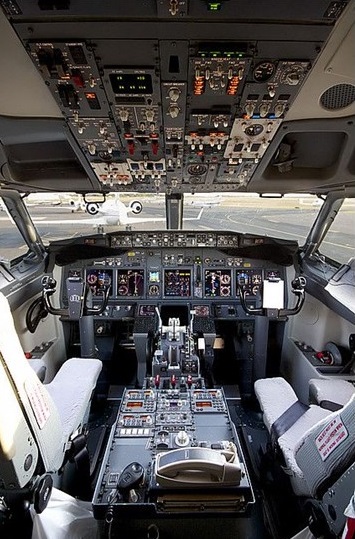
Boeing 737-900

On 5 September 1993 the 180-215 seat 737-900ER recorded its maiden flight. Boeing delivered the first 737-900ER to Indonesia’s Lion Air on 27 April 2007. The airline had 60 on order. By June 2007 Boeing had received 7000 orders for all 737 models.

The P-8A Poseidon for the US Navy is the third military derivative of the 737NG airliner after the 737-700BBJ based C-40 clipper cargo and personnel transport and the 737 AEW&C Wedgetail/Peace Eagle.
Chosen by the Navy in 2004 to replace the bulk of its P-3C Orions, the airframe is based on the 737-800 mated with the strengthened wings of the 737-900. The P-8A is powered by two 27,300 lb (122kN) thrust CFM56-7E engines fitted with 180kVa generators. Boeing has changed 75% of the –800s primary structure maily through stronger gauge materials for the expected flight loads. Other changes include a refuelling receptacle in the forward upper fuselage, an integral fuel tank in the aft third of the fuselage, and an internal weapons bay. The weapons bay has five hard points each rated for 650 kg, and two hard points on each wing, outboard of the engines are rated for 1360 kg, and two hard points in tandem on the centre forward fuselage are rated for 650 kg. Raked wingtips are developed from those of the 767-400.
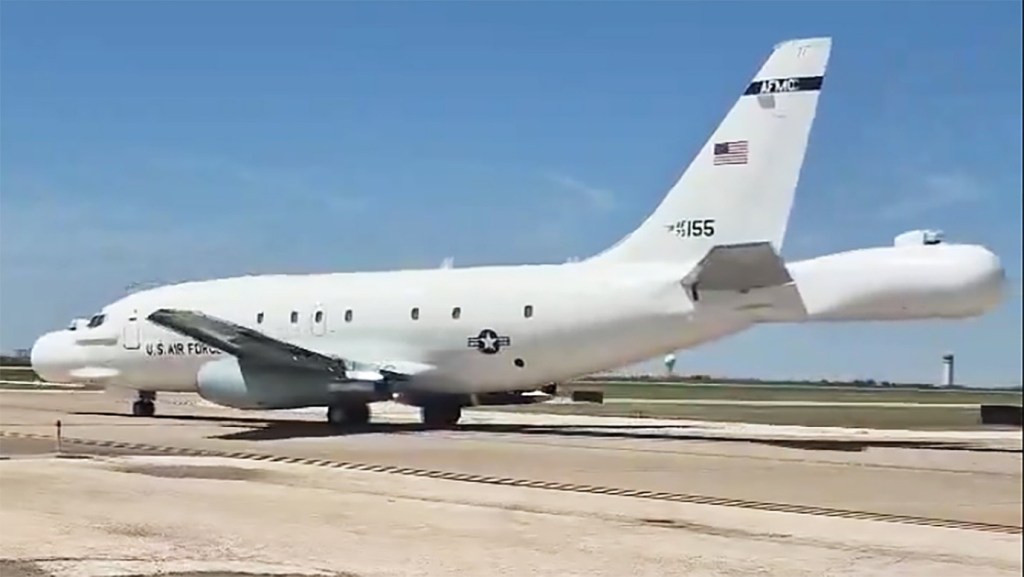
Boeing 737 RAT55

The “RAT” in the name stands for Radar Airborne Testbed, while the “55” refers to the last two digits in its tail number. RAT55 spends most of its flying life in the vast and remote range complexes that span South-Central California and Southern Nevada. The aircraft seems to live at the high-security Tonopah Test Range Airport (TTR) and spends time in the skies near Area 51 and Edwards Air Force Base. While the one-off NT-43A has ventured beyond its usual protected operational confines — it needs major servicing just like any other 737 — usually these trips seem to be planned to expose the aircraft to minimal public eyeballs. That is clearly no longer the goal.

RAT55 is critical to the development and sustainment of America’s aerial stealth technology. Simply put, RAT55 uses its two huge radar arrays — one front and one back — to take fine measurements of the radar signatures of stealthy aircraft while flying through the air near them. It does this to validate low-observable designs and skin treatments. It also has electro-optical/infrared capabilities above its radomes and can be fitted with dorsal fairings for other systems. While there are facilities on the ground that can take similar measurements of aircraft flying through the air, doing it from another specially-equipped aircraft in the air allows the target to be measured from every angle, including from overhead aspects, and continuously.

Even when B-2 Spirits come out of depot maintenance, they usually spend time in the sky with RAT55 to validate that the work done fits established design goals and parameters. That is the most visible of the NT-43A’s work, but the aircraft is also involved with the most advanced and secretive stealth aircraft development programs in the Pentagon’s portfolio, many of which we don’t know about and likely never will.

Gallery

737-100
Engines: 2 x JT8D-7, 14,000 lb thrust.
Length: 90 ft 7 in (27.6m)
Wingspan: 93 ft
Height: 37.07ft (11.30m)
MTOW: 110,000 kg.
Empty Weight: 61,994lbs (28,120kg)
Maximum Speed: 544mph (876kmh; 473kts)
Pax cap: 85-90
Ceiling: 30,000 ft
Range: 1,840 mls
Engines: 2 x JT8D-9, 14,500 lb thrust

737-219
MTOW: 53,070 kg

737 297

737-2Y5
Engines: 2 x JT87D-15A, 15,000 lb thrust
MTOW: 56,600 kg
Pax cap: 100

737-300QC
MAUW: 63,277 kg
Capacity: 142 pax or 17,000 kg cargo

737 713C

737-33R
Engines: 2 x CFM-3C-1 turbofan, 20,000 lb
Wingspan: 28.9m
MTOW: 62.82 tonne
Vne: 566 kts
Max Mach: 0.82

737-37Q
Engines: 2 x GE CFM56-3C-1 turbofans, 22,000 lb
MTOW: 62.82 tonne
MLW: 32.722 tonne

737-4L7
Engines: 2 x GE CFM56-3C-1 turbofans, 23,500 lb
MTOW: 68,000 kg
MLW: 56,200 kg
Fuel cap: 19,000 kg
Length: 115 ft 7 in (35.22m)

737-600
Engines: 2 x GE CFM56-7B turbofans
Seats: 110-132
Range: 3000+ nm
Wing area: 1340 sq.ft
Fuel cap: 26,136 lt
Length: 31.24m

737-700
Engines: 2 x CFM 56-7, 24,000 lb
Wing span: 34.32m
Wing area: 1340 sq.ft.
Length: 33.63m
MTOW: 70,080 kg
Empty wt: 37,971 kg
Zero fuel wt: 54,657 kg
Fuel cap: 26,136 lt
Pax cap: 126-149

737-800
Engines: 2 x CFM56-7B24 (24,000 lb)
MTOW: 74,990 kg (165,325 lb)
Empty wt: 41,554kg (91,610 lb)
Max ldg wt: 66315 kg (144,000 lb)
Fuel cap: 20800 kg
Max cruise: 0.82 mach
Max cruise alt: 41,000 ft
Wing span: 33.41m (112 ft 7 in)
Wing area: 1345.5 sq.ft (125 sq.m)
Fuel cap: 26,025 lt (51,562 lb)
Max payload range: 1900 nm
Pax cap: 162-189
Length: 39.47m (129 ft 6 in)
Height: 12.55m (41 ft 2 in)
T/O dist: 7400 ft (2256m)
Ldg dist: 5250 ft (1600m)

737-8Q8
Engines: 2

Boeing 737 MAX 8
Length: 129 ft 6 in (39.47 m)
Height: 40 ft 4 in (12.29 m)
Cabin Width: 139 in (3.53 m)
Max Payload: 46037 lbs (20882 kg)
Range: 3,800nm (7000km)
Maximum seating: 178

737-900
Engines: 2 x CFM56-7
Length: 138 ft 2 in (42.1m)
Wing area: 1340 sq.ft
Fuel cap: 26,136 lt
Pax cap:177-189

Boeing 737 BBJ (Boeing Business Jet)
Role: Special purpose passenger and VIP transport
Crew: Two pilots and up to four crew attendants
Engines: Two CFM International CFM56-7 turbofans (118.4kN (27,300 lbs) each)
Length: 33.6m
Height: 12.5m
Wingspan: 35.8m (including winglets)
Max take-off weight: 77,565kg
Max landing weight: 60,781kg
Gross weight: 171,000 lbs
Empty weight: 94,570 lbs
Speed: 630km/h normal operations
Range: 11,390km
Ceiling: 41,000 feet
Accommodation: 30 passengers in VIP configuration

BBJ2
Engines: two 26,400 lb. CFM International CFM 56-7 turbofans
Seats: 63
Gross weight: 174,200 lbs
Empty weight: 100,815 lbs
Max cruise: Mach 0.82
Long-range cruise: Mach 0.79
Range: 4,935-6,200 nm
Ceiling: 41,000 ft

CT-43 / T-43A
Engines: 2 x Pratt & Whitney JT8D-9A turbofans. 14,500 lbs thrust
Wingspan: 92.85ft (28.30m)
Length: 100.07ft (30.5m)
Height: 37.07ft (11.30m)
Empty Weight: 61,050lbs (27,692kg)
Maximum Take-Off Weight: 128,100lbs (58,105kg)
Maximum Speed: 586mph (943kmh; 509kts)
Maximum Range: 2,187miles (3,520km)
Rate-of-Climb: 3,760ft/min (1,146m/min)
Service Ceiling: 36,745ft (11,200m)
Accommodation: 5

Boeing 737 NG Wedgetail AEW&C
Role: Airborne early warning and control
Crew: Pilot, co-pilot and airborne electronics analysts and mission specialists (10 mission consoles)
Engines: Two CFM International CFM56-7 turbofans (118.4kN (27,300 lb) thrust each)
Length: 33.6 m
Height: 12.6 m
Wingspan: 34.3 m
Maximum take-off weight: 77,565 kg
Maximum landing weight: 60,782 kg
Maximum speed: 870 km/h
Cruise speed: 760 km/h
Endurance: 10 hours (without air-to-air refuelling)
Ceiling: 12,500 m (41,000 feet)
Equipment:
Multi-role electronically scanned array (MESA) radar with range in excess of 400 km
Electronic warfare self-protection measures including directed infra-red counter-measures , chaff and flares
Communication systems including HF, VHF, UHF, Link-11, Link-16, UHF SATCOM and ICS
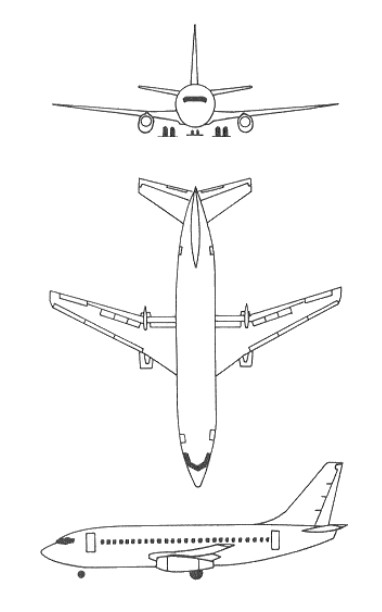
Boeing 727 / C-22

727-100

Design work of the Boeing 727, in its distinctive tri jet configuration, had begun in early 1956 with the design being finalised in Septem¬ber 1959. Considerable savings in construction were envisaged with the fuselage upper sections being identical to the B.707/720 series. The airliner was to be independent of ground support with a Garrett¬AiResearch GTC85 auxiliary power unit for electrics, pneumatic starting and cabin airconditioning. Construc¬tion go ahead came in August 1960 and, on 3 February 1963, N7001U made the first flight, out of Renton. FAA certification of the B.727 100 followed on 20 December 1963 and the first commercial flight of the type was made by Eastern Airlines on 1 February 1964 between Philadelphia and Florida.

The wing, with leading-edge slats and the newly-invented Kruger flaps to provide high lift for takeoff from short landing strips, was the most advanced then built. The wingtip of a 727 was bent upward 9 ft before structural failure occurred in static tests. It successfully took loads in excess of 425,000 lb. Unlike the 707, the 727 has power-operated control surfaces, but tabs on the primary controls enable the pilot to take over in emergencies. The 727 has a main passenger access at the rear, via a hydraulic stairway beneath the rear fuselage, and a pressure-tight bulkhead door inside.

Boeing 727 Article

The 727-100 first flew on 9 February 1963, first entering service with Eastern Air Lines on 1 February 1964, with the 727-100C first entering service on 23 April 1966.

In 1963 a series of demonstration flights to 41 cities in 23 countries was carried out. Orders by the added up to 137 including six more for TWA giving then 16 in total.

In 1965 United Air Lines ordered 25 more Boeing 727’s for $110,000,000, bringing United’s 727 fleet to 65 by 1966.

Boeing built a cargo version, installing a heavier flooring, floor beams and a cargo door and the first 100C was ready in mid 1964; a convertible passenger/freight configuration and able to carry 30,000 lb (13608 kg) over a range of 1,900 miles (3058 km). The 727-100Cs are powered by three Pratt and Whitney JT8D M turbofans of 14500 lbs thrust each, are capable of a maximum speed of around 512 knots and a cruise of 461 knots while lifting a maximum take off weight of 80740 kg (178000 lbs) over a maximum range at all up weight of 4800 km (2476 nm).

D.B. Cooper Boeing 727 Hijack

A total of 582 Series -100 were built, the last delivered in October 1972.

Originally built as the to seat a maximum of 131 passengers (727 100), it was quickly followed by a stretched version, the 727 200 which had a 20 ft (6,10 m) longer fuselage than the 727 100. The 727-200 first flying on 27 July 1967 and received FAA certification on 30 November 1967. The improved and stretched fuselage 727-200 entered service with Northeast Airlines 14 December 1967.

1976 Boeing 727-200 Super27

The last of 1,260 727-200s was delivered in September 1984.

B.727

As built, the standard 727 100 had most of its fuel in three main tanks, one in each wing (Nos 1 and 2) and one in the wing center section (Main Tank No 3). At the request of Australia’s two major domestic airlines, Boeing increased the capacity with the use of a cell added to the No 2 tank. Fuel capacity remained unchanged for the 727 200 but under the ‘Advanced 727’ program to improve the breed (of which more fuel was but one of many refinements), the standard fuel capacity was increased with a larger No 2 tank. In addition, a series of optional flexible ‘modular’ fuel tanks could be installed in the forward and aft baggage compartments.

Boeing 727-276 VH-TBH

The Boeing 727 had a factory option for JATO bottles and Mexicana ordered theirs that way for high elevation airfields.

Boeing 727 Jato take-off

Only six examples of the 727 have ever been operated by the American armed forces. All but one of the six belonged to Detachment One of the District of Columbia Air National Guard (DC ANG) at Andrews AFB, Maryland. General Maxwell R. Thurman, head of US Southern Command in Panama, used the sixth machine for his frequent travels between Central America and Washington. Thurman’s aircraft is Boeing C-22A 84-0193, a model 727-030 (c/n 18362) which once served with the Federal Aviation Administration under the civil identity N78. It is maintained and operated by the US Air Force’s 310th Military Airlift Squadron, 61st Military Airlift Group, at Howard AFB, Panama.

Somewhat confusingly, the C-22A has a higher serial number than the four Boeing C-22Bs (model 727-035) which are operated by the DC ANG. The C-22Bs were purchased to replace six Boeing T-43A (model 737) transports formerly flown by the DC ANG. The C-22C is a ‘stretched’ 727-200 series version. The C-22Bs and C-22C are all painted in such a way that national insignia can be quickly removed.

A total of 1,832 examples had been built when production ended in 1984.

The RNZAF purchased three Boeing 727-100C (one for spares) in 1981 for long range passenger and cargo ops with No.40 Squadron.

Boeing 727-100C

US operator United Parcel Service’s re-engined their 727s with RR Tay 651s. This provided an 18% fuel burn improvement.

Gallery

727 100
Engines: 3 x Pratt & Whitney JT8D 7 turbofans, 14,000 1bs thrust each.
Length: 133 ft 2 in.
Wingspan: 108 ft.
Ceiling: 37,400 ft.
Range: 1,900 mls.

727-100C
Engines: 3 x Pratt & Whitney JT8D-7, 14000 lb.
Length: 133 ft.
Cruise speed: 607 mph.
Max speed: 630 mph @ 22,000 ft.
Range: 2020 sm.
Pax capacity: 131.

727-200
Powerplants: 3 × Pratt & Whitney JT8D turbofans,
-15 rated at 15,500 lbf (69 kN) thrust
-17 rated at 16,000 lbf (71 kN) thrust
-17R rated at 17,400 lbf (77 kN) thrust
Wingspan: 108 ft (32.91 m)
Length: 153 ft 2 in (46.69 m)
Tail height: 34 ft (10.36 m)
Cruising speed: 570 to 605 mph (890 to 965 km/h)
Cruising altitude: 30,000 to 40,000 feet (9,100 to 12,200 m)
Range: 1,500 to 2,500 miles (2,750 to 4,020 km)
Max. number of passengers: 189

727-200
Engines: 3 x Pratt & Whitney JT8D-7 turbofan, 14,000 lb (6350 kg) st.
Wing span: 108 ft 0 in (32.92 m)
Length: 153 ft 2 in (46.69 m).
Wing area: 1,700 sq.ft (157.9 sq.m).
Gross weight: 172 000 lb (78 015 kg).
Max cruising speed: 595 mph (958 kph) at 21,600 ft (6585 m).
Typical range: 1290 miles (2,076 km).
Crew: 3.
Pax cap: 163-¬189.

727 200
Engines: 3 x Pratt & Whitney JT8D 9, 14,500 lb thrust.
Length: 153 ft. 2 in.
Height: 34 ft.
Wingspan: 108 ft.
Wing area: 1,700 sq.ft.
Wing loading: 107 lb/sq.ft.
Power loading: 3.91 lb/lb.
Operating weight: 100,840 lbs.
Useful load: 72,160 lbs.
Payload with full fuel: 17,957 lbs.
Maximum taxi weight: 173,000 lbs.
Maximum brake release weight: 172,600 lbs.
Usable fuel: 54,203 lbs.
Maximum landing weight: 150,000 lbs.
Zero fuel weight: 136,000 lbs.
Maximum rate of climb: 2,500 fpm.
One engine out rate of climb: 1,000 fpm.
One engine out climb gradient at 213 kt (Vy): 4.6 degrees.
Service ceiling: 36,000 ft.
Certificated ceiling: 42,000 ft.
One engine out ceiling: 23,000 ft.
Maximum speed: 549 kts.
Maximum cruise speed: 514 kts.
Economy cruise speed: 495 kts.
Duration to dry tanks, max cruise: 4.5 hrs.
Duration to dry tanks, econ cruise: 5.2 hrs.
Stall speed, clean: 165 kts.
Stall speed, full flaps: 100 kts.
Cabin pressurization differential: 8.6 psi.

727-225A
Engines: 3 x Pratt & Whitney JT8D-15, 14,500 lb.
Seats: 173.

727-77C
Engines: 3 x Pratt & Whitney JT8D-7A, 14000 lb.
Freight cap: 44,068 lb.

Boeing 720

Boeing 720B

The most important aerodynamic change compared with the 707-120 is a refinement to the wing leading-edge, which increases the angle of sweepback and decreases the thickness/chord ratio, with improvement in take-off performance and cruising speed. These modifications were incorporated subsequently on the Boeing 707-120B.
Major weight saving has been achieved by lightening the structure to the extent made possible by reducing the standard fuel load.

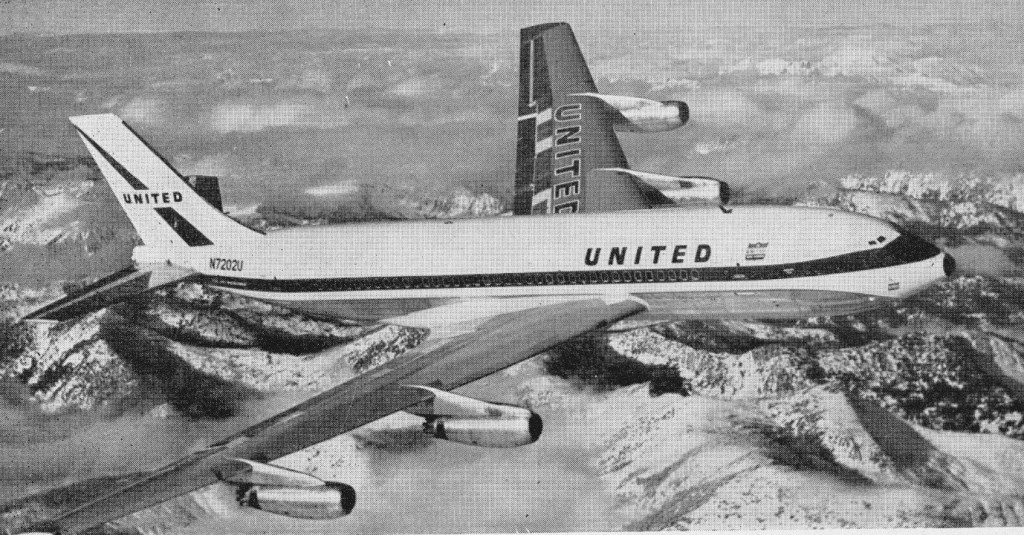
First flying on 23 November 1959, and first ordered by United Airlines, only 154 Boeing 720s were built before production ceased in September 1967, the type being replaced by the Boeing 727.

Gallery

Engines: 4 x P+W JT-3 D-1, 75.6kN
Wingspan: 39.9 m / 130 ft 11 in
Length: 41.5 m / 136 ft 2 in
Height: 11.7 m / 38 ft 5 in
Wing area: 226.0 sq.m / 2432.64 sq ft
Take-off weight: 103870 kg / 228995 lb
Empty weight: 49705 kg / 109581 lb
Cruise speed: 1000 km/h / 621 mph
Ceiling: 12800 m / 42000 ft
Range w/max.fuel: 8400 km / 5220 miles
Range w/max.payload: 6700 km / 4163 miles
Crew: 3-4
Passengers: 110-149

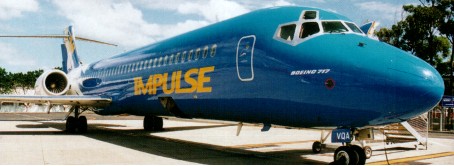
Boeing 717

Boeing 717-200

By the early 1990s, the three leading airframe manufacturers became aware of the demand for a smallerjet airliner. In particular, over the next two decades there is a market requirement for approximately 2,600 aircraft having a nominal seating capacity for 100 passengers.

Boeing 717 Article

To meet these requirements Boeing announced its new generation 737 600; Airbus the A319 and McDonnell Douglas the MD 95, all smaller derivatives of highly successful medium haul airliners. The B737 600 was given the build go ahead in March 1995, with entry into service scheduled for mid 1998 and the MD 95 was shown the green light six months later in October 1995. At that stage the A319 was ahead of the field, the lead aircraft configured in 116 seat layout being readied for delivery to Swissair in April 1996.
Launched in October 1995, by the end of 1999, the first of a 100 MD-95 contract (50 firm, plus 50 options) to AirTran Airlines (formerly ValueJet) was signed. With the merger of Boeing and McDonnell Douglas, commercial pressure resulted in the B717. The B717 200 has changed little from the McDomell Douglas concept for the MD-95. Similar in size to the DC 9 30, with a wingspan of 28.45m (93ft 3.5in) and overall length of 37.8m (124ft 0in).
The BMW Rolls Royce BR715 turbofan engine was developed specifically for it. First flew on 2 September 1998 and certified on 1 September 1999.
The Boeing 717-200 received simultaneous joint certification from the US FAA and European JAA on 1 September 1999. Five teat aircraft flew over 2000 hrs in more than 1900 flights.
On September 23, 1999, the first production 717-200 (N717XD, to be re-registered N949AT) was handed over to launch customer AirTran Airways at Long Beach, California.

On 23 May 2006 the last ‘Douglas Commercial’ airliner, a Boeing 717, was handed over to Air Tran at Long Beach, California.

B717-100
Seats: 86.

B717-200
Engines: Two BMW Rolls Royce BR715 turbofans, 82.2kN (18,500 lb) take off thrust with options available up to 93.4kN (21,000 lb).
Total fuel capacity 13,892 litres (3,056 Imp gal).
Max cruising speed, 0.76 Mach; 438kts (811 km/h).
FAA take off field length, (MTOW, SL, Temp = 30 degC) 1,950m (6,400ft).
FAA landing field length, (MLW, SL) 1,445m (4,740ft),
Range (domestic reserves, 106 passengers and baggage), 2,867km (1,547nm
Weights: Space limited payload, 12,220kg (26,940 lb).
Design gross maximum ramp weight, 52,163kg (115,000 lb).
Maximum take off weight, 51,710kg (114,000 lb).
Maximum landing weight, 46,266kg (102,000 lb).
Maximum zero fuel weight, 43,545kg (96,000 lb).
Operator’s empty weight, 30,785kg (67,870 lb).
Wingspan, 28.45m (93ft 43/4in).
Wing area, 305 sq.m (1,000.7 sq.ft).
Length, 37.81 m (1 24ft 0in).
Height, 8.92m (29ft 1 in).
Cargo hold, 26.5 sq.m(935 sq.ft).
Accommodation: Two crew and up to a maximum of 106 passengers in typical two class configuration.
Total cargo volume: 26.33 cu.m (930 cu.ft).

Boeing 707 / E-6 / E-8 / VC-137

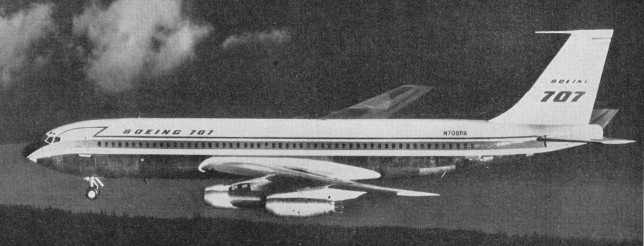
Boeing 707

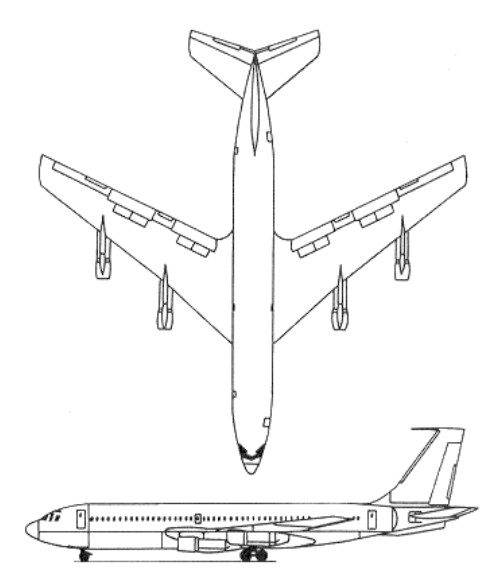
In October 1954 an order came through for 29 KC-135 tankers, based on the 367-80. When the company enlargened the cross-section of the fuselage, Boeing decided to design a new upper lobe for the commercial 707, while keeping the original one for the KC-135. The new fuselage upper lobe was of 140 in diameter making it easier to accommodate a triple seat each side of the aisle. The first 707 flew on 20 December 1957.

The 1st Boeing 707

Three airlines put Conway-engined Boeing 707s into service across the North Atlantic in the spring of 1960. The first was Lufthansa.

1st Lufthansa 707

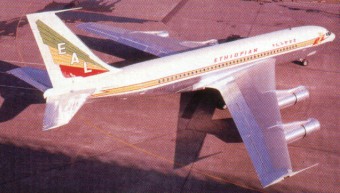
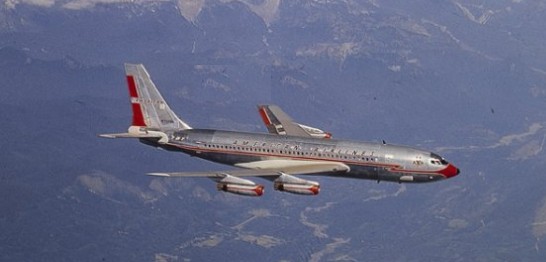
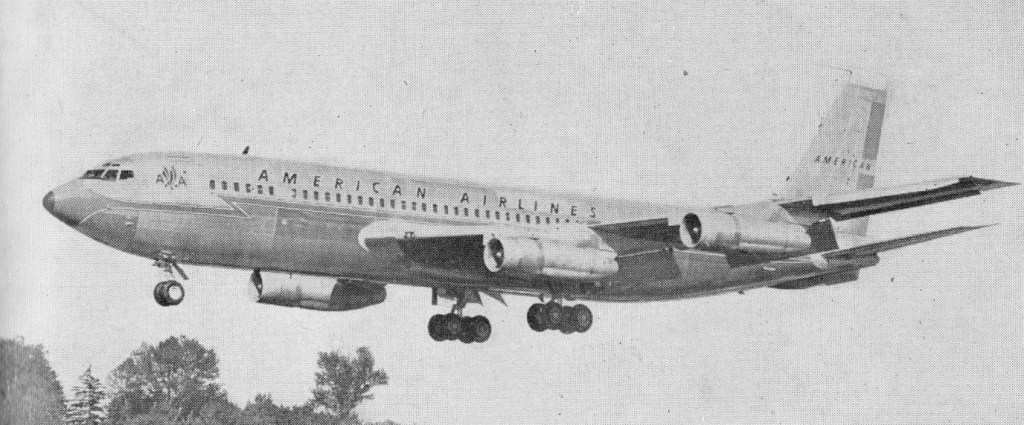
The Boeing 707-120 was introduced in 1954. As the 707-121, the first of a whole family of passenger and cargo variants, it was launched on its career by Pan Am in 1958 with a $296 million order for 20 — on the transatlantic route for prestige reasons, although it was designed and subsequently used for medium-range domestic service.

Boeing 707 Article

The first flight of a Pratt & Whitney JT3D turbofan powered 707-120B was made on 22 June 1960.

707-120B

The first operator of the 707-120 was Pan American who started daily service between New York and Paris on 26 October 1959.

Pan American began using its 707-120s on US domestic routes on 20 March 1959. Starting in July 1965, Pan American Airways replace the human navigator with inertal navigation systems in their entire fleet of 55 Boeing 707s at a cost of $12,500,000.

A brand-new presidential Boeing VC-137A, purchased in 1959, was equipped by a CIA team with a series of large cameras under conditions of secrecy at Andrews Air Force Base. Of the three military Boeing 707 aircraft provided for the White House and the American Government, 86970 was most frequently used as ‘Air Force One’.

VC-137A Air Force One

Some photographs were taken during test flights with the Special Air Mission Boeing, proving that from a height of 9 km the number plates of cars could be read. The large cameras in the belly of SAM 970 were installed behind hidden panels. The operation was controlled from the cockpit in such a way that possible Soviet ‘escorts’ would not notice anything.

The 707-121 was followed by the intercontinental -320, the largest passenger jet of its era (which flew the first ever round-the-world service in 1959) and the short-range -720. The Boeing 707-320B was introduced in 1959.
The 707-138 was tailored exclusively to QANTAS specifications, combining the short fuselage of the -120 with P&W JT3D turbofans (replacing the JT3C-6 turbojets), and taller tail fin, and other aerodynamic improvements significantly boosting performance. Modification to 707-138B standard included fitting leading edge flaps and the installation of JT3D-1 turbofans.

The first QANTAS 707 (and Australia’s first jet) VH-EBA, a 707-138B, was retored at Southend and returned to Australia on 16 December 2006. Now registered VH-XBA (EBA was taken) it was to be delivered to the QANTAS Founders Outback Museum at Longreach QLD.

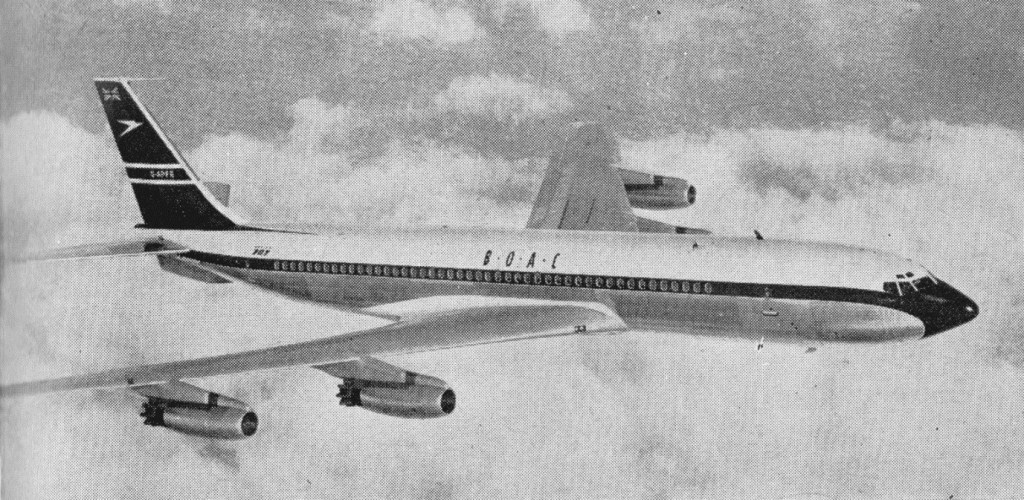
In the early months of 1960, modifications were adopted on the 707 to improve its controllability under certain critical conditions. The modifications, first applied to the Conway-engined 707-436s of BOAC, included a taller fin and a small ventral fin.

Lufthansa Boeing 707-430 jets first entered service on the non-stop Frankfort-New York route on 17 March 1960.

On 29 July 1963 BOAC’s flight 568, a Boeing 707, left Montreal for a non-stop to London. At the controls were Capts. Hilbert Alcock and Ernest E. Brow. On 15 June 1919 two British Navy pilots. Capt. John Alcock ant d Lt. Arthur Brown, made the first non-stop flight across the Atlantic in 16 hr 12 min. The jet flew 1300 miles further in 6 hrs 10 min.

BOAC 707-436

On 707s only the rudder is power operated; the other control surfaces, aerodynamically balanced, are moved by spring tabs on the trailing edges. Though criticized for being noisy and excessively smoky, and for needing longer runways than existed at most airports in the 1950s, the 707 quickly overcame all opposition by flying more passengers and cargo faster, farther and more economically than any other passenger plane. Models fitted with turbofan engines were considerably quieter than the early turbojet-powered versions and by the early 1960s, runways at major airports had been extended to accommodate the new generation of jets. During the two decades of 707 production, almost 2,000 have been built.

A modified Boeing 707-353B joined the US Presidential fleet in August 1972, designated as a VC-137C.
President John F. Kennedy’s VC-137 (tail number 26000) was based on a USAF C-137C model which in turn was based on the Boeing 707. This aircraft gained more significance in becoming the aircraft used to transport Kennedy’s body back from Dallas, Texas in 1963. The aircraft served as the official office to which Vice President Lyndon B. Johnson was sworn in as the 36th President of the United States following Kennedy’s assassination at the hands of Lee Harvey Oswald. Today, this very aircraft resides at the United States Air Force Museum in Dayton, Ohio. The aircraft exhibit details the event complete with text and pictures showing the swearing in and the area of the aft portion of the interior cabin modified to fit the coffin of John F. Kennedy for the trip back to Washington, D.C.

The same aircraft transported the body of President Lyndon B. Johnson back to Texas for final rest. President Richard M. Nixon utilized VC-137 on his historic visits to China and the Soviet Union.

John F. Kennedy’s VC-137 was the first presidential aircraft to be popularly known as “Air Force One”.

Powered by four turbojet engines the long range 707-320C can carry up to 202 passengers and has provided safe, fast and comfortable jet travel around the world. Its success can be measured by the fact that no fewer than 859 had been delivered by 1 June 1972.

In 1982 Boeing modified a commercial 707-320 airliner to demonstrate its potential as a tanker/ transport. As flown, the demonstrator has a centreline and wing-tip hose and drouge refuelling systems, but several alternatives are offered, including a centreline flying boom installation. For the tanker role an optional tank may be fitted in the lower rear cargo hold to provide an additional 19,000 lt of fuel. Spain will receive two tanker/transports with VIP interiors during 1987, while Brazil will take delivery of its fourth and last in November 1987.

Boeing completed the first 707-320 Inter-continental as no.16 off the Renton line, flying it on 11 January 1959. The Intercontinental had been ordered by nine airlines. Britain’s CAA caused a minor hiccup by insisting on extra vertical tail area. At first this was met by a big underfin, but the definitive answer was a taller fin, which Boeing made standard. The name Inter-continental was later dropped. The -320B had the JT3D engine and wings with a high-lift leading edge with full-span Kruger flaps and longer-span curved wingtips. These matched weight increases to 333,600lb, paralleled by the -320C mixed-traffic version cleared for 202 passengers or 96,126 lb of cargo.

The -320C remained in production until March 1982, the final total standing at 917. This does not include such military versions as the E-3 AWACS and KE-3A, E-6, E-8A and EC-18 series; with these the total is almost exactly 1,000.

Northrop Grumman undertakes production of E-8C Joint STARS as joint USAF and U.S. Army co-operation program for an airborne surveillance and target acquisition system (first flown August 1995 for first production E-8C).

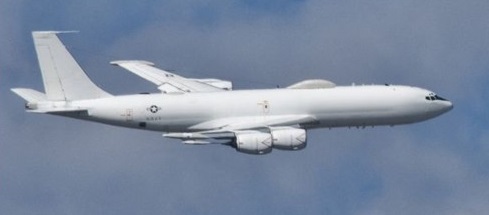
U.S. Navy Boeing E-6B Mercury airborne command post

The last commercial 707 was 707-320C for Moroccan government delivered March 1982.

Based on the E-3 airframe and powered by four CFM International Fl08-CF-100 turbofans rated at 22,000 lb st (9 979 kgp) each, E-6As will replace EC-130Q Hercules in the TACAMO (Take Charge And Move Out) role to communicate with nuclear submarines. The E-6A is equipped with very-low-frequency (VLF) radio systems for commu¬nication with the US Navy’s Trident nuclear submarine fleet.

In 1990 the US Navy ordered eleven Boeing 707 derivatives. The particular USN variant ordered was the E-6 submarine communication aircraft which uses a five mile long trailing wire as a very low frequency antenna to produce a carrier wave to penetrate the ocean surface and reach submerged submarines worldwide.

For the US Navy, Boeing is building 15 of these survivable airborne communications systems, based on the Model 707 airliner airframe. E-6A – Powered by CFM-56 engines, the E-6A proto¬type flew on 19 February 1987 (minus avionics). Development of the survivable airborne communications system for the US Navy will continue until 1989.

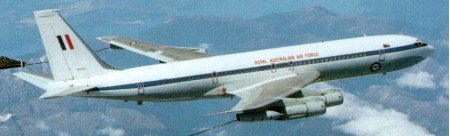
Five Royal Australian Air Force Boeing 707 jets, with 29 years of service, where used for air-to-air refuelling and transport. A 707 tanker can carry up to 43 tonnes of fuel – the wingtip refuelling pods removable to reduce weight and drag and increase range on non-tanker missions.

As a transport aircraft, the 707 can seat up to 152 passengers or carry 60 tonnes of cargo. From 2009, the RAAF 707s were progressively replaced by new KC-30B Multi-Role Tanker Transports, specially-modified Airbus A-330s.

A re-engined Boeing 707 with four Pratt & Whitney JT8D-219 engines has shown up to 22% improvement in fuel usage over its original engines. This aircraft has been dubbed the B707RE. Also tested (as 707-700) was a re-engined version with CFM56.

The Boeing 707 80 prototype obtained speeds well below 100 mph during landing approach in tests conducted by NASA and Boeing at Langley Research Centre. The plane, which once set a coast-to-coast record at 612 mph, was modified by Boeing at its own expense. It has large wing flaps, a boundary layer control system, thrust modulating system and instruments to provide flight data. The Boeing 707 80 prototype was presented ultimately to the Smithsonian Air and Space Museum.

Keen to market its own AEW system for the Israeli Air Force (IAF) and for export, Israeli Aircraft Industries (IAL) developed the Phalcon Airborne Early Warning, Command and Control System and mounted it on a Boeing 707 airframe. The Phalcon system has attracted interest from a variety of countries, however, when China expressed an interest in mounting the radar system on a Russian-built Ilyushin/Beriev A-501 Mainstay in Jul 2000, the USA eventually blocked the sale.

Boeing 707 Phalcon

Gallery

B707-120
Engines: 4 x Pratt & Whitney JT3C-6 turbojet.
Length: 145 ft 1 in.
Seats: up to 180.

B707-138B
Engines: 4 x Pratt & Whitney JT3D-1 turbofan.

Engines: 4 x Pratt & Whitney JTD 3 turbofan, 18,000 lb. (8,165 kg.) thrust.
Length: 149 ft 7 in (46.61 m)
Height: 12.9 m / 42 ft 4 in
Wing span: 145 ft 8 in (44.42 m)
Wing area: 273.3 sq.m / 2941.77 sq ft
Weight empty: 138,385 lb (62,771 kg)
Take-off weight: 148780 kg / 328005 lb
Cruise speed: 960 km/h / 597 mph
Max. accommodation: 189
Ceiling: 42,000 ft (12,800 m) fully loaded
Range w/max.fuel: 8690 km / 5400 miles
Range w/max.payload: 7885 km / 4900 miles
Crew: 4

B707-220
Seats: up to 180

707-320
Engines: 4 x Pratt & Whitney JT-4A turbojet

707-320B
Engines: 4 x Pratt & Whitney JT9D 7 turbofan, 19,000 lb
Wing span: 145 ft 9 in (44.42 m)
Length: 152 ft 11 in (45.61 m)
Height: 42 ft 5 in (12.92 m)
Max TO wt: 333,600 lb (151,315 kg)
Max level speed: 627 mph (1010 kph)
Ceiling: 42,000 ft
Range 6,160 miles
Seats: up to 219

B707-320C
Engines: 4 x Pratt & Whitney JT3D-7 turbofans, 19,000lbs thrust
Length: 149.61ft (45.6m)
Width: 145.73ft (44.42m)
Maximum Speed: 551mph (886kmh; 478kts)
Maximum Range: 4,300miles (6,920km)
Service Ceiling: 38,993ft (11,885m)
Accommodation: 9 + 189
Empty Weight: 145,999lbs (66,224kg)
Maximum Take-Off Weight: 333,592lbs (151,315kg)

B707-720
Seats: up to 180

B707-420
Engines: 4 x Rolls-Royce Conway
Seats: up to 219

B707RE
Engines: 4 x Pratt & Whitney JT8D-219

B707-700
Engines: 4 x CFM56

E-6A
Engine: 4 x CFM56-2 turbofan.
Installed thrust: 392.6 kN.
Span: 45.2 m.
Length: 46.6 m.
Empty wt: 78,380 kg.
MTOW: 155,130 kg.
Max speed: 980 kph.
Ceiling: 12,200 m
T/O run: 1650 m.
Ldg run: 720 m.
Range: 11,750 km.
Endurance: 15.4 hr.
Air refuel: Yes.

Boeing 707
RAAF Role: Air-to-air refuelling, passenger and cargo transport
Crew: Two pilots, flight engineer, loadmaster, navigator (air-to-air refuelling role), up to six crew attendants
Engines: Four Pratt and Whitney JT3B turbofans (8,172kg thrust each)
Length: 46.5m
Height: 12.9m
Wingspan: 44.5m
Weight: 152,000kg
Speed: 890 km/h
Range: Over 7,400km
Ceiling: 42,000 feet
Accommodation: Up to 152 passengers

Boeing VC-137B Stratoliner
Maximum Speed: 628mph (1,010kmh; 545kts)
Maximum Range: 5,757miles (9,265km)
Rate-of-Climb: 4,000ft/min (1,219m/min)
Service Ceiling: 49,869ft (15,200m; 9.4miles)
Engines: 4 x Pratt & Whitney JT3D-3 Turbofans, 80kN (18,000 lbs)

BMW 003 / BMW 109-003 / Bramo 109-003

The practicality of jet propulsion had been demonstrated in Germany in early 1937 by Hans von Ohain working with the Heinkel company. Recognising the potential of the invention, the Reich Air Ministry (German: Reichsluftfahrtministerium, abbreviated RLM) encouraged Germany’s aero engine manufacturers to begin their own programmes of jet engine development.

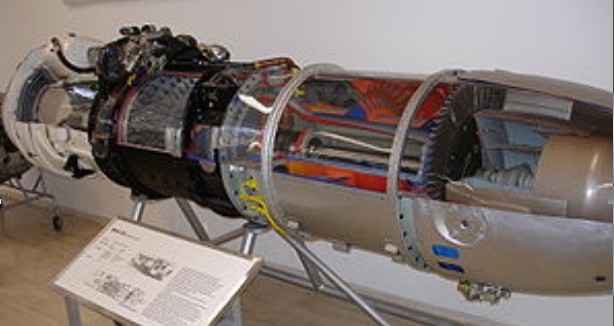
The BMW 003 began development as a project of the Brandenburgische Motorenwerke (The Brandenburg Motor Works, known as “Bramo “) under the direction of Hermann Östrich and assigned the RLM designation 109-003 (using the RLM’s “109-” prefix, common to all jet and rocket engine projects). Bramo was also developing another axial-flow turbojet, the 109-002. In 1939, BMW bought out Bramo, and in the acquisition, obtained both engine projects. The 109-002 had a very sophisticated contra-rotating compressor design intended to eliminate torque, but was abandoned in favour of the simpler engine, which in the end proved to have enough development problems of its own.

Construction began late in the same year and the engine ran for the first time in August 1940, but produced less than half of the thrust expected, 2.5 kN instead of 6.3 kN. The first flight test took place in mid-1941, mounted underneath a Messerschmitt Bf 110. Problems continued, however, so delaying the program that while the Me 262 (the first aircraft intended to use the engine) was ready for flight-testing, there were no power plants available for it and it actually began flight tests with a conventional Junkers Jumo 210 piston engine in the nose. It was not until November 1941 that the Me 262 V1 was flown with BMW engines, which both failed during the test. The prototype aircraft had to return to the airfield on the power of the piston engine, which was still fitted.

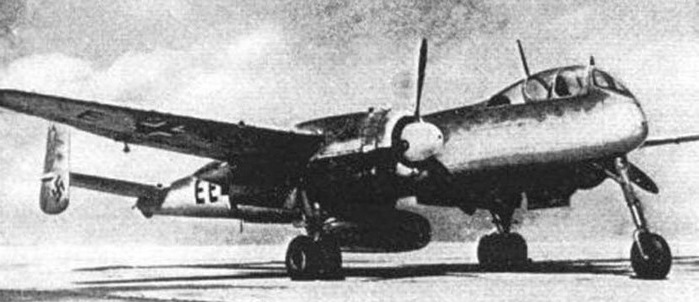
Heinkel He/219TL with BMW003 turbojet

The general usage of the BMW powerplant was abandoned for the Me 262, except for two experimental examples of the plane known as the Me 262 A-1b. The Me 262 A-1a production version used the competing Jumo 004 whose heavier weight required the wings to be swept back in order to move the center of gravity into the correct position. Work on the 003 continued anyway, and by late 1942 it had been made far more powerful and reliable. The improved engine was flight tested under a Junkers Ju 88 in October 1943 and was finally ready for mass production in August 1944.

The only production aircraft to use the 003 was the Heinkel He 162, which fitted a modified “E” version of the engine. This version was modified with ventral mounting points to allow it to be mounted atop the fuselage of an aircraft.

One late version of the engine added a small rocket motor (BMW 109-718) at the rear and usually just above the exhaust of the engine, which added some 9.8 kN (2,200 lbs/f) of thrust for take off and short dashes. In this configuration, it was known as the BMW-003R and was tested, albeit with some serious reliability problems, on single prototypes for advanced models of the Me 262 (Me 262 C-2b Heimatschützer II), and He 162 (He 162 E). Both prototypes flew under hybrid jet/rocket power during March 1945, though records do not indicate the results of testing with the 162 E.

The BMW-003 was intended for export to Japan, but working examples of the engine were never supplied. Instead, Japanese engineers used drawings and photos of the engine to design an indigenous turbojet, the Ishikawajima Ne-20.

Following the war, two captured BMW-003s powered the prototype of the first Soviet jet, the Mikoyan-Gurevich MiG-9. Blueprints for BMW engines had been seized by Soviet forces from the Basdorf-Zühlsdorf plant near Berlin and from the Central Works near Nordhausen. Production of the BMW 003 was set up at the “Red October” GAZ 466 (Gorkovsky Avtomobilny Zavod, or “Gorky Automobile Plant”) in Leningrad, where the engine was mass produced from 1947 under the designation RD-20 (reactivnyi dvigatel, or “jet drive”).

Herman Östrich’s team in charge of the development of the BMW 003 engine had moved to the town of Stassfurt, near Magdeburg, in February 1945. An underground production factory was being set up in a salt mine outside town by C.G. Rheinhardt in a desperate attempt to continue engine production in face of the now overwhelming Allied air campaign. This mine is well known historically as it was also being used for the storage of uranium compounds as part of the Nazi atomic bomb program.
The town of Stassfurt surrendered to US forces on 12 April 1945, and Östrich hid much of the technical data in a local cemetery. The next day a ten-man team made up primarily of engineers from Pratt & Whitney arrived, and he handed the data over to them. Production restarted for US use while the war ground to a close, and the US forces cleared out the factory while they waited to turn the area over to the Soviets.

Östrich had by this time moved to Munich for further interrogation, and from there to England at the request of Roy Fedden. He had them work on the design of a turboprop engine for a proposed C-54 Skymaster-class four-engine transport. While working on this design, Őstrich was secretly approached by French DGER agents with an offer to take up further design of the 003 in France. The French forces had found a number of 003 engines in their occupation zone after the war, and were interested in setting up a production line. These discussions had not progressed very far when Őstrich was allowed to return to Munich, only to be brought back to England in late August, then returned to Munich again where the US offered him and a hand-selected team jobs in the US, but without their families.

Östrich instead accepted the French invitation, and by September had been set up at the former Dornier factories in Rickenbach in the French Zone. Here they were soon joined by other former BMW engineers, as well as those from a number of other German firms, bringing the team to about 200 members. The group was named the Atelier Technique Aéronautique Rickenbach, or ATAR. They worked on a new design that was based on the BMW layout, but considerably larger and more powerful. They completed the preliminary design of the ATAR 101 (model R.101) in October, and granted a production contract on the proviso that actual production would be carried out in France.

Some 500 BMW 003 engines were built in Germany, but very few were ever installed in aircraft.

Variants:

BMW 003 A1 (TL 109-003)
Prototype, 5.87 kN (1,320 lbf) / 8,000 rpm / sea level.

BMW 003 A2 (TL 109-003)
Initial production variant, 7.83 kN (1,760 lbf) / 9,500 rpm / sea level.

BMW 003 C (TL 109-003)
Improved design, reduced weight A2, 8.81 kN (1,980 lbf) / 9,500 rpm / sea level

BMW 003 D (TL 109-003)
Improved design C, 8.81 kN (1,980 lbf) / 9,500 rpm / sea level.

BMW 003 E
With ventral mounting points for use on the Heinkel He 162 and Henschel Hs 132.

BMW 003 R (TLR 109-003)
An A2 with a BMW 718 (R 109-718) booster fixed permanently above the jetpipe, running on R-stoff (a.k.a. Tonka or TONKA-250, 50% triethylamine and 50% xylidine) and SV-Stoff (aka RFNA: 94% HNO3, 6% N2O4). The R delivered a combined thrust of 20.06 kN (4,510 lbf) for 3 minutes.

Applications:
Arado Ar 234
Heinkel He 162
Messerschmitt Me 262 (A-1b test version, and Heimatschützer II experimental interceptor only)

Specifications:

BMW 003A-2
Type: Axial flow turbojet
Length: 3,632.2 mm (143 in)
Diameter: 690.9 mm (27.2 in)
Dry weight: 623.7 kg (1,375 lb)
Compressor: 7-stage axial compressor
Combustors: 1 annular combustion chamber
Turbine: Single-stage axial
Fuel type: J-2 diesel fuel or gasoline
Oil system: Pressure feed at 586 kPa (85 psi), dry sump with 4 scavenge pumps with annular tank and cooler, using oil grade 163 S.U. secs (35 cs) (D.T.D 44D) at 38 °C (100 °F)
Maximum thrust: 7.83 kN (1,760 lbf) at 9,500 rpm at sea level for take-off
Overall pressure ratio: 3.1:1
Turbine inlet temperature: 770 °C (1,418 °F)
Specific fuel consumption: 142.694 kg/kN/hr (1.4 lb/lbf/hr)
Thrust-to-weight ratio: 0.0125 kN/kg (1.282 lbf/lb)
Normal, static: 6.89 kN (1,550 lbf) / 9,000 rpm / sea level
Military flight: 6.23 kN (1,400 lbf) / 9.500 rpm / 2,500 m (8,202 ft) / 900 km/h (559 mph; 486 kn)
Normal, flight: 2.85 kN (640 lbf) / 11,500 rpm / 11,000 m (36,089 ft) / 900 km/h (559 mph; 486 kn)

Blackburn Nimbus / Bristol Siddeley Nimbus / Rolls-Royce Nimbus

Nimbus Mark 103

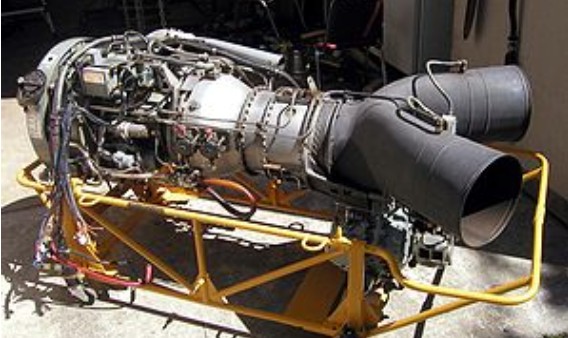
The Bristol Siddeley Nimbus, later known as the Rolls-Royce Nimbus, was a British turboshaft engine developed under license by Blackburn Aircraft Ltd. from the Turbomeca Turmo in the late 1950s. First run in July 1958, it was used on the Westland Scout and Westland Wasp helicopters.

The Nimbus is a turboshaft engine comprising a gas generator section, which consists of a three-stage compressor, (two axial stages and one centrifugal stage), driven by a two-stage turbine in conjunction with an annular combustion chamber, and a power output section consisting of a single-stage free turbine driving an output shaft via a two-stage reduction gearbox.

In the Scout and Wasp the main rotor drive is taken from the front of the gearbox and is transmitted beneath the gas generator via a flexible coupling, while the drive for the tail rotor is taken from the rear of the gearbox.

The fuel system is designed to control and govern the engine under all operating conditions and to provide safeguards against malfunctions, the pilot selecting rotor speed and the governing element automatically maintaining the rotor speed within close limits under varying conditions of load.
The lubrication system is self-contained, the oil tank being integral with the air intake casing.
Engine and helicopter accessories are mounted on a gearbox located on the air intake casing.

Variants:
The Nimbus engines were produced in two main variants, the Mark 103/503 and the Mark 105/502. The Mark 103/503 is generally similar to the Mark 105/502 except that the former has a double-caliper disc brake incorporated in the output drive shaft to provide adequate braking of the helicopter’s rotor in the high winds encountered over the deck of a fast moving ship, whereas the 105/502 has a single caliper unit.
Blackburn-Turbomeca A.129
BnN.1 Nimbus
BnN.2 Nimbus
BnN.2/1 Nimbus
BnN.2/2 Nimbus
Nimbus 500
Nimbus 502 (Mk.105)
Nimbus 503: (Mk.103)
Nimbus Mk.103
Nimbus Mk.105

Applications:
Westland Scout
Westland Wasp
Saunders-Roe SR.N2, Hovercraft

Specifications
Type: Turboshaft
Length: 73.7 in (187.2 cm)
Diameter: 38.7 in (98.3 cm) across exhaust ducts
Dry weight: 670 lb (304 kg)
Compressor: Two-stage axial, single-stage centrifugal
Combustors: Annular
Turbine: Two-stage axial gas generator, single-stage power
Fuel type: NATO F-30,34,40,42,44 Diesel, Gasoline(100 hrs)
Oil system: Dual scavenge, NATO O-149
Maximum power output: 968 shp (722 kW)
Overall pressure ratio: 6.4:1
Turbine inlet temperature: 877c internal / EGT 550c max
Fuel consumption: 595 lbs/hr (270kg/hr)
Specific fuel consumption: 0.681
Power-to-weight ratio: 1.44 shp/lb (2.37 kW/kg)

Blackburn B.103 Buccaneer           

The Specification was known as the N.A.39 (its official number was M.148T) and Blackburn, once their tender was accepted, were given just under three years to get the first aircraft into the air, the target date for first flight being April 1958. To speed development, the Ministry of Supply ordered a large batch of twenty pre production aircraft, enough to carry out all the aerodynamic and engine development, the systems and weapons development and to equip the I.F.T.U. with the Navy.

Blackburn B.103 Buccaneer Article

Flight development brought about alterations as problems were encountered, and solved. A flutter problem was discovered in the high tailplane and fixed by the installation of inertia weights in the tailplane tips.
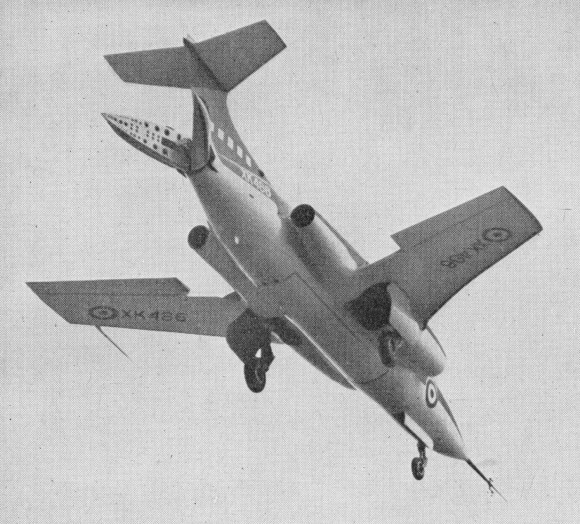
Originally the aircraft had been intended to have a retractable flight refuelling probe but this was found unsatisfactory and a re¬movable probe was standardised. On 30th April 1958 Derek Whitehead took XK486, the first Blackburn N.A.39, on its maiden flight from the R.A.E. airfield at Thurleigh, Beds. Initially the Buccaneer was powered by two D.H. Gyron Juniors.

The twenty aircraft ordered and given the serial numbers XK486-XK491 and XK523 XK536 inclusive, and nine of these were to be used primarily by Blackburn’s for development of the whole weapons system, five were for Ministry of Supply trials work, and six for the Royal Navy for use by the Intensive Flying Trials Unit.
The first navalised Buccaneer appeared in January 1959, an interim naval aircraft, but with arrester hook and folding wings.

In September 1958 a production contract for forty Buccaneer S.1 aircraft was signed and they were allocated the serial numbers XN922 XN935, XN948-XN973.

Buccaneer S.1

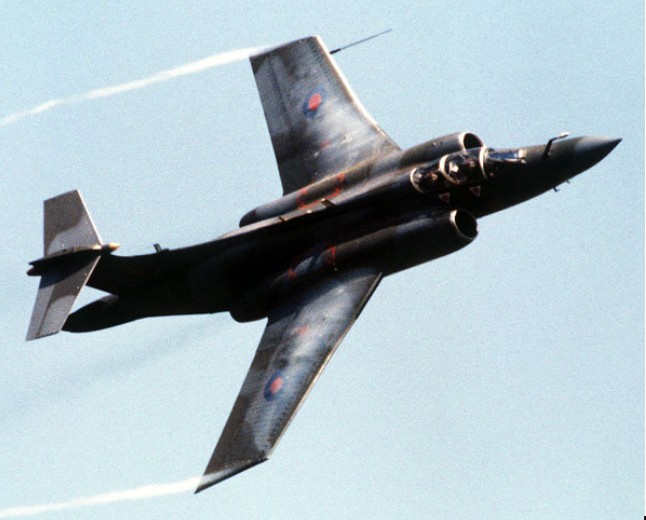
The Buccaneer features mid-set wings with compound sweepback, swept tail services, with tailplane mounted at the top of the fin. The ailerons droop to supplement flaps during landing. Air is blown over wings, ailerons, flaps and tailplane to reduce take-off and landing speeds. The tail-cone splits along the centreline to act as an airbrake. The outer wings fold upwards for stowage on board ships.

The whole production run came out of Brough between July 1962 and December 1963. The Buccaneer. S.1 entered operational service with the Royal Navy in July 1962. Able to carry an 8,000 lb (3,628 kg) load of conventional or nuclear weapons, distributed between internal stowage and underwing pylons, it was superseded by the more powerful Spey engined Buccaneer S.2 in October 1965.

Buccaneer S.2B

Although the Buccaneer S.1 had proved reasonably satisfactory, certain drawbacks came to light during its service. These centred around the Gyron Junior engine. The first was that, with the possibility of an engine failure on take off or landing (when the full BLC blow was operating), the single engine performance of the aircraft was critical; the second disadvantage was lack of range.

Hawker Siddeley re engined the aircraft with Rolls Royce Speys. Two of the DB machines were returned from Ministry of Supply trials work for modification into the prototypes for the new Spey engined version, to be known as the Buccaneer S.2. These aircraft were XK526 and XK527; the former flew first in the new configuration on 17th May 1963, being followed by the second on 1 9th August 1963.

The first batch of ten production aircraft had by then been ordered and given he serials XN974 XN1983. The first of these was completed and flown a year later on 6th June 1964, by which time the first two prototypes were completing a satisfactory programme of development flying.
XN974 was the first production S.2 aircraft, making its first flight from the British Aerospace airfield at Holme-on-Spalding Moor on 5 June 1964. It went straight to the Royal Aeronautical Establishment, Bedford, for work trials and then to HMS Eagle for sea trials. In 1965 it went to the USA for hot weather testing and achieved a record on its return flight from Goose Bay to Lossiemouth by becoming the first Fleet Air Arm aircraft to fly the transatlantic route non-stop without refuelling; on 4 October 1965, completing the 1,950 miles (3,138 km) between Goose Bay, Labrador, and Lossiemouth, Scotland, in 4 hrs 16 mins.

Four of this batch went for R. & D. work, XN974, ‘975, ‘976 and ‘983. XN975 and XN974 flew the Boscombe trials, the former doing the deck landing trials in several stints aboard Ark Royal.

Eighty four production Buccaneer S.2s were built in the years that followed with the following serial allocations: XN974 to XN983; XT269 to XT288; XV152 to XV168; XV332 to XV361; and XV863 to XV869.

The first operational Buccaneer S.2 squadron was No. 801 which served aboard H.M.S. Victorious.

In August 1964 it was reported that South Africa, rebuffed by the US State Department in bid to buy Grumman Intruders because of its race policies, was buying British Buccaneers instead.

During the early 1970s the Buccaneer was acquired for the R.A.F. and was equipped to use the Martel air to surface missile. 43 new S.Mk 2Bs were built for the RAF, the last of them delivered in 1977. This development provided a spin off for the Royal Navy and in the mid 1970s the F.A.A.’s Buccaneers were re¬designated as S.2C (non Martel) and S.2D (Martel equipped). This gave the squadron a greatly enhanced anti ship capability and in September 1974 the squadron embarked for the first time in Ark Royal with a full complement of S.2Ds. The squadron began its last commission in April 1978. On 27th November 1978 No. 809 took off from Ark Royal for the last time, in the Mediterranean, flew its aircraft direct to the R.A.F. Maintenance Unit at St. Athan, and disbanded there.

It left FAA service with the decommissioning of HMS Ark Royal in 1978, with the remaining 62 examples being transferred to the RAF. The last squadrons were disbanded in 1993.

From 1972 two squadrons of Buccaneers served in RAF Germany until replaced by Tornados in 1984. Maritime strike/attack and reconnaissance then became the aircraft’s primary role, along with the secondary task of carrying laser designator equipment for precision attacks.

South Africa operated 16 of the S.50 version from 1965 to 1991.

A total of 144 aircraft were built for the Royal Navy.

Royal Air Force Buccaneers first saw combat during the 1990-91 Gulf War (Operation ‘Granby’), 22 years after entering service. Twelve Buccaneers were deployed at short notice to the Gulf during Operation ‘Granby’ to designate targets for Royal Air Force Tornados and Jaguars. Although the Buccaneer was seen in 1969 as an interim type pending the development of the Panavia Tornado, the last examples were not retired until March 1994.

Gallery

S.1
Engines: 2 x de Havilland Gyron turbojet, 7100 lb.
Wing span: 44 ft 0 in (13.41 m).
Width wings folded: 20 ft
Length: 63 ft 5 in (19.33 m).
Height: 16 ft 3 in (4.95 m).
Max TO wt: 45,000 lb (20,412 kg).
Max level speed: 720 mph (1159 kph).

S.2
Wing span: 13.4m (44 ft). Hardpoints: 4.
Seats: 2
Engines: two Rolls-Royce RB Spey Mk.101 turbofans, 11,100 lb thrust.
Maximum speed at sea level: 690 mph (Mach 0.92)
Tactical radius: 500-600 miles
Range: 2000 miles.

S.Mk 2B
Engine: two 11,100 lb, 50.4kN thrust Rolls Royce RB 168 1A Spey Mk 101 turbofan.
Take-off weight: 20800 kg / 45856 lb
Wingspan: 13.0 m / 42 ft 8 in
Length: 19.0 m / 62 ft 4 in
Height: 4.9 m / 16 ft 1 in
Wing area: 46.5 sq.m / 500.52 sq ft
Max. speed: 1159 km/h / 720 mph
Cruise speed: 1038 km/h / 645 mph
Range w/max.fuel: 3456 nm / 6200 km / 3853 miles
Crew: 2
Max internal /external weapon load: 16,000 lb (7,257 kg).

S.50
Wing span: 13.4m (44 ft).
Hardpoints: 4.

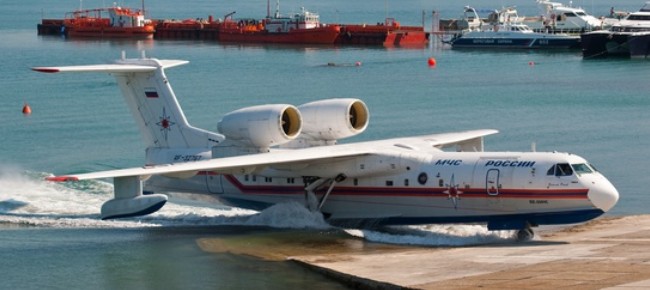
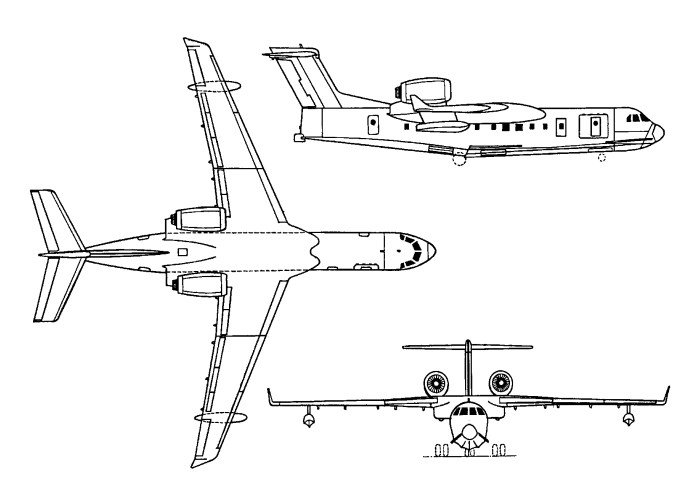
Beriev Be-200

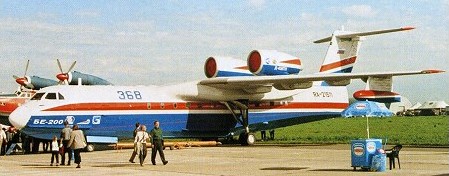
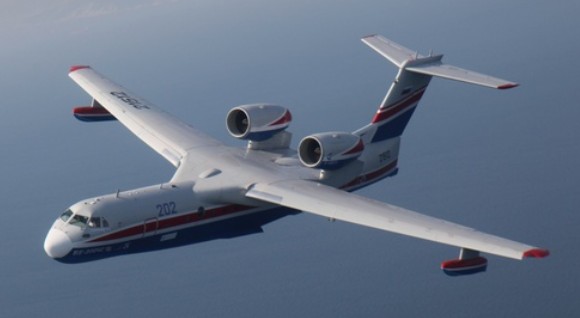
Beriev’s Be-200 multipurpose amhibious aircraft was designed as a further development of the A-40 antisubmarine aircraft. The Be-200 has a 66 passenger or 8000 kg cargo capacity. Six aircraft were launched into production at the Irkutsk Aviation Production Association. The first prototype flew on September 24, 1998.

Beriev Be-200ES multirole amphibious aircraft

Gallery

Engine: 2 x Progress D-436TP turbo-prop, 73.5kW
Wingspan: 31.8 m / 104 ft 4 in
Length: 31.2 m / 102 ft 4 in
Height: 8.7 m / 28 ft 7 in
Take-off weight: 37000-43000 kg / 81571 – 94799 lb
Max. speed: 710 km/h / 441 mph
Cruise speed: 600 km/h / 373 mph
Ceiling: 8000 m / 26250 ft
Range: 2100 km / 1305 miles
Range w/max.fuel: 3850 km / 2392 miles
Payload: 6.5 ton or 64 pax.
Crew: 2