In 1971 the USAF began to put together the specification of a new transport as a possible replacement for its fleet of Lockheed C-130 Hercules aircraft. In early 1972 requests for proposals were sent out to nine US manufacturers, and those of the Boeing Company and McDonnell Douglas Corporation were selected for competitive evaluation under the respective designations YC-14 and YC-15. The Boeing Model 953 design for STOL performance was based on the use of a supercritical wing, developed by NASA from the wind-tunnel research of Dr Richard Whitcomb, which provides highly efficient performance from the wing at high subsonic speeds. To this wing Boeing added an advanced wing upper-surface blowing concept, mounting the twin engines above the wing so that their efflux was exhausted over the wing. With the wing’s leading-edge and Coanda-type trailing-edge flaps extended, the high-speed airflow from the engines tended to cling to the upper surface of the wing/flap system, and was thus directed downwards to provide powered lift.
Designed to carry 27,000 pounds of cargo in and out of short, unimproved airfields, the Boeing YC 14 is powered by two shoulder mounted GE CF6 50 engines The Boeing YC 14 prototype (72-1873) for competitive evaluation against the McDonnell Douglas YC-15 was flown for the first time on 9 August 1976. Maximum payload was 150 troops or 36,742kg of freight in conventional operations, while for STOL operations from an airfield of less than 572m the payload was still a useful 12,247kg. At the completion of testing, in the late summer of 1977, the YC-14 prototype was returned to Boeing for continuing development, if the company so wished, but no further government funding for development or procurement was forthcoming. Boeing’s YC-14 program was aborted after 600 hours of flight testing with two prototypes.
Engines: 2 x GE CF 6-50D, 226.9kN Take-off weight: 97977 kg / 216003 lb Empty weight: 54000 kg / 119050 lb Wingspan: 39.3 m / 128 ft 11 in Length: 40.1 m / 131 ft 7 in Height: 14.7 m / 48 ft 3 in Wing area: 163.7 sq.m / 1762.05 sq ft Cruise speed: 750 km/h / 466 mph Range w/max.fuel: 740 km / 460 miles Crew: 2-3
Origins of the B-52 stemmed from a specification issued through the Air Material Command (AMC) on November 23rd, 1945, calling for a long-range, intercontinental, high-altitude strategic bomber. Specifications included an operating radius of 4,340 nautical miles, a speed of 260 knots at altitude of 43,000 feet, and a bombload capacity of 10,000 pounds. In February of 1946, the Boeing Aircraft Company, Consolidated Aircraft Corporation and the Glenn L. Martin Company all responded. Boeing’s team devised the Model 462 as a straight-wing, multi-engine design powered by 6 x Wright T35 Typhoon turboprop engines rated at 5,500shp each. On June 5th, 1946, Model 462 was selected and designated XB-52. A full-scale mockup contract was then awarded.
By now, the USAAF was already looking beyond the qualities of the Model 462, fearing that the aircraft was already rendered obsolete in its conventional design approach and could never reach the intended goals of the original specification – especially in terms of its range. As such, the USAAF cancelled their contract with Boeing and the Model 462 was dead.
Boeing chief engineer Ed Wells took the Model 462 and evolved a pair of smaller concepts with four turboprops each appearing in their respective 464-16 and 464-17 forms. Essentially, the 464-16 was a short-range bomber made to carry a greater bombload while the 464-17 was a long-range bomber made to carry a smaller bombload. Neither idea stuck with the USAAF as a replacement for the B-36 though interest did center on the 464-17 design. Several more concepts were developed but interest on the part of the Air Force was waning. The Model 464-29 appeared, complete with swept-back wings at 20 degrees and fitting 4 x Pratt & Whitney turboprop engines. Again, this concept failed to answer the key points of the specification which, by now, was ever-changing to include increased performance specs along with long range.
The Model 464-35 was another Boeing design team proposal fitting 4 x turboprop engines with contra-rotating propellers. Wing sweep was increased moreso than previous attempts, beginning to define the look of the Stratofortress. With in-flight refueling becoming more of a USAF operational norm, the design team now had some leeway in the overall size of their aircraft. Events in Europe in the latter part of the 1940’s pushed the XB-52 project forward, rewarding the Boeing Company with a hard-earned contract for a single mock-up and at least two flyable prototypes.
Upon a visit to Wright-Patterson AFB by the Boeing design team, it was learned that the USAF was now more interested in a jet-powered solution, seeing it as the only way to achieve the desired performance specs it required of the XB-52. In the course of a single weekend in a Dayton hotel room Ed Wells company set to work on new ideas for a Monday morning presentation. The resulting design combined elements of their Model 464-35 design with a four-engine, jet-powered medium bomber concept that had been brought along. The new aircraft became an eight-engine, Pratt & Whitney JT3 jet-powered heavy bomber with 35-degree swept wings. A small balsa wood model was constructed to further develop the idea and accompanied a detailed Model 464-49 design document of some 33 pages. The weekend effort paid off for Boeing as the USAF became greatly interested in the aircraft after Monday morning. The design was revised into the Model 464-67 and accepted for construction as two prototypes.
Eight engines were installed in twin pods hung under the 35 degree swept wing, and other unusual features included a vertical tail able to fold sideways to enter a hangar, wingtips that moved downwards 2.5 m (8 ft) as the wing tanks were filled, and four twin wheel landing trucks which can be swivelled for cross wind landings.
An XB-52 production contract reached Boeing executives on February 14th, 1951. The contract called for 13 B-52A models. The XB-52 became the first prototype constructed and this was followed by the YB-52. The YB-52 received this evaluation due to the funding coming from the Air Force’s Logistics Command.
The YB-52 beat the XB-52 to flight testing on March 15th, 1952. The XB-52 was rolled out on November 29th, 1951, under the cover of night for secrecy’s sake but a pneumatic system failure caused enough damage to the wing trailing edge for the aircraft to be rolled back inside for lengthy repairs. As such, the YB-52 achieved its first flight on April 15th, 1952 and did not experience any major setbacks. The XB-52 finally got airborne on October 2nd, 1952. Both the XB-52 and the YB-52 featured tandem seating cockpits with upward firing ejection seats.
B-52A
Only 3 B-52A’s built and the B-52B and RB-52B were in large-scale production for the U.S.A.F. in 1955. Both were equipped for flight refuelling. From the original order of 13 B-52A’s, ten were later earmarked for production as B-52B models. Compared to the twin prototypes, the three B-52A’s now featured the more conventional side-by-side cockpit seating arrangement in a revised forward fuselage along with the tail armament of 4 x 12.7mm Browning M3 machine guns. A distinguishing feature of A-models to B-models was the lack of a fully operational avionics suite. These aircraft were fitted with Pratt & Whitney J57-9W engines of 10,000lbf thrust each. The split-level cockpit featured seating for three on the upper deck and seating for two in the lower. The lower occupants were given downward-firing ejection seats. The tail gunner was removed from the rest of the crew and seated in his rear-facing turret station sans any type of ejection seat though the tail system could be ejected in the event of an accident. An unpressurized crawlspace was his only link to the front of the aircraft. In-flight refueling was accomplished via a boom connection above and behind the main flight deck. Other key additions included wing-mounted external fuel tanks to increase range and decrease “wing-flexing” across the span. Water injection was introduced to the J57 to assist in take-off. The two prototypes lacked the side-by-side cockpit seating arrangement and the in-flight refueling arrangement of the A-models and seating for the third upper deck crewmember (Electronic Warfare Officer – EWO). NB-52A – aka “The High and Mighty One” – was developed from the third B-52A flight test model. This aircraft (s/n 52-0003) was modified to act as the mothership in the launching of the experimental North American X-15 aircraft. NB-52B went on to become the longest flying B-52B airframe, ultimately seeing retirement in 2004.
By 1958 weight had increased, engines were rated at 5080 or 6124 kg (11,200 or 13500 lb) thrust with water injection, and new nav/bombing systems were fitted. While original B-52’s featured a 4 x 12.7mm collection of Browning M3 heavy machine guns in a rear turret, later production models switched over to a remote-controlled 1 x 20mm M61 cannon for self-defense. The tail armament was altogether removed in more modern Stratofortress forms with the onset of the missile age. However, it should noted that at least 2 Mikoyan-Gurevich MiG-21 “Fishbed” aircraft were destroyed in the Vietnam War by the tail gunner, with these aircraft kills credited to SSgt Samuel O. Turner and A1C Albert E. Moore – both kills achieved just days apart in December of 1972 from B-52D’s. In B-52D models the tail gunner externally accessed the rear portion of the aircraft via an entry hatch. In the revised G-models, the gunner was allocated to the main crew cabin (complete with an ejection seat fitted to the upper flight deck and facing aft with the ECM operator) and operated the tail gun via the AGS-15 Fire Control System and radar.
The B-52B was, in actuality, the first true Stratofortress production model and was already in development while the previous aircraft forms were being refined. They more essentially A-models with fully operational avionics suites and Pratt & Whitney J57-P-29W, J57-P-29WA or J57-P-19W series engines all rated at 10,500lbf thrust. The J57-P-19W’s were differentiated by having their compressor blades made of titanium instead of steel. First flight of these aircraft was achieved in December of 1954. B-models were the first model in the series to achieve operational service on June 29th in 1955, this occurring with the 93rd Bombardment Wing (themselves achieving operational status on March 12th, 1956) of the United States Air Force and coming in the form of an RB-52B reconnaissance model. The defensive tail armament remained the 4 x 12.7mm machine gun mounts for a time though some 16 B-52B and 18 RB-52B models were fitted with a more potent 2 x M24A-1 20mm cannon array and an different fire control system. When this proved ineffective, the final production B-52B’s reverted back to the 4 x 12.7mm formation.
The B-52B was tested with atomic weapons on May 21st, 1956 – dropping a four megaton Mark 15 “Zombie” hydrogen bomb on the Bikini Atoll. Fifty B-52B models were produced in whole, with 27 of these being modified as special RB-52’s. RB-52’s represented reconnaissance-capable B-52B production models. These aircraft sported a crew of eight personnel and were fitted to accept specialized reconnaissance equipment in the form of a 300lb pod in their bomb bays, 40 ft fuel tanks in the wingtips, and up-rated J57 engines.
RB-52B
B-model combat load performance netted a top speed of 628 miles per hour with a service ceiling of 47,300 feet. The operational radius was equal to 3,576 miles.
The B-52C first flew on March 9, 1956 and officially came online in June of 1956 with 35 of the type seeing delivery. B-52C’s arrived with increased range thanks to improved fuel capacity made possible through larger external tanks. They were similar to B-models and operated with the same engine series. As this was the Cold War and the use of B-52’s in an all-out nuclear strike seemed all but imminent, the underside fuselage of B-52C models were painted over in an all-white scheme in an effort to reflect the thermal radiation inherent in a nuclear-induced explosion while their “tops” remained a natural metal finish. B-52B models were retrofitted with this white underside scheme. Bombloads for C-models topped 24,000lbs. B-52C’s were also reconnaissance capable though the RB-52C designation was never truly adopted for the type. Production of all C-models lasted through 1956.
B-52C
On December 7, 1955, the first B-52 built at the Wichita Division of Boeing was rolled out. This was the second source of supply.
The B-52D became the first definitive high-quantity production Stratofortress ultimately produced in 170 examples and achieving first flight on May 14th, 1956. D-models entered service in December of 1956 as dedicated long-range bombers and, unlike previous Stratofortress offerings, these aircraft would not feature the ability to carry the reconnaissance pod so there were no RB-52D designations handed out. B-52D’s were used extensively in the Vietnam air war where their expansive bomb bays could be put to good use. Vietnam-based B-52D models were distinguished by their overall forest camouflage schemes and black-colored, anti-searchlight fuselage undersides. Production was split between Seattle and Wichita plants.
In January 1957 three B-52 flew around the world non-stop refuelling mid-air several times. They covered 24,325 miles at an average speed of 530 mph.
KC-135 Stratotanker refuelling B-52
The B-52E first flew on October 17th, 1957, and followed D-models into operational service as improved Stratofortresses though they were quite similar to their predecessor. Improved air defenses across the Soviet Union forces a change to the high-level bombing strategy of early B-52’s. Therefore, the B-52E was developed into a low-level bomber. Additions included a revised bombing and navigation suite (AN/ASQ-38 – Raytheon AN/ASB-4 navigation and bombing radar) that would become standard on future Stratofortress production models. One hundred B-52E models were produced with the initial examples entering service in December of 1957. A single E-model was set aside for use as an in-flight test airframe and featured stabilizing canards.
The B-52F was similar to the preceding B-52E but sported Pratt & Whitney J57-43W series engines of 11,200lbf. Engine pods on each wing were revised to include their own water injection systems. F-models represented 89 production examples split between Seattle and Wichita to begin service in June of 1958. Among other refinements, these Stratofortresses featured new Pratt & Whitney J57-P-43W series turbojet engines. First flight was achieved on May 6th, 1958. First combat missions occurred via B-52F’s on June 18th, 1965.
While original B-52’s featured a 4 x 12.7mm collection of Browning M3 heavy machine guns in a rear turret, later production models switched over to a remote-controlled 1 x 20mm M61 cannon for self-defense. The tail armament was altogether removed in more modern Stratofortress forms with the onset of the missile age. However, it should noted that at least 2 Mikoyan-Gurevich MiG-21 “Fishbed” aircraft were destroyed in the Vietnam War by the tail gunner, with these aircraft kills credited to SSgt Samuel O. Turner and A1C Albert E. Moore – both kills achieved just days apart in December of 1972 from B-52D’s. In B-52D models the tail gunner externally accessed the rear portion of the aircraft via an entry hatch. In the revised G-models, the gunner was allocated to the main crew cabin (complete with an ejection seat fitted to the upper flight deck and facing aft with the ECM operator) and operated the tail gun via the AGS-15 Fire Control System and radar.
By 1959 production switched to the B 52G, with a great increase in fuel capacity, the entire crew in the nose, a new structure with a short fin, and pylons for two Hound Dog missiles. The B 52G demonstrated the range potential of the type when, in December 1960, an aircraft of the 5th Bombardment Wing flew 10,000 miles (16,093 km) in 19 hrs 45 mins. The B-52G was the most numerous version built (193).
B-52G
The B-52G introduced sealed integral tank wings housing more fuel than previous models, as well as a shorter fin and a remotely controlled tail turret. Engines: Pratt & Whitney J57, 13,750 lb. Several tons were shaved off of the aircraft and crew accommodations were improved. The tail gunner was relocated to a new station within the main cabin area in the forward fuselage where the rest of the crew resided and given remote control of the turret. The vertical tail fin was shortened while the nose radome was lengthened and ailerons completely eliminated in favor of seven spoilers to provide for roll control. The G-model first flew on August 31st, 1958 and entering service on February 13th, 1959. G-models (55th production onwards) were outfitted with underwing pylons to accept the AGM-28/GAM-77 Hound Dog nuclear-tipped cruise missile – a feature also retrofitted on earlier production G-models. The Hound Dog missles could be run during takeoff to shorten the takeoff run. These Superfortresses were also later cleared to use 20 x AGM-69 SRAM nuclear missiles beginning in 1971. Four ADM-20 Quails (aircraft shaped decoys) were added in the bomb bay. Many B-52G’s would be sacrificed as part of the nuclear proliferation agreements between the United States and the Soviet Union beginning in 1992 while the surviving models were relegated to museum work. Production of G-models was handled by Wichita. The first 16 B-52Gs with cruise missiles became operational in December 1982.
The B-52H model was first flown on March 6th, 1961 and introduced into service on May 9th, 1961. The B-52H model and designed to carry the GAM-87 Skybolt ballistic missile on four external pylons. Though essentially similar to the G-models it replaced, the B-52H sported improved performance and fuel efficient Pratt & Whitney TF33-P-3 turbofan engines of 17,000lbf and a reinforced understructure for improved low-level bombing. Major systems and subsystems were revised or improved as well and the 4 x 12.7mm tail gun armament was officially replaced by the remote-controlled 1 x 20mm General Electric M61 Vulcan six-barrel Gatling cannon system (6,000rpm) tied to an Emerson ASG-21 fire control system. Ammunition supply was 1,242 rounds. The B-52H went on to utilize cruise missiles (the Skybolt missile was eventually cancelled before production), anti-ship missiles and unmanned drones in this fashion thanks to its heavy duty wing pylons. Light duty pylons were added later between the two engine pods on either wings and retrofitted to earlier H- and G-models. Like her G-model sisters, B-52H’s were cleared to use 20 x AGM-69 SRAM nuclear missiles beginning in 1971. Low-level operations became another improvement of this model type. The last of 102 B 52H bombers was delivered in 1963, bringing production to 744. The B 52H has the much more powerful TF33 engine, eliminating water injection and instead of four 12.7 mm (0.5 in) tail guns has a six barrel cannon. Surviving B 52Gs and B 52Hs are continually being fitted with updated systems for service into the second half of the 1980s.
Over a three-year period to 1963, the USAF spent $825 million on B-52 rework.
A total of 99 B-52Gs, carrying 12 external AGM-86B air-launched cruise missiles (ALCM), and 96 B-52Hs with 12 external and, later, eight internal ALCMs, were to be operational by 1990. The B-52Hs were to receive internally mounted common strategic rotary launchers (CSRL) in the late 1980s to carry the ALCMs, SRAMS, advanced cruise missiles, and free-fall nuclear weapons. The first ALCM equipped B-52G unit became operational in December 1982. Cruise-missile-carrying B-52Gs are being fitted with a strakelet fairing at the wing root leading edge for indentification purposes under the unratified SALT II agreement.
Most of the early B-52s were phased out by 1970, due to Secretary of Defense Robert S. McNamara’s mid-sixties decision to decrease the strategic bomber force.
Numerous B-52s were rebuilt with a ‘Big Belly’ to carry 84 bombs inside, plus 24 on triple tandem pylons under the wings. Modified B-52Ds, referred to as Big Belly, dropped aerial mines in the North Vietnamese harbors and river inlets in May 1972. In December of the same year, B-52Ds and B-52Gs began to bomb military targets in the Hanoi and Haiphong areas of North Vietnam.
A total of 744 were built between 1954 and 1962, including the XB-52 and YB-52 test models. During its peak involvement with Strategic Air Command, no fewer than 650 B-52 bombers made up 42 SAC bomber squadrons at 38 bases. In 2010, the Air Force maintains approximately 76 active and 20 reserve B-52’s from the 744 total that were produced. Production of all B-52’s lasted from 1952 through 1962 and handled at the Boeing Seattle, Washington and Wichita, Kansas plants.
A world air speed record was set on September 26th, 1958, in a B-52D reaching 560.705 miles per hour on a closed circuit covering 6,210 miles. The same day netted another air speed record of 597.675 miles per hour over a 3,105 mile course. On December 14th, 1960, a B-52G set a world air distance record by traveling 10,078.84 miles without refueling. This record was bested several years later on January 10th/11th, 1962, when a B-52H achieved 12,532.28 miles of unrefueled flight time in a journey from Japan to Spain. According to Boeing, this single flight alone broke some 11 speed and distance records.
The B-52 has also made it into pop culture as it was the aircraft featured in the 1964 Stanley Kubrick film “Dr Strangelove”.
B-52A Long-range heavy bomber. Engines: 8 x Pratt & Whitney J57-P-3 turbojets, 10,000 lb thrust Wingspan: 185 ft Lenght: 156 ft Wing area: 4000 sq.ft Loaded weight: approx. 400,000 lb. Max speed: approx. 650 m.p.h. Ceiling: 50,000 ft. Typical range: 6,000 miles with 25,000 lb bombs Armament; 4 x.50 in. machine-guns in tail-turret.
RB-52B Engines: 8 x Pratt & Whitney J57-P-3, 9700 lb Wingspan: 185 ft Length: 156 ft 6 in Height: 48 ft 3.5 in Wing area: 4000 sq.ft Empty weight: 175,000 lb Loaded weight: 350,000 lb Max speed: 630 mph Service ceiling: 50,000 ft Normal range: 3000 mi (with 75,000 lb bombload) Max range: 6000 mi (with 25,000 lb bombload) Armament: 2 x 20mm tail gun
B-52D Engines: 8 x Pratt & Whitney J57-P-29WA turbojet, 12,100 lb thrust. Armament: 4 x .50in mg. Bomb load: 27216 kg (60,000 lb). Range: 7400 sm / 11,860 km
B-52G Engines: 8 x Pratt & Whitney J57-P-43W turbojet, 11,200 lb, 49835 N thrust. Wing span: 185 ft 0 in (56.39 m). Wing area: 4000 sq.ft Length: 157 ft 7 in (48.03 m). Height: 40 ft 8 in (12.4 m). Armament: 4 x .50in mg. Max TO wt: 480,000 lb (217,720 kg). Max level speed: 660 mph (1062 kph) at 20,000 ft Range: 6480 nm / 12000 km Armament: 4x MG 12,7mm Bombload: 22680kg
B-52H Engines: eight Pratt & Whitney TF33-P-3/103 turbofans, 75.62 kN (17,000 lb st) Length 49.05m (160 ft 11 in) Height: 12.40m (40 ft 8 in) Wing span: 56.39m (185 ft 0 in) Wing area: 371.6 sq.m (4,000.0 sq ft). Empty weight: 83,250 kg (185,000 lb) Max Take-Off Weight: 229,088 kg (505,000 lb) Fuel capacity: 312,197 lb (141,610 kg), 47,975 U.S. gal (181,610 L) After inflight refuelling weight: 256738 kg (566,000 lb). Maximum speed Mach: 0.86, 1045 km/h (650 mph) Cruising speed high altitude: Mach 0.77, 819 km/h (509 mph) Penetration speed low altitude: 652-676 km/h (405-420 mph) Service ceiling: 16,765m (55,000 ft) Combat ceiling: 14326 m (47,000 ft). Range at high altitude with bombload: 16300 km (10,130 miles). Armament: up to 22,680 kg (50,000 lb) of ordnance, one Vulcan T 171 six barrel radar-directed 20mm cannon Crew: 6 102 built.
By December 1944 proposals had been received from Boeing, Convair, Martin and North American for medium bomber for tactical and operational level use. When Boeing began to design the Boeing B 47 Stratojet jet bomber in 1943 it was very like a jet version of the B 29. The configuration changed several times and eventually the prototype was given a wing and tail swept at 35 degrees to postpone high subsonic drag rise, with six jets in pylon mounted pods. Another unusual feature was the bicycle landing gear.
As it had for the B-36, the Truman Administration’s stringent financial restrictions worked in favor of the B-47. Pressed for money, the Air Force decided to buy more B-47s instead of purchasing additional B-50s or future B-54s, since neither one of those rather expensive bombers had any growth potential. Hence, even though the B-47 was yet to fly, the initial production order of 1948 was increased in mid-1949. The subsequent Korean War, rising world tensions, and mounting urgency to build an atomic deterrent force raised the tempo of the B-47 program. In December 1950, the Air Force foresaw a monthly production of 150 B-47s, but still recommended changes, making it almost impossible to settle on an acceptable type.
Even though its capabilities removed the B-47 from the tactical/operational level to the strategic arena, the USAAF was still interested in the more limited type, and the other three 1944 submissions reached hardware form.
The new design did away with the danger of fuselage-mounted or in-wing-mounted engines’ disturbing the airflow over the wing or making a mess of things if they shed turbine blades either because of malfunction or combat damage. The six engines were mounted two to a pod about halfway out under the wings, with singles near the end of the wings. Another innovation was to mount the main landing gear under the fuselage one behind the other, in tandem. Spindly, diminutive outrigger landing gear halfway out along the wings kept the whole thing from toppling over on the ground.
The first of two Boeing XB-47 prototype (46-065) was rolled out of Plant 2 at Boeing Field, Seattle on 12 September 1947. First flown on 17 December 1947, (by Robert Robbins and Scott Osler) 46-065 was followed by 46-066 on 21 July 1948.
XB-47 46-065
Because the early jet engines did not develop large amounts of thrust at low speed, the prototype had provision for 18 assisted take-off rockets. Nine on each side of the fuselage.
Early tests were not without incident. Pilot Scott Osler was killed when the canopy came off at high speed. The co-pilot landed the aircraft and the canopy was redesigned.
Delivery of the B 47A began in December 1950 and these impressive machines introduced a new level of performance, complication and technology to military aviation. The tail guns were sighted from the nose, and the two pilots sat in a tandem fighter like cockpit with access from a ventral door and stair¬way. Enormous fuel loads could be housed in the fuselage and the B 47B and later models carried giant 5683¬ litre (1,500 US gal) drop tanks under the wings. Various rocket installations could boost the long take off, and a large braking parachute helped arrest the landing.
First flying on 26 April 1951, 398 B-47B were built. Most were modernised the B-47E or B-47H standard.
In 1951 alone, the Air Force took delivery of 204 B-47Bs, none of which were suitable for combat. The aircraft’s canopy was unsafe; the B-47B had no ejection seats (a deficiency shared by 200 successive B-47s); the bombing and navigation system was unreliable; a new tail defense system was needed; and the jet engines were creating unique development problems such as fuel boil-off at high altitudes, which reduced the aircraft’s range-already shorter than anticipated. In sum, the hasty production of an aircraft as revolutionary as the B-47 proved to be costly, generating extensive, unavoidable modification projects like Baby Grand, Turn Around, High Noon, and Ebb Tide. Yet once accomplished, the B-47 modifications worked.
Beginning in 1951, two XB-47Ds were modified from B-47Bs as purely experimental platforms, with a Wright YT49-W-1 turboprop engine spinning a four-paddle prop, replacing each of the inboard two-jet pods. Difficulties with engine development delayed first flight of the XB-47D until 26 August 1955. The aircraft’s performance was comparable to that of a conventional B-47, and its reversible propellers shortened the landing roll, but the USAF did not follow up the idea.
XB-47D
The first swept wing jet bomber to be built in quantity was the Boeing B 47 Stratojet that began to equip the USAFs 306th (Medium) Bomb Wing in mid 1951.
Finally deployed overseas in mid-1953, the B-47s totally replaced the obsolete, atomic-carrier B-50s by the end of 1955, when new B-47 production models were delivered that could carry larger fuel loads and thus had greater range. After the B-47 demonstrated that it was rugged enough for low-altitude bombing, some of the aircraft were again modified to satisfy a new set of requirements levied in 1955. These modifications also worked, and in 1957, the Air Force publicly demonstrated its new low-altitude, strategic bombing tactics, an achievement marking the beginning of an era in aeronautics. At the peak of its utilization in 1957, Strategic Air Command had some 1,800 in service. Despite the fuel capacity the range was too short for SAC’s main global missions, but over 2,200 Strato¬jets were delivered, mainly of the B¬47E type, and they operated from the UK, North Africa, Pacific islands and many other areas.
The first of the 1340 B-47E version built flew in January 1953 with the B-47E and RB-47E reconnaissance-bomber (which has an extended fuselage nose which increases overall length to 112 ft 8 in and contains a heated, air-conditioned camera compartment) still in production in 1955.
B-47E
In 1955 Strategic Air Command had no less than 234 Boeing RB-47E Stratojet photo-reconnaissance aircraft. They could be equipped with between seven and eleven large cameras for taking panoramic, overlapping, vertical, sideways or frontal photographs. Flying at 39,000 ft / 12,000 m the RB-47E could photograph and area of 100,000 sq.mi in three hours.
RB-47E Stratojet
The QB-47E and ETB-47E are radio-controlled drone and crew trainer variants respectively.
Many were RB 47E and RB-47H reconnaissance versions or ERB 47 ‘ferret’ Elint (electronic intelligence) platforms. The ERB-47H had a pressurised compartment for three electronic operators in its bulged bomb-bay.
Despite its convoluted start, the B-47 program proved successful. The aircraft served in various roles and was involved in many experimental projects, some connected to the development of more sophisticated atomic weapons, like Brass Ring, or with the development of air refueling or other endeavors of great significance to the Air Force. Strategic Air Command’s last B-47s went into storage in early 1966, while a few converted B-47 bombers and reconnaissance models remained in the Air Force until the end of the 1960s. The last B-47 was retired from active duty in 1969.
Including the main training wing, the 2032 B-47s built equipped 30 Bomb Wings.
In 1956, a U.S. Boeing B-47 Stratojet was loaned to the Royal Canadian Air Force to flight test the Iroquois for use in the CF-105. Canadair, the sub-contractor, attached an Iroquois to the right side of the bomber’s rear fuselage, near the tail, simply because there was no other place to mount it. Designated CL-52 by Canadair, it was a nightmare to fly, since the thrust was asymmetrical; this created great problems for flight control. After the Arrow project was cancelled, the B-47B/CL-52, which had logged about 35 hours of engine flight tests, was returned to the U.S and subsequently scrapped. The CL-52 was the only B-47 used by any foreign service.
B-47A Engines: 6 x J47-GE-11m 5200 lb thrust Number built: 10
B-47B Engines: 6 x General Electric J47-GE-23 turbojet, 5800 lb thrust. Wing span: 116 ft (35.36m). Length: 108 ft (32.92m). Wing area: 1428 sq.ft (132.66sq.m). Max wt: 185,000 lb (83,914 kg). Max speed: 617 mph @ 10,600 ft. Range: 3000+ sm. Armament: 2 x .50 in mg. Payload: 20,000 lb internal bomb load. Crew: 3.
B-47E Engines: 6 x General Electric J47-GE-25 turbojets, 5970 lb JATO capacity: 33 1000 lb thrust Wing span: 116 ft 0 in (35.36 m). Length: 109 ft 10 in (33.48 m). Height: 27 ft 11 in (8.51 m). Wing area: 1428 sq.ft Empty weight: 79,000 lb / 35,863 kg Max TO wt: 206,700 lb (9,760 kg). External fuel: 2 x 148 Imp.Gal underwing Max level speed: 606 mph (975 kph) Speed: 650 mph at 20,000 ft Service ceiling: 45,000 ft Un-refuelled range: 2000 miles / 3219 km Armament: 2 x 20mm cannon Bombload: 20,000 lb Crew: 3
B 47E-II Stratojet Engines: six 2722 kg (6,000 lb) thrust General Electric J47 GE 25 or 25A turbojets (wet rating). Max speed: 975 km/h (606 mph) at medium altitudes. Service ceiling: 12345 m (40,500 ft). Range with bombload: 6440 km (4,000 miles). Weights: empty 36631 kg (80,756 lb) Maximum take off 104330 kg (230,000 lb). Wing span: 35.36 m (116 ft 0 in). Length: 33.50 m (109 ft 10 in). Height: 8.51 m (27 ft 11 in). Wing area: 132.7 sq.m (1,428.0 sq ft). Armament: two 20 mm guns in tail turret; internal bombload of 9072 kg (20, 000 lb).
B-47E-IV Stratojet Engines: 6 x General Electric J47-GE-25 turbojets, 7,200lbs of thrust Wingspan: 116.14ft (35.40m) Length: 108.01ft (32.92m) Empty Weight: 79,073lbs (35,867kg) Maximum Take-Off Weight: 229,999lbs (104,326kg) Maximum Speed: 600mph (965kmh; 521kts) Maximum Range: 3,870miles (6,228km) Rate-of-Climb: 4,350ft/min (1,326m/min) Service Ceiling: 40,499ft (12,344m) Armament: 2 x 20mm cannon Bombload: 25,000lb Accommodation: 3 or 4
The B-50’s development was approved in 1944, when the aircraft was known as the B-29D. The Army Air Forces (AAF) wanted a significantly improved B-29 that could carry heavy loads of conventional weapons faster and farther. As World War II ended, the production of thousands of B-29s was cancelled. The B-29D survived, redesignated B-50 in December 1945, the improved bomber was now for the atomic role. The decision was pending availability of the intercontinental B-36 or of another bomber suitable for the delivery of atomic weaponry.
First flying on 25 June 1947 and looking identical to the B-29 Superfortress, the B-50 retained just 25 percent of the B-29’s original components. Changes distinguishing the B-50 from its predecessor included an all new aluminum wing design that made the aircraft more resilient and efficient. Vertical tail surfaces were now designed to fold down, allowing the massive bomber the capability to be housed in air force hangars.
A four-engine heavy bomber powered by the Pratt & Whitney 3,500 horsepower R-4360-35 Wasp Major radial engine produced in about 750 examples from November 1949 up until February 1953. Accommodations for crewmen included a total of ten personnel with access to 12 x .50 caliber machine guns in remotely-controlled barbettes and a 20mm cannon. Up to 20,000lbs of internal ordnance could be carried.
Initial production models were the B-50A and B-50B.
Photo-reconnaissance versions included the RB-50E, F and G, and the TB-50D and TB-50H were navigation trainers.
While the short-range B-50 was immediately recognized as a stopgap measure, the magnitude of the aircraft’s development problems proved unexpected. The B-50’s first difficulties stemmed from its bomb bay which, like that of the B-29, was too small to house the new bomb and its required components. The fast development of special weapons created more complications, since the individual components of every single type of bomb had to be relocated within the bomb bay’s narrow confines.
The B-50 soon exhibited engine malfunctions. Then, cracking of the metal skin on the trailing edge of the wings and flaps dictated extensive modifications. While these problems were being resolved, new requirements were levied on the aircraft. In 1949, as the proposed RB-36 remained a long way off, and because of the older RB-29’s deficiencies in speed, range, and altitude, some B-50s had to be fitted for the reconnaissance role. Fuel tank overflows, leaking fuel check valves, failures of the engine turbo-chargers, generator defects, and the like continued to plague every B-50 version.
Contrary to plans, most B-50s came off the production lines without the receiver end of the new air-to-air refueling system being developed by Boeing. Additional, and successful, modifications ensued. Nevertheless, the Strategic Air Command (SAC) had no illusions. The B-50, along with the B-36 (first delivered in June 1948), would be obsolete in 1951. That the B-50 did not start leaving the SAC inventory before 1953 was due to the production problems and many modifications of its replacement: the subsonic B-47.
Boeing B-50D
B-50’s would eventually be replaced by the jet-powered B-47 Stratojet by 1954, though many would go on to be modified as TB-50H crew and pilot trainers, the KB-50 aerial refueling aircraft and the RB-50 photographic reconnaissance platform.
Boeing KB-50K
The KB-50 refuelling tankers had two J47 turbojets added in underwing pods, and were redesignated KB-50K.
B-50 ‘Luckey Lady II’ encircled the world non-stop in 1949, refuelled four times
RB-50 ELINT
Still operational in 1955, the B-50D usually carries two 700-gal. fuel tanks or 4,000 lb. bombs under outer wings. All B-50’s would be retired from service by 1965.
B-50A Engines: 4 x Pratt & Whitney R-4360-35 Wasp Major, 2610kW Take-off weight: 76389 kg / 168410 lb Empty weight: 36764 kg / 81051 lb Wingspan: 43.05 m / 141 ft 3 in Length: 30.18 m / 99 ft 0 in Height: 9.96 m / 32 ft 8 in Wing area: 161.55 sq.m / 1738.91 sq ft Max. speed: 620 km/h / 385 mph Cruise speed: 378 km/h / 235 mph Ceiling: 11280 m / 37000 ft Range: 7483 km / 4650 miles Armament: 12 x 12.7mm machine-guns, 1 x 20mm cannon, 9000kg of bombs Crew: 11
B-50D Engines: 4 x Pratt & Whitney R-4360-35 Wasp Major, 3500hp Wingspan: 141 ft. 3 in (43.10m) Wing area: 1768 sq.ft Length: 100.00ft (30.48m) Height: 34.58ft (10.54m) Empty Weight: 80,601lbs (36,560kg) Maximum Take-Off Weight: 173,001lbs (78,472kg) Maximum Speed: 380mph (611kmh; 330kts) Cruise speed: 330 mph Maximum Range: 4,896 miles (7,880km) Service Ceiling: 36,713ft (11,190m) Armament: 12 x 12.7mm machine guns, 1 x 20mm cannon Internal bombload: 20,000lb Accommodation: 10
The Boeing 787 Dreamliner is a long range, mid-sized, wide-body, twin-engine jet airliner developed by Boeing Commercial Airplanes. It seats 210 to 330 passengers, depending on the variant. Boeing states that it is the company’s most fuel-efficient airliner and the world’s first major airliner to use composite materials for most of its construction. The 787 was designed to become the first production composite airliner, with the fuselage assembled in one-piece composite barrel sections instead of the multiple aluminum sheets and some 50,000 fasteners used on existing aircraft. Boeing selected two new engine types to power the 787, the General Electric GEnx and Rolls-Royce Trent 1000. The two different engine models compatible with the 787 use a standard electrical interface to allow an aircraft to be fitted with either Rolls-Royce or General Electric engines. This aims to save time and cost when changing engine types.
During the design phase the 787 underwent extensive wind tunnel testing at Boeing’s Transonic Wind Tunnel, QinetiQ’s five-meter wind tunnel at Farnborough, UK, and NASA Ames Research Center’s wind tunnel, as well as at the French aerodynamics research agency, ONERA. The final styling of the aircraft was more conservative than earlier proposals, with the fin, nose, and cockpit windows changed to a more conventional form. By the end of 2004, customer-announced orders and commitments for the 787 reached 237 aircraft. Boeing initially priced the 787-8 variant at US$120 million, a low figure that surprised the industry. In 2007, the list price was US$146–151.5 million for the 787-3, US$157–167 million for the 787-8 and US$189–200 million for the 787-9.
First offered in late 2003, the program was officially launched in April 2004. The aircraft’s initial designation 7E7 was changed to 787 in January 2005. Assembly started in 2006, the first 787 unveiled in a roll-out ceremony on July 8, 2007, at Boeing’s Everett assembly factory, by which time it had become the fastest-selling wide-body airliner in history with 677 orders. First flown in December 2009, by September 2010, 847 Boeing 787s had been ordered by 56 customers. As of 2010, launch customer All Nippon Airways has the largest number of 787s on order.
The 787 is being assembled at the Boeing Everett Factory in Everett, Washington. Aircraft will also be assembled at a new factory in North Charleston, South Carolina. Both sites will deliver 787s to airline customers. Originally planned to enter service in May 2008, the project has suffered from repeated delays and is now more than three years behind schedule. The airliner’s maiden flight took place on December 15, 2009. Boeing announced on December 16, 2003, that the 787 would be assembled in its factory in Everett, Washington. Instead of building the complete aircraft from the ground up in the traditional manner, final assembly would employ just 800 to 1,200 people to join completed subassemblies and to integrate systems. Boeing assigned its global subcontractors to do more assembly themselves and deliver completed subassemblies to Boeing for final assembly. This approach was intended to result in a leaner and simpler assembly line and lower inventory, with pre-installed systems reducing final assembly time by three-quarters to three days. Subcontracted assemblies included: wing manufacture (Mitsubishi Heavy Industries, Japan, central wing box) horizontal stabilizers (Alenia Aeronautica, Italy; Korea Aerospace Industries, South Korea) fuselage sections (Global Aeronautica, Italy; Boeing, North Charleston, USA; Kawasaki Heavy Industries, Japan; Spirit AeroSystems, Wichita, USA; Korean Air, South Korea) passenger doors (Latécoère, France) cargo doors, access doors, and crew escape door (Saab, Sweden) floor beams (TAL Manufacturing Solutions Limited, India) wiring (Labinal, France) wing-tips, flap support fairings, wheel well bulkhead, and longerons (Korean Air, South Korea) landing gear (Messier-Dowty, France) power distribution and management systems, air conditioning packs (Hamilton Sundstrand, Connecticut, USA). tail (Alenia).
To speed delivery of the 787’s major components, Boeing modified several used 747-400s into 747 Dreamlifters to transport 787 wings, fuselage sections, and other smaller parts. Japanese industrial participation was very important to the project, with a 35% work share, the first time Japanese firms had taken a lead role in mass production of Boeing airliner wings, and many of the subcontractors supported and funded by the Japanese government. On April 26, 2006, Japanese manufacturer Toray Industries and Boeing announced a production agreement involving US$6 billion worth of carbon fiber, extending a 2004 contract and aimed at easing production concerns.
Boeing had originally planned for a first flight by the end of August 2007 and premiered the first 787 at a rollout ceremony on July 8, 2007, which matches the aircraft’s designation in the US-style month-day-year format (7/8/07). However, the aircraft’s major systems had not been installed at that time, and many parts were attached with temporary non-aerospace fasteners requiring their later replacement with flight fasteners. Although intended to shorten the production process, 787 subcontractors initially had difficulty completing the extra work, because they could not procure the needed parts, perform the subassembly on schedule, or both, leaving remaining assembly work for Boeing to complete as “traveled work”.
The 787 Dreamliner’s first public appearance was webcast live on July 8, 2007. Rolled out on 8 July 2007 with 677 firm orders from 47 operators, the prototype was held together largely with temporary fasteners in order to meet the date. At the time QANTAS ordered 20 more.
On September 5 Boeing announced a three-month delay, blaming a shortage of fasteners as well as incomplete software. On October 10, 2007, a second three-month delay to the first flight and a six-month delay to first deliveries was announced due to problems with the foreign and domestic supply chain, including an ongoing fastener shortage, the lack of documentation from overseas suppliers, and continuing delays with the flight guidance software. Less than a week later, Mike Bair, the 787 program manager was replaced. On January 16, 2008, Boeing announced a third three-month delay to the first flight of the 787, citing insufficient progress on “traveled work”. On March 28, 2008, in an effort to gain more control over the supply chain, Boeing announced that it planned to buy Vought Aircraft Industries’ interest in Global Aeronautica; the company later agreed to also purchase Vought’s North Charleston, S.C. factory.
On April 9, 2008, Boeing officially announced a fourth delay, shifting the maiden flight to the fourth quarter of 2008, and delaying initial deliveries by around 15 months to the third quarter of 2009. The 787-9 variant was postponed to 2012 and the 787-3 variant was to follow with no firm delivery date. On November 4, 2008, the company announced a fifth delay due to incorrect fastener installation and the Boeing machinists strike, stating that the first test flight would not occur in the fourth quarter of 2008. After assessing the 787 program schedule with its suppliers, Boeing confirmed on December 11, 2008 that the first flight would be delayed until the second quarter of 2009.
On June 15, 2009, during the Paris Air Show, Boeing said that the 787 would make its first flight within two weeks. However, on June 23, 2009, Boeing announced that the first flight is postponed “due to a need to reinforce an area within the side-of-body section of the aircraft”. Boeing provided an updated 787 schedule on August 27, 2009, with the first flight planned to occur by the end of 2009 and deliveries to begin at the end of 2010. The company expects to write off US$2.5 billion because it considers the first three Dreamliners built unsellable and suitable only for flight tests.
The first Boeing 787 underwent taxi tests at Paine Field in November and December 2009.
As Boeing worked with its suppliers on early 787 production, the aircraft design had proceeded through a series of test goals. On August 7, 2007, on-time certification of the Rolls-Royce Trent 1000 engine by European and US regulators was received. On August 23, 2007, a crash test involving a vertical drop of a partial composite fuselage section from about 15 ft (4.6 m) onto a 1 in (25 mm)-thick steel plate occurred in Mesa, Arizona. The results matched what Boeing’s engineers had predicted, allowing modeling of various crash scenarios using computational analysis instead of further physical tests. On June 20, 2008, the 787 team achieved “Power On” of the first aircraft, powering and testing the aircraft’s electrical supply and distribution systems On May 3, 2009, the first test 787 was moved to the flight line following extensive factory testing, including landing gear swings, systems integration verification, and a total run through of the first flight. Boeing spent most of May 2009 conducting tests on the first 787 prototype in preparation for the first flight. On March 28, 2010 the 787 completed the ultimate wing load test which requires that the wings of a fully assembled aircraft be loaded to 150% of design limit load and held for 3 seconds. The wings were flexed approximately 25 ft (7.6 m) upward during the test.
On December 15, 2009, Boeing conducted the Dreamliner’s maiden flight with the first 787-8, originating from Snohomish County Airport in Everett, Washington at 10:27 am PST, and landing at Boeing Field in King County, Washington at 1:35 pm PST. Originally scheduled for four hours, the test flight was shortened to three hours because of bad weather.
The third Boeing 787-8 Dreamliner (N7874 c/n 40693 ZA004) joined the test programme in February 2010.
The 787 flight test program is composed of 6 aircraft, ZA001 through ZA006, four with Rolls-Royce Trent 1000 engines and two with GE GEnx-1B64 engines. The second 787, ZA002 in All Nippon Airways livery, flew to Boeing Field on December 22, 2009 to join the flight test program; the third 787, ZA004 joined the test fleet with its first flight on February 24, 2010, followed by ZA003 on March 14, 2010. On March 24, 2010, testing for flutter and ground effects was completed, clearing the aircraft to fly its entire flight envelope.
On April 23, 2010 Boeing delivered their latest 787 to a hangar at Eglin Air Force Base, Florida for extreme weather testing in temperatures ranging from 115 °F to -45 °F (46 °C to -42 °C), with all steps necessary to prepare for takeoff taken once the plane stabilizes at either temperature extreme. Dreamliner ZA005, the fifth 787 and the first with General Electric GEnx engines began ground engine tests in May 2010. ZA005 made its first flight on June 16, 2010 and joined the flight test program. In June 2010, gaps were discovered in the horizontal stabilizers of test aircraft, due to improperly installed shims; all aircraft produced then were to be inspected and repaired. The 787 made its first appearance at an international air show at the Farnborough Airshow, UK on July 18, 2010.
Boeing 787-8
As of November 8, 2010, the six 787 test aircraft had flown 2,290 hours in 735 flights combined.
On November 9, 2010, Boeing 787, ZA002 made an emergency landing after smoke and flames were detected in the main cabin during a test flight over Texas. A Boeing spokeswoman said the airliner landed safely and the crew was evacuated after landing at the Laredo International Airport, Texas. The electrical fire caused some systems to fail before landing. Following this incident, Boeing suspended flight testing on November 10, 2010. Ground testing has been performed instead. On November 22, 2010, Boeing announced that the in-flight fire can be primarily attributed to foreign object debris (FOD) that was present in the electrical bay. After electrical system and software changes, 787s returned to company flight testing on December 23, 2010.
The 787 features lighter-weight construction. Its materials (by weight) are: 50% composite, 20% aluminum, 15% titanium, 10% steel, 5% other. The craft will be 80% composite by volume. Each 787 contains approximately 35 short tons of carbon fiber reinforced plastic, made with 23 tons of carbon fiber. Aluminum is used on wing and tail leading edges, titanium used mainly on engines and fasteners, with steel used in various places.
The 787-8 is the base model of the 787 family with a length of 186 feet (57 m) and a wingspan of 197 feet (60 m) and a range of 7,650 to 8,200 nautical miles (14,200 to 15,200 km) depending on seating configuration. The 787-8 seats 210 passengers in a three class configuration. The variant will be the first of the 787 line to enter service. Boeing is targeting the 787-8 to replace the 767-200ER and 767-300ER, as well as expand into new non-stop markets where larger planes would not be economically viable. The bulk of 787 orders are for the 787-8.
In August 2011 the 787 received FAA certification for commercial operations. The first customer, All Nipon Airways was scheduled to receive the first delivery at Tokyo on 28 September, 2011 (about three years behind schedule), and orders stood at 827 aircraft (at US$185 million).
The Boeing 787-9 made its inaugural flight on 17 September 2013 at Paine Field in Everett, WA. The stretched 787 took off at 11:02 AM and completed a 5 hour and 16 minute flight, landing at Boeing Field in Seattle. During the flight, 787-9 Senior Project Pilot Mike Bryan and 787 Chief Pilot Randy Neville departed to the north, reaching an altitude of 20,400 feet and an airspeed of 250 knots, customary for a first flight. While captains Bryan and Neville tested the airplane’s systems and structures, onboard equipment transmitted real-time data to a flight-test team on the ground in Seattle.
Boeing 787-9
Powered by two Rolls-Royce Trent 1000 engines, the first 787-9 was to be joined in flight test by two additional airplanes, one with General Electric GEnx engines.
Boeing 787-3 Dreamliner Engines: 2 x General Electric OR Rolls Royce Trent 1000 turbofan, 53,000lbs thrust Length: 186.02ft (56.7m) Width: 170.60ft (52.00m) Height: 55.45ft (16.90m) Maximum Speed: 587mph (945kmh; 510kts) Maximum Range: 3,511miles (5,650km) Service Ceiling: 42,979ft (13,100m) Accommodation: 2 + 290 Empty Weight: 222,667lbs (101,000kg) Maximum Take-Off Weight: 374,786lbs (170,000kg)
787-8 Dreamliner Engines: 2 x General Electric Genx, 64,000 lbf (280 kN) or Rolls-Royce Trent 1000, 71,000 lbf (320 kN) Cockpit crew: Two Seating: 210-290 Length: 186 ft (56.7 m) Wingspan: 170 ft 6 in (52.0 m) Wing area: 3,501 sq ft (325 m2) Wing sweepback: 32.2 degrees Height: 55 ft 6 in (16.9 m) Fuselage Width: 18 ft 11 in (5.77 m) Fuselage Height: 19 ft 7 in (5.97 m) Maximum cabin width: 18 ft (5.49 m) Cargo capacity: 4,822 cu ft (137 cu.m) 28× LD3 or 9x (88×125) pallets or 8x (96×125) pallets + 2x LD3 Maximum takeoff weight: 502,500 lb (228,000 kg) Maximum landing weight: 380,000 lb (172,000 kg) Operating empty weight: 242,000 lb (110,000 kg) Cruising speed: Mach 0.85 (567 mph, 490 knots, 913 km/h at 35,000 ft/10,700 m) Maximum speed: Mach 0.89 (593 mph, 515 knots, 954 km/h at 35,000 ft/10,700 m) Range, fully loaded: 7,650–8,200 nmi (14,200–15,200 km; 8,800–9,440 mi) Maximum fuel capacity: 33,528 US gal (126,920 L) Service ceiling: 43,000 ft (13,100 m)
787-9 Dreamliner Engines: 2 x General Electric Genx, 64,000 lbf (280 kN) or Rolls-Royce Trent 1000, 71,000 lbf (320 kN) Cockpit crew: Two Seating: 210-290 Length: 206 ft (62.8 m) Wingspan: 197 ft 3 in (60.1 m) Wing area: 3,501 sq ft (325 sq.m) Wing sweepback: 32.2 degrees Height: 55 ft 6 in (16.9 m) Fuselage Width: 18 ft 11 in (5.77 m) Fuselage Height: 19 ft 7 in (5.97 m) Maximum cabin width: 18 ft (5.49 m) Cargo capacity: 6,086 cu ft (172 cu.m) 36× LD3 or 11x (88×125) pallets or 11x (96×125) pallets Maximum takeoff weight: 545,000 lb (247,000 kg) Maximum landing weight: 425,000 lb (193,000 kg) Operating empty weight: 254,000 lb (115,000 kg) Cruising speed: Mach 0.85 (567 mph, 490 knots, 913 km/h at 35,000 ft/10,700 m) Maximum speed: Mach 0.89 (593 mph, 515 knots, 954 km/h at 35,000 ft/10,700 m) Range, fully loaded: 8,000–8,500 nmi (14,800–15,700 km; 9,210–9,780 mi) Maximum fuel capacity: 33,428 US gal (126,540 L) Service ceiling: 43,000 ft (13,100 m)
In 1985, studies were centered around a 21ft (6.4m) stretch of the 767-300, dubbed the 400 (the 777 designation was first publicized in 1978, linked to proposed tri-jet versions of the 767), with the same fuel capacity, engines, and gross weight of the 767 300. A longer range development was possible, but would require “some wing work,” said Boeing. Market assessment for the derivative began late in 1986 and proceeded at a rather leisurely pace. The launch of the MD 11, followed by the A330/A340, stimulated Boeing’s efforts and by the third quarter of 1988, the manufacturer was discussing a wide range of derivatives of the 767 with airlines, grouped in three categories under the 767-X nomenclature. The least expensive proposal was a slightly stretched 767 300 which retained the existing wing, but resulted in only a modest capacity increase. A ‘maximum change’ 767 would have wing tip extensions and winglets, plus the additional of a wing root insert. The most expensive suggestion featured a completely new wing (called 767RW, or Re Wing) that would allow a significant fuselage stretch as much as 539in (44ft llin/13.69m) although the span would be such that it could pose airport gate compatibility problems. The dozen different studies included several designs with second decks, including one 9ft (2.74m) stretch with a partial upper deck aft of the wing. All of the 767 X designs would have required powerplants with increased thrust over existing 767 engines, although at the time Boeing stated that they would not need a re fanned engine, proposed by all three engine manufacturers General Electric, Pratt & Whitney, and Rolls Royce to meet the 67,500 71,000 lb st (300.2 315.8kN) requirements of Airbus for the A330. Boeing’s market research indicated that the 767 X would have to satisfy three different markets. The A Market aircraft, intended for US transcontinental, Europe Asia, and intra Asia routes, would be a 300-seater with a range of 4,000nm (7,400km). Next in significance was the B Market, aimed at the evolving North Atlantic extended-range twin jet segment (then known by the acronym EROPS, for Extended Range OperationS). The 250 seat air¬craft would have a range of 5,500nm (10,200km) and be capable of flying between secondary US and European destinations, such as Dallas Frankfurt. Finally, there was a future C Market proposal, for twin jet operations between the US West Coast and Asia, and between Europe and the Orient. This 230 seat aircraft (about the same size as a 767 300) would have a range of 7,000nm (13,000km). Boeing which traditionally had only consulted with one or two prospective launch customers invited representatives of eight airlines (All Nippon Airways, American Airlines, British Airways, Cathay Pacific Airways, Delta Air Lines, Japan Airlines, QANTAS, and United) to form a steering committee. The ‘Gang of Eight’ met regularly in Seattle, and helped to define the 767-X Several driving forces for the 767 X emerged by spring 1989, including serious interest from All Nippon and United. By then, enthusiasm for the double deck proposals had waned in favor of a new nine abreast design, retaining only the nose and tail of the 767. Re fanned engines would be a necessity, and the designation 787 was linked briefly to the aircraft which would be available from mid 1995.
On December 8,1989, Boeing’s board of directors authorized the company’s salesmen to make firm offers of a 767 X design which, when formally launched, would become the 777. The basic configuration was a wide body twin with a twin aisle cabin “wider than the 767, A330, or MD 1l,” to seat around 350 passengers in a two class layout with a range of 4,200nm (7,800km). Its wing span was considerably greater than that of the 767 300, and only slightly less than that of the 747 400. One option under study was the incorporation of folding wing tips. While the chosen design involved the highest development costs, it also allowed for the most growth in the future. This aircraft was the first fly-by-wire passenger aircraft for Boeing and many other firsts were incorporated in this aircraft, including an advanced glass cockpit, the large-scale use of composite materials, extremely powerful engines, and Boeing also used computers to design and electronically preassemble the entire airplane. The cockpit has five large 200-mm liquid-crystal, multi-function display (MFD) screens, with an additional screen on the central console panel. This MFD, along with the centre display on the panel, is used for the aircraft’s engine indication and crew alerting system (EICAS), while each pilot has two main screens in front of them which are used as primary flight displays (PFD) and the navigation displays (ND). The B777 is a true fly-by-wire aircraft. The primary flight-control system (PFCS) has two types of computers in its system: the actuator control electronics (ACE) which is primarily an analogue device, and the primary flight computer (PFC) which is digital. There are four ACEs and three PFCs and, furthermore, the PFCs have three channels for operation. The four ACEs receive the data from multiple transducers on the pilot controls and those on the primary surface actuators. This is then converted to digital and sent over the “triplex hi-directional buses” to the PFCs. These are then returned over the same buses (hi-directional remember) for the ACEs to convert these signals back into analogue commands for each actuator. The aircraft systems then operate the flight controls.
Three engine types have been offered to power the B777: the Rolls-Royce Trent 800, the Pratt & Whitney PW4000 and the General Electric GE 90. The fan diameters are incredibly large with the largest, the GE 90, measuring 3.12 metres. These engines have been rated from 74,000 lbs for the original P&W PW4074, to the largest, 98,000 lbs, of the P&W PW4098. Although a 239in (19ft llin/6.07m) cross section was studied, eventually the fuselage diameter was set at 244in (20ft 4in/6.2m), compared to 237in (19ft 9in/6.02m) for the MD 11 and 222in 08ft 6in/5.64m) for the A330/A340. Consequently, Boeing claims that the 777 offers more interior options and greater flexibility than the competition, from a six abreast first class layout with 21in (53cm) wide seats to a ten abreast economy section with ‘industry standard comfort levels’ (which translates to 17in (43cm) wide seats with a 32in (81cm) pitch). Originally, the new aircraft was to retain considerable systems commonality with the 767, but in the event only some of the cockpit structure was retained. Because of customer preference the layout of the 777’s two person flight deck is similar to that of the 747 400. However, instead of CRT (Cathode Ray Tube) screens, six flat panel Liquid Crystal Displays (LCDs) show flight, engine, and navigation information. In addition to saving space, LCDs weigh less, require less power, and generate less heat than CRT displays. Even the three standby gauges are LCDs; a compass is the only ‘dial’ survivor from previous generation cockpits. The aircraft’s total fuel capacity is accommodated entirely within the wing and structural centre section. Although Boeing had indicated it would prefer to have at least 100 orders for its new design, the 777 200 (there was no 100) was launched on October 29, 1990, following on the heels of an initial order for 34 (plus 34 options) from United. All Nippon took the plunge (for 15 plus 10 options) that December, the same month that a revised memorandum of understanding (MOU) was signed by Boeing, Fuji, Kawasaki, and Mitsubishi for the Japanese to assume responsibility for 20% of the airframe along with a corresponding share in the market risk and the potential rewards. The first 200 B Market order came from French charter airline Euralair the following June. The 777 is the subject of Boeing’s most extensive flight testing program ever, with no less than nine aircraft and three different engines involved. At its conclusion in June 1996, Boeing expected the test fleet to have logged 7,000hr and 4,900 cycles. The first 777 200 (registered N7771 and named Working Together) PW4077 powered made its maiden flight on June 12, 1994, in the hands of John Cashman, 777 chief pilot, and Ken Higgins, director of flight test. It has conducted aerodynamic, stability, and control testing to basic certification and will continue follow on testing until June 1996, then be refurbished for sale.
Four PW powered 222s for United had joined in the flight testing by October 1994 and have been followed by two 236s with CE90 engines for British Airways. The first two 267s for Cathay Pacific, completed in April and June 1995, respectively, were assigned to complete certification of the Rolls Royce Trent.
The initial British Airways order was for 15, plus 15 options, was placed on 21 August 1991, and at least 8 options were converted to firm commitments.
The 777-200IGW with 7230nm/8325mi/13,400km range with 267 passengers, went into British Airways service on the London-Boston route on 9 February 1997.
British Airways operated 777-200s on long-haul routes. The type was troubled with problems with the GE90-76B engines before delivery, delaying service introduction until 17 November 1995.
United accepted its first 777, appropriately registered N777UA, also the first of the type to be delivered, on May 15 1995, and this aircraft was the centerpiece of a formal delivery celebration two days later. United placed the three class 292 seat 777 into service on June 7 with a London (Heathrow) Washington (Dulles) flight. Two versions of the 777 were available: the basic -200 and the increased gross weight -2001GW, which has since been renamed the -200ER. The first Boeing 777-200 flew on 12 June 1994, and was awarded FAA and JAA certification on 19 April 1995. This longer range B777-200ER can fly more than 7,200 nm. The PW4074 powered aircraft was awarded the 180-minute ETOPS (extended twin-engine operations) in May of 1995. Ten metres longer than the 777-200, the 777-300 has dimensions that all but match the 747; seating around 550 passengers in a single class, or 368-386 passengers in three classes, with a range of over 8,500 nm. Both the -200 and -300 series have a wing span of 60.9 m, nearly identical to that of the Boeing 747-100 and -200. The -300 was rolled out on 8 September 1997, first flew on 16 October 1997 and has since gained 180-mm ETOPS approval and JAA/FAA certification. The 777-300ER first flew on 24 February 2003. As part of the test programme, the 737-300ER set a MTOW record of 774,600 lb.
In October 2005 Air New Zealand took delivery of its first 777-200ER after a delay caused by a Boeing Machinists’ strike. Air NZ had eight 777-200ERs on order.
First flying on 8 March 2005, the 777-200LR, called Worldliner, was to travel up to 9420nm / 17,450 km with 301 passengers if fitted with maximum auxiliary fuel tankage. First delivery is to Pakistan International in January 2006.
In November 2005 a 777-200LR established a new world record for distance travelled non-stop by a commercial aircraft – 11,664 nm / 21,605 km between Hong Kong and London Heathrow flying eastbound. The flight took 22 hr 42 min.
American Airlines Boeing 777-300ER
Compared to the 747-400, as ER cruises at similar speeds (0.84 Mach as compared with the 747’s 0.85 Mach) and can carry only slightly less passengers. The 777-300ER has a range of more than 7,400 nm. The aircraft has an advanced fly-by-wire flightdeck featuring lightweight liquid crystal displays, and Jeppesen’s “Electronic Flight Bag” the latest advance towards the paperless flightdeck. The B777-300ER is powered by two General Electric GE90-115B1 engines, which are capable of 115,000 lbs of thrust each. These engines include composite fan blades instead of the typical titanium blades, and the blade’s swept-design is reported to add 2,000 lbs to the engine thrust. Two prototypes undertook the 1500 hours of flight testing required for certification. The new 777-346ER has a MTOW of 759,600 lbs (344,555 kg), a range of 7,430 nautical miles (13,760 km), and two GE90-115B engines of 115,000 lbs thrust each – the world’s most powerful commercial jet engine. Differences over the standard 777 include; the wings extended by 6.5 feet, with raked tips; strengthened wings and empennage; strengthened nose undercarriage, with a new upgraded main landing gear installed; supplementary electronic tail-skid added and the nacelle struts modified to accommodate the higher thrust engines.
Announced simultaneously with the Model 757, the Boeing Model 767 introduced a completely new fuselage structure which is 1.24m wider, providing seven- or eight- abreast seating with two aisles. The go-ahead for the Model 767 programme was announced on 14 July 1978, following receipt of an order for 30 from United Airlines. By March 1990 orders and options totalled 483. Computer Aided Design (CAD) was used to speed the preparation of drawings for much of the principal structure, their high accuracy being of great benefit when, as in this case, a large amount of the construction is being carried out by other companies. These include Aeritalia, Canadair, Grumman and Vought, plus a Japanese consortium, Civil Transport Development Corporation, that comprises Fuji, Kawasaki and Mitsubishi. Together, 28 companies are manufacturing assemblies and components which, in terms of value, represent some 45% of the total cost. Wing design differs from the Model 757, and features increased sweepback, and greater span and wing chord, to provide approximately 53% increase in wing area. The tail unit and landing gear are similar in configuration, and the Model 767 shares with the Model 757 twin turbofan engines pod-mounted beneath the wings. The 767 has alternative Pratt & Whitney JT9D-7R4D and General Electric CF6-80A powerplants, each in the 21,772kg thrust class, being specified by early airlines.
Boeing planned initially to offer two versions: a Model 767-100 with a shorter fuselage and accommodation for approximately 180 passengers, and the basic Model 767-200. It was then decided not to build the shorter-fuselaged Model 767-100, and instead the Model 767-200 is available at alternative gross weights. Thus the version which was ordered initially by United Airlines for US domestic service has a maximum take-off weight of 127,913kg. That, with a gross weight of 140,614kg, can carry 211 passengers over a range of up to 6013km, making it suitable for non-stop transcontinental services, and also for many international routes. With an optional flight crew of two or three, provided with the same avionics equipment as the Model 757, the new fuselage also offers significant air freight capacity, with a cargo hold able to accept up to 22.LD-2 containers, or LD-3/-4/-8 containers to similar volume. With the inclusion of an optional forward cargo door measuring 1.75m by 3.4m, Type 2 pallets can be loaded. The first Model 767 was rolled out at Everett, Washington, on 4 August 1981, and made a 2 hour 4 minute maiden flight there on 26 September, which was a few days ahead of the target date set when the programme was launched in 1978. Taking off at a weight of 240,000 lb (108 864 kg), the 767 was airborne after a 3,000 ft (915 m) run and reached 17,000ft (5182 m) and 260 mph (418 kph) during the 2 hr 4 min flight, in which handling characteristics and minimum flying speeds were assessed and landing gear, speed brake and flap operation were checked. The Boeing 767 embarked upon a 1,100 hr flight test programme to achieve FAA certification. Certification of the 200 with Pratt and Whitney JT9D 74 power was accomplished by July 1982 and approval of a General Electric CF6 80A engine fit followed after tests with a fifth B.767 200. Air New Zealand announced an order for three of the extended range variant of the Boeing 767 in July 1984, three years after the type’s maiden flight from Everett. The first orders had been placed in 1978 when United Airlines signed for 30. The Boeing 767-200ER, 50,000 lb thrust GE CF6 80A2 powered, were delivered and in service by September 1988. The Boeing 767-200ER can fly at 41,000 feet and gain height faster due to a better thrust to weight ratio. Other economics are gained from requiring 9 cabin crew, and no third flight crew member required with the departure of the flight engineer. In February 1983 Boeing announced the 767-300, first flying on 30 Januaray 1986. Both -200 and -300 are offered in ER (Extended Range) variants, with increased fuel capacity and take-off weight for long-range operations. B.767-300ER – 11,600 km range 300ERs incorporate a fuselage stretch of 6.48 metres on the 200, and an increased takeoff weight of 184.6 tonnes. The later variant has beefed up nose and main landing gear as well as additional fuselage and wing strengthening. Accompanying the fuselage stretch is an increase in thrust from the CF6 80 engines, the new C2 model providing an extra 11,500 lbs a side. Less obvious are a number of potentially useful features such as a retractable tail skid which lowers with the undercarriage, an additional two over wing exits to a total of four, and fuel jettison system. The centre wing tankage has been increased by 11,000 kg to 36,500 kg and a nozzle fitted to the trailing edge of the port wing to provide for jettison. The 767 300 program was initiated by Boeing in September 1983, with the ER variant being announced in August 1985. The first 300ER rolled out for certification flying in November 1986 with the General Electric engines. FAA approvals came in May 1987.
767-300ER VH-ZXF Sydney, Australia May 2007. One of 7 ex-British Airway acquired by Qantas in 2000
The first Rolls-Royce RB.211 powered 767 flew on 23 May 1989.
The 767-400ER has been stretched by 6.4m (21 ft), which enables a three class for 245 or a single class 410 passengers. The model also features 2.4 m (7 ft 8 in) swept back wing tip extensions, and first flew on 9 October 1999. In the case of a standard 767, most of the fuel is contained in two main tanks located in the wings, with a ‘center’ auxiliary in the wing roots. Extended Range 767s (either 200/300 variants) may have either one or two additional tanks placed in the wing center section. The 92nd Air Refueling Wing at Fairchild AFB, Wash, is to be the first base to operate the new KC 767s, when deliveries begin to the Air Force in 2006.
Boeing KC-46 Pegasus
The first KC-767 tanker for Italy made its maiden flight post-conversion on 21 May 2005.
Boeing 767-200 Engines: 2 x Pratt & Whitney JT9D-7R4D turbofans, 213.4kN Take-off weight: 136078 kg / 300002 lb Empty weight: 81230 kg / 179082 lb Wingspan: 47.57 m / 156 ft 1 in Length: 48.51 m / 159 ft 2 in Height: 15.85 m / 52 ft 0 in Wing area: 283.35 sq.m / 3049.95 sq ft Max. speed: 952 km/h / 592 mph Cruise speed: 930 km/h / 578 mph Ceiling: 11885 m / 39000 ft Range: 5150 km / 3200 miles Crew: 2-3 Passengers: 211-289
In the early months of 1978 Boeing announced that it proposed to develop a new family of advanced technology aircraft. Retaining the 7X7 designation formula, these three new designs carried the identifications Model 757, Model 767 and Model 777. The first of the three differing by retaining the same fuselage cross-section as the Model 727, whereas the Models 767 and 777 have a fuselage cross-section that is virtually mid-way between that of the Models 727 and 747.
A short/medium-range airliner, having a typical capacity of 178 mixed-class, or 196 tourist-class, or a maximum high-density seating arrangement for 224 passengers, the Model 757 is a turbofan-powered airliners in the short/medium-range category, with an advanced-technology wing, and high by-pass ratio turbofan engines. Initial orders for the designation Model 757-200, were announced on 31 August 1978, comprising 19 and 21 respectively for British Airways and Eastern Air Lines, and after contract finalisation in early 1979, the company announced a production go-ahead on 23 March 1979. The development programme of the Model 767 was some five months in advance of that of the Model 757, principally because the go-ahead for its construction was given some eight months before that of the Model 757. The five-month gap between the programmes was essential for Boeing’s management and control of the almost simultaneous development of two new major aircraft, but the Model 757 enjoyed the benefits of work already completed on the 767, for there is a considerable degree of commonality between the two aircraft. However, some 53%, by value, of the Model 757 is being manufactured by outside companies, and major sub-contractors include Avco Aerostructures (wing centre section and fuselage keel), Fairchild Industries (overwing cabin section and wing leading-edge slats), Rockwell International (forward and aft fuselage sections) and Vought Corporation (fuselage tail cone, tailplane and fin).
RB211-535C engines
Power is provided by two Rolls-Royce RB211-535C or Pratt & Whitney PW2037 turbofan engines in underwing pods, but the two launching airlines opted for Rolls-Royce engines, and this was the first time that Boeing had introduced a new airliner with a non-American powerplant. The new-technology wing has less sweep-back than that of the Model 727, and the Model 757’s fuselage is 5.97m longer. Landing gear is of tricycle type, each main unit having a four-wheel bogie, with twin wheels on the nose gear. The Model 757 is operated by a flight crew of two, or three optionally, and the advanced avionics available to them include an inertial reference system incorporating laser gyroscopes, a flight management computer system, and a digital air data computer. These integrate to provide optimum fuel efficiency when linked to automatic flight control and thrust management systems. This new generation avionics control is capable of handling an entire flight from shortly after take-off, including the landing if desirable, with the flight crew functioning as systems managers. The first flight of a Model 757 took place in February 1982, and orders and options for 632 aircraft had been received by the end of March 1990. A 757-200M Combi version is available, as is the 757-200PF Package Freighter and a corporate version.
The first 757-300 flew on 2 August 1998. The Pratt & Whitney PW2040 powered 757-300 first flew on 20 February 2002.
For Boeing to call an aircraft an ER, it must have additional tanks. As there is no such option for the 757 (whose wing center section is an active part of the center fuel tank), those aircraft used for ETOPS are not called ERs by Boeing.
In May 2005 the 1050th and last Boeing 757 was delivered, China’s Shanghai Airlines receiving the final aircraft.
Boeing 757-200 Engines: 2 x Rolls-Royce RB211-535C turbofans, 166.3kN Take-off weight: 104326 kg / 230001 lb Empty weight: 59430 kg / 131021 lb Fuel capacity: 43,490 lt. Max payload: 32,755kg. Wingspan: 37.95 m / 124 ft 6 in Length: 47.32 m / 155 ft 3 in Height: 13.56 m / 44 ft 6 in Wing area: 181.25 sq.m / 1950.96 sq ft Max. speed: 944 km/h / 587 mph Cruise speed: 900 km/h / 559 mph Ceiling: 11700 m / 38400 ft Range: 3985 km / 2476 miles Crew: 2 3 flight crew Passengers: 228.
757-2K2 Engines: 2 x Rolls-Royce RB211-535E4, 40,100 lb. Length: 155 ft 3 in (47.3 m) Height: 44 ft 6 in (13.6 m) Cabin Width: 139.3 in (3.54 m) Max Payload: 49,516 lb. (22,460 kg) Range: 3,900nm (7222km) MTOW: 116 tonne. Seating: 90 Economy – 24 Business – 12 First
The first of an initial three Boeing 747-400 Large Cargo Freighters designed to transport major assemblies for the 787 to Everett for final assembly made its maiden flight on 9 September 2006 after conversion by Evergreen Aviation Technologies in Taiwan.
The Atlas Air 747 Dreamlifter is a modified 747-400 passenger airplane that can haul more cargo by volume than any airplane in the world. When fully loaded, the Dreamlifter needs a runway 9,199 feet long to take off.
The plane was owned by Boeing and operated by Atlas Air.
Boeing’s modified 747-400 was built to transport wings, tail, and fuselage components for Boeing 787 Dreamliners and other oversized cargo.
Only four of the modified 747-400s were ever built. The fuselage diameter of the Dreamlifter is 18 inches larger than the fuselage of the Airbus A380, the world’s largest passenger jet.
The Boeing 747 was conceived following the failure of Boeing to secure a USAF contract for a large strategic transport (the winner of this competition was Lockheed and their C-5 Galaxy). Seeing the need for a large passenger aircraft, Boeing dismissed the option of developing their 707 further and began the most famous and most ambitious project in the company’s history.
The Boeing Model 747-100 was announced on 13 April 1966 supported with orders from PanAm for twenty-five aircraft. It was not until further orders were received from Japan Airlines and Lufthansa that, on 25 April 1966, the decision was made to start construction. The maiden flight did not occur until 9 February 1969. Everything about it was giant sized, including the 200,000,000 cu ft (5,663,400 cu.m) single roofed factory in which to build it; some 20,000 people involved initially on the project; and the astronomic production costs. The new aircraft, RA001, emerged from the plant with 158 orders. The next four aircraft that were constructed were used in the certification programme, and collectively flew some 1400 hours. With the certification flying completed towards the end of 1969, FAA approval was granted on 30 December 1969. This was followed by Pan Am’s inauguration of the type on its first service from New York to London on 22 January 1970. Boeing went on to deliver 250 of the 747-100 series. The last built in 1982.
Installation of the 1st set of 95ft stringers on the first 747, at Everett plant, 1967
Lufthansa became the first European carrier, inaugurating its Frankfort-New York service with 747-100 on 26 April 1970, three months after Pan Am 747 introduction.
On 11 October 1970, when the first Boeing 747-200 model flew. Developed as a long-range model, it had greater fuel capacity, increased gross weight (from 334,751 kg to an initial 351,535 kg). The 100th 747 was delivered on 26 February 1971 and by September the following year the 747 had flown 1 million hours.
Boeing 747-211B C-GXRD, Toronto, Canada, August 1980
British Airways introduced their 747-100 into service in April 1971 between London and New York, with the first 13 (of 18) delivered in BOAC colours. These were P&W JT9D-7A powered.
The Boeing 747 212F differs in so far as it has the uprated 300 series Pratt and Whitney JTP D 7R4G2 engines, no windows and three air conditioning pacs instead of two. The additional air conditioning provides for a greater range of air temperature control. The contrast becomes more marked when the Jumbo comes to rest and opens its top hinged nose door. A large freight door port side rear completes the contrast. With the nose door open, some 53.42 metres of usable freight space stretches out awaiting the placement of the 28 pallets utilising a power driven conveyor system. The nose, restricted by the lower floor of the upper deck, can swallow loads up to 2.4 metres in height. The side cargo door can accept loads of up to 3.05 metres. The seventh model was the 747SP (special performance), of which only forty-five were built. The B747SP, which first flew on 4 July 1975 (N530PA), was 14.35 m shorter than the standard Jumbo, and the vertical tail was increased in height to compensate for the reduced moment arm of the shorter fuselage. It did, however, share 90 percent commonality with the -200 and the -100 aircraft.
On 23 24 March 1976 a Model 747SP on delivery to South African Airways set a commercial aircraft nonstop distance record of 10,290 miles (16560 km).
The SUD (stretched upper deck) model involved extending the upper deck (behind the flight deck) by about 7 metres. The SUD model became the Boeing 747-300, the first example of which was delivered in March 1983.
In mid-1977 Lufthansa changed the powerplants on its entire 747 fleet from Prat & Whitney JT9D to the General Electric CF6-50 to ensure commonality with its McDonnell Douglas DC-10-30s.
From July 1977 British Airways received 16 747-200Bs, powered by Rolls-Royce RB211-524D4 engines.
As launch customer for the 747-400, Northwest Orient Airlines began route-proving trials on 31 January 1989.
The initial Lufthansa order for six 747-400s, on 23 June 1986, allowed replacement of its older 747s. Since the start of 747-400 service with a flight from Frankfort to Johannesburg on 6 July 1989, follow-up orders boosted the fleet to 22, of which 7 were in combi configuration.
When British Airways signed a US$4.5 billion deal in late 1986 for 19 two-man crew 747-400s (seating up to 426 passengers), it was the biggest aircraft procurement contract ever placed by the airline. The first arrived in London on 30 June 1989. The aircraft success led British Airways to increase its orders to 67 aircraft.
Sharing the same airframe as the -300 series was, naturally, the Boeing 747-400. It first flew on 29 April 1988, and since 1990 has been the only 747 on offer. This latest model features drag reducing 1.8-m winglets, an advanced two-crew electronic flight instrument system (EFIS) “glass” flightdeck (in contrast, the -100’s flightdeck has a staggering 971 lights, gauges and switches, while the -400 has a relatively sparse 365). It also has new engines and an empty weight saving of 11 tonnes and, subsequently, further range. This aircraft is available in three maximum take-off weights up to 396.90 tonnes, and in a typical configuration of 416 passengers.
On 18 August 1989 QANTAS 747-400 Spirit of Australia completed the longest non-stop flight of any airliner. It flew 11,156 miles / 17,950 km from London Heathrow to Sydney, Australia in 20 hours 8 minutes.
In 1996 the Lufthansa fleet included 89 Boeing 737 and 26 Boeing 747s. The 747F cargo version has a cargo area the size of two tennis courts. Wing sweepback on the 747 is 37.5 degrees.
Boeing 747-400F
The 747-ER first flew on 31 July 2002, and can carry 15,000 lb more and can fly about 410 nm farther than existing 747-400s. Although identical in exterior appearance to the -400 the -400ER achieves it gains through an additional fuel tank and a strengthened fuselage, parts of the wing and undercarriage. The additional fuel is a 12,150 lt tank in the forward cargo area.
Original Boeing 747s had fuel distributed in seven tanks: two inboard (wing) mains, two outboard mains, and two inboard reserves, with a center wing tank. The latter’s capacity was first increased with the 747 200B and 200C, which also had the option of two outboard reserve tanks and a fuselage tank in the aft cargo compartment. With the 400, an option is to have fuel in the horizontal stabilizer.
In May 1990, Boeing decided to market only the -400.
Boeing 747-428
The Boeing 747 123 Shuttle Carrier Aircraft (SCA) (NASA 905), was flown for the first time on 16 December 1976. The Shuttle Carrier Aircraft (SCA), for which Boeing became the contractor to convert an ex American Airlines Boeing 747 123 to carry an SSO mounted above its fuselage, has meant structural reinforcement to withstand the weight of the 150,000 1b (68039 kg) SSO above the fuselage, supports and clamps to hold it in position, and to provide increased stability when paired with the Shuttle the 747 had endplate fins added to its tailplane.
Boeing 747‑123 Shuttle Carrier Aircraft (SCA) (NASA 905)
On 14 January 1977 the task was complete, the SCA handed over to NASA ahead of schedule.
The VC-25 is essentially a highly-modified Boeing 747-200B series model featuring state-of-the-art communications and air defense measures consistent with protecting the President of the United States and his staff. Two Boeing 747-200B’s were converted to this VC-25 status and operate with tail numbers 28000 and 29000 respectively. Both aircraft are flown simultaneously for security and logistical reasons. The aircraft – or any USAF aircraft – is not officially designated as “Air Force One” until the president is onboard.
VC-25 (as VC-25A) arrived in 1990 with tail number 28000 (27000 served Nixon, Ford and Carter). Its first flight was in transporting President George Bush senior on September 6th 1990. The aircraft was officially introduced on December 8th, 1990. A second VC-25A (tail number 29000) was introduced on December 23rd, 1990. VC-25 with tail number 29000 was deployed for the first time on March 26th, 1991. These two VC-25’s were in operational service with the United States Air Force.
The VC-25 differs from existing passenger Boeing 747’s mostly in an internal way. The aircraft features a self-contained baggage loader, capability for in-flight refueling and front and rear “air-stairs”. Additionally, cutting edge technology is in the navigation, real-time communications and electronic systems. The aircraft features anti-missile functionality that is held classified. The interior furnishings are consistent with the level of government and combine the comforts of a working office and the White House in a self-contained mobile platform.
VC-25
The main galley can serve up to 100 persons at a given time while the crew has access to their own smaller galley as well as a lounge area. Passengers are also offered up six lavatories and full disabled access. 102 passengers can be carried.
The president has full access to his own in-flight office and the executive suite which contains the stateroom and comforts such as a shower, lavatory and dressing room. A conference room doubles as a dining room for family and close staff. Air Force One is also stocked with medical equipment to address minor injuries and situations.
Power for the VC-25 is four General Electric CF6-80C2B1 engines of 56,700lbs of thrust each engine. The aircraft flies higher and faster than her commercial counterparts, with a top speed of 630 mph and a ceiling of 45,100 feet. Range capability is up to 7,800 statute miles. With the in-flight refueling capability, this distance becomes essentially unlimited.
The pair of VC-25’s are held in an unmarked hanger at Andrews Air Force Base. The aircraft is inspected, cleaned and waxed before every flight and must be ready at a moment’s notice.
The E-4 designation identifies four Boeing 747 transports operated by the USAF as Advanced Airborne Command Posts. One is airborne at all times to maintain the critical communications link (in event of war) between the US National Command Authority and the strategic retaliatory forces. Derived from the Boeing 747, the first of three E 4As flew first in mid 1973. The fourth aircraft, designated E 4B, has more advanced equipment. Power plant of the E 4B comprises four 52,500 lb thrust General Electric F103 GE 100 turbofan engines. The primary advantages of the E 4s over the EC 135s that formerly had full responsibility for this role are increased endurance and increased efficiency through the use of a larger number of crew members. The programme to upgrade the four E-4A airborne command posts to E-4B standard was completed early in 1986. Satellite communications terminals have been added, together with radios ranging from super-high-frequency (SHF) to very-low-frequency (VLF) for more reliable contact with US strategic nuclear forces.
As of 20 October 2001, produced as 747-100 (250), 747-200 (393), 747-300 (81), 747-400 (530). Versions of 747-400 include – 400D, -400F and 400-M (Combi). As of 20 October 2001, Boeing had delivered 1,254 Boeing 747s. In addition, four 747s have been modified as E-4 command post aircraft, 19 Pan American C-19As were modified for the Civil Reserve Fleet currently operated by Evergreen International.
Launched in November 2005, the 747-8 Intercontinental received its first order in December 2006; 30, plus 20 options, from Lufthansa. All orders were for the freighter model.
The delivery of N863GT marks the final 747 to fly away from Everett after 1,574 747s came off the production line. From the first 747-100 to the shortened 747SP to the most successful variant, the 747-400, to the final 747-8, Boeing’s most iconic work has exited the building at Paine Field. The building will now be repurposed for 787 rework and a fourth final assembly line for the 737 MAX.
747-8F
Atlas Air will put this particular 747-8F into service carrying cargo for Apexlogistics. The second to last 747 also delivered to Atlas Air is flying for Apex’s parent company Kuehne + Nagel.
Atlas was the final customer, ordering the last four examples ever built. The United States Air Force (USAF) is still working on converting some 747-8I passenger models that were repurposed, but these were not newly built planes. There is no sign that 747 production will restart.
747-100 Engines 4 x 43,500 lb. (19,730 kg.) thrust Pratt & Whitney JT9D-3 turbofan. Length 231.3 ft. (70.51 m.) Wing span: 195.7 ft. (59.64 m.) Wing area: 511.0 sq.m / 5500.35 sq ft Height: 19.3 m / 63 ft 5 in Max. weight: 710,000 lb. (322,000 kg.) Empty weight: 238820 kg / 526511 lb Max. capacity: 490 passengers Max. speed: 990 km/h / 615 mph Cruise speed: 965 km/h / 600 mph Ceiling 45,000 ft. (13,000 m.) fully loaded. Range w/max.fuel: 13000 km / 8078 miles Range w/max.payload: 9650 km / 5996 miles Crew: 3 Passengers: 490
747-200B Engine : 4 x Pratt&Whittney JT9D-7W, 209149 N Wing span: 195 ft 8 in (59.64 m) Wing area: 5685.545 sq.ft / 528.2 sq.m Wing load : 136.53 lb/sq.ft / 666.0 kg/sq.m Length: 231 ft 4 in (70.51 m) Height: 63 ft 5 in (19.33 m) Max TO wt: 775,000 lb (351,540 kg) Weight empty: 361276.0 lb / 163844.0 kg Max level speed: 608 mph (978 kph) Cruising speed: 512 kts / 948 km/h Service ceiling: 44291 ft / 13500 m Range : 6156 nm / 11400 km Crew : 3 Payload : 66 Pax 1.cl., 490 Pax eco.
747-200B Engines: 4 x General Electric CF6-50E2, 52,500 lbf Length: 231.63ft (70.6m) Width: 195.54ft (59.60m) Height: 63.32ft (19.30m) Maximum Speed: 587mph (945kmh; 510kts) Maximum Range: 8,342miles (13,425km) Service Ceiling: 45,000ft (13,716m) Accommodation: 3 + 452 Empty Weight: 383,604lbs (174,000kg) Maximum Take-Off Weight: 832,999lbs (377,842kg)
747-200B Engines: 4 x Rolls-Royce RB211-524D4, 53,000 lbf Length: 231.63ft (70.6m) Width: 195.54ft (59.60m) Height: 63.32ft (19.30m) Maximum Speed: 587mph (945kmh; 510kts) Maximum Range: 8,342miles (13,425km) Service Ceiling: 45,000ft (13,716m) Accommodation: 3 + 452 Empty Weight: 383,604lbs (174,000kg) Maximum Take-Off Weight: 832,999lbs (377,842kg)
747-2D7B Engines: 4 x General Electric CF6-50E2 turbofan, 233.5 kN. Wing span: 59.64m. Length: 70.66m. Height: 19.33m. Max speed: 0.84M @ 9150m. Range (std load): 11,760 km. Accommodation: 3 (flight-deck) three-class, 366 pax.
747 212F Engines: 4 x Pratt and Whitney JTP D 7R4G2
747-214B Engines: 4 x RR RB211-524D4 turbofan, 52,810 lb thrust. Length: 70.4m. Wing span: 59.64 m. Height: 19.58m. Wing area: 512 sq.m. Range: 9500-11,000 km. MTOW: 377.84 tonne.
747-243B Engines: 4 x General Electric CF6-80E2 turbofan, 233.5 kN. Length: 70.66m. Height: 19.33m. Wingspan: 59.64m. Max speed: M0.84. Max range: 11760 km. Crew: 3. Pax cap: 432
747-419 Engines: 4 x Rolls-Royce RB211-524G3 turbofan, 56,870 lb thrust. Fuel cap: 175 tonne. MTOW: 394,600 kg. Max cruise alt: 40,000 ft.
747-400ER Engines: 4 x General Electric CF6-80C2-B5F turbofan, 62,100 lb thrust. MTOW: 412.769 tonne. Fuel cap: 184.44 tonne. Cruise: 0.85M.
747-441 Engines: 4 x General Electric CF6-80C2V1F turbofan.
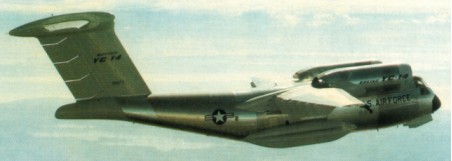
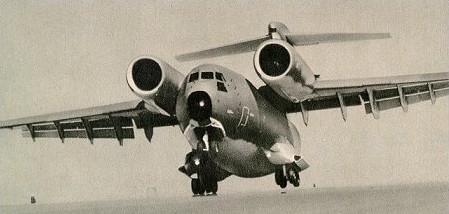
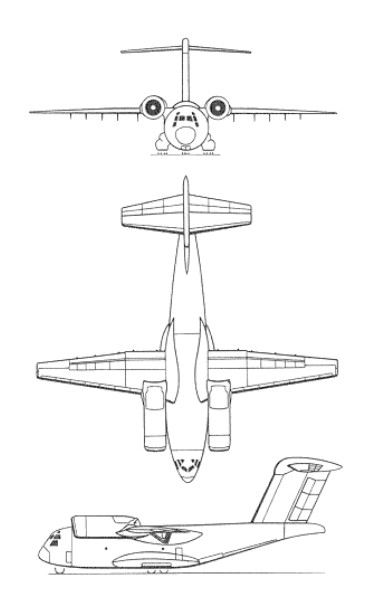
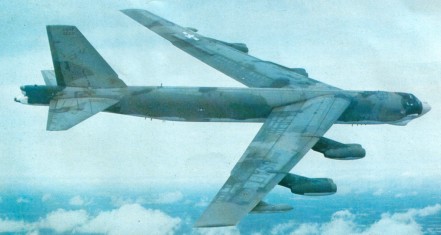

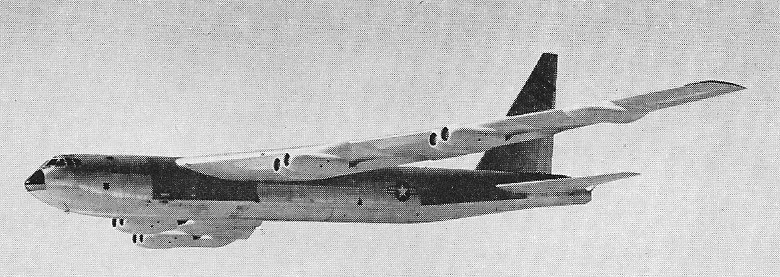
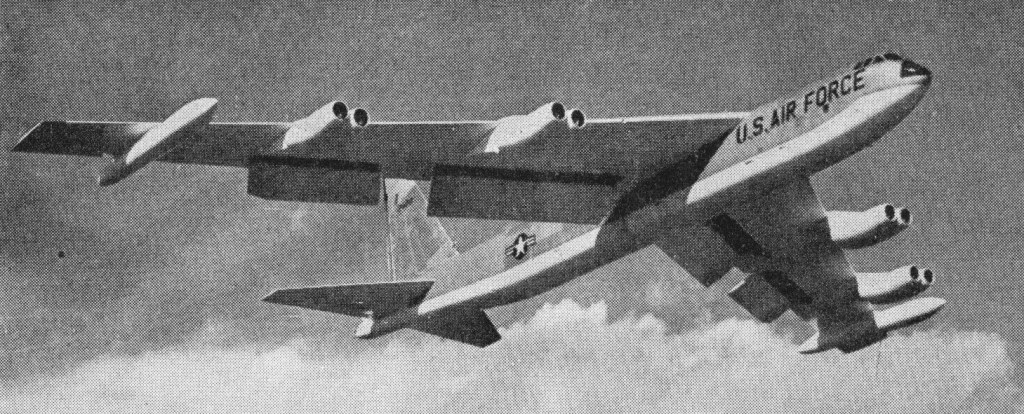


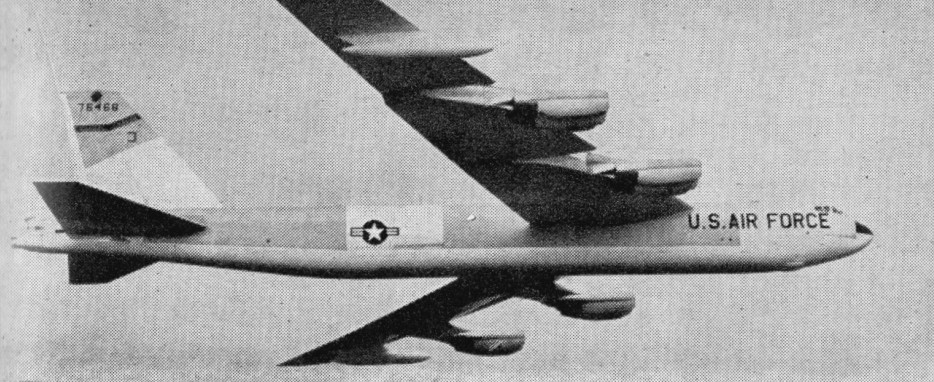
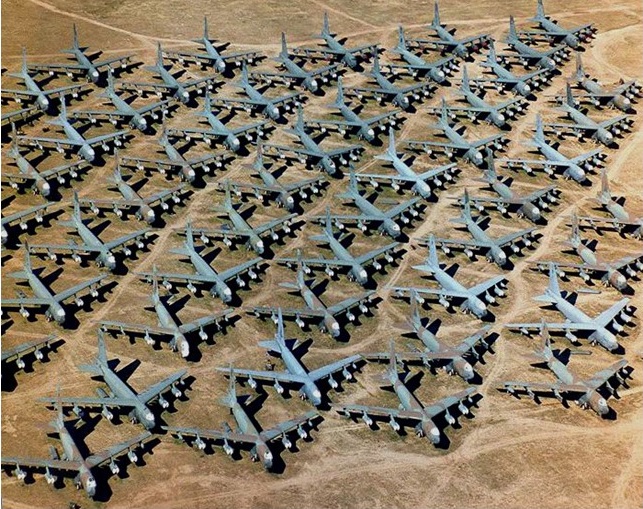
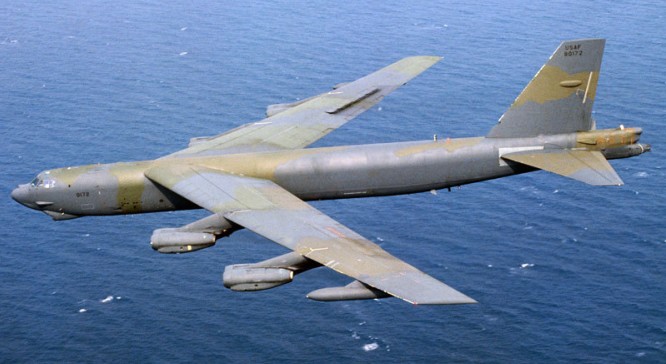
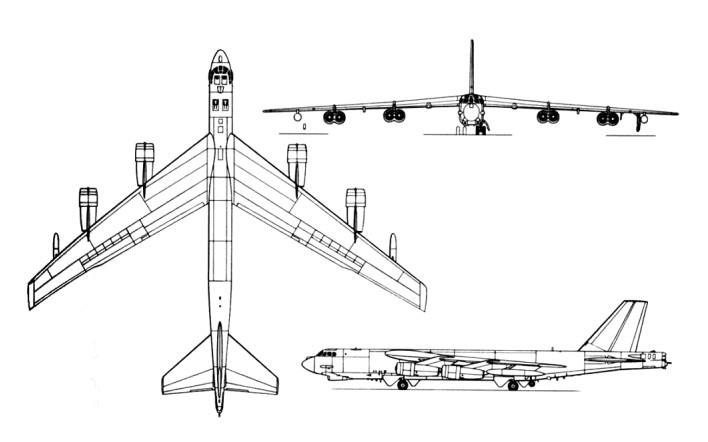
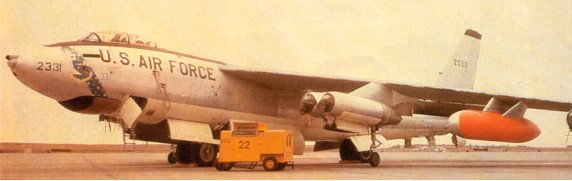
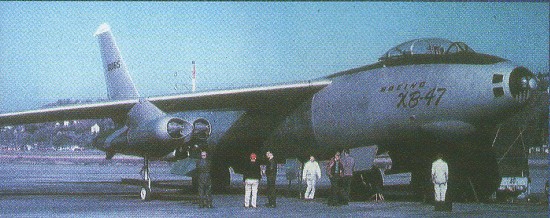
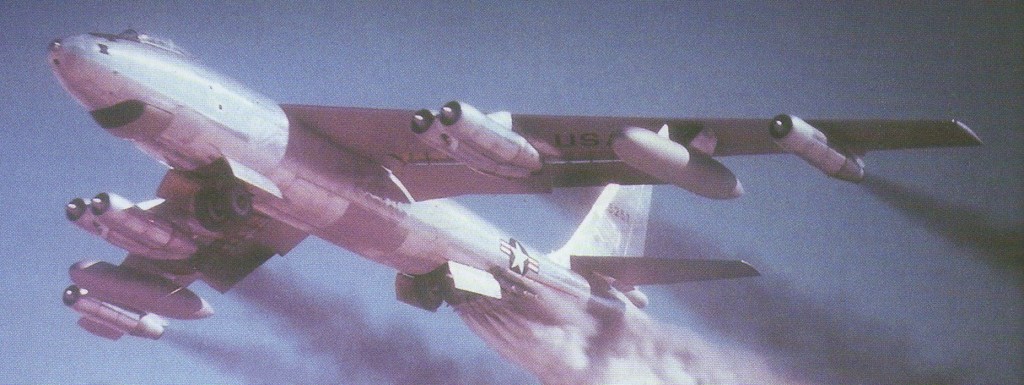
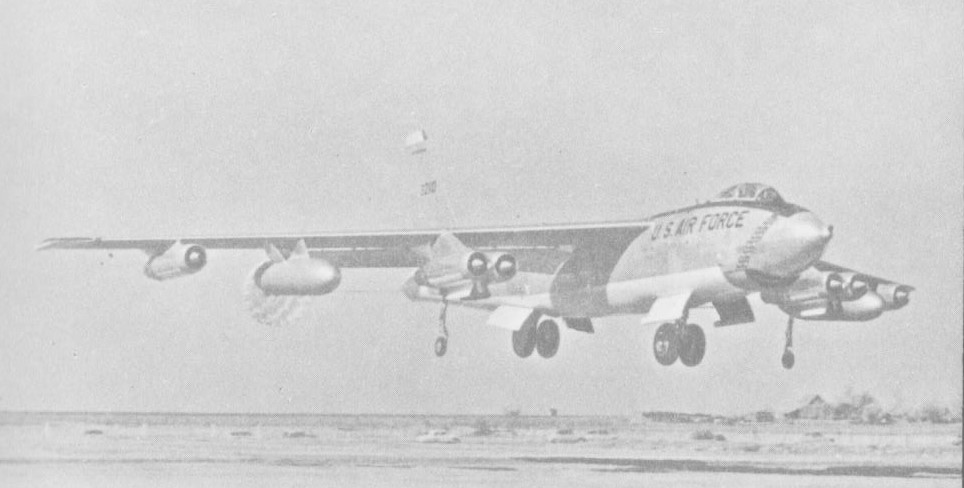
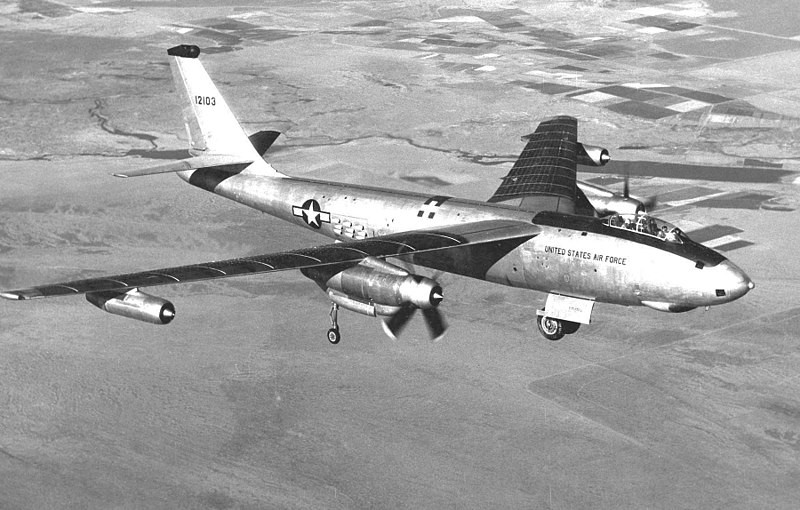
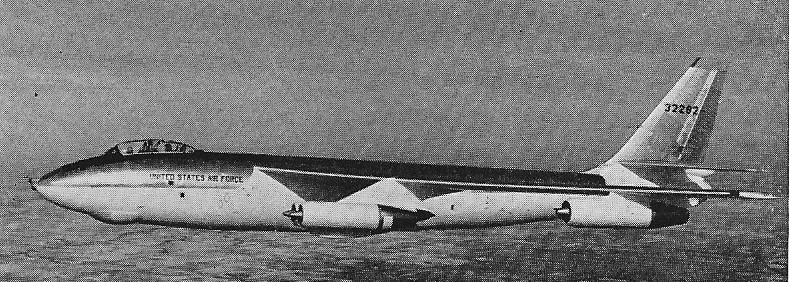
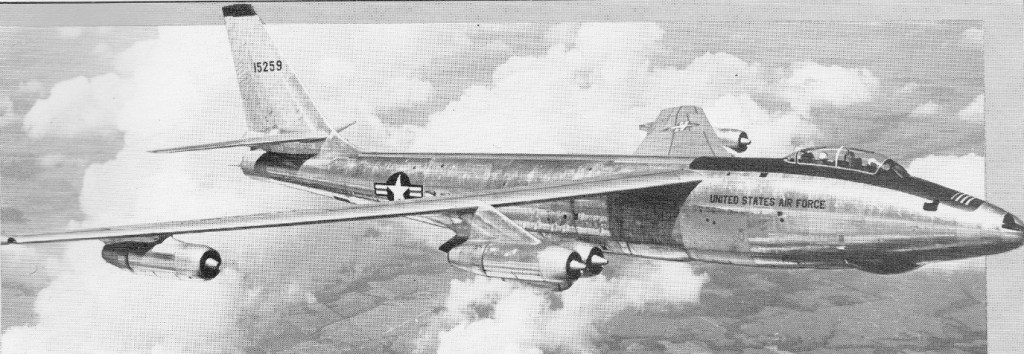
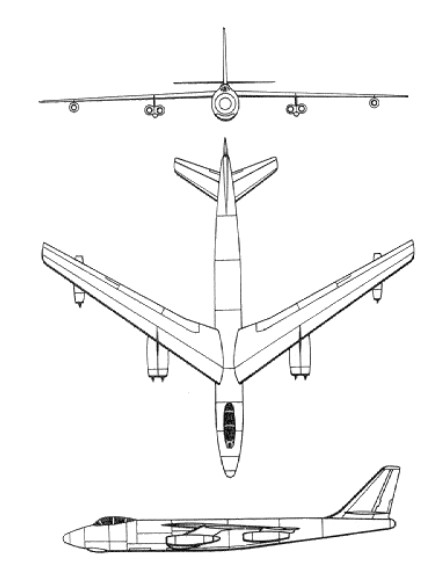
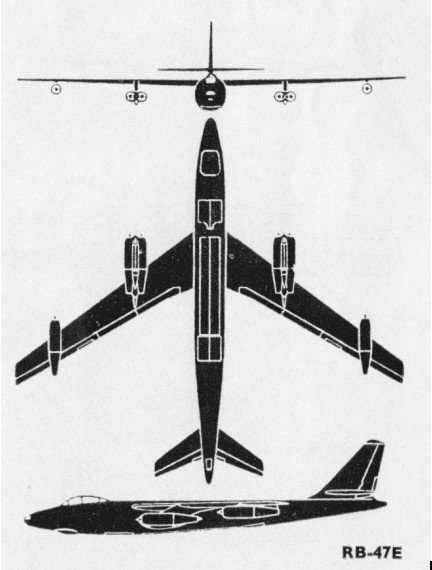
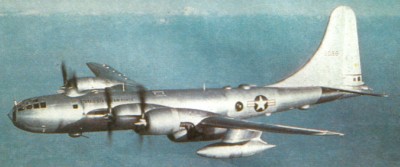
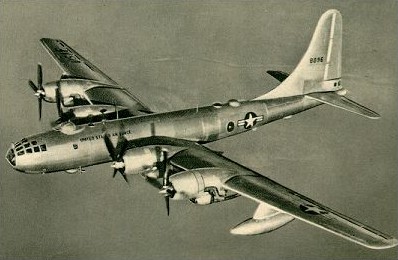
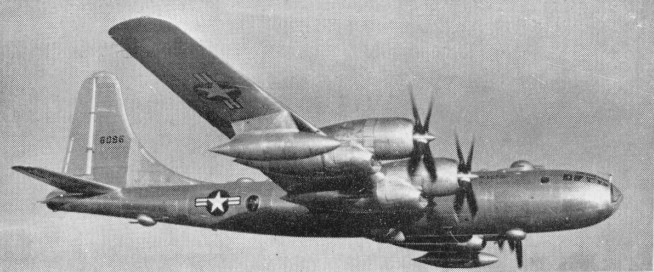
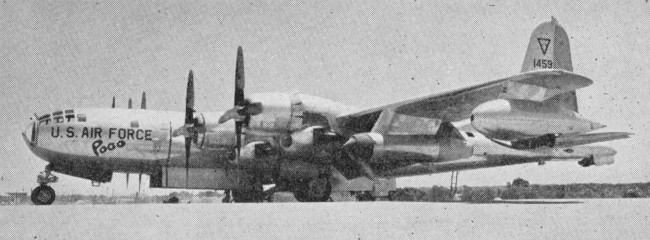
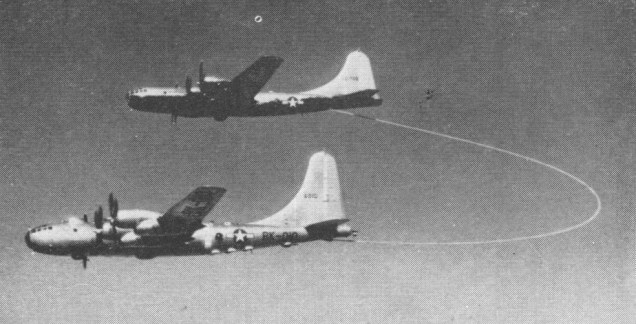
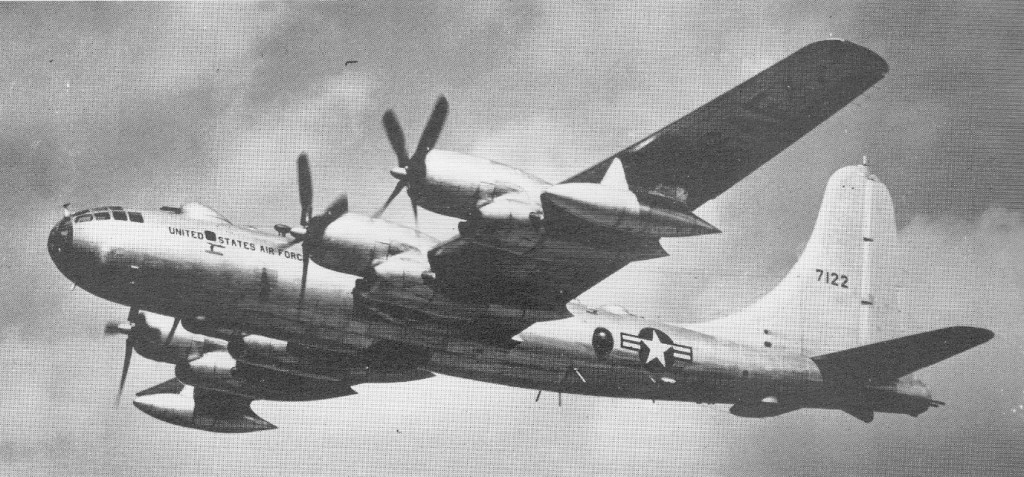
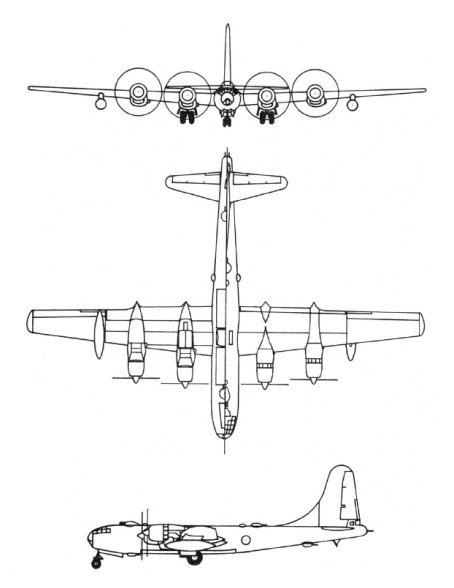
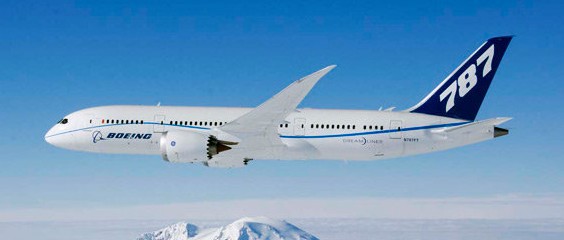
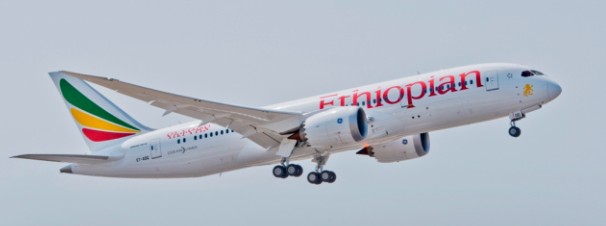


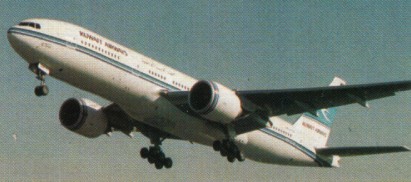
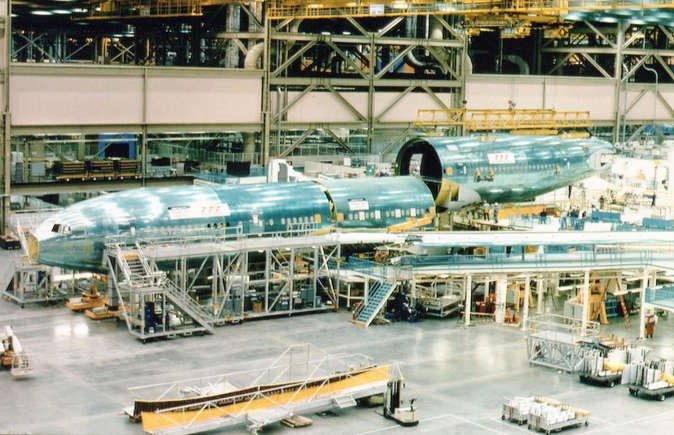
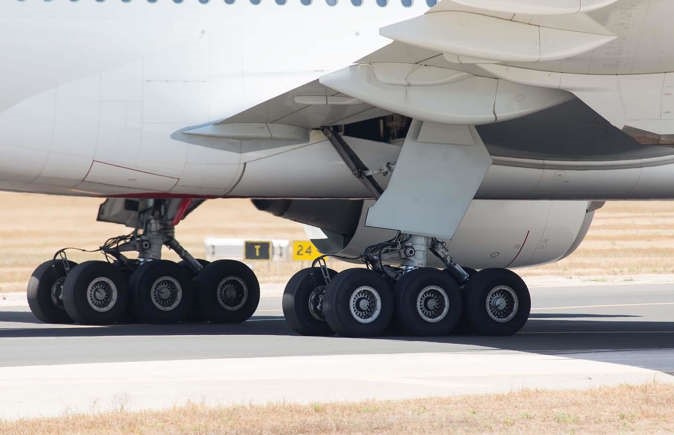
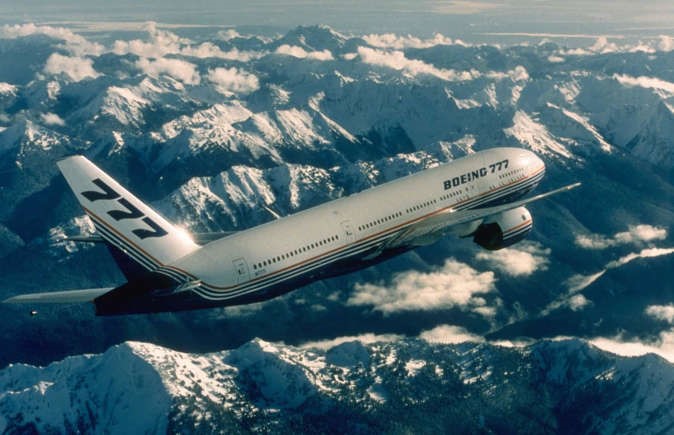
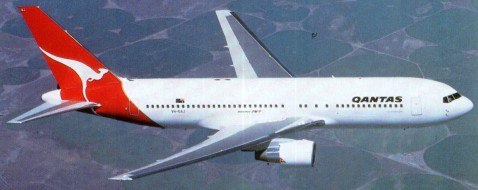
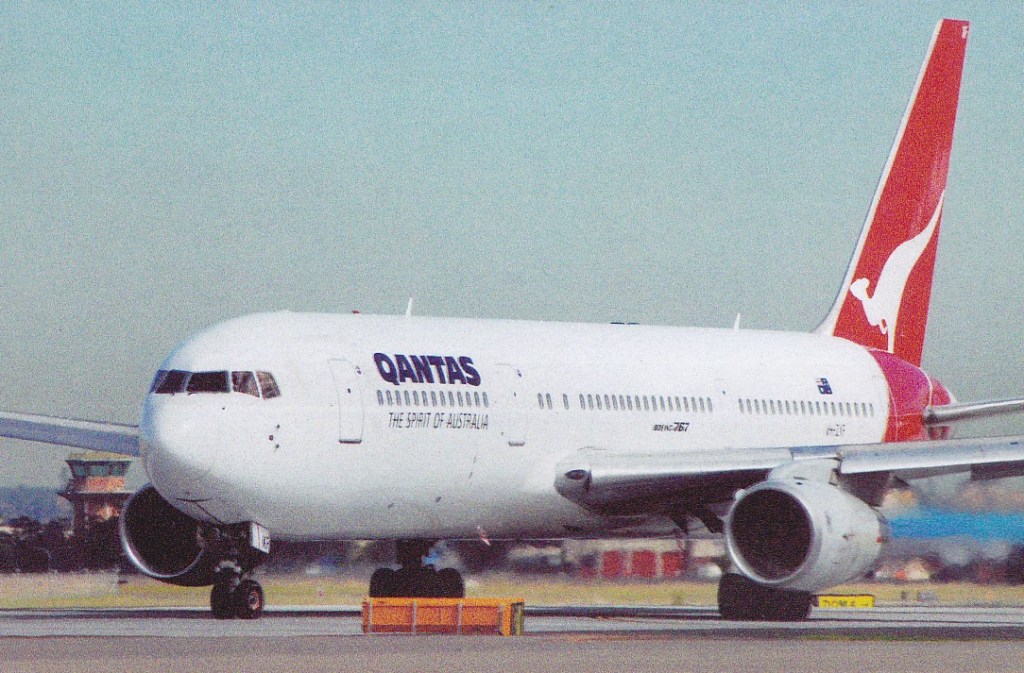
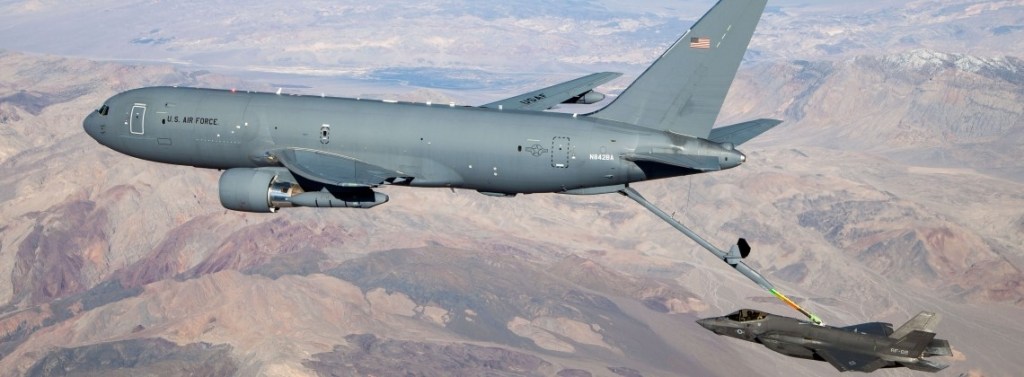
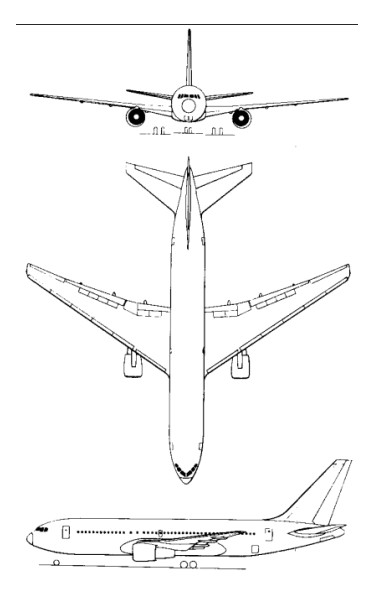
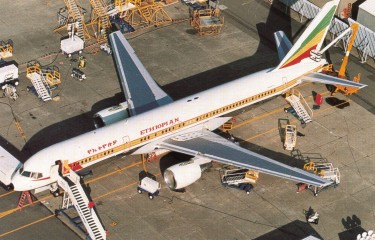
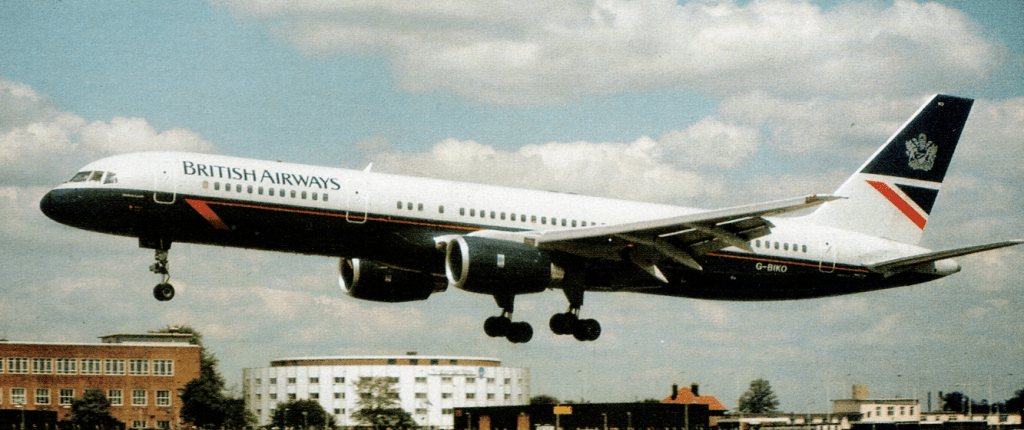
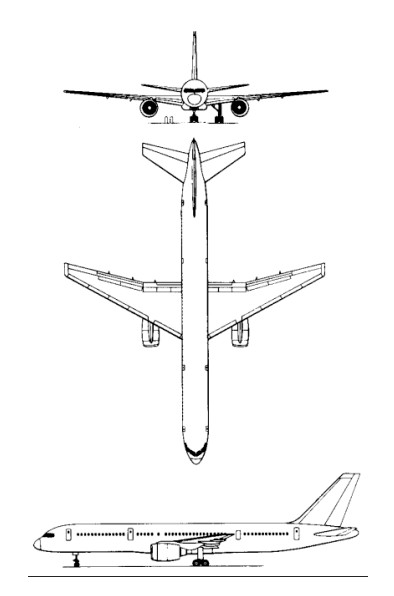
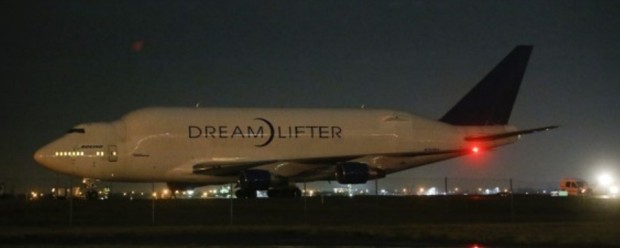
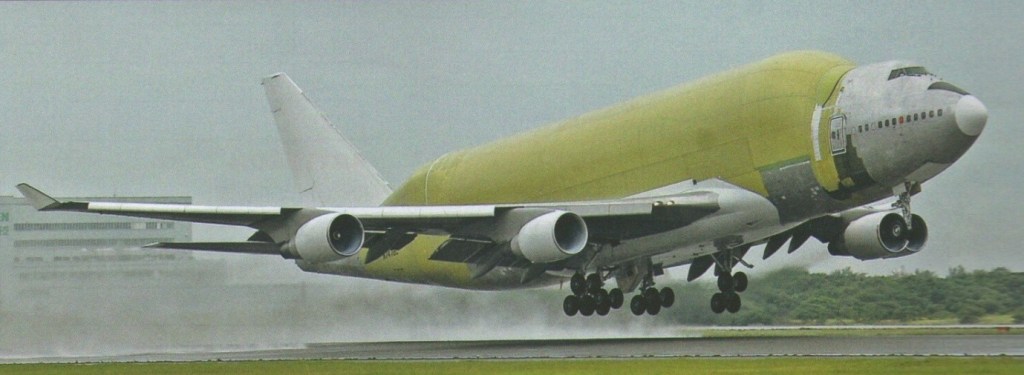
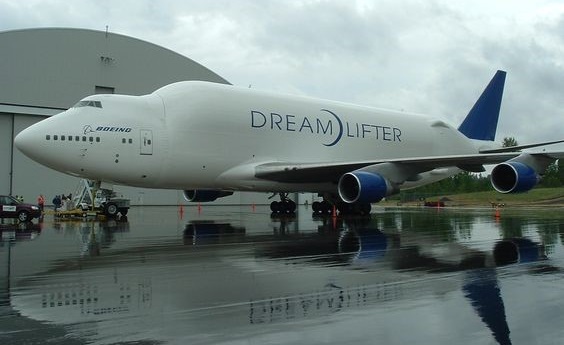
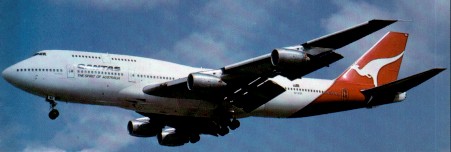
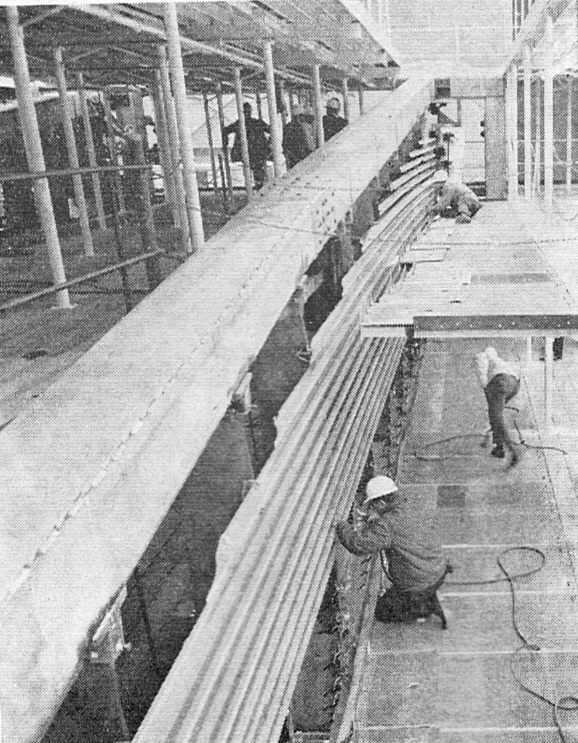
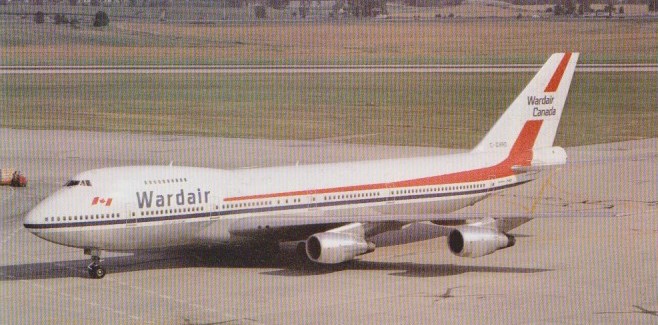
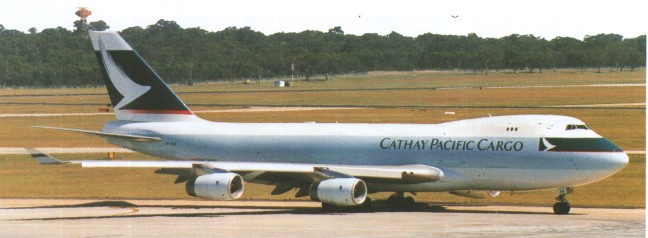
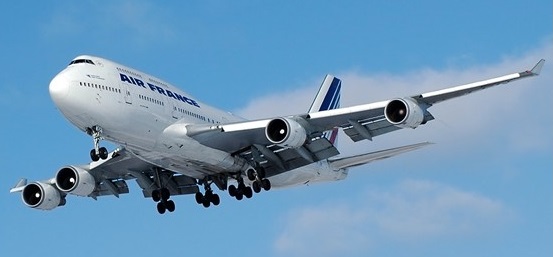
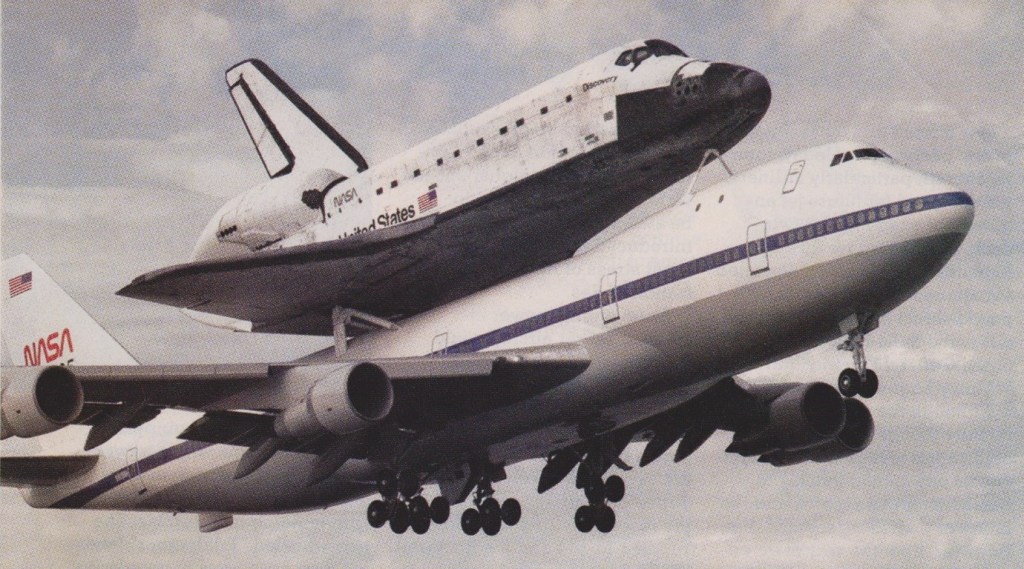
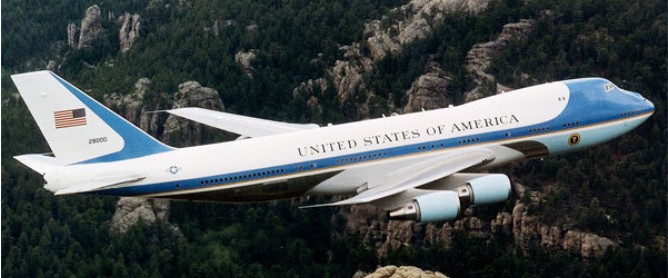
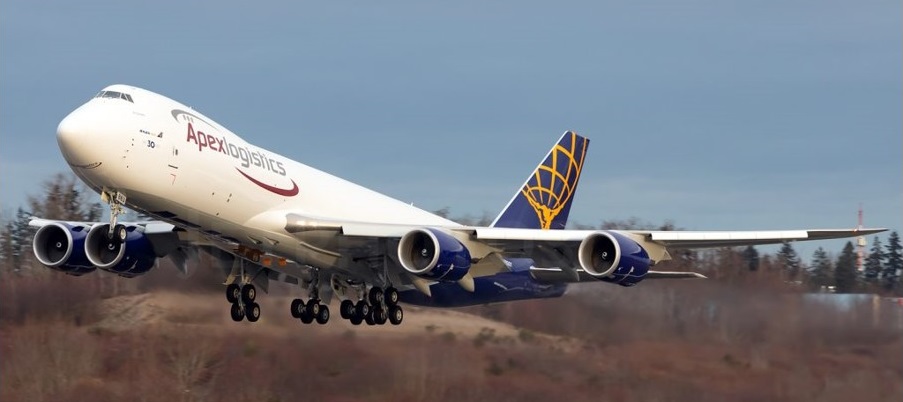
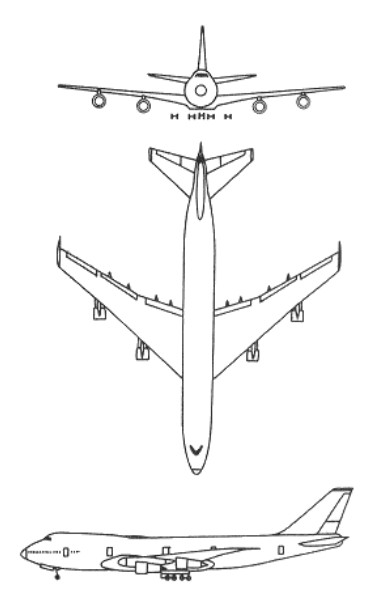
 All Aero