Bristol BE53 Pegasus (VTOL) / Rolls-Royce Pegasus / F402

Michel Wibault, the French aircraft designer, had the idea to use vectored thrust for vertical take-off aircraft. This thrust came from four centrifugal compressors driven by a Bristol Orion turboprop, the exhaust from each could be directed by rotating the outlets. Gordon Lewis initially planned an engine with two thrust vectors, driven by the compressor, with forward thrust from a conventional rear exhaust in his initial BE.52 design. The BE.52 design was built around a Bristol Siddeley Orpheus which through a shaft drove the first three stages of a Bristol Olympus engine which had inlet and outlets separate of those of the Orpheus. Work was overseen by Bristol Siddeley’s Technical Director Stanley Hooker.

The Bristol Engine Company began work on the BE.53 Pegasus in 1957. While the BE.52 was a self-contained powerplant and lighter compared to Wibault’s concept, the BE.52 was still complicated and heavy. In the BE.53 the Olympus stages were fitted close to the Orpheus stage; this simplified the inlet ducting and the Olympus stages now supercharged the Orpheus improving the compression ratio.

The engine was designed in isolation for a year, then it was helped greatly by understanding what type of aircraft it was designed for. The team received a supportive letter from Sydney Camm of Hawker in May 1957. Hawker were looking for a Hawker Hunter replacement. The aircraft designer, Ralph Hooper, suggested having the four thrust vectors (originally suggested by Lewis), with hot gases from the rear two. Two thrust vectors did not provide enough lift. The 1957 Defence White Paper, which focused on missiles, and not aircraft, also was not good news.

The further development of the engine then proceeded in tandem with the airframe the Hawker P.1127, which first flew in 1960. The next stage of design and development was then flown in the Kestrel, of which nine were built. This was then developed into the Harrier combat aircraft. The engine was partially supported financially from the Mutual Weapons Development Programme.
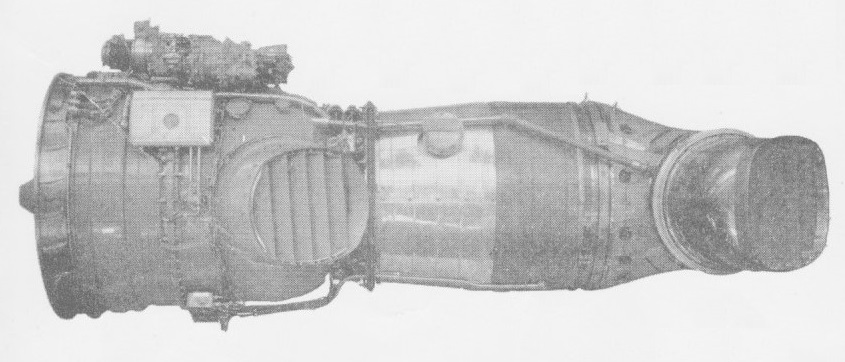
The flight testing and engine development received no government funding; the plane’s funding came entirely from Hawker. There was only enough thrust in the first engines to barely lift the plane off the ground because of weight growth problems. Flight tests were conducted when the aircraft was tethered. The first free hover was achieved on 19 November 1960. The first, and difficult, transition from static hover to conventional flight was achieved on 8 September 1961. The RAF was not much of a convert to the VTOL idea, and described the whole project as a toy and a crowd pleaser. The first prototype P1127 made a very heavy landing at the Paris Air Show in 1963.

Series Manufacture and Design and Development improvement to ever higher thrusts of the Pegasus was continued by Bristol engines beyond 1966, which was when Rolls-Royce Ltd bought the Company. A related engine design, the 39,500 lbf (with reheat) Bristol Siddeley BS100 for a supersonic VTOL fighter (the Hawker Siddeley P.1154) was not developed to production as the aircraft project was cancelled in 1965.

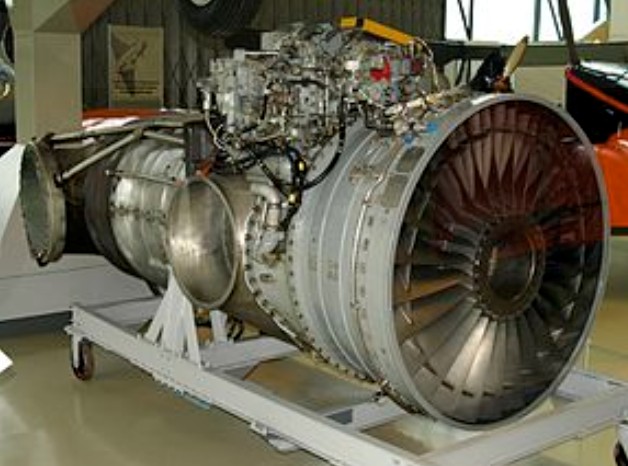
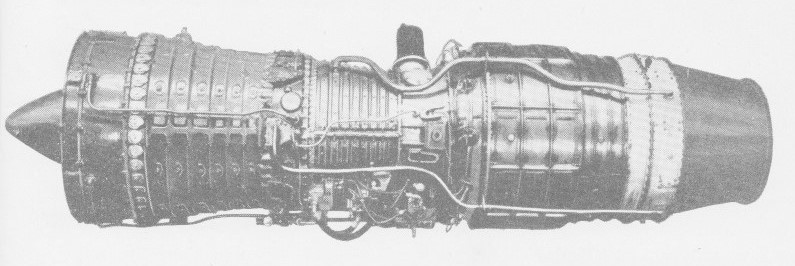
The Pegasus vectored-thrust turbofan is a two-shaft design featuring three low pressure (LP) and eight high pressure (HP) compressor stages driven by two LP and two HP turbine stages respectively. Unusually the LP and HP spools rotate in opposite directions to greatly reduce the gyroscopic effects which would otherwise hamper low speed handling. The engine employs a simple thrust vectoring system that uses four swiveling nozzles, giving the Harrier thrust both for lift and forward propulsion, allowing for STOVL flight. This unique design highly contributes to the sustainability and success of its carrier, the Hawker Harrier. Many other designs faced flaws as the lift and forward propulsion functions were split using separate engines. In such a concept once the transition from lift to forward or vice versa is completed, any such engine is reduced to dead weight. I.e. in forward flight lift engines do not need to provide thrust anymore, but still need to be carried by the airframe, consuming valuable fuel, increasing weight, decreasing range and occupying costly space that cannot be used for other purposes anymore. Like fuel, avionics or additional ordnance.

The front two nozzles are fed with air from the LP compressor, the rear with hot (650 °C) jet exhaust. The airflow split is about 60/40 front back. It was critical that the nozzles rotate together. This was achieved by using a pair of air motors fed from the HP (high pressure) compressor, in a fail over configuration, pairs of nozzles connected with, surprisingly, motor-cycle chains.

The Pegasus was also the first turbofan engine to have the initial compressor fan, the zero stage, ahead of the front bearing. This eliminated radial struts and the icing hazard they represent.

The engine is mounted in the centre of the Harrier and as such it is necessary to remove the wing to change the powerplant having already sat the fuselage on trestles; the whole change took a minimum of eight hours.

The maximum take-off thrust available from the Pegasus engine is limited, particularly at the higher ambient temperatures, by the turbine blade temperature. As this temperature cannot reliably be measured, the operating limits are determined by jet pipe temperature. To enable the engine speed and hence thrust to be increased for take-off, water is sprayed into the combustion chamber and turbine to keep the blade temperature down to an acceptable level.

Water for the injection system is contained in a tank located between the bifurcated section of the rear (hot) exhaust duct. The tank contains up to 500 lb (227 kg, 50 imperial gallons) of distilled water. Water flow rate for the required turbine temperature reduction is approximately 35gpm (imperial gallons per minute) for a maximum duration of approximately 90 seconds. The quantity of water carried is sufficient for and appropriate to the particular operational role of the aircraft.

Selection of water injection engine ratings (Lift Wet/Short Lift Wet) results in an increase in the engine speed and jet pipe temperature limits beyond the respective dry (non-injected) ratings (Lift Dry/Short Lift Dry). Upon exhausting the available water supply in the tank, the limits are reset to the ‘dry’ levels. A warning light in the cockpit provides advance warning of water depletion to the pilot.

Over 1,347 engines have been produced and two million operating hours have been logged with the Harriers of the Royal Air Force (RAF), Royal Navy, U.S. Marine Corps and the navies of India, Italy, Spain and Thailand.

The unique Pegasus engine powers all versions of the Harrier family of multi-role military aircraft. In US service, the engine is designated F402. Rolls-Royce licensed Pratt & Whitney to build the Pegasus for US built versions. However Pratt & Whitney never completed any engines, with all new build being manufactured by Rolls-Royce in Bristol, England. The Pegasus was also the planned engine for a number of aircraft projects, among which were the prototypes of the German Dornier Do 31 VSTOL military transport project.

Gallery

Variants:

Pegasus 2
Otherwise known as the BE53-3, used in the P.1127, 11,500 lbf (51 kN)

Pegasus 3
Used on the P.1127 prototypes, 13,500 lbf (60 kN)

Pegasus 5
Or BS.53-5 (Bristol-Siddeley 53-3). Used for the Hawker Siddeley Kestrel evaluation aircraft. 15,000 lbf (67 kN)

Pegasus 6 (Mark 101)
For first Harriers. 19,000 lbf (85 kN), first flown in 1966 and entered service 1969

Pegasus 10 (Mark 102)
For updating first Harriers with more power and used for the AV-8A, 20,500 lbf (91 kN), entering service in 1971.

Pegasus 11 (Mark 103)
The Pegasus 11 powered the first generation Harriers, the RAF’s Hawker Siddeley Harrier GR.3, the USMC AV-8A and later the Royal Navy’s Sea Harrier. The Pegasus 11 produced 21,000 lbf (93 kN) and entered service in 1974.

Pegasus 14 (Mark 104)
Navalised version of the Pegasus 11 for the Sea Harrier, same as the 11 but some engine components and castings made from corrosion-resistant materials.

Pegasus 11-21/Mk.105/Mk.106
The 11-21 was developed for the second generation Harriers, the USMC AV-8B Harrier II and the BAE Harrier IIs. The original model provided an extra 450 lbf (2.0 kN). The RAF Harriers entered service with the 11-21 Mk.105, the AV-8Bs with F402-RR-406. Depending on time constraints and water injection, between 14,450 lbf (64.3 kN) (max. continuous at 91% RPM) and 21,550 lbf (95.9 kN) (15 s wet at 107% RPM) of lift is available at sea level (including splay loss at 90°).
The Mk.106 development was produced for the Sea Harrier FA2 upgrade and generates 21,750 lbf (96.7 kN).

Pegasus 11-61/Mk.107
The 11-61 (aka -408) provides 23,800 lbf (106 kN). This equates to up to 15 percent more thrust at high ambient temperatures, allowing upgraded Harriers to return to an aircraft carrier without having to dump any unused weapons which along with the reduced maintenance reduces total cost of engine use.
The RAF/RN upgraded its GR7 fleet to GR9 standard, and part of this process is the upgrade of the Mk.105 engines to Mk.107 standard.

Applications:
AV-8B Harrier II
BAE Sea Harrier
BAE Harrier II
Dornier Do 31
Hawker Siddeley Harrier
Hawker Siddeley P.1127
Intended application –
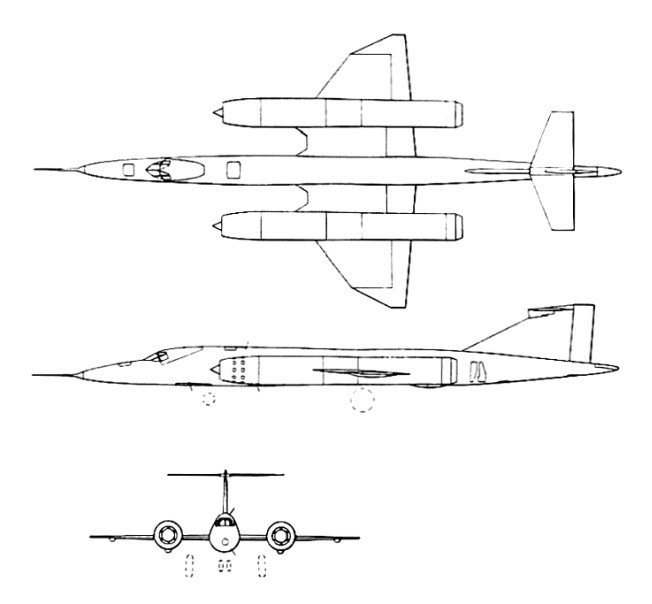
Armstrong Whitworth AW.681

Specifications:

Pegasus 11-61
Type: Twin-spool turbofan
Length: 137 in (3.480 m)
Diameter: 48 in (1.219 m)
Dry weight: 3,960 lb (1,796 kg)
Compressor: 3-stage low pressure, 8-stage high pressure axial flow
Combustors: Annular
Turbine: 2-stage high pressure, 2-stage low pressure
Maximum thrust: 23,800 lbf (106 kN)
Overall pressure ratio: 16.3:1
Specific fuel consumption: 0.76 lb/lbf-hr
Thrust-to-weight ratio: 6:1
Bristol Olympus / Bristol Siddeley Engines Limited Olympus / Rolls-Royce Bristol Engine Division Olympus

Bristol Siddeley Olympus Mk 301

At the end of World War II, the Bristol Engine Company’s major effort was the development of the Hercules and Centaurus radial piston engines. By the end of 1946, the company had only 10 hours of turbojet experience with a small experimental engine called the Phoebus which was the gas generator or core of the Proteus turboprop then in development. In early 1947, the parent Bristol Aeroplane Company submitted a proposal for a medium-range bomber to the same specification B.35/46 which led to the Avro Vulcan and Handley Page Victor. The Bristol design was the Type 172 and was to be powered by four or six Bristol engines of 9,000 lbf (40 kN) thrust.

The thrust required of the new engine, then designated B.E.10 (later Olympus), would initially be 9,000 lbf (40 kN) with growth potential to 12,000 lbf (53 kN). The pressure ratio would be an unheard of 9:1. To achieve this, the initial design used a low pressure (LP) axial compressor and a high pressure (HP) centrifugal compressor, each being driven by its own single-stage turbine. This two-spool design made the compression more manageable, enabled faster engine acceleration (“spool up”), and reduced surge. The design was progressively modified and the centrifugal HP compressor was replaced by an axial HP compressor. This reduced the diameter of the new engine to the design specification of 40 in (100 cm). The Bristol Type 172 was cancelled though development continued for the Avro Vulcan and other projects.

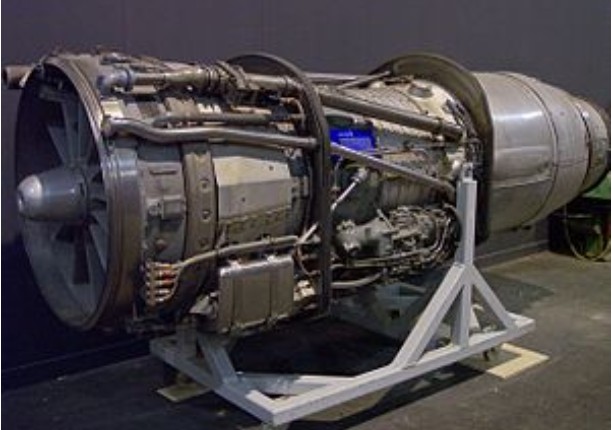
Gas-flow diagram of Olympus Mk 101.The first engine, its development designation being BOl.1 (Bristol Olympus 1), had six LP compressor stages and eight HP stages, each driven by a single-stage turbine. The combustion system was novel in that ten connected flame tubes were housed within a cannular system: a hybrid of separate flame cans and a true annular system. Separate combustion cans would have exceeded the diameter beyond the design limit and a true annular system was considered too advanced.

In 1950, Dr (later Sir) Stanley Hooker was appointed as Chief Engineer of Bristol Aero Engines.

The BOl.1 first ran in May 1950 and produced 9,140 lbf (40.7 kN) thrust. The next development was the BOl.1/2 which produced 9,500 lbf (42 kN) thrust in December 1950. Examples of the similar BOl.1/2A were constructed for US manufacturer Curtiss-Wright which had bought a licence for developing the engine as the TJ-32 or J67. The somewhat revised BOl.1/2B, ran in December 1951 producing 9,750 lbf (43.4 kN) thrust. The engine was by now ready for air testing and the first flight engines, designated Olympus Mk 99, were fitted into a Canberra WD952 which first flew with these engines derated to 8,000 lbf (36 kN) thrust in August 1952. In May 1953, this aircraft reached a world record altitude of 63,668 ft (19,406 m). (Fitted with more powerful Mk 102 engines, the Canberra increased the record to 65,876 ft (20,079 m) in August 1955.)

The Olympus 551 ‘Zephyr’ was a derated and lightened version of the BOl.6 and rated at 13,500 lbf (60 kN) thrust. The engine was the subject of a licence agreement between Bristol Aero Engines and the Curtiss-Wright Corporation – the engine being marketed in the USA as the Curtiss-Wright TJ-38 Zephyr. There were hopes to fit the Olympus 551 to the Avro Type 740 and Bristol Type 200 trijet airliners which did not progress beyond the project stage. Curtiss-Wright also failed to market the engine.

Bristol Aero Engines (formerly Bristol Engine Company) merged with Armstrong Siddeley Motors in 1959 to form Bristol Siddeley Engines Limited (BSEL) which in turn was taken over by Rolls-Royce in 1966.

The performance specification for TSR2 was issued in 1962. It was to be powered by two BSEL Olympus Mk 320 (BOl.22R) engines rated at 30,610 lbf (136.2 kN) with reheat at take-off. The engine was a cutting edge derivative of the Olympus Mk 301 with a Solar-type afterburner.[32] The engine first ran in March 1961 and was test flown in February 1962 underslung Vulcan B1 XA894 and was demonstrated at the Farnborough Air Show in September. In December 1962 during a full power ground run at Filton, the engine blew up after an LP turbine failure, completely destroying its host Vulcan in the subsequent fire.

On its first flight in September 1964 the engines of the TSR-2 were scarcely flightworthy being derated and cleared for one flight. Nevertheless, the risk was deemed acceptable in the political climate of the time. With new engines, the TSR-2 XR219 flew another 23 times before the project was cancelled in 1965.

Plans to civilianise the Olympus go back as far as 1953 with the unveiling of the Avro Atlantic airliner based upon the Vulcan. However, most of the civilian derivatives, except for supersonic airliners, were developed from the BOl.6.

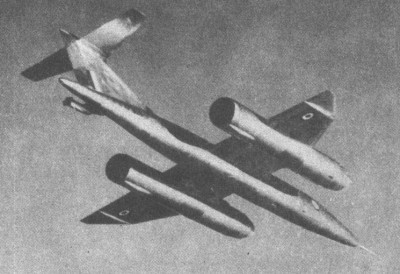
One project that got beyond the drawing board was a supersonic development of the Gloster Javelin, the P370, powered by two BOl.6, 7, or 7SR engines. The design evolved into the P376 with two BOl.21R engines rated at 28,500 lbf (127 kN) with reheat. Eighteen aircraft were ordered in 1955. The project was abandoned the following year.

As early as 1952, Bristols had considered the use of reheat, or afterburning, to augment the thrust of the Olympus. Initially, a system called Bristol Simplifed Reheat was devised which was tested on a Rolls-Royce Derwent V mounted in an Avro Lincoln. Later it was tested on an Orenda engine in Canada and on an Olympus Mk 100 in the Avro Ashton test bed. Fully variable reheat became possible after an agreement with the Solar Aircraft Company of San Diego which manufactured bench units for the Olympus Mks 101 and 102.

Bristol Olympus 593 Concorde Article

As of 2012, the Olympus remains in service as both a marine and industrial gas turbine. It also powered a restored Avro Vulcan XH558.

Variants:

BOl.1/2A

BOl.1/2B

BOl.1/2C

BOl.2

BOl.3
Of all the early initial developments, BOl.2 to BOl.5 (the BOl.5 was never built), perhaps the most significant was the BOl.3. Even before the Vulcan first flew, the Olympus 3 was being suggested as the definitive powerplant for the aircraft. In the event, the ‘original’ Olympus was continuously developed for the Vulcan B1. The BOl.3 was described in 1957 as “a high-ended product intermediate between the Olympus 100 and 200 series.”

BOl.4

BOl.5
not built

BOl.6
(Mk.200)

BOl.7
(Mk.201)

BOl.7SR

BOl.11
(Mk.102)

BOl.12
(Mk.104)

BOl.21
(Mk.301)

BOl.21R

BOl.22R
(Mk.320)

Olympus Mk 100
(BOl.1/2B) Similar to Olympus Mk 99 rated at 9,250 lbf (41.1 kN) thrust for second Vulcan prototype VX777. First flew September 1953.

Olympus Mk 101
(BOl.1/2C) Larger turbine, 11,000 lbf (49 kN) thrust for initial production Vulcan B1 aircraft. First flew (XA889) February 1955.

Olympus Mk 102
(BOl.11) Additional zero stage on LP compressor, 12,000 lbf (53 kN) thrust for later production Vulcan B1 aircraft.

Olympus Mk 104
(BOl.12) Designation for Olympus Mk 102 modified on overhaul with new turbine and burners, 13,000 lbf (58 kN) thrust initially, 13,500 lbf (60 kN) thrust on uprating, standard on Vulcan B1A.

‘Olympus 106’
Used to describe the development engine for the Olympus 200 (BOl.6). Possibly a corruption of BOl.6 (Olympus 6).

The initial design of the second generation ‘Olympus 6’ began in 1952. This was a major redesign with five LP and seven HP compressor stages and a canullar combustor with eight interconected flame tubes. In spite of a much greater mass flow, the size and weight of the BOl.6 was little different to earlier models.

Rival manufacturers Rolls-Royce lobbied very hard to have its Conway engine installed in the Vulcan B2 to achieve commonality with the Victor B2. As a consequence, Bristols undertook to complete development using company funds and peg the price to that of its fully government-funded rival.

Olympus Mk 97
This early engine tested an early annular combustion chamber. It was test flown on Bristol’s Avro Ashton test bed WB493.

Olympus Mk 200
(BOl.6) 16,000 lbf (71 kN) thrust. First B2 (XH533) only.

Olympus Mk 201
(BOl.7) Uprated Olympus Mk 200. 17,000 lbf (76 kN) thrust. Initial Vulcan B2 aircraft.

Olympus Mk 202
Disputed. Either Olympus Mk 201 modified with rapid air starter, or Olympus Mk 201 with redesigned oil separator breathing system. This was the definitive ‘200 series’ engine fitted to Vulcans not fitted with the Mk 301. The restored Vulcan XH558 is fitted with Olympus Mk 202 engines.

‘Olympus Mk 203’
Very occasional reference to this elusive mark of engine can be found in some official Air Publications relating to the Vulcan B2. It is also noted in a manufacturer’s archived document dated circa 1960.

Olympus Mk 301
(BOl.21) Additional zero stage on LP compressor. 20,000 lbf (89 kN) thrust. Later Vulcan B2 aircraft plus nine earlier aircraft retrofitted. Later derated to 18,000 lbf (80 kN) thrust. Restored to original rating for Operation Black Buck.

Olympus 510 series
With a thrust in the region of 15,000 lbf (67 kN) to 19,000 lbf (85 kN), the 510 series were civilianised versions of the BOl.6. A team was sent to Boeing at Seattle to promote the engine in 1956 but without success.

Olympus 551

Specifications:

Olympus 101
Type: Axial flow two-spool turbojet
Length: 152.2 in (387 cm)
Diameter: 40 in (100 cm)
Dry weight: 3,615 lb (1,640 kg)
Compressor: Axial 6 LP pressure stages, 8 HP stages
Combustors: Cannular 10 flame tubes
Turbine: HP single stage, LP single stage
Fuel type: AVTUR or AVTAG
Maximum thrust: 11,000 lbf (49 kN)
Specific fuel consumption: .817
Power-to-weight ratio: 3.04:1

Bristol B.221

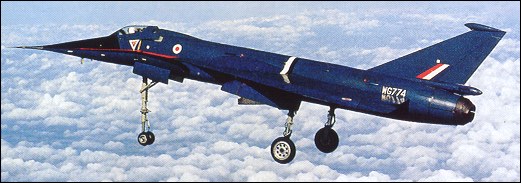
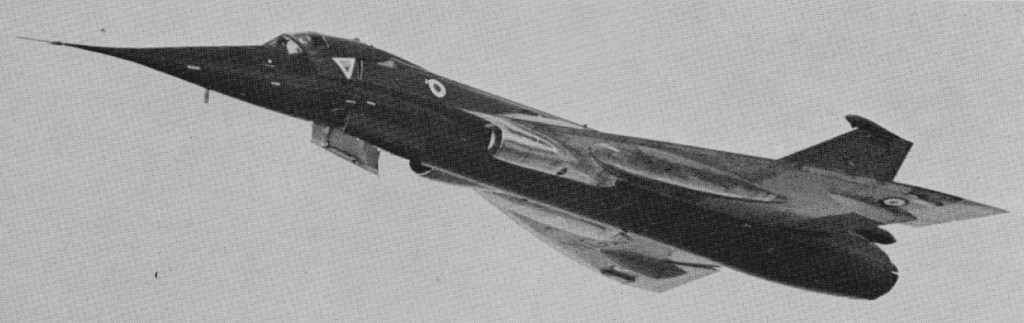
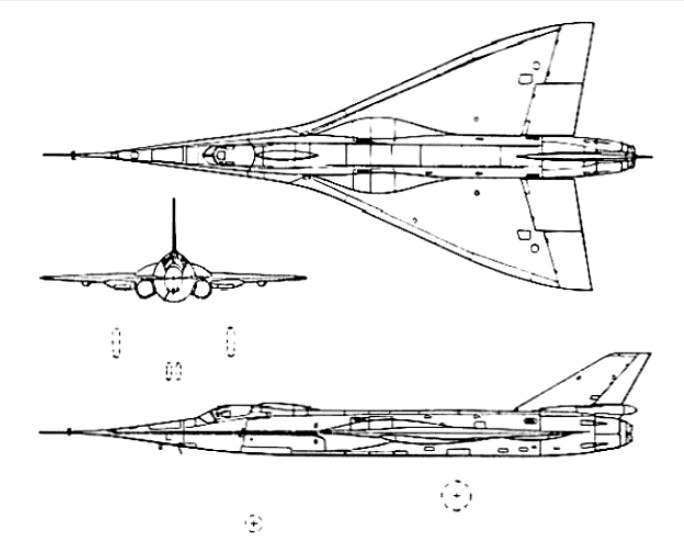
The last of the ‘Bristol’ aircraft was the purely research aeroplane, the Type 221. With the B.188, they furnished valuable information on the structural and aerodynamic problems associated with supersonic flight. The Type 221, first flown was on May 1, 1964, was a modified version of the record breaking Fairey Delta 2 and used to investigate the handling and control characteristics of the slender ogival wing, which was again to feature in the Concorde.

Gallery

Engine: 1 x 5000kg
Wingspan: 7.62 m / 25 ft 0 in
Length: 17.55 m / 57 ft 7 in
Height: 3.96 m / 12 ft 12 in
Wing area: 46.82 sq.m / 503.97 sq ft
Max. speed: 1707 km/h / 1061 mph
Crew: 1

Bristol B.203

In the mid 1950s Bristol Aircraft Ltd began work on a turbine-powered helicopter using a B.171 Syvamore Mk 3 with an increased fin area. Under the name Bristol 203 it was to be an 11-seat machine and parts from the incomplete 179th and 180th Sycamore airframes were used in the prototype machine. This project was abandoned when the company was taken over by Westland, although some of its finer points were later incorporated in the Lynx.

Bristol B.198 / B.223        

In the late 1950s the Bristol aircraft design team, under the leadership of Dr Archibald E. Russell, was awarded important MoS contracts for design and feasibility studies in the development of a supersonic transport. After an outline design for a thin delta wing with pencil fuselage had been accepted, the Bristol Type 198 was projected. This would have been a trans Atlantic range delta aircraft powered by six Bristol Olympus engines. The government decided that this 380,000 lb machine was too heavy and asked for a smaller design, capable of carrying 100 passengers across the Atlantic, with a maximum weight of 250,0001b. This resulted in the Type 223 which formed the basis for the British contribution to the collaborative venture with France which was agreed in November 1962 and resulted in Concorde.
Concorde 002, G BSST, made its inaugural flight from Filton on 9 April 1969

Bristol B.191 / B.192 Belvedere

Undertaken by Bristol in response to Royal Navy and Canadian naval specifications were the models 191 and 193.

The Bristol 191 was a ship-based development of Type 173 with modified fuselage, u/c etc.

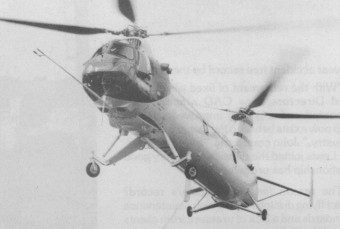
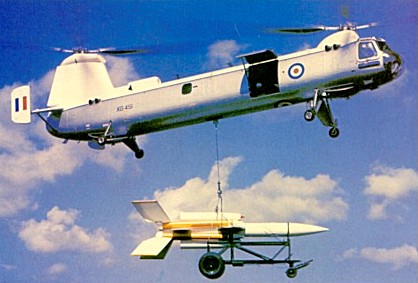
The Bristol 192 was the production version of Model 191 for RAF use with two cabin windows only, starboard cargo hatch, cargo hoist beneath fuselage, large anhedralled tailplane and powered by two 1465shp Napier Gazelle 2 turboshafts, derated to 920shp. In the initial configuration, the 192 had a purely manual system of control and wooden rotor blades but power controls and metal blades were standardized on the fifth prototype built in 1960. The prototype Type 192 (XG447) first flying on 5 July 1958 at Westonsuper-Mare, was demonstrated at the Farnborough air show in September 1952. That year, three pre-production aircraft were assigned to the RAF for a series of trials for which they were based at Odiham.

As the Westland Belvedere this entered service with the Royal Air Force, though this was only after the 191 and 193 had been cancelled by the RAF and Royal Canadian Air Force respectively.

Twenty-six of these helicopters were ordered and used for some years for military transport, not only in the United Kingdom, but also in the Middle and Far East. The Belvedere was withdrawn from service in March 1969.

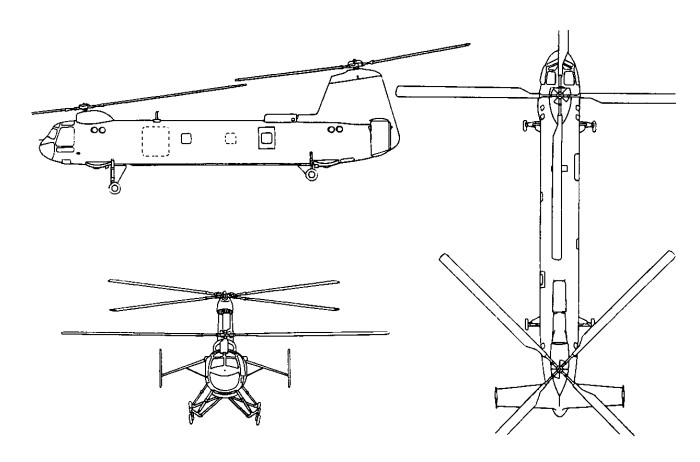
The production Bristol 192s had an all-metal, skinned fuselage and an anhedral tailplane, compared with the dihedral one of the Type 173. The two rotors had four metal blades and the front wheels of the fixed quadricycle landing gear were self-castoring. The helicopter’s maximum capacity was 30 seats or 2700kg internal payload. The instrumentation also permitted night flying.

As the 192C it was tested by BEA and offered its 24 passengers a unique high-speed service between London and Paris. British European Airways leased a Belvedere briefly but never used it in commercial service.

On May 30, 1961, C T D Hosegood flew from London to Paris in 1 hour 41 min 28 sec and on June 2, 1961, from Paris to London in 1 hour 40 mm 55 sec. This is the equivalent of 202.32km/h outwards and 203.51 km/h on the return flight.

Gallery

Bristol B 192 Belvedere HC Mk I
Engines: 2 x Napier Gazelle 2, 1627 shp, 1092kW
Fuselage length: 54.134 ft / 16.5 m
Length with rotors turning: 27.36m
Height: 17.388 ft / 5.3 m
Rotor diameter: 48.885 ft / 14.91 m
Max take off weight: 18522.0 lbs / 8400.0 kg
Empty weight: 5277kg
Max. speed: 119 kts / 220 km/h
Service ceiling: 13123 ft / 4000 m
Range: 378 nm / 700 km
Crew: 2 + 25 PAX / 2700kg

Bristol B.188

Bristol B.188 Article

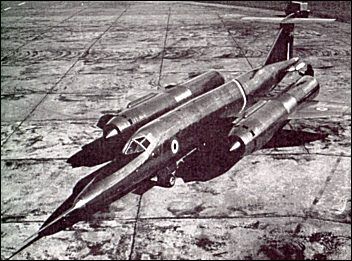
The Bristol 188 was designed to research structures for sustained supersonic flight, particularly in support of the Avro 730 reconnaissance aircraft. This required the aircraft to ‘soak’ at Mach 2.6 for at least 30 minutes.
The Bristol Type 188 research aircraft XF962 was built for high speed research. Two examples were built, constructed mainly of stainless steel and highly polished natural metal finish. Powered by two de Havilland Gyron Junior turbojets, the type first flew on 29 April 1963 and subsequently attained Mach 1.88 at 36,000 ft. However, the 188 had an extremely high fuel consumption and was only able to remain airborne for about 25 minutes.

Take-off speed was nearly 483km/h, but in all other respects the 188’s speed was slower than desired, being able to achieve Mach 2.0 for only a couple of minutes. The whole project cost a huge GBP20 million and failed to achieve its objectives. It was wound down rather than develop the engines further. Test pilot Godfrey Auty was voted the ‘man most likely to eject in the coming year’ by his peers but never had to.

In 1964 the B.188 was indefinitely grounded, less than two-years after the first of two flew. A third never reached flight. The most expensive research aircraft built in Britain, the B.188 which a list of projects up to Mach 3 was to be flying for 12 to 15 years. For some time, one plane was cannibalised to support another.

B.188
Engines: 2 x de Havilland Gyron Junior DGJ.10R turbojets, 6350kg
Wingspan: 10.69 m / 35 ft 1 in
Length: 21.64 m / 70 ft 12 in
Height: 4.06 m / 13 ft 4 in
Wing area: 36.79 sq.m / 396.00 sq ft
Max. speed: 1932 km/h / 1201 mph
Crew: 1

Breguet Br.1100

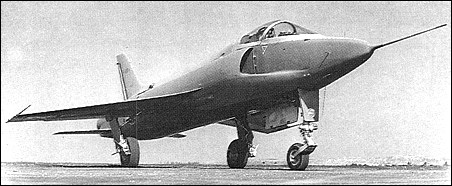
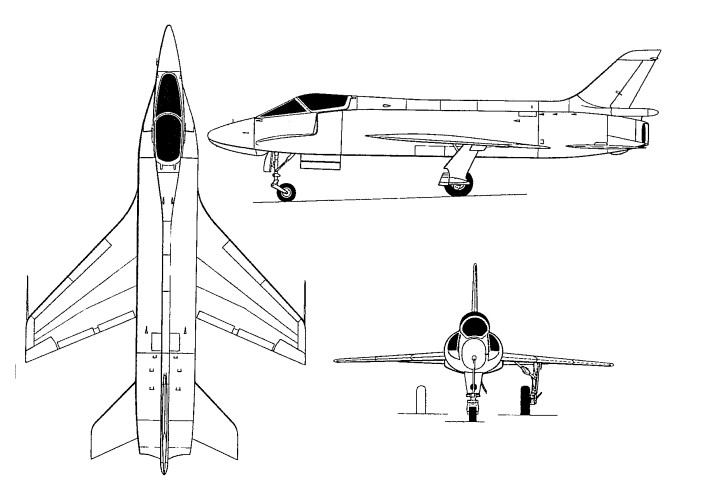
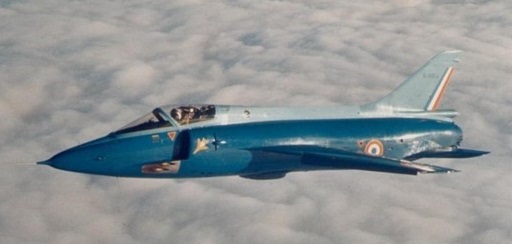
Based broadly on the design of the Br 1001 Taon, the Br 1100 single-seat ground attack and tactical light fighter preceded the the Br 1001 into the air. The Taon having been delayed in order to incorporate in part the then newly discovered area rule formula, the Br 1100 first flew on 31 March 1957, not featuring area rule. Designed to meet the requirements of a Ministere de la Air specification which dictated the use of paired lightweight turbojets (SNECMA R.105 Vestas, Hispano- Suiza R.800s or Turbomeca Gabizos), the Br 1100 was intended to feature an internal rocket pack of 15 68mm Brandt SNEB Type 22 rockets or two 30mm DEFA cannon. The Gabizo turbojet was selected for installation, this offering 1210kg dry and 1500kg with afterburning. Three prototypes were ordered, the third of which was to have been navalised, but only one was flown, the second (when 80% complete) and third being cancelled for budgetary reasons.

Engines: 2 x Turbomeca Gabizo, 1210kg / 1500kg with afterburning
Take-off weight: 6545 kg / 14429 lb
Loaded weight: 3793 kg / 8362 lb
Wingspan: 7.83 m / 25 ft 8 in
Length: 12.52 m / 41 ft 1 in
Height: 4.35 m / 14 ft 3 in
Wing area: 19.52 sq.m / 210.11 sq ft
Max. speed: 1128 km/h / 701 mph

Breguet Br.1001 Talon

In response to a NATO requirement for a single-seat lightweight strike fighter, Breguet designed a small mid-wing monoplane with swept wings and tail surfaces. The retractable tricycle landing gear was designed especially for operation on unprepared strips. The fuselage accommodated the pilot in an enclosed cockpit well forward, and housed a Bristol Orpheus BOr.3 turbojet. In competition with other proposals, Breguet’s design won an order for three prototypes, the first of these making its maiden flight on 26 July 1957. The second prototype incorporated minor aerodynamic improvements and had a slightly lengthened fuselage.

To enhance high-speed performance, improved area ruling was provided by the introduction of aerodynamic bulges at the wing roots, these serving also to house additional fuel. In this configuration, the Br.1001 Taon (gadfly) set an international speed record for a 1000km closed circuit, reaching 1046.65km/h at 7620m on 25 April 1958. Three months later, on 23 July, the Talon raised this figure again for the same record to 1075km/h. Despite this high-speed performance, development was discontinued, and only the two prototypes were built.

Breguet 1001 Taon
Engine: 1 x Bristol Orpheus BOr.3 turbojet, 2200kg
Take-off weight: 5560 kg / 12258 lb
Loaded weight: 3425 kg / 7551 lb
Wingspan: 6.80 m / 22 ft 4 in
Length: 11.68 m / 38 ft 4 in
Height: 3.7 m / 12 ft 2 in
Wing area: 14.50 sq.m / 156.08 sq ft
Max. speed: 1194 km/h / 742 mph

Breguet Br.960 Vultur

The Breguet 690 Vultur design of 1948 was a mixed-powerplant design incorporating an Armstrong Siddeley Mamba turboprop in the nose and a Hispano-Suiza Nene turbojet in the rear fuselage. The jet provided additional thrust for combat performance and take-off.
Experience with the Vultur, first flown on 3 August 1951, led the French navy to abandon the idea of such a powerplant for a strike aircraft. Instead, Breguet was contracted to develop a three-seat carrier-based anti-submarine aircraft from the Vultur.

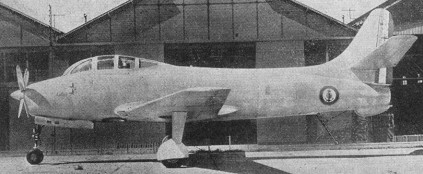
Engines: 1 x Armstrong Siddeley Mamba turboprop & 1 x Hispano Nene turbojet.