The 1977 Ball-Bartoe JW-1 Jetwing research aircraft was a single-place mid wing monoplane, registered NX27BB, first flew on 11 July 1977, piloted by Herman “Fish” Salmon.
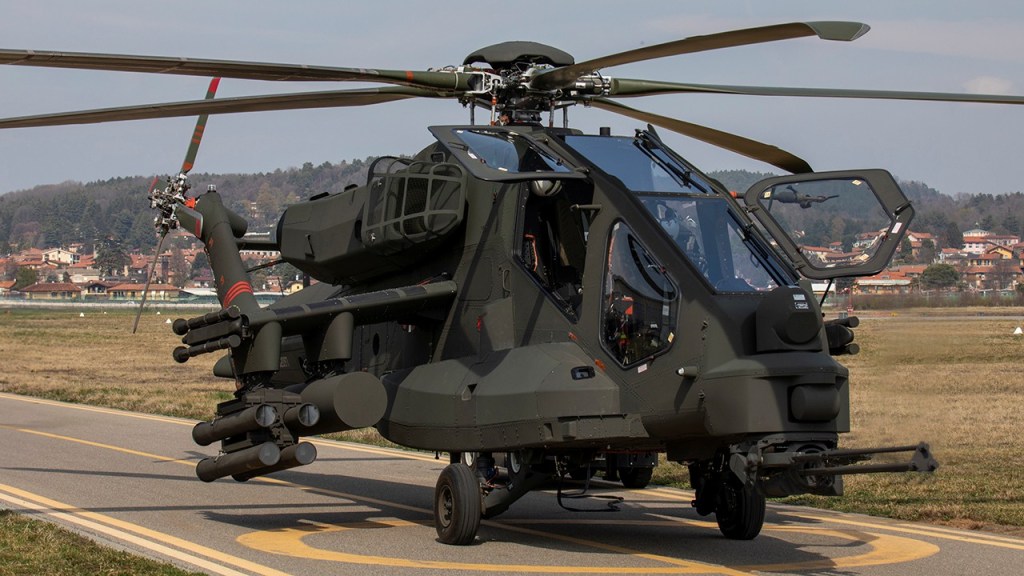
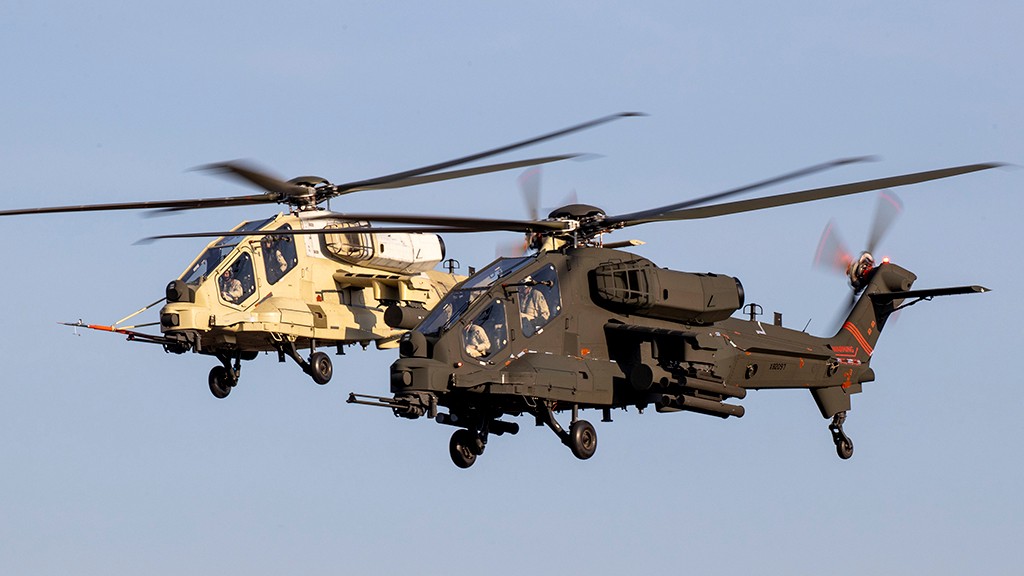
Development of the AW249 formally started upon receipt of a €487 million contract from the Italian Army as a replacement for the Agusta A129 Mangusta. It is to be larger, more survivable, and have greater autonomy than the Mangusta, incorporating stealth technologies and mission systems to control unmanned aerial vehicles (UAV)s. Numerous mature technologies will also be incorporated, such as the OTO Melara TM197B 20 mm chin-mounted cannon, Rafael Advanced Defense Systems Toplite targeting system and Spike missile, it is intended for the AW249 to have lower operating costs than the preceding Mangusta. Leonardo is actively seeking partners to collaborate on the AW249; a letter of intent on this matter was signed with the Polish Armaments Group during July 2018.
Prototypes of the AW249 attack helicopter
The maiden flight of the AW249 was originally scheduled to take place during 2020, but flew for the first time on 12 August 2022 from the company’s plant in Vergiate. There are to be a single prototype and three pre-serial production rotorcraft built ahead of quantity production AW249s.
Powerplant: 2 × General Electric CT7-8E6 turboshaft Max take-off power: 2,503 shp (1,866 kW) Max continuous power: 2,274 shp (1,696 kW)) Span: 14.60 m (47 ft 11 in) Length: 17.63 m (57 ft 10 in) Width: 4.60 m (15 ft 1 in) Height: 4.26 m (14 ft 0 in) Max takeoff weight: 8,300 kg (18,298 lb) Maximum speed: 287 km/h (178 mph, 155 kn) (at maximum cruise power, with an average mission weight) Cruise speed: 259 km/h (161 mph, 140 kn) Range: 796 km (495 mi, 430 nmi) Endurance: 4 hours 5 minutes (at maximum take-off power, with an average mission weight) Service ceiling: 6,100 m (20,000 ft) Rate of climb: 11.9 m/s (2,350 ft/min) Capacity: 2,800 kg (6,200 lb) (weapons) Crew: two Hardpoints: 6 (2 under each wing, 1 on the wingtip)
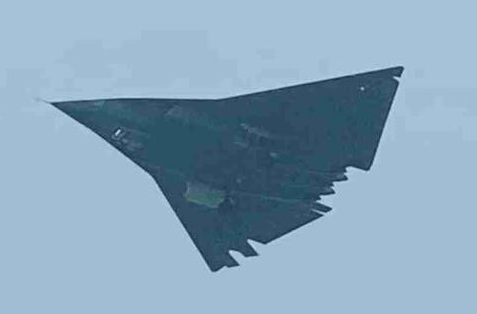
The second J-36 prototype emerged with structural changes and a focus on maneuverability. The aircraft retains its distinctive features, such as large control surfaces at the rear and three engines, but adopts adjustments that suggest the design is advancing toward a model closer to the final product. The images appear just over 10 months after the first prototype was revealed.
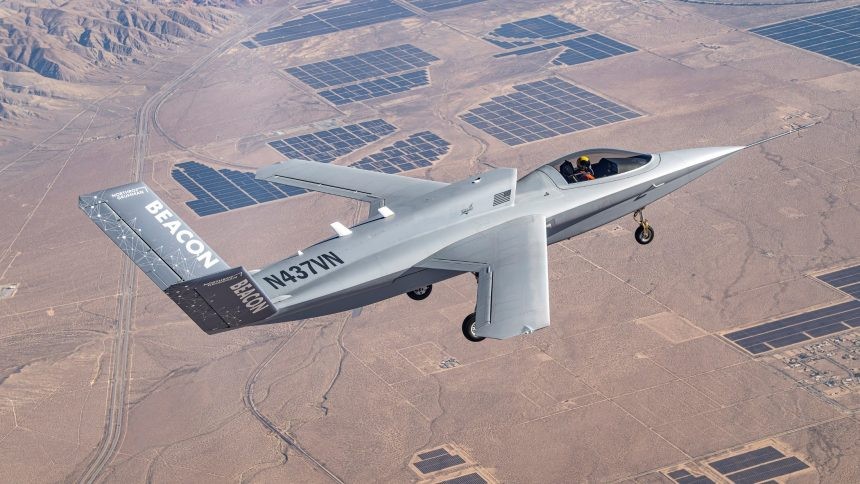
Vanguard during the first flight after the modifications, and its second flight overall.
The Model 437 Vanguard was originally conceived as an unmanned loyal wingman concept in 2021, designed to operate alongside crewed aircraft in attritable roles. Renderings at the time depicted an uncrewed platform with a range of around 3,000 nautical miles, a cruise speed near Mach 0.8, and payload options including AIM-120 AMRAAMs or side-looking radar systems.
Its first flight in August 2024 revealed a cockpit, making the Vanguard an optionally piloted aircraft. As we reported on that occasion, the Vanguard is powered by a single Pratt & Whitney PW535 turbofan engine producing 3,400 pounds of thrust, and features a wingspan of 41 ft (12.5 m), gross takeoff weight of 10,000 lb (4,536 kg), and endurance of six hours.
Northrop Grumman contributed to the program through its Digital Pathfinder initiative, using advanced digital engineering methods to design and build the Model 437’s wings. The process, the company said, reduced rework to less than one percent compared to the 15–20% typical of conventional design programs, drawing directly on lessons from the B-21 Raider stealth bomber program.
The Model 437 Vanguard resumed flight testing at Mojave Air and Space Port, , announced by Scaled Composites on Sep. 20, 2025, comes after extensive modifications to the airframe for its new role since its first flight in August 2024.
The company reported updates to the hydraulic system, cockpit integration of new pilot interfaces, and the incorporation of autonomy subsystems developed by Northrop Grumman for Beacon. These upgrades pave the way for the Model 437 to serve as a versatile airborne platform for experimentation with autonomy and artificial intelligence-driven mission software.
“We had the challenge of taking an airplane that has only flown once and converting it into a versatile autonomous testbed, which demonstrates Scaled’s agility and flexibility in achieving new test objectives,” said project engineer Yuto Shinagawa, highlighting the integration of flight safety protections for autonomous operations. As an example, he mentioned the introduction of protections in the flight control system to assure flight safety when engaging the autonomous system.
As Scaled Composites resumes envelope expansion flights, the focus will be on validating the integration of Beacon’s autonomy ecosystem and ensuring safe transitions between crewed and autonomous modes. The aircraft’s optional manned capability allows safety pilots to supervise tests while gradually handing over control to autonomy software, reducing risks in early phases.
Hurjet is a state-of-the-art jet for the training of sixth-generation aircraft pilots. At a conceptual stage in 2025, sixth-generation jets are expected to become operational in the 2030s. These have extensive use of AI. It’s all indigenous, except for the engine.
Hurjet, which means free jet in English, made its maiden flight in 2023 and is evolving from a purely trainer jet into a multi-role platform capable of providing close air support, air policing, and even limited strike missions in asymmetric conflicts.
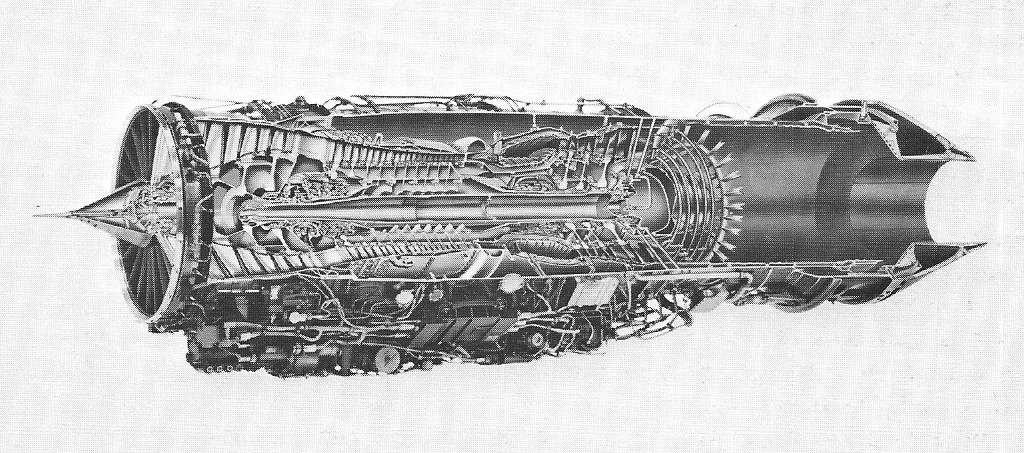
Development of the PW1120 to Israeli Air Force (IDF/AF) specifications began in June 1980. It retained the F100 digital electronic control system, along with the F100 main module transmission fuel pump forward channels, with only minor modifications. Unique PW1120 components include a wide-chord low-pressure (LP) compressor, a single-stage uncooled low-pressure (LP) turbine with a simplified single-flow booster, and a lightweight convergent/divergent nozzle. Full-scale testing began in June 1982, and the PW1120’s flight permit testing began in August 1984. The PW1120 had a 70% similarity to the F100, so the IDF/AF would not need a dedicated facility for spare parts. It was to be built under license by Bet-Shemesh Engines Limited in Israel.
IAI installed a PW1120 on the starboard bed of an F-4E-32-MC of the IDF/AF (Number 334/66-0327) to explore the airframe/engine combination for an upgrade program for the F-4E known as the Kurnass 2000 (“Heavy Hammer”) or to serve as an engine testbed for the Super Phantom and Lavi. The engine was more powerful and more fuel-efficient than the General Electric J79-GE-17 turbojet normally fitted to the F-4E.
Structural changes included modified air intake ducts, new powerplant ports, new or modified powerplant bay doors, integrated drive generators, and a new fuselage-mounted gearbox with an autothrottle system. It also included a modified bleed management and air conditioning ducting system, modified fuel and hydraulic systems, and a powerplant control/airframe interface. It first flew on 30 July 1986.
Two PW1120 power plants were installed in the same F-4E and first flew on 24 April 1987. This proved very successful, allowing the Kurnass 2000 to exceed Mach 1 without afterburners and have a combat thrust-to-weight ratio of 1.04. This improved the sustained turn ratio by 15 percent, the climb rate by 36 percent, mid-level acceleration by 27 percent, and the low-level speed from 1,046 km/h to 1,120 km/h (654 to 700 mph) with 18 bombs (or 565 kn to 605 kn). It was demonstrated at the 1987 Paris Air Show.
The Ministry of Aircraft Production Air Ministry Specification 17/44 from Vickers-Armstrongs Limited. The specification was for a peacetime requirement for an interim short-medium haul passenger aircraft. To speed development the aircraft used the wing and undercarriage design from the Wellington but the fuselage was new. Although the original contract referred to Wellington Transport Aircraft, on completion, the name Viking was chosen.
The initial 19 production aircraft (later designated the Viking 1A) carried 21 passengers, they had metal fuselages and – except for the wing inboard of the nacelles – fabric-clad geodetic wings and tail units. Following feedback from customers, the next 14 examples, known as, featured stressed-metal wings and tail units. The next variant, the Viking 1B, was 28 in (71 cm) longer than the Viking 1, carrying 24 passengers with up-rated Bristol Hercules piston engines, achieved a production run of 115.
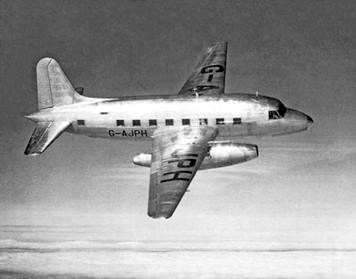
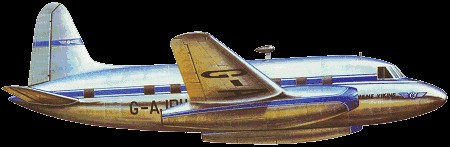
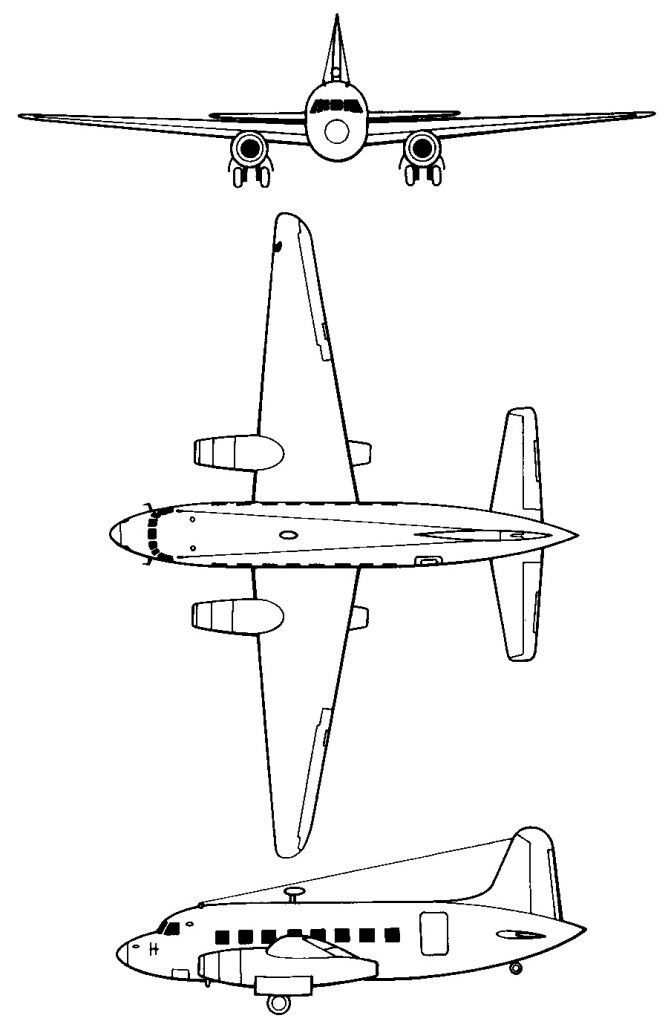
The 107th airframe on the Weybridge production line was set aside, and the existing nacelles were replaced by completely new jet pods each housing a Rolls-Royce Nene, with the trailing edge of the wing extended at the rear to fair smoothly into the top of the pod. The Vickers main landing gears were of a totally new type, designed only for this aircraft, with four separate short legs each carrying a wheel which retracted to lie on each side of the jet pipe inside the nacelle. Unlike other Vikings the elevators were skinned with metal, and the metal skin on the wings and tailplane was made thicker than normal. There were also changes to the cockpit, fuel system and other items.
Chief test pilot J ‘Mutt’ Summers flew the Type 618 Nene-Viking from Wisley on April 6, 1948. At different times it bore civil registration G-AJPH and Ministry serial VX856.
On 25 July 1948, on the 39th anniversary of Blériot’s crossing of the English Channel, the Type 618 Nene-Viking flew Heathrow–Paris (Villacoublay) in the morning carrying letters to Bleriot’s widow and son (secretary of the FAI), who met it at the airport. The flight of 222 miles (357 km) took only 34 minutes. It then flew back to London in the afternoon. It obtained a maximum speed of 415 mph (668 km/h) at 12,000 ft (3,700 m) and averaged 394 mph (634 km/h). In 1954 it was bought from the Ministry of Supply and underwent the substantial conversion to Hercules 634 piston engines by Eagle Aviation to join their fleet as Lord Dundonald on September 24, 1954.
Engines: 2 x 2268kg Rolls-Royce Nene I turbojets Wingspan: 27.2 m / 89 ft 3 in Wing area: 81.93 m2 / 881.89 sq ft Length: 19.86 m / 65 ft 2 in Height: 5.94 m / 20 ft 6 in Empty weight: 9548 kg / 21050 lb Take-off weight: 15196 kg / 33502 lb Max. speed: 753 km/h / 468 mph Cruise speed: 632 km/h / 393 mph Range: 555 km / 345 miles Crew: 4
UK’s concept model of “Tempest”, which was unveiled by Defence Secretary, at Farnborough International Air Show 2018.
The UK’s Ministry of Defence was pioneering an approach to building its next-generation Tempest fighter—by recycling retired Tornado jets. Instead of sourcing expensive foreign materials, old fighter jet parts are ground into a titanium-rich powder used for 3D printing new aircraft components. Rolls-Royce has successfully tested these parts in an Orpheus engine, proving their viability. This initiative not only reduces costs but also strengthens supply chain resilience. With Italy and Japan also involved, the Tempest program is set to revolutionize sustainable aircraft manufacturing, with a planned first flight in 2026 and entry into service by 2035. While this approach might sound crazy, it actually reduces the country’s reliance on foreign-sourced materials and points toward some incredible new ways to recycle old aircraft. Introduced as a response to lingering concerns about how the global market for vital materials could be impacted by large-scale war between great powers, this is an area of increasing focus for the Future Combat Air Systems (FCAS) program. The FCAS is Britain’s overarching effort that includes the development of the crewed Tempest fighter. “Through the expected lifecycle of the U.K.’s FCAS, we expect access to critical materials to be challenged, as global supply chains become increasingly disrupted and competitive. In parallel, there is a societal need to make the best use of the raw materials we already have,” explained the Future Combat Air System’s Sustainability Requirements Manager, identified only as “Squadron Leader Rob.” To achieve this, rather than just scrapping old Tornado GR4s that were retired from active service in 2019 and then sourcing all the high-quality raw materials needed for the new Tempest fighter program from foreign countries, the U.K. will simply yank parts off of those old Tornados and feed them into an industrial grinder to produce a powder, called “feedstock.” This powder can then be used by industrial 3D printers to produce new components for new fighters. The British Ministry of Defense, is collaborating with Rolls Royce in the effort. In testing so far, Tornado engine compressor blades, which include a high quantity of titanium, were cleaned, ground up, and then used to 3D print a new nosecone and compressor blades for “Orpheus” the small engine Rolls Royce has in testing to mature technologies for the Tempest program. With its new 3D-printed component, the Orpheus engine was then put through the wringer and managed to pass all suitability and safety tests.
“Tornado 2 Tempest is a bold, exciting and innovative project and a demonstration of how excellent collaboration between the MOD, industry and SME can deliver sustainable and technologically advanced solutions,” said Andrew Eady, Rolls-Royce Vice President for FCAS Sustainability. This same recycling and 3D-printing process can be used for steel and aluminum components as well, which would further reduce waste, and allow the U.K. to have to mine and process fewer raw materials in the future. “Not only can this solution reduce the costs and burden of sourcing critical and high-value metals, but it can also produce components that are lighter, strong and longer lasting than those made through traditional forging techniques, thereby further enhancing the MOD’s overall sustainability and effectiveness,” Thomas Powell, DRDT’s Strategic & Submarine Recycling Senior Commercial Manager, said in a Rolls Royce press release. Construction of the first Tempest technology demonstrator began 2024, and the U.K., Italy, and Japan, which are also partner countries in the program, are hoping to see the aircraft make its first test flight in 2026, with the goal of getting these fighters into service by 2035.
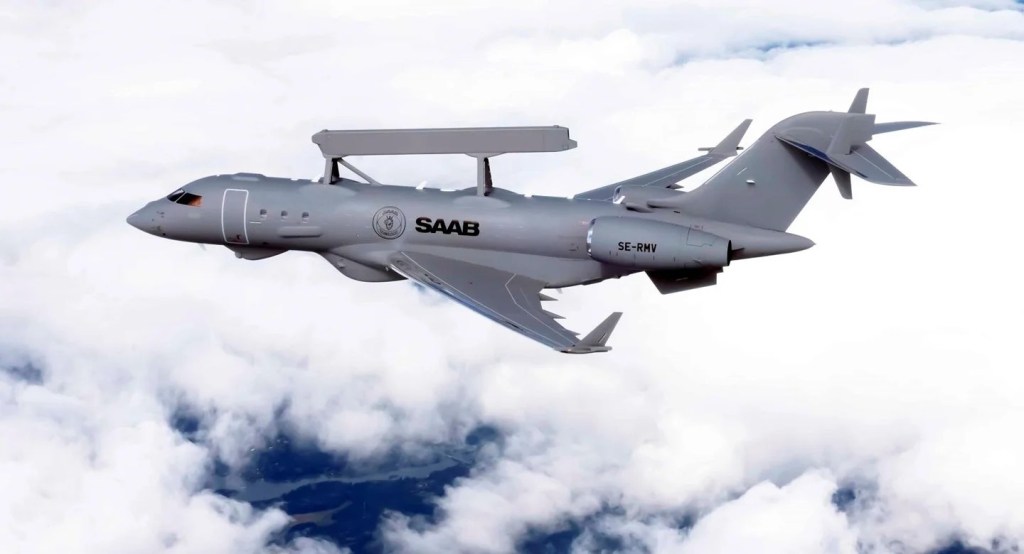
Saab GlobalEye Airborne Early Warning and Control (AEW&C)
The Saab GlobalEye Airborne Early Warning and Control (AEW&C) aircraft uses the Bombardier Global 6000/6500 platform.
Saab GlobalEye Airborne Early Warning and Control (AEW&C) aircraft
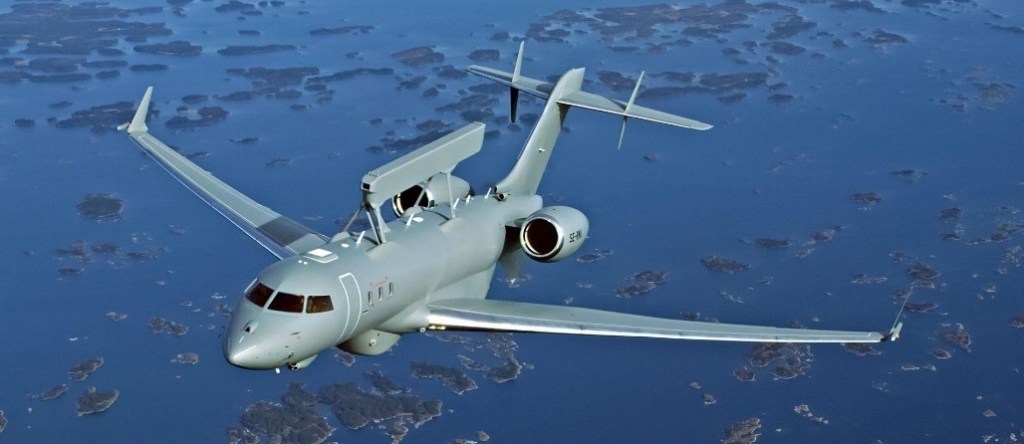
The Erieye radar system, installed on the GlobalEye aircraft, is capable of tracking airborne targets at a range of 650 km and ground targets at 425 km. Saab notes that the radar, thanks to its AESA (Active Electronically Scanned Array) technology, is sensitive enough to track drones at distances ranging from 100 km to 600 km.
GlobalEye Airborne Early Warning and Control (AEW&C) aircraft.
The Erieye radar system, developed by the Swedish company Saab Electronic Defence Systems, provides a 300-degree coverage, detecting airborne and maritime targets. The system is used by the air forces of countries such as Sweden, Brazil, Pakistan, Thailand, Greece, Mexico, the United Arab Emirates, and Saudi Arabia. The installation platform varies depending on the customer’s needs.
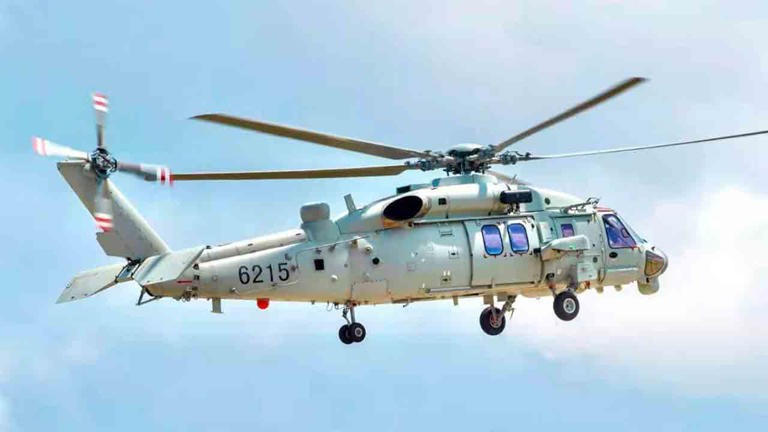
As part of this modernization, the Zhi-9S and Ka-52 helicopters were being replaced in 2025 by the new Zhi-20F anti-submarine helicopters aboard the fourth production batch of Type 052D guided-missile destroyers.
Zhi-20F Specifications: Engines: two WZ-10 turboshaft engines, 2,100 – 2,700 hp Length: 20 meters Height: 5.3 meters Maximum speed: 360 km/h Cruising speed: 290 km/h Maximum takeoff weight: 10 tons Service ceiling: 6,000 meters Flight range: 560 km




 All Aero