Liverpool University MPAG Liverpuffin

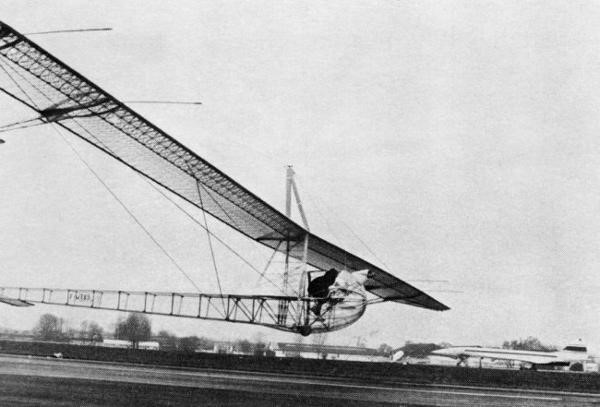
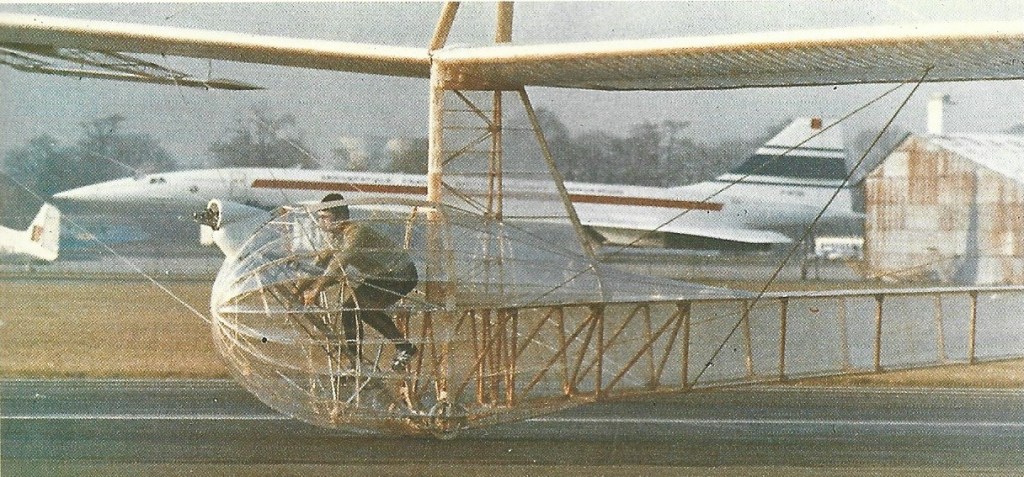
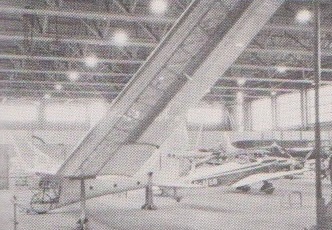
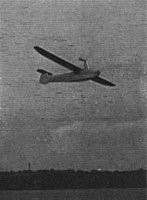
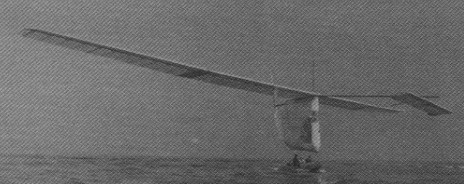
The Liverpool University MPAG bought the remains of Hatfield’s Puffin II in September 1969 and set about a redesign using the main wing structure and thr propellor from the Hatfield project.

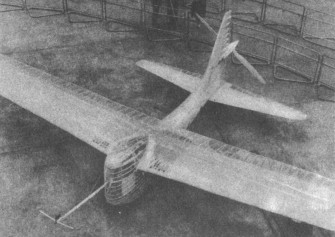
The basic layout is a high wing aircraft with a pod-and-boom format fuselage. The wing is of metal structure with expanded polystyrene used to form the leading and trailing edge ribs and cross-pieces. Covering is of ‘Mellinex’. The wing is cranked upwards about mid-span. A conventional tail (tailplane and elevators, fin and rudder) is mounted on the end of a boom projecting from the lower half of the rear fuselage. The pilot is located in the extreme nose, in a totally enclosed canopy. A pusher propellor is mounted aft of the wing, above the boom. Single wheel undercarriage.

First flight was made at RAF Woodvale on 18 March 1972. It then went to Dulles Airport, Washington, USA, where it was exhibited at ‘Transpo 72’.

It is not thought to have flown much since its return, if at all,

Wingspan: 64.00 ft
Wing area: 305 sq.ft
Aspect ratio: 13:1
Empty weight: 140 lb
Lippisch 1929 Glider

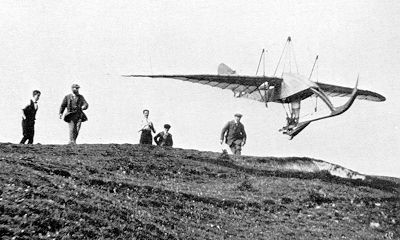
Alexander Lippisch in 1929 built a flapping wing glider on which the wing movement was operated by the pilot’s legs in the manner of one of those rowing machine. Lippisch’s aircraft was launched by a rubber bungee, and was therefore man assisted rather than man-powered, but it did manage flights up to 275 m (300 yards).

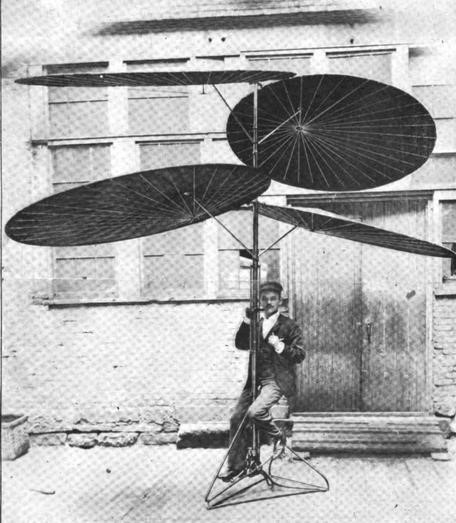
Kosch Ornithopter

A patented experimental human-powered machine for aerial navigation built in Cleveland, Ohio, by Rudolph Kosch. The machine was published in the USA and in several magazines in Europe. In a French article from October 1896 the machine was identified as “un hélicoptère à ailes battantes” – a helicopter having flapping wings.


Hurel Aviette

On the Aviette, Hurel used an aerodynamic solution to a structural problem. On this plane stabilising surfaces were attached on mini-tail-booms behind each outer wing. Just as the effect of a tailplane is to tend to return the entire aircraft to a level attitude from a non-level attitude, so the effect of these surfaces is to tend to hold the wing-tips at a constant angle relative to the airflow. The conventional constructional techniques of the time were used, materials being spruce, Balsa and Melinex.

Hurel’s 1976 Aviette aircraft had a 137 feet (42 m) span and a 12 feet (3.7 m) diameter propeller.

The Aviette flew at Le Bourget, largely through national recognition of the designer’s contribution to industry throughout his working life.

In 1974 the Aviette recorded flights of 1100 yards (1000 m).

The French entry to the Kremer Prize, the Hurel Aviette, might have been going into a museum. Unfortunately, at the time of the 1973 Paris Air Show, the airplane had to be moved from its hangar. Exposed to the elements, it was promptly chewed up by a dog.

Hatfield Man-Powered Aircraft Club MPA / Puffin

Built specially to compete for the Kremer prize of £5,000 for man-powered flight. A single seat, fixed wing monoplane with the propellor driven by pedalling. Employees of the de Havilland Aircraft Company’s Puffin flew in November 1961 from Hatfield aerodrome. Puffin was with transparent Melinex covering and extreme dihedral on its 25.6 m (84 ft) wings. Its pilot, Jim Phillips, by the end of the year had flown the craft up to 686 m (750 ft) and made turns through 8o degrees. On 4 May 1962 Hatfield Man Powered Aircraft Club chairman John Wimpenny flew the Puffin 908 m (993 yards). He was awarded a £50 prize for his record 805 m (880 yard) flight.

Construction was metal tube with balsa for the non-load carrying areas with Mellinex covering. A single main wheel undercarriage with a jockey wheel at the tail were fitted.

It crashed after ninety flights at Hatfield in April 1964 and was rebuilt as the Puffin II.

The Puffin II was an entirely new design wing of greater span and having a different Airfoil section. It flew for about another ninety flights at Hatfield until it collided with some ground equipment there in 1969 and was wrecked.

Liverpool University MPAG bought the remains and they were used in their ‘Liverpuffin’.

Puffin I
Wingspan: 84.00 ft
Wing area: 380 sq.ft
Aspect ratio: 21:1
Empty weight: 140 lb

Puffin II
Wingspan: 93.00 ft
Wing area: 390 sq.ft
Aspect ratio: 22:1
Empty weight: 140 lb

Haessler & Villinger HV.1 Mufli

Helmut Haessler and Franz Villinger, engineers from the Junkers company, built a sailplane like aircraft called the Muffi which had a footcranked pusher propeller. It flew 722 m (790 yards) after an elastic aided launch and was awarded a consolation prize by Flugsport magazine for the first man powered flight of 1 km (0.6 mile) around two pylons set 400 m (437 yards) apart.

Gossamer Albatross

The Albatross had grown out of the Condor’s success but it is in a number of ways a very different craft — utilising carbon fibre reinforced plastic tubing for wing spars, bowsprit and gondola to produce a light, strong structure. The fuselage gondola and flying surfaces are covered by a Mylar plastic film, attached by double-sided adhesive tape with wing ribs cut from expanded polystyrene foam. Its 28.3¬m (93 ft) wing could be broken down into four sections for ease of transport, and had instruments an airspeed sensor driven by a tiny propeller mounted on the foreplane bowsprit, and an ‘altimeter’ developed from the automatic focusing device of a Polaroid camera.
Control of-the aircraft is effected by an all-moving canard and by wing-warping.
This 75 lb aircraft, flown and powered by 140 lb Bryan Allen, conquered the English Channel in 2 hours 49 minutes at a speed of some 11 knots in June 1979. Instrumentation is down to the basics of an airspeed indicator and an altimeter — neither of which proved essential when, in the latter half of the Channel-crossing, flat batteries mean a loss of readings.

Wing span: 93 ft 10 in.