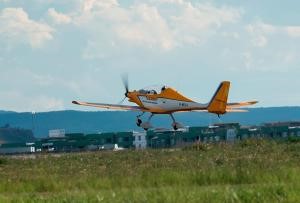
Aero Electric Aircraft Corp One was working on a solar powered all-electric two-seater called the Sun Flyer, along with its development partners Bye Aerospace and German PC Aero.
AEAC started conducting research and development flights with a single-seat technology demonstrator at Centennial Airport (APA) near Denver. The concept airplane first flew out of Munich, Germany, in mid-July. Meanwhile, AEAC has been working on the design of a two-seat prototype of the Sun Flyer, which it hopes to fly sometime during 2015.
The technology demonstrator is equipped with a Geiger Engineering motor that generates 32 kW of power. Power is stored in several battery packs and the airplane is capable of flying for two hours without the supplement of solar energy. AEAC engineers estimate that the two-seat Sun Flyer will be able to fly for three to four hour in bright sunshine. Configuration plans for the Sun Flyer call for a side-by-side arrangement with a similar battery and electric motor setup as the technology demonstrator.
In addition to lower cost and cleaner flight, benefits of the solar-electric powered concept that AEAC’s CEO George Bye said have been confirmed with the technology demonstrator include low-noise, recharging on the ground and in flight and reduced maintenance due to fewer moving parts.
While the FAA still prohibits training flights with electric powered airplanes, the Sun Flyer is targeted to the training market. AEAC is collaborating on a complete training system with Redbird Flight Simulations and Spartan Aeronautical College. The company had not decided whether to pursue certification under Part 23 or the light sport aircraft rules.
 All Aero