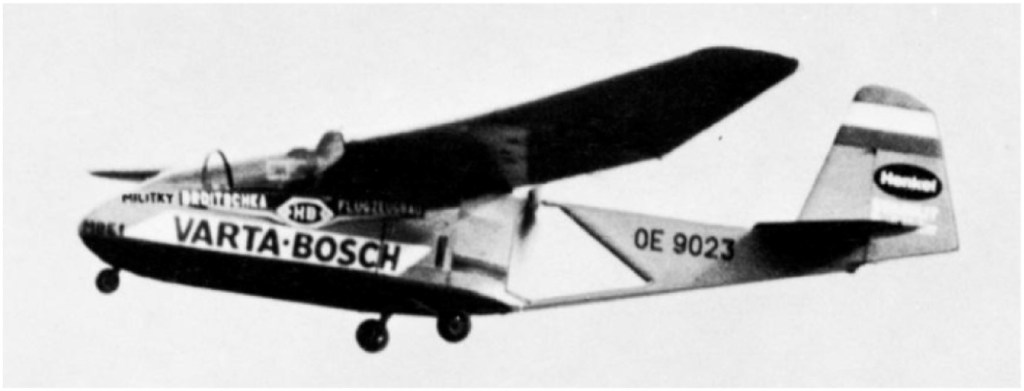
In 1973 aircraft manufacturer Heinrich Brditschka and an engineer with the Graupner model-building company, Fred Militky, enlisted the collaboration of Bosch (propulsion motor) and Varta (nickel-cadmium battery technology) to study the feasibility of an all-electric aircraft.
They converted an HB-3A motor glider into the first electric manned airplane: the MB-E1 (Militky-Brditschka Elektroflieger No. 1).
On 21 October 1973, the MB-E1 took to the skies in Wels, Austria with Heinrich’s son, Heino Brditschka, at the controls. The maiden flight lasted for about 9 min and achieved an altitude of 300 m. However, further advancement in battery and motor technology would be required to achieve practical electric flight.
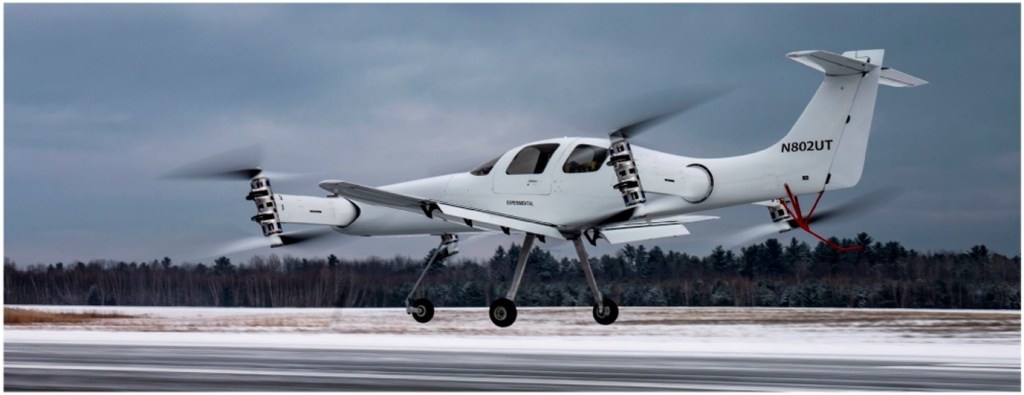
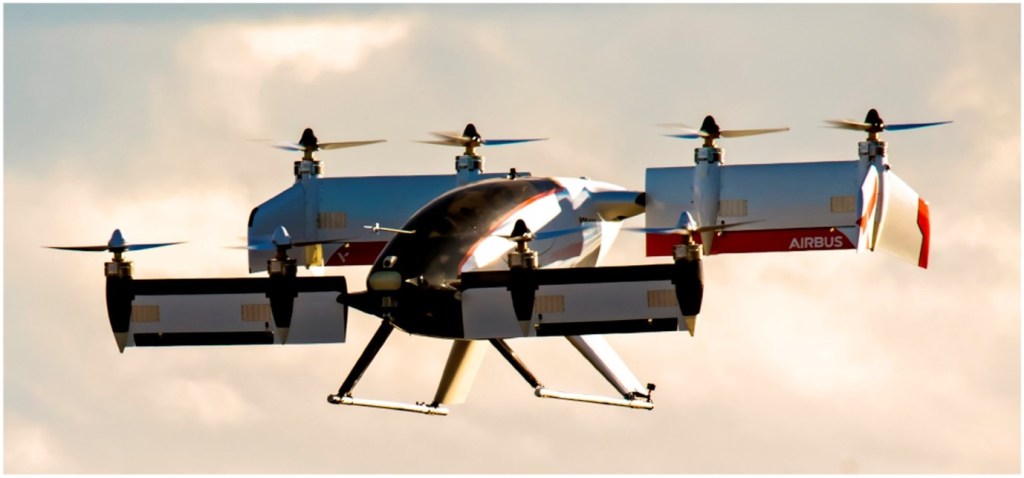
Beta Technologies flew their Ava XC technology demonstrator on 22 June 2018 with four contrarotating, tilting rotors mounted on the wing tips of a vehicle that resembles a fixed wing aircraft. As with demonstrators developed by other manufacturers, the Ava XC was developed to gain familiarity with eVTOL technology.
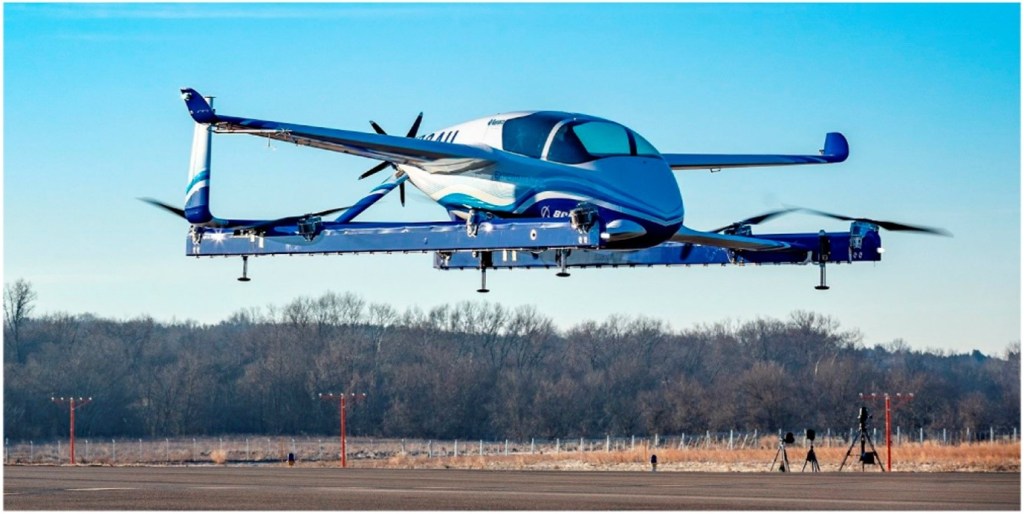
Aurora Flight Sciences, an independent subsidiary of Boeing, hovered a full-size prototype of their Pegasus Passenger Air Vehicle (PAV) on 22 January 2019 at the Manassas Regional Airport in Manassas, Virginia.
Just a few months later on 4 June 2019, the Pegasus PAV crash-landed when the autoland function inadvertently entered ground mode and commanded the motors to shut down.
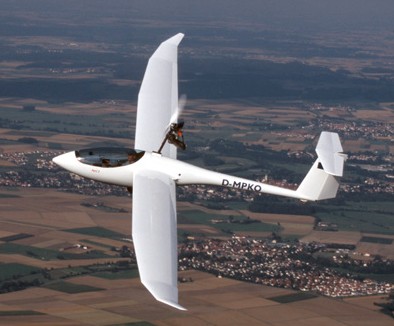
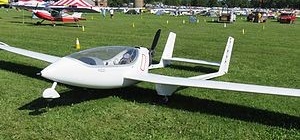
The Apis series includes both a 13- and 15-meter sailplane, is a combination of composite construction and old world craftsmanship. The Apis is intended for the sport flyer, but still holds several world records. They offer a forward-hinged canopy, automatic control hookups, in-flight adjustable rudder pedals, full-span flaperons, blended winglets, and Schempp-Hirth type airbrakes. They also make the Apis M, a 15-meter motorglider.
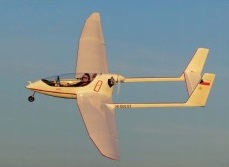
The Apis 2 is built with CFRP technology with 15 m span and T-tail. The wings are a multi trapezoid with raising tips. Aileron and flaps are interconnected (flaperons) and standard SH airbrakes give short landing approaches. The spars are connected with two bolts in tongue/tongue technique. Rigging is straight forward and can be easily accomplished by one person. The glider fits in a standard sailplane trailer. The large canopy opens to the side and allows easy access to the ergonomic and roomy cockpit. The Apis 2 includes a parachute rescue system. Wearing a pilots parachute is therefore not necessary and allows tall pilots to fit in the Apis 2. The Apis 2 has a large canopy that opens to the side. The back-board can be adjusted continuously, the rudder pedals have some detents, and both can be readjusted during flight. The electric starter button and the throttle are located in the arm rest on the left side. The panel offers space for six instruments with 57 mm diameter in addition to the ECU indicator. One of these six can be replaced by a 80-mm-instrument alternatively. The battery fits into the quick-release rack in the fuselages nose. It energises both the ECU and the instruments. The Apis 2 cockpit is made up of a double hull. The lightweight hollow section frame of the canopy offers a maximum stiffness in this area. The Apis 2 takes off under its own power as a self launch glider. Despite the fixed tailwheel it is easy to control on the ground. Two aerodynamic tip wheels help eliminate the need for a wing runner. The Apis 2 has a fixed gear with a wheel brake on the 4″ wheel. After a short roll only climb rate is about 2.5 m/s (4.8 kt) at a speed of 80 to 85 km/h (45 kt). After about 150 m (500 ft) it will be airborne and it takes about 290 m (950 ft) over the 50 ft obstacle. There is almost no trim change flying under engine or in gliding mode or while extending or retracting the engine. The camber changing flaps with a neutral trim will give you a speed range of 80 km/h (43 kt) at +9° to 160 km/h (86 kt) at -6°. Thermal speed is about 80 km/h (43 kt) and minimum sink is 0.6 m/s (115 fpm). Best glide speed is 95 km/h (52 kt) which will give you a L/D of 39. Landing approach is at 90 km/h (48 kt) with positive flaps. The highly efficient airbrakes allow safe and steep approaches into short airfields. The Apis 2 can be landed with retracted or with extended engine. The Apis 2 powerplant is an aircooled single cylinder Hirth F33 with intake and exhaust silencer. It generates 27 hp from 303 cc. The 148 cm ground adjustable carbon fibre propeller has been developed by Martin Wezel specially for the Apis 2. The noise level of the Apis 2 is at 57.7 db(A). The powerplant is retractable. The process is controlled by ECU (Engine Control Unit) an instrument by TL elektronic. The extension of the powerplant is started by switching on the main switch, then the ignition. The ECU then takes over the process and the pilot can start the engine with the starter button. It is not necessary to manually control fuel valve or a choke lever. The ECU is optimizing the engine according to the temperature. During the retraction procedure for the powerplant the ECU is activating the propeller stop as soon as the RPM allows. Then the ECU is controlling the full procedure until the engine is completely stowed away. The whole process takes about 20 seconds. German certification in the Ultralight category was issued on 4 September 2003.
Apis 2 Span: 15 m Wing area: 12.4 sq.m Aspect ratio: 18.2 Length overall: 6.5 m Empty weight: from 210 kg Max. gross weight: 320 kg Max. load factor: +5.3 / -3.3 g L/D: 39 at 95 km/h (52 kt) Min. sink rate: 0.6 m/s at 80 km/h (43 kt) Flap settings: +9°, +5°, 0°, -3°, -6° Stall: 35 kt / 40 mph / 65 kmh Cruise: 81 kt / 93 mph / 150 kmh VNE: 200 km/h (108 kt) Engine: Hirth F 33 B, 27 PS / 19.3 kW Carburetor: Mikuni membrane carburetor Drive: Poly-V-belt 1:2.5 Propeller: Wezel 2-blade CFRPØ 1.48 m Fueltank: 14 liter Fuel consumption while climbing: 9 l/h Noise level: 57.7 dB(A)
The original design, the Pouchel, was based upon the 1930s Henri Mignet-designed Mignet Pou-du-Ciel (Flying Flea), but constructed using three commercial household aluminium ladders to save construction time, cost and weight. The aircraft first flew on 14 March 1999 and 120 sets of plans were quickly sold.
When the ladder manufacturer no longer wanted to sell ladders for aircraft construction, due to liability concerns, Dalby redesigned the aircraft to use aeronautical rectangular aluminium tubing instead, which resulted in a lighter and cheaper aircraft, the Pouchel II.
Pouchel II
The Pouchel II replaced the original APEV Pouchel in production. The original Pouchel was constructed using three commercially available aluminium ladders, hence APEV is the Association pour la Promotion des Echelles Volantes, or in English, Association for the Promotion of Flying Ladders. Later the ladder manufacturer grew concerned about liability and refused to supply any more ladders. The Pouchel was then re-designed to use aeronautical rectangular aluminium tubing in place of the original ladders and the new aircraft was designated the Pouchel II. The Pouchel series are all derivatives of the classic 1930s Henri Mignet-designed Mignet Pou-du-Ciel (Flying Flea).
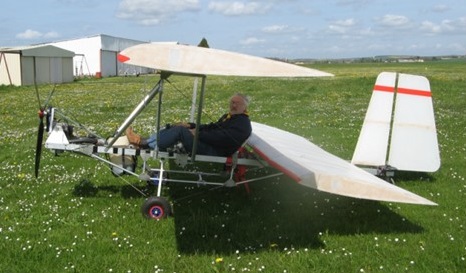
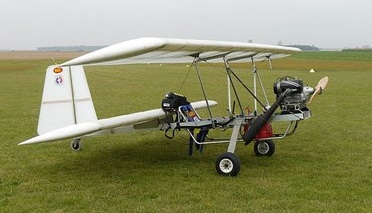
The Pouchel II features a cantilever rear wing with a strut-braced parasol front wing, a single-seat open cockpit without a windshield, fixed conventional landing gear and a single engine in tractor configuration. The aircraft is made from bolted-together aluminium tubing, with its flying surfaces covered in Dacron sailcloth. Its 6 m (19.7 ft) span front wing and 4 m (13.1 ft) span rear have a combined area of 12 m2 (130 sq ft) and both employ NACA 23112 airfoils. The prototype used a 40 hp (30 kW) Rotax 447 two-stroke powerplant, but the 35 hp (26 kW) Rotax 377 is also recommended. The 28 hp (21 kW) Hirth F-33 has also been fitted.
The Pouchel II sold for €4,000 in 2003. The APEV Pouchel II was supplied as plans or as a kit for amateur construction, but is no longer available. It has been replaced in production by the APEV Pouchel Light.
The Pouchel II was further refined into the Pouchel Light and an electric powered version, the Pouchelec.
Supplied as plans or as a kit for amateur construction, the Pouchel Classic is derived from the APEV Pouchel and features a cantilever rear wing and a strut-braced front parasol wing, a single-seat open cockpit, fixed conventional landing gear and a single engine in tractor configuration.
The Pouchel Classic differs from the earlier Pouchel in that it has a newly designed wooden fuselage to replace the aluminum ladder and rectangular tube design of the Pouchel and the Pouchel II. The Pouchel Classic’s fuselage is also longer. Its 6 m (19.7 ft) span front wing and 4 m (13.1 ft) span rear wing have a combined area of 12 m2 (130 sq ft) and employ NACA 23112 airfoils. Flying surfaces are covered in Dacron sailcloth. Standard engines recommended are the 35 hp (26 kW) Rotax 377 or the 40 hp (30 kW) Rotax 447 two-stroke powerplants. The Pouchel Classic kit sold for €5,000 in 2011.
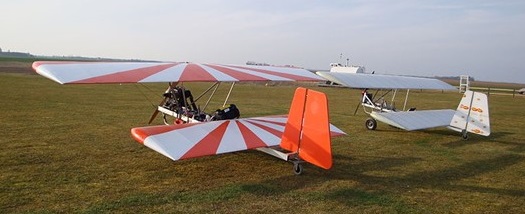
A gasoline powered Pouchel (foreground) and a Pouchelec (background)
The Airsport Song is a Czech ultralight aircraft, designed by Marek Ivanov to comply with the LTF-L 120 kg, US FAR 103 Ultralight Vehicles and English SSDR categories. It features a cantilever low-wing, twin-booms, a single seat enclosed cockpit, fixed tricycle landing gear and a single engine in pusher configuration. The Song has been produced in both a twin–tail and inverted V-tail layout. In most configurations, the Song includes a Galaxy GRS 3/270 ballistic parachute rescue system.
The Song is made from composites. Its polyhedral wing comes in two optional spans: 7.5 m (24.6 ft) (with flaperons) and 11.2 m (36.7 ft) (with ailerons and either spoilers or flaps). Standard engines available are the 20.5 hp (15 kW) Bailey V5 four-stroke and the 35 hp (26 kW) Verner JCV 360 four-stroke powerplant.
Randall Fishman of Electric Aircraft Corporation produces an electric-powered version of the Song, the Electric Aircraft Corporation ElectraFlyer-ULS.
Song SW-V Engine: 1 × Bailey V5 Single Cylinder, 15.3 kW (20.5 hp) Wingspan: 11.2 m (36 ft 9 in) Wing area: 10.5 m2 (113 sq ft) Length: 5.9 m (19 ft 4 in) Empty weight: 110 kg (243 lb) Gross weight: 220 kg (485 lb) Fuel capacity: 25 litres (5.5 imp gal; 6.6 US gal) Maximum speed: 201 km/h (125 mph, 109 kn) Cruise speed: 80 km/h (50 mph, 43 kn) Stall speed: 50 km/h (31 mph, 27 kn) Never exceed speed: 140 km/h (87 mph, 76 kn) Rate of climb: 1.5 m/s (300 ft/min) with Bailey V5, (5 m/s with Verner JCV 360) Crew: one
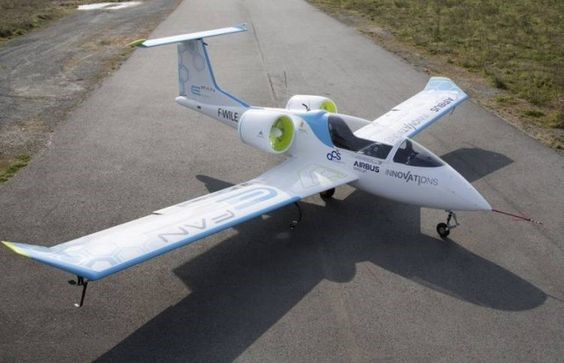
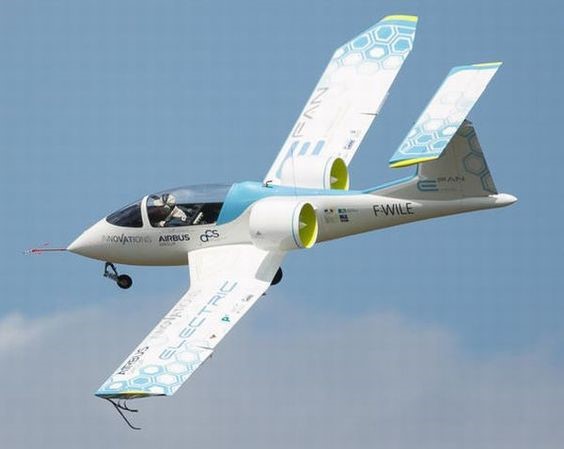
Airbus Group is developing an electric aircraft designed by Didier Esteyne, with Aero Composites Saintonge. The aircraft uses on-board lithium batteries to power the two electric motors and can carry one pilot and one passenger. First flown on 11 March 2014, a test flight was conducted in April 2014 at Mérignac Airport, France, landing in front of a large audience, the French Minister of Industry Arnaud Montebourg being one of them. At the 2014 Farnborough Airshow, Airbus announced that the E-Fan 2.0 will go into production by 2017 with a side-by-side seating layout.
The E-Fan aircraft was developed by Airbus Group in association with other consortium partners. The core development team consisted of ACS, EADS Innovation Works, Astrium, Eurocopter (now part of Airbus Group). EADS Innovation Works provided the overall project management and overall aircraft energy management system, while ACS provided support in the construction of all composite parts and mechanical assembly of the landing gear and flight controls.
Institut Pprime provided support for the design of the aircraft main spar and the wing. A3IP provided design, routing, prototyping and manufacture support in the production of tailor-made printed circuit boards for electrical networks. RF Tronic Ingénierie provided design and integration of the air-to-ground telemetry system and the flight data recorder, and also developed a software to display the technical flight parameters.
C3 Technologies provided spars and wings, while MAPAERO Aerospace Coatings provided high-quality paint for the aircraft. The propulsion systems were provided by Safran, Snecma, Labinal Power Systems and Aircelle.
The project evolved from the Cri-Cri electric plane, which Airbus used as a test bed and flying laboratory for developing the battery and energy management technology used in the E-Fan.
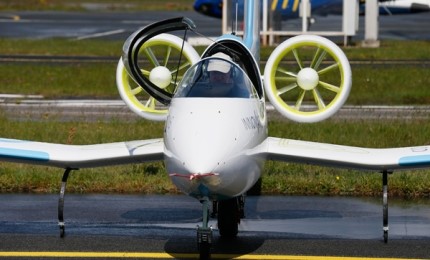
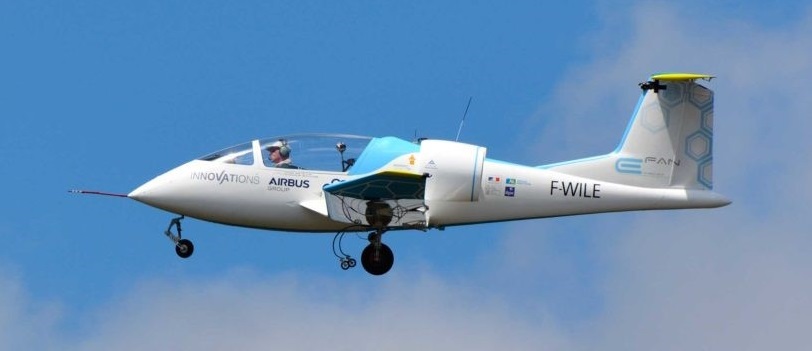
The E-Fan is an all-electric two-seat twin-motor low-wing monoplane of composite material structure. It has a T-tail and a retractable tandem landing gear with outrigger wheels. The two motors are mounted on either side of the rear fuselage.
Two production variants are planned, a two-seater E-Fan 2.0 for use as a trainer, and the E-Fan 4.0 four-seater. The E-Fan 4.0 appears identical to the E-Fan apart from a fuselage stretch. To increase flight duration the E-Fan 4.0 will have a hybrid-electric system that will have a small engine to charge the battery (like a range extender), which will increase its duration from 2 hours to 3.5 hours. First flight of the E-Fan 2.0 was planned for 2017 and the E-Fan 4.0 should follow in 2019.
The E-fan is of all-composite construction and is propelled by two ducted, variable-pitch fans spun by two electric motors totaling 60 kW of power. Ducting increases thrust while reducing noise, and having the fans mounted centrally provides better control. The motors moving the fans are powered by a series of 250-volt Lithium polymer battery packs made by South Korean company Kokam. The batteries are mounted in the inboard section of the wings. They have enough power for one hour and take one hour to recharge. An onboard backup battery is available to make an emergency landing if power runs out while airborne. The E-fan’s landing gear consists of a retractable fore and aft wheel, and a fixed wheel under the wings. Unusually for an aircraft, the main wheel is powered by a 6 kW electric motor, which allows the plane to be taxied without the main motors, and is able to accelerate it to 60 km/h (37 mph; 32 kn) for takeoffs. Having the takeoff run performed by the undercarriage relieves some of the burden on the flight motors.
A key technology on the E-Fan is its E-FADEC energy management system, which automatically handles the electrical systems. According to Airbus, this simplifies system controls and, since E-Fan is a trainer, eases the workload of instructors and students.
In December 2014 Airbus announced that DAHER-SOCATA will complete the design work on the aircraft and certify it. VoltAir, an Airbus subsidiary, developed the initial prototype and will work with Daher-Socata during the testing phase as the project manager. At this point the aircraft became the VoltAir E-Fan. BpiFrance Public Investment Bank will partially provide finance for the development.
On 30 April 2015 the company announced that the aircraft will be produced at Pau Pyrénées Airport, south-west France, at a new facility to be constructed in 2016, that will be near the DAHER-SOCATA plant at Tarbes. First deliveries were expected at the end of 2017 or early 2018.
On 9 July 2015, the E-Fan crossed the English Channel from Lydd Airport to Calais–Dunkerque Airport. It was flown by Didier Esteyne, the chief engineer of the E-Fan. Initially this was claimed as the first electric aircraft to cross the English Channel, but it has since been pointed out that there were previous such flights, including MacCready Solar Challenger as long ago as 1981, and Airbus now say it was the “first all-electric two-engine aircraft” to make the crossing. Siemens has sponsored electric equipment on the E-fan, but not motors.
In March 2017 Airbus abandoned its plan to produce the electric E-Fan two-seater as a ready-for-sale training aircraft. The French company says the pace of development in the electric aircraft field has moved its ambitions onwards. Stefan Schaffrath, media spokesman for Airbus, said “This plane has done its job. Today, a large part of the technologies developed for E-Fan is in new projects.”
Airbus points out that the E-Fan project started three years with two 30kW electric motors. Now Siemens, its partner in the project, is flying an Extra aerobatic aircraft with a 300kW electric motor, a progression of 10x in three years.
Variants
E-Fan Two-seat concept aircraft ad technology demonstrator, first flown March 2014. E-Fan 2.0 Proposed all-electric two-seat production variant, to fly 2017. E-Fan 4.0 Proposed hybrid-electric four-seat variant, to fly 2019; a kerosene fuelled generator will extend endurance from 2 h to 3 h 30 min. E-Thrust Proposed 90-seat regional jet based on the principles of the E-Fan.
Specifications E-Fan Powerplant: 2 × Electric motor, 30 kW (40 hp) Props: 2 x eight-blade ducted fans, 0.75 kN (266 lb st), thrust Battery: Lithium-ion 18650, with 207 Wh/kg per cel, total of 29 kWh Battery weight: 167 kg Wingspan: 9.50 m (31 ft 2 in) Length: 6.67 m (21 ft 11 in) Max takeoff weight: 550 kg (1,213 lb) Maximum speed est: 220 km/h (137 mph; 119 kn) Cruising speed est: 160 km/h (99 mph; 86 kn) Take-off speed: 110km/h Endurance: 45 min – 1 hr Lift-to-drag: 16:1 Crew: one Capacity: one passenger
The first eVTOL technology demonstrator was the Agusta Westland Project Zero hybrid tiltrotor/lift fan aircraft. It was developed to investigate the use of all electric propulsion and other advanced technologies in a vertical lift aircraft. Project Zero was approved in December 2010 and by June 2011, a full-scale demonstrator performed an initial tethered flight at Cascina Costa, Italy. The Project Zero demonstrator was not flown in forward flight.
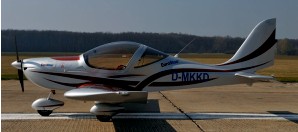
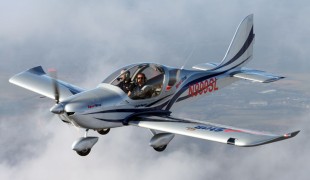
In 1996 Aerotechnik with Evektor began development of the EV-97 team Eurostar airplane.
A two-seat light or ultralight monoplane designed for sport/leisure flying, touring and training with limitation to non-aerobatic VFR operations. The Eurostar is aerodynamically controlled, single-engine, two-seat, low-wing, all metal plane with a fixed tricycle undercarriage and controllable nose wheel. The aircraft is equipped with four cylinder four stroke 80 HP Rotax 912 UL engine, optionally 100 HP Rotax 912 ULS or 80 HP Jabiru 2200.
Beginning in 2000 was the development of the EV-97 VLA airplane. This aircraft is called SportStar in US and EuroStar in Europe. Development of the SportStar version began in 2003.
By 2009, over 800 of the EuroStar had been delivered worldwide and the 2009 price was 50000 Euro.
Eurostar SL
The EuroStar SL is an advanced ultralight airplane with 46.5 inches / 1.18 meters of shoulder room, new system of cockpit climate control, and state of the art glass cockpit avionics. During testing more than 450 spins in all configurations were carried out. The airplane was type approved by the Ministry of Defence of the Czech Republic and is operated by the Pilot Training Centre of the Czech Army for initial pilot training. The EuroStar SL has an all metal anodised and corrosion-proofed aluminium airframe. It has all joints of construction riveted as well as bonded for durability and long fatigue life. The EuroStar is certified for towing of the sailplanes up to 700 kilos (Duo Discus, Janus, Ventus, ASK 21, Ventus, Blanik etc.) and for towing of banners up to 140 sq.m.
SportStar Max
The SportStar MAX is an S-SLA aircraft business travel or training. The airplane was the very first aircraft approved by the FAA (2005) in the U.S. S-LSA category and is holder of the prestigious “S-LSA Aircraft of the Year” honour from AeroNews Network (ANN). The SportStar MAX with a re-designed, based on an EASA JAR-VLA certified pilot training airplane, airframe at 1320 lb / 600 kg MTOW provides up to 640 lb / 290 kg of useful load combined with range 700 nm / 1300 km, and was available as an IFR version. The SportStar MAX combines aerodynamic composite materials with an all-metal primary airframe structure. The SportStar MAX build quality and reliability is based on Evektor´s certified aircraft production by the European Aviation Safety Agency (EASA), ISO 9001:2000 Quality Management System as well as LAMA certification. The canopy gives 46.5 inches / 1.18 meters of shoulder room, and glass cockpit avionics. The SportStar MAX has an all metal anodised and corrosion-proofed aluminium airframe with all joints of construction riveted as well as bonded. The SportStar is certified for towing of the sailplanes up to 700 kilos (Duo Discus, Janus, Ventus, ASK 21, Ventus, Blanik etc.) and for towing of banners up to 140 sq.m. The SportStar is a Light Sport Aircraft (LSA) designed for pilot training, sport and leisure flying and touring with limitation to non-aerobatic VFR operations.
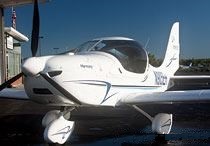
The Evektor fully certified (European EASA standard), general aviation-quality aircraft is conventionally powered (Rotax), and has evolved to the flagship Harmony and includes the SportStar MAX, both with all-metal construction, long range economy cruise at 110 knots by 2012. Base prices 2012: US$98,000 (MAX); US$102,000 (Harmony).
Evektor EV-97 Team Eurostar Engine: Rotax 912 ULS, 100 hp TBO: 1,500 hrs Propeller: Fixed, on-ground or in-flight adjust Cabin width: 46.5 in / 1.18 m Length: 17 ft 7.5 in / 5.98 m Height: 8 ft 1.6 in / 2.48 m Wing span: 26 ft 7 in / 8.1 m Empty weight: 609 lb / 276 kg MTOW: 992 lb / 450 kg Design load: +6 g / -3g Max. baggage: 33 lb / 15 kg Wing tanks cap: 17.17 USG / 65 lt Vne: 270 km/h Stall speed: 65 km/h Maximum level speed: 240 km/h Rate of climb: 7.5 m/s Cruise 75% power: 200 km/h Service ceiling: 6,000 m Take-off distance: 200 m Maximum range: 750 km Landing distance: 300 m
Engine: Rotax 912 UL, 80 hp TBO: 1,500 hrs Propeller: Fixed, on-ground or in-flight adjustable Cabin width: 46.5 in / 1.18 m Length: 17 ft 7.5 in / 5.98 m Height: 8 ft 1.6 in / 2.48 m Wing span: 26 ft 7 in / 8.1 m Empty weight: 609 lb / 276 kg MTOW: 992 lb / 450 kg Design load: +6 g / -3g Max. baggage: 33 lb / 15 kg Wing tanks cap: 17.17 USG / 65 lt Vne: 270 km/h Stall speed: 65 km/h Maximum level speed: 220 km/h Rate of climb: 5.0 m/s Cruise 75% power: 180 km/h Service ceiling: 6,000 m Take-off distance: 280 m Maximum range: 750 km Landing distance: 300 m Glide Ratio: 1:12
Evektor SportStar Engine: Rotax 912ULS, 100 hp TBO: 1500 hr Prop: Fixed, ground adjustable Wingspan: 28 ft 5 in / 8.65 m Overall length: 19 ft 7.5 in / 5.98 m Height: 8 ft 2 in / 2.48 m Power loading: 12.1 lb/hp Max ramp weight: 1212 lb Gross weight: 1212 lb MTOW US VG: 1,320 lb / 600 kg Landing weight: 1212 lb Empty weight, std: 680 lb / 309 kg Useful load: 522-640 lb /237-291 kg Useful fuel, std: 31.2 USG / 118 lt Payload, full std. fuel: 355 lb Seating: 2 Cabin width: 46.5 in / 1.18 m Vne: 146 KIAS / 270 km/h Maximum level speed: 115 KCAS / 213 km/h Cruise 75% pwr: 100-110 kt Fuel consumption 75%: 4.5-5.0 USG/hr Stall speed: 40-46 kt / 74-83 kph Best rate of climb SL: 840 fpm Service ceiling: 13,100 ft Takeoff ground roll: 620 ft / 190 m Landing ground roll: 590 ft / 180 m Baggage volume: 6.2 cu.ft / 175 lt Max. baggage: 55 lb /25 kg Design load: +6 g / -3g Maximum range: 700 nm / 1,300 km Total endurance: 8.5 hrs

 All Aero