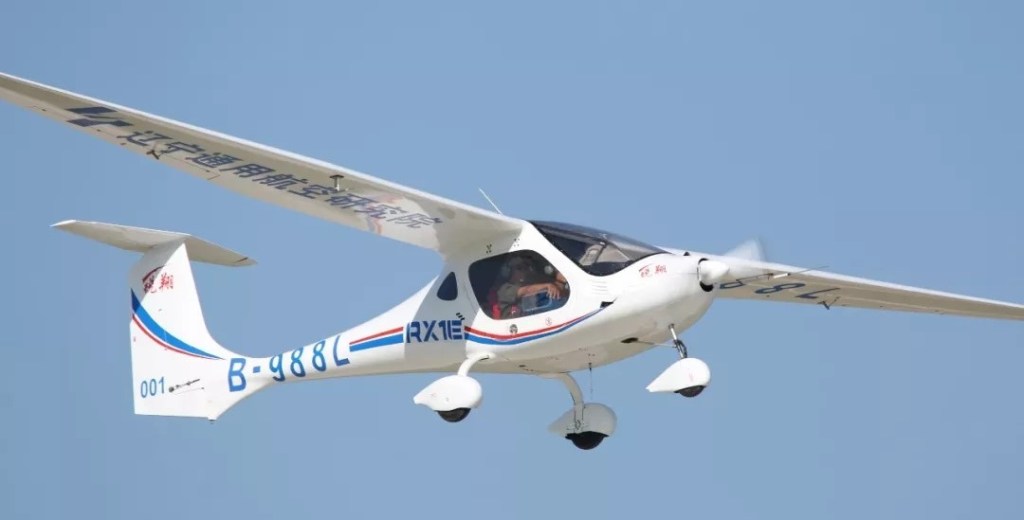
The RX1E aircraft is China’s first two-seater general aircraft developed by Liaoning Ruixiang General Aircraft Manufacture Co. Ltc. The aircraft used pure lithium batteries and permanent magnet motor to drive the propeller.
The whole machine structure made of composite material. The side-by-side two-seater aircraft belonged to the category of light sport aircraft, and debuted at the 2012 Zhuhai airshow. The cabin opens on both sides to facilitate boarding passengers.
The RX1E aircraft is equipped with mechanical flight instruments and electronic digital display power meters.
On November 1, 2017, at Fakucaihu Airport in Shenyang, the first flight of the Ruixiang Extended Range Electric Aircraft (RX1E-A) was successful. On October 19, 2018, RX1E-A aircraft has obtained the Model Design Certificate (TC) issued by China Civil Aviation Administration.
RX1E-A
RX1E Engine: A37K154, 30KW Propeller: LGAA Wingspan: 14.5m Wing area: 12 sq.m Length: 6.61 m Maximum take-off weight: 500 kg Maximum load: 162 kg Maximum speed: 150 kph Cruising speed: 120 kph Ceiling: 3000 m Endurance: 1 hr Load factor: +4g/-2g Seats: 2
RX1E-A MTOW: 600 m Maximum Landing Weight: 600 kg Payload: 160 kg Max Level Speed: 160km/h Stall Speed: 82km/h Cruising Speed: 110km/h Load factor: +4g/-2g Service Ceiling: 3000 m Endurance: 90 min Range: 180 km Takeoff run: 330 m Landing Run: 380 m
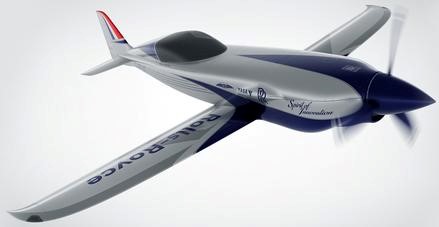
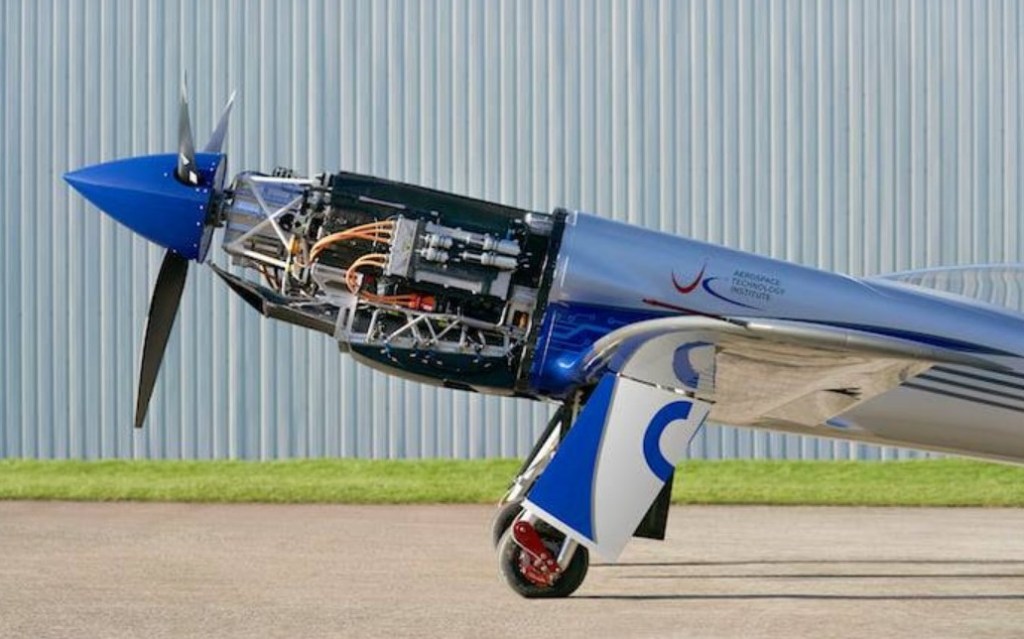
Rolls-Royce developed the ACCEL (Accelerating the Electrification of Flight) as an electric aircraft demonstrator racing aircraft to gain the all-electric air speed record, targeting over 480 km/h (260 kn). The existing electric aircraft record at that time was 182 kn (337 km/h), set in 2017 by a Siemens powered Extra 330.
Designed at Gloucestershire Airport, the project is partly funded by the UK government and involves partners such as electric motor and controller manufacturer YASA Limited and aviation start-up Electroflight.
The team aimed to reach the 1931 Schneider Trophy speed, which was won by a R-R-powered Supermarine S.6B, reaching 298 kn (552 km/h).
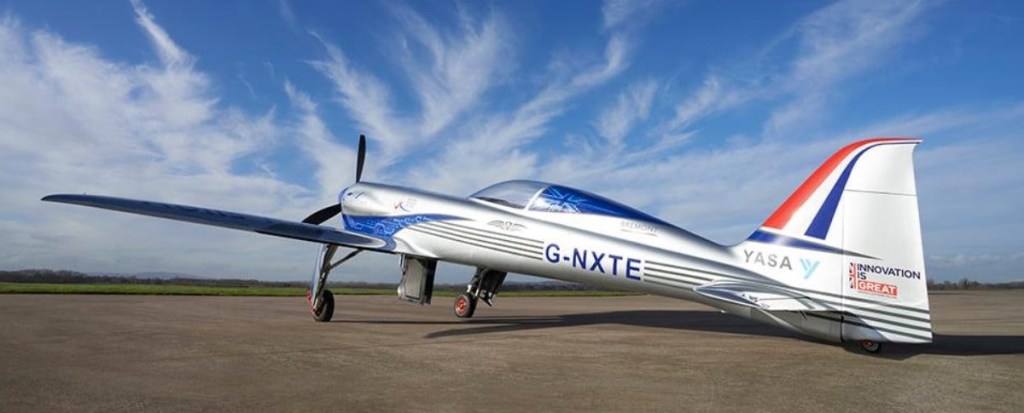
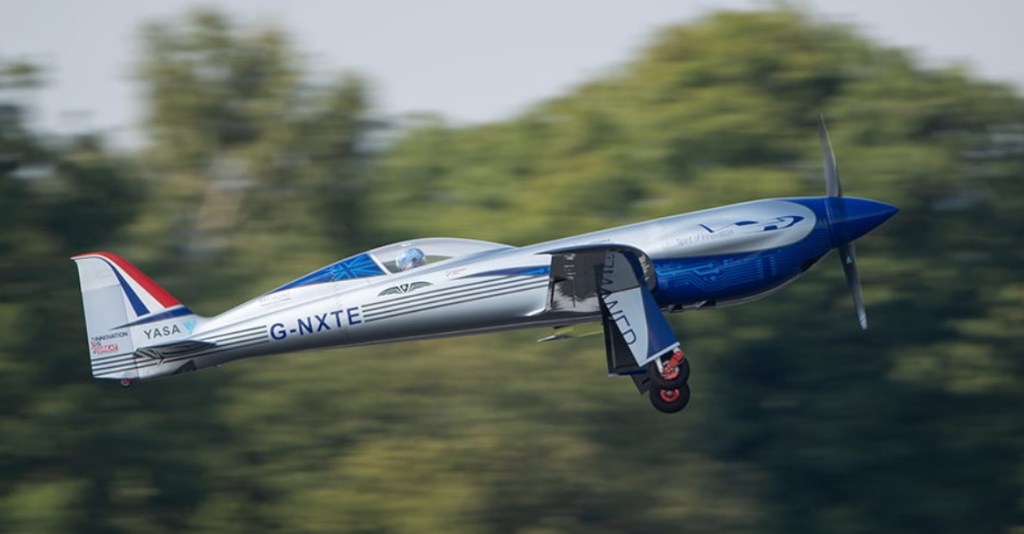
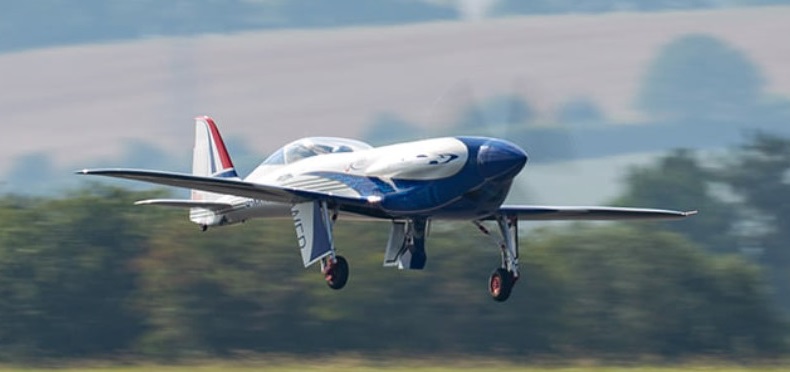
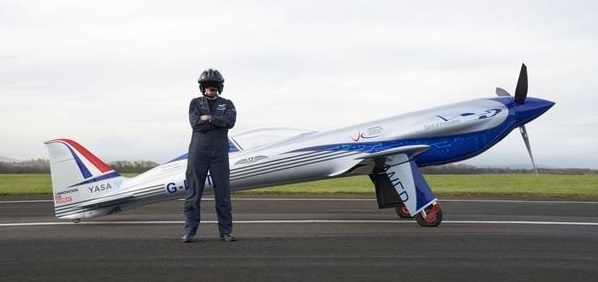
On 15 September 2021, Rolls-Royce announced the aircraft, named “Spirit of Innovation”, had successfully completed its first flight, flying from MoD Boscombe Down for fifteen minutes.
The 24 ft (7.3 m) span aircraft is powered by three high power density electric motors driving a single three-blade propeller spinning at 2,400 RPM, designed and manufactured by YASA, running at 750 volts and delivering over 400 kW (536 hp) combined from its 6,480-cell battery pack with cork insulation. Its cooled battery pack should have the highest energy density for an aircraft and should allow a 320 km; 170 nmi range.
It is derived from the carbonfibre Sharp Nemesis NXT racer, cruising at 282 kn (522 km/h) with a 350hp (260kW) piston engine, but reaching 355 kn (657 km/h) with a highly tuned engine. Battery power output will be 500 hp (373 kW) continuous, reaching 750kW (1,006hp) at maximum power. The battery, motors and control equipment weigh the same as the regular engine and fuel tank while the NXT has a maximum take-off weight of 1,200kg (2,645lb). Its 216 KWh battery pack weighs 1350 kg.
Rolls-Royce said that its all-electric Spirit of Innovation aircraft has set three new world speed records, making it the world’s fastest all-electric aircraft. The company has submitted data to the Fédération Aéronautique Internationale (FAI)— the World Air Sports Federation which controls and certifies world aeronautical and astronautical records—that at 15:45 (GMT) on 16 November 2021, the aircraft reached a top speed of 555.9 km/h (345.4 mph) over 3 kilometers, smashing the existing record by 213.04 km/h (132mph). In further runs at the UK Ministry of Defense’s Boscombe Down experimental aircraft testing site, the aircraft achieved 532.1km/h (330 mph) over 15 kilometers—292.8km/h (182mph) faster than the previous record—and broke the fastest time to climb to 3000 meters by 60 seconds with a time of 202 seconds. It subsequently reached a top speed of 623 km/h (336 kn), 555 km/h (300 kn) over 3 km (1.6 nmi), 532 km/h (287 kn) over 15 km (8.1 nmi), and was able to climb to 3,000 m (9,840 ft) in 3min 22s. The speeds achieved were accepted as world records for electric aircraft by the Fédération Aéronautique Internationale in January 2022.
During its record-breaking runs, the aircraft clocked up a maximum speed of 623 km/h (387.4 mph)—making the Spirit of Innovation the world’s fastest all-electric vehicle.
In 1884, under the direction of Renard and Krebs of the French army aeronautical establishment at Chalais Meudon, successful experiments were made employing electrical power with the airship La France.
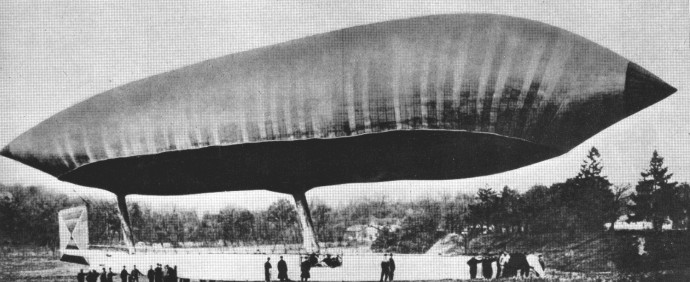
At the French military balloon establishment at Chalais Meudon, in 1884, engineers Charles Renard and Captain A.C.Krebs designed and constructed the airship La France which was to prove capable of steady, navigable flight, and eas able to describe circular flights against the wind and return to its departure point.
La France, with a capacity of 66,000 cu.ft, was 165 ft long with a diameter of 28 ft, the envelope being made from Chinese varnished silk and of streamlined form. Below the envelope an enclosed car, 108 ft in length, contained a Gramme electric motor, developing 8.5-9 hp for a weight of 210 lb, together with the chromium-chloride batteries that drives a cloth covered tractor airscrew of 23 ft diameter. The battery weighed 435 kg.
The France was thirty-two feet in maximum diameter and nearly 200 feet long, the empennage planes aggregating about 400 square feet were placed forward of the stern.
Steering in the horizontal plane was effected by a large rectangular rudder at the stern, while vertical movement and attitude were controlled by a sliding weight mounted within the body of a car assistd by an ‘elevating rudder’.
In a series of trials the airship demonstrated controlled flight, achieved a speed of 14 mph and made several flights over Paris. The weight of the batteries, limited range and carrying capacity prevented further development.
The first trial of La France took place on 9 April 1884. The flight proving a limited success: making a circular flight of 5 miles in twenty-three minutes at a speed of around 12.5 mph in still air, then returning to its starting point, Chalais-Meudon – the first time this had ever been done. Six other flights were made during 1884-85, including two over Paris.
Chalais-Meudon Renard-Krebs “La France” Engine: 1 x Elektromoteur Gramme electric: 9 hp Batteries: Chromium chloride Contained volume: 65,695 cu.ft / 1860 cu.m Length: 165 ft / 50.0 m Width of hull: 27.887 ft / 8.5 m Height: 60 ft Gross lift: 2.0 ton Useful lift: 0.1 ton Max. speed: 13 mph / 11 kt / 20 km/h Crew: 3
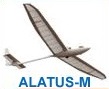
Manufactured by the Aerola company, Alatus-M is a microlight composite motorglider.
Alatus-M has been designed to comply with German standards LTF-UL and DULSV LFG, and with FAR-103 standards.
The engine pylon totally retractile allows very good gliding performances, the cockpit is spacious and vented and gives an excellent visibility.
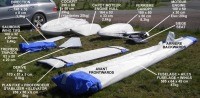
The aircraft can be dismantled by one person in about 40 minutes and carried on an ordinary car Each plane is delivered with its transport covers.
Packed at delivery: One 303 x 71 x 98 cm wooden box and one 588 x 71 x 53 cm
Engine: Cors-Air 2 stroke, 20 hp electric starter, or Electravia electric 26 hp Wing span: 13,10 m Wing surface: 13,6 sq.m Empty weight equipped: 115 kg Maximum weight: 235 kg Pilot size: 60 to 110 kg – 1,60 to 1,95 m Flight range with engine: 1h 30min Glide ratio: 27 at 60 km/h Minimum sink rate: 0,65 m/s Maximum speed: 110 km/h Stall speed: 41-45 km/h Vne 140 km/h
The E-811 is the first electric engine certified for use in General Aviation by the European Union Aviation Safety Agency (EASA).
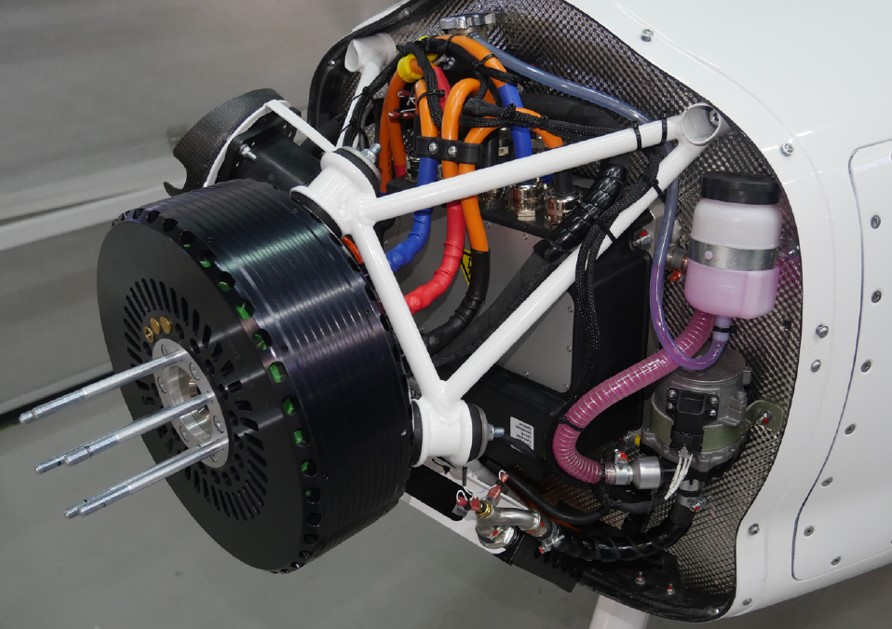
The E-811 engine combines a liquid-cooled electric motor and a liquid-cooled power controller. Offering 57.6 kW (77 hp) of peak power, and 49.2 kW (66 hp) of maximum continuous power, the E-811 is a powerplant for powered sailplanes, UL, LSA and VLA aircraft, where a Type Certified Engine is required.
The propulsion motor is an axial flux synchronous permanent magnet electric motor. Lighter and more compact, these motors are also more powerful than radial flux motors, making them ideal aviation. The propeller is mounted directly on its rotor.
The associated controller converts direct current (DC) from the batteries to alternating current (AC) for the motor. The controller receives torque command via CAN bus and adjusts the motor current input accordingly through the engine’s high voltage AC bus. The motor reacts instantaneously and without hesitation. The controller also requires a 12-volts power supply.
The motor’s rotation direction is not factory selected and can be easily adapted to any given application as part of the installation. The motor can turn clockwise or counter-clockwise as the default direction of rotation.
The E-811 supports a wide range of propellers. Fixed, ground-adjustable and electric variable-pitch propellers can be mounted on the engine, as long as they are compatible with the flange geometry and screw pattern (6xM8 on 75 mm diameter). Hydraulic governors are not supported. The propeller should have a maximum moment of inertia of 3245 kg-cm2 (7.7 lb-ft2) and weigh less than 5.5 kg. Maximum engine speed is 2500 rpm.
The engine is entirely liquid-cooled through a single cooling circuit with a mixture of 50% water and 50% glycol (automotive grade G12+). The coolant inlet is located on the power controller, it then proceeds to the motor via an intermediate coolant hose. The coolant outlet is located on the motor.
The cooling system is part of the installation and can be provided by Pipistrel. It comprises a coolant pump; a radiator; an expansion tank; an overflow bottle; inlet, outlet and intermediate hoses; and the coolant itself. The circuit shall ensure a coolant temperature at either component of less than 60°C.
In order to control the engine power output, an auxiliary control system should be provided. This can be ensured either by a power lever or a flight control computer, while cockpit indication such as an RPM indicator shall be provided as well.
The engine requires high-voltage DC power to be supplied for propulsive force. Depending on the chosen architecture, the engine will accept DC power from the energy source, which may be batteries connected via a battery management system (BMS), or a generator, or a fuel cell, or combinations thereof. A low-voltage (12 VDC) power connection is also needed.
Installation of the additional equipment depends on the aircraft configuration.
The EASA Type Certificate (No. EASA.E.234) follows the CS-22, Subpart H, Amdt. 2 standard, and the SC E-1 special condition for Electrical Engine for powered sailplanes, LSA or VLA.
Pipistrel’s Electric propulsion system is a true Plug & Play solution for electric aircraft. You receive everything you need: the motor, power controller, battery system complete with BMS and a lightweight airborne charger, complete with an advanced color display cockpit instrument, which provides you with full control. The system also supports propeller positioning and automatic retraction for self-launching glider applications.
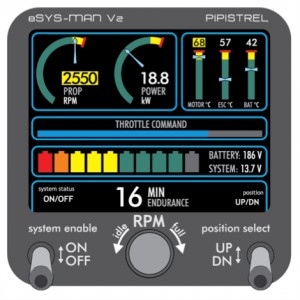
Cockpit instrument is an ESYS-MAN V2 high-resolution 3-inch sunlight readable color display and control interface. Displays all system temperatures, controls RPM/Power with automatic over-temperature protection, charge indicator, charge status overview, battery health overview, visual warnings, system enable/disable and support for propeller positioning and automatic retraction (self-launch gliders).
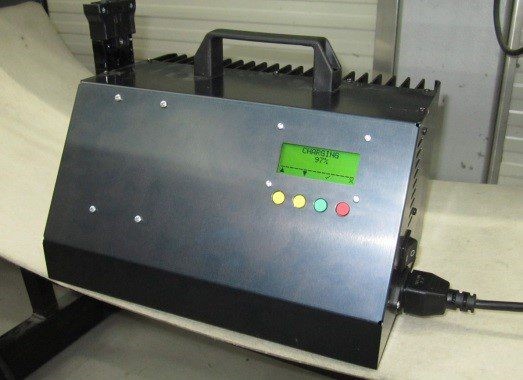
Pipistrel offers several chargers for the Taurus Electro conversion kit, a portable 2 kW world unit, supporting both 110V/60 HZ and 250 V/50 Hz networks. It has a 5 inch display and an intuitive interface, providing information about charge status, battery health overview and system configuration. It supplies 2 kW charge power in a 3 kg package.
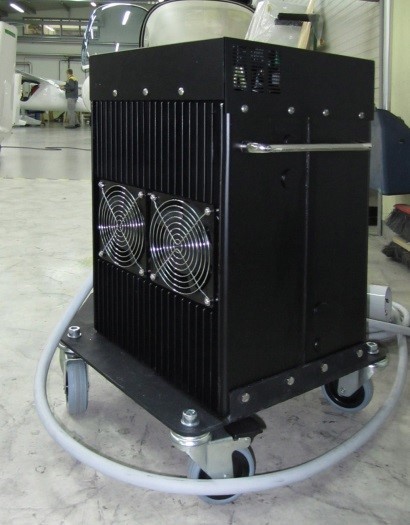
For faster charging we have an 8kW charger weighing just 25 kg.
Pipistrel 2kW Charger
Pipistrel 8kW Charger
The cockpit battery, which supports the avionics, power controller and motor extension/retraction, is charged together with the main power battery. This provides an extra layer of safety and allows gliding even with the main battery depleted. The cockpit battery is also charged in flight by the solar panels attached to the aircraft The propeller is a composite lightweight 2-blade propeller, diameter 165 cm, specially optimized specially to take advantage of the electric motor characteristics.
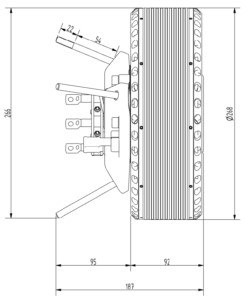
Pipistrel E-811-268MVLC Type: axial flux synchronous permanent magnet Diameter: 268 mm (10.55 in) Width: 91 mm (3.58 in) Dry weight: 22.7 kg (50 lb) Maximum take-off power (MTOP) up to 90 sec: 57.6 kW (77 hp) at 2500 rpm Maximum continuous power (MCP): 49.2 kW (66 hp) at 2350 rpm Outside air temperature range: -20°C, +40°C (-4°F, 104°F) Max motor temperature: 110°C (230°F) Speed limits: 2350 rpm (MCP), 2500 rpm (MTOP) Torque limits: 200 Nm (MCP), 220 Nm (MTOP) Coolant flow: > 5.5 l/min Coolant temperature: < 60°C (140°F) Pressure drop (over the entire system): < 1 bar
Propeller Max propeller moment of inertia: 3245 kg-cm2 (7.7 lb-ft2) Max propeller mass: 5.5 kg (12.1 lb) Max propeller speed: 2500 rpm
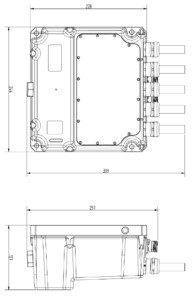
Controller – H300C Dimensions: 245 x 126 x 230 mm (9.65 x 4.96 x 9.05 in) Dry weight: 8.1 kg (17.8 lb) including cables Max controller temperature: 70°C (158°F) Input voltage range: 250 – 400 VDC Max controller current: 311 A Max continuous current: 226 A
Battery capacity 20 Ah: 4.75 kWh Battery capacity 30 Ah: 7.10 kWh Battery capacity 40 Ah: 9.7 kWh Battery Management System (BMS): Integrated, with datalogging & failure prediction. Airborne Charger: Supports 110 VAC and 240 VAC, 2 kW, typical charge time 3 h Battery voltage: 190 V -270 V Voltage per battery pack: nominal 17×3.7 V = 63 V Maximum operating temperature: 70° C – max battery temperature 60° C Minimum operating temperature: 5° C Electric motor power: High efficiency outrunner, synchronous 3-phase PEM 40 kW (1 min), 30 kW cont. Air cooled Max RPM: 2200 RPM System weights: 20 Ah unit = 59 kg 30 Ah unit = 75 kg 40 Ah unit = 91 kg
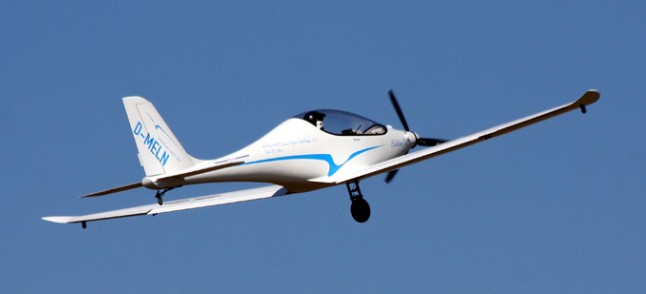
Pipistrel has a four-seat GA airplane under development in 2012. The Panthera, that’s already flown and was to be offered with three power packages: traditional gas, hybrid gas/electric…and all electric.
Pipistrel’s S-LSA Alpha Trainer debuted 2012 and has sold well. Price: US$90,900 (fully equipped Alpha Trainer w/ballistic chute).
At the end of 2017 the Pipistrel Alpha Electro trainer was officially released to customers with significant success. This aircraft has an endurance of 1 hr plus a 30 min reserve, short take-off distance, and 1000+ fpm climb. The Alpha Electro is also designed to recover 13% of the energy upon each approach.
Pipistrel’s Alpha Electro (UL/LSA in Australia) electric airplane has obtained certification.
After the success of the Sinus it was quite realistic to expect there is also a market niche for a real microlight two-seat glider, as well as it’s version with an auxiliary, fully retractable engine. Hard-core glider pilots were not convinced by the glide ratio of 1:30 that Sinus has to offer. The ‘real’ quality gliding goes together with glide ratios of 1:40 and more.
This time, the main idea of construction was different from the Sinus, but the aims were a side-by-side microlight motorglider, with a self-lauchable version with an auxiliary, yet fully retractable engine and glide ratio of at least 1:40. by providing two main wheels in parallel configuration complete independence could be achieved dispensing with a helper holding the wing tip during take-off.
The fuselage of Taurus uses a lifting body shape concept and features enough room for an auxiliary, yet fully retractable engine. Taurus is also intended for training, therefore all controls must be within reach of both pilots. Both pilots have individual control sticks and rudder pedals. The landing gear operation lever, flaps, airbrakes, tow rope release and trim levers are there for common for both pilots and are found in the middle, between both seats. For added comfort pilots enjoy adjustable headrests, in-flight adjustable rudder pedals, separate vent window and a central ventilation system for efficient de-fogging of glass surfaces. There are side pockets for each pilot and a baggage compartment behind the seats with space for an oxygen system as well.
The version of Taurus with an auxiliary retractable engine comes with a ROTAX 503 which is modified and redesigned by Pipistrel. The engine is twin carbureted engine and drives Pipistrel’s own developed propeller. The system for extending and retracting the engine and propeller is fully automated. The pilot takes advantage of a dedicated interface on the instrument column and all they have to do is to flick the switch to ‘engine IN’ or ‘engine OUT’ position – everything else is done completely automatically. When retracting, the propeller is first positioned vertically, the engine then gets retracted and the engine bay covers close. To restart the engine on ground or in-flight the pilot selects the ‘engine OUT’ option and the engine extends and is ready for start-up in only 12 seconds. The entire engine retraction system is incredibly light and reliable, all switches and sensor used to monitor the operations are electromagnetic-induction type and as such not sensitive to vibration, mechanical damage and/or dirt. This system has also been developed in-house by the Pipistrel team. Built-in safety will prevent inadvertent start-up or retractions of the engine.
The same goes for the undercarriage retracting system, which is fully mechanic but needs very light force on the cockpit lever during operation. There are two main wheels in parallel configuration. The tail wheel is not retractable but fully stearable. The airbrakes, flaps and the elevator trim are all mechanical pushrod type. A tow-rope release mechanism can be fitted as well. Gliding has a 1:41 glide ratio coupled with 5 flaperon settings.
The LSA Taurus has a 15-meter wing-span which can be removed. Taurus has automatic control connections and one wing weighs 40 kg (90 lbs). From take-off to 500 m (1650 ft) needs only 3 minutes, 6 minutes to 1000 m (3300 ft) and 10 minutes to 1500 m (5000 ft).
Taurus entire cabin area is encased with energy absorbing structures made from Kevlar fibre. The Taurus can also be equipped with the ballistic parachute rescue system. Taurus is made in highest technology composites (epoxy resin, glass fibre, carbon fibre, kevlar fibre and honeycomb structures). The airfoil used on wings is ORL 170, (F. Orlando).
2009 Price: 70000 EURO
First announced in December 2007, the Taurus Electro matches the performance of the petrol powered Taurus 503 and, it weighs the same and sells for the exact same price. Taurus Electro has a tailor-developed 30 kW electric motor.
The electric-motor propulsion has been tested successfully on four light aircraft before the Taurus Electro – as an auxiliary engine on self launching gliders Apis, Antares and Silent and on the MCR light aircraft where a full-cell based propulsion was used.
Pipistrel’s Taurus is a two-seat glider with higher approved take-off weight than the single seat gliders where the electric-motor propulsion has been tested so far. Therefore the Taurus requires a more powerful electric motor.
The goals when designing the Taurus Electro were mainly to:
develop a system, that will enable the aircraft to climb to altitudes in excess of 2000 meters on a single battery charge;
keep the current market price of the aircraft;
keep the current take-off distance;
keep the empty weight of the aircraft within the values of the internal combustion engine powered Taurus 503 with fuel;
keep the current climb profile of the aircraft.
This required modify the existing system for extension / retraction of the engine, developing a purpose-built propeller to maximize the efficiency at given constant torque, useing high-performance Lithium-polymer batteries with specific capacity touching 200Wh/Kg, and developing a system to charge the batteries in flight.
Developmental costs of the Taurus Electro project were over 1 Million Euro, partially funded by the EU for the sum of 354,824.89 EUR.
TAURUS 503 Engine: Rotax 503 UL DCDI 2V, 53 hp at 6600 rpm Propeller: 2 blade Pipistrel 1600 mm diam Wing span: 14.97 m Length: 7.27 m Height: 1.41 m Wing area: 12.33 sq.m Rudder area: 0.9 sq.m Horizontal tail area: 1.36 sq.m Aspect ratio: 18.6 Positive flaps: 5 deg, 9 deg, 18 deg Negative flaps: -5 deg Center of gravity: 23% – 41% Empty weight: 285 kg Minimum pilot weight: 60 kg Maximum total pilots weight: 220 kg Max take off weight (MTOW): 450 kg / 472.5 kg Fuel tank capacity in the wing: 30 lt Useful fuel: 27 lt Stall with flaps: 63 km/h Stall without flaps: 71 km/h Manoeuvring speed: 163 km/h Max. Speed with flaps extended: 130 km/h Max. Speed with airbrakes extended: 225 km/h (extend at or below 160 km/h) Max. Speed with powerplant extended: 160 km/h Vne: 121 kt / 140 mph / 225 km/h Min.sink: 0.70 m/sec Min.sink speed: 94 km/h Max. Sink with airbrakes: 6.0 m/sec @ 100 km/h Best glide: 1: 41 Best glide ratio speed: 107 km/h Best glide at 150 km/h: 1: 33 Best glide at 180 km/h: 1: 23 Max towing speed: 150 km/h 45°-45° roll time: 3.9 sec Take off run MTOW: 180 m Take off over 15 m MTOW: 265 m Cruising speed with 75% power: 120 km/h Best climb speed: 100 km/h Max climb rate (MOW): 2.9 m/sec Service ceiling MTOW: 3,900 m Max load factor permitted (x1,8): +5.3g -2.65g Max load factor tested: + 7.2g – 7.2g Fuel consum. At full power:: 18 lph Seat: 2 Cockpit width: 50 in
Taurus Electro Empty weight (incl. Batteries): 320 kg Top-of-climb: 2000 m / 6500 ft AGL Take-off distance at MTOW (472.5 kg): 170 m / 560 ft Climb rate at MTOW (472.5 kg): 2.8 m/sec / 560 fpm Electric motor type: permament magnet synchronus three-phaes brushless Electric motor dimensions (excl. propeller flange): diam. 250 mm x 150 mm Electric motor mass (excl. propeller flange): 14 kg Max. continous shaft power: 30 kW at 1800 RPM Efficienty at max. continous power: 95% Max. continous torque: 160 Nm Peak torque: 200 Nm (0 – 1500 RPM) Max. motor RPM: 1800 RPM Nominal voltage: 140 V Propeller diameter: 2040 mm Batteries: Lithium-polymere: 42 cells, 3.7 V each Storage capacity: 6 kWh Battery weight: 46 kg Charger / battery voltage balancer: Built into aircraft Power / RPM controller: SAC 40 modified for aviation use
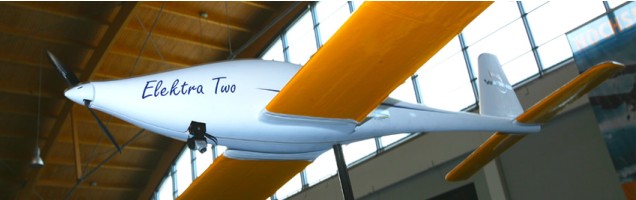
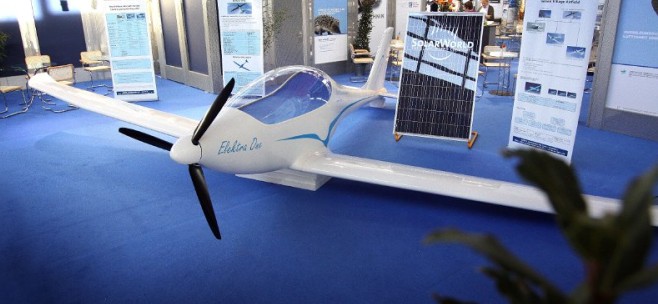
The Elektra Two aircraft are scaled versions of the Elektra One Solar. Two versions are:
Version 1: Elektra Two Standard, with two different wing span: 17 meters and 14 meters Version 2: Elektra Two Record. Only one unit for a range over 2000 km was to be built.
The outer shape of the Elektra Two Standard is the same as the Elektra Two Record. Two versions will be provided: the long span version (17 meters) and the short span version (14 meters).
Elektra Two Standard (long & short version) are for cruise, flying clubs and training
Construction is carbon / glass and solar cells on the wing surface provide the energy to fly. The solar cells will be laminated in the wing skin structure.
Specifications
Elektra Two Standard Max. engine power: 40 kW Wing span: 14 m / 17 m Wing surface: 15 sq.m / 19 sq.m MTOW: 350 kg Empty weight: 200 kg Battery weight: up to 100 kg Payload: 180 kg Max. range: 14 m wing span: 500 km 17 m wing span: 700 km Max. endurance: 14 m wing span: 5 hours 17 m wing span: 8 hours Cruise: 14 m wing span: 140 km/h 17 m wing span: 120 km/h Aspect ratio: 14 m wing span: 13 17 m wing span: 15 Best glide ratio: 14 m wing span: 28 17 m wing span: 34 Certification: LTF-UL germany
Elektra Two Record Max. engine power: 16 kW Wing span: 17 m Wing surface: 19 sq.m MTOW: 350 kg Empty weight: 140 kg Battery weight: 80 kg Payload: 150 kg Max. range: more than 2,000 km Max. endurance: over 20 hours Cruise: 80 km/h Aspect ratio: 15 Best glide ratio: 34 Certification: LTF-UL Germany
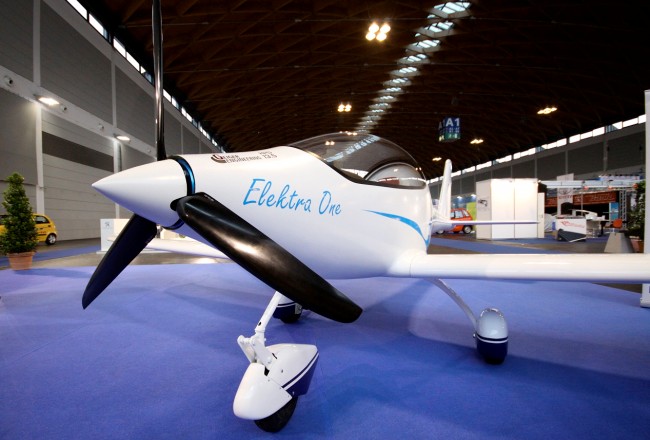
The Elektra 1, designed by Calin Gologan and built by a group of Romanians including Sorin Mares, received an award for innovation in aviation, the Lindbergh Electric Aircraft Prize.
The one-seater plane is made of light carbon composite materials, utilising an electric motor, the batterys are charged while hangered, through solar panels. Elektra One Solar has six square meter solar cells on its wings to provide over 1 kilowatt (kW) of power for flying. Since the aircraft requires at least 2.5kW power for horizontal flight, this is slightly less than half the energy required for the plane to fly. The Elektra One Solar is not completely powered by the solar panels on its wings. To enable full flight, the plane has a series of high energy density rechargeable Li-Ion batteries on board. These can be recharged using the solar panels when the plane is parked outside. If the plane is parked inside, a specially outfitted solar hangar can take over the recharging duties.
PC-Aero developed the Elektra One Solar with the support from Solar Hangar and Solar World. The business idea behind it is that the solar panel equipped hangars will provide energy for the plane while the excess energy would be fed back into the grid. This predecessor of the Elektra One Solar, the Elektra One, has a range of 500 kilometers and an endurance of 3 hours. Its wingspan is also smaller at just 8.6 meters compared to 11 meters in the Elektra One Solar.
The Elektra One is in the German Ultralight LTF-UL-class powered by a 13.5 kW brushless electric engine. Germany’s Geiger Engineering developed the electric drive unit which includes the HPD 13.5 (16 kW maximum power) electric motor, controller, battery management system and propeller.
As the Elektra One was designed for minimum energy requirements at 160 km/h, once airborne, it is remarkably frugal with its use of energy. It can remain airborne for three hours and its claimed range has now increased to 500 kilometers. PC-Aero claims that the system offers operational costs per hour of less than EUR 35 or EUR 0.2 per km, which is a lot less than a roadgoing car.
Though the driving force and design of the Elektra One emanated from PC-Aero’s founder Calin Gologan, the team included team leader Einar Enevoldson, a 30 year veteran NASA-test pilot, engineer and test pilot.
Elektra One first flew on 19 March 2011, piloted by Jon Karkow, from Augsburg Airport in Germany. Three flights were performed, showing a climb rate of 400 fpm. Karkow checked flight performance and characteristics and briefed the German test pilot Norbert Lorenzen for the next flight on March 21.
A new 30 minute flight was performed on 23 March 2011. Only about 3kW from the total on board of 6kW energy was used and this was before the new variable pitch propeller and retractable landing gear were installed.
Endurance is estimated to be up to three hours and a cruising speed of 160 kph. The single seat Elektra One weighs 200 kg complete with battery and cost US$145,000 in 2012.
One of the Elektra One’s greatest advantages is its very low level of noise. The propeller speed is optimized for low noise too (under 50 dB). Cruising at 160 km/h, the propeller is rotating at just 1400 RPM. At this speed, PC-Aero claims it makes one fifth of the noise of a classic light aircraft and half the noise of an ultralight. Operating costs are below 35 €/hour and 0,2 €/km (2012).



 All Aero