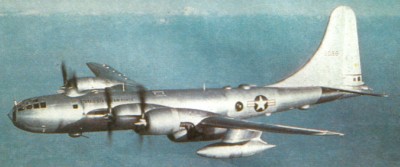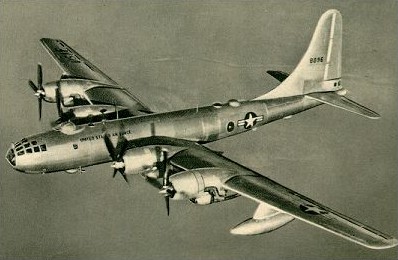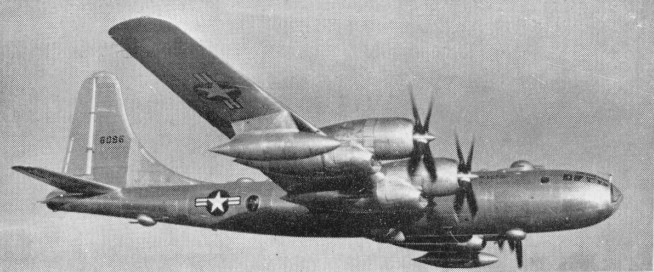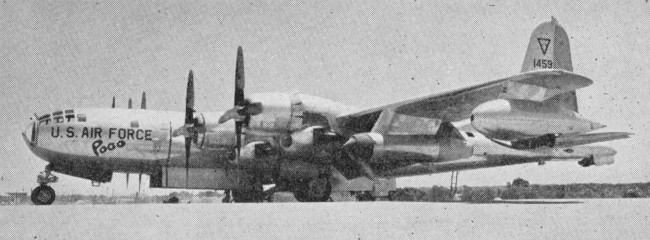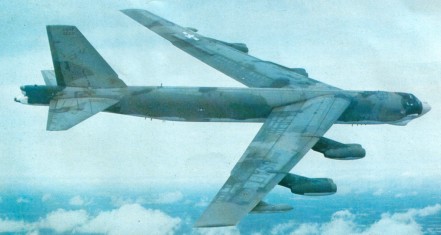
Boeing 464 / B-52 Stratofortress

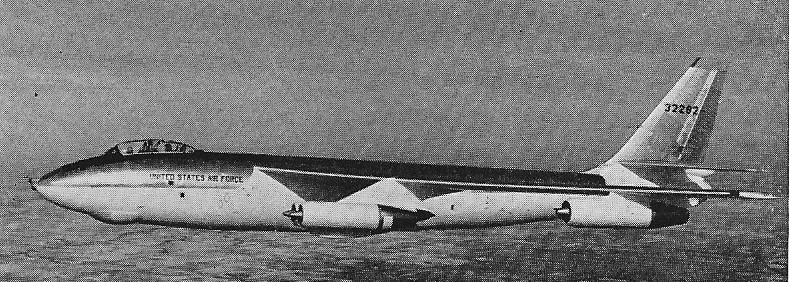
B-52G

Origins of the B-52 stemmed from a specification issued through the Air Material Command (AMC) on November 23rd, 1945, calling for a long-range, intercontinental, high-altitude strategic bomber. Specifications included an operating radius of 4,340 nautical miles, a speed of 260 knots at altitude of 43,000 feet, and a bombload capacity of 10,000 pounds. In February of 1946, the Boeing Aircraft Company, Consolidated Aircraft Corporation and the Glenn L. Martin Company all responded. Boeing’s team devised the Model 462 as a straight-wing, multi-engine design powered by 6 x Wright T35 Typhoon turboprop engines rated at 5,500shp each. On June 5th, 1946, Model 462 was selected and designated XB-52. A full-scale mockup contract was then awarded.

By now, the USAAF was already looking beyond the qualities of the Model 462, fearing that the aircraft was already rendered obsolete in its conventional design approach and could never reach the intended goals of the original specification – especially in terms of its range. As such, the USAAF cancelled their contract with Boeing and the Model 462 was dead.

Boeing chief engineer Ed Wells took the Model 462 and evolved a pair of smaller concepts with four turboprops each appearing in their respective 464-16 and 464-17 forms. Essentially, the 464-16 was a short-range bomber made to carry a greater bombload while the 464-17 was a long-range bomber made to carry a smaller bombload. Neither idea stuck with the USAAF as a replacement for the B-36 though interest did center on the 464-17 design. Several more concepts were developed but interest on the part of the Air Force was waning. The Model 464-29 appeared, complete with swept-back wings at 20 degrees and fitting 4 x Pratt & Whitney turboprop engines. Again, this concept failed to answer the key points of the specification which, by now, was ever-changing to include increased performance specs along with long range.

The Model 464-35 was another Boeing design team proposal fitting 4 x turboprop engines with contra-rotating propellers. Wing sweep was increased moreso than previous attempts, beginning to define the look of the Stratofortress. With in-flight refueling becoming more of a USAF operational norm, the design team now had some leeway in the overall size of their aircraft. Events in Europe in the latter part of the 1940’s pushed the XB-52 project forward, rewarding the Boeing Company with a hard-earned contract for a single mock-up and at least two flyable prototypes.

Upon a visit to Wright-Patterson AFB by the Boeing design team, it was learned that the USAF was now more interested in a jet-powered solution, seeing it as the only way to achieve the desired performance specs it required of the XB-52. In the course of a single weekend in a Dayton hotel room Ed Wells company set to work on new ideas for a Monday morning presentation. The resulting design combined elements of their Model 464-35 design with a four-engine, jet-powered medium bomber concept that had been brought along. The new aircraft became an eight-engine, Pratt & Whitney JT3 jet-powered heavy bomber with 35-degree swept wings. A small balsa wood model was constructed to further develop the idea and accompanied a detailed Model 464-49 design document of some 33 pages. The weekend effort paid off for Boeing as the USAF became greatly interested in the aircraft after Monday morning. The design was revised into the Model 464-67 and accepted for construction as two prototypes.

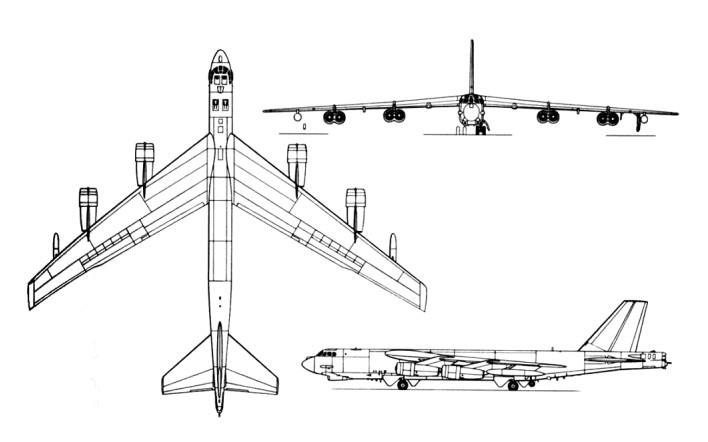
Eight engines were installed in twin pods hung under the 35 degree swept wing, and other unusual features included a vertical tail able to fold sideways to enter a hangar, wingtips that moved downwards 2.5 m (8 ft) as the wing tanks were filled, and four twin wheel landing trucks which can be swivelled for cross wind landings.

Boeing B-52 Stratofortress Article

An XB-52 production contract reached Boeing executives on February 14th, 1951. The contract called for 13 B-52A models. The XB-52 became the first prototype constructed and this was followed by the YB-52. The YB-52 received this evaluation due to the funding coming from the Air Force’s Logistics Command.

The YB-52 beat the XB-52 to flight testing on March 15th, 1952. The XB-52 was rolled out on November 29th, 1951, under the cover of night for secrecy’s sake but a pneumatic system failure caused enough damage to the wing trailing edge for the aircraft to be rolled back inside for lengthy repairs. As such, the YB-52 achieved its first flight on April 15th, 1952 and did not experience any major setbacks. The XB-52 finally got airborne on October 2nd, 1952. Both the XB-52 and the YB-52 featured tandem seating cockpits with upward firing ejection seats.

B-52A

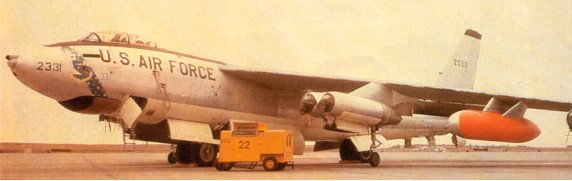
Only 3 B-52A’s built and the B-52B and RB-52B were in large-scale production for the U.S.A.F. in 1955. Both were equipped for flight refuelling. From the original order of 13 B-52A’s, ten were later earmarked for production as B-52B models. Compared to the twin prototypes, the three B-52A’s now featured the more conventional side-by-side cockpit seating arrangement in a revised forward fuselage along with the tail armament of 4 x 12.7mm Browning M3 machine guns. A distinguishing feature of A-models to B-models was the lack of a fully operational avionics suite. These aircraft were fitted with Pratt & Whitney J57-9W engines of 10,000lbf thrust each. The split-level cockpit featured seating for three on the upper deck and seating for two in the lower. The lower occupants were given downward-firing ejection seats. The tail gunner was removed from the rest of the crew and seated in his rear-facing turret station sans any type of ejection seat though the tail system could be ejected in the event of an accident. An unpressurized crawlspace was his only link to the front of the aircraft. In-flight refueling was accomplished via a boom connection above and behind the main flight deck. Other key additions included wing-mounted external fuel tanks to increase range and decrease “wing-flexing” across the span. Water injection was introduced to the J57 to assist in take-off. The two prototypes lacked the side-by-side cockpit seating arrangement and the in-flight refueling arrangement of the A-models and seating for the third upper deck crewmember (Electronic Warfare Officer – EWO). NB-52A – aka “The High and Mighty One” – was developed from the third B-52A flight test model. This aircraft (s/n 52-0003) was modified to act as the mothership in the launching of the experimental North American X-15 aircraft. NB-52B went on to become the longest flying B-52B airframe, ultimately seeing retirement in 2004.

By 1958 weight had increased, engines were rated at 5080 or 6124 kg (11,200 or 13500 lb) thrust with water injection, and new nav/bombing systems were fitted. While original B-52’s featured a 4 x 12.7mm collection of Browning M3 heavy machine guns in a rear turret, later production models switched over to a remote-controlled 1 x 20mm M61 cannon for self-defense. The tail armament was altogether removed in more modern Stratofortress forms with the onset of the missile age. However, it should noted that at least 2 Mikoyan-Gurevich MiG-21 “Fishbed” aircraft were destroyed in the Vietnam War by the tail gunner, with these aircraft kills credited to SSgt Samuel O. Turner and A1C Albert E. Moore – both kills achieved just days apart in December of 1972 from B-52D’s. In B-52D models the tail gunner externally accessed the rear portion of the aircraft via an entry hatch. In the revised G-models, the gunner was allocated to the main crew cabin (complete with an ejection seat fitted to the upper flight deck and facing aft with the ECM operator) and operated the tail gun via the AGS-15 Fire Control System and radar.

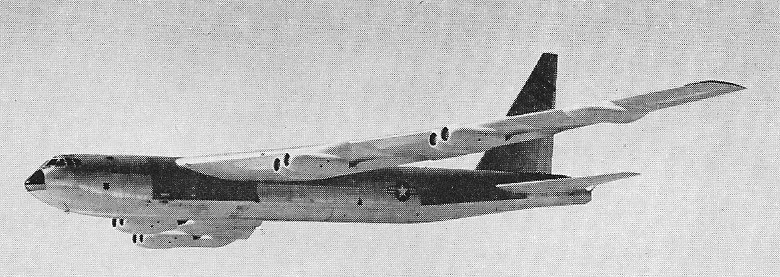
The B-52B was, in actuality, the first true Stratofortress production model and was already in development while the previous aircraft forms were being refined. They more essentially A-models with fully operational avionics suites and Pratt & Whitney J57-P-29W, J57-P-29WA or J57-P-19W series engines all rated at 10,500lbf thrust. The J57-P-19W’s were differentiated by having their compressor blades made of titanium instead of steel. First flight of these aircraft was achieved in December of 1954. B-models were the first model in the series to achieve operational service on June 29th in 1955, this occurring with the 93rd Bombardment Wing (themselves achieving operational status on March 12th, 1956) of the United States Air Force and coming in the form of an RB-52B reconnaissance model. The defensive tail armament remained the 4 x 12.7mm machine gun mounts for a time though some 16 B-52B and 18 RB-52B models were fitted with a more potent 2 x M24A-1 20mm cannon array and an different fire control system. When this proved ineffective, the final production B-52B’s reverted back to the 4 x 12.7mm formation.

The B-52B was tested with atomic weapons on May 21st, 1956 – dropping a four megaton Mark 15 “Zombie” hydrogen bomb on the Bikini Atoll. Fifty B-52B models were produced in whole, with 27 of these being modified as special RB-52’s. RB-52’s represented reconnaissance-capable B-52B production models. These aircraft sported a crew of eight personnel and were fitted to accept specialized reconnaissance equipment in the form of a 300lb pod in their bomb bays, 40 ft fuel tanks in the wingtips, and up-rated J57 engines.
RB-52B

B-model combat load performance netted a top speed of 628 miles per hour with a service ceiling of 47,300 feet. The operational radius was equal to 3,576 miles.

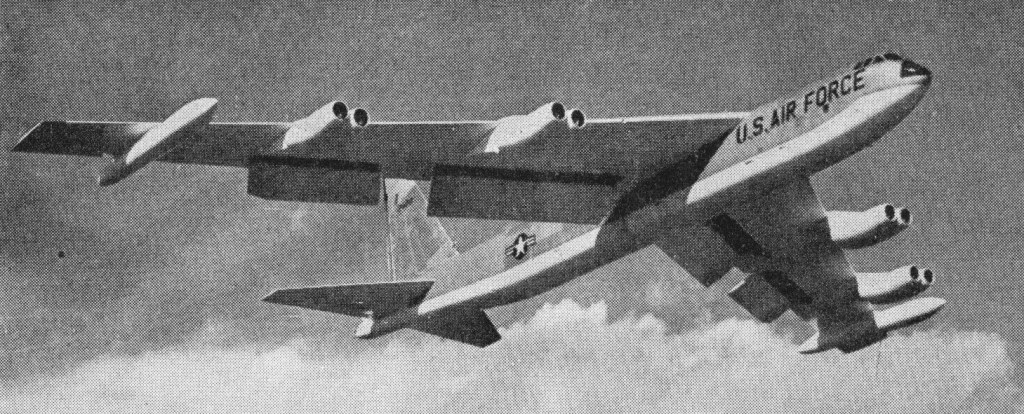
The B-52C first flew on March 9, 1956 and officially came online in June of 1956 with 35 of the type seeing delivery. B-52C’s arrived with increased range thanks to improved fuel capacity made possible through larger external tanks. They were similar to B-models and operated with the same engine series. As this was the Cold War and the use of B-52’s in an all-out nuclear strike seemed all but imminent, the underside fuselage of B-52C models were painted over in an all-white scheme in an effort to reflect the thermal radiation inherent in a nuclear-induced explosion while their “tops” remained a natural metal finish. B-52B models were retrofitted with this white underside scheme. Bombloads for C-models topped 24,000lbs. B-52C’s were also reconnaissance capable though the RB-52C designation was never truly adopted for the type. Production of all C-models lasted through 1956.
B-52C

On December 7, 1955, the first B-52 built at the Wichita Division of Boeing was rolled out. This was the second source of supply.

The B-52D became the first definitive high-quantity production Stratofortress ultimately produced in 170 examples and achieving first flight on May 14th, 1956. D-models entered service in December of 1956 as dedicated long-range bombers and, unlike previous Stratofortress offerings, these aircraft would not feature the ability to carry the reconnaissance pod so there were no RB-52D designations handed out. B-52D’s were used extensively in the Vietnam air war where their expansive bomb bays could be put to good use. Vietnam-based B-52D models were distinguished by their overall forest camouflage schemes and black-colored, anti-searchlight fuselage undersides. Production was split between Seattle and Wichita plants.

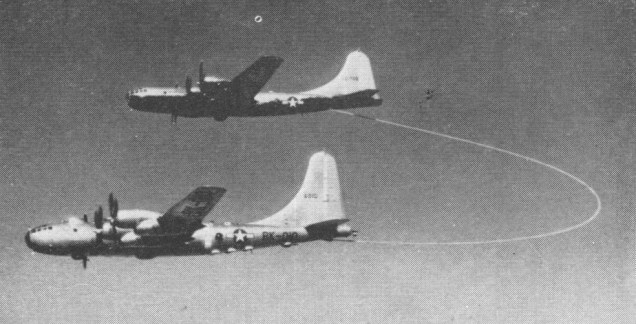
In January 1957 three B-52 flew around the world non-stop refuelling mid-air several times. They covered 24,325 miles at an average speed of 530 mph.

KC-135 Stratotanker refuelling B-52

The B-52E first flew on October 17th, 1957, and followed D-models into operational service as improved Stratofortresses though they were quite similar to their predecessor. Improved air defenses across the Soviet Union forces a change to the high-level bombing strategy of early B-52’s. Therefore, the B-52E was developed into a low-level bomber. Additions included a revised bombing and navigation suite (AN/ASQ-38 – Raytheon AN/ASB-4 navigation and bombing radar) that would become standard on future Stratofortress production models. One hundred B-52E models were produced with the initial examples entering service in December of 1957. A single E-model was set aside for use as an in-flight test airframe and featured stabilizing canards.

The B-52F was similar to the preceding B-52E but sported Pratt & Whitney J57-43W series engines of 11,200lbf. Engine pods on each wing were revised to include their own water injection systems. F-models represented 89 production examples split between Seattle and Wichita to begin service in June of 1958. Among other refinements, these Stratofortresses featured new Pratt & Whitney J57-P-43W series turbojet engines. First flight was achieved on May 6th, 1958. First combat missions occurred via B-52F’s on June 18th, 1965.

While original B-52’s featured a 4 x 12.7mm collection of Browning M3 heavy machine guns in a rear turret, later production models switched over to a remote-controlled 1 x 20mm M61 cannon for self-defense. The tail armament was altogether removed in more modern Stratofortress forms with the onset of the missile age. However, it should noted that at least 2 Mikoyan-Gurevich MiG-21 “Fishbed” aircraft were destroyed in the Vietnam War by the tail gunner, with these aircraft kills credited to SSgt Samuel O. Turner and A1C Albert E. Moore – both kills achieved just days apart in December of 1972 from B-52D’s. In B-52D models the tail gunner externally accessed the rear portion of the aircraft via an entry hatch. In the revised G-models, the gunner was allocated to the main crew cabin (complete with an ejection seat fitted to the upper flight deck and facing aft with the ECM operator) and operated the tail gun via the AGS-15 Fire Control System and radar.

By 1959 production switched to the B 52G, with a great increase in fuel capacity, the entire crew in the nose, a new structure with a short fin, and pylons for two Hound Dog missiles. The B 52G demonstrated the range potential of the type when, in December 1960, an aircraft of the 5th Bombardment Wing flew 10,000 miles (16,093 km) in 19 hrs 45 mins. The B-52G was the most numerous version built (193).
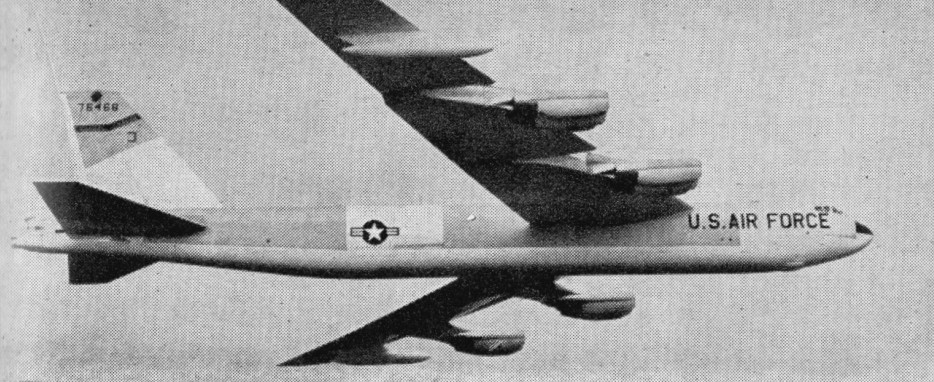
B-52G

The B-52G introduced sealed integral tank wings housing more fuel than previous models, as well as a shorter fin and a remotely controlled tail turret. Engines: Pratt & Whitney J57, 13,750 lb. Several tons were shaved off of the aircraft and crew accommodations were improved. The tail gunner was relocated to a new station within the main cabin area in the forward fuselage where the rest of the crew resided and given remote control of the turret. The vertical tail fin was shortened while the nose radome was lengthened and ailerons completely eliminated in favor of seven spoilers to provide for roll control. The G-model first flew on August 31st, 1958 and entering service on February 13th, 1959. G-models (55th production onwards) were outfitted with underwing pylons to accept the AGM-28/GAM-77 Hound Dog nuclear-tipped cruise missile – a feature also retrofitted on earlier production G-models. The Hound Dog missles could be run during takeoff to shorten the takeoff run. These Superfortresses were also later cleared to use 20 x AGM-69 SRAM nuclear missiles beginning in 1971. Four ADM-20 Quails (aircraft shaped decoys) were added in the bomb bay. Many B-52G’s would be sacrificed as part of the nuclear proliferation agreements between the United States and the Soviet Union beginning in 1992 while the surviving models were relegated to museum work. Production of G-models was handled by Wichita. The first 16 B-52Gs with cruise missiles became operational in December 1982.

The B-52H model was first flown on March 6th, 1961 and introduced into service on May 9th, 1961. The B-52H model and designed to carry the GAM-87 Skybolt ballistic missile on four external pylons. Though essentially similar to the G-models it replaced, the B-52H sported improved performance and fuel efficient Pratt & Whitney TF33-P-3 turbofan engines of 17,000lbf and a reinforced understructure for improved low-level bombing. Major systems and subsystems were revised or improved as well and the 4 x 12.7mm tail gun armament was officially replaced by the remote-controlled 1 x 20mm General Electric M61 Vulcan six-barrel Gatling cannon system (6,000rpm) tied to an Emerson ASG-21 fire control system. Ammunition supply was 1,242 rounds. The B-52H went on to utilize cruise missiles (the Skybolt missile was eventually cancelled before production), anti-ship missiles and unmanned drones in this fashion thanks to its heavy duty wing pylons. Light duty pylons were added later between the two engine pods on either wings and retrofitted to earlier H- and G-models. Like her G-model sisters, B-52H’s were cleared to use 20 x AGM-69 SRAM nuclear missiles beginning in 1971. Low-level operations became another improvement of this model type. The last of 102 B 52H bombers was delivered in 1963, bringing production to 744. The B 52H has the much more powerful TF33 engine, eliminating water injection and instead of four 12.7 mm (0.5 in) tail guns has a six barrel cannon. Surviving B 52Gs and B 52Hs are continually being fitted with updated systems for service into the second half of the 1980s.

Over a three-year period to 1963, the USAF spent $825 million on B-52 rework.

A total of 99 B-52Gs, carrying 12 external AGM-86B air-launched cruise missiles (ALCM), and 96 B-52Hs with 12 external and, later, eight internal ALCMs, were to be operational by 1990. The B-52Hs were to receive internally mounted common strategic rotary launchers (CSRL) in the late 1980s to carry the ALCMs, SRAMS, advanced cruise missiles, and free-fall nuclear weapons. The first ALCM equipped B-52G unit became operational in December 1982. Cruise-missile-carrying B-52Gs are being fitted with a strakelet fairing at the wing root leading edge for indentification purposes under the unratified SALT II agreement.

Most of the early B-52s were phased out by 1970, due to Secretary of Defense Robert S. McNamara’s mid-sixties decision to decrease the strategic bomber force.
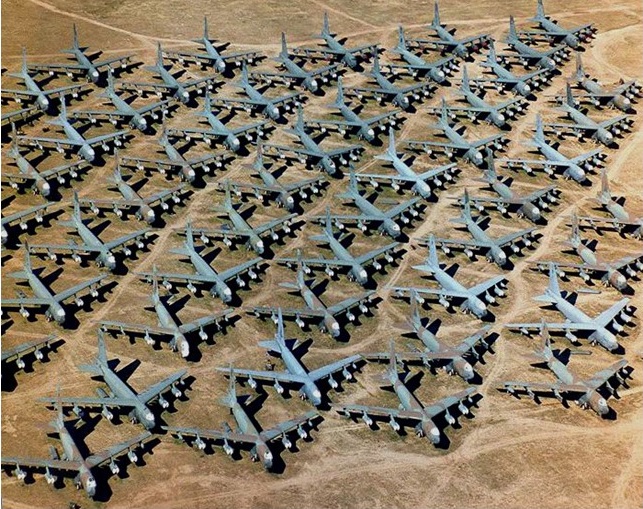
Numerous B-52s were rebuilt with a ‘Big Belly’ to carry 84 bombs inside, plus 24 on triple tandem pylons under the wings. Modified B-52Ds, referred to as Big Belly, dropped aerial mines in the North Vietnamese harbors and river inlets in May 1972. In December of the same year, B-52Ds and B-52Gs began to bomb military targets in the Hanoi and Haiphong areas of North Vietnam.

A total of 744 were built between 1954 and 1962, including the XB-52 and YB-52 test models. During its peak involvement with Strategic Air Command, no fewer than 650 B-52 bombers made up 42 SAC bomber squadrons at 38 bases. In 2010, the Air Force maintains approximately 76 active and 20 reserve B-52’s from the 744 total that were produced. Production of all B-52’s lasted from 1952 through 1962 and handled at the Boeing Seattle, Washington and Wichita, Kansas plants.
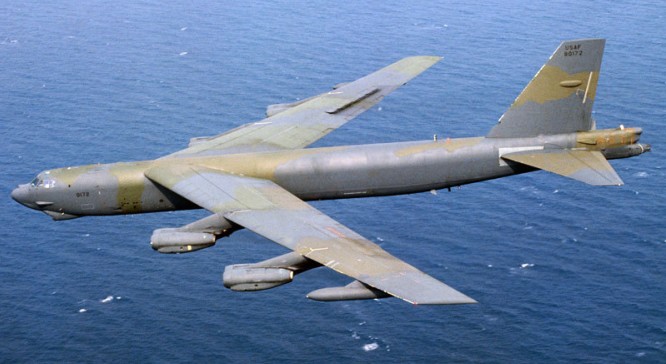
A world air speed record was set on September 26th, 1958, in a B-52D reaching 560.705 miles per hour on a closed circuit covering 6,210 miles. The same day netted another air speed record of 597.675 miles per hour over a 3,105 mile course. On December 14th, 1960, a B-52G set a world air distance record by traveling 10,078.84 miles without refueling. This record was bested several years later on January 10th/11th, 1962, when a B-52H achieved 12,532.28 miles of unrefueled flight time in a journey from Japan to Spain. According to Boeing, this single flight alone broke some 11 speed and distance records.

The B-52 has also made it into pop culture as it was the aircraft featured in the 1964 Stanley Kubrick film “Dr Strangelove”.

Gallery

Prototype
MTOW: 177 tonne

B-52A
Long-range heavy bomber.
Engines: 8 x Pratt & Whitney J57-P-3 turbojets, 10,000 lb thrust
Wingspan: 185 ft
Lenght: 156 ft
Wing area: 4000 sq.ft
Loaded weight: approx. 400,000 lb.
Max speed: approx. 650 m.p.h.
Ceiling: 50,000 ft.
Typical range: 6,000 miles with 25,000 lb bombs
Armament; 4 x.50 in. machine-guns in tail-turret.

RB-52B
Engines: 8 x Pratt & Whitney J57-P-3, 9700 lb
Wingspan: 185 ft
Length: 156 ft 6 in
Height: 48 ft 3.5 in
Wing area: 4000 sq.ft
Empty weight: 175,000 lb
Loaded weight: 350,000 lb
Max speed: 630 mph
Service ceiling: 50,000 ft
Normal range: 3000 mi (with 75,000 lb bombload)
Max range: 6000 mi (with 25,000 lb bombload)
Armament: 2 x 20mm tail gun

B-52D
Engines: 8 x Pratt & Whitney J57-P-29WA turbojet, 12,100 lb thrust.
Armament: 4 x .50in mg.
Bomb load: 27216 kg (60,000 lb).
Range: 7400 sm / 11,860 km

B-52G
Engines: 8 x Pratt & Whitney J57-P-43W turbojet, 11,200 lb, 49835 N thrust.
Wing span: 185 ft 0 in (56.39 m).
Wing area: 4000 sq.ft
Length: 157 ft 7 in (48.03 m).
Height: 40 ft 8 in (12.4 m).
Armament: 4 x .50in mg.
Max TO wt: 480,000 lb (217,720 kg).
Max level speed: 660 mph (1062 kph) at 20,000 ft
Range: 6480 nm / 12000 km
Armament: 4x MG 12,7mm
Bombload: 22680kg

B-52H
Engines: eight Pratt & Whitney TF33-P-3/103 turbofans, 75.62 kN (17,000 lb st)
Length 49.05m (160 ft 11 in)
Height: 12.40m (40 ft 8 in)
Wing span: 56.39m (185 ft 0 in)
Wing area: 371.6 sq.m (4,000.0 sq ft).
Empty weight: 83,250 kg (185,000 lb)
Max Take-Off Weight: 229,088 kg (505,000 lb)
Fuel capacity: 312,197 lb (141,610 kg), 47,975 U.S. gal (181,610 L)
After inflight refuelling weight: 256738 kg (566,000 lb).
Maximum speed Mach: 0.86, 1045 km/h (650 mph)
Cruising speed high altitude: Mach 0.77, 819 km/h (509 mph)
Penetration speed low altitude: 652-676 km/h (405-420 mph)
Service ceiling: 16,765m (55,000 ft)
Combat ceiling: 14326 m (47,000 ft).
Range at high altitude with bombload: 16300 km (10,130 miles).
Armament: up to 22,680 kg (50,000 lb) of ordnance, one Vulcan T 171 six barrel radar-directed 20mm cannon
Crew: 6
102 built.
Boeing B-47 Stratojet / Canadair CL-52

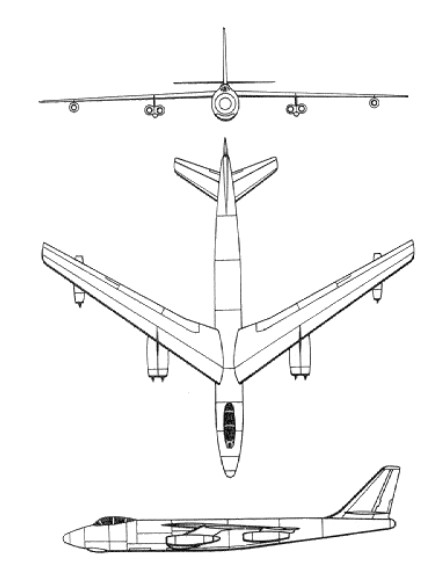
By December 1944 proposals had been received from Boeing, Convair, Martin and North American for medium bomber for tactical and operational level use. When Boeing began to design the Boeing B 47 Stratojet jet bomber in 1943 it was very like a jet version of the B 29. The configuration changed several times and eventually the prototype was given a wing and tail swept at 35 degrees to postpone high subsonic drag rise, with six jets in pylon mounted pods. Another unusual feature was the bicycle landing gear.

Boeing B-47 Stratojet Article

As it had for the B-36, the Truman Administration’s stringent financial restrictions worked in favor of the B-47. Pressed for money, the Air Force decided to buy more B-47s instead of purchasing additional B-50s or future B-54s, since neither one of those rather expensive bombers had any growth potential. Hence, even though the B-47 was yet to fly, the initial production order of 1948 was increased in mid-1949. The subsequent Korean War, rising world tensions, and mounting urgency to build an atomic deterrent force raised the tempo of the B-47 program. In December 1950, the Air Force foresaw a monthly production of 150 B-47s, but still recommended changes, making it almost impossible to settle on an acceptable type.

Even though its capabilities removed the B-47 from the tactical/operational level to the strategic arena, the USAAF was still interested in the more limited type, and the other three 1944 submissions reached hardware form.

The new design did away with the danger of fuselage-mounted or in-wing-mounted engines’ disturbing the airflow over the wing or making a mess of things if they shed turbine blades either because of malfunction or combat damage. The six engines were mounted two to a pod about halfway out under the wings, with singles near the end of the wings. Another innovation was to mount the main landing gear under the fuselage one behind the other, in tandem. Spindly, diminutive outrigger landing gear halfway out along the wings kept the whole thing from toppling over on the ground.

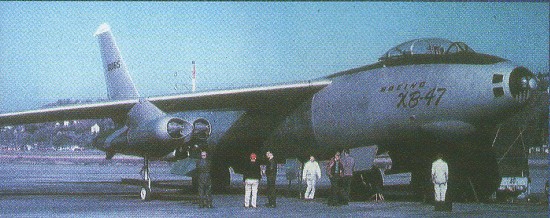
The first of two Boeing XB-47 prototype (46-065) was rolled out of Plant 2 at Boeing Field, Seattle on 12 September 1947. First flown on 17 December 1947, (by Robert Robbins and Scott Osler) 46-065 was followed by 46-066 on 21 July 1948.

XB-47 46-065

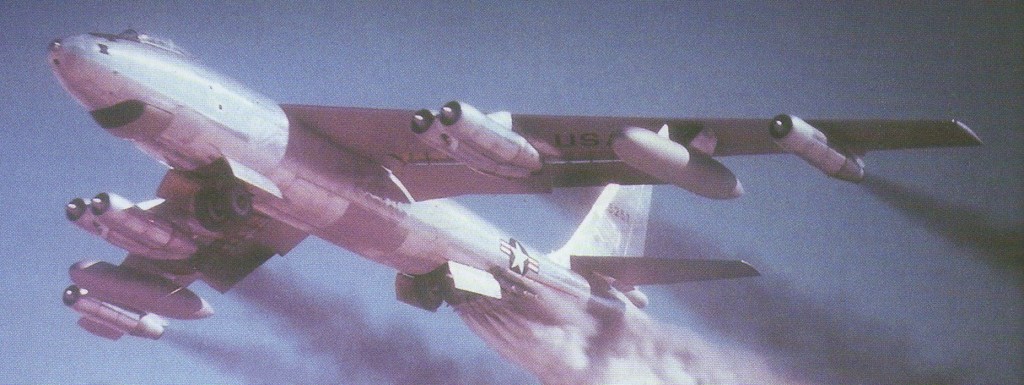
Because the early jet engines did not develop large amounts of thrust at low speed, the prototype had provision for 18 assisted take-off rockets. Nine on each side of the fuselage.

Early tests were not without incident. Pilot Scott Osler was killed when the canopy came off at high speed. The co-pilot landed the aircraft and the canopy was redesigned.

Tybee Island Bomb

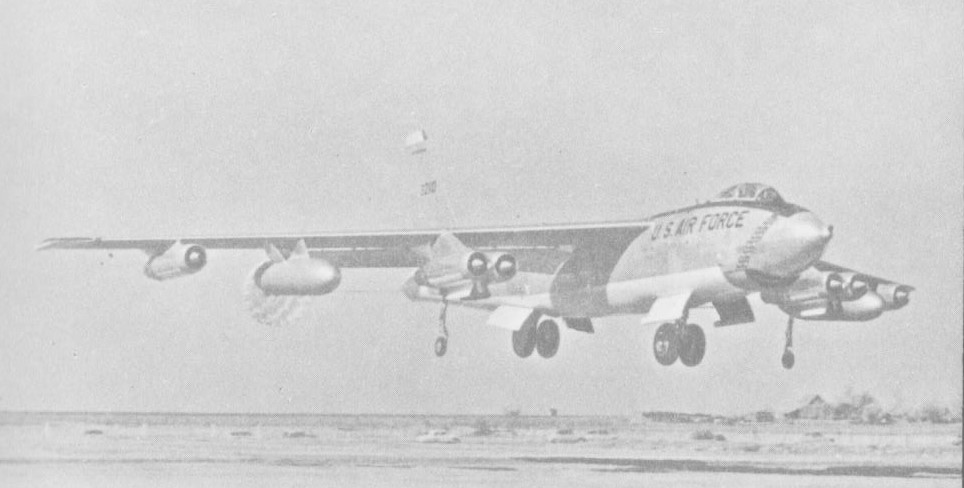
Delivery of the B 47A began in December 1950 and these impressive machines introduced a new level of performance, complication and technology to military aviation. The tail guns were sighted from the nose, and the two pilots sat in a tandem fighter like cockpit with access from a ventral door and stair¬way. Enormous fuel loads could be housed in the fuselage and the B 47B and later models carried giant 5683¬ litre (1,500 US gal) drop tanks under the wings. Various rocket installations could boost the long take off, and a large braking parachute helped arrest the landing.

First flying on 26 April 1951, 398 B-47B were built. Most were modernised the B-47E or B-47H standard.
In 1951 alone, the Air Force took delivery of 204 B-47Bs, none of which were suitable for combat. The aircraft’s canopy was unsafe; the B-47B had no ejection seats (a deficiency shared by 200 successive B-47s); the bombing and navigation system was unreliable; a new tail defense system was needed; and the jet engines were creating unique development problems such as fuel boil-off at high altitudes, which reduced the aircraft’s range-already shorter than anticipated. In sum, the hasty production of an aircraft as revolutionary as the B-47 proved to be costly, generating extensive, unavoidable modification projects like Baby Grand, Turn Around, High Noon, and Ebb Tide. Yet once accomplished, the B-47 modifications worked.

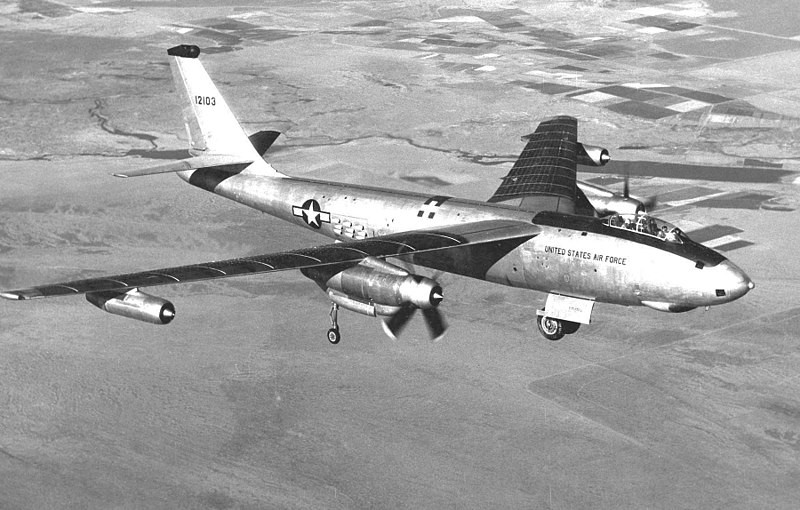
Beginning in 1951, two XB-47Ds were modified from B-47Bs as purely experimental platforms, with a Wright YT49-W-1 turboprop engine spinning a four-paddle prop, replacing each of the inboard two-jet pods. Difficulties with engine development delayed first flight of the XB-47D until 26 August 1955. The aircraft’s performance was comparable to that of a conventional B-47, and its reversible propellers shortened the landing roll, but the USAF did not follow up the idea.

XB-47D

The first swept wing jet bomber to be built in quantity was the Boeing B 47 Stratojet that began to equip the USAFs 306th (Medium) Bomb Wing in mid 1951.

Finally deployed overseas in mid-1953, the B-47s totally replaced the obsolete, atomic-carrier B-50s by the end of 1955, when new B-47 production models were delivered that could carry larger fuel loads and thus had greater range. After the B-47 demonstrated that it was rugged enough for low-altitude bombing, some of the aircraft were again modified to satisfy a new set of requirements levied in 1955. These modifications also worked, and in 1957, the Air Force publicly demonstrated its new low-altitude, strategic bombing tactics, an achievement marking the beginning of an era in aeronautics.
At the peak of its utilization in 1957, Strategic Air Command had some 1,800 in service.
Despite the fuel capacity the range was too short for SAC’s main global missions, but over 2,200 Strato¬jets were delivered, mainly of the B¬47E type, and they operated from the UK, North Africa, Pacific islands and many other areas.

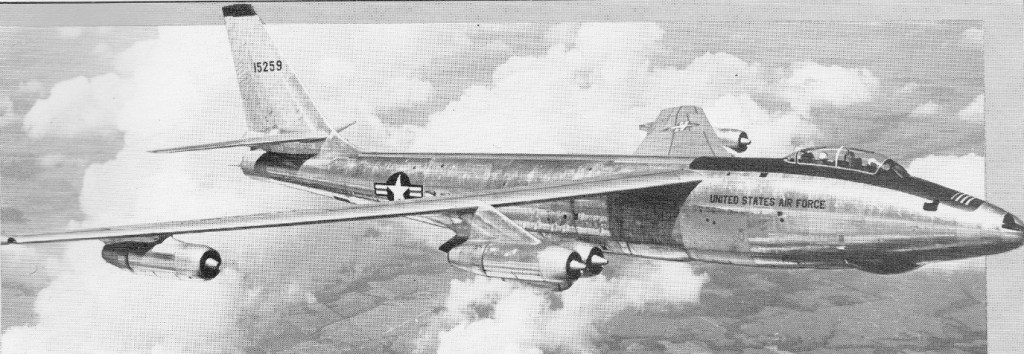
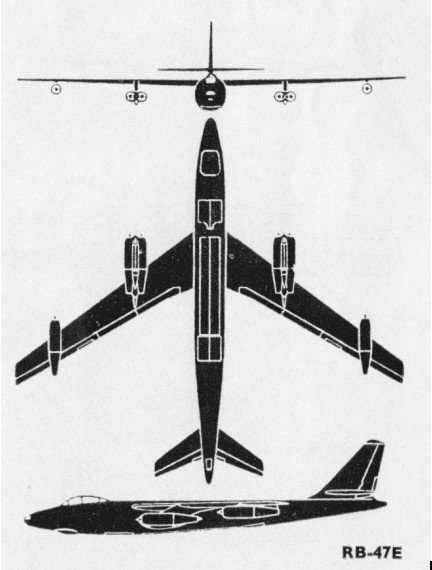
The first of the 1340 B-47E version built flew in January 1953 with the B-47E and RB-47E reconnaissance-bomber (which has an extended fuselage nose which increases overall length to 112 ft 8 in and contains a heated, air-conditioned camera compartment) still in production in 1955.

B-47E

In 1955 Strategic Air Command had no less than 234 Boeing RB-47E Stratojet photo-reconnaissance aircraft. They could be equipped with between seven and eleven large cameras for taking panoramic, overlapping, vertical, sideways or frontal photographs. Flying at 39,000 ft / 12,000 m the RB-47E could photograph and area of 100,000 sq.mi in three hours.

RB-47E Stratojet

The QB-47E and ETB-47E are radio-controlled drone and crew trainer variants respectively.

Many were RB 47E and RB-47H reconnaissance versions or ERB 47 ‘ferret’ Elint (electronic intelligence) platforms. The ERB-47H had a pressurised compartment for three electronic operators in its bulged bomb-bay.

Despite its convoluted start, the B-47 program proved successful. The aircraft served in various roles and was involved in many experimental projects, some connected to the development of more sophisticated atomic weapons, like Brass Ring, or with the development of air refueling or other endeavors of great significance to the Air Force. Strategic Air Command’s last B-47s went into storage in early 1966, while a few converted B-47 bombers and reconnaissance models remained in the Air Force until the end of the 1960s. The last B-47 was retired from active duty in 1969.

Including the main training wing, the 2032 B-47s built equipped 30 Bomb Wings.

In 1956, a U.S. Boeing B-47 Stratojet was loaned to the Royal Canadian Air Force to flight test the Iroquois for use in the CF-105. Canadair, the sub-contractor, attached an Iroquois to the right side of the bomber’s rear fuselage, near the tail, simply because there was no other place to mount it. Designated CL-52 by Canadair, it was a nightmare to fly, since the thrust was asymmetrical; this created great problems for flight control. After the Arrow project was cancelled, the B-47B/CL-52, which had logged about 35 hours of engine flight tests, was returned to the U.S and subsequently scrapped. The CL-52 was the only B-47 used by any foreign service.

Gallery

B-47A
Engines: 6 x J47-GE-11m 5200 lb thrust
Number built: 10

B-47B
Engines: 6 x General Electric J47-GE-23 turbojet, 5800 lb thrust.
Wing span: 116 ft (35.36m).
Length: 108 ft (32.92m).
Wing area: 1428 sq.ft (132.66sq.m).
Max wt: 185,000 lb (83,914 kg).
Max speed: 617 mph @ 10,600 ft.
Range: 3000+ sm.
Armament: 2 x .50 in mg.
Payload: 20,000 lb internal bomb load.
Crew: 3.

B-47E
Engines: 6 x General Electric J47-GE-25 turbojets, 5970 lb
JATO capacity: 33 1000 lb thrust
Wing span: 116 ft 0 in (35.36 m).
Length: 109 ft 10 in (33.48 m).
Height: 27 ft 11 in (8.51 m).
Wing area: 1428 sq.ft
Empty weight: 79,000 lb / 35,863 kg
Max TO wt: 206,700 lb (9,760 kg).
External fuel: 2 x 148 Imp.Gal underwing
Max level speed: 606 mph (975 kph)
Speed: 650 mph at 20,000 ft
Service ceiling: 45,000 ft
Un-refuelled range: 2000 miles / 3219 km
Armament: 2 x 20mm cannon
Bombload: 20,000 lb
Crew: 3

B 47E-II Stratojet
Engines: six 2722 kg (6,000 lb) thrust General Electric J47 GE 25 or 25A turbojets (wet rating).
Max speed: 975 km/h (606 mph) at medium altitudes.
Service ceiling: 12345 m (40,500 ft).
Range with bombload: 6440 km (4,000 miles).
Weights: empty 36631 kg (80,756 lb)
Maximum take off 104330 kg (230,000 lb).
Wing span: 35.36 m (116 ft 0 in).
Length: 33.50 m (109 ft 10 in).
Height: 8.51 m (27 ft 11 in).
Wing area: 132.7 sq.m (1,428.0 sq ft).
Armament: two 20 mm guns in tail turret; internal bombload of 9072 kg (20, 000 lb).

B-47E-IV Stratojet
Engines: 6 x General Electric J47-GE-25 turbojets, 7,200lbs of thrust
Wingspan: 116.14ft (35.40m)
Length: 108.01ft (32.92m)
Empty Weight: 79,073lbs (35,867kg)
Maximum Take-Off Weight: 229,999lbs (104,326kg)
Maximum Speed: 600mph (965kmh; 521kts)
Maximum Range: 3,870miles (6,228km)
Rate-of-Climb: 4,350ft/min (1,326m/min)
Service Ceiling: 40,499ft (12,344m)
Armament: 2 x 20mm cannon
Bombload: 25,000lb
Accommodation: 3 or 4

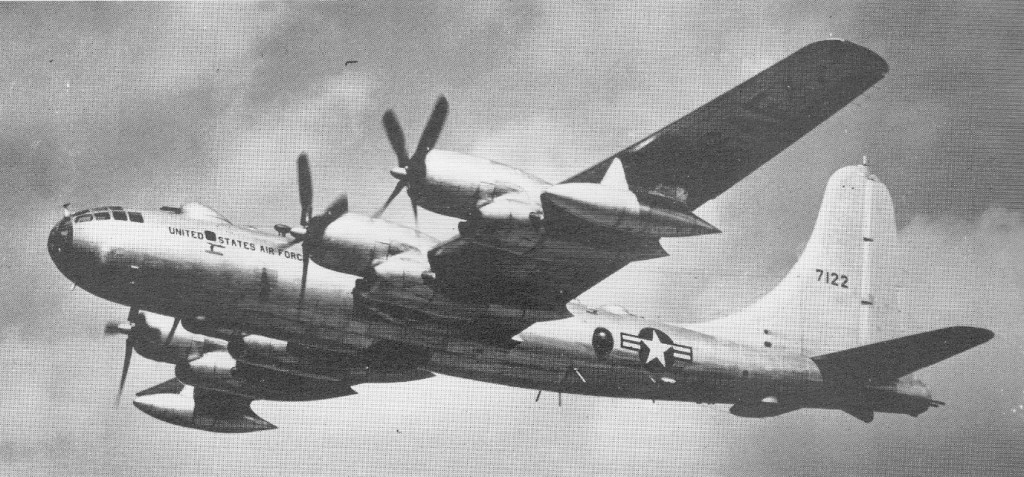
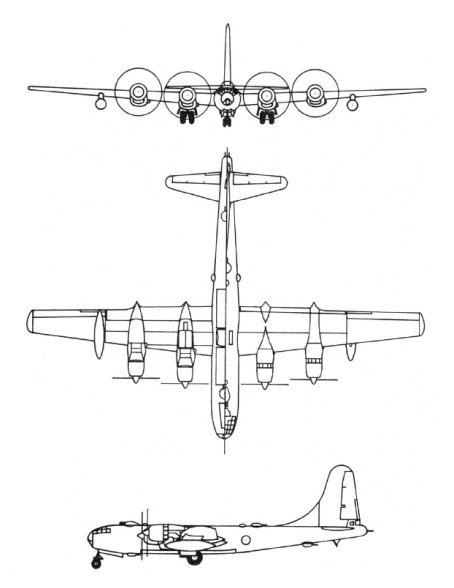
Boeing B-50

The B-50’s development was approved in 1944, when the aircraft was known as the B-29D. The Army Air Forces (AAF) wanted a significantly improved B-29 that could carry heavy loads of conventional weapons faster and farther. As World War II ended, the production of thousands of B-29s was cancelled. The B-29D survived, redesignated B-50 in December 1945, the improved bomber was now for the atomic role. The decision was pending availability of the intercontinental B-36 or of another bomber suitable for the delivery of atomic weaponry.

Boeing B-50 Article

First flying on 25 June 1947 and looking identical to the B-29 Superfortress, the B-50 retained just 25 percent of the B-29’s original components. Changes distinguishing the B-50 from its predecessor included an all new aluminum wing design that made the aircraft more resilient and efficient. Vertical tail surfaces were now designed to fold down, allowing the massive bomber the capability to be housed in air force hangars.

A four-engine heavy bomber powered by the Pratt & Whitney 3,500 horsepower R-4360-35 Wasp Major radial engine produced in about 750 examples from November 1949 up until February 1953. Accommodations for crewmen included a total of ten personnel with access to 12 x .50 caliber machine guns in remotely-controlled barbettes and a 20mm cannon. Up to 20,000lbs of internal ordnance could be carried.

Initial production models were the B-50A and B-50B.

Photo-reconnaissance versions included the RB-50E, F and G, and the TB-50D and TB-50H were navigation trainers.

While the short-range B-50 was immediately recognized as a stopgap measure, the magnitude of the aircraft’s development problems proved unexpected. The B-50’s first difficulties stemmed from its bomb bay which, like that of the B-29, was too small to house the new bomb and its required components. The fast development of special weapons created more complications, since the individual components of every single type of bomb had to be relocated within the bomb bay’s narrow confines.

The B-50 soon exhibited engine malfunctions. Then, cracking of the metal skin on the trailing edge of the wings and flaps dictated extensive modifications. While these problems were being resolved, new requirements were levied on the aircraft. In 1949, as the proposed RB-36 remained a long way off, and because of the older RB-29’s deficiencies in speed, range, and altitude, some B-50s had to be fitted for the reconnaissance role. Fuel tank overflows, leaking fuel check valves, failures of the engine turbo-chargers, generator defects, and the like continued to plague every B-50 version.

Contrary to plans, most B-50s came off the production lines without the receiver end of the new air-to-air refueling system being developed by Boeing. Additional, and successful, modifications ensued. Nevertheless, the Strategic Air Command (SAC) had no illusions. The B-50, along with the B-36 (first delivered in June 1948), would be obsolete in 1951. That the B-50 did not start leaving the SAC inventory before 1953 was due to the production problems and many modifications of its replacement: the subsonic B-47.

Boeing B-50D

B-50’s would eventually be replaced by the jet-powered B-47 Stratojet by 1954, though many would go on to be modified as TB-50H crew and pilot trainers, the KB-50 aerial refueling aircraft and the RB-50 photographic reconnaissance platform.

Boeing KB-50K

The KB-50 refuelling tankers had two J47 turbojets added in underwing pods, and were redesignated KB-50K.

B-50 ‘Luckey Lady II’ encircled the world non-stop in 1949, refuelled four times
RB-50 ELINT

Still operational in 1955, the B-50D usually carries two 700-gal. fuel tanks or 4,000 lb. bombs under outer wings. All B-50’s would be retired from service by 1965.

Gallery

B-50A
Engines: 4 x Pratt & Whitney R-4360-35 Wasp Major, 2610kW
Take-off weight: 76389 kg / 168410 lb
Empty weight: 36764 kg / 81051 lb
Wingspan: 43.05 m / 141 ft 3 in
Length: 30.18 m / 99 ft 0 in
Height: 9.96 m / 32 ft 8 in
Wing area: 161.55 sq.m / 1738.91 sq ft
Max. speed: 620 km/h / 385 mph
Cruise speed: 378 km/h / 235 mph
Ceiling: 11280 m / 37000 ft
Range: 7483 km / 4650 miles
Armament: 12 x 12.7mm machine-guns, 1 x 20mm cannon, 9000kg of bombs
Crew: 11

B-50D
Engines: 4 x Pratt & Whitney R-4360-35 Wasp Major, 3500hp
Wingspan: 141 ft. 3 in (43.10m)
Wing area: 1768 sq.ft
Length: 100.00ft (30.48m)
Height: 34.58ft (10.54m)
Empty Weight: 80,601lbs (36,560kg)
Maximum Take-Off Weight: 173,001lbs (78,472kg)
Maximum Speed: 380mph (611kmh; 330kts)
Cruise speed: 330 mph
Maximum Range: 4,896 miles (7,880km)
Service Ceiling: 36,713ft (11,190m)
Armament: 12 x 12.7mm machine guns, 1 x 20mm cannon
Internal bombload: 20,000lb
Accommodation: 10

WB 50D

Blohm & Voss FGP 227

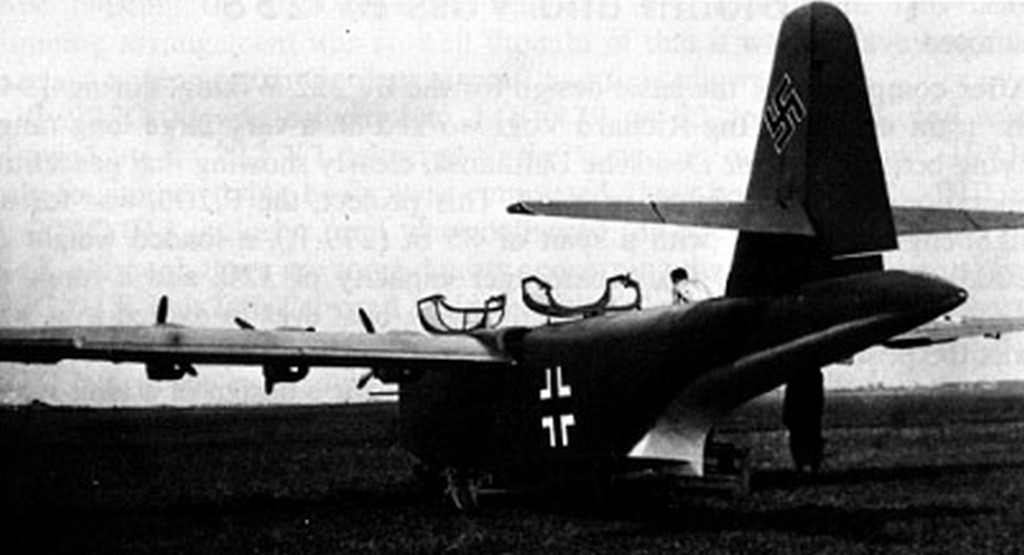
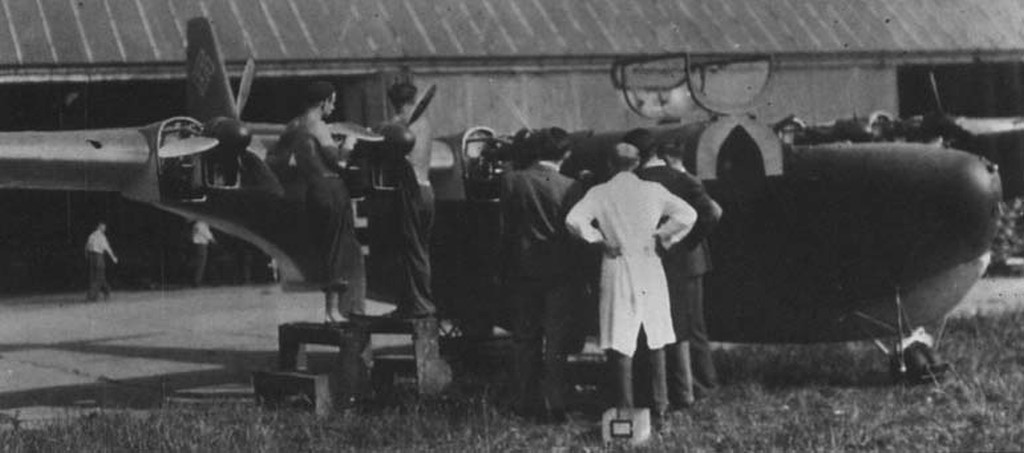
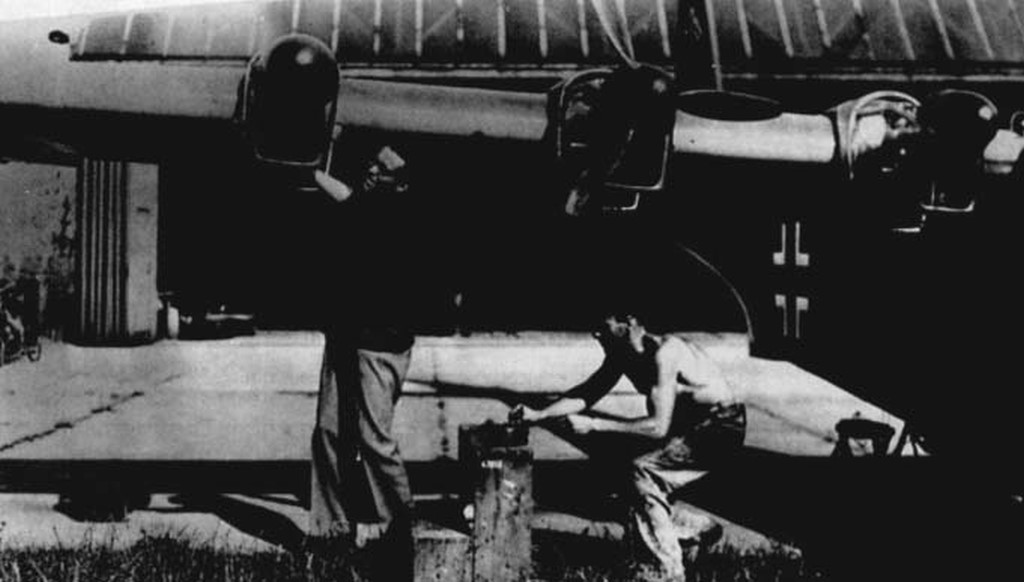
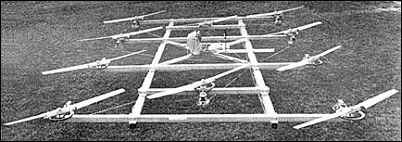
The FGP 227 was a ¼ scale flying model of the Blohm & Voss BV 238 flying boat, built to provide data for the development of the BV 238. The FGP 227 was a faithful scale model with accommodation for a pilot in the front cockpit and a flight test observer in a cockpit aft of the wing. Power was supplied by six 15.7 kW (21 hp) ILO F 12/400 air-cooled two-stroke engines driving three bladed propellers.

Completed early in 1944 the FGP 227 (BQ+UZ) was fitted with a temporary wheeled undercarriage of ten small wheels fitted with low-pressure tyres. Intended to allow flight tests to commence from the manufacturers airfield, the FGP 227 refused to take-off from the grass airfield. To allow flight test to begin the aircraft was dismantled and transported to Erprobungsstelle See, Travemünde, (E-Stelle – flying boat testing station). During transport French prisoners of war loading the wing onto flat-bed trucks allowed it to fall from a crane causing damage which was not repaired until September 1944.

Flight tests commenced in September 1944 as soon as the repairs were completed, but all six engines stopped due to fuel starvation soon after take-off, resulting in a heavy landing on the water. The FGP 227 was again repaired after which the aircraft flew several more times. However, by this time the BV 238 programme had been halted, not least because BV 238 V1 had been sunk at its moorings on Lake Schaal by allied fighters, so no useful data were gleaned from the programme.

Engines: 6 × ILO F 12/400 air-cooled two-stroke, 15.7 kW (21.1 hp) each
Propellers: 3-bladed fixed pitch propellers
Wingspan: 15.25 m (50 ft 0 in)
Wing area: 24.24 m2 (260.9 sq ft)
Length: 11.95 m (39 ft 2 in)
Empty weight: 1,250 kg (2,756 lb)
Gross weight: 1,640 kg (3,616 lb)
Crew: 2

Blohm & Voss BV.238

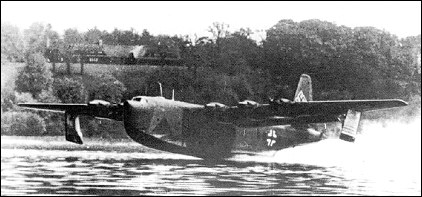
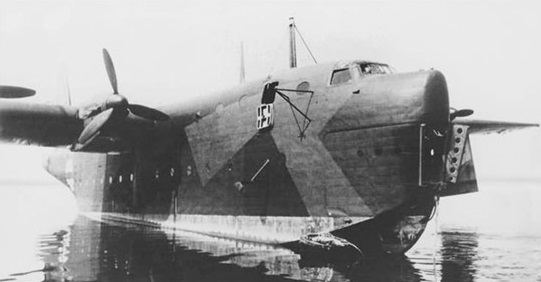
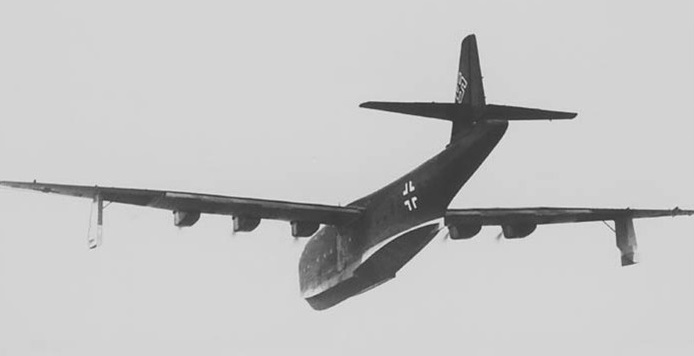
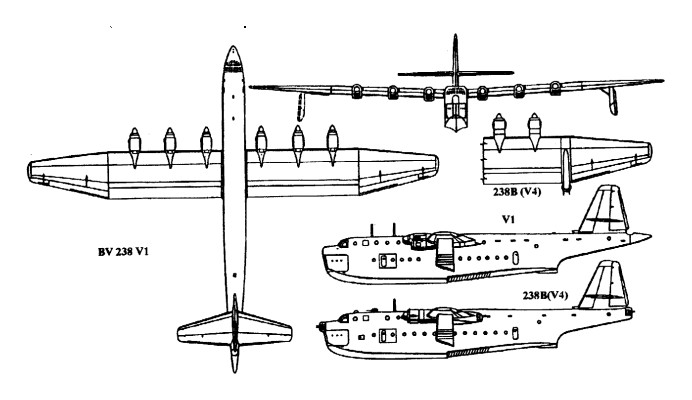
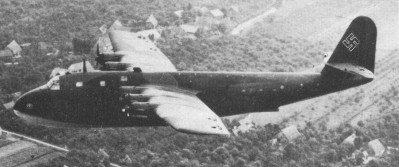
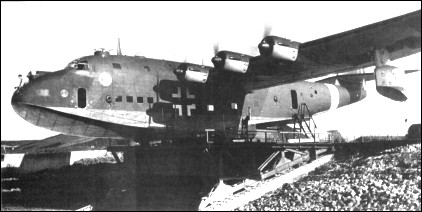
Originally designed as a passenger flying boat for the postwar Lufthansa, the BV 238 design was adapted in 1941 for military use as a maritime patrol and transport aircraft. When completed in 1944 it was the largest aircraft since the Maxim Gorkii and the heaviest built to that time.

Bv.238

A quarter-scale testbed called the FGP 227 was deemed necessary to test the aerodynamics and water handling, but it completely failed to take off when tested on wheels and was then damaged by saboteurs. All the engines seized on the FGP 227 first flight from water — months after the first full-scale BV 238 flew in April of 1944, powered by six Daimler Benz inverted V-12 engines.

Bv.238

The sole complete BV 238 was caught on a lake by P-51 Mustangs and sunk by machine-gun fire in September 1944. Although three further BV 238s and three BV 250 landplane bombers were under construction, the loss of the only flying example caused the Luftwaffe to give up on the idea.

Gallery

Bv 238 V-1
Engines: 6 x 1900hp Daimler-Benz DB 603G inline piston
Wingspan: 60.17 m / 197 ft 5 in
Length: 43.36 m / 142 ft 3 in
Height: 12.80 m / 41 ft 12 in
Empty Weight: 120,593lbs (54,700kg)
Maximum Take-Off Weight: 187,393lbs (85,000kg)
Max. speed: 425 km/h / 264 mph
Maximum Range: 4,474miles (7,200km)
Service Ceiling: 23,950ft (7,300m)

Blohm & Voss Bv.222 Wiking (Viking)

Bv.222 V1

Germany’s foremost shipbuilder, the Blohm und Voss Schiffsweft of Hamburg, established an aircraft¬ manufacturing subsidiary on 4 July 1933.
It was this youthful and relatively inexperienced concern that was selected by Deutsche Lufthansa (DLH) in preference to the immensely more experienced Dornier and Heinkel companies for the develop¬ment of a transatlantic flying boat only marginally smaller than the Dornier Do X.
By 31 May 1937, when the Hamburger Flugzeugbau As the Blohm und Voss subsidiary was then known submitted its Projekt 54 transatlantic flying boat design study to DLH, the company had still to celebrate its fourth anniversary, and its practical experience with waterborne aircraft was limited to two prototypes of its first seaplane, the Ha 139. Nevertheless, on 19 September, the Hamburger Flugzeugbau was recipient of an order for three flying boats.
The definitive DLH specification called for luxurious and spacious accommodation for 24 passengers by day, with an alternative arrangement for 16 sleeping berths. While this was being finalised, a thorough evaluation of the hydrodynamic characteristics of the proposed planing bottom of the new flying boat was undertaken with models by the Deutschen Schiffsbau Versuchsanstalt (DSV). This planing bottom was novel in that the length to beam ratio was 8.4 compared with the generally accepted ratio of the order of 6, this having been selected by the Hamburger Flugzeugbau team, headed by Dr Ing Richard Vogt, in order to reduce both hydrodynamic and aerodynamic drag.

Other novelties proposed included electrically actuated retractable floats arranged to split vertically, each half rotating through a 90 deg arc to lie flush within the wing, and a part servo and part manual control system. The structural design was conventional except insofar as it incorporated the fuel carrying tubular mainspar that had been developed by Dr Ing Vogt while working in Japan, this being sub divided by bulkheads to accommodate six 759 Imp gal (3 450 1) fuel tanks, and carrying via welded steel tube extensions the six BMW 132H nine cylinder radial engines by which it was proposed that the massive flying boat was to be powered.
Detail structural design began in January 1938, the designation Ha 222 initially assigned to the flying boat having meanwhile been changed to BV 222 with the change in the title of the Hamburger Flugzeugbau to that of Abteilung Flugzeugbau der Schiffswerft Blohm und Voss. The first metal was cut during the course of the year at Wenzendorf, near Hamburg, while work began on a larger, more modern facility at Finkenwerder where it was proposed that assembly should take place. Despite the commencement of hostilities in September 1939, work on this ambitious commercial flying boat continued unallayed, and on 16 July 1940, DLH representatives inspected a full scale mock up of the interior, although it was becoming obvious that the airline stood little chance of adding the BV 222 to its fleet.
Dr Ing Richard Vogt, leader of the BV 222’s design team, revealed that the BV 222 was intended from the outset as the forerunner of an even larger machine (ie, the BV238) and that the servo tab control system was selected in preference to an even more sophisticated power assistance system as it was likely to give less production repeatability trouble, a lower maintenance load and a more desirable method of emergency operation. In fact, the system was not pure servo tab control, but part servo and part manual.
Each aileron was divided into two unequal sections, the large inboard section being fitted with a servo tab which had a follow up ratio of 0.6, both aileron and tab being aerodynamically balanced and the balance system consisting of Blohm und Voss patented “paddles” differentially controlled wind vanes previously employed by the tri motored BV 138. The “paddle” balance permitted an adjustment of the force to apply aileron and also enabled the pilot to adjust the stick free dihedral stability as required. The smaller outboard section of the aileron was operated by servo motor through a complex gearing action, but with the linkage direct to the pilot’s control wheel, while its trim tab was operated from the cockpit through rotating rods. Thus, both aileron sections moved in unison in response to the controls under normal circumstances, and in the event of the control linkage being severed, both sections were designed to float neutral.
Each elevator was divided into three sections, the outboard section being used only for trimming and operated by an electric motor, the switch for this being adjacent to the flap control to ease the trimming out of pitching movements with the application of flap. The centre portion of the elevator was also driven by an electric motor, but was not connected to the pilot’s wheel and had its tab locked central. This could be utilised as a normal power operated surface activated by the electric motor, be operated by the auto pilot, moving according to the attitude of the aeroplane, or be disconnected from the motor and allowed to float in the trailing position.
The normal flight crew was intended to comprise 11 members, consisting of two pilots, two flight engineers, a navigator, a radio operator and five gunners.
The structure was conventional, apart from the 4 ft 9 in (1,45 m) diameter welded steel tubular wing spar which was sub divided by bulkheads into six separate fuel compartments each with a capacity of 633.5 Imp gal (2 880 1) of Diesel K 1, the similar number of oil tanks each containing 37.4 Imp gal (170 1). The fuel tanks were pressure filled from the front wing catwalk, which also gave access to the rear of the engines, and the tanks had to be filled in staggered sequence one, six, two, five, three and four, and with 220 Imp gal (1000 1) at a time so as to avoid the risk of capsizing.
The six Junkers Jumo 207C Diesel engines each offered 1,000 hp at 3,000 rpm for take off, with a maximum output of 750 hp at 2,500 rpm for 30 min at sea level for climb, and drove 10 ft 9 in (3,30 m) diam VDM Schwarz wooden bladed propellers. It appeared, however, that the Diesels developed insufficient take off power to lift the fully laden boat within a reasonable distance and therefore provision had been made for the attachment of four solid fuel take off assistance rockets beneath the wings, the modus operandi being to fire the rockets after 10 seconds full throttle to get the boat over the “hump” speed, these burning for a half minute and the cases then being jettisoned.
Even in a lightly laden condition and at full power, the boat demanded a long run before it could be eased up onto the step, but once over the “hump” speed it soon lifted off smoothly at about 78 knots (145 km/h). The floats, each of which split vertically, each half folding upward to lie flat within the wing, had to be retracted as soon as the boat was airborne since the electrical process occupied some 20 seconds and had to be completed before the airspeed reached 121 knots (225 km/h).
The flight deck, which was reached by a ladder from the lower deck, was spacious. The first pilot’s seat had an armour shield moulded to the shape of the body, and the first flight engineer occupied a jump seat between the two pilots, while the second engineer had a station at the rear of the flight deck.
Meanwhile, the BMW 132H engines had given place to Bramo Fafnir 323Rs which it was anticipated would be able to offer 200 hp more for take off with the aid of methanol water injection, and late in August 1940, the first prototype, the BV222 V1 Werk Nr 365, was rolled out of the Finkenwerder factory, launched on the Elbe, and, on 7 September flown for the first time with Flugkapitan Helmut Rodig at the controls. Sporting the registration D ANTE, the flying boat was airborne for 20 minutes, Rodig declaring himself generally satisfied with control response, but complaining of some slight directional instability and a tendency to porpoise during taxying.
Flight testing continued from the Elbe, interspersed with brief periods in the Finkenwerder factory for modifications, and the basic flight test programme was virtually complete by December, when the river iced up. Testing was resumed in February 1941, and plans were laid for a series of long distance flights to demonstrate range and endurance. At this stage, the Luftwaffe proposed that these flights should also be supply missions. Cargo doors were therefore cut in the sides of the hull and the interior rearranged to accommodate bulky items of freight. With the civil registration replaced by the radio callsign CC+ EQ, and now wearing full Luftwaffe markings and camouflage, the BV 222 V1 flew its first supply mission on 10 July 1941.
The BV 222 flew from Hamburg to Kirkenes, Norway, on the Barents Sea, six more flights between Hamburg and Kirkenes being flown by 19 August, totalling some 18,600 miles (30 000 km), about 650 tonnes of freight being carried to Kirkenes and 221 casualties being transported back to Hamburg. While the first prototype was engaged in its proving flights between Hamburg and Kirkenes, the second prototype commenced its test programme from the Elbe, this, the BV 222 V2 Werk Nr 366 CC + ER, taking off on its maiden flight on 7 August 1941. The decision had meanwhile been taken to place the second and subsequent BV 222s at the disposal of the Fliegerfuhrer Atlantik, established in the previous March, additional hulls being laid down for the long range reconnaissance role in collaboration with U boats, and the V2 having been completed with full defensive armament.
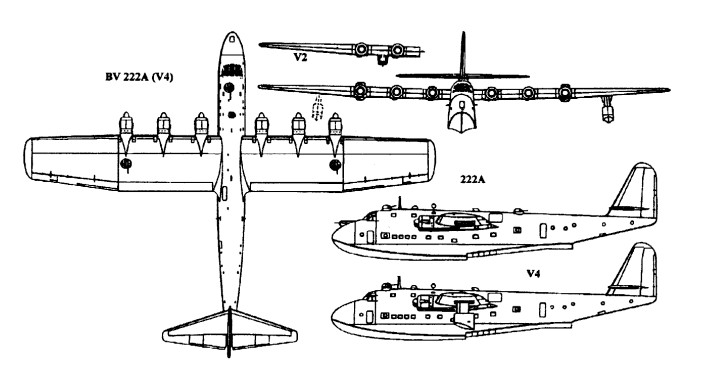
This armament comprised a single 7,9 mm MG 81 machine gun in the bow, fore and aft upper turrets each mounting a single 13 mm MG 131, four MG 81s firing from beam positions in the hull, and one forward and one aft firing MG 131 in each of two gondolas mounted beneath the wing and between the outer engine pairs. In the event, trials with the V2 at Travermunde revealed that the drag penalty incurred by the gondolas was greater than could be accepted by what was already tacitly admitted to be an underpowered aircraft, and these appendages were promptly removed. Other modifica¬tions directly resulting from the Travermunde test programme included the deepening of the rear hull step by the simple expedient of adding a wedge shaped auxiliary structure, the addition of five short auxiliary steps immediately aft of the first main step, and some structural strengthening.
The BV 222 VI resumed its long distance flights on 10 September 1941, after overhaul at Finkenwerder, these commencing with a mission to Athens from where it was supposed to operate a shuttle service to Derna, Libya. Before this service could begin, however, the flying boat was forced to return to Finkenwerder to have a thick layer of barnacles scraped from its hull.
During the period 16 October to 6 November 1941, the BV222 V1 made 17 return flights between Athens and Derna, carrying 66,140 lb (30000 kg) of freight and evacuating 515 casualties. During these flights, a maximum speed of 239 mph (385 km/h) was recorded at 14,765 ft (4500 m), and it was ascertained that up to 72 casualty stretchers or 92 fully equipped troops could be accommodated. Totally unarmed, the BV 222 VI was normally escorted by two Bf 110s, but occasionally the fighters missed the rendezvous and the flying boat had to fulfil its mission unescorted. On one such occasion, the lone BV 222 encountered two patrolling RAF Beauforts, but for some reason these did not attack the defenceless flying boat.
In November 1941, the BV 222 V1 returned to Finkenwerder to have defensive armament fitted, this being similar to that already mounted by the V2 apart from the underwing gondolas. Bv 222 VI was fitted with seven single 7.92mm and 13mm machine-guns, and under each wing a gondola mounting a pair of the latter.

The BV 222 V3 Werk Nr 439 DM + SD, first flown on 28 November 1941, possessed no armament other than the MG 81 in the bow position, this third prototype being intended purely for the transport role, which, for some time, was also to be the task of the BV 222 V2.
On 20 January 1942, the BV 222 flying boat was officially named Wiking (Viking) by the Reichsminister der Luftahrt, and by this time a pre production batch of five aircraft had reached advanced stages on the Finkenwerder final assembly line. It was envisaged that these boats, powered by Bramo Fafnir 323R 2 radials and considered as A series machines although allocated Versuchs numbers V4 to V8 inclusive, would serve in both transport and maritime reconnaissance roles. In the event, the fourth of the A series boats, the V7, was to be modified during construction to take Diesel engines as a C series prototype.

Ultimately, the Bv 222 V7 prototype was selected as the official production model for the military Bv 222 and appeared with the definitive “Bv 222C” model designation form. The earlier prototypes (V2, V3, V4 and V5) pressed into military service became maritime reconnaissance platforms, differing mainly in defensive armament and some mounting FuG 200 series search radar systems while flying for Fliegerfuhrer Atlantik. Bv 222B was a proposed variant to fit Junkers Jumo 208 series engines but never materialized.

On 9 December 1941, the BV 222 V3 had been officially taken on strength by the Luftwaffe and, as the entire aircraft complement of Lufttransportstaffel See 222 V3, had under¬ taken 21 supply flights between Italian bases and Tripoli in the period January March 1942. The BV 222 V3, by now coded X4 + CH, was joined on 20 April 1942, by the BV 222 V4 X4+13H, and the unit was redesignated Luftverkehrsstaffel “C”. The BV 222 V4 Werk Nr 0004 (originally DM + SE) had been completed earlier in the year at Finkenwerder, and embodied some strengthening of the rear hull and the outer wing panels, and a redesigned, longer span tailplane.
On 10 May, the BV 222 VI was returned to service after modification and overhaul at Finkenwerder, being assigned to Luftverkehrsstaffel “C”, which then became Lufttransport staffel See 222, or LTS See 222, but the complement of the unit remained unchanged owing to the re assignment of the V3 to the 3Staffel of Kustenfliegergruppe 406, a BV 138 equipped unit operating from Biscarosse, for the maritime recon-naissance mission. The complement of LTS See 222 was increased in August, however, with the arrival on the 10th of the BV 222 V2 (now X4 + BH) and the BV 222 V6 Werk Nt¬ 0006 X4 + FH on the 21st.
The four boats were primarily engaged on flying supply missions from Italian and Greek bases to Rommel’s Afrika Korps, alighting at Tobruk and Derna, and returning with casualties, and were joined on 26 October by the BV 222 V8 Werk Nr 0008 X4+HH, but a month later, LTS See 222 suffered its first casualty when the BV 222 V6 was intercepted and shot down by RAF fighters on 24 November when flying unescorted south of Pantelleria. This loss resulted in orders that BV 222s would subsequently fly all missions in formation at low altitude. Despite this precaution, on 10 December, the BV 222 V1, V4 and V8 were intercepted by a trio of RAF Beaufighters while flying in formation at low altitude over the Mediterranean en route to Tripoli. The BV 222 V8 was shot down and the V4 suffered heavy damage but succeeded in reaching Tripoli in company with the V1.
The BV 222 VI foundered in the harbour at Athens in February 1943 when it struck a marker buoy at speed, ripping several yards of skinning from its planing bottom. LTS See 222 was therefore stood down and the surviving Wikings returned to Traverniinde for re arming and other modifications.
The fact that the BV 222 was manifestly underpowered had been a matter of considerable concern to the Blohm und Voss team from an early stage in the development of the flying boat. The A series boats were not, in fact, to be equipped with the planned methanol water injection system for boosting take¬ off power until the summer of 1942, and then the maximum permissible take off weight was raised from 99,206 lb (45 000kg) to 105,820 lb (48 000 kg). The Bramo Fafnir 323R 2 engines each afforded 1,000 hp at 2,500 rpm, 800 hp at 2,250 rpm and 640 hp at 2,100 rpm, MW 50 boosting take off power to 1,200 hp.
From the outset, Junkers Jumo Diesel engines had been favoured for their economy, although in service such engines were proving temperamental and demanding on skilled maintenance. The definitive model planned for DLH had been the BV 222B with six Jumo 208 Diesel engines each rated at 1,500 hp at 2,800 rpm and 1,000 hp at 2,500 rpm, but Junkers had failed to take the Jumo 208 beyond the bench testing stage. Proposals originally made to the RLM in 1939, which included Projekt 97 with six BMW 801 air cooled radials and Projekt 98 with four BMW 801s, were resurrected, but the RLM was adamant that such engines be reserved for other aircraft types.
Finally, the Technische Amt of the RLM accepted Blohm und Voss’s proposals that Jumo 207C Diesels affording 1,000hp at 3,000 rpm be installed in the fourth A series flying boat, the BV 222 V7, Junkers promising a further development of this engine, the Jumo 207D with MW 50 boost which would provide the desired short term take off power, for installation in later production boats. The BV 222 V7 was intended from the outset primarily for the long range reconnaissance role.
Fuel tank capacity was decreased, each of the six mainspar tanks accommodating 633.5 Imp gal (2 880 1) of Diesel K 1 as compared with the 759 Imp gal (3 450 1) of gasoline of the A¬ series aircraft tanks, the capacity of the six oil tanks each being raised to 37.4 Imp gal (170 lt) from 19 Imp gal (861 lt). Normal loaded weight was 101,390 lb (45990 kg) and maximum overload weight was 108,026 lb (49 000 kg), and at neither weight did the Jumo 207C Diesels deliver sufficient power for take off without an excessively long run. Provision was therefore made for the attachment of four solid fuel take off rockets beneath the wings, these being fired after 10 seconds at full throttle and burning for 30 seconds.
The surviving BV 222 flying boats had meanwhile standardised on a revised defensive armament which now incorporated a forward dorsal turret with a 20 mm MG 151 cannon, a similar weapon in each of two turrets mounted in the wings immediately aft of the extreme outer engine nacelles, a 13 mm MG 131 machine gun firing from a forward beam position and two 7,9 mm MG 81s from aft beam positions, the aft dorsal turret and the bow gun being deleted. The BV 222 V7 reinstated the bow position, however, adding an additional forward beam MG 131 and supplanting the rear beam MG 81s with MG 131s. Furthermore, it featured repositioned wing turrets which were now situated in the rear ends of engine nacelles two and five.
Search radar was fitted and additional radio aids included FuG 200 Hohentwiel, FuG 16Z VHF radio with direction and range measuring facilities, FuG 25a IFF, and an FuG 101a radio altimeter. An ETC 501 rack was fitted to carry an FuG 302c Schwan (Swan) beacon. Similar equipment was simultaneously installed in the remaining A series boats as it had become obvious that Axis resistance in North Africa was collapsing and that the BV 222s would be best employed in co-operation with the U boat fleet in the Atlantic under the control of the Fliegerfuhrer Atlantik.
The Diesel engined BV 222 V7 Werk Nr 0310007 TB + QL flew for the first time on 1 April 1943 as the prototype of the C¬ series, work on several pre production examples of which had been initiated some time before the completion of the last A series aircraft, the BV 222 V8. In fact, the BV 222C 09 Werk¬ Nr 0310009 was completed only six weeks after the V7 and was actually to precede the Diesel engined prototype into service with the Fliegerfuhrer Atlantik, being taken on strength by Aufklarungsstaffel See 222 on 23 July 1943. This unit had been formed in May with the V2, the V3, the V4 and the V5 as a component part of 3./Ku.Fl.Gr.406, but had lost two of the boats, the V3 and the V5, in the following month when they were strafed and sunk at their moorings at Biscarosse. The BV 222C 09 differed from the V7, which was to join Aufklarungs¬staffel See 222 on 16 August 1943, essentially in the positioning of the defensive wing turrets, these being located slightly further forward and between the outboard engine pairs, and extended beneath the wing to provide adequate leg room for their gunners.
The BV 222C-010 Werk Nr 031 0010 had been added to the Biscarosse based unit by October 1943, when the Aufklarungs¬staffel See 222 was redesignated 1.Staffel of (Fern)/See Augklarungsgruppe 129, its flying boats ranging far out over the Atlantic on U boat co operation tasks, and in October 1943, one of the BV 222s encountered and shot down a patrolling Lancaster. The BV 222C 011 and C 012 followed the C 010 from the Finkenwerder factory at short intervals, the time to build a hull in the gantry having by now been reduced to six weeks by dint of working shifts around the clock, the complete airframe being produced in an average of 350,000 manhours, the detail manufacturing and sub-assembly being mainly undertaken at the Steinwerder branch factory.
The BV 222C 013 was the first airframe in which it was proposed to install the more powerful Jumo 207D Diesels as the prototype BV 222D, but as these failed to materialise, the boat had to be completed with the lower powered Jumo 207C engines. Four additional airframes had been under construction which it had been intended to complete as BV 222Ds, but, meanwhile, the RLM had ordered the cessation of further development and production of Diesel engines and, failing the availability of more suitable power plants, Blohm und Voss had no recourse but to revert to the Bramo Fafnir 323R 2s of the A series. With these radials installed it was intended to designate the four additional boats as BV 222Es, but in the event, early in 1944, it was concluded that the aircraft industry could no longer afford the large labour force demanded by the BV 222, the production programme being cancelled and the four boats under construction being scrapped.
The 1.(F)/SAGr. 129 continued operations from Biscarosse, losing the BV 222C 010 to RAF night fighters early in 1944, but in July, following the D Day landings, the unit was disbanded, the four BV 222s remaining on strength being reassigned to the Stab and L(F)/SAGr.130 and 2.(F)/SAGr.131, the former being primarily BV 138 equipped and the latter operating a mix of BV 138s and Ar 196As. As the war situation progressively deteriorated, the BV 222s were increasingly relegated to transport tasks and only one other example, the BV 222C-09, was lost to enemy action before fighting terminated in Europe, this being strafed and damaged beyond repair by RAF fighters at Travermunde early in 1945.
Of the boats that survived the conflict, the BV 222 V2 was blown up by British forces in Norway, the V4 was blown up by its own crew at Kiel Holtenau, the V7 was destroyed by its crew at Travemunde, the C 011 and C 013 were captured intact by US forces and taken to the USA for evaluation, and the C 012, was captured by British forces in Norway and flown to the UK.

Bv 222 A-0 Viking
Engine : 4 x Bramo Fafnir 323 R-2, 1184 hp
Length : 119.751 ft / 36.5 m
Height : 35.761 ft / 10.9 m
Wingspan : 150.919 ft / 46.0 m
Max take off weight : 99749.8 lb / 45238.0 kg
Weight empty : 62452.2 lb / 28323.0 kg
Max. speed : 167 kts / 310 km/h
Cruising speed : 139 kts / 257 km/h
Initial climb rate : 492.13 ft/min / 2.5 m/s
Service ceiling : 21325 ft / 6500 m
Range : 4023 nm / 7450 km
Armament : 1x MK108 30mm, 2x MG151 20mm, 2x MG131 13mm, 2x MG 81Z

BV222A
Engines: Six Bramo Fafnir 323R 2 nine cylinder radial air cooled, 1,200 hp with MW 50 boost for take off, 1,000 hp at 2,500 rpm, 800 hp at 2,250 rpm and 640 hp at 2,100 rpm
Propellers: three bladed variable pitch VDM Schwarz
Prop diameter: 10 ft 9in (3,30 m)
Internal fuel capacity, 759 Imp gal (3 450 1) in each of six tanks.
Max speed (at 100,530 lb/45 600 kg) at sea level: 184 mph (296 km/h)
Max speed (at 77,162 lb/35 000 kg): 193 mph (310 km/h)
Max continuous cruise (at 100,530 lb/45 600 kg) at sea level: 158 mph (254 km/h)
Max continuous cruise (at 77,162 lb/35 000 kg) at sea level: 173 mph (278 km/h)
Econ cruise (at 100,530 lb/45 600 kg): 155 mph (250 km/h)
Econ cruise (at 88,185 lb/40 000 kg): 160 mph (257 km/h)
Max range: 4,350 mls (7 000 km) at sea level
Max range: 4,630 mls (7 450 km) at 16,075 ft (4 900 m)
Optimum flight endurance: 33 hrs at sea level
Optimum flight endurance: 23 hrs at 16,075 ft (4 900 m)
Climb to 19,685 ft (6 000 m): 49 min
Service ceiling: 21,325 ft (6 500 m)
Empty equipped: 62,941 lb (28 550 kg)
Max loaded: 100,530 lb (45 600 kg)
Span: 150 ft 11 in (46,00 m)
Length: 119 ft 9 in (36,50 m)
Height: 35 ft 9 in (10,90 m)
Wing area, 2,744.8 sq ft (255 sq.m).

BV222C
Engines: Six Junkers Jumo 207C six cylinder two stroke.
Rating: 1,000 hp at 3,000 rpm for take off, 750 hp at 2,500 rpm (for 30min) and 680 hp at 2,400 rpm
Propellers: three bladed variable¬ pitch VDM Schwarz
Prop diameter: 10 ft 97 in (3,30 m)
Internal fuel capacity, 633.5 Imp gal (2 880 1) in each of seven tanks
Max speed (at 101,390 lb / 45990 kg): 205 mph (330km/h) at sea level
Max speed (at 101,390 lb / 45990 kg): 242 mph (389 km/h) at 16,405 ft (5 000 m)
Max continuous econ cruise: 189 mph (304 km/h) at sea level
Max continuous econ cruise: 214 mph (344 km/h) at 18,210 ft (5 550 m)
Optimum endurance: 28 hrs at 152 mph (245 km/h) at sea level
Max range: 3,790 mls (6 100 km)
Initial climb (at 101,390 lb / 45990 kg): 473 ft/min (2,4 m/sec)
Time to 19,685 ft (6 000 m): 52 min
Service ceiling: 23,950 ft (7 300m)
Empty equipped weight: 67,572 lb (30 650 kg)
Normal loaded weight: 101,390 lb (45 990 kg)
Max overload weight: 108,026 lb (49 000 kg)
Wing span: 150 ft 11 in (46,00 m)
Length: 121 ft 4.66 in (37,00 m)
Height, 35 ft 9 in (10,90 m)
Wing area: 2,744.8 sq ft (255 sq.m)
Crew: 11
Armament: 3 x 20mm cannon, 5 x 13mm machine guns

Bv 222C-0
Engines: 6 x Junkers Jumo 207C 12-cylinder diesel, 1,000hp each.
Length: 121.39ft (37m)
Wingspan: 151 ft (46.00m)
Wing area: 2,744.8 sq.ft
Height: 35.76ft (10.90m)
Empty Weight: 67,638lbs (30,680kg)
Maximum Take-Off Weight: 110,231lbs (50,000kg)
Maximum Speed 16,400 ft: 242mph (390kmh; 211kts)
Max speed: SL: 189 mph
Maximum Range: 3,790miles (6,100km)
Rate-of-Climb: 472ft/min (144m/min)
Service Ceiling: 23,950ft (7,300m)
Armament: 5 x 13mm machine gun, 3 x 20mm cannon
Crew: 11-14
Passenger capacity: 92

Barling NBL-1

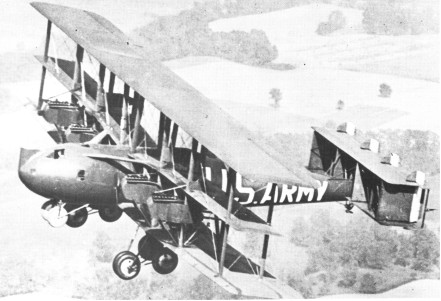
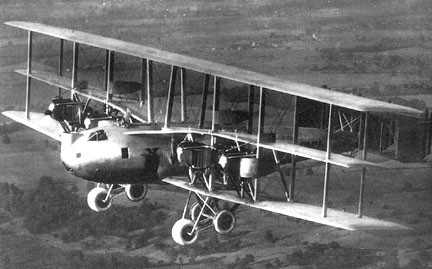
Designer Walter Barling went to America, where General ‘Billy’ Mitchell provided him with a $375,000 contract, let by Engineering Division, McCook Field, to build a bomber capable of carrying a 2268-kg / 5000-lb bombload for 12 hours at 160 kph (100 mph). Not surprisingly the Barling NBL-1 bore a strong resemblance to the Tarrant Tabor, though its triplane wings spanned 3.35 m (11 ft) less and its six 12-cylinder Liberty engines were all mounted on the same level, between the lower and middle wings. On 22 August 1923 from Wilbur Wright Field at Dayton, Ohio, whence it had been railroaded from the Witteman-Lewis Aircraft Company’s works in New Jersey where it was constructed.

As AS64215, Barling was aboard for that 20-minute maiden flight and later that year the Barling bomber flew to the Inter¬national Air Race at St Louis with Major General Mason Patrick, chief of the Army Air Service, as a passenger. It later carried a 2000-kg (4408-lb) load up to 2,050 m (6722 ft).

But with Billy Mitchell’s proposed bomb load the burly Barling could not top 160 kph (100 mph) and had a range of 275 km (170 miles) rather than the 1930 km (1200 miles) the general wanted. It flew around (slowly) for years, appearing as a curiosity at airshows, and was eventually broken up in 1928, save for its ten huge undercarriage wheels which are preserved at Wright-Patterson Air Force base from where the triplane made its first flight.

Antonov An-225 Mriya (Dream)    

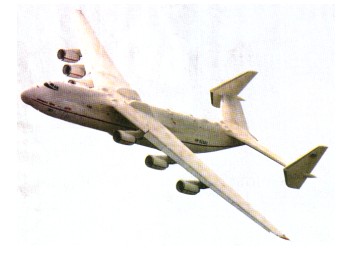
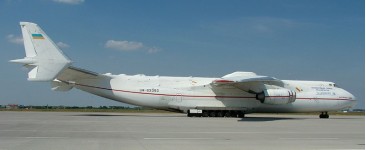
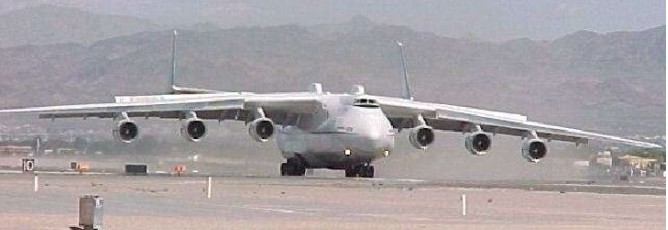
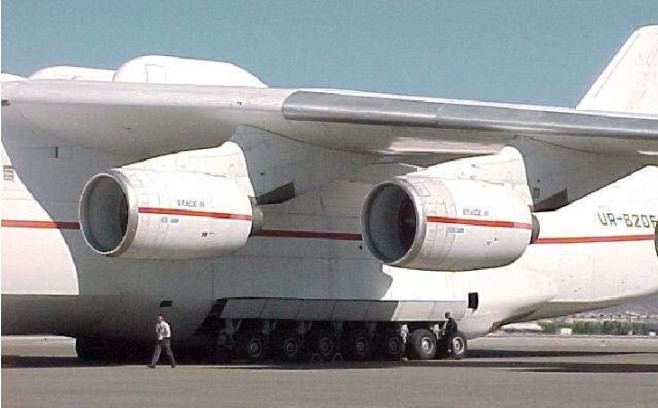
The An-225 Mriya (dream) stemmed from the need to transport large items for the Soviet space programme. In mid-1985 Antonov began the design and the An-124 provided the basis for the new aircraft, Antonov using many of the same components to keep cost and development effort down. Standard An-124, wings are grafted on to a new centre section, thereby increasing the span while keeping the engine installations the same. An additional pair of D-36T turbofans is fitted to the new centre section.

Antonov An-225 Mriya Article

The cabin retains the same cross-sectional dimensions but with increased length, and to save weight the rear loading ramp is removed, but the An-225 retains the nose visor.

To support the increased weight, seven pairs of wheels are fitted to each side as opposed to five in the An-124.
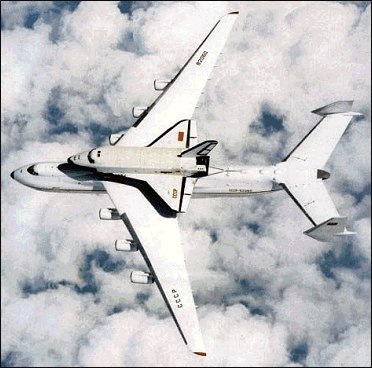
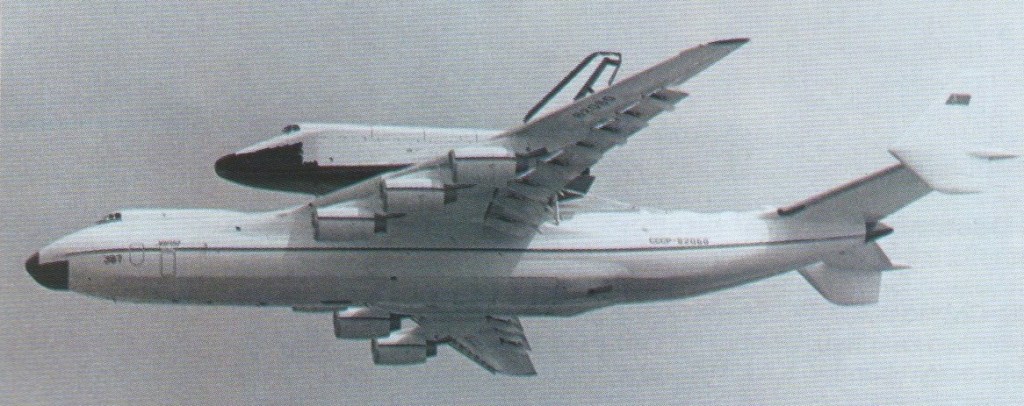
Outsize loads are carried ‘piggy-back’, the load supported on two main attachments above the centre section. These supports and other smaller ones along the fuselage top are faired over when not in use. To avoid buffeting from the ‘piggyback’ load, the An-225 has twin vertical fins mounted on the end of a large tailplane.

The prototype made its first flight on 21 December 1988 from Hostomel Airport outside Kiev, Ukraine, and the first flew with Buran on 13 May 1989 from Baikonur cosmodrome. This combination appeared at the Paris air show in 1989, car¬rying the 62.1 tonne (136,684 lb) Buran on its back.

On 22 March 1989, in the course of a single 3 hr 30 minute flight from Kiev, the An-225 set 105 world and class records. With a payload of 344,576 lb / 156,300 kg, the machine took off at a weight of 1,120,370 lb / 508,200 kg. It proceeded to fly a 1243 mile / 2000 km closed circuit at an average speed of 505.24 mph / 813.09 kph and to reach a maximum altitude of 40,485 ft / 12,340 m.

Typically, the An-225 carries two pilots, two flight engineers and two navigators, the flight system incorporating fly-by-wire controls. NATO name Cossack.

The Antonov An-225 has been extensively modified since 1988 with its six engines being updated and a strengthened fuselage being among the many changes.

The first commercial flight was performed by the An-225 in May, 1990. A T-800 tractor weighing more than 100 tons was delivered from Chelyabinsk to Yakutia.

After the collapse of the USSR the only plane stopped flying in 1994 and some parts were disassembled to be used on other planes. However by the 2000s it was restored by efforts of some Ukrainian companies. The airliner was amended a bit to meet the standards of civil aviation first flying aain on the 7th of May, 2001.

Antonov planned to finish building a second An-225 if they have financial support. 70% was ready; the centre wing-section, fuselage and a wing remained since the Soviet times. If they had a customer they would finish it, requiring $150 million.

Gallery

Antonov An-225 / Molniya Buran Gallery

An-225 Mriya (Cossack)
Engines: 6 x ZMKB Progress (Lotarev) D-18T turbofan, 225140 N / 22950 kp / 51,587lbs thrust
Length: 84.0 m / 275 ft 7 in
Height: 18.2 m / 59 ft 9 in
Wingspan: 290 ft / 88.4 m
Wing area: 905.0 sq.m / 9741.33 sq ft
Empty Weight: 385,809lbs (175,000kg)
Maximum Take-Off Weight: 1,322,774lbs (600,000kg)
Max. weight carried: 661500.0 lb / 300000.0 kg
Wing load: 128.74 lb/sq.ft / 628.0 kg/sq.m
Maximum Speed: 528mph (850kmh; 459kts)
Landing speed: 135 kts / 250 km/h
Cruising speed: 432 kts / 800 km/h
Range w/max.fuel: 15400 km / 9569 miles
Range w/max.payload: 4500 km / 2796 miles
Service Ceiling: 36,089ft (11,000m)
Internal cargo hold: 43m x 6.4m x 4.4m.
Crew: 4-6 +23