The G10N Fugaku, was a twelve engine (six coupled pairs) heavy bomber project. Planned was a speed of 780km/h, carried 20,000kg of bombs, and a range of 19,400 km. The G10N had a weak defensive armament of four 20mm cannon in single turrets. It was in advanced stage of competition at VJ day.
5+ engines
Moller M400

The Moller M400 Skycar is a flying car that promised to let you take off from your backyard and fly to your destination at 350 mph. Paul Moller won’t give up on his 50-year, $150 million quest to make his vision for a flying car a reality.
The M400 Skycar was developed over many years and first flown in 2001 at the company’s shareholder meeting. It has since flown (under a restricted environment) many times. This vehicle was featured on the covers of Popular Science, Popular Mechanics, and the topic of countless news articles and broadcasts including 60 Minutes, ABC, Bloomberg, CNN, and Discovery Channel.
In July 2017, Moller International listed the 2001 M400 prototype on eBay at the starting bid of $1 million. The more impatient bidder could have used the Buy It Now option for $5 million. The listing attracted no bidders. The M400 was relisted, this time with an opening bid of $250,000.
A collector who buys the M400 will receive it in its original 2001 flight form and condition, complete with eight Rotapower engines that produced over 720 hp allowing the M400 Skycar to take off and land vertically. It should be noted, however, in this original form, it does not have FAA approval and a condition of this offer is that it cannot be flown. Nonetheless, this vehicle can be the centerpiece of any car or aircraft collection in a public or private museum.
Moller 200X

The Moller 200X, the invention of Paul Moller, a former professor of aerodynamics and engineering, is built of graphite, carries computers, and eight lightweight Wankel engines. The proof of concept 200X is a flat, round 10 foot wide saucer, which can hover out of ground effect.
First flown in February 1989, the machine, which flew more than 150 times, is to make way for the production version, the Merlin.
Messerschmitt Me 323 Gigant

Before going to war in 1939 Germany had explored and developed the use of parachute and airborne troops. Early deployment of airborne forces had shown the need for gliders of greater capability than the DFS 230 used to capture the Belgian fort of Eben-Emael. There were advantages in using gliders as opposed to paratroops.
Messerschmitt’s Me 321 VI glide prototype flew first in March 1941 and Me 321A-1 production aircraft entered service in May of that year.
The Me 323 was, in effect, a powered version of the Me 321, basically similar except for strengthening and the installation of engines in nacelles of the same type as those designed for the Bloch 175: four in the original prototype and six in subsequent prototype and production aircraft (201 built). Versions included the Me 323D, E and F (plus variants), with a variety of engines, defensive armament and fuel capacity. The undercarriage was sprung to keep the floor level even on the roughest unprepared airstrips. Construction was mainly fabric-covered steel tubing.
They were no easy machines to fly, often needing rocket or towing assistance to get them airborne. Slow and vulnerable – despite heavy defensive armament – they suffered severe losses when ferrying supplies to the Afrika Korps in the closing stages of the North African campaign.

Even the six-engined Me 323 needed rocket assistance to get airborne with a full load. Maintaining supplies of rocket fuel at forward airstrips was a constant problem. The cabin could take loads as heavy as a Panzer IV tank or 120 soldiers or 60 stretcher patients. One was tested with a 17,700kg bomb, but it broke up in flight.
Due to its low speed and vulnerability to attack, up to six machine guns were carried in various mounts and turrets. A proposed escort version with 11 cannon and four machine guns was tested.
Me-323D-1
Engines: 6 x G+R 14N, 730kW
Max take-off weight: 43000 kg / 94799 lb
Empty weight: 27330 kg / 60253 lb
Wingspan: 55.0 m / 180 ft 5 in
Length: 28.2 m / 92 ft 6 in
Wing area: 300.0 sq.m / 3229.17 sq ft
Max. speed: 285 km/h / 177 mph
Cruise speed: 218 km/h / 135 mph
Range: 1100 km / 684 miles
Armament: 5 machine-guns
Crew: 5
Me 323 E Gigant
Engine : 6 x Gnome Rhône 14N, 1124 hp
Length: 93.504 ft / 28.5 m
Height: 31.496 ft / 9.6 m
Wingspan : 180.446 ft / 55.0 m
Wing area : 3229.2 sq.ft / 300.0 sq.m
Max take off weight : 99225.0 lb / 45000.0 kg
Payload : 108cu.m, 20000kg
Weight empty : 64077.3 lb / 29060.0 kg
Max. speed : 130 kts / 240 km/h
Cruising speed : 121 kts / 225 km/h
Service ceiling : 14764 ft / 4500 m
Wing load : 30.75 lb/sq.ft / 150.0 kg/sq.m
Range : 702 nm / 1300 km
Crew : 2
Armament : 2x MG151 20mm, 7x MG131 13mm

Martin XB-48

During 1944 the US Army Air Force issued its first specification for a large jet bomber. By December 1944 proposals had been received from Boeing, Convair, Martin and North American for medium bomber for tactical- and operational-level use. The Martin Model 223 XB-48 being one of the contenders to meet this requirement.

Two XB-48 prototypes were ordered, the first of them flying on 14 June 1947 as a large shoulder mounted, straight wing monoplane with the capability of carrying up to 9072kg of bombs. Power was provided by six 1701kg thrust Allison J35-A-5 turbo-jets, three mounted beneath each wing. The landing gear was of the new bicycle form with main units ahead of and behind the bomb bay. The 33.02m span Model 223 failed to achieve the performance required and failed to win a production contract.
Engines: 6 x General Electric J35-C-7, 16.7kN
Wingspan: 33.02 m / 108 ft 4 in
Length: 26.14 m / 85 ft 9 in
Wing area: 120.77 sq.m / 1299.96 sq ft
Max take-off weight: 46539 kg / 102601 lb
Empty weight: 26578 kg / 58595 lb
Max. speed: 830 km/h / 516 mph
Armament: 9000kg of bombs

Lilium Jet
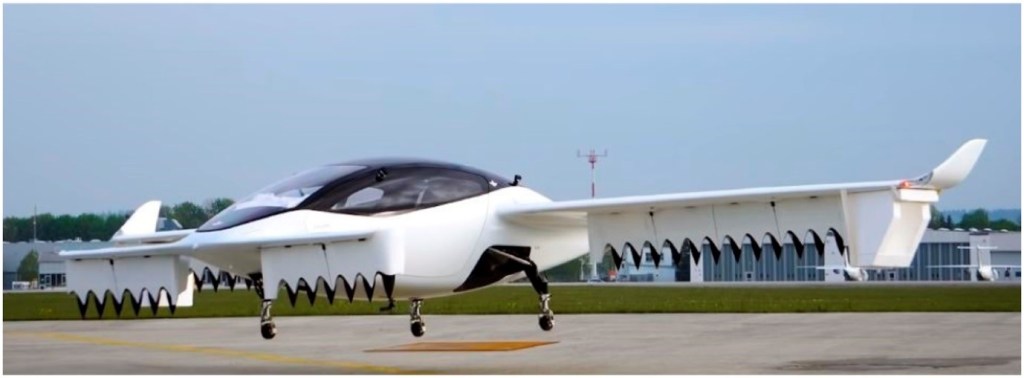
On 4 May 2019, Lilium flew its first flight of an untethered and unmanned five seat Lilium Jet at the Special Airport Oberpfaffenhofen in Munich, Germany. The full-scale prototype was powered by 36 electric ducted fans in configuration inspired by the Eagle prototype aircraft. After the first flight, which consisted primarily of hover, the Lilium Jet has expanded its flight envelope to include conversion to forward flight using the wing for lift, and several safety tests.
LIFT Aircraft Hexa
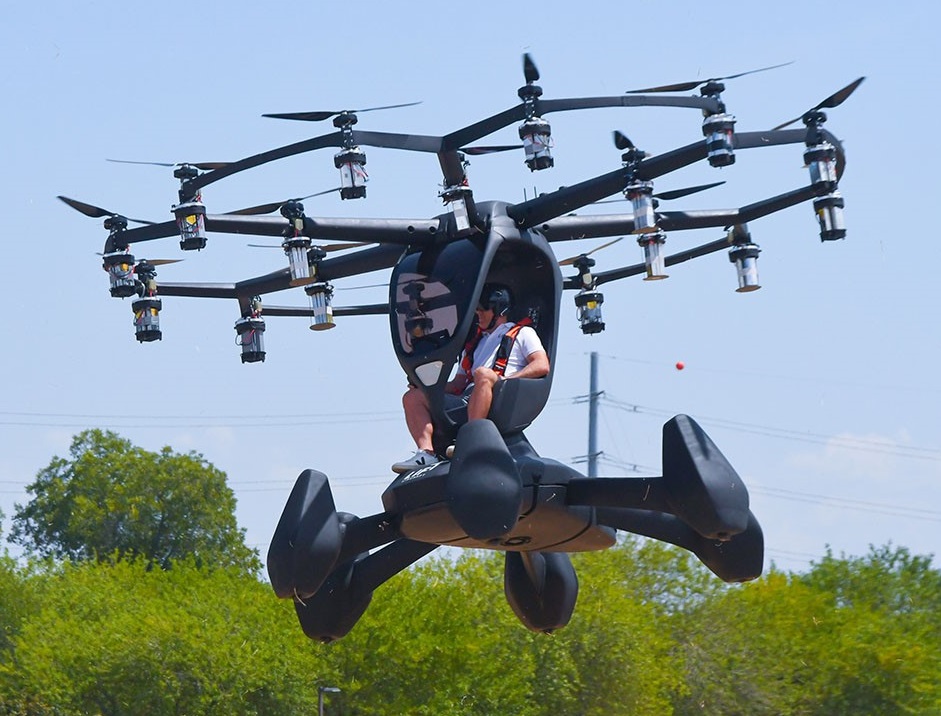
A multicopter being developed by Texas company LIFT Aircraft circa 2020, the company advertises it as an ultralight, but legal ultralights must weigh less than 254 pounds – Hexa tips the scales at 432 pounds.
The craft looks marginally smooth in flight, and the pilot demonstrates only vertical flight, very slow forward flight and a little hovering.
It’s called Hexa, though Hexa has 18 rotors, which are, the company says, all individually controlled by a computer utilizing triple-redundant autopilots. There’s also a whole-airplane recovery parachute system (WARPS), airbags. and it’s said to be amphibious.
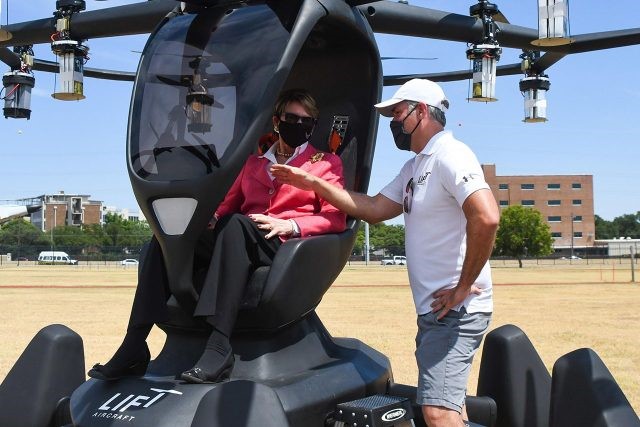
The United States Air Force witnessed a flight test of a new. The craft was flown by the company’s CEO and chief pilot for the Air Force at Camp Mabry. The USAF Chief of Staff even sat in it. USAF Secretary Barbara Barrett was there for the demonstration.
Lebaudy Tissandier
Airship, France, 1914
Length: 426.509 ft / 130.0 m
Width of hull : 53.806 ft / 16.4 m
Contained volume : 741720 cu.ft / 21000 cu.m
Max. speed : 32 kt / 59 km/h
Engine : 7 x Salmson, 118 hp
Latécoère Late 631
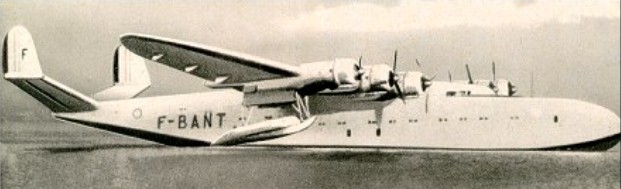
Developed in 1939, construction of the L.631 was interrupted by the war. The prototype Late 631 flew for the first time on 4 November 1942. It was a high-wing monoplane flying-boat powered by six 1,192kW radial engines. Accommodation was provided for 46 passengers in two- or four-berth cabins. However this aircraft was confiscated by the Germans during the occupation of France. It was flown it to the Bodensee (Lake Constance) on the German–Swiss–Austrian border. In 1944, it was attacked and destroyed at anchor by RAF Mosquitos.
Despite the war raging through France, Latécoère managed to complete the first production model in March 1945, now powered by Wright Cyclones instead of its original Gnome et Rhône engines.
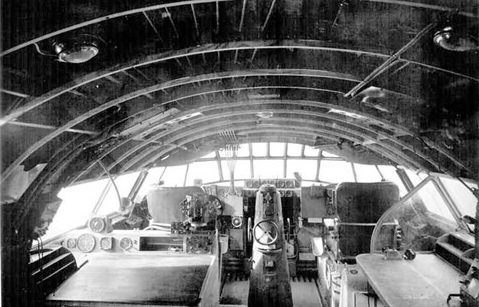
In October of 1945 a propeller on F-BANT separated in flight with a blade slicing through the cabin and killing two passengers. Four production models were bought by Air France and inaugurated transatlantic services between their base at Biscarosse, south-west of Bordeaux, and Fort-de-France in Martinique on 26 July 1947.

Other operators were SEMAF (Société d’Exploitation du Matériel Aéronautique Français) and SFH (Société France Hydro).
The first Transatlantic Flight, Geneva, Switzerland to Fort de France, Martinique by “Latecoere 631” was on June 14, 1948. They covered the distance of nearly 5000 km in 16 hours.
A special mail flight arrived at Fort de France on June 16th, 1947. The plane disappeared on its return flight.
In February of 1948, F-BDRD crashed in the English Channel during a snowstorm killing all 19 on board. After just over one year of service, there was the total loss, with all passengers and crew, of F-BDRC on 1 August 1948. In March of 1950, F-BANU was lost off the coast of France, again with no survivors and finally in 1955, SFH’s F-BDRE had a wing failure, crashing with the loss of half of the 16 people on board.
The Societe France-Hydro operated one on cargo services in French Equatorial Africa for three years, but it crashed: after which all remaining Late 631 were broken up.

Production total: 11
F-BAHG 01 First flown 4/11/1942
F-BANF (not completed)
F-BANT 02 First flown 6/03/1945
F-BANU 3 First flown 15/06/1946
F-BDRA 4 First flown 22/05/1947
F-BDRB 5 First flown 5/09/1947
F-BDRC 6 First flown 9/11/1947
F-BDRD 7 First flown 26/01/1948
F-BDRE 8 First flown 28/11/1948
F-BDRF 9 First flown 20/11/1948
F-BDRG 10 First flown 7/10/1949
F-BDRH 11 not completed
Engines: 6 x Wright Cycl. GR 2600-A5B, 1175kW
Max take-off weight: 71350 kg / 157301 lb
Empty weight: 32332 kg / 71280 lb
Wingspan: 57.4 m / 188 ft 4 in
Length: 43.5 m / 142 ft 9 in
Wing area: 350.0 sq.m / 3767.37 sq ft
Max. speed: 405 km/h / 252 mph
Cruise speed: 320 km/h / 199 mph
Range w/max.fuel: 6000 km / 3728 miles
Crew: 6
Passengers: 70
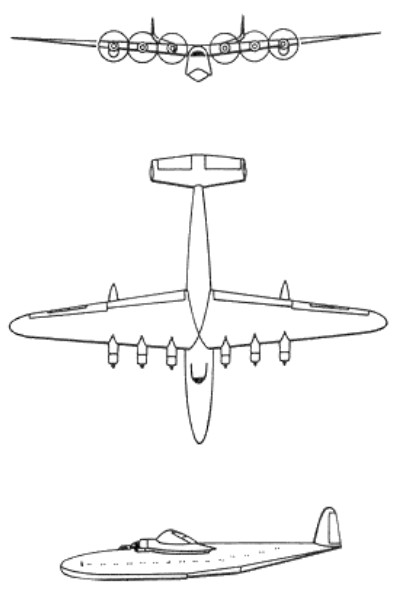
Latécoère Late 521 Lieutenant de Vaisseau Paris / Late 522 / Late 523

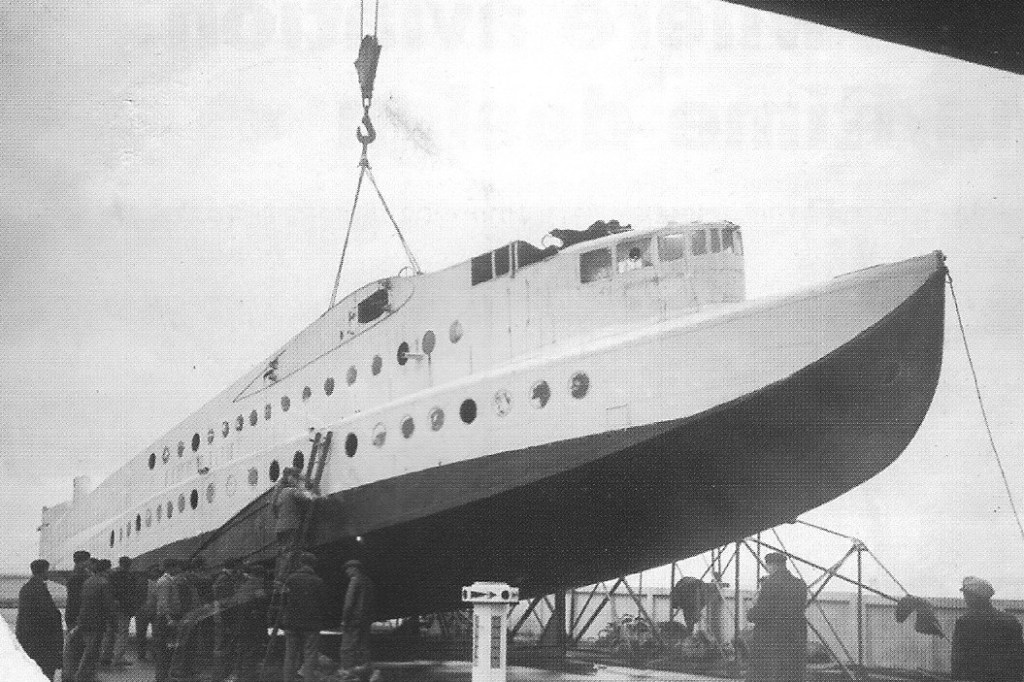
The Late 521 was a flying-boat with strut-braced high wings and short stub sponsons. Named Lieutenant de Vaisseau Paris, it was powered by six 641kW Hispano-Suiza 12Ycrs engines (inboard engines mounted as tandem pairs) and flew for the first time on 17 January 1935. A total of 76 passengers could be accommodated on the two decks of the two-step hull. The craft sank in a storm on its inaugural flight to the USA, but was salvaged and rebuilt with 484.4kW Hispano-Suiza 12Nbr engines. It subsequently established seaplane load-over-distance and load-to-height records in 1937.
The Late 522 (powered by six 671kW Hispano-Suiza 12Y37 engines) appeared in April 1937 but World War II prevented a regular transatlantic service. Both the Late 521 and 522 were impressed into French Navy service on 1 September 1939, three naval Late 523 having already been delivered between January and October 1938. These were armed with five 7.5mm Darne machine-guns and carried up to 1,200kg of bombs. Maximum endurance was 33 hours.
The Late 522 returned to passenger service in March 1940. The remaining aircraft of the series performed Atlantic patrols with Escadrilles E6 and E12. One Late 523 had been lost in September 1939, a second was scuttled in June 1940; and the Late 521 was demobilised in August of that year. The surviving Late 523 was grounded in August 1942, having flown with Escadrille 4E out of Dakar since June 1941. The Late 521 and 522 were destroyed at Berre by retreating Germans in August 1944.
Variants:
Laté 520: [Project] 1930-33, 4 x 1000 hp HS.18 Sbr, engine abandoned
Laté 521: 1935, 6 x 860 hp HS.12Ybrs (2 x tandem pairs, 2 x tractors)
Laté 521 sunk at Pensacola in hurricane, to France for rebuilding
Laté 521: 1937, rebuilt with 6 x 650 hp HS.12Nbr (later to mil.)
Laté 521: 1939, Aéronavale serv., 970 hp HS.12Y-37 then 900 hp ’27
Laté 522: 1939, Air France transatlantic serv., 970 hp HS.12Y-37
Laté 522: 1939, Aéronavale, 900 hp HS.12Y-27, then back to ’37
Laté 523: 1938, Aéronavale recce vers., 900 hp HS.12Y-27, 3 built
Engines: 6 x HS 12 Ybrs, 630kW
Max take-off weight: 37400 kg / 82453 lb
Empty weight: 21480 kg / 47356 lb
Wingspan: 49.3 m / 161 ft 9 in
Length: 31.6 m / 103 ft 8 in
Wing area: 330.0 sq.m / 3552.09 sq ft
Max. speed: 250 km/h / 155 mph
Cruise speed: 213 km/h / 132 mph
Ceiling: 6300 m / 20650 ft
Range w/max.fuel: 5800 km / 3604 miles
Crew: 6
Passengers: 70

 All Aero