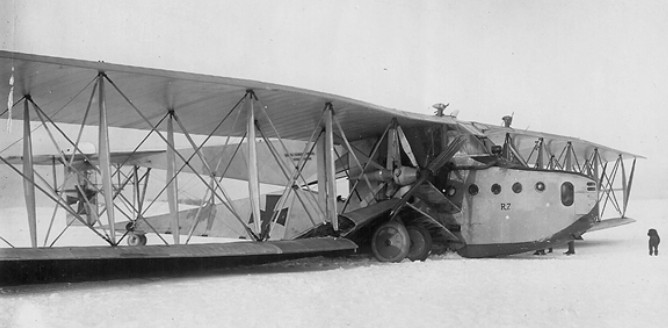
In October 1914 Siemens started design of four-engined aircraft similar to that of Sikorsky in Russia. As entirely new venture company sponsored designs by two Steffen brothers leading to giants R.I-VII of 1915-1917.
The then relatively low engine power required lightest construction. This in turn required precision and caution, especially when landing – where such giant wooden aircraft were extra-sensitive. Many crashed.
In October 1914 Siemens started design of four-engined aircraft similar to that of Sikorsky in Russia. As entirely new venture company sponsored designs by two Steffen brothers leading to giants R.I-VII of 1915-1917.
In October 1914 Siemens started design of four-engined aircraft similar to that of Sikorsky in Russia. As entirely new venture company sponsored designs by two Steffen brothers leading to giants R.I-VII of 1915-1917.
In October 1914 Siemens started design of four-engined aircraft similar to that of Sikorsky in Russia. As entirely new venture company sponsored designs by two Steffen brothers leading to giants R.I-VII of 1915-1917.
In October 1914 Siemens started design of four-engined aircraft similar to that of Sikorsky in Russia. As entirely new venture company sponsored designs by two Steffen brothers leading to giants R.I-VII of 1915-1917.
In October 1914 Siemens started design of four-engined aircraft similar to that of Sikorsky in Russia. As entirely new venture company sponsored designs by two Steffen brothers leading to giants R.I-VII of 1915-1917.
In October 1914 Siemens started design of four-engined aircraft similar to that of Sikorsky in Russia. As entirely new venture company sponsored designs by two Steffen brothers leading to giants R.I-VII of 1915-1917.
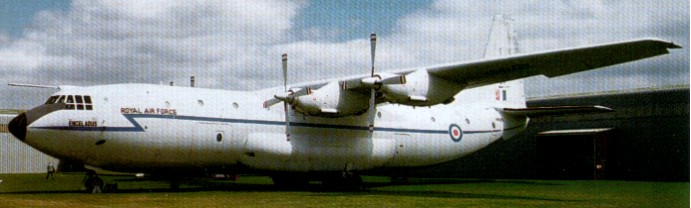
The Shorts Belfast was originally built for the RAF in the 1960s and although the manufacturer initiated a civil certification programme, of which approximately 65% was completed, this was cancelled due to apparent lack of interest displayed by commercial carriers at that time. The development of the Belfast was initially based upon that of the Bristol Britannia the design was for some time dubbed the Britannic, and the RAF finalised a contract for 10 of the type to serve in the strategic, heavy airlift role.
The aircraft eventually utilised only some of the Britannia’s basic wing structure. It was specifically designed for the carriage of heavy freight, including the largest types of guns, vehicles, guided missiles and other loads and had ‘beaver-tail’ rear loading doors capable of permitting the unhindered passage of any load that the fuselage could contain. As a troop transport it could carry 200 men, and was often used to carry helicopters overseas.
Following a development which spanned four years, the first Belfast made its maiden flight on 5 January 1964 and deliveries to the RAF commenced on 20 January 1966, when the first C.Mk l was handed over to No 53 Squadron at Brize Norton.
As a result of defence cuts at the end of 1976, the RAF phased out Belfast operations and, on 23 March 1977, Eurolatin Aviation concluded the purchase of the aircraft. At this stage in their career the Belfasts had flown 23 million nm without incident, averaging 8,000 flying hr/airframe. Of the original 10 aircraft, four were scrapped, one was destined for display with the RAF Museum and TAC HeavyLift had access to the other five.
On obtaining the aircraft, the airline completed an investigation to ascertain the outsanding conditions for Civil Aviation Authority (CAA) approval and following the go ahead decision for certification, they enrolled the aid of Marshalls of Cambridge to provide the design and flight test support for the Belfasts under the organisation’s existing CAA approvals. An independent engineering base at Southend airport was set up to carry out modifications required by the programme and to organise the management, identification, certifying and transport of spares for the fleet.
The Belfast civil certification programme involved a cost of over £4 million and included 120hr of flight testing; 20,000man/hr of design; 25,000man/hr of aircraft engineering; a complete assessment of all aircraft systems; civil certification of the Rolls Royce Tyne engine; production of civil maintenance schedules, flight operating and technical manuals; and design, manufacture and installation of modifications to the radio station, navigation equipment and the aircraft’s compulsory ‘black boxes’, cockpit voice recorder and flight data recorder. Additional tasks were the removal of both the Belfast’s RAF automatic landing system (the type became the first military transport in the World cleared for ‘hands¬off’ autolanding in fully operational conditions), and in flight refuelling equipment.
The dimensions and specifications of the Belfast are impressive and its hold has a volume of 11,000 cu.ft with a cross section minimum of 12ftx 12ft. It is capable of carrying up to 34 tons of freight although at this weight its range is a very limiting 700 800nm, and it has a cruising speed approaching 330mph.
Several aircraft operated with civil Heavylift Cargo Airlines at Stansted in Britain.
Short Belfast C 1 Engines: 4 x Rolls Royce Tyne RTy 12 Mk 101 turboprops, 5,730eshp / 4273kW Length: 136ft 5in / 41.58 m Height: 47ft / 14.33 m Wing span: 158ft 10in / 48.4 m Wing area: 2464.956 sq.ft / 229.0 sq.m Max take off weight: 230050 lb / 104330.0 kg Weight empty: 127023.4 lb / 57607.0 kg Cruise with max payload: 275kts (510km/hr) Service ceiling: 30003 ft / 9145 m Cruising altitude: 23950 ft / 7300 m Range w/max.fuel: 10200 km / 6338 miles Range w/max.payload: 2000 km / 1243 miles Max hold width: 16ft 1in Max payload: 75,000 lb (34,000kg) Capacity: 200 troops Crew: 4-5
Even though the Valiant was produced as an interim type, the British felt it essential to develop an alternative in case the Valiant proved a failure in its initial trials. Designed to Specification B.14/46, the Short SA.4 Sperrin was intended as an insurance, which conformed to a less demanding specification in terms of speed and altitude over the target.
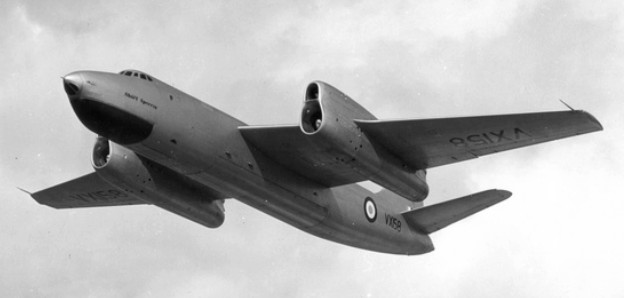
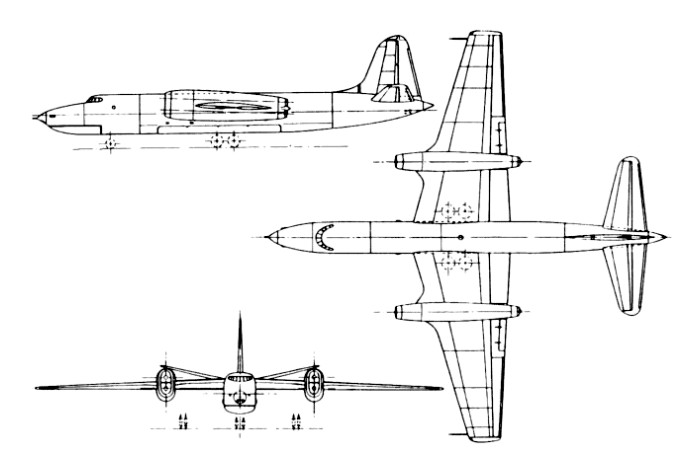
The aeroplane was thoroughly conventional by the structural and aerodynamic concepts of the day, with straight flying surfaces whose wings were set in the shoulder position on a comparatively deep fuselage whose lower portions accommodated the large nay/attack radar (chin position) and internal bomb bay (central position). One unusual feature was the powerplant, whose four Rolls-Royce Avon turbojets were located in under-and-over pairs on the wings about two-fifths of the way between the fuselage and the wingtips.
Short Sperrin prototype VX161 at Farnborough Golden Jubilee 9 July 1955
Two prototypes were built, the first flying on 10 August 1951 and used to test new high-altitude radar navigation and bombing equipment that was to be incorporated in the V-bombers. The second aircraft, which flew in August 1952, was used to test aerodynamic bomb shapes in connection with the development of Britain’s first atomic bomb, the MC.Mk 1 ‘Blue Danube’.
Engines: 4 x 2944kg Rolls-Royce Avon RA.3 turbojet Max take-off weight: 52200 kg / 115082 lb Wingspan: 33.20 m / 109 ft 11 in Length: 31.42 m / 103 ft 1 in Height: 8.69 m / 29 ft 6 in Max. speed: 913 km/h / 567 mph Ceiling: 13725 m / 45050 ft Range: 6050 km / 3759 miles Crew: 5
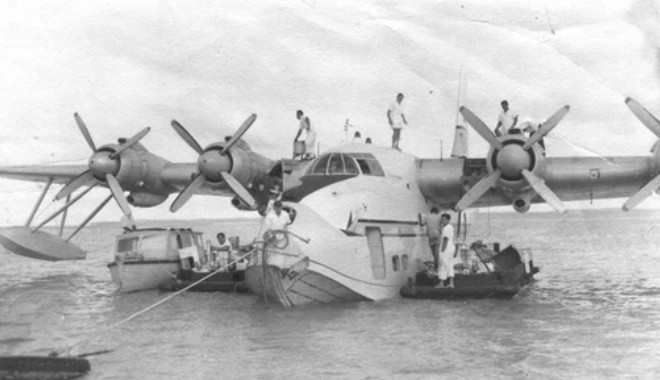
For service in the Pacific the Air Ministry required a more powerful, more heavily armed flying boat than the Short Sunderland, and specification R.8/42 was met by a new Short design, known originally as the Sunderland IV but later renamed Seaford, with the company designation S.45.
Gross weight rose to 34000kg and a number of structural improvements were incorporated to compensate for this; these included a strengthened wing and enlarged horizontal tail surfaces. The hull was also modified, its beam being increased by 0.99m. Armament comprised two 12.7mm machine-guns in a Brockhouse turret in the bow, and two 7.7mm machine-guns in the nose decking. Two 20mm cannon were mounted in a Boeing B-17 dorsal turret, and the Martin tail turret contained a pair of 12.7mm guns, two more of which were located in beam positions. A bomb load could also be carried in a fashion similar to that of the Sunderland. The first of two prototypes, powered by four 1253kW Bristol Hercules XVII engines, was flown on 30 August 1944 and 30 production aircraft, with 1283kW Hercules XIXs, were also ordered. Of these only six were completed.
In April and May 1946 No.201 Squadron carried out operational trials with the Seaford, in co-operation with the Marine Aircraft Experimental Establishment at Felixstowe, but the programme was cancelled and the completed machines were converted as 39-passenger aircraft for BOAC, acquiring the designation Solent 3. A seventh Solent 3 was a conversion of the second production Seaford, which had been evaluated by BOAC in 1946, leading to an order for 12 30-passenger Solent 2s which was delivered in 1948.
18 Solent were operated by BOAC as 30-passenger Solent 2s (12) and 34-passenger Solent 3s (6) before the company abandoned the use of flying-boats in 1950. Power for these was provided by Bristol Hercules 637 engines.
The was the civil version of the Seaford flying-boat, Four Solent 4s were operated by Tasman Empire Airways with Hercules 733 engines and accommodation for 42 day passengers.
S.45 Seaford Engines: 4 x Bristol Hercules XIX, 1283kW / 1696 hp Max take-off weight: 34000 kg / 74958 lb Empty weight: 20400 kg / 44975 lb Wingspan: 34.37 m / 112 ft 9 in Length: 27.00 m / 88 ft 7 in Wing area: 1486.939 sq.ft / 138.14 sq.m Max. speed: 210 kt / 389 km/h / 242 mph Range: 2694 nm / 4990 km / 3101 miles Armament: 2 x 20mm cannon, 4 x 12.7mm + 2 x 7.7mm machine-guns
Solent 3 Engines: 4 x Bristol Hercules 637, 1260kW Max take-off weight: 35650 kg / 78595 lb Empty weight: 21860 kg / 48193 lb Wingspan: 34.38 m / 113 ft 10 in Length: 26.72 m / 88 ft 8 in Height: 10.45 m / 34 ft 3 in Wing area: 156.72 sq.m / 1686.92 sq ft Max. speed: 430 km/h / 267 mph Ceiling: 4725 m / 15500 ft Range: 3540 km / 2200 miles
Solent IV Engines: 4 x Bristol Hercules, 2040 hp Cruise speed: 244 mph




 All Aero