Boeing 367 / 377 Stratocruiser / C-97 Stratofreighter

C-97

In early 1942 Boeing initiated a design study to examine the feasibility of producing a transport version of its B-29 Superfortress. The company’s proposal was submitted to the USAAF for consideration and, because at that time the long-range transport was a much-needed type of aircraft, a contract for three prototypes was awarded on 23 January 1943. Identified by the company as the Boeing Model 367, and designated XC-97 by the US Army Air Force, the first made its maiden flight on 15 November 1944.
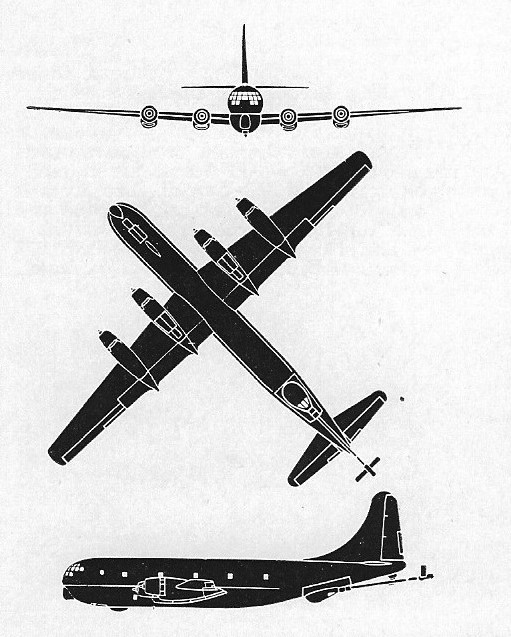
The XC-97 had the entire wing and engine layout of the B-29. The ‘double-bubble’ section fuselage appears to be entirely new, but the lower ‘bubble’ was basically a B-29 structure, and so was the tail unit attached to the new (and larger) upper ‘bubble’. On 6 July 1945, following brief evaluation of the prototypes, 10 service-test aircraft were ordered. These comprised six YC-97 cargo transports, three YC-97A troop carriers, and a single YC-97B with 80 airline-type seats in its main cabin.

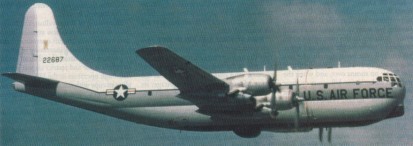
The first production contract, on 24 March 1947, for 27 C-97A aircraft with 2425kW Pratt & Whitney R-4360-27 engines, specified accommodation for 134 troops, or the ability to carry a 24,040kg payload. Two transport versions followed, under the designation C-97C and VC-97D, and following trials with three KC-97A aircraft equipped with additional tankage and a Boeing-developed flight-refuelling boom, KC-97E flight-refuelling tankers went into production in 1951. This version was powered by 2610kW R-4360-35C engines.
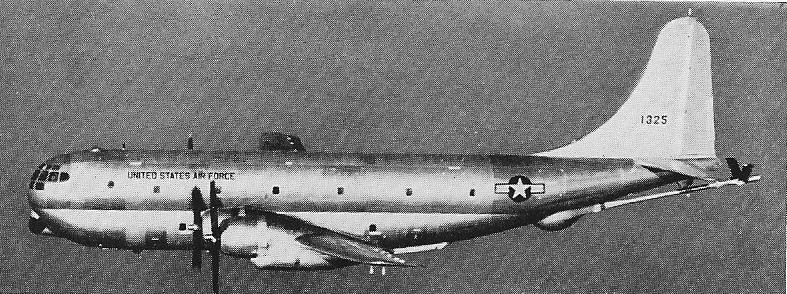
C-97F

Boeing 367 / 377 Stratocruiser / C-97 Stratofreighter Article

The KC-97F differed only in having R-4360-59B engines. Both the KC-97E and KC-97F were convertible tanker/transports, but for full transport capability the flight-refuelling equipment had to be removed. The most numerous variant, with 592 built, was the KC-97G which had full tanker or full transport capability without any on-unit equipment change.
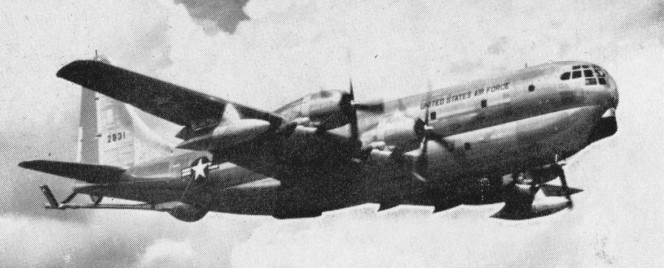
Boeing KC-97G

When production ended in 1956 a total of 888 C-97s had been built, and many were converted later for other duties. The KC-97L variant had increased power by the installation of a 2359kg thrust General Electric J47-GE-23 turbojet beneath each wing to improve rendezvous compatibility with Boeing B-47s. KC-97Gs converted to all-cargo configuration were redesignated C-97G, and in all-passenger configuration became C-97K. Search and rescue conversions were HC-97G, and three KC-97Ls went to the Spanish air force, being designated TK-1 in that service. Several have served in many roles with Israel’s air force.

Twenty KC-97s are assigned to each 45-plane wing of B-47 bombers. The KC-97G combines in one aircraft the duties of transport and ” flying boom” tanker, its boom being a permanent fixture. Earlier versions had removable booms for conversion into transport role. The KC-97G usually carries two 1700-gal. fuel tanks under outer wings.
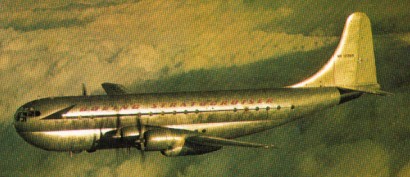
The Boeing Model 377 Stratocruiser was a commercial transport development of the Model 367 (military C-97), and based on the improved-structure YC-97A with Pratt & Whitney R-4360 engines. The first flight of the prototype Model 377-10-19 was made on 8 July 1947, and it was delivered subsequently to Pan American World Airways, which was the biggest user of the Stratocruiser. There were a variety of interior configurations in the Models 377-10-26, -28, -29, -30, -32 accommodating from 55 to 112 passengers or, if equipped as a ‘sleeper’, with 28 upper- and lower-berth units, plus five seats. The main cabin was in the upper lobe of the ‘double-bubble’ fuselage, with a luxury lounge or cocktail bar seating 14 on the lower deck, reached via a spiral staircase.

Of the total of 55 that were built, Pan Am was operating 27 at one period. Of these, 10 were given additional fuel capacity to make them suitable for transatlantic operations, and were known as Super Stratocruisers. At a later date the entire fleet was equipped with General Electric CH-10 turbochargers, enabling each engine to develop an additional 37.3kW. British Overseas Airways Corporation also acquired a fleet of 17 with only six of these were original purchases from Boeing, the remainder acquired from other airlines. After just over nine years’ service with BOAC, 10 were sold to Transocean Airlines in the USA during 1958. Of these, four were converted to 117-passenger high-density seating, the remainder each having an additional 12 seats added to their standard 63- and 84-seat layouts. Before Stratocruisers disappeared from service during 1963, a few had been modified to a cargo configuration, but by far the strangest conversion resulted from those airframes acquired by Aero Spacelines Inc. Under the designation 377-PG, this company built an oversize cargo aircraft which it named ‘Pregnant Guppy’ and subsequently built other examples, using both Model 367 and 377 airframes, under variations of the Guppy name.

The YC-97J designation for two KC-97Gs converted for USAF use as flying test-beds, each with four 4250kW (5,700-shp) Pratt & Whitney YT43-P-5 turboprop engines.
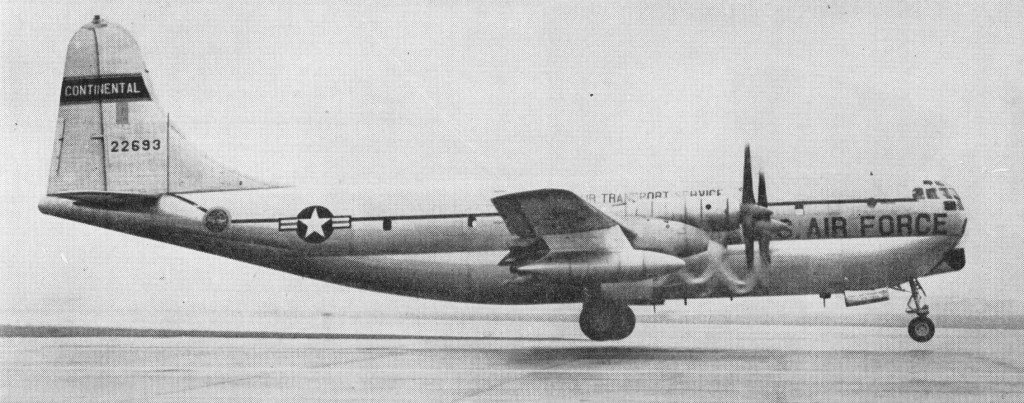
YC-97J

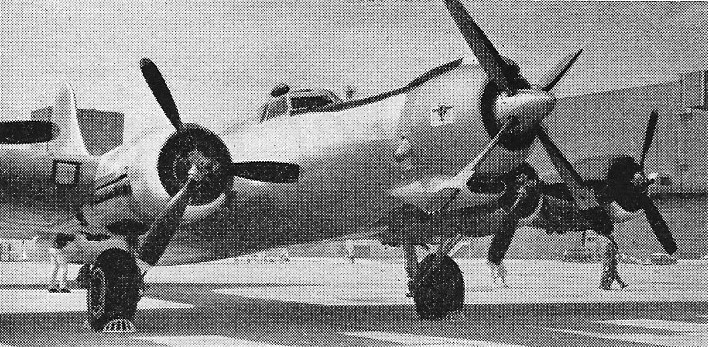
During the course of the Berlin Airlift emphasis was placed more on eavesdropping activities. For those missions the USAF at the West German airbase at Wiesbaden had the 7405th Operation Squadron which used only two Boeing EC-97G Stratocruisers. The only obvious difference from normal transports was an extra aerial blister under the fuselage.

EC-97G

The EC-97G kept on flying to and from Tempelhof in West Berlin up to 1976 when they were replaced by C-130E.

Gallery

Variants:

Boeing Model 367 / XC-97

YC-97
Cargo transport

YC-97A
Troop carrier

YC-97B
80 airline-type seats

C-97A
Engines: 4 x Pratt & Whitney R-4360-27 Wasp Major, 2425kW / 3,500 hp
Maximum Range: 2,672miles (4,300km)
Service Ceiling: 30,000ft (9,144m)
Crew: 4
Capacity: 134 troops, or 24,040kg payload.

C-97C
Transport version

C-97D
Designation applied to the third YC-97A, the YC-97B, and two C-97As following conversion to a standard passenger configuration; the three VC-97Ds were subsequently redesignated C-97D

VC-97D
Transport version

KC-97A
Convertible tanker/transports with additional tankage and a Boeing-developed flight-refuelling boom

KC-97E
Flight-refuelling tankers
Engines: 4 x R-4360-35C, 2610kW

KC-97F
R-4360-59B engines.
Convertible tanker/transports

KC-97G
Full tanker or full transport

C-97G
KC-97Gs converted to all-cargo configuration

C-97K
KC-97Gs converted to all-passenger configuration

KC-97H
Designation applied to one KC-97F, following modification for service trials as a tanker using the probe-and-drogue flight-refuelling system developed in the UK

YC-97J
Final designation of two KC-97Gs converted for USAF use as flying test-beds, each with four 4250kW (5,700-shp) Pratt & Whitney YT43-P-5 turboprop engines

KC-97L / TK-1
Increased power with a 2359kg thrust General Electric J47-GE-23 turbojet beneath each wing

Boeing Model 377-10-19
First prototype. Improved-structure YC-97A with Pratt & Whitney R-4360 engines.

Models 377-10-26, -28, -29, -30, -32
Variety of interior configurations in the accommodating from 55 to 112 passengers or, if equipped as a ‘sleeper’, with 28 upper- and lower-berth units, plus five seats.

377 Stratocruiser
Engines: 4 x Pratt & Whitney R-4360 B6 Wasp Major, 3500 hp, 2610kW.
Prop: 4 blade 16 ft 7 in (5.05m).
Wing span: 141 ft 3 in (43.05m).
Length: 110 ft 4 in (33.63 m).
Height: 11.66 m / 38 ft 3 in
Wing area: 1,769 sq ft (164.3sq.m).
Weight empty 83,500 lb. (37,870 kg.).
Max wt: 145,800 lb (66,134 kg).
Max. speed: 604 km/h / 375 mph
Typical cruising speed: 300 mph (483 km/h) at 25,000 ft (7,620 m).
Max cruise speed: 340 m.p.h. (550 kph).
Ceiling: 32,000 ft. (10,000 m.) fully loaded.
Typical range: 2,750 miles (4,426 km) with max payload.
Max range: 4 600 miles (7,400 km.).
Cruise 50% pwr: 270 kts @ 25,000 ft / 135 USG/Hr/engine.
Endurance: 14 hr.
T/O run: 7200 ft.
Crew: 5.
Pax cap: 55-100

Boeing 377 Stratocruiser
Engines: 4 x Patt & Whitney R-4360-TSB3-G, 3500 hp
Wingspan: 141 ft 3 in
Length: 110 ft 4 in
Height: 38 ft 3 in
Empty weight: 83,500 lb
Loaded weight: 142,500 lb
Max speed: 375 mph
Cruise: 196 mph
Normal range: 1500 mi

KC-97G
Engines: 4 x Pratt & Whitney R-4360-59B Wasp Major, 2610kW / 3500 hp
Wingspan: 43.05 m / 141 ft 3 in
Length: 33.63 m / 110 ft 4 in
Height: 11.66 m / 38 ft 3 in
Wing area: 164.34 sq.m / 1768.94 sq ft
Take-off weight: 79379 kg / 175002 lb
Empty weight: 37421 kg / 82500 lb
Max. speed: 604 km/h / 375 mph
Cruise speed: 483 km/h / 300 mph
Ceiling: 9200 m / 30200 ft
Range: 6920 km / 4300 miles

KC-97G
Transport and flight refuelling tanker
Engines: 4 x Pratt & Whitney R4360-75, 3,500 h.p.
Wingspab: 141 ft. 3 in.
Length: 110 ft. 4 in,
Loaded weight: 153,000 lb
Max speed: 375 m.p.h.
Ceiling: 35,000 ft.
Max range: 4,200 miles at 300 m.p.h. at 25,000 ft.
Crew: 5
Capacity: 96 troops or 68 500 lb. cargo

YC-97J
Engines: 4 x 5700 hp Pratt & Whitney T34 turboprop

Boeing 377 Stratocruiser
KC-97G

Boeing 307 Stratoliner / C-75

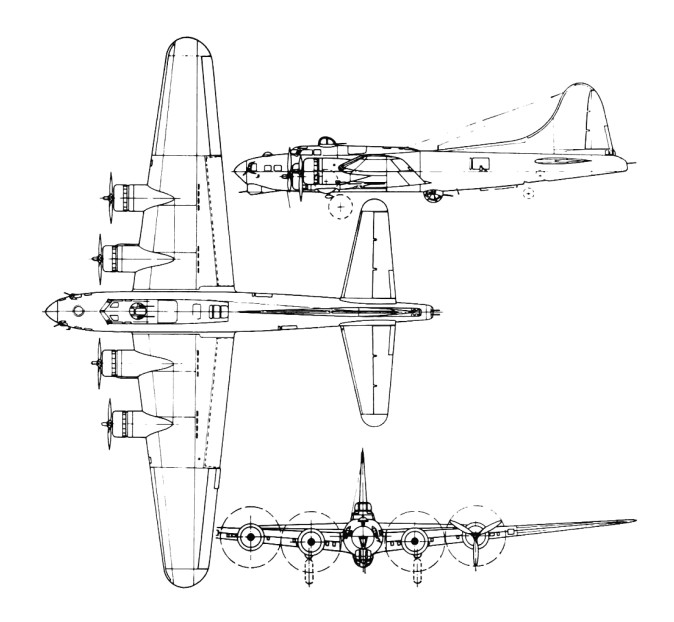
In early 1934 Boeing began design studies for a multi-engine bomber and a basically similar civil transport. When, in June 1934, the USAAC invited proposals for a new bomber, Boeing’s Model 299 was revamped to meet the Army specification and duly became built by the thousands as the B-17 Flying Fortress.

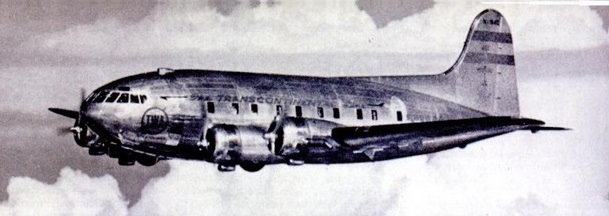
The Model 300 was also changed as ideas were developed and in its Model 307 form was similar to the B-17C, except for a very different fuselage. This was of circular cross-section with pressurisation for the crew of five and 33 passengers. The Model 307 introduced an extra crew member – known as the flight engineer – to relieve the captain of certain duties such as power plant, fuel and pressurisation management and monitoring.

The prototype Model 307 (named Stratoliner because of its high cruising ceiling) flew for the first time on 31 December 1938.

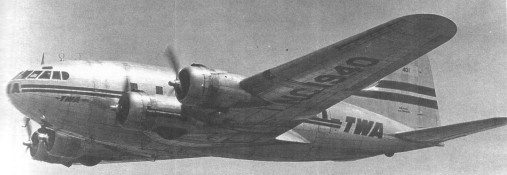
A total of ten were built: the prototype; five SA-307B for Transcontinental & Western Air; three S-307 for Pan American; and a single SB-307B for the late Howard Hughes.

First delivered to PanAm in 1940, the Boeing 307 went into service in 194, carrying passengers on long haul American routes. The night plane version had berths for 16 passengers and reclining chairs for a further 9.

The 307B differed from the 307 in having 1100 Wright Cyclone GR-1820-G105A engines instead of G-102s, and slotted flaps in place of split trailing edge flaps.

TWA’s SA-307B were impressed for service with the Army’s Air Transport Command during World War II, being used as C-75 for VIP transport over the North and South Atlantic.

307B

The TWA 307Bs were extensively modified after wartime USAF service; the cabin pressurisation equipment was removed, and B-17 wings and 1200 hp Wright R-1820 engines were fitted. These were eventually sold to France.

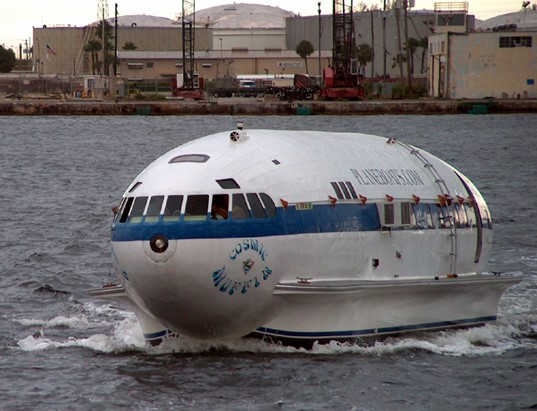
A special model SB-307B for Howard Hughes was built with more powerful engines and extra fuel tanks for an around-the-world flight that was cancelled due to the start of World War II. The flight was never made. It was the first Stratoliner delivered to a customer; its initial flight (with experimental license NX19904) occurred on July 13, 1939. Postwar it was fitted with a luxury interior, including a bedroom, and named The Flying Penthouse.

A 1964 hurricane severely damaged it and rendered it unflyable. In 1969 it was purchased as scrap for $61.99 — the fuselage was salvaged (the aft rounded pressure bulkhead formed the cabin after end), then mounted on a boat hull and converted into a luxury yacht named The Londonaire. It was rebuilt beginning in 1994, and is a Florida based, operating yacht named Cosmic Muffin, with N19904 painted on its sides.

Gallery

S-307
Engines: 4 x Wright GR-1820 Cyclone, 671kW
Take-off weight: 19050 kg / 41998 lb
Empty weight: 13608 kg / 30001 lb
Wingspan: 32.61 m / 106 ft 12 in
Length: 22.66 m / 74 ft 4 in
Height: 6.34 m / 20 ft 10 in
Wing area: 138.05 sq.m / 1485.96 sq ft
Max. speed: 396 km/h / 246 mph
Cruise speed: 354 km/h / 220 mph
Ceiling: 7985 m / 26200 ft
Range 50 % pwr: 1,635 miles / 2,616 km
Crew: 4
Pax cap: 33

Boeing 299 / B-17 Flying Fortress / B-40 / C-108 / F-9

B-17G

Designed to a US requirement for a four-engine bomber capable of long distance travel with a full 2,000lb bombload and reach speeds between 200 and 250 miles per hour. The result was the Boeing Model 229 which first flew in 1934, though was later lost to pilot error. Nevertheless, the US Army Air Corps pursued the design with an order for further developmental models fitted with differing powerplants. Early B-17 models were mostly developmental production variants that included the additions of seal-sealing fuel tanks, better armor protection and a redesigned tail.

America’s USAAC had been a little ahead of Britain in specifying their need for a four engined bomber, and the prototype Boeing Model 299 / XB 17 designed to meet this requirement flew for the first time on 28 July 1935. Powered by four 750 hp Pratt & Whitney Hornet engines, the prototype crashed three months later at Wright Field when the control locks were inadvertently left engaged before takeoff.

Boeing B-17 Article

A pre production batch of 13 Y1B 17s was bought for evaluation.

It was not until 1938 that the USAAC was able to place an order for 39 production B-17B, the last of this batch entering service in March 1940. These were the first B-17 production aircraft to be equipped with turbocharged Wright Cyclone engines, providing a higher maximum speed and much increased service ceiling.

Of the B-17C which followed, a batch of 20 were supplied to the RAF (designated Fortress I) and used operationally in Europe for evaluation, leading to improved B-17D and B-17E aircraft with self-sealing fuel tanks and revised armour and armament.

The Royal Air Force used them to bomb the German naval base at Wilhelmshaven on July 8th, 1941, marking the B 17’s first hostile action.

In late Summer of 1941, Great Britain bought 20 of the B-17C bombers recently produced by the USA, but the RAF had nothing but bad experiences with them. The B-17C’s first war deployment was on Monday 8 September 1941, when they attacked several targets along the Norwegian coast from from close to 20,000ft / 9000m. But the Germans received radar warning of their presence and sent out Me 109s from 77 Sqn, 13th Fighter Wing (based on Stavanger), which shot down 2 Fortress Is and seriously damaged three. After other fiascos with the B-17C, British Bomber Command concluded that they were completely unsafe, ineffective and unsuitable for use in any serious missions.

Following an extensive redesign, to increase armour and armament, new versions were introduced and were widely used by the Americans, both in Europe and the Pacific.

Y1B-17

The initial definitive Flying Fortress model would arrive with 512 examples of the B-17E model which were the first to incorporated the twin .50 caliber tail armament for defense.

Many changes were made as a result of combat experience first by the RAF and then by the USAAF in Europe. Even the B 17E , armed with one 7.62mm and 12 12.7mm machine-guns for defence and able to carry a maximum 7,983kg of bombs, was given a mauling by the Luftwaffe when it first ventured over Europe in daylight: but the Americans stood by their beliefs in the effectiveness of day bombing added still more guns, learned new tactics and eventually made possible the crushing round the clock bomber offensive. This model was followed by the similar B-17F models of which 3,405 were produced.

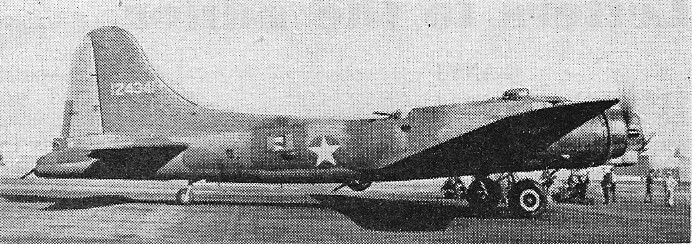
A further modification programme, this time to improve the bomber’s ability to repel air attacks from the front, produced the B17G with its twin-gun ‘chin’ turret which you can see clearly on this example.

Most extensively built variant was the B-17G (8,680), built by Douglas (2,395) and Lockheed Vega (2,250) as well as at the Boeing plant, Seattle (4,035). The B 17G model, the seventh variation of the original design, was equipped Pratt & Whitney R-1820-97 radial engines with super-chargers that allowed the airplane to cruise at 35,000 feet at a maximum speed of 285 miles per hour. It also carried up to thirteen .50 caliber machine guns and 6,000 pounds of bombs. The addition of a chin turret below the nose (containing two 12.7mm machine-guns) provided better defence against the head-on attacks. U.S.forces used it primarily for high level daylight bombing over Europe. The formidable machine gun placement enabled B 17s to develop a highly effective defensive tactical formation. Production of the B-17G started in July 1943.

Flying the Boeing B-17 Flying Fortress

B-17G manufactured after January 1944 were no longer given a camouflage coating because they were lighter and faster without it

The bombardier sat on a type of swiveling stool with a Norden Bombsight before him. The navigator sat off-set to his rear at a small map-filled desk. Both were supplied with defensive .50 caliber machine guns with the Bendix chin turret under the bombardiers control in the G model and onwards. Access to the nose was accomplished through a smallish passage way underneath the main flight deck.

The pilot and co-pilot sat on the flight deck above and behind the navigator’s position with the pilot to the left and his copilot to the right with both offered equal control access and views of all four of the engines. To their rear was the top gunners position with a catwalk crossing between the payload in the bomb bay. Once past the bomb bay, the radio operators station and his equipment was apparent. The radio operator was also afforded a table and seating along with his communications equipment. Access to the belly turret was available following this area, which further opened up to the staggered waist gunner positions which might or might not have been covered by plexiglass depending on the model.

On 1 July 1942 the first heavy bomber of the American 8th Army Air Force laned in Britain by the North Atlantic route. B-17E “Jarring Jenny” landed at Prestwick airfield, Scotland,

The B-17 flew the 8th Air Force’s first combat mission out of England in August 1942. At 3:20pm on Monday 17 August 1942, 12 B-17E of the 97th Bomber Group (US 8th Air Force) took off on their first mission over Europe, flying with four RAF Spitfire squadrons to provide them cover. US Brigadier General Ira Eaker flew with them, in the plane of the Group Commander, known as ‘Yankee Doodle’. The bombers target was Sotteville-les-Rouen on the left bank of the Seine, site of a railway switch yard crucial to the supplying of Le Harve. The Flying Fortresses released their 166 ton bombload from an altitude of over 22,000 ft. all the bombers returned to base.

The British were skeptical about daylight bombing, but the American strategy was made possible by the ruggedness built into high-flying bombers like the B-17 and by the deadly accuracy of the Norden bombsight. Used as the spearhead of the U.S. Army Air Force’s attacks in Europe, the aircraft also saw combat duty in all theaters of war. Three days after Pearl Harbor, the Japanese convoys en route to Luzon in the Philippines were met by Flying Fortresses.

They flew high in huge formations, protecting each other with cross fire, and dropped 640,036 tons of bombs in Europe for a loss of 4,750 aircraft.

Special variants included the B-40 with up to 30 machine-guns/cannons, which was intended as a B-17 escort, but proved to be an operational failure; BQ-7 pilotless aircraft packed with explosives to be deployed against German targets by radio control, which failed due to unreliable control equipment; CB-17 and C-108 transports; and F-9 long-range B-17 equipped to serve as an air-sea rescue aircraft and able to deploy a lifeboat carried beneath the fuselage.

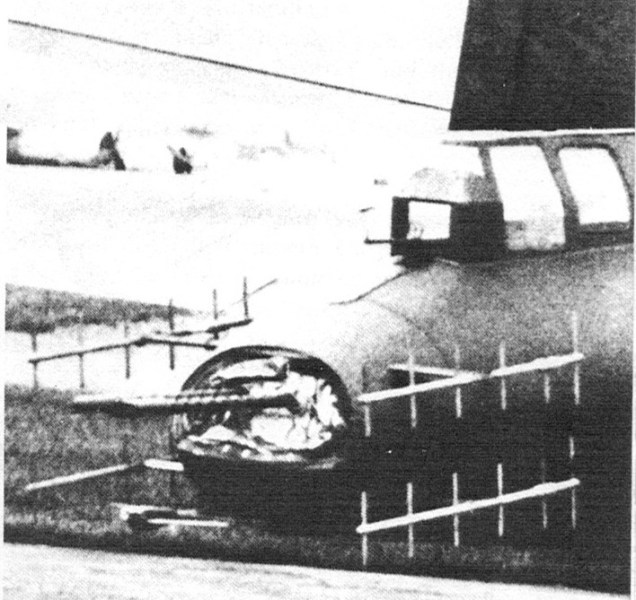
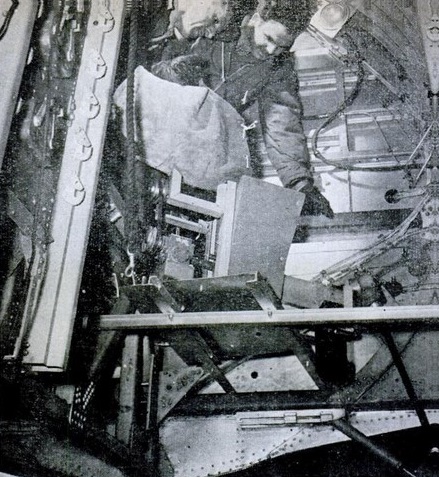
The YB-40 escort fighter variant airframe and engines were typical B-17 but the armament was 31 guns. The largest was a 40mm faired into the radio hatch. In each waist position was a 20mm cannon plus two 0.5in machine guns. A four-gun turret was in the nose and another in the tail. The upper turret had four more 0.5in, the ball turret two. There were 10 more 0.5in machine guns in various locations.

YB-40

Boeing XB-40 Escort Fortress Article

At the height of production Boeing’s Seattle plant alone produced a completed aircraft every ninety minutes. A total of 12,731 built by Boeing, Douglas, and Lockheed Vega of which just over two-hundred were supplied to the RAF.

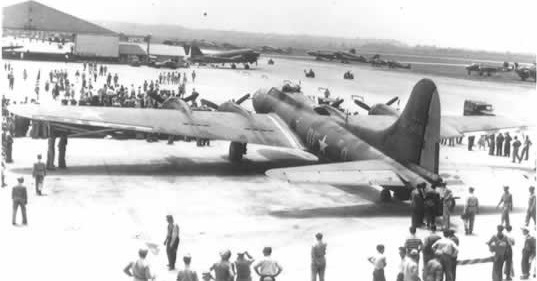
B-17 “Memphis Belle” would be stored at Altus AAF after public relations tour

RAF forces took several B-17 models with their applied “Fortress 1”, “Fortress 2” and “Fortress 3” designations, utilizing some in the electronic countermeasures role. Reconnaissance variants appeared with the US Army Air Corps, US Navy and US Coast Guard as well, each with differing designations shown below.

The B-17 Flying Fortress accounted for over 290,000 sorties with 640,000 tons of ordnance dropped during World War Two.

The German 200th Bomber Wing, KG200, carried out special transport missions using captured US B-24 Liberator and B-17 Flying Fortress which the Germans called by the code name Dornier Do 200.

Versions of the wartime Flying Fortress were still in service in 1955 include lhe U.S.A.F.’s QB-17G drone, SB-17 with an airborne lifeboat and CB-17G V.I.P. transport; and the U.S. Navy’s PB-1G air-sea rescue and PB-1W radar early-warning aircraft. All have four Wright R-1820-97 piston engines.

Boeing QB-17G Fortress
QB-17 testing guided missiles

US Navy and Coast Guard rescue version are similar to the SB-17G is designated PB-1G.

SB-17G

In New Mexico in 1950, Project Cirrus involved seeding rain clouds with dry ice from a B-17.

Project Cirrus
Project Cirrus
Project Cirrus
USAF Research & Development Command B-17G testbed with 3500hp Wright R-3350

Replica:
Bally B-17

Gallery

Allison Engines Testbed Gallery

XB-17
Engines: 4 x P&W Hornet, 750 hp
Wingspan: 103 ft 9 in
Length: 68 ft 9 in
Take-off weight: 43,000 lb
Bombload: 2570 lb
Loaded range: 2000 mi at 204 mph

STANDARD DATA:
Gross weight: 49,650 lb
Empty weight: 30,620 lb
Fuel capacity: 1,700 Usgals
Engines: four 1,200 hp Wright Cyclone radials.
Top speed: 323 mph
Cruise speed: 250 mph
Climb to 25,000 ft.: 41 min
Range: 3,400 nm
Ceiling: 37,000 ft.

B-17
Engines: 4 x Wright R 1820-97, 1,200 hp, 885kW
Length 73.9 ft. (22.5 m)
Height: 5.8 m / 19 ft 0 in
Wing span: 103 ft 8 in (31.6 m)
Wing area: 141.9 sq.m / 1527.40 sq ft
Weight empty 32,250 lb. (14,630 kg)
Max. bomb load: 9,600 lb (4,350 kg)
Max. Speed 317 mph (510 kph)
Cruise speed: 250 km/h / 155 mph
Range 2,000 miles (3,220 km) with 4,000 lb. of bombs
Ceiling: 10700 m / 35100 ft
Crew: 10
Armament: Up to thirteen 0.30 and 0.50 in. machine guns

B-17E
Engine: 4 x Wright R-1850-65 Cyclone, 1200 hp
Wing span: 103 ft 9 in (31.62 m)
Length: 73 ft 10 in (22.5 m)
Height: 19 ft 2 in (5.84 m)
Engines: 4 x Wright, 1200 hp
Max TO wt: 53,000 lb (24,040 kg)
Max level speed: 275 kts / 317 mph / 510 kph
Service ceiling: 36581 ft / 11150 m
Range: 2592 nm / 4800 km
Crew: 9
Armament: 13x MG 12,7mm, 7985 kg Bomb

B 17G
Engines: 4 x Wright Cyclone R-1820-97, 1,200 hp
Wing span: 103 ft. 9.5 in / 31.62m
Length: 74 ft. 9 in / 22.78m
Height: 19 ft. 1 in / 5.82m
Wing area: 1,420.0 sq ft / 131.92 sq.m
Loaded weight: 66,000 lb
Empty Weight: 36,136lbs (16,391kg)
Maximum Take-Off Weight: 72,003lbs (32,660kg)
Maximum Speed: 287mph / 462kmh; 249kts at 25,000 ft / 7,620 m
Cruise speed: 182 mph
Rate-of-Climb: 541ft/min (165m/min)
Climb to 20,000 ft / 6,095 m: 37 min 0 sec
Service Ceiling: 35,597ft (10,850m)
Armament: 13 x 0.5in Browning mg
Bombload: 8000 lb / 17,600 lb
Crew: 10
Range: 3,400 miles / 5,470 km
Range with 500lb load: 2100 miles / 3,220km

CB-17G

QB-17G Fortress
Engines: four Wright R-1820-97
Span: 103 ft. 9 in
Weight: 49,500 lb
Max Speed: 295 m.p.h.

Boeing 294 / XB-15 / XC-105

US Army men like Colonels Hugh Knerr and C.W. Howard were working steadily in the 1930s to ensure, to the best of their capabilities, that a strategic bomber would be available. This thinking had led to the introduction into service of such bombers as the Boeing B-9, and the Martin B-10 and B-12. While it was appreciated that these did not represent the ideal, they prepared the way for the procurement of a true strategic bomber.
In 1933 came the US Army’s requirement for a design study of such an aircraft, then identified as the XBLR-1 (Experimental Bomber Long Range): a range of 8046km was included in the specification to provide long-range strategic capability. Both Boeing and Martin produced design studies, but it was Boeing which received the US Army’s contract for construction and development of its Boeing Model 294, under the designation XB-15. When this large monoplane flew for the first time, on 15 October 1937, it was then the largest aircraft to be built in the USA.
It introduced features including internal passages within the wing to permit minor engine repairs or adjustments in flight, two auxiliary power units within the fuselage to provide a 110-volt DC electrical system, sleeping bunks to allow for ‘two-watch’ operation, and the introduction of a flight engineer into the crew to reduce the pilot’s workload. Intended to be powered by engines of around 1491kW, the actual powerplant was four 746kW Pratt & Whitney Twin Wasp Senior radial engines, which meant that performance was far below that estimated. Purely an experimental aircraft, it was, however, provided with cargo doors and flown as a cargo transport during World War II under the designation XC-105.

XB-15
Engines: 4 x Pratt & Whitney R-1830-11 Twin Wasp Senior, 746kW
Take-off weight: 41731 kg / 92002 lb
Empty weight: 17105 kg / 37710 lb
Wingspan: 45.42 m / 149 ft 0 in
Length: 26.7 m / 87 ft 7 in
Height: 5.51 m / 18 ft 1 in
Wing area: 258.26 sq.m / 2779.88 sq ft
Max. speed: 314 km/h / 195 mph
Ceiling: 5760 m / 18900 ft
Range: 8256 km / 5130 miles

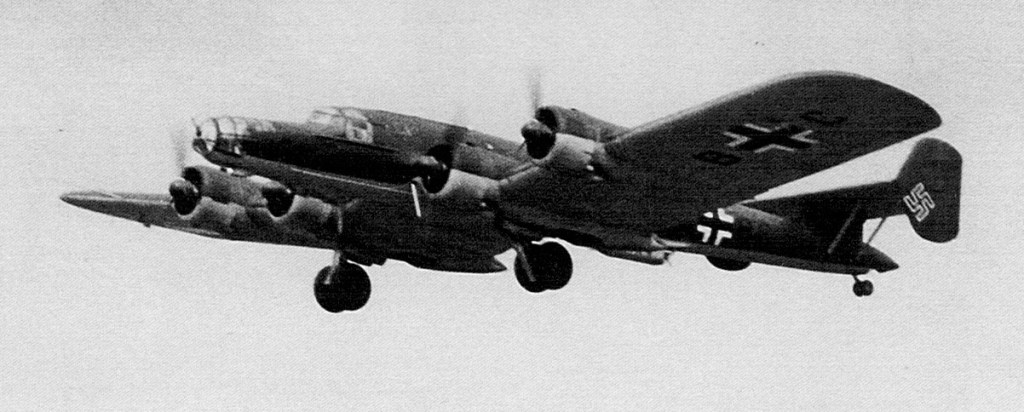
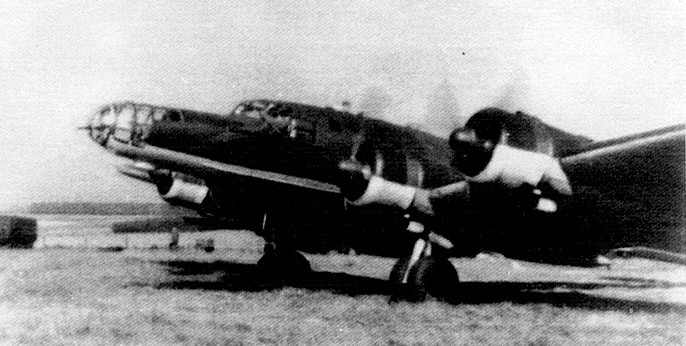
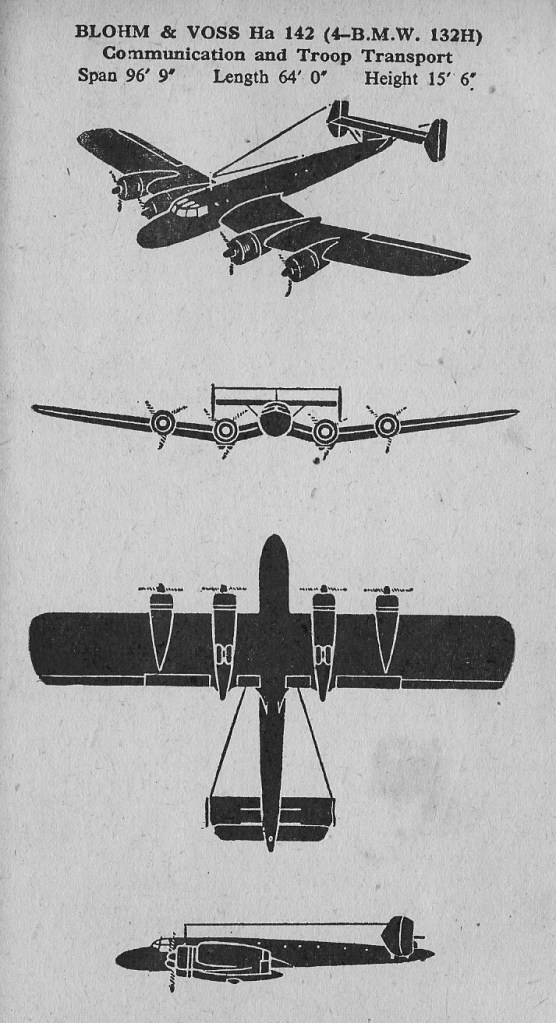
Blohm & Voss Bv.142 / Ha.142

Designed as an armed reconnaissance aircraft incorporating the wings, fuselage and tail unit of the Ha 139. Powered by four BMW 132H engines.

H1 142 V1 operated by Rowehl’s unit

Few built and used as transports by the Luftwaffe.

Ha 142 V2 PC+BC

Ha 142 V2 received factory code PC+BC and was used for transport duties by the Aufklärunsgruppe Ob.d.L.in France during the autumn of 1940 where re-coded T5-CH.

Ha 142 V2 T5-CH

Engines: 4 x BMW 132H, 735kW
Take-Off Weight: 16700 kg / 36817 lb
Empty Weight: 6390 kg / 14088 lb
Wingspan: 29.5 m / 96 ft 9 in
Length: 19.7 m / 64 ft 8 in
Wing Area: 130.0 sq.m / 1399.31 sq ft
Max. Speed: 400 km/h / 249 mph
Cruise Speed: 350 km/h / 217 mph
Ceiling: 6800 m / 22300 ft
Range W/Max.Fuel: 4400 km / 2734 miles
Crew: 4-5

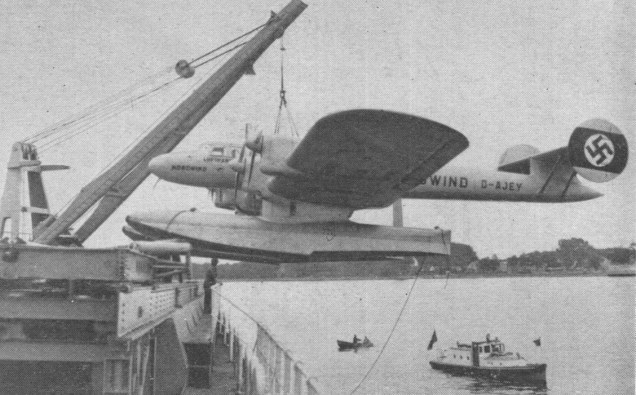
Blohm & Voss Bv.139 / Ha.139

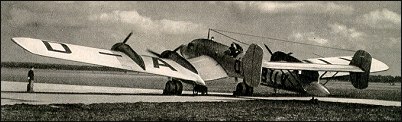
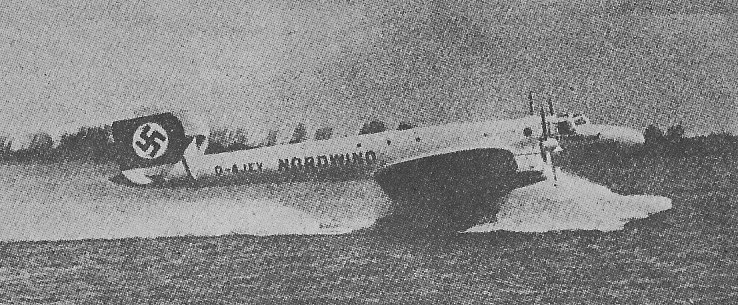
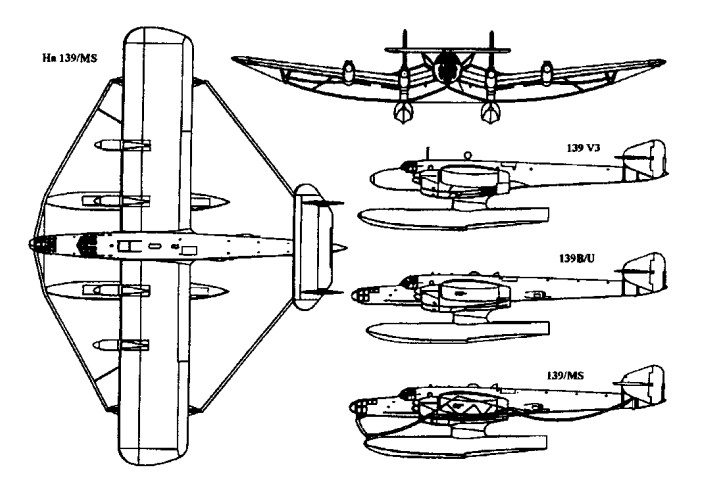
First flown in Autumn 1936, two Ha 139 – the Nordmeer and Nordwind – were delivered to Deutsche Luft Hansa in 1937. In the summer and autumn of that year they made 14 experimental transatlantic flights between Horta (Azores) and New York, operating from depot ships. In the spring of 1938 Nordwind went into service on the regular South Atlantic mail service between Bathurst (Gambia) and Natal (Brazil). Up to the end of June 1939 the seaplanes had successfully completed 100 transatlantic flights: 40 across the North Atlantic and 60 across the South Atlantic.

Blohm & Voss Ha.139 Article

For the 26 transatlantic flights of 1938 between the Azores and New York an improved and larger type of Ha 139, the Ha 139B Nordstern, was delivered.

The Ha 139 type was also used to a limited extent during World War II as a reconnaissance, mine-laying and ambulance aircraft. Power was provided by four 447kW Junkers Jumo 205G engines.

Only four examples were built.

Gallery

Engines: 4 x Junkers Jumo 205 C diesel, 600 hp
Propellers: 3 metal blades variable pitch
Wing span: 27,00 m
Length: 19,50 m
Height: 4,80 m
Wing area: 117 sq.m
Empty weight: 10360 kg
MTOW: 17500 kg
Wing loading:: 149,572 kg/sq.m
Power loading: 7,291 Kg/hp
Max speed: 315 Kmh
Cruise speed: 260 Kmh
Ceiling: 3500 m
Range: 5300 km
Armament: 4 x MT MG 17, 7,92 mm

Bloch MB.162

Another derivative of the Bloch 160 was identified initially as the Bloch M.B.162.
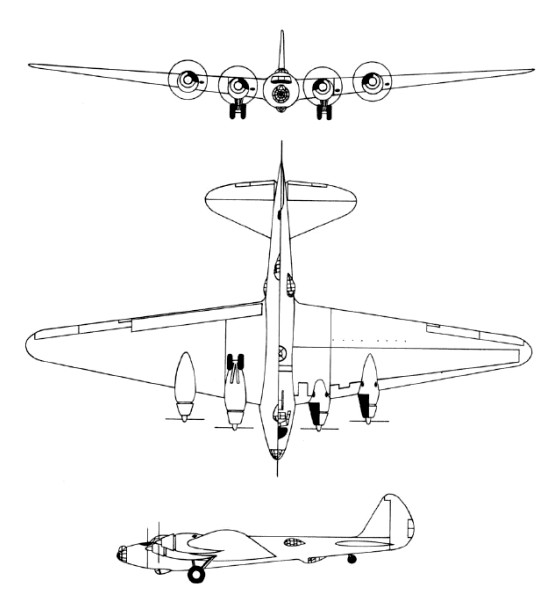
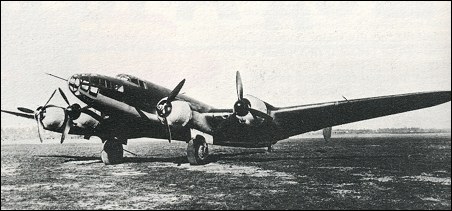
Preliminary design was initiated, and a mock-up to full-scale was built and exhibited at the Salon de I’Aeronautique held in Paris during November 1938. Considerable interest was created by this ‘large’ bomber, only slightly smaller than the B-17, and it was decided to build a prototype. Because production priority had been given to the commercial MB.161, the construction of the bomber was held up until the spring of 1940, flying for the first time on 1 June 1940.
Of cantilever low-wing monoplane configuration, the MB.162 B.5 was of all-metal construction, had a tailplane with marked dihedral and twin endplate fins and rudders, retractable tailwheel type landing gear, and two engines mounted in nacelles at the leading-edge of each wing.
Flown from Villacoublay to Bordeaux-Merignac, the MB.162 was captured by the Germans. Its test programme was completed during 1942 under the supervision of the German Focke-Wulf company, subsequently entering service with the Luftwaffe for long-range clandestine operations.

Engine: 4 x Gnome-Rhone 14N-48/49 radial piston engines, 820kW
Take-off weight: 19000 kg / 41888 lb
Empty weight: 11865 kg / 26158 lb
Wingspan: 28.1 m / 92 ft 2 in
Length: 21.9 m / 71 ft 10 in
Height: 3.75 m / 12 ft 4 in
Wing area: 109 sq.m / 1173.27 sq ft
Max. speed: 550 km/h / 342 mph
Range: 2400 km / 1491 miles
Armament: 2 x 20mm cannon, 2 x 7.5mm machine-guns, 3600kg of bombs

Bloch MB.161 / Sud-Est SE.161 Languedoc

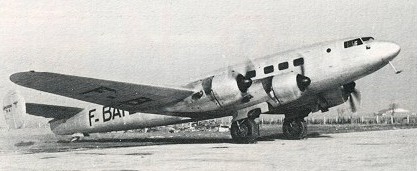
Following absorption of Bloch into the nationalised aviation industry as a component of SNCASO in 1936, the design team which had been brought together by Avions Marcel Bloch was involved with a derivative of the earlier but unused 12-passenger Bloch M.B.160. The resulting Bloch M.B.161.01 prototype (F-ARTV) was flown for the first time during September 1939, and a satisfactory result of early tests brought an order from Air France. It was to be almost seven years before the first was delivered. This was due primarily to delaying tactics of the French industry, anxious to ensure that none of the 20 ordered by Germany in 1942 should be delivered. Consequently, it was not until 17 September 1945 that the redesignated SE.161.1 was flown for the first time. Its configuration was that of a cantilever mid-wing monoplane of all-metal construction, having a high-mounted tail-plane with endplate fins and rudders, retractable tailwheel landing gear, and power provided by four 858kW Gnome-Rhone 14N-44/45 radial engines in wing leading-edge nacelles. Standard accommodation was provided for a crew of four and 33 passengers, but in 1951 Air France converted some of its SE.161s to a high-density seating arrangement for a maximum of 44 passengers.
Bloch 161.1s, by then named Languedoc, entered regular service on Air France’s Paris-Algiers route on 28 May 1946, and on the Paris-Oran-Casablanca and Paris-Marseilles routes in June and July respectively. By October most had been withdrawn because, in addition to problems with their landing gear, they were unsuitable for winter operation. When they re-entered service from March 1947, they had been re-engined with Pratt & Whitney R-1830s, de-icing equipment, cabin heating and other modifications. They had also acquired the changed designation SE.161.P7.
When production ended a total of 100 Languedocs had been built and, despite landing gear problems that persisted for almost four years, they saw extensive service, not only with Air France but also with the French air force and navy.
Five SNCASE SE 161 Languedoc Polish Airlines Polskie Linie Lotinicze (LOT) bought July 1947 to her European network. Belly landings of LOT’s Languedocs under the flights from Warsaw to Paris or Belgrade, Bucharest was the reason for the arrest of LOT managment and trial. The management was convicted and sentenced to death penalties as the general director Mr.Wojciech Zielinski, and Mr.Whitehead. Five LOT’s Languedocs grounded December 1948, were officially scrapped 1950 under Soviet supervision.

Engines: 4 x 895kW Gnome-Rhone 14N 68/69 14-cylinder radial engines
Take-off weight: 22940 kg / 50574 lb
Wingspan: 29.38 m / 96 ft 5 in
Length: 24.25 m / 79 ft 7 in
Height: 5.57 m / 18 ft 3 in
Max. speed: 405 km/h / 252 mph
Ceiling: 7200 m / 23600 ft
Range: 1000 km / 621 miles
Crew: 5
Passengers: 33

Bloch 160

In 1936 Air Afrique had requested a short-range plane for the colonial service and Bloch had designed the Model 160. This was a low-wing aircraft with four 690-hp Hispano-Suiza engines to carry 12 passengers. It did not go into production, although the prototype flew in 1937 and set two speed records.

Engines: 4 x Hispano-Suiza, 690-hp.
Pax cap: 12.