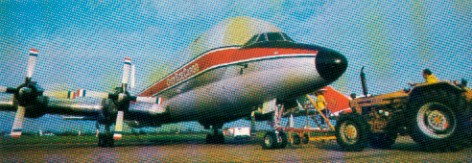
California-based Conroy Aircraft converted at least one CL-44 to an over sized ‘Guppy’.
California-based Conroy Aircraft converted at least one CL-44 to an over sized ‘Guppy’.
A 60-seat four-turboprop CAC-100 airliner.
Airship, France, 1915
Length: 492.126 ft / 150.0 m
Width of hull: 51.837 ft / 15.8 m
Contained volume: 812360 cu.ft / 23000 cu.m
Engine: 4 x Clément-Bayard, 247 hp
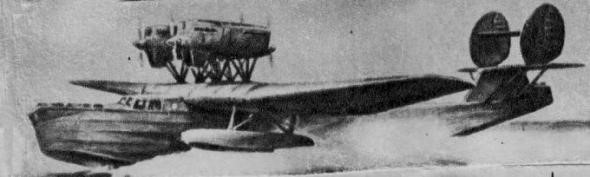
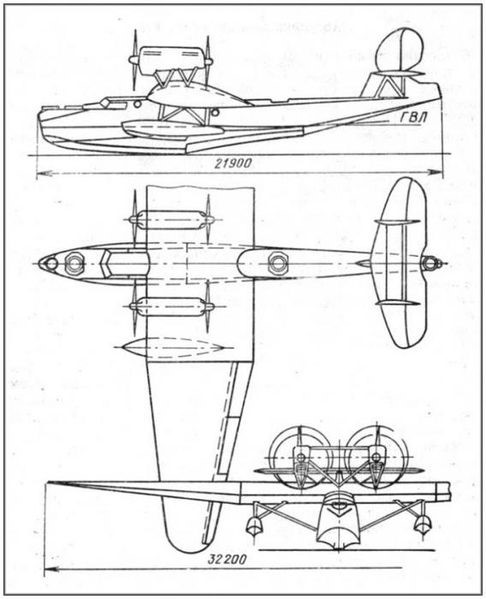
In the experimental construction plan of the naval department of the TsKB a new task of development of a naval reconnaissance flying boat was introduced, which received the 11th number in the row of this institution. Based on its function, the new model was designated MDR-3 or TsKB-11 (Russian: Четвериков МДР-3 (ЦКБ-11)), according to the acronym for Morskoi Dalni Razvietchik or Long-Range Maritime Reconnaissance Aircraft.
The department, under the direction of IV Chetverikov, decided to use the wing, tail unit and other components of the Grigorovich TB-5 heavy bomber as a way to accelerate development. Despite this, the TsKB-11 included in its conception a series of novel ideas.
Chetverikov for the first time decided to build the hull similar to that of sharp-edged ships, which was a departure from the traditional flat shapes used in the USSR since the introduction of the Dornier Wal,
To verify the results of the new design, a scale model was created and for the first time in the USSR in January 1931, tests of the behaviour of an aeronautical design in water were carried out. These tests allowed to determine that the hull lines of the new model had been successfully designed.
The MDR-3 was built entirely of metal and had two pairs of liquid-cooled engines mounted in tandem, fixed above the wings by struts. It was conceived as a braced high-wing monoplane with the stabilization floats located in the midplane, quite close to the fuselage.
The wing was similar to that used on the TB-5 bomber, but with a slightly increased span. The construction was similar, but the covering of the centroplane was made with corrugated metal, so that it could be walked. In the midplane an exit hatch was opened and in the lower part the fixing points for the stabilization floats with a volume of 3 cu.m were created.
The hull was designed in a similar way to that of the ROM-2 but incorporated a transverse forward groove, new bulwarks and an external brace.
The tail unit had a characteristic configuration. A short empennage towered over the rear of the fuselage and supported the large area stabilizers, braced by N-studs to the structure. In the upper part there were two rounded-shaped keels with the rudders and a rigid joint support between them.
The power plant consisted of four BMW-VI engines located in two pairs in tandem. The selection of liquid-cooled linear motors significantly increased the weight of the aircraft, but Chetverikov knowingly decided to take the risk. The two engines of each installation shared a single radiator located in the lower part of the front-mounted one and were supported on a structure of rigid supports, facilitating access for service and maintenance. The fuel tanks were made of duralumin, being located in the centroplane.
The crew consisted of 7 people. The pilots were located in a closed cabin, with seats side by side. The navigator and gunners were located in positions similar to those of the TB-5. In the bow area, a watertight department was prepared to store cargo and equipment.
Defensive armament was generally similar to that of the bomber and consisted of eight Degtyaryov light machine guns for aircraft in four paired installations located in turrets. The MDR-3 could carry two 250 kg bombs hung on the rails, between the centerplane bracing supports.
The construction of the model took place in the spring of 1931 and the prototype was found finished for the month of December. Unarmed it was sent to Sevastopol, where the first flight was made on January 14, 1932, with the pilot BL Buxgolts at the controls. Engineer A. Dnieprov and Chetverikov himself also participated in this flight.
About this flight Chetverikov wrote: – “Let’s go” – said Buxgolts and accelerated. We moved forward, the plane lifts its nose easily, begins to glide without splashing, increases its speed easily and smoothly takes off from the water. All good!
At an altitude of 600 meters we make the first turn, then a circle over the bay, planing and a gentle landing. “I have no markings,” said Buxgolts. As we headed into the Dnieprov bay he began to look to see if there was any water on the hull. – “Surely everything is excellent – said Dnieprov upon returning – Just hurry up guys, quickly to the shore or we will sink! There are leaks at the bottom and the apartments are taking on water pretty fast. If we take longer than necessary, we will sink in front of the public.”
This was expected. The hull took 10 months to build and was finished without checking its tightness.
The next flights were delayed due to the sealing work on the hull. Taking into account that the production base was very far away, these jobs were not easy at all.
Finally the boat was ready and the flights could continue. Three – four short flights were made to define the small defects and familiarize the pilot with the model. On one of these flights we made the landing outside the bay, with considerable waves, and we verified that the plane did not deceive us in relation to its seaworthy behavior. We can start with the test flights.
The next flight was intended to define the flight ceiling, the rate of climb and the maximum speed. After a good takeoff the plane began to gain altitude. Initially it was found that the rate of climb was lower than calculated. After an hour of flight the plane had only managed to rise to about 2000 meters.
During this flight, creaking noises were observed in the rear area of the flying boat. The tail began to vibrate and move from side to side. Continuing the flight was dangerous, so it was decided to return.
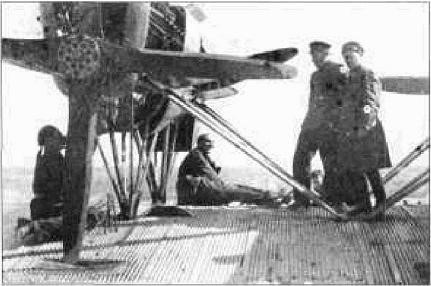
Later tests showed the appearance of important vibrations that started from the tail towards the nose. The cause of this phenomenon was attributed to the action of the propellers of the tandem drive installations. After replacing the propellers with ones from a Dornier Wal, the vibrations practically disappeared, but the total solution of the problem required a radical redesign of the tail area.
The tests were carried out until March 25 and during their execution a speed of 210 km/h was achieved and excellent seaworthy conditions were demonstrated. As a positive aspect, the excellent autonomy and the great range of the model were pointed out. As negative aspects, the poor rate of ascent and the low ceiling, which only reached 2,200 meters, were pointed out.
The studies carried out showed that the fundamental cause of the poor performance lay in the inefficient engine configuration selected and the poor aerodynamics of the model: poor design of the underwing stabilizers with circular fronts, absence of aerodynamic fairings for the supports and structures, poor design of the radiators, located on the wing in a way that diminished its effectiveness, a terrible solution for the location of the 250 kg bombs on the sides. To all this were added the finishing problems and a series of details that affected the lines of the fuselage.
As a consequence of these deficiencies, the result of the tests was assessed as negative. The MDR-3 failed to meet the requested specifications.
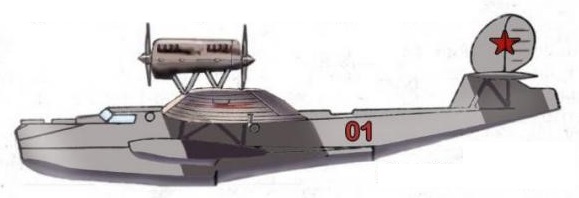
Taking into account the great need for aircraft of this type, the commissioners of defense and heavy industry approved the continuation of the development of the model, correcting the deficiencies that affected the aerodynamics. A short time later the plans and calculations of the MDR-3 were delivered to AN Túpolev in the KOSOS TsAGI to work on the solution to the indicated problems. Tupolev decided not to waste time on modifications to the flying boat and to design a new model. Based on the MDR-3, in 1933 the brigade led by II Pogosski designed the flying boat MDR-4 (ANT-27). The new flying boat retained only the hull lines of the previous model. The new configuration included a high cantilever wing, three engines and a monoplane tail with a single tail.
MDR-3
Engines: 4 × 500/680 hp BMW-VI
Wingspan: 32.2m
Wing area: 153.00 m²
Length: 21.9m
Height: 7.0m
Empty weight: 8928 kg
Maximum takeoff weight: 13973 kg
Wing loading: 91.5 kg/m²
Power Load: 5.1kg/hp
Fuel load: 3300 kg
Total load capacity: 5044 kg
Maximum speed at sea level: 210 km/h
Landing speed: 110km/h
Practical range: 1600 km
Autonomy: 9 hours
Practical ceiling: 2200 m
Take off time: 36s
Accommodation: 7
Armament: 8 Degtyaryov 7.62 mm machine guns
Bombload: two 250 kg
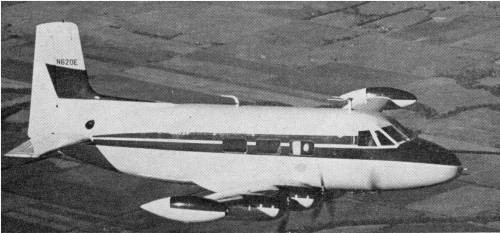
The four-engine, pressurized Cessna Model 620 first flew on August 11, 1956 with Ralph Harmon at the controls. This attempt at a business transport was soon dropped in 1957 as it was apparent that there were too many surplus airplanes on the market for this approach to be a financial success. By all accounts, the airplane did fly nicely. The fuselage was sold as scrap and became a house trailer.
Engines: 4 x Continental GSO-526-A, 320 hp
Wing span: 55 ft
Length: 31 ft 6 in
Height: 16 ft 6 in
Cruise: 235 mph
Max speed: 269 mph

During the war years the C.R.D.A. completed two prototypes of the Z.511 commercial transport floatplane designed by Zappata before the war and intended far use on Alitalia’s South Atlantic route as the world’s largest floatplane. Construction of the Z.511 commenced in 1941 and the first prototype flew on 8th September 1943. The first prototype was destroyed when it struck a mine, and the second, commandeered by the Luftwaffe, was destroyed in Germany. The Z.511 was powered by four 1,500-h.p. Piaggio P.XII R.C.35 radials and had a loaded weight of 74,957 lb.
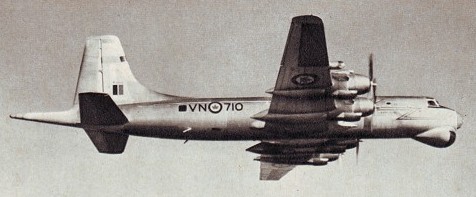
In 1949 had Canadair offered the RCAF a new maritime Patrol Aircraft based on the North Star version of the DC-4, to replace the Lancaster fleet
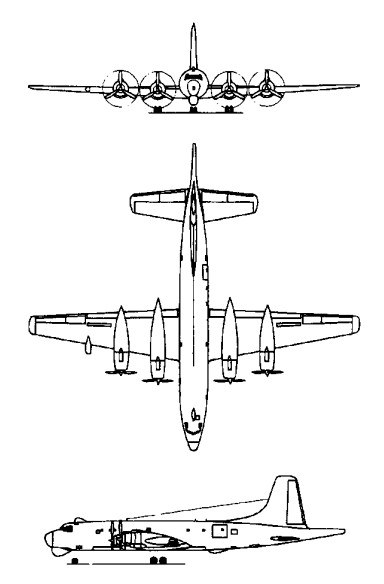
When the RCAF issued their specifications in 1952 Lockheed submitted a version of the Super Constellation as and Bristol submitted a version of the Britannia 100 Turboprop Airliner. In 1953 the RCAF decided on the Britannia. On February 23, 1954, Ottawa announced that Canadair would build the plane and on March 13 the licence agreement was signed. On May 27 the government awarded Canadair a contract to produce 13 maritime patrol/ASW aircraft based on the Bristol Britannia. It was designated Canadair CL-28 ARGUS.The Argus retained the Britannia’s wings, tail and the tab based flight control system. The fuselage was redesigned to accommodate two weapon bays, a forward crew compartment and a transparent nose. The turboprop engines where not considered ideal for low altitude operations, so the designers replaced the Britannia’s Proteus turboprops with 3700 bhp Wright R-3350 turbo-compound piston engines to provide the combination of high power and low fuel consumption. The Argus was equipped with latest in avionics and ASW. They ran of a fully paralleled AC electrical system. The aircraft was the first in history to synchrophase four 400-cycle systems in an aircraft.
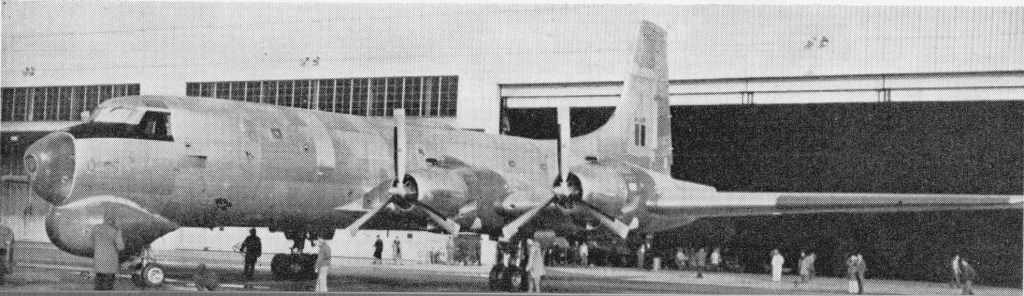
The first Argus (VN710) made its first flight on 28 March 1957. The Argus completed RCAF acceptance trials in early 1958.
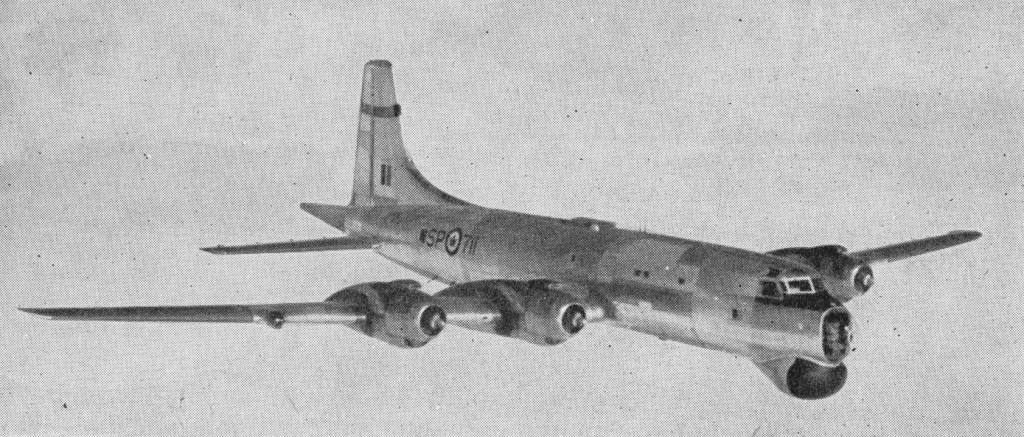
The first 13 built were Mk.1, with the American APS-20 search radar. All others Argus (22) were Mk.2 with British ASV-21 search radar with the smaller radome.
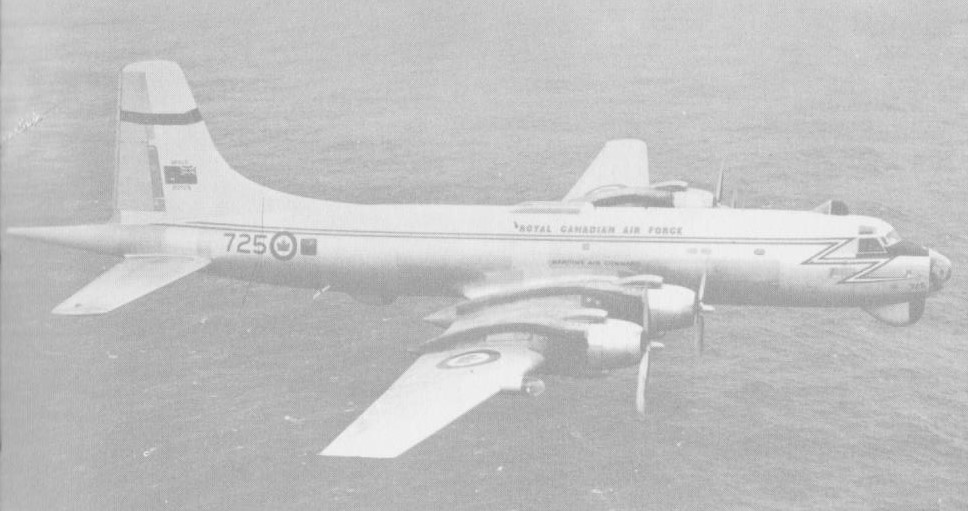
The Argus flew with 404 and 405 Sqd at Greenwood, Nova Scotia; 415 Sqd at Summerside, Prince Edward Island; and 407 Sqd at Comox, British Colombia, as Canadair CP-107 Argus.
The Wright engines were fitted for low specific fuel consumption and, on the 31 may 1974, 711, a 407 Squadron Argus Mk.1 from Comox, flew 31.1 hours straight with no external or added fuel tanks.
The Argus served for 24 years and during this time only 2 of the 33 Arguses built were lost. 20727 of 404 Squadron crashed near Puerto Rico during night exercise on March 25 1965. 10737 crashed on landing at Summerside on March 31, 1977 when it collided with a Lockeed Electra, which Canadair had modified for Ice reconnaissance work.The last operation work took place on November 10 1980, replaced by the P-3 Orion. In 1982 Bristol Metal Industries of Toronto bought 24 Arguses and melted them down on the spot. It was argued that the Canadian government did not want them to fall into the wrong hands. The remaining Arguses have found a new role as display models at Air Bases and Canadian museums.
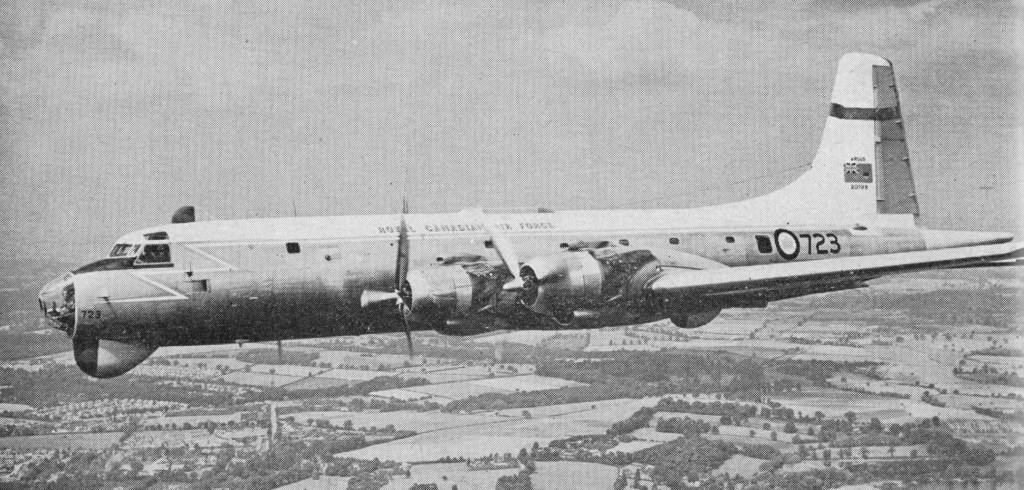
CL-28 Argus
Engines: 4 x Wright R-3350-EA1 Cyclone, 2535kW, 3649 shp
Wingspan: 43.37 m / 142 ft 3 in
Length: 39.26 m / 129 ft 10 in
Height: 11.79 m / 39 ft 8 in
Wing area: 192.77 sq.m / 2074.96 sq ft
Max Take-off weight: 71214 kg / 157001 lb
Empty weight: 36741 kg / 81000 lb
Fuel capacity: 7188 Gal
Max speed: 507 km/h / 315 mph
Ceiling: 7620 m / 25000 ft
Service ceiling: 20,000 ft
Range: 9495 km / 5900 miles at 175-200 mph
Crew: 15
Armament: 3629kg internal weapons / 1724kg on external hardpoints
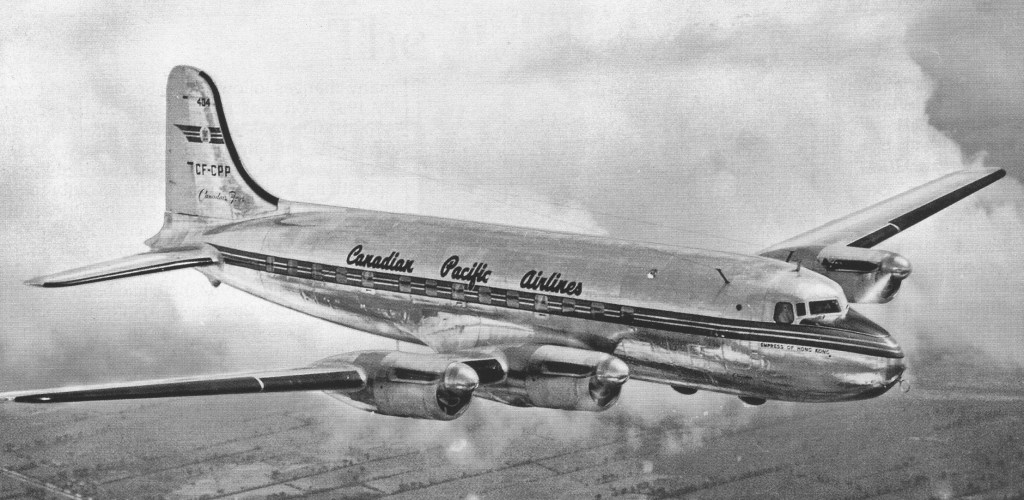
The Canadair Four is a progressive development of the DC-4M-2 which embodies features if both Douglas DC-4 and DC-6, and was adapted to take four 1730 hp Merlin 620 engines.
Canadair C-4 / C-5 / C-54G-M / North Star / Argonaut Article
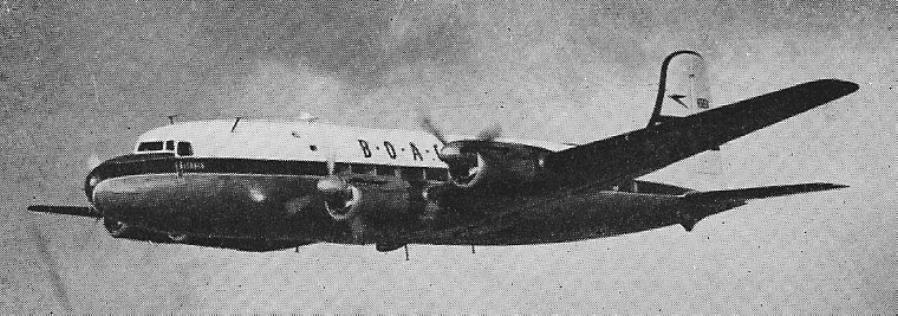
The DC-4M-2 is externally similar to the Canadair Four and was employed by the RCAF and Trans-Canada Air Lines. The Canadair Four has been delivered to Canadian Pacific Airlines and British Overseas Airways Corporation, the latter designating the type Argonaut.
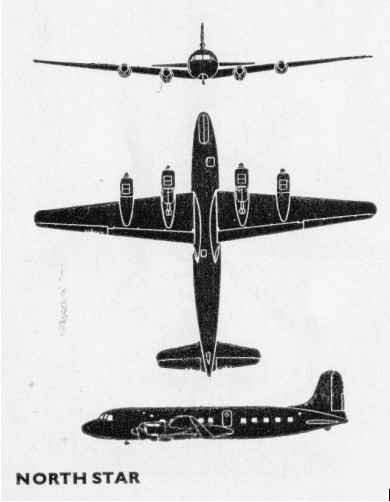
The R.C.A.F. uses a Canadian-built version of the Douglas C-54 known as the C-54G-M North Star, with Rolls-Royce Merlin 620 engines.
A total of seventy-four DC-4Ms and Canadair Fours were built by Canadair Ltd.
The single Canadair C-5 used by the R.C.A.F. is basically a North Star with 2,100 h.p. R2800 radials.
Canadair Four
Engine: Rolls-Royce Merlin 626, 1760 hp
Wing span: 117 ft 6 in
Length: 93 ft 7.5 in
Height: 27 ft 6.5 in
Empty weight: 46,832 lb
Loaded weight: 82,300 lb
Max cruise: 325 mph at 25,200 ft
Max cruise: 280 mph 12,800 ft
Service ceiling: 29,500 ft
Passenger capacity: 40
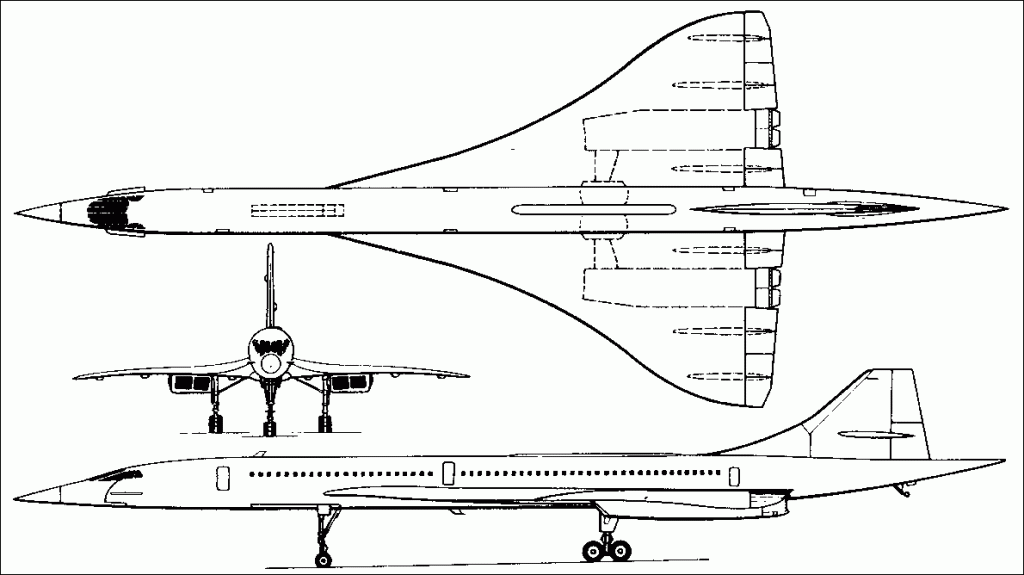
In the late 1950s, Sud Aviation in France (later represented by Aerospatiale) and Bristol Aircraft in the UK (lost in mergers that formed British Aerospace) were both working individually on the design of a supersonic civil transport aircraft. Both companies realized at an early date that the creation of such an aircraft was feasible, but beyond the economic capability of any individual company; thus came about the Anglo-French design and development agreement in November 1962, with the two companies backed by their individual governments.
After the Anglo-French Supersonic Treaty was signed in 1962, years of intensive research and over 5,000 hours of wind-tunnel tests proved that the long, streamlined fuselage and slender ogival delta wing finally reconciled good control at speeds as low as 230 mph with low drag up to Mach 2.2 (around 1,300 mph).
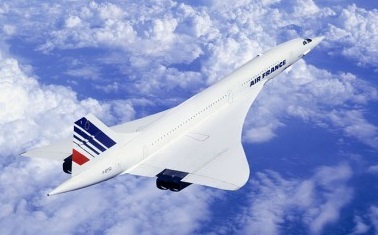
The wings, produced by Aéro¬spatiale, have elevons which work together as elevators and differen¬tially as ailerons. There are no flaps; control is built into the wings through camber, taper, droop and twist. Rolls-Royce designed the power-plant – so called because the four Olympus turbojet engines constitute just one part of a complex four-part system made up of air intakes adjustable for high and low speeds, engines with two independent compressors for low fuel consumption at sub- and supersonic speeds, the reheat system to give extra thrust for takeoff and transonic acceleration, and variable geometry exhaust nozzles that also serve as reverse thrust. The cruising speed was fixed at Mach 2.2, just below the “heat barrier”, so the airframe, designed for a life of 60,000 hours, could be constructed in an aluminium alloy resistant to variations in temperature from minus 35 to over 120 degrees Celsius (-310/2480F).
The first French built (F WTSS) and British built (G BSST) prototypes were flown for the first time on 2 March and 9 April 1969 respectively. The Anglo-French plane took off from Toulouse and was in the air for just 27 minutes before the pilot made the decision to land. The first pilot, Andre Turcat, said on his return to the airport: “Finally the big bird flies, and I can say now that it flies pretty well”. The French built F WTSS test flight reached 10,000ft (3,000m), but Concorde’s speed never rose above 300mph (480kph). Mr Turcat, his co-pilot and two engineers taxied to the end of the runway at about 1530GMT. Strong winds meant the test flight was in doubt for much of the day.
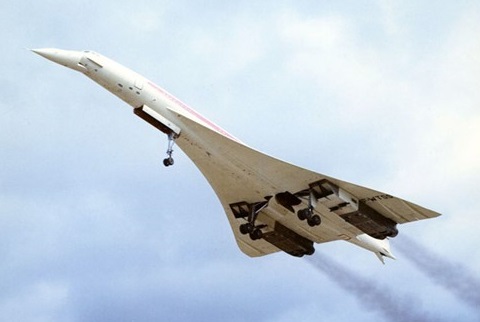
Two previous test flights had to be abandoned because of poor weather conditions. Concorde sped down the runway and there was a spontaneous burst of applause from watching reporters and cameramen as the wheels lifted off the ground. The noise from the four Olympus 593 engines, built jointly by the Bristol division of Rolls Royce and the French Snecma organisation, drowned out any noise from the crowd.
The first British test pilot, Brian Trubshaw, who watched the flight from the news stand, said, “I was terribly impressed by the way the whole flight was conducted. It was most professional and I would like to congratulate Andre on the way he handled this performance.”
Less than half-an-hour later, the aircraft was brought back down to earth using a braking parachute and reverse thrust. The crew emerged at the top of the steps, led by Mr Turcat, who gave the thumbs up signal with each hand.
On 9 April 1969, Brian Trubshaw made his first flight in the British-built prototype. The 22 minute flight left from a test runway at Filton near Bristol and landed at RAF Fairford in Gloucestershire. The British government had so far invested £155m in the project.
Key features of the design include the early decision to limit speed to Mach 2.2, making conventional construction possible; the development by Rolls Royce and SNECMA of the reliable Olympus 593 engines to power the type the evolution of the computer controlled variable area air intakes which ensure that each engine receives an optimum air flow under all flight conditions; and the design of a fuel system which serves not only to feed the powerplant, but also to act as a heat sink for the limiting of wing temperature in prolonged supersonic flight, and additionally to work as a system to maintain in flight the correct relationship between the aircraft’s centre of gravity and its aerodynamic centre of pressure. This last effect is achieved by trim tanks from which fuel is pumped rearward during acceleration and forward as the aircraft returns to subsonic flight speed.
The DST (the French counter-espionage service) and MI5 were collaborating on a case involving a double agent, Air Bubble. Air Bubble was an industrial chemist named Dr. Jean Paul Soupert. Soupert was an agent runner for East German intelligence and the KGB, but the Belgian Securite d’Etat doubled him. Soupert told the Belgians about an East German illegal named Herbert Steinbrecher, who was running agents inside the French Concorde assemble plants. They had acquired for the Russians every detail of the Anglo-French Concorde’s advanced electronic systems.
The Concorde first exceeded Mach 1 on 1 October 1969, and Mach 2 was passed during a test flight on 4 November 1970.
Despite the reactions of economists and the ecologists, Air France and British Airways began simultaneous inaugural Concorde services on 21 January 1976, from Paris via Dakar to Rio de Janeiro, and from London to Bahrain respectively, just over four months later, on 24 May, simultaneous services were launched from Paris and London to Washington’s Dulles International Airport.
In January 1976, 29 years after the first aircraft broke the sound barrier, two Concordes took off from Paris and London on the first supersonic passenger service. Concorde flies high at 50,000 feet or more, where air density is around one tenth that at sea level, temperatures are low and supersonic engines efficient. Sixty thousand feet is OK, because it can go supersonic there. Thirty thousand feet is OK because it can fly subsonic at that level. It is difficult to maintain a fixed altitude. It needs to follow the Mach number, which is dependant on air temperature. It operates at the block altitude of 50-60000 feet. Starting off at Mach 2 at 50000 feet, and gently climbing as fuel is burnt off.
Concorde were providing two daily return flights, with an average flying time of 3 hr 20 min, from London to JFK International, New York.
The fuel burn of the Paris-New York route is similar to that of a Boeing 747. But carrying 100 passengers, the jumbo 440 plus. The take-off speed is 220 knots, the typical take-off weight 186 tonnes (made up of 80 tonnes unladen weight, 96 tonnes of fuel and 10 tonnes of passengers and baggage). Twelve minutes after takeoff it can be at Mach 1, 26 minutes after take-off Mach 2. The complicated fuel manage¬ment systems to alter the centre of gravity as the centre of pressure shifts mean that a flight engineer is required. Landing speed is 163 knots. The skin temperature reaches 127 degrees C at Mach 2.02, and this was in fact the limiting factor in the original design with the airframe materials available at that time.
From a total of twenty originally built, fourteen were delivered to British Airways and Air France.

The aircraft were designed for working lives of 6700 cycles, with a possible 10,000 cycles seen as a desirable goal, through a life extension programme. Both airlines continue to co-operate closely in exchanging information on this work. There have been few incidents in service thus far, the well-publicized departure of bits of British Airways’ rudders being the exception. The aircraft continue to be expensive to maintain (about 2.5 times as labour intensive as the Boeing 747), but the prestige value is still considered to overide this.
Many airlines showed initial interest, but then cancelled their options and lost interest entirely.
With its massive development costs, Concorde was always struggling with profitability on the commercial routes. In more recent years, an upturn in charter business has helped defray Concorde’s high costs and utilisation – so much so that profitability had to some degree been achieved.
On 12 April 1989 a large section of rudder detached from Concorde G-BOAF as it climbed through 43,000 ft / 13,100 m on a flight from Christchurch, New Zealand to Sydney, Australia. The crew was unaware of the problem until landing.
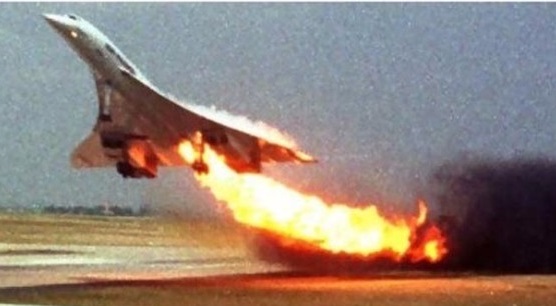
Then came the accident to the Air France AF4590 aircraft, F-BTSC in Paris on 25 July 2000 where all one hundred passengers and nine crew, plus four people on the ground, lost their lives. After expensive and intricate modifications, British Airways put five aircraft back into service commencing on 7 November 2001. Air France put four back into service on the same day and both airlines operated to New York at the same time.
With the drop off in passenger numbers and the uncertainty of air travel in general, plus the ever-¬rising engineering costs to keep the fleet airworthy, British Airways took the decision on 10 April 2003 to terminate operations from the end of October. Air France had already ceased operations from the 6 of May 2003.
The last Concorde operation (a British Airways New York to Heathrow) was conducted on 24 October 2003.
British Airways operations saw Concorde make about 50,000 flights, travelling some 140 million miles and clocking up nearly 238,000 flying hours in the process, of which around 100,000 were supersonic (the prototype and development aircraft had collectively reached nearly 4,500 flying hours).
The remaining Air France aircraft were all retired to museums earlier in 2003: F BVFA (c/n 205, 17,824 hours) to Smithsonian’s Steven F Udvar Hazy centre at Dulles Airport, Washington Airport on 12 June 2003; F BVFB (c/n 207, 14,771 hours) to the Sinsheim Auto & Technik Museum in Germany on 24 June 2003; F BVFC (c/n 209, 14,332 hours) on 27 June 2003 to the Airbus factory at Toulouse; F BVFD (c/n 211, 5,821 hours) withdrawn in 1982 following a heavy landing and was finally scrapped in 1994; F BTSD (c/n 213, 12,974 hours) to Le Bourget Air and Space Museum on 14 June 2003 and F-BVFF (c/n 215, 12,420 flying hours), parked since July 2000 and officially withdrawn from use since 10 April 2003 and eventually to be dis¬played at Charles de Gaulle Airport, Paris.
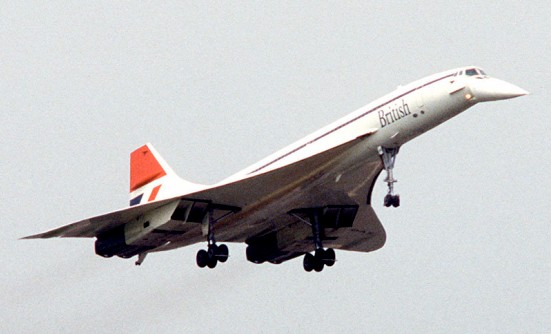
Recipients of the five airworthy British Airways aircraft are as follows: G BOAC (c/n 204, 22,260.11 hours/7,730 landings) flown from Heathrow to Manchester on 31 October for the Manchester Airport Aviation Park, where it will eventually be housed in a special glass hangar. G BOAD (c/n 210,23,397.25 hours/8,406 land¬ings) was flown from Heathrow to JFK New York on 10 November and on 24 November it was lifted onto a 260 ft former NASA barge (pre¬viously used to transport Apollo Saturn V moon rockets) and transported along the Hudson River to where it was moored to the quayside in Manhattan, at Pier 86, adjacent to the aircraft carrier USS Intrepid. It will ini¬tially be displayed as part of the Intrepid Sea Air Space Museum. G BOAE (c/n 212, 23,376.07 hours/8,383 land¬ings) was flown from Heathrow to Barbados (a Concorde route for 21 years) on 17 November and arrived just under 4 hours later with an Atlantic crossing altitude of 60,000 ft. It is to be displayed at the Grantley Adams Airport Bridgetown, where it will form the centre piece of a new aviation museum being set up in 2004 at Spencers Plantation close to the airport. G-¬BOAF (c/n 216 18,257.00 hours/6,045 landings) had the distinction of being the last Concorde built (first flown on 20 April 1979), the last to fly, and the last airliner to fly supersonic, leav¬ing Heathrow at 11.29 hours on 26 November for Filton. There it will come under Airbus UK charge, although still owned by BA but on indefinite loan, as a ground dis¬play aircraft. “Alpha Fox” will form the centre¬piece of a new aerospace heritage centre on the site, incorporating the Bristol Aero Collection at Kemble, and will be in place in an “interim” exhibition area which should be open to the public around Easter 2004. G BOAG (c/n 214,16,239.27 hours/5,633 landings) was flown from Heathrow to Seattle’s King County Airport, via New York on 3 November for the Museum of Flight to take its place amongst other airliners such as the prototype DC 2, Boeing’s 727, 737 and 747 prototypes, plus the only de Havilland Comet in North America. This flight outbound from New York to Seattle created its own achievement as the flight time of 3 hours, 55 min¬utes and 12 seconds, setting a new East to West coast record.
The airframe stored at Filton since 1982 as a spares source, G BBDG (c/n 202, 803 hours), is to be transported to the Brooklands Museum, Weybridge, Surrey. The UK prototype, G BSST (c/n 002, 835 hours), can be seen in the FAA Museum at Yeovilton, whilst G AXDN (c/ n 101, 632 hours), the first British production aircraft, which made its maiden flight on 13 February 1974, can be seen at Duxford Airfield as part of the Duxford Aviation Society collection. Similarly, in France can be seen F WTSS, (c/n 00 1,812 hours), the French prototype, in the Le Bourget Air and Space Museum; F WTSA (c/n 102, 656 hours), preserved and on display at Orly Airport, Paris; F WTSB (c/n 201, 754 hours), is on display outside the Aerospatiale (Airbus) Headquarters at Toulouse.
Two others, G BOAA (c/n 206, 22,768.56 hours/ 8,064 landings), and BOAB (c/n 208, 22,296.55 hours/7,810 landings), unmodified since the Paris crash and not flown since 12 August and 15 Au¬gust 2000 respectively, have also found new homes. G BOAA will be dismantled and trans¬ported to Scotland’s National Museum of Flight at East Fortune near Edinburgh, whilst G BOAB will stay at Heathrow as a ground display aircraft to be eventually installed within the Terminal 5 complex.
BAC-Sud Aviation Concorde prototype 001 F-WTSS
Engines: 4 x Bristol Siddeley / SNECMA Olympus 593 B Stage 1, 13,435 kg dry / 17,100 kg afterburn thrust
Wing span: 84 ft 0 in (25.56 m).
Length: 203 ft 11.5 in (62.17 m).
Height: 40 ft 0 in (12.11 m).
Wing area: 358.25 m²
Max TO wt: 343,500 lb (155,800 kg).
Max level speed: M2.2.
Ceiling: 18000 m
Range: 5200 km
Concorde (pre-production aircraft)
Powerplant: four Bristol Siddeley/SNECMA Olympus 593 turbojets of 35 000+1b thrust rated take-off power (ISA at sea level), low thrust boost afterburner on earlier engines.
Wingspan, 83 ft 10 in
Length, 191 ft 1 in
Height, 38 ft 0 in
Gross wing area, 3860 sq.ft
Max. usable floor area, 1000 sq.ft
Max. cabin length, 129 ft 0 in
Max. width, 103.4 in
Max. height, 77 in
Accommodation: max. high density seating, 138 at 34 in pitch
Volume of freight and baggage holds outside cabin, 530 cu.ft
Operating weight empty, 135 610 lb
Total fuel, 185 000 lb
Max. payload (volume limited), 28 000 lb
Max. take-off, 340 000 lb
Max. landing, 200 000 lb
Max. zero fuel, 165 000 lb
Wing loading (max. take-off weight), 88 lb/sq.ft
Wing loading (max. landing weight), 52 lb/sq.ft
Thrust loading, 2.62 1b/1b thrust
High-speed cruise, 1261 kt. TAS at 50 000-62 000 ft
Long range cruise, 1261 kt. TAS at 50 000-62 000 ft
Balanced field length at 330 000 lb take-off weight, at ISA at sea level, 9400 ft
Landing distance, max. landing weight, ISA at sea level, 7600 ft
Range max. payload, 3500 nm at 1200 kt. / 50 000-62 000 ft
Engine: 4 x Rolls-Royce/Snecma Olympus 593 Mk 602 afterburning turbojet (38,000 lb / 170.2kN) thrust.
Wing span: 84 ft 0 in (25,60 m).
Length: 203 ft 11.5 in (62.17 m).
Height : 37.073 ft / 11.3 m
Wing area: 3,856 sq ft (358.25 sq.m).
Wing load : 103.73 lb/sq.ft / 506.00 kg/sq.m
Max take off weight : 399987.0 lbs / 181400.0 kg
Weight empty : 174779.3 lbs / 79265.0 kg
Max cruising speed: 1,450 mph (2,333 km/h) at 54,500 ft (16,600 m).
Cruise speed: 2.2 mach @ 55,000 ft.
Range: 4,020 miles (6,470 km) at Mach 2.05 cruise/climb with payload of 28,000 lb (12,700 kg). Accommodation: Crew of 3 and 128¬-144 passengers
Cargo, nil.
Operating alt: 60,000 ft.
Engines: 4 x Rolls-Royce/Snecma Olympus 593 Mk.610 turbojet, 38,050lb / 169.2kN afterburning
Wingspan: 25.66m / 83 ft 10 in
Length: 62.17m / 203 ft 9 in
Height: 11.40m / 37 ft 5 in
Wing area: 358.25 sq.m / 3856 sq.ft
Operational empty weight: 78,700 kg / 173,500 lb
MTOW: 185,069 kg / 408,000 lb
Max payload: 13,381 kg / 29,500 lb
Fuel capacity: 119,786 lt
Max cruise: M2.04 / 1176 kt / 2178 kph at 51,000 ft / 15,545m
Take-off speed: 215 kt / 397 kph
Landing speed: 162 kt / 300 kph
Initial climb: 5000 fpm / 1524 m/min
Service ceiling: 60,000 ft / 18,288 m
Take-off dist to 35 ft: 3414m / 11,200 ft
Range max fuel & res: 3550 nm at M2.02
Accommodation: 100-128 passengers
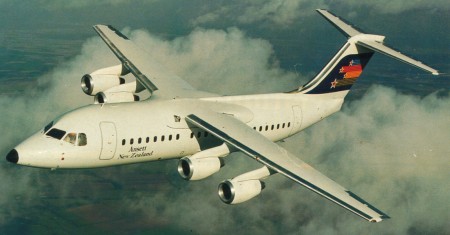
Hawker Siddeley announced their plans for a short-range, quiet airliner powered by four small turbo-fans in August 1973, the 146. But, with the economic recession in Britain that fol¬lowed shortly after, the HS. 146 project became “unjusti¬fiable” and was dropped. It was re-launched five years later when Hawker Siddley became British Aerospace (BAe).
British Aerospace BAe 146 / Avro RJ Article
Design of the BAe-146 included 15 rows of five-abreast seating, and it was powered by four Textron Lycoming ALF502R-5 high bypass turbofan engines of 6,970 lbs of thrust.
The British Aerospace 146 first flew at Hatfield on 3 September 1981, flown by chief test pilot Michael Goodfellow and Peter Sedgwick, and two flight test observers. At the time of the first flight, which lasted 95 minutes, BAe reported that it had 35 aircraft “earmarked for customers”.

The -200 development production model flew on 1 August 1982. The main point of difference between the -200 and the-100 was the increased fuselage length of the -200 by 2.40m to 28.60m. The type was granted certification on 4 February 1983, and production went ahead, with assembly of the BAe-146 beginning at Hartford and later expanding to Woodford.
Annual production of the airliner reached 40 aircraft, and one of the first operators of the type was Dan-Air in Britain, which began operations with it in May 1983.
QT Quiet Trader and QC convertible versions with side-opening freight doors were also available. The QT suffix under¬lines a marketing ploy; “Quiet Trader”. The 200QT combines the wide door introduced on the freighter versions with interior trim appropriate to the passenger role and has a within one hour turnaround between roles; providing either 94 seats or room for six freight pallets.
The prototype QC had made its debut at the 1989 Paris Air Show. With a strengthened floor that enable pallets of up to 4000 lbs (1.815 tonnes) providing a possible gross payload of 10.05 tonnes to be shifted, with a 42.184 tonne MAUW permitted.
The name Statesman refers to VIP-furnished variants for military or civil customers.
The 146STA was the first dedicated military variant to reach demonstrator status, in the form of the original Srs 100 No 2 modified, by Hayes International, to incorporate a 131in/3.33m by 76in / 1.93m side-loading cargo door. The 146STA made its first flight in the USA on 8 August 1988 and featured a single air-openable (outwards and forward) parachuting door immediately behind the main freight door. A strengthened floor can take up to 7000 lb / 3175 kg single pallets and a total load of 22,300 lb / 10,115 kg.
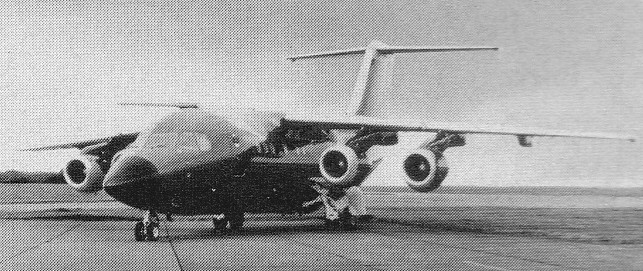
A further development, the BAe 146-300, made its first flight on 1 May 1987 and certification was granted on 6 September 1988. This had its fuselage lengthened again to 30.99m, seating around 90 passengers five abreast, and an upgraded “glass” cockpit, but the power plant remained the same.
The -300 prototype was a modification of the original -100 prototype, then followed by a development aircraft, G-OASF, that first flew on 22 June 1988. Flight testing led to the development of a flap/trim compensation unit to cater for the increased tail arm of the -300, and an increase in max operating speed to M 0.72, but M 0.73 in the USA. Limiting airspeed remained at 295 kt / 546 kph IAS. It was certified at 93,000 lb / 42, 185 kg, like the Srs 200, but was likely to increase.
Late in 1990, BAe offered the first of an improved series called the RJ70, and this was followed over the next two years with the RJ80, the RJ85 and, in May 1992, the RJ100. The RJ-100 (G-IRJX) first flying on 23 Sept 2001. However, the RJX programme was eventually closed, marking the end of commercial jet airliner production in Britain. In all, a total of 380 BAe-146s were produced and the type has been in worldwide service.
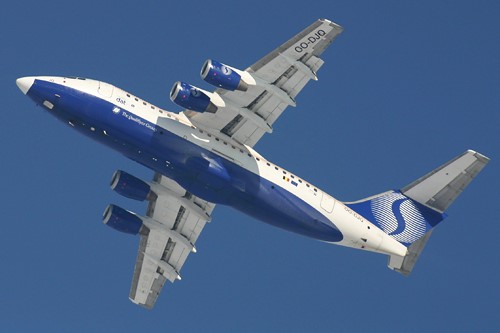
The first of 5 Air Lingus Bae 146-300s entered service on 25 April 1995.
BAe 146-100
Engines: Four Avco Lycoming ALF 502R-3 turbofans, 6,700 lb st (3 040 kgp) for take-off.
Fuel capacity: 2,540 Imp gal (11540 lt)
Optional fuel: 300 Imp gal (1364 lt)
Design Vmo/Mmo, 310 kts (574 km/h)
CAS, M0.70 above 22,000 ft (6 705 in)
Typical high cruise speed, 419 kts (775 km/h)
Still air range with basic 82-pax payload, 730 nm (1352 km)
Range with max payload and std fuel, 510 nm (946 km)
Range with max payload and increased gross weight 1,100 nm (2037 km)
Range with optional increased tankage, 1,550 nm (2871 km) with 13,000 lb (5 900 kg) payload
Balanced take-off field length, 3,600 ft (1097 m), ISA at sea level.
Typical operating weight empty, 45,570 lb (20 670 kg)
Max take-off weight, 74,600 lb (33840 kg)
Optional (-00RR) increased gross weight version, 80,750 lb (36628 kg)
Max landing weight, 71,850 lb (32590 kg)
Max zero fuel weight, 63,250 lb (28 690 kg).
Span, 86 ft 5 in (26,34 m)
Length, 85 ft 10 in (26,16 m)
Height, 28 ft 3 in (8,61 m)
Gross wing area, 832 sq ft (77,3 sq.m)
Aspect ratio, 8.97:1
Sweepback, 15 deg at quarter chord
Undercarriage track, 15 ft 6 in (4,72 m)
Wheelbase, 33 ft 11 in (10,1 m)
Flight crew: two
Max seating, one-class, 93 pax six abreast at 29-in (74-cm) pitch
Standard seating, 82 at 33-in (84-cm) pitch
Underfloor baggage/cargo compartments volumes 258 cu ft (7,30 cu.m) front / 242 cu ft (6,85 cu.m) rear
BAe 146-200
Engines: Four Avco Lycoming ALF 502R-3 turbofans, 6,700 lb st (3 040 kgp) for take-off.
Fuel capacity, 2,540 Imp gal (11540 lt)
Optional fuel 300 Imp gal (1364 lt)
Design VMO/MMO, 300 kts (557 km/h)
CAS, 100M = 0. 70 above 23,750 ft (7 240 m)
Typical high cruise speed, 419 kts (775 km/h)
Sill-air range with basic pax payload, 1200 nm (2 223 km)
Range with max payload and std fuel, 1,080 nm (2 000 km)
Range optional fuel and 19,000-1b (8 618-k.g) payload, 1380 nm (2 556 km)
Balanced take-off field length, ISA at sea level, 5,000 ft (1520 m)
Typical operating weight empty, 45,570 lb (20 670 kg)
Max take-off, 88,250 lb (40030 kg)
Max landing weight, 77,000 lb (34927 kg)
Max zero fuel weight, 69,250 lb (31411 kg)
Span, 86 ft 5 in (26,34 m)
Length, 93 ft 8 in (28,55 m)
Height, 28 ft 3 in (8,61 m)
Gross wing area, 832 sq ft (77,3 cu.m)
Aspect ratio, 8.97:1
Sweepback, 15 deg at quarter chord
Undercarriage track, 15 ft 6 in (4,72 m)
Wheelbase, 36 ft 9 in (11,20 m)
Flight crew: two
Max seating, one-class, 109 pax six abreast at 29-in (74-cm) pitch
Standard seating, 100 at 33-in (84cm) pitch.
Underfloor baggage/cargo capacity, 660 cu ft (18,69 cu.m).
BAe 146 200 II QC
Engines: 4 x Avco Lycoming ALF502R-5, 6970 lb thrust.
MAUW: 42.184 tonne.
BAe 146 III
Engines: 4 x Textron Lycoming LF507, 7000 lb thrust.
 All Aero