The Latécoère Laté 55-0 was a 1933 night bomber (BN5), 4 push/pull G-R 500 hp 9Kdrs, 1 built
Laté 55-0 – 1933, as first flown, land bomber with fixed u/c
Laté 55-0 – 1935, twin-float fitted but sank in trials at Saint-Raphaël
The Latécoère Laté 55-0 was a 1933 night bomber (BN5), 4 push/pull G-R 500 hp 9Kdrs, 1 built
Laté 55-0 – 1933, as first flown, land bomber with fixed u/c
Laté 55-0 – 1935, twin-float fitted but sank in trials at Saint-Raphaël
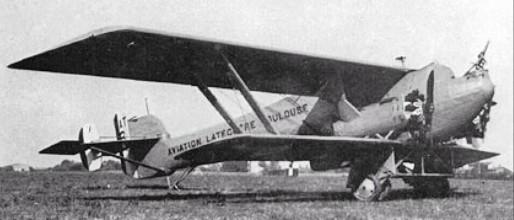
1921 saw the test flight of the Late 6 (or LAT.6), an advanced bomber escort fighter in the multiplace de combat category.
Initially flown with 4 x 260 hp Salmson Z9s in push-pull pairs, later, as the Laté 6 Jupiter, flew with 4 x 400 hp Bristol Jupiters.
An all-metal sesquiplane with considerable sweepback, it failed to gain a production contract and the Laté 6 was abandoned due to the high cost of all-metal geodesic construction.
Engine: 4 x 400hp Bristol Jupiter / 4 x 194kW Salmson Z-9
Max take-off weight: 7050 kg / 15543 lb
Empty weight: 5000 kg / 11023 lb
Wingspan: 27.70 m / 90 ft 11 in
Length: 15.74 m / 51 ft 8 in
Wing area: 124.00 sq.m / 1334.72 sq ft
Max. speed: 215 km/h / 134 mph
Cruise speed: 166 km/h / 103 mph
Ceiling: 6000 m / 19700 ft
Crew: 4-5
Armament: 3 x 7.7mm machine-guns, 2000kg of bombs
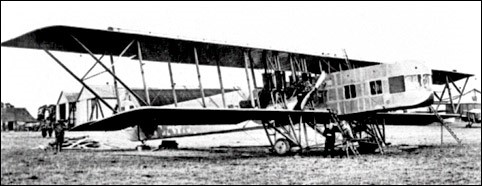
The Kennedy Giant was a British biplane heavy bomber designed by Kennedy Aeroplanes Ltd. during the First World War. The design was an imitation of works by Igor Sikorsky, with whom the owner of Kennedy Aeroplanes Ltd., Chessborough J. H. Mackenzie-Kennedy, had ostensibly worked prior to setting up the company.
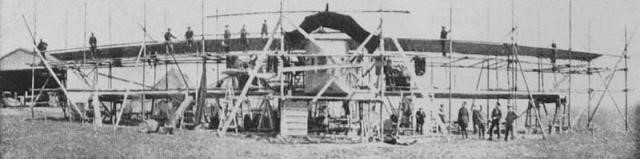
The four-bay, unstaggered wings spanned 142 feet; ailerons were fitted to the upper wings only, their control rods extending along the top of the leading edge, and the wing overhang being braced by pairs of outraked struts. The four engines, mounted in tandem pairs in nacelles on the lower wings, were very early British-built examples of the Canton-Unne/Salmson Z9 nine-cylinder water-cooled radials, each of which was provided with a pair of large vertical radiators on the sides of the nacelles.
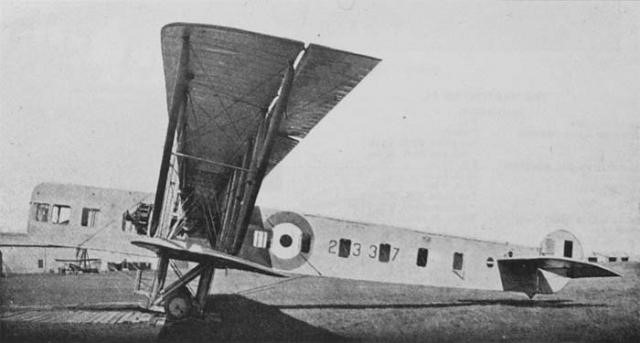
The fuselage was of rectangular section over its entire length and tapered towards the tail only in plan. It provided fully-enclosed accommodation for the crew, the pilot being situated in the extreme nose, with individual compartmented cabins aft. The tail surfaces were of inadequate area, the tiny rudder (later enlarged) being unbalanced and without a fixed fin. The undercarriage was a complicated structure of multiple V-struts and skids.
The aeroplane was a notorious failure; its size meant that construction had to take place in an open field at the Fairey factory at Heston as none of the hangars near Hayes, Middlesex, where the prototype was assembled, were large enough to house it.

Supply of the Sunbeam engines, manufactured under licence by the Dudbridge Iron Works Ltd of Stroud, were afforded very low priority (and were not subject of official trials until May 1919). Early examples were rated at only 200hp and, with these, the Giant was made ready for flight at Hendon late in 1917.
Movement needed two trucks and seventy men, but these efforts broke the tail of the aircraft. It was repaired, but the fuselage shortened by 10 feet (3,048 m).
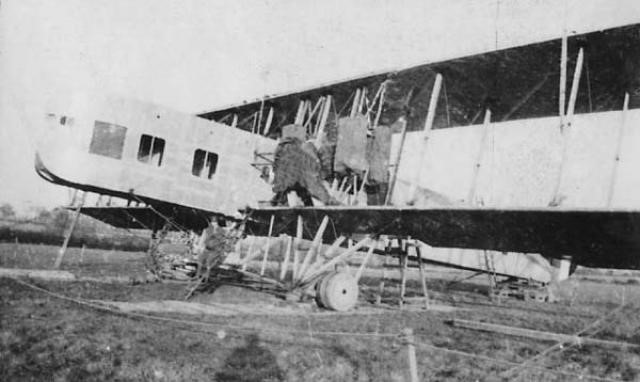
This power proved insufficient to gain true flight, and despite being taxied at full throttle downhill, the pilot, Lieut Frank T Courtney, only managed to lift the mainwheels off the ground for a short hop with the tailskid still dragging along the ground. The prototype was left derelict at Northolt Aerodrome for a number of years.
Engines: Canton-Unne Salmson Z9, 200hp / 150 kW
Propellers: two tractor and two pusher two-blade
Wingspan: 142 ft 0 in / 43.28 m
Length: 80 ft 0 in / 24.38 m
Height: 23 ft 6 in / 7.16 m
Empty weight: 19017 lb / 8626 kg
Crew: 3
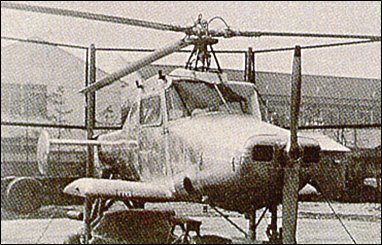
In 1952, Kayaba returned to rotary wing experimentation with the “Heliplane”. This was a compound helicopter fabricated from the fuselage and 180 hp Continental E-180 engine of a Cessna 170 light aircraft, with a rotor mounted above the cabin roof and low-set stub wings to which the undercarriage was attached. The three-blade rotor was fitted with small ramjets which were used for takeoff and landing and the rotor would rotate freely in horizontal flight when the “Heliplane” was being driven by the normal propeller. It first flew in 1954.
Engine: 185 hp Continental E-180
Rotor diameter: 24 ft 3.25 in
Fuselage length: 10 ft 6 in
Height: 9 ft 2.25 in
Seats: 4
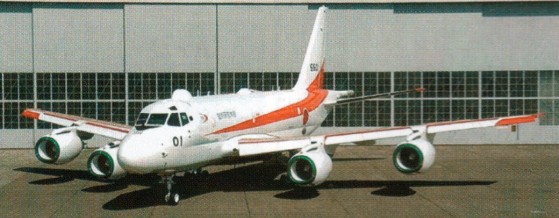
In 2007 the first prototype of the P-X maritime patrol aircraft was rolled out at Kawasaki’s Gifu factory.
The P-X is to replace the Japanese Air Self Defence Force’s P-3 Orions.
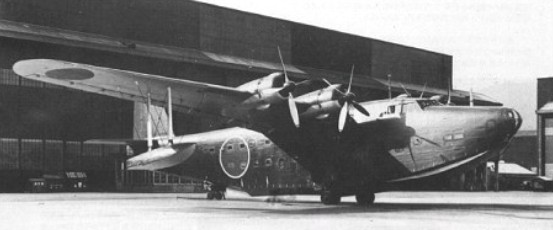
Although only 167 examples were produced, the Kawanishi H8K was the most advanced flying-boat to achieve production status during World War II. Designed to meet a requirement issued in 1938 for a four-engine maritime reconnaissance flying-boat superior in all respects to the British Short Sunderland, the H8K1 prototype was first flown in January 1941, but initially possessed very poor water handling qualities. Extensive modifications were made and after successfully completing its service trials the aircraft was ordered into production as the Navy Type 2 Flying Boat Model 11, powered by four 1141kW Mitsubishsi Kasei 11 or 12 radials. Armament of these early aircraft was two 20mm cannon and four 7.7mm machine guns. With armour protection, selfsealing fuel tanks and a maximum speed of 433km/h, the new flying-boat was a considerable advance over the H6K.
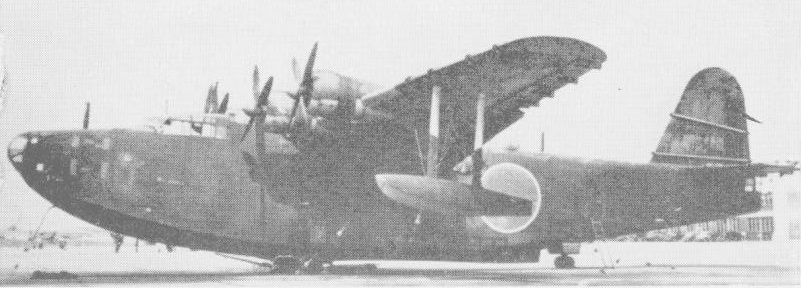
It carried out its first operational mission in March 1942 when two aircraft of the Yokohama Kokutai set out from Wotje Atoll in the Marshalls to bomb Oahu Island (Pearl Harbor), putting down at French Frigate Shoals to refuel from a submarine. Arriving over the American base, the Japanese crews found heavy cloud and the raid was ineffective. As a longrange maritime reconnaissance aircraft, the H8K1 (codenamed ‘Emily’ by the Allies) with its 7,200km range, heavy armament and good performance proved a highly competent aircraft. 112 improved H8K2, with 1380kW Kasei 22 radials and armament increased to five 20mm cannon and four 7.7mm machine-guns, were built between 1943 and 1945. It was also equipped with ASV radar, being responsible for the sinking of at least three American submarines in the area north of the Philippines during the last 18 months of the war.
Additional to the maritime reconnaissance version, 36 H8K2-L boats were built in the last two years of the war, these being equipped as naval staff and troop transports capable of accommodating either 29 staff passengers or 64 fully armed troops. The progressively deteriorating war situation for Japan led to a run-down in production of flying boats during 1945 in favour of fighters for home defence, and later versions of the H8K were accordingly abandoned. Nevertheless this excellent aircraft saw considerable service, being flown by the 14th, 801st, 851st, 1001st, 1021st, Takuma, Toko, Yokohama and Yokosuka Chinjufu Kokutais.
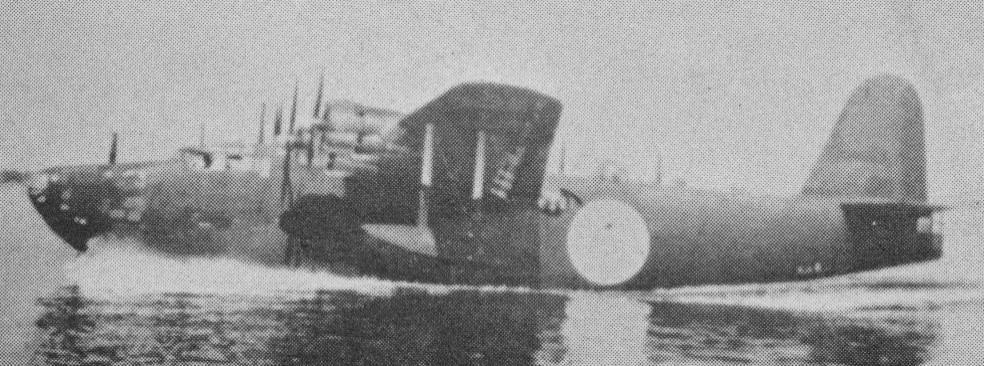
H8K2
Engine: 4 x Mitsubishi MK4Q “Kasei-22”, 1380kW / 1850 hp
Max take-off weight: 24500-32500 kg / 54014 – 71651 lb
Empty weight: 18380 kg / 40521 lb
Wingspan: 38 m / 124 ft 8 in
Length: 28.13 m / 92 ft 3 in
Height: 9.15 m / 30 ft 0 in
Wing area: 160 sq.m / 1722.22 sq ft
Max. Speed: 460 km/h / 286 mph at 15,485 ft
Cruise speed: 290 km/h / 180 mph
Ceiling: 8850 m / 29050 ft
Range w/max.fuel: 7050 km / 4381 miles
Crew: 9
Armament: 3 x 20mm cannons, 4 x 7.7mm machine-guns, 2 x 800-kg torpedos or 2000kg of bomb
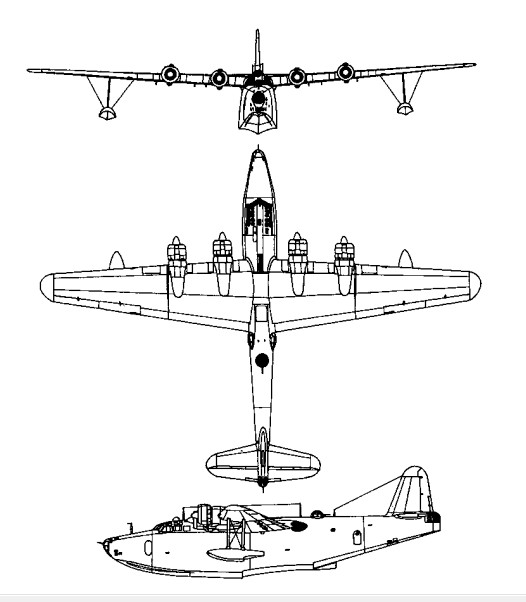
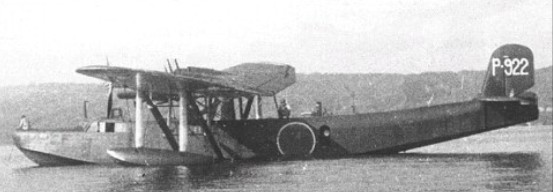
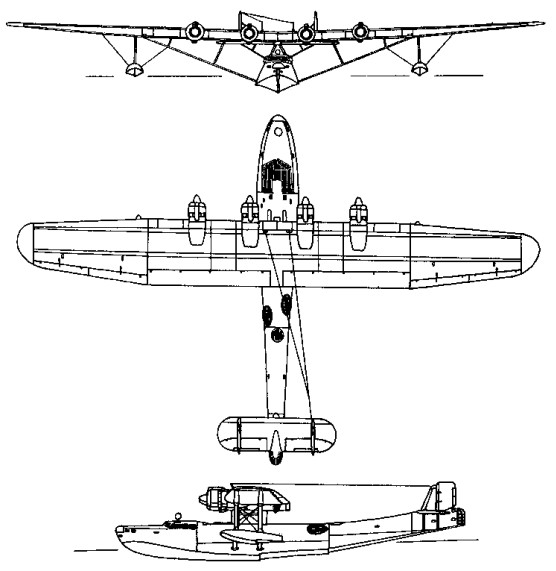
Owing much to American and French flying-boat design of the mid-1930s, the large four engine Kawanishi Type 97 parasol monoplane flying boat. When first flown in July 1936, The Type 97 was Japan’s only in-service long-range reconnaissance flying-boat when that nation went to war in December 1941. The H6K1 initial military version entered limited service with the Imperial Japanese Navy in 1938, and was followed by 10 H6K2 flying-boats.
The first major production version, the H6K4, was powered by four Mitsubishsi Kinsei 43 radiais and armed with four 7.7mm machine-guns in bow and midships positions and a 20mm cannon in a tail turret, and was capable of carrying two 800kg bombs or torpedoes. A total of 66 were in service at the time of Pearl Harbor, later aircraft powered by Kinsei 46 engines. These boats were widely employed, although the initial heavy defeats inflicted on the Allies in the Pacific rendered maritime reconnaissance duties subordinate to the need for air transportation of Japanese troops during the swift conquests in the East Indies and elsewhere. A number of aircraft, designated H6K4-L, were converted for transport duties and were each able to accommodate about 18 fully-armed troops. Lacking armour and self-sealing fuel tanks, they were extremely vulnerable to fighter attacks and, after a number had been shot down, a new version entered production as the H6K5 in August 1942. By that time the maritime reconnaissance version had been given the reporting codename ‘Mavis’ by the Allies, the transport derivative being named ‘Tillie’.
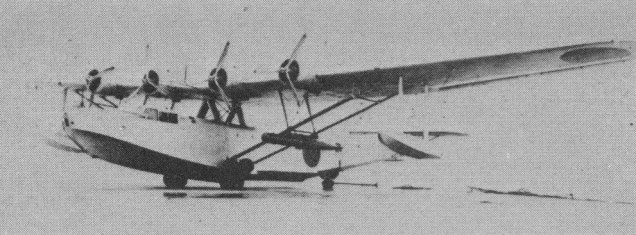
Powered by either Kinsei 51 or 53 radials, the H6K5 was intended to eliminate the shortcomings of the earlier versions, but although the open bow gun position was replaced by a single-gun turret immediately aft of the pilot’s cockpit, the overall armament was not increased. Only 36 H6K5s were completed by 1943, when production gave place to the greatly superior H8K.
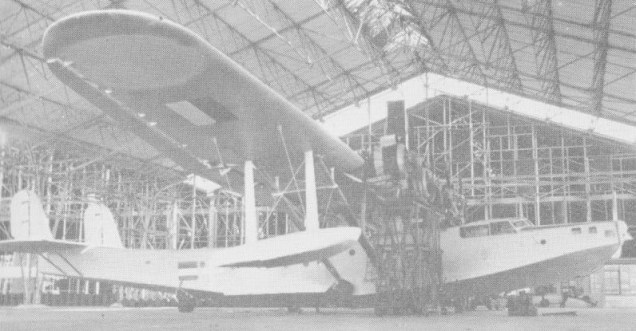
H6Ks served with the 8th, 14th, 801st, Toko and Yokohama Kokutais, and some of the H6K5s were employed as naval staff transports throughout the Pacific in 1943. Eighteen aircraft served on the quasicommercial courier services in South East Asia, a number of them being destroyed by Allied aircraft both in the air and at their moorings.
H6K5
Engine: 4 x Mitsubishi “Kinsei-51”, 975kW
Take-off weight: 17500-23000 kg / 38581 – 50707 lb
Empty weight: 12380 kg / 27293 lb
Wingspan: 40 m / 131 ft 3 in
Length: 25.63 m / 84 ft 1 in
Height: 6.27 m / 20 ft 7 in
Wing area: 170 sq.m / 1829.86 sq ft
Max. Speed: 380 km/h / 236 mph
Cruise speed: 255 km/h / 158 mph
Ceiling: 9560 m / 31350 ft
Range: 4870 km / 3026 miles
Range w/max.fuel: 6670 km / 4145 miles
Crew: 10
Armament: 1 x 20mm cannon, 4 x 7.7mm machine-guns, 2 x 800-kg torpedos or 1000kg of bombs
H6K5
Engines: 4 x Mitsubishi Kinsei 46, 1070 hp
Span: 131 ft 3 in
Max speed: 211 mph at 13,120 ft
Range: 3107 miles
Max bombload: 3527 lb
Some sources claim that this was a development of the Ju 388, but it actually was a four-engined long-range bomber, built of Ju 188, Ju 288 and Ju 388 parts. The development of the Ju 488 was ordered from manufacturers in occupied France, who were not very motivated. When the prototype finally neared completion in 1944, it was destroyed by the French resistance with sten guns and grenades.

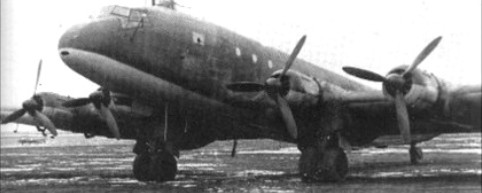
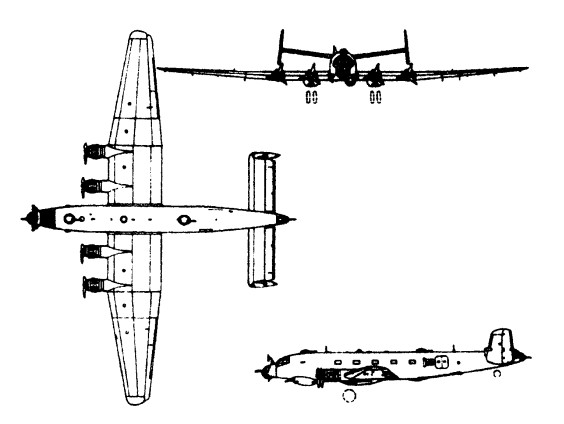
The Ju 290 was originally designed as a development of the Ju 90 transport and was test flown in 1941. Subsequent development was undertaken to enable it ultimately to supersede the Fw 200C for long-range over-sea anti-shipping and U-boat cooperation work, but it failed to achieve this.
Nevertheless seven versions of the A series were produced as transport (A-1 with BMW 801D engines), reconnaissance (A-2, A-3 and A-5), transport (A-6), reconnaissance-bombing (A-7), and reconnaissance (A-8) aircraft – the latter with provision for carrying two Hs 293 anti-shipping glider missiles.
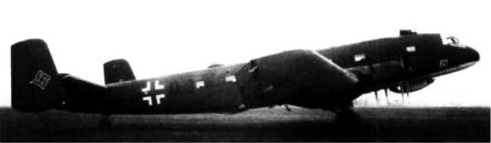
Production totalled about 55 aircraft.
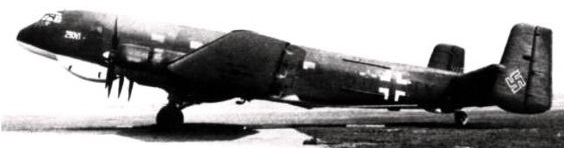
The Ju 290B was a projected heavily armed long-range bomber. It was followed by the Ju 290C reconnaissance and transport aircraft, Ju 290D long-range bomber and Ju 290E night bomber: all of which failed to enter production.
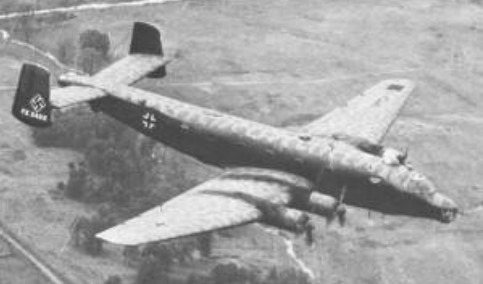
In April 1944 three Ju-290A-9 of KG200 had been stripped of their armament, except for their nose and tail machine-gun turrets, so they could carry auxiliary fuel tanks containing thousands of gallons of fuel. They now had a range of almost 5500 miles. Flying at an altitude of about 38,000 ft, they crossed the Soviet Union and Mongolia undetected, and after some 20 hours of flight they landed at a base near Mukden, Manchuria. On their incoming flight the Ju 290s carried some four tons of essential munitions to the Japanese. Things like weapon sights and other optical equipment. The next day they would make their return flight, with cargo including molybdenum raw material, back to Germany. They landed back at Mielec northeast of Krakow.
On 10 April 1944 the Germans were forced to evacuate Odessa and shifted their take-off base to Mielec too.
Ju.290 V-1
Ju.90 W/no 4918/0011 / BD+TX re-engined and fitted with a loading ramp.
First flew 16 July 1942
Crashed Stalingrad 19 January 1943.
Ju.290 V-2
W/no 0151 / CE+YZ / SB+QA
First flew 7 December 1942
Ju.290 V-3
W/no 0152 / GF+GH / SB+QB
The rebuilt Ju.90 V-7
Crashed and destroyed 5 October 1944
Ju.290 A-0
Two pre-production aircraft
Engines: 4 x BMW 801L-2, 1600 hp
Props: 3 blade
Armament: 3 x 20mm MG151 cannon, 2 x 7.9mm MG81 mg
Bombload: 2 x Henschel Hs 293 glider bombs
Troop capacity: 40
Transport load: 18,700 lb
Winch loading ramp: 15ft 9in long x 7fyt 8in wide
Ju.290A-1
Five aircraft similar to the V-8
W/no 0152 SB+QC / Wno 0153 T9+FK – to Luftwaffe March 1943
W/no 0154 / J4+AH – to Luftwaffe May 1943
W/no 0155 & 0156 – to Luftwaffe for structural testing purposes
Ju.290A-2
Three aircraft as long range maritime patrol aircraft
First flew Summer 1943
W/no 0157 SB+QG
Went to Britain as AM-57
Scrapped 1950
W/no 0158 SB+GH / 9V+AH
Armament: 20mm MG151 cannon in dorsal turret
Ju.290A-3
Five armed maritime / reconnaissance types during 1943
Engines: 4 x BMW 801D, 1700 hp
Fitted with extra dorsal turret and a 20mm MG 151 cannon, + another in tail position.
2 x 13mm MG 131 in each waist position + 1 in forward firing gondola.
W/no 0160 & W/no 0161
W/no 0162 9V+GK
Shot down 20 November 1943 by a DH Mosquito
W/no 0163
Destroyed 3 May 1945
W/no 0154
Ju 290A-4
Five long range reconnaissance types
W/nos 0165 – 0169
Engine: 4 x BMW DB 801 L-2, 1,500 hp
Max speed: 243 mph at 18,000 ft
Service ceiling: 19,000 ft
Max range: 790 miles
Weight loaded: 90,000 lb
Wingspan: 138 ft
Armament: one forward-firing 20-mm MG 151 cannon in forward fuselage; one 20-mm MG 151 cannon in dorsal position; two MG 131 13-mm machine guns in lateral emplacements; one MG 131 13-mm machine gun in forward ventral position; one MG 151 20-mm cannon in rear ventral position; one MG 151 20-mm cannon in tail; bomb load of 19,000 lbs or 90 men.
W/no 0165
Used in testing the Hs 293 guided bomb, fitted with Fritz X radio controlled equipment.
Ju-290A-7
Engine: 4 x BMW 801D, 1268kW
Max take-off weight: 46000 kg / 101413 lb
Empty weight: 33005 kg / 72764 lb
Wingspan: 42.0 m / 137 ft 10 in
Length: 29.15 m / 95 ft 8 in
Height: 6.83 m / 22 ft 5 in
Wing area: 203.60 sq.m / 2191.53 sq ft
Max. speed: 440 km/h / 273 mph
Ceiling: 6000 m / 19700 ft
Range w/max.fuel: 6090 km / 3784 miles
Armament: 7 x 20mm cannon, 1 x 13mm machine-guns, 3000kg bombs or 3 missiles
Crew: 3
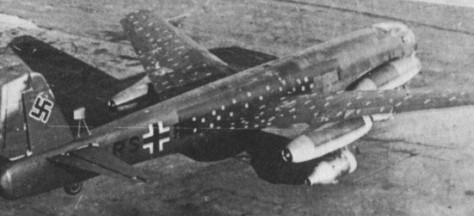
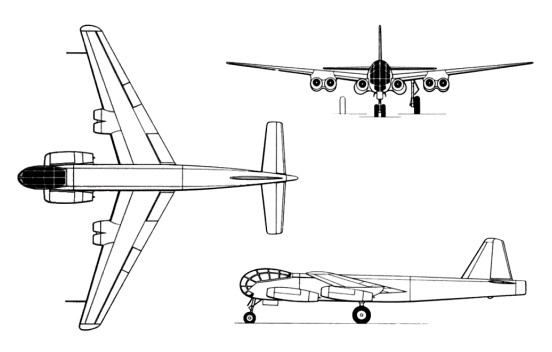
In 1943 the German Junkers com¬pany was given the task of designing a heavy bomber that would be faster than any contemporary Allied fighter. A swept wing planform was essential to reach the speed required, and to overcome the disadvantages of a backward swept wing, the Junkers design team proposed a wing swept forward. In theory such a wing should have the same effect as one swept back in reducing the effective thickness to chord ratio, but would have the highest lift coefficient at the root, decreasing outboard. The wing tips would thus be the last to stall, with aileron control available up to this point. An additional advantage of a forward swept wing was that by freeing the centre portion of the fuselage of wing spars, it facilitated the provision of the large weapons bay called for in the bomber specification, around the centre of gravity.
To test such a wing full scale Ju 287 Vl was produced, under supervision of Hans Wocke. To save time and money this aircraft utilised the fuselage of a Heinkel He 177A, the tail of a Ju 388 and nose wheels salvaged from a crashed Consolidated B 24 Libera¬tor. The forward swept wing, however, was representative of that of the intended bomber.

Power was provided by four Junkers Jurno 004B turbojets, two being attached to the sides of the fuselage nose and two being mounted under the wing. Two Walter 501 rocket units provided boost for take off.
A forward swept wing is structurally unstable; it reacts to increase the loads. As speed increased the forces eventually exceed the strength of the wing. To compensate for this divergence problem, as it is called, forward swept wings have to be very strong in torsion to prevent any twisting that would lead to catastrophic loads.
An indication of the severity of this problem is that on the Ju 287 V1, to preserve the structural integrity of the wing, the main landing gear did not retract into the wing, but was fixed, the wheels being enclosed in fairings.
Seventeen test flights were made by the Ju 287 V1, the first one at Brandis, near Leipzig, on 16th August 1944, in the hands of Flugkapitan Siegfried Holzbaur. The flights proved the aerodynamic advantages of the wing planform; wing tufts confirmed the progressive wing stall from the root to the tip. Lateral control at low speeds was good. However, the trials also proved some of the problems predicted. Two of the most serious were a tendency for the aircraft to Dutch roll in reverse, and for the aircraft to increase g inadvertently during a turn, when the pilot was attempting a steady turn.
Despite the problems, work started on the definitive bomber, the Ju 287¬V2, and final assembly was under way when the factory was seized by advancing Russian troops. The incomplete bomber was transferred to the Soviet Union, together with Hans Wocke and other key members of the Junkers design team, where it was completed and test flown in 1947.
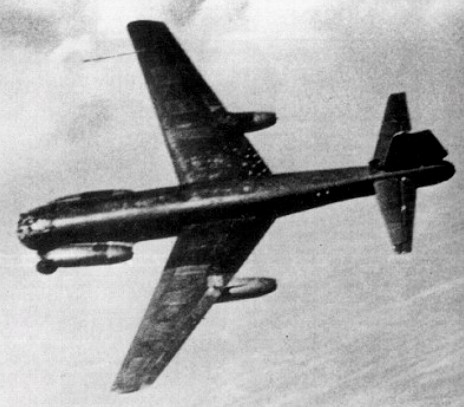
EF.131
Wing span: 78 ft 8.75 in
Height: 26 ft 3 in
Empty wt: 34,838 lb
Loaded wt: 51,341 lb
Max speed: 534 mph
Service ceiling: 43,950 ft
Range 4410 bomb load: 1045 mi
V-1
Wing span: 65 ft 11.75 in
Length: 61 ft 0.5 in
Height: 15 ft 5 in
Wing area: 656 sq.ft
Empty wt: 25,557 lb
Loaded wt: 44,092 lb
Max speed: 404 mph
Max speed at 19,685 ft: 347 mph
Cruise speed: 320 mph
Landing speed: 118 mph
Stall speed: 105 mph
Rate of climb: 1910 fpm
Climb to 19,700 ft: 10 min 30 sec
Service ceiling: 35,425 ft
Range: 932 mi
V3
Engines: 6 x 800kg BMW 003A-1 turbojets
Wingspan: 20.11 m / 66 ft 0 in
Length: 18.6 m / 61 ft 0 in
Wing area: 58.3 sq.m / 627.54 sq ft
Max take-off weight: 21520 kg / 47444 lb
Empty weight: 11920 kg / 26279 lb
Max speed at 16,400 ft: 856 km/h / 532 mph
Cruise speed: 493 mph
Rate of climb: 2885 fpm
Climb to 19,700 ft: 10 min 30 sec
Ceiling: 12000 m / 39350 ft
Range full load: 980 mi
Range half bomb load: 1320 mi
Crew: 4
 All Aero