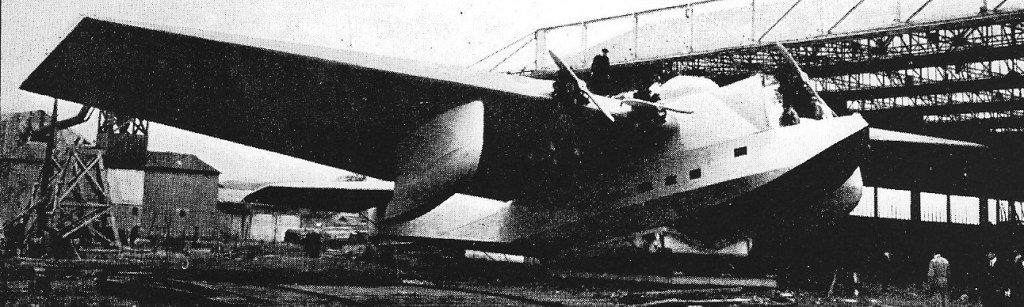

Built by W Luther Paul, the 1907 helicopter had four 3hp motorcycle engines. Two rotors in tandem and a tractor propeller with an empty weight of 500 lb.
The helicopter was tested in a large barn, where it was reported to have reached a height of about 4 feet.

Development of the B-2 was begun in 1978, and in designing the Advanced Technology Bomber (ATB), as the B-2 project was originally known, the Northrop Company decided on an all-wing configuration from the outset. Flying-wing devotees such as Hugo Junkers and Jack Northrop argue that a flying wing will carry the same payload as a conventional aircraft while weighing less and using less fuel. The weight and drag of the tail surfaces are absent, as is the weight of the structure that supports them. The wing structure itself is far more efficient because the weight of the aircraft is spread across the wing, rather than concentrated in the centre.
The B-2 design is a flying wing with straight 40 degree sweep leading-edges and a sawtooth trailing edge. Its centrebody is smoothly contoured into the upper wing surface. The centrebody houses the two-man crew compartment and the two weapons bays, one on each side of the centreline. The cockpit compartment is accessed through a ventral hatch and has large cockpit windows to improve the pilots angular field of view, yet the nose-down view remains very limited. The engines lay outboard the weapon bays in the upper wing surface. The exhausts are positioned forward of the wing trailing edge to reduce heat signature.
Because of the big wing area and wing span, the lift needed per square foot of wing is not as high compared to other designs of the same weight. Therefor the B-2 does not need complex flaps. It operates over a smaller angle of attack.
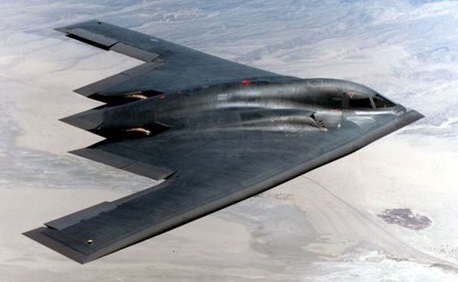
The all-wing approach was selected because it promised to result in an exceptionally clean configuration for minimizing radar cross-section, including the elimination of vertical tail surfaces, with added benefits such as span-loading structural efficiency and high lift/drag ratio for efficient cruise. Outboard wing panels were added for longitudinal balance to increase lift/drag ratio and to provide sufficient span for pitch, roll and yaw control. Leading-edge sweep was selected for balance and trans-sonic aerodynamics, while the overall planform was designed for neutral longitudinal (pitch) static stability. Because of its short length, the aircraft had to produce stabilizing pitchdown moments beyond the stall for positive recovery. The original ATB design had elevons on the outboard wing panels only but, as the design progressed, additional elevons were added inboard, giving the B-2 its distinctive ‘double-W trailing edge. The flight-control surfaces are operated by a fly-by-wire control system to ensure optimum control responses in this design of relaxed stability intended for positive aerodynamic control at all times, throughout the airframe, emphasis is placed on completely smooth. The wing leading edge is so designed that air is channelled into the engine intakes from all directions, allowing the engines to operate at high power and zero airspeed. In trans-sonic cruise, air is slowed from supersonic speed before it enters the hidden compressor faces of the GE F118 engines.
A stores management processor is in place to handle the B-2’s 22,730kg weapons load. A separate processor controls the Hughes APQ-181 synthetic-aperture radar and its input to the display processor. The Ku-band radar has 21 operational modes, including high-resolution ground mapping. The B-2 lifts off at 260km/h, the speed independent of take-off weight. Normal operating speed is in the high subsonic range and maximum altitude around 15,240m. The aircraft is highly manoeuvrable, with fighter-like handling characteristics.
The US Air Force originally wanted 133 examples, but by 1991 successive budget cuts had reduced this to 21 aircraft.
First revealed in November 1988, the prototype flew on 17 July 1989, and the first production B-2 was delivered to the 393rd Bomb Squadron of the 509th Bomb Wing at Whiteman AFB, Missouri, on 17 December 1993. Northrop delivered 21 B-2A Spirit stealth bombers, achieving initial operational capability with the USAF in April 1997 and full capability with the 715th Bomb Squadron in 1999.
With a crew of two, it is powered by four 19,0001b thrust F 118 GE 100 engines (as used in the F 16) and has a published speed of 0.72 Mach. The multi role bomber is publicised as fuel efficient, able to carry a “substantial bomb load” and with “excellent range”. Unit cost: Approximately US$750 million
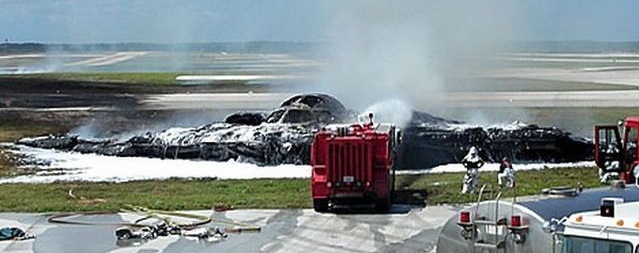
When B-2 89-0127, named the Spirit of Kansas, crashed on takeoff at Andersen Air Force Base in Guam, it immediately became the most expensive accident in USAF history. The crash was determined to have been caused by moisture in the port transducer units which resulted in the distortion of information sent to the aircraft’s air data system. The B-2’s flight control computers calculated an incorrect air speed and angle of attack, causing the nose to pitch-up 30 degrees and sending the aircraft into an unrecoverable stall. The pilots ejected safely, though the Spirit of Kansas was reduced to a $1.4 billion pile of burning wreckage.
Northrop B-2A Spirit
Engines: 4 x General Electric F-118-GE-100 turbofan, 17,300 lb / 7,847 kg
Length: 69 ft (20.9 m
Height: 17 ft / 5.1 m
Wingspan: 172 ft / 52.12 m
Wing area: 3982.68 sq.ft / 370.0 sq.m
Takeoff Weight (Typical): 336,500 lb / 152,635 kg
MTOW: 371,000 lb / 168,286 kg
Max speed: 475 mph / M0.76
Cruising speed: 516 kt / 955 km/h
Ceiling: 50,000 ft / 15,152 m
Op radius: 3800 mile / 6115 km
Payload: 40,000 lb / 18,144 kg
Crew: Two pilots, with provisions for a third crew station

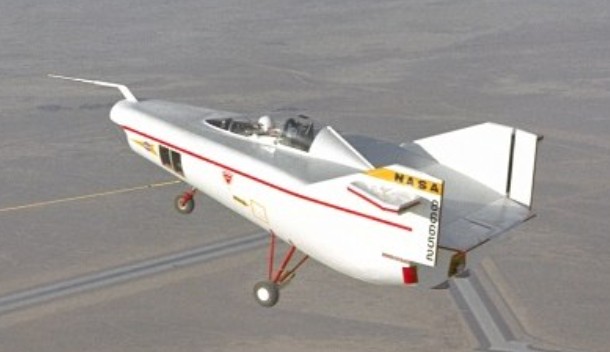
In mid-1964 Northrop was contracted by the US National Aeronautics and Space Administration (NASA) to produce two all-metal wingless lifting-body re-entry research vehicles, based on experience gained with the Northrop M2-F1 wooden glider, which made more than 500 flights in 1963-64. These lifting-body vehicles were intended to prove the viability of wingless flying machines that could re-enter the atmosphere at hypersonic speed after orbital flight and fly back to their bases.
The two new vehicles were designated M2-F2 and HL-10 and differed in under- and upper-surface fuselage shapes. First flight of the M2-F2 as a glider was made on 12 July 1966 when it was dropped from beneath the wing of a Boeing B-52 at 14235m to make a successful 306km/h landing four minutes later.
Bruce A. Peterson, NASA test pilot, piloted the M2F2 on 10 May 1967 landing accident that served as the opening footage for the television show ‘The six million dollar man’.

The M2-F2 was badly damaged and, subsequently rebuilt as the M2-F3 made its first powered flight on 2 June 1970, attaining Mach 0.8 at 16155m on three of its four XLR11 rocket chambers. Later in the programme it recorded a height of nearly 27430m and speed of Mach 1.7. The M2-F3 had triple rather than double vertical tail surfaces.
When testing ended in 1973 these aircraft had provided much information which was to prove invaluable for NASA’s Space Shuttle programme.


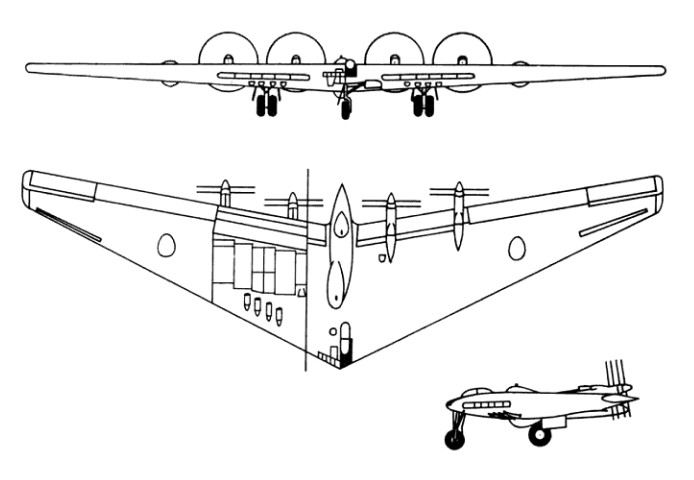
In 1941 Northrop developed a flying wing design to compete with the Consolidated Model 37. Conceptually more advanced than the B-36, the Northrop XB-35 was a low-drag flying wing with four piston engines in the wings driving contra-rotating pusher propeller units. The type was ordered in prototype form as the XB-35 in November 1941. Powered by four 2237kW Pratt & Whitney R-4360 Wasp Major piston engines driving eight-bladed counter-rotating pusher propellers behind the trailing edges of the 172-ft (52.43m) span wing they could carry a maximum bombload of 56,000 lb (25,402 kg), or a 20,000-lb (9072-kg) bombload over a radius of only 2500 miles (4023 km). The XB-35 was faster than the XB-36 (especially at lower altitude), possessed a usefully higher service ceiling, and was also considerably more agile than the XB-36.
There had been problems with the prototype, but these were concerned with factors such as the propeller gears stripped, blade pitch reversed in flight, propellers ‘ran away’, uncontrollable fires started, rather than the structure and flight characteristics of the basic airframe.
The first of 15 YB-35 aircraft ordered in early 1943, flew on 25 June 1946, followed by the second in the following year. With the B-36 slated for production, it was then decided to use the design for the evaluation of jet power in a strategic bomber the production contract was cancelled.
The second and third YB-35 pre-production prototypes were converted into YB-35B aircraft: their four 3250-hp (242 3-kW) Pratt & Whitney R4360 piston engines were replaced by eight 4000-lb (1814-kg) thrust Allison J35-A-5 turbojets, a quartet of the jets being grouped in each trailing edge and aspirated through the same arrangement of leading-edge inlets used to supply carburation and cooling air for the piston engines of the original aircraft.
The YB-35B was redesignated YB-49 while it was being rebuilt, and the first aeroplane flew in October 1947.
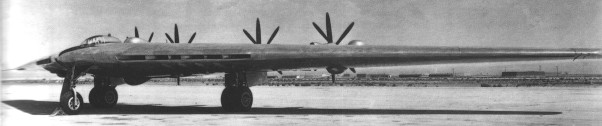
Engines: 4 x Pratt & Whitney R-4360 Wasp Major, 2624kW / 3250 hp
Max take-off weight: 76340 kg / 168302 lb
Wingspan: 52.4 m / 171 ft 11 in
Length: 16.2 m / 53 ft 2 in
Wing area: 372 sq.m / 4004.17 sq ft
Max. speed: 605 km/h / 376 mph
Range: 4023 km / 2500 miles
Bombload: 20,000 lb / 9072 kg
Crew: 9
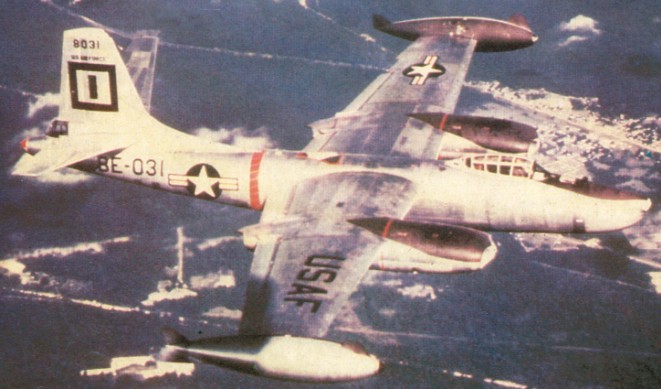
In 1943, aware of Nazi Germany’s advances in the field of jet propulsion, the Army Air Forces (AAF) asked the General Electric Company to devise a more powerful engine than its prospective axial turboprop. This eventually brought about the production of the J35 and J47 turbojets. In 1944, 1 year after the jet engine requirements were established, the War Department requested the aircraft industry to submit proposals for various jet bombers, with gross weights ranging from 80,000 to more than 200,000 pounds, and only 4 contractors answered the call. The design was frozen in early 1945.
North American B-45 Tornado Article
Pressed for time, the AAF in 1946 decided to skip the usual contractor competition, review the designs, and choose among the proposed aircraft that could be obtained first. The multi-jet engine B-45, with the understanding that if a less readily available bomber was to prove superior enough to supplant it (which the Boeing XB-47 did), that aircraft would also be purchased.
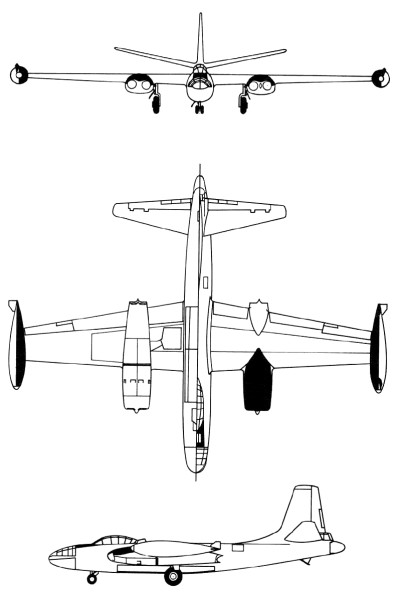
The design was generally conventional, though the main gears had very large single wheels which retracted sideways into the wing roots. In normal bomber versions the bomb aimer/navigator occupied the capacious pressurized nose, the two pilots sitting in a tandem fighter like cockpit farther aft and above, with a large multi pane canopy. The crew door was on the left side of the forward fuselage. A gunner was housed in a pressurized tail compartment.
The first flight was on 17 March 1947 (piloted by George Krebs) and testing of the XB-45 prompted pre-production changes. North American Aviation redesigned the nose panel, increased the aircraft’s stabilizer area, and lengthened the tailplane by nearly 7 feet.
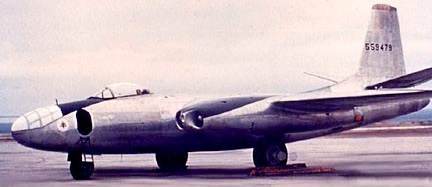
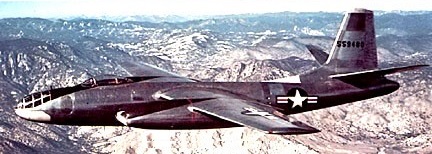
In August 1948, 22 of the 90 B-45s, ordered less than 2 years before, reached the newly independent Air Force. However, the B-45’s weight and takeoff distances had increased, and numerous structural and mechanical defects appeared.
In November 1948 the B 45A (NA-147) went into service with the 47th Bombardment Group of the USAF, later based in England. Ninety-six were built (47-001/097, the last one of which was a static test-frame.
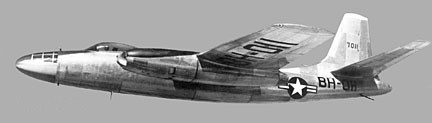
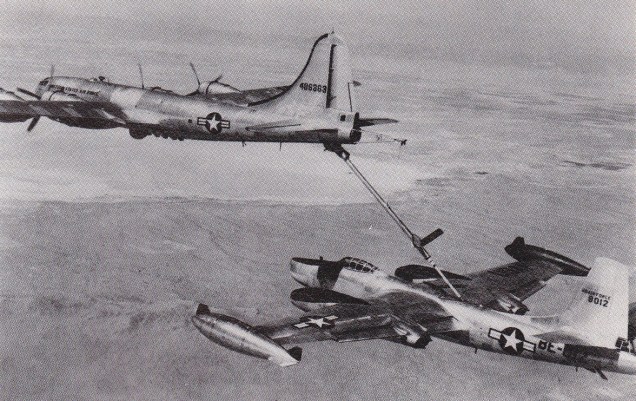
In June 1951 an RB-45 became the first jet bomber to be refuelled in flight by a Boeing KB-29.
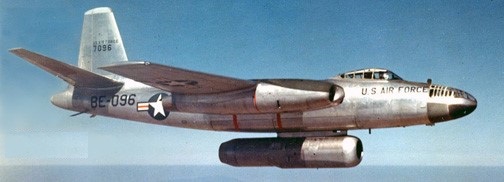
The DB-45A were conversion of B-45A as guided missile director. The JB-45A 47-096 and JB-45C of 1950 were engine test beds for Westinghouse and General Electric.
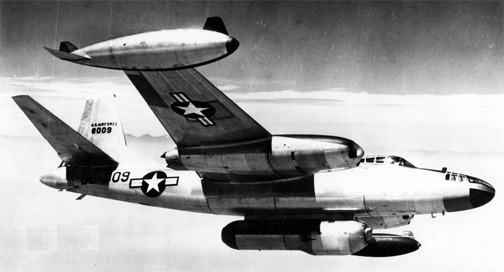
The fourteen TB-45A were target tugs modified from B-45A.
The B-45B was a project only, none were built.
Ten B-45C (NA-153 48-001/010) were built in 1950. The DB-45C were conversions of B-45A as guided missile director.
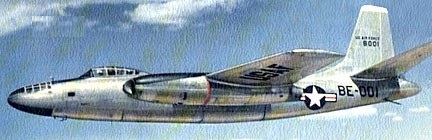
Thirty-three RB-45C and JRB-45C (NA-153 48-011/043) were built in 1949 for Photo-recon.
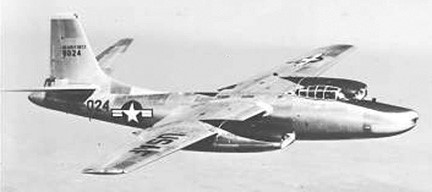
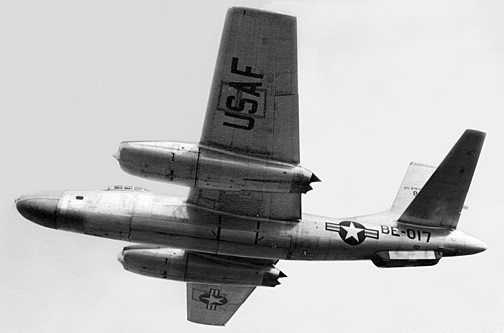
As the B-47’s future production had become certain, in mid-1948 the Air Staff questioned the B-45’s value as well as its potential use. As President Truman slashed Air Force expenditures, the programmed production of B-45s was reduced to a total of 142 aircraft at a unit cost of US$1,081,000.
Only 96 B 45As were built, plus 10 of the stronger and more powerful B 45C which was disting¬uished by large wingtip tanks. Many A models were modified to B 45C standard. The final 33 aircraft were RB-¬45C camera aircraft, some of which (unlike the bomber versions) operated over Korea. Some had water injection tanks hung under the twin engine nacelles, jettisoned after take off.
Although continuously plagued by engine problems, component malfunctions, lack of spare parts, and numerous minor flaws, the B-45 regained importance. The B-45 was designed to carry both conventional and atomic bombs. Under the code name of Backbreaker, several distinct atomic bomb types and large amounts of new electronics support equipment had to be fitted in place of the standard components. In addition, the 40 B-45s allocated to the Backbreaker program also had to be equipped with a new defensive system and extra fuel tanks. Despite the magnitude of the modification project, plus recurring engine problems, atomic-capable B-45s began reaching the United Kingdom in May 1952, and deployment of the 40 aircraft was completed in mid-June, barely 30 days behind the Air Staff deadline.
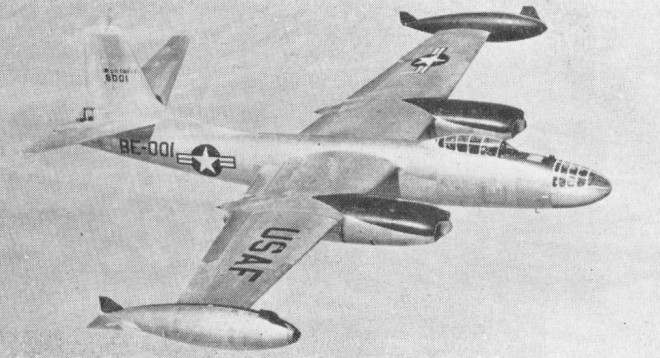
The British and American military intelligence services collaborated under utmost secrecy. Thus in 1952 four American RB-45C reconnaissance aircraft, wearing British colours but without registration marks, operated from RAF Sculthorpe on photo-missions over East Germany and other Eastern-bloc countries. Very up-to-date for the time, the RB-45C was equipped with 12 cameras. The aircraft were based at Sculthorpe in January 1952 as a detachment of the 91st Strategic Reconnaissance Wing of SAC.
The last B 45s were withdrawn from combat duty in mid-1958. The entire contingent, Backbreaker and reconnaissance models included, was phased out by 1959. Yet, the B-45 was the Air Force’s first jet bomber and as the first atomic carrier of the tactical forces.
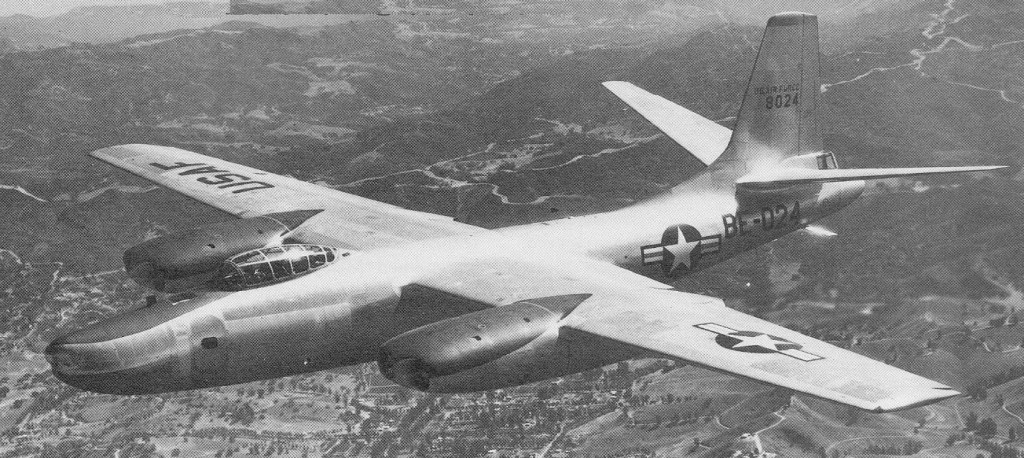
XB-45 / NA-130
Engines: 4 x GE TG180, 4000 lb
Speed: 536 mph
B-45A Tornado
Engines: 4 x GE J47, 5200 lb
Wingspan: 89’1″
Length: 75’4″
Max speed: 575 mph
Cruise speed: 455 mp
Crew: 3-4
B 45C Tornado / NA-153
Engines: four 2359 kg (5,200 lb) thrust General Electric J47 GE 13/15 turbojets (some with water injection 2722 kg/6,000 lb)
Wing span over tip tanks: 29.26 m (96 ft 0 in)
Length: 22.96 m (75 ft 4 in)
Height 7.68 m (25 ft 2 in)
Wing area: 109.2 sq.m (1,175.0 sq ft)
Empty weight 22182 kg (48,903 lb)
MTOW: 51235 kg (112,952 lb)
Max speed 932 km/h (579 mph) at low level
Service ceiling: 13165 m (43,200 ft)
Range 3074 km (1,910 miles)
Armament: two 12.7 mm (0.5 in) machine guns in tail turret
Internal bombload of up to 9979 kg (22000 lb).
Crew: 3

QSRA – A Quiet Short-Haul Research Aircraft built under contract to the U.S. National Aeronautics and Space Administration by Boeing. Following a short flight-test period at Boeing, the plane was delivered to NASA Ames in California to continue the design flight test programme. The advanced research vehicle is actually a remanufactured twin-engined C-8A Buffalo built originally by de Havilland Canada and owned for several years by NASA, Boeing created an all-new wing incorporating boundary layer control, four Lycoming turbofans which exhaust over the upper surfaces of the wings and new engine nacelles and cross-ducting, Coanda flaps, a new but similar tail and installed new instrumentation.
Objective of the QSRA is to build an experimental flight research aircraft aimed at developing the technology for quiet short-haul commercial airliners of the future with short takeoff and landing capabilities. Another purpose is to explore the operating procedures of such an airplane in the airport terminal environment.
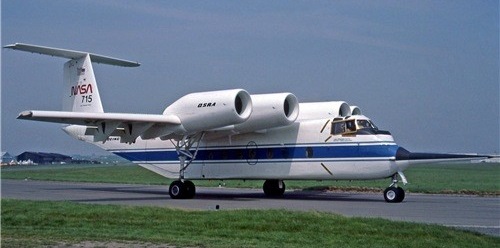
The QSRA has four engines of 7500 pounds thrust each mounted above the wing and exhausting over the wing. This arrangement provides “upper surface blowing” much like the Boeing YC-14 military prototypes. In union with the specially designed wing and flap system, extremely high lift is generated with very low noise.
Engines: 4 x Lycoming turbofan
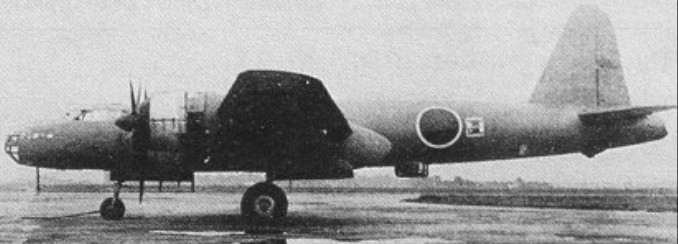
Developed as the Experimental 18-Shi Heavy Bomber Renzan (Nakajima G8N1), this was a very advanced long-range bomber powered by four 1491kW Nakajima Homare 24 radials which gave it a maximum speed of 592km/h at 8000m. Maximum range was 7465km. Armament consisted of six 20mm cannon in twin power-operated dorsal, ventral and tail turrets, two 13mm machine-guns in a power-operated nose turret, and single machine-guns of similar calibre in port and starboard beam positions. A maximum bombload of 4000kg could be carried over short ranges.
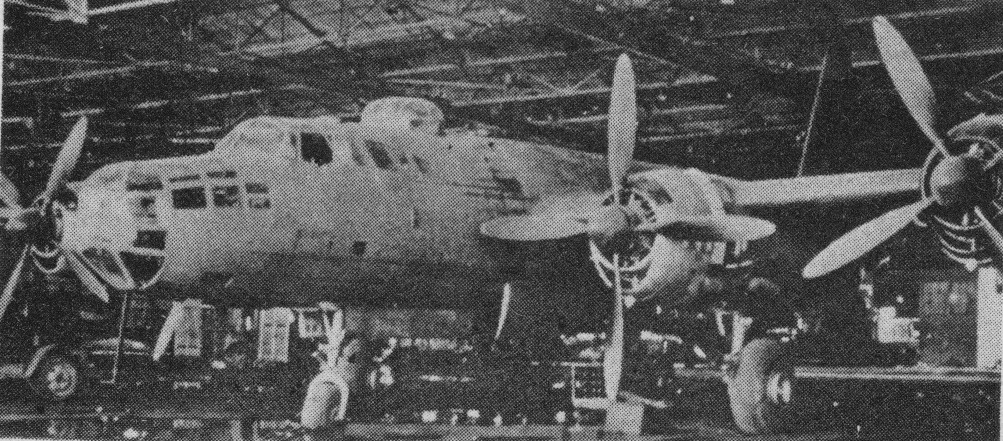
Four prototypes were built up to June 1945, but the proposed production programme was disrupted by Allied bombing and was abandoned when the navy’s role became defensive rather than offensive. These prototypes were allocated the Allied codename ‘Rita’.
G8N1
Engine: 4 x Nakajima NK9K-L “Homare-24”, 1500kW
Wingspan: 32.54 m / 106 ft 9 in
Length: 22.94 m / 75 ft 3 in
Height: 7.2 m / 23 ft 7 in
Wing area: 112 sq.m / 1205.56 sq ft
Max take-off weight: 26800-32150 kg / 59084 – 70879 lb
Empty weight: 17400 kg / 38361 lb
Max. speed: 590 km/h / 367 mph
Cruise speed: 390 km/h / 242 mph
Ceiling: 10200 m / 33450 ft
Range: 4000 km / 2486 miles
Range w/max.fuel: 7500 km / 4660 miles
Armament: 6 x 20mm cannons, 4 x 12.7mm machine-guns, 1000-4000kg of bombs
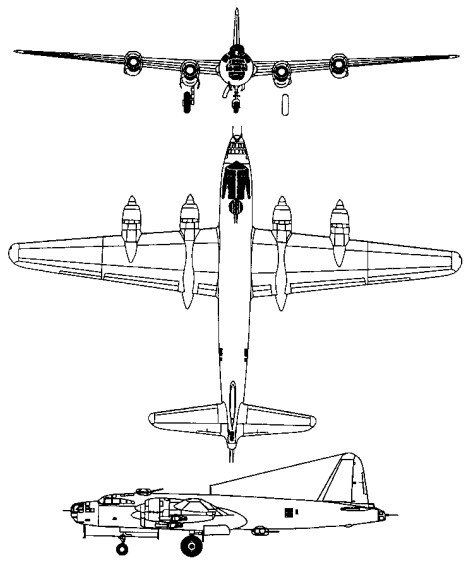
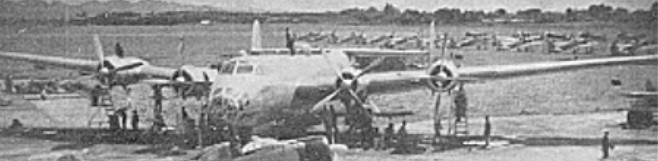
The first application of the Nakajima Mamoru engines was on the first prototype of the G5N1 Genzan, first flying on April 10, 1941. The G5N1 had been designed on the basis of the Douglas DC-4E as Japan’s first four-engine bomber, and proved to be a disappointment. These problems were compounded by the unreliability of the early Mamoru engines, which had to be de-tuned and left the G5N1 underpowered. The G5N1’s maiden flight was on 10 April 1941, and a further four prototypes were built with the Mamoru. In an attempt to salvage the project, two additional airframes were fitted with 1,530 hp Mitsubishi MK4B 12 “Kasei” engines and redesignated G5N2s. Although the Mitsubishi engines were more reliable than the original Mamoru 11s, further development was halted. Of the six completed Shinzans, four of them (two G5N2s and two G5N1s re-engined with the Kasei 12) were relegated for use as long-range Navy transports under the designation Shinzan-Kai Model 12 Transport G5N2-L.
First spotted by an Intelligence Officer from AAF Headquarters in Washington, the bomber was coded ‘Liz’ after his daughter.
G5N1
Engine: 4 x Nakajima NK7A Mamoru-11, 1400kW
Max take-off weight: 28150-32000 kg / 62060 – 70548 lb
Empty weight: 20100 kg / 44313 lb
Wingspan: 42.12 m / 138 ft 2 in
Length: 31.02 m / 101 ft 9 in
Wing area: 201.8 sq.m / 2172.16 sq ft
Max. speed: 420 km/h / 261 mph
Cruise speed: 370 km/h / 230 mph
Ceiling: 7450 m / 24450 ft
Range: 4260 km / 2647 miles
Crew: 7
Armament: 2 x 20mm cannons, 4 x 7.7mm machine-guns
Bombload: 2000-4000kg
G5N2
Engines: 4 x 1,530 hp Mitsubishi MK4B 12 Kasei
Wingspan: 42.12 m / 138 ft 2 in
Length: 31.02 m / 101 ft 9 in
Wing area: 201.8 sq.m / 2172.16 sq ft
G5N2-L Shinzan-Kai Model 12
Engines: 4 x 1,530 hp Mitsubishi MK4B 12 Kasei
Wingspan: 42.12 m / 138 ft 2 in
Length: 31.02 m / 101 ft 9 in
Wing area: 201.8 sq.m / 2172.16 sq ft
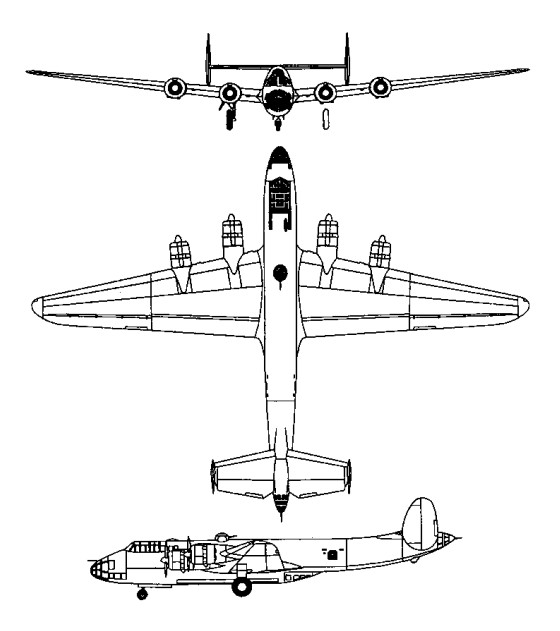
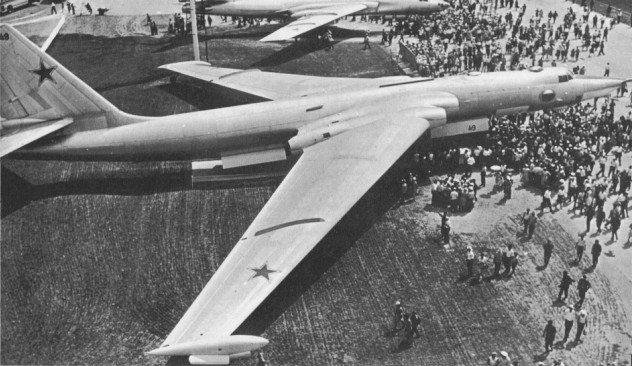
One other version of the M-4 ‘Bison’ is known, a test-bed aircraft powered by four D-15 turbojet engines each of 13000kg thrust and designated 201-M.
This was used in September 1959 to establish a number of payload-to-height records by lifting a payload of 10,000 kg (22,046 lb) to 50,253 ft (15,317 m) and the weight of 55,220 kg (121,480 lb) to 2000 m (6,561 ft).
 All Aero