Potez 840

Prototype 2 F-WJSU

The first prototype of the Potez 840 executive transport made its initial flight on 29 April 1961. An all-metal low-wing cantilever monoplane, it was powered by four 328kW Turbomeca Astazou II turboprops, had fully retractable tricycle landing gear, and carried a crew of three with cabin accommodation for up to 18 passengers. A second prototype, F-WJSU, was flown in June 1962, had Astazou XII engines of 447kW each.

F-WJSU was ferried to the USA as N840HP for use by the Ameriican distributors Turbo-Flight. In 1964 N840HP returned to Frane and became F-BMCY.

After a sales tour in North America by the P-840.02, plans were made for a production batch of 25 Potez 840s, but in fact only two more prototypes were built, one of these being reserved for static testing. Two Potez 841 aircraft followed, powered by 417kW Pratt & Whitney Aircraft of Canada PT6A-6 turboprops. Finally, the modified Potez 842 appeared in 1965, a second aircraft, also powerd by Astazou XIIs following two years later.

These eight light transports were the last aircraft of the Potez marque to be built; one is now exhibited at the Musee de I’Air, Paris, and a second has been restored and is flown under the auspices of the French Association Aeromedicale.

Engines: 4 x Turbomeca Astazou turboprop
Max take-off weight: 7800 kg / 17196 lb
Wingspan: 19.33 m / 63 ft 5 in
Max. speed: 540 km/h / 336 mph
Pax cap: 16

Potez (CAMS) 141

The acquisition by Potez in 1933 of Chantiers Aero-Maritimes de la Seine (CAMS) brought increased interest in the development of maritime aircraft, and the Potez (CAMS) 141 was designed to meet an official requirement for a maritime reconnaissance flying-boat. A large-span monoplane wing was carried on a faired superstructure above the hull, to which it was braced on each side by large N-struts. A stabilising float was strut-mounted beneath each wing, and the two-step all-metal hull carried at the rear a twin fin-and-rudder tail unit. Carrying a crew of nine to 12, the 41m span Potez 141 was powered by four 694kW Hispano-Suiza 12Y-26/27 Vee engines in wing-mounted nacelles. First flown on 21 January 1938, successful testing led to large orders, but changing policies and the development of World War II meant that no production aircraft were built.

Max take-off weight: 25900 kg / 57100 lb
Max. speed: 320 km/h / 199 mph
Bomb load: 1500kg

Piasecki PA-97 Heli-Stat

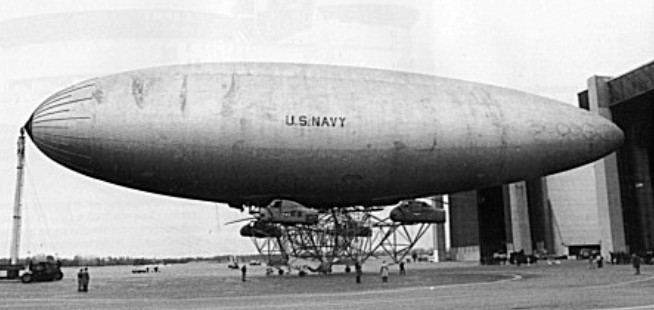
The Piasecki PA-97 Heli-Stat project began in the mid 1970s with a view to combining the lift capability of a lighter-than-air vehicle with the precise manoeuvrability of the helicopter, and following support from the US Forestry Service and the US Navy, construction of a prototype Heli-Stat began at Lakehurst, New Jersey, in 1979. The hybrid aircraft uses an airship-based envelope, attached via a skeletal structure to the front fuselage portions of four Sikorsky SH-34J helicopters, each powered by a standard Wright radial engine driving the conventional main rotor system and mounted at the four corners of the aircraft. The tail rotors are replaced by large diameter propellers to provide propulsion and full controllability.

At the beginning of 1984 it was expected that the Heli-Stat would fly in 1985, following a redesign of the structure which had failed under load tests. The following data is provisional

Richard Burke, 29.07.2008
I spent 7 years on this project starting first at the MAIN engineering facility drafting this monster along with 15 other people on Island Avenue in Philadelphia and later moved to Lakehurast during the structural pluck tests. I was there up until the ground manuvering tests where being performed. If you have any questions I can answer them I was over every single part of the airframe / Sh34J’s (Modified) and the aerostat (ZPG2 envelope). [The photo] was a roll out for a photo op dog and pony show note the lack of inverted v fins on the aerostat and the lack of pusher props on the helos also US Forrest Service was not painetd on the envelope yet . I am actually in this photo aft center stern of ship next to the guy with the bike, Joe O’Halleren
It was truly a combination of four SH-34 helicopters and a ZP-3 patrol blimp. It had B-52 landing gear and P-51 reduction gear boxes driving H-3 tail rotors as pusher props.

Piasecki Heli-Stat
Engines: 4 x Wright R-1820-84A, 1525shp
Overall width: 60.05m
Overall length: 74.07m
Empty weight: 24895kg
Gross weight: 50469kg
Maximum speed: 132km/h
Service ceiling: 3810m
Range: 3307km
Range with maximum payload: 80km

Piaggio P.108

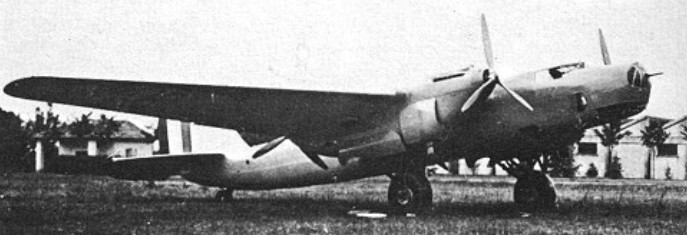
In 1938 the RA issued a request for proposal for a BGR (Bombardiere a Grande Raggio, long-range bomber); proposals came from Caproni with their Ca.204 and Ca.211 projects, CRDA with Cant. Z.1014 (built only in mock-up form), Piaggio with the P.108B (a private venture project, offered as an additional entry) and the P.112. Also considered was the purchasing of a production license for the Boeing B-17C ‘Fortress’, but this idea was later discarded for reasons of autarchia (national self-sufficiency). The competition was won by the Cant. Z.1014, but since the development of the P.108B was already at an advanced stage, this aircraft was chosen to be produced in quantity. Designed by Casiraghi, who had worked in the USA and was familiar with B-17 technology, it was a sophisticated machine, although slower and heavier than the Fortress.

Piaggio P-108B
Engines: 4
Span 108 ft 3 in
Length: 81 ft 6 in
Max speed: 290 mph at 11,480 ft
Range: 2500 miles
Armament: 8 x 12.7 mm mg
Bombload: 7716 lb
Crew: 6-7

Piaggio P.50

The Piaggio P.50 four-engine heavy bomber was the first aircraft to be designed for the company by Giovanni Casiraghi, following project outline by Giovanni Pegna. The P.50-1 (MM 369) prototype, test flown in 1937, was a shoulder-wing monoplane with a large single fin and rudder and four 544kW Isotta Fraschini XI RC V-12 engines wing-mounted in tandem pairs and driving two tractor and two pusher propellers. Three defensive gun positions included a nose turret, and offensive load was a maximum of 2500kg. A second prototype (MM 370) was damaged in a landing accident at Malpensa airfield in 1938. During that year the P.50-II (MM 371) appeared with a conventional four-engine layout, the 746kW Piaggio P.XI RC.40 radials driving four three-bladed tractor propellers. Defensive armament was increased to five 12.7mm machine-guns. Although no production ensued, the P.50 was the progenitor of the P.108 of World War II.

P.50-I
Engine: 4 x Isotta-Fraschini XI RC, 544kW
Wingspan: 25.76 m / 85 ft 6 in
Length: 19.8 m / 65 ft 12 in
Max. speed: 435 km/h / 270 mph

Piaggio P.3

The Piaggio P.3 Pegna-designed night bomber of 1923 was a two-bay biplane with the lower wing of greater span than the upper. The biplane tail unit incorporated triple fins and rudders, and four 149kW S.P.A. 6A engines were mounted in tandem pairs on the lower wing, driving two tractor and two pusher propellers. Pilot and co-pilot were seated side-by-side in an open cockpit ahead of the wings, and there were gunner’s cockpits in the nose and amidships, the rear gunner also operating a tunnel gun for ventral defence. At a later stage two 306kW Fiat A.20V engines were installed but the P.3 was not accepted by the Regia Aeronautica for quantity production.

Engine: 4 x S.P.A. 6A, 149kW
Wingspan: 24 m / 79 ft 9 in
Max. speed: 185 km/h / 115 mph

Petlyakov Pe-8 / Tupolev TB‑7 / ANT‑42

In 1935 Tupolev initiated work on a smooth skinned, four engined high altitude bomber which, while developed from the TB 3, was much more modern, with an oval section fuselage, retractable undercarriage and enclosed positions for the crew. Designated TB 7 (ANT 42), it is better known as the Pe 8 after V M Petlyakov, who undertook its further development.

The first prototype flew on 27 December 1936.

Production Pe-8 were well armed, carrying two 7.62mm machine-guns in a spherical nose turret, two machine-guns or a 20mm cannon in a dorsal turret, one hand-operated 12.7mm machine-gun in the rear of each inboard engine nacelle under the wing trailing edge and a 20mm cannon in a tail turret, plus up to 4,000kg of bombs stowed internally.

Initially the Pe-8 was powered by four 820kW M-105 engines and entered service in this form in 1940. The 1941 model had 1,080.5kW Mikulin AM-35A fitted. During the production run (which lasted until 1944) several other engines were installed either experimentally or as a standard type, including the 967kW AM-38, 1,304kW/ 1700 hp M-82 and, appearing in 1943, a 1500 hp M-40F diesel engine.

The Pe-8 had notable features such as defensive gun positions in the rear of the inner engine nacelles and, in the prototypes, a fuselage-mounted engine to drive the massive supercharger that supplied a larger volume of air to all four flight engines.

On the night of 21 July 1941 German bombers attacked Moscow for the first time. As a reprisal Soviet IL-4 bombers made their first attack on Berlin on the night of 7 August. The resulting damage was minimal but it cleared the way for further attacks. In the spring of 1942 the Soviet ADD or Long-Range Aviation was formed, using the Pe-8 as its main component. Pe-8 raids on Germany began in July 1942 with small numbers of aircraft attacking Konigsberg and then Berlin and elsewhere. However these were not very successful and extremely heavy losses were endured. Although Pe-8 remained operational as bombers until the end of the war, a number were converted into transports.

Production was terminated in 1944.

The Pe-8 which brought Molotov to Britain in 1942

Gallery

Engines: 4 x Mikulin AM-35A, 880kW / 1450 hp
Wingspan: 39.1 m / 128 ft 3 in
Length: 23.6 m / 77 ft 5 in
Wing area: 188.7 sq.m / 2031.15 sq ft
Max take-off weight: 32000 kg / 70548 lb
Empty weight: 18000 kg / 39683 lb
Max. speed: 440 km/h / 273 mph at 25,000 ft
Cruise speed: 340 km/h / 211 mph
Ceiling: 11000 m / 36100 ft
Range w/max.fuel: 6000 km / 3728 miles
Range w/max.payload: 3000 km / 1864 miles
Armament: 2 x 20mm ShVAK cannon, 2 x 12.7mm Beresin machine-guns, 2 x 7.62mm ShKAS machine-guns
Bombload: 2000-4000kg
Crew: 8-12

Petlyakov Pe-8 / Tupolev ANT-42 / TB-7