Designed in 1917 by Adolf Rohrbach, the Staaken E-4 was a stressed metal monocoque fuselage canatlevered monoplane four-engined passenger aircraft with galley, w.c., baggage stowage and full communications. The most advanced aircraft of its time, the E.4/20 flew successfully in 1920. Completed after the armisitice and extensively tested by the Allies who ordered it destroyed because of its potential as a bomber – it was faster than any Allied fighter of the day. It was dismantled in 1922.
E-4/20 Engines: 4 x Maybach IVa, 190kW Max take-off weight: 8500 kg / 18739 lb Wingspan: 31.0 m / 102 ft 8 in Length: 16.6 m / 54 ft 6 in Wing area: 106.0 sq.m / 1140.97 sq ft Max. speed: 230 km/h / 143 mph Cruise speed: 211 km/h / 131 mph Range w/max.fuel: 1200 km / 746 miles Crew: 3 Passengers: 12-18
Zeppelin 8301 Engines: 4 x Mercedes D-IVa Max take-off weight: 12500 kg / 27558 lb Empty weight: 9000 kg / 19842 lb Wingspan: 42.4 m / 139 ft 1 in Length: 21.0 m / 69 ft 11 in Height: 6.8 m / 22 ft 4 in Wing area: 340.5 sq.m / 3665.11 sq ft Max. speed: 130 km/h / 81 mph Range w/max.fuel: 1000 km / 621 miles Crew: 5 Armament: 5 machine-guns Bombload: 1800kg
First flown in mid-1917, the Zeppelin-Staaken R VI, with 18 examples built, was to be by far the most numerous of the giant, long ranged R-planes. Powered either by four 245hp Maybach Mb IVs, or four 260hp Mercedes D IVa engines, mounted back to back in twin nacelles to drive two pusher and two tractor propellers, the R VI’s top level speed was 135km/h, while its normal range with a 1000kg bomb load was around 880km. Delivered to Rf Abt 501, by now transferred to the Western Front, the RVIs sometimes operated alongside their smaller G type bretheren in raids against the English mainland and more distant French ports and cities. The Navy operated a sole, float-equipped example of this bomber under the designation Zeppelin-Staaken Type L, serialled 1432. It was wrecked during trials in 1918.
R.VI Engine: 4 x Maybach Mb.IV, 183kW Max take-off weight: 11848 kg / 26121 lb Empty weight: 7921 kg / 17463 lb Wingspan: 42.2 m / 138 ft 5 in Length: 22.1 m / 73 ft 6 in Height: 6.3 m / 21 ft 8 in Wing area: 332 sq.m / 3573.61 sq ft Max. speed: 135 km/h / 84 mph Ceiling: 4320 m / 14150 ft Range: 800 km / 497 miles Crew: 7 Armament: 4 x 7.92mm machine-guns Bombload: 2000kg
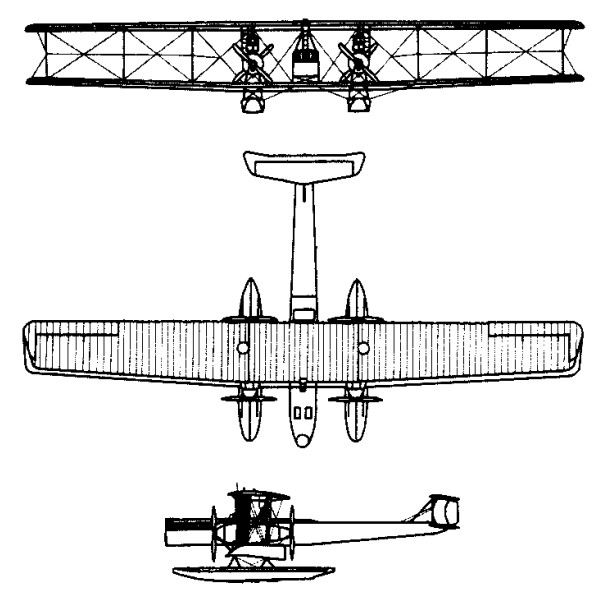
The giant seaplane Rs III was a high-wing monoplane of all-metal design with fabric covering of the wing and empennage. The intrinsically stable hull was a monocoque design made of duraluminium with traverse and longitudinal steps. The hull housed the gun station, the flight deck for two pilots, the engineer’s station and the fuel system. The four Maybach engines were arranged in tandem in two nacelles and installed between the hull and the wing. The tail boom was mounted on the wing and had a box-type horizontal tail assembly with split elevator without compensating surfaces; the rudders and tail fins were divided into halves by the fuselage. First flight took place on November 4, 1917. On 19 February 1918, a 7-hour non stop flight was made from Friedrichshafen to Norderney for further testing by the Seaplane Test Command Warnemonde.
Rs III Engine: 4 x Maybach HS, 180kW Take-off weight: 10670 kg / 23523 lb Empty weight: 7865 kg / 17339 lb Wingspan: 37 m / 121 ft 5 in Length: 22.70 m / 74 ft 6 in Height: 8.10 m / 26 ft 7 in Wing area: 238 sq.m / 2561.81 sq ft Max. speed: 136 km/h / 85 mph Ceiling: 2700 m / 8850 ft Range: 1380 km / 858 miles
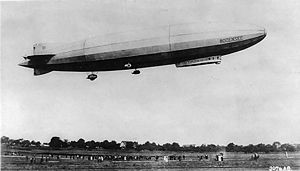
LZ 120 Bodensee was a passenger-carrying airship built by Zeppelin Luftschiffbau in 1919 to operate a passenger service between Berlin and Friedrichshafen. It was later handed over to the Italian Navy as war reparations in place of airships that had been sabotaged by their crews and renamed Esperia. A sister-ship, LZ 121 Nordstern, was built in 1920: it was handed over to France and renamed Méditerranée.
The Bodensee, designed by Paul Jaray, had an innovative hull shape of relatively low fineness ratio, (ratio of length to diameter). This was arrived at after wind-tunnel tests conducted at the University of Göttingen had shown that this would significantly reduce drag.
The framework consisted of eleven 17-sided main transverse frames with a secondary ring frame in each bay, connected by longitudinal girders with a stiffening keel. The forward-mounted control car was combined with the passenger accommodation and was constructed as an integral part of the hull structure rather than being suspended beneath it. Passenger accommodation consisted of five compartments seating four people and a VIP cabin for one. An additional six passengers could be carried on wicker chairs in the gangway between the compartments. A galley and toilets were also fitted.
It was powered by four 190 kW (260 hp) Maybach Mb.IVa engines, two in a centrally mounted aft gondola driving a single 5.2 m (17 ft 1 in) diameter two-bladed pusher propeller, the other two in a pair of amidships engine cars mounted either side of the hull. These drove 3.2 m (10 ft 6 in) two-bladed propellers via a reversing gearbox to enable reverse thrust for manoeuvering when landing.
A sister-ship LZ 121 Nordstern, similar to the lengthened Bodensee but with modified passenger accommodation, was completed in 1920.
Bodensee was first flown on 20 August 1919 piloted by Captain Bernhard Lau. The first passenger-carrying flight was made on 24 August, with Hugo Eckener in command. It made over 100 flights for DELAG, carrying 2,322 passengers over a total distance of 50,000 km (31,000 mi) These flights included a 17-hour voyage between Berlin and Stockholm.
On 3 November 1919 Bodensee suffered a partial engine failure, leading to an accident at Staaken when attempting to land. One of the ground handling crew was killed and several injured, and the airship, lightened after five passengers had jumped out, was then carried off by the wind and eventually brought down near Magdeburg.
Bodensee had suffered some damage in the accident, and while being repaired was also modified: the controls had proved oversensitive, so the control surfaces were cut down and it was lengthened by 10 m (32 ft 10 in). In July 1921 Bodensee was handed over to the Italian government as compensation for the Zeppelins which were to have been handed over as war reparations but had been sabotaged by their crews. Two stowaways accompanied the flight to Rome: a German bank clerk and an American cinematographer. In Italian service, renamed Esperia it made at least one long flight in Italian service, a 2,400 km (1,500 mi) voyage lasting 25 hours from Rome to Barcelona and Toulon before being broken up for scrap in July 1928.
The Bodensees sister-ship, LZ 121 Nordstern, was also covered by the reparations decided as part of the peace treaty of June 1919 and was confiscated by the Allies, Nordstern was delivered to France as a war reparation on 13 June 1921 and renamed Méditerranée.
LZ 120 Bodensee / Esperia (after enlarging) Engines: 4 × Maybach Mb.IVa Length: 120.8 m (396 ft 4 in) Diameter: 18.71 m (61 ft 5 in) Volume: 20,000 m3 (710,000 cu ft) Empty weight: 13,646 kg (30,084 lb) Useful lift: 9,593 kg (21,149 lb) Maximum speed: 132.5 km/h (82 mph; 72 kn) Range: 1,700 km (1,056 mi; 918 nmi) Crew: 12 Passengers: 27
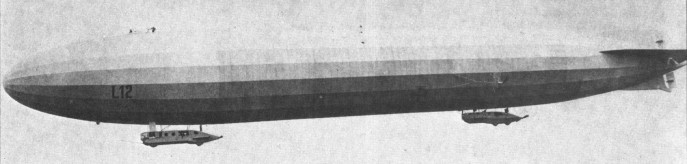
January 1915 was the date set for the introduction of a new type of German bomber airship, the Zeppelin Typ P. In point of fact the first of the new vessels was four months late in making its appearance, the lead ship L10 (buil¬der’s designation LZ40) being deli¬vered in mid-May. Armament was two 7.92-mm (0.312-in) Maxim machine-guns on free mountings in single gun position above the forward hull. The ship was sent on its attack against targets in England in the following month with a raid on London, it being believed at all levels and on both sides of the North Sea that the selection of individual targets was possible. In point of fact, the weather took a hand, and L10 was able to get only as far as Gravesend, where its bombs chanced to set light to a military hospital with a consequent reaction against such ‘frightfulness’. Another attack was mounted 11 days later when Jarrow and South Shields were the targets, despite heavy fire from the defence batteries on the coast. Three other occasions found the new Zeppelin over the British Isles from a total of 28 military excursions from Nordholz. The German system of organization meant that the flights were usually carried out by the same crews, so that some became more ex¬perienced than others, but mindful of the dangers the men tended to live only for the day and to endure bomb¬ing trips under thousands of cubic metres of explosive gas and in numb¬ing cold as best they could. Strangely, it was on what should have been an uneventful flight, a mari¬time reconnaisance on the afternoon of 3 September 1915, exactly a year be¬fore SL11 was destroyed, that the L10’s career ended. While the airship was making ready to land back at Nordholz near Cuxhaven, the order to valve off gas was given as a normal preliminary to making landfall. Unfortunately a thunderstorm happened to be raging and the naval airship was struck by lightning. There was a violent explo¬sion before the vessel plunged into the shallow waters below, where it burned for several hours. All aboard perished, Kapithnleutnant Hirsch the comman¬der and his crew of 18. Total produc¬tion of the Type P was 10 units, L10 to L19 (builder’s designations LZ40, LZ41, LZ43, LZ45, LZ46, LZ48, LZ50, LZS3, LZ52 and LZ54 respectively).
L10 (Zeppelin LZ40) Type: strategic bomber airship Powerplant: four 156.6-kW (210-hp) Maybach CX six-cylinder water-cooled piston Maximum speed 95 kph (59 mph) Service ceiling 3900 m (12,795 ft) Range 2150 km (1,336 miles) Empty weight 21100 kg (46,518 lb) Useful lift 26200 kg (57,760 lb) Diameter 18.70 m (61 ft 4.2 in) Length 163.50 m (536 ft 5 in) Volume 31900 c.m (1,126,540 cu ft) Armament: two 7.92-mm (0.312-in) Maxim machine-guns
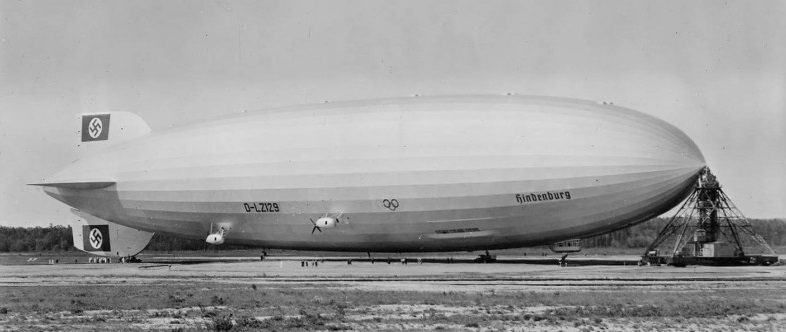
Hindenburg carried 72 passengers, with a sealed smoking room, and a specially-made lightweight cast-aluminium grand piano for entertainment. As Germany did not have non-flammable helium gas available, hydrogen was used.
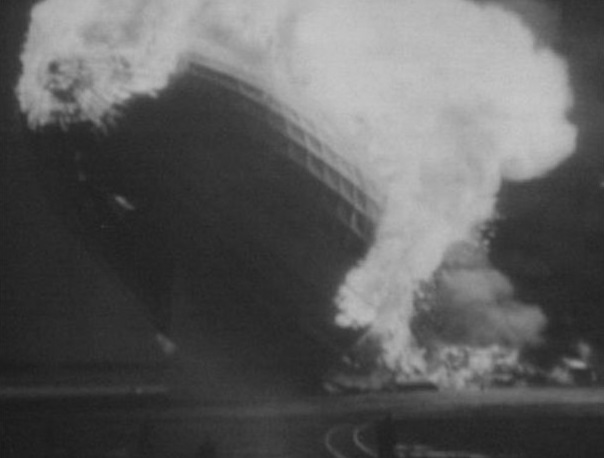
In 1936 a service across the Atlantic was opened with the new Zeppelin, the Hindenburg. Between March 1936 and May 1937 63 flights were made before the Hindenburg disaster, which occurred while landing at Lakehurst Naval Air Station in New Jersey.
The Hindenburg crashed at Lakehurst, New Jersey on 7 May 1937, on the first flight of the year. As she was being moored to the mast, the airship burst into flames. Thirty-six people were killed.
D-LZ-129 Zeppelin LZ 129 Hindenburg of Deutsche Zeppelin Reederei.
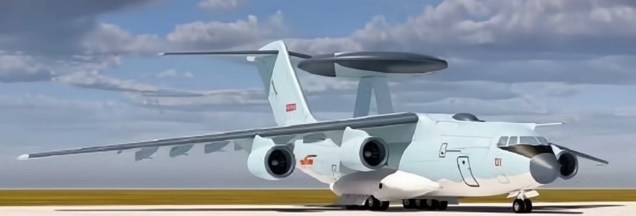
China has not officially confirmed the first flight of the KJ-3000 aircraft, which will significantly enhance its early warning capabilities. The KJ-3000 is based on the People’s Liberation Army Air Force (PLAAF) Y-20 transport aircraft and is the latest addition to China’s “eye in the sky” arsenal of early warning aircraft.
The rotodome is a discus-shaped rotating radome that allows the detection and tracking of targets by providing 360-degree coverage. Some experts speculate that the bulge on the tail may be related to the integration of some advanced communication systems.
The aircraft is powered by the domestically-produced WS-20 high-bypass turbofan engine, like the Y-20B transport aircraft that it is based on. It is anticipated to generate approximately 31,000 pounds of thrust. As per some unconfirmed claims, the aircraft would have a detection range exceeding 360-500 km.
The KJ-3000 can carry more payload—up to 66 tons— 16 tons more than the KJ-2000. Moreover, the WS-20 engines provide more thrust and fuel efficiency, enabling longer flight operations.
The aircraft could operate as a complete command center since it integrates C4ISR (Command, Control, Communications, Computers, Intelligence, Surveillance, and Reconnaissance) technologies, allowing for better coordination between the land, sea, and air domains.
Two major Chinese aviation companies, Shaanxi Aircraft Corporation and Xi’an Aircraft Corporation, expressed interest to develop the Y-20 aircraft, but Xi’an was announced as the manufacturer of Y-20 in 2007.
Developed by Xi’an Aircraft Industrial Corporation and was officially launched in 2006 the Xi’an Y-20 (Chinese: 运-20; pinyin: Yùn-20; literally: “transport-20”) is a large military transport aircraft. The official codename of the aircraft is Kunpeng (Chinese: 鲲鹏), after the mythical bird that can fly for thousands of miles described in the ancient Chinese Taoist classic Zhuangzi. However, within the Chinese aviation industry itself, the aircraft is more commonly known by its nickname Chubby Girl (Chinese: 胖妞), because its wide fuselage in comparison to other Chinese aircraft previously developed in China.
The aircraft was primarily designed and developed in China by Xi’an Aircraft Industrial Corporation under Tang Changhong. Certain parts of the wing such as the triple-slotted trailing-edge flaps were developed by the Ukrainian Antonov Design Bureau. The Y-20 uses components made of composite materials. The composites are produced in China, whereas in the past they had to be imported. The Y-20’s cabin incorporates flame-retardant composites developed by the 703 Institute of the China Aerospace Science and Technology Corporation (CASC). The 703 Institute was created in March 2009 with development taking three years. The performance of the composites is reportedly comparable to those that fulfill FAR Part 25.835. The 703 Institute achieved another milestone by establishing a comprehensive Chinese evaluation and certification system for aircraft composite materials based on international standards.
The Y-20 is the first cargo aircraft to use 3D printing technology to speed up its development and to lower its manufacturing cost. Model-based definition (MBD) is also used, and it’s the third aircraft to utilize MBD technology in the world, after Airbus A380 (2000) and Boeing 787 (2005). A project team to implement MBD for Y-20 program was formally formed in October 2009, and after the initial success in application on the main landing gear, MBD application was expanded to the entire aircraft and became mandatory for all contractors and sub contractors of the Y-20 program. The implementation of MBD was initially met with strong resistance, with only a third of suppliers agreeing to implement MBD. However, the general designer of Y-20 declared that those who refused to implement MBD will be banned from participating in the Y-20 program, thus forcing everyone to comply, resulting in increases in productivity. The implementation of MBD greatly shortened the time required, for example, without MBD, installation of wings takes a month or two, but with MBD adopted, the time is drastically shortened to just a few hours, and in general, the design work reduced by 40%, preparation for production reduced by 75%, and manufacturing cycle reduced by 30%. In addition to 3D printing, Y-20 is also the first aircraft in China adopting associative design technology (ADT) in its development. Headed by the deputy general designer of structural design, Mr. Feng Jun (冯军), the initial attempt to implement ADT actually failed after two months spent on application on the nose section. It was only after the second attempt that took another three months on the application on wings did ADT became successful. The adaptation of ADT greatly shortened the development time by at least eight months, and modification of wing design that previously took a week is shortened to half a day.
The Y-20 airlifter has a glass cockpit, which accommodates three crew members. Cargo is loaded through a large aft ramp that accommodates rolling stock. The Y-20 incorporates a shoulder wing, T-tail, rear cargo-loading assembly and heavy-duty retractable landing gear, consists of three rows, with a pair of wheels for each row, totalling six wheels for each side. The structural test was completed in 194 days as opposed to the 300 days originally planned, thanks to the successful development and application of an automated structural strength analysis system. According to the deputy general designer, the shortest take-off distance of Y-20 is 600 to 700 meters. Y-20 incorporates a total of four LCD EFIS, and the development of EFIS for Y-20 utilizes virtual reality via helmet mounted display. Eight types of different relays used on Y-20 are developed by Guilin Aerospace Co., Ltd. a wholly own subsidiary of China Tri-River Aerospace Group Co., Ltd.(中国三江航天集团), which is also known as the 9th Academy of China Aerospace Science and Industry Corporation (CASIC).
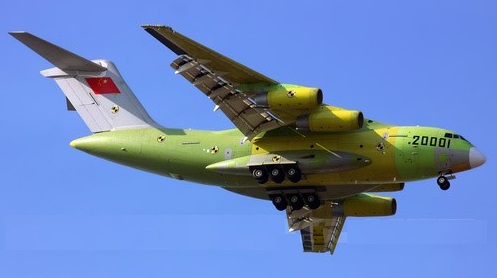
It was reported that the Y-20 started ground testing from December 2012, including runway taxi tests. The aircraft made its maiden flight lasting one hour on January 26, 2013 at Shaanxi Yanliang Aviation Base. During landing in first flight, it was reported that the Y-20 prototype bounced once before finally settling on runway due to high landing speed. In December 2013, a new Y-20 prototype took to the sky.
The Y-20 is powered by four 12-ton thrust Soloviev D-30KP-2 engines, and all early production units are likely to be similarly powered. The Chinese intend to replace the D-30 with the 14-ton thrust WS-20, which is required for the Y-20 to achieve its maximum cargo capacity of 66 tons. The Shenyang WS-20 is derived from the core of the Shenyang WS-10A, an indigenous Chinese turbofan engine for fighter aircraft.
In 2013, Shenyang Engine Design and Research Institute was reportedly developing the SF-A, a 28700-pound thrust engine, for the Y-20 and the Comac C919. The SF-A is derived from the core of the WS-15. Compared to the WS-20, the SF-A is a conservative design that does not seek to match the technology of more modern engines.
In late 2017, it is revealed that domestic Chinese turbofan WS-18 has begun flight test on Y-20. Compared with Russian Soloviev D-30, WS-18 is 300 kg lighter, weighing at 2000 kg; with thrust increased from 12.5 ton of D-30 to 13.2 ton; and fuel consumption of WS-18 is also reduced in comparison to D-30, and the mean time between overhaul of WS-18 is 3000 hours. However, because the increase in thrust is not significant in comparison to D-30, WS-18 is like to be a stopgap measure before WS-20 is ready. The production aircraft are equipped with WS-20 engines.
The aircraft is equipped with a retractable landing gear comprising two main landing gear units and a nose unit. Each of the two main units on either side of under-fuselage features six wheels, which are arranged in a two-two-two layout from front-to back. The steerable nose gear includes a standard twin-wheel leg unit. The landing gear allows take-offs and landings on rough airfields or unpaved runways.
In 2014 the PLA National Defence University’s Center for Economic Research recommended the purchase of up to 400 Y-20s, comparing the PLAAF’s needs with the existing airlifter fleets of the United States and Russia. In June 2016 Jane’s reported that up to 1,000 Y-20s are being requested by the Chinese military.
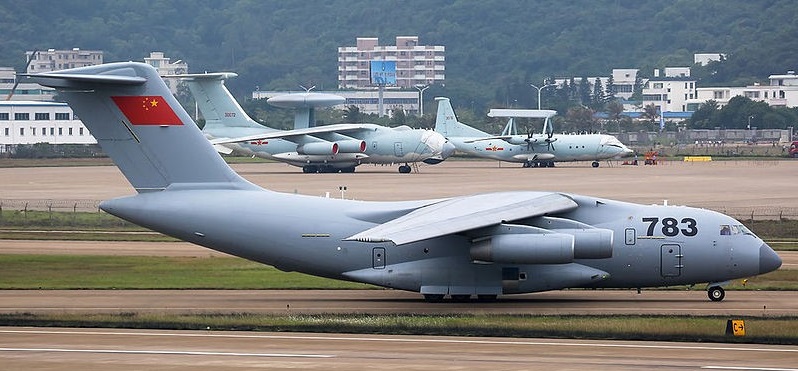
On 6 February 2016 the Y-20 was flown for the first time and pictures of the fifth prototype (serial number 788) in flight appeared on Chinese military webpages. Other known prototypes carry identification numbers 781, 783 and 785. On 27 January 2016, former Chinese test pilot Xu Yongling had reported in a Xinhua article that Chinese aviation industry officials had stated that the Y-20 “completed development” at the end of 2015. In June 2016, the first two Xian Y-20 aircraft were delivered to the People’s Liberation Army Air Force (PLAAF).
On 6 July 2016 the first serial Y-20 (serial number 11051) was handed over to the PLAAF in a ceremony. The second aircraft serialed 11052 followed soon after – it is assigned to the 12th Regiment of the 4th Transport Division at Qionglai, Chengdu. On 8 May 2018, it was announced by PLAAF’s spokeperson Shen Jinke that Y-20 had “recently conducted its first joint airdrop training with the country’s airborne troops”.
At least two aircraft stationed at Qionglai Air Base since July 2016. Commercial satellite imagery captured on 9 December 2017 suggests that at least three more Xian Aircraft Corporation Y-20 Kunpeng transport aircraft have entered service with China’s People’s Liberation Army Air Force (PLAAF). In these images there are a total of 5 Xi’an Y-20’s lined up at Qionglai Airbase near Chengdu in China’s southwestern Sichuan Province.
The YY-20A tanker, bearing the serial number 20646, was spotted in February 2025.
YY-20A
Derived from the Xi’an Y-20 strategic transport, the YY-20A tanker variant can haul up to 90 tons of fuel, tripling the capacity of the aging H-6U tankers it’s replacing.
2023 analysis pointed to the YY-20B’s “hot and high” takeoff capability—enabled by the WS-20 engines—as a game-changer, allowing operations from rugged, high-altitude bases that could support a Taiwan contingency.
The base Y-20A transport, powered initially by Russian D-30KP-2 engines, boasts a 66-ton payload and a range of up to 7,800 kilometers when fully loaded, capable of carrying everything from ZTZ-99 tanks to medical supplies.
The YY-20A tanker variant, introduced in 2022, swaps cargo for fuel pallets, featuring two underwing refueling pods and a centerline drogue for large aircraft like the H-6N bomber or KJ-500A AEW&C platform, monitored by IIR/TV cameras for precision.
The Y-20B, rolled out by 2023, upgrades to four Shenyang WS-20 high-bypass turbofans, boosting thrust to 31,000 pounds per engine and enhancing the range and short-field performance. A YY-20B tanker sub-variant, spotted in late 2023, likely builds on this, though some speculate the Y-20B’s modular design allows any unit to double as a tanker with minimal reconfiguration.
Advanced avionics, a glass cockpit with heads-up displays, and composite materials round out a platform that’s as modern as it is massive, with a 50-meter wingspan and 47-meter length.
Analysts see a niche for the Y-20E export variant, powered by WS-20s.
In 2025 production capacity was ramping up and a civilian Y-20F-100 variant pitched for commercial use.
Specifications (estimated) Engines: 4 × Soloviev D-30KP-2 turbofans Wingspan: 45 m (147 ft ~ 164 ft) Wing area: 330 m² (3550 ft²) Length: 47 m (154.2 ft) Height: 15 m (49.2 ft) Empty weight: 100,000 kg (220,400 lb) Max takeoff weight: 220,000 kg (485,000 lb) Payload: 66 tonnes (145,505 lb) Max wing loading: 710 kg/m² (145 lb/ft²) Cruise speed: Mach 0.75 Range max payload: 4,500 km Range 40 ton payload: 7,800 km Service ceiling: 13,000 m (42,700 ft) Crew: 3: pilot, copilot & load master
In 1970, Xian Aircraft Factory proposed an upgraded four-engined version of their H-6 Tu-16 copy. The proposal was approved, while the PLAAF issued an extra requirement of capabilities against sea targets two years into development. To test their plans, Xian re-engined an H-6 with four Rolls-Royce Spey turbofans – two in the wing roots and two under the wings. Designated the H-6I, the prototype took flight in 1978. Performance gains were impressive – climb rate increased by 40%, and range increased by a third. Payload was also increased significantly. While Xian’s proposed H-8 was to use revised Spey engines mounted in underwing pylons to reduce maintenance costs, the program fell victim to downsizing efforts in 1980.










 All Aero