A large three-engine twin-hull R.I.B. flying-boat.
3 engines
Renard R-30-300

This 4 passenger tri-motor was designed in response to an official Belgian request for a long range transport aircraft for the Belgian Congo. It met all the design requirements but by the time it flew in 1931 it was already obsolete and only one was completed.
Engines: 3 x 120 h.p. Renard 5 cylinder radials
Span: 49’3″
Length: 32′ 10″
Height: 11′ 2″
Wing area: 360 sq ft
Empty Weight: 3,410 lb
Gross Weight: 5040 lb
Max Speed: 131 mph
Range: 700 miles
Service ceiling: 23,000 ft
Prudden-San Diego-Whitehead Monoplane / Atlanta PW-1 / PW-2 / Prudden monoplane

The Prudden-Whitehead monoplane (sometimes referred to as the Atlanta PW-1, PW-2 or the Prudden monoplane) is an American three-engined eight-seat commercial transport monoplane. Built by the Atlanta Aircraft Corporation and designed by George H. Prudden,
The Prudden-Whitehead monoplane is an all-metal low-wing cantilever monoplane with a monocoque fuselage and powered by three 240 hp (179 kW) Wright R-760 piston engines. It has a conventional fixed landing gear with a tailwheel. It has an enclosed passenger cabin for eight to ten passengers and a washroom and toilet.
Edward Whitehead was responsible for the sales of the aircraft. Only two of the trimotors were built.
The PW-1 variant, the first aircraft built was registered N366W.
The PW-2 variant, the second aircraft built was registered N280V.
PW-1 / PW-2
1930 (ATC 2-218)
Powerplant: 3 × Wright R-760, 240 hp (179 kW) / 220hp Wright J-6
Wingspan: 66 ft 6 in (20.27 m)
Wing area: 662.5 sq ft (61.6 sq.m)
Length: 44 ft 10 in (13.67 m)
Height: 14 ft 0.88 in (4.29 m)
Empty weight: 5,200 lb (2,359 kg)
Gross weight: 7,735 lb (3,509 kg)
Maximum speed: 145 mph (233 km/h, 126 kn)
Cruise speed: 124 mph (199 km/h, 108 kn)
Stall: 55 mph
Range: 620 mi (998 km, 540 nmi)
Endurance: 5 hours 0 minutes
Service ceiling: 15,000 ft (4,600 m)
Rate of climb: 1,220 ft/min (76.2 m/s)
Crew: 2
Capacity: 8 to 10 passengers
Prudden-San Diego TM-1 / XM-1 / SE-1

The first development of the company was the project of a three-engine transport aircraft. The prototype aircraft, designated XM-1 and registration number X3321, flew for the first time in late 1927.
It was an all-metal high-wing aircraft equipped with three Ryan engines (a copy of the German Siemens-Halske Sh 12) with 125 hp. The passenger cabin was designed for six people, but after a slight transformation it was possible to accommodate seven using the co-pilot’s seat.
This aircraft, built from steel and duralumin, was advertised by the company as being resistant to fire and the whims of the weather and even to damage (crash-proof).
After several months of testing, the aircraft was converted into the TM-1 (changing the registration number to N5728). In this form, the plane took off in June 1928 powered by Siemens-Halske engines.
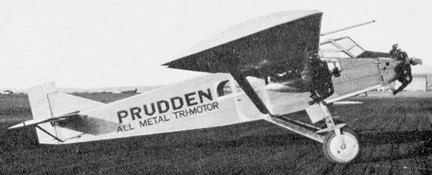
The Super TM-1 had Ryan-Siemens wing engines and a Wright J-5c in the nose position.
Thanks to good publicity, even before the end of testing, a contract was awarded for the production of 16 such aircraft for Beacon Airways.
However, the company soon began to experience serious financial difficulties that prevented the implementation of these plans. The only copy of the aircraft made only a few advertising flights, and then, was converted into a single engine and sold to Mexico. The SE-1 designation showing the largest change to date, into a single-engine configuration.
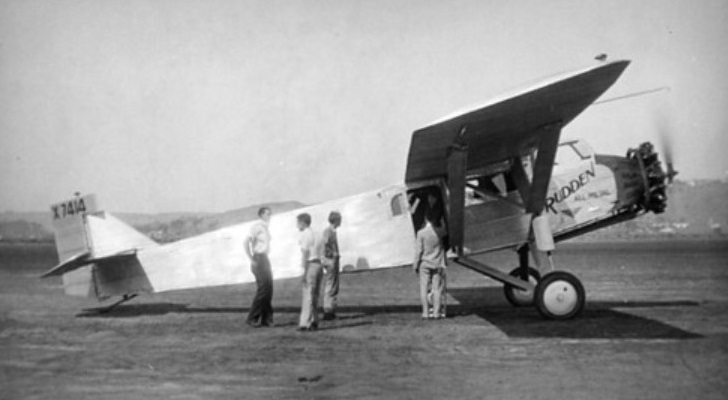
The type was developed into the Solar MS-1.
TM-1
Engines: 3 x Ryan, 125 h.p.
Wingspan: 17.37 m
Wing area: 47.00 sq,m
Length: 11.58 m
Height: 3.67 m
Weight empty: 1820 kg
Maximum speed: 175km / h
Cruising speed: 153km / h
Practical ceiling: 4572m
Crew: 2
Payload: 6 passengers
Porte Baby
On the outbreak of the First World War, among the Admiralty’s chief responsibilities was the aerial defence of Britain, as well as the more traditional role as guardian of the island’s surrounding sea¬ways. At that time the Royal Naval Air Service was almost wholly equipped with floatplanes of limited range and unreliable performance. The obvious need for a sea¬going aircraft of long range led Captain Murray Sueter, Director of the Naval Air Department, to purchase two Curtiss flying boats.
After some operational use of these initial Curtiss flying boats, Commander John C Porte set out to improve some of the more obvious weaknesses in the design.
In September 1915, Porte was appointed in command of RNAS Felixstowe and while there finally produced his own design of flying boat. It was a large, three engined aircraft, and was allocated the serial number 9800. Quite unofficially, it was titled the ‘Porte Baby’. The largest flying boat design of its day, the ‘Baby’ was put into limited production some 20 machines and most of these saw operational service in 1916 17.
It had three Rolls Royce Eagle engines, two installed as tractors and one as a pusher. One successfully launched a Bristol Scout from its top wing while airborne over Felixstow.
Pope Southern Cross
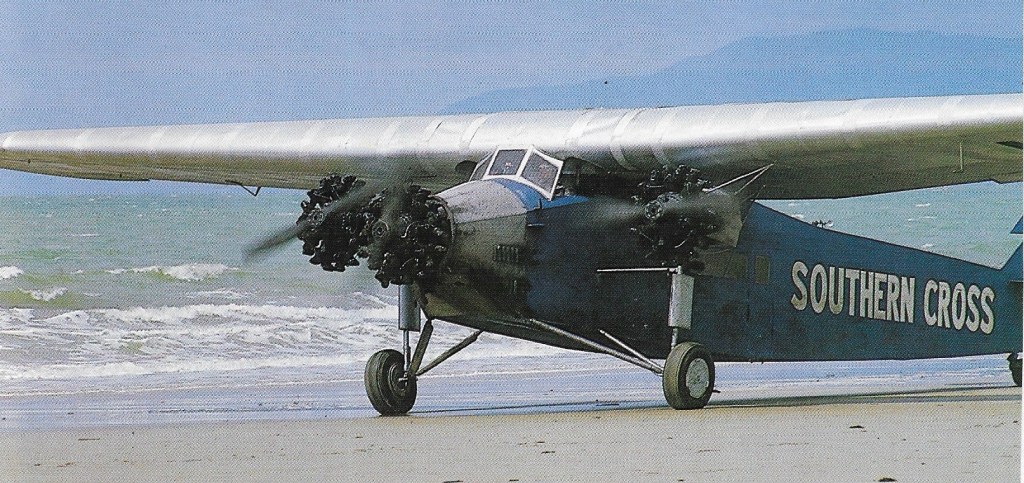
The plane’s replica was the project of South Australian flying instructor John Pope, who created the plane as a travelling history lesson that would fly around the country. Southern Cross is a flying close replica of the famous record breaking Southern Cross Fokker FV11B of Sir Charles Kingsford Smith from the 1920s and 1930s.
Built in South Australia in the period 1980 to 1987 as a tribute to Smithy, the aircraft toured Australia during the 1988 Bicentenary raising money for the Royal Flying Doctor Service registered VH-USU.
She is a faithful replica built to modern standards using the traditional aircraft construction of steel tubing and timber with doped Irish Linen for the fuselage and an all wooden (spruce and plywood) wing. She is the largest “exact replica” aircraft in the world and has the largest one piece wing ever made in Australia.
Aircraft Research and Development Unit was tasked to carry out the test flying of a replica of the 1926 Fokker Tri-Motor as flown by Australian aviation pioneer, Sir Charles Kingsford-Smith. The purpose of the test programme was, firstly, to ensure safe operation of the aircraft throughout its proposed flight envelope and, secondly, to provide data to allow the issue of a Certificate of Airworthiness or Permit to Fly. The trial included a cockpit and systems assessment as well as an evaluation of the aircrafts flight and ground handling characteristics. Airborne assessments covered stability and control characteristics, stall characteristics, general aircraft performance, asymmetric power characteristics and an evaluation of the aircrafts take-off and landing performance and handling. The flight characteristics of the test aircraft were found to be similar to those expected from an original Fokker VIIb-3M. Consequently, the aircraft could not meet some modern certification requirements. Notwithstanding this the aircraft was found to be generally safe and airworthy provided it was operated by experienced pilots in daylight Visual Meteorological Conditions and that the main recommendations of this report are adopted.

The aircraft first flew in 1987 and during the 1988 Bicentenary she toured around Australia as a fund raising exhibit for the Royal Flying Doctor Service. The aircraft was a major drawcard to the 1988 Bicentennial Air Show and many thousands of people saw her. In 1990 the aircraft even ventured to New Zealand for air show appearances.
After 555 hrs flying tine, on the 25th of May 2002 it had an accident at Parafield South Australia when she lost a main wheel on takeoff. Landing on the one good wheel and the tail, the pilot kept the damaged wheel off the ground by keeping its wing high in the air. When the aircraft stopped the high wing came down and snapped off around 3 metres from the wing tip. HARS bought the damaged plane in 2000.
After considerable negotiation HARS acquired the aircraft from the SA Government in 2010. It is being restored to full airworthy status.
Engines: 3 x Jacobs R-775 A2, 300 bhp
Wing span: 22.1 m
Length: 14.3 m
Height: 4.3 m
Maximum takeoff weight: 5,700 kg
Cruising speed: ~155 km/h (max ~185 km/h)
Ceiling: 8,500 ft
Endurance: 7.5 hr
Crew: 2 x pilots
Piper PA-32-3M
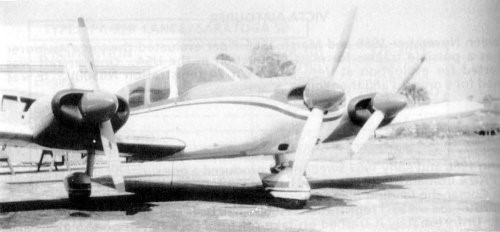
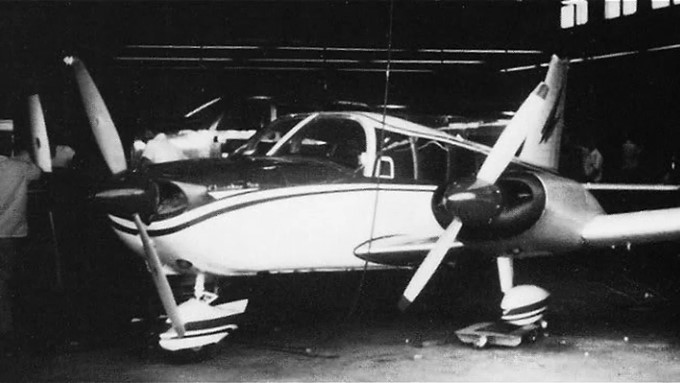
The Piper PA-32-3M was basically a PA-32 Cherokee based prototype modified as a Trimotor aircraft with two 115-hp Lycoming O-235 engines fitted to the wings, for development of the PA-34 Seneca at Vero Beach FL. in the early ’70s. This prototype significantly helped many other development projects at Piper.
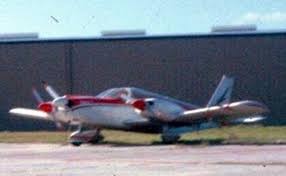
It was an early attempt to convert the PA-32-260 Cherokee 6 into a simple, low-cost trimotor, retaining the fixed gear and using fixed-pitch props. This was actually tested by adding two 115 hp engines to the wings and throttling the Cherokee 6’s 260 hp engine back to simulate a third O-235 for a total of 345 hp.
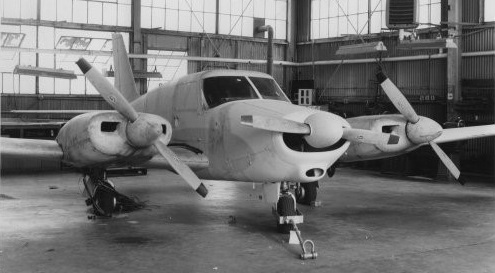
Performance on all three engines was fine, but engine out performance was not. Switching the 115 hp engines for 150 hp units solved that problem, but speed was now so high on 450 hp that controllable-pitch props were needed, defeating the original purpose. That model eventually became the Seneca, but with two larger engines, variable-pitch props and retractable gear.
Piaggio P.23R

An entirely new design, bearing little resemblance to the original P.23, the Piaggio P.23R of 1936 had a pencil-shaped fuselage, a cantilever low-set wing with straight taper, and was powered by three 671kW Isotta Fraschini Asso XI R V-12 engines in sleek cowlings.
Intended purely as a record-breaker, the P.23R had a crew of two seated side-by-side in individual cockpits, each with its own windscreen and first flew in 1936.

Later modified by the installation of three 746kW Piaggio P.XI RC.40 radials, and with an enclosed canopy over each cockpit and revised main landing gear, the P.23R was used on 30 December 1938 to establish new world records, carrying a payload of 5000kg over distances of 1000km and 2000km at an average speed of 404km/h.
Although the P.23R appeared in Allied wartime recognition manuals as a potential bomber, development of the type had already been abandoned in 1939.
Engine: 3 x Isotta-Fraschini Asso XI R, 671kW
Piaggio P.16
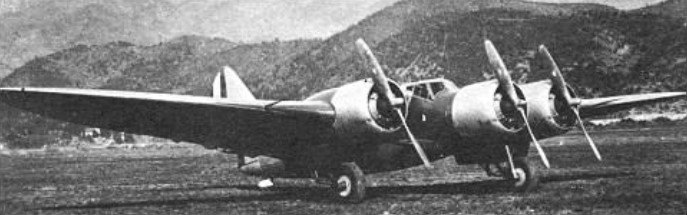
The Piaggio P.16 three-engine heavy bomber of 1934 was distinguished by a thick-section semi-elliptical wing set at shoulder height, and of inverted gull configuration. Defensive armament comprised four 7.62mm machine-guns located in the wing leading edge, in a retractable dorsal turret and in the rear fuselage beneath the high-positioned single fin and rudder. Largely of metal construction, the P.16 had retractable main landing gear units and a non-retractable tailwheel with a spat-type fairing. The bomb-aimer’s compartment was located in the underside of the fuselage, just behind the central engine.
Armament: 4 x 7.62mm machine-guns
Petróczy-Kármán-Žurovec PKZ 1 / PKZ 2
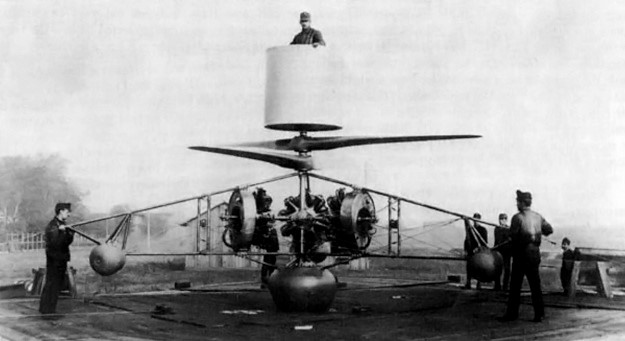
In 1916, Major Stephan Petróczy von Petrócz of the Austro-Hungarian Army envisioned replacing hydrogen-filled observation balloons with tethered helicopters. These helicopters would have been used as static observation platforms. Compared to hydrogen balloons, the helicopters’ were much less likely to catch fire, presented a smaller target for the enemy, increased operational readiness, required fewer ground and support crew, and eliminated the need for hydrogen generating equipment.
To achieve his goal, Petróczy, along with Oberleutnant Dr. Theodor von Kármán and Ingenieurleutnant Wilhelm Žurovec, conceived the Schraubenfesselflieger (S.F.F) mit Elektromotor (captive helicopter with electric motor). This machine is now commonly referred to as the Petróczy-Kármán-Žurovec 1 (PKZ 1) helicopter. Built in 1917 and primarily designed by von Kármán and Žurovec, the PKZ 1 consisted of a rectangular frame with an observation basket in the middle. On each side of the basket were two lift rotors. All four rotors were powered by a single 190 hp (142 kW) Austro-Daimler electric motor.
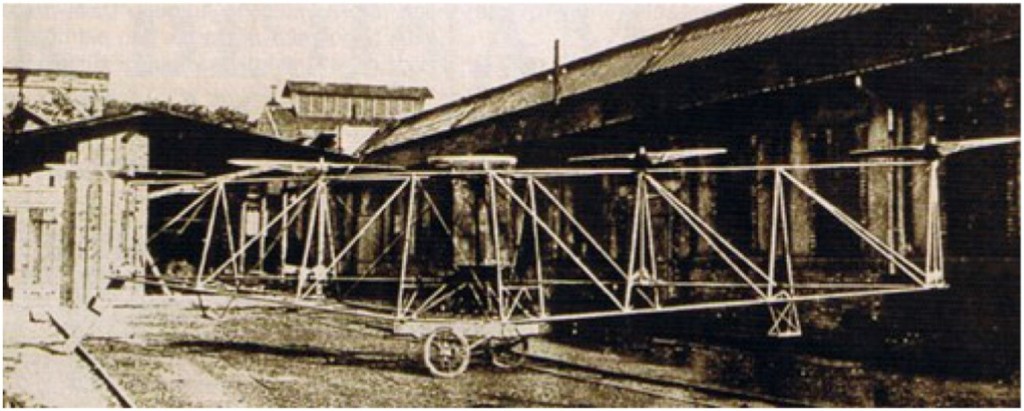
The PKZ 1 was flight tested and was able to lift three men to a tethered height of 20 in (50 cm). However, the electric motor generated 50 hp (37 kW) less than anticipated, and on the fourth flight, the straining motor gave out. Because of the scarcity of high-grade electrical copper and quality insulation, Daimler was not able to repair the motor. In addition, the PKZ 2, which was originally known as the S.F.F. mit Benzinmotor (captive helicopter with petrol engine), was nearing completion. No further work was done on the PKZ 1.
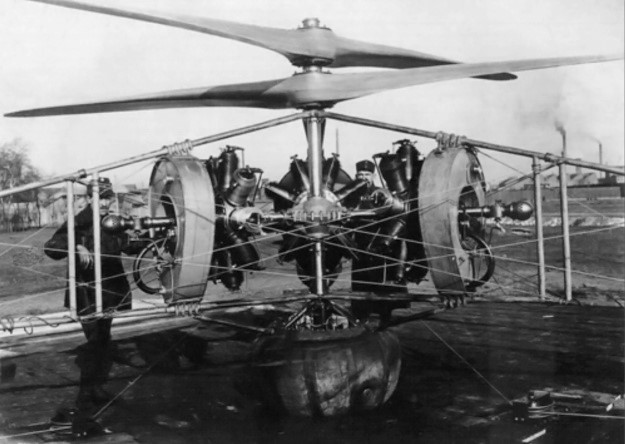
The PKZ 2 helicopter (for which he received German patent 347,578) was designed solely by Wilhelm Žurovec. The PKZ 2 was privately funded by the Hungarian Bank and the iron foundry / steel fabrication firm of Dr. Lipták & Co AG, who built the machine. The PKZ 2 utilized two two-blade contra-rotating rotors to cancel out torque and provide lift. The rotors, made of high-quality mahogany, were 19 ft 8 in (6.0 m) in diameter and were rotated at 600 rpm by three 100 hp (75 kW) Gnome rotary engines. A removable observation basket sat atop the rotors.

The craft had three outrigger legs; each supported one engine. All engines were connected to the rotors via a common gearbox. The PKZ 2 was supported by a central air cushion and three additional air cushions; one on each outrigger leg. These air cushions were filled by an air pump driven from the rotor drive. Attached to each outrigger was a tethering cable that was connected to the ground and controlled by an electric winch. With one hour of fuel, The PKZ 2 weighed 2,645 lb (1,200 kg).
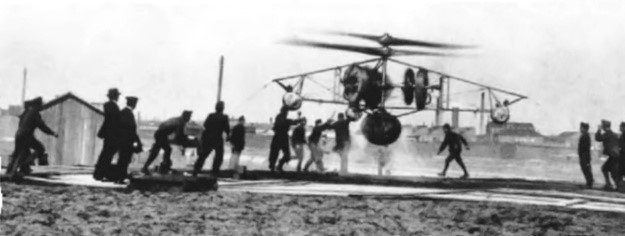
Tethered and unmanned, the PKZ 2 was test flown on 2 April 1918. After several flights, including one that lasted about an hour, tests were suspended on 5 April because of insufficient power from the Gnome engines. The engines were replaced by 120 hp (89 kW) La Rhône engine (that were captured and rebuilt) and, with a few additional modifications, tethered and unmanned flight tests resumed on May 17th. With the new engines and calm winds, an altitude of 165 ft (50 m) was achieved, and the PKZ 2 could lift 330–440 lb (150–200 kg). The craft would lose lift at higher altitudes, but the PKZ 2 was kept under control as long as tension remained on the tethering cables.

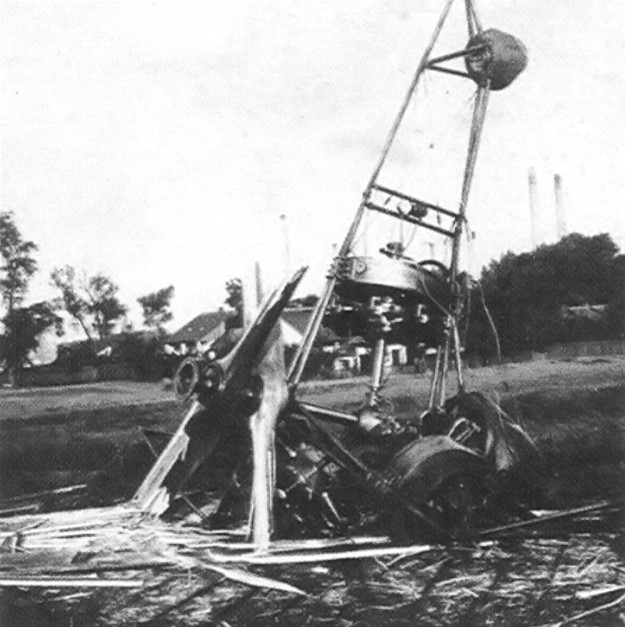
On 10 June 1918 the PKZ 2 was demonstrated for high ranking members of the military. A flight was made with the observation basket in place, but the engines were not running well and the craft became unstable. The basket was removed and another flight attempted. The wind had picked up, and as the PKZ 2 hovered at 40 ft (12 m) tethered to the ground, the craft began to rock. The overheating engines lost power, and the tether winch crew could no longer maintain control. The PKZ 2 crashed from a height of 6.5 ft (2.0 m), severely damaging the airframe and completely destroying the rotors.
Realizing the technical problems could not be overcome quickly, the government cancelled the project on 21 June 1918. However, Žurovec pressed on and began to design an individual cylinder water jacket to water-cool the rotary engines. The craft was being rebuilt to resume flight tests in November 1918 when the end of the war and revolution caused all development to cease. The PKZ 2 made over 15 tests flights, but it is doubtful any were manned.
 All Aero