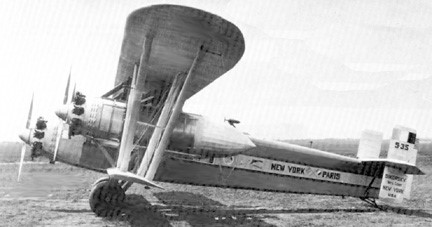
The S-35 was designed as a twin-engined transport with a range of about 1600km.
In the spring of 1926 Capt. Rene Fonck, a French First World War fighter ace, persuaded Sikorsky to redesign it in an attempt to win the $25,000 Orteig prize for the first non-stop New York-Paris flight. It became a very different aircraft, with three 400hp Gnome-Rhone Jupiter engines and vastly increased fuel load. The first test flight, by Fonck and Igor Sikorsky, was made on 23 August 1926. Later, pilot Frank LaVista of the Department of Commerce reported that the aircraft handled very well, could climb on two engines, and lost only 15m of height while flying at 132km/h for 35 seconds on one engine.
Jettisonable auxiliary landing gear was fitted to the S-35 for take-off on its transatlantic attempt, at an overload weight of 8400kg, on 20 September 1926. Fonck insisted on having a radio operator, Charles Clavier, and veteran Sikorsky mechanic Jacob Islamoff, in addition to his co-pilot Lt Lawrence Curtin of the US Navy. Watched by a huge crowd, part of the auxiliary landing gear broke away as the aircraft gathered speed. It plunged down a steep slope beyond the runway and burst into flames. Only the two pilots escaped. The S-35, which had cost $100,000 to build, was destroyed.
The original wingspan, before extra bays were added, was 76’0″. This was increased to 101’0″.
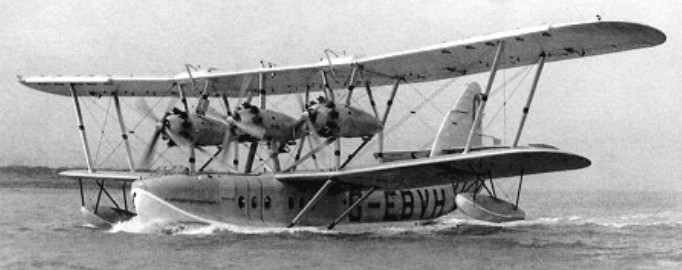
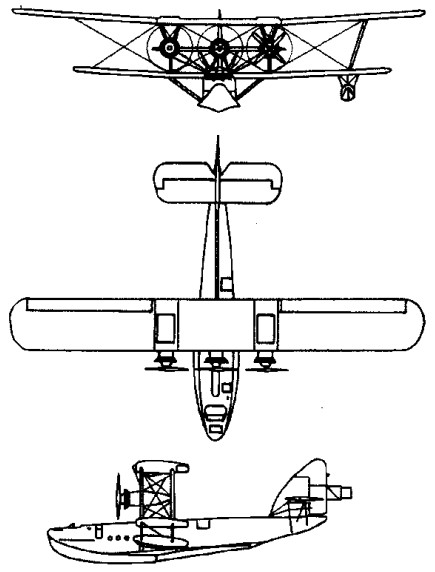
The 1928 15 passenger Calcutta biplane flying boat originated from an Imperial Airways requirement to service the Mediterranean legs of its services from and to India. The Calcutta itself was derived from the Short Singapore military flying boat. It was the first stressed skin, metal-hulled flying boat.
The Calcutta first flew on 15 February 1928 Imperial Airways operated five of the seven Calcuttas produced, and a single sale to the French government was followed by the French company Breguet licence-building four Calcuttas as the Bizerte. In 1931 Breguet secured a licence to build the Short Calcutta, and this was used as the basis for the company’s Bre.521 submission to meet a 1932 French Navy requirement for a long-range reconnaissance flying-boat.
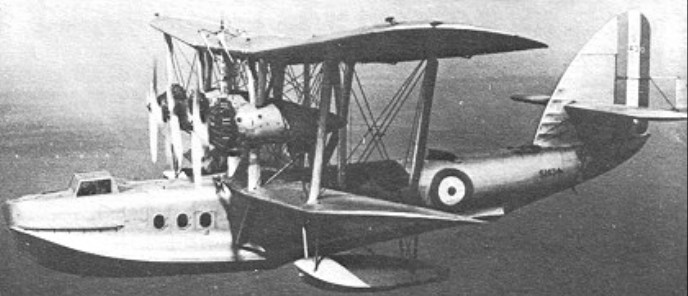
Short S8/8 Rangoon
From the Calcutta Short developed the Rangoon as a long-range reconnaissance type for the RAF. Six were produced and went into service in 1931. These were basically similar to the Calcutta, except that the pilots were accommodated in an enclosed cockpit, in the nose was an open cockpit with Scarff gun-ring and aft of the biplane wings were staggered cockpits for two gunners. Maximum level speed of the Rangoon was 185km/h.
Engines: 3 x Bristol Jupiter XI F, 390kW Wingspan: 28.3 m / 93 ft 10 in Length: 20.4 m / 67 ft 11 in Height: 7.2 m / 24 ft 7 in Wing area: 171.0 sq.m / 1840.63 sq ft Max take-off weight: 10200 kg / 22487 lb Empty weight: 6280 kg / 13845 lb Max. speed: 190 km/h / 118 mph Cruise speed: 156 km/h / 97 mph Ceiling: 4000 m / 13100 ft Range w/max.fuel: 1040 km / 646 miles Crew: 4-5 Passengers: 12-15
When it was realized that the S.79 could no longer measure up to foreign medium bombers, SIAI Marchetti designed a version initially called the SM.79bis and then SM.84. With respect to the S.79, the 1940 SM.84 featured a different and more rational internal fuselage design and had twin fins to improve the gunner’s field of fire to the rear. The aircraft suffered from various difficulties and never equalled the performance of its predecessor.
SM.84 Engine: 3 x 746kW Piaggio P.XI piston radials Max take-off weight: 13288 kg / 29295 lb Wingspan: 21.13 m / 69 ft 4 in Length: 17.93 m / 58 ft 10 in Height: 4.59 m / 15 ft 1 in Wing area: 61 sq.m / 656.60 sq ft Max. speed: 432 km/h / 268 mph at 11,500 ft Ceiling: 7900 m / 25900 ft Range: 1830 km / 1137 miles at 225 mph Armament: 4 x 12.7m machine-guns, 1600kg of bombs Crew: 4/5
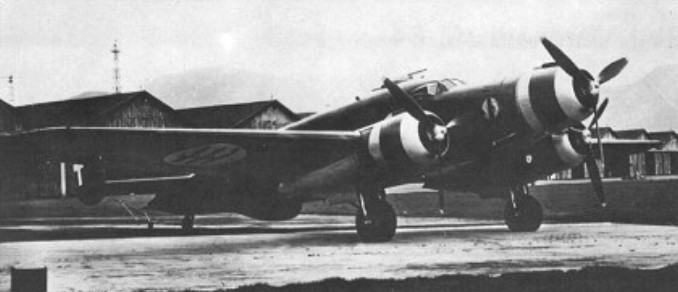
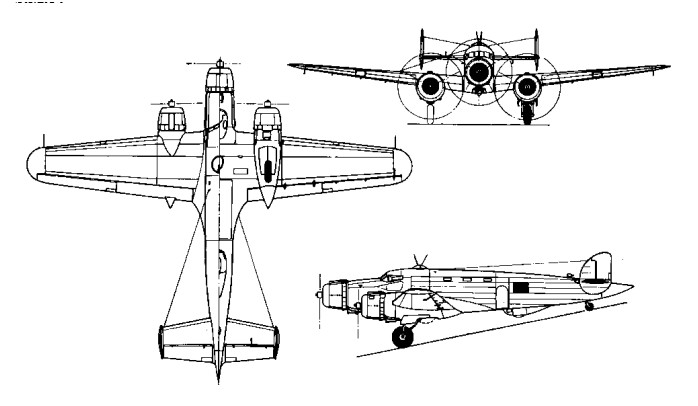
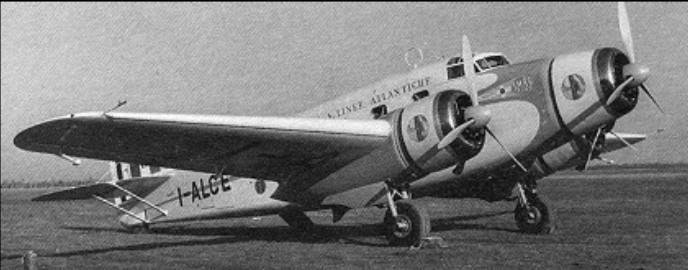
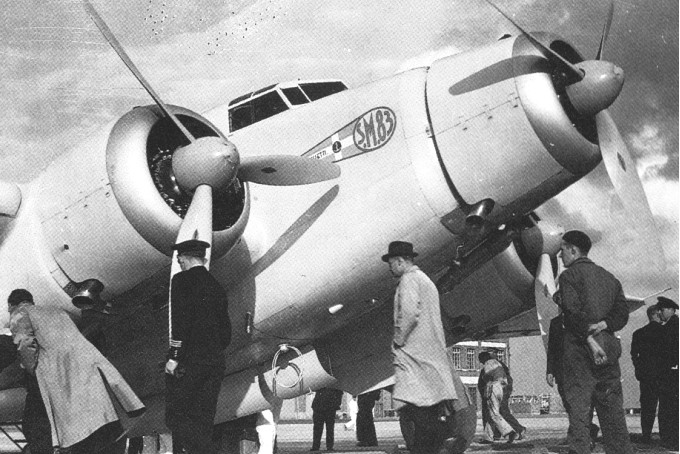
First flying in 1938, the S.M.83 was a ten-passenger commercial transport powered initially by three 559kW Alfa Romeo 126 RC.34 radial engines. Production totalled 23 aircraft.
Engines: 3 x 559kW Alfa Romeo 126 RC.34 Max take-off weight: 11500 kg / 25353 lb Wingspan: 21.2 m / 70 ft 7 in Max. speed: 444 km/h / 276 mph
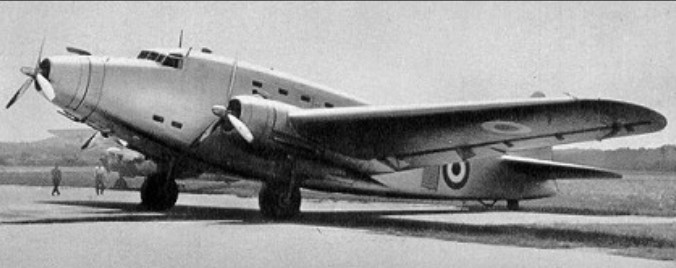
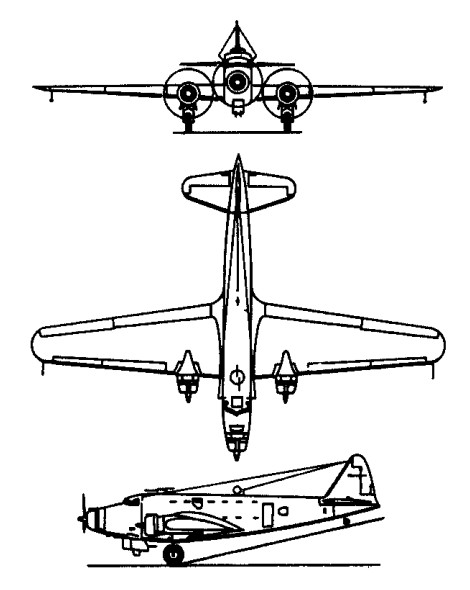
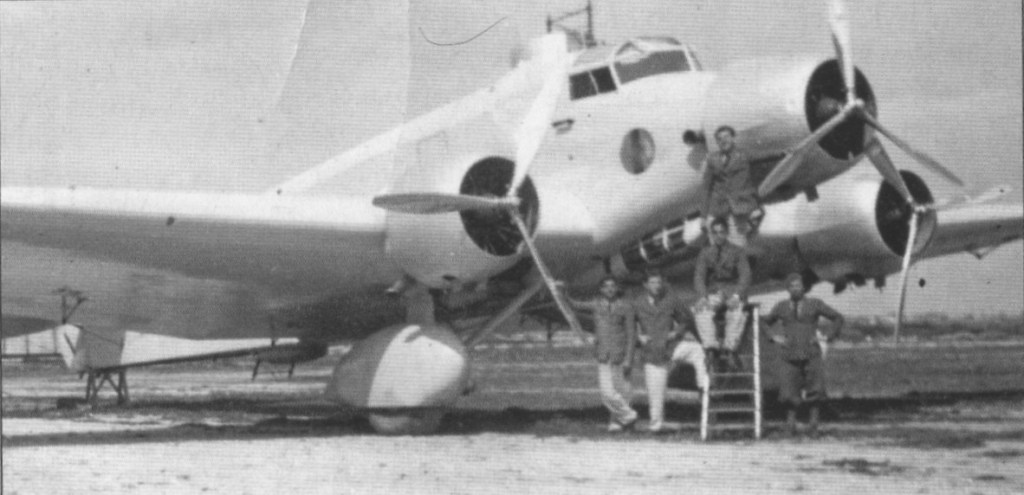
The S.M.82 of 1938 was a development of the S.M.75, from which it differed by having a deeper fuselage, greater loaded weight, redesigned fin and rudder, and the addition of a hydraulically operated retractable gun turret on top of the fuselage to the rear of the pilot’s cockpit. Initially powered by three 633kW Alfa Romeo 128 engines, it could accommodate up to 40 fully armed troops or be used as a long-range heavy bomber. It was widely used by the Regia Aeronautica and some were operated by the Luftwaffe from 1943.
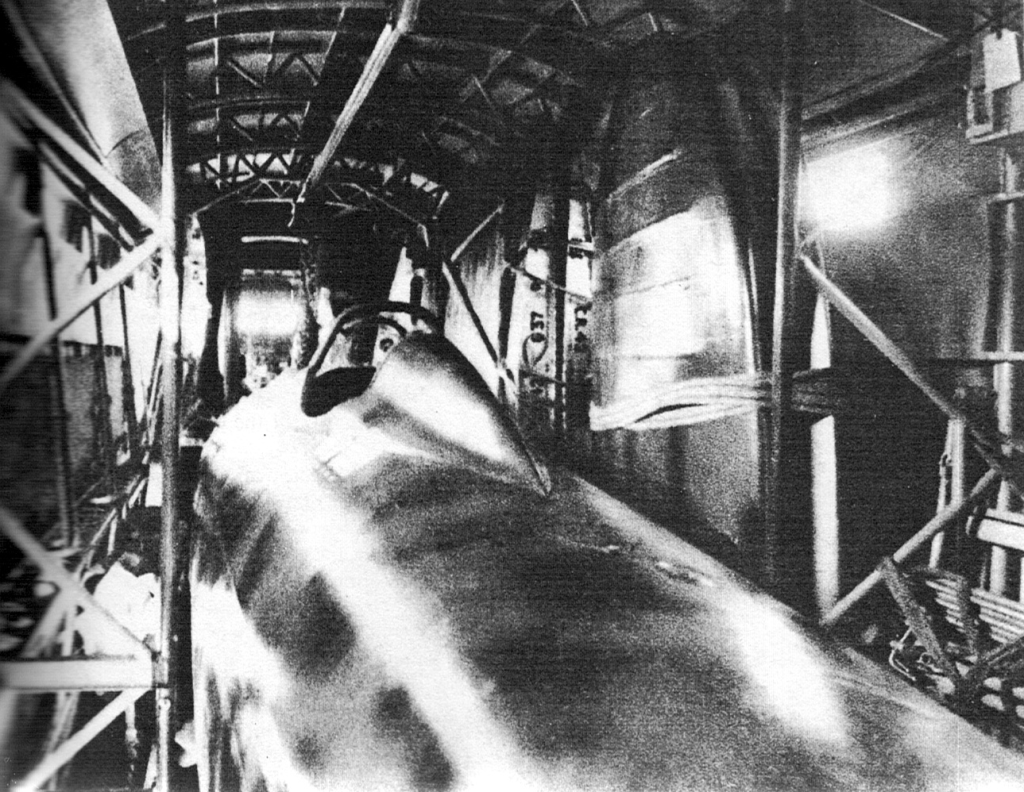
In their 1941 battles against the advancing British and their allies in East Africa, the numbers of Italian fighter planes equipped to ward off bombing raids was melting away day by day. The dense sea and land blockade surrounding Italian East Africa made it impossible for the Italians to supply their troops with fresh aircraft from Italy. Soon they had no fighters left except for a dozen Fiat CR.42 Falco biplanes which although they had outstanding flight characteristics were powerless against superior numbers oft the British Gladiator fighters. In this desperate situation they seized on an inspiration of Colonel Galante, and transported the needed fighter planes in dissembled pieces inside the fuselage of Savoia-Marchetti SM.82 Canguro (Kangaroo) transport planes whose range made it possible for them to ferry their cargo to East Africa from Libya. By the Spring of 1941, over 50 Falco fighters had landed in Ethiopia by this method.
Fiat CR.42 inside a Savoia Marchetti SM.82 on the way to East Africa
Engines: 3 x Alfa Romeo 128 RC.21, 708kW / 937 hp Wingspan: 29.68 m / 97 ft 5 in Length: 22.9 m / 75 ft 2 in Height: 6.0 m / 20 ft 8 in Wing area: 118.6 sq.m / 1276.60 sq ft Max take-off weight: 18020 kg / 39728 lb Loaded weight: 10550 kg / 23259 lb Wing loading: 31.16 lbs/sq.ft / 152.0 kg/sq.m Max. speed: 200 kts / 370 km/h / 230 mph Cruising speed: 162 kts / 300 km/h Service ceiling: 19685 ft / 6000 m Range: 1620 nm / 3000 km / 1864 miles Armament: 1 x 12.7mm machine-guns, 4 x 7.7mm machine-guns Bombload: 4000kg Crew: 5-6
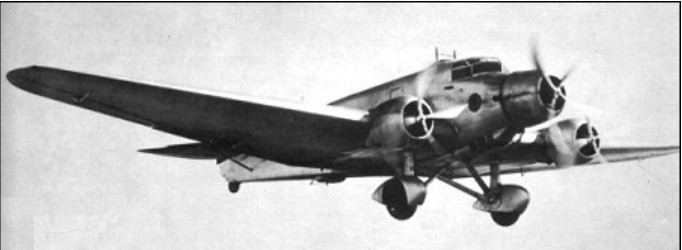
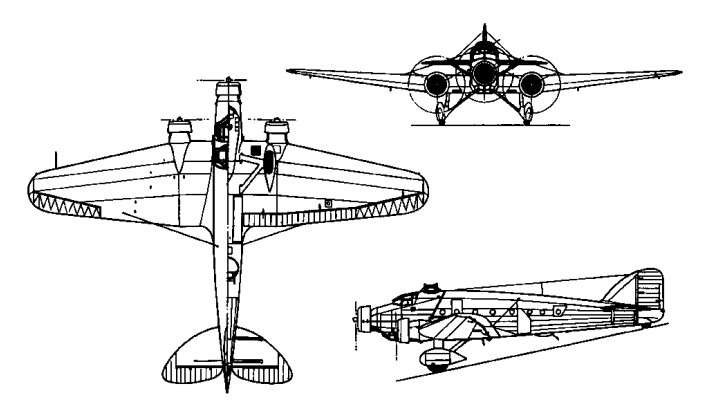
The Savoia-Marchetti S.M.81 Pipistrello (Bat) had originally been designed as a bomber, by Alessandro Marchetti, and saw service in both the Spanish and Abyssinian wars.
Based on the S.M.73, it also had a fixed landing gear arrangement. Dating from 1935, the S.M.81 was already a degree of obsolescent when Italy entered World War II. Despite the robust mixed construction which proved capable of absorbing much battle damage, it was replaced as a bomber by the S.M.79.
Production ceased in March 1938 after 534 had been delivered. The 304 which remained on the strength of the Regia Aeronautica were converted to troop carriers (18 men) after withdrawal from front-line squadriglie. In this capacity, the S.M.81 was relegated to service on the African and Eastern fronts, where it proved sufficiently useful for production to be resumed in 1943 of the S.M.81/T. At the armistice in September 1943 only about 80 of these additional aircraft were built, and only four remained in the south by this time although at least two complete transport units were still equipped with the type in the ‘Salo’ Republic of Italy (Fascist-controlled northern Italy).
An interesting historical fact is that one transport model of the S.M.81 was later used as the personal transport of Mussolini, and received the name Taratuga (Tortoise).
A variety of different radial motors was fitted, including the 485kW or 507kW Alfa Romeo 125 RC.35 or 126 RC.34 respectively, the 485kW Gnome- Rhone 14K or the 500kW Piaggio P.X RC.35.
Around 70 were delivered to Spain during the Civil War and 40 were still in service as transports in March 1940.
Savoia Marchetti SM 81 Pipistrello Engines: 3 x Piaggio P. X RC.35, 690 hp / 522kW Max take-off weight: 9300 kg / 20503 lb Empty weight: 6300 kg / 13889 lb Wing loading: 20.50 lb/sq.ft / 100.0 kg/sq.m Wingspan: 24 m / 78 ft 9 in Length: 17.8 m / 58 ft 5 in Height: 4.45 m / 15 ft 7 in Wing area: 93 sq.m / 1001.04 sq ft Max speed: 184 kt / 340 km/h / 211 mph Service Ceiling: 7000 m / 22950 ft Range: 1080 nm / 2000 km / 1243 miles Armament: 5 x 7.7mm machine-guns, 1000kg of bombs
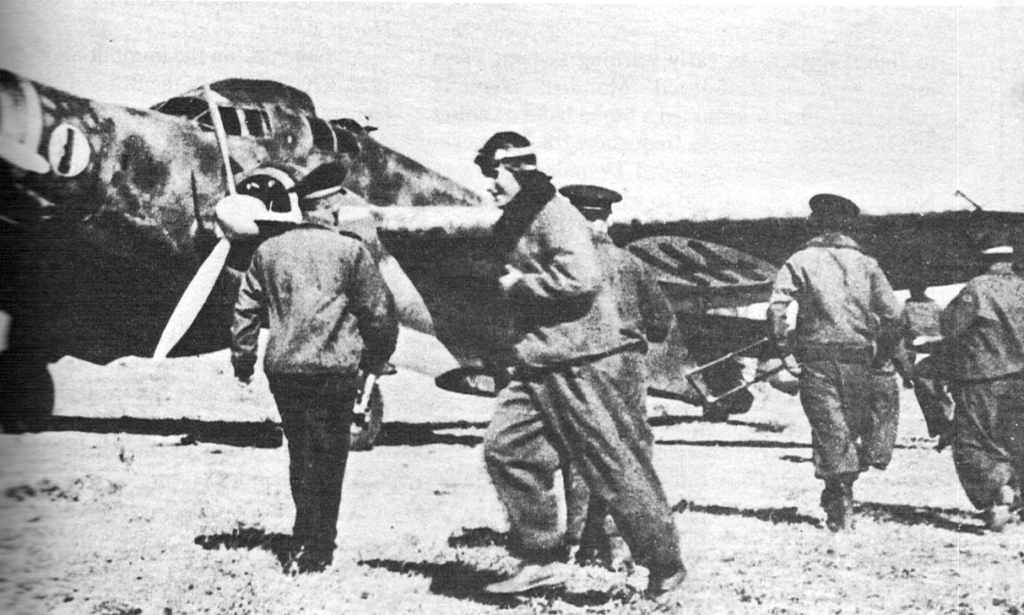
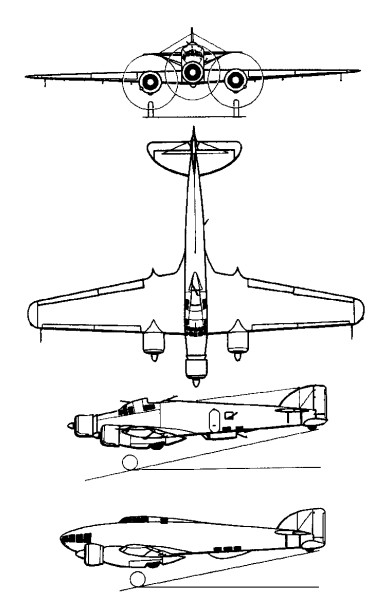
Developed from an eight-seat commercial airliner of 1934, the three-engine Savoia-Marchetti S.M.79 Sparviero entered service as a conventional medium bomber with the Regia Aeronautica in 1937, and served operationally with the Aviacion del Tercio alongside the Nationalist forces during the Spanish Civil War.
In 1937 the S.M.79 embarked on trials at Gorizia as a torpedo bomber, being equipped to launch a single 450mm naval torpedo from an offset rack under the fuselage. The following year trials with paired torpedoes led to the adoption of the S.M.79-II aircraft as standard torpedo bomber equipment. Following Italy’s entry into the war in June 1940, when Sparvieri (Sparrowhawks) equipped 14 stormi based in Italy, Sicily, Sardinia and Libya, the aircraft was constantly in action in the anti-shipping role, its first action being an attack by 19 S.M.79s of the 9° and 46° Stormi on French shipping off the Riviera coast on 13/14 June.
During the invasion of Crete S.M.79s of the 92° Gruppo and the 28la Squadriglia were active against Allied shipping in the Aegean, after which most aircraft were redeployed to Libya for operations against British naval forces and convoys in the Central Mediterranean as well as the naval base at Malta. Among the ships of the Royal Navy sunk by S.M.79s in the Mediterranean were the destroyers HMS Husky, HMS Jaguar, HMS Legion, and HMS Southwall, while the battleship HMS Malaya and the carriers HMS Indomitable and HMS Victorious were all struck by torpedoes launched by the Italian torpedo bombers; the majority of these ships were hit during the attacks on the Operation ‘Pedestal’ convoy which sailed with 14 merchant ships and heavy escort for the relief of Malta. Among the famous Italian pilots of the Sparviero were men such as Capitani Buscaglia, Cimicchi, di Bella and Melley, An improved version was the S.M.79-III without the ventral gondola but with a forward-firing 20mm cannon.
Savoia Marchetti SM.79 10 October 1942
The SM.79 was blooded in the Spanish Civil War as a level bomber with four gruppi of the Italians’ Aviazione Legionaria and 3-, 4-, 5- and 6-G-28 of the Nationalists’ Agrupacion Espanola. Total deliveries to Spain were some 135 SM.79-ls, and as they pulled out at the end of the war the Italians donated 80 of their surviving aircraft to the victorious Nationalists. In the war the SM.79-ls had proved decisive, for they comprised one of the few homogeneous forces able to undertake an effective offensive role, in this instance long-range bombing without the need for fighter escort because of their performance and good defensive firepower. The Sparviero also proved reliable, and remained in service with the Spanish air force for many years after World War II.
The aircraft suffered from poor servicing facilities, and it was unusual for even as much as half the available strength of Sparvieri to be fit for operations at any given time. Nevertheless the S.M.79 was acknowledged as being among the best torpedo aircraft to serve in the Mediterranean theatre during World War II.
Savoia Marchetti SM 79 Sparviero Engines: 3 x Piaggio P XI R C 40, 986 hp Length: 53.15 ft / 16.2 m Height: 13.451 ft / 4.1 m Wingspan: 69.554 ft / 21.2 m Wing area: 664.139 sq.ft / 61.7 sq.m Max take off weight: 24916.5 lb / 11300.0 kg Weight empty: 16758.0 lb / 7600.0 kg Max. weight carried: 8158.5 lb / 3700.0 kg Max. speed: 234 kt / 434 km/h Cruising speed: 173 kt / 320 km/h Service ceiling: 22966 ft / 7000 m Wing loading: 37.52 lb/sq.ft / 183.0 kg/sq.m Range: 1890 nm / 3500 km Range (max. weight): 1075 nm / 1990 km Crew: 5 Armament: 4x MG Bombload: 2200kg
SM.79-l Sparviero Type: four/five-seat medium bomber Powerplant: 3 x Alfa Romeo 126 RC 34, 582 kW (780 hp) Span: 21.2m (69ft 6.7 in) Length: 15.80m (51ft l0in) Height: 4.3 m / 14 ft 1 in Wing area: 61.7 sq.m / 664.13 sq ft Empty weight: 6800 kg / 14992 lb Max T/O weight: 10480 kg (23,100 lb) Max speed: 267 mph at 13,125 ft Ceiling: 6500 m / 21350 ft Operational range: 1,180 miles Armament: 1 x 7.7-mm (0.303-in) and 3 x 12.7-mm 0.5-in) m¬g Bombload: 1250 kg (2,756 lb) internally Crew: 5
A twenty-four-seat passenger transport powered by three 559kW Alfa-Romeo 126RC.34 radial engines. The S.M.75 prototype flew in November 1937. Production for military and civil use continued until 1943, 90 machines being delivered to the Italian authorities and five exported to Hungary. The latter were finally converted for military use with dorsal and ventral gun turrets. A number of Italian S.M.75s were also militarised.
SM.75 Max take-off weight: 13000 kg / 28660 lb Loaded weight: 9500 kg / 20944 lb Wingspan: 29.68 m / 97 ft 5 in Length: 21.6 m / 71 ft 10 in Height: 5.1 m / 17 ft 9 in Wing area: 118.6 sq.m / 1276.60 sq ft Max. speed: 363 km/h / 226 mph Ceiling: 6250 m / 20500 ft Range: 1720 km / 1069 miles
First flown in 1934, the S.73P was a long-range commercial transport powered by three 522kW Piaggio Stella IXRC or other engines of similar output. Accommodation provided for 18 passengers. Deliveries to commercial operators began in 1935.
Engine: 3 x Alfa Romeo 126 RC.10, 597kW Max take-off weight: 10800 kg / 23810 lb Loaded weight: 7300 kg / 16094 lb Wingspan: 24.0 m / 79 ft 9 in Length: 18.37 m / 60 ft 3 in Height: 4.45 m / 15 ft 7 in Wing area: 92.2 sq.m / 992.43 sq ft Max. speed: 325 km/h / 202 mph Ceiling: 7000 m / 22950 ft Range: 1000 km / 621 miles Crew: 4 Passengers: 18
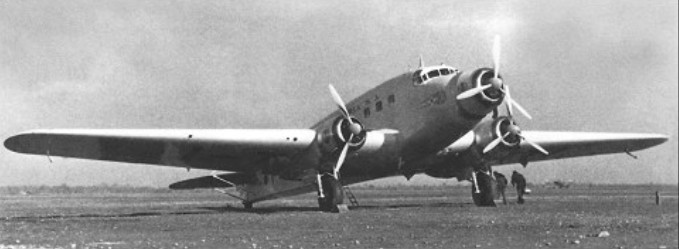
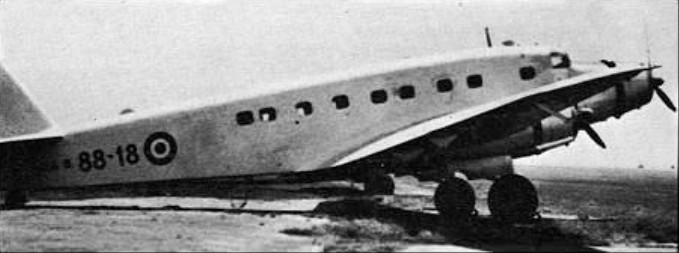
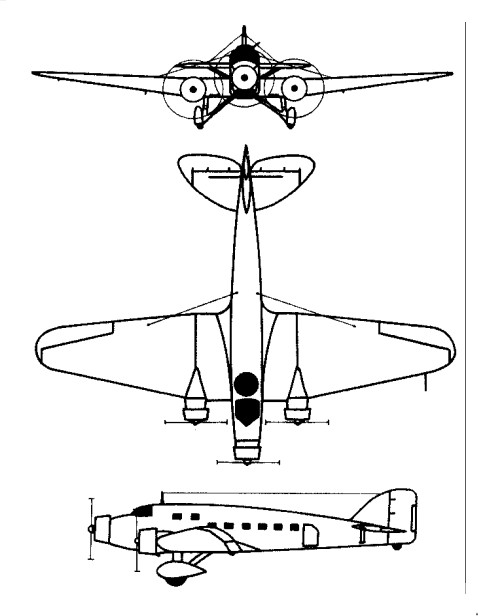
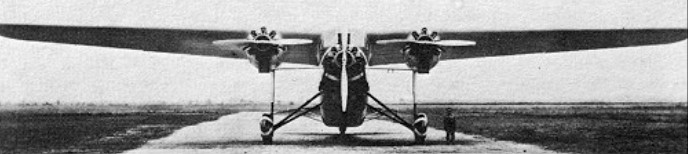
The S.72 prototype bomber/transport flew in 1932. Powered by three 410kW Pegasus II radials, it followed the popular high-wing, fixed landing-gear formula of the time. An altitude record with 5,000kg payload was established in June 1934.
The Nanking Chinese government bought 20 production aircraft with defensive dorsal turret and ventral step machine-gun posts, but nothing was heard of them in action against the Japanese.
Max take-off weight: 12800 kg / 28219 lb Loaded weight: 6800 kg / 14992 lb Wingspan: 29.68 m / 97 ft 5 in Length: 19.95 m / 65 ft 5 in Height: 5.5 m / 18 ft 1 in Wing area: 118.5 sq.m / 1275.52 sq ft Max. speed: 295 km/h / 183 mph Ceiling: 8000 m / 26250 ft Range: 2000 km / 1243 miles Armament: 1 x 20mm cannon, 6 x 7.7mm machine-guns, 1000kg of bombs





 All Aero