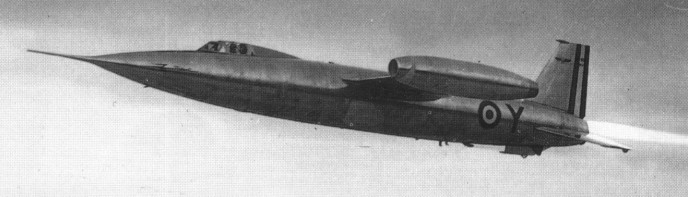
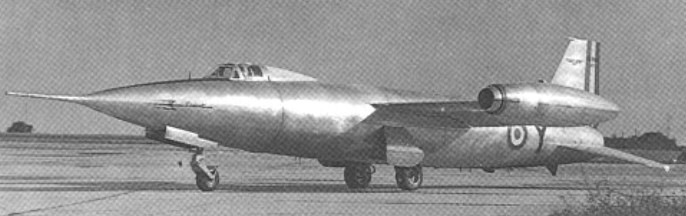
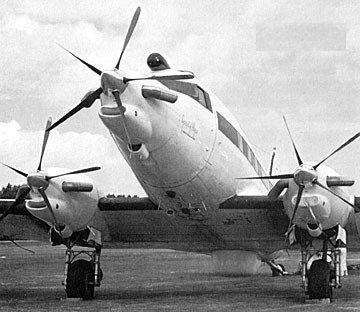
Stemming from the lightweight fighter philosophy that emerged from the Korean conflict, the SO 9000 Trident single-seat interceptor developed by a team led by Lucien Servanty was of unusual concept in employing turbojets for auxiliary power and a rocket motor for primary thrust. Two prototypes of the Trident were ordered on 8 April 1951, the first of these flying on 2 March 1953 solely on the power of two wingtip-mounted Turbomeca Marbore II turbojets each rated at 400kg, the more powerful Vipers being substituted in 1955. The second prototype was destroyed on its first flight on 1 September 1953, but development continued with the first example, which, on 4 September 1954, flew for the first time with its primary power plant, a triple-barrel SEPR 481 triple-chamber liquid rocket motor providing a total thrust of 4500kg. As the aircraft could not take-off on the power of the Marbores at fully loaded weight, these gave place to Dassault MD 30 (Viper ASV 5) turbojets of 745kg, with which it flew on 17 May 1955. Although conceived as a combat aircraft, the SO 9000 had meanwhile been overtaken by a more advanced development, the SO 9050, and its test programme was terminated on 10 December 1956, the prototype having achieved a speed of Mach=1.63 – the highest speed attained by any piloted aircraft in Europe at that time – and an altitude of 15,000m.
SO 9000 Trident
SO-9000 Trident I 2 x Marboré II turbojets, 800 lb st
SO-9000 Trident I 2 x Armstrong Siddeley Viper 5 turbojet, 1640 lb st, 1 x SEPR 481 rocket, 9920 lb thrust Wingspan: 26 ft 8.75 in (8.15m) Length: 45 ft 11.25 in (14m) Wing area: 99.03 sq.ft (9.2 sq.m) Max wt: 12,125 lb (5500kg) Max speed: 1056 mph @ 36,000 ft Crew: 1
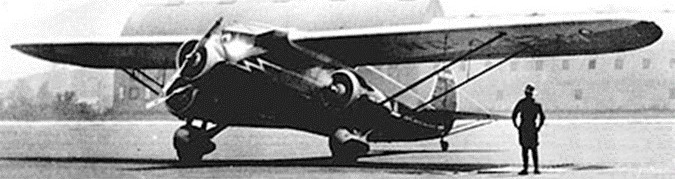
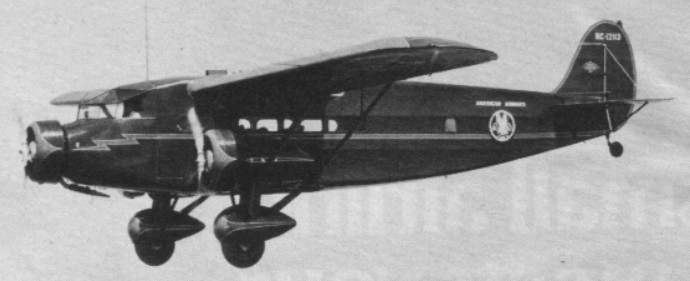
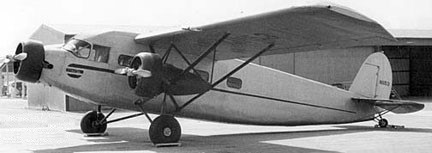
The 1932 Stinson Model U (ATC 484) was a 10-12 seat cabin monoplane, designed by Art Saxon. Almost a sesquiplane with its stub wings on the undercarriage, they were priced at $19,500.
Twenty-three were built for American Airways, including one for competition (NR/NC12127), and one experimental model, NX12132, that crashed on 2 August 1933.
Stinson U Prototype NC432M
ATC 2-413 was for a weight adjustment for prototype X/NC432M c/n 9000.
The 1933 U-1 (ATC 2-437) was an 11 seat Model U with three 285hp Wright R-760 engines. One was built for Eastern Air Transport, NX12129 c/n 9014.
U Engines: three 240hp Lycoming R-680BA Wingspan: 66’2″ (stub-wing 14’3″) Length: 45’3″ Useful load: 3100 lb Max speed: 145 mph Cruise: 123 mph Stall: 60 mph Range: 450-500 mi Ceiling: 14,000′ Seats: 10-12
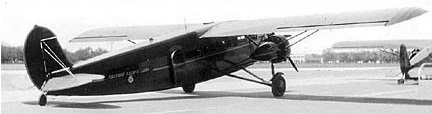
Stinson A in front of the Stinson-Northville hangar 1934
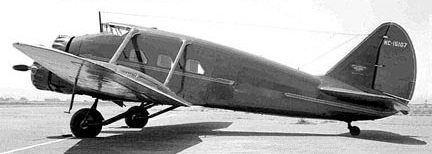
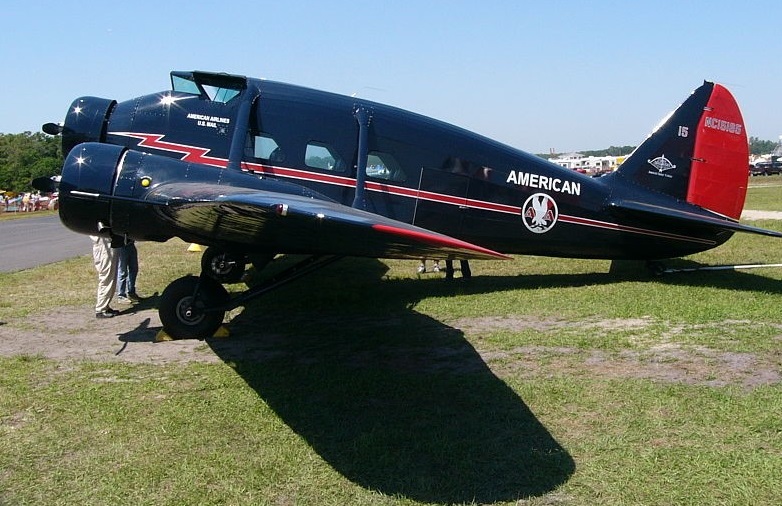
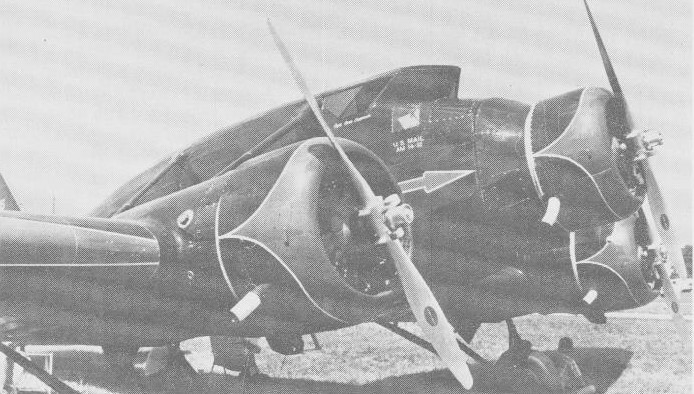
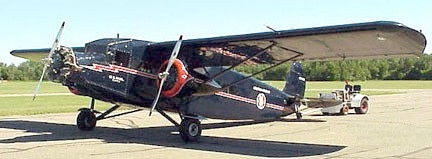
The Stinson Model A was a moderately successful airliner of the mid-1930s. It was one of the last commercial airliners designed in the United States with a fabric-covered steel tube fuselage.
Designed by Robert Ayer and first flying on 27 April 1924, a total of 31 Stinson Model As were built (ATC 556) until production ceased in 1936, cut short by the introduction of the stressed-skin Boeing 247 and Douglas DC-2. With partially retracting gear, they were priced at $37,500.
Stinson A NC14141
The registrations were NC14141, NC14566, NC14597 to NC14599, NC15105 to NC15110, NC15134, NC15152 to NC15165, and NC16110. Of those, 16 went to American Airlines and 3 to Delta Air Lines; 4 to Australia [VH-UGG, VH-UHH, VH-UKK, and VH-UYY].
Three had 245hp R-680, and two were converted in 1943 to twin-engine.
Because the waiting lists for either the new Boeing or Douglas aircraft were already too long Airlines of Australia (AOA) ordered three Stinson Model As in January 1936. These aircraft were VH-UGG Lismore (arrived per s.s. City of Winchester on 27 March), VH-UHH Brisbane (arrived per s.s. Wichita on 22 June) and VH-UKK Townsville (arrived 22 July in the s.s. City of Manilla). All three were quickly reassembled and entered the Sydney – Brisbane service, proving so successful that in August AOA ordered a fourth example VH-UYY Grafton – the very last Stinson Model A to be built – which arrived at Sydney on board s.s. Port Alma on 14 December.
With posturing from both AOA and Australian National Airways (ANA) to cut into each other’s turf by late 1936, early efforts by ANA to gain a controlling interest in AOA failed, until the losses of VH-UHH Brisbane in the McPherson Ranges on 19 February 1937 and VH-UGG Lismore on 28 March halved AOA’s main-line fleet. A merger took effect in March 1937, although the two companies retained separate identities until AOA was formally absorbed into ANA on 1 July 1942. The two surviving Stinsons were then renamed VH-UKK Binana and VH-UYY Tokana, in conformity with ANA nomenclature.
During the Second World War spare parts for the Stinsons’ aging Lycoming R-680 engines were impossible to obtain in Australia and it was decided to re-engine both aircraft with a Pratt & Whitney R-1340 Wasp engine on each wing and eliminate the engine on the nose. The additional power allowed both aircraft to fly faster and carry heavier loads, although fuel dumps had to be fitted to allow them to remain under their maximum landing weight of 10,750 lb (4,876 kg), in case of an emergency necessitating landing shortly after take-off.
On completion at Essendon, Victoria in May 1943, Binana returned to the Brisbane-Cairns, Queensland run, while Tokana was similarly converted and re-entered service in October on the run between Melbourne (Essendon), Kerang, Victoria, Mildura, Victoria and Broken Hill, New South Wales. Binana was later transferred to the Melbourne-Tasmania service.
On the morning of 31 January 1945 Tokana was on the Essendon to Kerang leg of its regular service when the port wing separated in flight between Redesdale and Heathcote, fifty miles north of Melbourne. The aircraft then plunged to the ground, killing both crew and the full load of eight passengers. An investigation revealed that metal fatigue had developed in the wing’s lower main spar boom attachment socket, the actual failure possibly being instigated by the aircraft encountering a particularly heavy gust of wind. It was the first known occurrence of this type of accident in an aircraft anywhere in the world, but it was to become a problem all too common in later years where progressively larger aircraft would be built from light-weight alloys that were more susceptible to the underlying metallurgical phenomenon. It being assumed that the same problems could occur in Binana, its certificate of airworthiness was cancelled, and the old aircraft was subsequently broken up.
A non-flying scale replica was built for a 1987 television movie account of the 1937 McPherson Ranges disaster, The Riddle of the Stinson, in which two survivors of the crash were rescued by Bernard O’Reilly.
Outside Australia, examples of the Stinson Model A remained in service including Korea and Alaska for some years. Other operators included Tata Airlines in India, and in the USA American Airlines, Central Airlines, and Delta Air Lines.
DL operated three purchased new from Stinson at $34,000 each first delivered on June 22, 1935. These flew Fort Worth, Texas, to Charleston, South Carolina (Air Mail Route 24) from July 2, 1935, the last retiring on March 31, 1938.
One example, N15165, still survives, having crashed in Alaska in 1947, recovered and rebuilt in 1979, it passed to the Alaska Aviation Heritage Museum in 1988 and then to Greg Herrick’s Golden Wings Flying Museum in Minneapolis, Minnesota. The aircraft was then located at the Mid America Flight Museum-Ohio Wing in Urbana, Ohio.
Engines: 3 × Lycoming R-680-5, 260 hp (194 kW) each Wingspan: 60 ft 0 in (18.29 m) Height: 11 ft 6 in (3.51 m) Wing area: 500 sq.ft (46.5 sq.m) Length: 36 ft 10 in (11.22 m) Empty weight: 7,200 lb (3,370 kg) Loaded weight: 10,200 lb (4,636 kg) Maximum speed: 180 mph (157 knots, 290 km/h) Cruise speed: 163 mph (142 knots, 262 km/h) at 5,000 m (16,000 ft) Range: 490 miles (426 nmi, 790 km) Service ceiling: 17,000 ft (5,180 m) Rate of climb: 980 ft/min (5.0 m/s) Crew: Two (pilot and co-pilot) Capacity: 8 passengers
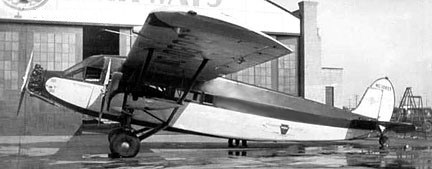
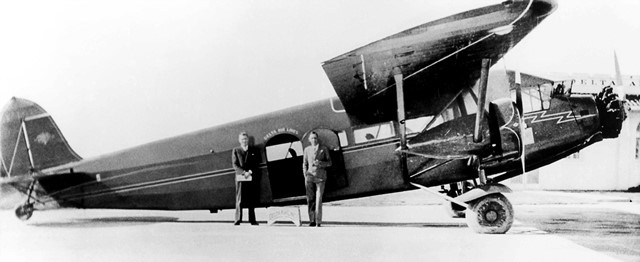
Eddie Stinson introduced his tri-motors in 1929, for American and Eastern Airlines. The 11-place SM-6000, or Model T of 1930 (ATC 335) was developed from the Corman 3000. Priced at $18,000-23,900, ten were built; NC429Y, NC475Y, NC497Y/498Y. NC974W/979W, of which one went to the USAAF as C-91. The model evolved into U model.
The 1931 SM-6000-A (ATC 367) were deluxe 12-place versions. Priced at $25,000 and later production was under ATC 420, several were upgrades from -6000.
The 1931 SM-6000-B (ATC 420) were modified with luxury interiors, cowlings, and wheel pants for increase in payload and performance.
Stinson SM-6000B NC10823
The SM-6000-B1 accommodated 10 passengers, and the -6000-B2 was for mail and 8 passengers.
Stinson SM-6000B NC11153
The 6-8 place Club model was customized for executives as an “airborne office”.
Priced at $25,000 for the basic plane (reduced to $19,500 in 1932), about 40, possibly including -6000A, were built.
SM-6000B (Model T)
American Airways (later American Airlines) sold their SM-6000B (Model T) at discount price. Delta paid $5,400 each, compared to $22,500 when new.
Delta had high hopes of winning a badly needed mail contract in 1930, to cover the expenses of flying passengers. Instead, the contract went to AVCO, predecessor of American Airlines, forcing Delta to suspend passenger service in October 1930 and sell its planes.
In 1934, Delta got a chance to win back the route it had pioneered, when the new Franklin D. Roosevelt administration cancelled all airmail contracts and called for new bids. A bid of 24.8 cents per pound won Air Mail Route 24.
SM-6000B (Model T)
First delivered on June 23, 1934, Stinson T aircraft carried Delta’s very first air mail on July 4, 1934. Passenger service resumed on August 5th. Six were operated Fort Worth, Texas to Charleston, South Carolina (Air Mail Route 24) with the last retiring circa 1937.
One SM-6000 was impressed in 1942 as C-91 42-79547 and went to Panama.
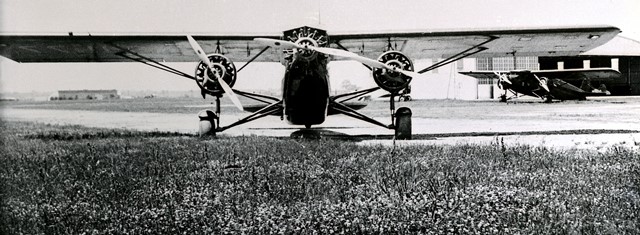
The 1957 Jet-Packet 3200 was a Steward-Davis Jet-Packet 1600 Fairchild C-82A converted with two 3200 lb J30-W in a single upper fuselage jet-pak. Registered N5095V, the MTOW was 54,000 lb.
The 1956 Steward-Davis Jet-Packet 1600 was a civil conversion of Fairchild C-82A with a jet-pod added to upper fuselage. At least three were converted including N6887C and N6985C,
The Jet-Packet II involved airframe weight reduction to increase cargo weights. With two P&W R-2800CB-16 engines, the application was applied to Jet-Packet 1600 or 3400. At least three were converted, including TWA C-82A Ontos N9701F.
Engines: 2 x 2100hp P&W R-2800-85 and 1 x 1600 lb Westinghouse J30-W jet-pak Max take-off wt: 54,000 lb
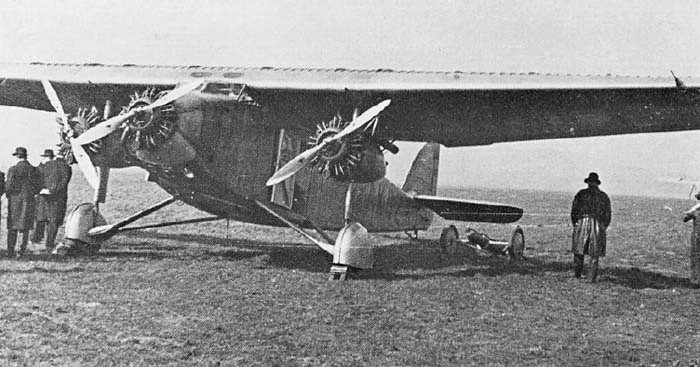
Spartan Cruiser was development of Saro-Percival (later Spartan) Mailplane G-ABLI of 1931. After Percival sold his interest to Saunders-Roe Ltd, which eventuaally tied up with Spartan, the concept under the Spartan name into the Spartan Cruiser I, powered by three 120 hp de Havilland engines and carrying six passengers and two crew in a metal fuselage.
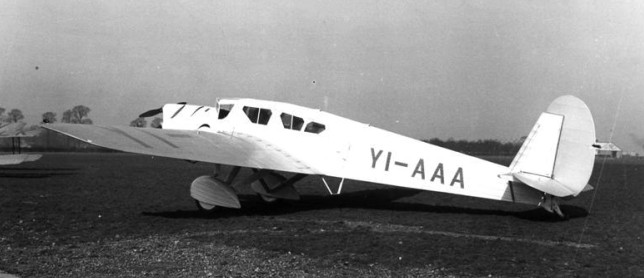
Spartan Cruiser c/n 2 YI-AAA
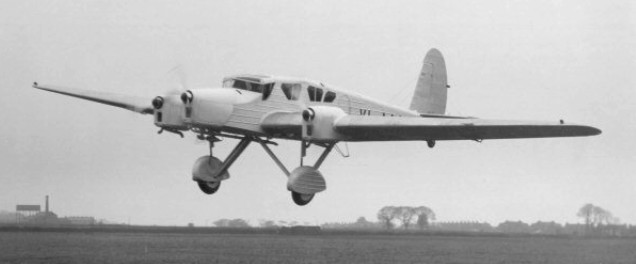
Early production Spartan Cruiser c/n 2 was operated by Airwork (Iraq) Ltd in 1933 on an air route between Baghdad and Mosul as YI-AAA. It returned to the UK in 1934 for British Airways Ltd and reverted to its original registration of G-ACBM. It was scrapped in 1937.
Spartan Cruiser c/n 2 YI-AAA
Twelve Spartan Cruiser II were built.
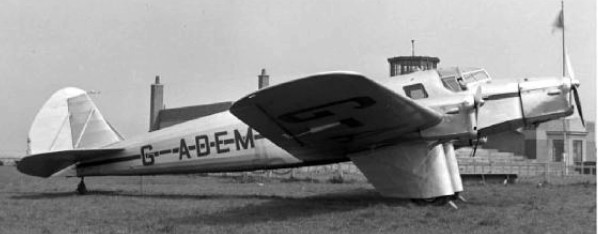
Three Cruiser III were built. The last was G-ADEM in May 1935.
Specifications:
Cruiser I Engines: 3 x de Havilland, 120 hp
Cruiser II
Cruiser II Engines: 3 x de Havilland Gipsy Major, 130 hp

 All Aero