Before the war the company built fast metal-skinned transports of original design: Avia 51, 56, and 57.
The Avia 57 (1937) was a three-engined 14 passenger transport aircraft.
Before the war the company built fast metal-skinned transports of original design: Avia 51, 56, and 57.
The Avia 57 (1937) was a three-engined 14 passenger transport aircraft.
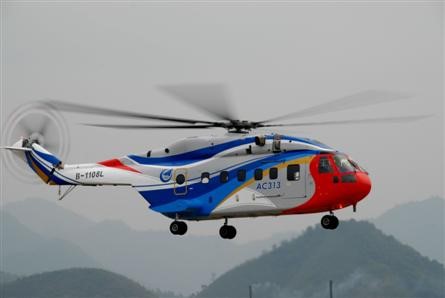
The 13.8t AC313 an updated design based on the earlier Harbin Z-8, itself a development of the Aérospatiale Super Frelon. The general designer of AC313 is Mr. Xu Chaoliang (徐朝梁), and the deputy general designer of AC313 is Mr. Li Jiayun (李家云). It is designed to carry 27 passengers, has a reported maximum range of 900 kilometres, and a maximum payload of 13.8 tonnes.
The rotorcraft has already been redesigned once to conform to updated certification standards—the CAAC refused the manufacturer’s application to certify the Z-8 for civil use in 2004. The CAAC determined then that an aircraft certified to military standards in China in the 1970s was not a candidate for civil use now. That appears to have sent the design authority, the China Helicopter Research and Development Institute, back to the drawing board to develop the considerably revised AC313.
The aircraft has new main and tail rotors, and a fuselage using composite material. With three Pratt & Whitney Canada PT6B-67A engines, the AC313 is a single-rotor helicopter with tail rotors, tandem pilot seating, and a non-retractable landing gear. Although based on a 1960s design, the AC313 has been developed to use composite materials for the rotor blade and titanium main rotor. Composite materials are used on 50% of the helicopter and titanium is used for the remainder. The interior comes equipped with a modern integrated digital avionics system and has a cabin height of 1.83 m and 23.5 cu.m in space. In terms of cargo, it can carry up to 4 tonne internally or 5 tonnes on a sling. AC313 is equipped with electronic flight instrument system.
The prototype first flew at Jingdezhen, Jiangxi on 18 March 2010 and made it first public demonstration flight at the Zhuhai Air Show in November 2010.
Built by Avicopter (AVIC Helicopter Company), the AC313 is only the second helicopter to be able to operate in the Qinghai-Tibet Plateau, first being Sikorsky S-70C Black Hawk. The flight testing period for the 13-tonne AC313 was conducted in Hulunbuir City, Inner Mongolia, starting in January 2011 where it was tested to operate in extremely low temperatures as low as minus 46degC marking the scope of Asia’s largest tonnage helicopter meeting the mission requirements of the cold climate and the Earth’s polar regions. The helicopter also set its speed record of 336 km per hour during the testing period. The AC313 became the first China-made aircraft authorized by China’s civil aviation authority in January to fly in high-altitude regions of over 4,500 meters above the sea level.
AC313 has received a Type Certificate issued by the Civil Aviation Administration of China (CAAC).
Following Chinese certification, the first 5 AC313 were to be delivered to Flying Dragon Special Aviation, in 2011. Avicopter has plans to certify the AC313 for sales in Europe and the United States. Xu Chaoliang, the chief designer of the helicopter, said the company has so far received 32 orders from national and international customers.
Like other Chinese aircraft, it has high-altitude operations as a key objective, so that it can fly from bases on the Tibet-Qinghai plateau. The CAAC has certified it to operate from fields as high as 4,500 meters (14,800 ft.).
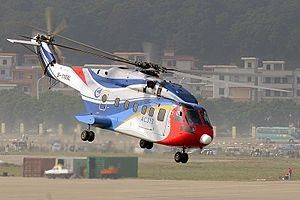
Equipped with advanced instrument landing system, the helicopter can be used in blizzard weather in plateau regions. It can seat up to 27 passengers and two crew, has a maximum range of 900km (485nm) and is designed for transport, cargo, search and rescue, fire-fighting, offshore exploration and medical evacuation missions, Avicopter says.
CAIH, a wholly owned subsidiary of the China Aviation Industry Corp, was expected to produce 300 helicopters annually by 2015.
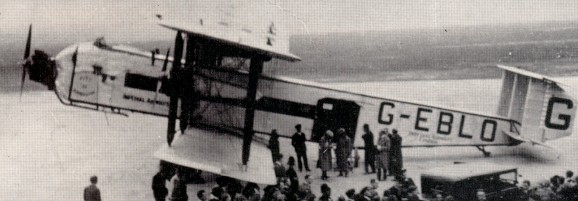
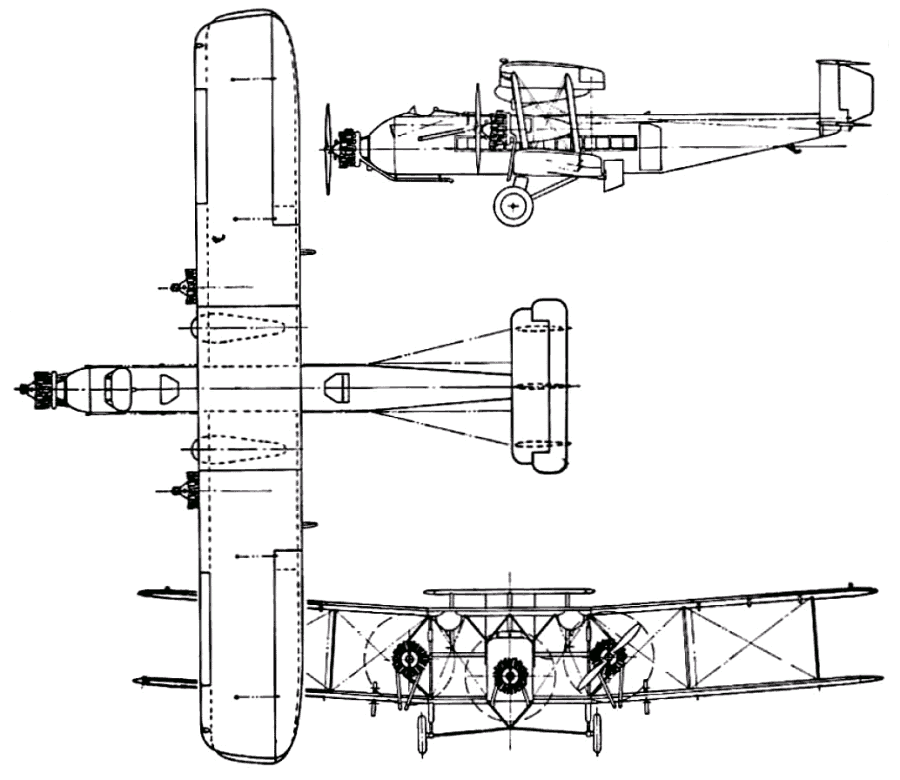
One of three new types of airliner ordered by Imperial Airways on its formation in 1924, the others being the Handley Page W.8f and de Havilland Hercules. First flown on 16 March 1926, the Argosy was the aeroplane that introduced luxury air travel on regular services, except for the pilot, who still sat out in the open up front.
The Argosy had a steel tube fuselage and all steel wing construction and was powered by three 385 hp (later 420 hp) Armstrong Siddeley Jaguars.
Armstrong Whitworth Argosy Article
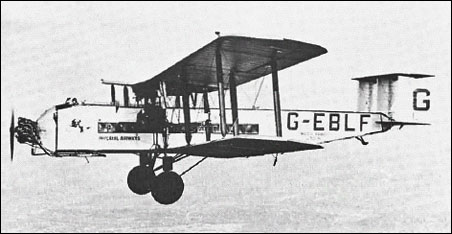
Three Mk.I machines entered service with Imperial Airways on August 5, 1926, and inaugurated the world’s first named luxury air service the lunchtime Silver Wing from London to Paris in May of the following year. Accommodation was reduced from 20 to 18 Passengers, to make room for a steward and buffet.
The four 28 seat Mk.II Argosies followed in 1929 and were had more powerful (420 h.p.) engines in circular, rather than square, nacelles, and the addition of Handley Page slots and servo tabs on the lower wing trailing edge. These latter made the aileron controls finger light and applied bank automatically in a sideslip or flat turn, which made the pilot’s work very much easier.
On 31 March 1929 Imperial Airways Argosy ‘City of Glasgow left Croydon with the first airmail for India.
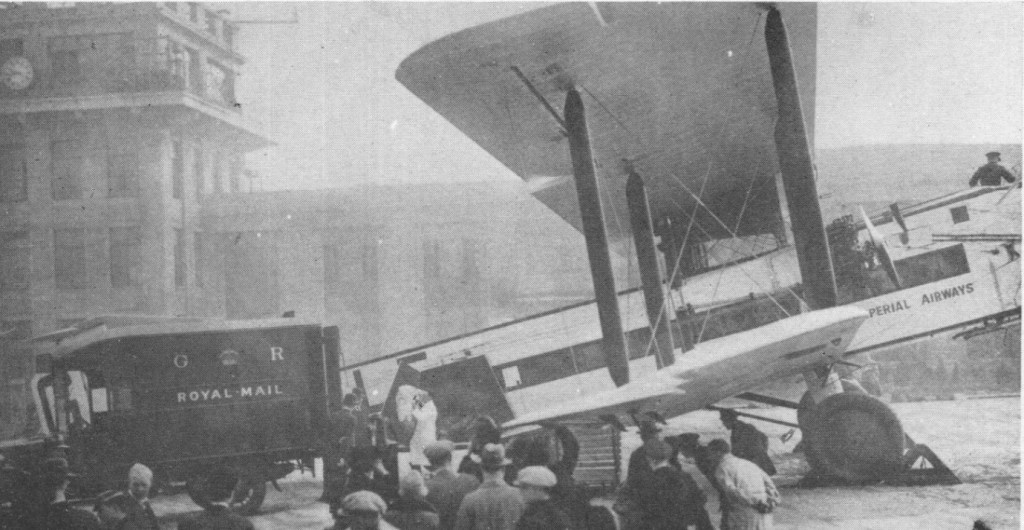
Argosies were not withdrawn from service until 1935.
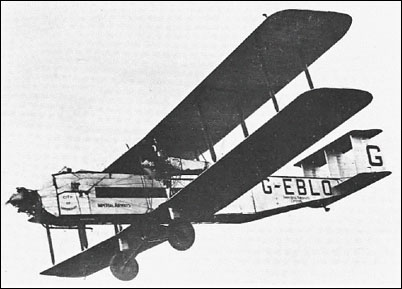
Argosy Mk I
Engines: 3 x Armstrong Siddeley Jaguar, 385hp
Take-off weight: 8165 kg / 18001 lb
Wingspan: 27.64 m / 90 ft 8 in
Length: 20.07 m / 65 ft 10 in
Height: 6.05 m / 19 ft 10 in
Wing area: 175.22 sq.m / 1886.05 sq ft
Max. speed: 177 km/h / 110 mph
Cruise speed: 153 km/h / 95 mph
Range: 531 km / 330 miles
Passengers: 20
Argosy Mk II
Engines: 3 x Armstrong Siddeley Jaguar, 420hp
Span 90 ft.
Length 64 ft 6 in.
Height 19 ft.
Wing area 1,890 sq. ft.
Empty weight 12,090 lb
Loaded weight 19,200 lb
Max. speed 110 m.p.h.
Range 405 miles at 90 mph.
Pax cap: 18-20.
In 1938 built a three-engined high-wing six-seat aircraft.
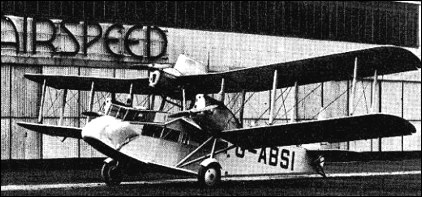
A ten-passenger biplane airliner of 1932 with cranked lower wings attached to the upper fuselage. Four were built; two for Sir Alan Cobham’s National Aviation Day tours and two for Midland and Scottish Air Ferries. Powered by three 89kW de Havilland Gipsy engines, two on the lower wings and one mounted centrally on the upper wing.
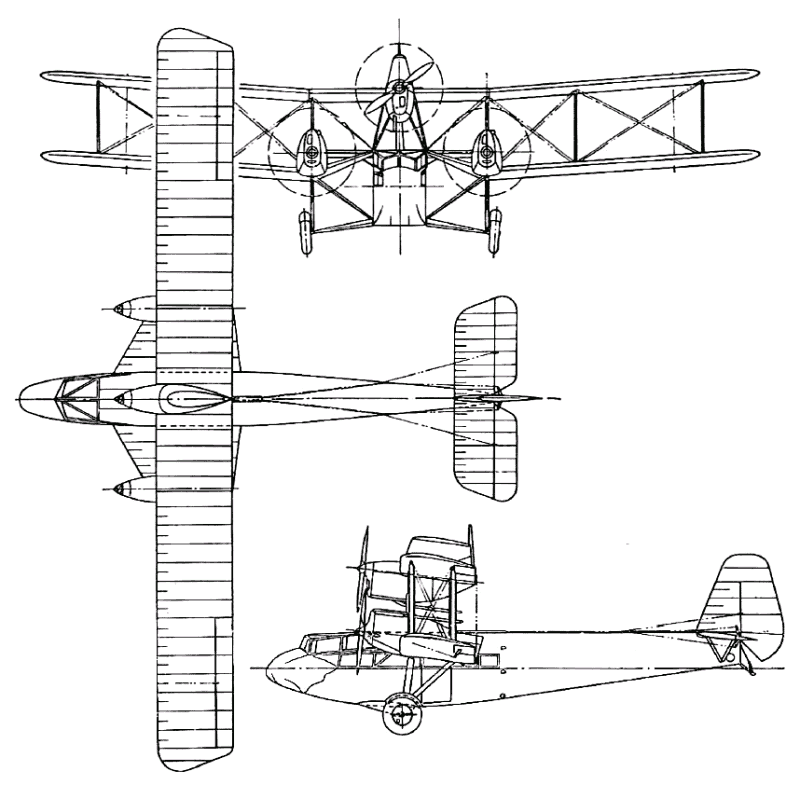
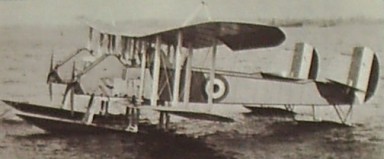
Designed by Harris Booth as a torpedo bomber in 1914, the A.D. Seaplane 1000 was a floatplane of wire braced, fabric covered wood construction. An unequal span biplane, the central glazed nacelle housed an engine and pusher propellor. Two tractor engines were mounted in the booms.
The undercarriage was two main floats and two smaller rear floats.
The outer wing panels had dihedral and were separated on each side by two sets of interplane struts. Overhanging ailerons, on the outboard trailing edges of the upper wing, were supported by kingposts and cables.
Seven were ordered from J. Samuel White, but only one was completed. With poor performance further development was abandoned but the single type 1000 survived until 1916.
AD Type 1000 Seaplane
Engine: 3 x Sunbeam Vee, 310 hp / 231vkW
Wingspan: 115 ft / 35.05 m
Crew: 5
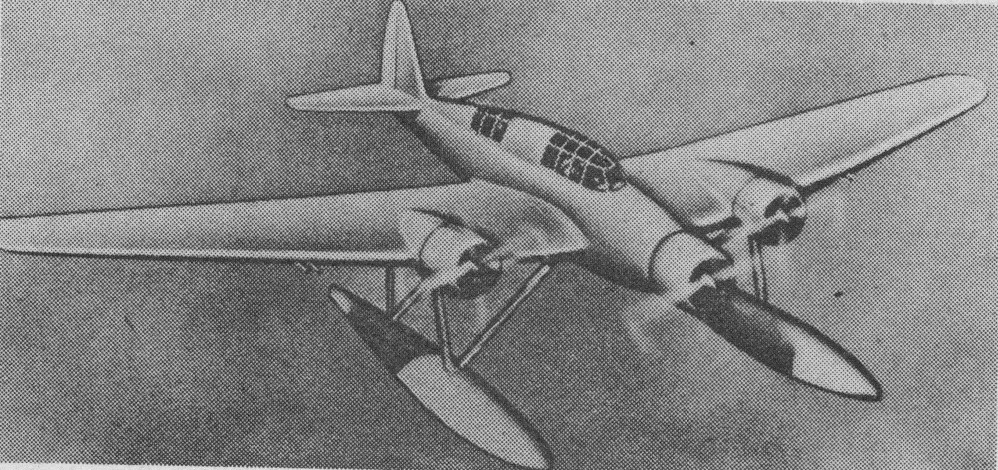
The Aichi AI-104 Type 98 Reconnaissance Floatplane never existed, yet it was described in detail in recognition manuals as late as February 1943. It may have been a mis-identified Italian CANT Z.506B that was illustrated in December 1938 Japanese magazines.
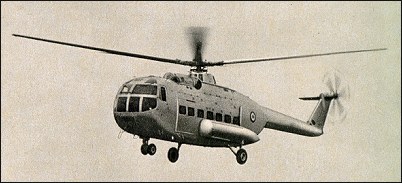
Filippo Zappata’s Agusta A.101D project was introduced at the Milan Trade Fair in April 1958, in the form of a model.
The prototype was first flown on 19 October 1964 by test pilot Ottorino Lancia.
The single prototype underwent visible external modifications during development under the direction of engineers Bellavita and Lovera and was fitted with a twin nose wheel assembly and longer fairings on each side of the fuselage, which was also extended by grafting in a new section. The helicopter performed service trials involving rapid embarkation and disembarkation through the two lateral sliding doors and tail ramp. It could carry two pilots and 35 equipped troops, or a 5000kg load. The development period involved over 400 flying hours in addition to those on the rotor test rig.
The first prototype was fitted with three Rolls-Royce Bristol-Gnome H.1200 turbine engines of 1250shp, and later Gnome H-1400s of 1400shp. The airframe, with a gross weight of 12800kg and a length of sixty-six feet, had a rear ramp and twin sliding troop doors.
The A.101 was examined by interested foreign parties visiting Cascina Costa and was displayed at the Turin Air Show in June 1966.
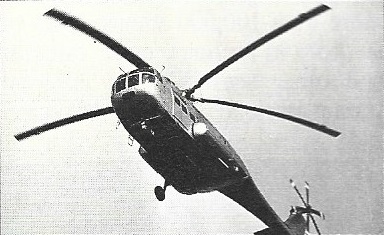
By autumn 1966 the A.101 was ready for large-scale production, but no decision was made by the authorities. In 1968 the helicopter appeared at the Turin Air Show in camouflage finish and was tested at an all-up weight of 13500kg. At the end of autumn 1968 the A.101G was transferred to Praticadi Mare military airport outside Rome for a series of trials which were completed in summer 1971. The aircraft made a few more flights, but was considered out-of-date. The A.101G was originally designated AZ.101G, the second initial denoting the responsibility of Ing. Filippo Zappata.
Agusta had reworked the A.101H by redesigning the fuselage and some basic dynamic components. The fuselage was extended by 3 metre and more powerful General Electric T58 turbine engines were installed. This programme was cancelled in 1971 in favour of production under license of foreign aircraft such as Sikorsky and Boeing-Vertol helicopters.
AZ-101G
Engine: 3 x Bristol-Siddley “Gnome H. 1400” turboshaft, 1030kW
Main rotor diameter: 19.8m
Length: 20.2m
Height: 6.6m
Take-off weight: 11500kg
Empty weight: 6400kg
Max speed: 225km/h
Cruising speed: 203km/h
Rate of climb: 12.3m/s
Service ceiling: 3950m
Range max fuel: 383km
Crew: 3
Passengers: 35
AZ.101G
Engines: 3 x Bristol-Siddeley Gnome, 1250 shp
Main rotors: 5 blades
Tail rotor: 6 blades
Max gross weight: 24,900 lb
Empty weight: 12,566 lb
Top speed: 160 mph
Cruise speed: 140 mph
Range: 1270 mi
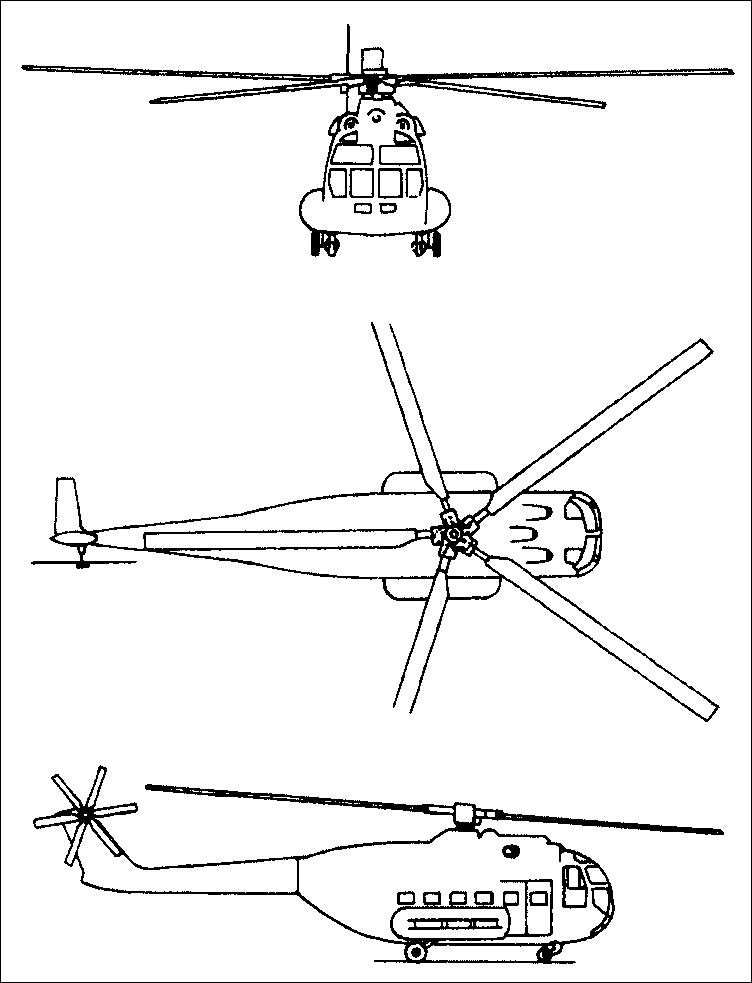
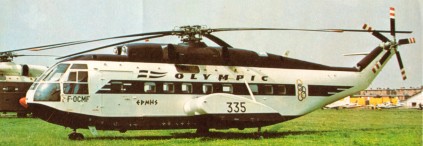
SA 321 Super Frelon development stemmed from the prototype – but not accepted for production – SA 3200 Frelon built to a French military specification. In a joint effort between Sud Aviation and Sikorsky, the base SA 3200 Frelon was developed into the “Super Frelon” (with Frelon translating into “Hornet”). The result was a rather large troop transport version that would go onto to be produced into three different variants.
At the end of the fifties, the French armed forces issued a specification for a heavy helicopter for troop transport and Sud-Aviation initiated the SA.3200 Frelon project. Sud-Aviation was formed on 1 March 1957 from the Sud-Ouest and Sud-Est Aviation companies. One of its first major projects was the Frelon, a large helicopter of conventional layout powered by three Turbomeca Turmo III turboshaft engines mounted above its cabin. Two are side-by-side in front of the rotor shaft and, the third behind the rotor shaft. Each engine supplied independent drive to the rotor head, thus ensuring twin-engined capability if one unit should fail. The first SE.3200 prototype flew on 10 June 1959. All fuel is carried externally in two tanks mounted to each side of the cabin.
Both the main and tail rotors are four-bladed and there is a variable-incidence tail control surface on each side of the rear fuselage. Standard equipment includes dual controls, radio and full night-flying equipment, with provision for an automatic pilot.
The Frelon cabin is ventilated and sound-proofed and measures 7m in length, with a width of 1.90m, and head-room of 1.83m. The entire tail assembly swings to the right to permit direct loading into the cabin. Normal entry is via large sliding doors on each side of the fuselage. Trials of the SA.3200 were suspended in 1963 in favour of the SA.3210 Super Frelon programme.

The planned production version was the SA.3210 powered by three 932kW Turmo IIIC engines. Development of the Frelon lapsed in favour of the SA.3210 (now SA.321) Super Frelon.
The SA321 was designed as an improved version of the SA 3200 Frelon (hornet) with the suport of Sikorsky, who were largely responsible for the rotor system.
Fiat, in Italy, were responsible for producing the main gearbox and transmission. Prototypes were produced as land-based troop transport accommodating up to 30 troops, and as naval anti-submarine type forming the basis of the SA 321G initial production model.
The basic structure of the Super Frelon was no different from the original model but for the US-built rotor system with six blades folded back automatically with the extreme rear of the tailboom, the watertight boat-type hull with a rear-loading ramp, and the three turbines were located side-by-side above the fuselage and the landing gear was of the fixed tricycle type. The two prototypes were followed by two pre-production models with Turmo III turbines and other variants with civil registrations.
The first prototype of the Super Frelon (originally designated SA 3210-01 (F-ZWWE) flew on 7 December 1962, powered by three 985kW Turmo IIIG-2 engines, represented the troop transport version and (with a modified fuselage and retractable landing gear) in July 1963 set up three speed records: 341.23km/h over 3km; 350.47km/h over 15/25km (unbeaten until 1967); 334.28km/h over 100km. The second prototype, flown on 28 May 1963, was representative of the naval version, with stabilising floats on the main landing gear supports incorporating search radar, dipping sonar and other anti-submarine equipment.
The cabin of the Super Frelon in the military transport version is 7m long and can take two jeeps or two DCA 20mm cannon. For casualty evacuation it can take 15 stretcher cases with two medical attendants. The rear loading ramp is hydraulically operated and can remain open even in flight. In 1962 the tri-turbine SA 3210 Super Frelon set three international records: 211.12 mph over 3 km; 217.53 mph on 15 to 25 km dash; and 197.41 mph for 100 km.
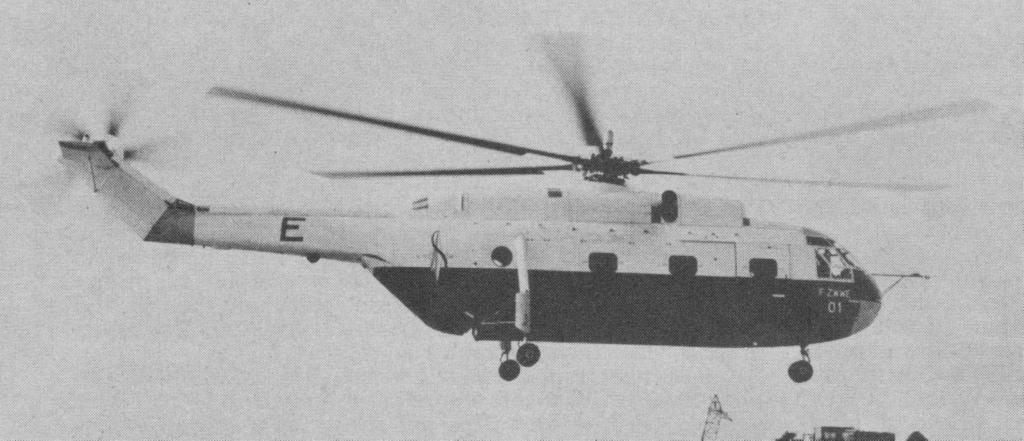
Four pre-production aircraft followed, and the French Government ordered an initial production series of 17, designated SA (AS) 321G, in October 1965, which entered service in 1966. The first flight of the first production machine was on 30 November 1965. By mid-1967, twenty-five were in service. These are a mixture of SA.321G’s, which can carry four homing torpedoes or other antisubmarine stores, or gear for mine-sweeping, minelaying or ship towing and were equipped with two Sylphe radars, all-weather navigation systems, an automatic stabilization system; and pure-transport versions capable of airlifting up to 30 troops, 18 casualty litters or 4000kg of cargo over 200km stage lengths. Five SA.321 transports have also been supplied to the Heil Avir le Israel, and delivery of sixteen Super Frelons to the South African Air Force began in July 1967.
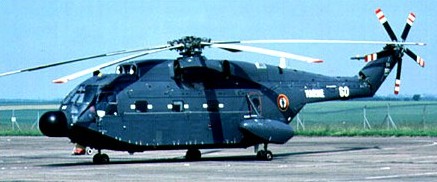
Carrying weapons in addition to search radar and sonar, the SA 321Gs were used to patrol the seaward approaches to the French navy’s nuclear submarine base at Brest. Some were later modified with nose-mounted radar and Exocet missiles for anti-ship attack, and the SA 321Ga was delivered for utility transport duties. In French naval service the Frelon equiped three units: 33F and 20S at St Mandrier and 32F based at Lanveoc.
The French Navy utilized the SA 321G, which was fitted in a maritime configuration with a dunking sonar system, torpedoes and other anti-submarine warfare equipment. These specialized versions would later be relegated to search and rescue roles in the navy capacity.
Only 24 SA 321Gs were built, but the production total was boosted by small-scale production of other variants, including the SA 321K assault transport for Israel (12 helicopters) and the SA 321J/ L/M transport exported to China, South Africa, and Libya. Israel re-engined eight of its Super Frelons and sold them to Argentina.
Iraq used Super Frelons, equipped with Omera radar and AM39 Exocet missiles, in anti-shipping strikes against Iran.
A commercial ‘air utility’ version, the SA.321J, was in production, eighteen were completed up to the end of September 1967. This can be used as a 27-seat passenger transport, as a freighter with a 2500kg payload, or for firefighting, flying crane or other duties; at least one is acting as a supply transport to offshore oil drilling operations. Certificated on 20 October 1967, the SA.321J is powered by Turmo IIIC5 engines. On 7 April 1967, the prototype SA.321F (F-WMHC) made its first flight. This is an enlarged passenger version with a 19.4m fuselage seating up to 37 occupants, a gross weight of 12,000kg, and large sponson-type fairings amidships which act as baggage holds. The one-off SA.321F commercial transport version, test-flown in 1968, is powered by three 1400shp Turmo IIIC3 shaft turbines. It had an air-conditioned, soundproofed cabin, a sliding door on the starboard side and a rotor head fairing. The two stub wings at the sides of the fuselage were used as baggage holds, and airline-style seating provided for 34-37 passengers.
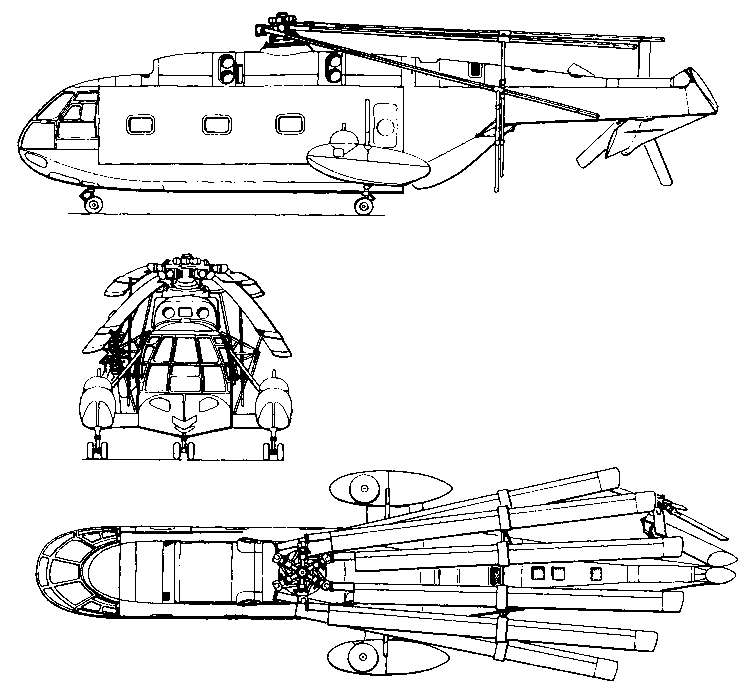
The SA 321 has six-blade main rotor and five-blade anti-torque tail rotor, with rearward folding of all six main rotor blades of SA 321G accomplished automatically by hydraulic jacks, simultaneously with automatic folding of the tail rotor pylon. The rotor can be stopped within 40 seconds by a boosted disc-type rotor brake fitted to this shaft.
The main rotor blades of all-metal construction, with D-section main spar forming leading-edge. The tail rotor is of similar construction to main rotor. The boat-hull fuselage is of conventional metal semi-monocoque construction, with watertight compartments inside planing bottom. On the SA 321G, there is a small stabilising float attached to the rear landing gear support structure on each side. The tail section of the SA 321G folds for stowage. Small fixed stabilisers on starboard side of tail rotor pylon on all versions. The SA 321F has large external fairings on each side of the centre-fuselage which serve a similar purpose to stabilising floats and also act as baggage containers.
The landing gear is of non-retractable tricycle type, by Messier-Hispano-Bugatti, with twin magnesium alloy wheels on each unit. Hydraulic disc brakes are on the mainwheels and the nosewheel unit is steerable and self-centring. Fuel is in flexible tanks under the floor of the centre-fuselage, with a total standard capacity of 3,975 litres in SA 321G/H and 3,900 litres in SA 321Ja. Optional auxiliary fuel tankage comprises two 500 litre external tanks on all models, two 500 litre internal tanks in the SA 321G, and three 666 litre tanks in the 321H/Ja.
The military version has a crew of two on the flight deck, with dual controls and advanced all-weather equipment. The SA 321G carries three other flight crew, and has provision for 27 passengers. SA 321H transport accommodates 27-30 troops, 5,000kg of internal or external cargo, or 15 stretchers and two medical attendants.
The SA 321F has airliner seats for up to 37 passengers (34 if toilets are installed) in three-abreast rows with centre aisle, while the SA 321Ja has seating for up to 27 passengers in the personnel transport role. As a cargo transport, external loads of up to 5,000kg can be suspended from the cargo sling. Loading of internal cargo (up to 5,000kg) is via rear ramp doors, with the assistance of a Tirefor hand winch.
The ASW SA 321G operates normally in tactical formations of three or four aircraft, each helicopter carrying the full range of detection, tracking and attack equipment, including a self-contained navigation system associated with a Doppler radar, a 360° radar with transponder and display console, and dipping sonar. Four homing torpedoes can be carried in pairs on each side of the main cabin. Both the SA 321G and H can be fitted with an anti-surface vessel weapon system, consisting of two Exocet missiles and launch installation associated with an Omera-Segid Heracles ORB 31D or ORB 32 radar for target designation. Other equipment is provided for secondary duties such as towing and minesweeping. Rescue hoist of 275kg capacity standard.
Argentina received several SA 321 from Israel. Argentine versions were Israeli-owned and refitted with the General Electric GE T58 powerplants. South African versions were noted for not being the full amphibious versions of the Super Frelon type.
The triple-turbine-powered Changhe Z-8 (Zhishengji-8 / Vertical take-off aircraft 8) design work began in 1976, but was suspended from 1979 to mid-1984. Chinese equivalent of Aerospatiale Super Frelon, of which 16 supplied to PLA Navy in 1977-78. The Z-8 features a six-blade main rotor and five-blade tail rotor: boat-hull fuselage with watertight compartments inside planing bottom; stabilising float at rear each side, attached to small stub-wing; small, strut-braced fixed horizontal stabiliser on starboard side of tail rotor pylon. Search radar in nose ‘thimble’ on SAR version.
Pitch control fitting at root of each main rotor blade; drag and flapping hinges for each blade mounted on rotor head starplates; each main blade also has a hydraulic drag damper. Fully redundant flight control system, with Dong Fang KJ-8 autopilot.
Stressed skin metal fuselage, with riveted watertight compartments; gearboxes manufactured by Zhungnaii Transmission Machinery Factory.
A non-retractable tricycle undercarriage, with twin wheels and low-pressure oleo-pneumatic shock-absorber on each unit. Small tripod tailskid under rear of tailboom. Boat hull and side floats permit emergency water landings and take-offs.
Power is from three Changzhou (CLXMW) WZ6 turboshafts, each with maximum emergency rating of 1,156kW and 20% power reserve at S/L, ISA. Two engines side by side in front of main rotor shaft and one aft of shaft. Transmission rated at 3,072kW.
Standard internal fuel capacity 3,900 litres, in flexible tanks under floor of centre-fuselage. Auxiliary fuel tanks can be carried inside cabin for extended-range or self-ferry missions, increasing total capacity to 5,800 litres.
Crew of two or three on flight deck. Accommodation in main cabin for up to 27 fully armed troops, or 39 without equipment; up to 15 stretchers and a medical attendant in ambulance configuration; a BJ-212 Jeep-type vehicle and its crew; or other configurations according to mission. Entire accommodation heated, ventilated, soundproofed and vibration-proofed. Forward-opening crew door on each side of flight deck. Rearward-sliding door at front of cabin on starboard side. Hydraulically actuated rear-loading ramp/door.
First flown on 11 December 1985, a second prototype flew in October 1987. Domestic type approval was awarded on 8 April 1989 and the first Z-8 was handed over to FLA Naval Air Force for service trials on 5 August 1989. Initial production was approved and the final design approval granted on 12 November 1994.
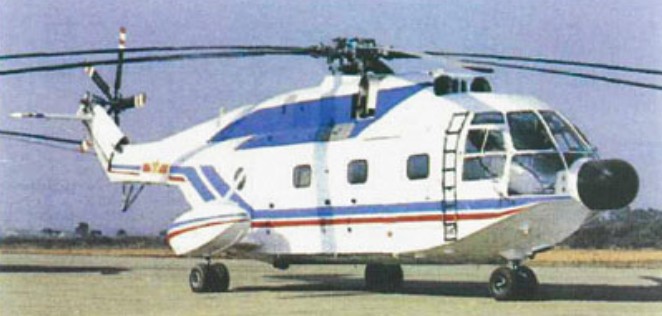
Up to 20 were delivered to PLA Navy by the end of 1999. There was no firm evidence of production status since then, but the type was still being promoted by CATIC in 2002. The sole operating naval unit was Shipborne Helicopter Group within East Sea Fleet at Dachang (Shanghai).
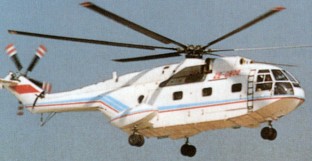
Principal versions:
SE.3210 / SA.321 Super Frelon
Larger development of SA.320 with boat hull and outrigger floats, rear loading doors, boom tail, six-blade main rotor driven by three 1320shp Turbomeca Turmo IIIC turboshafts. Prot. F-ZWWE FF 7 Dec. 1962.
SA 321B
Standard French Air Force/Army Super Frelon.
SA 321D
Standard French Navy Super Frelon.
SA 321F
Commercial airliner with streamlined external sponsons, designed to carry 34-37 passengers. The prototype was designed in accordance with US FAR Pt 29 regulations and flew for the first time on 7 April 1967. Type certification was granted by the SGAC on 27 June 1968 and by the FAA on 29 August 1968.
SA 321G
Anti-submarine helicopter able to carry 27 passen¬gers or freight in its alternative transport role. First version to enter production. The first SA 321G flew on 30 November 1965 and deliveries began in early 1966. Twenty-four built.
SA 321H
Simplified military version for air force and army service, without stabilising floats or external fairings on each side of lower fuselage. Turmo IIIE_6 engines instead of Turmo IIIC_6 in other versions. No de-icing equipment fitted.
SA 321Ja
Utility and public transport version, intended to fulfil the main roles of personnel and cargo transport. Designed to carry a maximum of 27 passengers or 11,023 lb/5,000 kg of freight. External loads of up to 5,000kg can be suspended from the cargo sling. The SA 321Ja prototype flew for the first time on 6 July 1967. A French certificate of airworthiness was granted in December 1971.
SA 321K
Israeli assault transport, later re-engined with Gen¬eral Electric T58 turboshafts
SA 321L
Develop¬ment of the SA 321K for other export markets
SA 321M
Libyan version of the SA 321L
Changhe Z-8
Standard Chinese development
Changhe Z-8A
Reported designation of upgraded version, with Turbomeca Makila 2A engines matched to Turmo gearbox. Pratt & Whitney Canada also a candidate for any re-engining programme. Two Z-8As reportedly delivered to PLA Army Aviation for evaluation in 2001, camouflaged; lack nose radome and side-mounted floats.
Changhe Z-8F
Improved and more powerful version, for which the 1,380kW P&WC PT6B-67A turhoshaft was selected in November 2002. Additional 671kW of power expected to enhance ‘hot-and-high’ performance, including increase in service ceiling to 4,700m at MTOW and increased payload capacity. Other improvements said to include new (composites) main rotor blades, with anti-icing; new avionics and mission equipment. Duties envisaged are search and rescue, general utility missions and logistics support.
Specifications
S.E.3200 Frelon
Engines: 3 x Turmo IIIB turboshaft, 750/800shp
Main rotor diameter: 15.0 m
Length, blades folded: 14.9 m
Width, blades folded: 5.2 m
Height: 4.7 m
Weight empty: 4500 kg
Max useful load: 3500 kg
Normal loaded weight: 7500 kg
Max loaded weight: 8000 kg
Max ferrying range: 1300 km
SA 321 Super Frelon
Engine: 3 x Turboméca Turmo III C 6, 1529 shp / 1156kW
Length: 63.648 ft / 19.4 m
Length with rotors: 23.03 m
Height: 21.85 ft / 6.66 m
Width: 5.2 m
Rotor diameter: 62.008 ft / 18.9 m
Max takeoff weight: 27562.5 lb / 12500.0 kg
Weight empty: 14420.7 lb / 6540.0 kg
Max. speed: 130 kt / 240 km/h
Cruising speed: 124 kt / 230 km/h
Service ceiling: 11647 ft / 3550 m
Maximum range: 583 nm / 1080 km
Range (max. weight): 351 nm / 650 km
Rate of climb: 12.0 m/s
Hovering ceiling: 2170 m
Crew: 2
Payload: 30 Pax / 4500kg
Fuel: 3975 kg
SA321G Super Frelon
Engines: 3 x Turbomeca Turmo 111C6 turboshafts, l,570-shp / 1,171-kW
Maximum speed: 154 mph (248 kph) at SL
Initial climb rate: 984 fpm (300 m/min)
Service ceiling: 10,170 ft (3,100 m)
Cruising speed: 248 km/h (154 mph)
Endurance in ASW role: 4 hr
MTOW: 28,660 lb (13,000 kg)
Empty weight: 15,130 lb (6,863 kg)
Height: 22 ft 2 in (6.76 m)
Main rotor diameter: 62 ft (18.9 m)
Main rotor disc area: 3,019.94 sq ft (280.55 sq.m)
Length overall, rotors turning: 75 ft 6.75 in (23.03 m)
Range 3500 kg (7,716 ¬lb) load: 1020 km (633 miles)
Armament: up to four homing anti¬submarine torpedoes or two AS.39 Ex¬ocet anti ship missiles.
SA321H
Engines: 3 x Turbomeca Turmo IIIE-6 turboshaft
Changhe Z-8
Engine: 3 x Changzhou WZ6, 1,156kW
Instant pwr: 1156 kW
Main rotor diameter: 18.90m
Tail rotor diameter: 4.00m
Length overall, rotors turning: 23.035m
Height overall, rotors turning: 6.66m
Width over main gear sponsons: 5.20m
Empty weight equipped: 7550kg
Max take-off weight, standard fuel: 10592kg
Max take-off weight, with auxiliary fuel: 13000kg
Max cargo payload (internal): 4000kg
Max cargo payload (external sling): 5000kg
Never-exceed speed: 315km/h
Max cruising speed: 266km/h
Econ cruising speed: 255km/h
Rate of climb: 690m/min
HIGE: 18,045 ft / 5500m
HOGE: 14,435 ft / 4400m
Service ceiling: 19,685 ft / 6000m
Max range: 880 km
Range max fuel / TOW 9000kg: 430km
Endurance max fuel: 2 h 31 min
Crew: 2
Pax: 27
 All Aero