The Beech model 118 was a three-engined experimental aircraft.
3 engines
Beardmore R36 / H.M. Balloon Factory R36
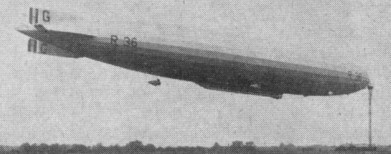
R36 was a British airship designed during World War I by the new Airship Design Department, work commencing in November 1917. She was a lengthened version of the R33 class. These had been influenced by the design of the German Zeppelin LZ 76 that had been forced to land in England. The LZ 96, which was forced down at Bourbonne-les-Bains in June 1917, provided yet more input into the design.
The R36, along with a second ship the R37 were to be a stretched version of the R33, getting more lift by adding another 33 feet (10 m) gas bag. Two of her five engines were German Maybach engines, recovered from the downed LZ 113. Construction began before the end of the war, but the design was altered to include accommodation for 50 passengers.
Unlike the R33 class, the control car was not suspended below the hull but directly attached to it, and formed the forward section of the elongated passenger compartment. The engines were housed in five engine cars, one pair (containing the Maybach engines) either side of the hull forward of the control car, a second pair either side of the passenger compartment and the fifth on the centreline in front of the tail surfaces. Unlike previous British airship designs, the fins and horizontal stabilisers were cantilevered structures, with no external bracing.
R36 was launched for her maiden flight on 1 April 1921 from the Beardmore works at Inchinnan near Glasgow. Late the following day she flew on to RNAS Pulham in Norfolk. When she first flew in 1921, it was not in her originally intended role as a patrol aircraft for the Royal Navy, but as an airliner, the first airship to carry a civil registration (G-FAAF).
On 5 April it left Pulham at 07:25am bound for London. After making its appearance over the city it proceeded to Salisbury Plain, where it climbed to 6,000 ft (1800 m) and began manoeuvring trials. Starting a fast turn of 130 degrees it encountered windshear, which overstressed the rudder, damaging the top rudder and starboard elevator. This made the ship adopt a nose down attitude and rapidly lose height, but it was brought under control at around 3,000 feet. Emergency repairs were made to the damaged control surfaces and the ship limped home on her one remaining rudder and elevator, using differential engine control to help with directional control, reaching Pulham at 9.15pm.
After repairs and strengthening work she re-emerged in June for a successful series of test flights, including an endurance trial starting on 10 June which lasted nearly 30 hours, covering 734 miles (1,174 km) over land and sea. She was also used by the Metropolitan Police for observing traffic congestion caused by the Ascot Races. Journalists and senior police representatives were entertained in great comfort on the day, and the journalists stories were dropped by parachute over Croydon airfield.
On 21 June, returning from another trial flight, she suffered damage during landing. The release of emergency ballast caused a sharp pitching up, straining the ship against the mooring line. The nearest unoccupied sheds were at Howden in Yorkshire since the Pulham sheds were holding German Zeppelins handed over as war reparations. The wind increased and it was decided that the LZ 109 (L 64) would have to be sacrificed to save the R36. Within 4 hours L 64 had been cut into pieces and cleared to give enough room for R36. Even then she was damaged by a gust of wind during the manoeuvre into the shed.
Repairs were delayed while policy on airships was reviewed because of the R38 disaster and economic conditions. In 1925 she was refurbished for an experimental flight to Egypt as part of the Imperial Airship Scheme, but calculations cast doubt on her ability to make the trip and in the light of her age and condition she was scrapped in 1926.
Engines: 3 × Sunbeam Cossack, 350 hp (260 kW) each / 2 × Maybach, 260 hp (190 kW) each
Volume: 2,101,000 ft3 (59,500 m3)
Length: 675 ft 0 in (206 m)
Diameter: 78 ft 6 in (23.9 m)
Height: 91 ft 7 in
Maximum speed: 65 mph (105 km/h)
Range: longest flight, 734 miles (1181 km)
Endurance: 29 hours 54 min
Service ceiling: highest attained, 6000 ft (1829 m)
Crew: 28
Capacity: 50 passengers
Beardmore Inflexible
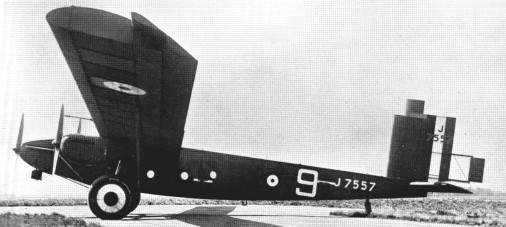
The Inflexible was designed by Adolf Rohrbach as the Rohrbach Ro VI. The Beardmore Company (mainly shipbuilders by the 1920s) developed the Inflexible to demonstrate the then-innovative stressed-skin metal construction. Unusually for 1928 it was also a mid-wing monoplane at a time when most large aircraft were still wood and fabric biplanes. With a wingspan of 158 ft it was the biggest aircraft of it’s day. Before being allowed to make the attempt to fly it had to be fitted with support cables from the wing roots to nearly the wingtips. It was also decided that it would need more than the length of the existing airfield at Martlesham Heath to take off and an extra 400 yards of heath was cleared for the initial flight.
The extra 400 yards was not nearly needed and the Inflexible took off well before the end of the existing runway, no strain was evident on the cables and according to those on board, the flight was uneventful and the aircraft flew well.
The Inflexible’s maiden flight proved it was too heavy for its three Rolls Royce Condor engines.
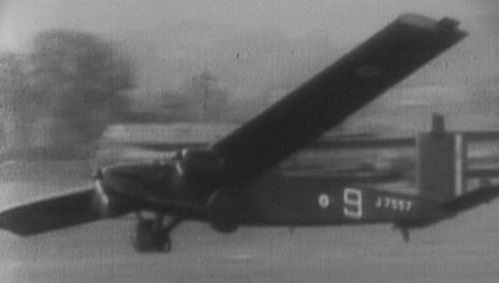
Within two years its flying career was over and it was dismantled to save space, ending its days in experiments to investigate airframe corrosion.
Engines: 3 x Rolls-Royce Condor, 650 hp.
Take-off weight: 16783 kg / 37000 lb
Wingspan: 48.01 m / 157 ft 6 in
Length: 23.01 m / 75 ft 6 in
Height: 6.40 m / 20 ft 12 in
Max. speed: 175 km/h / 109 mph
Crew: 2
Batson Air Yacht
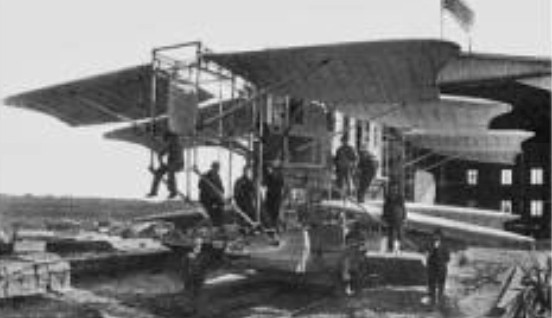
Matthew A. Batson built the Air Yacht during 1912 and 1913 with the intention of flying it on a transantic flight from Georgia to Liverpool, England. The airframe consisted of six forty-foot wings and a gondola type cabin, fixed with struts and braces to a seventy-foot pontoon. Powered by three 120 hp Emerson six cylinder engines, the craft was sucessfully launched but reportedly never achieved sustained flight.
Weight empty: 3968 lb
Bach Air Yacht 3-CT
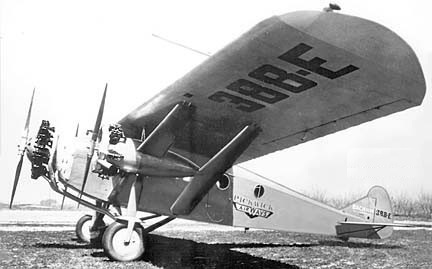
The Bach Air Yacht of 1928 was a three-engined commercial transport with a maximum capacity of two crew and ten passengers.
The first Air Yacht was the 1928 N5082 c/n 1. Three more in the registrations are identified only as Air Yacht with no model designation: N3534 c/n 1 had a J-5 + two Kinners; N3997 c/n 1 had one Wright J-5 + two Siemens; N4184 shows nothing but a c/n 2.
1928 3-CT-2 Air Yacht NC7065 c/n 1 was a 10-place powered by one Wright J-5 + two 100hp Ryan-Siemens.
In 1928 two 3-CT-4 Air Yacht were built; NC7657 c/n 3 and N7658 c/n 4. Powered by one P&W Wasp + two 100hp Ryan-Siemens, both were 10-place.
The sole 3-CT-5 Air Yacht, built in 1929, NC7092 c/n 2 received ATC 2-98 and was powered by one 450hp P&W Wasp + two 130hp Comet. It too was 10-place.
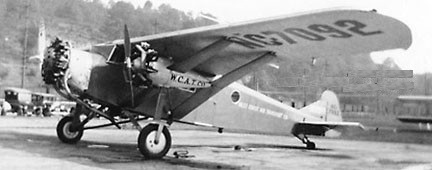
The 1929 3-CT-6 Air Yacht (ATC 114) sold for $39,500 powered by one 525hp P&W Hornet + two 130hp Comet. A 12-place, five were built for Pickwick Airways (N219H c/n 10, N302E c/n 6, N388 c/n 5, NC539E c/n 7, and NC850E c/n 8 c/ns.
N19H and N388 were rebuilt into a single-engine, the latter as a sesqui-wing banana-duster with an added smaller lower wing. Used in 1933 in Honduras by United Fruit Company, registered XH-TRA.
Interesting is that N388E, pictured at top and shown in Summer 1967 AAHS Journal, is not in the registers—that number is worn by an Arrow Sport.
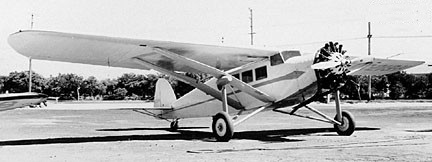
Four 10-place 3-CT-8 Air Yacht (ATC 172) were built in 1929 NC53M c/n 16, NC54M c/n 17, NC245K c/n 15, and NC8069 c/n 11. They were priced at $39,500.
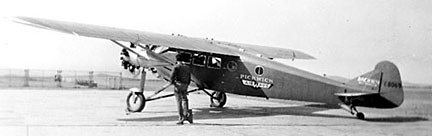
The 1929 10-place 3-CT-9 Air Yacht (ATC 271) was powered by one 450hp P&W Wasp + two 225hp Wright J-6-7 engines and priced at $39,500.
At least three were built; NC511V c/n 21, NC520M c/n 18, and NC809M c/n 19.
ATC 2-175 was for one conversion to 7-pace Special NC809M.
The 3-CT-8 set a new altitude record, and the first ever for tri-motors, on 26 July 1929, carrying a 1000-kilo load (2220 lb) to 20,820′ piloted by Waldo Waterman), and two CTs came in first and second in multi-engine speed competition at the 1929 Nationals, piloted by William Brock and Waldo Waterman.
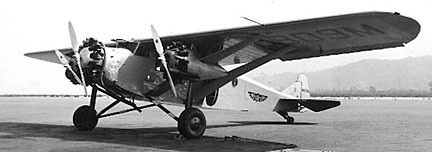
In 1931 two 3-CT-9K Air Yacht (ATC 2-376) were built; NC12206 c/n 22 and NC12297 c/n 23. 10-place, they were powered by one 420hp P&W Wasp B + two 210hp Kinner C-5.
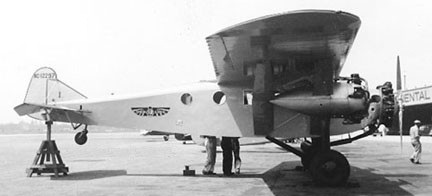
The 1930 3-CT-9S Air Yacht (ATC 299) was a Deluxe “executive” version of 3-CT-9 with cowled engines (PW Wasp + two Wright R-760), wheel pants, and customized interior, priced at $40,000+. ATC 2-179 was superseded by ATC 299. One was built; NC317V c/n 20.
One 3-CTS Air Yacht built in 1930 NC2830 c/n 8 (ATC 2-104), was a 3-CT-8 modified with 450hp P&W Wasp + two 220hp Wright J-5 engines.
Air Yacht
Engines: 1 x J-5 + two Kinners
Air Yacht
Engines: one Wright J-5 + two Siemens
3-CT-2 Air Yacht
Engines: one Wright J-5 + two 100hp Ryan-Siemens
Seats: 10
3-CT-4 Air Yacht
Engines: one P&W Wasp + two 100hp Ryan-Siemens
Seats: 10
3-CT-5 Air Yacht
Engines: one 450hp P&W Wasp + two 130hp Comet
Seats: 10
3-CT-6 Air Yacht
Engines: one 525hp P&W Hornet + two 130hp Comet
Wingspan: 58’5″
Length: 36’10”
Useful load: 3261 lb
Max speed: 154 mph
Cruise: 126 mph
Stall: 60 mph
Range: 600 mi
Seats: 12
Price: $39,500;
3-CT-8 Air Yacht
Engines: one 525hp P&W Hornet + two 165hp Wright J-6
Wingspan: 58’5″
Length: 36’10”
Useful load: 3195 lb
Max speed: 157 mph
Cruise: 133 mph
Stall: 60 mph
Range: 590 mi
Seats: 10
Price: $39,500
3-CT-9 Air Yacht
Engines: one 450hp P&W Wasp + two 225hp Wright J-6-7
Wingspan: 58’5″
Length: 36’10”
Useful load: 2990 lb
Max speed: 162 mph
Ceuise: 136 mph
Stall: 60 mph
Range: 525 mi
Price: $39,500
Seats: 10
3-CT-9K Air Yacht
Engines: one 420hp P&W Wasp B + two 210hp Kinner C-5
Seats: 10
3-CT-9S Air Yacht
Engines: PW Wasp + two Wright R-760
Useful load 2807 lb
Range: 600 mi
Price: $40,000+
3-CTS Air Yacht
Engines: one 450hp P&W Wasp + two 220hp Wright J-5
Wingspan: 58’5″
Length: 36’10”
Seats: 12
Avro Canada VZ-9V Avrocar
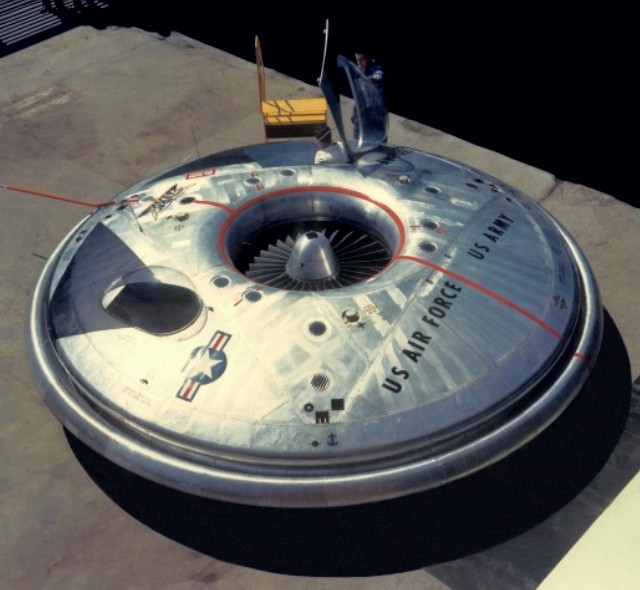
The Avrocar was the brainchild of John Frost, an aeronautical engineer at the Malton-Toronto plant of Avro Canada, who conducted studies in the early 1950s on extremely unorthodox vertical-take-off aircraft, beginning with one design that looked like a shovel blade named the “Avro Ace” or “Project Y-1”. and then moving on to saucer-shaped aircraft, originally designated “Project Y-2”. Frost felt that such vehicles could offer vertical take-off capability as well as high-speed forward flight.
The US military became interested, leading to the award of a US Air Force contract in 1955 for experimental development that evolved through various designations such as “Project Silver Bug”, “Weapons System 606A (WS-606A)”, “Research Project 1194”, and so on. The whole project was originally kept a deep secret since it was felt to be a major potential breakthrough. After considering and eliminating a number of different configurations, the effort focused on development of a proof of concept vehicle named the “VZ-9-AV Avrocar” which was funded by both the US Army and US Air Force. It looked very much like an ordinary but greatly scaled-up modern “Frisbee” toy, 5.5 meters in diameter and 1.1 meters thick at the center (18 by 3.5 feet).
There was a fan 1.5 meters (5 feet) in diameter built into a duct in the center, and two little single-seat cockpits with individual clamshell bubble canopies, and powered by three Continental J69 jet engines, which were arranged in the fuselage in a triangle around the central fan. The exhausts of the jet engines drove the fan and were also ducted around the around the edge of the Avrocar to provide lift at low speed. Engine thrust could be redirected to provide forward thrust, with the saucer-shaped airframe acting as a “lifting body”. Differential thrust could be applied at the sides of the VZ 9 for control purposes.
Frost was extremely enthusiastic about the possibilities of his flying-saucer concept, envisioning an “Avrowagon” for family use, an “Avropelican” for naval use, a scaled-up transport version, and a Mach-2 fighter-interceptor version.
A wind-tunnel test model and a flying prototype were built. The test model was sent to the NASA Ames Center in California for wind-tunnel tests. First tethered flight of the flying prototype (58 7055) was at Malton on 29 September 1959, followed by the first untethered flight on 5 December 1959. After some changes to the control system, some forward flights were made just above the runway at Avro’s Malton factory, starting on May 17th, 1961.
The Avrocar was sup¬posed to fly at speeds of over 483 kph (300 mph) at altitude and have a range of 1600 km (1000 miles), but the little saucer never exceeded 30.5 m (100 ft) during trials.
Although Frost and his staff recognized that the Avrocar was inherently unstable and had incorporated an electromechanical stabilization system, it wasn’t up to the job, and once the Avrocar picked itself up to above chest height and got out of ground effect, it bobbled around drunkenly. An improved stabilization system was considered, but Avro was in chaos due to the cancellation of the “CF-105 Arrow” interceptor program. The chaos filtered down to the Avrocar program, and the US backers of the program lost interest. The program was axed in December 1961.

The flight prototype ended up on display at the US Army Transportation Museum. The wind-tunnel test model in the possession of the Smithsonian Air & Space Museum. It remains in storage at the museum’s Garber Restoration & Storage Facility in Maryland.
Avro 624 Six
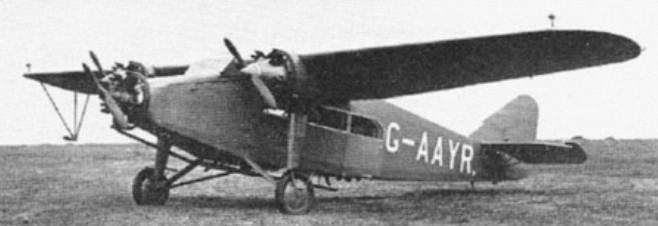
After the success of the Avro 618 Ten, it was decided at Avro to build a similar aircraft which, although smaller than the ten, but slightly larger than the Avro 619 Five should be.
Starting from the concept of the Five, a machine was constructed with the two pilots side-by-side and comfort for four passengers. This had more headroom and, at the rear of the airplane, a washing room.
The fuselage consisted of a fabric-covered steel tube construction. One of the three engines had been installed in the fuselage nose, the other two engines were the first prototypes in the wings, with the following machine the outer engines were suspened under the wings. The non-retractable landing gear consisted of a two-sprung main gear and a fixed tailwheel.
The first prototype, with the registration G-AAYR, was seen for the first time in May 1930 during intensive flight tests at Woodford and Heston . After these tests, minor changes were made in the second machine. Thus, the outer engines were installed suspended from the wings. In addition, the original one-piece cockpit window was divided and beveled for better drainage of rain drops.
After a demonstration of this machine at the end of 1931 it was sold to the Far East Ltd Aviation.
A third Six was formed in 1933 through the conversion of an Avro 619 Five as a so-called “flying classroom” for navigator training for the private company Air Service Training Ltd., The machine was operated in the first days of the Second World War from the No. 11 Air Observers Navigation School (navigation school).
Other machines of this type were not built.
Engine: 3 x Armstrong Siddeley Genet Major, 105hp / 78 kW
Max take-off weight: 2270 kg / 5005 lb
Empty weight: 1388 kg / 3060 lb
Wingspan: 15.54 m / 51 ft 0 in
Length: 10.97 m / 36 ft 0 in
Height: 2.90 m / 10 ft 6 in
Wing area: 33.45 sq.m / 360.05 sq ft
Max. speed: 182 km/h / 113 mph
Cruise speed: 153 km/h / 95 mph
Ceiling: 4267 m / 14000 ft
Range: 644 km / 400 miles
Climb rate: 152.40 m / sec
Crew: 2
Passengers: 4
Avro 619 Five
In 1928 A.V. Roe and Co. Ltd. acquired a license to build the highly successful three-engined high-wing Fokker F.VIIB/3m transport for sale throughout the British Empire, excluding Canada. The British model was known as the Avro 618 Ten.
Powered by three 105 hp Armstrong Siddeley Genet Major five-cylinder radial engines, the Avro 619 Five was a scaled-down version for pilot and four passengers, and an entirely new design by Roy Chadwick.
At the “Olympia Aero Show” in London in July 1929 Wilson Airways Ltd of Nairobi ordered the three Armstrong Siddeley Genet Major engines equipped machine that. After a slight modification in accordance with the wishes of the buyer, the aircraft was transferred to Kenya in October 1929 and flew under the name of “King of the Grail”.
A second was delivered to Australia to the Queensland Air Navigation Co. Ltd, who had already taken Avro 618 Tens in operation.
The first of two Avro Fives to see service in the UK was the Avro demonstrator G-AASO (c/n 383), entered in the King’s Cup Race on July 5, 1930 by Sir Philip Sassoon and flown by Flight Lieutenant S.L.G. Pope. It was not a spectacular racer, and conveniently retired at its home base, Woodford.
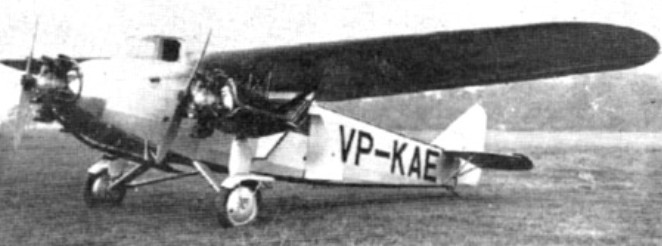
In September 1930 G-AASO was taken over by Wilson Airways Ltd. to replace their second machine VP-KAE ‘Knight of the Grail’, and although allotted the Kenya marks VP-KAH, these were never used. It flew as G-AASO on the African services until January 18, 1932, when it was damaged beyond repair in a forced landing 12 mls (19 km) from its destination while en route from Salisbury to Broken Hill.
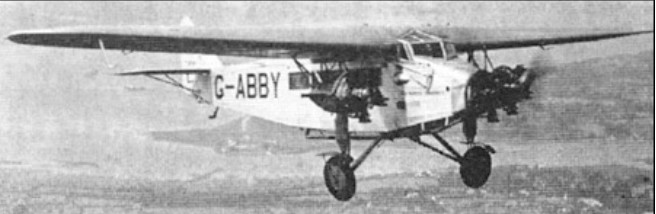
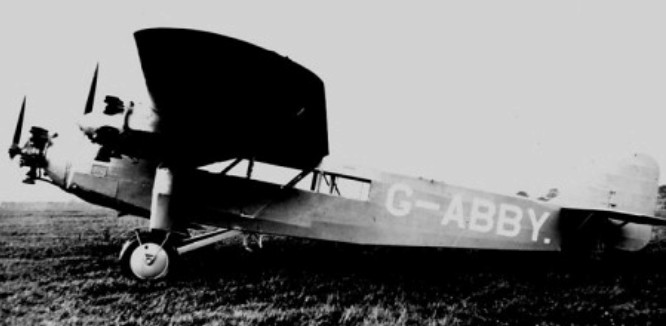
The other British Avro Five was G-ABBY, built in 1930, and taken over by Air Service Training Ltd., Ramble, as a navigational trainer at the end of 1933. Apart from a forced landing at Nuneaton on May 4, 1934, it serviced until scrapped during the war.
Avro 619 Five
Engines: 3 x Armstrong Siddeley Genet Major, 78 kW (106 hp)
Span: 47 ft 0 in (14.33 m)
Length: 35 ft 9 in (10.90 m)
Height: 9 ft 6 in (2.90 m)
Wing area: 333 sq.ft (30,95 sq.m)
Weight empty: 2,790 lb (1,266 kg)
Loaded weight: 4,420 lb (2,005 kg)
Max speed: 118 mph (190 kmh)
Cruise speed: 95 mph (153 kmh)
Climb: 750 ft (229 m)/min
Service ceiling: 15,000 ft (4,572 m)
Range: 400 mls (644 km)
Crew: 1
Passengers: 4
Avis Flugzeugwerke Uno Autowerke B.G.VI
Three-engined transport biplane, the wings of which were cantilevered outboard of struts near fuselage.
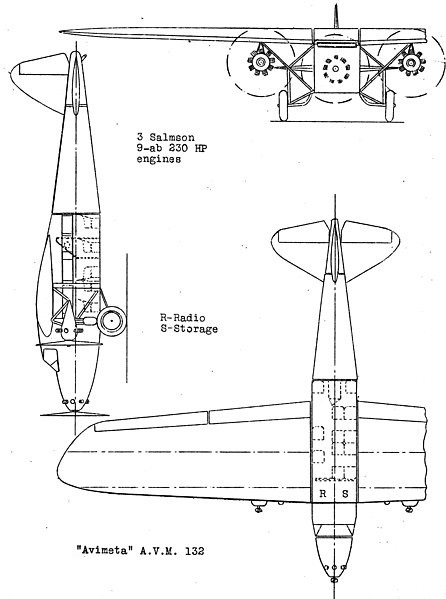
AVIMETA AVM 132
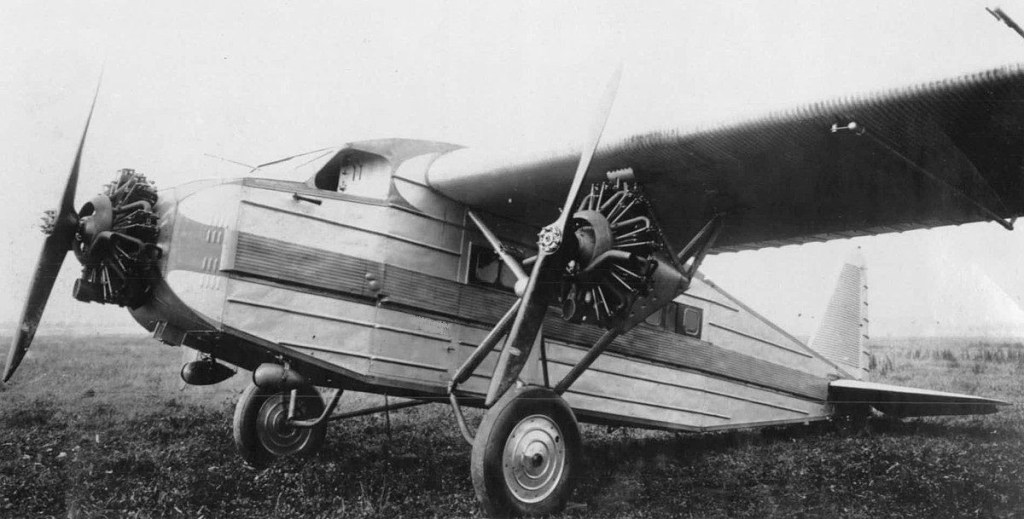
The Aviméta 132 was a three-engined monoplane transport for eight-passengers designed and built by Aviméta (Société pour la Construction d’Avions Métallique ).
The Aviméta 132 was a high-wing monoplane with a fixed conventional landing gear, powered by three uncowled 230 hp (172 kW) Salmson 9Ab radial air-cooled piston engines. Fuel tanks were built into the wings, fitted with jettison valves to empty the tanks in an emergency. The enclosed cockpit sat two crew with a cabin for eight passengers.
First flying in 1927, it was intended to build both a day and night version but only one aircraft was built and it did not enter production. It was the first French all-metal aircraft but only one aircraft was built.
Engines: 3 × Salmson 9Ab, 170 kW (230 hp) each
Wingspan: 21.8 m (71 ft 6 in)
Wing area: 752 sq.m (8,090 sq ft)
Length: 14.3 m (46 ft 11 in)
Height: 3.75 m (12 ft 4 in)
Empty weight: 2,700 kg (5,952 lb)
Gross weight: 10,850 kg (23,920 lb)
Maximum speed: 180 km/h (112 mph; 97 kn)
Cruise speed: 170 km/h (106 mph; 92 kn)
Range: 900 km (559 mi; 486 nmi)
Service ceiling: 3,750 m (12,300 ft)
Time to altitude: 2,000 m (6,600 ft) in 19 minutes
Wing loading: 68.5 kg/sq.m (14.0 lb/sq ft)
Power/mass: 0.1054 kW/kg (0.0641 hp/lb)
Crew: 2
Capacity: 8 passenger
 All Aero