A twin-fuselage tri-motor design with accommodation for 20 passengers
3 engines
Boeing-Vertol 301 / XCH-62
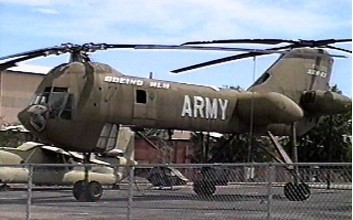
A US Army Heavy Lift Helicopter specification was approved in May 1971 for a 22 tonnes payload class helicopter.
The Boeing XCH-62 / HLH proposal was selected over the Sikorsky S-73 (not built) and the only XCH-62 built (Serial number 73-22012) was put into storage at the US Army Aviation Museum at Fort Rucker Alabama prior to completion when the program was cancelled in October 1974.
In 1983, NASA and DARPA (Defence Advanced Research Projects Agency) plans were initiated to resume the test programme but was cancelled again.
The Boeing HLH was intentionally destroyed in 2005. According to an aviation museum exec, the HLH was simply a non-flying incomplete proof-of-concept mockup. Since it never achieved flight under its own power, it was not considered as an exhibit.
Engines: 3 x Allison T701 turboshaft, 5945kW
Rotor diameter: 28.0m
Length: 28 m
Height: 11 m
Max take-off weight: 53572kg
Empty weight: 26754kg
Boeing 727 / C-22

Design work of the Boeing 727, in its distinctive tri jet configuration, had begun in early 1956 with the design being finalised in Septem¬ber 1959. Considerable savings in construction were envisaged with the fuselage upper sections being identical to the B.707/720 series. The airliner was to be independent of ground support with a Garrett¬AiResearch GTC85 auxiliary power unit for electrics, pneumatic starting and cabin airconditioning. Construc¬tion go ahead came in August 1960 and, on 3 February 1963, N7001U made the first flight, out of Renton. FAA certification of the B.727 100 followed on 20 December 1963 and the first commercial flight of the type was made by Eastern Airlines on 1 February 1964 between Philadelphia and Florida.
The wing, with leading-edge slats and the newly-invented Kruger flaps to provide high lift for takeoff from short landing strips, was the most advanced then built. The wingtip of a 727 was bent upward 9 ft before structural failure occurred in static tests. It successfully took loads in excess of 425,000 lb. Unlike the 707, the 727 has power-operated control surfaces, but tabs on the primary controls enable the pilot to take over in emergencies. The 727 has a main passenger access at the rear, via a hydraulic stairway beneath the rear fuselage, and a pressure-tight bulkhead door inside.
The 727-100 first flew on 9 February 1963, first entering service with Eastern Air Lines on 1 February 1964, with the 727-100C first entering service on 23 April 1966.
In 1963 a series of demonstration flights to 41 cities in 23 countries was carried out. Orders by the added up to 137 including six more for TWA giving then 16 in total.
In 1965 United Air Lines ordered 25 more Boeing 727’s for $110,000,000, bringing United’s 727 fleet to 65 by 1966.
Boeing built a cargo version, installing a heavier flooring, floor beams and a cargo door and the first 100C was ready in mid 1964; a convertible passenger/freight configuration and able to carry 30,000 lb (13608 kg) over a range of 1,900 miles (3058 km). The 727-100Cs are powered by three Pratt and Whitney JT8D M turbofans of 14500 lbs thrust each, are capable of a maximum speed of around 512 knots and a cruise of 461 knots while lifting a maximum take off weight of 80740 kg (178000 lbs) over a maximum range at all up weight of 4800 km (2476 nm).
A total of 582 Series -100 were built, the last delivered in October 1972.
Originally built as the to seat a maximum of 131 passengers (727 100), it was quickly followed by a stretched version, the 727 200 which had a 20 ft (6,10 m) longer fuselage than the 727 100. The 727-200 first flying on 27 July 1967 and received FAA certification on 30 November 1967. The improved and stretched fuselage 727-200 entered service with Northeast Airlines 14 December 1967.

The last of 1,260 727-200s was delivered in September 1984.

As built, the standard 727 100 had most of its fuel in three main tanks, one in each wing (Nos 1 and 2) and one in the wing center section (Main Tank No 3). At the request of Australia’s two major domestic airlines, Boeing increased the capacity with the use of a cell added to the No 2 tank. Fuel capacity remained unchanged for the 727 200 but under the ‘Advanced 727’ program to improve the breed (of which more fuel was but one of many refinements), the standard fuel capacity was increased with a larger No 2 tank. In addition, a series of optional flexible ‘modular’ fuel tanks could be installed in the forward and aft baggage compartments.

The Boeing 727 had a factory option for JATO bottles and Mexicana ordered theirs that way for high elevation airfields.

Only six examples of the 727 have ever been operated by the American armed forces. All but one of the six belonged to Detachment One of the District of Columbia Air National Guard (DC ANG) at Andrews AFB, Maryland. General Maxwell R. Thurman, head of US Southern Command in Panama, used the sixth machine for his frequent travels between Central America and Washington. Thurman’s aircraft is Boeing C-22A 84-0193, a model 727-030 (c/n 18362) which once served with the Federal Aviation Administration under the civil identity N78. It is maintained and operated by the US Air Force’s 310th Military Airlift Squadron, 61st Military Airlift Group, at Howard AFB, Panama.
Somewhat confusingly, the C-22A has a higher serial number than the four Boeing C-22Bs (model 727-035) which are operated by the DC ANG. The C-22Bs were purchased to replace six Boeing T-43A (model 737) transports formerly flown by the DC ANG. The C-22C is a ‘stretched’ 727-200 series version. The C-22Bs and C-22C are all painted in such a way that national insignia can be quickly removed.
A total of 1,832 examples had been built when production ended in 1984.
The RNZAF purchased three Boeing 727-100C (one for spares) in 1981 for long range passenger and cargo ops with No.40 Squadron.

US operator United Parcel Service’s re-engined their 727s with RR Tay 651s. This provided an 18% fuel burn improvement.
727 100
Engines: 3 x Pratt & Whitney JT8D 7 turbofans, 14,000 1bs thrust each.
Length: 133 ft 2 in.
Wingspan: 108 ft.
Ceiling: 37,400 ft.
Range: 1,900 mls.
727-100C
Engines: 3 x Pratt & Whitney JT8D-7, 14000 lb.
Length: 133 ft.
Cruise speed: 607 mph.
Max speed: 630 mph @ 22,000 ft.
Range: 2020 sm.
Pax capacity: 131.
727-200
Powerplants: 3 × Pratt & Whitney JT8D turbofans,
-15 rated at 15,500 lbf (69 kN) thrust
-17 rated at 16,000 lbf (71 kN) thrust
-17R rated at 17,400 lbf (77 kN) thrust
Wingspan: 108 ft (32.91 m)
Length: 153 ft 2 in (46.69 m)
Tail height: 34 ft (10.36 m)
Cruising speed: 570 to 605 mph (890 to 965 km/h)
Cruising altitude: 30,000 to 40,000 feet (9,100 to 12,200 m)
Range: 1,500 to 2,500 miles (2,750 to 4,020 km)
Max. number of passengers: 189
727-200
Engines: 3 x Pratt & Whitney JT8D-7 turbofan, 14,000 lb (6350 kg) st.
Wing span: 108 ft 0 in (32.92 m)
Length: 153 ft 2 in (46.69 m).
Wing area: 1,700 sq.ft (157.9 sq.m).
Gross weight: 172 000 lb (78 015 kg).
Max cruising speed: 595 mph (958 kph) at 21,600 ft (6585 m).
Typical range: 1290 miles (2,076 km).
Crew: 3.
Pax cap: 163-¬189.
727 200
Engines: 3 x Pratt & Whitney JT8D 9, 14,500 lb thrust.
Length: 153 ft. 2 in.
Height: 34 ft.
Wingspan: 108 ft.
Wing area: 1,700 sq.ft.
Wing loading: 107 lb/sq.ft.
Power loading: 3.91 lb/lb.
Operating weight: 100,840 lbs.
Useful load: 72,160 lbs.
Payload with full fuel: 17,957 lbs.
Maximum taxi weight: 173,000 lbs.
Maximum brake release weight: 172,600 lbs.
Usable fuel: 54,203 lbs.
Maximum landing weight: 150,000 lbs.
Zero fuel weight: 136,000 lbs.
Maximum rate of climb: 2,500 fpm.
One engine out rate of climb: 1,000 fpm.
One engine out climb gradient at 213 kt (Vy): 4.6 degrees.
Service ceiling: 36,000 ft.
Certificated ceiling: 42,000 ft.
One engine out ceiling: 23,000 ft.
Maximum speed: 549 kts.
Maximum cruise speed: 514 kts.
Economy cruise speed: 495 kts.
Duration to dry tanks, max cruise: 4.5 hrs.
Duration to dry tanks, econ cruise: 5.2 hrs.
Stall speed, clean: 165 kts.
Stall speed, full flaps: 100 kts.
Cabin pressurization differential: 8.6 psi.
727-225A
Engines: 3 x Pratt & Whitney JT8D-15, 14,500 lb.
Seats: 173.
727-77C
Engines: 3 x Pratt & Whitney JT8D-7A, 14000 lb.
Freight cap: 44,068 lb.

Boeing 80
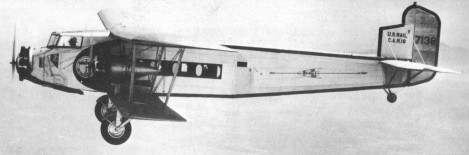
The growth of operations on Boeing Air Transport’s San Francisco-Chicago route resulted in the design and development of a purpose-designed passenger transport, the Boeing Model 80, first flown during August 1928. A large unequal-span biplane, with the lower wing of reduced chord, the Model 80 had a wing structure of wood, fabric-covered, and a fuselage and tail unit of welded steel tube, also fabric-covered. Landing gear was of fixed tailwheel type, and power was provided by three 306kW Pratt & Whitney Wasp radial engines. These were mounted in tri-motor configuration, one in the fuselage nose, and one each side of the fuselage, between the biplane wings.
The main cabin of the Model 80 accommodated 12 passengers, plus a flight stewardess. Boeing stewardesses were all registered nurses. The Model 80 provided a separate enclosed flight deck for the pilot and co-pilot/navigator. Four of these aircraft were built, entering service with Boeing Air Transport in the late summer of 1928.
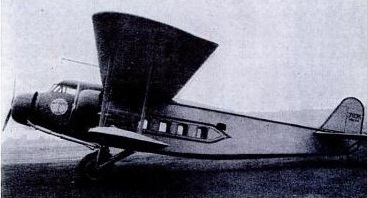
The Model 80s were followed by 10 of the improved Model 80A, this type having more powerful Pratt & Whitney Hornet engines, refinements to the wing, improved streamlining and, because of the increased power available, a cabin layout to accommodate a maximum of 18 passengers.

Some pilots insisted on an open cockpit. One Model 80 was re-designed as the Model 80B with open cockpit and raised seats.
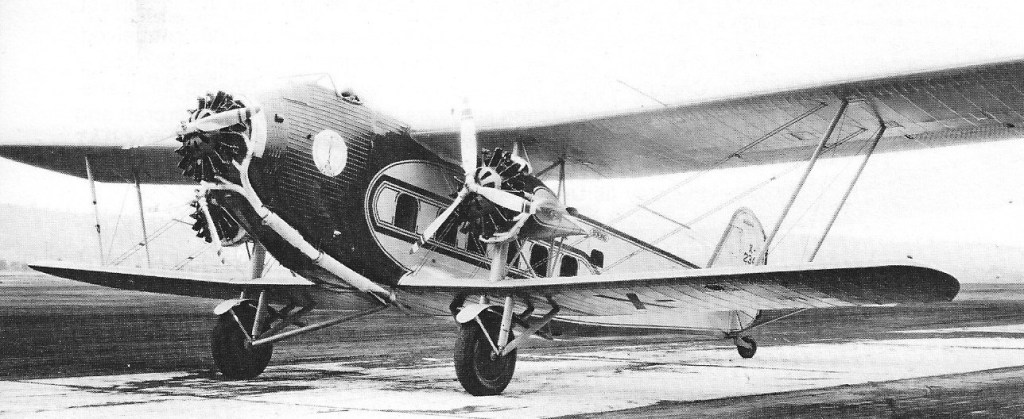
The 80B was rebuilt to 80A configuration at the insistence of the majority.
Boeing 80
Engines: 3 x Pratt & Whitney Wasp, 306 kW
Passengers: 12
Boeing 80A-1
Engines: 3 x 391kW Pratt & Whitney Hornet radial piston
Take-off weight: 7938 kg / 17500 lb
Empty weight: 4800 kg / 10582 lb
Wingspan: 24.38 m / 79 ft 12 in
Length: 17.22 m / 56 ft 6 in
Height: 4.65 m / 15 ft 3 in
Wing area: 113.34 sq.m / 1219.98 sq ft
Max. speed: 222 km/h / 138 mph
Cruise speed: 201 km/h / 125 mph
Ceiling: 4265 m / 14000 ft
Range: 740 km / 460 miles
Passengers: 18
Bloch MB.120
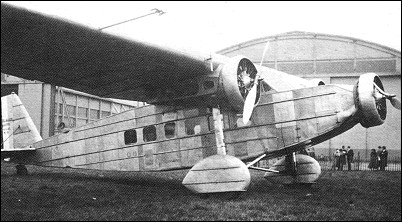
Selected by the French government from competing designs for a transport for colonial duties (passenger, mail and freight, transport and policing) in French overseas territories, the Bloch M.B.120 was a cantilever high-wing monoplane of all-metal construction. The M.B.120.01 prototype was the re-worked M.B.71 monoplane. It was put into service in 1934 on the routes of Air Afrique, a new airline established by the French government, on 11 May 1934, to link various French African territories. Ten series aircraft followed the prototype, six of them for civil use and four in Armee de I’Air service; all served in French Africa. The Air Afrique civil aircraft made scheduled flights between Algiers, Niamey, Fort Lamy, and the French Congo. Two of them connected Tananarive, Madagascar with Broken Hill, South Africa. The four military M.B.120s were joined subsequently by a fifth aircraft, formerly the civil F-APZV. One aircraft (F-ANTK, Ville de Paris) was reported to be in service as late as 1942.
Standard accommodation was for a crew of three and up to 10 passengers. More usually, however, the civil M.B.120s carried four passengers and a substantial load of mail. The general structure and layout of the three-engined M.B.120 was similar to that.of the M.B.200 twin-engined bomber.
M.B.120
Engine: 3 x Lorraine Algol 9Na radial piston engines, 224kW
Take-off weight: 6000 kg / 13228 lb
Loaded weight: 3700 kg / 8157 lb
Wingspan: 20.54 m / 67 ft 5 in
Length: 15.3 m / 50 ft 2 in
Wing area: 61 sq.m / 656.60 sq ft
Max. speed: 260 km/h / 162 mph
Cruise speed: 230 km/h / 143 mph
Ceiling: 6300 m / 20650 ft
Blackburn R.B.3A Perth

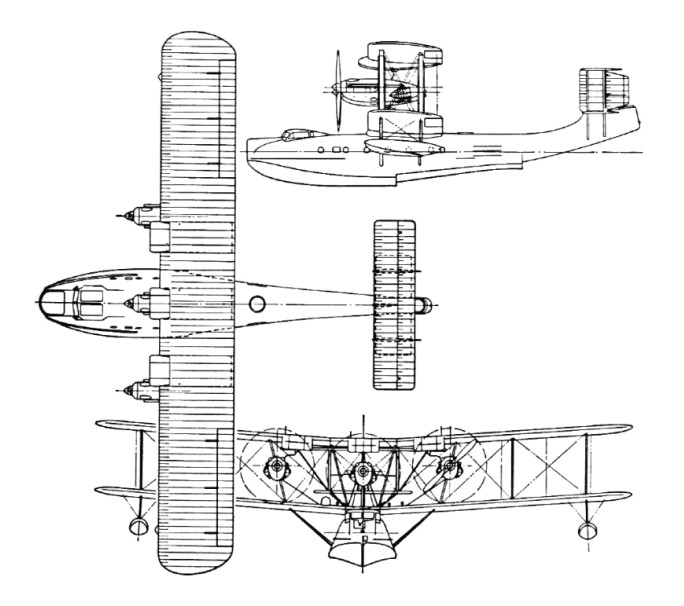
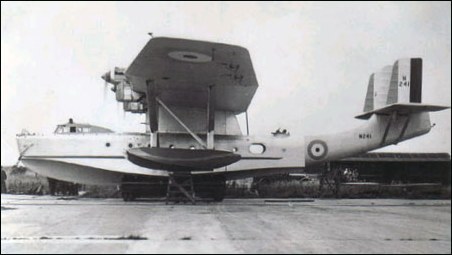
The Blackburn R.B.3A Perth development of the Iris was to replace the earlier flying-boat in service with No. 209 Squadron at Plymouth. The Perth differed from the Iris V primarily in having an, enclosed cockpit, and a hull covered with corrosion-resistant material. An improvement in armament was the installation of a 37mm gun in the bow position for anti-shipping work, but there was also an alternative rail-mounted 7.7mm machine-gun, as on the Iris.
The Perth’s service introduction came in January 1934 when the second aircraft was delivered to Plymouth. At that time the first was still under test at Felixstowe, but by 31 May 1934 all three from the first contract had been delivered. A fourth Perth had been ordered subsequently and flew in April 1934, but this was retained at the MA&EE Felixstowe for experimental work.
Problems with the tail unit required the flying-boats to be modified at Brough, keeping them out of service for several months. The first Perth was lost in heavy seas during September 1935, and two of the remaining three were eventually struck off charge in 1936. The last aircraft survived a further two years at Felixstowe.
Engine: 3 x RR Buzzard IIMS, 615kW
Take-off weight: 14740 kg / 32496 lb
Empty weight: 9500 kg / 20944 lb
Wingspan: 29.6 m / 97 ft 1 in
Length: 21.3 m / 69 ft 11 in
Height: 8.1 m / 26 ft 7 in
Wing area: 233.3 sq.m / 2511.22 sq ft
Max. speed: 213 km/h / 132 mph
Cruise speed: 175 km/h / 109 mph
Ceiling: 3500 m / 11500 ft
Range w/max.fuel: 2780 km / 1727 miles
Range w/max.payload: 1600 km / 994 miles
Crew: 6
Blackburn R.B.2 Sydney / C.B.2 Nile
1930
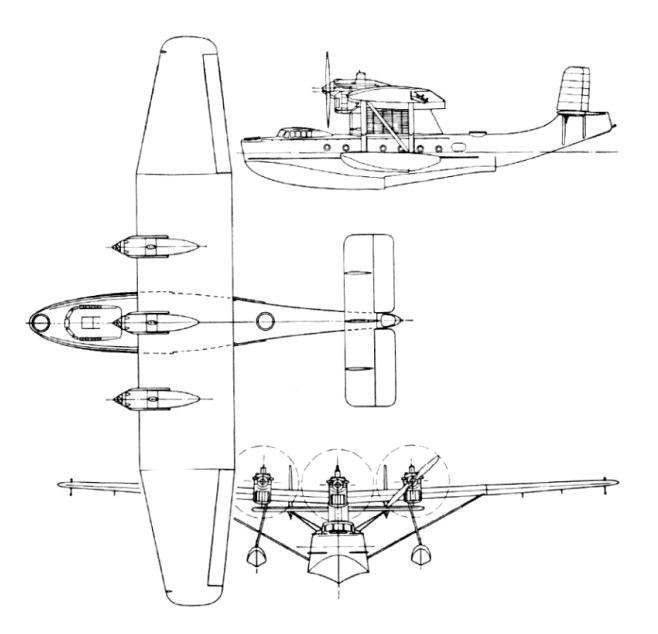
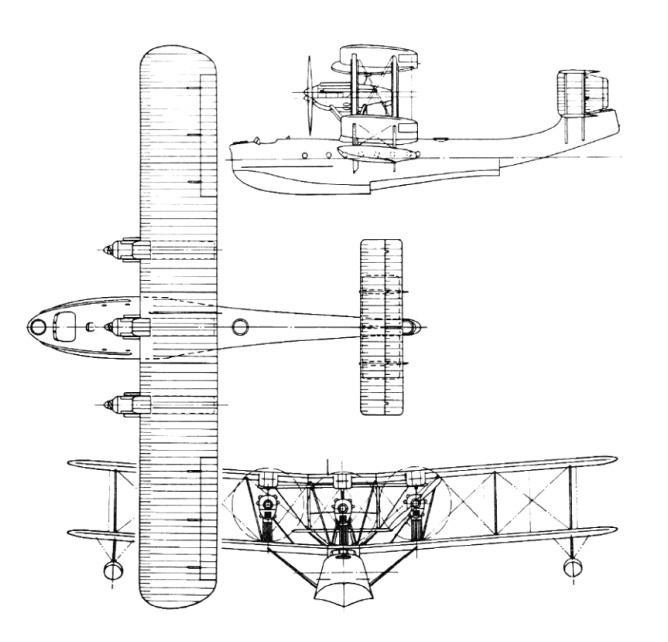
Blackburn RB.1 Iris

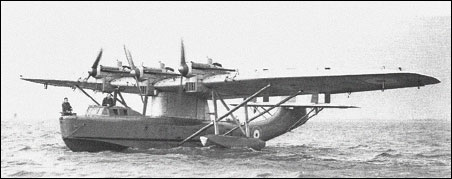
The Blackbrn Iris was designed as a long range, ocean going aircraft to augment the coastal patrol services Supermarine Southamptons. Only one squadron was equipped with Iris aircraft, first with the Mk.III which later, by modification, became the Mk.V, and ultimately with what might have been a later mark, but was designated “Perth”.
The Armament of the Iris consisted of Lewis guns in bow and midship positions with a third one at the tail end of the hull which had only a limited arc of fire. In the bow position, a one pounder gun, made by the Coventry Ordnance Works and consequently known as the Cow gun, could be mounted, and was once every year for demonstration purposes.
The five-seat Iris was a biplane flying-boat. The first of only eight built flew on 19 June 1926. The single Iris I, powered by three 484.4kW Rolls-Royce Condor III engines, was converted into the II with 503kW Condor IIIA. It was followed by four Iris III with 503kW Condor IIIB engines (entering service with the RAF in 1930); a single Mk IV (the first prototype with 596kW Armstrong Siddeley Leopard Ill, mounted as two tractors and one pusher); and three V with 615kW (825 hp) Rolls-Royce Buzzard IIMS engines. A III was also brought up to V standard and the luxury of a roof over the pilot’s positions. No heating.
Iris I
Engines: three 484.4kW Rolls-Royce Condor III
Iris II
Engines: 3 x 503kW Condor IIIA
R.B.1B “Iris” III
Engine: 3 x Rolls-Royce “Condor” IIIB, 503kW, 675 hp
Take-Off Weight: 13376 kg / 29489 lb
Empty Weight: 8640 kg / 19048 lb
Wingspan: 29.57 m / 97 ft 0 in
Length: 20.54 m / 67 ft 5 in
Height: 7.77 m / 25 ft 6 in
Wing Area: 207.07 sq.m / 2228.88 sq ft
Max. Speed: 190 km/h / 118 mph
Cruise Speed: 156 km/h / 97 mph
Ceiling: 3230 m / 10600 ft
Range W/Max.Fuel: 1287 km / 800 miles
Crew: 5
Armament: 3 x 7.7mm machine-guns, 900kg bombs
Iris V
Engines: 3 x Rolls-Royce Buzzard, 825 hp.
Bell 216
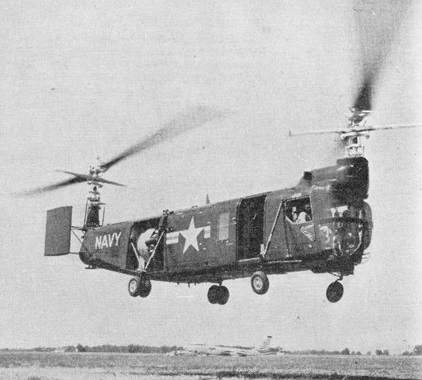
From the tandem rotor HSL-1 Bell developed the model 216 for commercial use with three Lycoming T-53 free shaft gas turbines.
Bellanca 28-92
A trimotor Bendix Trophy winner.
 All Aero