The latest development in the series was the Couzinet 103 with three 135 hp (101 kW) Salmson 9Adr radial engines which could carry two crew (or one pilot and passenger) and four passengers in a separate cabin.
3 engines
Couzinet 101
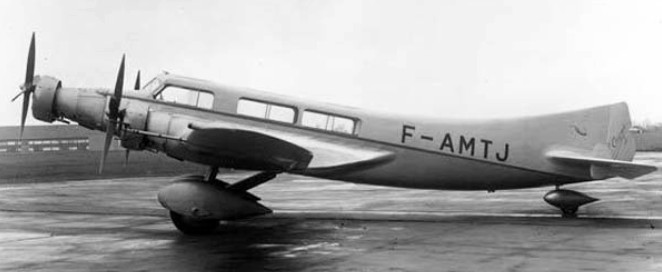
Up until 1937, the year when his last prototype the Air Couzinet 101 flew, René Couzinet very seldom deviated from his original concepts, those on which his reputation was built, and which were adopted by other manufacturers such as Germany’s Claude Dornier.
Couzinet 100
A 3-seat touring aircraft with similar layout to the Arc en Ciel was produced as the Couzinet 100, powered by three 85 hp (63 kW) Pobjoy R radial engines. Bought by the Spanish Republicans in 1936, during the Spanish Civil War the Couzinet 101 became a transport in the Spanish Republican Air Force. It disappeared leaving no trace.
Couzinet 70 / 71 Arc-en-Ciel
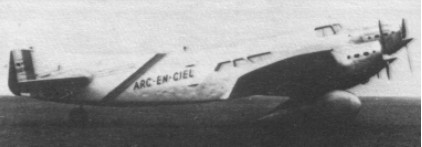
Developed from the Couzinet 30, the Couzinet 70 was also called Arc-en-Ciel and intended for Aeropostale’s transatlantic mail service to South America. The number 3 model designated the Couzinet 70 by the company was completed at the beginning of 1932.
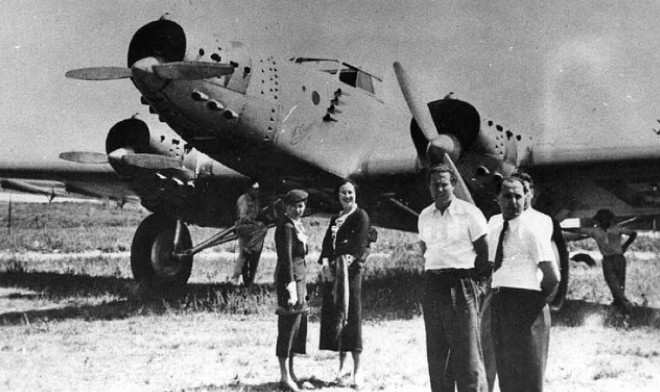
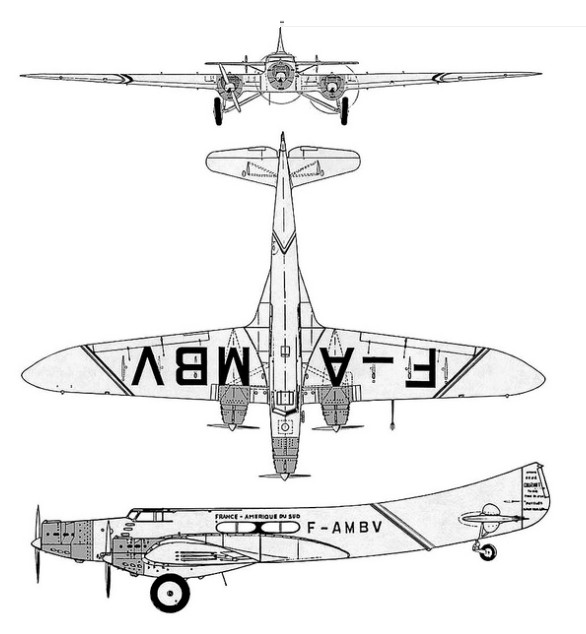
First flown on 11 February 1932, the aircraft was a low-wing monoplane with a fixed tailwheel landing gear. The aircraft was powered by three Hispano-Suiza 12Nb inline piston engines. The two wing mounted engines could be accessed in flight through tunnels in the wing.
Jean Mermoz the famed French pilot would fly it to Buenos Aires a year later with its inventor at his side. Upon their return in France, they would be welcomed and greeted as heroes. At the age of 29, René Couzinet was at the apogee of his glory.
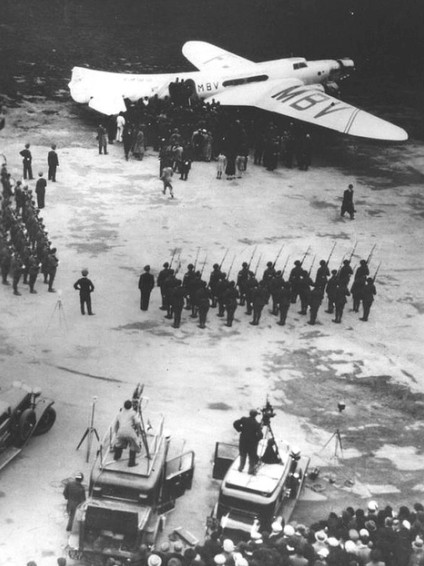
After route-proving flight from Paris to Argentina by Jean Mermoz in January 1933 it was extensively modified as Couzinet 71 and entered regular service in May 1934.
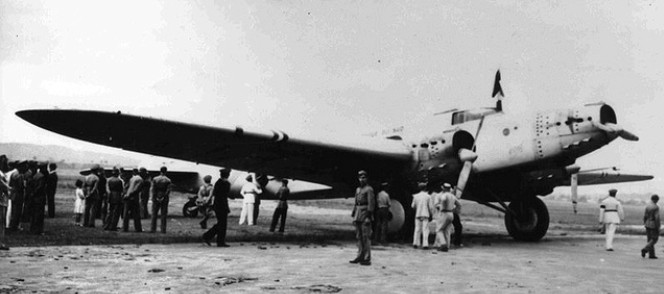
Sold to Air France before being retired in 1937, the Couzinet 70 became model 71 after miscellaneous modifications, and it is the best known of all the airplanes built by Couzinet.
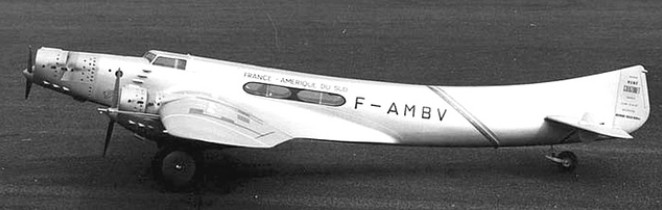
70 / 71
Engines: 3 × Hispano-Suiza 12Nb, 485 kW (650 hp)
Wingspan: 30 m (98 ft 5 in)
Wing area: 90 sq.m (968.78 sq.ft)
Length: 16.15 m (52 ft 11.25 in)
Height: 4 m (13 ft 1½ in)
Empty weight: 7310 kg (16,116 lb)
Gross weight: 16,790 kg (37,015 lb)
Maximum speed: 280 km/h (174 mph)
Range: 6800 km (4225 miles)
Crew: Four
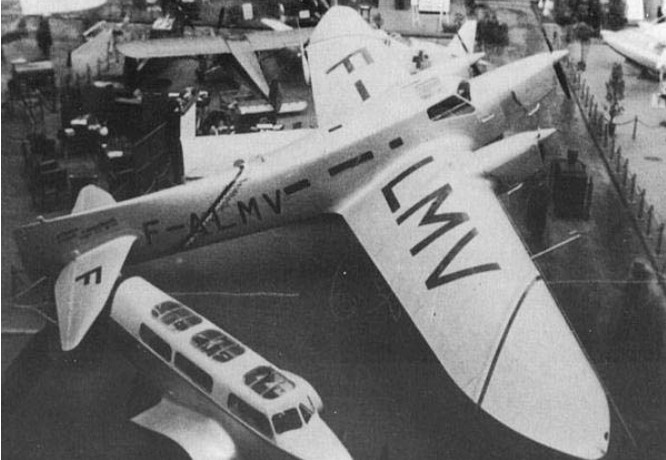
Couzinet 40
A high performance tri-motor built in 1934 but which had a short life.
Couzinet 33 Biarritz
The Biarritz (Couzinet 33), the airplane that Baron Charles de Verneilh flew to New Caledonia in 1932.
Couzinet 10 Arc-en-Ciel
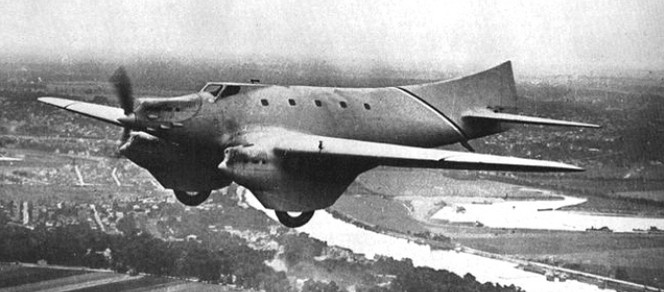
At the age of 23 René Couzinet built his first airplane, the Couzinet 10, the first of the three Arc-en-Ciel built before the Second World War. The Couzinet 10, which René completed while serving as an Officer for the 34th Aviation Regiment based at Le Bourget possessed some revolutionary technical innovations for its time, such as excess reserve power, or the accessibility of the engines in flight. Those innovations however were not sufficient to convince the official service of the Air Ministry, and the certification of the airplane would be denied for a long time.
When the Arc-en-Ciel number 1 came out of the factory in 1928, the news media issued the most complimentary, and perhaps even “over done” reports. The journalists constantly bragged about the merits of this three engines, cantilever low wing monoplane, weighing 16 tons, and with a wingspan over 27 meters. The Couzinet 10 was equipped with several fuel tanks having a total capacity of over 6,000 liters and providing a range of 10,000 kilometers. Finally, this revolutionary airplane not only made the biplanes and other types antic machines, but it had a wing loading of 100 kilos per square meter whereas the official norm for the period never exceeded 50 kilos!
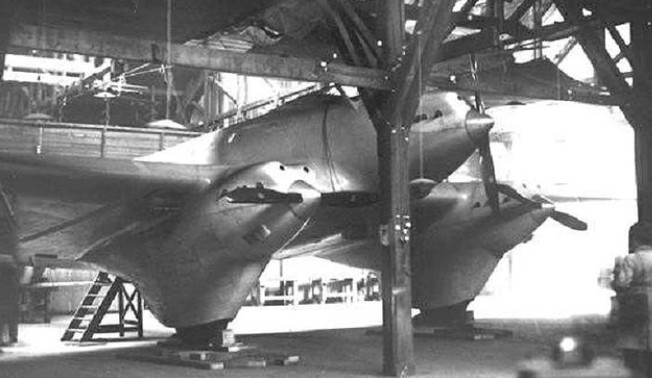
The Arc-en-Ciel number 1 crashed at the Orly airdrome on the 8th of August 1927. The crash resulted in the death of the pilot Maurice Drouhin and his mechanic. When about ready to leave the assembly line, the number 2 model ended up in ashes on the evening of February 17 1930 after a fire consumed the Meudon factory that industrialist Emile-Louis Letord had put at the disposition of Couzinet.
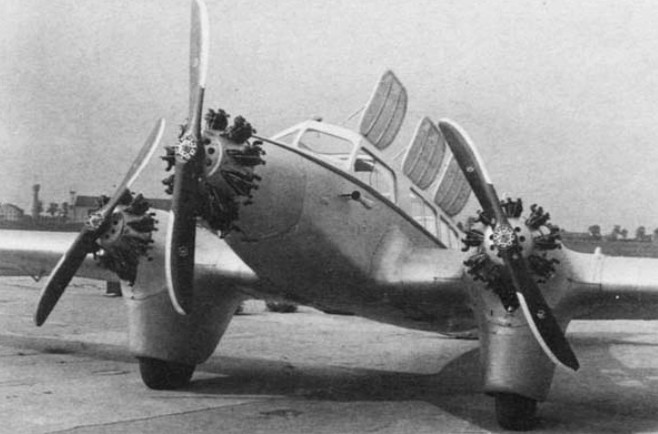
The number 3 model designated the Couzinet 70 by the company was completed at the beginning of 1932.
Contender 606
A pressurized business and commuter rear-winged turbojet aircraft, triple-engined Contender 606 for up to 33 passengers in a wide-body commuter layout.
Contender 303
A pressurized business and commuter rear-winged turbojet aircraft, as triple-engined 11 to 19 passenger Contender 303
Cierva Bomber
In 1919 Cierva produced a large three-engine bomber that, piloted by Captain Julio Rios Argiieso, crashed in its initial flight when the aircraft stalled. Pondering the crash, Cierva’s brilliant insight was to see the wing differently – he reasoned that stall could be effectively eliminated if the wing itself moved independently of the aircraft. The rotor, a moving, stall-proof wing, was placed on top of a fuselage, and he patented the name” Autogiro”.
 All Aero