de Havilland Australia DHA-3 Drover

DHA-3 Mk.3A

The de Havilland Aircraft DHA-3 Drover was produced to replace the de Havilland DH-84 Dragon then in widespread use in Australia, many by the Royal Flying Doctor Service. The prototype (c/n 5001) first flew on 23 January 1948 under the control of test pilot Brian Walker.

The Drover was based broadly on the D.H.104 Dove, but had three 145 hp / 108kW Gipsy Major 10 Mk 2 engines and tail-wheel landing gear. Built at de Havilland’s Bankstown works, versions were offered with variable- and fixed-pitch propellers as the Drover 1 and Drover 1F respectively; the Drover 2 had double-slotted flaps.
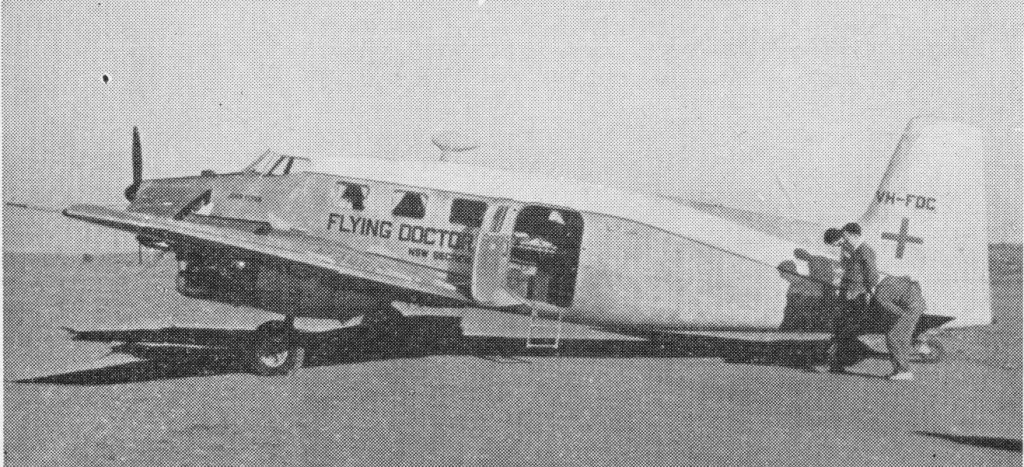
DHA-3 Drover I

Twenty Drovers were built at de Havilland Aircraft Pty Ltd’s Bankstown plant between 1948 and September 1953. VH-DHM c/n 5020, is the 20th and last production model.

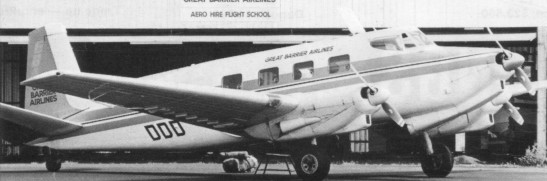
Conversion from Mk.2 status to Mk3A involved replacing the three 150hp Gipsy Majors with 180hp Lycomings. Many of the earlier marks were re-engined as Mk.3 Drovers. The DHA-3 Drover 3 flew for the first time in May 1960. The DHA-3 Drover Mk.3A is a STOL aircraft. Lift off is at 62 knots and V2, the one engine out safety speed of 73 knots at maximum gross weight, is soon reached. Flaps are raised by a hand pump to the pilot’s right, necessitating a change of hands on the controls, and the Drover accelerates to an en route climb speed of 85 knots. The approach is carried out at 75 knots, reducing to 65 over the fence. Nine passenger seat positions are available.

Deliveries were made to Qantas, TAA, The Department of Health, the Department of Civil Aviation and a number of operators in New Guinea, Fiji and the islands. Best known operator was the Royal Flying Doctor Service. In Royal Flying Doctor Service the Drover carried two medical staff and two stretcher patients; all six aircraft were converted in 1960 to have Avco Lycoming O-360 engines under the revised designation Drover 3.
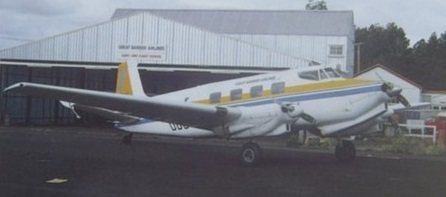
DHA-3 Drover 3 ZK-DDD

Gallery

Mk.1
Engines: 3 x Gypsy Major 10 Mk.2, 145 hp.
Wing span: 57 ft 6 in.

Mk.2
Engines: 3 x Gypsy Major, 150 hp.
Wing span: 57 ft 6 in.

Mk.3
Engines: 3 x Lycoming O-360-A1A, 180 hp / 134kW
Prop: 2 blade.
Wing span: 57 ft (17.37m).
Length: 36 ft 6 in (12 m).
Height 3.28 metres
Wing area: 325 sq.ft (30.19 sq.m).
Gross weight: 6,500 lb (2948 kg).
Empty weight: 1860 kg / 4101 lb
Maximum speed 254 km/h
Max cruising speed: 140 mph (225 kph) at 5,000 ft (1,525 m).
Max range: 900 miles (1450 km)
Ceiling: 6095 m / 20000 ft
Crew: 1 / 2
Accommodation: 2 stretchers with 2 medical attendants
Passengers: 9
Freight: 1,500 lb (680 kg)
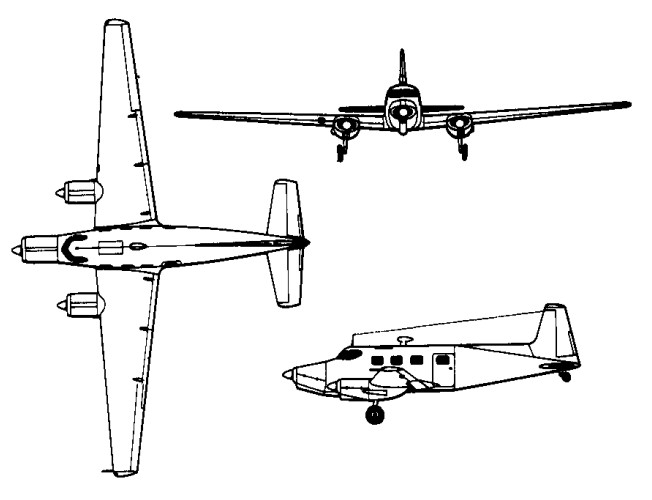
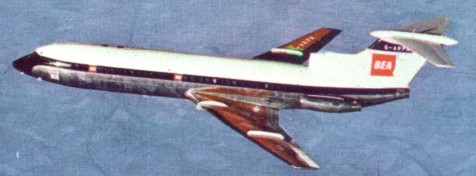
de Havilland DH 121 Trident / Hawker-Siddeley Trident

Trident

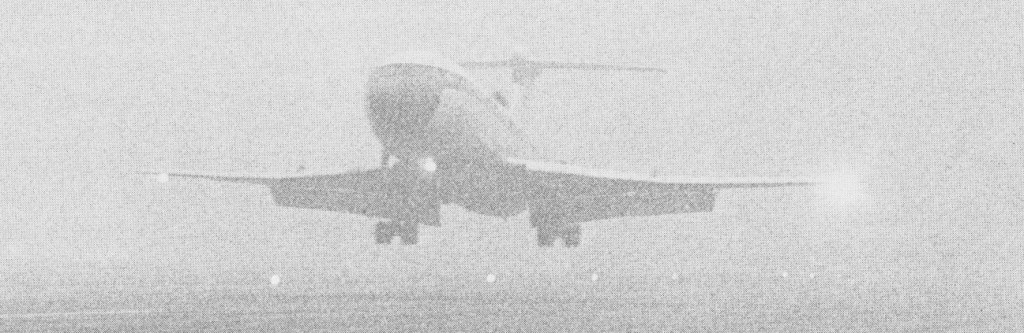
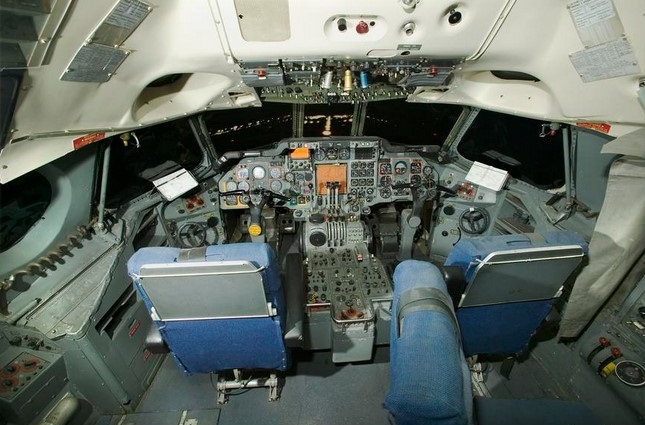
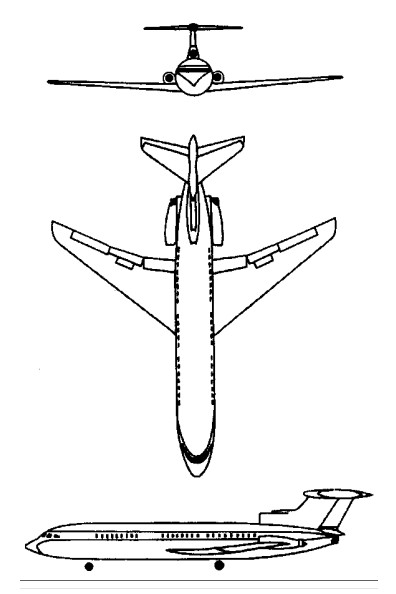
The British Trident began life in 1958 as the de Havilland 121. Designed to cruise at over 600 mph, this aircraft has a T-tail, triplex powered controls (three separate power units driving each control surface), four small wheels on each main landing-gear leg, and an offset sideways-retracting nose gear. The Trident pioneered truly blind autolanding, and was the first airliner in the world to be certificated for automatic landing in passenger service, a year after beginning scheduled flights with BEA in April 1964. The advanced flight control system, together with the Smiths autopilot, enables the aircraft to lock onto ground radio beams and, using auto-throttle to control airspeed, descend along the glidepath to touchdown.

The world’s first fully automatic landing by a passenger-carrying jet was made in 1965 by a BEA Trident at London’s Heathrow Airport in daylight.

The first flew on January 9, 1962. It has been produced in four models. The IE featured accommodations for a maximum of 115 passengers and was powered by 11,400-lb. s.t. turbofans.
The 2E was the long range version with more fuel, operating non stop between London and the Middle East. The 2F featured increased fuel capacity and takeoff weight and was fitted with 11,960-lb. s.t. turbofans. The 3B was a high capacity short-haul transport with a lengthened fuselage and the addition of a 5,250-lb. s.t. turbojet in the tail for better takeoff performance. The Super 3B was an upgraded version of the 3B.

Trident 3B

117 Tridents, including over 30 of the stretched long-range 3B, were sold.

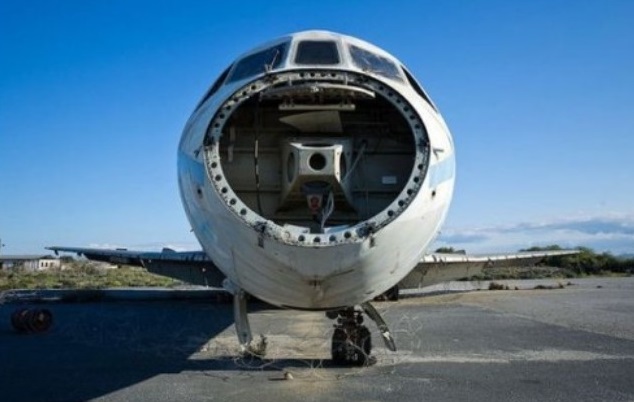
Hawker Siddeley Trident, Nicosa Airport, Cyprus

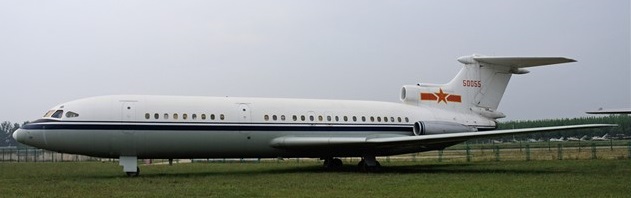
Over a dozen of Hawker Siddeley HS.121 Tridents were used by the Peoples Republic Air Force.

Gallery

De Havilland DH 121 Trident
Length: 114.829 ft / 35.0 m
Height : 26.903 ft / 8.2 m
Wingspan : 89.895 ft / 27.4 m
Wing area : 1358.417 sq.ft / 126.2 sq.m
Max take off weight : 115030.4 lb / 52168.0 kg
Weight empty : 67473.0 lb / 30600.0 kg
Max. payload weight : 20316.9 lb / 9214.0 kg
Max. weight carried : 47557.4 lb / 21568.0 kg
Max. speed : 529 kt / 980 km/h
Cruising altitude : 29528 ft / 9000 m
Wing load : 84.67 lb/sq.ft / 413.0 kg/sq.m
Maximum range : 2484 nm / 4600 km
Range : 2484 nm / 4600 km
Range (max. weight) : 1577 nm / 2920 km
Engine : 3 x Rolls Royce Spey RB 1631, 43831 N
Crew : 3 + 77-103 pax

Trident IE
Engines: 3 x 11,400-lb. s.t. turbofans.
Accommodation: 115

Trident 2E
Engines: 4 x Rolls-Royce Spey RB.163-25 Mk 512-5W turbo-fans, 53.2kN / 11,930 lb. (5,410 kg.)
Max take-off weight: 65318 kg / 144002 lb
Empty weight: 33203 kg / 73200 lb
Wingspan: 29.87 m / 97 ft 12 in
Length: 34.98 m / 114 ft 9 in
Height: 8.23 m / 27 ft 0 in
Wing area: 135.26 sq.m / 1455.93 sq ft
Cruise speed: 974 km/h / 605 mph
Ceiling: 9100 m / 29850 ft
Range: 3965 km / 2464 miles
Crew: 3
Passengers: 140

Trident 2F
Engines: 3 x 11,960-lb. s.t. turbofans.

Trident 3B
Engines three 11,960-lb. s.t. turbofans and one 5,250-lb. s.t Rolls-Royce Spey turbojet.
Wing span: 98 ft 0 in (29.87 m).
Length: 131 ft 2 in (39.98 m).
Height: 28 ft 3 in (8.61 m).
Max TO wt: 150,000 lb (68,040 kg)
Empty wt. 81,778 lb
Fuel capacity 6,750 imp Gal.
Max level speed: 605 mph (972 kph).
Cruise speed 533 mph.
Stall 129 mph.
Range 1,785 miles.
Takeoff distance (35′) 8,900 ft.
Seats 97-180.

de Havilland DH 66 Hercules

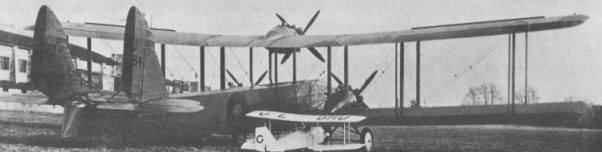
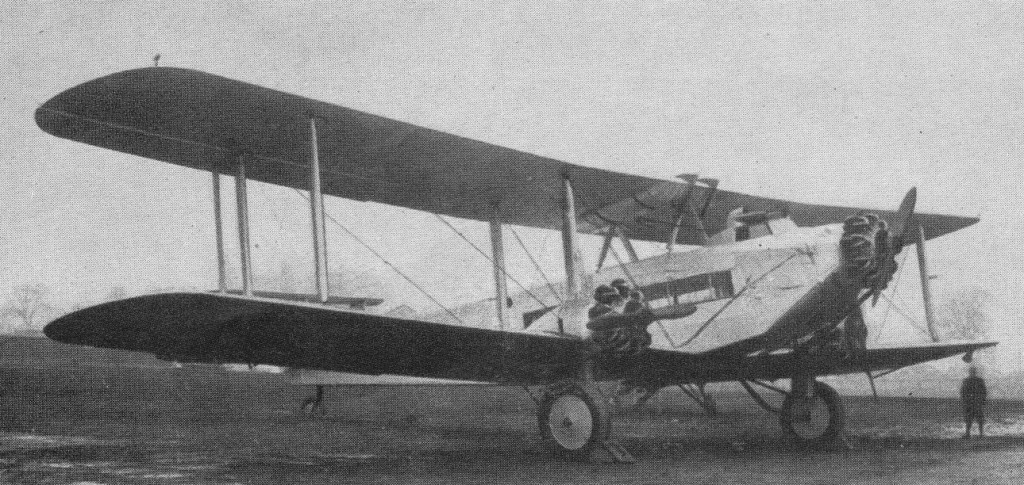
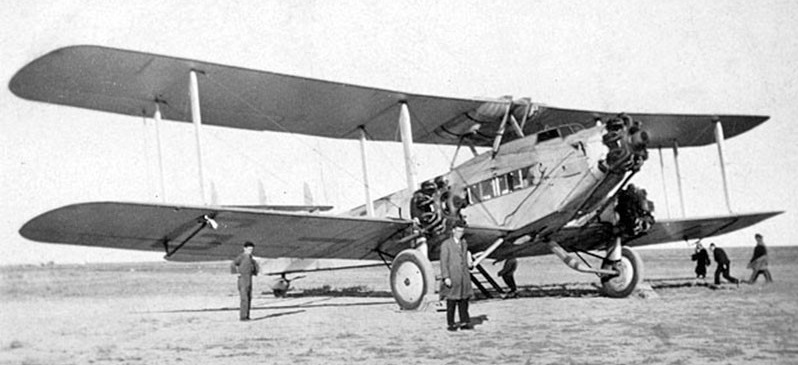
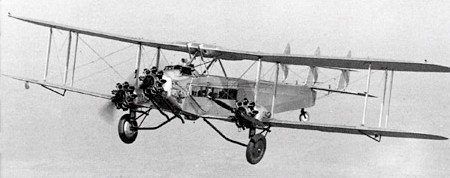
The need of a replacement for the D.H.10s used on the RAF’s air-mail service between Cairo and Baghdad, coupled with an agreement reached in 1925 for Imperial Airways to take over the service, led to a requirement being issued which was met by the de Havilland D.H.66 Hercules. A three-engined biplane with a 4.39cu.m baggage compartment, space for seven passengers and 13.17cu.m of mail and a three-man crew.

The prototype flew on 30 September 1926 following an order for five aircraft from Imperial Airways. The prototype carried out acceptance flights, took part in some crew training and was delivered to Cairo by mid-December. An inaugural flight between Croydon and India left the UK on 27 December and arrived in Delhi on 8 January 1927.

West Australian Airways DH.66 in UK

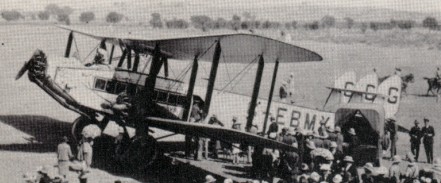
The fifth aircraft was delivered to Cairo in March 1927. The performance of these aircraft impressed West Australia Airways, then using D.H.50s. Four examples of the Hercules were ordered, the first flying in March 1929, and the type entered service with WAA on the Perth-Adelaide route on 2 June. By then Imperial had ordered a sixth aircraft and its seventh and final aircraft followed in February 1930.

Passengers board West Australian Airways DH.66 Hercules G-AUJQ at Forrest, Australia

Imperial’s sixth Hercules had an enclosed pilot’s cabin, a modification which later became standard on the remaining aircraft. The airline’s need for these last two Hercules followed the loss of three in crashes between September 1929 and April 1931, but only the first caused fatalities. Aircraft shortage led to the purchase by Imperial of two WAA Hercules in 1930-1. One of these crashed in Southern Rhodesia in November 1935 and Imperial eventually withdrew its last aircraft from service in December 1935, having sold three to the South African Air Force. Their eventual history is not known, but the longest surviving Hercules was probably one of the two former WAA aircraft, being used in New Guinea between Lae and Wau, and destroyed by enemy action in 1942.

Gallery

Engine: 3 x Bristol Jupiter VI radial piston engines, 313kW, 420 hp
Take-off weight: 7076 kg / 15600 lb
Empty weight: 4110 kg / 9061 lb
Wingspan: 24.23 m / 79 ft 6 in
Length: 16.92 m / 55 ft 6 in
Height: 5.56 m / 18 ft 3 in
Wing area: 143.72 sq.m / 1546.99 sq ft
Max. speed: 206 km/h / 128 mph
Cruise speed: 177 km/h / 110 mph
Ceiling:3960 m / 13000 ft
Range: 845 km / 525 miles
Pax cap: 7

Dassault Falcon 900 / 8X

Falcon 900B

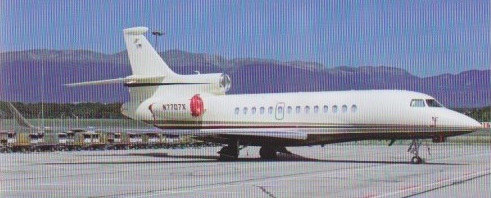
The Dassault Falcon 900 tri-jet was announced in May 1983, initially as the Mystere-Falcon 900, to compete with the Challenger and Gulfstream long-range corporate jets.
Roll-out of the prototype took place in May 1984 and the first (F-WIDE) was first flown on 21 September 1984, from Bordeaux-Merignac.
With a similar configuration to the smaller Falcon 50, the 900 has a wider cabin which can seat up to 19 passengers (three abreast) over transcontinental ranges. The three engines are 4,500 lb st (20 kN) Garrett TFE731-5AR-1C turbofans which give a cruising speed of 500 kts; (927 km/h) at 27,000 ft (8 230 m).
To demonstrate its even more improved long range capability, in 1985, Dassault flew a prototype of the Falcon 900 non-stop from Paris to Little Rock, Arkansas.
DGAC and FAA certification followed in March 1986 and the first customer delivery made in December 1986.
A number of governments have bought Falcon 900s for VIP use including France, Nigeria, Malaysia, Spain and Australia. In September 1987 the Japanese Maritime Safety Agency ordered two specially-adapted long-range maritime surveillance versions of the Falcon 900 fitted with an operations control station, special communications equipment, observation hatches and sonobuoy, marker and flare dropping chutes. The aircraft entered service in September 1989.
Eighty-three had been delivered by the beginning of 1990, all but two for export.

Falcon 900B


In 1991, the Falcon 900B became the standard production model, with an increase in power and range. The model B was upgraded to the model C in 2000, and the Falcon 900EX in 2004. The primary changes offered more sophisticated avionics.

Falcon 900 YK-ASC

The Dassault Archange electronic reconnaissance aircraft for the French Aerospace Forces has taken to the skies for the first time. The aircraft is being developed jointly by Dassault Aviation, the developer and manufacturer, and Thales France, the company responsible for the supply of electronic systems.
The basis for the future electronic reconnaissance aircraft is the Falcon 8X civilian aircraft, which made its maiden flight on July 25, 2025 from Bordeaux-Mérignac Airport.

Dassault Aviation Falcon 8X ‘ARCHANGE’.

The aircraft is to fill the gap created by the decommissioning of the C160 Gabriel aircraft, which were used for such missions as part of the 1/54 Dunkerque squadron and were withdrawn from service in 2022.
The delivery of the Archange aircraft is expected to take place between 2026 and 2028.

Gallery

Falcon 900
Engines: 3 x Garrett TFE731-5AR turbofans, 2041kg / 4500 lb each
Wingspan: 19.33 m / 63 ft 5 in
Length: 20.21 m / 66 ft 4 in
Height: 7.55 m / 24 ft 9 in
Wing area: 49.0 sq.m / 527.43 sq ft
Max take-off weight: 20640 kg / 45504 lb
Empty weight: 10240 kg / 22575 lb
Empty wt equipped: 22,575 lbs
Cruise speed: 927 km/h / 576 mph
Economical cruise: M0.75
Ceiling: 15500 m / 50850 ft
Range: 7840 km / 4872 miles
Range, max payload: 3460nm
Crew: 2.
Capacity: max 18 pax.

900B
Engines: 3 x 4750 lb Garrett TFE731-5B.

Falcon 900 C
Engine: 3 x AlliedSignal TFE 731 5AR, 19620 N / 2000 kp
Length: 66.273 ft / 20.2 m
Height: 24.934 ft / 7.6 m
Wingspan: 63.32 ft / 19.3 m
Wing area: 527.436 sq.ft / 49.0 sq.m
Max take off weight: 45511.2 lb / 20640.0 kg
Weight empty: 22424.9 lb / 10170.0 kg
Max. weight carried: 23086.4 lb / 10470.0 kg
Max. speed: 491 kts / 910 km/h
Landing speed: 79 kts / 147 km/h
Cruising speed: 448 kts / 830 km/h
Initial climb rate: 5905.51 ft/min / 30.0 m/s
Service ceiling: 51017 ft / 15550 m
Wing load: 86.31 lb/sq.ft / 421.0 kg/sq.m
Range: 3780 nm / 7000 km
Crew: 2
Payload: 19pax

Falcon 900EX
Engines: 3 x 5,000-lb. Allied Signal TFE731-60 turbofans
Gross weight: 48,300 lb
Empty weight: 23,875 lb
Max cruise: Mach 0.80.
Range: 3,840-4,500 nm.
Ceiling: 51,000 ft
Seats: 8-15.

Dassault Falcon 50

Falcon 50EX

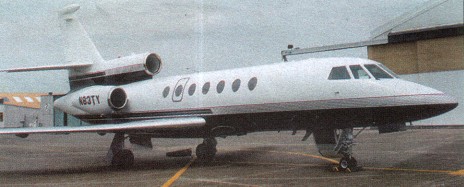
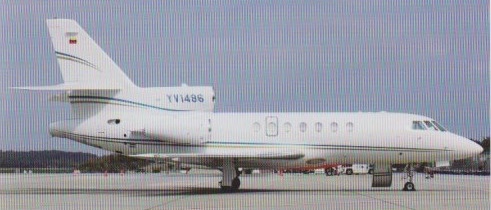
Development of the new Falcon 50 began in May 1974 with some components modelled after those of the earlier Falcon 20, including the front and centre fuselage sections. The Falcon 50 makes use of double-slotted trailing-edge flaps advanced high-lift devices. Powered by three Garrett AiResearch TFE 731 3 turbofan engines, each flat-rated at 3,700 lbs. s.t. (1680 kgp) for takeoff. Two are mounted separately in pods on each side of the rear fuselage; the third is located in the tailcone with its intake just forward of the base of the vertical stabilizer. In order to make room for this third engine, the fuselage was lengthened and the fin was enlarged over that of the Falcon 20.

Dassault Falcon 50 Article

Dassault Breguet flew the prototype (F WAMD) on 7 November 1976 and, with fully developed supercritical wing, on 6 May 1977. The second prototype made its first flight in February 1978. The airplane’s gross weight was increased from 37,480 to 38,800 pounds, including an additional 400 pounds of fuel; and the range went from 3,040 to 3,500 nm at Mach 0.73.
The French (27 February 1979) and U.S. Governments certificated the Dassault Breguet Falcon 50 three engine business jet in 1979. The first production Falcon 50 flew on 7 March 1979.
The three-engine Falcon 50 was designed for long range jet transport (originally 3,500 nm), and Dassault continued to refine that theme.

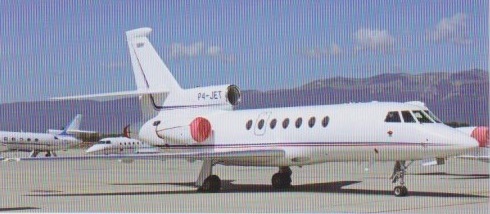
Dassault Falcon 50EX P4-JET

In 1995 Dassault announced the longer range Falcon 50EX featuring TFE73140 engines which added another 400 nm to the airliner’s range. The first models came off the production line in 1996.
The Falcon 50EX has more fuel efficient engines and greater range as well as a full EFIS cockpit display.

Falcon 50 YV1496

Falcon 50
Engines: 3 x Garrett TFE 731-3, 3700 lbs thrust.
Seats: 12/14.
Length: 60.8 ft. / 18.52 m
Height: 22.8 ft. / 6.97 m
Wingspan: 61.8 ft.
Wing area: 504 sq.ft. / 46.8 sq.m
Wing aspect ratio: 7.6.
Maximum ramp weight: 38,800 lbs.
Maximum takeoff weight: 38,800 lbs.
Standard empty weight: 20,240 lbs.
Maximum useful load: 18,560 lbs.
Zero-fuel weight: 24,225 lbs.
Maximum landing weight: 35,715 lbs.
Wing loading: 77 lbs/sq.ft.
Power loading: 3.5 lbs/lb.
Maximum usable fuel: 15,520 lbs.
Best rate of climb: 3526 fpm.
Certificated ceiling: 45,000 ft.
Max pressurisation differential: 8.8 psi.
8000 ft cabin alt @: 45,000 ft.
Maximum engine out rate of climb: 2125 fpm @ 210 kts.
Engine out climb gradient: 610 ft/nm.
Engine out ceiling: 25,200 ft.
Maximum speed: 482 kts.
Normal cruise @ 39,000ft: 447 kts.
Fuel flow @ normal cruise: 1856 pph.
Stalling speed clean: 128 kts.
Stalling speed gear/flaps down: 95 kts.
Turbulent-air penetration speed: 280 kts.
Crew : 2
Payload : 10 Pax

Falcon 50EX
Engines: 3 x Allied Signal TFE73140 turbofans, 3,700-lb.
Gross weight: 39,700 lb
Empty weight: 21,270 lb
Max cruise: 475 kts.
Ceiling: 45,000 ft
Takeoff run: 5,415 ft
Landing roll: 3,280 ft
Seats: 12-19.

Falcon 50MSA

Dassault MD.550 Mirage I

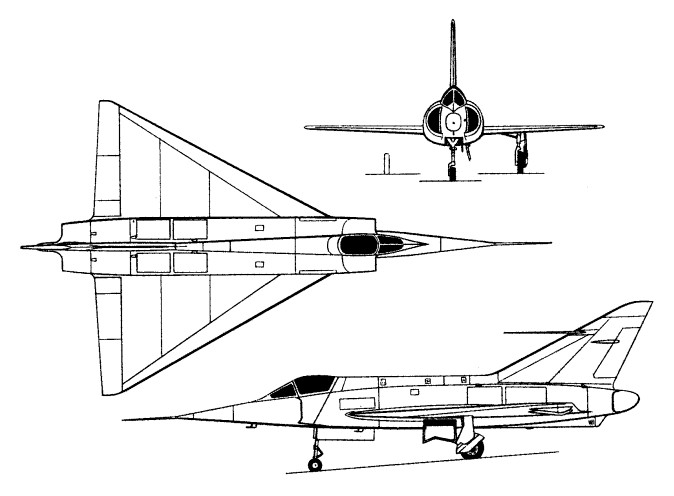
The MD 550 was designed to meet the requirements of a 1954 specification calling for a small all-weather interceptor fighter capable of attaining an altitude of 18,000m within six minutes and sustaining a speed in excess of M=1.0 in level flight. Initially known as the Mystere-Delta, it was competing with the SE.212 Durandal and the SO.9000 Trident. To attend the Armée de L’Air requirements, the Marcel Dassault company presented the project MD.550, a delta wing configuration, with a 5% chord (ratio of airfoil thickness to length) and 60 degree sweep. A tailless delta layout, the MD 550 was powered by two MD 30R (Armstrong Siddeley) Viper turbojets each rated at 980kg with afterburning, and first flew on 25 June 1955.

With the original delta vertical tail replaced by swept back surfaces and a 1500kg thrust SEPR 66 bi-fuel auxiliary rocket motor installed, the MD 550 was renamed Mirage I, and, on 17 December 1956, attained M=1.3 in level flight without rocket power and M=1.6 with the rocket lit.

Intended armament was a single Matra or Nord AAM carried externally. However, it was concluded that the Mirage I was too small to carry an effective military load, and a slightly enlarged version, the Mirage II with a pair of Turbomeca Gabizo turbojets, was proposed. This proposal was eventually discarded in favour of the Mirage III.

Engine: 2 x M.D. 30R (Armstrong Siddeley) Viper turbojets, 980kg and 1 x 1500kg thrust SEPR 66 rocket motor
Max take-off weight: 5070 kg / 11177 lb
Empty weight: 3330 kg / 7341 lb
Wingspan: 7.30 m / 23 ft 11 in
Length: 11.10 m / 36 ft 5 in
Wing area: 27.10 sq.m / 291.70 sq ft
Max. speed: 1700 km/h / 1056 mph