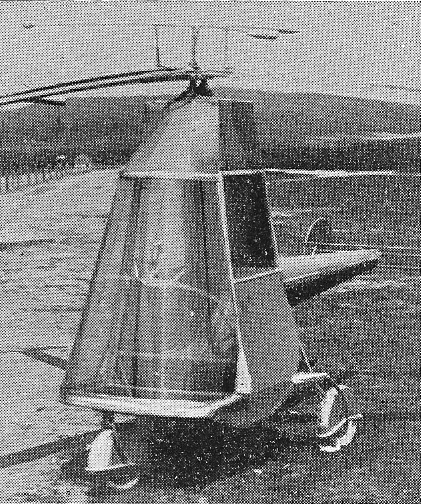
The Libelle two-seat ultra-light helicopter was built by Fluro (W. Schlieske, Helpup (L)), and was powered by three Schmidt-Argus jets fitted with afterburners.
The Libelle two-seat ultra-light helicopter was built by Fluro (W. Schlieske, Helpup (L)), and was powered by three Schmidt-Argus jets fitted with afterburners.
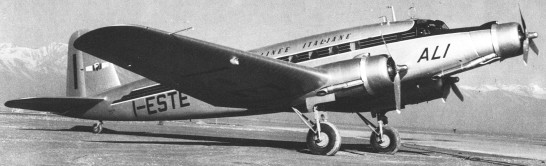
An enlarged development of the G.12.
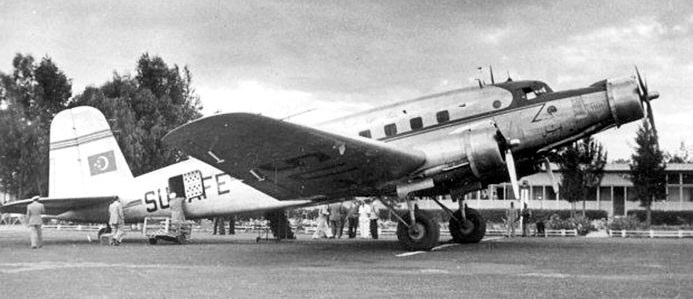
G.212CP – Engines: 3 x Pratt & Whitney.

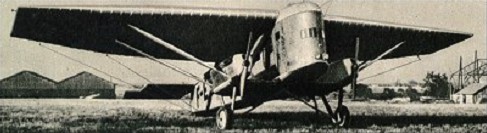
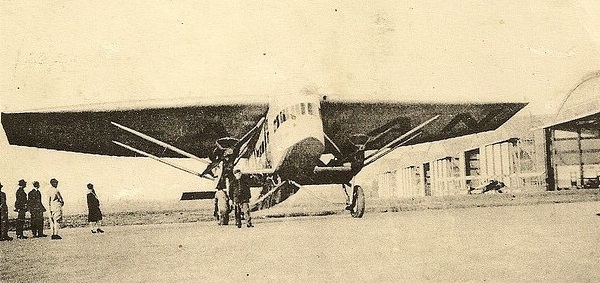
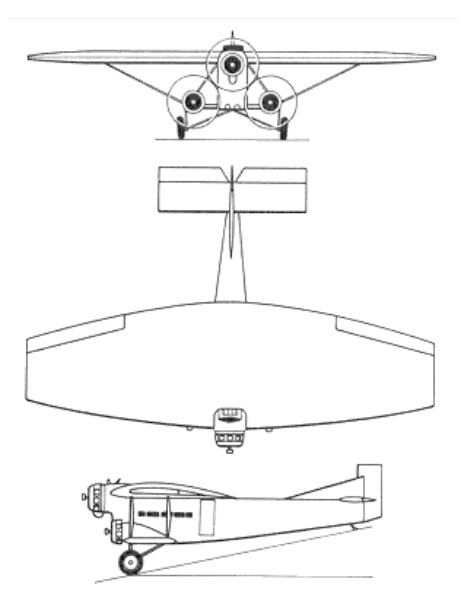
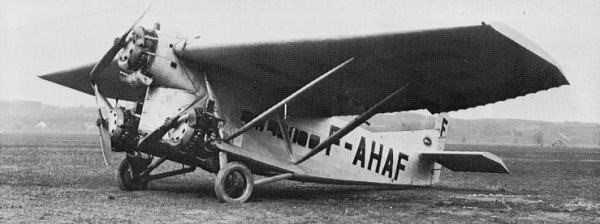
The nine-passenger F.121 was originally known as the F.3X and was a high-mounted wing, deep slab-sided fuselage aircraft powered by four 134kW Hispano-Suiza 8Ac engines in tandem pairs. The F.121 won the 1923 French Grand Prix des Avions Transports and 500,000 francs. At least three different radiator arrangements were tried in attempts to cure the Jabiru’s chronic cooling problems.
Four flew on the Farman airline’s Paris-Brussels-Amsterdam route from 1926 and Danish Air Lines used a few between Amsterdam and Copenhagen. Four even uglier F.4X six-passenger aircraft followed, each with three uncowled 223.5kW Salmson Az.9 engines, two engines mounted above the landing gear on the lower stub wings and one in the upper fuselage nose. These served with Compagnie Internationale de Navigation Aerienne (formerly CFRNA) along with the more attractive Caudron 81 and Potez 32.
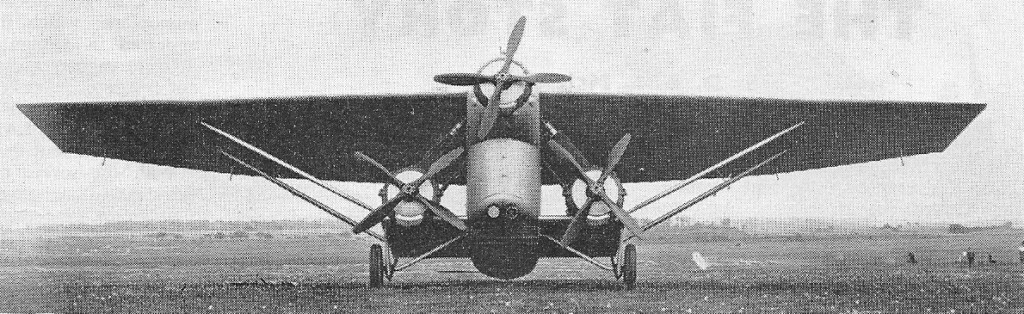
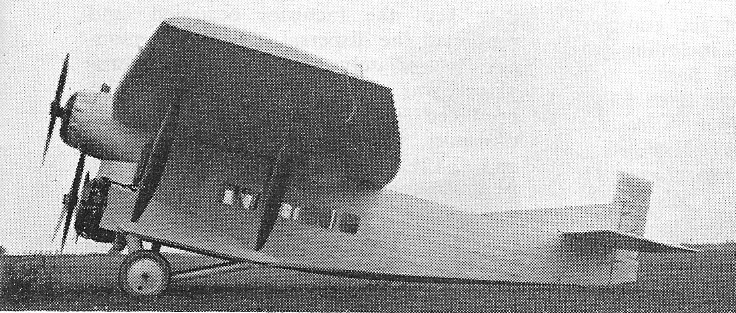
Passengers sat in wicker chairs angled towards the centre, and had a view from the continuous row of windows around the cabin.
Military Jabirus also appeared as prototype heavy bombers and escort fighters with stepped noses, each carrying twin Lewis guns on a Scarff ring in a nose cockpit and light bombs in a fuselage bay. Heavier bombs or, a torpedo could be carried under the fuselage.
Engine: 4 x HS 8AC, 132kW
Max take-off weight: 5000 kg / 11023 lb
Empty weight: 3000 kg / 6614 lb
Wingspan: 19.0 m / 62 ft 4 in
Length: 13.7 m / 44 ft 11 in
Wing area: 80.0 sq.m / 861.11 sq ft
Max. speed: 180 km/h / 112 mph
Ceiling: 4000 m / 13100 ft
Range w/max.fuel: 600 km / 373 miles
Crew: 1-2
Passengers: 9
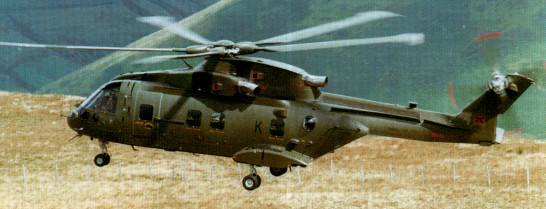
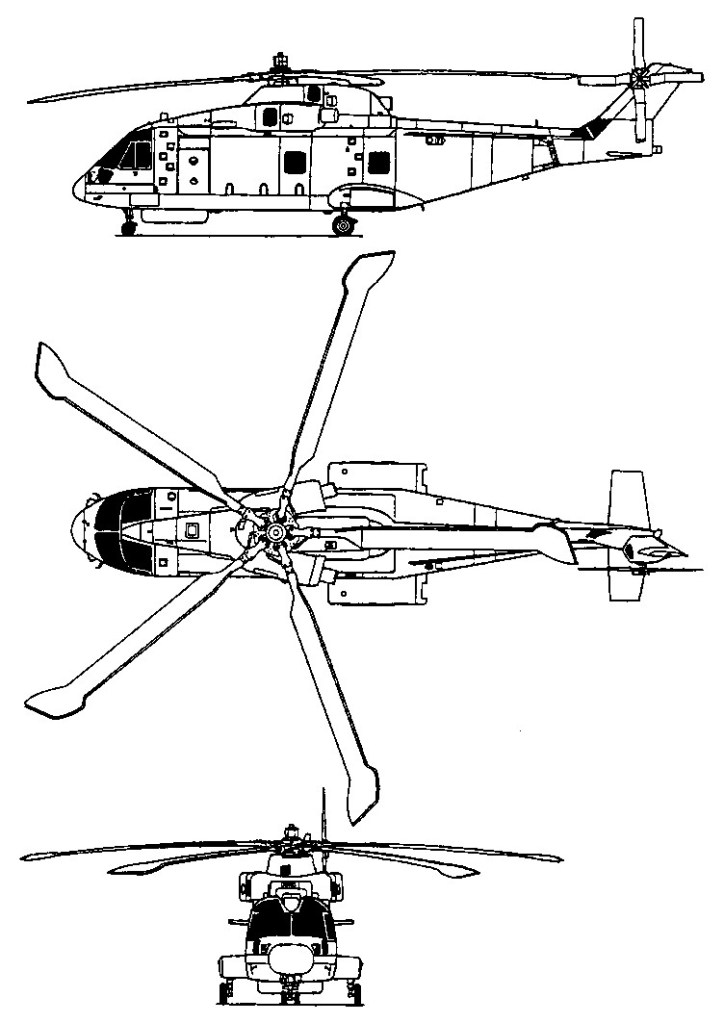
The EH 101 has its genesis in an SKR (Sea King Replacement) study by the British MoD (Navy) in 1977. Westland responded with a proposal designated WG.34, but meanwhile the Italian navy had come up with a similar requirement, though one with the accent on shore basing rather than operations from warships. Westland and Agusta decided to collaborate, formed EHI (Elicotteri Helicopter Industries Ltd) in June 1980 and drew up the design for the EH 101 as the next generation helicopter for the British and Italian navies. The same basic machine is also being developed as a civil passenger and utility cargo trans¬port whose engines, rotor systems, airframe and main systems are common with those of the naval variant. The main cabin is 6.5 m (21 ft 4 in) long, 2.5 m (8 ft 2½ in) wide and, allowing for interior soundproofing, 1, 82 m (5 ft 11½ in) high, all dimensions exactly tailored to the missions, as are the folded dimen¬sions for easy shipboard stowage. The maritime roles for which the EH 101 has been designed are ASW, anti ship surveillance, anti surface vessel strike, amphibious operations, SAR, AEW and vertrep (vertical replenishment). The main five blade rotor has composite blades with extended chord tips of the BERP type, while the tail carries a four blade rotor and can be power folded, like the main rotor blades, for reduced overall dimensions.
The EH.101 prototype, with few of the features of the final aircraft, flew on 9 October 1987. There were nine EH-101 pre-production aircraft, starting with PP.1 which first flew on 9 October 1987 at Yeovil. The nine pre-production EH-101s are flying over 4000 hours of flight development and a 6000 hours maturity and reliability programme to ensure that EH-101 enters service as a fully proven helicopter.
On 15 June 1989 the fourth EH.101 prototype (PP4, ZF644) made its first flight. 1989 included the first flights of PP5 ZF649 and PP6, the UK Merlin and Italian anti-submarine version respectively.
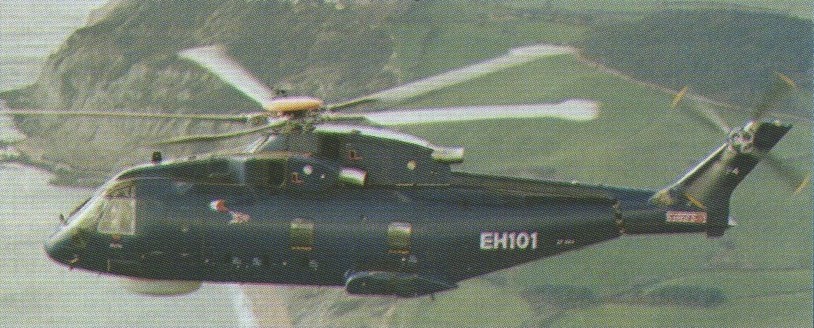
The first of nine pre-production prototypes made its first flight on 9 October 1987, followed by the second on 26 November. All nine EH 101s were flying by 1990.
PP.3, the first civil variant, flew in September 1988 followed by PP.6, the Italian Navy variant in May 1989. PP.4, the basic naval development aircraft, first flew at Yeovil in June 1989 and was later fitted with Rolls-Royce RTM322 engines. PP.4 was destroyed in a crash on 7 April 1995 during high-altitude trials. PP.5, the Royal Navy Merlin variant first flew in October 1989 followed by PP.7, the rear ramp basic military utility variant, which flew in Italy in December 1989. PP.8, the pre-production Heliliner, first flew in April 1990, followed by the last pre-production aircraft PP.9, which first flew in December 1990. PP.9 is fitted with a rear ramp and has been engaged in a variety of flight development trials including undertaking the civil certification, along with PP.8 who will undertake an extensive maturity programme.
The advanced five-bladed rotor system, and newly-designed rotor head, is built around a titanium hub surrounded by composites allowing multiple load paths for greater safety and damage tolerance. The helicopter has a full computerised fuel management system, triple hydraulic systems, two MIL-STD 1553B multi-plex databuses and includes a comprehensive Health and Usage Monitoring System (HUMS).
EH-101 has an advanced ergonomically designed “glass cockpit” with six high definition, full colour displays making for reduced pilot workload and an all weather operational capability. The digital automatic flight control system (AFCS) incorporates dual, duplex architecture providing automatic stabilisation and autopilot facilities, allowing single pilot operations in both VFR and IFR conditions.
The first production EH101 civil utility version first flew on 17 June 1997 at the Agusta Vergiate aeesmbly plant.
In the civil version, avionics also include two air data computers, AHRS, VOR/ILS, Marker Beacon System, Weather Radar, RAD ALT, ADF, ATCST, DME, Standby Compass, Artificial Horizon, Flight Management System, Hyperbolic Navigation and a Global Positioning System (GPS).
Early examples were to be powered by three General Electric CT7-2A turboshafts, although later production aircraft may have the Rolls-Royce/Turbomeca RTM.322. Three versions are currently planned: a naval EH.101 for land- or ship-based ASW/ASV operations, equipped with a 360 degree scan search radar (Ferranti Blue Kestrel for the Royal Navy) in a chin radome, dipping sonar and/or sonobuoys, Racal ESM, up to four homing torpedoes and anti-shipping missiles; a utility version to carry 28 troops or cargo; and a 30-seat commercial variant for civil use. The airframe is structurally similar for all versions, with a high degree of commonality, although the naval EH.101 features a folding tail section for shipboard stowage and the utility variant has a rear loading ramp.
Westland rolled out the prototype triple-turbine EH.101 on April 7 1987, and the first flight was originally scheduled for late May.
In September 1991, the Royal Navy ordered 44 maritime EH-101/Merlins. 42 being ordered by the Italian Navy. Canada has also selected the ASW variant by 1990. Other variants are a tactical transport and the civil Heliliner. Engines will be either three 2,100 shp (1 566 kW) R-R Turbomeca RTM 322 turboshafts (in the Merlin) or 1,682 shp (1 254 kW) GE T700-401As. First Civil variant went to the Tokyo Police in 1998.
In the Utility/Support Helicopter role EH-101 can carry 30 combat troops, or lift internal freight weighing 4350kg or external loads up to 5000kg. The cabin can accommodate light vehicles, a light gun, crew and ammunition or 16 stretcher cases.
On 9 March 1995 the UK Government confirmed an order for 22 EH-101 Support Helicopters/Utility variants for the Royal Air Force.
The Merlin HC3 contract was awarded in June 1995 and entered service on 17 July 2001, a troop carrying variant. There are five main rotor blades, with advanced aerofoil section and BERP (British Experimental Rotor Programme) high speed tips. The tail rotor is slightly offset to port and has a four-bladed assembly. The Naval variant has a folding tail pylon and main rotor blades. The RAF utility variant has a folding rear ramp and has provision for pintle-mounted machine guns in the door or on the ramp, a chin turret for 12.7mm machine gun and stub wings for rocket pods. There is also provision for rapid installation of a FLIR turret which is carried beneath the nose, an in-flight refuelling (IFR) probe positioned beneath the nose offset to starboard, and for an SAR hoist on the starboard side. The utility Merlin is fully night vision goggles compatible and also carries infra-red countermeasures and radar warning receivers.
The airframe is constructed largely from composite materials with parts of the structure being manufactured in Italy and the UK and with final assembly on the production line at Yeovil. The helo’s state-of-the-art “glass cockpit” looks exceptionally modern and is easily comprehensible for the two flight crew. A third crew member, the loadmaster, assists in looking after those in the cabin, or the on-board load, plus acts as a handy lookout during field landings or take-offs and during low-level flying.
Designated CH-149 Cormorant with the Canadian military.
Four EH.101 HEW (heliborne early warning) variant were to be delivered to the Italian Navy along with 16 other anti-submarine/amphibious variants.
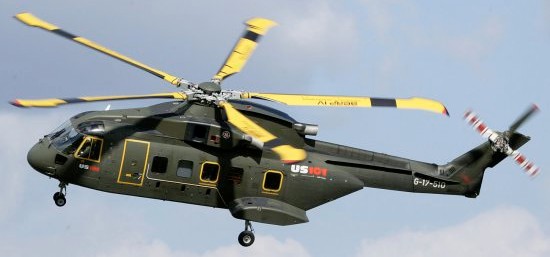
On December 18 2003, the US Department of Defense (DoD) issued a Request for Proposals to replace eleven VH-3D Sea King and eight VH-60N Whitehawk in the Marine One role. The US101 variant of the EH101 was selected on January 2005 and awarded a $1.7 billion contract. More than 200 suppliers in 41 states support Team US101, led by Lockheed Martin with team-mates Agusta Westland and Bell Helicopter Textron. Suppliers include some of America’s leading aerospace companies, such as General Electric, ITT, Northrop Grumman, Kaman Aerospace and Palomar Products. 80 Percent of the US101 was to be made in the USA and the rest made in England and Italy. However, on June 2009, the US Navy formally terminated the VH-71A Kestrel contract.
The first VH-71 made its initial flight on for delivery to NAS Patuxent River, Maryland.
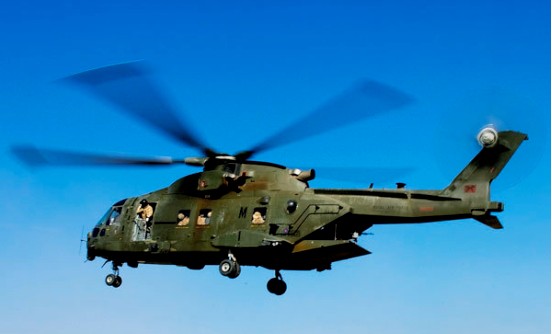
EH 101 Merlin
Length : 62.664 ft / 19.1 m
Height : 21.982 ft / 6.7 m
Rotor diameter : 61.024 ft / 18.6 m
Max take off weight : 28665.0 lb / 13000.0 kg
Weight empty : 20506.5 lb / 9300.0 kg
Max. speed : 160 kts / 296 km/h
Cruising speed : 140 kts / 259 km/h
Initial climb rate : 1673.23 ft/min / 8.50 m/s
Service ceiling : 14108 ft / 4300 m
Range : 500 nm / 926 km
Engine : 3 x General Electric T 700 GE-401A, 1260 shp
Fuel capacity : 1136 gal / 4300 lt
Crew : 2
Payload : 30-35 pax
EH-101
Engine: 3 x Rolls-Royce Turbomeca RTM 332 turboshaft, 1724kW at take-off
Main rotor diameter: 18.59m
Length with rotors turning: 22.81m
Height with rotors turning: 6.65m
Max take-off weight: 13530kg
Empty weight: 7121kg
Cruising speed: 278km/h
Range: 555km
Heliliner
Engine: 2 x GE CT7-6 or R-RTM RTM322.
Instant pwr: 1500 or 1565 kW.
Rotor dia: 18.6 m.
MTOW: 14,290 kg.
Useful load: 5350 kg.
Max cruise: 150 kts.
Max range: 740+ km.
Seats: 33.
Naval
Engine: 3 x GE T700-T6A.
Instant pwr: 1278 kW.
Rotor dia: 18.6 m.
Length (folded) 15.9 m.
No blades: 5.
Empty wt: 8620 kg.
MTOW: 13,000 kg.
Payload: 6095 kg.
Max speed: 167 kts.
Max range: 926 km.
Service ceiling: 15,000 ft.
Crew: 1/2. Pax: 45.
Endurance: 5 hr.
Utility
Engine: 3 x GE CT7-6.
Instant pwr: 1432 kW.
MTOW: 14,288 kg.
Payload: 7010 kg.
Max speed: 167 kts.
Max range (aux fuel): 2093 km.
HOGE: 15,000 ft.
Service ceiling: 15,000 ft.
Merlin
Engine: 3 x R-RTM RTM322.
Instant pwr: 1724 kW.
MTOW: 13,000 kg.
Payload: 3900 kg.
Max speed: 167 kts
Max range: 926 km.
Service ceiling: 15,000 ft.
Crew: 1/2.
Pax: 45.
Merlin HM.1
Engines: 3 x Rolls-Royce Turbomeca RTM322-01 turboshaft, 2,312 shp
Instant pwr: 1724 kW.
Empty Weight: 23,149lbs (10,500kg)
Maximum Take-Off Weight: 34,392lbs (15,600kg)
Length: 74.84ft (22.81m)
Width: 60.99ft (18.59m)
Height: 21.82ft (6.65m)
Maximum Speed: 192mph (309kmh; 167kts)
Maximum Range: 863miles (1,389km)
Rate-of-Climb: 2,000ft/min (610m/min)
Service Ceiling: 15,010ft (4,575m)
Crew: 1/2
Pax: 45
Hardpoints: 2
Merlin HC.2
Merlin HC.3
Engines: 3 x Rolls-Royce Turbomeca RTM 322-02/8, 2,240 shp each.
Average cruise: 150 kts (173 mph).
Range: 700 miles (1,129 km).
Max load: 3,120 kgs (6,878 lbs)
Max internal load; 24 combat equipped troops / 4,535 kg (10,000 lbs) max underslung load.
EH.101 HEW

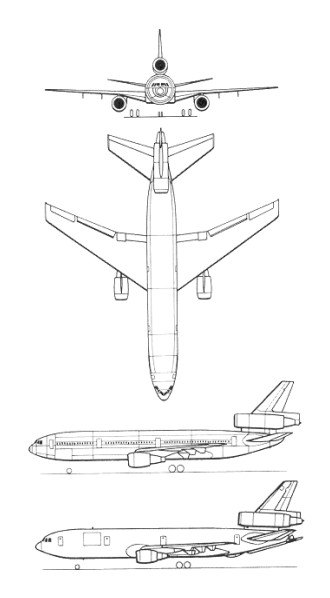
Douglas designed the DC-10 in 1966, competing directly with Lockheed to produce an airbus capable of operating from normal-length runways. By designing the DC-10 around three General Electric CF6-6 turbofan engines, Douglas avoided the financial difficulties encountered by Lockheed with the Rolls-Royce RB.211. In a multi-company manufacturing agreement, Convair produces the fuselage and Aeritalia the fins (vertical stabilizers). The -10 is a short/medium-haul version; the long-range -30 and -40 have an extra forward-retracting main gear, uniquely mounted on the centreline. An aircraft with a fixed wing sweep (the DC-10 wing, designed just before the advanced supercritical form was introduced, is broad and strongly swept) cannot be best for all ranges, but the DC-10’s sales record of 250 testifies to its attraction as a sophisticated wide¬bodied jet that can fly global routes.
The Series 10, able to accommodate up to 380 economy class passengers on domestic routes, was first flown on 29 August 1970, certified on 29 July 1971, and made its first scheduled passenger flight with American Airlines on 5 August 1971. Introduction of DC-10 service-between Los Angeles and Chicago came one week after American formally accepted the trijet from McDonnell Douglas. It was followed by the inter-continental range Series 20, which flew for the first time on 28 February 1972.
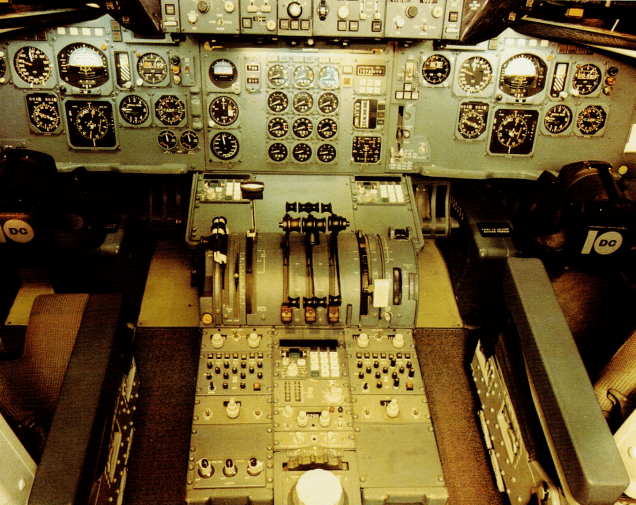
Conversion of the CF6-50A engines to -50C standard increases the thrust from 49,000 lbs to 51,000 lbs.
Turkish airlines took delivery of three DC-10-10 between December 1972 and February 1973; TC-JAU, TC-JAV, and TC-JAY. TC-JAV was lost at Paris in 1974.
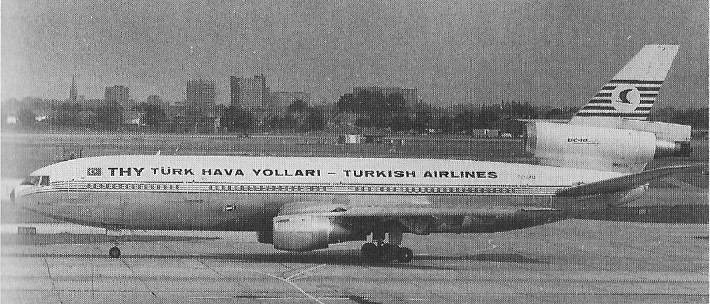
First flight of the long range Pratt & Whitney JT9D powered McDonnell Douglas DC 10 20 took place on February 28, 1972. Northwest Airlines having ordered 14, with 14 more on option

A derivative of the commercial DC-10-30CF, selected in 1977 as the USAF’s advanced tanker/cargo aircraft (ATCA), the first KC-10A flew in July 1980. The aircraft has high-flow-rate, 5,680lit/min refuelling boom plus an independent, 2,2701it/min hose-drogue system. As a transport the KC-10 has a cargo capacity comparable with that of the C-5 to 8,300km range, but is superior over longer ranges up to 18,500km.
Some 445 DC 10s were delivered since the first went into service in 1971, the last in July 1989 to Nigerian Airways.

DC 10 Srs 10
Engines: 3 x General Electric CF6 6D turbojets, 40,000 lbs thrust each.
Length: 181 ft 4.75 in.
Wingspan: 155 ft 4 in.
Ceiling: 35,000 ft.
Range: 2,429 mls.
DC-10-30
Engines: 3 x CF6-50C, 51,000 lbs thrust.
Wing span: 165.3 ft.
Max takeoff weight: 259.45 tonnes.
Max landing weight: 182.79 tonnes.
Fuel capacity 111.40 tonnes.
Pax cap: 247.
Range: 10,232 km.
DC-10-30ER
Engines: 3 x CF6-50C2, 233.5 kN.
Wing span: 50.4m.
Length: 55.5m.
Height: 17.7m.
Max speed: 0.88M @ 7620m.
Max range (full load): 7410 km.
Crew: 3.
Accommodation: 243 pax.
DC-10-30CF / KC-10A Extender
Engine: 3 x GE CF6 turbofan.
Installed thrust: 701 kW.
Span: 50.4 m.
Length: 55.3 m.
Wing area: 339 sq.m.
Empty wt: 109,350 kg.
MTOW: 267,620 kg.
Payload: 78,840 kg.
Max speed: 956 kph.
Initial ROC: 20 min to 8530 m.
Ceiling: 12,800 m.
T/O run: 2590 m.
Ldg run: 790 m.
Fuel internal: 200,940 lt.
Range: 11,110 km with 45,400 kg payload.
Air refuel: Yes.
McDonnell Douglas KC 10 A Extender
Engine : 3 x General Electric CF6 50C2, 229064 N / 23350 kp
Length : 181.759 ft / 55.4 m
Height : 58.071 ft / 17.7 m
Wingspan : 165.354 ft / 50.4 m
Wing area : 3957.923 sqft / 367.7 sq.m
Max take off weight : 590102.1 lb / 267620.0 kg
Weight empty : 241072.7 lb / 109330.0 kg
Max. payload weight : 349029.5 lb / 158290.0 kg
Max. speed : 530 kts / 982 km/h
Landing speed : 138 kts / 256 km/h
Cruising speed : 490 kts / 908 km/h
Initial climb rate : 2755.91 ft/min / 14.0 m/s
Service ceiling : 32808 ft / / 10000 m
Wing load : 149.24 lb/sq.ft / 728.0 kg/sq.m
Range : 9989 nm / 18500 km
Crew : 6
Fuel capacity : 132330 lt
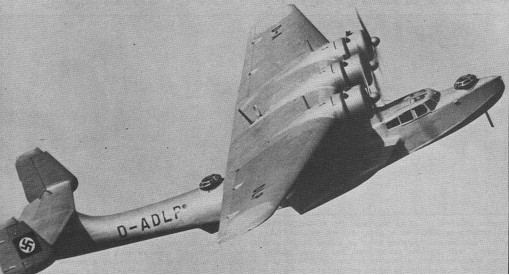
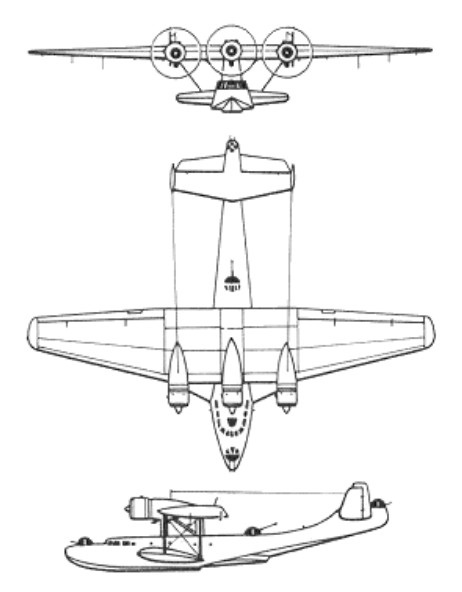
Broadly similar in design and layout to the Do 18, the Do 24 had three radial engines mounted separately on the wing leading-edge, and twin fins and rudders. At the prompting of the Netherland’s Marine Luchtvaartdienst, in 1935 Claudlus Dornier set about developing a replacement for the WAL seaplanes which was already thirteen years old and totally obsolete.
Working to Dutch specifications Dornier installed, Wright R-1820 Cyclones in the Do 24 V3 and V4, temporarily shelving the Jumo 205-powered V1 and V2. D-ADLP, the V4, was used for open sea trials at Bodensee and proved to be a. typically tough Dornier airplane. Plans were made to build 60 Do 24Ks under license in the Netherlands, but following diversion of part of the funding to buy additional Martin 139s (export versions of the B-10 medium bomber) this order was cut to 48 planes. When Germany invaded Holland in 1940, 25 Do 24Ks were captured in various stages of completion and were used for air-sea rescue work in the North Sea and English Channel. The seaplane was evaluated at Erporoblingsstelle-See Travemunde and was judged to be so suitable for this mission that production was resumed in Holland, BMW-Bramo Fafnir radials replacing the American Wrights with the result that the machine was redesignated Do 24T, additional aircraft being built in occupied France as well.
The first of three prototypes to fly, on July 3, 1937, was the Do 24 V3 (D-AYWI), pow-ered by 875-hp Wright Cyclone R-1820-F52 engines. This aircraft, plus the V4 and ten similarly-powered Do 24K-1s were delivered to the Dutch navy, and apart from the Jumo 205C-engined V1 and V2 were the only German-built examples.
Production continued with 28 Dutch-built Do 24K-2s, powered by 1000-hp R-1820-G 102 engines, and carrying revised armament and up to 1250-kg (110-lb) bombs. Twenty-five of these were delivered to the Dutch East Indies. The other three, and eight partially-built K-2s, were captured in 1940 and completed to Luftwaffe standards as Do 24N-1 air/sea rescue aircraft. From this the major ASR/transport version, the Do 24T-1, was developed with 1000-hp Bramo 323R-2 engines. Armament consisted of a 20-mm (0.79-in) Hispano cannon in a dorsal turret and single 7.9-mm (0.311-in) machine-guns in the bow and stern positions. One hundred and eighty of these were built (110 in Holland and 70 by CAMS in France).
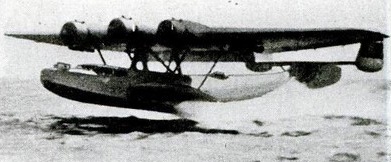
Of the 294 Do 24s built (including prototypes) only 37 saw service with the Dutch East Indies navy, for whom it was originally designed in 1935.
By contrast, some 222 were employed by the Luftwaffe.
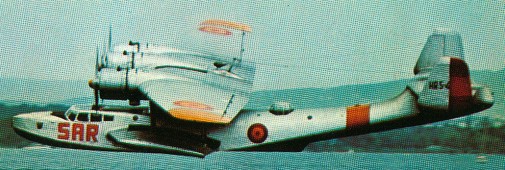
Forty-nine Dutch-built Do 24T-2s were sold to Spain, and in 1944 Spain also purchased 12 generally similar Dutch-built Do 24T-3s, powered by three 1,000 hp BMW engines. These were used to provide an air-sea rescue service in the Mediterannean, the Spanish machines picking up downed crews of any nationality. Only 48 of the French-built T-Is reached the Luftwaffe, the remainder being ‘liberated’ and used as transports by Flottille 917 Tr of the French Aetonavale starting in December 1944 with the first two.
The Dutch East Indies Dorniers operated for some time against Japanese shipping in the southwest Pacific; those of the Luftwaffe saw action in the Baltic, English Channel, Mediterranean and the Black Sea.
Engines: 3 x BMW Bramo 323, 735kW
Max take-off weight: 18400 kg / 40565 lb
Empty weight: 10600 kg / 23369 lb
Wingspan: 27.0 m / 88 ft 7 in
Length: 21.9 m / 71 ft 10 in
Height: 5.8 m / 19 ft 0 in
Wing area: 108.0 sq.m / 1162.50 sq ft
Max. speed: 340 km/h / 211 mph
Cruise speed: 255 km/h / 158 mph
Ceiling: 5900 m / 19350 ft
Range w/max.fuel: 4800 km / 2983 miles
Range w/max.payload: 2400 km / 1491 miles
Armament: 4 machine-guns, 1 x 30mm cannon, 600kg of bombs
Crew: 6
Do 24T-1
Span: 27 m (88 ft 7 in)
Length: 22.05 m (72 ft 4 in)
Gross weight: 16 200 kg (35715 lb)
Maximum speed: 332 km/h (206 mph)
Do 24T-3
Engines: 3 x BMW-Bramo, 1000hp.
Wing span: 88 ft 7 in (27 m).
Length: 72 ft 2.5 in (22 m).
Height: 18 ft 10.5 in (5.75 m).
Max TO wt: 39,249 lb (17,800 kg).
Max level speed: 211 mph ( 340 kph).
Do24ATT –
The Do Y medium bomber had a high-set wing and and three engines, two on the wing leading edge and the third on struts above the wing. The Do Y was built in Switzerland in 1931 and possibly 4 were built. The first 2 models (Werke No 232 and 233) were powered by Bristol Jupiter VI engines with 2 bladed wooden props were ordered and delivered to the Yugoslavian government in October 1932. They were later captured by invading German forces in 1941.
The next two models again ordered by the Yugoslav goverment were powered by Gnome Rhone Jupiter 9 Kers engines with 3 bladed metal props offering a better all round performance.

An all-metal single-spar cantilever low-wing monoplane; it was intended for service with Air Orient on its Paris-Saigon route. Power was provided by three 428.5kW Wright Cyclone radial engines and the aircraft had a trousered fixed landing gear. The single D.332 Emeraude was first flown on 11 July 1933 by test pilot Marcel Doret.
Several speed-with-load-over-distance world records fell to the D.332 in 1933 and it made many spectacular European flights. However it crashed on the final return stage of the inaugural Paris-Saigon service on 15 January 1935.
Three D.333s followed, each powered by 428.5kW Hispano-Suiza radial engines and accommodating ten passengers. One was lost in October 1937 while flying the Toulouse-Dakar service with Air France. The others flew in South America on the Buenos Aires-Natal route.
In 1936 the prototype of a new version appeared as the D.338, a fast 22-passenger Air France liner. It was followed by 30 production examples for Air France. These had retractable landing gears, were powered by 484.5kW Hispano-Suiza V16/17 engines, and each accommodated up to 22 passengers. They were operated on the Paris-Cannes-Damascus-Hanoi and Paris-Dakar routes. Many continued to fly during World War II on government liaison and VIP duties and eight were used for a short time after the war.

During the war, the Free French airline known as Lignes Aériennes Militaires flew the D.338 on scheduled service to Beirut and Brazzaville, French Congo.
Lufthansa, the German airline, made use of seven D.338s which they confiscated from Air France.
Nine of the aircraft survived the war and were put into service for a few months.
The D.342 was a one-off development of the D.338, as was the D.620.
D.333
Engine: 3 x HS 9 Vd, 425kW
Take-off weight: 11100 kg / 24471 lb
Empty weight: 6960 kg / 15344 lb
Wingspan: 29.4 m / 96 ft 5 in
Length: 22.1 m / 72 ft 6 in
Wing area: 99.0 sq.m / 1065.63 sq ft
Max. Speed: 300 km/h / 186 mph
Cruise speed: 260 km/h / 162 mph
Ceiling: 5000 m / 16400 ft
Range w/max.fuel: 2000 km / 1243 miles
Range w/max.payload: 850 km / 528 miles
Crew: 4
Passengers: 22

 All Aero