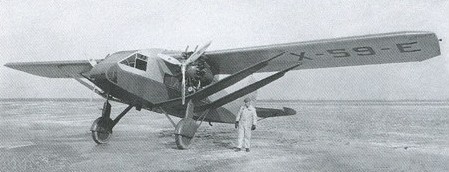
Three seat twin-engine high-wing cabin monoplane
Three seat twin-engine high-wing cabin monoplane
The General Aircraft GAL.58 Hamilcar 10 was a powered version of the Hamilcar 1 to AM Spec X.4/44, for Far-Easton Sector operations. The glider was fitted with two Bristol Mercury engines of 965 hp each, to enable the glider to maintain level flight when lightly loaded.
Wing span: 110.007 ft / 33.53 m
Wing area: 1657.441 sq.ft / 153.980 sq.m
Length: 68.012 ft / 20.73 m
Height: 20.243 ft / 6.17 m
Max take off weight: 45,500 lb / 20,412 kg
Weight empty: 25,510 lb / 11,571 kg
Aspect ratio: 7.3
Wing section: RAF 34 modified
Max speed: 145 mph / 233 kg
Max speed: 112 mph at 32,500 lb
Cruise: 180 kph at 14,742 kg
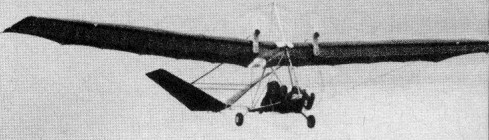
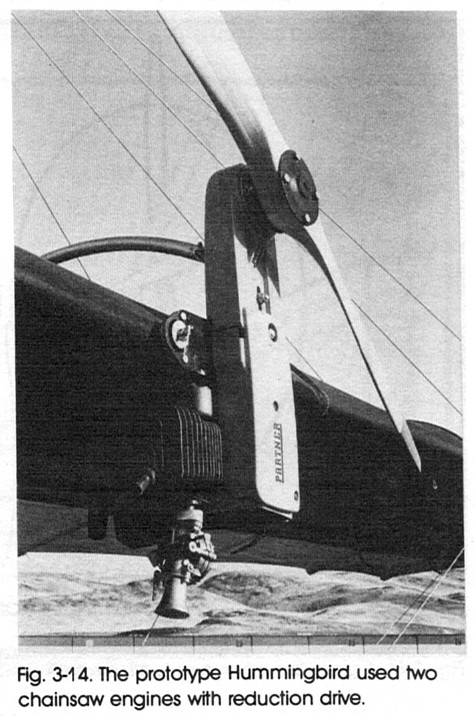
The Gemini Hummingbird 103 and Hummingbird Super 103 are single seat twin engined high wing mono¬plane with conventional three axis control. Wing has unswept leading edge, swept forward trailing edge and tapering chord; V tail. Pitch/yaw control by elevon; roll control by ailerons; control inputs through stick for pitch/roll and pedals for yaw. Wing braced from below by struts; wing profile; double surface. Undercarriage has three wheels in tricycle formation; no suspension on nosewheel and steel spring suspension on main wheels. Push right go right nosewheel steering connected to yaw control. Optional brake on nosewheel; optional brakes on main wheels. Aluminium tube framework, without pod (Hummingbird 103), totally enclosed (Hummingbird Super 103). Engines mounted at wing height driving tractor propellers. Two tractor Solo 210 engines, direct drive (two 20-hp Solos, 3:1 reduction unit, tuned exhaust optional). The Super 103 is the same basic configuration as the Standard 103 but POWERPLANT: Two Solo 210s, 3:1 reduction unit, tuned exhaust.
Gemini International Hummingbird Article
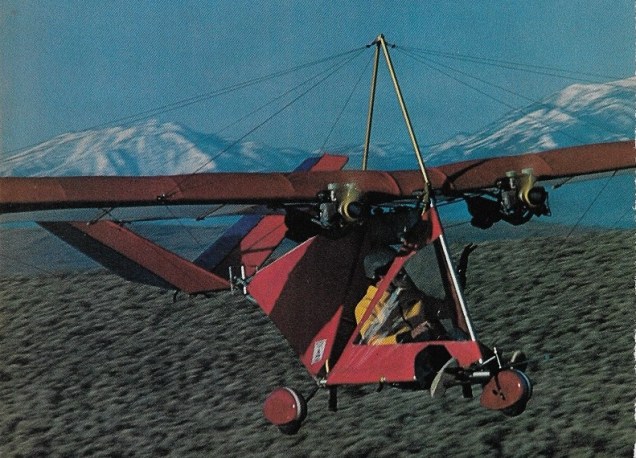
First year built: 1979. The 103 marks a change in marketing policy for the company, as it is the first kit built machine offered by the firm, taking two days to build. A wide range of options is available on the 103, including wheel spats and a fabric covering for the fuselage, with Lexan windows to make a fully enclosed cockpit. Thus modified, the aircraft is known as the Hummingbird Super 103 and costs $6185, as against $5495 for the Hummingbird 103, in 1982.
Other notable options are floats, amphibious floats into which the wheels retract, disc or drum brakes on the main wheels, a nosewheel brake, heavy duty 16 inch (41 cm) wheels and a ‘Super Wing’ high performance wing. Reduction drive is optional.
Units delivered by June 1981 48.
The Hummingbird Prospector had the wing braced from above by kingpost and cables, from below by cables. Aluminium tube framework, without pod (total enclosure optional). The Hummingbird Prospector was the flagship of the Gemini range in that it came complete and test flown from the factory, unlike the Hummingbird 103 and Hummingbird Super 103. It was an older design, easily distinguished from the 103s by its retention of kingpost and cable bracing. The Prospector was sold with two Solo 335 engines. However, there were plenty of Prospectors around with Limbach 275 cc engines. Latest power units for the Hummingbird Prospector were reduction drive Solos.
The Tractorplane is a utility ultralight version of Prospector. The Sport Hummingbird is a mono-wing with upright V-tail. Mixed three-axis controls make use of true ailerons for roll control and a separate elevator on the V-tail for pitch control. Construction is aluminum-tubing frame with the wings and tail surfaces covered with presewn 3.8-ounce Dacron. The engines are mounted in tractor position on the leading edge of each wing, and operated separately. Reduction drive turns each two-blade wooden Gemini propeller. Fuel tank is polypropylene. LANDING GEAR: Solid tricycle with steerable nosewheel. Wheels measure 16 inches.
Hummingbird
3-axis conventional (rudder, aileron, elevator).
Gross weight 415 lb.
Empty weight 163 lb (can be modified to 155).
Max pilot weight 230 lbs.
First year built 1979.
Hummingbird Standard 103
Engines: 2 x Solo 335, 20 hp at 7200 rpm.
Propeller diameter and pitch 52 x 27 inch, 1.32 x 0.69 m.
V belt reduction, ratio 3.0/1.
Max static thrust 340 lb, 154 kg.
Power per unit area 0.24 hp/sq.ft, 2.6 hp/sq.m.
Fuel capacity 4.4 US gal, 3.7 Imp gal, 16.6 litre.
Length overall 21.0 ft, 6.40 m.
Height overall 5.0ft, 1.52m.
Wing span 36.0ft, 10.97m.
Chord at root 5.0ft, 1.52m.
Chord at tip 3.9ft, 1.16m.
Dihedral 4 deg.
Sweepback 0 deg
Tailplane span 5.0ft, 1.52m.
Height of in¬clined fixed surface 5.0 ft, 1.52 m.
Total wing area 163 sq.ft, 15.1sq.m.
Total aileron area 18.0sq.ft, 1.67sq.m.
Inclined fixed area 18.0sq.ft, 1.67 sq.m.
Total elevon area 14.0 sq.ft, 1.30 sq.m.
Wing aspect ratio 7.9/1.
Wheel track 6.0ft, 1.82m.
Wheelbase 5.0ft, 1.52m.
Nosewheel diameter overall 6 inch, 15cm.
Main wheels diameter overall 6 inch, 15cm.
Optional floats: length 8.0ft, 2.43m.
Optional skis: length x width 6.0 ft x 3.5 inch, 1.82 x 0.08 m.
Empty weight 240 lb, 109 kg.
Max take off weight 560 lb, 254 kg.
Payload 320 lb, 145
Max wing loading 3.43 lb/sq.ft, 16.7 kg/sq.m.
Max power loading 14.0 lb/hp, 6.3kg/hp.
Load factors +4.5, 3.5 design; +5.0, 4.0 ulti¬mate.
Max level speed 62 mph, 100 kph.
Never exceed speed 70 mph, 113 kph.
Max cruising speed 57 mph, 92 kph.
Economic cruising speed 45 mph, 72 kph.
Stalling speed 22 mph, 35 kph.
Max climb rate at sea level 941 ft/min, 4.8 m/s.
Min sink rate 207 ft/min at 30 mph, 1.0 m/s at 48 kph.
Best glide ratio with power off 11/1 at 42mph, 67 kph.
Take off distance 100 ft, 30 m.
Land¬ing distance 120ft, 38m.
Service ceiling 27,000ft, 8235m.
Range at average cruising speed 100 mile, 160km.
Hummingbird Super 103
Engines: 2 x Solo 335, 20 hp at 7200 rpm.
Propeller diameter and pitch 52 x 27 inch, 1.32 x 0.69 m.
V belt reduction, ratio 3.0/1.
Max static thrust 340 lb, 154 kg.
Power per unit area 0.24 hp/sq.ft, 2.6 hp/sq.m.
Fuel capacity 4.4 US gal, 3.7 Imp gal, 16.6 litre.
Length overall 21.0 ft, 6.40 m.
Height overall 5.0ft, 1.52m.
Wing span 36.0ft, 10.97m.
Chord at root 5.0ft, 1.52m.
Chord at tip 3.9ft, 1.16m.
Dihedral 4 degs.
Sweepback 0 deg.
Tailplane span 5.0ft, 1.52m.
Height of in¬clined fixed surface 5.0 ft, 1.52 m.
Total wing area 163 sq.ft, 15.1sq.m.
Total aileron area 18.0sq.ft, 1.67sq.m.
Inclined fixed area 18.0sq.ft, 1.67 sq.m.
Total elevon area 14.0 sq.ft, 1.30 sq.m.
Wing aspect ratio 7.9/1.
Wheel track 6.0ft, 1.82m.
Wheelbase 5.0ft, 1.52m.
Nosewheel diameter overall 6 inch, 15cm.
Main wheels diameter overall 6 inch, 15cm.
Optional floats: length 8.0ft, 2.43m.
Optional skis: length x width 6.0 ft x 3.5 inch, 1.82 x 0.08 m.
Empty weight 240 lb, 109 kg.
Max take off weight 560 lb, 254 kg.
Payload 320 lb, 145
Max wing loading 3.43 lb/sq.ft, 16.7 kg/sq.m.
Max power loading 14.0 lb/hp, 6.3kg/hp.
Load factors +4.5, 3.5 design; +5.0, 4.0 ulti¬mate.
Max level speed 62 mph, 100 kph.
Never exceed speed 70 mph, 113 kph.
Max cruising speed 57 mph, 92 kph.
Economic cruising speed 45 mph, 72 kph.
Stalling speed 22 mph, 35 kph.
Max climb rate at sea level 941 ft/min, 4.8 m/s.
Min sink rate 207 ft/min at 30 mph, 1.0 m/s at 48 kph.
Best glide ratio with power off 11/1 at 42mph, 67 kph.
Take off distance 100 ft, 30 m.
Land¬ing distance 120ft, 38m.
Service ceiling 27,000ft, 8235m.
Range at average cruising speed 100 mile, 160km.
Hummingbird Prospector
Engines: Twin Solo 210 cc , 12.5 hp, 3:1 reduction unit, tuned exhaust.
Undercarriage: Standard tricycle, steerable nosewheel.
Wingspan 34 ft.
Wing area 153 sq.ft.
Aspect ratio 7.5:1.
Length 22 ft.
Empty weight: 240 lbs.
Payload 400 lbs.
Gross weight 640 lbs.
Wing loading 4.18 lbs/sq.ft.
L/D 10:1.
Cruise speed 33 mph.
Stall speed 21 mph.
Vmax 63 mph.
Takeoff/landing roll 75 ft.
Climb rate 600 fpm.
Fuel capacity 4.5 USG.
Engines: 2 x Yamaha KT1005, 30 hp, 3.0 reduction
Undercarriage: Tricycle 10-inch mains and steerable nosewheel.
Wingspan, 30 ft.
Wing area, 153 sq.ft.
Empty weight, 198 lbs.
Wing loading, 2.37 lbs/sq.ft.
Fuel capacity, 3.5 USG.
Hummingbird Tractorplane
Engines: Two Solo 210s, 3:1 reduction unit, tuned exhaust.
Undercarriage: Standard tricycle, steerable nose-wheel
Wingspan 34 ft.
Wing area 153 sq.ft.
Aspect ratio 7.5:1.
Length 22 ft.
Empty weight: 163 lbs. (can be modified to 155).
Max pilot wt: 230 lbs.
Payload 420 lbs.
Wing loading 4.18 lbs/sq.ft.
L/D 10:1.
Sport Hummingbird
Engine: Twin Gemini/Partner K-1200 100cc, 7 hp
Static thrust, 51 lbs each.
Wingspan, 34 ft.
Wing area: 186 sq.ft.
Aspect ratio, 7.5:1.
Empty weight, 138 lbs.
Usable payload (include fuel), 200 lbs.
Wing loading, 1.07 lbs/sq.ft.
L/D power-off glide ratio, 11:1.
Cruise speed (85% power), 30 mph.
Stall speed, 15 mph.
Approach speed, 25 mph.
Flair speed, 20 mph.
Liftoff speed, 17 mph.
Takeoff roll distance, 150 ft.
Rate of climb, 250 fpm.
Fuel capacity, 1.75 USG.
Range at cruise, 50 sm.
Skylander was a Desmond Norman’s last project. Intended for rough field work in remote areas, the rights for this twin PT6A turboprop have been bought by GECI of France for further development.
Skylander (provisional)
Engines: Two 1100shp Pratt & Whitney Canada PT6A 65B turboprops.
Span, 71 ft (21.6m).
Length, 47ft 2in (14.38m).
Height, 20ft 1 in (6.lm).
Max take off weight, 18,5001b (8.4 tonnes).
Max payload, 7,2751b (3.3 tonnes)
Cruise speed, 230kt (426km/h).
Range, 1,207nm (2,235km).

The Learjet 60 was announced in October 1990 as the replacement for the Model 55C, from which it is derived. A proof of concept airframe flew for the first time on 18 October 1990 powered by one Garrett TFE331-3A and one PW305 engine. The first twin-PW305-powered Learjet 60 made its first flight from Mid-Continent Airport, Wichita, on 13 June 1991, and certification and early deliveries are targetted for the end of 1992. The Model 60 is the largest of the Learjet family and incorporates new fuel-efficient engines, a fuselage 0.07m wider and stretched by 1.43m, a ‘glass cockpit’, ‘steer by wire’ nosewheel, and an optional higher MTOW of 10478kg. Thrust reversers and single-point refuelling are also standard equipment, and the aircraft features a full galley, together with an aft toilet. By mid-1991, Learjet claimed to have sold the first full year’s production to customers in seven countries.

Engines: 2 x Pratt & Whitney Canada PW305 turbofans, 1995kg
Take-off weight: 10319 kg / 22750 lb
Wingspan: 13.34 m / 43 ft 9 in
Length: 17.88 m / 58 ft 8 in
Height: 4.47 m / 14 ft 8 in
Wing area: 24.57 sq.m / 264.47 sq ft
Max. speed: 858 km/h / 533 mph
Ceiling: 15545 m / 51000 ft
Range: 4441 km / 2760 miles
Learjet’s Longhorn series combines a revolutionary wing design, two of the most advanced engines introduced to the market, and 51,000-foot performance. The line of five aircraft has been designated the Learjet 28 and Learjet 29, both powered by General Electric turbojets, and the Learjet 54/55/56, and those three are powered by twin Garrett AiResearch fanjets. All the models are designed with a larger wing incorporating near-vertical winglets that have replaced the traditional Learjet tiptanks. The wing’s increased aspect ratio and super-critical winglets provide substantial aerodynamic improvements that in turn produce greater fuel efficiency and improved flight performance at high and low altitudes. The wing also has been responsible for significantly improved short-field performance. The balanced field length is 3,520 feet for the 54/55/56 series.
Engines two 3,650-lb. s.t. Garrett AiResearch fanjets.
Gross wt. 20,000 lb
Empty wt. 10,257 lb
Fuel capacity 1,194 USG.
Top speed 550 mph.
Stall 100 mph.
Initial climb rate 4,700 fpm.
Ceiling 51,000 ft.
Range 3, nm.
Balanced field length 4,160 ft.
Seats 12

At the 1977 Paris air show Gates Learjet announced details of its new Learjet 50 series. This was intended to comprise the Learjet 54, Learjet 55 and Learjet 56 with longer and larger cabins, all powered by twin Garrett AiResearch fanjets. The 55 was to have advanced wings incorporating NASA-developed winglets and this last feature gave rise to the name Longhorn.
The larger wing incorporating near-vertical winglets that have replaced the traditional Learjet tiptanks. The wing’s increased aspect ratio and super-critical winglets provide substantial aerodynamic improvements that in turn produce greater fuel efficiency and improved flight performance at high and low altitudes. The wing also has been responsible for significantly improved short-field performance. The balanced field length is 3,520 feet for the 54/55/56 series.
Only the Longhorn 55 has been developed, construction of the first airframe starting in April 1978 after successful testing of an aerodynamic prototype of the wing on a Learjet 25. The first of two Learjet 55 prototypes was flown initially on 19 April, 1979, and certification and delivery of the first production aircraft were recorded on 18 March 1981 and 30 April 1981 respectively.
The Model 55 followed the same overall configuration as earlier members of the Learjet family, and accommodated a crew of two on a separate flight deck and up to 10 passengers in the main cabin. In September 1986 the company announced the Model 55B, offering a new interior, ‘glass’ cockpit, improved take-off performance and increased range, all of which increased the aircraft’s operational flexibility. One year later, the Model 55C was revealed, fitted with rear underfuselage ‘Delta Fins’ giving improved directional stability at all speeds and reducing the landing speed, and thus removed the need for a stick puller/pusher.
Launched in 1987 was the Model 55C, which has a longer fuselage and deeper cabin than the 31. The engines were more powerful 3,700 lb st (16,46 kN) units and winglets and Delta-Fins were also standard.
Later versions are the 55C/ER extended-range version fitted with an extra tank holding 1175kg of fuel in the tailcone, and the Model 55C/LR giving even-longer-range through the installation of a further 322-litre fuel cell behind the standard fuselage tank. Typical configuration of this version is two crew and seven passengers. Around 150 Model 55 variants had been built by the end of 1990 and the version is to be superseded by the Learjet 60 during 1992.
LR-55 Learjet Longhorn 55
Engines: 2 x Garrett TFE 731-3A-2B, 3700 lbs thrust.
Seats: 12.
Length: 55.1 ft.
Height: 14.7 ft.
Wingspan: 43.8 ft.
Wing area: 265 sq.ft.
Wing aspect ratio: 7.2.
Maximum ramp weight: 20,750 lbs.
Maximum takeoff weight: 20,500 lbs.
Standard empty weight: 12,530 lbs.
Maximum useful load: 8220 lbs.
Zero-fuel weight: 15,000 lbs.
Maximum landing weight: 17,000 lbs.
Wing loading: 73.7 lbs/sq.ft.
Power loading: 2.6 lbs/lb.
Maximum usable fuel: 6682 lbs.
Best rate of climb: 4380 fpm.
Certificated ceiling: 51,000 ft.
Max pressurisation differential: 9.4 psi.
8000 ft cabin alt @: 51,000 ft.
Maximum single-engine rate of climb: 1250 fpm @ 200 kts.
Single-engine climb gradient: 379 ft/nm.
Maximum speed: 483 kts.
Normal cruise @ 41,000ft: 456 kts.
Fuel flow @ normal cruise: 1014 pph.
Stalling speed gear/flaps down: 103 kts.
Balanced field length 3,900 ft
Learjet 55C
Engines: 2 x Garrett TFE731-3A-2B turbofans, 1678kg
Max take-off weight: 9525 kg / 20999 lb
Empty weight: 5832 kg / 12857 lb
Wingspan: 13.35 m / 43 ft 10 in
Length: 16.80 m / 55 ft 1 in
Height: 4.48 m / 14 ft 8 in
Wing area: 24.57 sq.m / 264.47 sq ft
Max. speed: 884 km/h / 549 mph
Cruise speed: 744 km/h / 462 mph
Ceiling: 15545 m / 51000 ft
Learjet’s Longhorn series combines a revolutionary wing design, two of the most advanced engines introduced to the market, and 51,000-foot performance. The line of five aircraft has been designated the Learjet 28 and Learjet 29, both powered by General Electric turbojets, and the Learjet 54/55/56, and those three are powered by twin Garrett AiResearch fanjets. All the models are designed with a larger wing incorporating near-vertical winglets that have replaced the traditional Learjet tiptanks. The wing’s increased aspect ratio and super-critical winglets provide substantial aerodynamic improvements that in turn produce greater fuel efficiency and improved flight performance at high and low altitudes. The wing also has been responsible for significantly improved short-field performance. The balanced field length for is 3,520 feet for the 54/55/56 series.
Engines: 2 x 3,650-lb. s.t. Garrett AiResearch fanjets
Gross wt: 10,216 lb
Fuel capacity: 825 USG.
Top speed: 550 mph
Stall 100 mph.
Initial climb rate 5,380 fpm.
Ceiling 51,000 ft.
Range 2,300nm.
Balanced field length: 3,520 ft.
Seats 12
Gates Learjet Corporation reached a major milestone on 28 March 1980 when it delivered the 1,000th Learjet a Century III 35A. Learjets have now flown over one billion miles during more than 2.6 million flight/hr. The occasion was also marked by the roll out of the first production widebody Learjet Longhorn 50 series business jet.

Assembled in Wichita, the 45 is the first clean-sheet design Learjet from Bombardier. It features components built at Bombardier’s de Havilland, Shorts, and Canadair factories.
Despite the full FAA certification, at the time of announcement certification of the aircraft’s trust reversers and APU were not achieved. Both were installed, but not usable, on the first 24 aircraft delivered. This was anticipated in 1998, at which time the company was to activate the units for its customers.
Changes in the announced performance included slightly faster cruise (M0.81) but field lengths were slightly longer than forecast. The payload remained unchanged due to an increase in gross weight.

The Lear 45 is Bombardier’s medium size jet market contender, with the first deliveries starting in 1998. As its number designator implies, the Learjet 45 is larger than the model 31, and smaller than the Learjet 60. The flightdeck has been all glass since day one. FADEC-equipped Allied Signal engines make this later version easier to maintain and more fuel efficient than all previous models.

Bombardier Learjet 45 XR
Engine: 2 Honeywell TFE731-20-AR turbofans x 15264 N / 1556 kp / 3,500-lb
Length: 57.612 ft / 17.56 m
Height: 14.14 ft / 4.31 m
Cabin height: 4.921 ft / 1.5 m
Cabin width: 5.118 ft / 1.56 m
Cabin length: 19.751 ft / 6.02 m
Wingspan: 47.769 ft / 14.56 m
Max take off weight: 21503.2 lb / 9752.0 kg
Empty wt: 13,888 lb
Cruising speed (mach): 0.81 mach
Max cruise: 464 kts.
Long range cruise: 430 kt
Range: 2098 nm / 3885 km
Crew: 2
Passengers: 9
Ceiling: 51,000 ft.
Takeoff distance (50ft) 5,250ft
Landing distance 2,660 ft
 All Aero