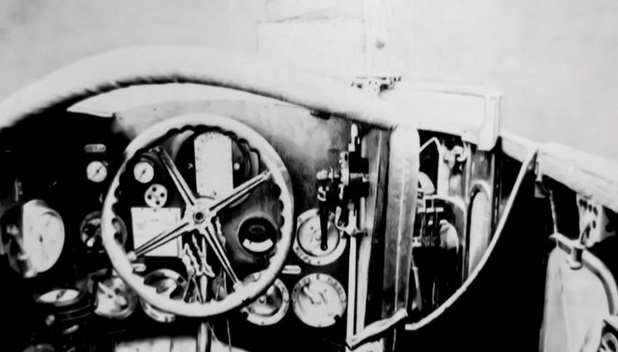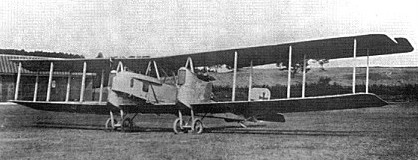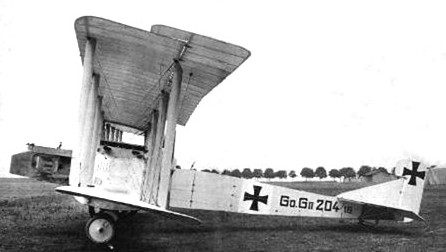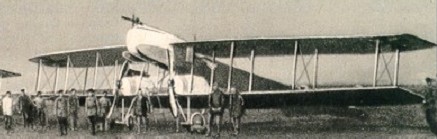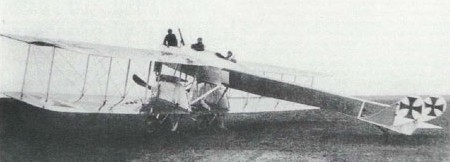
Gotha G.V

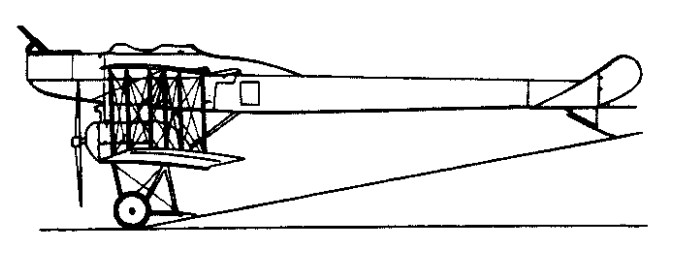
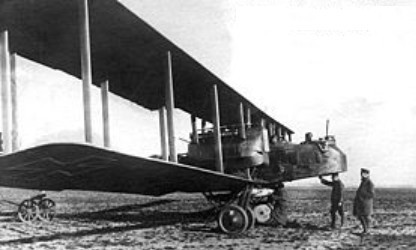
Operational use of the G.IV demonstrated that the incorporation of the fuel tanks into the engine nacelles was a mistake. In a crash landing the tanks could rupture and spill fuel onto the hot engines. This posed a serious problem because landing accidents caused 75% of operational losses. In response Gothaer produced the G.V, which housed its fuel tanks in the center of the fuselage. The smaller engine nacelles were mounted on struts above the lower wing.
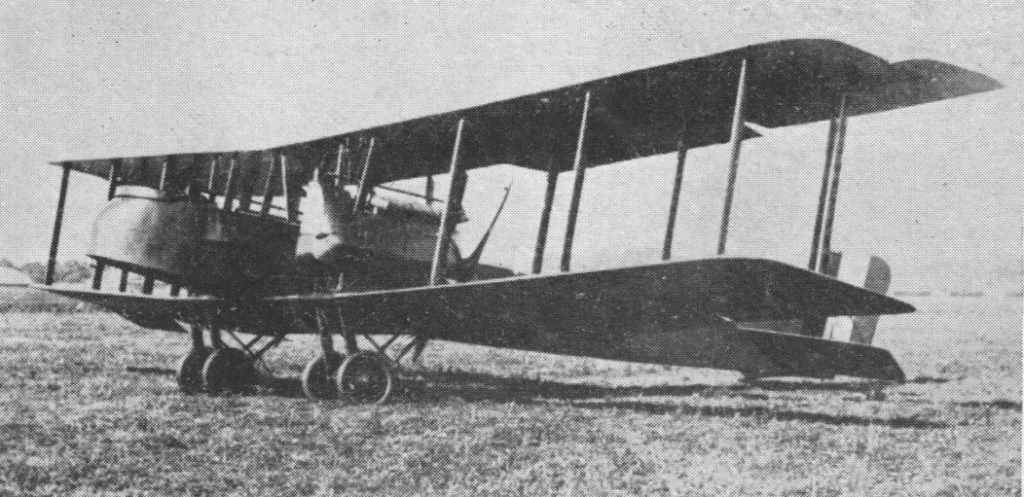
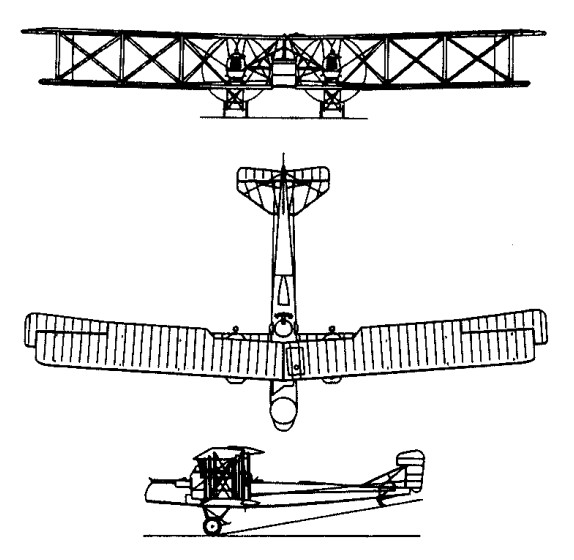
The G.V was a three-bay biplane with wings of two-spar wooden construction, with plywood covering of the centre section of the lower wing and fabric covering over the remainder. The wooden fuselage has plywood covering. Conventional control surfaces are fabric covered steel tube construction. Ailerons are on all four wings and each undercarriage unit has twin wheels.
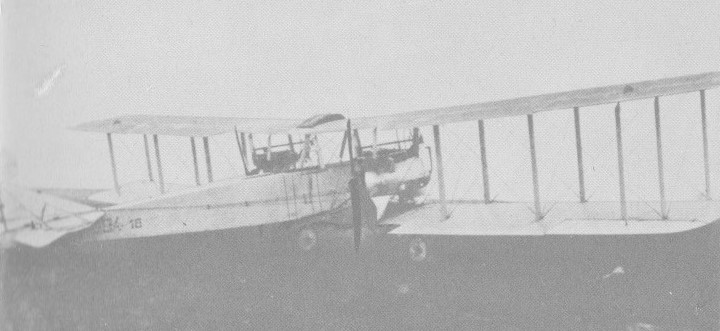
Gotha G.V Article

The Gotha G.V pilot seat was offset to port with the fuel tanks immediately behind. This blocked the connecting walkway that previously on earlier machines allowed crew members to move between the three gun stations. All bombs were carried externally in this model. The Gotha included an important innovation in the form of a “gun tunnel” whereby the underside of the rear fuselage was arched, allowing placement of a rearward-facing machine gun protecting from attack from below, removing the blind spot.
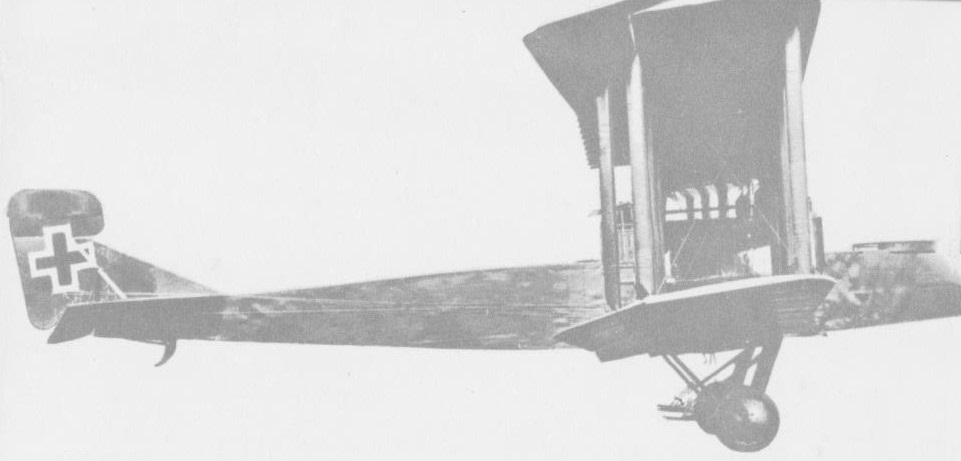
The base variant of G.V offered no performance improvement over the G.IV. The G.V was up to 450 kg (990 lb) heavier than the G.IV due to additional equipment and the use of insufficiently seasoned timber. The Mercedes D.IVa engines could not produce the rated 190 kW (260 hp) due to inferior quality of fuel.

The G.V entered service in August 1917. For the performance reasons aforementioned, it generally could not operate at altitudes as high as the G.IV. On 13 June 1917 London was raided in daylight by 14 Gothas against little opposition. As the RFC formed home defence squadrons, after one final raid by 22 Gothas on 7 July 1917, the raiders switched to night bombing.

G.Va
In February 1918, Gothaer tested a compound tail unit with biplane horizontal stabilizers and twin rudders. The new tail unit, known as the Kastensteuerung, improved the aircraft’s marginal directional control on one engine. The resulting G.Va subvariant incorporated the new tail as well as a slightly shorter forward fuselage with an auxiliary nose landing gear. All 25 G.Va aircraft were delivered to Bogohl 3, the new designation for the former Kagohl 3.

G.Vb
Carried an increased payload comparing to the earlier G.Va, and operated at a maximum takeoff weight of 4,550 kg (10,030 lb). To reduce the danger of flipping over during landing, Gothaer introduced the Stossfahrgestell (“shock landing gear”), a tandem two-bogie main landing gear. The Stossfahrgestell proved so good that it was fitted to all G.V’s in Bogohl 3. Some G.Vb aircraft also had Flettner servo tabs on the ailerons to reduce control forces.

Idflieg ordered 80 G.Vb aircraft, the first being delivered to Bogohl 3 in June 1918. By the Armistice, all 80 aircraft were built but the last batch did not reach the front and was delivered direct to the Allied special commission.

Engines: 2 x Mercedes D.IVa, 260 hp
Wingspan: 77 ft 9 in
Wing area: 963.4 sq.ft
Length: 38 ft 11 in
Height: 14 ft 1.25 in
Empty weight: 6040 lb
Take-off weight: 8763 lb
Max speed: 87 mph at SL
Range: 520 mi
Armament: 2 x mg
Bombload: 660-1100 lb
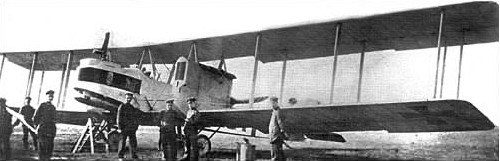
Gotha G.IV

The Gotha G.IV was a development of the G.III.
The blunt nose made it possible to place the engines closer together, and together with placing the tailfins in the slipstream this gave better one-engine performance making it possible to run the engine at full power. But none of the type G twin-engined biplanes could fly level on one engine. The Gotha G was a ‘tunnel’ in the bottom of the tail that made it possible for the tail gunner to cover the lower rear of the aircraft.

Gotha G.IV

Later versions had biplane tails with twin fins and eliminated the position for the nose gunner.

Gotha G-IV

The G.IV (also produced by LVG and Siemens-Schuckert) was used in the first mass attack on England, when 21 Gothas raided Folkestone, Shorncliffe and elsewhere on 25 May 1917, killing about 95 people and injuring many others. On 13 June 14 Gothas attacked London for the first time and caused the worst casualties (of an air raid) of the war, with 162 people being killed and 432 injured. The heavy casualties suffered among the civilian population of England by these raids forced the return of aircraft from France to defend the cities, and such was their success that the last big raid on England during daylight hours was carried out on 12 August.

Gallery

G.IV
Engine: 2 x 260hp Mercedes D.IVa
Take-off weight: 3975 kg / 8763 lb
Empty weight: 2740 kg / 6041 lb
Wingspan: 23.70 m / 77 ft 9 in
Length: 11.86 m / 38 ft 11 in
Height: 4.30 m / 14 ft 1 in
Wing area: 89.50 sq.m / 963.37 sq ft
Max. Speed: 140 km/h / 87 mph
Cruise speed: 124 km/h / 77 mph
Ceiling: 6500 m / 21350 ft
Range: 522 km / 324 miles
Crew: 3

Gotha G.III

The Gotha G.II and G.III bombers made their appearance in 1916. The two bombers were remarkably similar, differing only in their engines and internal details. The G.III entered service in August of 1916 and was powered by two Mercedes D IVa direct drive engines. Engine power went directly to the propeller shaft without using a reduction gear to reduce revolution speed. Both aircraft were armed with two 7.92mm Maxim IMG Parabellum machine guns – one in the nose and another in the aft fuselage – and carried approximately 540kg of bombs. A few G.IIs and G.IIIs were equipped with a trapdoor in the undersurface of the rear fuselage, which permitted the rear gunner to take up a prone position and fire aft or downwards from a ventral position to defend the bomber’s vulnerable ‘blind spot.’

Gotha G.II

The Gotha G.II and G.III bombers made their appearance in 1916. The two bombers were remarkably similar, differing only in their engines and internal details. The G.II entered service in March of 1916 and was powered by a pair of direct drive 164kW six-cylinder liquid-cooled Mercedes DIV engines mounted in a pusher configuration. Some 15 G.IIs were used in the Balkans until they were withdrawn due to unreliable engines.
Both aircraft were armed with two 7.92mm Maxim IMG Parabellum machine guns – one in the nose and another in the aft fuselage – and carried approximately 540kg of bombs. A few G.IIs and G.IIIs were equipped with a trapdoor in the undersurface of the rear fuselage, which permitted the rear gunner to take up a prone position and fire aft or downwards from a ventral position to defend the bomber’s vulnerable ‘blind spot.’
The G.II used straight-eight DIV engines of 220hp, the G.III straight-six DIVa’s with 260hp.
Also the G.II did not have the trap-door, this was on G.IIIs only. Only 10 G.IIs were apparently built.

G II
Engine: 2 x Benz D IV, 165kW
Crew: 3

Gotha Ursinus G.I

The first G.I flew in July 1915 followed by a further 17 of these three seater machines. While the prototype used two 160hp Mercedes D IIIs, the production aircraft employed two 150hp Benz Bz IIIs. mounted on the lower wing. A single Mercedes D.III-engined example of a seaplane version was also completed as the U.W.D. (Ursinus Wasser Doppeldecker, or Oscar Ursinus-designed float biplane).

G.I
Engine: 2 x Benz Bz-III, 110kW
Take-off weight: 2810 kg / 6195 lb
Wingspan: 22.0/19.7 m / 72 ft 2 in / 64 ft 8 in
Length: 12.9 m / 42 ft 4 in
Height: 3.9 m / 12 ft 10 in
Wing area: 82.0 sq.m / 882.64 sq ft
Max. Speed: 130 km/h / 81 mph
Ceiling: 2700 m / 8850 ft
Range w/max.fuel: 540 km / 336 miles
Crew: 3
Armament: 1 machine-gun

Goodyear GZ-20

GZ-20A

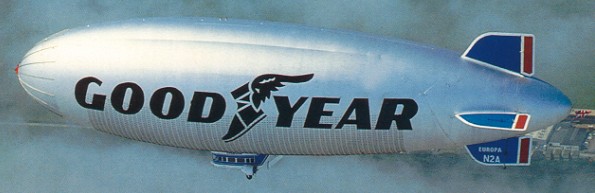
The GZ-20 class was introduced in 1969, with America (N10A) and Columbia (N3A) being the first two. The Europa (N2A) followed in 1972 and was based in Italy, the first Goodyear blimp operated outside of the United States. These blimps are slightly longer than the GZ-19. Beginning in 2014, Goodyear began retiring the GZ-20 and replacing them with the Zeppelin NT. On February 23, 2014, Spirit of Goodyear was retired in Pompano Beach after the 2014 Daytona 500. On August 10, 2015, the California-based GZ-20, the Spirit of America, was decommissioned. The Spirit of Innovation, took over California operations in September 2015 until its retirement in March 2017 as the last remaining GZ-20. In fall of 2017, Wingfoot Two will be relocated to California.

The interest shown by the general public in the Goodyear airships led in 1968 to a major expansion pro¬gramme involving the construction of a new “Mayflower” (GZ 19A) for Miami, a new “Columbia” (GZ 20) for Los Angeles, and a third ship “America” (GZ 20) for a new base near Houston, Texas. The GZ 20 type has an envelope of 202,700 cu.ft. and is powered by two 210 h.p. Continental engines. These ships became operational during 1969 and were joined in 1972 by “Europa” (GZ 20A), a brand new ship based at Rome as part of a new European venture. A completely new ship built at Akron (car) and Litchfield Park, Arizona (Envelope). Assembled and first flown at Cardington, Beds, 10 71 to 3 72.

The GZ 20 commercial airship America first flew in 1969, and was previously Ranger II and L 8. The second “Ranger” was a replacement for the first. Completed after outbreak of war and delivered direct to U.S.N. as L 8 at Moffett Field, 26 2 42. The car returned to Goodyear in 1946 and was stored. Rebuilt as GZ 20 type for AMERICA, 1968 69.

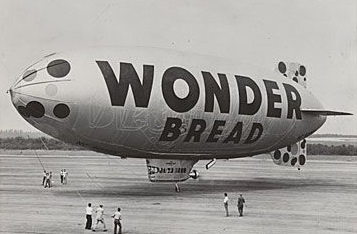
Goodyear operated four helium non-rigid airships, made of neoprene-coated dacron, for publicity and rides.
The Los Angeles based airship Columbia, owned and operated by the Goodyear Tire and Rubber Company, was scheduled to be retired in late July 1975. During six years of operation the Columbia has flown more than 10,200 hours, covering more than 306,000 miles at an average speed of 30 miles per hour.

The blimp will be replaced by another airship bearing the same name, and of the same dimensions: 192 feet long, 59 feet high, and 50 feet wide. The new Columbia will be the 301st airship constructed by Goodyear since 1917, and will join three other Goodyear blimps based in Miami, Houston, and Rome in 1975.

Gallery

GZ 20 AMERICA
Ex RANGER II and Navy L 8.
Registration: N10A.
First Flight: 25 4 69.

GZ 20 COLUMBIA (III)
Ex ENTERPRISE II and Navy L 16.
Registration: N3A.
First Flight: 18 8 69.

GZ 20A EUROPA
Registration: N2A.
First Flight: 8 3 72.
Engines: 2 x Continental IO 360 D, 210 hp.
Length: 192ft 6in.
Maximum Diameter: 46ft.
Volume: 202,700 cu ft.
Max speed: 50 mph.
Cruising speed: 35 40 mph.
Max ROC: 2,400ft/min.
Endurance: 10 hours (with normal tanks), 23 hours (with auxiliary tanks).
Fuel: 138 Imp Gal (normal tanks), 158 Imp Gal (auxiliary tanks).
Max Gross Wt: 12,840 lb.
Empty Wt: 9,375 lb.
Useful load: 3,475 lb.

Goodyear GZ-19

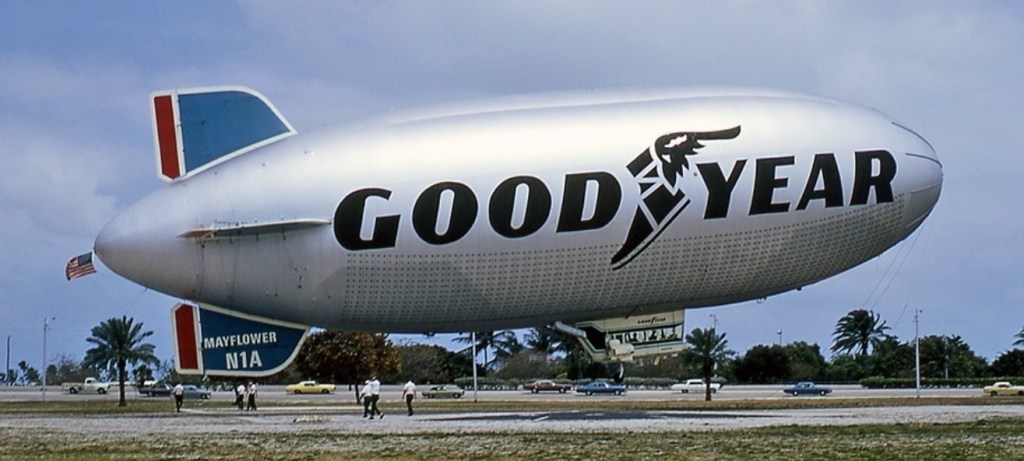
Introduced in 1963 and discontinued in 1978 after the Mayflower (N38A) was destroyed by a tornado, the GZ-19 design for this class resembles the U.S. Navy’s L class blimp.

The interest shown by the general public in the Goodyear airships led in 1968 to a major expansion pro-gramme involving the construction of a new “Mayflower” (GZ 19A) for Miami, a new “Columbia” (GZ 20) for Los Angeles, and a third ship “America” (GZ 20) for a new base near Houston, Texas.

Flying the Goodyear Columbia

Four American completed training for blimps when Columbia was christened in August 1963. Ray Belotti, Oxnad, Calif.; D.E.Swanson, Orange County, Fla; M.R.Johnson, St.Petersburg, Fla, and L.M.Cermak, Akron, Oh, completed 150 hrs of flight instruction including 20 hrs instrument.

The GZ 20 type has an envelope of 202,700 cu.ft. and is powered by two 210 h.p. Continental engines.

These ships became operational during 1969 and were joined in 1972 by “Europa” (GZ 20A), a brand new ship based at Rome as part of a new European venture.

The Goodyear post-war fleet was;
RANGER (III) Registration: N1A. First Flight: 28 5 46.
Ex U.S.N. L 18. To Goodyear 1946. Retired, 30 5 49. Flew again, 24 5 51. Wrecked, Fort Lauderdale, Fla., 26 1 58. Car stored. Rebuilt as GZ 19A type MAYFLOWER IV, 1968.
VOLUNTEER (II) Registration: N2A. First Flight: 26-9 46.
Ex U.S.N. L 17. To Goodyear 1946. Retired, 30 10 49. Car rebuilt as GZ 19A type for COLUMBIA II 1963.
ENTERPRISE (II) Registration: N3A. First Flight: 9 10 46.
Ex U.S.N. L 16. To Goodyear 1946. Retired, 10 12 59. Car rebuilt as GZ 20 type for COLUMBIA III 1969.
MAYFLOWER (II) Registration: N4A. First Flight: 12 5 47.
Ex U.S.N. L 14. To Goodyear 1946. Retired, 24 11 49. Car rebuilt as GZ 19 type for MAYFLOWER III 1958 59.
PURITAN (II) Registration: N10A. First Flight: 27-3 47.
Ex .U.S.N. K 28. To Goodyear 1946. Retired 7 4 48. Reg. transferred to AMERICA 1969.
MAYFLOWER (III) Registration: N4A. First Flight: 25 2 59
Car rebuilt as GZ 19A, 1963. Retired from fleet service, 9 68. Used for R & D work and experimental military duties, 10 68 to 10 69. First airship to fly powered by stern mounted propeller system. Retired, 24 10 69.
COLUMBIA (II) Registration: N2A
First Flight: 23 7 63
GZ 19A type. Retired, 10 69. Ex VOLUNTEER 11 and Navy L 17.

GZ 19A
Capacity: 147,000 cu.ft.
Engines: 2 x 175 h.p. Continental.

GZ 19A MAYFLOWER (IV)
Ex RANGER III and Navy L 18. Registration: N1A. First Flight: 4 9 68.

Goodyear ZPN / ZPG / ZP2N / ‘N’ Class

ZPG-3W

With the end of WW II, the U.S. Navy’s airship service was reduced in size, but new types were developed by Goodyear and brought into service with the Navy. First of these was the N Class of 875,000 cu.ft. flown in prototype form on June 18, 1951. Preliminary ground and flight tests for the prototype were disappointing, mandating further evaluation to explore improvements. The Board of Inspection and Survey trials for N-1 persisted into 1953.

N-1 at Lakehurst, 18 Nov 1952

Under the post war naval airship designation system NA became ZPN 1, and with a further change in 1954 became ZPG 1. This greatly improved, long range patrol ship was 334ft long and powered by, two 800 h.p. Wright Cyclone 7 engines mounted inside the car. A crew of 14 was carried in the double decked car which gave much improved messing and sleeping arrangements compared with those of the wartime ships. One of the most notable external features of the design was the angled position of the tail surfaces, so arranged to, help keep the overall height of the ship (96ft) within the limits of existing sheds. Only one example of this type was built, (GZ 9) but it served as the basis of the later ZPG 2 and ZPG 3 ships.
After extensive evaluation trials with the prototype ZPN 1, an improved and slightly larger version, the ZP2N4, was completed and flown on March 20, 1953. This type was put into production in two forms known as the ZPG 2 patrol version and the ZPG 2W Airborne Early Warning version. The ZPG 2 of 975,000 cu.ft. was powered by two 800 h.p. Wright Cyclone 7 engines driving Curtiss Electric three blade, variable pitch, reversible propellers on out riggers projecting from each side of the car.
The control car accommodated the fourteen crew on two decks, with all operational stations on the lower deck and crew’s quarters on the upper deck. All control surfaces were operated by a single control column, duplicated for the pilot and co pilot; a major departure from the previous normal airship practice of separated elevator and rudder control wheels. The ship was also equipped with an autopilot which was of immense value in reducing crew fatigue on patrols lasting two or more days.
Twelve were 12 built 1953-1955 and were in service to 1961.
The ZPG-2W version was essentially the same except that it carried large quantities of sensitive, long range, radar equipment for aircraft detection, and a large radome on top of the envelope. This could be reached from the control car by way of a 75ft vertical tunnel inside the envelope. The, ZPG 2s made many long flights, setting up World endurance records in May, 1954, of 200.4 hours continuous flight, and in March, 1957, of 264.2 hours (11 days), both flights without refuelling. The second flight took the airship from its base at Weymouth, Mass., to Key West, Florida, by way of Portugal and North Africa, 8,216 miles in all.
Five were built 1957 1958 and were in service to 1961.
As a further development of the ZPG type, the ZPG-3W appeared in July, 1958. The largest non rigid airship ever built, it was 404ft long with an envelope capacity of 112 million cubic feet. Power was provided by two specially developed Wright Cyclone 9 engines of 1,525 h.p., driving 18ft diameter propellers. Twenty four crew were carried in a car 83ft long, with extensive crew quarters on the upper deck. The envelope itself served as a radome for a 40ft internally mounted radar antenna which rotated within the helium gas. Four were built 1958 1960.
Total post war naval airship production accounted for 55 of the 200 new airships built by Goodyear between December 1939, and July 1963. The last for the U.S. Navy was a ZPG3W delivered on April 4, 1960. At that time the Navy still had 27 airships in commission. However, changes in naval policy and the need for budget savings in the light of the costly new Polaris submarine programme, forced a re think of naval air requirements. On June 26, 1961, the Navy announced that the airship service was to be closed down, a decision which took effect during the following year.
Thirteen naval airships were deflated and placed in long-¬term storage in case of future need, while two ZPG 2s were retained for experimental work with the Airship Test and Development Department at Lakehurst. In addition, one ZS2GA was made available to Mississippi State University for a programme of boundary layer control research on airship envelopes. When these ships, too, were deflated at the end of 1962, forty five years of U.S. Naval airship operations came to an end.
The last Goodyear airship for the American Navy was the ZPG 3W of 1958, the largest non rigid ever built. A 40ft radar antenna rotated inside the envelope. These served until the closure of the airship service in 1962.

Goodyear ZPN

ZPG 1 (GZ 9)
Volume: 875,000 cu ft.
Length: 324ft.
Max Dia: 74ft.
Engines: 2 x 800 h.p. Wright R 1300 3A Cyclone 7.

ZPG 2 (GZ 11)
Volume: 975,000 cu ft.
Length: 343ft.
Max Dia: 76ft.
Engines: 2 x 800 h.p. Wright R 1300 3A Cyclone 7.

ZPG 2W (GZ 14)
Volume: 975,000 cu ft.
Length: 343ft.
Max Dia: 76ft.
Engines: 2 x 800 h.p. Wright R 1300 3A Cyclone 7.

Type GZ 17 (Navy ZPG 3W) 1958
Engines: 2 x 1,525 h.p. Wright R 1820 88 Cyclone 9.
Length: 403ft 6in.
Maximum Diameter: 85ft.
Volume: 1,465,000 cu ft (before stretch).
Maximum Speed: 90 m.p.h.
Cruising Speed: 50 60 m.p.h.
Maximum rate of climb: 2,400ft/min.
Range: in excess of 5,000 miles.
Endurance: 80 hours plus.
Fuel: 4,375 gallons.
Maximum Gross Weight: 93,496 lb.
Empty Weight: 71,130 lb.
Useful Load: 22,366 lb (including dynamic lift).

ZPG 3W (GZ 17)
Volume: 1,490,000 cu ft.
Length: 404ft.
Max Dia: 85ft.
Engines: 2 x l,525 h.p. Wright R 1820 88 Cyclone 9.

ZPN-1
Volume: 875,000 cu. ft.
Length: 324.4 ft.
Engines: two 800 h.p. Wright R1300
Top speed: 85 m.p.h.

ZPG-2
Volume: 975,000 cu. ft

Goodyear ‘M’ Class

In order to improve range, endurance, and war load still further, Goodyear designed the M Class, the last of the wartime designs to be built. Of 625,000 cu.ft. capacity and powered by two Pratt & Whitney Wasps of 600 h.p., twenty two were originally ordered. First flight of M 1 was on 27 October, 1943, but with the improving anti¬submarine situation after 1944 only three more were completed (M 2 to 4). They were used after the war on airship research and development work and XM 2 was flown with a retractable tricycle landing gear which was used on later naval airships.

M-1
Volume: 625,000 cu ft.

GZ 5
Volume: 647,000 cu ft.
Length: 310ft.
Max Dia: 73ft.
Engines: 2 x 600 h.p. Pratt & Whitney R 1340 AN 2 Wasp.

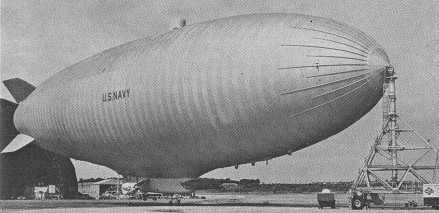
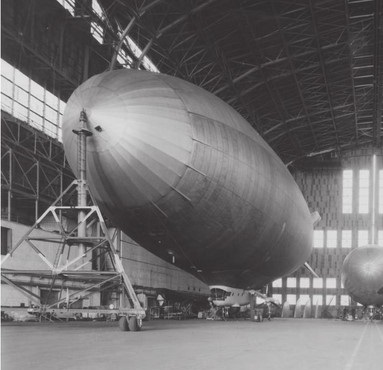
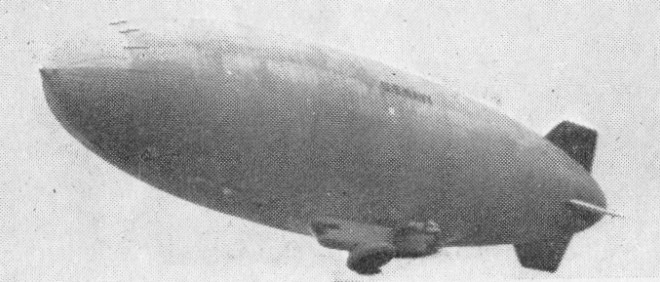
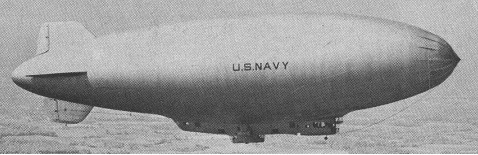
Goodyear ‘K’ Class / ZPK Class / ZP / ZSG / ZS2G

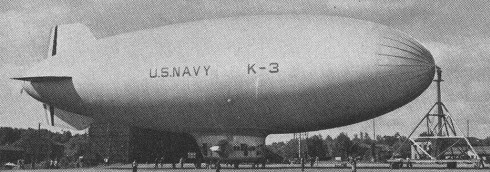
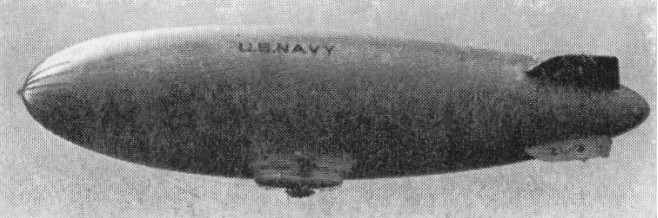
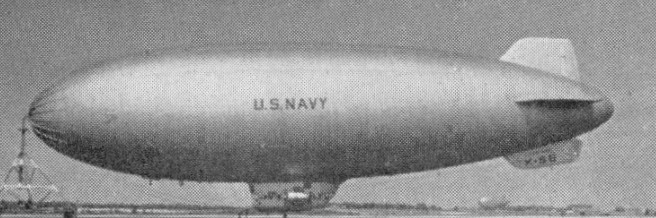
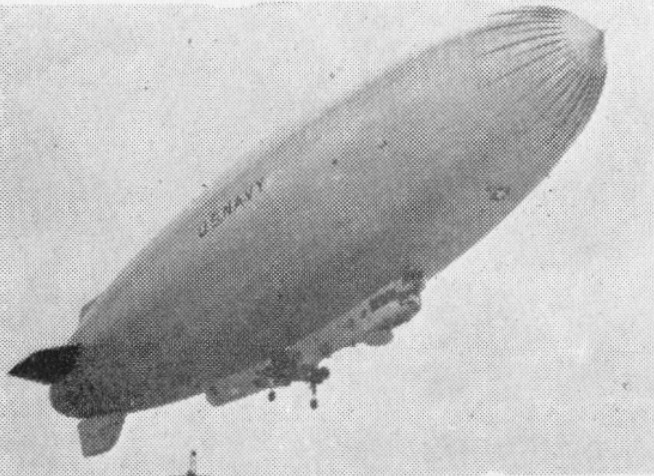
The “K” class are the standard U.S. Navy patrol airships and 130 were built during war. Most were modified by 1955 into ZP2K and ZP3K, with the latest radar search equipment and increased capacity envelope.

The L 1 was followed by the prototype of a new class of naval airship which was destined to be built in larger numbers than any other single airship type, either rigid or non rigid; the K Class. K 1 was a one off experimental ship built by the Naval Aircraft Factory in 1931, using a Goodyear envelope of 319,900 cu.ft. and was remarkable mainly in being the first U.S. Navy blimp to have the car attached flush to the underside of the envelope. At that time the Navy was primarily interested in the new rigid airships then being built, but with the disbandment of the Army L.T.A. Section the Navy became responsible for coastal patrol work as, well as long range scouting. As a result there began, with the aid of Goodyear, the serious development of the patrol type airship, and K 2 was the result. Powered by two 550 h.p. Pratt & Whitney Wasp engines, she was the largest non rigid of her day, with an envelope of 404,000 cu.ft. capacity. First flight took place on December 8, 1938, and she was soon to be followed by many more of her kind.

ZP 14 squadron was formed in 1944 to operate from Port Lyautey, French Morocco, the airships being flown across the Atlantic via the Azores, the first non rigids ever to make the crossing. First across were K 123 and K 130, both ships completing the 3,145 mile journey between May 29, and June 1, 1944, in a flying time of 58 hours. In the following months, K ships were based in southern France (Cuers), Sardinia, Italy (Pisa and Venice), and at a temporary mooring mast at Gibraltar. Primary mission in the area was anti submarine work in the Straits of Gibraltar, but they also completed many hours of mine sweeping operations in conjunction with surface vessels of the Royal Navy. Using magnetic airborne detection gear, flying mainly at night or in bad weather when other types of aircraft could not be used due to the low flight altitudes required on this work, they were able to maintain round-the clock patrols. After the arrival of the airships in the area no, more U boats were able to enter or leave the Med. without detection and eventual destruction.

Larger numbers were built of K Class airships than of any other single type.

After 1948, the K Class became known as the ZPK Class and many of these were modified with larger envelopes and improved electronic detection gear to become ZP2K (456,000 cu.ft.), and ZP3K (527,000 cu.ft.). These were followed in 1954 by the new ZP4K and ZP5K which later became designated the ZSG 4 and ZS2G-1 respectively.

The “K” class are the standard U.S. Navy patrol airships and 130 were built during war. Most were modified by 1955 into ZP2K and ZP3K, with the latest radar search equipment and increased capacity envelope.

Goodyear ZP2K
Goodyear ZP3K

The ZSG 4 was a new development of K Class. 15 built 1953¬-1955, and in service to 1961.
There were 18 ZS2G-1 built 1954 56 and they remained in service to 1961.
While the ZSG 4 was essentially a modified K Class, the ZS2G-4 was an entirely new design with an envelope of 650,000 cu.ft. and a unique inverted Y tail configuration. Carrying a crew of eight and equipped with the latest in anti submarine devices, these ships could be refuelled from surface craft at sea and re ballasted by a water pick up system. The prototype flew on July 22, 1954, and the type remained in service until 1961.
Immediately after the war, Goodyear bought back from the Navy four complete L ships and one K ship to form the basis of a new commercial fleet. Goodyear were not the only company to be interested in the airship, however.

The Douglas Leigh advertising company purchased no less than 29 surplus L and K ships in February, 1946.

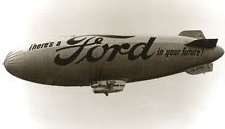
In September 1946, the actress Elizabeth Taylor christened the first Leigh airship at ceremonies in the Lakehutst hanger. The next day, the “MGM Aiship” inaugurated aerial operations. A second ship promoting the Ford Motor Company was launched, and a third, the “Tydol Airship” (ex-K-76), was pressed into service early in 1947.

East Coast operations were promising, so similar enterprise was organised in California, with headquarters at Moffat Field. Flights using an L-ship for promotion commenced in spring 1947.

The coming of television advertising and the high cost of replacing the war¬ surplus ships soon began to tell, and by the early 1950s Goodyear were alone as commercial airship operators in America.

The later K ships of 425,000 cu. ft. with a crew of three officers and nine men, had a range of 2,000 miles at 45 m.p.h. with a normal fuel load, and a top speed of 75 m.p.h. Total orders for the K Class amounted to 138 (K 2 to K 139), but the last four were cancelled before completion. Total production was 134 ships, K 2 to K 135. Post war many modified as ZP2 K and ZP3 K.

ZS2G-1

Thirteen naval airships were deflated and placed in long-¬term storage in case of future need, while two ZPG 2s were retained for experimental work with the Airship Test and Development Department at Lakehurst. In addition, one ZS2GA was made available to Mississippi State University for a programme of boundary layer control research on airship envelopes. When these ships, too, were deflated at the end of 1962, forty five years of U.S. Naval airship operations came to an end.

The ZP3M long endurance patrol airship, with a volume of 725,000 cu. ft. and length of 310 ft. One ZP3M has remained airborne for more than a week. Early ZPM-1 aircraft have two 550 h.p. Wasps; later ZP3Ms have two 700 h.p. Wright Cyclones. The ZP2M is a modernised ZPM-1, with revised electronics.

Goodyear ZP3M

Goodyear ZPG2 / ZP-3
Variant: Piasecki Heli-Stat

GZ 6
Volume: 404,000 cu ft to 425,000 cu ft.
Length: 251.7ft.
Max Dia: 62.5ft.
Engines: 2 x 420 h.p. Wright R 975 28 Whirlwind 9 or Pratt & Whitney R 1340 AN 2 Wasp.

ZSG 2 & ZSG 3 (GZ 10)
Volume: 456,000 cu ft and 527,000 cu ft.
Length: 267ft.
Max Dia: 70ft.
Engines: 2 x 550 h.p. Pratt & Whitney R 1340 Wasp.

ZSG 4 (GZ 12)
Volume: 527,000 cu ft.
Length: 267ft.
Max Dia: 70ft.
Engines: 2 x 550 h.p. Pratt & Whitney R 1340 Wasp.

ZS2G-1 (GZ 15)
Volume: 650,000 cu ft.
Length: 285ft.
Max Dia: 68ft.
Engines: 2 x 800 h.p. Wright R 1300 4 Cyclone 7.

ZP2K
Volume: 456,000 cu. ft.

ZP3K
Engines: 2 x 550 h.p. Pratt & Whitney Wasp
Volume: 527,000 cu. ft.
Length: 253 ft
Speed: over 75 m.p.h.

ZP3M
Engines: 2 x 700 h.p. Wright Cyclones
Volume: 725,000 cu. ft.
Length: 310 ft

ZPM-1
Engines: 2 x 550 h.p. Wasps.