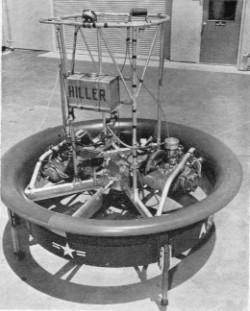
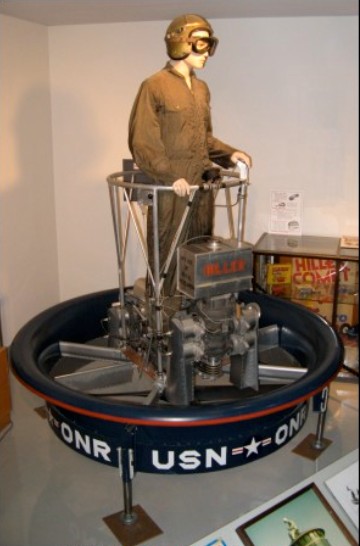
The first of the Army’s designated VTOL research aircraft was a continuation of the work to develop a ‘flying platform’. The idea for a machine of this kind, making use of kinesthetic control (in which the pilot leans in the direction he wishes to go) is attributed to Charles H. Zimmerman and dates back to 1940.
In the early 1950s, N.A.C.A. (the forerunner of N.A.S.A.) undertook a research programme at Langley Laboratory to prove the idea. Three types of aircraft were studied, each capable of carrying one man who stood on a platform, and supported, respectively, by a rotor, a ducted fan and compressed air. Subsequently, the Army placed contracts for further development of a rotor type flying platform by de Lackner (the Aerocycle) and of the ducted fan type by Hiller. The Hiller Helicopter Company had by this time already completed some studies in conjunction with Charles Zimmerman, in 1947, but no free flights were then achieved. A contract was placed with the company in 1953 for the construction of a prototype under Office of Naval Research supervision and this flying platform achieved its first successful untethered flight in February 1955.
The Pawnee featured a pair of contra-rotating rotors spinning inside a duct with a diameter of 1.5 meters (5 feet). Each rotor was driven by its own 30 kW (40 HP) two-stroke engine. The pilot stood above the duct, surrounded by a circular handrail and protected by a safety harness. He controlled the engines with a twist-grip throttle and leaned to guide the aircraft. The duct improved safety during takeoff and landing. The duct also provided additional lift, since there was a horizontal “lip” around its top edge that curved down into the duct. The airflow into the duct resulted in low air pressure above the lip, and the pressure difference between the top and bottom of the lip generated a net upward force, providing as much as 40% of the total lift of the aircraft.
In practice, speeds of up to 15 m.p.h. were achieved. Hand controls included the throttles to control vertical movement and a control to apply power deferentially to the two propellers in order to keep the platform headed in the right direction.
The Pawnee handled very well in flight tests. The machine was then modified with longer landing gear legs to increase ground clearance, and eight vanes were mounted underneath the duct to improve flight control.
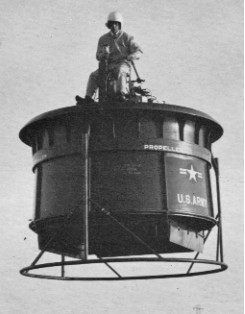
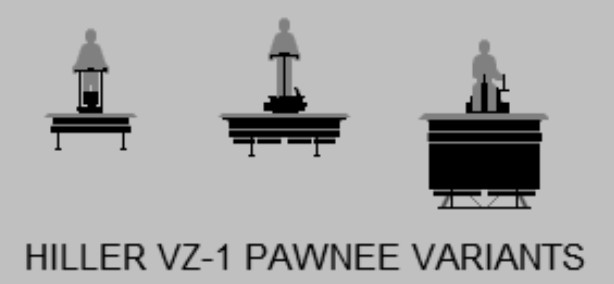
Results of the trials with their early platform were sufficiently promising for the Army to award Hiller a second contract, in 1956, for two larger examples of the flying platform. These were designated W‑ I E (serials 56‑6944 and 56‑6945).
VZ-1E
In the W 1E, the diameter of the duct was increased to 8 ft. and the chord was more than doubled. Three interconnected 30 kW (40 HP) Nelson H 56 engines supplied power to the counter rotating propellers. Controls were modified to be similar to those in a helicopter and the pilot had a rudimentary seat.
First flight of the W 1E (56 6944) was made on February 4th, 1955. It was delivered to the Army in 1959 but no further development occurred.
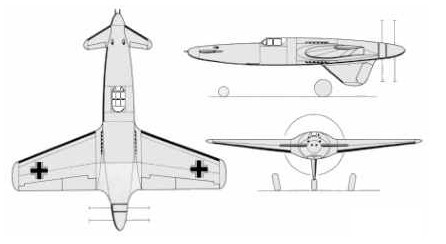
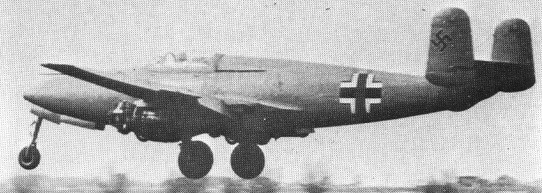
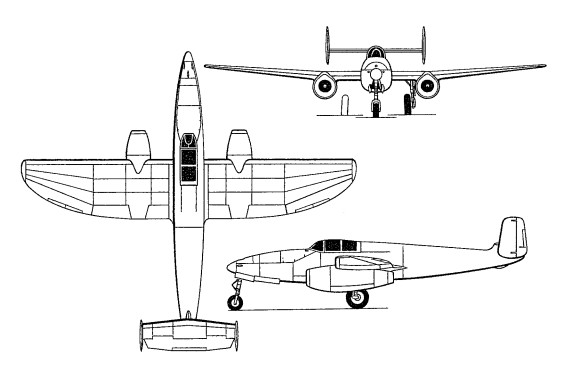
This 1941 aircraft design was to be a possible successor to the Messerschmitt Bf 110 heavy fighter. Although of a unusual configuration for that time, there were advantages (and disadvantages) to its rear wing/forward canard construction. The Hs P.75 featured a tapered fuselage, with the slightly swept-back wings being mounted mid-fuselage and set back to the rear of the aircraft. The widened fuselage was designed to house the Daimler Benz DB 610 engine, which were two DB 605 engines joined side-by-side, just aft of the cockpit. These were the same engines that the Heinkel He 177 used, and were found to be prone to overheating and catching fire.Due to this development, they were changed in 1942 to the liquid-cooled, 24 cylinder Daimler Benz DB 613 engines (two coupled DB 603s) that produced 3500 horsepower. Both engine configurations were to drive contrarotating propellers (to offset tourque) of a 3.2m (10′ 6″) diameter via an extension shaft. There were a pair of swept-back canards located on the nose of the aircraft, that were to serve the purpose of elevators. The vertical tail unit was mounted beneath the fuselage, so that it could act as a tail bumper upon takeoff so that the propellers would not strike the ground. Since the propellers were located at the rear in a pusher configuration, a tricycle landing gear arrangement was chosen. Fuel was contained in three tanks, one in each wing and one behind the cockpit. A single pilot sat in the cockpit which was located about midway along the fuselage, and four Mk 108 30mm cannons were mounted in the nose. The advantages of the pusher propeller/forward canard design was that it opened up the pilot’s view, plus the weapons installation was much simplified and could be concentrated. The disadvantages would be engine cooling plus an ejection system or propeller jettison would have to be designed for the pilot to safely exit the plane in case of an emergency.
Henschel Hs P.75 Data Span: 11.3 m / 37 ft 1 in Length: 12.2 m / 40 ft 0 in Height: 4.3 m / 14 ft 1 in Wing Area: 28.4 sq.m / 305.7 sq.ft Max Weight 7500 kg / 16535 lb Wing Loading: 264 kg/sq.m / 54 lbs/sq.ft Ceiling: 12000 m / 39370′ Max. Speed: 790 km/h / 491 mph
A high-altitude reconnaissance bomber, developed from the Hs 128, the A-06 and A-07 pre-series aircraft had a wing span of 29m, and turbosupercharged DB 605 engines. They could reach 15500m.
The Hs 130E-0 was powered by two 1750 hp Daimler-Benz DB 603A engines, which were supplied with air by a compressor, driven by a 1475 hp DB 605T. This configuration was known as ‘HZ Anlage’. This aircraft was capable of attaining 16,500 m / 54,000 ft.
Five HS 130 pre-production E-0s and probably three E-1 production aircraft were completed before 1944 when the programme was cancelled.
One E-1, W.Nr.130082 BD+KA, was tested by a crew from the Versuchsverband at the Henschel plant at Berlin-Schonefeld late in 1944, but crashed on 17 December 1944 killing all on board.
Henschel was one of four companies (the others being Focke-Wulf, Gotha and Hamburger Flugzeugbau) to which, in April 1937, the Technische Amt of the Reichsluftfahrtministerium (RLM) issued a specification for a twin-engine ground-attack aircraft. It was required to carry at least two 20 mm MG FP cannon and to have extensive armour plating protection for crew and engines. The two designs for which development contracts were awarded on 1 October 1937 were the Focke-Wulf Fw 189C and Henschel Hs 129.
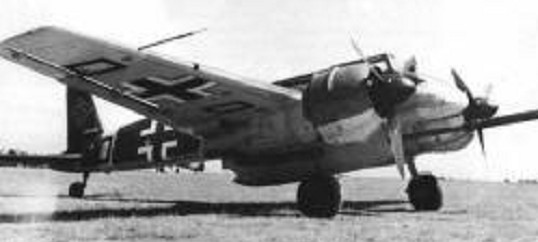
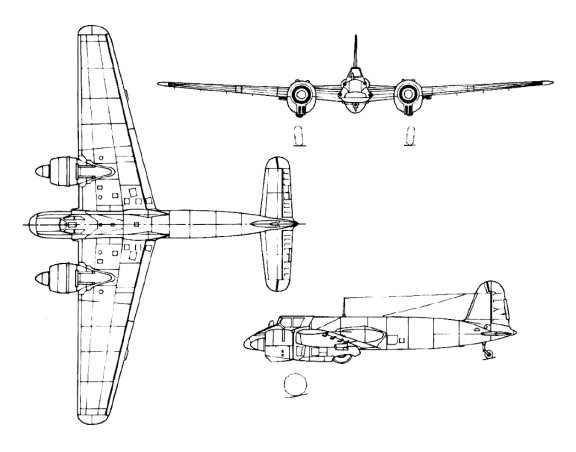
The Hs129 was another Friedrich Nicolaus design with a light alloy stressed-skin fuselage of triangular section. It was designed around a single large “bathtub” of steel sheeting that made up the entire nose area of the plane, completely enclosing the pilot up to head level. Even the canopy was steel, with only tiny windows on the side to see out of and two angled blocks of glass for the windscreen. It contained a small cockpit with a restricted view, necessitating the removal of some instruments to the inboard sides of the engine cowlings. The windscreen was made of 75 mm (2.95 in) armoured glass and the nose section was manufactured from armour plating. Nose armament comprised two 20 mm MG FF cannon and two 7.92 mm (0.31 in) MG 17 machine guns. In order to improve the armor’s ability to stop bullets the sides were angled in forming a triangular fuselage, resulting in almost no room to move at shoulder level. The Revi C 12/C gunsight was mounted outside on the nose. The prototype flew in the spring of 1939, powered by two 465 hp (347 kW) Argus As 410A-1 engines, and two further prototypes were flown competitively against the modified Fw 189 development aircraft for the Fw 189C.
The entire nose section formed a welded armoured shell 6 mm to 12 mm thick around the pilot, with toughened 75 mm thick glass in the canopy. The total weight of the nose armour was 2,380 lbs (1080 kg). In the end the plane came in 12% overweight and the engines 8% underpowered, and the controls proved to be almost inoperable as speed increased. The Fw design proved to be no better, both planes were underpowered with their Argus 410 engines, and very difficult to fly. In the end the only real deciding factor was that the Henschel was smaller and cheaper. The Focke-Wulf was put on low priority as a backup, and testing continued with the Hs 129A-0. Two self-sealing wing tanks each holding 45 Imperial gallons (205 litres) and a single self-sealing fuselage tank of 44 Imperial gallons (200 litres). The Hs 129B-2 was capable of carrying a single droppable auxiliary fuel tank of 33 Imperial gallons (150 litres)
The company was awarded a contract for eight pre-production Hs 129A-0 aircraft, and these were issued initially to 5 (Schlacht)./LG 2 in 1940, but transferred to 4./SG 101 at Paris-Orly in 1941, with the exception of two which were converted at Schonefeld to accept Gnome-Rhone 14M 4/5 radial engines. It was with this powerplant that 10 Hs 129B-0 development aircraft were delivered from December 1941; improvements included a revised cockpit canopy and the introduction of electrically-actuated trim tabs. Armament comprised two 20 mm MG 151/20 cannon and two 7.92 mm (0.31 in) MG 17 machine guns, along with the ability to carry four 50kg bombs under the midline.
But even before the A-1’s were delivered the plane was redesigned with the Gnome-Rhone 14M radial engine, which were captured in some number when France fell. This engine supplied 700 hp (522 kW) for takeoff compared to the Argus at 465 hp (347 kW). The A-1 planes were converted into Hs 129B-0’s for testing (although some claim that some A’s were sold to Romania) and the pilots were reportedly much happier. Their main complaint was the view from the canopy, so a single larger windscreen and a new canopy with much better vision were added, resulting in the production model Hs 129B-1. The first flight of the Hs 129B was in October 1941.
B-1’s started rolling off the lines in December 1941, but they were delivered at a trickle. In preparation for the new plane, I./Sch.G 1 had been formed up in January with 109’s and Hs 123’s, and they were delivered B-0’s and every B-1 that was completed. Still, it wasn’t until April that 12 B-1’s were delivered and its 4th staffeln was ready for action. They moved to the eastern front in the middle of May, and in June they received a new weapon, the 30 mm MK 101 cannon with armor-piercing ammo in a midline pod.
The production Hs 192B-1 series became operational on the Eastern front, where the type was to be used most widely, although it served also in North North Africa, Italy and in France after the D-Day landings. Sub-variants of the M 129B-1 series included the Hs 129B-1/R1 with additional offensive armament in the form of two 110 lbs (50 kg) bombs or 96 anti-personnel bombs. The Hs 129B-1/R2 with a 30-mm MK 101 cannon beneath the fuselage. The Hs 129B-1/R3 with four extra MG 17 machine-guns; the Hs 129B-1/R4 with an ability to carry one 551 lbs (250 kg) bomb instead of the Hs 129B-1/R1’s bomb load; and the Hs 129B-1/R5 which incorporated an Rb 50/30 camera installation for reconnaissance duties.
By May of 1942 only 50 of the planes had been delivered when they started to deliver the new Hs 129B-2 model side-by-side with the B-1. The only difference between the two were changes to the fuel system – a host of other minor changes could be found almost at random on either model. As time went on these changes were accumulated into the B-2 production line until you could finally tell them apart at a glance, the main differences being the removal of the mast for the radio antenna, the addition of a direction-finding radio antenna loop, and shorter exhaust stacks on the engines.
In the field the differences seemed to be more pronounced. The R-kits were renumbered and some were dropped, and in general the B-2 planes received the upgraded cannon pack using a MK 103 instead of the earlier MK 101. These guns both fired the same ammunition, but the 103 did so about almost twice the rate. The Hs 129B-2 series which was introduced into service in the early part of 1943. They included the Hs 129B-2/Rl which carried two 20 mm MG 151/20 cannon and two 13 mm (0.51 in) machine-guns; the generally similar Hs 129B-2/R2 introduced an additional 30 mm MK 103 cannon beneath the fuselage; the Hs 129B-2/R3 had the two MG 13s deleted but was equipped with a 37 mm BK 3,7 gun; and the Hs 129B-2/R4 carried a 75 mm (2.95 in) PaK 40L (‘L’ for Luftwaffe) gun in an underfuselage pod. Final production variant was the Hs 129B-3 of which approximately 25 were built and which, developed from the Hs 129B-2/R4, substituted an electro-pneumatically operated 75 mm BK 7,5 gun for the PaK 40 (Panzer Abwehr Kanone 40). The lethal capability of the Hs 129B-2/R2 was amply demonstrated in the summer of 1943 during Operation ‘Citadel’, the German offensive which was intended to regain for them the initiative on the Eastern Front after the defeat at Stalingrad. During this operation some 37,421 sorties were flown, at the end of which the Luftwaffe claimed the destruction of 1,100 tanks. However accurate these figures, not all of those destroyed could be credited to Hs 129s, but there is little doubt that the 879 of these aircraft that were built (including prototypes) played a significant role on the Eastern front. Inspite of its small numbers and deficiancies, proved extremely successful in the anti-role, however, it suffered heavy losses and not many examples survived the war.
Even by late 1942 complaints started about the MK103 against newer versions of the Soviet T-34 tanks. One solution would be to standardize on the larger 37 mm gun, itself adapted from an anti-tank gun that had recently been abandoned by the army. For some reason the Luftwaffe decided to skip over this gun (although it served perfectly well on the Ju 87), and install a gigantic 75 mm gun from the Panzer IV. A huge hydraulic system was used to damp the recoil of the gun, and an auto-loader system with twelve rounds was fitted in the large empty space behind the cockpit. The resulting system was able to knock out any tank in the world, but the weight slowed the already poor performance of the plane to barely flyable in this new Hs 129B-3 version. B-3’s only started arriving in June 1944, and only 25 were delivered by the time the lines were shut down in September. A small number were also converted from older B-2 models. In the field they proved deadly weapons, but with only 25 of them they had no effect on the war effort.
During operation Citadel, on 8 July 1943, the new Henschel Hs 129s of the German 4th Antitank Group of the 9th Ground-Attack Wing under Capt. Meyer, virtually wiped out a Soviet armoured brigade.
The Hs 129B equipped three Staffeln of the 8th Assault Wing of the Royal Romanian Air Corps. On 23 August 1944 there was a coup in Romania, as a result of which the country changed from being an ally of Germany to becoming an enemy. These Hs 129Bs, accordingly were used against the German armies, finally being combined into a unit equipped with the Ju 87D Stuka.
In order to address the poor performance of the aircraft, plans had been underway for some time to fit the plane with newer versions of the Italian Isotta-Fraschini Delta engine that delivered 850 hp (634 kW). However the engine ran into a number of delays, and was still not ready for production when the plant was overrun by the Allies.
In late September 1944, the entire manufacturing programme was abandoned, along with virtually all other German aircraft production except the ’emergency fighter programme’. Total production had amounted to only 879, including prototypes. Because of attrition and other problems, the Hs 129 was never able to fully equip the giant anti-tank force that could be seen to be needed as early as winter 1941-42, an overall effect on the war was not great. Towards the end, in autumn 1944, operations began to be further restricted by shortage of high octane petrol, and by the final collapse of Germany only a handful of these aircraft remained.
The Hs 129B-1 and B-2 were the major production variants, the latter fitted to carry a drop-tank. Some were equipped experimentally with the SG 113A recoilless gun installation: a battery of six 75mm smooth-bore tubes, each 1.6m long, mounted in the fuselage at an angle slightly beyond the vertical to fire downwards and rearwards. The weapon was intended for use against tanks and was triggered automatically when the aircraft flew over a tank at low altitude. A total of more than 800 Hs 129 were built.
A-Series Engines: Two 465 hp (347 kW) Argus As 410A-1 Maximum speed: 253 mph (407 km/h) at 12,565 ft (3830 m) Service ceiling: 29,525 ft (9000 m) Initial climb rate: 1,600 ft (486 m) per minute.
Hs 129A-0
B-Series Engines: 2x Gnome-Rhone 14M, 700 hp / 522 kW Propellers: Ratier Length: 32 ft / 9.75 m Wingspan: 46 ft 7 in / 14.20 m Height: 10 ft 8 in / 3.25 m Wing area: 312 sq.ft / 29 sq.m Empty equipped weight: 8,400 lb / 3,810 kg Maximum take-off weight: 11,574 lb / 5,250 kg Maximum speed: 253 mph / 407 km/h Combat range: 348 miles / 560 km Service ceiling: 29,525 ft / 9,000 m Armament: Guns: 2x 20 mm MG 151/20, 2x 7.92 mm MG 17 Bombs: 2x 110 lb, 4x 50 kg Crew: 1
Hs 129B-0
Hs 129B-1 Range: 348 miles (560 km) on internal fuel. Armament: Two 20 mm MG 151/20 cannon with 125 rounds per gun and two 7.92 mm (0.31 in) MG 17 machine guns with 500 rounds per gun.
Hs 129B-1/R2 Engine: 2 x Gnome Rhone 14M 4/5, 522kW Max take-off weight: 5110 kg / 11266 lb Empty weight: 3810 kg / 8400 lb Wingspan: 14.2 m / 6 ft 7 in Length: 9.75 m / 31 ft 12 in Height: 3.25 m / 10 ft 8 in Wing area: 29.0 sq.m / 312.15 sq ft Max. Speed: 407 km/h / 253 mph Ceiling: 9000 m / 29550 ft Range: 560 km / 348 miles Armament: 2 x 20mm cannons, 1 x 30mm cannon, 2 x 7.92mm machine-guns Crew: 1
Hs 129B-2 Range: 427 miles (688 km) on internal fuel. Armament: Two 20 mm MG 151/20 cannon with 125 rounds per gun and two 13 mm (0.51 in) MG 131 machine-guns with 250 rounds per gun (retained the 7.92 mm (0.31 in) MG 17 machine guns).
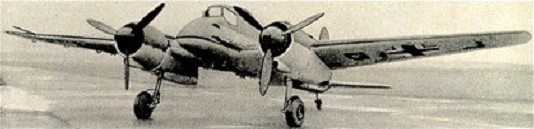
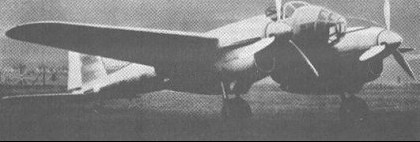
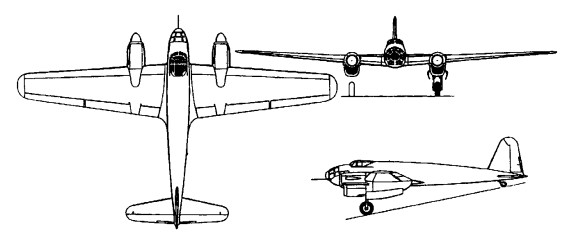
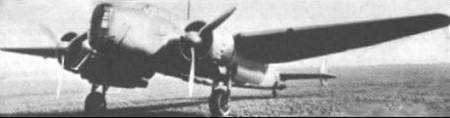
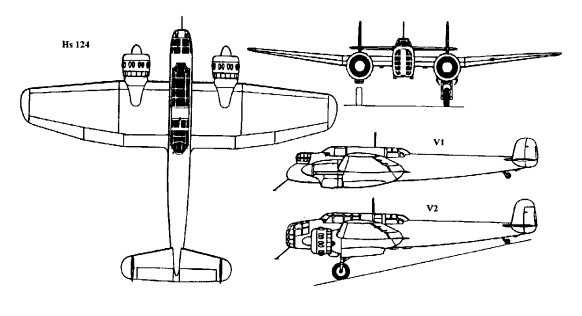
The Henschel HS 124 V1 was a prototype “Kampfzerstorer” or heavy fighter-bomber concept from the early Luftwaffe at a time when the development and rearmament of the Luftwaffe was largely a clandestine affair, hence the lack of Luftwaffe makings and swastikas.
Only three prototypes were constructed, each with different engines. The —V1 variant was powered by two liquid-cooled Jumo V-12 engines.
The 1936 twin-engined strategic fighter, competing for orders with the Fw 57 and Bf 110, was heavier than the Bf 110 and Fw 57, the glazed nose seating a gunner. For its size the Hs 124 was an agile and fast aircraft, but Luftwaffe requirements were better fulfilled by the Bf 110. Three HS 124 were built.
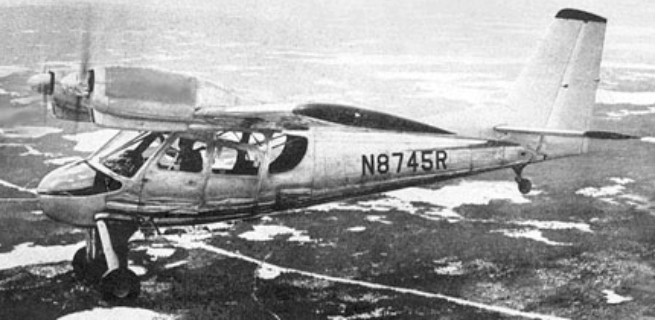
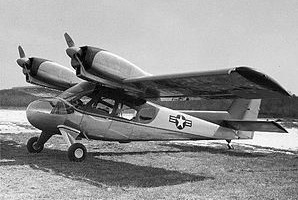
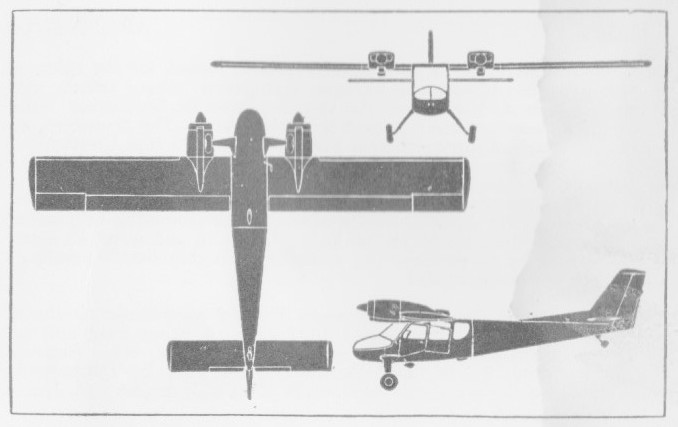
Known by Helio as the model H-500 this STOL aircraft mounted twin Lycoming engines on top of the high-set wing, close to the fuselage. With the engines mounted in this manner, lateral and over-the-nose visibility were much improved while the propellers were kept clear of cabin doors and away from possible debris damage during rough field operations. This was a tail-wheel design, so the vertical component of propeller thrust assisted STOL take-off performance from rough fields. Fully automatic full-span, leading-edge slats were fitted along with high-lift flaps.
Full span automatic leading slots are monocoque and hollow. Spoilers or “interceptor” blades protrude through upper surface of the wing, forward of main spar. They are interconnected with the ailerons and rise only when aileron is deflected more than 4 degrees. Magnesium is usd as a weight saver n the rudder and horizontal tail in the skins aft of the main spar on each surface. Horizontal tail is one piece all-flying type with anti-balance and trim tab. Vertical stabiliser is sweptback 25.5 degrees.
Flown for the first time in 1960, Faa certification was obtained late in 1963.
In 1964 the USAF Air Commandos were testing the Helio U-5A at Hurlburt AFB (Fla). The USAF ordered seven for tests.
In 1967 or 68, work was started on a redesign of the Twin Courier in a tricycle-gear configuration for the commercial market, since many firms which desired STOL capability had regulations which required multi-engine aircraft. The company ran out of money and the project was terminated.
The aircraft structure of the Helio Stallion, a single-engine turboprop version of the more successful Helio Courier, was based on the design of the Twin Courier.
The Twin Courier could seat six and first flew in April 1960, being awarded FAA certification on June 11, 1963. (The Twin Courier met FAA requirements marginally and was certificated to meet immediate needs for service in Vietnam, on the understanding that the design would not be marketed commercially. Thus, the redesign.) Only seven examples were built, these receiving the United States Armed Forces designation U-5A. One was reported to have been evaluated by US Army Special Forces.
U-5A Twin Courier
Official Air America records preserved at the Air America Archives do not mention such an aircraft, but there are three ways to explain why Twin Couriers were mentioned to have been in service with Air America: In the summer of 1965, Air America pilot William Andresevic, who had flown the regular Helio extensively in Laos, was ordered to fly a Helio Twin Courier to Bolivia for evaluation by the US Embassy. After some operational use in Bolivia, it was returned to an airstrip in Virginia. In 1962, the USAF evaluated 2 U-5A Twin Couriers, 59-5955 and 59-5956, at Hulburt for use by the air commandos. “90336” is possibly a fake serial for 59-5956.
Operators were Aviation Research Centre, India, Indian Intelligence Bureau, Air America, CIA and United States Air Force.
U-5A Twin Courier Powerplant: 2 × Lycoming O-540-A2B or -C2C air-cooled flat-six, 250 hp (190 kW) each Propellers: 2-bladed Hartzell, 7 ft 0 in (2.13 m) diameter Length: 32 ft 0 in (9.75 m) Wingspan: 41 ft 0 in (12.50 m) Height: 8 ft 10 in (2.69 m) Wing area: 242 sq ft (22.5 m2) Empty weight: 3,126 lb (1,418 kg) Max takeoff weight: 5,850 lb (2,654 kg) Maximum speed: 185 mph (298 km/h; 161 kn) at sea level Cruise speed: 166 mph (144 kn; 267 km/h) (econ cruise, 60% power) at 10,000 ft (3,050 m) Range: 1,500 mi (1,303 nmi; 2,414 km) (max fuel) Service ceiling: 19,500 ft (5,944 m) Rate of climb: 1,640 ft/min (8.3 m/s) Crew: 1 Capacity: 5 passengers
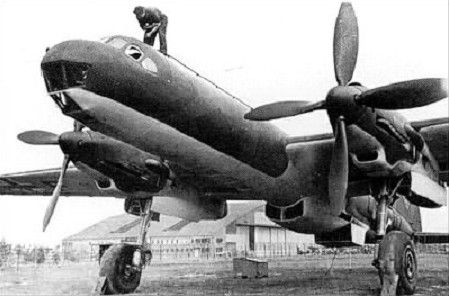
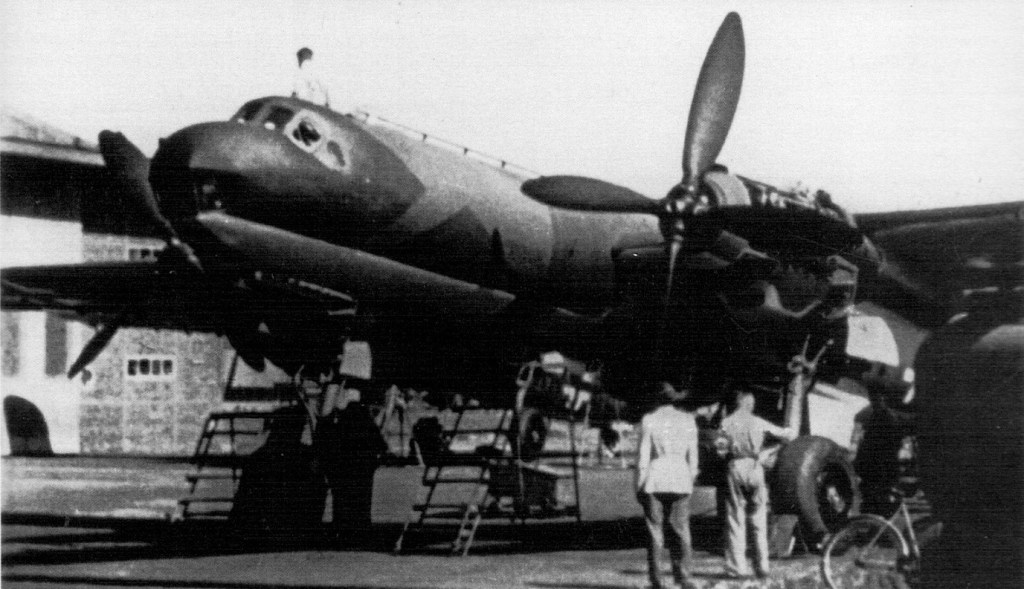
In 1943 the He 319 (project P1065 Ic) was proposed as a high-speed bomber or night fighter with a nose mounted armament of 4 x MK108 and powered by BMW801 radial engines. A mock-up was built the same year but destroyed during a RAF raid. All efforts converged immediately to a new program designated He 419. It consisted in a high-altitude fighter. The V1 (also A0 pre-series version) was actually built from a He 219 A-5 tail and fuselage with DB603G engines and a newly designed wing of 55 sq.m area.
The He 419 A1 was intended to be fitted with single fin unit for production simplification. To avoid production of newly designed pieces the A1 was overtaken by the He 419-B1/R1 version which featured the same fin unit of the He 219. The 2000 hp DB603G engines were fitted with a turbo system driven by exhaust, and an endurance of about 2 hours. The B1 had a larger wing of 59 sq.m. Armament consisted in 2xMG151 in the wing roots and 2 x MK108 in a ventral tray. Maximum speed reached was 670 km/h at 14.500 m; landing speed was 172 km/h; cruise speed was 650 km/h with a calculated range was 2.540 km.
Six finished He 419-B1/R1 were built in Marienehe utilizing He 219A 5 fuselages. The six were flown with the He 319 tail, very long-span wing of 59 square metres (635 sq ft), two 20 mm MG 151/20 in the wings and four 30 mm MK 108 in ventral housing. Speed was 422 mph (679 km/h) to 44,619 ft (13,600 m).
Construction of a prototype He 319 high-speed bomber and night fighter, developed from the He 219 was begun in 1942, but work was abandoned following an air attack on Heinkel’s Marienehe factory in November of that year.
When work on the He 178 was discontinued in the autumn of 1939, effort was transferred to a more advanced twin-engined design which was to be powered by pairs of two new Heinkel turbojets, the HeS 8 and HeS 30. Design of the He 280, which started before the end of 1939, included a low wing with twin underslung turbojets tricycle landing gear and twin fins and rudders. Neither engine was ready for flight when the Heinkel He 280 prototype airframe was itself complete and first trial flights, which began on 22 September 1940, were unpowered, the aircraft being towed to release height behind a Heinkel He 111.
Despite the obvious need for low diameter engines, Dr von Ohain succeeded in developing the centrifugal flow HeS 8 (or 109 001) to produce 700 kg (1,543 1b) thrust installed in March 1941, and a pair of these engines powered the He 280 VI on its first powered flight on 2 April l941. For this first flight the engines were kept uncovered as during test runs fuel had gathered in the cowlings. Fritz Schafer piloted the first powered flight, and the engines were producing little more than 500kg thrust, however, and although available thrust had risen to some 600kg by early 1943 when the second and third prototypes were flown, in April of that year BMW 109-003 engines were adopted.
A total of nine prototypes flew, including the He 280 V2 and He 280 V3 with HeS 8 engines (the former also being re engined with Jumo 109 004s). The He 280 V4 had BMW 109 003s and later with six Argus 109 014 pulsejets. The He 280 V5 flew first with HeS 8s and later with 109 003s. The He 280 V6 (as well as the V5) with three MG 151 20 mm can¬non, the He 280 V7 with 109 004s (and later tested as a high speed glider for aerodynamic research), the He 280 V8 with 109 004s and a V type tail unit, and the He 280 V9 with 109 003s. Although production of the He 280 was planned, recurring complaints (which included structural weakness in the tail, together with tail flutter, and inadequate fuel and armament provision) caused the design to be abandoned in favour of the Messerschmitt Me 262, It was from the He 280 V1 that the first ever bale out using an ejector seat was made when Argus test pilot Schenk abandoned the aircraft on 13 January 1942 when his controls locked from icing up during a towed test flight. This seat was powered by compressed air.
He 280 V5 Engines: two 750 kg (1,653 1b) thrust HeS 8A (109 001A) turbojets Maximum short burst speed 900 kph (559 mph) at 6000 m (19,685 ft) Normal max-speed 820 km/h Initial climb rate 1145 m (3,755 ft) per minute Estimated service ceiling 11500 m (37,730ft) Range 650 km (404 miles) Empty weight 3215 kg (7,088 lb) Maximum take off weight 4310 kg (9,502 lb) Wing span 12.20 m (40 ft 0 in) Length 10.40 m (34 ft 1.5 in) Height 3.06 m (10 ft 0.5 in) Wing area 21.50 sq.m (231.5 sq ft). Armament: three nose mounted 20¬mm MG 151 cannon.



 All Aero