Horton Ho VII

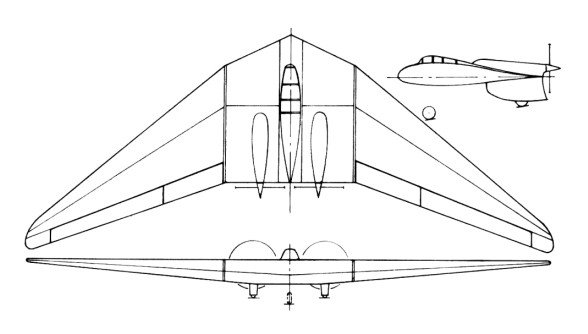
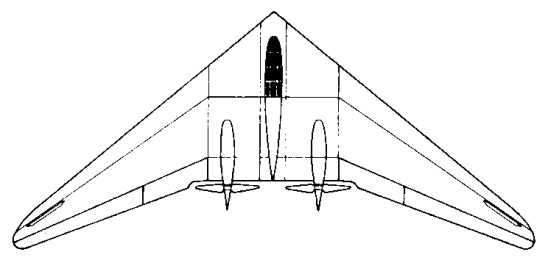
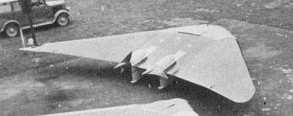
The H VII was projected in 1938 and the first of the type was built by Peschke at Minden in 1943. It bears a general resemblance to the modified H V in layout and control design and used the same outer wing panels: the span was the same (16m) the sweepback slightly greater (34 degrees) and aspect ratio 5.8 instead of 6.1. Its function seems to have been that of a high speed two-seater communications aeroplane and trainer for tailless pilots. Engines were Argus AS 10 C of 179kW / 240 hp.
Altogether two were completed and flown and a third was nearing completion at Minden when the district was occupied by the Allies. Two aircraft were damaged beyond repair and the third fell into Russian hands at Eilenburg.
Single stage elevon control was used on the H VII with 25% Frise nose and geared tab. Inboard of the elevons was a plain flap and in the middle trailing edge split flaps extending for the full width of the center section. Initially the graded flap angle principle was used, the part between the engines opening to 60 degrees, between the engine and the outer wing panels to 45 degrees, and the plain flap on the wing lowering to 20 degrees. When R.L.M. ordered the design in quantity however they asked for it to be simplified and for landing speed to be raised to give pilots more realistic training for high speed aircraft. The plain flap was accordingly locked up on the second aircraft and omitted altogether on the series production model.
Plug spoiler drag rudders of the H IV type were used on the first aircraft. These tended to suck open and had to be held closed by springs. They were not very satisfactory from the point of view of control forces and feel, and after about 10 flights they were scrapped and replaced by a new “trafficator” design. This was simply a bar which projected 40 cm in a spanwise direction from the wing tip when rudder was applied and retracted flush with the wing surface when not in use. Vent holes were cut to adjust aerodynamic balance. The vent holes allowed flow through the bar and deflected the flow sideways to generate a self-closing aerodynamic force. This was supplemented by a spring loading and the two components adjusted to give satisfactory feel on the rudder bar. This type of rudder was claimed to be cheap and easy to make and generally more satisfactory then previous designs.

The center section being of welded tube construction and the wings of single spar wooden construction with ply covering.
The undercarriage was a completely retractable four-wheel layout, the front wheel pair taking about 50% of the total weight when resting on level ground.
The constant speed airscrews were driven through extension shafts with a thrust ball bearing and rubber flexible coupling at the engine end and a self aligning ball bearing at the airscrew end mounted on a cantilever form the main structure.
Outer wing panels were of the same aerodynamic shape as those of the H V. At the center line the section was 16% thick with 1.8% camber (zero Cmo) graded to 8% symmetrical tip sections. Wing twist was 5 degrees; 2 degrees linearly and 3 degrees parabolically distributed. The aircraft trimmed with elevons neutral at 260 kph (CL = 0.16).

The following performance data were quoted by Reimar Horten from memory:
Flying weight (minimum) 2,900 kg
Flying weight with full equipment 3,200 kg
Engines 2 x 240 hp Argus AS 10 C (normally aspirated)
Sea level (crusing speed (180-200 hp per engine) 310 kph
Sea level (top speed) 340 kph
Normal take-off speed 110 kph
Ground run 250 meters
Sea level rate of climb at 180 kph (full power) 7 m/sec.
Ceiling 6,500 meters
CLmax = 1.2 no flaps
CLmax = 1.6 with all flaps
Delta CL due to plain flap was 0.1

Reimar Horten said that prior to the first flights at Scheidhauer on the H VII, his brother Walter had supervised the CG’ing of the aircraft and mistakenly put ballast in the nose because the measurements were made with a steel tape with 10 cm missing from the end. Scheidhauer’s commented that the aircraft had to be brought in at a minimum speed of 120 kph, with the stick nearly right back, if the nose was to be lifted for the hold off; the aircraft then floated (stick fully back) until 90 kph before touching down. Normal take-off procedure was to accelerate to 120 kph and then pull the stick back when the aircraft immediately took off and climbed away. Apparently it could be unstuck at 90 kph by pulling back hard but would not climb until 120 kph had been reached. It was impossible to stall the aircraft with the CG in this position; the general behavior was said to be “good natured”.
Walter flew the H VII (with the CG in its correct position) on 30-40 occasions, a total flying time of about 18 hours. (Scheidhauer’s time was also about 18 hours). Apparently the change in CG brought the approach speed down to about 100 kph and the aircraft could be touched down on the rear wheels. It was not certain that a complete stall could be produced in steady flight. With the stick fully back the aircraft sank on an even keel with fair lateral control. Lateral control was pleasant, the 25% Frise balance eliminated adverse yaw and virtually enabled flying on two controls.
Tests with the “trafficator” drag rudder showed that single engine flight could be maintained with half rudder and a little sideslip; turns could be made in level flight against the dead engine. On one test the pilot was carrying out a single engine approach when he realized that he had stopped the engine supplying the undercarriage hydraulics and could not lower the wheels. He was able to climb away, start the dead engine and made a normal landing.

Ho-VII
Engine: 2 x Argus As-10, 180kW
Max take-off weight: 2000 kg / 4409 lb
Empty weight: 1550 kg / 3417 lb
Wingspan: 16 m / 52 ft 6 in
Length: 7.5 m / 24 ft 7 in
Height: 2.5 m / 8 ft 2 in
Wing area: 44 sq.m / 473.61 sq ft
Max. Speed: 350 km/h / 217 mph
Crew: 2
Horton Ho V

The H V was designed form the outset as a powered aircraft using two Hirth H.M. 60 R motors driving oppositely rotating propellers through extension shafts. It has a span of 52.5 feet, aspect ratio of 6:1, and a quarter chord sweepback of 32 degrees. Engines were completely buried and drove propellers on extension shafts raised relative to the engine crankshaft and driven through a reduction gear. The undercarriage was of fixed tricycle type with castoring nose wheel and trousered main wheels. The nose wheel actually too 55% of the static weight when on level ground.
Three examples were built. The first, built at Ostheim in 1936 was constructed of plastic material with riveted sheet plastic covering. Pilot and passenger were contained entirely in the wing contour and the nose wheel was retractable. This aircraft crashed on its first flight, due mainly to its unorthodox waggle-tip control. The second version used more normal control methods and conventional construction, it was started in 1937 and flew successfully. In 1941 it was completely rebuilt as a single-seater, but retained the same control system.
In its original form the H V was fitted with waggle tip control in which the fore and aft sweep of the wing tips was geared to the stick, producing incidence change by a skew hinge arrangement. The aircraft crashed on it first flight due to the control taking charge after a bounce during landing. The reason for the accident was obscured by a failure of one engine but the control system was not regarded as satisfactory by the Hortens who later developed the idea further on an H III. They considered that damping is necessary to prevent the tips oscillating under suddenly applied acceleration (as occur during take off and landing).
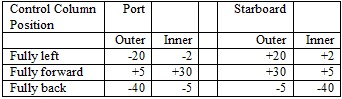
The second aircraft in both its forms had a two stage elevon control rather similar to the H III. Maximum control deflections were as follows:

The outer control flaps had a 20% Frise nose and assymmetrically geared tabe to compensate the non linear moment characteristics of the nose balance. The inner flap pair had round noses.
Split trailing edge flaps were fitted to the center section, the flap between the engines lowering to 60 degrees and the part outboard to 45 degrees. The inner elevon flaps dropped to 30° when the center section flaps were lowered and still operated as elevons about this new zero position. The idea of using graded flap deflections originated from a hunch of the Hortens that the sudden discontinuity and greater spanwise flow with ungraded flaps might cause stability and control troubles. They later found that this fear was unfounded and gave up the graded deflection principle.
Rudder control on the second two aircraft was by split nose flaps on the H III pattern.
A great deal of flying was done on the second and third H V’s, including about twenty flights on the latter in 1943 by Prof. Stuper of A.V.A. Gottingen. The Hortens themselves had lost interest in the H V because later designs incorporated many improvements. Stuper has also flown the H IIId with Walter Mikron engine.
Tests at A.V.A. were undertaken at the request of D.V.L. who wanted information on single engine characteristics and an unbiased comparison between tailless and conventional handling qualities. Stuper’s comments were as follows:
Longitudinal dynamic stability was good and no fundamental different from a conventional aircraft could be noticed. In rough air he thought it had a more abrupt pitch response than normal, which was only a disadvantage if gun platform steadiness was needed. (Walter Horten thought this effect might be due to the low wing loading (6 lb/sq.ft.) on the H V and Stuper agreed that this might be so).
Lateral stability appeared satisfactory. No tendency to “dutch roll” instability was found and no arratic changes of heading due to low Nv and Yv were noticeable. Stuper was in fact expecting trouble from this source but failed completely to find any. He added that his impressions were purely qualitative as they had no time to instrument the aircraft.
Controls were light and effective, with the exception of the rudder, which was heavy and not effective enough. Aileron was heavier than the elevator “in the ratio 4:3”. With the stick back, aileron movement was restricted, which Stuper thought a bad point since plenty of aileron was useful in an approach in gusty weather. The aircraft was in trim virtually over the whole speed range without movement of the elevator trimmer. When flaps were lowered there was a slight nose heavy tendency which could easily be held.
Summing up, Stuper said that aileron and elevator control were quite normal but rudder control needed improvement.
Behavior at the stall (flaps down) was very satisfactory, the nose dropped gently and the aircraft gained speed. Wing dropping could be induced if the aircraft was stalled in a yawed attitude but normally the wings remained level and ailerons still effective, thought restricted in movement. The stall was reached with the stick not quite fully back; only one CG position was tested. Stalling speed was about 70 kph.
Flight on one engine was possible, without rudder, at 120 kph by flying with 10 degrees of bank and 80% aileron. Rudders were not used much because they were so heavy, although Walter Horten claimed that at 130 kph single engine flight could be maintained on rudder only (engine nearly at full power) if the pilot was strong enough.
Ground maneuvering was easy using throttles and wheel brakes. During take-off the aircraft could quite easily be kept straight until the drag rudders became effective, and flew itself off the ground without assistance from the pilot – in fact it made very little difference what the pilot did with the controls during take-off. There was no tendency to bounce during the ground run. R.L.M. require that for normal tricycles, it should be possible to left the nose wheel before take-off speed is reached; Walter Horten thought this was unnecessary if the aircraft would fly itself off. Landing was quite straightforward and normally the aircraft settled down on all wheels at once. Stuper thought it was not possible to land on the main wheels first because the ground incidence was too high.
Stuper had done some tests of take-off performance with flaps down, which resulted in his flying into a hanger and terminating the A.V.A.test programme. Apparently he landed and immediately (Walter Horten said not immediately) opened up to take-off again – after 530 meters he was 8 meters high and at that point entered the hanger. The airborne distance was about 150 meters.
Although the split flaps in front of the propellers caused poor thrust, there were apparently no vibration problems.
Summarizing his impressions on the H V, Stuper said that it was hardly fair to compare it with conventional aircraft with many years more development behind them but it was nevertheless, a good example of tailless design and a perfectly practical aeroplane – if anyone wanted tailless aeroplanes. His main suggestion for improvement was in the rudder control.

Ho-V
Wingspan: 16 m / 52 ft 6 in
Max. speed: 260 km/h / 162 mph

Horton Aircraft HW-X-26-52 Wingless

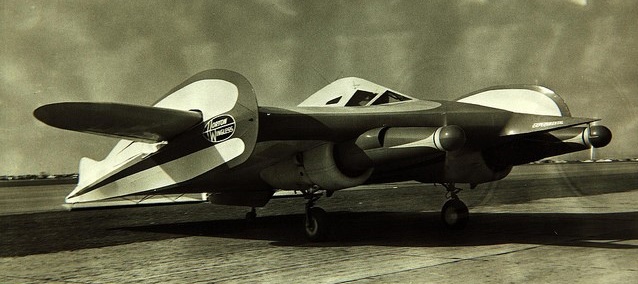
The Horton Wingless aircraft was invented by William Horton of Huntington Beach, California in 1952. He called the strange-looking plane “wingless” because he claimed the entire craft was a simple air foil with vertical fins and utilized all surfaces for lift. Unfortunately, Horton did not have the money to develop it, but was able to get into a partnership with billionaire Howard Hughes and Harlow Curtis.

The aircraft was a welded steel frame covered with a fabric skin and powered by two Pratt and Whitney R985 radial engines. Instead of a long high aspect ratio wing the fuselage was to create the lift and tip plates which he called ‘sealers’ were to tip losses that otherwise plague such airfoils. Essentially it was a highly-modified Cessna UC-78 with a more airfoil-shaped fuselage than wing.

Registered N39C, the aircraft logged around 160 hrs of flight time before Bill Horton had a falling out with Hughes. Horton was railroaded to prison.

Although this innovative prototype flew successfully, no backers were attracted. The venture failed not because the airplane didn’t fly, but because Hughes wanted to take full credit for the patents and production rights, which Horton refused to allow. Hughes sued Horton which effectively stopped any further development of the aircraft. Hughes managed to have the prototype and partially-constructed production version moved to the bone yard at the south end of the Orange Co airport and deliberately burned.

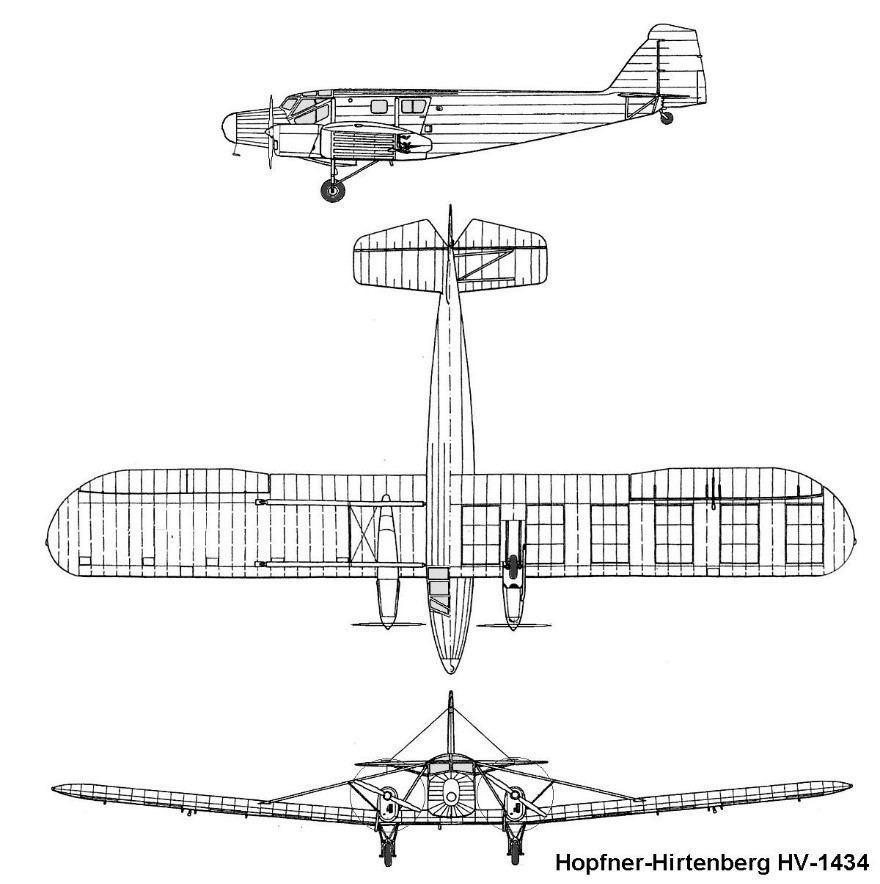
Hopfner HR.1434 / HR.14/34

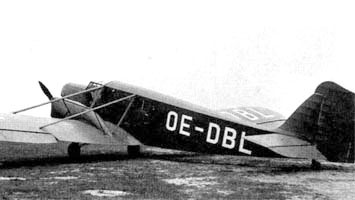
After the development of the transport high-level plan HV.12 / 34, designer Lampich started the design of the low-wing transport aircraft, designated Hopfner HR.14/34 (HR.1434) Werk.Nr 33. Despite not some similarity, it was a completely unique project. The only example of the aircraft was built by Flugzeugbau Hopfner GmbH at the Aspern Vienna airfield.

The retractable undercarriage was later modified as fixed.

The first flight of the aircraft prototype (registration number OE-DBL, D-OBDL later) took place on March 24, 1936. The aircraft was used (mainly for advertising purposes) until the spring of 1937.

Engine: 2 x de Havilland Gipsy Major, 120 hp
Wing span: 20.10 m
Wing area: 48.00 sq.m
Length: 11.77 m
Height: 2.84 m
Empty weight: 1754 kg
Normal take-off weight: 2300 kg
Maximum speed: 139 km / h
Cruise speed: 108 km / h
Service ceiling: 3166 m
Crew: 1-2
Passenger capacity: 5

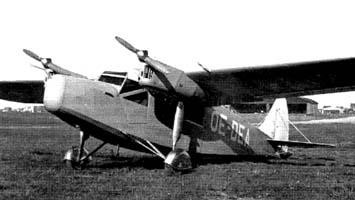
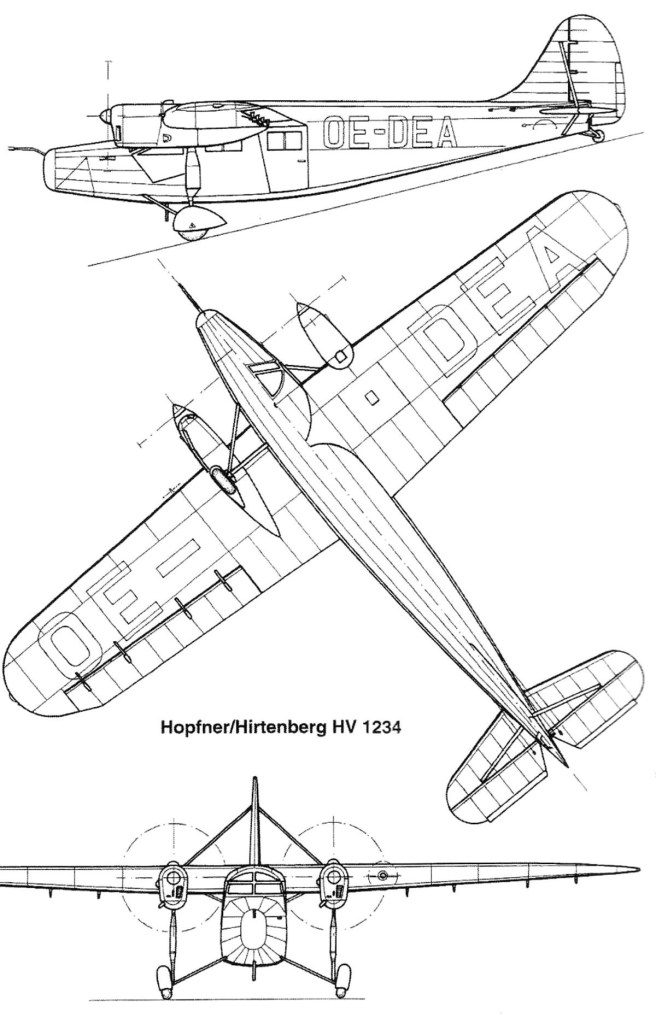
Hopfner HV.1234 / HV.12/34

The Hopfner HV.12 / 34 (HV.1234) light transport aircraft was designed by Lampich by special order of Anton von Habsburg, Prince Lorraine. The aircraft became the first twin-engine transport aircraft of Flugzeugbau Hopfner GmbH.

The HV.1234 featured six-seat., with enclosed cockpits and fixed undercarriage. The spacious fuselage was a steel tube construction, which was covered with fabric in the front and back center area with plywood at the stern. The passenger cabin space offered seats for five passengers and was luxuriously equipped. The two spar wings and tail were wooden structures, which were covered with plywood and fabric. The rudder were fabric covered. The flanding gear was fixed to the wing spars, and went through the engine cowling and had two oil dampers. Against the bottom of the fuselage, it was connected, each with a V-strut.

The first flight of the prototype aircraft, registered A-150 werk.Nr 28, took place in August 1935 at Aspern. The flight characteristics were assessed as good and the HV.12/34 flew irregularly as a private aircraft, but also as a light transport aircraft.

The following year, the aircraft received the registration number OE-DEA. After the annexation of Austria in 1938, the registration number was changed to D-OEEA. Later it came to the Airborne Division of Hirtenberger Cartridge Factory AG. When war broke out, it should be used as a liaison aircraft for the Luftwaffe, but there were problems with the supply of spare parts for the engines and the HV.12/34 was taken out of service. The fate is unknown.

Only the one was built.

Engine: 2 x de Havilland Gipsy Major, 130 hp
Prop dia: 2.00 m
Prop disc: 3.14 sq.m
Wing span: 14.10 m
Wing area: 30.00 sq.m
Aspect ratio: 6.63
Dihedral: 1 deg
Length: 10. 40 m
Height: 2.70 m
Empty weight: 1100 kg
Normal take-off weight: 2000 kg
Max take off weight: 2160 kg
Fuel capacity: 210 lt
Maximum speed: 205 km / h
Maximum speed at SL: 186 km/h
Cruising speed: 175 km / h
Range: 950 km
Servce ceiling: 4800 m
Climb to 1000 m: 6.25 min
Climb to 3000 m: 25 min
Rate of climb: 2.8 m/sec.
Endurance: 6 hr
Crew: 1
Passengers: 5

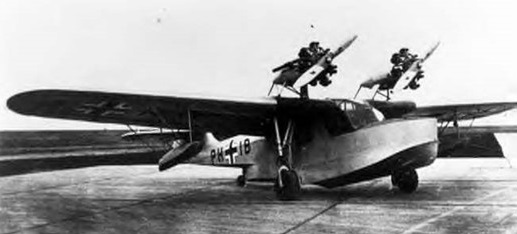
Hopfner HA-1133 / HA.11/33 / WNF Wn 11

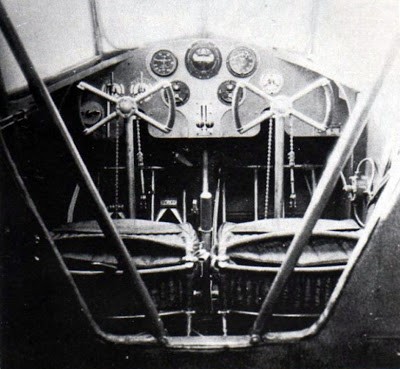
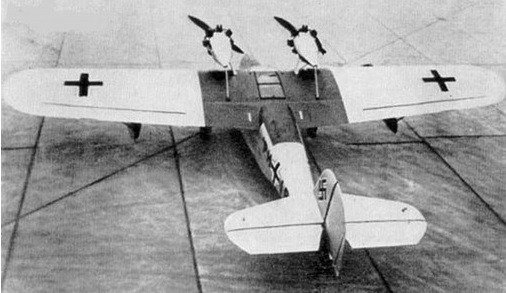
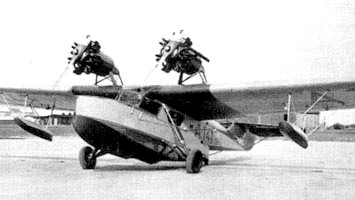
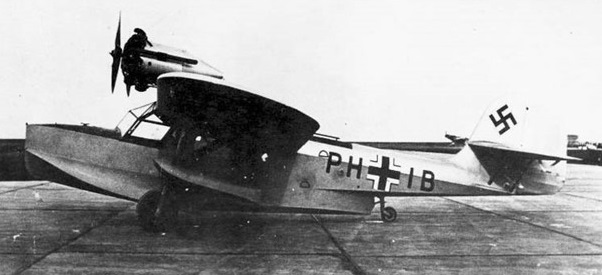
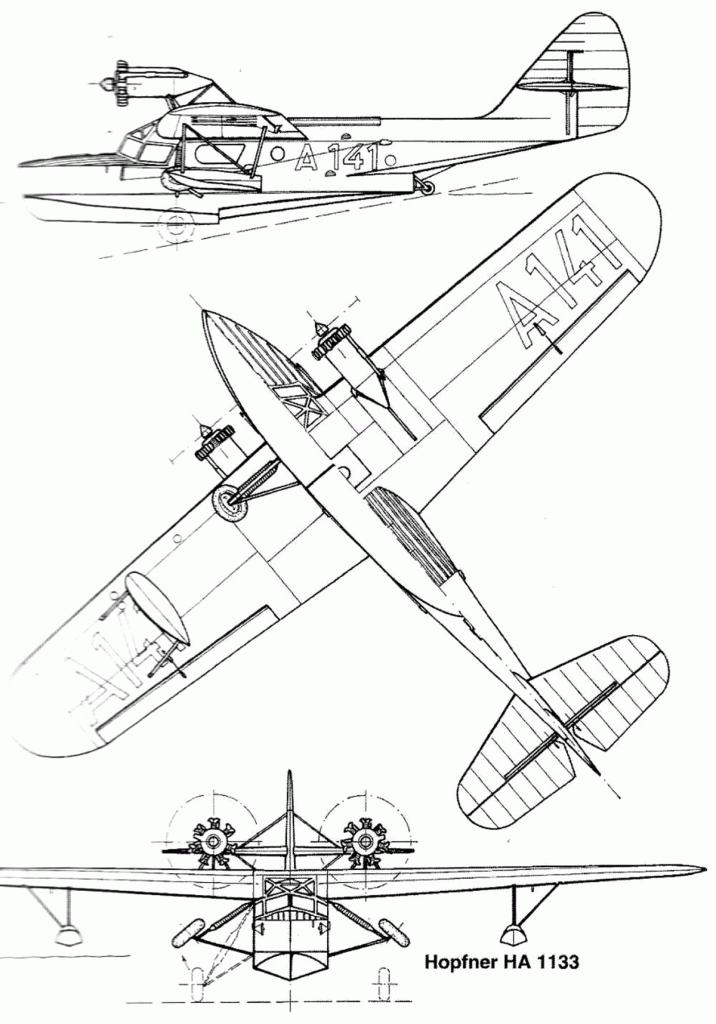
The Hopfner HA-11/33 was an amphibious flying boat built in Austria in 1933 to a specification by the Dr. Oetker company, headed by designer Lampich. The result was a conventional, high-wing cantilever monoplane with a stepped flying boat hull and pontoons on struts under the wings at mid-span. The cabin was fully enclosed, and the twin engines were mounted tractor-fashion on struts above the wing.

The HS.1133 had a semi-retractable landing gear, mounted under the wing and two Siemens Sh 14a engines with a capacity of 160 liters installed on racks and struts above the wing.

Hopfner produced the HA-1133 four-seat twin-engined amphibian before being taken over in 1935 by Hirtenberger Patronen, Zundhutchen und MetallwarenfabrikAG.

The first prototype, with the aircraft number A-141, took off from the lake surface, at the end of 1933. In 1935, the Austrian Air Force purchased the boat for training purposes, where it received the registration number OE-DGH.

A HA-11/33 was purchased by the Austrian Air Force, and was subsequently absorbed into the German Luftwaffe following the Anschluss. Deemed worthy of further development, WNF (which had absorbed Hirtenberg, which itself had taken over Hopfner) was tasked with developing it into a military training aircraft for flying boat pilots.

The Germans changed their registration number to their Wiener Neustadt Flugzeugwerke (WNF) WN-11 (PH + IB). Of particular interest was shown to the boat as an airplane suitable for training naval aviation pilots. For these purposes, the aircraft was converted – installed a chassis from Bf.109 and a new tail unit. In this form, the WFN WN-11 was tested in the open sea Travemünde.

Testing was undertaken at Travemünde in 1940, but the type was not ordered into production. There were plans to launch a serial production of this flying boat, but in the choice was made in favor of German training aircraft. In addition, in 1940 the plane crashed and was not restored. Development of a highly streamlined derivative with Hirth HM 508 engines, the WNF Wn 11C was also abandoned.

HA.1133
Engines: 2 × Siemens Sh 14A, 93 kW (125 hp) each
Propellers: 2-bladed wooden fixed-pitch
Wingspan: 14.11 m (46 ft 4 in)
Wing area: 30.4 m2 (327 sq ft)
Length: 10.17 m (33 ft 4 in)
Height: 3.15 m (10 ft 4 in)
Empty weight: 1,100 kg (2,425 lb)
Maximum take-off weight: 1,800 kg (3,968 lb)
Maximum speed: 190 km/h (118 mph; 103 kn)
Cruise speed: 160 km/h (99 mph; 86 kn)
Range: 900 km (559 mi; 486 nmi)
Service ceiling: 4,500 m (14,800 ft)
Crew: 1
Capacity: 3 pax

Honningstad Finnmark 5A

The Finnmark 5A amphibious flying boat, designed by Birger Honningstad and built by Norsk Flyindustri A.S., was produced specifically to suit the special climatic conditions prevailing in Norther and Artic regions, and the sole example of this type was flown on 17 September 1949.

The Finnmark carries two crew members and twelve passengers, and outrigger floats replaced the original hull sponsons which housed the retractable combined wheel and ski undercarriage.
Operated as a pure flying boat, the Finnmark was owned by A.S.Norronafly.

Engines: 2 x Pratt & Whitney R-1340 Wasp, 600 hp
Span: 62 ft 6 in
Length: 46 ft 4 in
Wing area: 522 sq.ft
Empty weight: 9966 lb
Loaded weight: 13,100 lb
Max speed: 195 mph
Cruise speed: 160 mph at 60% pwr
Max range: 840 miles

Hongdu L-15 Falcon

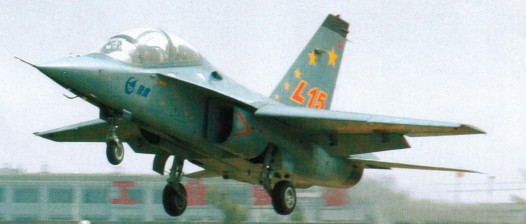
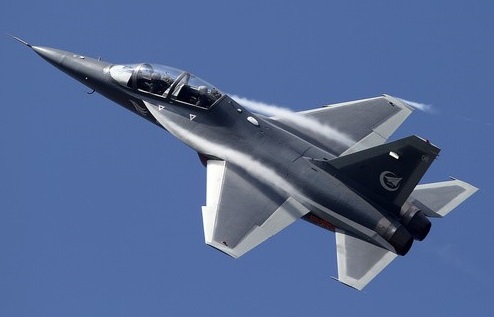
In the early 2000s, Hongdu began work on an entirely new advanced trainer, assisting in the project was Yakovlev OKB. The L-15 has a composite structure and features a digital quadruple fly by wire, glass cockpit, and hands on throttle and stick flight control. The aerodynamic performance is enhanced by large leading edge extentsions, which give a maximum angle of attack of 30 degrees. The aircraft can also have four underwing and two wingtip hardpoints.

The L-15 made its maiden flight on March 13, 2006. The L-15 was in competition with the JL-9 for the PLAAF. Chief test pilot for the project was Colonel Zhang Jingting.

Hongdu has marketed the airframe abroad with some success – Zambia and Venezuela having ordered small numbers.

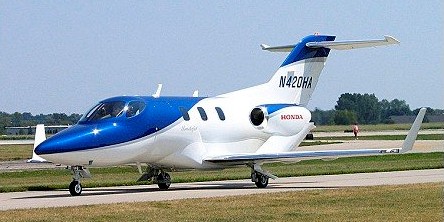
Honda HA-420 HondaJet

Honda HA-420 HondaJet

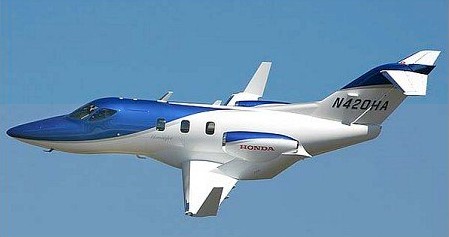
The HondaJet made its maiden flight in North Carolina in December 2003. Honda’s six seat business jet is powered by a lightweight low-emission turbine engine that has been in development since 1988.

It features a graphite composite fuselage, laminar flow wing and two Honda HF118 turbofans mounted on overwing pylons.
Delivery of the first plane is planned for the third quarter of 2012.

Gallery

Engines: 2 x 820kg GE-Honda HF118 turbofans
Max take-off weight: 4173 kg / 9200 lb
Wingspan: 12.20 m / 40 ft 0 in
Length: 12.52 m / 41 ft 1 in
Height: 4.01 m / 13 ft 2 in
Max. speed: 800 km/h / 497 mph
Cruise speed: 778 km/h / 483 mph
Ceiling: 12497 m / 41000 ft
Range: 2037 km / 1266 miles
Crew: 2
Passengers: 5-6

Honda MH02

At the Atlantic Aero FBO at Greensboro, North Carolina’s Piedmont Triad International Airport (KGSO), a team of engineers and technicians assembled a twin-engine very light business jet. This was the proof-of-concept (POC) prototype of what would become the HondaJet very light jet. The team’s work culminated on Dec. 3, 2003, when the POC took flight.

This was a relatively small team of engineers and technicians that had been working furiously for at least the last 10 months—and some much longer—in preparation for that day.

There were no electrical system drawings, only conceptual schematics, and they had to create them from scratch.

They had a very small group in the early days of the project in Greensboro and a larger team in Japan supporting them. Work hours during the design phase started early and extended into the evening, day after day. In three years, they accomplished a tremendous amount of work and overcame huge challenges with the limited staff getting the aircraft ready for its inaugural flight.

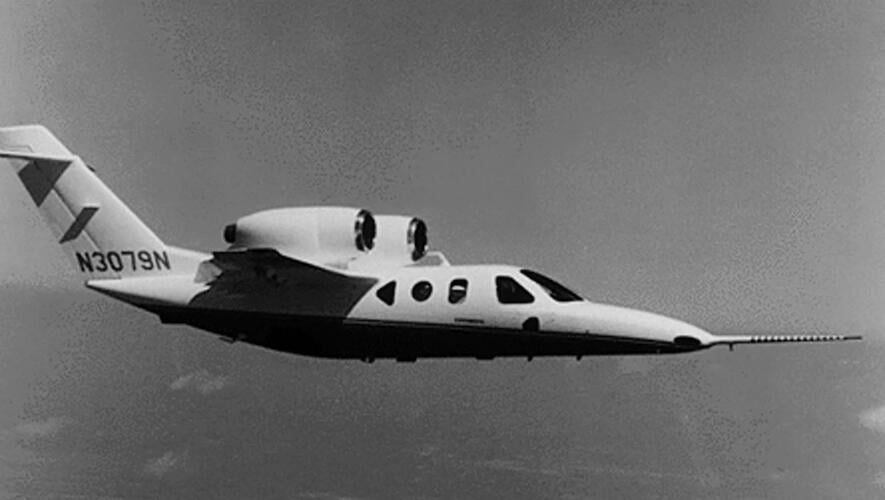
The second production jet to feature over-the-wing-mounted (OTWEM) turbofan engines, the HondaJet was the brainchild of Honda’s Michimasa Fujino. Fujino spent years exploring aircraft design, culminating in flight testing of the composite twin-engine MH02, which had two engines mounted directly on top of a wing attached to the top of the fuselage.

He eventually settled on the HondaJet OTWEM design because of its efficiency and the extra space it afforded in the aft cabin, but persuading the head office that this was the best configuration proved to be a huge challenge. It took more than two years to reach the point and finally the OTWEM configuration for HondaJet was fixed.

At midnight and, with the flight scheduled for 8 a.m., the aircraft was prepped and ready to go. However, back in at 5:30 a.m., firing up the aircraft to make sure everything was still okay before the preflight.

Michimasa Fujino’s first design was the MH02, which didn’t go into production.