Ilyushin TsKB-26 / TsKB-30 / DB-3 / IL-4

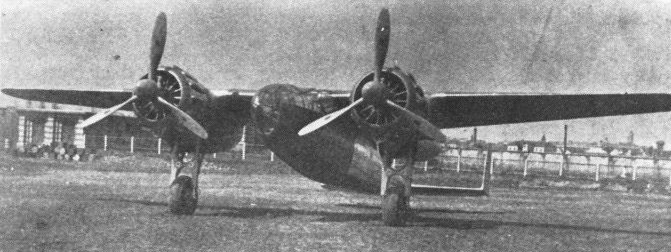
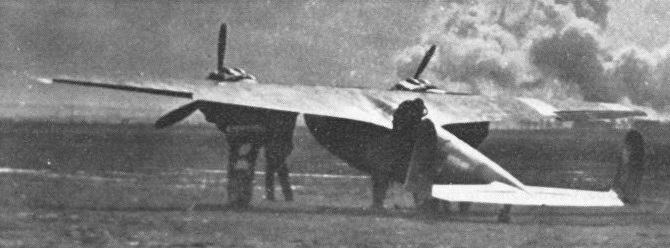
The TsKB-26 long-range bomber prototype first flew in 1935, a twin-engined metal low-wing monoplane powered by 597kW Gnome-Rhone K14 radials. Demonstrated by test pilot Vladimir Kokkinaki on May Day 1936, the prototype went on to establish two world altitude records during July 1936.

Ilyushin Il-4 Article

A second prototype, the TsKB-30 had an enclosed instead of open position for the pilot, Soviet M-85 engines and a metal rear fuselage. The TsKB-30 also broke records and then attracted world interest by flying from Moscow to Canada, where pilot Kokkinaki had to make a wheels up landing on 28 April 1939 after covering a distance of 8000km.
DB-3

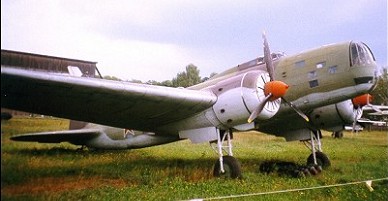
The TsKB-30 entered production in 1937 as the DB-3B (DB being a Soviet contraction denoting long range bomber). Early examples were powered by 571kW M-85 engines, but these were replaced by 716kW M-86s in 1938.
It served widely with the ADD (Long-Range Aviation) and the V-MF (Naval Aviation), remaining operational well into the war with Germany, DB-3s being credited with some of the earliest attacks on Berlin.
The aircraft suffered from a poor defensive armament of single nose, dorsal and ventral 7.62mm guns, and lost heavily during the Winter War against Finland in 1939-40.

The DB-3 served also with the Finnish air arm between 1940 and 1945, five captured aircraft being augmented by six purchased from German war booty supplies. DB-3 production terminated in 1940 with the 1,528th machine.

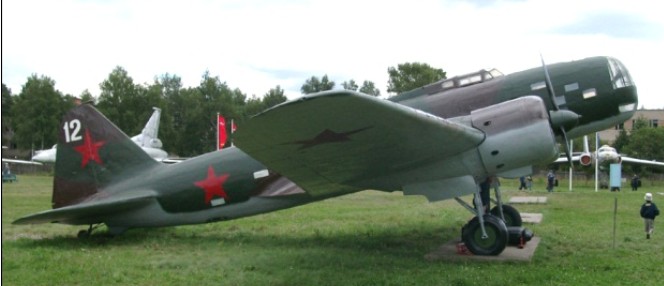
In 1939 a modified version with lengthened nose and more armour (the DB-3F) appeared, and in 1940, in conformity with changed Russian practice, the designation became IL-4 (denoting the designer, Sergei Ilyushin).
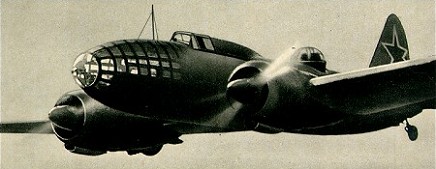
Il-4

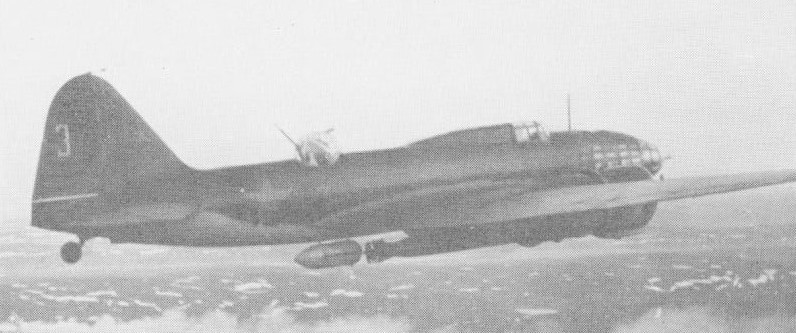
Soon after the German attack on the USSR opened in 1941 it was decided to withdraw IL-4 production to newly opening plants in Siberia, at the same time replacing a large proportion of the metal structure by less strategically critical wood. IL-4s also entered service with Soviet Naval Aviation, and it was a naval manned force of these bombers that first raided Berlin from the east on 8 August 1941. Thereafter the IL-4 paid frequent visits to the German capital and other targets in Eastern Europe. In 1944 production ended, although the IL-4 served until the end of the war and afterwards. Apart from increasing the calibre of its guns and giving it a torpedo carrying ability, the IL-4 remained virtually unchanged between 1941 and 1944.

Well over 5,000 IL-4s were produced between 1937 and 1944, the vast majority in the last three years.
Gallery

DB-3M
Engine: 2 x M-87B, 708kW
Max take-off weight: 7660 kg / 16887 lb
Loaded weight: 5270 kg / 11618 lb
Wingspan: 21.44 m / 70 ft 4 in
Length: 14.22 m / 46 ft 8 in
Height: 4.19 m / 13 ft 9 in
Wing area: 65.6 sq.m / 706.11 sq ft
Max. speed: 445 km/h / 277 mph
Ceiling: 9700 m / 31800 ft
Range: 3800 km / 2361 miles
Armament: 3 x 7.62mm machine-guns, 2500kg bombs

Il-4
Engine: 2 x M88B, 810kW
Max take-off weight: 10055 kg / 22168 lb
Empty weight: 5400 kg / 11905 lb
Wingspan: 21.4 m / 70 ft 3 in
Length: 14.8 m / 48 ft 7 in
Height: 4.1 m / 13 ft 5 in
Wing area: 66.7 sq.m / 717.95 sq ft
Max. Speed: 429 km/h / 267 mph
Cruise speed: 340 km/h / 211 mph
Ceiling: 9700 m / 31800 ft
Range w/max.fuel: 3800 km / 2361 miles
Range w/max.payload: 1200 km / 746 miles
Crew: 3-4
Armament: 3-8 machine-guns, 2500kg bombs

DB-3F
Engine: 2 x M-88, 1100 hp
Wingspan: 70 ft 2 in
Length: 47 ft 6 in
Max speed: 265 mph at 20,000 ft
Sevice ceiling: 30,700 ft
Max range: 2500 mi
Armament: 3 x 7.62 mm mg
Bombload: 4400 lb or 1 x 18in torpedo
Crew: 3-4

Il-4 / DB-3F
Payload: 5,500 lb
Cruise speed: 200 kt
Ceiling: 31,800 ft
Range: 2,400 miles
Crew: 3
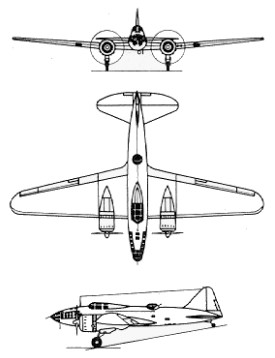
Il-4

Ikarus AD J-451MM Stršljen

The J-451MM Stršljen is a development of the single seat 451M Zolja research aircraft, which was the first jet aircraft designed in Yugoslavia.

Ikarus J 451 MM Strsljen

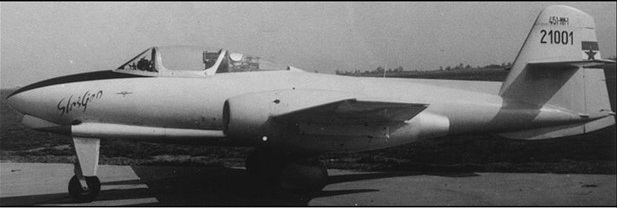
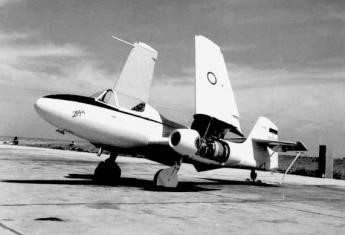
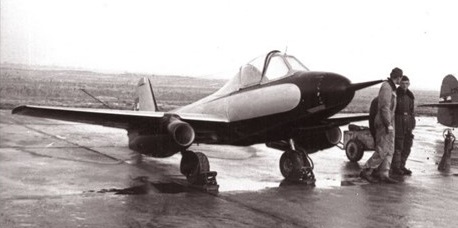
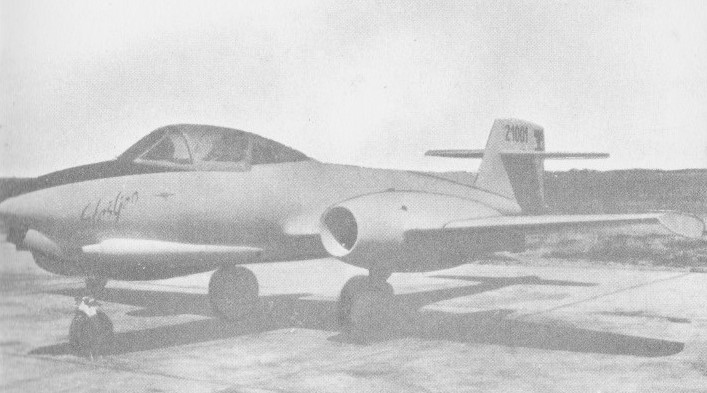
The Ikarus J-451MM Stršljen (“Hornet”) was developed in 1956 as a planned close support variant of the S-451M Zolja and test flown in 1957 by the Aeronautical Testing Centre. The design featured a tricycle undercarriage as opposed to the early tail dragger designs, more powerful Turbomeca Marboré turbojet engines and armament of 2 x 20mm Hispano-Suiza 404A cannons under the fuselage along with underwing rockets.

Ikarus J-451MM Stršljen (“Hornet”)

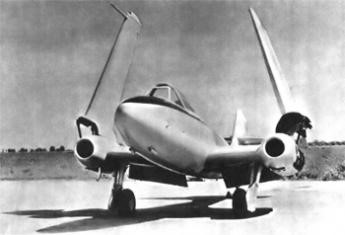
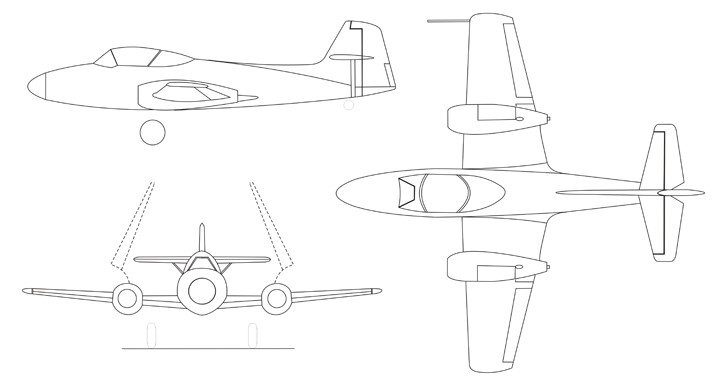
The airframe has low-set wings without sweepback, and un-swept tail surfaces, with the tailplane mounted part-way up the fin. The ailerons, elevators and rudder are conventional. The wingtips are turned down and a stabilising fin is under the nose. The outer wings fold upward for stowage and access to the engines.

The tricycle undercarriage has single wheels on each unit. The main wheels retract inward and nosewheel retracts forward.

Two cannon are located in fairings under the fuselage and underwing attachments hold up to four air-to-ground rockets.

Engines: 2 x Turbomeca Marbore, 880 lb
Wingspan: 25 ft 10.5 in
Wing area: 121.5 sq.ft
Length: 26 ft 3 in
Height: 5 ft 6 in
Empty weight: 5370 lb
Max speed: 497 mph at SL
Service ceiling: 39,600 ft
Range: 470 mi
Armament: 2 x 20 mm Hispano cannon
Hardpoints: 4

Ikarus AD 215

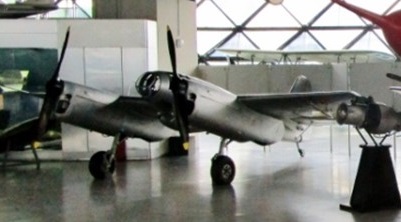
Originally designed before the World War II as a Zmaj R-1 the Ikarus 215 (Икарус 215 in Serbian) twin-engine plane, was a Yugoslav light bomber and a training aircraft. It was designed by Dusan Stankov and built at the Ikarus factory in Zemun-Belgrade.

The aircraft was of mixed construction, twin engine, with a crew of two to four. The main landing gear wheels retracted rearwards into the motor housing.

The prototype first flew in 1949. The 215 did not enter production. The prototype was used for training.

Engines: 2 × Ranger, SGV-770C-1, 387.7 kW (519.9 hp)
Propellers: 2-blade
Wingspan: 16.14 m (52 ft 11 in)
Wing area: 29.80 sq.m (320.8 sq ft)
Length: 13.35 m (43 ft 10 in)
Height: 4.03 m (13 ft 3 in)
Empty weight: 4,297 kg (9,473 lb)
Gross weight: 4,685 kg (10,329 lb)
Range: 1,120 km (696 mi; 605 nmi)
Service ceiling: 8,150 m (26,739 ft)
Crew: 2-4

Ikarus AD 453

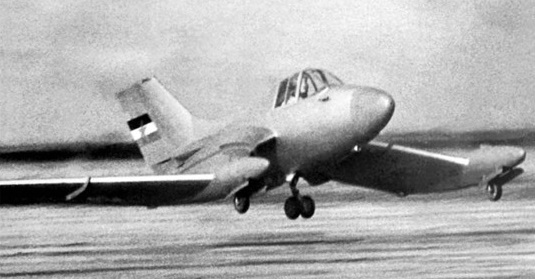
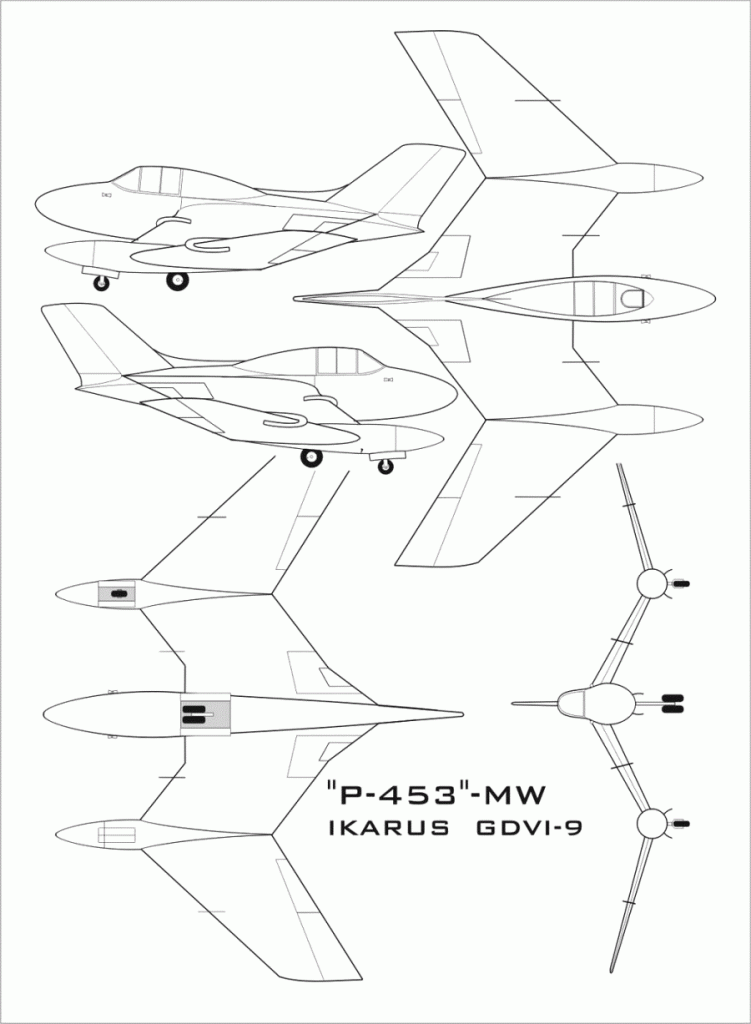
The Ikarus 453 (P-453-MW) was an aircraft designed in 1952. It featured reverse gull wings to accommodate two Turbomeca Marbore II turbojet engines in the nacelles on the wing. In 1952 the first flight was conducted without engines fitted (in glide mode) but it crashed and the project was cancelled (the pilot survived the incident).

Ikarus AD 452-M

After World War II, the Yugoslav aviation industry was reorganized with a central institution in charge of research and prototypes, with attached a few plants of lesser importance. This centrally located industry continues the lkarus name which was that of the first Yugoslav aviation company.

The factory of Novi Sad, as other aircraft factories in the country, were completely destroyed during the German occupation. The plant in Zemun was the most quickly rebuilt and it produced the Yugoslav military aircraft.

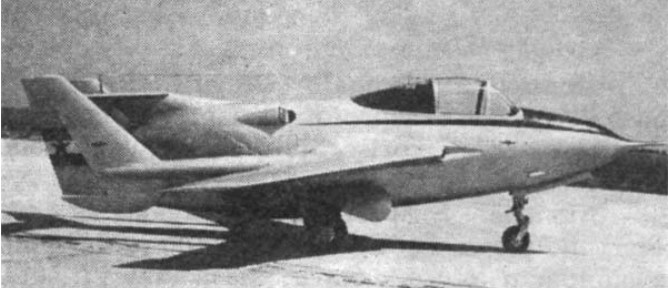
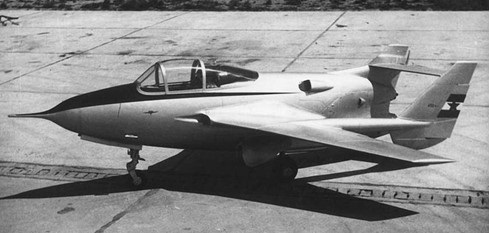
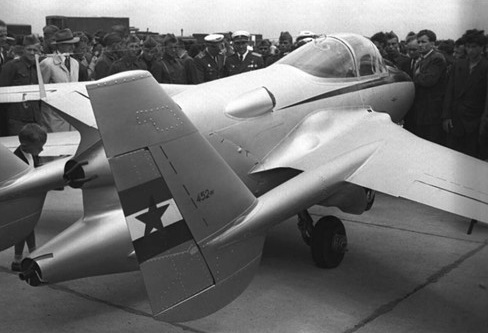
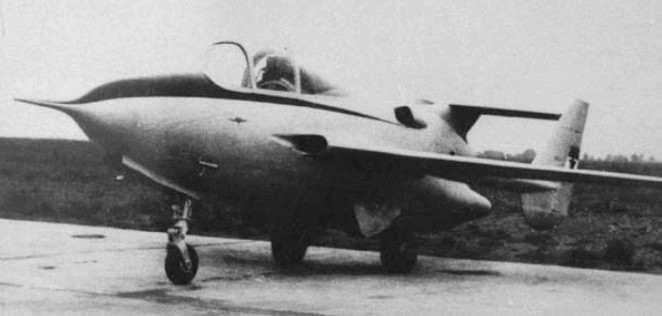
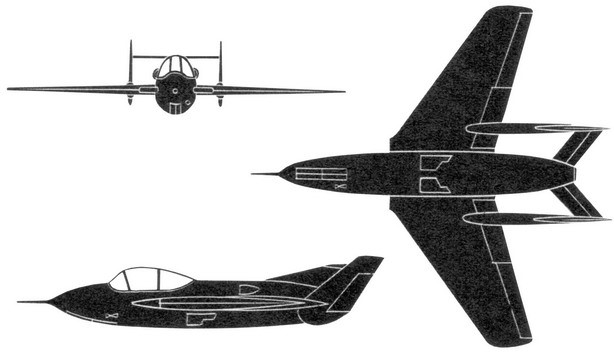
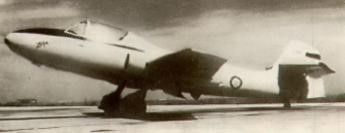
Among these, the 452M was designed by engineer Dragoljub Beslin, considered the prototype of a ground attack fast jet. The letter M (Mlazni) means jet powered. The 452M was a stubby pod-and-boom configuration with twin tails and a horizontal stabilizer at the end of the booms. The power source consists of two Turboméca Palas 056A turbojet engines arranged one above the other at the rear of the fuselage.

The top engine is fed with two side air inlets on each side of the fuselage, and the lower engine is supplied by entries in the leading edge of the wing root.

The wing is swept and supports two beams with two fins. The stabilizer joins the upper parts of both fins. The retractable tricycle undercarriage comprises two main wheels based on the fuselage and retracting into it. All undercarriage lower forward. Only intended for experimental purposes, the 452M was lightly armed with just 2 x 12.7-mm Browning machine guns.

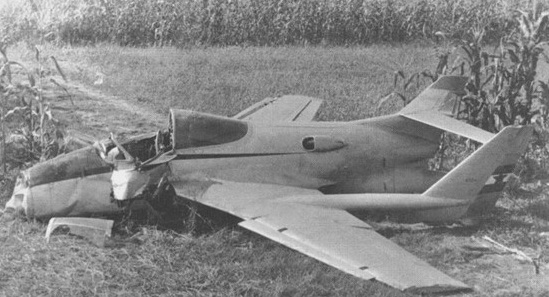
The aircraft made its first flight on 24 July 1953 which resulted in an engine failure due to a fault in the fuel line and heavy damage to the aircraft upon an emergency landing in a cornfield. The pilot survived but received a fractured skull in the incident.

Future development of the 452M to create an interceptor with a larger fuselage to accommodate a third engine to increase power and upgraded armament of 2 x 20mm cannons never got beyond the drawing board. The experimental jet was an advanced design for the time but was not selected for further development by the Yugoslav Air Force as other jet aircraft options were preferred and the project was cancelled.

452M
Engines: 2 x Turbomeca Palace 056A, 4.0 kN
Wingspan: 5.25 m (17 ft 12 in.)
Length: 5.97 m (19 ft. 7 in.)
Height: 1.77 m (5 ft. 9 in.)
Wing area: 11.20 sq.m
Empty weight: 1220 kg
Maximum take-off weight: 1680 kg
Max speed (est): 750 km.h. (466 m.p.h)
Min speed (est): 190 km.h. (118 m.p.h)
Cruising speed: 624 km / h
Range: 540 km
Ceiling: 9800 m
Endurance: 75 min.
Crew: 1

Ikarus AD S-451M Zolja

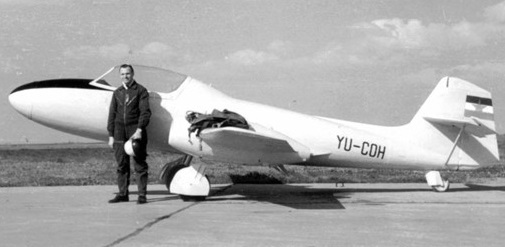
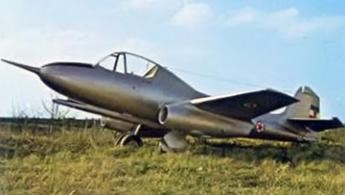
The Ikarus S-451M Zolja (“Wasp”) was an unarmed further development of the S-451M. This all metal aircraft was designed as a light attack aircraft. The letter M (Mlazni) means that the aircraft is powered by jet engines. It was a more streamlined design with a stretched fuselage, folding wings and two Palas turbojet engines installed within the wing rather than under them.

A single Zolja prototype was manufactured and made its first flight in 1954.

By 1960 the S-451M was now in civilian hands (registered as YU-COH) and on May 19th, 1960 broke the world air speed record in the I-C aircraft category, flown by pilot Ivan Črnjarić at 501 km/h (the record would remain unbeaten for 5 years).

The aircraft was retired in 1968 following damage from a ground incident.

Engines: 2 × Turbomeca Palas 056A
Length: 6.8 m (22 ft)
Wingspan: 6.70 m (21 ft 7 in)
Height: 2.3 m (7 ft 7 in)
Wing area: 8.00 m² (86 ft ²)
Loaded weight: 1202 kg (2644 lb)
Maximum speed: 439 km / h (284.5 mph)
Minimum speed: 153 km / h (94.8 mph)
Range: 392 km (233 miles)
Ceiling: 8550 m (28,045 ft)
Takeoff distance: 600 m
Landing distance: 582 m

Ikarus AD S-451MM Matica / S-451MM Stršljen

Ikarus T-451MM Stršljen II (“Hornet II”)

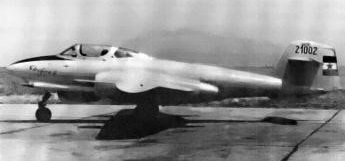
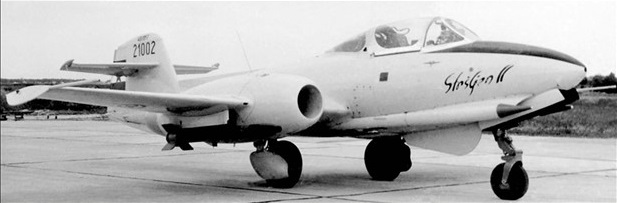
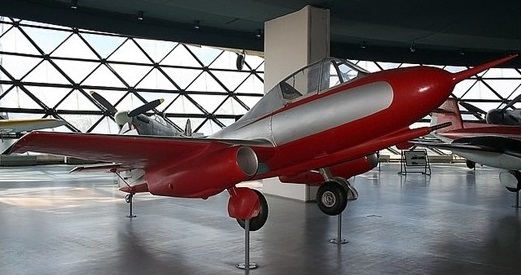
The J-451MM lead to development of the Ikarus T-451MM Stršljen II (“Hornet II”) single seat jet aerobatic training aircraft of which only one prototype (21002) was manufactured and this can now be seen at the Belgrade Aeronautical Museum.

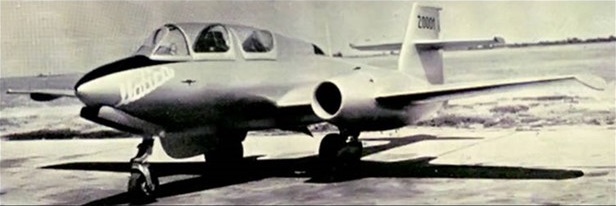
Another variant was the Ikarus S-451MM Matica (“Queen Bee”) two-seat jet training aircraft which set a world air speed record for its class of 750.34 km/h in 1957.

Ikarus S-451MM Matica two seat jet trainer

Gallery

Ikarus AD S-451M Mlazni

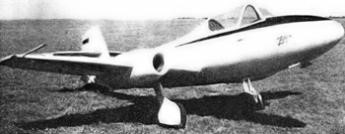
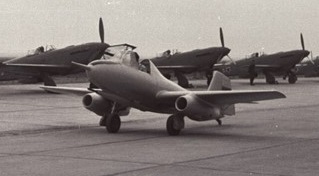
Utilising the basic airframe of the S-451, Ikarus came up with a new design to develop the first jet aircraft designed and built in Yugoslavia, the Ikarus S-451M (Mlazni or “Jet”). The Ikarus 451M was designed by Major Dragoljub Beslin. Basically they installed a conventional cockpit and added two small Turbomeca Palas 056 turbojet engines which produced a maximum speed of 453 km/h.

Ikarus S-451M at the Yugoslav Aeronautical Testing Centre in the early 1950’s

Captain Tugomir Prebeg made the first flight of this aircraft, in the morning of 25 October 1952, powered by two Turbomeca Palas jets. A single copy was built 1959.

With plans to develop a military version, a 20mm Hispano-Suiza 404A cannon and six underwing rockets was fitted to the S-451M for weapons testing.

Ikarus S-451M passes a lineup of Yugoslav Air Force Yak fighters at Batajnica Air Base – May 1953

Flight tests of the prototype were conducted at the Yugoslav Aeronautical Testing Centre until 1959 when the aircraft was handed over to the Belgrade Aeronautical Museum for permanent display.

Gallery

Engines: 2 × Turbomeca Palas 056A
Length: 7.45 m (24 ft 5 in).
Wingspan: 6.78 m (22 ft 3 in).
Height: 2.32 m (7 ft 7 in).
Wing area: 8.00 m² (86 ft ²)
Empty weight: 897 kg (1977 lb)
Gross weight: 1350 kg (2980 lbs)
Range: 300 km (190 miles)
Ceiling: 8500 m (27,900 ft)