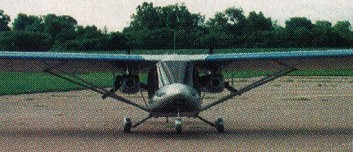
First flown in 1996. The kit price for this twin pusher, including engines but not props or instruments, was US$23,500. An auxilary 20 US Gallon fuel tank was optional.
Engine: 2 x Rotax 503, 53 hp Top speed: 100 mph Cruise: 90 mph Stall: 40 mph Rate of climb: 1200 fpm Takeoff dist: 350 ft Landing dist: 150 ft Fuel capacity: 20 USG Empty weight: 650 lb Gross weight: 1400 lb Height: 6.9 ft Length: 19.4 ft Wing span: 31.5 ft Wing area: 155 sq.ft Seats: 2 Landing gear: nose wheel
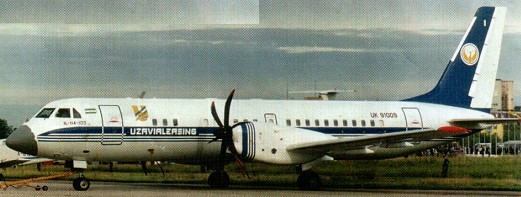
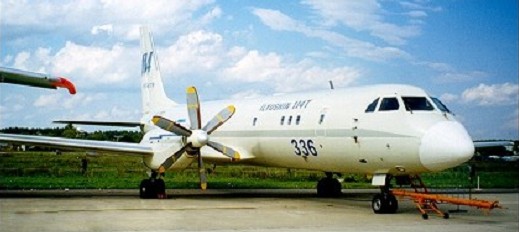
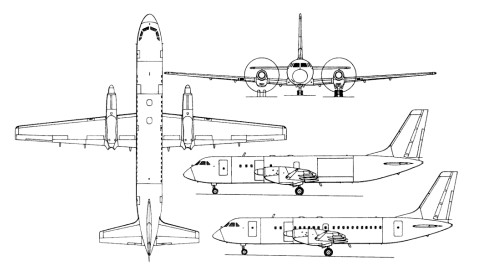
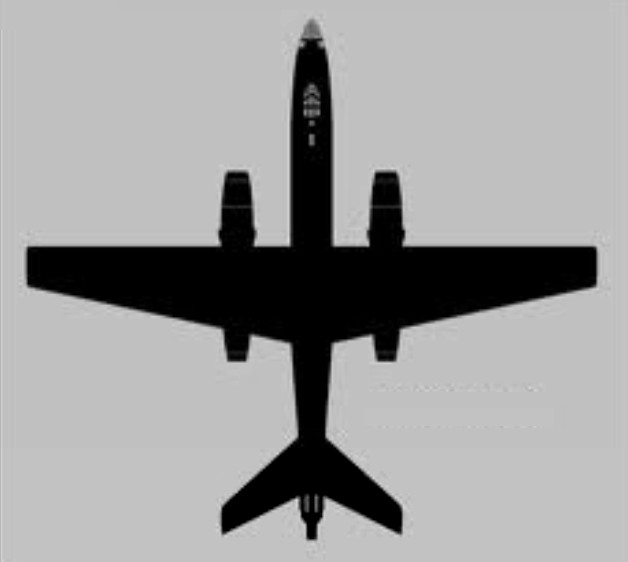
The IL-114’s two engines are 2,500 shp (1,860 kW) TV7-117 turboprops driving six-bladed propellers. Composites feature strongly in the aircraft’s structure and represent ten per cent of empty weight.
Special electronic versions of IL-114 were developed for “Open Skies” missions and Russian Federal Border Guard patrol.
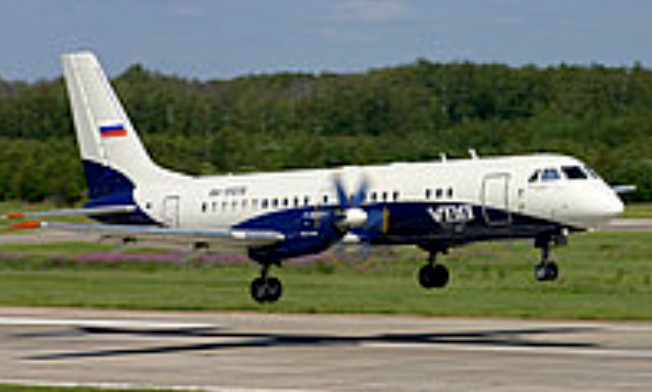
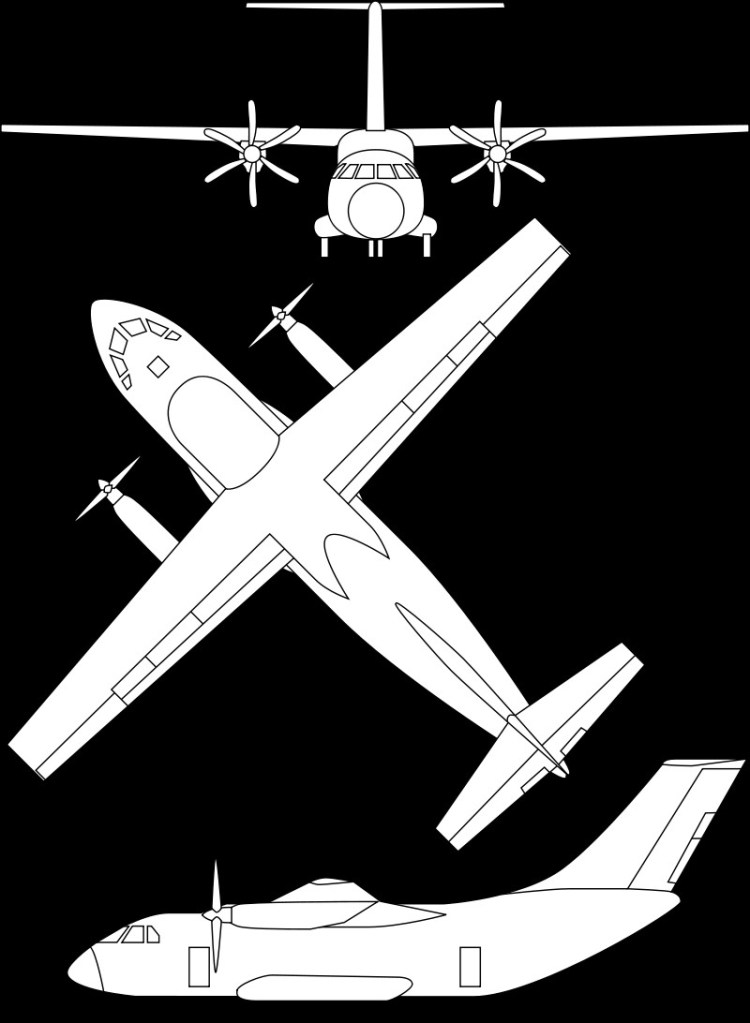
The Ilyushin Il-112 is a high-wing light military transport aircraft developed by Ilyushin Aviation Complex (JSC IL) for air landing and airdrop of military air cargoes, equipment and personnel. The aircraft is being manufactured by Voronezh Aircraft Production Association.
The Il-112 has similar weights and dimensions to the An-26 it is intended to replace but differs by having a notably larger cabin cross-section, allowing it to accommodate 44 armed soldiers instead of 38. Thanks to the engine’s reduced specific fuel consumption, which is down by 38 percent, the Il-112 has twice the ferry range, at 5,200 km (2,808 nm). The crew is reduced from six to two thanks to modern avionics and onboard equipment. All aviation information as well as information on the operation of aircraft systems is displayed on six LCD monitors.
The aircraft was designed to operate in adverse weather conditions and is expected to meet all current ICAO noise and emissions requirements.
In May 2011, the Russian Defense Ministry decided to abandon the military transport version of the Il-112 and purchase seven Antonov An-140T cargo planes.
In January 2013 it was announced that in late December, the Main Commander of the Russian Air Force presented the Minister of Defense Sergei Shoigu the case for a resumption of the Il-112 project. On 24 June 2013 it was reported that the Il-112 is considered as a replacement for the Antonov An-26, and on 26 June, that the Ilyushin Design Bureau sent JSC Klimov a request for the establishment of a new turboprop engine. In August 2013, the general designer of Ilyushin, Viktor Livanov, citing the First Deputy Defense Minister Yuri Borisov, confirmed that work on the aircraft has been resumed.
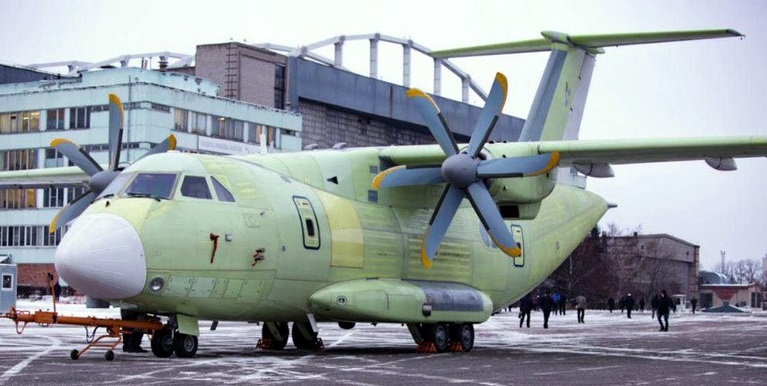
On 18 January 2018, the first prototype of the IL-112V was shown at the Voronezh Joint Stock Aircraft Manufacturing Company (VASO). It has two improved Klimov TV7-11ST turboprop engines, with 2,610 kW (3,500 hp) each, each powering 6-bladed AV-112 constant-speed reversible pitch propellers. It is fitted with a monolithic, single piece wing. The aircraft is 25.15 m long, with a height of 8.89 m and a wing span of 27.6 m.
The first prototype of the Il-112V was rolled out on 27 November 2018. It is intended for performance and flight handling trials. Taxi trials had begun by the end of December.
Powerplant: 2 × Klimov TV7-117ST turboprop, 2,610 kW (3,500 hp) each Propellers: 6-bladed constant-speed reversible pitch propellers Wingspan: 27.6 m (90 ft 7 in) Wing area: 65 m2 (700 sq ft) Length: 24.15 m (79 ft 3 in) Height: 8.89 m (29 ft 2 in) Empty weight: 10,000 kg (22,046 lb) Max takeoff weight: 21,000 kg (46,297 lb) Fuel capacity: 7,200 l (1,600 imp gal; 1,900 US gal) Capacity: 5,000 kg (11,000 lb) Crew: 2
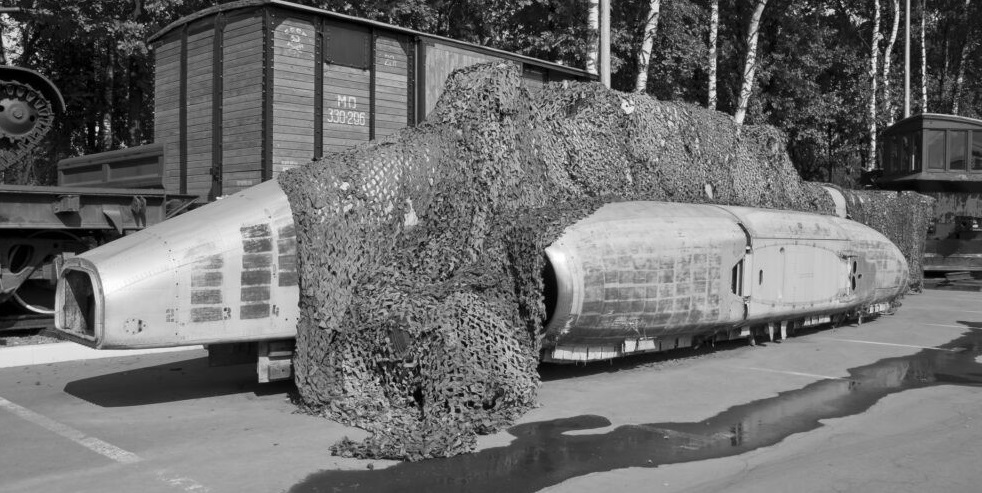
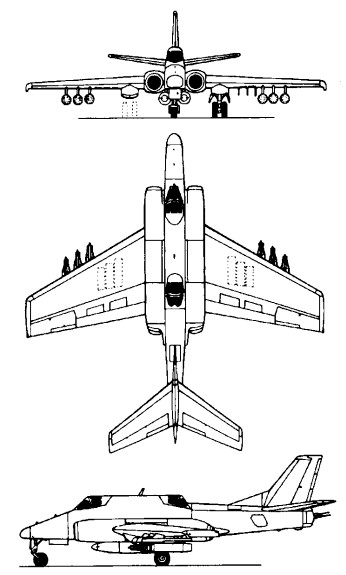
The prototype flew on September 25, 1982. Development canceled.
IL-102 Engine: 2 x Izotov I-88 (RD-33), 5380kg Max take-off weight: 22000 kg / 48502 lb Wingspan: 16.98 m / 55 ft 9 in Length: 17.75 m / 58 ft 3 in Height: 5.08 m / 16 ft 8 in Max. Speed: 950 km/h / 590 mph Cruise speed: 850 km/h / 528 mph Ceiling: 10000 m / 32800 ft Range w/max.fuel: 3000 km / 1864 miles Range w/max.payload: 600 km / 373 miles Armament: 1 x 30mm cannon, 1 x 23mm cannon, 7200kg weapons Crew: 2
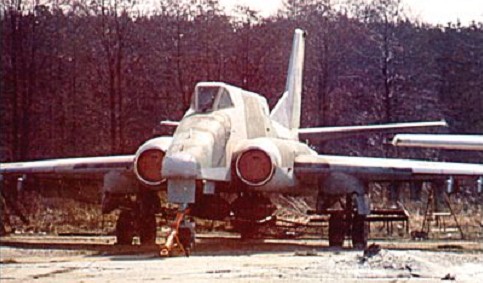
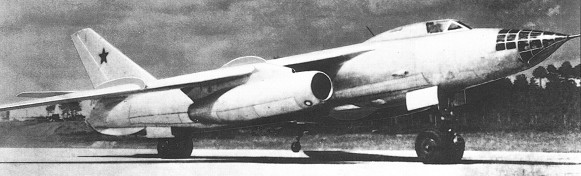
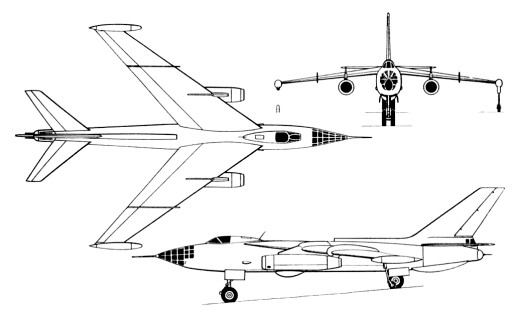
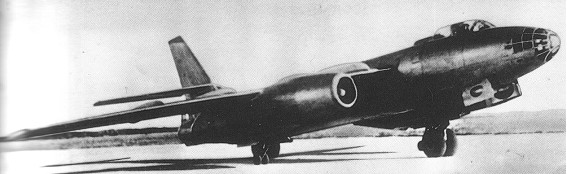
The Il-54 resulted from a 1953 requirement and first flew in early 1955. The type was typical of Soviet thinking for tactical bombers in the period: an oval-section fuselage with a completely glazed bombardier nose; a fighter-type canopy over the pilot and a barbette controlled by the tail gunner; tandem main landing gear units with stabilizing outriggers, and flying surfaces swept at 550 these last including high-set wings with the two 14,330-lb (6500-kg) thrust AL-1 turbojets pod-mounted below them. Flight trials confirmed that the Il-54 had transonic performance, with a maximum sea-level speed of 715 mph (150 km/h), but no production was authorized. One built.
Engine: 2 x AL-7F turbojets, 10000kg with afterburner Max take-off weight: 40660 kg / 89640 lb Empty weight: 24000 kg / 52911 lb Wingspan: 17.7 m / 58 ft 1 in Length: 28.9 m / 94 ft 10 in Wing area: 84.6 sq.m / 910.63 sq ft Max. Speed: 1250 km/h / 777 mph Cruise speed: 910 km/h / 565 mph Ceiling: 14000 m / 45950 ft Range: 2500 km / 1553 miles Armament: 4 x 23mm cannon, 5000kg bombs Crew: 3
After the Il-30, the Ilyushin design bureau then moved to a scaled-up version of the Il-28 as the Il-46 of 1954 with an uprated version of the Il-30’s powerplant, but this too failed to secure any production commitment. The bureau then moved logically to a fully swept version of the Il-30 that offered transonic capability with the possibility of supersonic speed in a shallow dive, the Il-54.
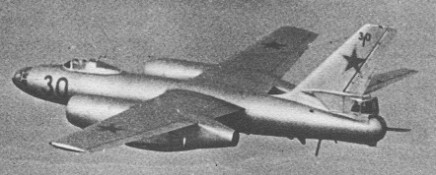
Engines: 2 x Lyulka AL-5 turbojet Maximum take off weight: 42,000 kg
The Il-28 was upgraded in the Il-30 of 1951 with the Lyulka AL-5 turbojet and 35 degree swept wings to produce a speed of more than 621 mph (1000 km/h), but this had not been ordered into production. The Ilyushin design bureau then moved to a scaled-up version of the Il-28 as the Il-46.
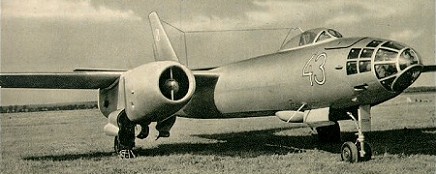
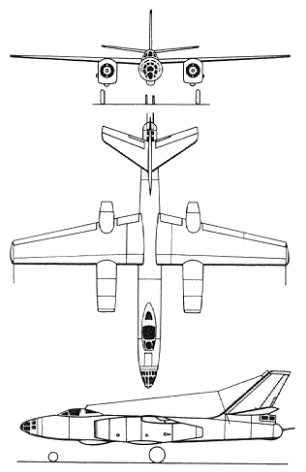
To a small extent, the Il-28 could trace its ancestry back to the first jet bomber, the German Arado Ar 234. Ilyushins first jet bomber, the Il-22, had closely resembled an enlarged Ar 234C, and several features of the German aircraft (the slim fuselage, shoulder-mounted unswept wing with underslung engines, and the large slotted flaps) were carried over into the Il-28. In December 1947, Ilyushin started development of a small, more compact bomber, trading range for speed and manoeuvrability. The pilot was seated to the bomb-aimer’s rear, above the nosewheel bay. A fighter-type canopy (the first on a Soviet bomber) provided adequate height for the pilot’s cockpit. The fuel was housed in five flexible tanks in the fuselage, forward and aft of the wing. The centre fuselage housed the bomb bay, large enough to house 12 551-lb (250-kg) FAB-250 bombs; the lower front fuselage accommodated a mapping radar and two NR-23 23-mm cannon.
The pressurized Il-K6 turret, mounting two 23-mm NR-23 cannon, was housed in the tail of the fuselage. The rear gunner was the only member of the crew without an ejection seat. The gunner doubled as the radio operator, the VHF and HF communications equipment being installed ahead of the turret.
The engines were ahead of the main wing structure, the jetpipes passed beneath the wing, and the single-wheel main landing gear units were located beneath the jetpipes.
The wings were built in upper and lower halves, which were joined together after hydraulics and other plumbing had been installed, and were built in sections to minimize the need for large production tools. The high wing eliminated the need for any complex carry-through structures around the fuselage and nacelles. Also, most of the fuselage and nacelle skins were single-curvature surfaces (much of the fuselage was an almost perfect cylinder.
A medium bomber, first flown on 8 August 1948, the Il-28 prototype flew on two RD-10 (Jumo 004 development) 2270kg thrust Klimov RD-45F turbojets, but the British Nene were substituted and, in VK-1 form, remained standard in the 10,000 or more subsequent examples.
In October 1948, the Il-28 was evaluated against the larger but similarly powered Tupolev Tu-78 in the light bomber role; the Ilyushin aircraft proved faster and more agile, and was selected as the replacement for the obsolescent Tu-2.
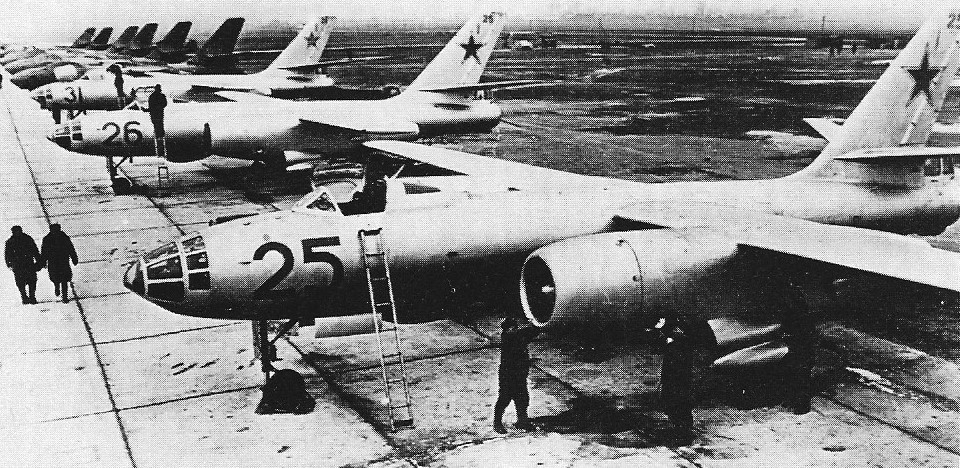
A formation of 25 pre-production Il-28s took part in the 1950 May Day Moscow fly-past, by which time large-scale production had been initiated at several factories. Series aircraft, which entered service with a large number of V-VS bomber regiments, incorporated aerodynamic refinements, Klimov VK-1 provision for detachable wingtip fuel tanks.
Preparations for large¬scale production were undertaken with great urgency, and the type entered service in September 1950. The only major change during development was the switch from the RD-45, used only in the prototype and pre-production aircraft, to the similarly sized but usefully more powerful VK-1.
The basic Il-28 remained virtually unchanged throughout its production life. The only visible alteration was the introduction of a small tail-warning radar, although the guns still had to be aimed manually. At least 3,000 were delivered from Soviet plants in 1950-60. (In the late 1950s, a few aircraft were produced by Czechoslovakia as B-228s.)
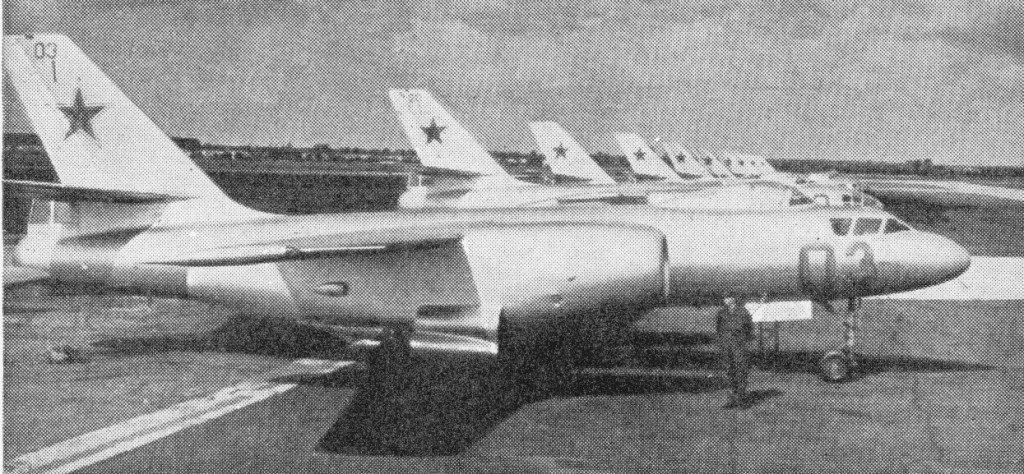
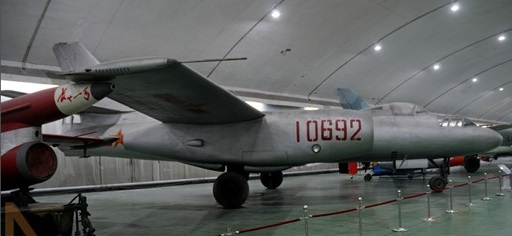
Known to NATO as Beagle, it equipped all the Warsaw Pact light bomber units in 1955-70 and was also adopted by the AV-MF as the II-28T torpedo bomber. Armed with two internally carried torpedoes, the Il-28Ts were replaced by Su-17s in the mid-1970s. The Il-28U dual trainer, NATO code name ‘Mascot’, has distinctive stepped cockpits, and the Il-28R reconnaissance versions (many probably converted bombers) carry a wide range of electronics and sensors’ and wing tip-tanks. No longer a front-line type in the Soviet Union, the Il-28 remained in service with some 15 air forces outside Europe, the most important being that of China where some hundreds were built under a licence granted before 1960.
Another version was unarmed and demilitarized, used by Aeroflot for high-speed package deliveries — for example, the matrices used to print Pravda throughout the USSR — and to gain jet experience in the civil environment before the introduction of the Tu-104. Later, some Il-28s were converted with radio control systems and used as target drones.
With its internal weapons bay, it could carry large conventional stores such as a 6,614-lb (3000-kg) bomb, or a tactical nuclear weapon.
The Il-28 rapidly became obsolete as a tactical combat aircraft, and it was replaced by the transonic Yak-28L from 1963—4 onwards.
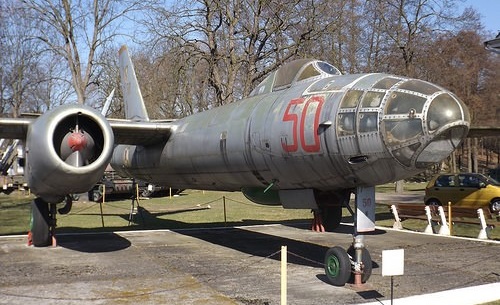
50 Ilyushin IL-28 B5 56538
The Il-28 was a standard type with Warsaw Pact forces, and was widely exported. The type saw some action in the Middle East and the Nigerian civil war in the late 1960s.
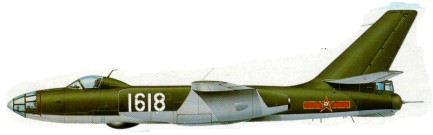
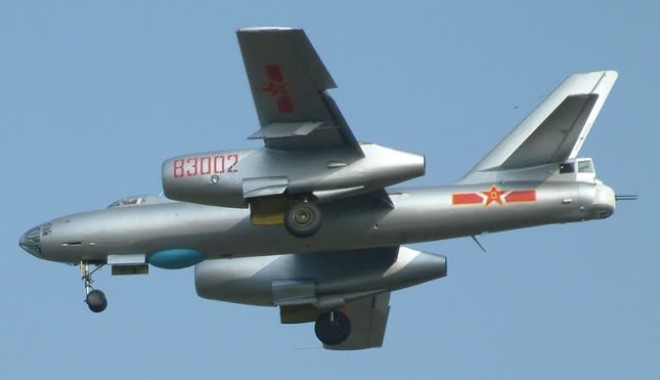
The biggest operator of the Il-28 outside the Soviet Union was China, which is believed to have received a substantial number of the type in the late 1950s. Shortly after the Sino-Soviet rift of 1959, engineers at China’s Harbin aircraft plant analysed and copied the Il-28 airframe and systems (the VK-1 engine was already in production for the MiG-17) and began to produce the aircraft at a low rate under the designation H-5 (sometimes rendered as B-B in the West) from 1966 to the 1980s. Like other Chinese-built Soviet types, the H-5 is a clone of the original: a copy so exact that it is almost indistinguishable from the Il-28. In 1980, it was reported that the H-5 was still in production at Harbin, and that more than 400 aircraft were in service, some carrying nuclear weapons.
H-5
In the bomber field, light duties were assigned to the Harbin twin-jet Hongjhaji 5 – alias Ilyushin Il-28 ‘Beagle’ – production having finally tailed off only in the early 1980s. Despite having flown as a prototype almost 40 years ago, on 8 August 1948, and having long since been withdrawn from first-line service by WarPac, the Il-28 tactical light bomber, in its H-5 version as built by Harbin provided the tactical bombing backbone of People’s Republic of China Air Force in 1987. Between 600 and 700 were built in China 1966-1982, some 500 serving with PRCAF and about 130 with PRC NavAir in 1987 Powered by two 5,952 lb St (2 700 kgp) turbojets based on Klimov VK- 1.
Harbin H-5
The Il-28U was known as HJ-5 in Chinese operational service.
HJ-5
In Europe the Romanian air force operated this type until December 2000.
Il-28 three-seat bomber and ground attack. Engines: 2 x 5952 lb (2700 kg) thrust Klimov VK-1 single-shaft centrifugal turbojets. Wing span excluding tip tanks: 21,45 m (70 ft 4.5 in). Length (typical): 17.65 m (57 ft 10.75 in). Height: 6,70 m (22 ft 0 in). Wing area: 60.80 sq.m (654.5 sq.ft). Max speed: 900 km/h (559 mph) at 4500 m (14.765 ft). Cruise speed: 800 km/h / 497 mph ROC: 2,953 ft (900 m)/min. Service ceiling: 12300 m (40,355 ft). Range at high altitude with maximum fuel 2180 km (1,355 miles). Range with bomb load: 684 miles (1100 km). Empty wt: 12890 kg (28,417 lb). MTOW in original bomber role: 21000 kg (46,296 lb). Armament: 4 x 23 mm NR-23 cannon, internal 3000 kg (6,614 lb) or two AV 45 36 torpedoes. Crew: 3
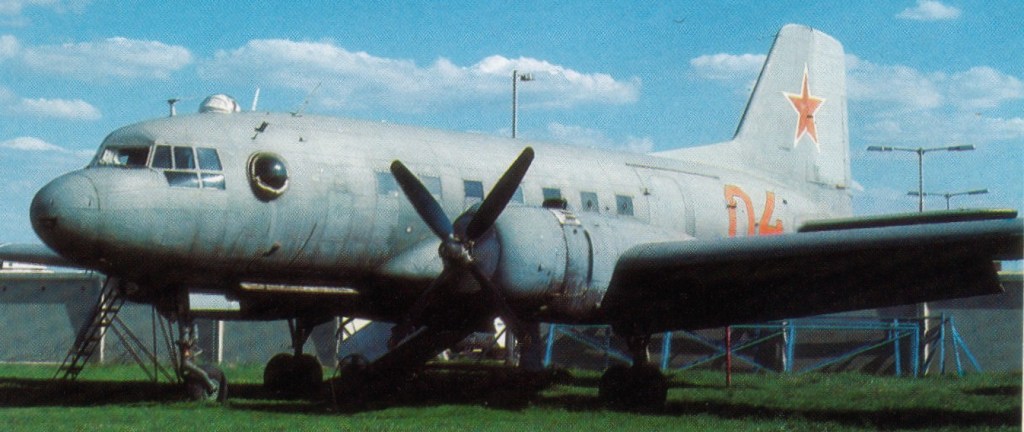
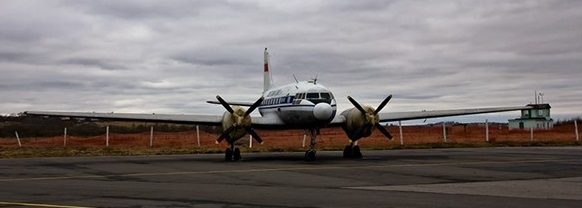
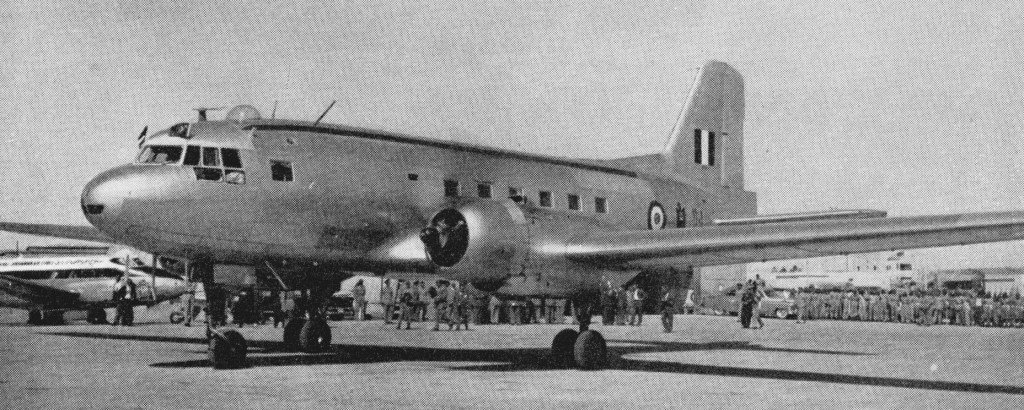
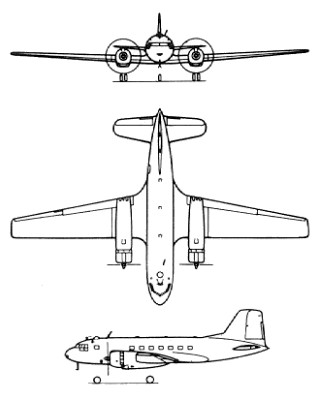
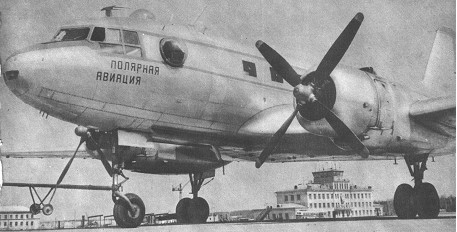
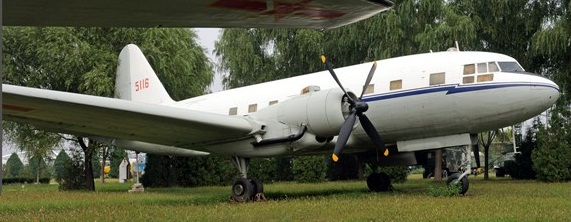
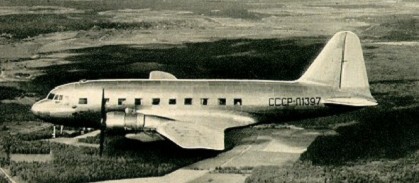
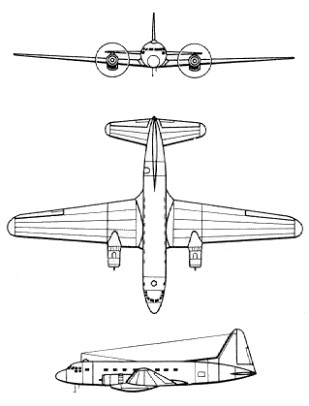
First flown in 1953, the IL-14 was developed from the IL-12 with a new tail unit and wing and was known in the West under the NATO reporting name Crate.
Many thousands were produced in the Soviet Union, East Germany and Czechoslovakia (as the Avia 14). The IL-14 basic version with normal accommodation for 28 passengers was followed by the IL-14M and IL-14P. The Il-14M has a fuselage lengthened by 1.0m and accommodates up to 32 passengers, while the Il-14P seats 26 passengers, has improved performance and an AUW of 16,500kg. A large number of M and P versions were converted into IL-14T freighters.
‘3078’ was the last Il-14 used by the Polish Air Force for VIP transport. Built by VEB in East Germany, it was retired in 1989.
At least 10 Il-14 transport were supplied to Egypt.
Il-14 Engines: 2 x Shvetsov ASh-82T, 1395kW / 1874 hp Max take-off weight: 17000 kg / 37479 lb Empty weight: 12200 kg / 26897 lb Wingspan: 31.7 m / 104 ft 0 in Length: 21.3 m / 69 ft 11 in Height: 7.9 m / 25 ft 11 in Wing area: 100.0 sq.m / 1076.39 sq ft Max. speed: 395 km/h / 245 mph Cruise speed: 345 km/h / 214 mph Service ceiling: 7000 m / 22950 ft Range w/max.fuel: 3200 km / 1988 miles Range w/max.payload: 1000 km / 621 miles Crew: 4 Passengers: 18
It entered service with the Soviet Air Force as a troop/paratroop or freight transport and for glider towing. It also went into commercial service with Aeroflot, CSA of Czechoslovakia and LOT of Poland, utilised by Aeroflot in the late 1940s and 1950s.
Engines: 2 x ASh-82FN, 1360kW Max take-off weight: 17000 kg / 37479 lb Empty weight: 9000 kg / 19842 lb Wingspan: 31.7 m / 104 ft 0 in Length: 21.3 m / 69 ft 11 in Height: 8.1 m / 26 ft 7 in Wing area: 100.0 sq.m / 1076.39 sq ft Max. speed: 375 km/h / 233 mph Cruise speed: 320 km/h / 199 mph Range w/max.fuel: 1900 km / 1181 miles Range w/max.payload: 300 km / 186 miles Crew: 4-5 Passengers: 18-27

 All Aero