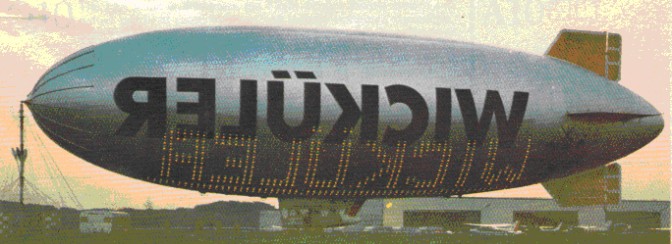
Westdeutsch Luftwerbung Blimp

In 1978, a German company, Westdeutsch Luftwerbung, moved its 180 foot long flying machine to the United States, where it was leased by a consortium tentatively known as Skysign. The sides of the blimp are lined with 10,000 colored lightbulbs controlled by onboard computers, creating two 104 foot long flying billboards. The blimp’s powered by two 180hp Rolls Royces, cruises at 30 mph and never stalls. Its 211,888 cubic foot, helium filled envelope could carry it to 8,500 feet, but it’s happiest within a few thousand feet of the ground where its sign is visible to all.

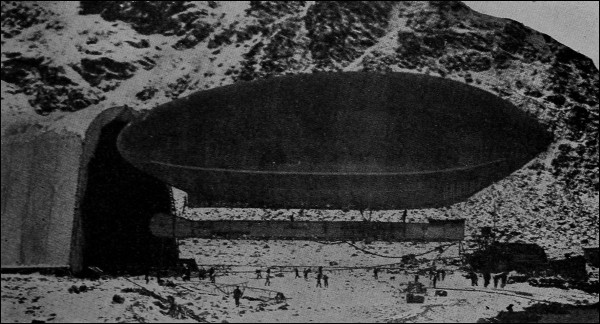
Wellman America

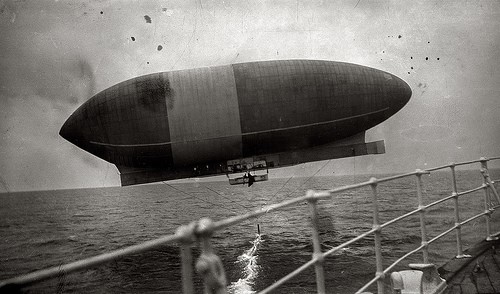
Wellman airship “America” seen from Trent 1910

A 108 foot long semi-rigid airship of 200,000 cu.ft was built in 1907 in Paris for journalist-adventurer Walter Wellman and the engineer Melvin Vaniman. This airship, the America, powered by two 50 hp engines, was shipped to Spitsbergen the same year for an attempt on the North Pole, but was forced to return after only a few hours’ flight with engine trouble.

Originally the 1906 Godard-designed, French-built polar exploration airship, the “America” had already been rebuilt and enlarged twice by the time it was lost at sea. It was lost at sea in 1910 due to engine failure during an attempted transatlantic crossing. Walter Wellman, aero-pioneer Melvin Vaniman, four crewmen (and one ship’s cat) were recovered by RMS Trent near Bermuda 72 hours and 1000 miles into the Trans-Atlantic voyage; no losses.

Rescue of the “America” photographed from the SS Trent on October 18, 1910

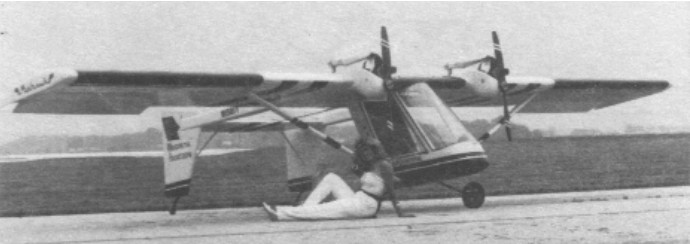
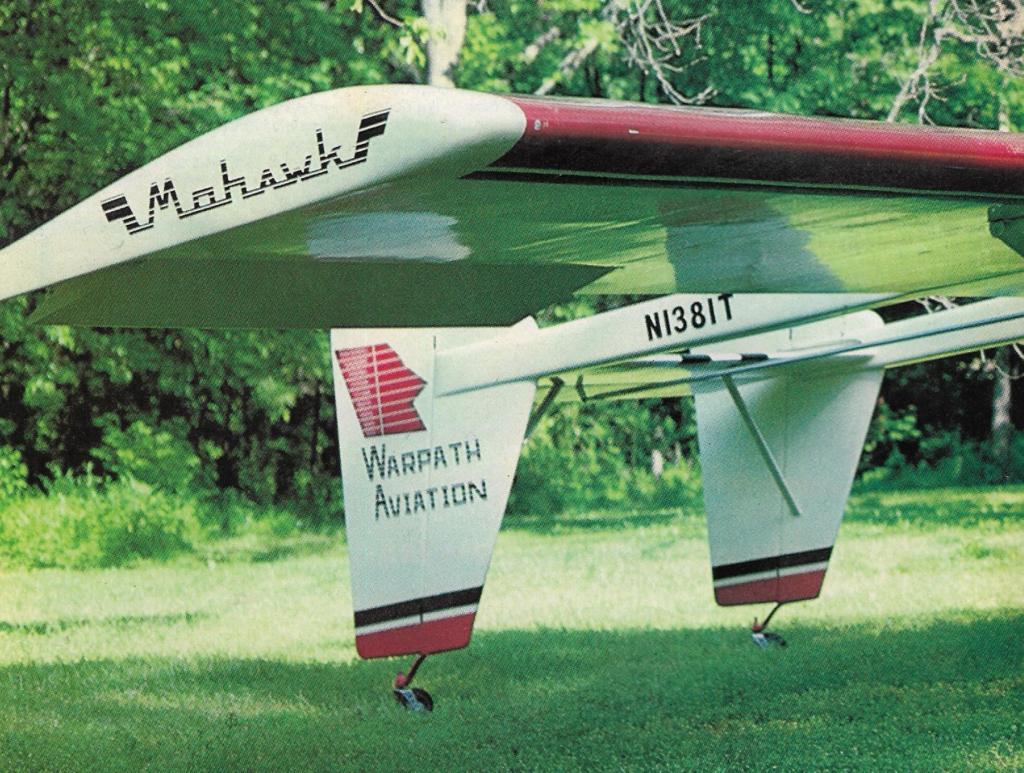
Warpath Aviation Mohawk

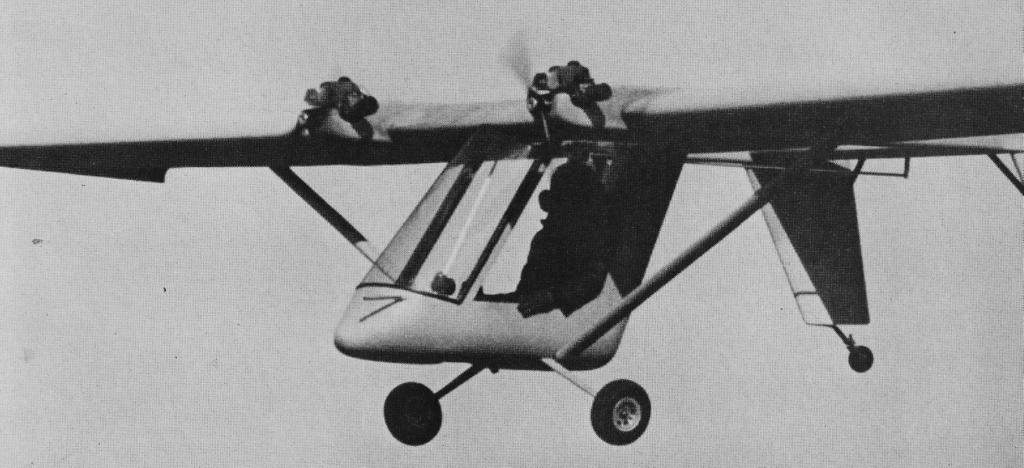
The Mohawk was a single seat twin engined high wing mono¬plane with conventional three axis control. Wing has unswept leading and trailing edges, and constant chord; two fin tail. Pitch control by elevator on tail; yaw control by fin mounted rudders; roll control by half span ailerons; control inputs through stick for pitch/roll and pedals for yaw. Wing braced from below by struts; wing profile; double surface. Undercarriage has two wheels side by side with two additional tail-wheels; steel spring suspension on tail-wheels and glass fibre suspension on main wheels. Ground steering by differential braking. Brakes on main wheels. Composite construction fuselage, totally enclosed. Engines mounted at wing height driving tractor propellers.

Warpath Aviation Mohawk Article

Conceived by Bobby Baker, the prototype of this composite construction machine made its first flight in November 1981. Using aluminium, foam and glass fibre in its construction, the Mohawk became available at the end of 1982 in the form of plans ($100) or a kit requiring 400h completion time, the kit costing $1750 without engines.

However, the company’s plans for this distinctive twin engined twin boom machine included marketing a factory built version and it is clear from the design of the single engined Mohawk X that it has been engineered with series production in mind. The Mohawk can be towed on its own undercarriage, allowing a set up and break¬down time of 20 min by two people.

The Mohawk X is similar to the Mohawk except single engined and fitted with flaps. Undercarriage has three wheels in tricycle formation with two addition¬al tailwheels. Engine mounted at wing height driving pusher propeller.

This is basically a single ¬engine version of the original Mohawk with tricycle undercarriage. The X series has a 430 Cuyuna engine driving a larger pusher prop through a 3/1 reduction unit and short extension shaft. It also incorporates a retractable nosewheel and the cockpit well set forward of the original location to compensate for the aft engine. A conventional flap arrangement is incorpo¬rated in the inboard wing panels and the wings pivot and fold back along the booms for a 5 min assembly time requiring one person. Totally re engineered internally for faster production methods, the X uses wing spars and tail booms of aluminium tubing as opposed to the built up units in the prototype Mohawk. The craft is available in two forms from the factory, first shipments to dealers being scheduled for April or May 1983. The first option is a quick build kit requiring about 60 h assembly time; Bobby Baker says this is mainly a matter of pop riveting and bolting with little glueing or glass fibre work required. This price is estimated at $5800. Alternatively, an almost ready to fly aircraft is offered, requiring only that the tail boom assembly be bolted on and minor rigging done, a total time of less than 20 h. List price of the Mohawk X in this form is estimated at $6800.

Mohawk I
Engines: 2 x Cuyuna 215R, 20 hp at 5000 rpm
Propeller diameter and pitch 33 x 10 inch, 0.84 x 0.25 m
Belt reduction, ratio 2.1/1
Max static thrust 300 lb, 136kg
Power per unit area 0.31 hp/sq.ft, 3.3 hp/sq.m
Fuel capacity 5.0 US gal, 4.2 Imp gal, 18.9 litre
Length overall 16.3 ft, 4.95 m
Height overall 6.8ft, 2.08m
Wing span 30.0ft, 9.14m
Constant chord 4.5ft, 1.37m
Dihedral 0 deg
Sweepback 0 deg
Total wing area l30 sq.ft, 12.1 sq.m
Wing aspect ratio 6.9/1
Wheel track 5.0 ft, 1.52 m
Empty weight 240 lb, 109kg
Max take off weight 550 lb, 249 kg
Payload 310 lb, 141 kg
Max wing loading 4.23 lb/sq.ft, 20.6 kg/sq.m
Max power loading 13.8 lb/hp, 6.2kg/hp
Max level speed 64 mph, 103 kph
Never exceed speed 80 mph, 129 kph
Max cruising speed 50 mph, 80 kph
Economic cruising speed 40 mph, 64 kph
Stalling speed 22 mph, 35 kph
Max climb rate at sea level 500ft/min, 2.5m/s
Take off distance 250 ft, 75m

Mohawk X
Engine: Cuyuna 430, 35hp
Propeller diameter 60 inch, 1.52 m
Reduction ratio 3.0/1
Length overall 16.3 ft, 4.95 m
Height overall 8.0ft, 2.44m
Wing span 32.0ft, 9.75m
Wheel track 5.0ft, 1.52 m
Empty weight 250 lb, 113kg
Max take off weight 550 lb, 249kg
Payload 300 lb, 136kg
Max power loading 15.7 lb/hp, 7.1kg/hp
Max level speed 64 mph, 103 kph
Wagner Twin 2 Pacer

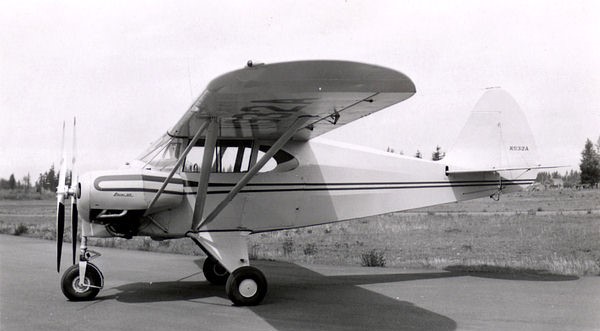
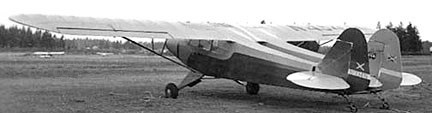
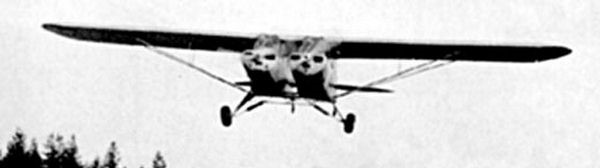
Wagner 2 NX932A

The Wagner Twin 2 Tri-Pacer was a Tri-Pacer converted to a twin by Harold Wagner, 1952. Powered by two Lycomings of 125hp each, it flew about 100 hrs.

Described as too much CAA red tape, it was built back to single engine and sold.

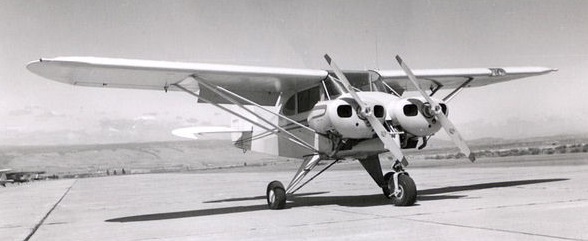
Note the extension on the port crankshaft, that provided clearnance for the starboard propeller.

N932A was still registered to David McClain of Portland, OR in 1980.

Wagner Twin 1 Cubs

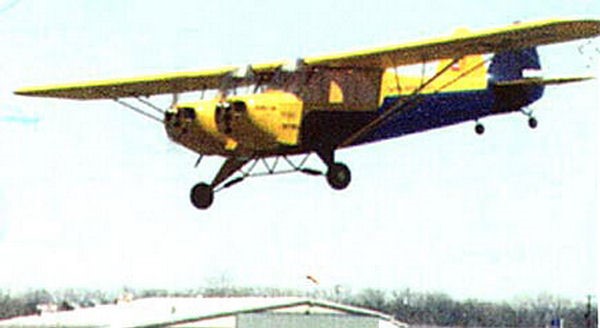
Wagner Twin 1 NX1334N

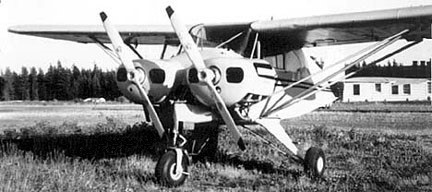
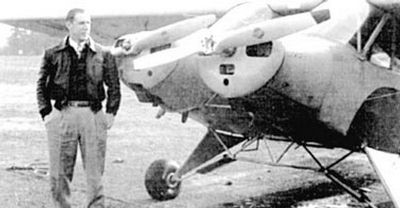
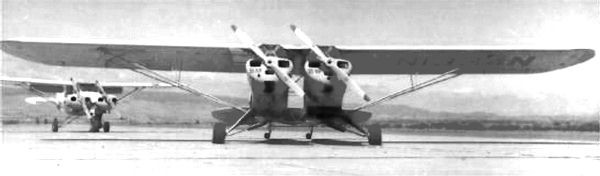
In 1951 Harold A Wagner built a 1946 Piper J-3C and 1947 PA-11 fuselages mounted side-by-side for twin performance. Built in five days, despite having unequal motors and props (42″ wood and 45″ metal), it demonstrated negligible balance problems, the motors were later matched as 85hp with metal props. The overlapping prop clearance came from a 4.75″ spacer on the left motor’s propeller shaft. Flown from the right fuselage only, the added horsepower would in theory support four passengers, but the increased wing loading in reality wouldn’t.

The outer wing panels and tailplane were standard components. The resulting aircraft looked so odd that even Mr.Wagner called it “The Thing”. Because of the close proximity of the fuselages, only the righthand one could be occupied by a pilot and passenger, the lefthand fuselage serving only the purpose of engine mounting. No propeller synchronizing was envisaged, the props rotating in different planes instead. This was accomplished by a ‘distance piece’ on the lefthand engine/prop combination.

First flown on 6 December 1951, it had STOL take-off, 1500fpm climb rate and would take-off and fly on one motor. It is claimed that flight qualities were just great, even with one engine out. The one built, NX1334N, was dismantled after 150hrs of flight.

Engines: 65hp Continental C-65 and 85hp C-85
Max speed: 160 mph
Cruise speed: 120 mph
Stall: 35 mph

Waco C-62 / 2-FBH

The 1942 Waco C-62 (Waco designation Model 2-FBH) was a short- to medium-range troop transport/cargo carrier made of non-strategic wood, similar in size and capacity to Douglas C-47.

253 planes were ordered in Oct 1941 and Jan 1942, powered two P&W R-1830-92, they were assigned AAF s/ns—13 YC-62 (42-12554/12566), 240 C-62 (42-35584/35823), but the orders were cancelled in September 1943 after none were built because of production problems.

Waco PG-2 / PG-3 / YEU / Ridgefield PG-2

PG-2A

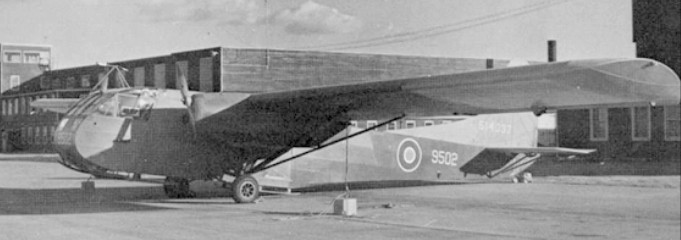
The Waco PG-2A was a unique powered development of the Waco CG-4 Hadrian standard glider. In 1943, the US military had originally developed a prototype powered-version of the Hadrian with two Franklin flat-four piston engines in nacelles beneath the wings. The object of this conversion was to allow the glider to return under its own power after completing a mission. The idea was to use the glider normally and after landing attach the engines and fly it home. After tests with this prototype, a further ten conversions of the aircraft were ordered with Ranger L-440-7 piston engines. These production versions were then known by the PG-2A designation. The service trials were apparently of interest to the RCAF and one PG-2A was briefly trialled in Canada during the immediate post-war period.

There was one each XPG-1, XPG-2 and XPG-3 (Waco designation Model 2-YEU), two XPG-2A and ten PG-2A built.

The conversion to a PG was done by glider mechanic trainees under direction of Ernest LaSalle at Sheppard Field, Texas. LaSalle also added various instruments for flight testing and was allowed, under direction of CCAAF personnel, to pilot the glider from Texas to Ohio. The first was an XPG-2 built by Ridgefield in New Jersey which was converted to an XPG-2A by installing 200 horsepower engines at CCAAF. The “PIG” was the second of two XPG-2A gliders.

Both were used at CCAAF and remained there until the base closed in November 1945 in readying it for an All-Weather Flying base.

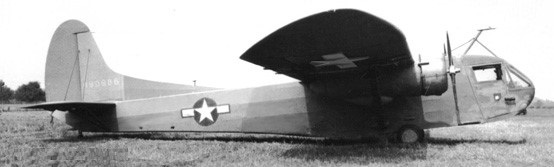
Waco XPG-3 44-90986

PG-2A
Engines: two Ranger L-440-7 piston
Span: 83 ft 8 in (25.50 m)
Length: 48 ft 4 in (14.73 m)
Height: 12 ft 7 in (3.84 m)
Wing Area: 852 sq ft (79.15 sq m)
Armament: None
Crew/Passengers: two pilots and up to 13 troops

XPG-3
Jacobs R-755-9