Huff Daland’s XB 1 bomber design of 1926 was cancelled and reordered as the Keystone XB 1B, a five seat biplane with two 600 hp Curtiss V 1570 5 Conqueror engines. It never progressed beyond prototype stage.
2 Engines
Kensgaila RT-9
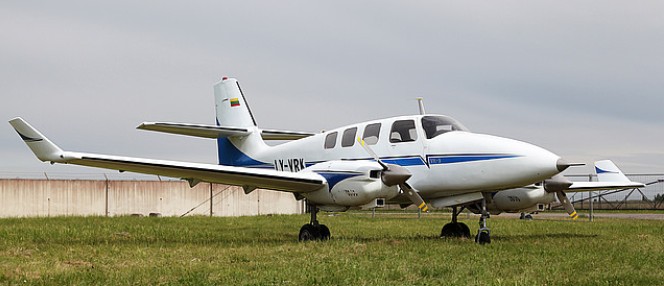
V.Kensgaila prepared for mass production a new projected airliner, the RT-9. A twin engined 8 seater designed by Vladas Kensgaila, the RT-9 is made of composite materials, powered by two Lycoming L-O-540 engines.
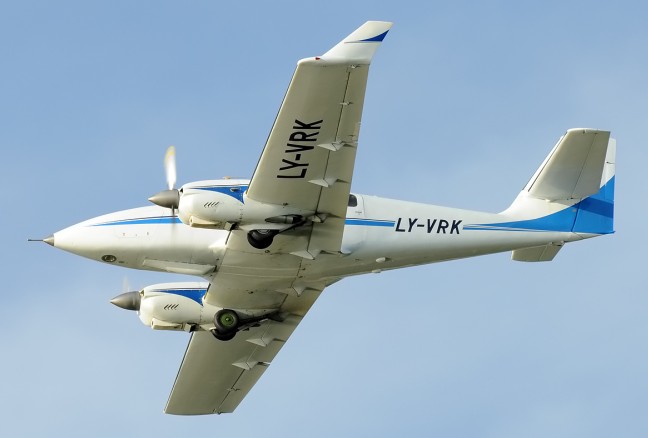
The RT-9 can land on grass and lifts 1 tonne of fuel (wing tanks). Non-stop the plane can fly 2500 km at 550 km / h.

Kellett KH-15
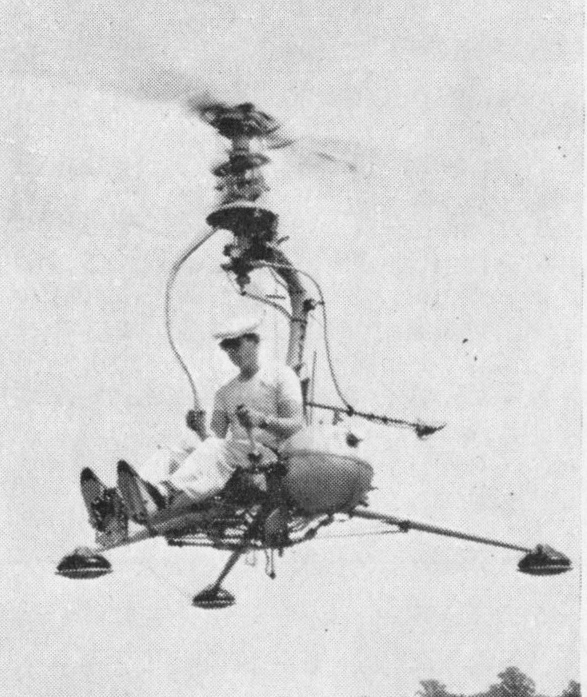
In 1954 the first helicopters with rocket-driven rotors were flown; the Kellett KH-15 and Rotor-craft RH-1.
Nicknamed ‘Stable Mable’, the KH-15 has been built for the U.S. Navy to test a new system oft gyro-abilisng cotrols. It flew after only 8 minutes of tethered tests. Power units are tip-mounted hydrogen peroxide rocket motors.
Power: 2 Reaction Motors XLR32 rockets
Rotors: 2-blade tip-powered main rotor and tail rotor
Rotor diameter: 18 ft
Loaded weight: 644 lb
Seats: 1
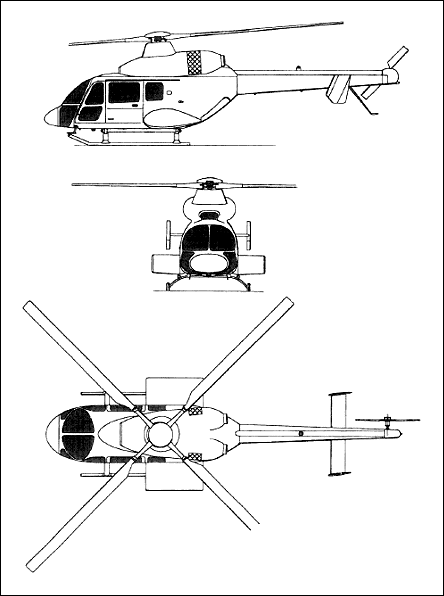
Kazan Ansat
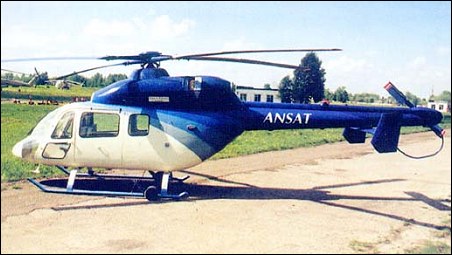
Design began at Kazan in 1993, with design subcontracts to Kazan State Technical University for structural strength and aerodynamic calculations; Aviacon Scientific and Production Centre for rotor; and Aeromekhanica for transmission.
A fuselage mockup was exhibited at the 1995 Paris Air Show, followed by a considerably revised engineering mockup (001) at Paris ’97. By August 1998, now marked ’01’, this had accumulated 10 hours of ground running with engines and rotors, and totalled 800 hours by February 2003.
The design features a traditional metal structure and meets FAR Pt 29 Category A and Russian AP-29 requirements. A hingeless main rotor hub with glass fibre torsion bar, has four main blades; two-blade tail rotor. A two-stage, VR-23 main rotor reduction gear in magnesium case ahead of engines has ratio 16.4; rotation speed 365.4 rpm; blade tip speed 220m/s, and transmission rating 769kW. Tail rotor speed 2,000 rpm via single stage conical geabox. Rotor brake. Manual blade folding. Main rotor aerofoil section NACA 23012.
The aluminium alloy fuselage has sparing use of composites, layered glass fibre main rotor blades, window frames and nosecone. The landing gear has twin skids with Kazan transverse shock-absorbers, tail bumper to protect anti-torque rotor, and wheels optional in tricycle configuration, with Yaroslav tyres and Gidroagregat (Balashikha) brakes.
Power is from two P&W Rus XRK206S turboshafts, each rated at 477kW for T-O, 418kW max continuous, in prototypes. Production version with PW207Ks, rated at 470kW for T-O, 410kW max continuous, 529kW for 30 s, 470kW continuous OEI and 491kW 2 minutes OEI. FADEC standard. Fuel capacity 700 litres in either external panniers or underfloor. Optional internal ferry fuel. Alternatively, two Salyut TV-500A turboshafts, each 478kW.
Seating is for up to 11 persons, including one or two pilots, on energy-absorbing seats; or two stretcher patients and three attendants; or internal or externally slung freight. Two forward-hinged doors each side of flight deck; two horizontally split doors each side of cabin, forward; baggage bay behind cabin, with rear-facing door. Baggage door also used for loading stretchers of medical variant. Accommodation ventilated and heated; optional air conditioning.
Avionika FBW controls comprise quadruples electronic system and duplex hydraulic system. Automatic flight control is standard on all piloting functions and optional on navigation functions. Current FBW system to be replaced by KSU-A digital control system. Main transmission drives two alternators (each 200V, 400Hz), two generators (each 27V), two fans and two hydraulic fuel pumps for separate systems. Electrical system 27V, with battery; optional AC system, with second battery. Electric de-icing optional.
First flight was scheduled for late 1997, but initial designated flight trials aircraft (02) exhibited at Farnborough in September 1998, still unflown. First flight (02) was 12 minute hover on 17 August 1999, with an initial forward flight on 6 October 1999. Trials halted in November 1999, after 4 hours, due to gearbox problems, but resumed in the second quarter of 2000 with a strengthened and redesigned main transmission, scarfed engine exhausts and new identity ‘902’. Total 120 hours up to February 2003.
The third (second flying) prototype (03) was to have joined the programme in late 1999, but was not completed until August 2001. First flown 27 December 2001, this is to preproduction standard with small, detachable, pannier tanks, increased fin area, PW207 engines, additional side window and flatter windscreen combined with revised nose shape; will add 400 hours to trials programme. Certification flight resting began in October 2002, for completion before end of 2003; by early 2003 had been renumbered ‘904’.
On 14 September 2001, Ansat declared winner of competition to supply 100 training helicopters to Russian armed forces by 2015.
Aircraft No.5 was to Ansat-U standard, including dual controls and wheel landing gear. Optimised for training (uchebni).
Russian Federal Border Service (Federalnaya Pogranichnaya Sluzhba) requirement for 100 notified in 1997. Total 12 civil sales reported by late 2002, including one for export.
The price was US$2.0 million for utility version (2003). Kazan’s development expenditure had reached Rb200 million by mid-2000.
Ansat
Engine: 2 x Klimov / Pratt & Whitney Canada PW 206 C, 631 shp
Main rotor diameter: 11.5m
Fuselage Length: 37.861 ft / 11.54 m
Length with rotors turning: 13.77m
Height: 11.286 ft / 3.44 m
Rotor diameter: 37.73 ft / 11.5 m
Max take off weight: 7276.5 lb / 3300.0 kg
Cruising speed: 129 kts / 238 km/h
Max speed: 280km/h
Economic cruising speed: 140km/h
Service ceiling: 19685 ft / 6000 m
Hovering ceiling, OGE: 1800-2700m
Maximum range: 335 nm / 620 km
Range: 281 nm / 520 km
Endurance: 3 h
Crew: 1
Payload: 8 pax / 1300 kg int. max. / 1650 kg ext. max.
Kawasaki C-X / Xc-2
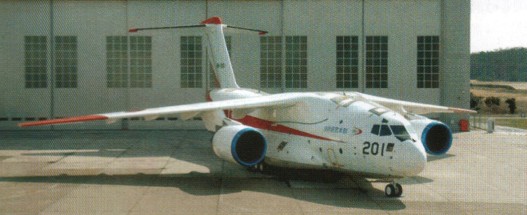
In 2007 the first prototype of the indigenously developed C-X transport aircraft was rolled out at Kawasaki’s Gifu factory.
The C-X is to replace the Japanese Air Self Defence Force’s Kawasaki C-1s.
Kawasak-Xc2.jpg 8
Xc-2
Kawasaki T-4
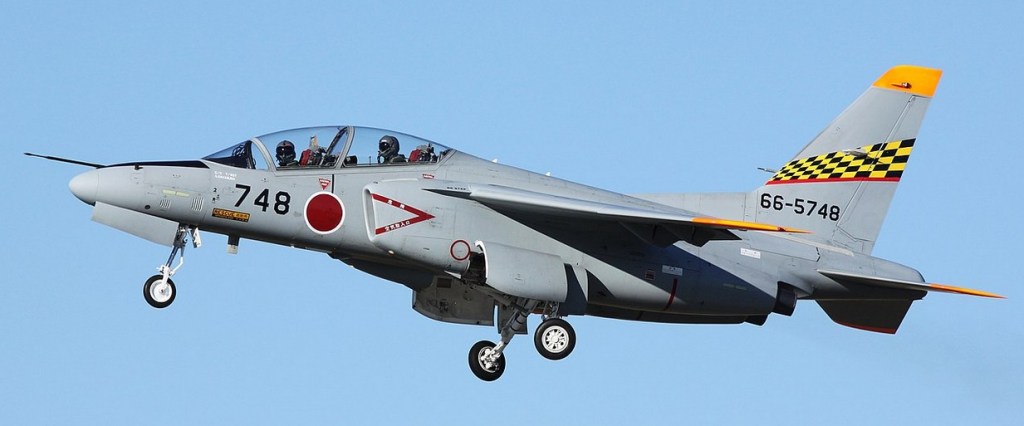
Based on Kawasaki’s KA-850 project, the T-4 was selected as the JASDF’s new advanced trainer in 1981 to replace the T-33 and Mitsubishi T-1. Kawasaki is the prime contractor, with Fuji and Mitsubishi each taking a 30 per cent share of the pro¬gramme. The aircraft is a mid-wing, twin-turbofan design which uses two indigenous IHI XF3-30 engines and is equipped with Stencel ejection seats, a headup display, an air data computer, and five hardpoints for auxiliary fuel and light weapons. Future developments may include a dedicated ground¬attack version.
Construction of 32 T.4 advanced trainers has been authorised to 1987, against an even¬tual JASDF requirement for more than 200 aircraft, and production of the first batch of 12 was under way, with initial deliveries due in 1988. Four XT-4 prototypes, the first of which flew on July 29, 1985, were engaged in an intensive test programme which was to be completed by March 1988.
The defence Agency awarded the T-4 a type certificate in July 1988.
XT-4
Engine: 2 x IHI XF3-30 turbofan.
Installed thrust: 32.6 kN.
Span: 10 m.
Length: 13 m.
Wing area: 21.6 sq.m
Empty wt: 3700 kg.
MTOW: 7500 kg.
Max speed: M0.9.
Initial ROC: 3000 m / min.
Ceiling: 15,240 m.
T/O run: 549 m.
Ldg run: 670 m.
Fuel internal: 2271 lt.
Range: 1300 km.
Hardpoints: 5.
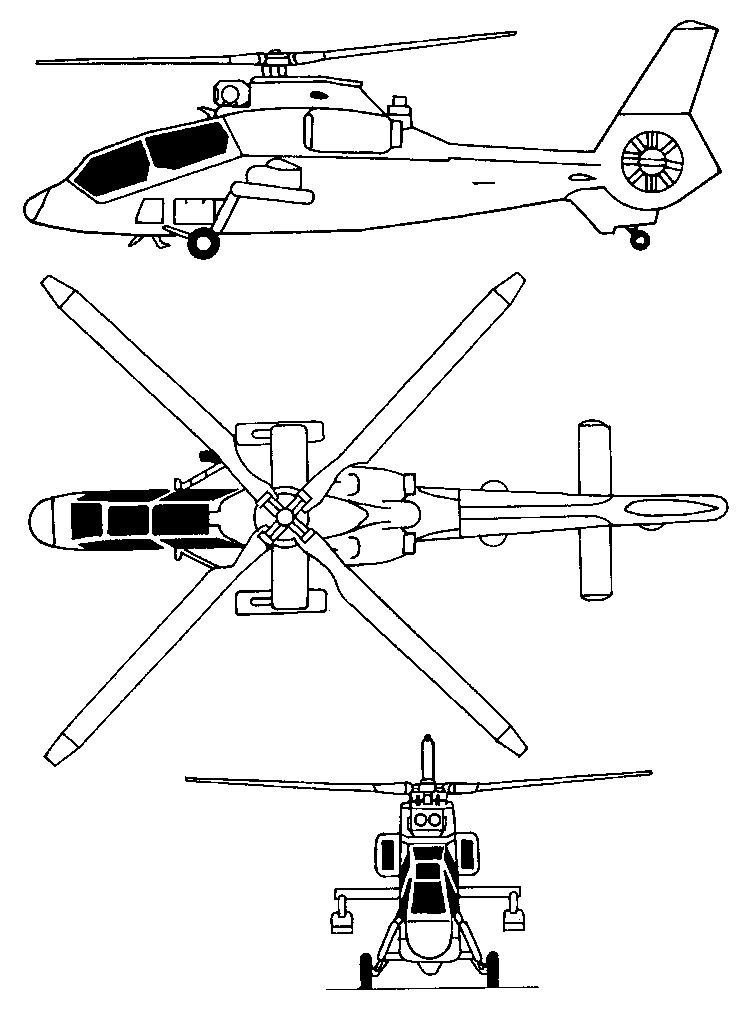
Kawasaki OH-X / OH-1 / AH-2
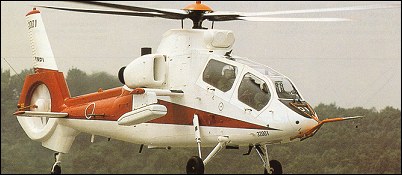
Developed to replace OH-6Ds of JGSDF, the Japan Defence Agency (IDA) awarded Y2.7 billion (US$22.5 million) in FY92 to cover the basic design phase of the helicopter then provisionally designated OH-X.
Requests for proposals were issued by JDA’s Technical Research & Development Institute (TRDI) 17 April 1992 and Kawasaki was selected as the prime contractor (60% of programme) on 18 September 1992, with Fuji and Mitsubishi (20% each) as partners. The Observation Helicopter Engineering Team (OHCET) was formed by these three companies, beginning with a preliminary design phase 1 October 1992. A mockup was made public on 2 September 1994 under the Japanese name Kogata Kansoku (new small observation [helicopter]).
The programme included six prototypes (four flying, two for ground test), and the first aircraft (32001) rolled out at Gifu on 15 March 1996 and made first flight 6 August 1996, followed by second prototype on 12 November. The OH-1 designation was assigned late 1996. The first two XOH-ls were handed over to JDA on 26 May and 6 June 1997. The third flown on 9 January 1997, at which time the earlier aircraft had accumulated some 30 and 20 hours, respectively. The third was handed over on 24 June 1997. The fourth was flown on 12 February 1997 and handed over 29 August 1997. The prototypes were renumbered by 1999 from 32001-04 to 32601-04.
The Japan Defence Agency’s Technical Research and Development Institute was looking to develop an attack version of the Kawasaki OH 1 armed reconnaissance helicopter which in 1998 was at the flying prototype stage. Consideration was being given to replacing the OH 1’s single Mitsubishi XTS1 10 engine with two LHTEC T800 or MTU/Turbomeca&Rolls-Royce MTR 390 turboshafts for the AH 2, together with a new gearbox and rotor system, plus a new integrated sensor targeting and weapon system.
The first three production OH-1s were funded FY97 and ordered in 1998. The first prototype was flown with more fuel-efficient TS1-10QT (replacing XTS1-10) engines, on 30 March 1998. By early 1999, four prototypes had flown 450 hours and were due to complete further 450 hours by end of 1999, including operational evaluation at Akeno JGSDF base. The first production OH-1 (32605) flown July 1999 and handed over to JGSDF at Gifu 24 January 2000.
Name ‘Ninja’ reportedly given in 2002, but not officially confirmed.
The OH-1 features Kawasaki hingeless, bearingless and 20mm ballistic-tolerant four-blade elastomeric main rotor and transmission system; Fenestron-type tail rotor with eight unevenly angled ‘scissor’ blades (35 and 55 degrees); stub-wings for stores carriage. Active vibration damping system. Flying controls are integrated AFCS and stability control augmentation system (SCAS). The rotor blades and hub are manufactured from GFRP composites; centre-fuselage and engines by Mitsubishi, tail unit/canopy/stub-wings/cowling by Fuji, rest by Kawasaki. Some 37% of airframe (by weight) in GFRP/CFRP.
The landing gear is a non-retractable tailwheel type, with provision for wheel/skis on the main units.
Power is from twin 662kW FADEC-equipped Mitsubishi TS1-10QT turboshafts (XTS1-10 originally in prototypes), and the transmission has a 30-rninute run-dry capability. Stub-wings can each carry a 235 litre auxiliary fuel tank.
The crew of two are on tandem armoured seats (pilot in front) with flat-plate cockpit transparencies, upward-opening on the starboard side for crew access.
Armament is four Toshiba Type 91 (modified) lightweight short-range, IR-guided AAMs on pylons under stub-wings for self-defence.
Funding for development, prototypes and flight testing Y2.5 billion in FY92, Y10.2 billion in FY93, Y50.1 billion in bY94 and Y23.3 billion in FY95. Unit costs of first four production lots Y1.924 billion (FY97), Y2.018 billion (FY9S), Y2.229 billion (FY99) and Y2.075 billion (FY00).
The Hiko Jikkentai (Flight Test Squadron) was formed at Akeno with first four production aircraft on 27 March 2001; other deliveries by late 2002 included small numbers to Kasumigaura Bunko, Utsunomiya Bunko and Kyoiku Shien Hikotai (at Akeno), all of which are departments of the Army’s Koku Gako (Aviation School).
A total of 20, including prototypes, were ordered by FY02, and at least 12 delivered by late 2002.
OH-1
Engines: 2 x Mitsubishi TS1-10
Main rotor diameter: 11.6m
Fuselage length: 12.0m
Height to top of rotor head: 3.4m
Height over tailfin: 3.8m
Empty weight: 2450kg
Normal take-off weight: 3550kg
Max take-off weight: 4000kg
Max level speed: 277km/h
Combat radius: 200km
Range: 550km
Kawasaki C-1
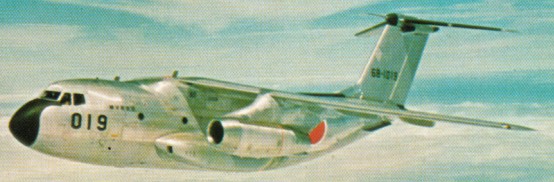
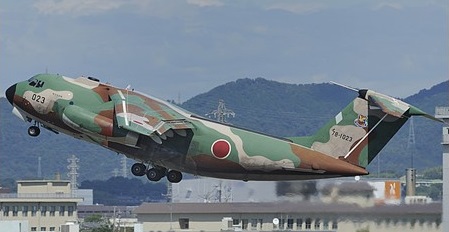
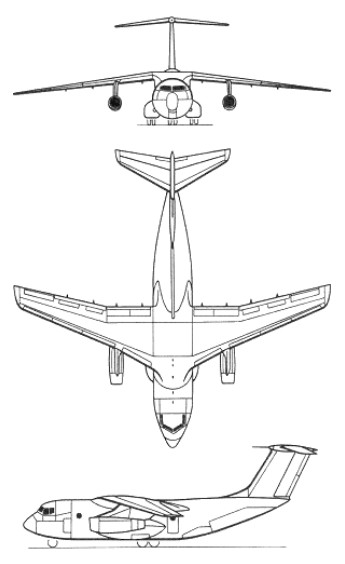
Designed to replace the JASDF’s Curtiss C 46 Commando transport aircraft, the Kawasaki C 1 first flew on 12 November 1970 and was delivered from December 1974.
Power is provided by two 14,500 lb thrust Mitsubishi produced Pratt & Whitney JT8 M 9 turbofan engines and it can carry 60 troops, 45 paratroops, 36 stretchers, or 26,235 lb (11,900 kg) of freight (including vehicles).
Inordinately expensive because of Japan’s relative inexperience in creating this type of airplane, by law the C 1 could not be sold abroad. Production ceased after 31 were built for the Japanese military, by a consortium of companies including Mitsubishi Heavy Industries, Kawasaki Heavy Indus¬tries, Fuji Heavy Industries, Nihon, Shin Meiwa and Sumitomo Precision practically all the companies involved in Japanese aircraft production.
By 1981 the 31 production C-1s had been delivered, including several long-range aircraft with an additional 4,732 litre wing centre-section fuel tank.
Kawasaki has modified a single C-lA twin-jet tactical transport for use in the ECM training role. Serialled 78 1021, the aircraft was fitted with seven radomes. Featuring nose and tail radomes housing elements of the TRDI/Mitsubishi Electrics XJ/ALQ-5 ECM system, the C-1ECM completed trials with the JASDF’s Air Proving Wing in 1986, and is now in service with the Electronic Warfare Training Unit.
Variation:
Science & Technology Agency Asuka
C-1
Engines: 2 x P+W JT80D-M-9A, 64.5kN
Wingspan: 30.6 m / 100 ft 5 in
Length: 29.0 m / 95 ft 2 in
Height: 10.0 m / 32 ft 10 in
Wing area: 120.5 sq.m / 1297.05 sq ft
Max take-off weight: 38600 kg / 85099 lb
Empty weight: 23700 kg / 52250 lb
Max. speed: 815 km/h / 506 mph
Cruise speed: 705 km/h / 438 mph
Ceiling: 12200 m / 40050 ft
Range w/max.fuel: 3300 km / 2051 miles
Range w/max.payload: 1300 km / 808 miles
Crew: 5
Passengers: 60
C-1ECM
Engines: 2 x Pratt & Whitney JT8D-M-9 turbofan, 14,500 lb (6575 kgp) thrust.
Kawasaki Ki-108

The Kawasaki Ki-108 pressurised high-altitude fighter was developed from the Ki-102 in 1943. Four were completed; two modified from Ki.102b.
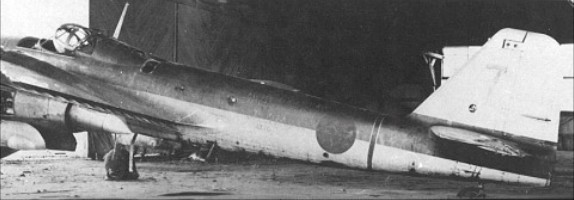
Ki-108 KAI
Engines: 2 x Mitsubishi Ha-112-II Ru, 1125kW
Wingspan: 15.67 m / 51 ft 5 in
Length: 11.71 m / 38 ft 5 in
Height: 3.7 m / 12 ft 2 in
Wing area: 34 sq.m / 365.97 sq ft
Max take-off weight: 7200 kg / 15873 lb
Empty weight: 5300 kg / 11685 lb
Max. speed: 580 km/h / 360 mph
Ceiling: 13500 m / 44300 ft
Range: 1800 km / 1118 miles
Armament: 1 x 37mm cannon, 2 x 20mm cannons
Crew: 1

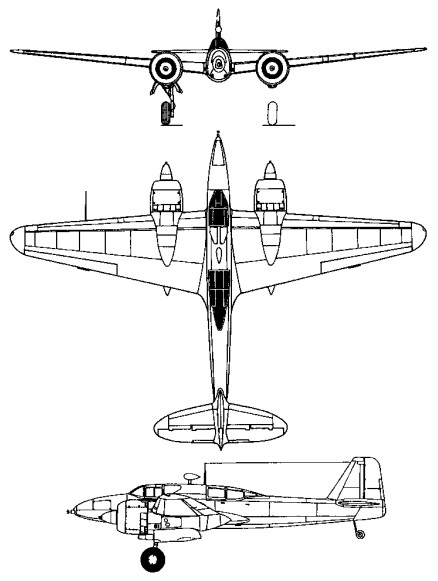
Kawasaki Ki-102

Derived from the Ki-96 twin-engine single-seat fighter, the Kawasaki Ki-102b was intended as a two-seat attack fighter. Some assemblies of the Ki-96 prototypes were incorporated into the three Ki-102 prototypes, the first completed in March 1944.
A cantilever mid-wing monoplane with a conventional tail unit, retractable tailwheel landing gear and two Mitsubishi Ha-112-11 radial engines, the Ki-102 carried a two-man crew in separate enclosed cockpits in tandem.
The prototypes were followed by the construction of 20 pre-production aircraft and in October 1944 the type was ordered into production.
Kawasaki modified six of the preproduction Ki-102s to serve as prototypes of a twin-engine high-altitude fighter for the Imperial Japanese Army. This differed from the attack fighter by having improved two-seat accommodation, a revised tail unit and Mitsubishi Ha-112-IIru engines with turbochargers. Successful testing of this version in mid-1944 resulted in a high-priority production order, but problems with the turbocharged engine resulted in only about 15 being delivered to the army before the war ended.
The design had also been revised to produce a night-fighter version under the designation Ki-102c, but only two examples were completed. These had increased wing span, a lengthened fuselage, redesigned tail surfaces, primitive AI radar, and armament of two 30mm Ho-105 cannon in the underfuselage and two 20mm Ho-5 cannon mounted obliquely in the fuselage to fire forward and upward.
Twenty Ki.102b were built with one 57mm and two 20mm cannon, one 12.7mm machine gun and provision for 1100 lb of bombs. Maximum range was 1243 miles and ceiling just over 36,000 ft.

Ki-102b aircraft, which were allocated the Allied codename ‘Randy’, saw comparatively little service, some being used in action over Okinawa, but the majority were held in reserve in Japan.
Ki-102b
Engines: 2 x Mitsubishi Ha-112-II, 1125kW
Wingspan: 15.57 m / 51 ft 1 in
Length: 11.45 m / 37 ft 7 in
Height: 3.7 m / 12 ft 2 in
Wing area: 34 sq.m / 365.97 sq ft
Max take-off weight: 7300 kg / 16094 lb
Empty weight: 4950 kg / 10913 lb
Max. speed: 580 km/h / 360 mph
Ceiling: 13500 m / 44300 ft
Range: 2000 km / 1243 miles
Armament: 1 x 57mm cannon, 1 x 12.7mm machine-guns
Crew: 2
 All Aero