The 1936 Lambert H was a five place cabin, low-wing monoplane registered NX15433. Power was from two 90 Lambert engines. Only the one was built.
2 Engines
Lacey M-10 / M-10 VW Twin
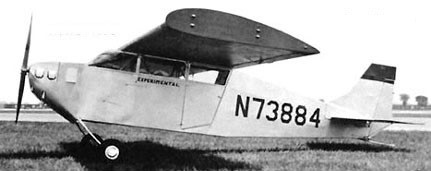
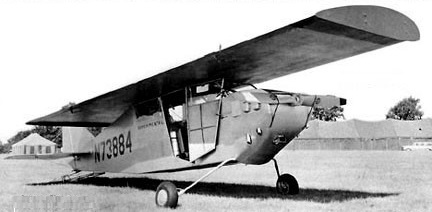
Built by Joseph L Lacey in 1962, the the two place Lacey M-10 had a pivoting unbraced wing stowed fore-and-aft for trailing or hangaring. One was built, N73884, first flying on 7/6/62.
The Lacey is one of the simplest designs for the homebuilder to construct. In the words of its designer, “There are no com¬pound curves and very few simple ones. The wing has no wash-in, no washout, no dihedral, and no incidence angle (the bottom is flat, and fits flat on top of the fuselage). It has no taper, no slots, no flaps, no spoilers, no wingtips, no struts, no wires, no braces, no spars.” The two-place, towable Lacey is propelled by a 90-hp Continental.
One M-10 VW Twin was built, N187LH, in 1968.
M-10
Engine: 95hp Continental C-90
Wingspan: 20’0″
Length: 19’6″
Gross Wt. 1118 lb
Empty Wt. 638 lb
Fuel capacity 20 USG
Useful load: 400 lb
Top speed: 140 mph
Cruise speed: 120 mph
Stall: 38 mph
Climb rate: 1000 fpm
Ceiling: 25,000′
Range: 440 miles
Takeoff run: 600 ft
Landing roll: 600 ft
Seats: 2
M-10 VW Twin
Engine: 2 x 40hp VW
Wing span: 20’0″
Length: 19’6″
Seats: 2
Kyushu Q1W1 Tokai / Eastern Sea
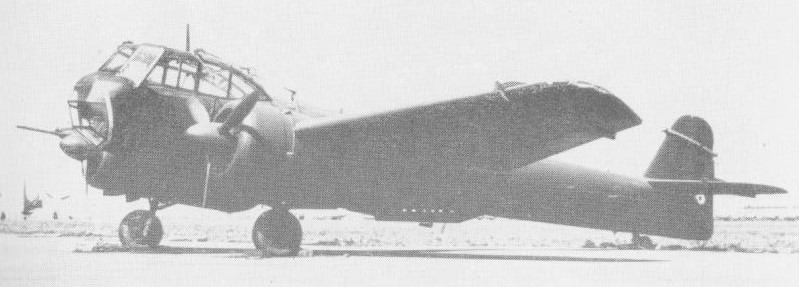
Built as an anti-submarine patrol aircraft for home defense, the Q1W1 was mentioned in a Japanese Navy delivery schedule directed to the manufacturer that was captured in 1944 and received the allied code name ‘Lorna’. It wasn’t spotted in action until 1945.
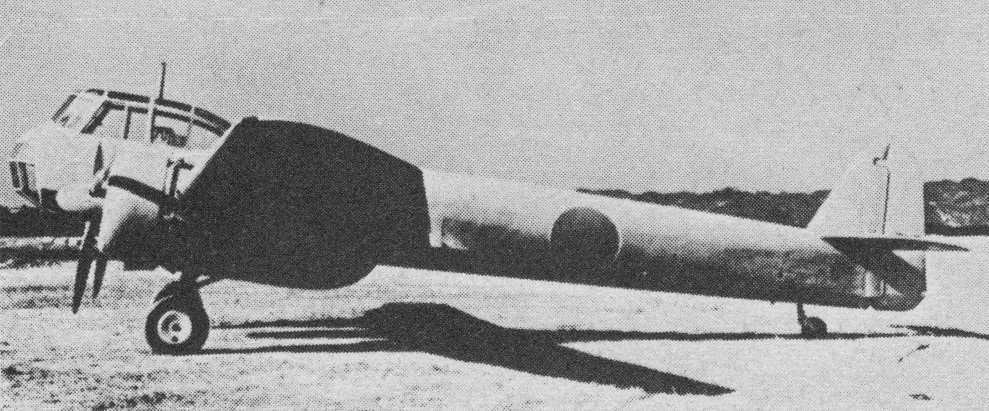
Kyushi built 153 of the Q1W1 Tokai during the war (allied codename Lorna).
Some Tokais were equipped with crude forms of radar and submarine detection gear.
Engines: 2 x Hitachi Tempu 31, 610 hp
Wingspan: 52 ft 6 in
AUW: 10,582 lb
Max speed: 200 mph at 4396 ft
Ceiling: 14,730 ft
Range: 914 miles
Armament: 1 x 20mm cannon, 1 x 7,7mm mg
Bombload: 1100 lb
Crew: 3
KAI Vikhr-1
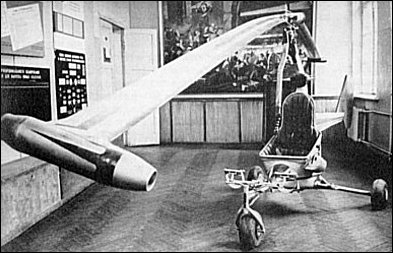
An experimental helicopter, built in 1956 by students at the Kuibushevskij Aviatsionnyj Institut. Single-seat machine was powered by pulse-jets attached to the tips of the main rotor blade. Pod and boom fuselage was very basic, pilot was seated in the ‘bare seat’ with control stick hanging from above.
The helicopter carried no tail rotor.
Kramme & Zeuthen KZ IV / SAI KZ.IV
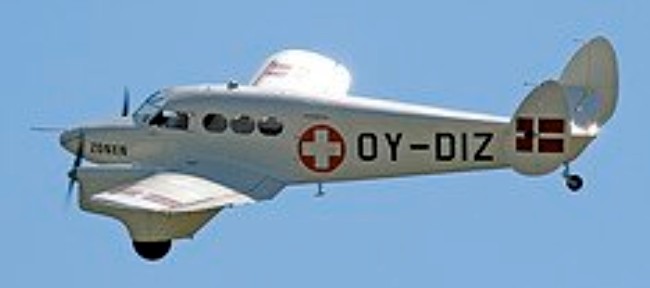
Designed by Viggo Kramme and Karl Gustav Zeuthen, the SAI KZ IV was a light twin-engined aircraft first built by Skandinavisk Aero Industri in Denmark in 1944 for use as an air ambulance. First flown on 4 May 1944.
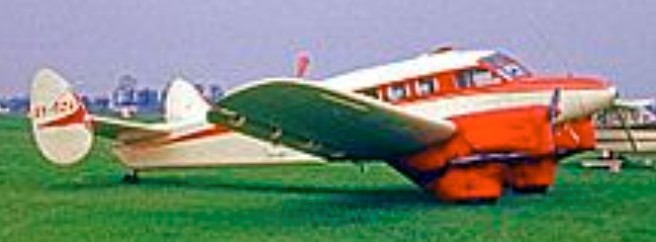
It was a conventional, low-wing cantilever monoplane with twin tails, mounted on the ends of the horizontal stabiliser. Power was provided by two engines mounted in nacelles on the wings that also housed the main units of the fixed, tailwheel undercarriage. The cabin could hold two stretchers, two medical attendants, and a flight crew of two.
A single machine, registered OY-DIZ, was built during the war, with a second aircraft registered OY-DZU being built and flown in 1949. That same year, the OY-DIZ was christened with the name Folke Bernadotte in honour of the Swedish count who had used this very aircraft to make a diplomatic visit to Germany to negotiate for the release of Danish prisoners in German concentration camps near the end of the war. This aircraft is now the “flagship” of the Danmarks Flymuseum collection, having been restored to its original wartime configuration and markings following a career as a utility aircraft in England and a crash in 1979. The second aircraft was actively operational until the mid 1960s.
Engines: 2 × de Havilland Gipsy Major, 108 kW (145 hp)
Wingspan: 16.00 m (52 ft 6 in)
Wing area: 29.0 sq.m (312 sq.ft)
Length: 9.80 m (32 ft 2 in)
Empty weight: 1,378 kg (3,302 lb)
Gross weight: 2,100 kg (4,620 lb)
Maximum speed: 215 km/h (134 mph)
Range: 850 km (530 miles)
Service ceiling: 4,500 m (14,800 ft)
Crew: Two pilots
Capacity: Two stretchers and two attendants
KAI KF-21 Boramae
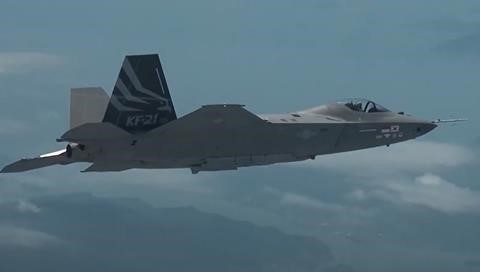
Following the KF-21’s maiden flight on 19 July 2022, five additional prototypes were set to join the flight test campaign from October 2022, according to South Korea’s Defense Acquisition Program Administration (DAPA).
The developmental Korea Aerospace Industries (KAI) KF-21 Boramae fighter continued to expand its flight envelope in September 2022, with more prototypes set to join the testing campaign.
Overall, the development was expected to be completed by 2026.
DAPA’s programme update coincided with a 28 September ceremony at KAI’s factory at Sacheon attended by South Korean government officials and Indonesia’s defence establishment – Jakarta is a 20% partner in the W8.8 trillion ($6.15 billion) programme.
Eom also told Yonhap that Jakarta has paid just 30% of its share via unspecified “in-kind” payments, and that no payments have been made since 2017.
Jakarta’s tardiness with payments has been a persistent issue for the programme, although Indonesian president Joko Widodo and South Korean president Yoon Suk-Yeol reaffirmed their countries’ joint commitment to the KF-21 in July.
At present, 37 Indonesian personnel are in South Korea working on the project, and Herindra indicates that the aim is to raise this number to 100.
Powered by two GE Aviation F414 engines, the KF-21 will replace McDonnell Douglas F-4 Phantoms and Northrop F-5s in South Korean service. Seoul is expected to obtain 120 and Indonesia 50, while the former also hopes to sell the type on the export market.
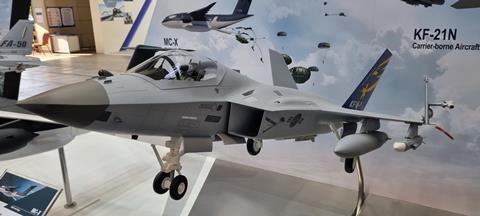
At the DX Korea 2022 show, KAI displayed a model of a prospective naval variant, the KF-21N. Media reports indicate that the jet would be capable of operations from both catapult assisted take-off but arrested recovery and STOBAR short take-off but arrested recovery vessels.
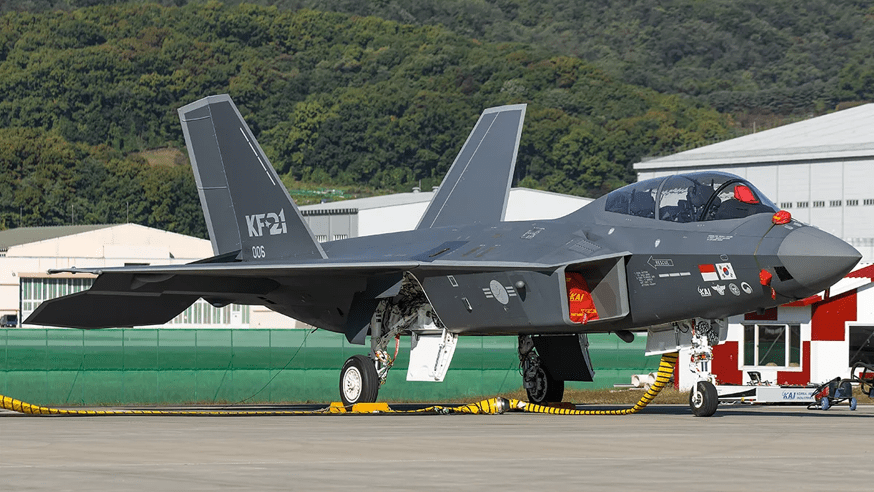
The KAI KF-21 Boramae (meaning “hawk” in Korean) represents South Korea’s emergence as a major player in the global aerospace industry.
Powered by two General Electric F414 engines—the same that power the Super Hornet—the KF-21 reaches Mach 1.8 (2,200 km/h).
At approximately $74 million per unit, it offers near-fifth-generation capabilities at fourth-generation prices.
With 120 aircraft planned for South Korean service by 2032.
Koolhoven F.K.57
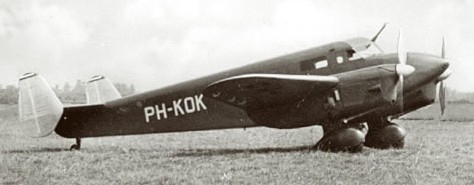
Executive plane, 1938
Koolhoven F.K.50
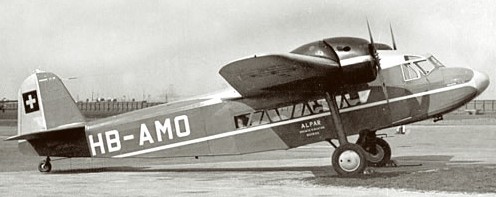
The Koolhoven F.K.50 ten passenger airliner of 1935 was a more powerful F.K.48. The first was used by Alpair until about 1962.
The type was first built with single fin & rudder, later with twin vertical surfaces.
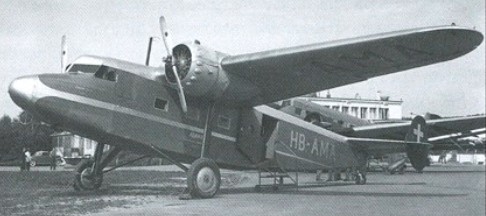
3 built
Engines; 2 x P&W Wasp Junior 303kw(406 hp)
Max. speed 295 km/h
8 pax.
Koolhoven F.K.49
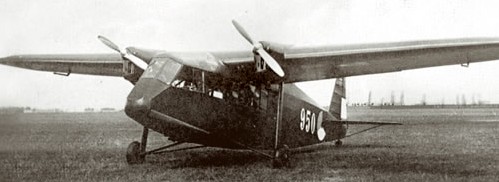
Photo- and cartography aircraft, purpose built for the Dutch air force 1935
The F.K.49A was a multi purpose aircraft of 1937.
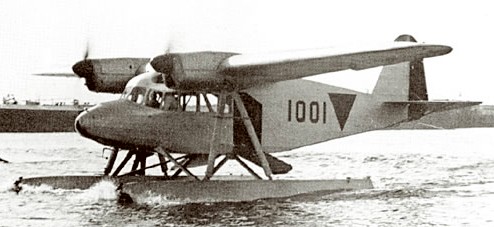
Koolhoven F.K.48
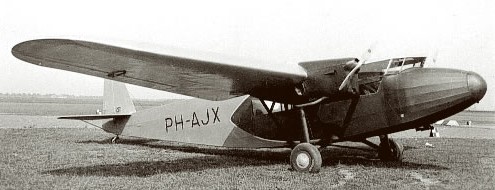
Six passenger twin-engined airliner used by the KLM, 1934
 All Aero