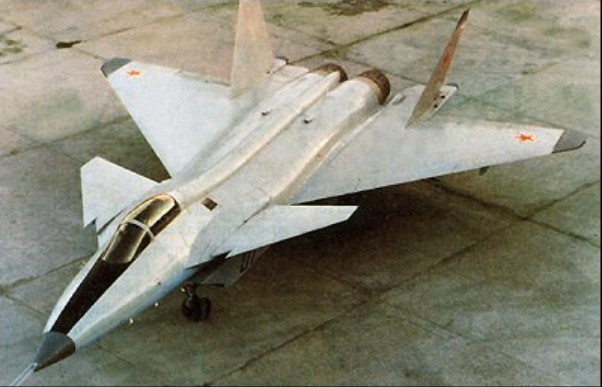
Designed as a replacement for the Su-27, the MiG 1.42 MFI (Mnogo-Funktsionalniy Istrebitel – Multi-Role Fighter) was publicly rolled out in January 1997.
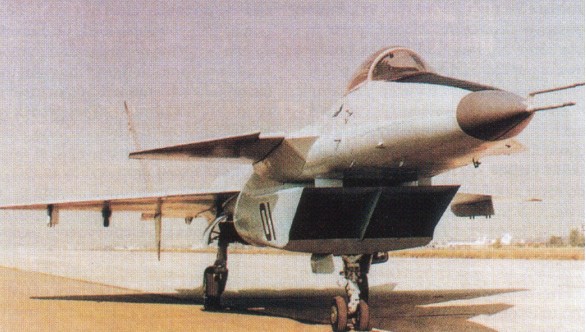
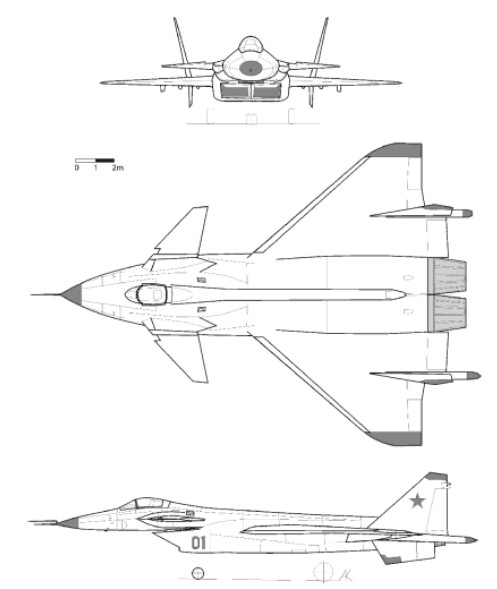
The MiG 1.42 Mnogofunktsionalny Frontovoi Istrebitel (Multifunctional Frontline Fighter), or MFI, was designed as a response to the American F-22. Its makers, MAPO-MiG, say it will be able to outperform the most advanced US fighter, the F-22 Raptor. Like the F-22, the MiG 1.42 has a “thrust vectoring” system that gives it greater manueverability than current fighters. It also has similar stealth capabilities, employing composite materials, a special shape, S-shaped compressor channels, internal weapon storage, and perhaps an active radar cancellation system or a plasma cloud stealth system to avoid detection. Considering previous Russian fighters, such as the super-manoeuvrable Su-37, the MiG 1.42 will definitely enjoy greater manoeuvrability. Additionally, MAPO-MiG also claims that it would be stealthier than the F-22. And, since it is bigger, the MiG 1.42 will have a greater range. The MiG 1.42 is a twin-engine aircraft with a cranked delta wing, canards, twin tail fins, jet intakes under the nose, and 3D vectoring nozzles. It features the new Phazotron N-014 phased array fire control radar as well as a rear-facing N-012 radar.
The delta canard has a wing sweep of between 40 and 45 degrees, with a vortex generating dogtooth on the canard. The large wing of slender section, three sets of trailing edge control surfaces, and pronounced actuator fairings. External pylons are visible.
The stated intent of the delta canard configuration was to provide for excellent high AoA performance, and low supersonic energy bleed, by avoiding the trim drag associated with a conventional configuration.
The paired, outwardly canted vertical stabilisers are attached to a pair of large tailbooms, which house aft looking avionics and enclose the innermost trailing edge surfaces. Two ventral keels protrude beneath the vertical stabilisers, mounted on the tailbooms.
The aft fuselage is dominated by the paired and closely spaced Lyulka/Saturn AL-41F afterburning turbofans. These were to be fitted with circular thrust vectoring nozzles, which would be limited to 2D vertical vectoring should the tailboom arrangement be retained for production aircraft. The large single mainwhhels retract forward into the fuselage, close to the wing roots. The fuselage geometry provides for a modest inlet tunnel S-bend, which will reduce the inlet tunnel and compressor face RCS.
The inlets are variable, ventrally mounted, and feature a stepped multiple shock design. Two supporting struts, angled outward to reduce RCS, are employed to stiffen the inlet and nose structure. The clearance between the upper inlet lip and lower nose is intended to provide for good boundary layer separation at high AoA.
The structure is reported to comprise 30% composite materials, 35% aluminium lithium alloys, and 30% steel alloys.
MiG 1.42 Crew: 1 Engine: 2 x Lyulka AL-41F turbofans, ~200kN Max take-off weight: 25000-30000 kg / 55116 – 66139 lb
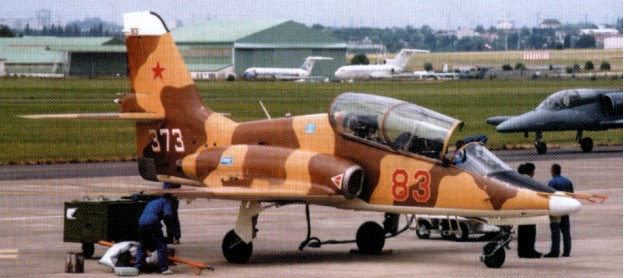
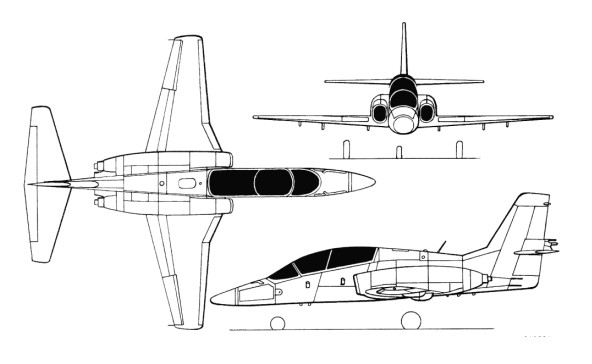
With a potential Russian requirement for 700 training aircraft, an order is being fiercely contested by MiG-MAPO, offering the MiG-AT with SNECMA engines and avionics from Sextant of France.
Engines: 2 x GRTS Larzac 04-R20, 14.1kN Max take-off weight: 6800 kg / 14992 lb Wingspan: 10.6 m / 34 ft 9 in Length: 11.2 m / 36 ft 9 in Height: 4.3 m / 14 ft 1 in Wing area: 21.0 sq.m / 226.04 sq ft Max. speed: 850 km/h / 528 mph Ceiling: 15000 m / 49200 ft Range w/max.fuel: 1250 km / 777 miles Range w/max.payload: 800 km / 497 miles Crew: 2
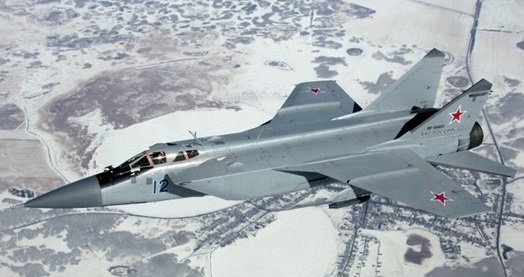
The MiG-25 was designed to counter high-flying threats. The MiG-31 was the result of the demand to counter low-level threats, such as the B-1B and cruise missiles. Development began in 1967 and the S-155MP avionics complex was ordered for the Ye-155MP interceptor in 1968. The Ye-155MP ‘831’ was a converted Type 83 MiG-25MP, serving as the prototype of the design, and first flew on 16 September 1975. The second prototype (‘832’), with radar, first flew 22 April 1976.
Designed as a long-range, extended-endurance PVO interceptor to replace the Tu-128 and MiG-25 based on the MiG-25 many changes were necessary to improve range and flight performance at low altitude. The fuselage was strengthened to make it suitable for supersonic flight at low level. The ‘Foxhound’ is powered by two D-30F6 turbofans which improved range drastically over the MiG-25 engines. The D-30F6 needed larger air intakes and larger exhaust nozzles. The key to success of the MiG-31 as an interceptor is the Zaslon SBI-16 phased array radar. This fire control radar is capable of tracking 10 targets at ranges up to 120 kilometers (75 miles) and engage four targets at once. Tracking and engagement is the task of the WSO which is seated behind the pilot. It is armed with four long-range R-33 (AA-9 Amos) air-to-air missiles carried under the fuselage. Two preproduction aircraft (011 and 012) built by Sokol and flown 13 July and 30 June 1977, followed by six development aircraft (201 to 203 and 301 to 303).
Full production (of about 450) started 1979 and in 1982 the NATO reporting name ‘Foxhound’ was made public. The first of 11 regiments were operational by 1983, replacing MiG-23 and Su-15 in the air defence role.
By 1987 over 150 MiG-31s were deployed across the Soviet Union, especially in the west and far east.
The MiG-31B incorporated an improved Zaslon-A fire control radar, superior long-range missiles (R-33S), additional missiles (the R-40TD medium-range missiles and R-60 short-range missiles), modernised navigation computer and new data exchange modes. The MiG-31B was also equipped with in-flight refuelling system, whereas the MiG-31BS designation was used for MiG-31B upgrades lacking this ability.
The MiG-31D was a specialised variant for the Russian equivalent of the ASAT program, carrying a single anti-satellite missile. It can be recognized by the big vertical fins at the wing tips.
In 1992 the MiG-31E (export) was first presented on the Berlin Air Show ILA. Only one aircraft was built. The MiG-31FE was a proposed multipurpose variant of the MiG-31 with improved weapons systems and avionics. It is able to operate the majority of the Russian air-to-surface missiles. Laser and TV equipment for missile guidance would have been accommodated in an external pod. Intended for export, it did not receive any orders.
The MiG-31M is a highly improved version of the original MiG-31. It has new IRST and phased-array radar to engage six targets at the same time. It is capable of carrying the R-37, which is an improved version of the R-33 AAM. And it is also capable of carrying the R-77 (AA-12 Adder), instead of the R-40TD, which was used on the MiG-31B. The cockpit was redesigned and features three colour multi function displays. Other changes include larger fuel capacity, no gun, uprated engines, aerodynamic improvements, larger brake chute housing, redesigned nosewheel. Six prototypes were built but none were ordered.
The MiG-31BM is an upgraded MiG-31B which adds an air-to-surface capability. New onboard computer systems and a new fire control radar capable of tracking up to 24 targets simultaneously.
In 2003 a MiG-31 claimed a 100 km closed circuit speed world record of 840 kts, a time to climb to 66,550 ft world record of 8 min 23 sec and an absolute altitude world record of 72,175 ft.
Kazakhstan inherited around 30 MiG-31 Foxhounds after the break up of the Soviet Union. Some of these aircraft remained in operational service.
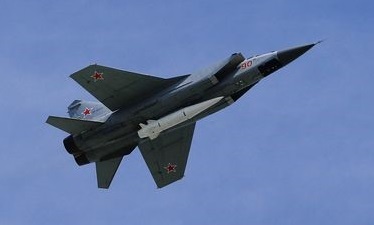
The Kinzhal hypersonic weapon, as carried by a MiG31K fighter.
Reportedly a contract with China was signed in 1992 for 24 MiG-31 interceptors. The plan included a newly set-up factory in Shenyang and were expected to enter service in 2000. At some point it was expected that at least 200 MiG-31s would be deployed by 2010. The contract was either cancelled or was never signed. Instead China opted for the Su-27/30 Flanker (J-11) as their long range interceptor.
MiG-31 Engines: 2 x D-30F6, 151.9kN Max take-off weight: 41000-46000 kg / 90390 – 101413 lb Empty weight: 29120 kg / 64199 lb Wingspan: 13.5 m / 44 ft 3 in Length: 22.7 m / 74 ft 6 in Height: 6.2 m / 20 ft 4 in Wing area: 61.6 sq.m / 663.06 sq ft Max. speed: 3000 km/h / 1864 mph Cruise speed: 2500 km/h / 1553 mph Ceiling: 20000 m / 65600 ft Range w/max.fuel: 3000 km / 1864 miles Range w/max.payload: 1200 km / 746 miles Armament: 1 x 23mm cannon, 8 missiles Crew: 2
Mikoyan Gurevich MiG 31 Fighter Interceptor and Reconnaissance, Russia, 1976 Engine : 2 Klimov R 31 F, 134691 N / 13730 kp Length : 68.898 ft / 21.0 m Height : 18.373 ft / 5.6 m Wingspan : 45.604 ft / 13.9 m Wing area : 602.784 sqft / 56.0 sq.m Max take off weight : 77175.0 lb / 35000.0 kg Weight empty : 46812.2 lb / 21230.0 kg Max. payload weight : 30362.9 lb / 13770.0 kg Max. speed : 1320 kts / 2445 km/h Service ceiling : 80052 ft / 24400 m Wing load : 128.13 lb/sq.ft / 625.0 kg/sq.m Range : 1026 nm / 1900 km Crew : 2 Hardpoints: 4 under fuselage, 4 under wing.
MiG-31B ‘Foxhound-A’ Powerplant: two 151.9 kN (34,170 lb st) Aviadvigatel D-30F6 afterburning turbofans Length 22.69m (74 ft 5¼ in) Height 6.15m (20 ft 2¼ in) Wing span 13.46m (44ft 2 in) Empty weight 21.825 kg (48,115 lb) Max Take-Off Weight 46.200 kg (101,850 lb) Max level speed at 17,500 m (57,400 ft) more than Mach 2.8 or 3.000 km/h (1,865 mph) Service ceiling 20,600m (67,600 ft) Armament: one 23mm GSh-6-23 six-barrel gun / 260 rounds; eight air-to-air missiles (4 R-33 and 4 R-60 AAMs, or 3 R-33 and 2 R-40TD AAMs)
Designed to a 1972 requirement intended to replace the MiG-21, MiG-23, Su-15 and Su-17 with the Soviet air force, the MiG-29, originally revealed in a US satellite photograph and designated ‘Ram-L’, made its first flight on 6 October 1977. After many design changes the first deliveries of ‘Fulcrum As’ were made to Soviet Frontal Aviation in 1983, the type was declared operational early in 1985, and more than 275 were operational by early 1987, according to US estimates.
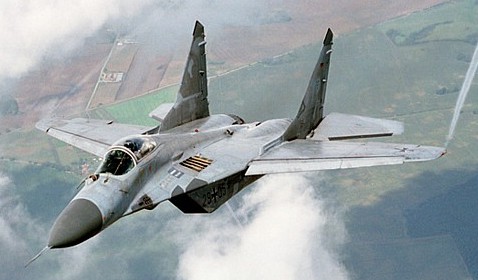
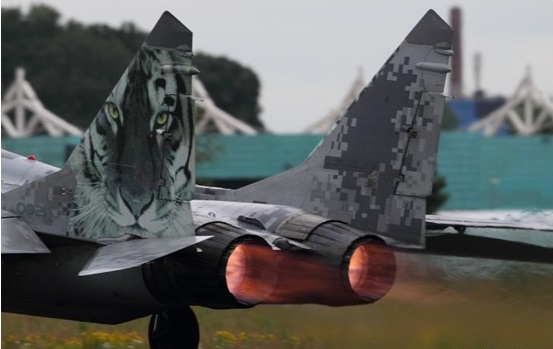
The MiG-29 (NATO reporting name ‘Fulcrum’) is a single-seat air superiority fighter, developed by Mikoyan Design Bureau, Russia. Although it has little sophisticated avionics and no fly-by-wire flight control system, the MiG-29’s agility and maneuverability make it equal to the contemporary Western fighter aircraft, like the American F-16 Falcon and F-15 Eagle. The two RD-33 turbofan engines give the MiG-29 a high thrust-to-weight ratio, enabling vertical climb with acceleration. The MiG-29 was the first fighter to be equipped with dual-mode air intakes. When in the air the large intakes under the fuselage take in the air for the engines. On the ground, these intakes are closed and the much smaller intakes on top of the forward wing take in the air. This reduces the chance of objects to be sucked into the engines, enabling the MiG-29 to operate from unprepared airstrips.
The MiG-29 is equipped with the N-019 (NATO ‘Slot Back’) radar, enabling the MiG-29 to intercept air targets beyond visual range with R-27 missiles. The forward looking infra red search and track (IRST) sensor provides target aquisation for IR guided missiles, such as the R-60 and R-73 missiles. The helmet mounted target designation reticle, combined with its high turning agility and maneuvrability, enables the MiG-29 to engage targets with IR guided weapons at close range outside the MiG-29’s forward direction.
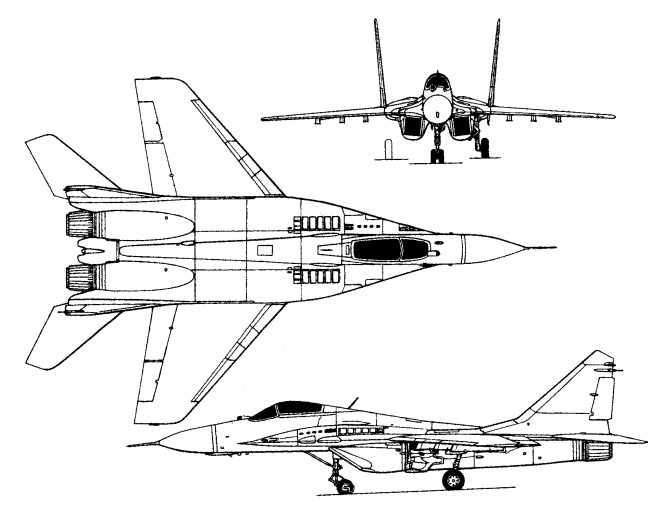
The first hard information became available when the aircraft was examined by Western authorities during an exchange visit to Finland by a MiG-29 unit in 1986. The supersonic and agile MiG-29 has a swept (45°) low-mounted wing above twin reheated turbofan engines buried in the fuselage but under the wing. The tail-plane has two vertical and two horizontal stabilisers. A conventional landing gear has twin steerable nosewheels and large single low-pressure mainwheels.
The aircraft is assessed by the Pentagon as having true look-down, shoot-down capability, with a pulse-Doppler radar and up to six AA-10 medium-range AAMs. A single six-barrel 30mm gun is mounted in the port strake, and an infrared sensor is located at the base of the wraparound forward section of the canopy. A 17-tonne-class aircraft with a 12m wing span, the MiG-29 is powered by two l20kN Tumansky R-33D turbofans. Estimated performance includes a Mach 2.2 maximum speed at altitude, and a combat radius of 1,150km.
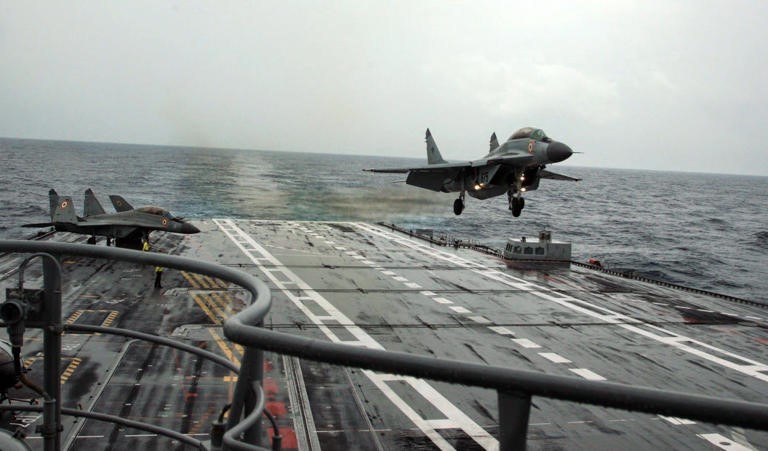
Development of the MiG-29K commenced in the 1980s. It is the carrier-based version of the MiG-29 fighter, conceived as an aircraft capable of effective operation from the Soviet Union’s future aircraft carriers. However, progress on the MiG-29 K was halted following the collapse of the USSR and the financial difficulties faced by its manufacturer. Interest in the MiG-29K was revived after 2000, largely due to investment from India.
Indian MiG-29K
India continues to utilise the MiG-29K, but this does not come without challenges. A series of accidents involving these Russian-acquired fighters has drawn international attention. Additionally, Indian military officials have repeatedly criticised the MiG-29K for its insufficient combat capabilities, mainly due to underpowered engines (notably affecting performance during take-offs with heavy armament and substantial fuel loads) and landing gear that requires frequent maintenance.
The Warsaw Pact allies were not the first export customers for the Fulcrum. India received 44 in the first half of 1987, while Syria is reported to have taken delivery of its first aircraft. Both countries are receiving full Soviet-standard MiG-29s rather than cut-back export versions. In India the type is licence-built by Hindustan Aeronautics for the air force as the Baez (Eagle).
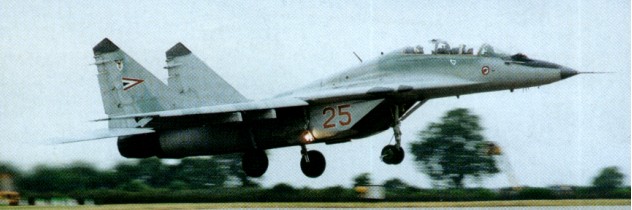
Mig-29UB
The MiG-29UB is a two-seat variant.
The later Fulcrum C has an enlarged avionics bay behind the cockpit and was operational with the Soviet Air Forces by 1990.
The upgraded MiG-29 Sniper demonstrator had its maiden flight in 2000, in the hands of Daimler-Chrysler Aerospaces (DASA) chief test pilot Wolfgang Schirdewann. One of the reasons for the Sniper upgrade is to present a MiG-29 that is able to respond to NATO/ICAB compatibility and interoperability requirements. Aerostar SA of Bacau, Romania, Daimler-Chrysler Aerospace (DASA) of Germany and Elbit Systems of Israel have developed the variant, which includes a new digital mission computer, communications system, navigation and identification system, displays, radar warning receiver, HOTAS (hands on throttle and stick) system and a new ABC (air data computer).
One upgraded version is the MiG-29MRCA which was offered to Austria to compete with the Eurofighter Typhoon and Saab Gripen.
More than 600 MiG-29s were in service with the former Soviet forces, and the type has been exported to Cuba, Czechoslovakia, East Germany (later serving with the Luftwaffe), Iran, Iraq, North Korea, Poland, Romania, and Yugoslavia.
Operators: Russia Algeria Angola Belarus Bangladesh Bulgaria Cuba Czech Republic Eritrea Germany Hungary India Iran Iraq Kazakhstan Malaysia Moldova Myanmar North Korea Peru Poland Romania Slovakia Sudan Syria Turkmenistan Ukraine USAF (stored) Uzbekistan Yemen Yugoslavia
Specifications: Engines: 2 x Klimov RD-33, 81.4kN Max take-off weight: 27215 kg / 59999 lb Empty weight: 15000 kg / 33070 lb Wingspan: 11.4 m / 37 ft 5 in Length: 17.3 m / 56 ft 9 in Height: 4.7 m / 15 ft 5 in Wing area: 38.0 sq.m / 409.03 sq ft Max. speed: 2445 km/h / 1519 mph Ceiling: 17000 m / 55750 ft Range w/max.fuel: 2900 km / 1802 miles Range w/max.payload: 630 km / 391 miles Armament: 1 x 30mm cannon, 3000kg of weapons Crew: 1
Mikoyan Gurevich OKB MiG 29 Fighter bomber, Russia, 1978 Engine : 2 x Klimov RD 33, 79853 N / 8140 kp Length : 55.774 ft / 17.0 m Height : 15.42 ft / 4.7 m Wingspan : 37.402 ft / 11.4 m Wing area : 378.893 sqft / 35.2 sq.m Max take off weight : 39690.0 lb / 18000.0 kg Weight empty : 18003.8 lb / 8165.0 kg Max. weight carried : 21686.2 lb / 9835.0 kg Fuel capacity : 1153 gal / 4365 lt Max. speed : 1318 kts / 2440 km/h Landing speed : 124 kts / 230 km/h Cruising speed : 540 kts / 1000 km/h Initial climb rate : 64960.63 ft/min / 330.00 m/s Service ceiling : 55774 ft / 17000 m Wing load : 104.76 lb/sq.ft / 511.0 kg/sq.m Range : 1134 nm / 2100 km Crew : 1 Armament : 1x MK 30mm, 8x ext. / 2000kg ext.
Mig-29 Fulcrum A Engines: 2 x Tumansky R-33D turbofans, 18,300 lb st (81,4 kN) Installed thrust (dry / reheat): 100 / 165 kN Span: 11.36m (37ft 3½ in) Length: 17.32m (56 ft 10 in) Height: 4.73m (15 ft 6½ in) Wing area: 35.5 sq.m Empty weight: 7800 kg Clean weight: 15,240 kg (33,600 lb) MTOW: 18,500 kg (40,785 lb) Max speed: 2.3 Mach / 2,445 km/h / 1,520 mph Service ceiling: 17,000m (55,775 ft) Combat radius: 1150 km Fuel internal: 4000 kg Air refuel: No Armament: one 30mm Gsh-30-1 cannon / 150 rounds; 3000 kg (6,614 lb) of disposable stores Hardpoints: 6 external Seats: 1.
Mig-29 Fulcrum B Engines: 2 x Tumansky R-33D turbofans, 18,300 lb st (81,4 kN) Seats: 2 Max speed: M 2.3 (1,320 kts/2,440 km/h) at altitude Armament: 1x 30-mm cannon
The MiG-25 was designed in 1962 to intercept high altitude, high speed aircraft such as the F-108 Rapier program, the Mach 3 capable XB-70 Valkyrie and more important the A-12 which resulted in the SR-71 spy plane. Some say the posed threat of the XB-70 was the main (and only) reason for the MiG-25 design, but MiG OKB revealed that the mean reason was to counter the A-12/YF-12 program. When the XB-70 Valkyrie development stopped in 1963, the development of the MiG-25 continued.
The bureau was instructed to ignore virtually every aspect of flight performance but outright speed, rate of climb and service ceiling in an airframe that was to be developed quickly by the use of existing technologies. This removed the possibility of delays and helped to ensure that the interceptor would be available at the time of the B-70s proposed service debut in 1964. The bureau chose a nickel-steel alloy as the primary airframe material, with titanium alloy leading edges.
The MiG-25 was later allocated the NATO reporting name ‘Foxbat’, but when news came that the North American B-70 programme had been cancelled, emphasis of MiG-25 development was shifted to high-speed reconnaissance rather than interception.
A cantilever high-wing monoplane with swept leading edges, a slender fuselage blended into the engine air inlets. With twin outward-canted vertical tail surfaces and all-moving horizontal tail surfaces, the MiG-25 is constructed primarily of steel, with titanium used for the leading edges of wing and tail unit to maintain structural integrity despite the high temperatures resulting from kinetic heating.
It has two afterburning turbo fans each capable of delivering 110 kN (24,700 lb) of thrust. It is equipped with a simple but very powerful radar for long range missile guidance. The MiG-25 relies on ground control radars for guidance to the target.
On 6 March 1964 the first MiG-25 prototype, designated Ye-155-R-1, made its maiden flight. Although this first prototype was a dedicated reconnaissance aircraft, it was soon followed up by an interceptor prototype. The Ye-155-P-1 made its first flight on 9 September 1964.
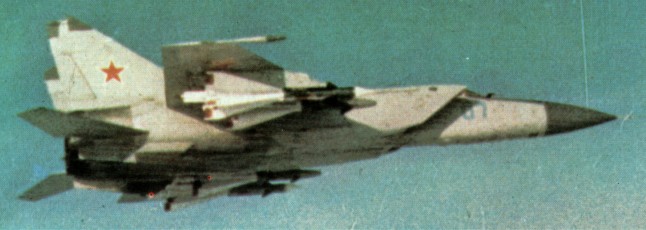
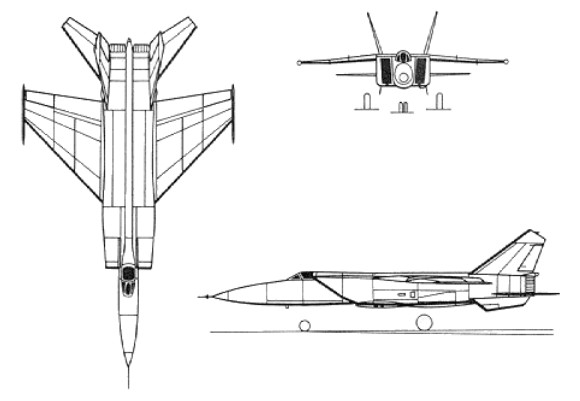
As the Ye-266. It featured a large fuselage (comprising mainly the powerplant arrangement of two Tumanskii R-31 afterburning turbojets plus their variable-geometry inlets and fully variable nozzles), high-set wings of broad chord and a modest sweep of 400 declining to 380 outboard of the outer pylon, slab tailplane halves and outward-canted vertical tail surfaces.
The first mention in the West that this aircraft, identified by the MiG design bureau as the Ye-266, had flown came in April 1965 with a Soviet claim that the aircraft had established a new speed record in a 1000km closed circuit. An E-266 achieved a speed of 1,441.5 mph (2,320 km/h) over a 1000 km closed circuit course with a 4,409 lb (2,000 kg) payload in April 1965. In October 1967 an E-266 raised this record, shortly after establish¬ing a 310 mile (500 km) closed circuit speed record (without payload) of 1852.61 mph (2981.5 kph). In the same month the E 266 also set a payload-¬to-height record by lifting a 2,000 kg load to an altitude of 98,349 ft (29,977 m). Since that time, further records have been set by the developed Ye-266M, holding the absolute world altitude record of 37650m.
On 17 May 1975 an E-266N established a climb record to 35,000m / 114,629ft of 251.3 seconds, piloted by A. Fedotov. The aircraft also re-took the time to 25,000m / 82,021ft at 154.2 seconds (piloted by A. Fedotov), to 30,000m / 98,425ft at 189.7 seconds (piloted by P. Ostapenko).
The MiG-25 was first displayed in 1967.
The Ye-155-R-1 led to the first production type of the recce MiG-25, designated MiG-25R. In 1970 these aircraft were redesignated MiG-25RB when a bombing capability was added.
In the mean time the Ye-155-P-1 led to the MiG-25P which was armed with up to four AAMs carried under the wings. The MiG-25P entered service in 1970 with the Soviet Air Forces. The MiG-25P (Foxbat-A) was the first interceptor model, improved Sapfir-25 radar, fire control and engines resulted in the MiG-25PD and PDS or Foxbat-E.
The first reconnaissance derivative to appear was the MiG-25R ‘Foxbat-B’, which features a total of five vertical/ oblique cameras in the nose section ahead of the cockpit. SLAR (SideLooking Airborne Radar) apparatus is also installed in the forward fuselage, whilst this model and the later ‘Foxbat D’ both employ a different wing of shorter span than that of the interceptor.
Apart from airbases in the Soviet military Baltic area like Bryusterport, Kaliningrad, Pllau, Palanga, Baltiysk and Riga, the Soviet Union also used support bases in Poland for reconnaissance operations over the Baltic. One of these is Kolobrzeg on the Polish coast, where the MiG-25R Foxbat-B was stationed. The Foxbat was regularly timed at speeds of almost 1,850 mph / M2.8 at altitudes of more than 70,000 ft. The MiG-25Rs of Kolobrzeg can look deep into NATO areas with long-range cameras, and to do this they fly via the GDR along the borders of the Federal Republic and Denmark. Because the Foxbat is so fast, at maximum speed it covers almost 30 miles per minute, the aircraft flying reissuance missions sometimes inadvertently flies over West European territory. So it happened that a Foxbat-B in 1983, due to starting its turn too late, flew some miles over Danish territory. The Soviet MiG-25R which, apart photographic missions, can also be used for radar reconnaissance (Foxbat-D), is part of the 24th Soviet Air Army stationed in Poland.
The variants for the recce role are the MiG-25RB/RBV/BBT and the later MiG-25RBK/RBS/RBSh and RBF models which had improved radar, sensors and cameras.
The Foxbat-B is also thought to have entered service in 1970, and it is known that four Soviet air force aircraft of this type were deployed to Egypt in the spring of 1971, making a number of forays from Cairo West to conduct reconnaissance sorties over the Israeli occupied Sinai peninsula and down Israel’s coast. Israeli attempts to intercept these with McDonnell Douglas F4E Phantoms met with no success, and the MiG-25Rs remained in Egypt until the autumn of 1975,
The ‘Foxbat-B’ was followed in due course by the Foxbat-D, generally similar in appearance although it lacks the camera installation and also incorporates a larger SLAR, located slightly farther aft and much closer to the cockpit. 1984 estimates indicate that a combined total of about 160 examples of the ‘Foxbat-B’ and ‘Foxbat-D’ models were present with Soviet tactical air forces, others having been supplied to Algeria, India, Libya and Syria since 1979. India was one of the biggest operator of MiG-25s among the export countries but was planning to have phased out the aircraft by 2005.
The conversion of more than 300 Foxbat A interceptors to MiG-25M Foxbat E standard, with more modern radar/missile combination and more powerful R- 31 F engines for better performance at lower altitude in the “look¬down/shoot- down” role. The aircraft are distinguished by a small infrared sensor under the nose. The Foxbat B also has 137.3kN uprated Tumansky R-31 turbojets.
The MiG-25BM was developed from the MiG-25RB recce-bomber. The -25BM or Foxbat-F is basically a MiG-25RB with ECM equipment instead of the recconnaissance equipment. It is developed for the suppression of enemy air defences, especially SAM radar sites and is armed with the Kh-58 stand-off anti-radiation missiles. The MiG-25 Foxbat-F is a conversion of older aircraft with AS-11 “Kilter” missiles for the anti-radar role.
The Foxbat A high-altitude interceptor was followed by a MiG-25U Foxbat C two-seat trainer. Two seat trainer variants are the MiG-25PU for the interceptor types, MiG-25RU for the recce types, and the basic MiG-25U variant. All designated as Foxbat-C by NATO.
Over 1200 have been built, of which about 75% were interceptors. Limited production of the MiG-25 series continued in 1987.
MiG-25s have been used extensively by the VVS, and versions have been exported also to Iraq. Production terminated in 1984 in favour of the MiG-31.
Operators: Russia Algeria Azerbaijan Belarus Bulgaria India Iraq Libya Syria Ukraine
Specifications:
E 266 Engines: 2 x 24250 lb (11,000 kg) st after burning turbojet engines Wing span: approx 40 ft 0 in (12.20 m) Length: approx 69 ft 0 in (21.00 m) Speed (1967 closed circuit record): 1,814,81 mph (2,920.67 km/h) over a 621 mile (1,000 km) course Crew: 1
MiG-25 Engines: 2 x Tumanski R-31, 123.0kN Max take-off weight: 35000 kg / 77162 lb Empty weight: 20000 kg / 44093 lb Wingspan: 15.0 m / 49 ft 3 in Length: 25.0 m / 82 ft 0 in Height: 6.0 m / 19 ft 8 in Wing area: 56.8 sq.m / 611.39 sq ft Max. speed: 3000 km/h / 1864 mph Ceiling: 37000 m / 121400 ft Range w/max.fuel: 2575 km / 1600 miles Range w/max.payload: 1260 km / 783 miles Crew: 1
MiG-25 Engines: 2 x Tumanski R-31 turbojet, 24,250 lb / 11,000 kg Wingspan: 45 ft 9 in / 13.95 m Length: 78 ft 1.75 in / 23.82 m MTOW: 79,800 lb / 36,200 kg Max speed: 2113 mph / 3400 kph Range: 1490 sm / 2400 km
Mig-25 Foxbat A Engine: 2 x Tumansky R-31. Installed thrust (dry / reheat): 182 / 240 kN (27,116 lb / 12,300 kg). Wingspan 45 ft 9 in (13.95 m) Length 78 ft 1.75 in (23.82 m) Height 20 ft 0.25 in (6.10 m) Wing area 611.7 sq ft (56.83 sq.m) Empty weight: 44,092 lb (20,000 kg) Maximum take-off 37,425 lb (17,011 kg) Warload: 2000 kg Max speed: 2,115 mph (3,404 km/h) or Mach 3.2 at 36,090 ft (11,000 m) Time to height: 2.5 min / 11,000 m Initial climb rate: 41,010 ft (12,500 m) per minute Service ceiling 80,050ft(24,400m) TO run: 1400 m Ldg run: 2200 m Fuel internal: 17,400 lt Air refuel: No Range:1400 mi / 2260 km Combat radius: 702miles (1,130 km) Armament: 4 x AA-6 Acrid air-to-air missile Seats: 1
MiG-25R Type: single-seat all-weather tactical/strategic reconnaissance aircraft Powerplant: two Tumansky R-31 turbojets, 11 000-kg (24,250-1b) afterburning thrust Maximum speed 3400 km/h (2,115 mph) or Mach 3.2 Service ceiling 27000 m (88,580 ft) Normal operational radius 1095 km (690 miles) Ferry range 2575 km (1,600 miles) Empty weight: 19595 kg (43,200 lb) Maximum take-off weight: 33400 kg (73,635 lb) Wingspan 13.40 m (44 ft 0 in) Length 23.82 m (78 ft 1 ¾ in) Height 6.10 m (20 ft 1/4 in) Wing area 56, 00 sq.m (603 sq ft).
MiG-25 RB Engine: 2 x Soyuz / Moscow R 15 BD 300 , 107753 N / 10984 kp Length: 70.702 ft / 21.55 m Height: 19.685 ft / 6.0 m Wingspan: 43.898 ft / 13.38 m Max take off weight: 90846.0 lb / 41200.0 kg Weight empty: 49215.6 lb / 22320.0 kg Max. speed: 1620 kts / 3000 km/h Cruising speed: 1350 kts / 2500 km/h Service ceiling: 75459 ft / 23000 m Range: 1150 nm / 2130 km Fuel capacity: 4028 gal / 15245 lt Crew: 1 Armament: 5000kg bomb
MiG-25 BM Engine: 2 x Soyuz / Moscow R 15 BD 300 , 107753 N / 10984 kp Length: 70.702 ft / 21.55 m Height: 19.685 ft / 6.0 m Wingspan: 43.898 ft / 13.38 m Max take off weight: 90846.0 lb / 41200.0 kg Weight empty: 49215.6 lb / 22320.0 kg Max. speed: 1620 kts / 3000 km/h Cruising speed: 1350 kts / 2500 km/h Service ceiling: 75459 ft / 23000 m Range: 1150 nm / 2130 km Fuel capacity: 4028 gal / 15245 lt Crew: 1 Armament: 4x Kh58 (AS-11 Kilter) 200km anti radar msl.
MiG-25PD Powerplant: two 110 kN (24,700 lb st) Soyuz/Tumansky R-15BD-300 afterburning turbofans Length 23.82m (78 ft 1¾ in) Height 6.10m (20 ft ¼ in) Wing span (over tip 14.02m (45ft 11¾ in) Weights clean 20.000 kg (44,100 lb) Max Take-Off Weight 36.720 kg (80,950 lb) Max level speed at 13.000m (42,650 ft) more than Mach 2.83 or 3.000 km/h (1,865 mph) Max level speed at sea level 1.200 km/h (745 mph) Service ceiling 20,700m (67,900 ft) Armament: up to four long range Air-to-Air Missiles such as the R-23 and R-40, and up to four short range IR guided AAMs like the R-60 and R-73A.
For high speed development purposes and as a test bed for a 15-tonne engine that was being developed by the Tumansky bureau with a view to powering a proposed Mach=3.0 high-altitude interceptor (which was to materialise as the MiG-25), the MiG OKB developed what was ostensibly a pure research aircraft, the Ye-150. Powered by a Tumansky R-15-300 engine of 6840kg boosted to 10150kg with afterburning, the Ye-150 flew for the first time on 8 July 1960, and was subsequently to attain a speed of Mach=2.65 or 2816km/h and a ceiling of 22500m. Design of an all-weather high-altitude interceptor based on the research aircraft had paralleled work on the Ye-150. As the Ye-152A, this had been adapted to take two proven R-11F-300 engines owing to development problems with the large R-15 engine which were resulting in serious delays.
In consequence, the Ye-152A interceptor fighter was ready to fly before the Ye-150 research aircraft upon which it was based, this event taking place on 10 July 1959.
Powered by two R-11F-300 engines each rated at 3900kg and 5740kg with afterburning, the Ye-152A was intended to carry the Uragan 5B radar accommodated in a large, fixed intake centrebody and a pair of MiG-developed K-9 (K-155) long-range beam-riding missiles. While the intake centrebody of the Ye-152A was non-translatable, the extreme forward fuselage with intake orifice was hydraulically movable, thus achieving the same effect as a fully-variable shock cone. The Ye-152A was overtaken by the R-15-powered Ye-152, and its flight test programme was terminated after 55 flights of which only two were made carrying K-9 AAMs.
Ye-152P
Ye-152P
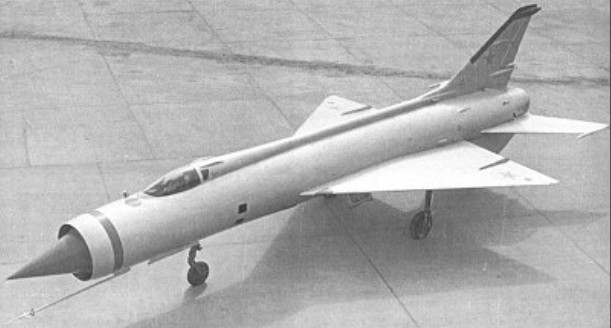
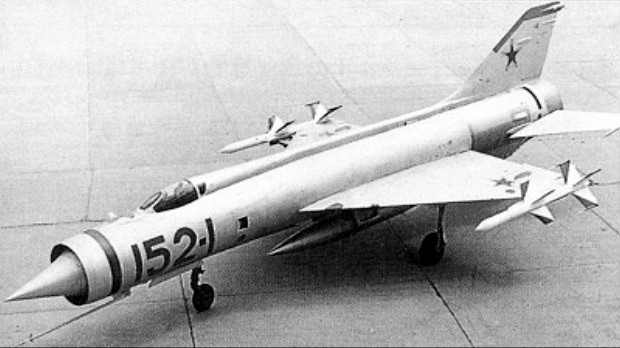
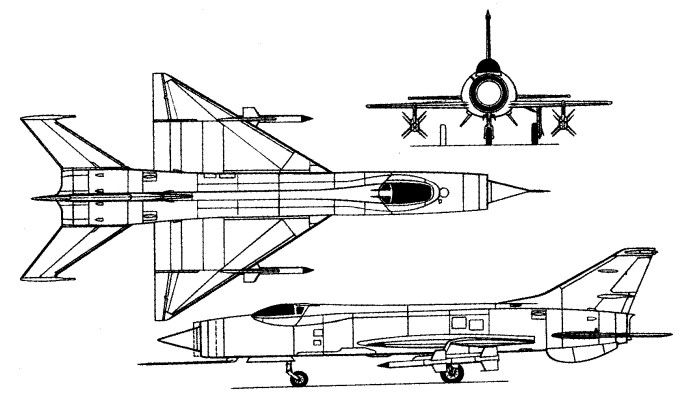
With the availability of the R-15-300 engine in acceptable form for fighter installation, the MiG OKB built two further prototypes of the Ye-152 with a single turbojet of this type supplanting the paired R-11F-300s of the Ye-152A. Retaining the systems of the Ye-152A, the Ye-152/1 and /2 were powered by the R-15-300 rated at 6890kg and boosted to 10210kg with afterburning. A larger delta wing swept back to 53° 47′ on the leading edge was fitted, and the tips terminated in launchers for two K-9 AAMs.
Equipped with Uragan 5B, the Ye-152/1 flew for the first time on 16 May 1961, and in the course of the following flight test programme, the Ye-152/2 attained 2740km/h and an altitude of 22500m, Mach=2.28 being recorded at 18000m with two K-9 missiles. Continuing development of the basic design resulted in the construction of two more prototypes, the first of these joining the test programme early in 1961 as the Ye-152P. Fitted with more sophisticated intercept and navigation equipment, the Ye-152P had a deeper and broader dorsal fairing substantially increasing internal fuel capacity and was intended to be fitted with an 3.50m canard surface which was to be free-floating at subsonic speeds and locked at supersonic speeds. In the event, this canard was not fitted.
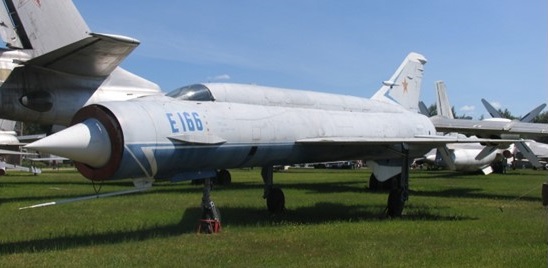
Development of the Ye-152 series of interceptors was stopped as a result of the OKB ‘s preoccupation with the Ye-155P (MiG-25P), but the remaining prototype was completed for high-speed research as the Ye-152M with an R-15B-300 engine providing an afterburning thrust of 10210kg. This aircraft established (as the Ye-166) an absolute speed record over a 100km closed-circuit of 2601km/h on 7 October 1961, and an absolute speed record of 2681km/h on 7 July 1962.
Ye-152a Max take-off weight: 13960 kg / 3777 lb Wingspan: 8.49 m / 27 ft 10 in Length: 19.00 m / 62 ft 4 in Wing area: 34.02 sq.m / 366.19 sq ft Max. speed: 2500 km/h / 1553 mph Ceiling: 19800 m / 64950 ft
Ye-152/2 Max take-off weight: 14350 kg / 31637 lb Empty weight: 10900 kg / 24031 lb Wingspan: 8.79 m / 28 ft 10 in Length: 19.66 m / 64 ft 6 in Height: 42.02 m / 137 ft 10 in Max. speed: 2510 km/h / 1560 mph Ceiling: 22670 m / 74400 ft Range w/max.fuel: 1470 km / 913 miles
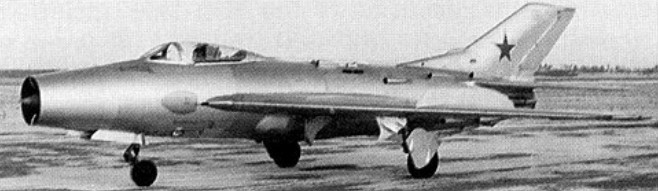
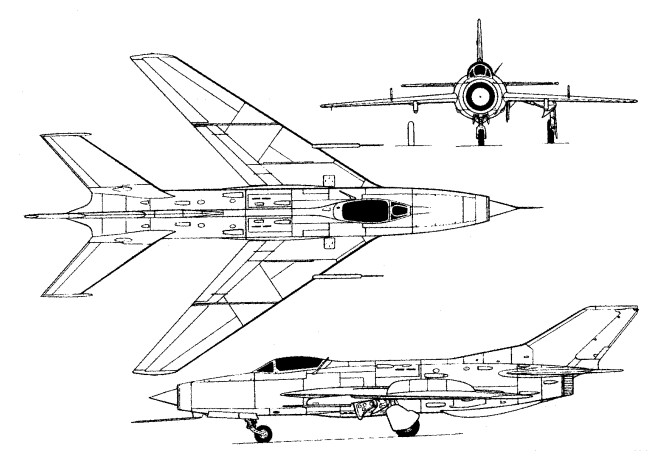
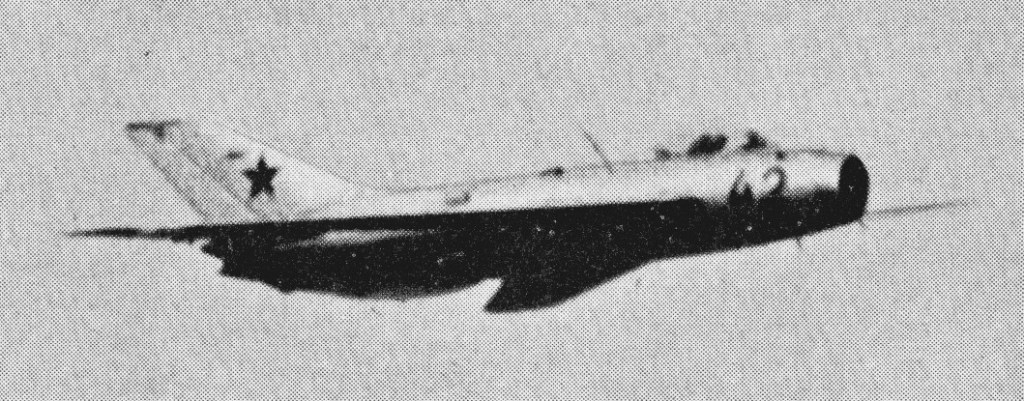
In its definitive form the ultimate extrapolation of the basic MiG-19 design, the SM-12 evolved, by a process of incremental modification, as a mixed-power point defence interceptor. As the MiG-19S was phased into service with the VVS mid-1956, the MiG OKB was continuing the refinement of the Izdeliye SM twin-engined fighter initiated in 1951 with the SM-1 (I-340). The SM-12 first saw life as an exercise in drag reduction by means of new air intake configurations, and the first of three prototypes, the SM-12/1, was essentially a MiG-19S with an extended and straight-tapered nose with sharp-lipped orifice and a pointed, two-position shock cone on the intake splitter.
The third prototype, the SM-12/3, differed from its two predecessors primarily in discarding the paired AM-9B (RD-9B) engines for two R3-26 turbojets developed from the earlier power plant by V N Sorokin. These each offered an afterburning thrust of 3600kg, enabling the SM-12/3 to attain speeds ranging between 1430km/h at sea level, or Mach=1.16, and 1930km/h at 12000m, or Mach=1.8, and an altitude of between 17500 and 18000m during its test programme. This outstanding performance prompted further development with a view to production as a point defence interceptor. Similarly powered by RS-26 engines and embodying major nose redesign with a larger orifice permitting introduction of a substantial two-position conical centrebody for a TsD-30 radar, a further prototype was completed as the SM-12PM. Discarding the wing root NR-30 cannon of preceding prototypes, the SM-12PM was armed with two K-5M (RS-2U) beam-riding missiles and entered flight test in 1957. The SM 12PM was tested with a search/track radar mounted in a conical housing in the centre of the intake, and an enlarged dorsal spine, carried two AAA Alkali air to air missiles and is claimed to have reached a speed of Mach 1.6 and an altitude of 17400 m (57100 ft), taking only four minutes to attain a height of 10000 m (32800 ft).
This was joined at the end of 1958 by yet another prototype, the SM-12PMU. This had R3M-26 turbojets uprated to 3800kg with afterburning and augmented by a Duchkin U-19D liquid rocket boost motor which took the form of a permanent ventral pack containing an RU-013 rocket motor and its propellant tanks. Developed by D D Sevruk, the RU-013 delivered 3000kg of thrust. With the aid of this rocket motor, the SM-12PMU attained an altitude of 24000m (78,740 ft) in 1958 and a speed of Mach=1.69, but the decision had been taken meanwhile to manufacture the Ye-7 in series as the MiG-21P and further development of the SM-12 series was therefore discontinued.
SM-12PM Max. speed: 1720 km/h / 1069 mph Ceiling: 17400 m / 57100 ft Range: 1700 km / 1056 miles
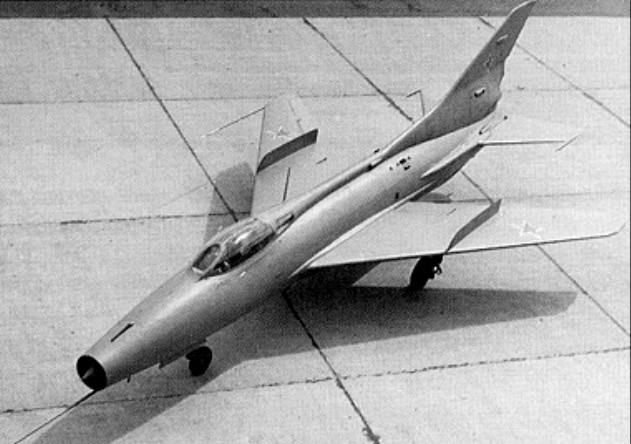
In 1953 the Soviet authorities issued a requirement for a Mach 2 clear-weather interceptor with limited ground-attack capability. At this time the USSR’s Central Aerodynamics and Hydrodynamics Institute had arrived at two basic configurations for aircraft of the required performance level. Both were based on a cylindrical fuselage with a swept all-moving tailplane and a wing in the low mid-set position, but the difference came in the wing itself. One was a conventional type with a leading-edge sweep of between 580 and 620, and other a delta with 570 or 580 leading-edge sweep. The MiG bureau produced prototypes in both configurations. The Ye-50 and Ye-4. Designed around a Tumansky AM-9Ye (RD-9Ye) turbojet with an afterburning thrust of 3800kg and a Dushkin S-155 bi-fuel rocket motor of 1300kg, the first of three prototypes, the Ye-50/1, flew on 9 January 1956. It began trials with the rocket motor on 8 June 1956.
The original Ye-50 can be regarded as a pre-prototype, for in the absence of the planned Tumanskii R-11 turbojet it was fitted with an interim composite powerplant comprising an RD-9Ye afterburning turbojet and an S-155 rocket engine; the aeroplane had swept conventional wings based on those of the MiG-19.
A year later, on 17 June 1957, the second prototype, the Ye-50/2, attained a speed of Mach=2.33 and an altitude of 25600m. The Ye-50/2 introduced some modifications to the rear fuselage and vertical tail, and the Ye-50/3 featured a lengthened fuselage nose and increased internal fuel. This last prototype was lost during flight test when its vertical tail detached. The Gor’kiy factory was ordered to build a batch of 20 aircraft, which, powered by the AM-11 engine and S-155 rocket, were to be designated Ye-50A. These were intended for operational evaluation, but none of them was built owing to a lack of rocket motors, the Dushkin OKB having meanwhile closed down.
Ye-50/1 Max take-off weight: 8500 kg / 18739 lb Wingspan: 8.11 m / 26 ft 7 in Length: 13.62 m / 44 ft 8 in Height: 21.00 m / 68 ft 11 in Max. speed: 2460 km/h / 1529 mph Ceiling: 23000 m / 75450 ft Range: 450 km / 280 miles
Authorization for the development of the MiG 19 to succeed the MiG 17 then entering service was granted in 1951, although design work had begun the previous year. The MiG-¬19 followed the basic layout of its predeces¬sors, the MiG-15/MiG-17 series, although twin engines were adopted, and was designed to perform similar roles single seat clear-¬weather interception, with ground attack as a secondary mission but with performance improvements all round.
The MiG-19 was on the drawing board as the I-350 before even the MiG-15 had been encountered in Korea, the five prototypes being ordered on 30 July 1951. Maj Grigori Sedov flew the first I 350 design, also known as the Type SM, on 18 September 1953 on the power of two non-afterburning AM-5 engines giving only 4,410 lb thrust each.
Despite the high wing loading and bold sweep angle of 55 (at 25% chord), the MiG-19 handled well, large fences and Fowler flaps giving satisfactory low-speed control With afterburning engines the MiG-19 became the first Russian supersonic fighter and it was put into production on a very large scale in the second half of the following year.
Deliveries to the Soviet air force began early in 1955, and 48 flew in formation at that year’s Soviet Aviation Day, held at Tushino. Early MiG-19s were pow¬ered by a pair of Mikulin AM 5 axial flow turbojets each producing 2250 kg (5000 lb) of thrust dry and 3040 kg (6700 lb) with after¬burning. The engines are mounted side by-¬side in the rear fuselage and fed from a divided annular intake in the nose. The three-¬spar wings are tapered and swept back by 55 deg at 25% chord, with a full chord fence on each side. Anhedral is about 4.5 deg. The large area Fowler flaps can be used at up to 800 km/h (495 mph) in combat, and lateral control in later aircraft is effected by ailerons assisted by spoilers, this arrangement having been used first on the MiG-15SD.
The area ruled fuselage has a cylindrical nose and carries a cluster of air scoops at the rear to cool the afterburners, with others on either side of the spine feeding the elec¬tronics bays. Air brakes were fitted to the fuselage sides in early models, later aircraft having an additional one mounted ventrally. The fin and fuselage mounted tailplanes are swept back.
After about 500 had been delivered the MiG-19S (stabilizator) supplanted the early model with the fixed tailplane and manual elevators replaced by a fully powered slab. At the same time the old armament of a 37 mm (1.46 in) N 37 cannon with 40 rounds in the right hand side of the forward fuselage and a 23 mm (0.90 in) NR 23 with 80 rounds in each wing was replaced by three of the new 30 mm NR-30 guns, one in each wing root and one under the right side of the nose and was fitted with two air to¬-surface weapon stations under the wings. A large ventral airbrake was also added.
Fuel is carried in four fuselage cells with a total capacity of 2170 litres (477 Imperial gal) and can be supplemented by a pair of underwing drop tanks containing 800 litres (176 Imperial gal) each. A dorsal spine housing control, running between the cockpit and the tail, was introduced into the MiG¬-19S. A fully duplicated hydraulic system was employed and the tailplane was geared electro mechanically to operate at a nearly con¬stant rate of stick force per g. An electrical system was provided to operate the tailplane in the event of hydraulic failure. The MiG-19S entered full service in the second half of 1956.
In 1956 the AM-5 engine was replaced by the newer and more powerful Tumansky RD 9Bs each rated at 2600 kg (5730 lb) dry and 3250 kg (7165 lb) with reheat, increasing peak Mach number from 1.1 to 1.3. The new fighter was designated MiG-19SF (forsiro¬vanni, increased power) which was code named Farmer C and has been built in very large numbers.
The corresponding MiG-19PF (perekhvatchik, inter¬ceptor) has an Izumrud Al radar (called “Scan Odd” by NATO) in a bullet carried on the inlet duct splitter, with the ranging unit in the upper inlet lip. The final production version was the MiG-19PM (modifikatsirovanni), with guns removed and pylons for four early beam-rider air-to-air missiles (called “Alkali’ by NATO), an all weather version fitted with the X band Scan Odd fire ¬control radar using dual pulse repetition fre¬quencies. The main antenna was housed in a bullet fairing mounted on the central intake splitter, with the complementary ranging radar installed in the upper lip.
A two seat version, the MiG¬19UTI, was also delivered.
All MiG-19s can carry the simple K-13A missile (the copy of Sidewinder, called “Atoll” by NATO) and underwing pylons can carry two 176 gal drop tanks plus two 551 lb weapons or dispensers. The Mig-19 was out of production in 1957.
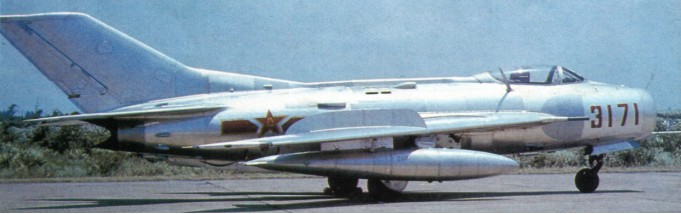
The type was supplied to China knocked-down MiGs for Chinese construction before relations soured in 1960, and the Shenyang National Aircraft Factory has copied the MiG 19S as the F 6 (first flight in December 1961). Production of the F-6 was stepped up from about 1966 and it is thought that several thousand have been built, including counterparts of the MiG-19PF and SF. F-6 became the standard equipment of the Chinese Air Force of the People’s Liberation Army from mid-1962. China has developed a number of variants of its own design. One is a tactical reconnaissance aircraft, while the TF-6 is a trainer version and the A-5 (formerly referred to as the F-9 and F-6 bis) a strike fighter with different appearance because of its pointed nose radome between the semi-circular side air intakes. The span of the A-5 has also been increased to about 10.2m. Maximum level speed of this version is estimated to be close to Mach 2.
Chinese built F 6s have been supplied to ‘friendly’ coun¬tries, including Pakistan, and are thought to incorporate indigenously developed improve¬ments. The Pakistani aircraft have performed well in periodic clashes against Western ¬supplied types and MiG 21s operated by the Indian air force.
Phased out of production in the Soviet Union during the late 1950s, the Mikoyan-Gurevich MiG-19 continued to be built in China under a licence agreement of January 1958. The J-6 (Jianjiji 6, or Fighter Aircraft Type 6) is normally credited to the Shenyang production facility, although a second assembly line is located at Tianjin. First of the Chinese production models was the J-6 equivalent of the MiG-19S/SF day fighter, this giving way to the J-6A/MiG19PF limited all-weather interceptor and the later J-6B/MiG-19PM, the latter augmenting gun and rocket armament by AA-1 ‘Alkali’ AAMs. An improved MiG-19SF, known as the J-6C and identified by a brake parachute housing at the base of the fin was in production in 1984, as was J-6Xin (‘New J-6’) which featured a sharply-pointed radome in the engine air intake for a Chinese-developed airborne gun-ranging radar. The JZ-6 (Jianjiji Zlienchaji 6) is a MiG-19R reconnaissance version equivalent with the forward fuselage cannon replaced a camera array. Despite limited Soviet production of a MiG-19UTI, Chinese requirements for a dual control trainer were met by a local design to produce the JJ-6 (Jianjiji Jiaolianji 6), with its 0.84 m (2 ft 9 in) fuselage extension. Several thousand J-6s have been built for the Chinese army and navy air forces since 1961, whilst export variants (known as the F-6 and trainer FT-6) serve in Albania, Bangladesh, Egypt, Iraq, Pakistan, Tanzania and Vietnam as interceptors and close-support aircraft. The J-6 is well liked by its pilots as a manoeuvrable fighter and stable weapons platform, Pakistan’s aircraft having been improved by the addition of a third (under-fuselage) fuel tank, US-designed AIM-9B/J Sidewinder AAMs and Martin-Baker PKD Mk 10 automatic zero-zero ejection seats.
Total production possibly exceeds 10,000, including licence-manufacture as the Lim-7 in Poland, S-105 in Czechoslovakia and F-6 in China.
The MiG 19 has also been used as a testbed in a number of experimental programmes. Under the designation SM 10 it was used for in flight refuelling trials from 1955, and in 1957 the SM 12.
SM 30 was the bureau designation of a pre-¬series MiG 19 which was used for catapult takeoff trials in 1956, and three years later the SM 50 underwent tests while fitted with RD¬9BM turbojets of 3300 kg (7275 lb) thrust each with reheat, augmented by a U 19 rocket motor producing 3200 kg (7055 lb). A maximum speed of 1800 km/h (1118 mph) was attained, and a height of 20 000 m (65 600 ft) was reached in eight minutes.
MiG-19 Single-seat fighter Engines: 2 x Mikulin AM-5 turbojets, 6.700 lb (3,040 kg) thrust (afterburner rating) Wing span 29 ft 6.5 in (9 m) Height 13 ft 2.25 in (4.02 m) Max speed (typical) 920 mph @ at 20,000 ft (M 1.3)
MiG-19 Single-seat fighter Engines: 2 x Mikulin VK-5 turbojets, 8818 lb Wing span: 36 ft 6 in Length: 44 ft 3 in Height 13 ft 6 in MTOW: 19,840 lb Max speed: 860 mph at 36,000 ft (M1.3) Max OC: 15,000 fpm Service ceiling: 58,000 ft Max range: 850 mi
MiG-19S Single-seat fighter Engines: 2 x Mikulin AM-5 turbojets, 6.700 lb (3,040 kg) thrust (afterburner rating) Wing span 29 ft 6.5 in (9 m) Length: 42 ft 11.25 in (13.08 m) Height 13 ft 2.25 in (4.02 m) Max speed (typical) 920 mph @ at 20,000 ft (M 1.3) Gross weight: 8700 kg (19180 lb)
MiG-19SF Single-seat fighter Engines: 2 x Klimov RD-9B turbojets, 7,165 lb (3250 kg) thrust (afterburner) Wing span 29 ft 6.5 in (9 m) Length: 42 ft 11.25 in (13.08 m) Height 13 ft 2.25 in (4.02 m) Initial ROC: 22,640 ft (6900 m)/min Service ceiling: 58,725 ft (17,900 m) Max speed (typical) 920 mph @ at 20,000 ft (M 1.3) Empty wt: 12,698 lb (5760 kg) Loaded wt (clean): 16,755 lb (7600 kg) MTOW: 19,180 lb (8700 kg) Max range (high. with two drop tanks): 1,367 miles (2200 km)
MiG-19 Engines: 2 x turbo-jet RD-9B(N), 31.9kN Max take-off weight: 8600 kg / 18960 lb Wingspan: 9.0 m / 29 ft 6 in Length: 12.5 m / 41 ft 0 in Height: 4.1 m / 13 ft 5 in Wing area: 23.0 sq.m / 247.57 sq ft Max. speed: 783 kts / 1450 km/h / 901 mph Service ceiling: 18600 m / 61000 ft Range w/max.fuel: 2200 km / 1367 miles Range w/max.payload: 1400 km / 870 miles Armament: 3 x 30mm machine-guns, missiles Crew: 1
MiG-19PF All-weather interceptor Engines: 2 x Klimov RD-9B turbojets, 7,165 lb (3250 kg) thrust (afterburner) Wing span 29 ft 6.5 in (9 m) Length: 44 ft 7 in Height 13 ft 2.25 in (4.02 m) Max speed (typical) 920 mph @ at 20,000 ft (M 1.3) Max range (high. with two drop tanks): 1,367 miles (2200 km)
MiG-19PM All-weather interceptor Engines: 2 x Klimov RD-9B turbojets, 7,165 lb (3250 kg) thrust (afterburner) Wing span 29 ft 6.5 in (9 m) Length: 44 ft 7 in Height 13 ft 2.25 in (4.02 m) Max speed (typical) 920 mph @ at 20,000 ft (M 1.3) MTOW: 20,944 lb (9500 kg) Max range (high. with two drop tanks): 1,367 miles (2200 km)
Lim-7
S-105
F-6 / Shenyang/Tianjinj-6C Powerplant: two 3250-kg (7,165-lb) Shenyang Wopen-6 (Tumansky R-9BF-811) afterburning turbojets Maximum speed, clean 1540 km/h (957 mph) or Mach 1.45 at 11000 m (36,090 ft) Maximum speed 1340 km/h (833 mph) or Mach 1.09 at low level Service ceiling 17900 m (58,725 ft) Empty weight 5760 kg (12,698 lb) Normal take-off weight, clean 7545 kg (16,634 lb) Maximum take-off with external stores about 10000 kg (22,046 lb) Wing span 9.20 m (30 ft 2.25 in) Length, excluding probe 12.60 m (41 ft 4 in) Height 3.88 m (12 ft 8.75 in) Wing area 25.00 sq.m (269 sq ft). Armament: three internal 30-mm NR30 cannon (one on starboard side of nose, two in wing roots); wing pylons for two 250-kg (551 -1b) bombs or four rocket packs, plus fuel tanks.
In February 1944, the MiG OKB initiated the design of a mixed-power single-seat fighter with the Izdeliye designation N. Conceived to use the so-called “accelerator”, or VRDK (Vozdushno-reaktivny dvigatyel kompressorny, or Air-reaction engine compressor), which had been developed at the TsIAM under the leadership of K V Kholshchevnikov, the N preliminary design was finished on 28 March 1944. Drawings were completed by 30 November 1944, by which time the official designation I-250 had been applied to the project, and three months later, on 26 February 1945, the first of two prototypes, the N-1, left the factory.
Primary power was provided by a Klimov M-107A (VK-107A) 12-cylinder Vee-type engine rated at 1650hp for take-off and armament was three 20mm G-20 cannon, one between the engine cylinder banks and the others flanking the engine. The VRDK consisted of an engine-driven compressor which fed compressed air via a water radiator to a mixing chamber in which fuel was introduced under pressure, the mixture being ignited in a double-walled combustion chamber and then ejected through a variable orifice. This provided 300kg of thrust for up to 10 minutes, boosting speed by 100km/h.
The first flight took place on 3 March 1945, and the VRDK was fired for the first time during the third test flight. N-1 crashed during mid-May when the permissible load factor was exceeded and the horizontal tail collapsed at low altitude, but a second prototype, the N-2, was rolled out on 26 May 1945. This lacked armament and the vertical tail was enlarged to rectify some longitudinal instability, but this prototype, too, was destroyed in an accident. In July 1945, the OKB received instructions to supervise the construction of 10 I-250 aircraft to participate in the Air Parade that was planned for 7 November 1945, barely four months later. Nine I-250s were ready on time, but inclement weather resulted in cancellation of the Parade. These aircraft, together with a further seven, were subsequently delivered to the Navy as MiG-13s, equipping an evaluation unit based at Skultye airfield, near Riga. Several of the pre-series MiG-13s were experimentally fitted with sabre-shaped propeller blades, and official NII VVS trials were conducted between 9 October 1947 and 8 April 1948. Production of the I-250 / MiG-13 had totalled 16 pre-series aircraft, and although the fighter was essentially successful, it had been overtaken by pure jet fighters and surviving examples were retired by the Navy in May 1948.
N-1 Engine: 1 x Klimov M-107A (VK-107A) 12-cylinder, 1650hp & 1 x VRDK, 300kg thrust Max. speed: 825 km/h / 513 mph Ceiling: 11960 m / 39250 ft Range: 1380 km / 858 miles Armament: 3 x 20mm G-20 cannon
N-2 Engine: 1 x Klimov M-107A (VK-107A) 12-cylinder, 1650hp & 1 x VRDK, 300kg thrust Max take-off weight: 3931 kg / 8666 lb Empty weight: 3028 kg / 6676 lb Wingspan: 9.50 m / 31 ft 2 in Length: 8.18 m / 26 ft 10 in Wing area: 15.00 sq.m / 161.46 sq ft










 All Aero