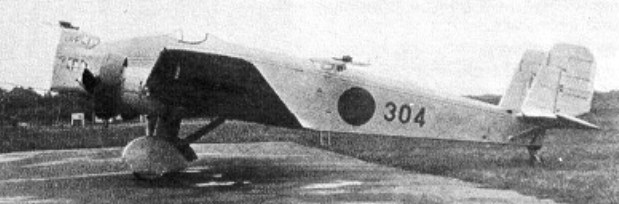
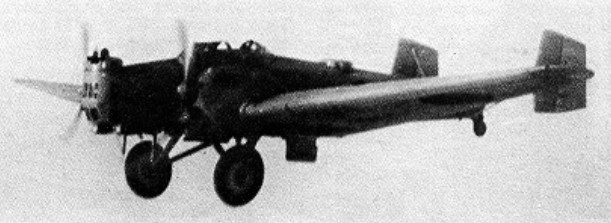
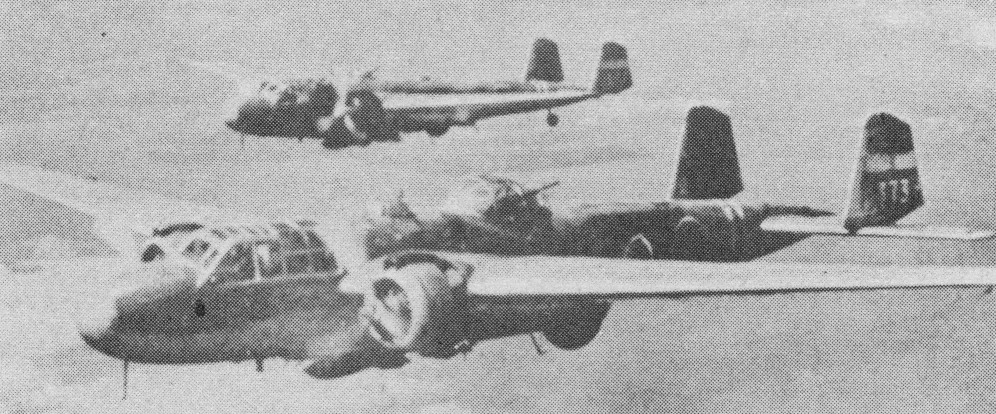
The Mitsubishi Ki-2 light bomber was developed from the Junkers K 37, an example of which had been imported from Germany in 1931 and donated by public subscription to the Japanese army.
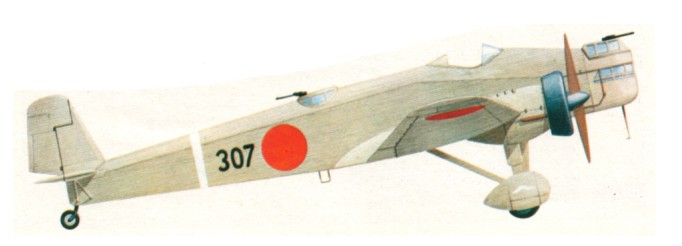
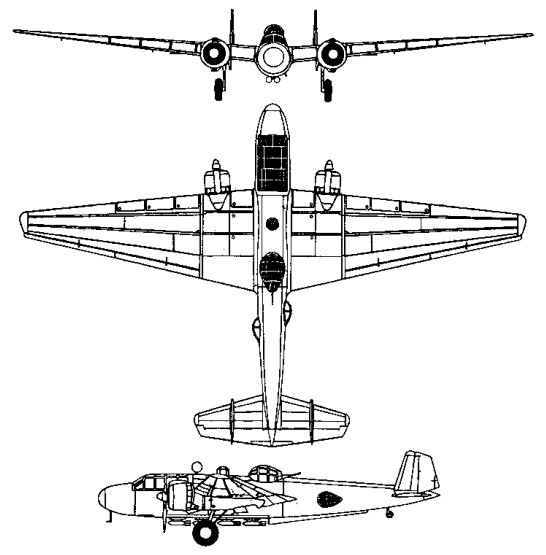
A three-seat cantilever low-wing monoplane, powered by two 425kW Nakajima Kotobuki radials, the Ki-2 prototype flew for the first time in the spring of 1933. It was distinguished easily by its corrugated metal alloy decking and twin fins and rudders, and had fixed divided landing gear, with spat-type main wheel fairings often discarded on service aircraft.
Production of the initial version totalled 113, and the type went into operation against the Chinese with great success under the designation Ki-2-l or Army Type 93 Twin-engined Light Bomber.
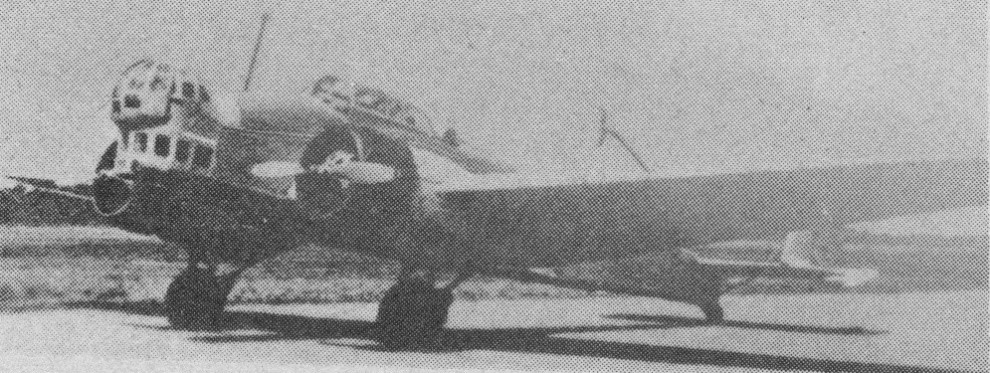
The achievements of the Ki-2-l led to the development of the Ki-2-ll, or Army Type 93-2 Twin-engined Light Bomber, the Type 93 then being redesignated retrospectively as the Type 93-1. The Type 93-2 retained the same general configuration, but had a fully-enclosed manually-operated nose turret, an enclosed cockpit for the pilot, and main landing gear legs which semi-retracted forward into the engine nacelles.
The Ki-2-ll had two 559kW Ha-8 radials giving much improved overall performance with maximum speed increased to 283km/h. In total 61 Ki-2-l Is were built, and these joined the Ki-2-ls in operations against the Japanese. Both versions ended their flying careers in the training role.
Ki-2-ll Type 93
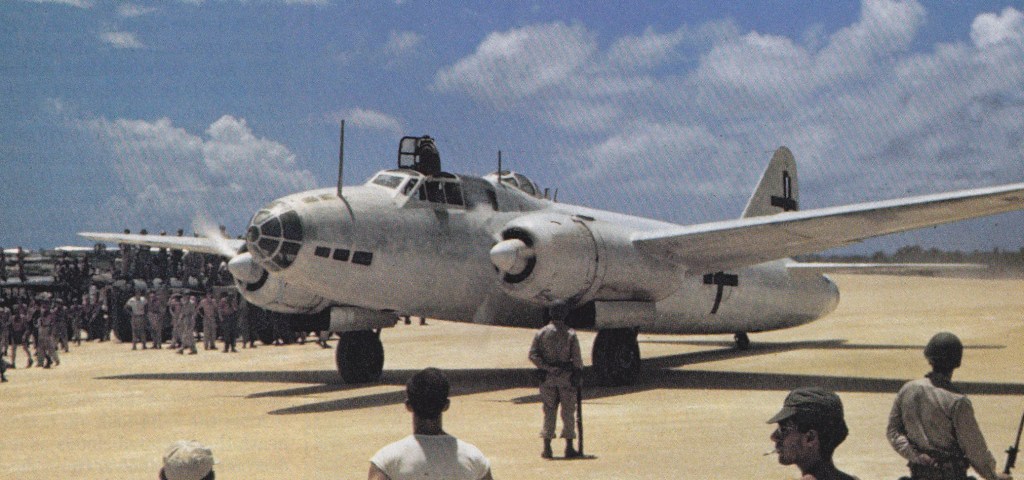
Col. MacCoy gave the Ki-2-ll Type 93 the code name ‘Loise’ after his wife although this was later changed to Louise’.
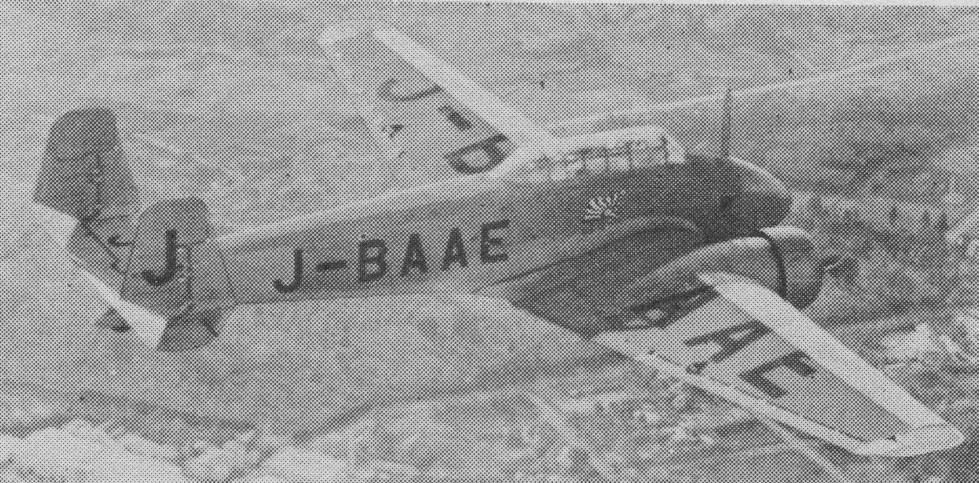
A civilianised version of the Ki-2-ll named Otori (Phoenix) was bought by the Asahi Shimbun newspaper and made a number of long-range record-breaking and ‘goodwill’ flights from 1936 to 1939. Registered J-BAAE, it covered the 4930km from Tachikawa military air base to Bangkok in 21 hours 36 minutes flying time in December 1936, and in early 1939 achieved a round-China flight of some 9300km.
It was thought that the Ohtori was also in Nay service as a Type 96 bomber and coded ‘Eva’. The name was later simplified to ‘Eve’ to avoid phonetic difficulty. When the type was not met in combat, the name was ultimately dropped.
Ki-2-I / Army Type 93 / Type 93-1 Engine: 2 x Nakajima “Kotobuki”, 425kW Span: 19.96 m (65 ft 6 in) Length: 12.6 m (41 ft 4 in) Max take-off weight: 4550 kg / 10031 lb Max. speed: 225 km/h / 140 mph Range: 900 km / 559 miles Armament: 2 x 7.7mm machine-guns, 500kg of bombs Crew: 3
Ki-2-ll / Army Type 93-2 Engine: 2 x 559kW Ha-8 radials Span: 19.96 m (65 ft 6 in) Length: 12.6 m (41 ft 4 in) Gross weight: 4645 kg (10240 lb) Maximum speed: 281 km/h (175 mph)
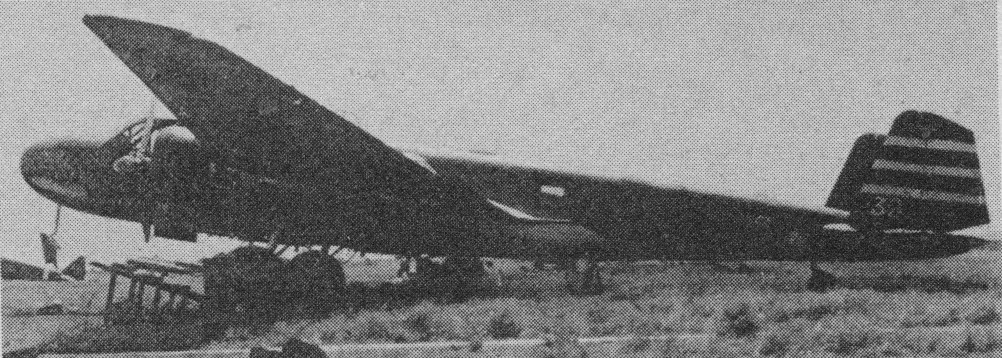
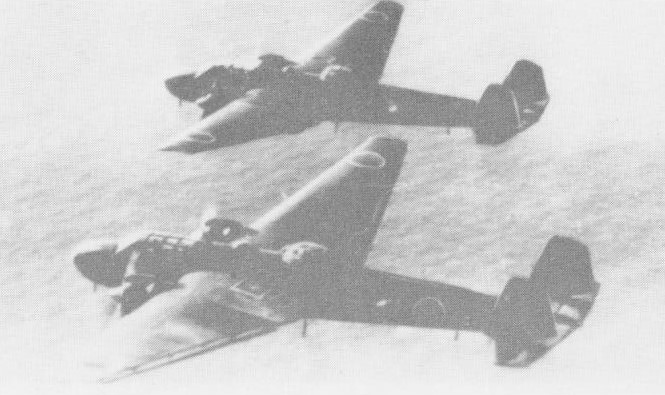
The Ki 1 was an angular cantilever low-wing monoplane with a crew of four, it had fixed landing gear, a tail unit incorporating twin fins and rudders.
The prototype was powered by two Rolls Royce Buzzard engines, but production aircraft had two 701kW / 940 hp Mitsubishi Ha 2 2 radial engines, giving a maximum speed of 220km/h, the Mitsubishi Ki-1-l heavy bomber flew for the first time in 1933. Pilot and co-pilot were seated in tandem under an enclosed canopy, while there were semi-enclosed nose and dorsal turrets and a retractable ventral ‘dustbin’, each armed with a single 7.7mm machine-gun. Offensive load was up to 1500kg of bombs.
The original ver¬sion went into service as the Type 93 Model 1 Heavy Bomber in support of the army fight¬ing in China during the mid 1930s.
The Ki-1-II development had 723kW Ha-2-3 engines and airframe improvements which increased maximum speed to 230km/h.
The two versions went into service as the Army Type 93-1 and Army Type 93-2 respectively, and saw limited use in the fighting against China. Total production of both versions was 118.
Ki-1-l Engines: 2 x Ha-2-2, 701kW Wing span: 26.50m / 86 ft 11 in Length: 14.8 m (48 ft 7 in) Maximum take-off weight: 8100kg / 17858 lb Max. speed: 220 km/h / 137 mph Armament: 3 x 7.7mm machine-guns Bomb load: 1000 kg (2205 lb)
Ki-1-II Engines: 2 x 723kW Ha-2-3 Span: 26.5 m (86 ft 11 in) Length: 14.8 m (48 ft 7 in) Gross weight: 8100 kg (17857 lb) Maximum speed: 230 km/h (143 mph)
Kiro Honjo led the design team to a 12-Shi requirement of the Imperial Navy specifying the range, and twin engines. The result was very light and devoid of any protection for crew, engines, fuel tanks or systems.
The first flight by the first of two prototypes was made on October 23, 1939, to a 1937 requirement for a long-range bomber. During trials recorded an extraordinary performance of a 444km/h top speed and 5,555km range, albeit without bombload.
Almost immediately afterwards its development was channelled in an entirely different direction. The company was instructed by the navy to adapt it instead for bomber escort duties. This meant sacrificing some 25% of the fuel load to offset the added weight of extra guns and ammunition, and increasing the crew to a total of ten men, compared with seven in the bomber version. No fewer than 30 examples of the G6M1, as this version was known, had been completed and put through service acceptance trials in 1940 before the JNAF was forced to admit that performance was just not good enough for the escort job. The aircraft themselves were later adapted to serve as G6M1 K trainers and, later still, as G6M1 1 2 paratroop transports.
G4M
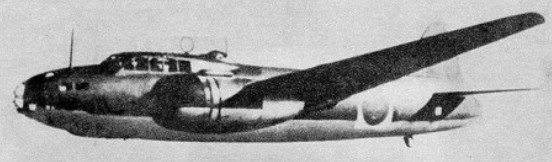
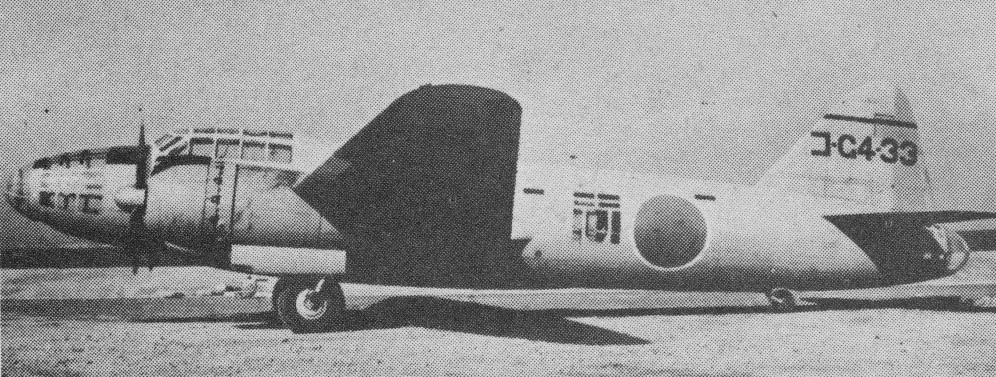
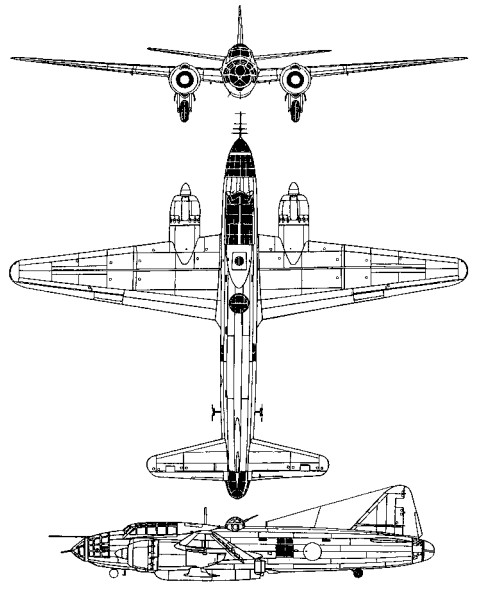
Continuing G4M development, however, Mitsubishi managed to get another 14 of these bombers completed by the end of March 1941, and in April this version was accepted for service as the G4M1 Model 11. They were soon in successful operation against targets in China, and by the time of the Pearl Harbor attack at the end of that year, 120 or so were in service. The Model 11 was armed with four single 7.7 mm (0.303 in) Type 92 machine guns in nose, waist and dorsal positions, and a 20 mm (0.79 in) Type 99 cannon in the tail, and could carry the specified 800 kg (1764 1b) weapon load. Powerplant was a pair of 1530 hp Mitsubishi Kasei 11 14 cylinder two row radial engines. The Model 11 scored a number of early successes, but when losses began to mount, Mitsubishi produced the improved G4M1 Model 12, with Kasei 15 engines.
The first production G4M1s (Navy Type 1 Attack Bomber Model 11) were initially deployed against China in mid-1941 but on the eve of the attack on Malaya the bombers moved to Indo-China and within a week had successfully attacked the Prince of Wales and Repulse. When Allied fighter opposition eventually increased to effective proportions, the G4M1 was seen to be very vulnerable, possessing little armour protection for crew and fuel tanks, and it was in a pair of G4M1s that Admiral Yamamoto and his staff were travelling when shot down by P-38s over Bougainville on 18 April 1943. Little improvement had been secured in the Navy Type 1 Attack Bomber Model 22 with revised powerplant.
Its inherent weakness, which earned it the totally unwelcome sobriquet of ‘the one shot lighter’, was not altogether surprising when it is considered that the September 1937 JNAF requirement to which it was designed demanded a twin engined aircraft with a range of nearly 4830 km (3000 miles) and, over 3706 km (2300 miles), an 800 kg (1764 1b) weapon load. This ‘range at all costs’ philosophy could only be met by cramming every available bit of wing space with 4900 litres (1078 Imp gal) of fuel, and only then by omitting any kind of armour protection for either the crew or the fuel tanks. Everything else had to go into the fuselage and, by the standards of the day, was necessarily large and bulky.
After the Solomon Islands campaign in August 1942, when losses were particularly heavy because of the bomber’s extreme inflammability, there quickly followed the prototype G4M2.
G4M2
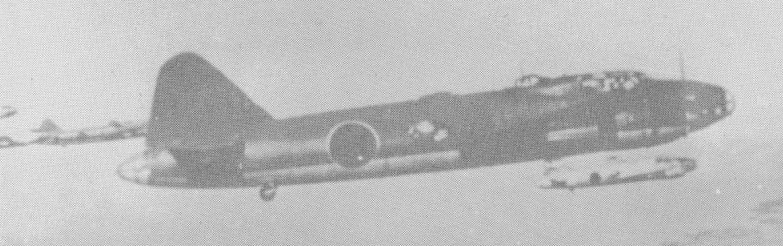
This had more powerful engines, 1343kW / 1800 hp Kasei 21s with water¬methanol injection and several aerodynamic improvements. Armament was increased by adding two more 7.7 mm (0.303¬in) guns in the nose and replacing the dorsal 7.7 mm by a turret mounted 20 mm (0.79 in) cannon; internal bombload went up to 1000 kg (2204 lb). Fuel capacity was increased, to 6490 litres (1427 Imp gal), but still the tanks remained virtually unprotected. This version (Navy Type 1 Attack Bomber Model 22A and Model 22B) remained in production until the end of the war in steadily improved Navy Type 1 Attack Bomber Model 24 variants. The G4M2 was built in such numbers as to become the second most important production model, a total of 1154 being completed compared with 1200 G4M1s. These included the G4M2 Model 22A (Type 99 cannon in the waist positions) and 22B (all four Type 99 cannon of a later type); the G4M2a Model 24 (with 1850 hp Kasei 25 engines and bulged bomb bay doors); the G4M2b Model 25 testbed (1795 hp Kasei 27s); two G4M2c Model 26s (testbeds for turbocharged Kasei 25s); the G4M2d Model 27 testbed (1825 hp Kasei 25b engines); and the G4M2e Model 24.1 a version with one 7.7 mm (0.303 in) and four 20 mm (0.79 in) guns.
G4M
In the face of continuing heavy losses, in 1944 Mitsubishi built 60 examples of the G4M3, with armour protection for the crew and a much ¬redesigned wing containing a reduced fuel load of 4490 litres (988 Imp gal), stored in fully protected tanks, produced in small numbers as the Navy Type 1 Attack Bomber Model 34. Final versions were two G4M3 Model 36 prototypes, which made test flights with exhaust driven engine turbo¬chargers.
The ‘Betty’ did per¬form as the carrier aircraft for the air launched Yokosuka MXY¬7 Ohka piloted flying bomb, developed in the latter half of 1944. The Ohka should have entered service at the end of that year, but the first consignment of 50 was lost in November, when the carrier Shinano was sunk on its way to the Philippines. The first combat encounter was thus deferred until March 21, 1945, when a force of 16 Ohka¬-carrying G4M2e Model 24J bombers (the version chosen for this role), with an escort of 30 Zero fighters, was despatched against a US task force some 480 km (298 miles) off Kyushu. On the way, however, the force was met by more than 50 US Hellcat fighters, and lost every Ohka carrying bomber and half of the escorting Zeros. In order to attach the Ohka beneath the belly of the G4M2e the latter’s bomb bay doors were removed. Launch was usually made from an altitude of around 8200 m (26900 ft), at an airspeed of about 319 km/h (198 mph), the Ohka then gliding towards its target, cutting in the rocket motor only for the last few miles of flight and the terminal dive.
Many G4M1s were converted into trainers, maritime reconnaissance aircraft or 20 passenger troop transports towards the end of the Second World War. The G4M can also claim to have served from beginning to end of the Pacific war, for a pair of white painted G4M1s were used to trans¬port the Japanese delegation to Ie Shima on August 19, 1945, to sign the instrument of surrender.
Of the total production of 2446 G4M series aircraft, production amounted to 1,200 G4M1s, 1,154 G4M2s and 60 G4M3s.
G4M1 Engine: 2 x Mitsubishi Kasei (Mars) II 14 cyl, 1530 hp Crew: 7 Armament: 4 x 7.7mm mg, 1 x 20 mm cannon Max speed: 266 mph at 13,870 ft Cruise speed: 196 mph at 9840 ft Service ceiling: 30,000 ft Range: 1900 mile Bomb load: 2200 lb or 1 x 1760 lb torpedo
G4M2 Crew: 7-10 Engines: 2 x Mitsubishi MK4P “Kasei-21”, 1350kW Max take-off weight: 12500 kg / 27558 lb Empty weight: 8160 kg / 17990 lb Wingspan: 24.9 m / 81 ft 8 in Length: 19.62 m / 64 ft 4 in Height: 6 m / 19 ft 8 in Wing area: 78.13 sq.m / 840.98 sq ft Max. speed: 430 km/h / 267 mph Cruise speed: 310 km/h / 193 mph Ceiling: 8950 m / 29350 ft Range w/max.fuel: 6000 km / 3728 miles Armament: 2 x 20mm cannons, 4 x 7.7mm machine-guns, 2200kg of bombs
G4M2a Model 24 Engine: 2 x Mitsubishi Kasei 25, 1850 hp Span: 24.89 m (81 ft 8 in) Length: 19.63 m (64 ft 5 in) Height: 13 ft 5.75 in Empty weight: 18,449 lb Gross weight: 15,000 kg (33 069 lb) Maximum speed: 436 km/h (271 mph) at 15,090 ft Service ceiling: 29,350 ft Normal range: 2262 mi Armament: 4 x 20mm Type 99 cannon, 1 x 7.7mm Type 97 mg Bombload: 2200 lb or 1 x 1764 lb torpedo Crew: 7
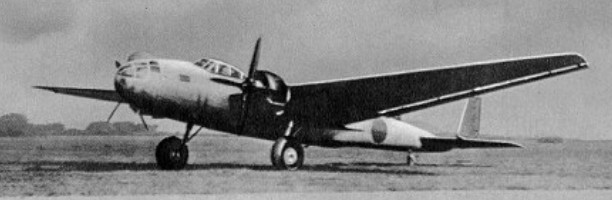
In response to a 1935 Japanese naval requirement for a landbased twin-engine reconnaissance aircraft, Mitsubishi flew the first Ka-15 prototype, an aircraft which possessed a design potential that allowed development as a long-range medium bomber. Following successful flight trials, the aircraft entered production in June 1936 as the Navy Type 96 Attack Bomber Model 11 (Mitsubishi G3M1).
In its original prototype form the Ka 15, designed by Kiro Honjo, made its first flight in July 1935. Two 750 hp Hiro Type 91 12-cylinder V type engines were mounted on the mid set wings, which were essentially the same as those of the Ka 9.
Twenty more prototype/preproduction Ka 15s were completed, of which three had Hiro engines; the remaining 17 were powered by 830 hp or 910-hp Mitsubishi Kinsei 2 or 3 14 cylinder two-row radial engines, giving enhanced performance. These aircraft had the designation G3M1, and unofficially they were subdivided into G3M1a (the four with Hiro engines and solid noses), G3M1b (two with Kinseis and solid noses), and G3M1c (the other 15 Kinsei powered aircraft, which had a transparent bombing station in the nose). Twelve were used for service trials, but before these had been completed a production batch of 34 Kinsei 3 powered G3M1s, with modified cockpit windows, was authorized by the IJN. These had a crew of five, and could carry an 800 kg (1763 1b) torpedo beneath the fuselage; defensive armament consisted of two retractable dorsal turrets each containing one 7.7 mm (0.303 in) Type 92 machine gun, with another of these guns in a retractable ventral turret.
As the improved Kinsei 41 and 42 engine became available in 1937 a new version, the G3M2, started production and, with a total of 581 built by mid-1941, was the principal variant. With a top speed now increased to 374km/h, a bombload of up to 800kg carried externally and a defensive armament of three 7.7mm machine-guns, the G3M2 possessed a maximum range of 4380km.
It was built in two basic variants, the Model 21 and Model 22. The 21 had uprated Kinsei 41 or 42 engines of 1075 hp, increased fuel tankage and modified dorsal turrets; the 22 had 1075 hp Kinsei 45s (also fitted to some late¬production Model 21s), and a completely revised armament system that eliminated the retractable ventral and rear dorsal turrets, replacing the latter by a large turtleback enclosure housing a 20 mm (0.79 in) Type 99 cannon, and the former by a pair of blisters, one each side of the rear fuselage, each with single Type 92 gun. Between 1937 39, Mitsubishi built 343 Model 21s, following these in 1939 41 with 238 Model 22s.
G3M2
Mitsubishi G3M2s were first flown in action by the Japanese navy’s Kanoya Kokutai in August 1937 in raids on Hangchow and Kwangteh in China. By 1940 four kokutais in China were equipped with a total of about 130 G3M2s, a number that grew to 204 by the date of Pearl Harbor with the deployment of forces against Wake Island, the Philippines and the Marianas. And it was a force of 60 G3M2s of the Genzan and Minoro Kokutais (with 26 Mitsubishi G4Mls of the Kanoya Kokutai) which, flying from bases in Indo-China, found and sank the British warships HMS Prince of Wales and HMS Repulse as they steamed without fighter protection off the Malayan coast on 10 December 1941. The type was known to the Allies as the ‘Nell’.
G3M2
When Mitsubishi production was then phased out in favour of the later G4M bomber, production of the G3M was carried on by the Koizumi factory of the Nakajima company, which built 412 G3M type bom-bers, of which a proportion were of a fourth model, the G3M3. These had Kinsei 51 radials of 1300 hp each, and a further increase in fuel tankage, extending the max¬imum range to 6230 km (3870 miles) com-pared with the 4380 km, (2720 miles) of the G3M2 Model 22.
At the time of Pearl Harbor, the backbone of Japan’s long range strike force consisted of just over 200 G3Ms (mostly G3M2s and G3M3s) and about 120 of the later G4M1s. The G3M (‘Nell’ under the Pacific system of codenarnes introduced by the Allies during the Second World War) had made its service debut in August 1937, with raids on Chinese mainland targets from bases on Kyushu (Omura) and Formosa (Taipei).
The G3M was used throughout the war, in most of the Pacific theatres, as was the G3M1 L, a prewar transport conversion with Kinsei 45 engines which took part in the invasion of Celebes. Wartime transport con¬versions were the L3Y1 Model 11 and L3Y2 Model 12 (both codenarned ‘Tina’), con¬verted from G3M1s and G3M2s respectively by the First Naval Air Arsenal at Kasurnigaura. These carried up to ten pas¬sengers, and had a single 7.7 mm (0.303 in) machine gun for defence.
Total production of the G3M series reached 1100, including the Kinsei 42 powered G3M2b, the transport G3M2d (L3Y2) and the G3M3 final bomber.
G3M 1 Engines: 2 x 678kW Kinsei 3 Maximum speed: 360km/h at 1975m
G3M2 Engines: 2 x Mitsubihi Kinsei 45, 1000 hp Wingspan: 82 ft 0.25 in Length: 53 ft 11.75 in Height: 11 ft 11.75 in Empty weight: 11,442 lb Loaded weight: 17,637 lb Max speed: 238 mph at 9,840 ft Service ceiling: 29,890 ft Amament: 1 x 20mm cannon, 2 x 7.7mm mg Bombload: 2200 lb or 1 x 1760 lb torpedo Crew: 7
G3M2 Model 22 Span: 25m (82ft 0.25in) Length. 16.45 m (53 ft 11.75 in) Gross weight: 8000 kg (176371b) Maximum speed: 373 km/h (232 mph)
G3M3 Engines: 2 x Mitsubishi MK8 Kinsei-51, 975kW Max take-off weight: 8000 kg / 17637 lb Empty weight: 5250 kg / 11574 lb Wingspan: 25.0 m / 82 ft 0 in Length: 16.5 m / 54 ft 2 in Height: 3.7 m / 12 ft 2 in Wing area: 75.1 sq.m / 808.37 sq ft Max. speed: 415 km/h / 258 mph at 6000m Cruise speed: 295 km/h / 183 mph Ceiling: 10300 m / 33800 ft Range w/max.fuel: 6200 km / 3853 miles Armament: 1 x 20mm cannon, 4 x 7.7mm machine-guns, 800kg of bombs Crew: 5
In 1928 Mitsubishi presented to the Imperial Japanese Navy three new types: the Mitsubishi 1MF9 Taka carrier fighter biplane, which featured a French-type avion marin keel; the Type R experimental twin-engine monoplane flying-boat, built also in a civil transport version, both of them based on Rohrbach designs; and the 3MR4 carrier reconnaissance biplane.
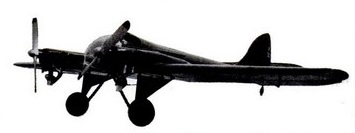
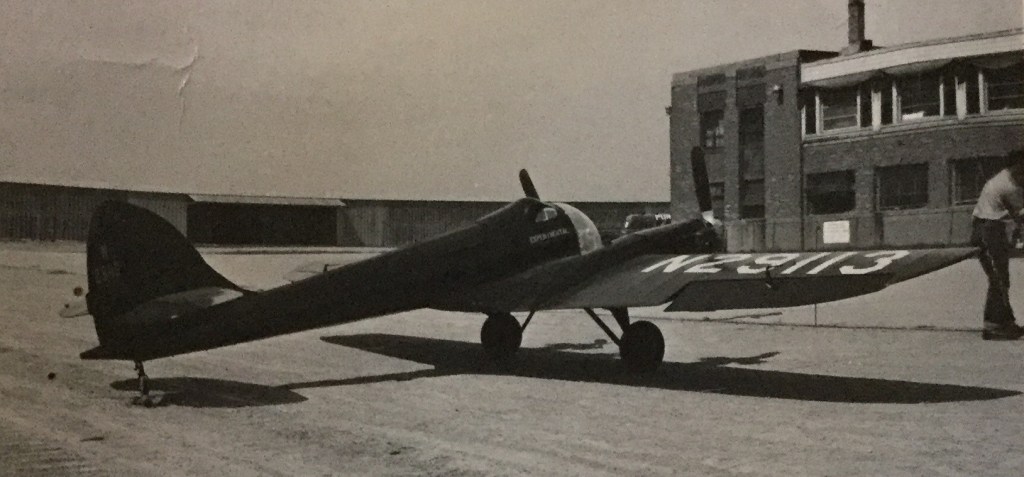
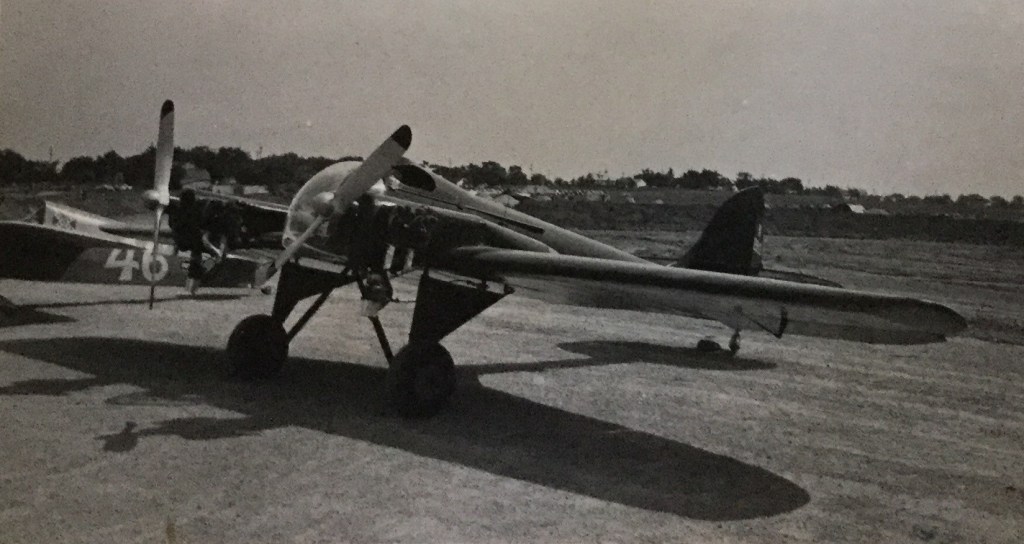
The “Belly Flopper” was built by Irven Miller of Milwaukee about 1953. Flown in the prone position, it has a top speed of 150 mph, powered by two 40 hp Continentals.
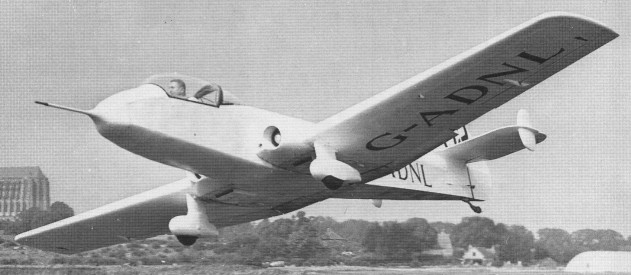
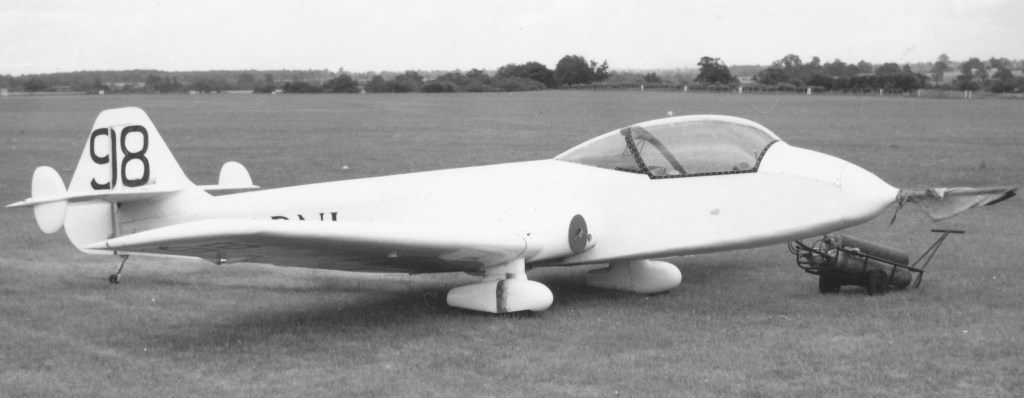
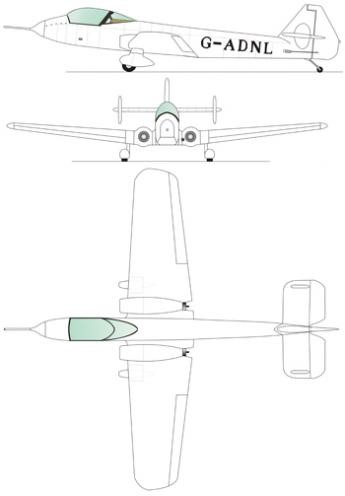
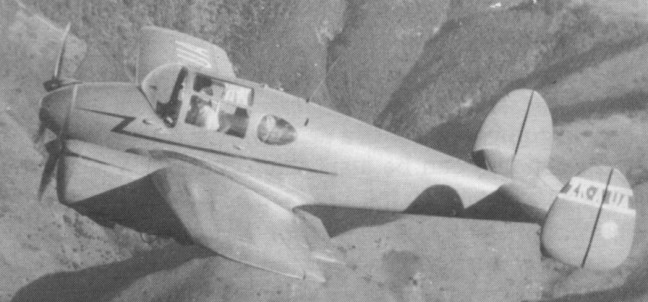
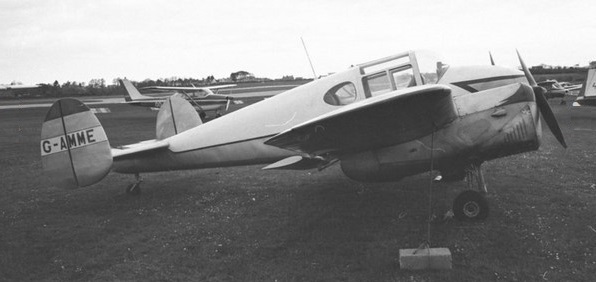
The M.5 Sparrowhawk prototype G-ADNL survived the war. Air racing enthusiast Fred Dunkerley acquired the Sparrowhawk and in 1950 he sent it to F.G.Miles at Redhill in Surrey, with instructions that it be rebuilt as a jet-powered racer. Fred Miles conceived the idea of replacing the M.5 140 hp high compression Gipsy Major with two Turbomeca Palas turbojets, each developing 330 lb maximum thrust (equivalent to about 550 hp in total).
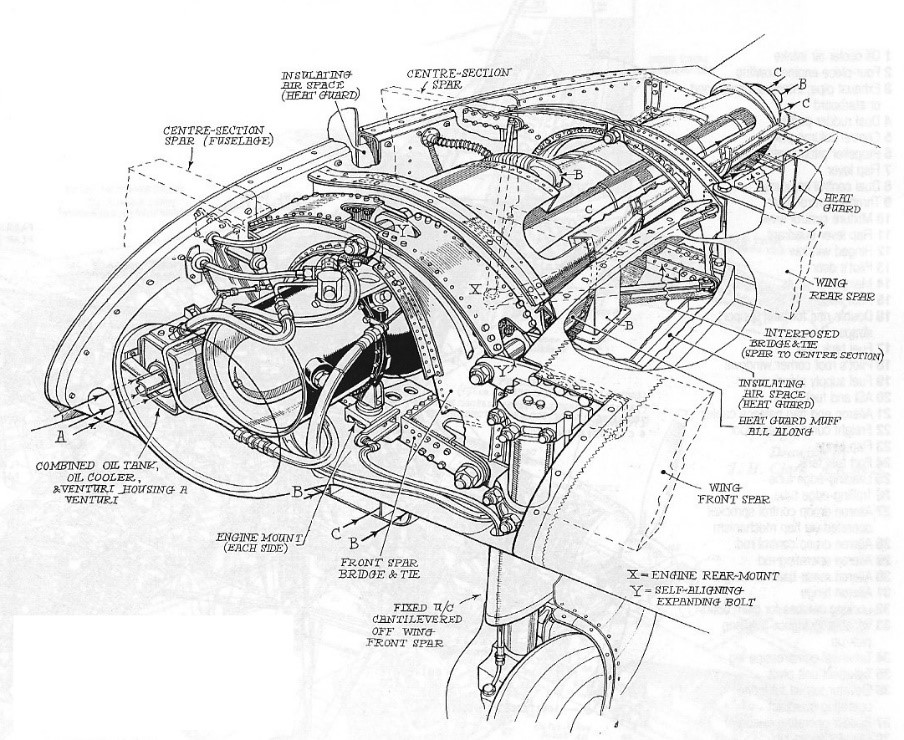
With a length of 35in and a diameter of 16in, for an individual weight of 160 lb, the Palas units required new twin metal¬ sparred inner wing attachments to the fuselage centre section for their upper wing root housing. Designer, aerody¬namicist, stress engineer and flight test observer Grahame Gates, who was brought in to assist George Miles, recalls that the Sparrowjet centre section attachments and engine mountings required some complex engineering. This included curved compression mem¬bers with a pin joint above each engine centreline, and the rear spar straddling the hot tailpipe. Being completely buried within the wing chord, the little Palas engines also needed short stainless steel exhaust channels to protect the adjacent wing structure.
A completely new single seat cockpit and forward fuselage section was also required, resulting in an increase in length of nearly 7ft to 29ft 7in, includ¬ing a new and bigger tail assembly to balance the additional side area of the longer nose. Two small fins near the tailplane tips were also added solely as mass balance fairings.
While the original Hawk wooden wings with their ancient Clark YH aero¬foil sections were retained, extensive modifications were required to incorpo¬rate a 38gal fuel tank in each for the turbojets. The wings’ twin ¬sparred structure also had to be rein¬forced and re covered with thicker ply skins to cope with the increased air¬speeds, and their stiffness was further improved when 18in were clipped from each wingtip during initial flight development.
Squared off tips, with no decrease in aileron span, had been schemed as a means of achieving an increase in lateral control effec¬tiveness, and of reducing associated stick forces. Their planned removal, however, was delayed until after initial flight trials, to retain lighter wing load¬ing and docile handling in the early stages of development. Overall wingspan was still 7in more than the Sparrowhawk’s original 28ft, because of the additional wing root engine bays.
With no propeller clearance problems, shortened, spatted Magister type mainwheel undercar¬riage oleos with stub axles instead of alloy forks, and Goodyear tyres and brakes, could be used. Although these brought the Palas tailpipes close to the ground, no problems were reported from surface erosion. The two engines increased empty weight by more than 500 lb to 1,578 lb, although the maximum take off weight went up by only 200 lb, to 2,400 lb.
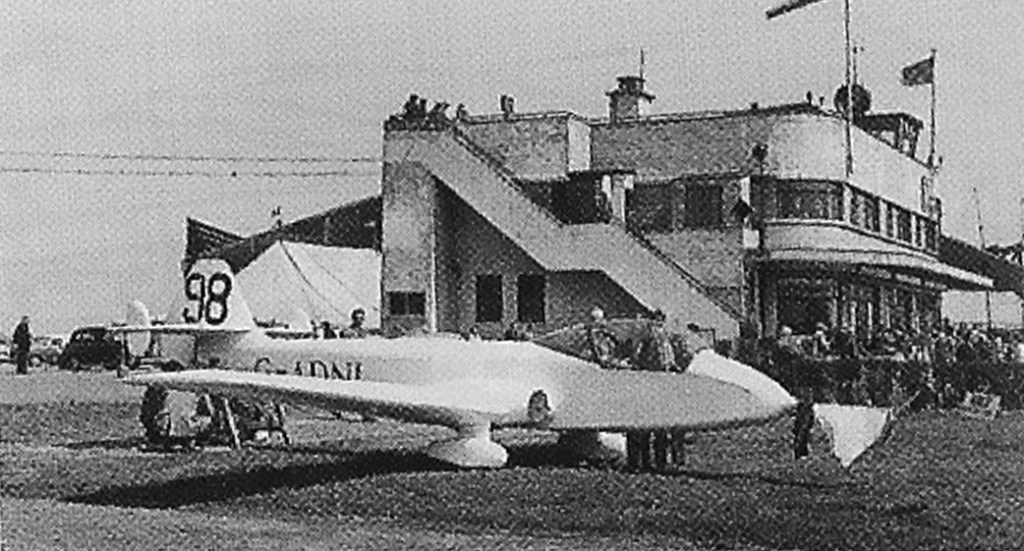
All of these changes took time, and were further complicated by accompa¬nying budget overruns, as well as the transfer of F.G. Miles’s activities from Redhill to Shoreham in 1952. It was not until December 14, 1953, after three year’s work, that G.H. Miles made the first flight of the redesignated M.77 Sparrowjet (c/n FGM 77/1006) at Shoreham. Originally flown under B conditions as G 35 2, it soon reverted to its original civil registration, G ADNL, plus racing number 99 on the new broad chord fin and rudder.
Sparrowjet G-ADNL 2 July 1957 Coventry
Few problems were encountered dur¬ing Sparrowjet flight development, which was shared by G.H. and Miles test/sales pilot Ian Forbes. The Sparrow¬jet’s inaugural flight also marked its initial pilot’s first jet experience, a distinction which Fred Dunkerley shared when he had his baptism on type on Whit Monday, 1954. It was evident that, while the cruis¬ing and maximum speeds of the Sparrowhawk had been increased by over 50 mph, its pleasant flying qualities and docile low speed handling had been retained.
In the C of A, the Ministry of Civil Aviation and the Air Regis¬tration Board (ARB) had imposed a restriction of 31,400 rpm maximum continuous power on the Palas tur¬bojets, instead of their rated 33,800 rpm, which was permitted only for take off or emergencies. This had the effect of reducing the Sparrowjet’s design maximum speed performance of 240 mph to a revised handicap estimate of 227 mph.
Engine start¬ing was normally via high pressure air from a large ground cylinder to spin the centrifugal compressor up to light up rpm. This system saved the weight and complication of integral electric starters, but effectively ruled out off base operation without the necessary ground equip¬ment.
At Yeadon 21 May 1956 when it won the SBAC Challenge Cup
G-ADNL usually operated from the airfield Barton, participating in many races, including:
SBAC Challenge Cup in 1956 at an average speed of 197 mph [316 km / h] King’s Cup Race July 13, 1957, at an average speed of 228 mph [366 km / h]
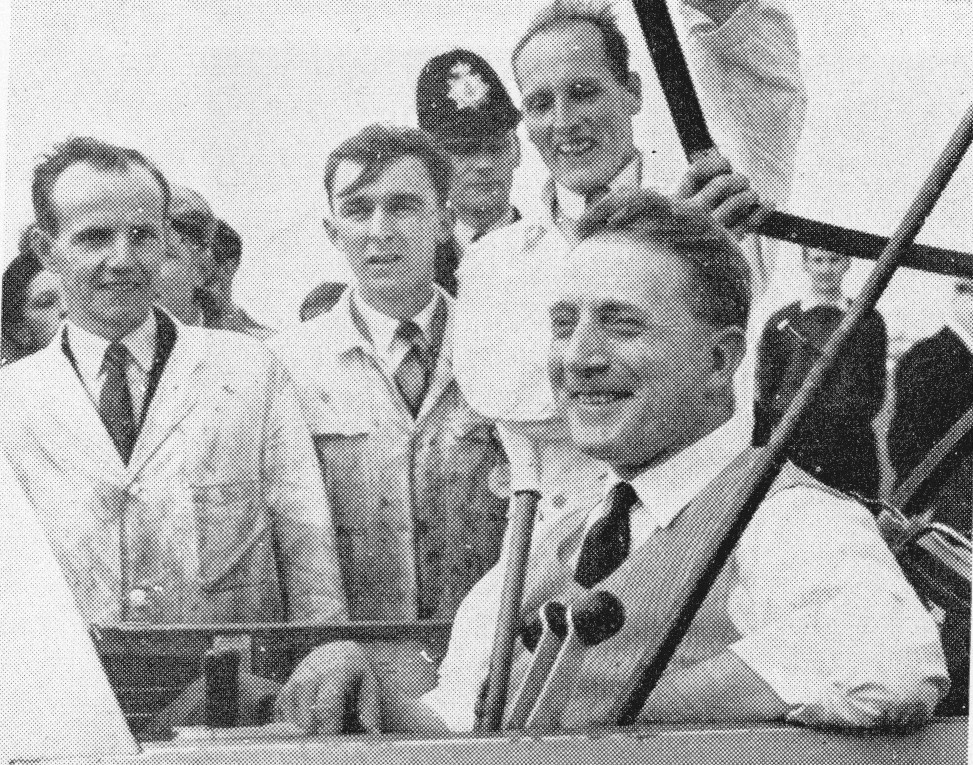
1957 King’s Cup winner, flown by Fred Dunkerley immediately after landing
The M.77 SparrowJet was destroyed in a fire at a hangar at RAF Upavon in 1964.
Engines: two Turbomeca Palas turbojets, 330 lb max thrust each Wingspan: 8.49 m Total length: 9.40 m Wing area: 14,50 m² Empty weight: 717 Kg Maximum weight: 1090 Kg Max speed: 368 Km / h Range: 432 Km Climb rate: 640 m / min Wing loading: 75 Kg / m²
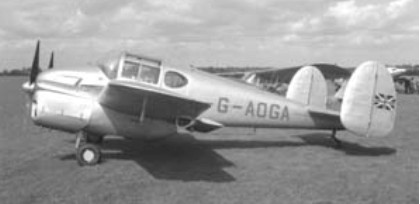
Conceived as a twin-engine retractable landing gear version of the Messenger, the Miles M.65 Gemini flew first on 26 October 1945 and was an immediate success. It was the last Miles aircraft to enter quantity production and in its Gemini Mk 1A initial form was powered by 75kW Blackburn Cirrus engines, and had non-retractable auxiliary trailing-edge flaps. About 150 were built in the first year of production.
One Gemini Mk 1B was built with retractable flaps.
The single Gemini Mk 2 was created by installing 93kW Continental engines, while production Gemini Mk 3A aircraft had 108kW de Havilland Gipsy Major 10s. There were several sub-variants with detail differences, but the most powerful version with two 116kW Blackburn Cirrus Major III engines, a strengthened structure and larger fins and rudders, was deemed sufficiently different to be designated M.75 Aries.
M.75 Aries
A total of 170 Geminis and two Aries were built, around two-thirds of them being exported, before the company collapsed in 1947.
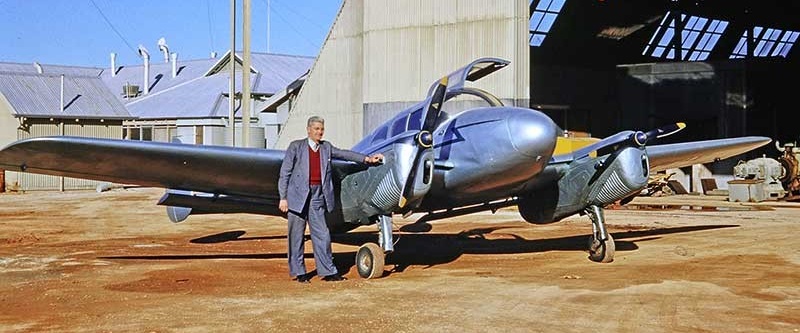
Miles Gemini VH-AKV flown by Perth businessman Mr.O. Odegaard during a stop at Forrest, Australia, in 1955
M.65 Gemini Engines: 2 x 100 hp Blackburn Cirrus Minor Wing span: 11.02 m / 36.1 ft Length: 6.78 m / 22.25 ft Weight empty 1,900 lb / 860 kg Cruise speed: 125 mph / 200 kph Ceiling: 13,500 ft / 4,100 m Range: 820 miles / 1,320 km Seats: 4
M.75 Aries Engines: 2 x 116kW Blackburn Cirrus Major III
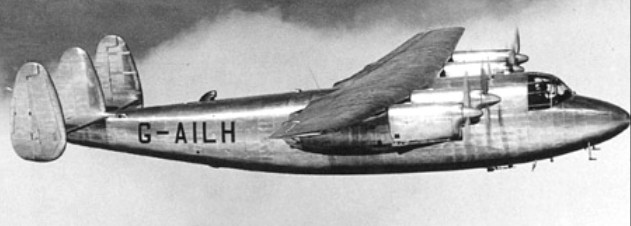
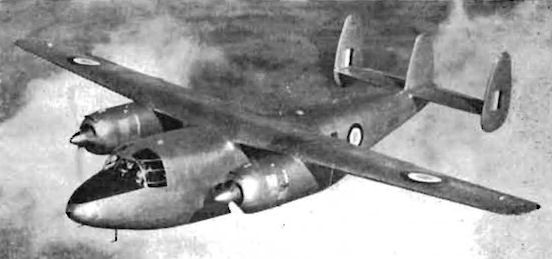
Flown in 1946 with Gipsy Queen 71 engines, the Marathon was the winner in a competitive bid to Air Ministry Specification 18/44, and the Ministry ordered three prototypes for BOAC.
The Ministry of Aircraft Production, gave orders and counter orders throughout the pre-production stages, but when the prototype flew test pilots soon found it was a very pleasant aircraft to handle. Loss of the prototype in a fatal crash during trials at Boscombe Down was attributed to pilot error. The second prototype flew in February 1947, but before a production contract could be signed the Miles company suffered financial collapse and its aircraft assets were eventually acquired by Handley Page. The company became Handley Page (Reading) Ltd. and the 18 passenger M.60 Marathon was redesignated Handley Page H.P.R.1 Marathon I.
A production order for 50 was placed, 30 for BEA and 20 for BOAC’s associated companies, but the BEA order was reduced to 25 and later seven, then cancelled completely, and 28 of the Marathons were modified for use by the RAF as navigation trainers as the Marathon T.Mk II, serving for six years before being replaced by Vickers Varsities.
Handley Page built only 40. The remaining aircraft operated in a number of overseas countries including West Germany, Jordan, Nigeria, Canada, Japan and Burma.
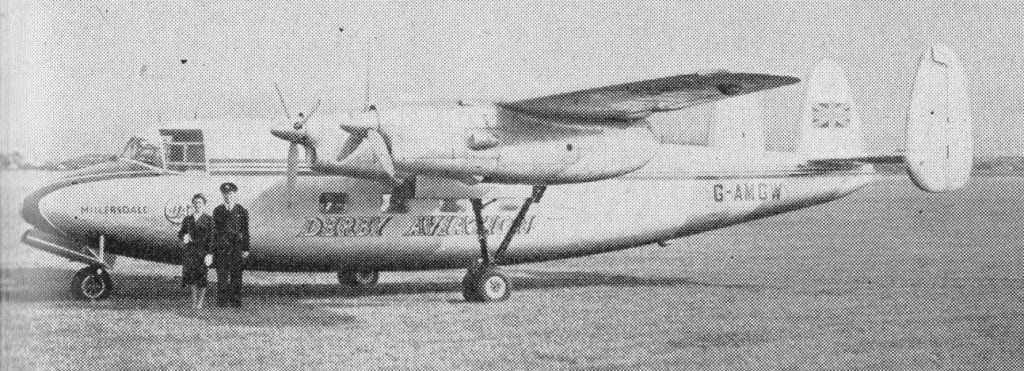
Derby Aviation Marathon circa 1958
Some were used experimentally, including use as engine test-beds, one equipped with a pair of Mamba turboprops, designated M.69 Marathon II. Flown by the Handley Page company, initially with two 753kW Armstrong Siddeley Mamba turboprop engines, it was later used to test two Alvis Leonides Major radial engines.
First flown on 15th March 1955, the Leonides Major-powered Marathon was at the Handley Page (Reading) works at Woodley. It was to act as a general flying test-bed for the Leonides Major, but in particular for the construction of the engine at Handley. The Marathon itself, serial VX231, was originally G-AHXU, with two Armstrong Siddeley Mambas in place of the four Gipsy Queen inlines.
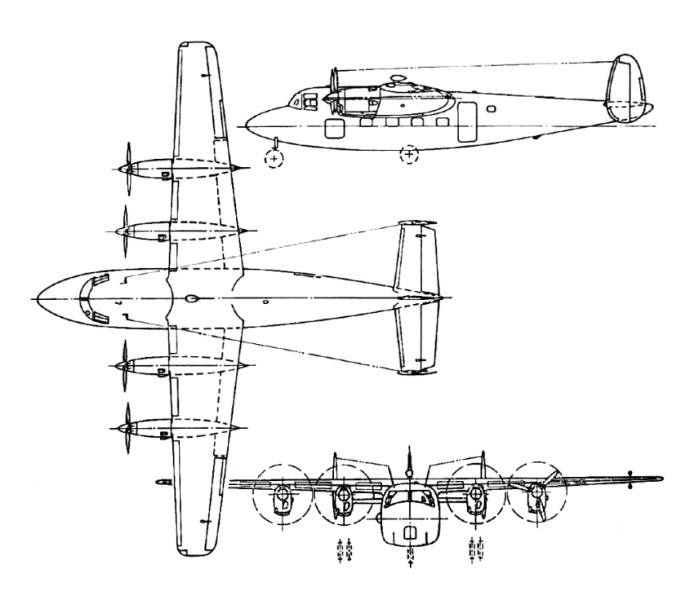
The fuselage is deep and flat-bottomed with a rounded nose, stepped cockpit, and square cabin windows. The underside of the fuselage has a marked upsweep. The wing is equi-tapered with square-cut tips and the engines are housed in a circular section of nacelles. There are prominent underwing bulges on the trailing edge outboard of the nacelles. The tail unit has triple oval fins. Main undercarriage legs retract forwards into the nacelles, and the nosewheel also folds forwards.
The last survivors were scrapped around the mid-1960s.
M.60 Marathon Engines: 4 x de Havilland Gipsy Queen 71, 246kW Wingspan: 19.81 m / 64 ft 12 in Length: 15.93 m / 52 ft 3 in Height: 4.27 m / 14 ft 0 in Wing area: 46.45 sq.m / 499.98 sq ft Max take-off weight: 7484 kg / 16499 lb Empty weight: 5198 kg / 11460 lb Max. speed: 322 km/h / 200 mph Ceiling: 5030 m / 16500 ft Range: 1368 km / 850 miles
HPR.5 Engines: two Leonides Major Wingspan: 65 ft Length: 52 ft 1 in Height: 14 ft 1 in
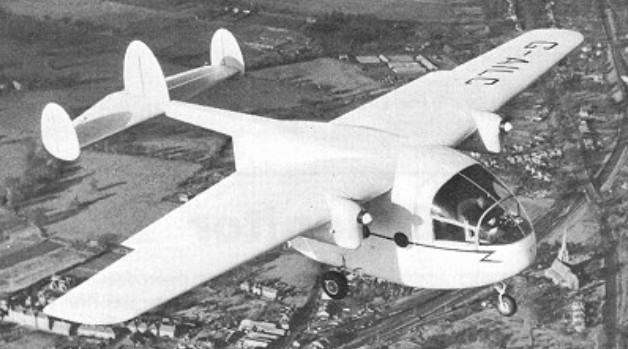
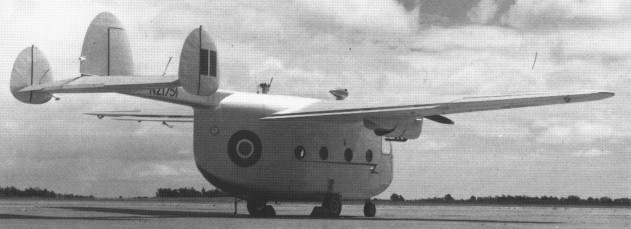
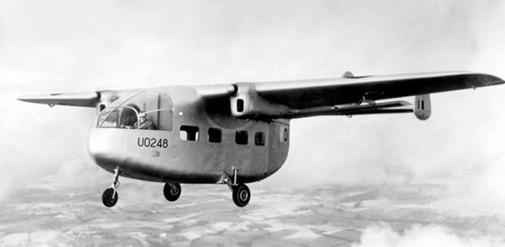
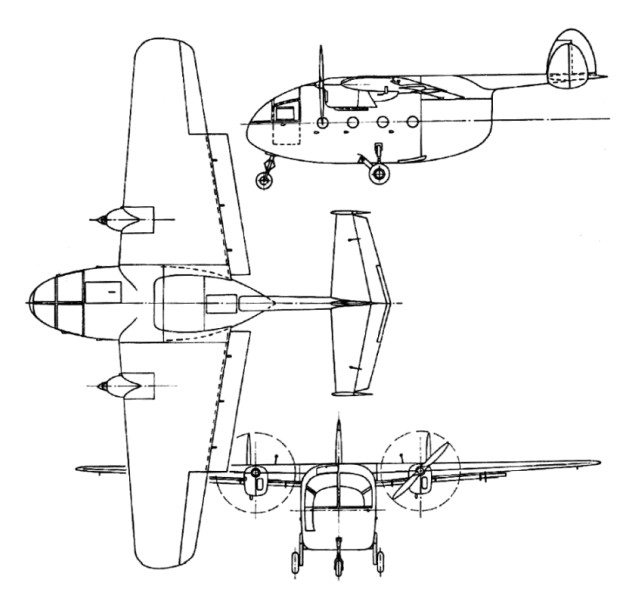
One unusual design was the Miles M.57 Aerovan, a twin-engine light freighter which flew first in January 1945. The wings and tail unit were similar to those of the Messenger, but larger, while the fuselage was of pod and boom layout.
A number of UK and overseas orders were placed and the Aerovan entered production with a longer pod than the prototype, which was designated Aerovan Mk I, and the second prototype the Aerovan Mk II.
The first Aerovan Mk III production model was similar to the Mk II, and seven were built with 112kW Blackburn Cirrus Major III engines, the standard Aerovan powerplant. The next version, the Aerovan Mk IV, differed in detail and 40 were built. One Aerovan Mk V with 108kW de Havilland Gipsy Major 10 engines and two Aerovan Mk VI aircraft with 145kW Avco Lycoming O-435-4A engines were built; one of the latter was fitted with an experimental Hurel-Dubois high aspect ratio wing in 1957 when it became known as the HDM.105. The last known surviving Aerovan was the first Mk VI, operating in Italy in 1968, although a pair of uncompleted airframes were around for some years.
The only military operators of the type were the Israeli Air Force and Royal New Zealand Air Force.
Variation: Hurel-Dubois HDM.105
Aerovan IV Engines 2 x 155 h.p Blackburn Cirrus Major III 155hp Length 36 ft 0 in / 10.97 m Wing span 50 ft 0 in / 15.24 m Height: 13 ft 6 in Weight empty 3,410 lb / 1,546 kg MAUW: 5800 lb Max speed: 127 mph @ SL Max cruise: 110 mph / 180 kph Ceiling 13,000 ft / 4,000 km fully loaded Range 450 miles / 720 km Pax cap: 8 / or 2,000 lb / 900 kg freight Crew: 2

 All Aero