Nakajima Ki-49 Donyru / Type 100 / Ki-58 / Ki-80

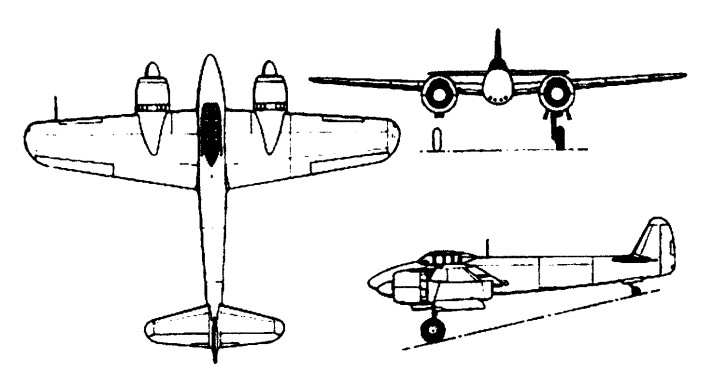
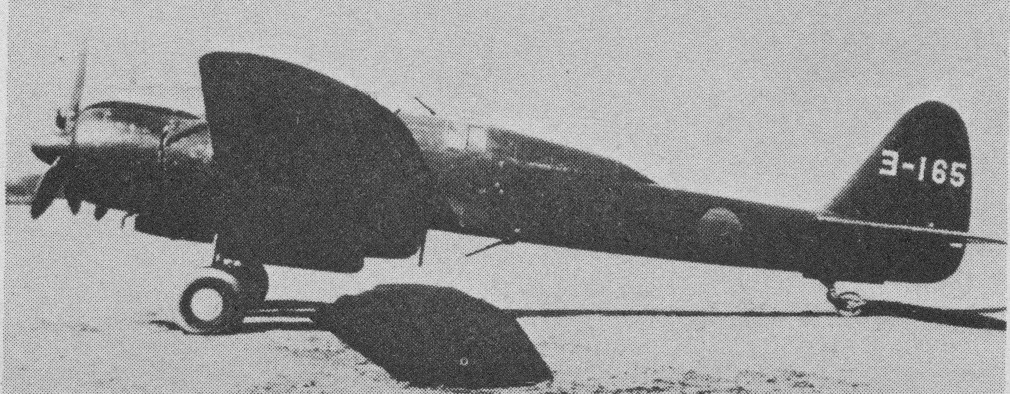
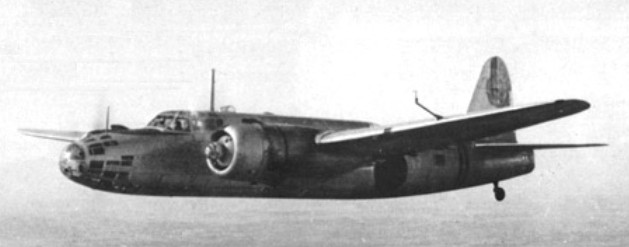
Even as the Mitsubishi Ki 21 was entering service, the Nakajima company was issued with the Ki 49 specification early in 1938 calling for an aircraft to replace the Ki-21, capable of reaching 500 km/h (311 mph) with a range of 3000 km (1860 miles) and a bombload of 1000 kg (2200 lb). Defensive armament was to include a free 20mm (0.79 in) cannon on a dorsal mounting and a tail gun turret the latter for the first time on a Japanese landplane. It was also laid down that adequate protection for the crew members and the fuel load was to be provided.

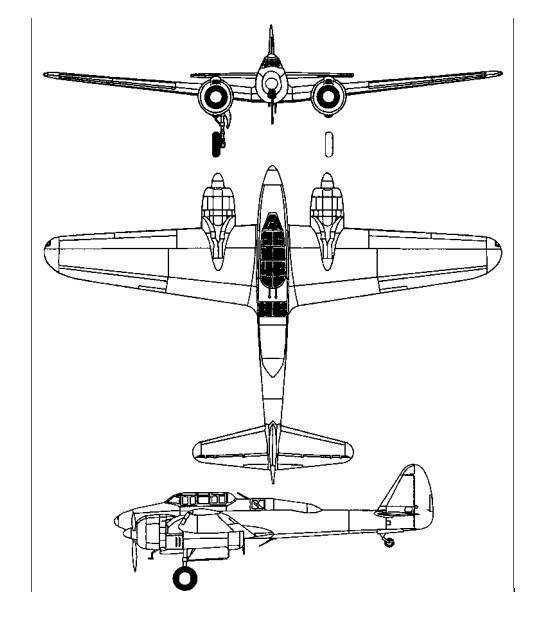
Nakajima set to work in mid 1938 with a top level design team led by Yasumi Koyama. A mid-wing layout was selected, with a considerable dihedral on the low aspect ratio wing. The wide chord centre section accommodated six fuel tanks, three on each side of the fuselage. Good takeoff and climb were guaranteed by large Fowler type flaps. A 20 mm (0.79 in) Ho 1 cannon was mounted in the dorsal position, while single 7.7 mm (0.303 in) Type 89 guns were fitted in the nose, ventral and port and starboard beam positions and in the powered tail turret.
The first prototype flew in August 1939. Its two 708kW / 1080 hp Nakajima Ha 5 Kai 14 cylinder radial engines were replaced by Nakajima Ha 41s of 932kW / 1250 hp each on the remaining two prototypes and seven evaluation aircraft delivered late in 1939. Constant speed three-bladed propellers were introduced in place of the original Hamilton Standard two pitch propellers.
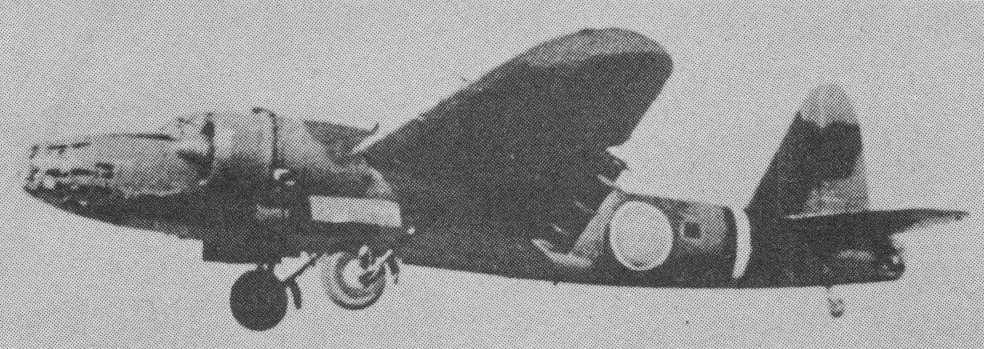
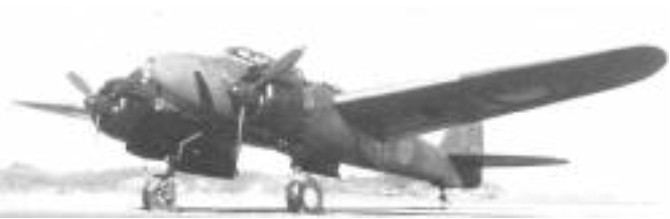
The Ki 49 was accepted for service as the Army Type 100 Heavy Bomber in March the following year and made its operational debut in February 1942. Later code-named ‘Helen’ when the initial production Ki-49-I (Army Type 100 Heavy Bomber Model 1) started operations with the 61st Hikosentai in China (powered with Ha-41 radial engines).

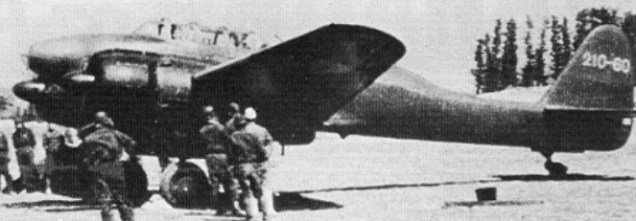
The army, fearing heavy losses in unescorted daylight raids, tested three modified Ki 49s, intended as escort fighters. Designated Ki 58, they were fitted with improved armament and crew protection but with the bomb bays deleted. Progress was disappointing and then the Ki 43 fighter, possessing sufficient range for escort work, became available in quantity and the Ki 58 programme was abandoned. Two Ki 49 variants, designated Ki 80, were intended as prototype formation leader aircraft, but this idea was also abandoned, and these aircraft were then used to test the powerful new 2420 hp Nakajima Ha 117 radial engines.

Known in Japan as Donryu (Storm Dragon), Ki 49 Is went first to equip the 61st Sentai operating in China. During the Pacific war Ki-49s, coded Helen by the Allies, flew frequent raids over New Britain and New Guinea, also making a large proportion of the attacks on Port Darwin and Australia’s Northern Territory.
Two preproduction Ki 49 IIs appeared in September 1942, powered by twin 1450 hp Nakajima Ha 109 radials. In the spring of 1942 the steps were taken to increase performance, protection and defensive firepower. The Nakajima Ki-49-IIa (Army Type 100 Heavy Bomber Model 2A), the first of the new series, was powered by two Nakajima Ha-109 radial engines with increased ratings. The aircraft was fast, well protected by 5mm armour plating and rubberized fuel cells, and heavily armed. The Ki 49 IIa was delivered to the Sentais from August 1942 onwards and the later Ki 49 IIb variant had 12.7 mm (0.5 in) Ho 103 machinguns replacing the light machine guns formerly installed in the nose, ventral and tail positions. The Ki 49 II operated mainly over New Guinea and in China, as well as being assigned to units deployed in Manchuria against an anticipated Soviet attack.
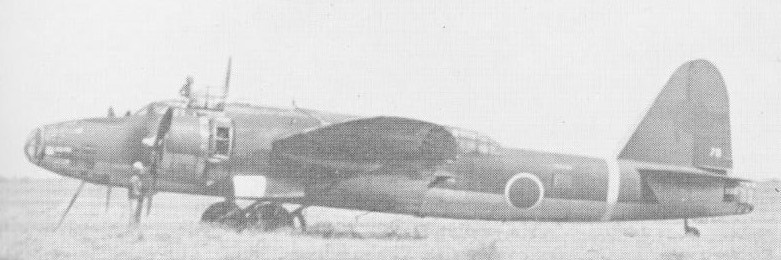
Ki-49-II

Both the Ki-49-IIa and Ki-49-IIb were in action with the 7th and 61st Sentais based in China in the summer of 1942, and made many attacks on Chungking and air bases of General C. L. Chennault’s China Air Task Force. ‘Helen’ bombers equipped the 12th Sentai, based at Medan and Sabang (Sumatra) under the 3rd Air Army, and these attacked objectives in Burma and eastern India, joining Ki-21s on some occasions in raids on Calcutta. In 1943 the Ki-49s of the 7th and 61st Sentais, now operating from Timor, attacked Darwin to face strong reaction by the Supermarine Spitfire Mk.Vs of No.1 Fighter Wing. Units equipped with Ki-49s suffered most in New Guinea, where 4th Air Army came under constant attack on its airfields at Wewak, But and Dagua after August 1943, when the RAAF and the US 5th Air Force went onto the offensive.

Ki 49s also flew many missions during the desperate Japanese defence of the Philip¬pines, and surviving aircraft, with a reduced crew of two, made suicide attacks on Allied ships. Some Ki 49 Is were fitted with detec¬tion equipment and used as antisubmarine aircraft, while others were pressed into ser¬vice as troop transports.

Six examples of the final version, Ki 49-III, were built, powered by Nakajima Ha 117 radials, each intended to provide 1805kW / 2420 hp. The engines were never really more than experimental, however, and technical prob¬lems remained unsolved. Plans for mass production of the Ki 49 III came to nothing.

In all, 819 Ki 49s of all variants were built, 769 by Nakajima at its Ota factory in Gumma Pre¬fecture and the remaining 50 by the Tachi¬kawa company.

Total production amounted to 819 aircraft.

Ki-49 prototype
Engines: 2 x 708kW / 1080 hp Nakajima Ha 5 Kai 14 cylinder radial engines
Hamilton Standard two pitch propellers
Armament: 1 x 20 mm (0.79 in) Ho 1 cannon, 5 x 7.7 mm (0.303 in) Type 89 machine guns

Ki-49 prototype
Engines: 2 x Nakajima Ha 41s of 932kW / 1250 hp
Props: Constant speed three-¬bladed

Ki-49-I / Army Type 100 Heavy Bomber Model 1
Engines: 2 x Ha-41 radial, 932kW / 1250 hp

Ki 49 II / Type 100
Engines: 2 x 1450 hp Nakajima Ha 109 radials.
Span: 20.42 m (67ft)
Length: 16.5m (54 ft 2 in)
Height: 4.25m
Wing Area: 69.05 sq.m
Empty Weight: 6,540 kg
Gross weight: 10680 kg (23550 lb)
Maxi¬mum speed: 492 km/h (306 mph)
Crew: 7-8
Armament: 5 x 7.92mm Machine Gun, 1 x 20mm Ho1 Machine Gun
Bombload: 1,000Kg max

Ki-49-IIa / Army Type 100 Heavy Bomber Model 2A
Engines: 2 x Nakajima Ha-109 radial, 1450 hp / 1119kW
Wingspan: 20.42 m / 67 ft 0 in
Length: 16.5 m / 54 ft 2 in
Height: 4.25 m / 13 ft 11 in
Wing area: 69.05 sq.m / 743.25 sq ft
Empty weight: 6530 kg / 14396 lb
Max take-off weight: 11400 kg / 25133 lb
Max. speed: 492 km/h / 306 mph
Ceiling: 9300 m / 30500 ft
Range w/max. fuel: 2950 km / 1833 miles
Armament: 1 x 20mm cannon, 5 x 7.7mm machine-guns, 1000kg of bombs
Crew: 8

Ki 49 IIb
Armament: 1 x 20mm cannon, 5 x 12.7 mm (0.5 in) Ho 103 machine-guns, 1000kg of bombs

Ki 49-III
Engines: 2 x Nakajima Ha 117 radials, 1805kW / 2420 hp.
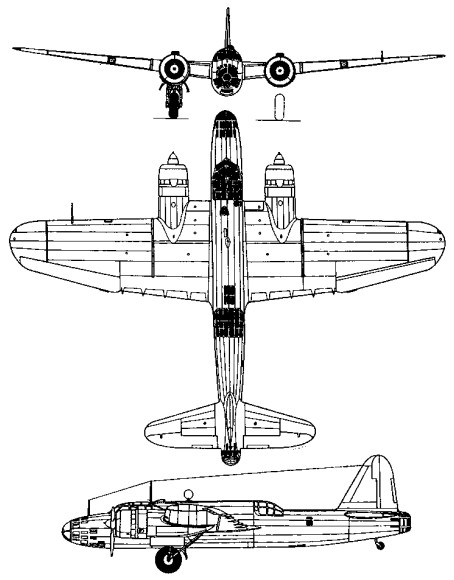
Nakajima Ki-49 Donryu / Helen

Nakajima AT2 / Ki-34 / L1N1

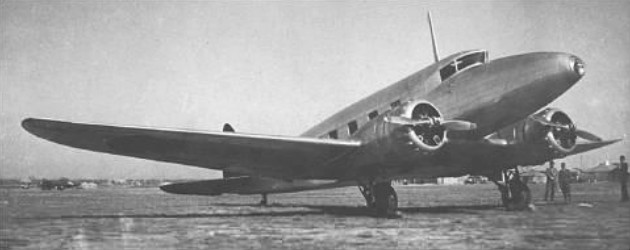
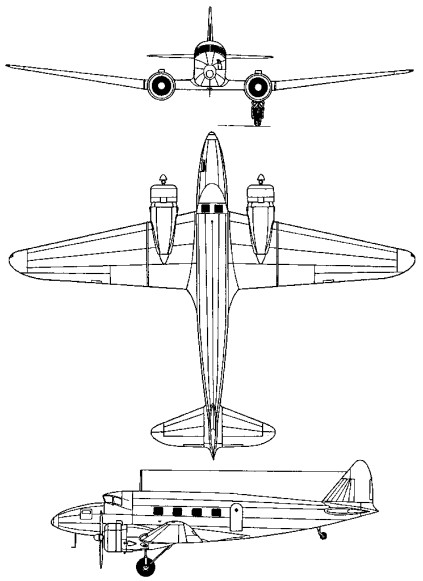
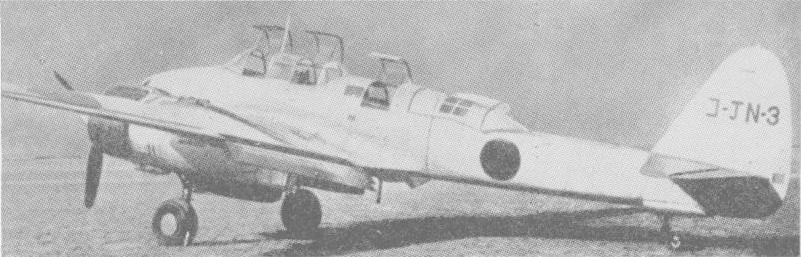
Nakajima acquired from Douglas Aircraft in the USA licence-construction rights for the DC-2 civil transport. In 1935 a smaller, twin-engine light transport based on the configuration of the DC-2 was designed by Nakajima under the designation AT-1. This was not built, but redesign resulted in an improved AT-2 with two 580 hp / 433kW Nakajima Kotobuki 2-1 radial engines, and this was flown in prototype form on 12 September 1936.

It was an all metal low wing cantilever monoplane with slim tapered wings and tailplane and retractable undercarriage. Power was provided by two Nakajima Kotobuki 2 1 radials. Test flights began on September 12, 1936, from Ojima airfield and proved successful, only minor adjustments and modifications being neces¬sary.

The AT 2 was placed in production for civil use, fitted with later Kotobuki 41 radial engines each of 780 hp. Accommodation was provided for a crew of three and eight passengers in an enclosed cabin. A total of 32 AT 2s were delivered to Dai Nippon Koku K K (Greater Japan Airlines Company) and Manchurian Airlines for use on internal and external routes up to 1940.

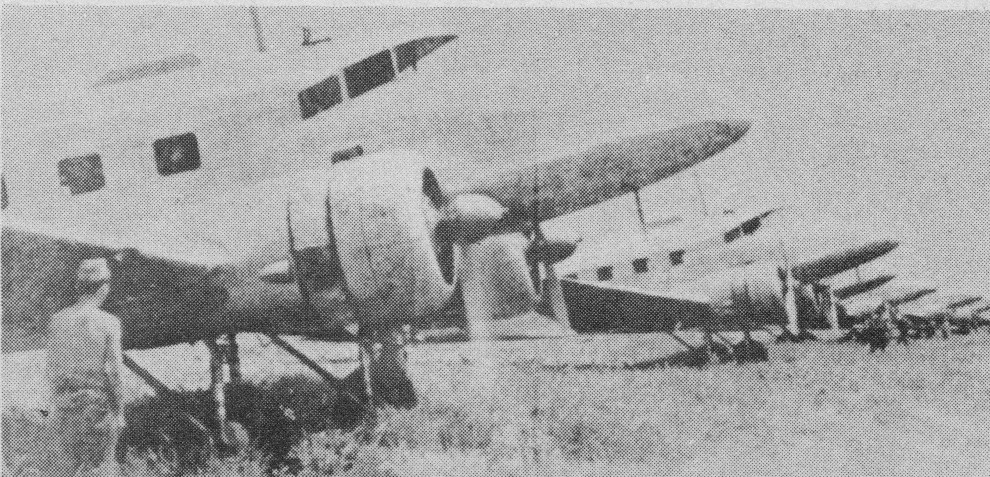
In 1937 the Koku Hombu (Japanese army air headquarters) was anxious to introduce a modern transport aircraft into the air force inventory and turned to the AT 2, already established as an efficient aircraft. Designated Ki 34, deliveries began the same year and it immediately went into service as the Army Type 97 Transport.

After producing 19 of the aircraft, Nakajima turned over produc¬tion to the Tachikawa company who built a further 299 up to 1942.

Some of this total were transferred by the army for navy use, and were redesignated Navy Type AT-2 Transport (Nakajima L1N1). Both civil and military versions were allocated the Allied codename ‘Thora’, and were in use throughout the Pacific war.

Ki-34 / L1N1
Engines: 2 x Nakajima “Kotobuki-41”, 529kW
Max take-off weight: 5250 kg / 11574 lb
Empty weight: 3500 kg / 7716 lb
Wingspan: 19.92 m / 65 ft 4 in
Length: 15.3 m / 50 ft 2 in
Height: 4.15 m / 13 ft 7 in
Wing area: 49.2 sq.m / 529.58 sq ft
Max. speed: 360 km/h / 224 mph
Ceiling: 7000 m / 22950 ft
Range w/max.fuel: 1200 km / 746 miles
Crew: 3
Passengers: 8

Nakajima Ki-34 / L1N1 THORA

Nakajima J5N Tenrai

Designed by Katsuji Nakamura and Kazuo Ohno and built to an 18-Shi specification for a high-speed single-seat interceptor fighter, the Nakajima J5N1 Tenrai (Heavenly Thunder) began flight tests in July 1944.

A mid-wing monoplane with a raised canopy over the pilot’s cockpit, it was powered by two 1484kW Nakajima NK9H Homare 21 radials and had a maximum speed of 597km/h. Armament comprised two 30mm and two 20mm cannon.

Six aircraft were built, four were lost in crashes or on the ground and none were used operationally. As performance was disappointingly below specification no production resulted.

Nakajima J5N “Tenrai”
Engines: 2 x Nakajima NK9H “Homare-21”, 1484kW
Max. speed: 597 km/h / 371 mph
Armament: 2 x 30mm cannons, 2 x 20mm cannons
Crew: 1

Nakajima J5N Tenrai

Nakajima J1N Gekko

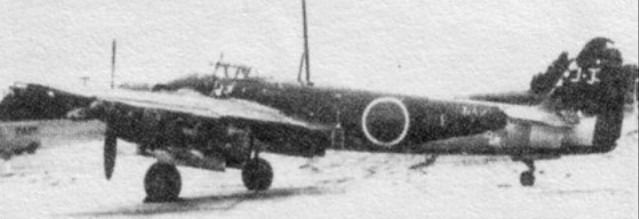
Work on the Nakajima J1N Gekko (Moonlight) design began in 1938 to a Navy specification for a long range escort fighter, and the prototype J1N1 made its maiden flight in May 1941. Flight test revealed several factors against its suitability as a fighting aircraft but in July 1942 it was ordered into production for the reconnaissance role as the J1N1-C.

When first encountered in action during the Solomons campaign the aircraft was mistakenly thought to be a Naval ‘Nick’. Codenamed ‘Irving’ by the Allies covering many different model, it soon narrowed down to the reccon and night fighter versions, J1NC-1 Type 2 and J1N1-S Gekko respectively.

As night air attacks were stepped up by the Americans it was the commanding officer of the 251st Kokutai, Commander Yasuna Kozono, then based at Rabaul, New Guinea, who first suggested adaptation of the J1N as a night-fighter by installing two 20mm cannon in the observer’s cockpit, fixed to fire obliquely forward and upward at an angle of 30 degrees, and another pair firing forward and downward. When two Consolidated B-24s were quickly destroyed, the modifications came to the attention of the Japanese naval staff and an order was placed with Nakajima to go ahead with a dedicated night-fighter version, designed and built as such from scratch.

These were followed by a few turret-mounting J1N1-F and later by the J1N1-S Gekko, built from the onset for night-fighting, some later bearing primitive centimetric AI radar in the closing stages of the war, and some aircraft also carried a small nose searchlight.

This version, the J1N1-S, entered production in August 1943 and continued until December 1944, during which period a total of 420 J1Ns were produced, the great majority of them J1N1-S night-fighters. These differed from the earlier reconnaissance version in having the crew reduced from three to two, the observer’s cockpit being eliminated and faired over. All aircraft retained the upward-firing cannon, but the downward firing guns (found difficult to aim and seldom used) were omitted from later aircraft, while a third upper gun and a forward-firing 20mm cannon was fitted in the J1N1-Sa.

Total production of the J1N, including prototypes, amounted to 479. Some of these were employed on bombing duties with an offensive load of up to 2432 lb.

In service with the 251st, 302nd and 322nd Kokutais, the J1N1-S night-fighters proved fairly effective against the B-24, which was not in any case well-suited to night operations, but with the appearance of the Boeing B-29 the Japanese night-fighters proved too slow and were seldom able to make more than a single firing attack. Most of them were expended during the final months of the war when, equipped to carry two 250kg bombs, they were employed in kamikaze attacks against ground targets.

J1N1-S
Engines: 2 x Nakajima “Sakae-21”, 843kW / 1130 hp
Wingspan: 16.98 m / 55 ft 9 in
Length: 12.77 m / 41 ft 11 in
Height: 3.99 m / 13 ft 1 in
Wing area: 40 sq.m / 430.56 sq ft
Max take-off weight: 8185 kg / 18045 lb
Empty weight: 4850 kg / 10692 lb
Max. speed: 507 km/h / 315 mph at 19,030 ft
Service ceiling: 9320 m / 30600 ft
Normal range: 1584 mi
Range w/max.fuel: 3780 km / 2349 miles
Armament: 4 x Type 99 20mm cannons
Crew: 2

Nakajima J1N Gekko / IRVING

Nagler-Rolz NR 54

Nagler-Rolz NR 54

Development of the NR 55 concept continued in 1941 with the generally similar NR 54 V1, in which reductions were made in size and weight. The engine power was reduced to 24hp and the rotor diameter to 7.8m with the engines mounted 1.2m from the centerline driving the propellers, which were 1.8m further out along rotor blade. The carburetor was never perfected to work satisfactorily and due to this no test flights were ever made. Performance with empty and loaded weights of 80 and 175kg respectively, was estimated to have a 55 mph cruising speed.

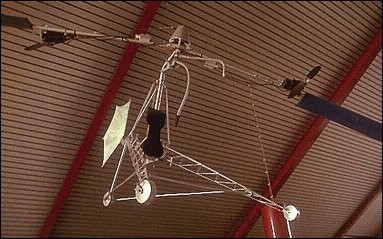
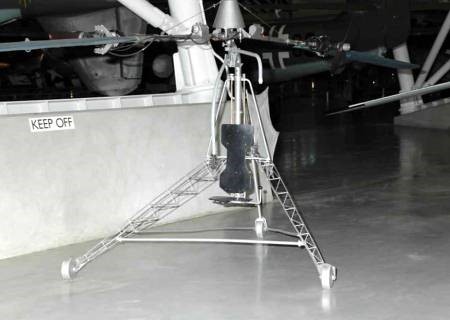
The NR 54 V2 was produced in 1941. The single-seat helicopter flew on remarkably little power. The 6.9m rotor consisted of two single blades, each of which had an 8hp motor driving a small airscrew at 6000rpm to give a torqueless drive, and the pilot’s controls consisted of two levers, one to alter rotor blade pitch and the other to control the engines. The entire airframe broke down for transporting and could carried by a single man. The little ship was said to cruise at 80km/h and climb at 140m/min.

Four of the NR 54V2 machines were built before the war ended, but it is not known how close the NR 54 was to being ready for production at that point. At least one of them was brought to the USA for evaluation and is now in the collection of the National Air and Space Museum.

NR 54 V2
Engine: 2 x 8hp
Main rotor diameter: 7.92m
Max take-off weight: 140kg
Empty weight: 36.5kg
Cruising speed: 80km/h
Ceiling: 457m
Range: 48kg
Crew: 1

Nagler VG-1 Vertigyro

The 1963 VG-1 Vertigyro (N5395Z) comprised a Piper Colt aircraft fuselage, complete with engine and prop. Its Sud Djinn rotor system was driven by a turbine engine, enabling the craft to be flown as a gyroplane, a helicopter, or a combination of both. Only the one was built.

The vehicle could take off and fly as a helicopter at 75mph, powered by a Garret-AiResearch GTC-85-90 gas turbine to feed compressed air to nozzles in the two-blade rotor, then convert into an autogyro to do 85mph powered by the one 108hp Lycoming O-235.

Engines: 1 x Garret-AiResearch GTC-85-90 gas turbine / 1 x Lycoming O-235, 108hp
Rotor diameter: 36 ft 0 in
Minimum gyro speed: 45 mph
Seats: 2

Myasishchev M-17 Stratosfera / M-55 Geophysics

M-55 Mystic-B

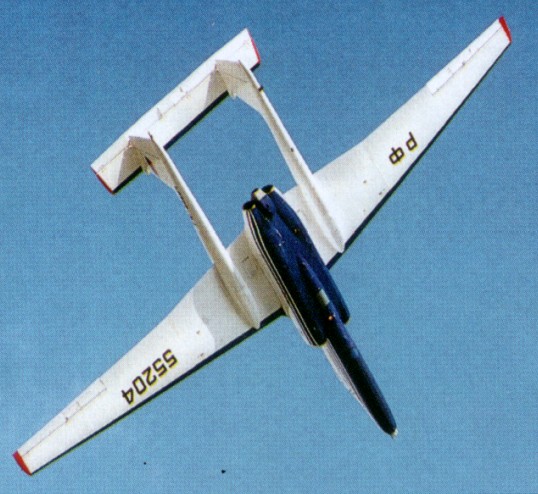
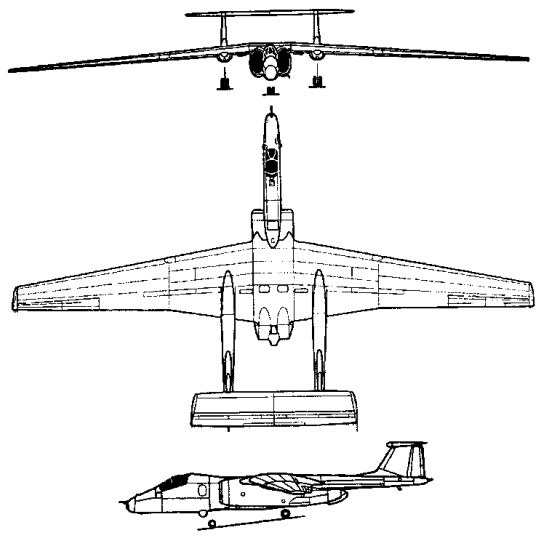
Originally identified in 1982 by US reconnaissance satellites as the ‘Ram-M’ single-seat high-altitude reconnaissance aircraft, and later codenamed ‘Mystic’ by NATO, the twin-boom straight-wing jet, was publicised as a high-altitude research aircraft able to carry around 1500kg of sensors, existing in two versions.

The first of two prototype aircraft, designated M-17 Stratosfera (‘Mystic-A’), first flew in 1988 and are powered by a single 68.6kN thrust Rybinsk RD-36-51V turbojet developed from the Tu-144 SST powerplant.

The M-55 Geofizika (‘Mystic-B’), has two 49kN thrust Perm/Soloviev PS-30-V12 turbojets mounted side-by-side behind a raised cockpit installed in a longer nose, together with a reduced span wing.
The M-55 ‘Mystic-B’ differs from the first M-17 Stratosfera in having a longer jetpipe, shorter engine intakes, a reprofiled nose and an undernose FLIR turret.

The role of the ‘Mystic-B’ is described as environmental sampling missions or high-altitude research and endurance in this role is claimed as over 4 hours loiter capability at 20000m. A further variant of the M-55 is reported to be under development with wingroot mounted engines in stalled in a conventional fuselage carrying a sweptback tail unit.

Two ‘Mystic-A’ prototypes were followed by two ‘Mystic-B’ and two pre-production ‘Mystic-Bs’ were flying by 1992.

M-55 Mystic-B

Gallery

Engines: 2 x Soloviev PS-30-V12, 49kN
Wingspan: 37.47 m / 122 ft 11 in
Length: 22.87 m / 75 ft 0 in
Height: 4.83 m / 15 ft 10 in
Cruise speed: 750 km/h / 466 mph
Ceiling: 21000 m / 68900 ft
Crew: 1

Myasishchev M-17 / M-55 Geophysics