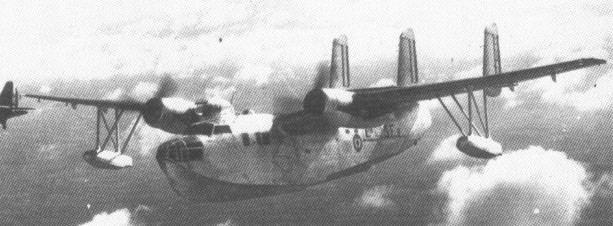
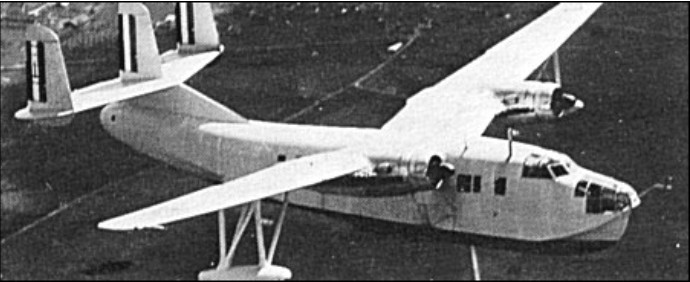
Despite the decline of the seaplane’s importance after the Second World War, France still saw a limited future for the type and commissioned from the Societe Nationale de Constructions Aéronautiques du Nord (generally known as SNCAN or Nord) a flying boat for the reconnais¬sance and air/sea rescue roles.
This was an all-metal monoplane with a gulled wing and a two ¬step hull, and had accommodation for a crew of seven, plus a roomy rear cabin with a large sliding door on the port side for rescue operations. It first flew on 6 January 1949 as the N.1400.01 Noroit prototype (F-WFDL) with 1,600-hp (1,193-kW) Gnome-Rhone 14R radials. The N.1400.02 second prototype introduced retractable tailwheel landing gear to provide an amphibious capability. Retractable tailwheel landing gear was installed on the N 1400-01 at a later date. There followed a pair of N.1401 pre-production machines with two 1,800-hp (1,342-kW) SNECMA-built Junkers Jumo inlines and annular radiators. The N 1401 Noroit (F-WFKU) was flown on 6 August 1949, the second example (F-SFKN) being flown later, and both were tested in 1950 with two Bristol Hercules radial engines. Finally there came 21 N.1402 Noroit (North-West Wind) production aircraft, the last of them delivered in 1956. Together with the two N.1401s modified to the same standard, these served with Flottille 5F.
Nord N. 1402 Noroit Engines: two 2,100-hp (1,566-kW) SNECMA 12H.00 (Junkers Jumo 213A) inline piston Maximum speed 230 mph (370 km/h) at 8,695 ft (2,650 m) Initial climb rate 984 ft (300 m) per minute Range 2,610 miles (4,200 km) Empty weight 28,660 lb (13,000 kg) Maximum take-off weight 45,040 lb (20,430 kg) Wingspan 103 ft 8 in (31.60 m) Length 72 ft 4 in (22.05 m) Height 22 ft 5.5 in (6.85 m) Wing area 1,076.43 sq ft (100.00 sq.m) Armament: six 20-mm cannon in two-gun nose, dorsal, and tail positions, and bombs carried in nacelle bays plus provision for eight rockets on the hull sides. Crew: 7
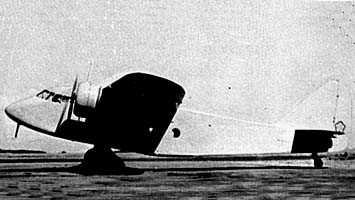
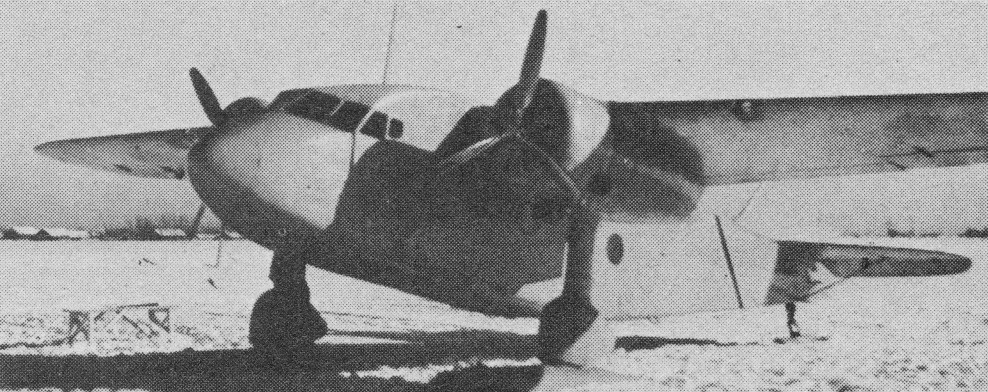
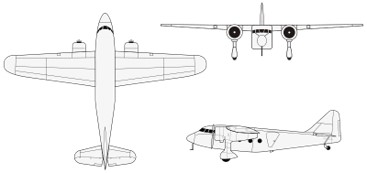
The Teradako-ken TK-3 was a prototype eight-to-ten passenger light transport monoplane built by Nippon Koku Kogyo Kabushiki Kaisha as a short-range transport for civil use at the request of Imperial Japanese Airways to replace its aging fleet of Airspeed Envoys and Fokker Super Universals. The first of two prototypes flew in June 1938, but was unable to meet the required performance requirements and the project was cancelled. In 1939, the Imperial Japanese Army revived the project to meet its urgent requirement for a light transport and liaison aircraft and instructed Nippon to develop the design as the Kokusai Ki-59 (一式輸送機, Isshiki-yusōki).
The Ki-59 was a high-wing cantilever monoplane with a fixed tailwheel landing gear and conventional single vertical tail surfaces. It was powered by two 450 hp (336 kW) Hitachi Ha-13a radial engines and other modifications to the design were made to meet Army requirements. The Ki-59 was ordered into production in 1941 with the designation Army Type 1 Transport, and an additional 59 units were produced. After the start of World War II, the aircraft was given the Allied reporting name Theresa. Despite the more powerful engines and modifications sponsored by the Japanese Army, the Ki-59 remained a poor performer and saw little service before being replaced by the more capable Tachikawa Ki-54. A small number were transferred to Manchukuo National Airways.
Near the end of 1941 one Ki-59 was modified into a glider with the removal of the engines and the landing gear replaced by underfuselage skids. It was designated the Ku-8-I or Army Experimental Glider.
Variant: Nippon Kokusai Ku-8
TK-3 Engines: 2 x 640 hp (477 kW) Nakajima Kotobuki 3 two built.
Ki-59 (Army Type 1 Transport) / Theresa Engines: 2 x 450 hp (336 kW) Hitachi Ha-13a Wingspan: 17 m (55 ft 9¼ in) Wing area: 38.4 m2 (413 ft2) Length: 12.5 m (41 ft 0⅛ in) Height: 3.05 m (10 ft 0 in) Empty weight: 2,880 kg (6,349 lb) Gross weight: 4,120 kg (9,083 lb) Cruising speed: 300 km/h (186 mph) Range: 800 km (497 miles) Crew: 3 Capacity: Eight passengers 59 built.
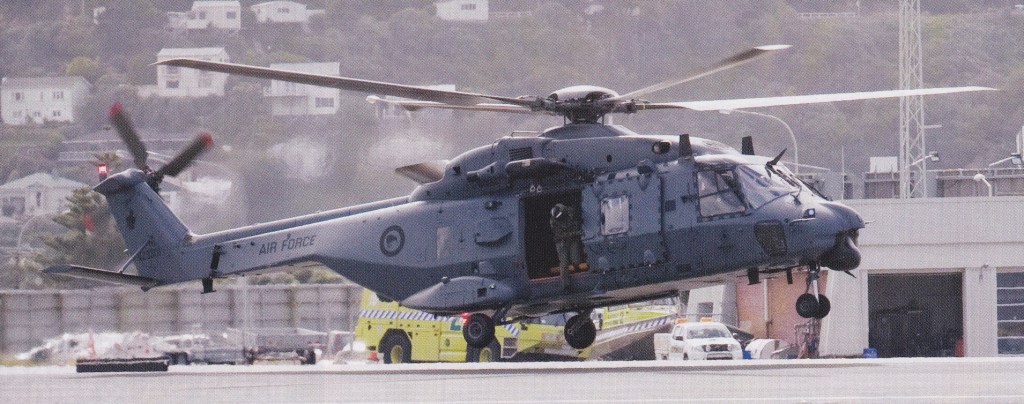
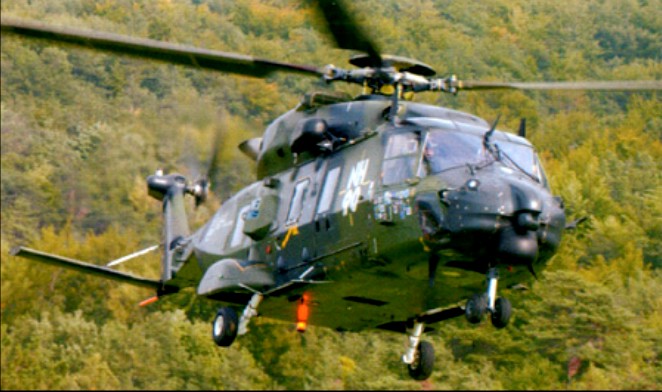
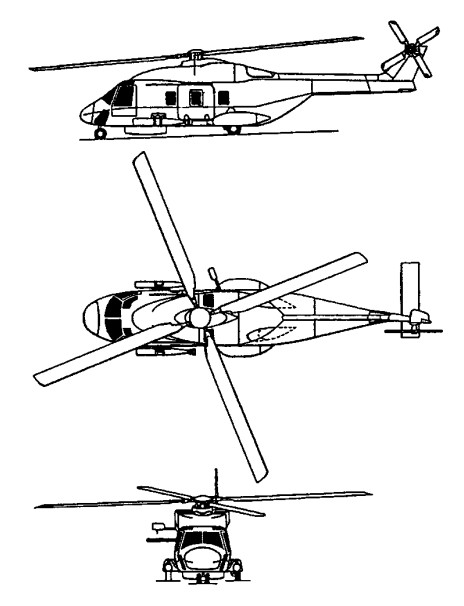
In the 8000/9000kg class, the NH90 was developed and qualified in both a Naval and Army variant and powered by RTM322 engines. A rear ramp option is available for the Army variant. Designated as the TTH (Tactical Transport Helicopter) and NHF for the NATO Frigate Helicopter, the NH90 has fly-by-wire controls and is capable of all-weather operations either on land or at sea. In the tactical version it carries 20 fully-equipped troops or 2500kg of cargo. In the NHF version can undertake multimaritime roles including the ASW or anti-surface vessel role and can carry up to 700kg of missiles.
Five European nations signed the memorandum in 1985 allowing the development of the NH 90. The work is being shared by Eurocopter France (43%), Agusta (26%), Eurocopter Germany (24%) and Fokker (7%).
Largely built of composite materials, the NH90 was in service with France, Italy, Germany, the Netherlands, and New Zealand.
NH-90 Engine: 2 x RTM 322-01/9 turboshaft, 1484kW at take-off Main rotor diameter: 16.3m Length with rotors turning: 16.3m Height with tail rotor turning: 5.44m Max take-off weight: 10000kg Empty weight: 5400kg Max speed: 290km/h Cruising speed: 259km/h Service ceiling: 4250m Range: 1204km Payload: 2000kg
NH90 TTH Engine: 2 x R-RTM 332 or 2 x GE CT7-6E Instant pwr: 1367 or 1360 kW MTOW: 10,000 kg Payload: 4460 kg Max speed: 155 kts Max range: 930 km HIGE: 9,600 ft HOGE: 7878 ft Crew: 2 Pax: 20
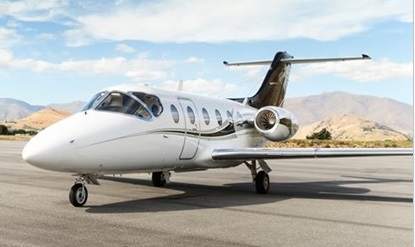
Nextant Aerospace selected the Beechjet 400/Hawker 400XP for remanufacturing as the Nextant 400XTi. The hundreds of millions of dollars needed to develop a new jet was a huge barrier, yet a well designed and -built jet has a long service life and could be an ideal platform on which to add new avionics and engine technology as well as aerodynamic tweaking using modern tools such as computational fluid dynamics.
The 400XTi is essentially a Beechjet 400/Hawker 400A/XP with new Fadec-controlled 3,050-pound-thrust Williams International FJ44-3AP engines replacing the original 2,965-pound Pratt & Whitney Canada JT15D-5Rs, aerodynamic improvements to the nacelles and pylons, a new Rockwell Collins Pro Line 21 flight deck, fresh interior and other enhancements. The jets undergo 60 engineering changes, replacement of more than 40 time-controlled components, compliance with A-, B-, C- and D-check inspections as well as compliance with all FAA airworthiness directives and applicable manufacturer service bulletins during a 6,000-man-hour renewal/overhaul process. The resulting remanufactured 400XTi carries a two-year tip-to-tail warranty (three for the engines), which can be extended to five years as an option.
The first remanufactured version was the 400XT, but in 2014 Nextant introduced the 400XTi, with an improved and more spacious composite cabin shell that takes full advantage of unused space in the fuselage, a new noise insulation package, Nextant-designed winglets, Luma Technologies LED warning panels and a Mid-Continent Instruments LCD standby attitude module and True Blue Power MD835 lithium-ion backup battery units. The MD835s eliminate a 90-day inspection interval for the jet’s original lead-acid backup batteries.
By 2015, Nextant had converted more than 40 Beechjet/Hawker 400s and delivered them to owners in eight countries since certification of the upgrades in 2011. Flight Options has ordered forty 400XTi conversions, and charter provider Travel Management Company was upgrading its entire fleet of 50 Beechjet/Hawker 400s. Nextant’s backlog represents a quarter of the available fleet of about 600 jets. There were also another 180 Air Force T-1A Jayhawks (Beechjet 400s) that could be converted, if the Air Force were to select the 400XTi upgrade instead of buying a new jet for its Air Education and Training Command bases.
The Nextant 400XTi sold for $5.15 million (2015). The airframe was valued at $995,000, so that would be deducted from the price if an owner brought a Beechjet/Hawker 400 for conversion. The performance improvements include a 50-percent range extension, 30 percent lower operating costs and 20 to 25 percent less fuel burn.
The Nextant 400XTi has the 3,502-pound Williams International FJ44-3APs (flat-rated to 3,050 pounds at ISA +7 deg C) engines. The jet itself can’t fly faster than its limiting Mach .785 Mmo. The new nacelles housing the Williams engines and the larger pylons are the fruit of computational fluid dynamics analysis that showed excessive drag due to a supersonic shockwave in the area between the nacelles and the fuselage. The pylons now have twice the surface area, and the redesign eliminated the drag problem. Noise compliance exceeds Stage IV requirements.
To help improve maintenance access to the nose gear and other areas, Nextant added access panels so mechanics don’t need to remove dozens of fasteners for routine maintenance tasks. Further adding to future reliability is a completely new primary wiring harness, built by Nextant technicians on the company’s own looms. The new wiring meets the latest FAA electrical wiring interconnection system regulations.
The new composite cabin shell by Jeff Bonner R&D takes advantage of space within the fuselage structure that the existing interior didn’t use, and it adds three inches of width and 2.5 inches of height. N2Aero insulation reduces cabin noise by nine decibels, to 66 dB.
Three interior layouts were available, and a typical choice is the forward divan opposite the galley, then a four-club configuration, with seats for up to eight passengers (including the belted lavatory). Also offering eight seats is the four-club layout with two forward-facing seats aft and one seat up forward opposite the galley. This layout provides less legroom in the club seating area, however. A six-seat interior puts the galley on the right side of the cabin and includes the spacious four-club seating area, one seat opposite the galley and forward of the cabin door, plus the lavatory seat. Passenger seats were redesigned by Nextant engineers and are mechanically rebuilt and recovered. The two aft-facing seats in the club-seating area fold flat, and the divan can be extended outward to provide a larger sleeping surface.
The updated interior is fitted with a Rockwell Collins Venue cabin management system (CMS) with Airshow moving map, Apple iOS device control of the CMS, LED lighting and a new galley with a Nespresso machine and a new work surface. Optional features include Aircell Gogo Business Aviation Axxess (air-to-ground telecom and SwiftBroadband satcom) and 110-/220-volt power outlets. The lavatory bulkhead is moved six inches forward, and this helps provide more interior space for luggage (an additional 20 cu ft), as one of the Beechjet’s Achilles heels is the small 26-cu-ft external baggage capacity.
On the outside, the most prominent change is the new winglets with embedded LED lights. Most of the upgraded jets were equipped with aluminum winglets, but soon, if not already, the 400XTi will have new carbon-fiber winglets that are raked back farther and shave 24 pounds off the empty weight. The new winglets bolt onto the existing structure and will be provided as a kit to owners with the old winglets.
The heavy remanufacturing and maintenance tasks take about eight to 10 weeks, during which the Beechjet/Hawker 400 is completely stripped down. All life-limited components are replaced, landing gear is overhauled, the entire structure is inspected and any repairs are completed. Typically, the horizontal stabilizer has cracked ribs, induced by an oscillation caused by the thrust reversers. Nextant technicians install thicker ribs in a special jig built in-house. The engine mount beam that runs across the aft fuselage is another weak area, and Nextant engineers redesigned the beam with added doublers to make it stronger but maintain the same geometry so that it would meet the latest regulatory stress load requirements without requiring modification of the adjacent structure. Nextant also replaces the engine mount with a much stronger one-piece milled unit made of stainless steel alloy.
For pilots, the biggest visible change is the flight deck, where the old CRT-based Rockwell Collins Pro Line 4 avionics are replaced with a Pro Line 21 suite. The base system in the 400XTi includes two PFDs and two MFDs in portrait orientation, which provides one PFD and one MFD for each pilot to control. Dual Collins FMS 6100s are mounted on the angled portion of the console between the seats. All other avionics are new, including dual solid-state AHRS, autopilot, Waas LPV GPS 4000S, com and nav, ADF, DME, transponders, radar altimeter, weather radar, Taws, Tcas II, DBU 5010E database loader, 406-MHz ELT and the Mid-Continent standby attitude module. The eyebrow warning lights now use LEDs instead of incandescent bulbs. Engine instruments are all hosted on the Rockwell Collins MFDs, and if an MFD fails the engine indications migrate to the respective PFD.
After the major maintenance and modification phase, including avionics upgrades, the jet is moved outside for engine runs and flight-testing, then the exterior is painted and the interior installed. The final flight-test takes place about 16 to 17 weeks after the jet rolls into the Nextant facility. One way to spot a Nextant modified Beechjet/Hawker 400 is the new supplemental data plate mounted next to the old one on the aft fuselage.
Nextant 400XT
The 400XT made its first test flight in March 2010. Receipt of final certification from the Federal Aviation Administration (FAA) was announced in October 2011. Deliveries of the Nextant 400XT began that same month, with initial deliveries of a 40-aircraft, $150 million order to private aviation company Flight Options LLC.
The 400XTi, at a takeoff weight of 13,800 pounds, 2,500 below the 16,300-pound mtow, will climb to 40,000 feet in 15 minutes. Climbing at more than 2,000 fpm at 30,000 feet. Takeoff field length, about ISA+15 on the ground, is about 3,100 feet.
At FL410 power for long-range cruise, Mach .70 and 392 ktas, burns 730 pph total. Pushing up the power to maximum continuous thrust raised the fuel flow to 1,040 pph, but in those conditions the airspeed would exceed the Mmo, so normal cruise is Mach .73 and 447 ktas, which brings the fuel flow down to about 1,000 pph.
The 400XTi can fly about five hours after reaching FL400 to FL410 at long-range cruise speed. The performance numbers in the flight manual supplement show that at a weight of 14,000 pounds, a climb to FL410 on an ISA day would consume 458 pounds of fuel. Climbing to FL450 in the same conditions should take 23 minutes and 578 pounds of fuel.
The stock Hawker 400XP can fly 1,464 nm with two pilots and four passengers (NBAA IFR reserves, 100-nm alternate). Under the same conditions, the 400XTi can fly more than 2,000 nm. Fuel capacity is 4,912 pounds. Typical BOW for a 400XTi is between 10,750 and 10,850 pounds, Marker said, depending on the options and interior configuration. These numbers are lower than the typical 10,985-pound BOW of a Hawker 400XP.
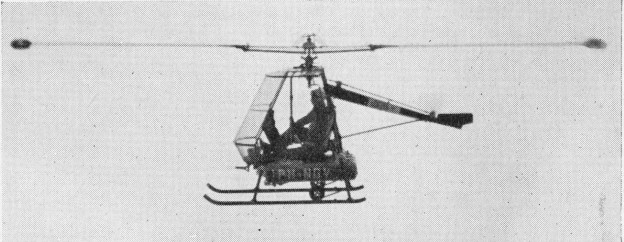
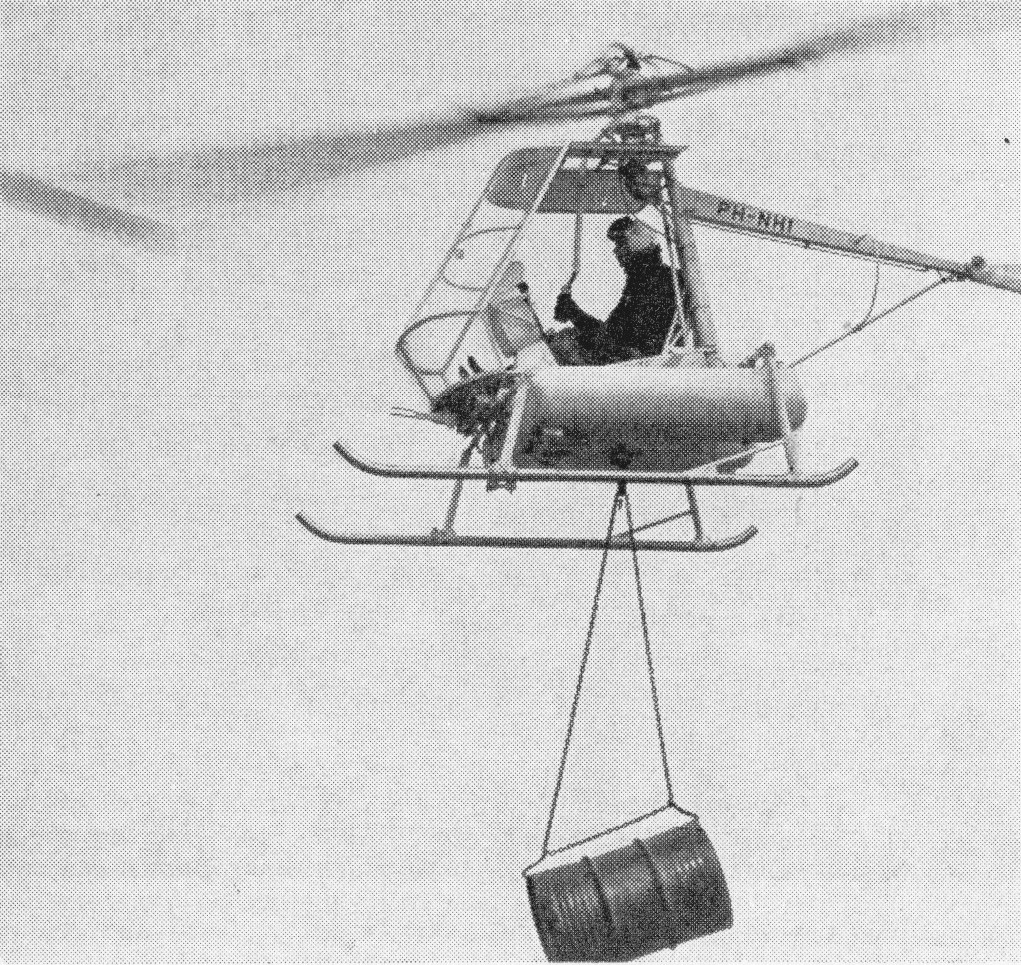
A light helicopter which first flew in May 1956. For propulsion the Kolibrie employed ramjets mounted at the tips of its rotor blades. Ten helicopters were built before production rights were handed over to Aviolanda Maatschappij voor Vliegtuigbouw, which subsequently abandoned it.
The Kolibrie could lift more than is own empty weight.
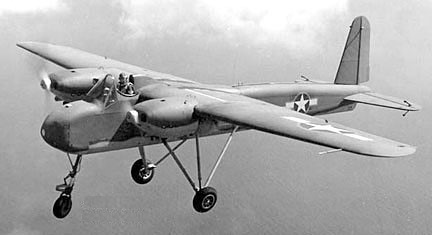
The 1943 NAF TDN was a maned or unmanned, radio-controlled, tv-directed torpedo drone. They carried ordnance loads up to a ton of bombs or torpedoes and was controlled from a “mother” aircraft in its vicinity or from ships at sea. It was able to release its weapons or be flown directly into the target.
In 1936, Lieutenant Commander Delmar S. Fahrney proposed that unpiloted, remotely controlled aircraft had potential for use by the United States Navy in combat operations. Due to the limitations of the technology of the time, development of the “assault drone” project was given a low priority, but by the early 1940s the development of the radar altimeter and television made the project more feasible, and following trials using converted manned aircraft, the first operational test of a drone against a naval target was conducted in April 1942. That same month, following trials of the Naval Aircraft Factory TDN assault drone, Interstate Aircraft received a contract from the Navy for two prototype and 100 production aircraft to a simplified and improved design, to be designated TDR-1.
Control of the TDR-1 would be conducted from either a control aircraft, usually a Grumman TBF Avenger, with the operator viewing a tv screen showing the view from a camera mounted aboard the drone along with the radar altimeter’s readout, or via a pilot on board the TDR-1 for test flights. Powered by two Lycoming O-435 engines of 220 horsepower (160 kW) each, the TDR-1 used a remarkably simple design, with a steel-tube frame constructed by the Schwinn bicycle company covered with a molded wood skin, thus making little use of strategic materials so as not to impede production of higher priority aircraft. Capable of being optionally piloted for test flights, an aerodynamic fairing was used to cover the cockpit area during operational missions. The TDR-1 was equipped with a fixed tricycle landing gear that would be jettisoned in operation after takeoff for improved performance.
In September 1942, the U.S. Navy chose DeKalb, Illinois to be the site for the manufacture of the drone TDR-1 aircraft, and built an airport on the city’s east side. This early airport consisted of an airfield and a large hangar that were fenced and guarded around the clock. DeKalb was chosen because Wurlizter, manufacturer of pianos, and known for its expertise in the production of wood products, was located there. Interstate Aircraft and Engineering Corporation (based in El Segundo, CA) assembled the planes at the new airport in DeKalb. About two hundred drones were built, tested, and boxed at the DeKalb Airport and were shipped to the South Pacific, where they were used against the enemy during World War II.
Under the code-named Operation Option, the U.S. Navy projected that up to 18 squadrons of assault drones would be formed, with 162 Grumman TBF Avenger control aircraft and 1000 assault drones being ordered. However technical difficulties in the development of the TDR-1, combined with a continued low priority given to the project, saw the contract modified with the order reduced to only around 300 aircraft. A single TDR-1 was tested by the U.S. Army Air Forces as the XBQ-4, however no production contract resulted from this testing. In 1944, under the control of the Special Air Task Force (SATFOR), the TDR-1 was deployed operationally to the South Pacific for operations against the Japanese. Additional testing was conducted by SATFOR in July, complete with a strike against a previously beached Japanese freighter, Yumasuki Maru, including management of the flight from a 7 miles (11 km) distant TBM Avenger control aircraft, which could monitor the view from the TDRs via early television technology.
SATFOR equipped a single mixed squadron, Special Task Air Group 1 (STAG-1), with TDR-1 aircraft and TBM Avenger control aircraft; the first operational mission took place on September 27, conducting bombing operations against Japanese ships. Despite this success, the assault drone program had already been canceled after the production of 189 TDR-1 aircraft, due to a combination of continued technical problems, the aircraft failing to live up to expectations, and the fact that more conventional weaponry was proving adequate for the defeat of Japan. The final mission was flown on October 27, with 50 drones having been expended on operations, 31 aircraft successfully striking their targets, without loss to the pilots of STAG-1.
Following the war, some TDR-1s were converted for operation as private sportsplanes.
Engines: two Lycoming XA-435-4 Wingspan: approx. 50’0″ Length: approx. 36’0″
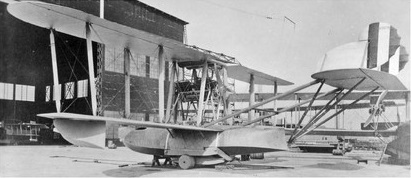
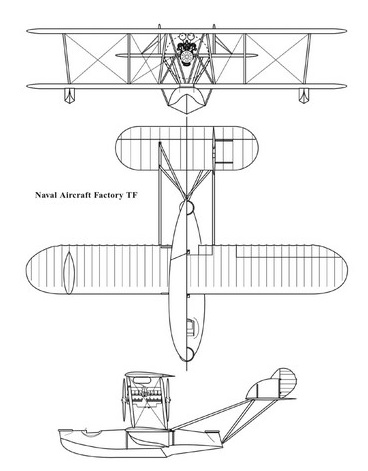
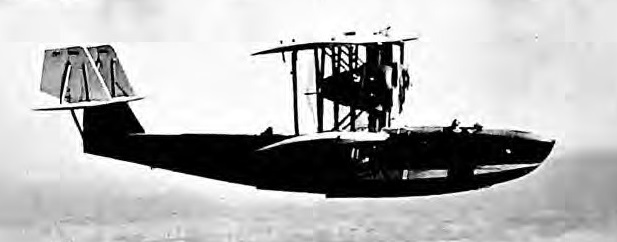
The origins of the TF (Tandem Fighter) can be traced to a 1918 requirement issued by the British Technical Committee for a long-range sea-borne fighter to escort patrol aircraft (H-16s, F-5s, etc) on maritime sorties. After the armistice, Navy officials retained sufficient interest in the idea to authorise NAF to proceed with design proposals. After reviewing various options, the Navy approved a twin-tandem engine design that incorporated a hull and tailplane arrangement nearly identical to the larger NC series and authorised construction of four prototypes. Originally, the TF was to have been powered by Curtiss-built 400 hp Kirkham engines, however mechanical problems with the Kirkham engines led to the decision to substitute the less powerful Wright-Hispanos.
Construction of the first prototype commenced in August 1919 and the first flight took place on 1 October 1920. Testing revealed poor handling characteristics plus a marked tendency of the engines to overheat at high RPM settings.
Although three more prototypes were completed and tested during 1921 and 1922, results were still rated as unsatisfactory, and the program was formally cancelled in January 1923.
The fourth prototype was reportedly completed with 400 hp Packhard I-A V-12 engines.
3 place Navy escort fighter Engine: 2 x Wright-Hispano H-3, 300 hp Prop: 4 blade wood fixed pitch Wing span upper: 60 ft 0 in Length: 44 ft 0 in Wing area: 930 sq.ft Empty weight: 5575 lb Loaded weight: 8846 lb Max speed: 95 mph Cruise: 72 mph Ceiling: 13,000 ft Range: 650 mi Armament: 2 x flexible Lewis .50in mg in bow, 1 x flexible Lewis .30in mg in rear cockpit Number built: 4
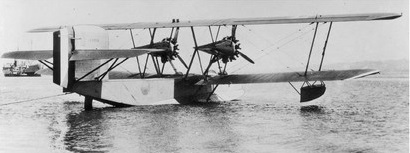
The two PN-12s represented the definitive design. Like its predecessors in the PN-series, the PN-12 was a biplane designed specifically for the patrol/antisubmarine role. Single .30-caliber machine guns were fitted in the bow and amidships, and four 230-pound bombs could be carried under the lower wing. Equally powered by twin 525-hp engines, one PN-12 had twin Pratt and Whitney Hornet R-1850s, and the other Wright Cyclone R-1750s. They gave the aircraft a top speed of 114 mph and a range at cruising speed of just over 1,300 miles. It was flown by a crew of five (in open cockpits), and a relief crew could be carried for long patrols. On 3-5 May 1928, the Cyclone-powered PN-12 set another world seaplane record, covering a distance of 1,243 statue miles in 17 hours, 55 minutes.
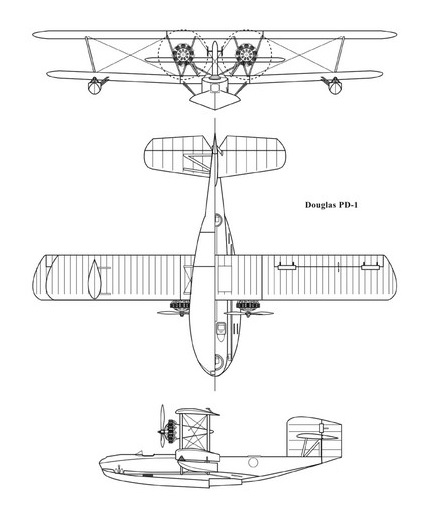
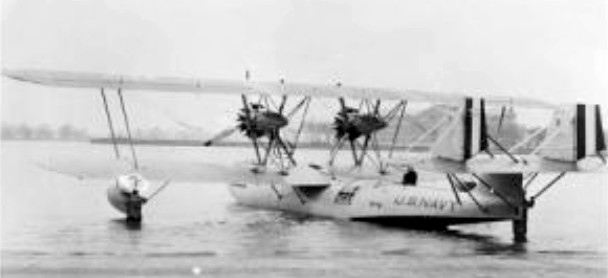
The Naval Aircraft Factory was not capable of large-scale production, and the Navy decided to have the PN-12 manufactured by private aircraft companies. Douglas received a contract from BuAer on 27 December 1927 to build twenty-five Naval Aircraft Factory-designed PN-12, under the designation PD-1. Other than the engine nacelles with flat top and bottom profiles, PD-1s were constructed according to the PN-12 specification without variation. The Douglas Aircraft Company produced 25 PD-1 aircraft and the Martin Company built 30 PM-1 variants based on the NAF design.
The first production PD-1s were accepted and placed into service with San Diego-based VP-7 in June 1929. As deliveries proceeded, the type also equipped both VP-4 and VP-6 at Pearl Harbor, Hawaii.
Subsequently, Martin built 25 PM-2 variants and the Keystone Aircraft Corporation built 18 similar PK-1 aircraft, the latter being twin-rudder versions. Thus, the PN-12 gave birth to 98 offspring. These aircraft served in the Fleet until all had ben withdrawn from service by the end of 1936.
In 1927 the Hall Aluminum Aircraft Company developed another PN derivative, the XPH-1. This was the first U.S. Navy flying boat to have all-metal stressed skin construction, which provided a considerable savings in weight. In the event, only ten PH-1s were built as the Navy moved to more advanced flying boat designs. But the Coast Guard procured seven improved Hall PH-2s and seven PH-3s for air-sea rescue missions. Some of these aircraft served into World War II.
Thus, the same basic flying boat design-from the F-5-L to the PH-3-spanned two world wars, a most notable achievement.
PN-12 Engines: 2 x Wright: R-1750D, 525 hp Prop: 3 blade ground adjustable metal Max speed: 114 mph Ceiling: 10,900 ft Range: 1310 mi Empty weight: 7699 lb Loaded weight: 14,122 lb Span – upper: 72 ft 10 in Length: 49 ft 2 in Wing area: 1217 sq.ft Armament: 2 x .30 mg Bombload: 4 x 230 lb
Douglas PD-1 5-place naval patrol boat Engines: 2 x Wright R-1750 Cyclone, 535 hp / later R-1820, 575 hp Props: 3 blade, ground adjustable metal Wingspan: 72 ft 10 in Length: 49 ft 2 in Wing area: 1162 sq.ft Max speed: 114 mph Cruise 94 mph Ceiling: 10,900 ft Range: 1309 mi Empty weight: 8349 lb Gross weight: 14,988 lb Armament: 2 x .30 mg Bombload: 920 lb underwing Total built: 25
The PN-11 and P4N were efforts to achieve better perfomance by combining a more streamlined hull with the biplane wings and engines of the PN-12. The new hull was longer, deeper in profile, and approximately 30% narrower in beam. The new hull also introduced a new empenage arrangement featuring twin fins and rudders on top of a high mounted horizontal staliliser. In 1927 BuAer ordered two aircraft with the new hull as the PN-11, with the same takeoff power as the PN-12, and the first, powered by 525 hp Pratt & Whitney R-1690 Hornet engines, was flown in October 1928, and the second, powered by 525 hp Wright Cyclone, in June 1929. Trials indicated the the PN-11, with the same power as the PN-12, had added a 2500 lb increase in useful load that could mean a 600 mile increase in range. BuAer placed an order in mid-1929 for three similar aircraft as the XP2N, but changed the designation toXP4N-1 before the first were accepted in December 1930. The XP4N-1 was virtually identical to the PN-11, while the other two, both completed in March 1932 as the XP4N-2s, carried an extra 150 USG of fuel that raised the takeoff weight by 1250 lb. Although the PN-11s and P4Ns never served operationally, the new hull became a key element of new monoplane patrol boats like the XPV/P2Y and 2M/P3M.


 All Aero