1910 newpaper reports describe this as an “auto-plane” with folding wings. Two 35hp Adams-Farwell rotary motors geared together so that “if one stops, the other keeps the propeller moving while the first acts as a flywheel.” The two motors also revolved in opposite directions to neutralize the gyroscopic effect. Reports failed to mention if it ever flew.
2 Engines
Palmer Paraplane D-6
In March 1967 Palmer built and flew the first true weight-shift powered ultralight trike aircraft: the Paraplane (FAA Registered N7144) and it was controlled by a single vertical control bar. The Paraplane used two West Bend-Chrysler 820 engines (8 hp at 6000 rpm, reduced to 4700 rpm for about 6.5 hp (4.8 kW) each, for a total of 13 hp). Each engine had a direct drive to a 27in diameter two-blade propeller made of polyester & fiberglass. On March 24, 1967 Palmer registered the trike at the American FAA as the Palmer Parawing D-6, serial 1A, N7144; No restrictions were noted.
Packard-Le Pere LUSAO-11
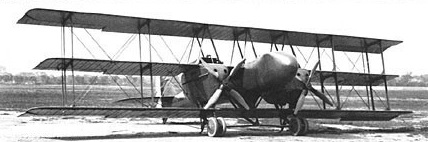
The 1919 LUSAO-11 (LUSAC = LePere US Army Observation) was a high-altitude long-range three seat open cockpit triplane observation aircraft for the Signal Corps.
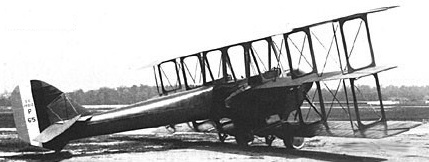
Only one prototype was built, SC40012.
Engines: 2 x Liberty 12, 400hp
Props: four-blade
Wingspan: 54’6″
Length: 38’2
Useful load: 3122 lb
Mas speed: 112 mph
Cruise speed: 106 mph
Stall: 60 mph
Range: 475 m
Ceiling: 17,300′
Pacific Airplane & Supply Hawk
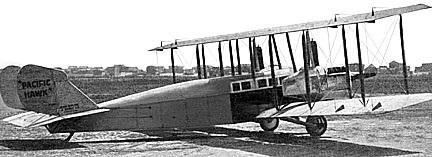
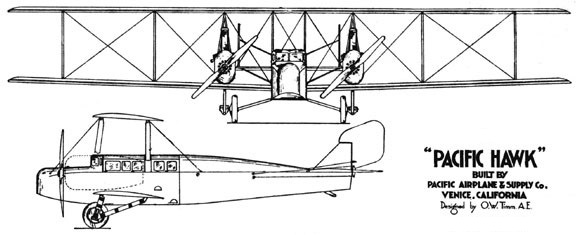
A 1920 six-seat twin-engined commercial biplane. Designed by Otto Timm the Hawk was first flown in September 1920, piloted by Frank Clarke, christened The Skylark. It was repowered with 200hp Hall-Scott L-6 when the OX-5 motors proved insufficient for the task. Last seen at Clover Field, Santa Monica, in 1923.
Engines: two 90hp Curtiss OX-5
Wingspan: 52’0″
Length: 32’0″
Useful load: 1320 lb
Max speed: 82 mph
Stall speed: 45 mph
Range: approx. 440 mi
Seats: 6
Osbourn Twin Cadet
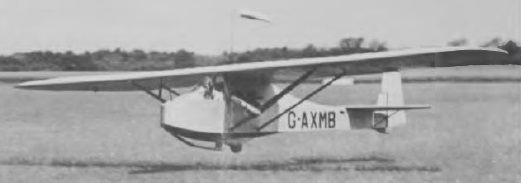
This powered converison of a T8 Tutor was made by E. W. Osbourn at Cranfield, Bedfordshire, in 1969 and was known as the Twin Cadet Mk 1. It was fitted with two 197cc Villiers 9E single-cylinder two-stroke engines mounted on the wing bracing struts and driving two small propellers just behind the pilot’s head. The prototype, G-AXMB (ex-VM590 and BGA 805) first flew with power on 20 September 1969. and received its Authorisation to Fly on 2 July 1970. It was later re-engined with a single 500cc Triumph T100 motorcycle engine mounted in the nose and first flew in this form as the Cadet Mk 2 at Cranfield on 22 January 1972, receiving its Authorisation to Fly on 6 June that year.
Twin Cadet Mk 1
Span: 38 ft 6 in
Length: 20 ft 10.5 in
Tare weight: 455 lb
All-up weight: 657 lb
Max speed: 60 mph (power on)
Cruising speed: 40 mph (power on)
Range: 100 miles
On Mark Marketeer / Marksman
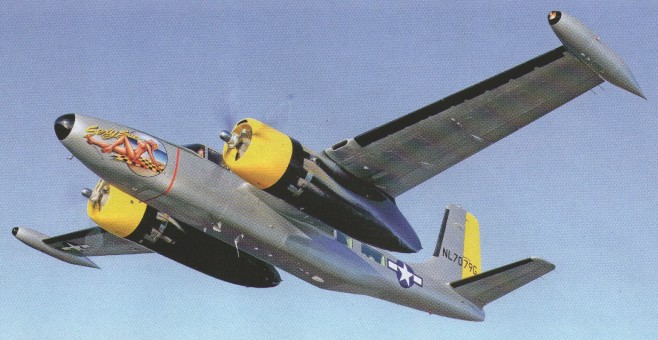
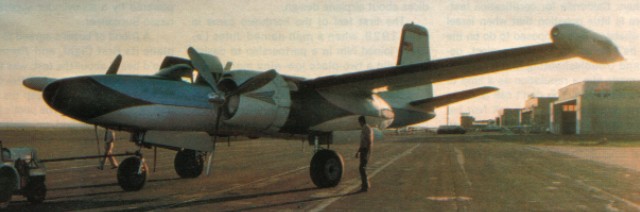
Formed 1954 as a specialist maintenance and modification contractor for Douglas B-26 Invader bombers, developing high-speed executive transport and heavily armed counterinsurgency versions. The On Mark Marketeer was a six/eight-seat corporate transport based on the B-26 airframe. The externally similar Marksman had a pressurized cabin. A B-26K Counter Invader was developed for the USAF’s Tactical Air Command.
The On Mark Com¬pany took in the surplus bombers at Van Nuys, California and turned them out with everything intact but the bomb bay doors and some of the military weapons control gear. They came to the customers in pressurized and unpressurized versions, and they were only for the select few. 45-60 were converted.
The Counter-Invader was a cleaned up, heavily armed version for the USAF’s Special Air Warfare Center.
Omega BS-12
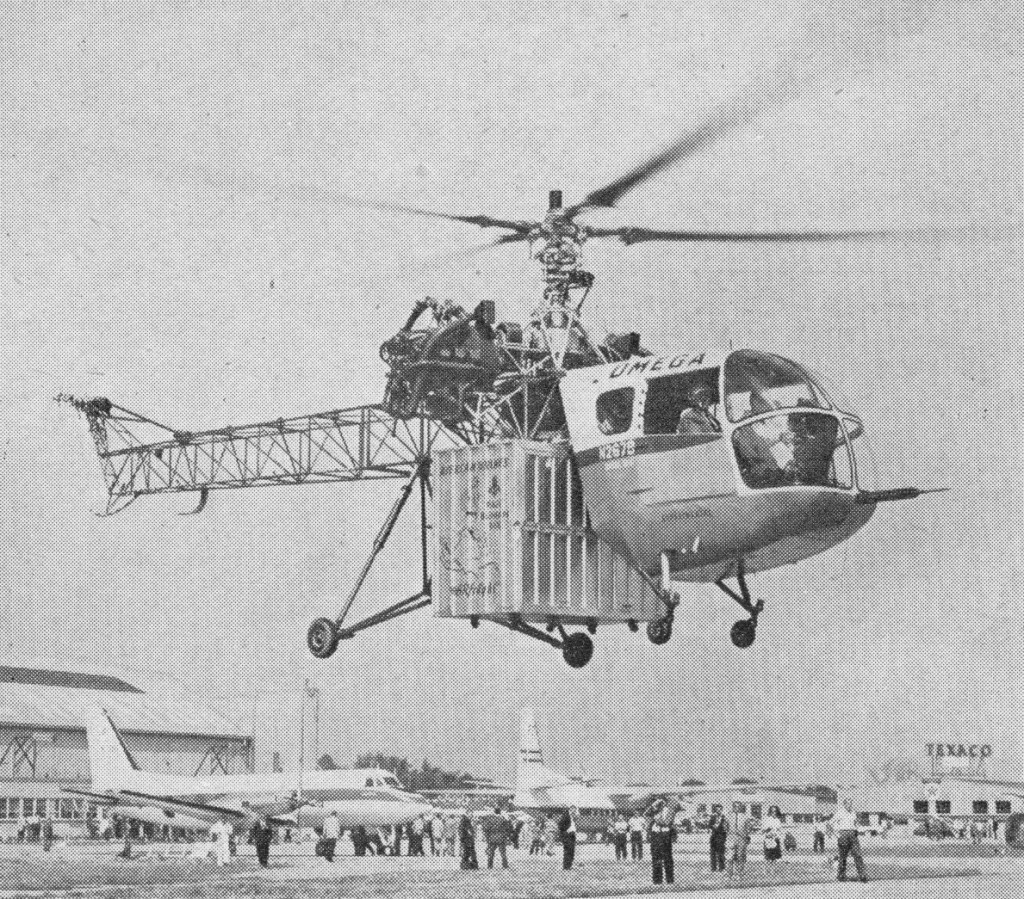
The Omega BS-12 four-seat, twin-engined helicopter flew in 1956, and was succeeded by the BS-12D with more powerful engines and the 1963 BS-12D3S supercharged version.
Developed from an original Canadian design with two Franklin engines, the BS-12 could carry a 1500 lb load.
Production was to have started in 1964, when all development was suspended after completion of four prototypes.
OMAREAL Casmuniz 52 / Cassio Minuz Casmuniz 52
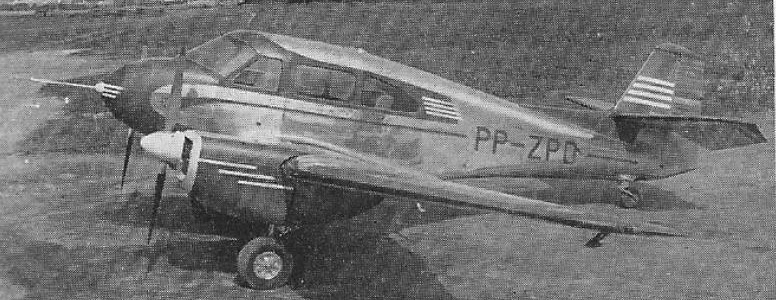
Designed to operate from small airfields, the Casmuniz 52 sive-seat cabin monoplane is the first all-metal twin designed in Brazil.
The prototype was designed and completed in 1952 by Cassio Minuz S.A. of Sao Paulo, and eighty per cent of the skin is made of uniformed or single-curvature aluminium sheet panels to facilitate replacement in any locality of limited resources. It was first flown in April 1952.
Oficina de Manutenco e Recuperaceo de Avioes Ltda, the Brazilian maintenance and overhaul facility based at Sao Paulo, acquired manufacturing rights to the Casmuniz 52 and sole prototype in 1955. OMAREAL took over the flight testing of the sole prototype, but no production ensued.
Engine: 2 x Continental E185, 185 hp
Max speed: 200 mph
Cruise: 165 mph
Range: 700 mi
Seats: 4-5
O’Hara P-38
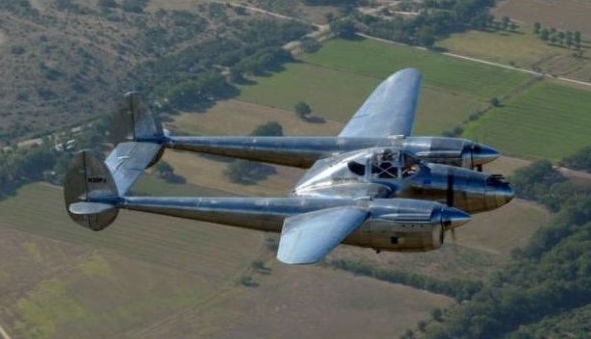
Jim O’Hara, a retired college professor, learned to fly in 1988. Six years later, he began construction of a two-thirds-scale P-38. Using information he obtained from various sources about the P-38, Jim drew up a set of plans in CAD and began building the plane with only his wife Mitzi aiding him in the construction of the aircraft.
He first flew his plane in July 2008, and at 81 years old in November 2009, he and his wife made its maiden cross-country trip.
NUD NU D.38
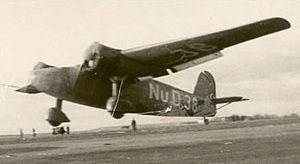
The Nuri Demirağ Nu.D.38 was a Turkish light civil transport, with twin engines and seating for four passengers, built in the early 1940s. Only one was constructed and flown.
Design work on the Nu.D.38 twin engine light transport began about 1938 and the aircraft was largely completed by 1941, but the first flight was delayed until 1944. Turkey remained neutral through most of World War II, only entering the war in 1945, after the first flight.
The Nu.D.38, manufactured by Nuri Demirağ in Istanbul, was a high cantilever wing aircraft. The wing, of tapered plan and all aluminium alloy stressed skin construction had a built up main spar and a secondary spar. There were pairs of split flaps inboard of the fabric covered ailerons. The fixed surfaces of the tail unit were also aluminium alloy structures with stressed metal skin. The tailplane, set at the top of the fuselage, was strut-braced from below. Control surfaces were fabric covered, with trim tabs.
The fuselage of the Nu.D.38 was an oval cross-section aluminium alloy monocoque, with stressed skin over frames and longitudinal stringers. The crew sat side by side at dual controls in a cabin with side access doors. The passenger compartment seated four, each with their own window, and was accessed through a starboard side door. There was a compartment for luggage or mail in the nose.
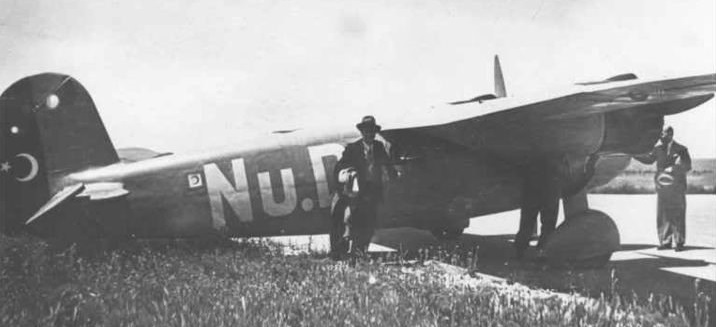
The Nu.D.38 was powered by two 160 hp (120 kW) Bramo Sh 14-A4 radial engines, mounted to the main wing spar on steel frames. It had a fixed, conventional undercarriage. A main shock absorber leg was attached to each of the steel engine frames, braced rearwards by a short auxiliary strut. Legs and wheels were enclosed in fairings.
The Nu.D.38 was first flown on 11 February 1944. No further aircraft were produced.
Engines: 2 × Siemens-Halske (Bramo) Sh 14-A4, 120 kW (160 hp) each
Propellers: 2-bladed
Wingspan: 13.56 m (44 ft 6 in)
Wing area: 22.34 sq.m (240.5 sq ft)
Length: 8.30 m (27 ft 3 in)
Height: 2.20 m (7 ft 3 in)
Empty weight: 1,108 kg (2,443 lb)
Gross weight: 1,850 kg (4,079 lb)
Maximum speed: 271 km/h (168 mph; 146 kn) at sea level
Cruise speed: 250 km/h (155 mph; 135 kn)
Service ceiling: 6,650 m (21,820 ft)
Rate of climb: 3.40 m/s (669 ft/min) to 4,000m (13,120 ft)
Crew: 2
Capacity: 4 passengers
 All Aero