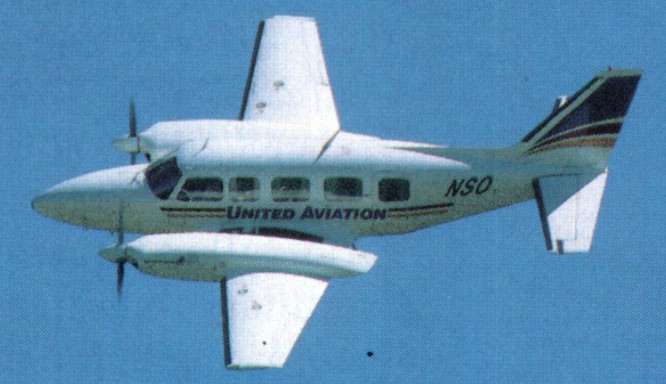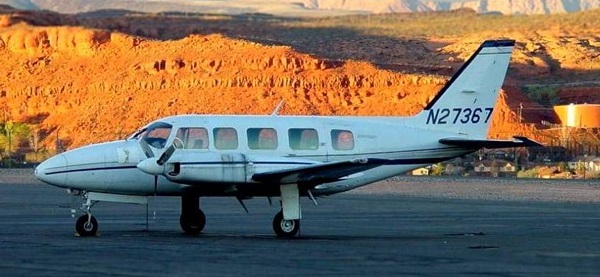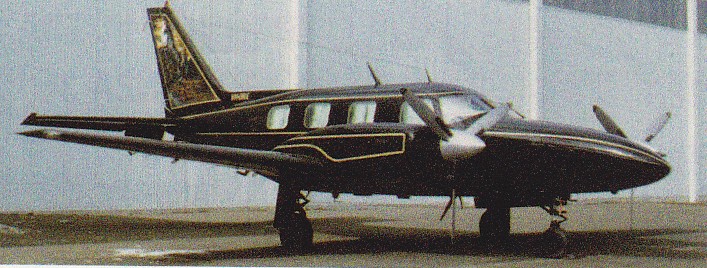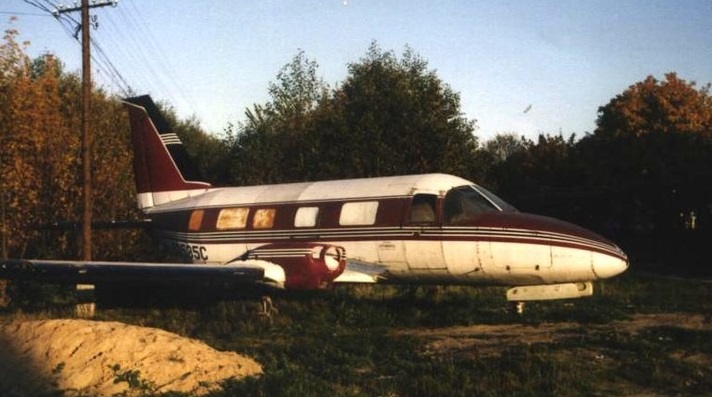
Piper PA-31T Cheyenne / T-1020 / T-1040 / Schafer Comanchero 750

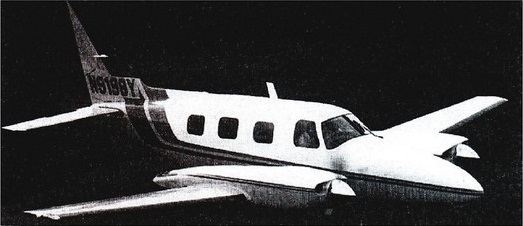
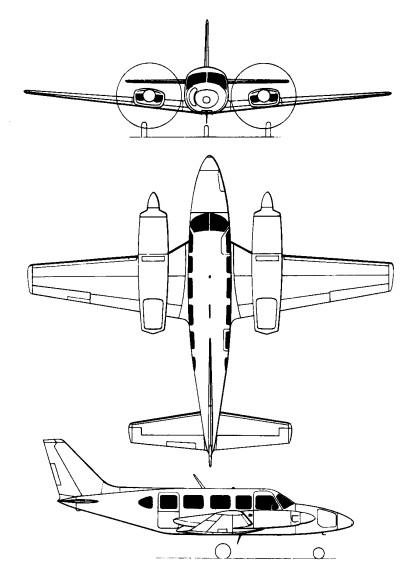
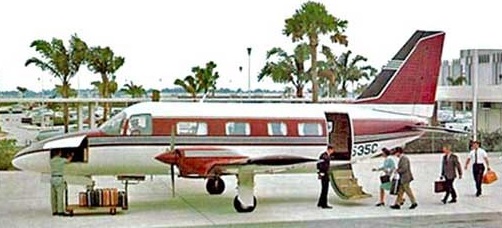
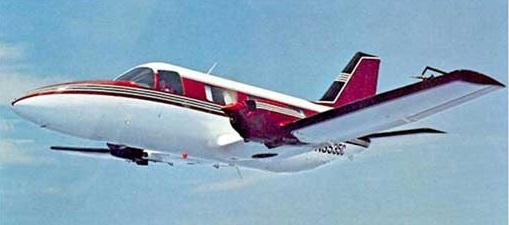
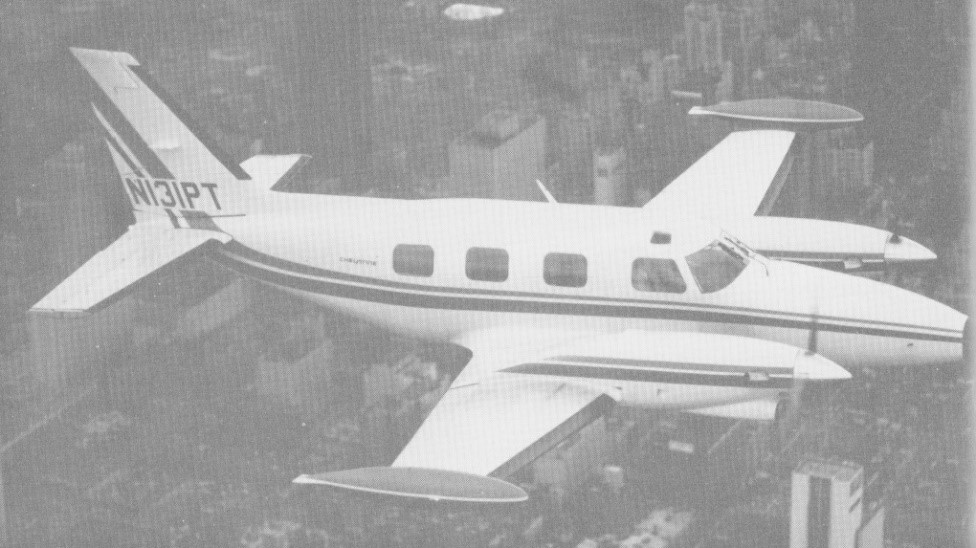
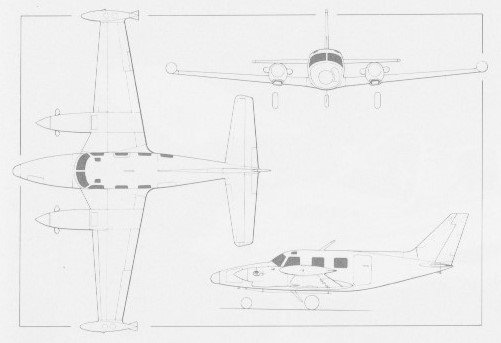
PA-31T

First flown on 20 August 1969, four production PA-31T aircraft were completed and eight ordered by the spring of 1974.

198 PA-31T Cheyenne I were built
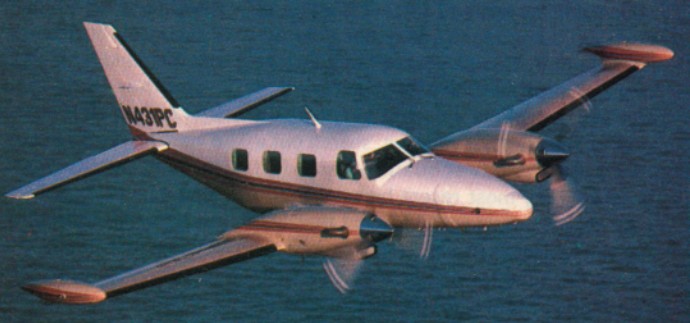
Cheyenne I

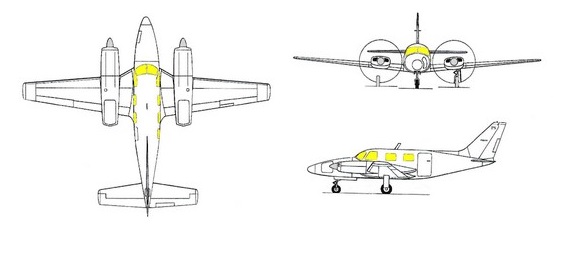
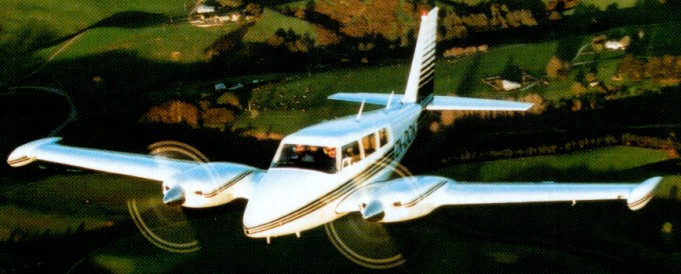
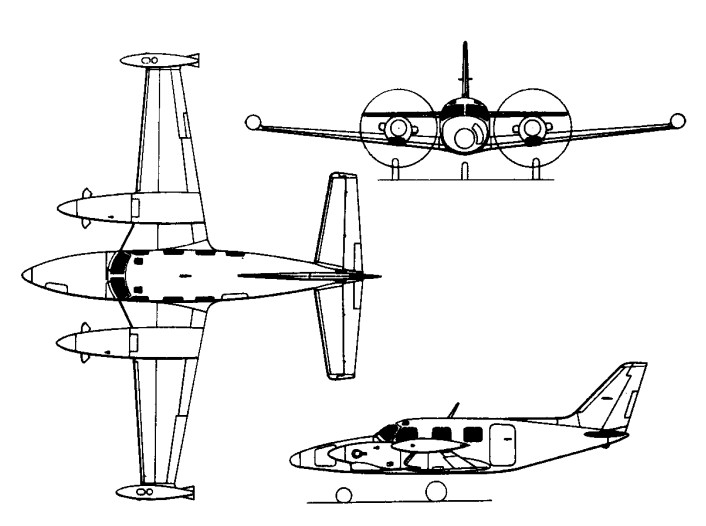
The T-1040 (PA-31-T3) is a turbine powered hybrid combining the fuselage of the Navajo Chieftain with the wing, tail and engines of the Cheyenne 1 A to create a new commuter airliner. Dual controlled and not pressurized, it can carry nine to 11 passengers, the T-1040 was introduced on 25 May 1980.

T-1040 / PA-31-T3

The first production type flew on 17 July 1981, FAA certification was received on 25 February 1981, and deliveries into service during May 1982. The use of wing tip fuel tanks was approved during November 1982. A rear utility door is fitted as standard and an optional 30 cu.ft belly cargo pod was available.

The prototype T-1020 flew for the first time on 25 September 1981, the type was delivered into service during December 1981. Twenty-one T-1020 airliner versions were built.
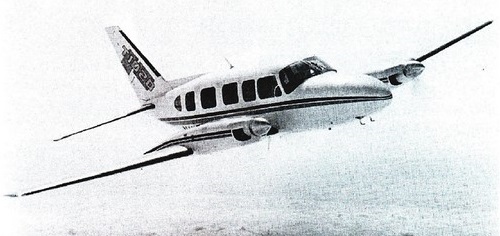
T-1020

A significant advance in the Navajo family came on 22 October 1973 when Piper flew the first production example of the PA-31T Cheyenne, which combined an airframe generally similar to that of the Pressurized Navajo with two 462kW Pratt & Whitney Aircraft of Canada PT6A-28 turboprop engines. The Piper Cheyenne was certificated in 1974, just as the new surge in turboprops started, the Cheyenne is a product of proven airframe and powerplant technology that dates back to the mid 1960s.

A piston-engined version of the turbine Cheyenne I known as the Mojave was introduced but production ceased that same year after only 50 had been completed.

The first of these models to be marketed was the Cheyenne in 1974 (renamed the Cheyenne II in 1978) when a simplified version known as the Cheyenne I was introduced. Seventeen of the 1983 Cheyenne IA were built.

Production of the PA-31P Pressurized Navajo ended during 1977, at which time a total of 248 had been built, but at the same time the company introduced a new version of the Cheyenne, the PA-31T-1 Cheyenne I, the original Cheyenne then becoming redesignated PA-31T Cheyenne II. Deliveries of the new Cheyenne I, which differed primarily from its predecessor by having 373kW Pratt & Whitney Aircraft of Canada PT6A-11 turboprop engines, began towards the end of April 1978.

When Piper mated the 680 hp Pratt & Whitney PT6A 28 with the airframe of their pressurized Navajo, they produced a turboprop that had an instant heritage. The PT6A 28, which is derated to 620 hp in the Cheyenne II so that takeoff power can be maintained up to 4,800 feet, also powers three models of the King Air. Because of its long and reputable service record, the PT6A 28 is authorized to operate 3,500 hours between overhauls in the Cheyenne. That figure was stipulated principally because Pratt & Whitney felt that the 6,500 hour TBO authorized for commuter aircraft, such as the Beech 99 and the Twin Otter, would allow too long a calendar time between internal inspections, considering that typical business aircraft in the Cheyenne class fly about 600 hours per year.

Since the Cheyenne uses the fuselage design of the pressurized Navajo, the reliability of the pressure vessel and its environmental units (35,000 BTU heater, 23,000 BTU vapor cycle air conditioning system and dehumidifier) has been established, and that should mean reduced maintenance worries for the Cheyenne owner. Furthermore, pressurizing a turboprop is less complicated than is pressurizing a turbosupercharged aircraft, because high pressure bleed air from the engine’s compressor can be mixed with the cool outside air to produce the desired pressure differential, which for the Cheyenne is 5.5 psi.

The thirsty turbine powerplants of the Cheyenne necessitated a redesign of the fuel system, and the result was more than just an increased capacity. The Cheyenne’s 382 USG of usable fuel are contained in two multi celled wing tanks one per side. Although each fuel tank consists of four separate but interconnected tanks, the pilot’s fuel control options are reduced to a simple on/ off/cross-feed arrangement. The three fuel cells located within each wing are filled through an opening in each engine nacelle; they must be serviced before the tip tank, which constitutes the fourth fuel cell for each wing. Gravity causes fuel from the 22 USG tip tank to flow into the wing fuel cells. Therefore, opening a nacelle filler cap when the tip tanks are full will result in some spilling, usually on the offending preflighter. However, checking that the tip tanks are full assures that all the cells are topped, and fuel in the neck of the nacelle filler indicates that the corresponding three wing cells are full to their combined capacity of 173 USG.

Installing 1,240 total horsepower in the Pressurized Navajo’s airframe, which was originally designed to accept 850 hp, necessitated either a larger horizontal stabilizer or an innovative redesign of the flight control system if the required stability criteria were to be met. Piper chose the latter course and installed a relatively simple stability augmentation system that varies the tension in the Cheyenne’s elevator downspring as a function of the aircraft’s angle of attack. Although the Cheyenne’s SAS initially caused some consternation among Piper’s salespeople, who were forced to explain why their machine required an operative stability augmentation system to be airworthy while the competition’s aircraft didn’t, the Cheyenne’s SAS has proved to be a successful and cost effective way of engineering a solution to the classic problem of maintaining stability while increasing the horsepower of an existing design. Price 1976: $623,805.

The T-1040 is a turbine powered hybrid combining the fuselage of the Navajo Chieftain with the wing, tail and engines of the Cheyenne 1 A to create a new commuter airliner. Not pressurized, it can carry nine to 11 passengers.

632 of the Cheyenne II were built, including 24 T-1040 airliner versions.

The Cheyenne range was extended for 1981 by introduction of the PA-31T-2 Cheyenne IIXL, with the fuselage lengthened by 0.61m and 559kW Pratt & Whitney Aircraft of Canada PT6A-135 engines flat-rated to 462kW.

Schafer Aircraft Modifications Inc was founded 1977, and from 1979 developed modifications for other aircraft. Included was installing higher rated turboprops to Piper Cheyenne II as the Schafer Comanchero 750.

Certification:
FAA A8EA
PA-31T & PA-31T3
31T-740002 to
31T-7620057
31T-7720001 to
31T-7920094
31T-8275001 and up

Gallery

Specifications:

PA-31T
Engines: 2 x PW PT5A-28, 620 shp
Wingspan over tip tanks: 42 ft 8.75 in / 13.02 m
Length: 34 ft 8 in / 13.02 m
Empty weight: 4870 lb / 2209 kg
MTOW: 9000 lb / 4082 kg
Max cruise at 11000 ft / 3350m at 7600lb/3447kg: 283 kt / 326 mph / 525 kph
Econ cruise at 25000 ft / 7620m at 7600lb/3447kg: 184 kt / 212 mph / 341 kph
Max ROC SL: 2800 fpm / 853 m/min
Service ceiling: 29,000 ft / 8840 m
Range max fuel 45min res: 1350 nm / 1555 mi / 2500 km
Seats: 8
Cabin length: 16 ft 1 in / 4.90 m
Cabin width: 4 ft 3 in / 1.30 m
Cabin height: 4 ft 4 in / 1.31 m
Cabin volume: 244 cu ft / 6.91 cu.m
Front baggage compartment: 20 ft ft / .057 cu.m / 200 lb / 90.7 kg
Rear baggage compartment: 22 cu.ft / 0.62 cu.m / 200 lb / 90.7 kg

PA-31T-500T1 Cheyenne I
First built: 1978
Engines: 2 x P&W PT6A-11, 500 shp
Props: Hartzell 3-blade, 93-in
Seats: 7
Length: 34.7 ft
Height: 12.8 ft
Wingspan: 40.7 ft
Wing area: 229 sq.ft
Wing aspect ratio: 7.2
Maximum ramp weight: 8750 lb
Maximum takeoff weight: 8700 lb
Standard empty weight: 4904 lb
Maximum useful load: 3843 lb
Zero-fuel weight: 7200 lb
Maximum landing weight: 8700 lb
Wing loading: 38 lbs/sq.ft
Power loading: 8.7 lbs/hp
Maximum usable fuel: 2559 lb
Best rate of climb: 1750 fpm
Service ceiling: 28,200 ft
Max pressurisation differential: 5.5 psi
8000 ft cabin alt @: 25,000 ft
Maximum single-engine rate of climb: 413 fpm @ 110 kt
Single-engine climb gradient: 225 ft/nm
Single-engine ceiling: 12,500 ft
Maximum speed: 243 kt
Normal cruise @ 24,000ft: 234 kt
Fuel flow @ normal cruise: 412 pph.
Endurance at normal cruise: 5.5 hr
Stalling speed clean: 84 kt
Stalling speed gear/flaps down: 72 kt
Turbulent-air penetration speed: 180 kt

Cheyenne IA
Engines: two 500hp P&W PT6A
Wingspan 42’8″
Length: 34’8″
Useful load: 3846 lb
Cruise: 296 mph
Stall:83 mph
Ceiling: 29,000′
Price: $1,124,117

PA-31T-620 Cheyenne II
First built: 1974
Engines: 2 x P&W PT6A-28, 620 shp
TBO: 3,500 hr
Props: Hartzell 3-blade, constant speed reversing and full feathering, 93-in
Seats: 8
Length: 34 ft. 8 in
Height: 12 ft. 9 in
Wingspan: 42 ft. 8 in / 13.01 m
Wing area: 229 sq.ft / 21.3 sq.m
Airfoil: NACA 632-415 at root, 63A212 at tip
Aspect ratio: 7.96
Maximum ramp weight: 9050 lb
Maximum takeoff weight: 9000 lb
Empty weight: 5,331 lb
Useful load: 3,719 lb
Payload with full fuel: 1,427 lb
Ramp weight: 9,050 lb
Zero-fuel weight: 7200 lb
Maximum landing weight: 9000 lb
Wing loading: 39.3 lbs/sq.ft
Power loading: 7.26 lb/hp
Usable fuel capacity: 382 USG/2,292 lb
Baggage capacity: 400 lb
Baggage area: 42 cu.ft
Best rate of climb: 2710 fpm
Certificated ceiling: 31,600 ft
Service ceiling: 29,000 ft
Single engine service ceiling: 14,600 ft
Max pressurisation differential: 5.5 psi
8000 ft cabin alt @: 25,000 ft
Maximum single-engine rate of climb: 660 fpm @ 113 kt
Single-engine climb gradient: 350 ft/nm
Maximum speed: 283 kt
Maximum cruise (@ 11,000 ft.): 279 kt
Economy cruise (@ 25,000 ft.): 212 kt
Range @ maximum cruise (45 min res). 883 nm
Range @ economy cruise (45 min res): 1,350 nm
Normal cruise @ 24,000ft: 248 kt
Fuel flow @ normal cruise: 454 pph
Endurance at normal cruise: 5.1 hr
Stall speed (clean): 89 kt
Stall speed (gear, flaps down): 77 kt
Turbulent-air penetration speed: 180 kt
Minimum runway requirement: 2,480 ft.

PA-31T-2XL620 Cheyenne IIXL
First built: 1981
Engines: 2 x P&W PT6A-135, 620 shp
Props: Hartzell 3-blade, 93-in
Seats: 6/8
Length: 36.7 ft
Height: 12.8 ft
Wingspan: 42.7 ft
Wing area: 222 sq.ft
Wing aspect ratio: 8
Maximum ramp weight: 9540 lb
Maximum takeoff weight: 9474 lb
Standard empty weight: 5112 lb
Maximum useful load: 4428 lb
Zero-fuel weight: 7600 lb
Maximum landing weight: 9000 lb
Wing loading: 41.4 lbs/sq.ft
Power loading: 7.6 lbs/hp
Maximum usable fuel: 2292 lb
Best rate of climb: 1750 fpm
Service ceiling: 30,000 ft
Max pressurisation differential: 5.5 psi
8000 ft cabin alt @: 25,000 ft
Maximum single-engine rate of climb: 470 fpm @ 122 kt
Single-engine climb gradient: 231 ft/nm
Single-engine ceiling: 14,900 ft
Maximum speed: 276 kt
Vmca: 91 kt
Normal cruise @ 29,000ft: 246 kt
Fuel flow @ normal cruise: 394 pph
Endurance at normal cruise: 5.3 hr
Stalling speed clean: 89 kt
Stalling speed gear/flaps down: 80 kt
Turbulent-air penetration speed: 187 kt

PA31 T-1020 Commuter
First built: 1981
Engine: 2 x Lycoming TIO-540, 350 hp
TBO: 1800 hr
Prop: Hartzell 3 blade, constant speed 80 in
Seats: 11
Length: 34.6 ft.
Height: 13 ft
Wingspan: 40.7 ft
Wing area: 229 sq.ft
Wing aspect ratio: 7.2
Max ramp wt: 7045 lb
Max take off wt: 7000 lb
Standard empty wt: 4450 lb
Max useful load: 2550 lb
Max landing wt: 7000 lb
Wing loading: 30.6 lbs/sq.ft
Power loading: 10 lbs/hp
Max useable fuel: 636 lb
Climb rate: 1120 fpm @ 101 kt
Climb gradient: 665 ft/nm
Rate of climb @ 8000 ft: 950 fpm
Certificated ceiling; 24,000 ft
SE rate of climb: 230 fpm @ 106 kt
SE climb gradient: 128 ft/nm
SE ceiling: 13,700 ft
Max speed: 231 kt
Cruise @ 65% power @ 8,000ft: 181 kt
Fuel flow @ 65% power @ 8,000ft: 185 pph
Endurance @ 65% power @ 8,000ft: 3.2 hr
Stalling speed clean: 77 kt
Stall speed gear/flaps down: 74 kt
Turbulent air penetration speed: 160 kt
Retractable undercarriage
Cabin length: 12 ft 7 in
Cabin width: 50 in
Cabin height: 51.5 in
Cabin floor area: 45.4 sq.ft
Cabin volume: 203 cu.ft
Cabin door: 46 in x 27.5 in
Opt. utility door: 38 in x 17.5 in
Nose baggage: 17 cu.ft
Nacelle lockers: 13.25 cu.ft each
No built: 21

T-1020
Max speed: 272 mph
Cruise 10,000ft: 231 mph
Cruise 10,000ft eco: 196 mph
Stall: 85 mph
Climb rate: 1120 fpm
Climb rate SE: 230 fpm
Service ceiling: 24,000 ft
SE service ceiling: 12,100 ft
Takeoff run: 1850 ft
Takeoff run to 50 ft: 2400 ft
Landing run 50ft: 1680 ft
Range loaded: 558 mi
Fuel capacity: 108 USG
Fuel capacity opt: 182 USG
Wingspan: 40 ft 8 in
Length: 34 ft 7.5 in
Height: 13 ft 0in
Wing area: 229 sq.ft
Empty weight: 4450 lb
Loaded weight: 7000 lb
Max baggage weight: 700 lb

T-1040 / PA-31-T3
Engine: 2 x Pratt & Whitney PT6A-11, 500 shp
Props: Hartzell CS, fully feathering 7 ft 9 in
Wingspan: 41 ft 1 in
Wing area: 229 sq.ft
Wing aspect ratio: 7.4
Length: 36 ft 8 in
Height: 13 ft 0in
Maximum ramp weight: 9050 lb
Maximum takeoff weight: 9000 lb
Standard empty weight: 4624 lb
Maximum useful load: 2976 lb
Zero-fuel weight: 7600 lb
Maximum landing weight: 9000 lb
Wing loading: 39.3 lbs/sq.ft
Power loading: 9 lbs/hp
Fuel capacity: 300 USG
Fuel capacity opt: 66 USG
Tip tank capacity; 336 USG
Maximum usable fuel: 2010 lb
Max baggage weight: 700 lb
Max speed: 280 mph / 243 kt
Cruise 11,000ft: 272 mph / 236 kt
Fuel flow @ normal cruise: 580 pph
Endurance at normal cruise: 3.7 hr
Cruise 11,000ft eco: 230 mph
Stall clean: 90 mph / 88 kt
Stalling speed gear/flaps down: 78 kt
Turbulent-air penetration speed: 183 kt
Climb rate: 1610 fpm
Climb rate SE: 325 fpm @ 115 kt
Single-engine climb gradient: 169 ft/nm
Service ceiling: 27,900 ft
Single-engine ceiling: 12,100 ft
Takeoff run to 50 ft: 2650 ft
Landing run 50ft: 2100 ft
Range loaded: 680 mi
Range opt: 1150 mi
Nose baggage: 25.0 cu.ft
Nacelle lockers: 9.0 cu.ft each
Seats: 11
PA-31T
Piper PA-31T Cheyenne II / T-1020 / T-1040

Piper PA-31 Navajo / Chieftain / Embraer EMB-820 / Schafer Comanchero / Neiva NE-821 Caraja / Chincul PA-31 Navajo

PA31-350 Navajo

On 30 September 1964 Piper flew the prototype of a new twin-engine executive aircraft which was then the largest built by the company. Identified at first as the Piper PA-31 Inca, the aircraft had been redesignated as the PA-31 Navajo when deliveries began on 17 April 1967.

Piper PA-31 Navajo / Chieftain Article

A six/eight-seat corporate/ commuter transport of cantilever low-wing monoplane configuration with retractable tricycle landing gear, it was powered by two 224kW Avco Lycoming IO-540-K flat-six engines, and was available in optional Standard, Commuter and Executive versions with differing interior layouts.

The internal cabin is 15 ft 10in long and 51.5in high and a nose baggage compartment has 14 cu.ft for 150 lb of luggage, and the aft compartment has 16 cu.ft for 200 lb.

The Standard version has accommodation for six passengers, rear baggage compartment, wardrobe and optional seating arrangements for seven or eight, plus a toilet.

The Executive and VIP version accommodates six passengers, with a pilot/passenger divider, curtained off area, refreshment unit, foldaway tables and a toilet, plus the optional seventh or eighth seat.

The Commuter version accommodates eight passengers, with a curtain divider, foldaway tables, refreshment unit, magazine racks, fasten seatbelts and no smoking signs, plus a luggage capacity of 350 lb.

Piper PA31 Navajo Owner’s Handbook

Made available at the same time was the optional PA-31T Turbo Navajo, which differed only by having two 310 hp /231kW TIO-540-A turbocharged engines.

In 1974 an additional model of the Turbo Navajo was made available, the PA-31-325 Turbo Navajo C/R, which introduced a 242kW version of the counter-rotating engines installed in the Chieftain.

The Turbo Navajo B, cruising at 251 mph at 24,000 feet (404 km/h at 7000 meters); 223 mph at 12,000 feet (359 km/h at 3600 meters), featured new nacelle compartments increased luggage space 42 percent – 62 cubic feet (1.76 cu.m) and hold an additional 300 pounds (136 kg) total 650 pounds (295kg.), seating for up to nine people.

Production of the PA-31 Navajo ended and at the same time the company introduced for 1973 the PA-31-350 Navajo Chieftain which had the fuselage lengthened by 0.61m so an extra pair of seats could be fitted to the cabin, and was powered by two 350 hp / 261kW TIO-540-J2BD turbocharged engines driving counter-rotating propellers.

Piper PA-31-350 Navajo Cheftain

Piper expanded their 1976 medium twin line by offering the Navajo C/R. This airplane has 325 hp engines that eliminate the critical engine characteristics that stem from both propellers rotating in the same direction; the Navajo C/R’s left propeller turns in the conventional clockwise direction, but the right prop rotates counter-clockwise. The Navajo CR had wing lockers.

The basic model remained in production until 1983 by which time 1785 were built. Included in this total were the higher powered (325 hp) models which featured contra-rotating engines.

The engine variations provide the main performance difference among the models. The plain Navajo is a 3500 gross, 2,174 useful airplane, with a 310 hp turbo¬charged but otherwise unfettered TIO 540. The Navajo CR is the same airplane, with the same engine for that matter, except that the horsepower rating has risen to 325, magnetos are pressurized, and the right hand engine turns its propeller inboard, which the left one does anyway. The benefits of counter-rotation are minutely improved single engine performance and speeds, largely theoretical improvement from the neutralization of slipstream and prop wash effects, and the minimization of P factor. Gross weight remains the same, while useful weight drops a tad as a result of the CR’s capacious wing lockers.

The range was extended in 1970 by introduction of the PA-PA-31P Pressurized Navajo (First flying in March 1968) with a fail-safe fuselage structure in the pressurised section and two 317kW Avco Lycoming TIGO-541-E1A engines. The pressurised PA31P seated six was marketed for business high-fliers: 259 were built from 1970 till 1977.

PA-31P

The Chieftain is 24 inches longer than the CR, has a 7,000 gross and a 350 pound greater useful and the same engine. But horsepower has now been boosted to 350 with a tuned induction system and a slightly larger compressor.

One hundred and sixty seven Navajo Chieftains were licence built in Brazil by Embraer circa 1981, as the EMB-820.

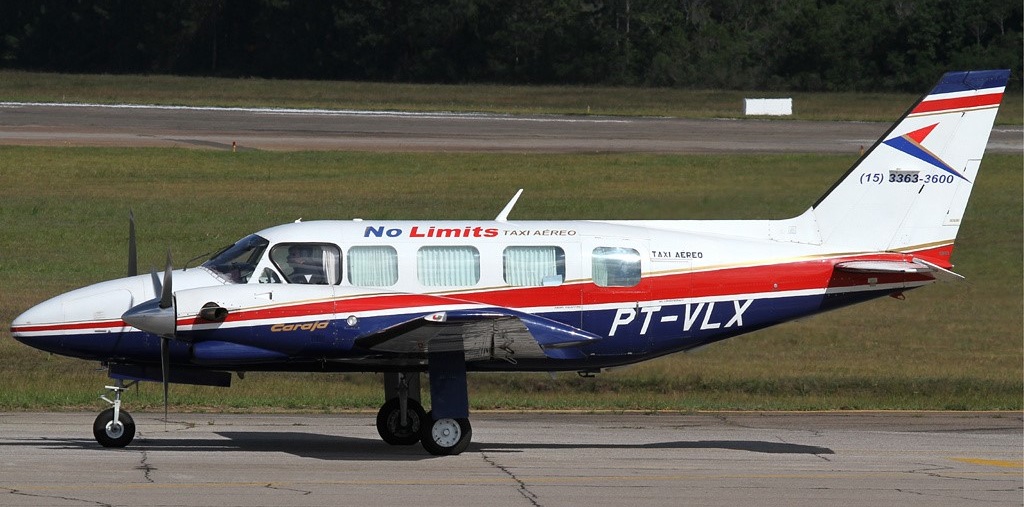
Fifty Embraer EMB-820C Navajos were converted to turboprop configuration with Pratt & Whitney Canada PT6A-27 engines flat-rated to 550shp, being named Neiva NE-821 Caraja. The Carajá’s MTOW of 8,003 pounds (3,630 kg) was 1,000 pounds (454 kg) more than that of the Chieftain.

Neiva NE-821 Caraja

In 1984 a piston-engined version of the turbine Cheyenne I known as the PA31P-350 Mojave was intro-duced but production ceased that same year after only 50 had been completed. It incorporated the Chieftain II wings, pressurised Cheyenne I fuselage, and a Chieftain tail, with the powerplant of the PA-315-350 Chieftain. With increased wingspan and fuel capacity, plus airstairs, production of the PA-31P Pressurized Navajo ended during 1977, at which time a total of 248 had been built.

Schafer Aircraft Modifications Inc was founded 1977, and from 1979 developed modifications for other aircraft. Included were installing turboprop engines to Piper Navajo as the Schafer Comanchero, turboprop engines to Piper Chieftain as the Comanchero 500.

Chincul SACAIFI manufactured aircraft under license from Piper Aircraft Corporation. The company was a wholly owned subsidiary of “La Macarena S.A.”, Piper’s Argentine agent. Production included Piper PA-31 Navajo.

Production of the PA-31 Navajo started in 1973 and, after 1825 were built, ceased in 1983.

Gallery

Certification:

FAA A20SO
PA-31
31-1 to 31-659
31-661 to 31-711
31-752 to 31-7612110
31-7712001 to 31-7912124
31-8012001 to 31-8312019

FAA A20SO
PA-31-325
31-7300932 to 31-7612110
31-7712001 to 31-7912124

FAA A20SO
PA-31-350
31-5000 to 31-7652176
31-7752001 to 31-7952250

FAA A8EA
PA-31P
31P-1 to 31-7630019

FAA A8EA
PA-31P-350
31P-8414001 to 8414050

Specifications:

PA31-300 Navajo
Engine: 2 x Lycoming IO-470-M, 300 hp

PA31-310 Navajo
First built: 1967
Engine: 2 x Lycoming TIO-540-A2C, 310 hp
TBO: 1800 hrs
Fuel; 100/100LL
Prop: Hartzell 3 blade, constant speed 80 in
Seats: 6/8
Length: 32.6 ft
Height: 13 ft
Wingspan: 40.7 ft
Wing area: 229 sq.ft
Wing aspect ratio: 7.2
Max ramp wt: 6536 lbs
Max take off wt: 6500 lbs
Standard empty wt: 4003 lbs
Equipped Weight; 4529 lbs
Max useful load: 2533 lbs
Max landing wt: 6500 lbs
Payload full std Fuel; 1650 lbs
Baggage Capacity; 350 lbs
Wing loading: 28.4 lbs/sq.ft
Power loading: 10.5 lbs/hp
Fuel Capacity; 192 US gals
Usable Fuel; 187.3 US Gals / 1124 lb
Climb rate: 1300 fpm @ 94 kt
Climb gradient: 830 ft/nm
Rate of climb @ 8000 ft: 1220 fpm
Best Angle of Climb; 80 mph
Absolute Ceiling; 27,300 ft
Certificated ceiling; 24,000 ft
SE rate of climb: 245 fpm @ 94 kt
SE climb gradient: 157 ft/nm
SE ceiling: 15,200 ft
Max speed: 227 mph
Never exceed ; 236 mph
Cruise @ 65% power @ 8,000ft: 176 kts
Cruise @ 65% pwr @ 18,000 ft: 192 kts
Cruise 75% 22,000 ft Best Power: 213 mph
Cruise 75% 22,000 ft Best Economy: 208 mph
Cruise 65% 24,000 ft Best Power: 202 mph
Cruise 65% 24,000 ft Best Economy: 196 mph
Cruise 55% 24,000 ft Best Power: 182 mph
Cruise 55% 24,000 ft Best Economy: 171 mph
Max Range (with res) 75% 22,000 ft Best Power: 870nm
Max Range (with res) 75% 22,000 ft Best Economy: 1005 nm
Max Range (with res) 65% 24,000 ft Best Power: 910 nm
Max Range (with res) 65% 24,000 ft Best Economy: 1052 nm
Max Range (with res) 55% 24,000 ft Best Power: 922 nm
Max Range (with res) 55% 24,000 ft Best Economy: 1068 nm
Fuel Consumption 75% Best Power: 37.5 US gph
Fuel Consumption 75% Best Economy: 29.7 US gph
Fuel Consumption 65% Best Power: 33.0 US gph
Fuel Consumption 65% Best Economy: 26.0 US gph
Fuel Consumption 55% Best Power: 28.7 US gph
Fuel Consumption 55% Best Economy: 22.7 US gph
Fuel flow @ 65% power @ 18,000ft: 172 pph
Endurance @ 65% power @ 18,000ft: 6.3 hr
Stalling speed clean: 78 kt
Stall speed gear/flaps down: 74 kt
Turbulent air penetration speed: 159 kt
Retractable undercarriage
Trims; Elevator, Rudder, Aileron
Min Control (Vmc); 74 mph
Take-off Ground Run; 1720 ft
Take-off 50ft; 2290 ft
Landing 50 ft; 1521 ft
Accelerate/stop; 2450 ft

PA31-325 Navajo C/R
First built: 1975
Engine: 2 x Lycoming TIO-540-F2BD, 325 hp
TBO: 1600 hr
Prop: Hartzell 3 blade, constant speed 80 in
Seats: 6/8
Length: 32.6 ft
Height: 13 ft
Wingspan: 40.7 ft
Wing area: 229 sq.ft
Wing aspect ratio: 7.2
Max ramp wt: 6540 lb
Max take off wt: 6500 lb
Standard empty wt: 4099 lb
Max useful load: 2441 lb
Max landing wt: 6500 lb
Wing loading: 28.4 lbs/sq.ft
Power loading: 10 lbs/hp
Max useable fuel: 1425 lb
Climb rate: 1220 fpm @ 100 kt
Climb gradient: 720 ft/nm
Rate of climb @ 8000 ft: 1100 fpm
Certificated ceiling; 24,000 ft
SE rate of climb: 255 fpm @ 97 kt
SE climb gradient: 157 ft/nm
SE ceiling: 15,300 ft
Max speed: 228 kts
Cruise @ 65% power @ 8,000ft: 180 kt
Cruise @ 65% pwr @ 18,000 ft: 196 kt
Fuel flow @ 65% power @ 18,000ft: 195 pph
Endurance @ 65% power @ 18,000ft: 7.1 hr
Stalling speed clean: 72 kt
Stall speed gear/flaps down: 70 kt
Turbulent air penetration speed: 159 kt
Retractable undercarriage and counter-rotating prop

PA31-350 Navajo Chieftain
Engine: 2 x Lycoming TIO-540-J2BD, 350 hp
TBO: 1600 hr
Prop: Hartzell 3 blade, constant speed 80 in
Seats: 6/10
Length: 34.6 ft
Height: 13 ft / 3.96 m
Wingspan: 41 ft 8 in / 12.4 m
Wing area: 229 sq.ft / 21.27 sq.m
Wing aspect ratio: 7.2
Max ramp wt: 7045 lb
Max take off wt: 7000 lb / 3175 kg
Standard empty wt: 4421 lb
Max useful load: 2824 lb
Max landing wt: 7000 lb
Wing loading: 30.6 lbs/sq.ft
Power loading: 10 lbs/hp
Max useable fuel: 1416 lb
Climb rate: 1120 fpm @ 101 kt
Climb gradient: 665 ft/nm
Rate of climb @ 8000 ft: 980 fpm
Certificated ceiling; 24,000 ft / 7315 m
SE rate of climb: 230 fpm @ 106 kt
SE climb gradient: 130 ft/nm
SE ceiling: 13,700 ft
Max speed: 231 kt / 428 km/h / 266 mph
Cruise @ 65% power @ 8,000ft: 181 kt
Cruise @ 65% pwr @ 18,000 ft: 197 kt
Fuel flow @ 65% power @ 18,000ft: 185 pph
Endurance @ 65% power @ 18,000ft: 7.4 hr
Stalling speed clean: 77 kts
Stall speed gear/flaps down: 74 kts
Turbulent air penetration speed: 162 kt
Retractable undercarriage

PA31P
Engines Lycoming TIGO-541 ElA, 425 hp
TBO 1,200 hr
Propellers Hartzell three blade, constant speed, full feathering, 93 in. dia
Length 34 ft. 6 in
Height 13 ft. 3 in
Wingspan 40 ft. 8 in
Wing loading 34.1 lbs./sq.ft
Seats 6/8
Empty weight 5,611 lb
Useful load 2,189 lb
Payload with full fuel 773 lb
Gross weight 7,800 lb
Power loading 9.18 lbs./hp
Fuel capacity, equipped 236 USG/1,416 lb
Baggage area 42 cu. Ft
Minimum runway requirement 2,700 ft
Rate of climb 1,740 fpm
Single engine rate of climb 240 fpm
Single engine service ceiling 12,100 ft
Maximum speed 280 mph/243 kt
Endurance, maximum cruise (incl. allowance for climb) 4 hr
Normal cruise (@ 24,000 ft.) 244 mph/212 knots
Endurance, normal cruise (incl. allowance for climb) 5 hr
Long range cruise (@) 24,000 ft.) 222 mph / 193 kt
Endurance, long range cruise (incl. allowance for climb) 6.3 hrs
Stall speed (clean) 92 mph/80 knots
Stall speed (gear, flaps down) 83 mph/72 knots

PA31P-350 Mojave
Engines: 2 x Lycoming TIO-540-V2AD, 350 hp
Props: Hartzell 3 blade CS 6ft 8in
Wingspan: 44 ft 6 in
Length: 34 ft 6 in
Height: 13 ft 0 in
Wing area: 237 sq.ft
Max speed: 278 mph
Cruise eco: 224 mph
Cruise norm: 270 mph
Stall: 83 mph
ROC: 1220 fpm
Service ceiling: 30,400 ft
SE service ceiling: 14,300 ft
TO run: 1625 ft
TO to 50ft: 2469 ft
Ldg from 50 ft: 2300 ft
Ldg run: 1390 ft
Range loaded: 679 mi
Range normal: 1280 mi
Range econ: 1405 mi
Pressure differential: 5.2 lb
Empty weight: 5065 lb
Loaded weight: 7200 lb
Useful load: 2516 lb
Fuel capacity: 243 USG
Cabin: 14 ft 5.75 in x 50 in x 51.5 in high
Left rear cabin door: 46in x 28in
Cabin baggage: 22 cu.ft
Nose baggage: 22.5 cuf.t
Nacelle lockers: 18 cu.ft
Seats: 7

EMB-820C Navajo Chieftain

Piper PA-31 Navajo
PA31P-350 Mojave

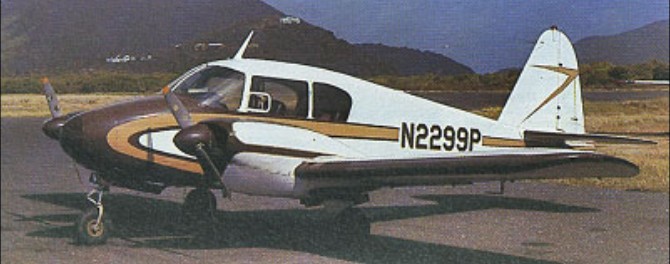
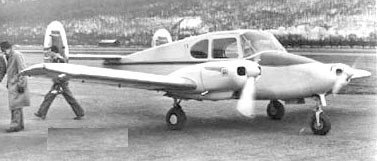
Piper PA-30 Twin Comanche

The Twin Comanche was a derivative of the single engine Comanche and was introduced in 1963 as a replacement for the Apache H. Little was done to the original Comanche fuselage when it was adapted for use in the Twin Comanche in order to simplify tooling and assembly operations. A cantilver low-wing monoplane with retractable tricycle landing gear and powered by two 160 hp / 119kW Avco Lycoming IO-320-B engines.

First flown in 7 November 1962, then production form flew on 3 May 1963, the PA-30 was superseded in 1965 by an improved four/six-seat PA-30B-160 Twin Comanche, and made available also at the same time was the PA-30B Turbo Twin Comanche with Rayjay-turbocharged IO-320-C1A engines.

In total 2,001 were built.

Delivering the first Twin Comanche to Europe in September 1963, Max Conrad spanned the 2100 miles from Gander to Shannon in 9 hr 21 min averaging 206 mph, at 50% power, burning 11 USG/hr. The co-pilot was Winston S. Churchill, 22 year old grandson of Sir Winston Churchill.

The PA-30 was offered in four models: Standard, Custom, Sportsman, and Turbo. The latter differed in engine power, and the rest contained different interior appointments, electronics, and instrumentation.

Both were replaced in 1970 by generally similar versions which introduced a powerplant with counter-rotating propellers. Designated PA-39 Twin Comanche C/R and PA-39 Turbo Twin Comanche C/R, manufacture of these two models ended in 1972, when total production of all versions amounted to 2,142. Piper announced the end of PA-30 production in 1970 and introduced a new PA-39 line.

Certification was under FAA A1EA.

One of these aircraft was used by Max Conrad to establish a new world class distance record when he flew non-stop from Cape Town, South Africa, to St Petersburg, Florida, during 24-26 December 1964. The distance of 12,678.83km remained a record in its class in 1993.

Its responsive handling earned it an airworthiness directive that raised Vmc from 70 to 78 knots.

The Super Twin Comanche was “Kind of a nice little bomb,” Pug muses, recalling the time he put two 300 hp Lycomings on the little Twin Comanche, almost doubling its horsepower. Even Piper, however, seriously questioned whether an airframe originally developed to hold a single four cylinder, 180 hp engine was quite ready for 12 jugs and 600 horses.

Piper PA-30 1964 Twin Comanche
Engine: Lycoming IO-320-B1A, 160 hp
TBO: 2000 hr
Fuel type: 100LL
Propeller: Hartzell two-blade CS
Landing gear type: Tri/Retr.
Max ramp weight: 3600 lb
Max gross weight: 3600 lb
Max takeoff weight: 3600 lb
Empty weight: 2160 lb
Max landing weight: 3600 lb
Useful load, std: 1390 lb
Payload, full std. fuel: 900 lb
Usable fuel, std: 86 USgal
Wingspan: 36 ft. 0 in
Overall length: 25 ft. 2 in
Height: 8 ft. 3 in
Wing area:178 sq. ft
Wing loading: 19.56 lbs./sq. ft
Power loading: 11.25 lbs./hp
Wheel base: 7 ft. 4 in
Wheel track: 9 ft. 10 in
Wheel size, mains: 6.00 x 6
Wheel size, nose: 6.00 x 6
Seating capacity: 4
Cabin doors: 1
Cabin width: 44 in
Cabin height: 46 in
Baggage capacity: 200-250 lb
Cruise speed 75% power @ 8,000 ft: 168
Cruise speed 65% power @ 12,000 ft: 161 kt
Cruise speed 55% power @ 14,000 ft: 148 kt
Max range (w/ res) 75% power @ 8,000 ft.: 823 nm
Max range (w/ res) 65% power @ 12,000 ft.: 890 nm
Max range (w/ res) 55% power @ 14,000 ft.: 970 nm
Fuel consumption 75% power: 17.2 USgph
Fuel consumption 65% power: 15.2 USgph
Fuel consumption 55% power: 13.4 USgph
Stall speed (gear, flaps down, power off): 66 kt
Stall speed (gear, flaps down, power on): 60 kt
Best rate of climb: 1460 fpm
Service ceiling: 18,600 ft
Takeoff ground roll: 950 ft
Takeoff over 50-ft. obstacle: 1530 ft
Landing ground roll: 1215 ft
Landing over 50-ft. obstacle: 1875 ft
Service ceiling: 18,600 ft
Single-engine service ceiling: 6600 ft
Takeoff ground roll: 950 ft
Takeoff over 50-ft. obstacle: 1570 ft
Landing ground roll: 700 ft
Landing over 50-ft. obstacle: 1875 ft

PA-30B Twin Comanche B
1965
Engines: 2 x160hp Lycoming IO-320-B
Wingspan: 36’0″
Length: 25’2″
Useful load: 1440 lb
Max speed: 205 mph
Cruise: 194 mph
Stall: 65 mph
Range: 948-1200 mi
Seats: 5

PA-30C Twin Comanche C
1968
Engines: 2 x 160hp TSIO-320-C1A

1966 PA-30B Turbo Twin Comanche
Engine: Lycoming IO-320-CIA, 160 hp
TBO: 1800 hr
Propeller: Const. spd.
Landing gear: Tri/Retr.
Gross weight: 3725 lb
Empty weight, std: 2408 lb
Useful load, std: 1317 lb
Fuel: 120 USgal
Wingspan: 36 ft
Overall length: 25 ft. 2 in
Height: 8 ft. 2 in
Wing area: 178 sq. ft
Seating capacity: 4
Cabin width: 44 in
Cabin height: 46 in
Baggage capacity: 250 lb
Cruise speed 75% power: 194 kt
Cruise speed 65% power: 179 kt
Max range (w/ res) 75% power: 812 nm
Max range (w/ res) 65% power: 948 nm
Fuel consumption 75% power: 17.2 USG
Fuel consumption 65% power: 14.9 USG
Stall speed (gear, flaps down): 60 kt
Best rate of climb: 1460 fpm
Service ceiling: 30,000 ft
Takeoff ground roll: 950 ft
Landing ground roll: 1700 ft

1969 Piper Twin Comanche
Engine: Lycoming IO-320-B1A, 160 hp @2700 rpm
TBO: 2000 hr
Fuel type: 100/100LL
Propeller: CS
Landing gear: Tri/Retr.
Max ramp weight: 3600 lb
Gross weight: 3600 lb
Landing weight: 3600 lb
Empty weight, std: 2210 lb
Useful load, std: 1390 lb
Payload, full std. fuel: 850 lb
Usable fuel: 90 USG
Optional fuel – std. (tip tanks): 120 USG
Oil capacity: 8 qt
Wingspan: 36 ft
Overall length: 25 ft. 2 in
Height: 8 ft. 3 in
Wing area: 178 sq. ft
Wing loading: 20.2 lbs./sq. ft
Power loading: 11.3 lbs./hp
Wheel base: 7 ft. 3 in
Wheel track: 9 ft. 10 in
Wheel size: 6.00 x 6
Seating capacity: 4-6
Cabin doors: 1
Cabin width: 44 in
Cabin height: 46 in
Baggage capacity: 250 lb
Cruise speed 75% power @ 8,000 ft: 169 kt
Cruise speed 65% power @ 12,000 ft: 162 kt
Cruise speed 55% power @ 10,000 ft: 144 kt
Max range (w/100 nm reserve) 75% power: 724 nm
Max range (w/100 nm reserve) 65% power: 791 nm
Fuel consumption (@ .42 lbs./hp/hr. sfc) 75% power: 16.8 USgph
Fuel consumption (@ .42 lbs./hp/hr. sfc) 65% power: 14.6 USgph
Fuel consumption (@ .42 lbs./hp/hr. sfc) 55% power: 12.3 Usgph
Vs: 66 kt
Vso: 60 kt
Best rate of climb (SL): 1460 fpm

PA-30C Turbo Twin Comanche C
Engines: 2 x IO-320-C1A

Miller Twin Commanche 200 / Piper Twin Commanche
Engines: 2 x Lycoming IO-360-C1C, 200 hp
Seats: 6
Wing loading: 20.2 lb/sq.ft
Pwr loading: 9.5 lb/hp
Max TO wt: 3780 lb
Empty wt: 2366 lb
Equipped useful load: 1315 lb
Payload max fuel: 403 lb
Range max fuel 75% cruise: 1353 nm/7.1 hr
Range max fuel / 55% cruise: 1455 nm/ 8 hr
Service ceiling: 21,000 ft
Max cruise: 191 kt
55% cruise: 183 kt
Vmc: 72 kt
Stall: 60-66 kt
1.3 Vso: 78 kt
ROC: 1900 fpm
SE ROC: 500 fpm @ 91 kt
SE ceiling: 11,500 ft
Min field length: 1875 ft
Fuel cap: 504/912 lb

Miller Turbo Twin Commanche 200
Engines: 2 x Lycoming IO-360-C1F, 200 hp
Seats: 6
Wing loading: 20.2 lb/sq.ft
Pwr loading: 9.5 lb/hp
Max TO wt: 3780 lb
Empty wt: 2406 lb
Equipped useful load: 1275 lb
Payload max fuel: 363 lb
Range max fuel/ 75% cruise: 1332 nm/5.9 hr
Range max fuel / 55% cruise: 1587 nm/ 7.5 hr
Service ceiling: 30,000 ft. 75% cruise: 226 kt
55% cruise: 213 kt
Vmc: 72 kt
Stall: 60-66 kt
1.3 Vso: 78 kt
ROC: 1900 fpm
SE ROC: 500 fpm @ 105 kt
SE ceiling: 22,000 ft
Min field length: 1875 ft
Fuel cap: 504/912 lb

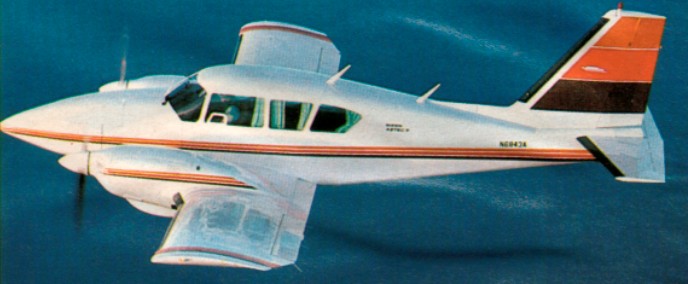
Piper PA-27 Aztec

Aztec 260

Basically an improved Apache, the Aztec was a full six-seater and had more powerful engines (250 hp) than the Apache. The first models were later named Aztec A. A major change came in 1962 with the introduction of the Aztec B, which had a lengthened nose giving the Aztec a completely different look from its Apache fore¬runner. Improvements were made year by year and the models were given letters until 1976 when the Aztec F was marketed. By then the Aztec had longer “tiger shark” shaped engine nacelles and an even longer and sharper nose. When production ceased in 1981 a total of 4929 Aztecs had been built.

Aztec F
Engines: Lycoming TIO 540 ClA, 250 hp
Props: two blade, constant speed, full feathering 77 in dia
Length: 31 ft. 3 in
Height: 10ft. 1 in
Wingspan: 37 ft. 4 in
Wing area: 207 sq. ft
Max takeoff weight: 5,200 lb
Standard empty weight: 3,319 lb
Max useful load: 1881 lb
Max landing weight: 4,940 lb
Max zero fuel weight: 4,500 lb
Power loading: 10.4 lbs/hp
Wing loading: 25.1 lbs/sq.ft
Max usable fuel: 177 gals./ 1,062 lb
Max rate of climb, sea level: 1,480 fpm
Max rate of climb, 8,000 feet: 1,330 fpm
Certificated ceiling: 24,000 ft
Single engine rate of climb, sea level: 226 fpm
Single engine climb gradient: 154 ft. per nm
Single engine service ceiling: 13,250 ft
Max speed: 210 kts
Cruise, normal at 8,000 ft: 116 kts
Cruise, normal at 18,000 ft: 191 kts
Fuel flow at normal cruise: 29.3 gph
Endurance at normal cruise, no res: 5.8hrs
Stalling speed, clean, power off: 60 kts
Stalling speed, flaps down, power off: 67 kts
Turbulent air penetration speed: 131 kts

Piper PA-23 Apache / PA-23 Aztec / UO-1 / U-11 / Aztec Nomad

Apache

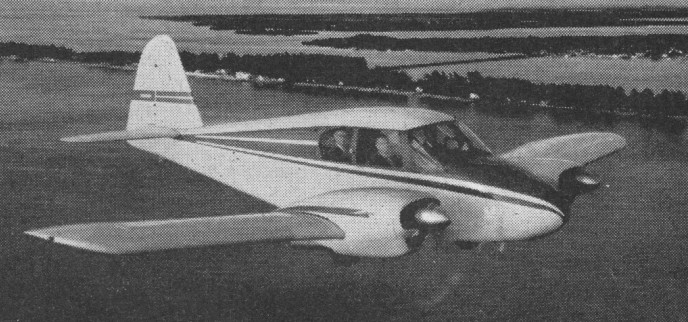
It all began in 1952 with the introduction of the Twin-Stinson, the first Piper of Stinson lineage to be produced since the Piper/Stinson Flying Station Wagon. It was powered by twin 125-hp Lycoming engines. The following year Piper introduced the PA-23 Apache, a vast improvement on the Twin-Stinson concept.The Apache featured a conventional single rudder tail unit rather than the Twin-Stinson’s twin-tail configuration, and power was boosted with the use of 150-hp Lycomings. The new Piper also utilized all-metal construction and retractable landing gear.

On 2 March 1952 Piper flew the prototype N1953A of a new twin-engine aircraft which it then identified as the Piper PA-23 Twin-Stinson. A cantilever low-wing monoplane of all-metal construction, it had a tailplane set high on the fuselage and mounting endplate fins and rudders, retractable tricycle landing gear and an enclosed cabin seating four in two pairs. The Stinson’s fabric covering was replaced by metal and there was a major redesign from the cabin aft, including a single tail. Power was upgraded to two 150hp Lycoming 0-320-A, and prototype N23P c/n 23-1 took wing on 29 July 1953. There followed a second prototype [N1000P] c/n 23-2, and issuance of a TC1A10 on 29 January 1954.

Piper PA-23 Apache Article

It entered production in early 1954 as the PA-23 Apache, later designated PA-23 Apache 150. A total of 1,231 were built, priced at $32,000.

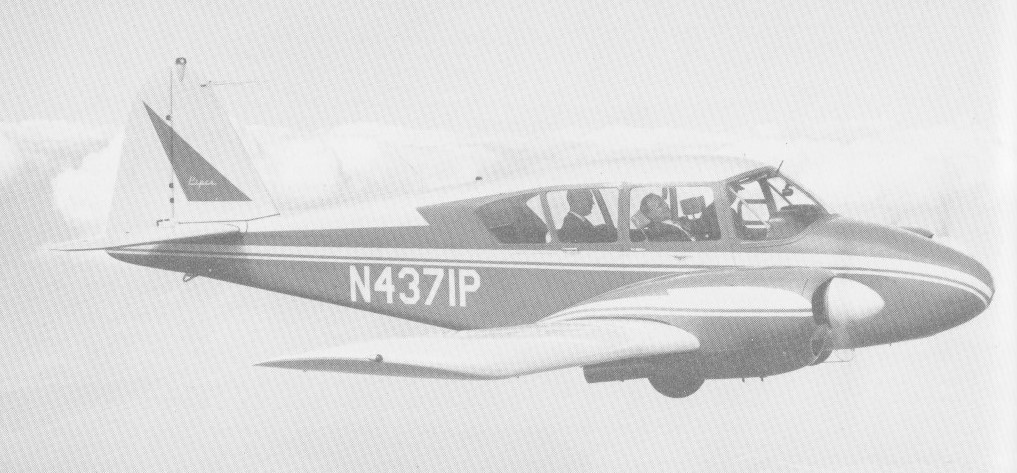
Piper Apache 160 N3454P

Powered by two Lycoming O-320 engines, each of 150 h.p. with Hartzell constant-speed airscrews, the Apache has comprehensive instruments and radio equipment included to remove the limitation of “daylight, V.F.R. only” flying, and the selling price of the new machine was $32,500, or approximately £11,600, in 1954.

Maximum all-up weight of the Apache is 3,500 lb which, with full tanks, four passengers, full instrumentation aria radio, enables 198 lb of baggage or extra equipment to be carried. Maximum sea-level cruising speed is 160 m.p.h. Single-engined ceiling at top weight is 5,000 ft, and at 3,100 lb is 8,000 ft.

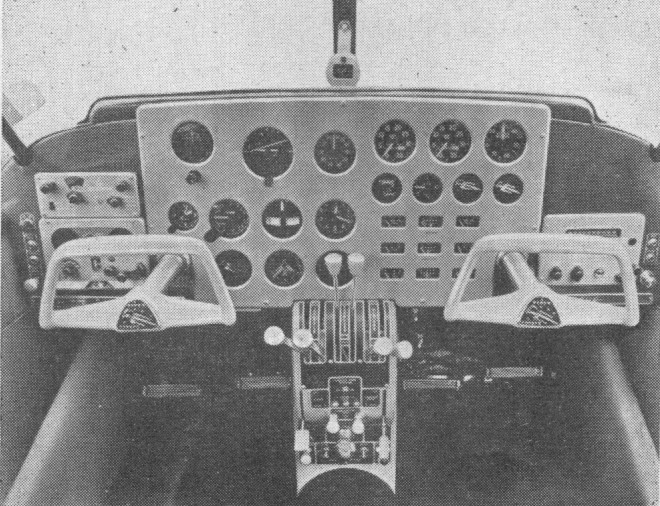
The aircraft is of all-metal construction, and has an empty weight (completely equipped) of 2,170 lb. The “Custom” model is fitted with the three radio installations shown in the cockpit photograph; an autopilot can be fitted. The baggage compartment behind the cabin has a volume of 25 cu ft, and the rear passenger seats can be easily removed to increase the available cargo space to 80 cu ft.

The dual controls are conventional, with toe brakes on the left rudder pedals, and with connections to the steerable nosewheel. Rudder and elevator trim controls are located centrally in the cabin roof. The “Electrol” tricycle landing gear is hydraulically retractable and is fitted with Goodrich wheels, tyres and brakes. Two 36-gallon rubber fuel tanks are installed in the wing, outboard of the engines. The span of the Apache is 37ft; length 27ft lin; and wing area 204 sq ft.

The Apache achieved FAA 1A10 certification on January 29, 1954, with Lycoming 150hp. This ended up covering all PA-23, PA-23-160, and PA-23-250 27-1 to 27-1999 and 27-2505 to 27-8154030.

In 1958, O-320-B 160-hp engines were added as the PA-23 Apache 160, and with some interior revisions so that it was classed as a four/ five-seat aircraft (816 built), and in 1963, the 175kW / 235-hp Lycoming O-540-B1A5 became the standard powerplant to meet requirements for better single-engine performance (119 built). This later model was the first to sport swept tail surfaces and was quite similar to the Aztec of the same vintage, except for the Apache’s smaller engines and shorter nose. 816 were built.

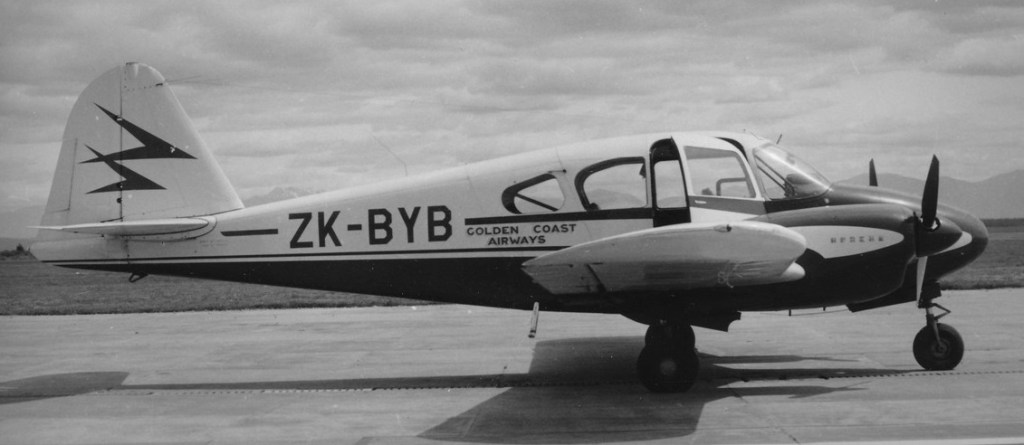
Piper PA-23-160 Apache ZK-BYB

The optional fifth seat became available in 1956, retrofitable to earlier models, though baggage capacity was reduced from 200 lbs to 30 lbs when the seat was occupied, and two 18 USG aux tanks in the outboard wings were installed. Introduced in 1958 were the 160 hp Lycomings along with an increase in MTOW from 3500 lbs to 3800 lbs.

The Apache 235 (later becoming the Aztec 235) featured a swept tail and two Lycoming 235hp O-540-B1A5 engines. 119 were built.

A total of 481 of the 1959 Aztec 250 were sold.

584 of the 1960 Aztec B were sold, plus 20 to the USN as UO-1.

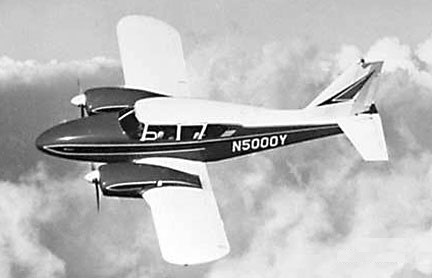
Piper Aztec B N5000Y

1357 of the 1962 Aztec C were built.

Introduced in 1968, the Aztec D featured a long nose with baggage compartment. 492 were built with an export model to South America and Africa.

1,020 of the 1970 introduce Aztec E were built.

Introduced in 1975, the Aztec F was powered with two 250hp Lycoming IO-540-C4B5 engines. Priced at $141,415 (1977), 714 were built, including Turbo Aztec F with TIO-540-C1A engines.

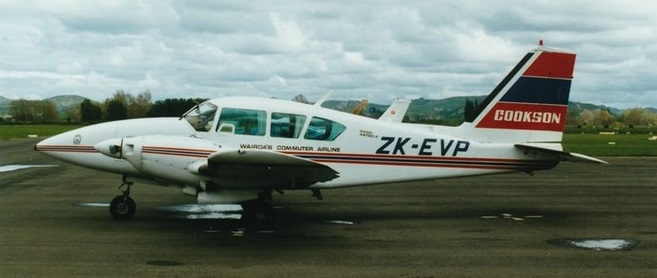
PA-23-250 Apache F ZK-EVP

The 1960 Apache G began the third side window. Some 170 of the 1961 Apache H model were built.

Apache G

Piper PA-23-160 Apache G Owners Handbook

Piper’s 1964 Aztec had streamlined nacelles, flush wing flaps and fully enclosed wheel doors raising the max cruise to 208 mph. Lycoming 250 hp engines have fuel injection and lightweight Hartzell props. The price was $54,990.

From 1962 to 1965, built 117 Apache 235s. More than 2000 150- to 160-hp Apaches were built between 1954 and 1962 until production was replaced by the Twin Commanche (introduced in 1963).

The type continued in production as the Apache until 1965, by which time 2,166 had been built, including 1,231 examples of the first production version.

PA23-250C Aztec

With sales of the Apache 235 declining, Piper developed an improved version of this aircraft in 1960 which introduced a 250 hp / 186kW O-540 engine and provided six-seat capacity. The Aztec introduced a longer fuselage, longer nose, squared tail, and 5-6 seats instead of the Apache’s four.

This entered production under the designation PA-23-250 Aztec in 1959-60, the US Navy acquiring 20 of these aircraft, 149050 to 149069, for use in a utility role, designating them UO-1, changed to U-11A in 1962.

Piper U-11A

The Aztec was built until early 1982 when production was suspended. In final production form the type had the designation PA-23-250 Aztec F, and was available also as the generally similar PA-23T-250 Turbo Aztec F which differed by having Avco Lycoming TIO-540 engines with a Garrett turbo-charging system. The first F model, introduced in 1976, offered optional fuel capacity increase.

Both Apache and Aztec were available until the Apache line was dropped. A total of 2047 were built from 1954 to 1962.

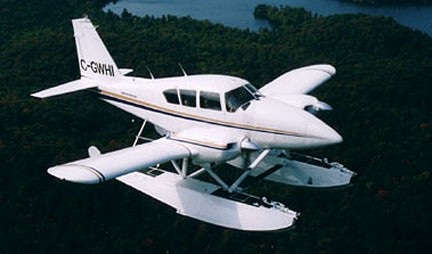
Aztec Nomad Inc of Canada, produced the Aztec Nomad conversion of six-place Piper Aztec to twin EDO floats. The useful load was 2200 lb, reducing to 1800 lb as optional amphibian.

Aztec Nomad C-GWHI

Gallery

1954 Piper Apache 150
Engines: 2 x Lycoming O-320-A1A, 150 hp
TBO: 2200 hr
Fuel type: 100LL
Props: Hartzell HC-82VL-2C, 2 blade CS, 72 in..
Landing gear: hydraulic Tri/Retr.
Max ramp weight: 3800lb
Gross weight: 3800 lb
Landing weight: 3800 lb
Empty weight, std: 2215 lb
Useful load, std: 1585 lb
Payload, full std. fuel: 1153 lb
Usable fuel: 72 USG
Optional fuel: 108 USG
Oil capacity: 8 qt
Wingspan: 37 ft
Overall length: 27 ft. 1 in
Height: 9 ft. 6 in
Wing area: 208 sq. ft
Wing loading: 12.7 lbs./sq. ft
Power loading: 12.7 lbs./hp
Wheel base: 7 ft. 4 in
Wheel track: 11 ft. 4 in
Wheel size: 6.00 x 6 in
Seating capacity: 4 std, 5 opt
Cabin doors: 1
Cabin width: 48 in
Cabin height: 50 in
Baggage capacity: 200 lb /25 cu. ft
Maximum speed: 180 mph
Cruise speed 75% power @ 6,000 ft: 146 kt / 170 mph
Cruise speed 65% power @ 9,000 ft: 139 kt / 162 mph
Cruise speed 55% power @ 12,000 ft: 128 kt
Range at 75% pwr no reserve (72 USgal): 620 sm
Range at 65% pwr no reserve (72 USgal): 710 s.m
Maximum range no reserve (72 USgal): 840 sm
Fuel consumption 75% power: 18.0 USgph
Fuel consumption 65% power: 16.0 USgph
Fuel consumption 55% power: 14.0 USgph
Vs: 59 kt
Vso: 51 kt
Stall speed, gear and flaps up: 66mph. Stall speed, gear and flaps down: 59 mph
Best rate of climb (SL): 1150 fpm
Best rate of climb, 8000 ft: 600 fpm
Service ceiling: 15,500 ft
Single-engine absolute ceiling: 6750 ft
Rate of climb, SE SL: 240 fpm
Takeoff ground roll: 1290 ft
Takeoff over 50-ft. obstacle (ft.): 1600 ft
Landing ground roll: 750 ft
Landing over 50-ft. obstacle: 1360 ft

PA23-160 Apache
Engines: 2 x Lycoming O-320-B, 160 hp.
Gross wt: 3,800 lb
Empty wt. 2,280 lb
Total fuel cap: 108 USG
Max speed 3,000 ft: 152 kt / 183 mph
Vmc: 70 kt
Initial climb rate 1,260 fpm
Best SE climb speed: 83kt
SE ceiling: 5,500 ft
Cruise 23×23: 130 kt / 173 mph
Stall 61 mph
Range 1,260 sm
Ceiling 17,000 ft
Takeoff run 1,190 ft
Landing roll 750 ft
Seats 4-5

PA23-235 Apache / Aztec 235
Lycoming: 2 x Lycoming O-540-B1A5, 235 hp
Wingspan: 37 ft 1.75 in / 11.33 m
Length: 27 ft 7 in / 8.41 m
Empty wt. 2,735 lb / 1240 kg
MTOW: 4,800 lb / 2177 kg
Fuel capacity 144 USG
Top speed 202 mph
Cruise 75% 7000ft/2135m: 166 kt / 191 mph / 307 km
Stall mph 62
Initial climb rate: 1,450 fpm / 442 m/min
Service Ceiling: 17,200 ft / 5240 m
Range 75%: 851 nm / 980 sm / 1575 km
Takeoff run: 830 ft
Landing roll: 880 ft
Seats 4-5

PA-23 Aztec 250
Engines: 2 x 250hp Lycoming O-540-A1D5;
Wingspan: 37’3″
Length: 30’3″
Useful load: 1900 lb
Max speed: 216 mph
Cruise: 190 mph
Stall: 68 mph
Range: 885 mi
Ceiling: 21,000′
Seats: 5-6

Aztec A
1959
Engines: 2 x Lycoming IO 540 A1D5, 250 hp
Seats: 5

Aztec B
1962
Seats: 6

Aztec C
1964
Engines: 2 x Lycoming IO 540 C4B5, 250 hp

Turbo Aztec C
1964
Engines: 2 x Lycoming TIO 540 C1A, 250 hp

Aztec D
Engines: 2 x Lycoming IO 540 C41B5, 250 hp
Prop: 6 ft 5 in (1.96 m) dia 2 blade metal
Wing span: 37 ft 2.5 in (11,34 m)
Length: 30 ft 21 in (9,21 m)
Wing area: 207.56 sq ft (19.28 sq.m)
Gross weight: 5,200 lb (2,360 kg)
Normal cruising speed: 210 mph (338 km/h) at 4,000 ft (1,220 m)
Range: 830 miles (1,335 km) at normal cruising speed
Seats: 6.

Aztec E
Engine: 2 x Lycoming IO-540-C4B5, 250 hp
Wingspan: 37 ft 2.5 in / 11.34 m
Length: 31 ft 2.75 in / 9.52 m
Empty weight: 3042 lb / 1379 kg
MTOW: 5200 lb / 2360 kg
Cruise 4000ft/1220m: 182 kt / 210 mph / 338 kph
Range cruise 10200ft/3110m: 169 kt / 195 mph / 314 kph
ROC SL: 1490 fpm / 455 m/min
Absolute ceiling: 21,100 ft / 6430 m
Norm max fuel range: 720 nm / 830 mi / 1335 km
Max range cruise: 1050 nm / 1210 mi / 1947 km
Seats: 6
Cabin capacity: 1700 lb / 725 kg
Rear cabin capacity: 150 lb / 68 kg
Nose compartment capacity: 150 lb / 68 kg
Max cargo capacity: 122 cu.ft / 3.45cu.m

Turbo Aztec E
1964
Engines: 2 x Lycoming TIO 540 C1A, 250 hp

PA23-250F Aztec F
Engines: 2 x Lycoming IO 540 C4B5, 250 hp
TBO: 2,000 hrs
Props: 2 blade, constant speed, 77 in dia
Max wt: 5200 lbs
Max ldg wt: 4940 lbs
Empty wt: 3221 lbs
Useful load: 1979 lbs
Payload with full fuel: 759 lb
Wing area: 207 sq.ft
Wing loading: 25.1 lb/sq.ft
Pwr loading: 10.4 lb/hp
Wing span: 37.3 ft
Length: 31.2 ft
Height: 10.1 ft
Cabin length: 8.5 ft
Cabin width: 45 in
Cabin height: 50.5 in
Useable fuel: Std: 137.2 USG, Optional: 177.2 USG/1,063 lbs
Baggage capacity: Nose: 17.4 cu.ft, 150 lbs, Rear: 23 cu.ft, 150 lbs
Seats: 6
Maximum speed: 178 kts
Normal cruise: 179 kts @ 3850 ft
Economy cruise (range, std fuel): 170 kts @ 6250 ft (830 nm)
Long range cruise: (162 kts @ 10,800 ft: 985 nm
Max cruise, 75% power (2,300 rpm) at 4,000 ft: 177 kts
Econ cruise, 55% power at 10.000 ft: 152 kts
Duration at max cruise: 5 hrs
Duration at econ cruise: 8.6 hrs
ROC: 1400 fpm
SE ROC: 235 fpm
Single engine climb gradient at 88 knots (Vy): 1.5 degrees
Stall (5200 lbs), clean: 61 kts, Flap dn: 54.5 kts
Service ceiling (5200 lbs): 17,600 ft
Service ceiling SE: 4800 ft.
T/O (50ft): 1980 ft
Ldg dist (50ft): 1585 ft

PA23-250F Turbo Aztec F
Engines: 2 x Lycoming TIO-540-C1A, 250 hp / 186kW
Max wt: 5200 lb / 2359 kg
Max ldg wt: 4940 lbs
Empty wt: 3358 lb
Useful load: 1842 lb
Wing area: 207 sq.ft / 19.23 sq.m
Wing loading: 25.1 lb/sq.ft
Pwr loading: 10.4 lb/hp
Wing span: 37 ft 4 in / 11.37 m
Length: 31 ft 3 in / 9.52 m
Height: 10 ft 1 in / 3.07 m
Cabin length: 8.5 ft
Cabin width: 45 in
Cabin height: 50.5 in
Useable fuel: Std: 137.2 USG
Optional fuel: 177.2 USG
Baggage capacity: Nose: 17.4 cu.ft, 150 lbs, Rear: 23 cu.ft, 150 lbs
Max. speed: 407 km/h / 253 mph
Economy cruise (range, std fuel): 193 kts @ 24,000 ft (780 nm)
Long range cruise (range, std fuel): 165 kts @ 20,000 ft: 835 nm
ROC: 1470 fpm
ROC SE: 225 fpm
Stall (5200 lbs), clean: 61 kts, Flap dn: 54.5 kts.
Service ceiling (5200 lbs): 24,000 ft/7315 m, SE: 17,000 ft
T/O (50ft): 1980 ft
Ldg dist (50ft): 1585 ft.

UO-1 / U-11A
Engines: two 250hp Lycoming O-540-A1D5
Wing span: 37’3″
Length: 30’3″
Useful load: 1900 lb
Max speed: 216 mph
Cruise: 190 mph
Stall: 68 mph
Ceiling: 21,000′
Seats: 5

Miller Custom Apache / Piper Apache
Engines: 2 x Lycoming IO-360-C1C, 200 hp
Seats: 6
Wing loading: 19.3 lb/sq.ft
Pwr loading: 10 lb/hp
Max TO wt: 4000 lb
Empty wt: 2400 lb
Equipped useful load: 1501 lb
Payload max fuel: 583 lb
Range max fuel/ 75% cruise: 1233 nm/7.1 hr
Range max fuel / 55% cruise: 1311 nm/ 8 hr
Service ceiling: 21,000 ft
Max cruise: 174 kt
55% cruise: 165 kt
Vmc: 72 kt
Stall: 50-55 kt
1.3 Vso: 65 kt
ROC: 2000 fpm
SE ROC: 500 fpm @ 78 kt
SE ceiling: 10,500 ft
Min field length: 1100 ft. Fuel cap: 648/918 lb

Seguin Geronimo / Piper Apache
Engines: 2 x Lycoming O-360-A1D, 180 hp
TBO: 2000 hr
Fuel type: 100/100LL
Propeller: Hartzell, 2-blade, CS
Landing gear: Tri./retr.
Wingspan: 37 ft
Overall length: 31 ft. 6 in
Height: 31 ft. 6 in
Wing area: 207.6 sq. ft
Max ramp weight: 3800lb
Empty wt: 2500 lb
Usable fuel, normal: 108 USG / 648 lb
Optional fuel: 156 USG / 936 lb
Oil capacity: 8 qt
Wing loading: 19.3 lb/sq.ft
Pwr loading: 11.1 lb/hp
Max TO wt: 4000 lb
Equipped useful load: 1400 lb
Payload max fuel: 464 lb
Payload, full normal fuel: 729lb
Wheel base: 7 ft. 3 in.
Wheel track: 11 ft. 3 in.
Wheel size: 6.00 x 6 in
Cabin doors: 1
Cabin width (in.): 48
Cabin height (in.): 50
Cruise speed 75% power: 170 kt
Cruise speed 60% power: 163 kt
Cruise speed 55% power: 160 kt
Max range (w/ reserve): 75% power: 663 nm
Max range (w/ reserve) 60% power: 880 nm
Service ceiling: 23,000 ft
Vmc: 62 kt
Stall: 49-57 kt
1.3 Vso: 64 kt
Vso : 47kt
ROC: 1500 fpm
SE ROC: 800 fpm SL-300 ft
SE ROC: 700 fpm @ 82 kt
SE ceiling: 12,000 ft
Min field length: 650 ft
Takeoff ground roll: 400 ft
Landing ground roll: 400 ft
Landing over 50-ft. obstacle: 1400 ft
Seats: 5/6

Aztec Nomad
Engines: 250hp Lycoming IO-540
Props: seaplane
Wingspan: 40’2″
Length: 31’2″
Useful load: 2200 lb / as amphibian 1800 lb
Mac speed: 193 mph
Cruise: 153 mph
Stall: 54 mph
Range: 785 mi
Undercarriage: twin EDO float
Seats: 6

Apache 235
PA-23-250 Aztec

Piper Twin Stinson

Piper Twin Stinson N1953A

The four-place Piper Twin Stinson of 1952 was of steel-tube construction with fabric-covered fuselage and outer wing panels, and tricycle gear. Forerunner of Apache was acquired in a partial merger of companies in 1952.

First flying on 2 March 1952, N1953A c/n 23-01 flight tests at Piper revealed engine cooling problems— it was underpowered and suffered in single-engine handling as well—so 150hp Lycomings were installed with full-feathering props. The original twin tail was replaced by a single tail from a PA-6 and other features were modified to bring up prototype PA-23.

Engines: two 125hp Lycoming 0-290-D
Wingspan: 37’3″
Length: 31’2″
Seats: 4

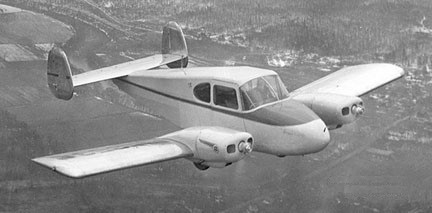
Piper PA-35 Pocono

Piper started the design work in 1965 for a twin-engined piston non-pressurized commuter airliner and the prototype first flew on 13 May 1968. It was a low-wing monoplane that was intended to be powered by two 475 hp (354 kW) Lycoming TIO-720-B1A piston engines then under development. It was planned that the aircraft would be built at the new factory at Lakeland Municipal Airport in Florida. Due to problems during development the tail area was increased, the fuselage stretched and the engines uprated to 520 hp (388 kW) variants.

Named Ponoco (meaning ‘a stream between two mountains’), development was stopped in 1969 initially to let the company develop other aircraft, but the halt was also influenced by the lack of a suitable engine and a number of third-level airline operators in the United States going out of business. In 1970 the company proposed a four-engined and a turboprop version, but they were not developed.

In about 1978 a cooperation program between Piper and WSK Mielec (Poland) was planned. As part of this one fuselage with wings was transported from Florida to Poland and a team of designers was assembled at the R&D Center in Mielec. The program was named M-19, with designer Tadeusz Widełka as the team leader. The program was abandoned when the An-28 program was launched in Mielec and the PA-35 fuselage was moved to the Technical University in Rzeszów. Later, probably in 1994, the aircraft was moved to the city of Widełka.

Pocono prototype in 1995 in Widelka, Poland

“What we should have done is put four Aztec engines on it” Pug Piper said later.

Only one, N3535C, was made.

Powerplant: 2 × Lycoming TIO-720-B1A, 520 hp (388 kW) each
Wingspan: 51 ft 0 in (15.55 m)
Length: 42 ft 4 in (12.91 m)
Height: 17 ft 5 in (5.31 m)
Empty weight: 5,572 lb (2,527 kg)
Gross weight: 9,750 lb (4,423 kg)
Maximum speed: 260 mph (417 km/h, 230 kn)
Cruise speed: 235 mph (377 km/h, 204 kn)
Stall: 80 mph
Range: 700 mi (1,127 km, 610 nmi)
Service ceiling: 29,000 ft (8,841 m)
Rate of climb: 1,680 ft/min (8.5 m/s)
Crew: two
Capacity: 16

Pilatus PC-24

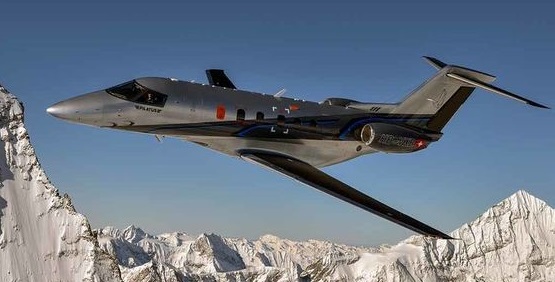
The PC-24 twin-engine business jet is equipped with a cargo door.

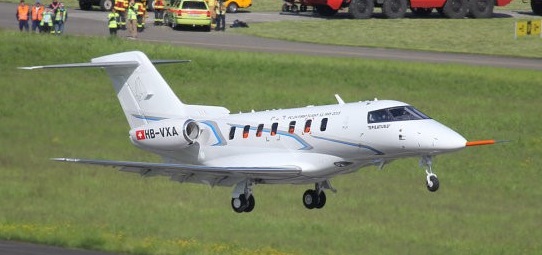
The first ever PC-24 took off on its maiden flight on 11 May 2014 at 10:00 local time from Buochs Airport. Prototype P01, callsign HB-VXA, flew across central Switzerland for a total of 55 minutes. The flight went exactly as planned with no problems. The aircraft took off from runway 07 in just under 600 meters and climbed to 10,000 feet (approx 3000 m ) in around three minutes. Test pilot Paul Mulcahy flew the PC-24 as Pilot in Command, with second test pilot, Reto Aeschlimann. The maiden flight followed a route across Central Switzerland – from Altdorf to Brünig via Engelberg. Twelve Flight Test engineers watched the flight from the ground on a stream of real-time flight data received from the PC-24.

A total of three PC 24 prototypes were to be built and used to complete a test programs of some 2,300 hours over the next two years.

Pilatus sold 84 PC-24’s in the space of just 36 hours at last year’s European Business Aviation Conference & Exhibition (EBACE) in May 2014. Certification and initial deliveries of the first aircraft were to come off the production line are planned from 2017.

The Pilatus PC-24, the “super versatile jet” from the Swiss manufacturer that is designed to bring many of the PC-12 turboprop’s unique capabilities to the bizjet market.

PC-24 production has started at Pilatus Aircraft’s headquarters in Stans, Switzerland, as the manufacturer readies to deliver the first customer airplane following certification.

In January 2017, fractional-ownership company PlaneSense was revealed as the launch customer for the jet, which features a large aft cargo door and the ability to operate from unimproved airstrips, both hallmarks of the PC-12 NG.

Flight testing to date has confirmed that the PC-24 will beat original projections and that the current flight test schedule is tracking on time, allowing for the handover of the first customer airplane two short weeks after certification is in hand.

Pilatus opened and closed the order book for the PC-24 at the EBACE show in Geneva in 2014, notching 84 sales, or three years’ worth of production. A long line of potential customers is said to be showing interest in the $9 million jet. Pilatus says it will reopen the order book after completing certification.

The PC-24 will boast a speed of 425 knots, a range of nearly 2,000 nm, a max operating altitude of 45,000 feet and a max payload figure of 2,500 pounds. The jet will be capable of carrying up to 10 passengers.

Pilatus PC-8D Twin Porter

The Pilatus PC-8D Twin Porter was a Swiss ten-seat light transport built by Pilatus Aircraft. Work on the Twin Porter started in 1966, it was a modified Pilatus PC-6 high-wing monoplane with the nose-mounted engine removed and two 290 hp Lycoming IO-540-GIB engines mounted on the wing leading edges.

To keep development costs down, as many components as possible were adopted from the single-engine PC-6 Porter, such as the center fuselage, the wings and main landing gear. There was a new development of the forward fuselage, also with the tail and the arrangement of the propellers. The cabin was easily converted for various tasks. First drafts showed a motor assembly right and left of the fuselage nose, similar to the Dornier Do 28. A tandem arrangement of the engines like on the Dornier Wal above the fuselage, as with the earlier flying boats, was considered. In the final design, the engines were located very close, in front of the wings, to the fuselage with separate engine pylons. There was no fixed connection between the engines and the wings, but a gap as in a slat. With this arrangement, it was hoped to obtain favorable values for single-engined flight.

On 28 November 1967, the PC-8D prototype made its first flight. The results from more than a year of flight testing were not satisfactory, so they abandoned the project at the end of January 1969. Because of the lack of single-engine performance, approval by FAR23 was not possible. The PC-8D Twin Porter was presented also at the international air show in Paris. The only aircraft built was scrapped after the project.

Simultaneously, Pilatus began the development of the training aircraft PC-7 powered by a turboprop engine. This made it possible to retrofit existing piston-engined Pilatus Porters with turboprop engines, with minimal changes to the airframe. The desired higher power of the twin PC-8D was achieved with lower operating and maintenance costs. A PC-8 with twin turboprop engines was considered, but was abandoned due to lack of market demand.

Only the one aircraft was built as flight testing was halted in 1969. The prototype was later scrapped.

Powerplant: 2 × Lycoming IO-540-GIB5, 220 kW (290 hp) each
Propellers: 3-bladed Hartzell HC-A3VK/V8433-4, 2.03 m (6 ft 8 in) diameter
Wingspan: 15.60 m (51 ft 2 in)
Wing area: 32.4 m2 (349 sq ft)
Length: 10.50 m (34 ft 5 in)
Height: 3.65 m (12 ft 0 in)
Empty weight: 1,550 kg (3,417 lb) (equipped)
Max takeoff weight: 2,700 kg (5,952 lb)
Maximum speed: 260 km/h (160 mph, 140 kn)
Cruise speed: 230 km/h (140 mph, 120 kn) max cruise (70% power at sea level)
Range: 1,400 km (870 mi, 760 nmi) max fuel, 620 kg (1,370 lb) payload, no reserves
Rate of climb: 6 m/s (1,200 ft/min)
Take off distance to 15 m (50 ft): 260 m (850 ft)
Landing distance from 15 m (50 ft): 250 m (820 ft)
Crew: one
Capacity: nine passengers

Pierce Arrow

The Langley 2-4, aka Langley Monoplane or Langley Twin twin-engine utility aircraft built in the United States in 1940. The aircraft was designed to make use of non-strategic materials in its construction and thereby avoid any shortages brought about by war. Two prototypes were constructed, one with 65 hp (49 kW) engines, and another with 90 hp (67 kW) engines. The second machine was purchased by the United States Navy and evaluated as the XNL-1, but the navy did not order the type.

The XNL-1 was sold as war surplus. The Langley was landing in Oklahoma in 1965 and after touch down the brakes locked flipping the airplane over and damaging the fuselage beyond economical repair.

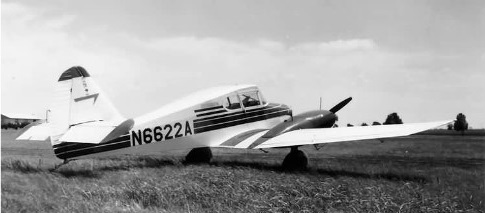
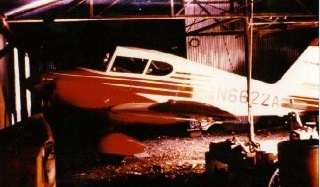
John Pierce and Hurley Boehler had a Stinson 108 fuselage in their hangar without wings, so they decided to purchase the Langley and, following the accident, its wings, engine nacelles, and main undercarriage were mated to a Stinson 108 fuselage to create a one-of-a-kind homebuilt aircraft named the Pierce Arrow, model U-2, serial number 1.

Construction of the airplane occurred at Harvey Young Airport, Tulsa, Oklahoma. Several old timers including John Pierce, Hurley Boehler and Jerry Hinds participated. The name came from Hurley Boehler who said “call it a Pierce Arrow.” Then Jerry Hinds, who was present, said “you two guys are crazy.” From this conversation came the type (Pierce Arrow) and the model (U-2 as an abbreviation for “you two”).

The Stinson 108 fuselage had the original Franklin engine removed and a nose cover added along with a new windshield.

The airplane was licensed in the experimental category as amateur built. FAA records for the airplane shows the approval for flight was issued on July 8, 1966. At this time the airplane was powered by the original engines installed on the Langley Twin, Franklin 90 Hp engines driving Flottorp 70KA54 fixed pitch props.

Toward the end of 1967 the engines were replaced with Lycoming O-290-D engines (115 Hp) driving Sensenich M74DM props. About 1980, the airplane was re-engined, this time with Lycoming O-320 engines driving McCauley 74-64 props.

N6622A

One big draw back was the small fuel tanks of the Langley twin, only 17 USgallons each. To extend the range when flying cross country Jerry Hinds often shut down one engine. As fuel drained he would then restart the engine then shutdown the other engine.Normal cruise was 150 MPH, rate of climb was 2,000 FPM, service ceiling 18,000, and single engine best rate of climb 750 FPM.

FAA records show that it changed registered owners 6 times, with John Pierce being the registered owner twice.
One owner is listed on some forms but apparently it was never actually registered to Joe Kennison as there is no bill of sale or registration in his name. Jerry Hinds purchased the airplane in June 1981 and he was the last registered
owner on the FAA records. At the time Jerry purchased the airplane it had 551 hours flying time.

Jerry Hinds sold the airplane about 1986). He traded the Pierce Arrow for a Swift to an individual in Aerococa, New Mexico. Apparently the new owner never actually registered the airplane.

The Pierce Arrow was flown in formation with a Pitts Special, named “Foxy Lady,” owned and flown by Mike, a friend of Jerry Hinds. Jerry and Mike flew the pair in airshows in addition to a Swift Jerry owned.

This airplane appeared on the April 1974 cover of Plane and Pilot magazine.

The last information was the airplane was owned by Jimi Genzling of New Mexico.