
Zeppelin-Staaken R.V

The LZ-3 sailed along the Rhine valley and onto Switzerland covering 200 miles. The performance galvanised the authorities in to action: firstly by an award of 500,000 Marks from the Government Airship Commission to aid research, and secondly the placing of an order for two Zeppelins for the Army.
The stringent conditions laid down for the purchase contract included a twenty-four hour endurance flight to cover a distance of no less than 500 miles with a crew of 20, and to include a landing on return.
Zeppelin realised the LZ-3 did not possess the endurance necessary to comply with these conditions and proposed the construction of a larger ship, the LZ-4.
The LZ-4 had an increased capacity of 528,000 cu.ft and it was powered by two engines delivering a total of 210 hp. Provision was made for a keel cabin and more efficient multiple bow and stern elevators were fitted, which, in conjunction with larger rudders, improved the lateral and vertical stability.
In July 1908 the LZ-4 made a twelve-hour flight along the Rhine and on into Switzerland, the whole trip proving to be completely trouble free. The following month the twenty-four hour army trial rook place. Initially all went well, with the airship sailing placidly along the valley of the Rhine. However, just short of Mainz the forward engine failed, causing the LZ-4 to make an emergency landing on the River Rhine.
Here the airship was secured to the bank and repairs were carried out on a sheltered reach of the river, from where after a few hours the flight was able to continue. By now darkness was coming on, and Count Zeppelin undertook the first night flight by a rigid airship, cruising confidently over the villages and towns of southern Germany.
Towards dawn, further engine trouble occurred necessitating a diversion to Stuttgart for repairs to be effected at the Daimler works. The airship landed at the village of Echterdingen where a landing party of soldiers was assembled to take the handling lines and make the ship secure. During the afternoon while waiting for the engines from Daimler to arrive, the wind freshened to such an extent that the ground crew were unable to hold the ship. The airship was wrenched from them and smashed to the ground where it instantly caught fire and in the space of minutes it had become a mass of twisted molten metal.
The 70-year-old Count Zeppelin vowed to carry on. Within hours of the news of the loss of the LZ-4 appearing in the papers a spontaneous outpouring of popular support in what he was trying to achieve was demonstrated by the German people. From all over the nation money and promises of donations came flooding in to Friedrichshafen, and within a short time more than 6 million Marks (£5 million) had been subscribed.
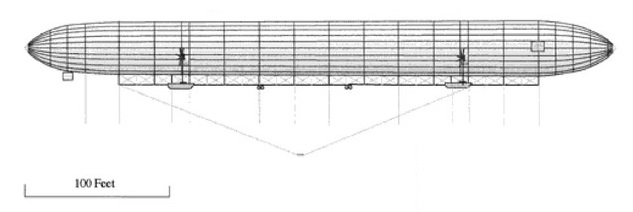
LZ-4
Engines; 2 x Daimler, 105 hp
Capacity: 428,000 cu.ft
Length: 446 ft
Width: 41 ft
Height: 50 ft
Gross lift: 15.5 tons
Useful lift: 3.75 tons
Max speed: 34 mph
Range at cruise: 180 miles
Ceiling: 2000 ft
Crew: 25
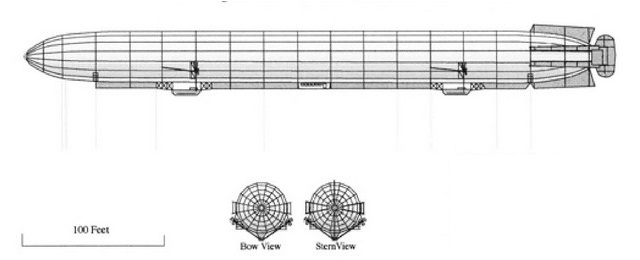

The construction of Graf Ferdinand von Zeppelin’s aluminium framework LZ 1 began in June, 1898, in a floating wooden hangar on Bodensee (Lake Constance) at Manzell (Friedrichshafen).
The hydrogen was contained in 16 cells supporting an all up weight of just under 12 tons. The parallel-sided, conical-ended craft had two gondolas fixed under the hull, each containing a four-cylinder Daimler petrol motor with an output of 16 hp. Lateral control was effected by two small rudders at the stern, whilst attitude and vertical control relied on a 500 lb sliding weight suspended on a cable beneath the ship.
Completed in the winter of 1899, the Graf decided to wait however until the summer of 1900 before attempting an ascension. The airship was inflated with hydrogen in June, and was towed out of its floating hanger by the steamboat Buchorn and, once clear of obstructions, vaned into the wind where the tow rope was released. On a near perfect day the LZ-1 rose to about 1300 ft, from where it flew 18 minutes above the calm waters of the lake on 2 July 1900 at 20:03. With a crew of four, including the Count himself, the airship covered some 4 miles against a headwind of 16 mph. The LZ-1 successfully achieved a degree of control despite the relatively low power of the engines, but problems with the sliding weight necessitated a descent on to the lake from where the ship was towed back to the hanger.
A second flight, of 30 minutes, took place on 17 October 1900. Experiments in control were undertaken, but again these tests were cut short due to engine trouble and there was some degree of structual failure of girders in the framework requiring another descent on to the water.
After some repairs and strengthening of the fractured girders the LZ-1 made its third and final flight of some 20 minutes, achieving a speed of 17 mph during which it again exhibited its ability to answer to the helm. This time the flight was terminated because of water in the petrol, but the ship again returned safely to its shed.
The following year Zepplin disbanded the joint stock company while personally assming its liabilities. The Count had the LZ-1 dismantled and the shed beached and closed up. He dismissed all the workers apart from Kober, whom he retained to work on a more advancd desighn he had conceived.
Length: 419 ft
Diameter: 38 ft 6 in
Height: 48 ft 6 in
Envelope capacity: 400,000 cu.ft
Gross lift: 12.5 ton
Useful lift: 2.75 ton
Engines: 2 x Daimler 16 hp
Max speed: 17 mph
Range at cruise est.: 180 mi
Ceiling: 2000 ft
Crew: 4

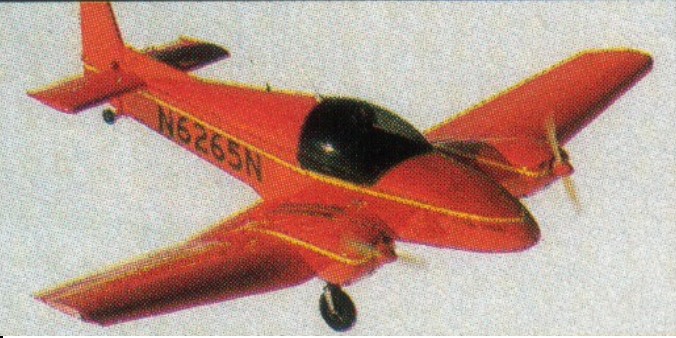
A highly modified Cri-Cri with more horsepower and some structural reinforcement.
Engines: 2 x Rotax, 30 hp

Engine: 2 x JPX PUL 425, 22 hp
Empty wt.: 270 lbs
Max wt.: 700 lbs
Wing span: 29.5 ft
Wing area: 148 sq.ft
Wing loading: 4.73 lbs/sq.ft
Power loading: 21 lbs/hp
Max speed: 48 mph
Cruise: 35 mph
Stall: 24 mph
Vne: 55 mph
Seats: 2
Two factory prototypes were used for performance figures (first flown 1996). Kit were planned for delivery in February 1998.
After delays, testing resumed in 1998 using Jabiru engines.

Engines: 2 x Jabiru, 2200, 80 hp
Height: 5.5 ft
Length: 20.8 ft
Wing span: 27.8 ft
Wing area: 123 sq.ft
Empty weight: 780 lb
Gross weight: 1450 lb
Fuel capacity: 34 USG
Top speed: 180 mph
Cruise: 150 mph
Stall: 55 mph
Range: 650 sm
Rate of climb: 1400 fpm
Takeoff dist: 450 ft
Landing dist: 450 ft
Service ceiling: 12,000 ft
Seats: 2
Landing gear: Retractable tailwheel
Engine: 2 x Jabiru 2200
Wing span: 8.47 m
Wing area: 11.5 sq.m
MAUW: 640 kg
Empty weight: 360 kg
Fuel capacity: 130 lt
Max speed: 289 kph
Cruise speed: 241 kph
Minimum speed: 88 kph
Climb rate: 6.5 m/s
Seats: 2
Fuel consumption: 28 lt/hr
Kit price (1998): $19,950
Engines: 2 x Jabaru 2200, 80hp
Wingspan: 27’3″
Length: 19’0″
Useful load: 650 lb
Max speed: 155 mph
Cruise speed: 145 mph
Stall: 55 mph
Ceiling: 12,000′
Kit (basic airframe): $21,650 tri-gear, $19,950 conventional gear
Seats: 2
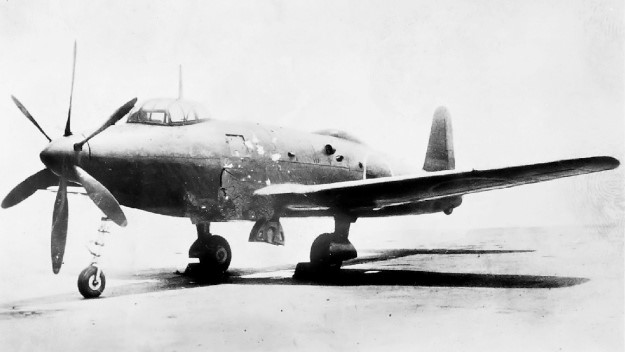
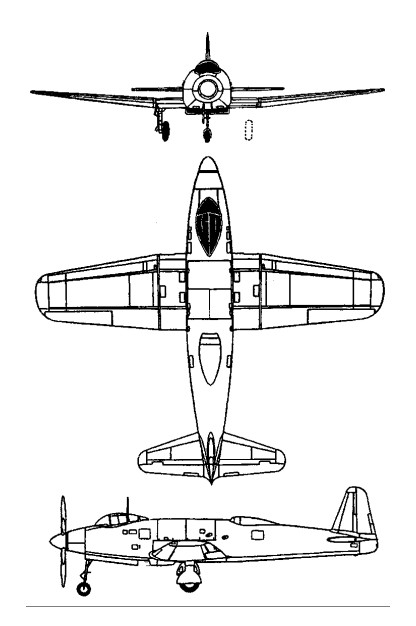
Inspired by the Heinkel He 119, Yokosuka began to design an aircraft of a similar layout, known as the Y-40, in 1943. Headed by Commander Shiro Otsuki, the aircraft project was a pressurized, two-seat, unarmed, high-speed, reconnaissance aircraft of all-metal construction that featured tricycle retractable gear. The Japanese Navy decided to take advantage of this work, and issued an 18-Shi specification built around the Y-40. The design was approved, and the Y-40 officially became known as the R2Y1 Keiun (Beautiful Cloud). The construction of two prototypes was ordered.
Commissioned for the Imperial Japanese Navy after the R1Y design was cancelled due to its disappointing performance estimates, the R2Y used coupled engines driving a single propeller and also featured a tricycle undercarriage. The Yokosuka R2Y Keiun (景雲 – “Cirrus Cloud”) was a prototype reconnaissance aircraft.

The Keiun was powered by two 60-degree, inverted V-12 Aichi Atsuta 30 series engines, licensed-built versions of the Daimler-Benz DB 601. The engines were coupled together by a common gear reduction in a similar fashion as the DB 606. The resulting 24-cylinder power unit was known as the Aichi [Ha-70]. With a 5.91 in (150 mm) bore and 6.30 in (160 mm) stroke, the engine displaced 4,141 cu in (67.8 L) and was installed behind the cockpit and above the wings. The Aichi [Ha-70] engine was to be turbocharged and rated at 3,400 hp (2,535 kW) for takeoff and 3,000 hp (2,237 kW) at 26,247 ft (8,000 m). Without the turbocharger, the engine was rated at 3,100 hp (2,312 kW) for takeoff and 3,060 hp (2,282 kW) at 9,843 ft (3,000 m). The engine drove a 12.47 ft (3.8 m), six-blade propeller via a 12.8 ft (3.9 m) long extension shaft that ran under the cockpit. Engine cooling was achieved by radiators under the fuselage and inlets for oil coolers in the wing roots. A ventral air scoop was located behind the engine to provide induction air for the turbocharger and air for the intercooler. Speculation suggests the first scoop on the side of the aircraft provided cooling air for the engine’s internal exhaust baffling, the second, larger scoop provided induction air for the normally aspirated Aichi [Ha-70] engine installed in the prototype, and the final two ports were for the engine’s exhaust.
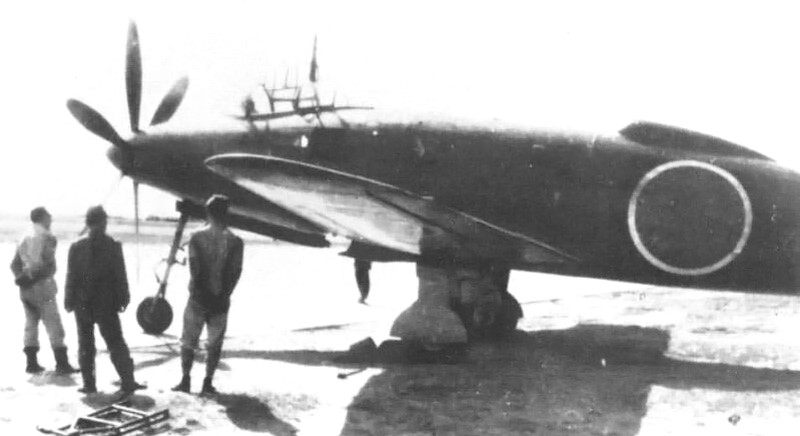
The pilot sat under a raised bubble-style canopy that was toward the extreme front of the aircraft. The radio operator/navigator occupied an area in the fuselage just behind and a little below the pilot.
By the fall of 1944, the direction of the war had changed, and Japan no longer needed a high-speed reconnaissance aircraft. The R2Y1 Keiun was all but cancelled when the design team suggested the aircraft could easily be made into a fast attack bomber. In addition, the Aichi Ha-70 power plant would be discarded, and one 2,910 lb (1,320 kg) thrust Mitsubishi Ne 330 jet engine would be installed under each wing. A fuel tank would be installed in the space made available by the removal of the piston engine. The bomber version would carry a single 1,764lb bomb under the fuselage, and carry cannons in the nose. This jet-powered attack bomber had an estimated top speed of 495 mph (797 km/h). The Japanese Navy decided to accept the modified design. Yokosuka were given permission to produce one R2Y1 piston-engined prototype to test out the aerodynamics of the design, while also working on the jet-powered R2Y2 Keiun Kai. It did not enter construction before the end of the war.
The decision was made to finish the nearly completed R2Y1 airframe and use it as a flight demonstrator to assess the flying characteristics of the aircraft. With pressurization, the turbocharger, and the intercooler omitted, the R2Y1 prototype was completed in April 1945 and transferred to Kisarazu Air Field for tests. Ground tests revealed that the aircraft suffered from nose-wheel shimmy and engine overheating.

Adjustments were made to overcome the issues, and the Keiun took to the air on 29 May 1945 (date varies by source and is often cited as 8 May 1945), piloted by Lt. Commander Kitajima. The flight proved to be very short because the engine quickly overheated, and a fire broke out in the engine bay. Lt. Commander Kitajima quickly returned to the field, and the R2Y1 suffered surprisingly little damage.

On 31 May during a ground run to test revised cooling, the engine was mistakenly run at high power for too long and overheated. The engine was removed from the aircraft to repair the damage. The R2Y1 sat awaiting repair for some time before it was destroyed by Japanese Naval personnel to prevent its capture by American forces (some say it was destroyed in an Allied bombing raid).
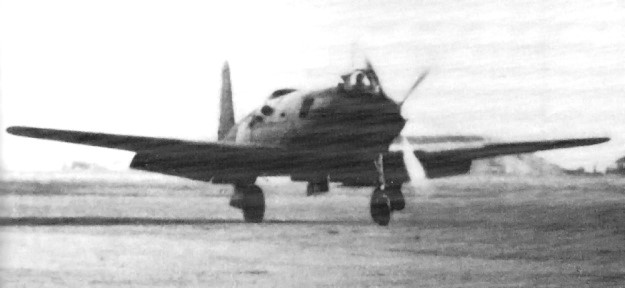
Because of the end of the War, the second R2Y1 prototype was never completed nor was the design work for the R2Y2.


Three were built, but only one was completed.
R2Y1
Engine: 2 x Aichi-10 Ha-70, 2550kW (3,400 hp / 3,100hp at 9,845ft)
Propeller: 6-bladed constant-speed metal
Wingspan: 14.0 m / 45 ft 11 in
Length: 13.05 m / 43 ft 10 in
Height: 4.24 m / 13 ft 11 in
Wing area: 34.0 sq.m / 365.97 sq ft
Max take-off weight: 8100-9400 kg / 17858 – 20724 lb
Empty weight: 6015 kg / 13261 lb
Fuel capacity: 1,555 l (411 US gal; 342 imp gal)
Max. speed: 715 km/h / 444 mph at 10,000 m (32,808 ft)
Cruise speed: 460 km/h / 286 mph at 4,000 m (13,123 ft)
Landing speed: 166 km/h (103 mph; 90 kn)
Ferry range: 3,611 km (2,244 mi, 1,950 nmi)
Service ceiling: 11,700 m (38,400 ft)
Time to altitude: 10,000 m (32,808 ft) in 21 minutes
Crew: 2
R2Y2
Engine: Two Ne-330 axial-flow turbojets
Power: 2,910lb thrust each
Crew: 2 (pilot and radio operator/ navigator)Span:
Armament: Forward firing cannon
Bomb load: One 1,764lb bomb
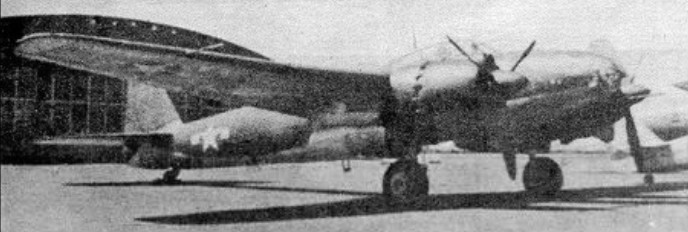
Requiring a fast medium bomber for dive-bombing, low-altitude bombing or torpedo attack, the Imperial Japanese Navy instructed the Yokosuka First Naval Air Technical Arsenal in 1940 to begin design of such an aircraft. The resulting Yokosuka P1Y prototype flown in August 1943 was a mid-wing, all-metal monoplane, powered by two Nakajima NK9B Homare 11 radial engines. Its performance was satisfactory, but the P1Y suffered from maintenance problems that plagued its service life.
The entry into service of the P1Y1 Navy Bomber Ginga Model 11 was in 1943.
As the war neared its end, Japan required defensive fighters and steps were taken to produce a night fighter version of the Ginga.
The contract for this was awarded to Kawanishi, who’s P1Y2-S Kyokko (Aurora) utilised the less troublesome 1850 hp Kasei 25 engines, was fitted with an AI radar ad three 30mm cannon. Only 97 P1Y2-S were completed before VJ day, although a few P1Y1-S conversions from Nakajima-built bombers saw limited operational service.

Production totalled 1098, built by Kawanishi (96) and Nakajima (1002), and if there had been adequate manpower to service these aircraft before each operational sortie they would have proved formidable adversaries. This was not possible and as a result the Ginga (Milky Way), allocated the Allied codename ‘Francis’, was tried unsuccessfully in a variety of alternative roles; its brief operational life of only six months was terminated by the end of the Pacific war.
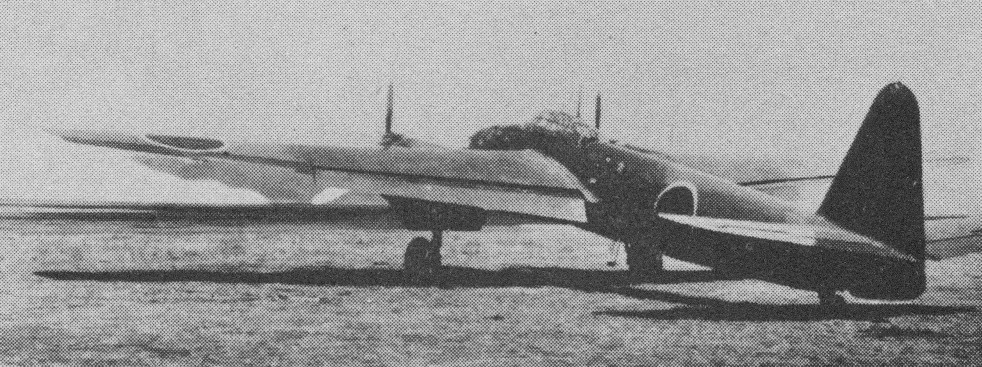
P1Y1
Engines: 2 x Nakajima Homare-21, 1370kW
Max take-off weight: 10500 kg / 23149 lb
Empty weight: 7265 kg / 16017 lb
Wingspan: 20.0 m / 66 ft 7 in
Length: 15.0 m / 49 ft 3 in
Height: 4.3 m / 14 ft 1 in
Wing area: 55.0 sq.m / 592.01 sq ft
Max. speed: 550 km/h / 342 mph
Cruise speed: 380 km/h / 236 mph
Ceiling: 9400 m / 30850 ft
Range w/max.fuel: 4650 km / 2889 miles
Range w/max.payload: 1900 km / 1181 miles
Crew: 3
Armament: 2 x 20mm cannons
Bombload: 1000kg
P1Y1
Engines: 2 x Nakajima Homare-11, 1820 hp
Wingspan: 65 ft 7 in
Length: 49 ft 3 in
Height: 14 ft 1 in
Empty weight: 14748 lb
Loaded weight: 10500 kg / 23149 lb
Max speed: 345 mph at 19,260 ft
Service ceiling: 33,530 ft
Max range: 1600 mi
Armament: 1 x 20mm cannons / 1 x 13.2mm mg
Bombload: 1760 lb or 1 x 1875 lb torpedo (externally
Crew: 3


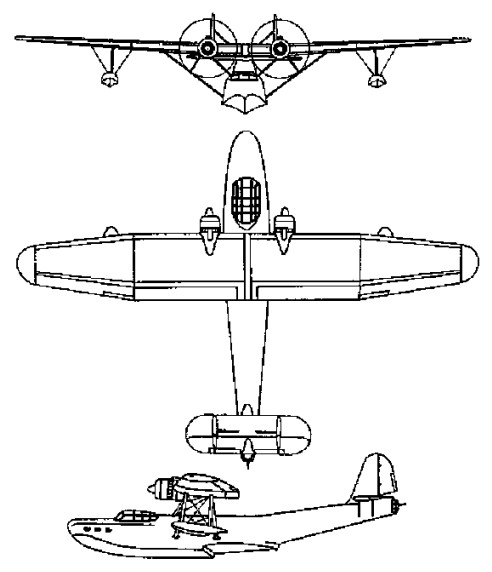
In 1934 the staff of the Yokosuka Navy Arsenal turned their hand to the design of a twin-engined flying-boat, the Yokosuka H5Y powered by two 895kW Mitsubishi Shinten 21 radial engines. Although built to a total of 20 during 1936-40 as the Navy Type 99 Flying-Boat, its performance was disappointing and, consequently, was deployed only on second-line duties.

Early in the war an unidentified twin-engined flying boat was spotted on non-combat duty around Japanese Naval bases. The allied code name ‘Cherry’ permitted identification before the manufacturer’s name and designation was discovered through prisoner interrogation over a year later.
H5Y1
Engine: 2 x Mitsubishi Shinten-21, 895kW
Max take-off weight: 12500 kg / 27558 lb
Wingspan: 31.57 m / 104 ft 7 in
Length: 20.52 m / 67 ft 4 in
Max. speed: 305 km/h / 190 mph
Ceiling: 5200 m / 17050 ft
Range: 4700 km / 2921 miles
Crew: 6
Armament: 3 x 7.9mm machine-guns
Bombload: 500kg

Roberto Bartini had designed and built the Stal-7 airliner whilst he was the chief designer at the ZOK NII GVF (Russian: Zavod Opytno Konstrooktorskoye Naoochno-Issledovatel’skiy Institoot Grazdahnskovo Vozdooshnovo Flota — “Factory for Special Construction at the Scientific Test Institute for the Civil Air Fleet”). The performance of the Stal-7 was extremely good, particularly in respect to its payload; at gross overload weight over 56% of the total weight was payload. During flight trials with maximum all-up weight the prototype crashed on take-off in early 1938, resulting in the arrest of Bartini and his imprisonment in a Siberian Gulag in February 1938. The Stal-7 lay unrepaired until Vladimir Yermolaev was appointed as chief designer at OKB-240 after Bartini’s arrest, with the task of transforming the Stal-7 design into a long-range bomber, a task made easier since Bartini had reserved space for a bomb bay in the fuselage. After repair the Stal-7 carried on with the flight-test programme, including a record-breaking non-stop flight on 28 August 1939 when it flew Moscow—Sverdlovsk—Sevastopol—Moscow; a distance of 5,086 km (3,160 mi) at an average speed of 405 km/h (252 mph).
Preliminary design of the DB-240 (Russian: dahl’niy bombardirovschik—”long-range bomber”), as the bomber version was designated, was complete by the beginning of 1939 and the construction of two prototypes began the following July. The DB-240 retained little apart from the general layout of the Stal-7 as the structure was almost completely redesigned. An all-metal mid-wing monoplane of inverted gull-wing configuration and with a twin fin-and-rudder tail unit, the Yer-2 had tail-wheel landing gear, the main units retracting into the nacelles of its two M-105 engines; accommodation was provided for a crew of four. The pilot’s cockpit was offset to port to improve his downward view and the navigator/bomb aimer sat in the extensively glazed nose with a 7.62-millimeter (0.300 in) ShKAS machine gun, the radio operator sat below and to starboard of the pilot and the dorsal gunner in a partially retractable turret with one 12.7-millimeter (0.50 in) Berezin UBT machine gun. Another ShKAS was fitted in a ventral hatch. Up to 2,000 kg (4,409 lb) of bombs could be carried in the bomb bay and two 500-kilogram (1,102 lb) bombs could be carried externally. Up to 4,600 kg (10,141 lb) of fuel could be carried. The DB-240 had been designed to use the experimental Klimov M-106 V12 engines, but the less-powerful Klimov M-105 engine had to be substituted because the M-106 was not available.
The DB-240 prototype flew for the first time on 14 May 1940 and began its State acceptance tests on 27 September 1940. The weaker engines prevented the DB-240 from reaching its designed performance. It could only attain 445 km/h (277 mph) at 4,250 m (13,944 ft) instead of the expected 500 km/h (311 mph) at 6,000 meters (19,685 ft). Its defensive armament was deemed inadequate and other problems included an excessively long take-off run and engine defects. However, these did not offset its virtues of a heavy bomb load and long-range (4,100 kilometers (2,548 mi) carrying 1,000 kg (2,205 lb) of bombs). It was ordered into production at Factory No. 18, in Voronezh, as the Yermolayev Yer-2.
A second prototype followed in September, by which time preparations for mass production at Voronezh were in hand. Manufacture began in March 1941, with approximately 50 aircraft delivered by 22 June 1941. These aircraft were about 5–8 km/h (3.1–5.0 mph) slower than the prototype and their normal weight increased 1,220 kg (2,690 lb) to 12,520 kg (27,602 lb). Production was terminated in August to allow the factory to concentrate on the higher-priority Ilyushin Il-2 ground-attack aircraft. By July 1941, 128 examples of the DB-240 had been delivered under the designation Yermolayev Yer-2
A Yer-2 was modified with experimental Mikulin AM-37 engines, a reinforced undercarriage, armored seats for the navigator and gunner, and 12.7 mm UBT machine guns in place of its original ShKAS weapons. It first flew in July 1941 and was able to reach 505 km/h (314 mph) at 6,000 m (19,685 ft), but the range was reduced to (3,500 km (2,175 mi) carrying 1,000 kg (2,205 lb) of bombs. One significant problem with this version was the excessive take-off roll which hindered operations from grass airstrips. The engine was unreliable, however, and had cooling problems that the Mikulin OKB did not have the resources to resolve so it was cancelled in October when the factory was forced to evacuate from Moscow by the German advance.
The Charomskiy M-40F Diesel engine was also evaluated in a Yer-2 in 1941. This engine, like all Diesels, offered a greatly reduced fuel consumption compared to a standard gasoline-powered engine, but at a great penalty in weight. These engines increased the gross take-off weight to 13,500 kg (29,762 lb) which required the undercarriage to be reinforced and the wing area increased to keep the same wing loading. The M-40F-powered aircraft reached a maximum speed of 430 km/h (267 mph) at 6,050 m (19,849 ft). However, the M-40 was not yet ready for service use and the project was cancelled.
The cockpit was modified to accommodate two pilots side-by-side and the wing and tailplane areas were increased. The 12.7 mm UBT machine gun in the dorsal turret was replaced by a 20-millimeter (0.79 in) ShVAK cannon and the nose and ventral ShKAS machine guns were exchanged for 12.7 mm UBT machine guns. Up to 5,460 kg (12,037 lb) of fuel could be carried. The Yer-2/ACh-30B was placed into production at Factory No. 39 in Irkutsk at the end of 1943 and the first production aircraft was submitted to its State acceptance trials the following month. Some excess aircraft were converted as Yer-2ON VIP transports.
The Yer-2 was not in squadron service when Germany invaded on 22 June 1941, but the 420th and 421st Long-Range Bomber Regiments (Russian: Dahl’niy Bombardirovchnyy Aviapolk—DBAP) were formed shortly afterwards. However neither regiment flew any operational missions until later in the summer. On the evening of 10 August Yer-2s of the 420th DBAP, accompanied by Petlyakov Pe-8s of the 432nd DBAP, attempted to bomb Berlin from Pushkino Airfield near Leningrad. The airfield was too short to accommodate a fully loaded Yer-2, but three bombers did manage to take-off regardless. Two managed to bomb Berlin, or its outskirts, but only one successfully returned; the other was shot down by ‘friendly’ Polikarpov I-16s when it reentered Soviet airspace and the third aircraft went missing. Three crews from the 420th DBAP bombed Königsberg during the nights of 28–29 August and 30 August–1 September from Ramenskoye Airport, southeast of Moscow.
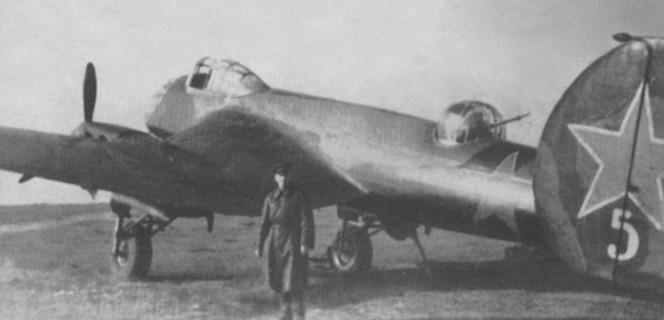
On 1 October 1941 sixty-three Yer-2s were in service, but only thirty-four were operational. The 420th DBAP had flown 154 sorties by the beginning of November (6 in August, 81 in September, 67 in October) and had lost thirty of its forty aircraft. Over half of these (nineteen) were due to non-combat losses. Losses were extremely high over the autumn and winter as they were inappropriately committed against German tactical front-line targets during the Battle of Moscow at low altitudes and only twelve were in service on 18 March 1942. On 4 August 1942 the 747th DBAP had only ten Yer-2s on hand and it was briefly committed during the Battle of Stalingrad. The survivors were flown, in ever dwindling numbers, until August 1943 when the last few aircraft were transferred to schools by the 2nd Guards DBAP and the 747th DBAP.
The Yer-2 was placed back into production at the end of 1943, but none of the new bombers had been issued to combat units by 1 June 1944. However forty-two were in service on 1 January 1945 and one hundred and one on 10 May 1945 after the war ended. The first combat mission undertaken by Yer-2s after they returned to production was a raid on Königsberg on 7 April 1945 by the 327th and 329th Bomber Aviation Regiments (Russian: Bombardirovchnyy Aviatsionyy Polk). It remained in service with Long-Range Aviation units until replaced by four-engined bombers like the Tupolev Tu-4 in the late 1940s.

A Yer-20N special-purpose long-range transport version, which carried 18 passengers, was developed from the bomber.
In total, about 360–370 were built.
Variants:
DB-240
Two prototypes of the Yer-2 series with two 1,050 hp M-105 engines.
Yer-2
Production version with two M-105 engines, 128 built.
Yer-2/AM-37
One aircraft re-engined with two prototype 1,380 hp Mikulin AM-37 engines, the fastest of all Yer-2s.
Yer-2/M-40F
The first diesel-powered Yer-2, with modified wings. One converted with two 1,500 hp Charomskiy M-40F diesel engines.
Yer-2/ACh-30B
Production model of the diesel-engined version. Performance was excellent despite the poor reliability and rough running of the Charomskiy ACh-30B diesel engines. Range increased 1,500 km (930 mi) from the version with M-105 engines.
Yer-2ON
(Russian: Osobogo Naznachyeniya–Special Assignment) Two aircraft from the Yer-2/ACh-30B production line were modified with a 12-seat VIP cabin, military equipment removed and long-range fuel tanks in the bomb-bay. A third aircraft was converted from a Yer-2 (1941 production) and used for shuttle flights between Irkutsk and Moscow.
Yer-2N
(Russian: Nositel—Carrier) One aircraft was modified as an engine test-bed for captured Argus As 014 pulse jet engines.
Yer-2/MB-100
One production aircraft used as a test-bed for the 2,200 horsepower (1,600 kW) Dobrotvorskii MB-100 engine in 1945.
Yer-4
The final iteration of the Yer-2 series was a 1941 production aircraft re-engined with ACh-30BF engines and redesignated as the Yer-4. It had a slightly larger wingspan, increased take-off weight and improved armament. The prototype was tested in December 1943, but did not enter production.
Operators:
Soviet Union
VVS (Russian: Voyenno-Vozdooshnyye Seely—Soviet Air Forces)
ADD (Russian: Aviahtsiya Dahl’nevo Deystviya—Long Range Aviation)
420th Long-Range Bomber Aviation Regiment, later the 748th Long-Range Bomber Aviation
Regiment
421st Long-Range Bomber Aviation Regiment, later the 747th Long-Range Bomber Aviation
Regiment
747th Long-Range Bomber Aviation Regiment
748th Long-Range Bomber Aviation Regiment, later the 2nd Guards Long-Range Aviation Regiment
327th Long-Range Bomber Aviation Regiment
329th Long-Range Bomber Aviation Regiment
Specifications:
Yer-2
Engine: 2 x M-105, 770kW
Max take-off weight: 11300-13700 kg / 24912 – 30203 lb
Max. speed: 445 km/h / 277 mph
Cruise speed: 380 km/h / 236 mph
Ceiling: 7500 m / 24600 ft
Range w/max.fuel: 3000-4500 km / 1864 – 2796 miles
Armament: 1 x 20mm machine-guns, 2 x 12.7mm machine-guns
Bombload: 1000-5000kg
Crew: 4
Yer-2/ACh-30B
Engines: 2 × Charomskiy ACh-30B V12 diesel engines, 1,118 kW (1,500 hp) each
Wingspan: 23 m (75 ft 5.5 in)
Wing area: 79 sq.m (850 sq.ft)
Length: 16.42 m (53 ft 10½ in)
Height: 4.82 m (15 ft 10 in)
Empty weight: 10,455 kg (23,049 lb)
Gross weight: 18,580 kg (40,961 lb)
Maximum speed: 420 km/h (261 mph)
Range: 5,500 km (3,418 miles)
Service ceiling: 7,200 m (23,620 ft)
Crew: 4
Armament:
1 x 12.7 mm UBT machine-gun in nose flexible mount.
1 x 12.7 mm UBT machine-gun in ventral flexible mount.
1 x 20 mm ShVAK cannon in a TUM-5 dorsal turret.
Up to 5,000 kg (11,023 lb) of bombs in the internal bomb-bay.

 All Aero