The unique Reid & Sigrist RS.4 Desford Trainer, VZ7281/G AGOS began life in 1945 as the R.S.3 Desford, and was modified for prone pilot experiments as the R.S.4 Bobsleigh in 1951. It rejoined the civil register five years later, being used for film and aerial survey work.
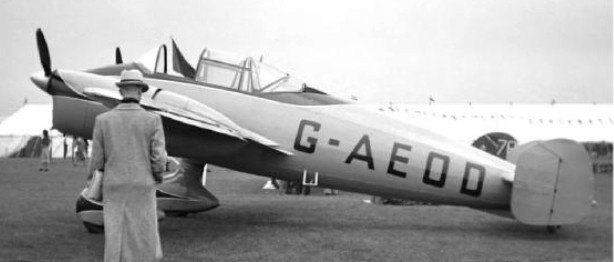
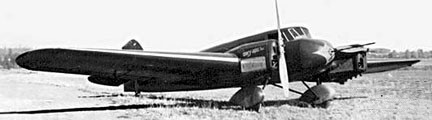
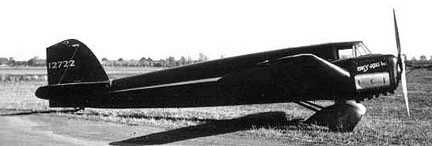
Reid & Sigrist Ltd built a twin-engined advanced trainer popularly known as the Snargasher, of which only a prototype (G-AEOD) was built.
A three seat trainer built at Desford shortly before the Second World War, power was by two de Havilland Gipsy Six engines. The aircraft’s first public appearance was at the Royal Aeronautical Society garden party at Heathrow in May 1939.
During the war the Snargasher flew as the maker’s communication aircraft until scrapped in 1944.
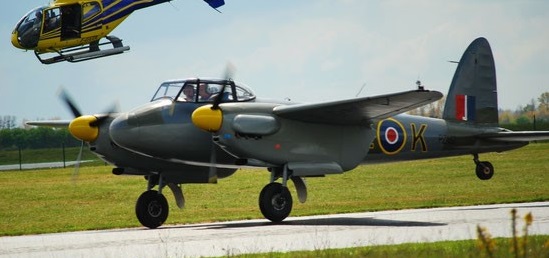
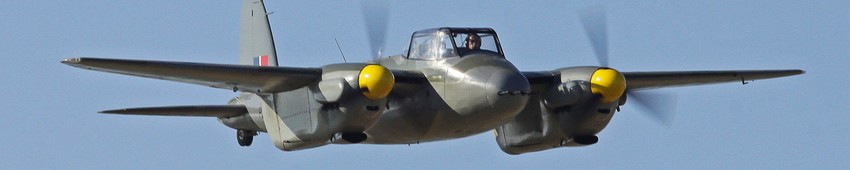
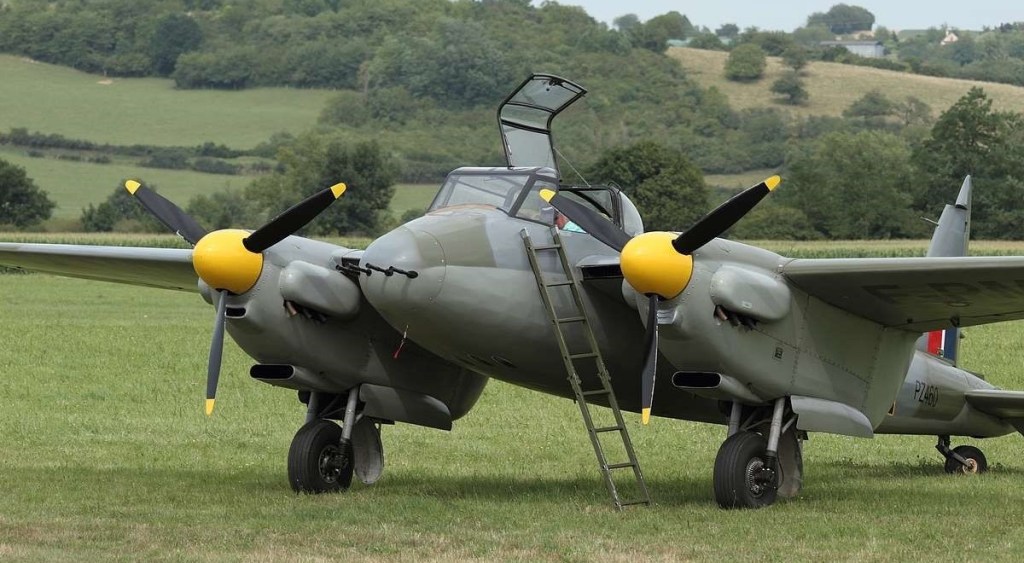
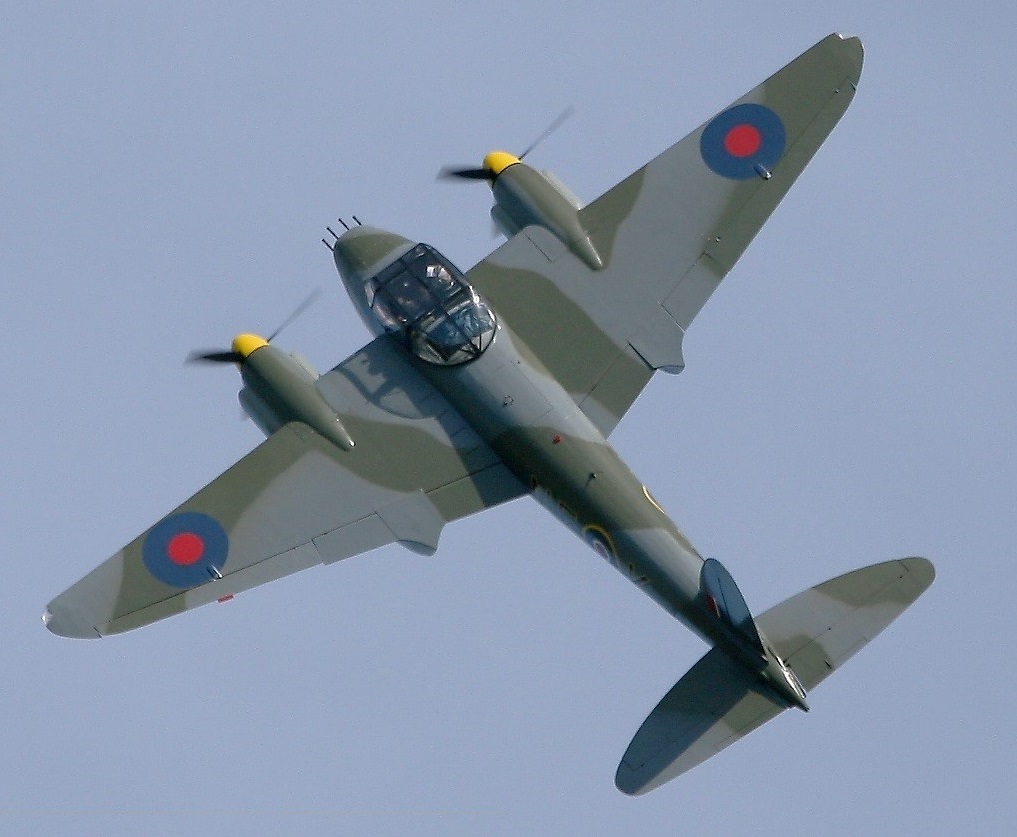
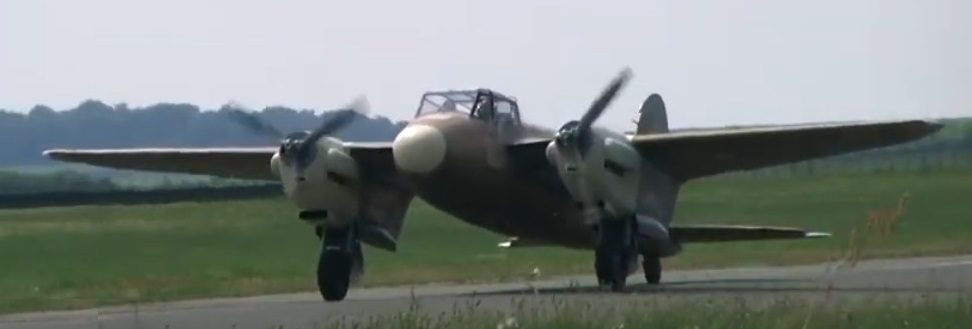
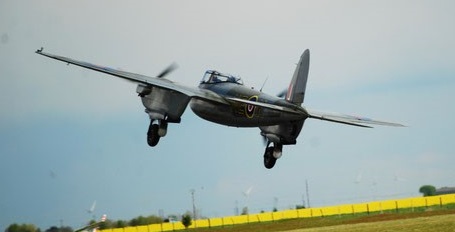
The French association Reconstruction Répliques Avions Anciens began work on 3/4-scale de Havilland Mosquito replica the replica in 1995 and required over 30,000 hours of work before it was ready for the first test at the Fontenay-le-Comte airfield.
The first engine test was carried out earlier this year and were then followed by high-speed ground tests. The first flight took place on April 23, 2011.
This replica of a British WWII bomber overturned on 6 August 2015 after touching the ground in Fontenay-le-Comte. The pilot is seriously injured.
Thursday evening, at 8:45 p.m., the plane approached an airstrip at the aerodrome of Fontenay-le-Comte, in the south-Vendée. This three-quarter-length replica of a Mosquito, a British WWII bomber, returns to its “base” after a commemoration, in Jonzac, in Charente-Maritime. On board: Hervé Thebaud, the pilot, an instructor from Île d’Yeu; and Jean-Paul Bichon, the co-pilot, a resident of Luçon, both in their sixties.
According to several witnesses, the landing “is going well”. Shortly after touching the ground, “a hundred meters from cutting the throttle”, during the “taxiing” phase, the aircraft got slightly askew. At this precise moment, it tilts forward, “like a wooden horse”, and completely overturns, until the fin hits the ground. He ends his race on his back. An aerodrome mechanic is already running towards the aircraft. Seeing the aircraft’s turn signals still on, he said to himself that it was absolutely necessary to “cut the battery to prevent it from causing a fire” with the fuel escaping from the tank. It then contains “at least 400 liters of gasoline”. When the mechanic arrives in front of the machine, the pilot and the co-pilot are aware and can press the button. The co-pilot is the first to exit, with the help of the mechanic who broke the window. The pilot was extricated after an hour by the firefighters, “quickly on the spot”. Seriously injured, he will later be directed to Nantes. Its vital prognosis is not engaged. On the aerodrome, around thirty firefighters cover the aircraft with a carpet of foam. The last left at 12:30 am Several people, including the co-pilot who returned from the emergency room, then got busy to get the Mosquito out of the airstrip. It is when trying to turn it over with a crane that the tail, which was already hanging on by a thread, becomes detached. The plane had required 17 years of work. According to a member of the Luçonnaise association which built it (Replicas and reconstruction of old planes), it will be “difficult to repair”.
Ironically, the Mosquito had, the same day, flew over Jonzac in homage to the crew of an Allied bomber that crashed there on August 6, 1944.
Wingspan: 12.04 m Length: 9.30 m Height: 2.45 to 2.53 m
Raytheon’s biggest Hawker design (30% larger than the 800XP) originated at roughly the same time as the initial work began on the Premier I. The Horizon would be an effort to blend high technology with earlier Hawker flight characteristics.
First flown on 11 August 2001, the Horizon retains its DH125 pedigree but is an all-new aircraft with a thinwall composite fuselage offering some 20% more cabin space for the equivalent weight of a conventional structure. The Horizon complements the upgraded 800XP and the entry-level Premier 1.
The design received FAA certification in 2004. On the flight deck is a Primus Epic flight control system and flight management system. The navigation comes from a dual VHF omni-directional radio navigation system, dual distance measuring equipment, dual inertial navigation system and a dual global positioning system. Preliminary performance specifications for the 37,500-pound-MTOW, P&WC PW308A-powered twinjet include a 470-knot high-cruise speed, 3,366 nm NBAA IFR range (two crew and six passengers), and a 5,088 ft balanced field length.
More than 320 were ordered.
Engines two 6,900-lb Pratt & Whitney PW308A turbofans Gross wt. 37,700 lb Empty wt. 21,555 lb Fuel capacity 2,134 lb Max cruise 470 kts Long range cruise 430 kt Range 2,763-3,477 nm Ceiling 45,000 ft Takeoff distance 5,088 ft Landing distance 2,907 ft Seats 8-14
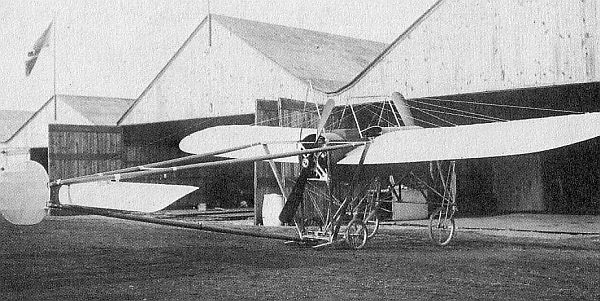
Taken at Mineola airfield, the Queen Speed Monoplane / Double Gnome Monoplane; fitted with two Gnôme rotary engines of 50 hp – the two bladed propellers driven in opposite direction to prevent torque. Its design influenced by the Blériot monoplane (Queen built Blériot XI monoplanes under license at the time), the twin engine construction was thought to be safer, that in the case of malfunction of one, flight could continue using the other. The machine was financed by the banker Willis McCormick, who was president of the New York Aeronautical Society. Built in Fort George, New York in 1911, its first flight was made by Frank Stone on July 10, 1911. Unfortunately the machine was unstable during the climb, turned and crashed, injuring the fearless Stone. The machine was ruined, never to fly again.
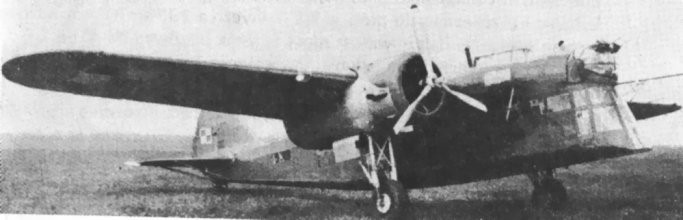
The LWS-6 Żubr (PZL.30, wisent / Bison) was a Polish twin-engined medium bomber, produced by the LWS factory before World War II. A short series was used for training only, because it was inferior to the contemporary PZL.37 Łoś design.
The PZL.30 was designed by Zbysław Ciołkosz) for PZL in the early 1930s, initially as a 12-passenger passenger airliner. When the Polish Airlines LOT bought Douglas DC-2 aircraft instead, the design was converted to a bomber, with a projected bomb load of 1,200 kg. The PZL.30 was developed as a less-advanced, alternative medium bomber design, in case the more modern bomber design, the PZL.37 Łoś would fail. The first prototype, designated PZL.30 (or PZL.30BI) was flown in March 1936 by Bolesław Orliński.
The maiden flight of the PZL.30 took place only three months before the PZL.37 Łoś prototype flew. Although developed at the same time as the PZL.37, the PZL.30 was inferior to its counterpart, being slower, had a much smaller bomb load than the Łoś and yet was produced at a similar price.
The PZL.30 prototype, initially powered with two 420 hp Pratt & Whitney Wasp Junior engines, was further refitted as the PZL.30BII, with more powerful Bristol Pegasus VIII engines. The aircraft was accepted for a limited production run by the LWS state factory in Lublin, of which Ciołkosz became the technical director and project lead. The second prototype was designated LWS-4.
It was planned to produce 16 aircraft for the Polish Air Force, with the designation: LWS-6 Żubr. The Żubr was given a military code number 71 and the series was to have factory numbers 71.1 to 71.17, but the aircraft were given different code numbers eventually due to secrecy.
The production aircraft incorporated further changes, among others the landing gear retracting into the fuselage sides was changed to more conventional one, retracting into the engine nacelles. After a prototype crashed on 7 November 1936, caused by de-laminating plywood wing skins, the wing had to be reinforced. Due to this increased weight, the LWS-6 had a smaller bomb load than expected. A modified prototype was made with a double tail fin, and flown at the end of 1937. The definitive variant, however, in the course of production, returned to a single enlarged tail fin configuration. A series of 15 aircraft were built in 1938.
In 1937 the factory proposed to build a floatplane torpedo bomber variant LWS-5, instead of developing LWS-1 (R-XXA) design by Jerzy Rudlicki. It was supposed to be fitted with two Short floats of the Lublin R-XX prototype. At first the Polish Navy exhibited interest and work on the LWS-1 was cancelled despite its progress, but then due to problems with LWS-5 development, work on the prototype was canceled. It was evident that the underpowered LWS-5 could not carry an effective offensive load.
Apart from the Polish Air Force, the Romanian Air Force showed an interest in the Żubr prototype in 1936, and considered a purchase of 24 aircraft. On 7 November 1936, after the Pegasus-powered prototype encountered a mid-air structural failure and crashed at Michałowice, all on board dying, including two Romanian officers on board, Romania ordered the PZL.37 Łoś instead.
The LWS-6 was a conventional high-wing cantilever monoplane. It featured mixed construction (metal and wood). The fuselage was rectangular in cross-section, made of a metal frame, covered with metal (upper fuselage) and canvas (sides and bottom) with the front section made of duralumin. Wings were of wooden construction and plywood covered. There was a crew of four: pilot, commander-bombardier, radio operator and a rear gunner. The bombardier was accommodated in the glazed nose, with a forward twin machine gun turret with a notable pointed “beard” below the turret. The pilot’s canopy was located above the fuselage, offset to the left. The rear gunner operated twin machine guns in a semi-retractable upper dorsal turret, elevating to a working position, along with a “trap” ventral position, operating the same way. The main undercarriage retracted into engine nacelles. The aircraft was powered by two Bristol Pegasus VIII radial engines, normal power: 670 hp (500 kW), take-off power: 680 hp (520 kW). Bombs were carried in a bomb bay in the fuselage, the maximum load was 660 kg.
A total of 15 LWS-6 bombers were delivered to the Polish Air Force in 1938-1939. From the outset, they were considered obsolete, and were assigned to training units, mainly to the 3rd Training Dyon. In operational service, the LWS-6 revealed several faults, for example, the undercarriage retracted on some aircraft during landing. Reportedly, the crews later flew with the undercarriage permanently locked down. As training aircraft they had their armament removed. There was only one crash, without fatal injuries.
During the invasion of Poland in 1939, Żubrs were not used in combat. Several were destroyed on the ground, along with many other training aircraft. The Germans captured several LWS-6s, including the twin-tailfin prototype, and used them for blind flying training until at least 1942 (among others, in Blindflugschule Schleissheim). Ironically, the Luftwaffe service of this bomber was longer than the Polish one.
The Soviets captured four aircraft after their invasion on Poland and subsequently used them as communication aircraft.
LWS-6 Engines: 2 × Bristol Pegasus VIII, 680 hp (520 kW) Wingspan: 18.50 m (60 ft 8 in) Wing area: 49.5 m² (532.6 ft²) Length: 15.40 m (50 ft 6 in) Height: 4 m (13 ft 2 in) Empty weight: 4,788 kg (10,533 lb) Loaded weight: 6,747 kg (14,843 lb) Max takeoff weight: 6,876 kg (15,127 lb) Useful load: 1,959 kg (4,319 lb) Maximum speed: 341 km/h (212 mph) Cruise speed: 280 km/h (174 mph) Range: 750-1,250 km (466-776 mi) Service ceiling: 6,700 m (21,975 ft) Rate of climb: 408 m/min (6.8 m/s) (1,338 ft/min) Wing loading: 129 kg/m² (26.4 lb/ft²) Crew: four (pilot, commander-bombardier, radio operator, rear gunner) Armament: 2 × 7.7 mm Vickers F machine guns in nose turret 2 × 7.7 mm Vickers F machine guns in upper dorsal rear turret 1 × 7.7 mm Vickers F machine gun in ventral underbelly position Bombload: 660 kg (1,450 lb)
Single-seat open frame ultra-light helicopter with two rotor-tip mounted Wojcicki pulse-jets.
A jet-powered helicopter, the JK-1 Trzmiel, designed by J. Kotlinski, a former member of Zurakowski’s design team, was completed at the I.L. (Aircraft Institute) in the spring of 1957.
A light pulse-jet-powered helicopter with a two-bladed main rotor with small two-blade servo-rotor above main rotor and two-blade tail rotor. Main rotor blades, with a steel spar in the leading edge, are filled with plastic and have sheet duralumin skin. Servo-rotor of two circular planform blades mounted on short streamline stubs. Two-blade small diameter directional control rotor at the rear end of fuselage frame. Total main disc area 38 sq.m.
The fuselage is an uncovered steel-tube structure. Power is from two 11-kg Wojcicki pulse-jets mounted at tips of main rotor blades.
First flown on 28 June 1957, the JK-1 was flight-tested hat year. Two were built.
JK-1 Engine: 2 x Wojcicki turbojet, 12.5kg Main rotor diameter: 7m Height: 2.35m Max take-off weight: 340kg Max speed: 131km/h Endurance: 15min
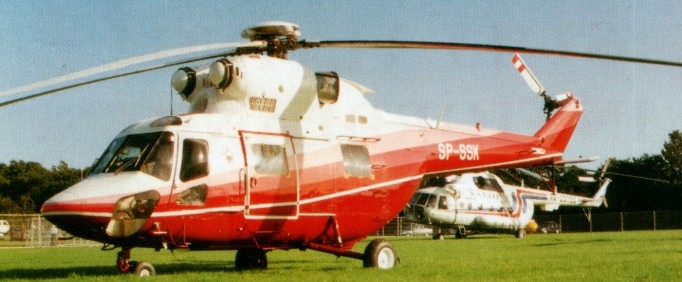
Developed under a 1970 joint Polish/Soviet agreement with preliminary design by engineers from both countries at Mil OKB in Moscow in 1972, where a preliminary mockup was completed in 1975 with accommodation for 12 passen¬gers or up to 2,100kg of internal cargo.
Detail design and definitive mockup by Swidnik 1976. PZL’s design team was under Stanislaw Kaminski. Static/fatigue ground test airframe of 1978 followed by five flying prototypes, first of which (SP-PSA, as W-3 Sokol (Falcon)) made first flight 16 November 1979, and used in subsequent tiedown tests; remaining prototypes embodied changes resulting from tests.
Soviet participation ended in 1980. Manufacturer’s flight trials resumed 6 May 1982 with second prototype (SP-PSB); third, fourth and fifth prototypes all made first flights in 1984 on 24 July (SP-PSC), 4 June (SP-PSD) and 26 November (SP-PSE) respectively; certification trials carried out in wide range of operating conditions, including heavy icing and extreme temperatures of -60 and +50°C. Provisional Polish certification 26 September followed by full certification in Poland 10 April 1990, and to Russian NLGW-1 and -2 regulations 17 December 1992
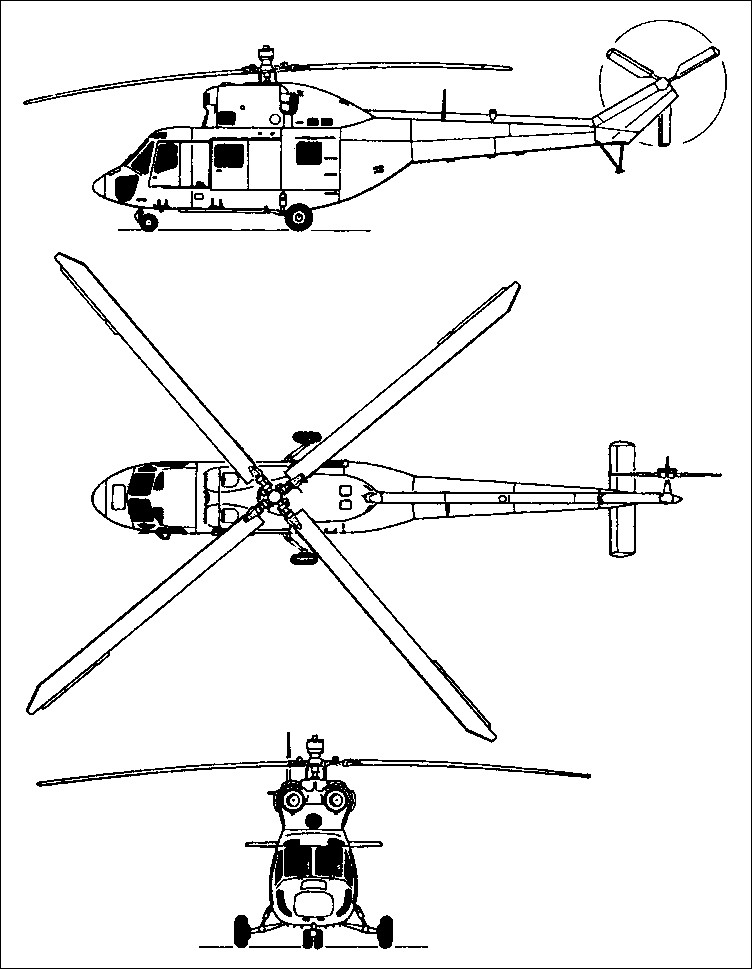
A conventional utility helicopter of pod-and-boom layout and with engines above cabin. Four-blade fully articulated main rotor and three-blade tail rotor; main rotor has pendular Salomon-type vibration absorber for smooth flight and low vibration levels. Transmission driven via main, intermediate and tail rotor gearboxes. Tailfin integral with tailboom; fixed incidence horizontal stabiliser, not interconnected with main rotor control system.
Main rotor blades have NACA 23012M aerofoil section and (on Polish Navy W-3RM) manual folding. Rotor brake standard. Rotor rpm 268.5 (main) and 1,342 (tail); main rotor blade tip speed 220.7 m/s. Rotor blades (main and tail) and single-spar horizontal stabiliser of laminated GFRP impregnated with epoxy resin; tail rotor driveshaft of duralumin tube with splined couplings; duralumin fuselage; GFRP fin trailing-edge.
Three hydraulic boosters for longitudinal, lateral and collective pitch control of main rotor; one booster for tail rotor control. Constant-speed rpm control for continuous operation (manual rpm control also available). Two-axis stability augmentation system with pitch and roll hold. Three- and four-axis AFCS available from late 1994.
Landing gear ia a non-retractable tricycle type, plus tailskid beneath tailboom. Twin-wheel castoring and self-centring nose unit; single wheel on each main unit. Oleo-pneumatic shock-absorber in each unit. Mainwheel Stomil Poznan tyres size 700×250; nosewheel tyres size 400×140. Tyre pressures 4.90 and 4.40 bar respectively. Pneumatic disc brakes on mainwheels. Metal ski landing gear optional. Six inflatable flotation bags on Anakonda and W-3AM.
Power is from two WSK PZL-Rzeszow PZL-10W turboshafts, each with rating of 671kW for T-O and emergency ratings of 746kW and 858kW for 30 and 2 1/2 minutes OEI respectively.
Particle separators on engine intakes, and inlet de-icing, standard. Power plant equipped with advanced electronic fuel control system for maintaining rotor speed at pilot-selected value amounting to ±5% of normal rpm, and also for torque sharing as well as for supervising engine limits during start-up and normal or OEI operation. Engines and main rotor gearbox mounted on bed frame, eliminating drive misalignment due to deformations of fuselage. Transmission rating 1,342kW maximum for T-O, 1,163kW maximum continuous and 857kW OEI. Engine input rpm 23,615.
Four bladder fuel tanks beneath cabin floor, with combined capacity of 1,720 litres. Auxiliary tank, capacity 1,100 litres, optional (not FAA approved). Oil capacity 14 litres per engine.
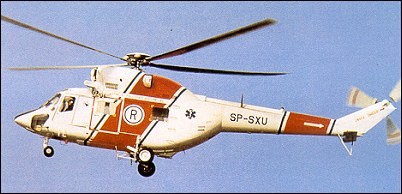
Pilot (port side), and co-pilot or flight engineer, side by side on W-3 flight deck, on adjustable seats with safety belts. W-3A can be flown by single pilot in VFR, with extra passenger in co-pilot seat. Dual controls and dual flight instrumentation optional. Accommodation for 12 passengers in main cabin or up to eight survivors plus two-person rescue crew and doctor in Anakonda SAR version. Seats removable for carriage of internal cargo. Medevac version can carry four stretcher cases and medical attendant (EMS version, one stretcher, three medical personnel and intensive care suite). Baggage space, capacity 180kg, at rear of cabin.
Door with bulged window on each side of flight deck; large sliding door for passenger and/or cargo loading on port side at forward end of cabin; second sliding door at rear of cabin on starboard side. Optically flat windscreens, improving view and enabling wipers to sweep a large area. Accommodation soundproofed, heated (by engine bleed air) and ventilated.
Systems include two independent hydraulic systems, working pressure 90 bar, for controlling main and tail rotors, unlocking collective pitch control lever, and feeding damper of directional steering system; automatic power changeover if one system fails. Flow rate 11 litres/min in each system. Vented gravity feed reservoir at atmospheric pressure. Pneumatic system for actuating hydraulic mainwheel brakes. Electrical system providing 200/115V three-phase AC power at 400Hz and 28V DC power. Electric anti-icing of all rotor blades. Fire detection/extinguishing system. Air conditioning and oxygen systems optional. Neutral gas system optional, for inhibiting fuel vapour explosion.
Avionics: Standard VFR and IFR nav/com avionics permit adverse weather operation by day or night. Bendix/King avionics standard; alternatives at customer’s option. Comms: Chrom (NATO ‘Pin Head’) IFF transponder in military versions. Radar: Bendix/King RDS-82 weather radar in W-3A; 5A-813 radar in W-3RM. Flight: Stability augmentation system standard. AP Decca navigator in W-3 KM. Mission: SPOR search and detection system in W-3RM. Self-defence: Modified Syrena RWR in military versions initially; to be replaced by Thales EWR-99 (SPS-H in W-3PPD).
Cargo version equipped with 2,100kg capacity external hook and 150kg capacity rescue hoist. W-3RM has 272kg capacity electric hoist; stretchers, two-person rescue basket, rescue belts, two six-person liferafts, rope ladder, portable oxygen equipment, electric blankets and vacuum flasks, various types of buoy (light, smoke and radio) and marker, binoculars, flare pistol and searchlights. Firefighting version: one 1,590 litre ‘Bambi bucket’ on cargo sling or 1,500 litre expandable underbelly tank.
Production started in 1985 and 20 early aircraft supplied to Aeroflot from 10 August 1988, but subsequently returned to Swidnik, most being reallocated to Heliseco for firefighting in Spain. The first batch of 50 had been built by mid-1991 and a further batch of 20 were under construction.
Polish (26 March), Spanish, US (31 May) and German (6 December) FAR Pt 29 (VFR) certification of W-3A received 1993. On 31 May 1993, it became the first Eastern bloc helicopter to be awarded FAA certification. Polish ICAO-standard noise certification 1995. At 1994 prices, a basic W-3A was available tor US$2.5 million.
Polish civil W-3 users include the Interior Ministry, a telephone company and a cardiac hospital.
By 1 January 1996, excluding prototypes, 85 W-3s had been built by PZL, and the 100th example was completed in 1996. MoU 13 April 1996 with Daewoo, South Korea (later part of KAI), for purchase of 35 Sokols with marketing rights in Asia, but payments (and hence deliveries) delayed due to regional economic difficulties. Korean agreement expired April 2003 and not renewed by July.
The Sokol has been delivered in quantity to the Polish military forces (40 examples) and to Myanmar (12), Korea (3) and the German Border Police (6).
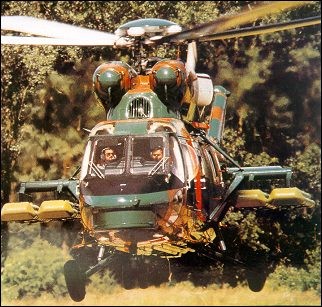
Polish armed forces versions including W-3RM Anakonda for air/sea rescue, and W-3W Sokol and similar W-3WA each with 23 mm cannon and outriggers for missiles, rockets and other weapons.
September 1998 co-operation agreement between Swidnik and Euromissile led to integration of HOT 3 ATM on Sokol, followed by successful firing tests during demonstration of HOT/Viviane system at Polish firing range in Nowa Deba on 4 March 1999, using Swidnik trials aircraft SP-SUW (c/n 360318). This aircraft utilised in 2000 as prototype to test new main rotor blades with modified leading-edges and increased damage tolerance. Swidnik continues to offer W-3/HOT 3 variant as potential export version, but domestic requirement for W-3H now shelved in favour of a 50-aircraft support role upgrade of existing Sokols, attack requirement instead being met by upgrading Mi-24 fleet.
A total of 143 (excluding five flying prototypes and four static test airframes) were completed by early 2001, of which 131 then in service. Three reportedly purchased in early 2002 by Ukraine Border Guard. However, no new production reported from early 2001 until at least mid-2003.
The basic VFR, single-pilot W-3A in 2002 cost US$3.156 million.
Under a Polish MoD contract of October 2002, valued at approximately US$22.8 million, PZL-Svidnik is to upgrade 16 W-3W and 12 W-3WA Sokols from 1994/2000 production to NATO-compliant (STANAG 4555) standard with Rockwell Collins AN/ARC-210 U/VHF radios, Bendix/King KLU 709 Tacan, and cockpit instrumentation compatible with the pilot’s Litton M927 NVGs. The contract was due for completion by 2006.
W-3 Sokol Initial civil and military version; production (52) completed. Two W-3s (0501 and 0502) upgraded by WZL 1 as W-3RL for combat SAR role in 1999 as part of Polish qualification for NATO membership; based at Bydgoszcz. New equipment includes Rockwell Collins search radar, Bendix/King com radios and intercom, Tacan, GPS, radio compass, IFF, searchlight, rescue hoist, stretchers (two) and auxiliary fuel tanks; standard crew of five. One conversion to S-1RR prototype; one other converted as W-3U Salamandra armed prototype but reverted to W-3 and delivered to Myanmar.
W-3W Armed W-3 (W for Wielozadaniowy: multipurpose) with starboard-mounted 23mm GSz-23 twin-barrel gun; Mars-2 launchers for sixteen 57mm S-5 or 80mm S-8 unguided rockets, ZR-8 bomblet dispensers, Platan minelaying packs, and six cabin window mounted AK 47, 5.45mm Tantal or PKM machine guns. Twenty-two delivered to Polish Ministry of National Defence; entered service with Polish Air Force 47 Szkolny Pulk Smiglowcow (Helicopter School Regiment) at Nowe Miasto (five) and Polish Army (17).
W-3A Improved version for Western certification; redesign started 1989; first flight 30 July 1992; FAA type approval to FAR Pt 29 received 31 May 1993, German LBA certification 6 December 1993. Dual hydraulic systems, new de-icing system, Western instrumentation. First delivery, to Saxony Police Department, Germany, 20 December 1993. One W-3A2 (c/n 370508, SP-PSL) fitted in early 1998 with Smiths Industries AFCS (four-axis digital autopilot) with a view to obtaining Polish (GILC) and US (FAA) single-pilot IFR certification.
W-3AM Version of W-3A with six inflatable flotation bags. Thirteen, mostly for South Korea, produced by January 2002.
W-3WA Combat support armed version of W-3A; weapons include GSz-23L gun, Strzala-2 AAMs and Polish Gad fire-control system. Total of 27 delivered to Polish armed forces by January 2002: Air Force, five, Army 18, Navy three and MoD one. Three in combat SAR configuration (presumably based on W-3RL) delivered in second quarter 2000 to 7th Cavalry Regiment at Mazowiecki: new comms, NVG-compatible instrumentation, new IFF, classified ESM and armoured crew seats. Four adapted in 2001 for Polish Army smoke-laying role, equipped with PWD Pylia smoke generation system developed by WSK-PZL Rzeszow and the Polish Armed Forces’ Chemistry and Radiometry Military Institute; equip 66th Air Squadron.
W-3WB (wsparcia bojowego: combat support): Armed prototype (c/n 360318), equipped 1993-94 by Kentron (hence alternative designation W-3K) with South African weapon systems. Returned to Swidnik 1994 and became HOT/Viviane testbed.
W-3PPD Gipsowka Airborne command post (powietrzny punkt dawodzenia) version of W-3A. Four conversions to be procured by Polish Army as Mi-2PPD replacements by 2006, first of which (0816) was delivered to 66th Air Squadron in first half of 2001. Specialised command, control and communications (C3) avionics include Thales RRC-9500 UHF (two) and RRC-3500 HF (one) radios, Totem 300 INS and a MIL-STD-1553B databus. Crew includes four operator workstations, each with a 16″ flat-panel colour display; flight deck is NVG-compatible. Also to have EW suite (as in W-3), including Thales SPS-H RWR and chaff/flare dispenser. Defensive armament is carried on external outriggers.
W-3RM Anakonda Offshore search and rescue (ratowinczy morski: sea rescue) version of W-3; watertight cabin, six inflatable flotation bags, additional window in lower part of each flight deck door. In service with Polish Navy (five delivered, of which two since lost; retrofit with folding main rotor blades from late 2000); Ministry of Interior (one) and for Swidnik trials (one). Latest examples, with US FSI Ultra 4000 FLIR, are designated W-3WARM (first aircraft, 360813, delivered 21 May 1998; second, 360815, 15 March 1999; third, 360906, 18 January 2002), the A indicating American (FAA) certification standard and W indicating armament. Upgrade under test from 2000 includes a more advanced engine control system and a deck lock for shipboard deployment.
S-1RR Procjon Electronic combat reconnaissance (rozpoznanie radioelektronicznego) version of W-3; prototype (c/n 310203) converted from W-3, first flown 1996 and delivered to Polish Air Force by 1 January 1997. Subsequent aircraft designated SRR-10 Procjon-3 (alternative designation W-3RR); first of these (c/n 370720) first flown in 1998 and fully equipped in 1999. ECR suite includes two-place console and chaff/flare dispensers; large external antenna housings include one on nose, one on cabin roof and one on starboard side of fuselage; last-named can be rotated downwards for full 360° scan capability.
W-3H Unofficial designation for armed support helicopter, derived from W-3WA; pursued as upgrade under new-abandoned Huzar programme. Local requirement for 96. Avionics and weapons fit decided in favour of Israeli (Elbit avionics and Rafael NT-D ATM) equipment in October 1997, but selection immediately overturned by new Polish government; rival avionics offered by Boeing and Sextant, partnered by Hellfire II and HOT 3, respectively. Programme reinstated October 1998 but foundered due to inability to demonstrate NT-D in Poland within deadline of 30 November and Israeli deal cancelled by Polish government on 8 December 1998.
W-3A Engine: 2 x PZL Rzeszow PZL-10W, 876 shp Instant pwr: 662 kW Rotor dia: 51.509 ft / 15.7 m Height: 13.78 ft / 4.2 m Length: 46.654 ft / 14.22 m MTOW: 14112.0 lb / 6400 kg Payload: 2100 kg Useful load: 2550 kg Max. speed: 146 kt / 270 km/h Max cruise: 127 kt Max range: 1244 km HIGE: 9606 ft HOGE: 6232 ft Service ceiling: 16,105 ft Initial climb rate: 1673.23 ft/min / 8.5 m/s Crew: 1-2 Pax: 12 / 2100kg
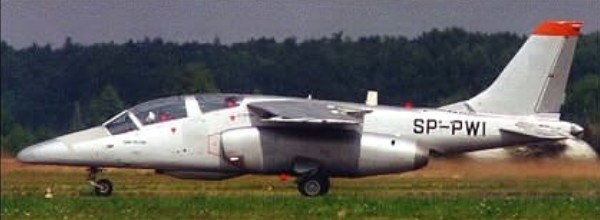
Launched 1977, leading to 1980 Polish Ministry of National Defence Iskra-22 requirement for combat-capable jet trainer. The I-22 prototype made its first flight on March 3, 1985 and the type was revealed in October 1986 as a twin-jet advanced trainer/light-attack aircraft.
First production order (for nine aircraft, only five of which were completed in I-22 configuration) announced September 1991; first of these (serial number 103) made first flight 5 May 1992, handed over to Polish Air Force (with second aircraft 105) 24 October 1992; next three (201, 202 and 203) delivered February 1994 (203 since lost).
Reappraisal in 1995 indicated that I-22 with PZL-5s was underpowered, and the four survivors were due to be upgraded to M-96 standard during 1996-97 (K-15 engines, Martin-Baker seats and improved avionics). Earlier proposal to suspend Iryda development and buy 36 ex-German Alpha Jets was reversed in December 1995; funding concentrated instead on M-93K improvements and evaluation of M-96. The five survivors were delivered to PZL for conversion.
Equipment includes a ventral 23mm gun pod, four underwing hardpoints for up to 2,000kg of stores, a nose-mounted 13mm camera gun, 1FF, and a radar warning receiver. The landing gear is designed for rough-field operations and provision is made for a brake parachute.
I-22 Iryda Engines: 2 x PZL-5 SO-3W22 turbojets, 10.7kN Wingspan: 9.6 m / 32 ft 6 in Length: 13.2 m / 43 ft 4 in Height: 4.3 m / 14 ft 1 in Wing area: 19.9 sq.m / 214.20 sq ft Max take-off weight: 6900 kg / 15212 lb Empty weight: 4700 kg / 10362 lb Max. speed: 840 km/h / 522 mph Cruise speed: 570 km/h / 354 mph Ceiling: 11000 m / 36100 ft Initial climb rate: 7283.46 ft/min / 37.0 m/s Range w/max.fuel: 902 nm / 1670 km Range w/max.payload: 420 km / 261 miles Armament: 1 x 23mm GSz-23 cannon, 200 rounds Hardpoints: 4 Bombload: 2000kg Crew: 2
I-22 Iryda Engines: 2 x PZL-5 SO-3W22 K-15 turbojets, 15 kN Wingspan: 9.6 m / 32 ft 6 in Length: 13.2 m / 43 ft 4 in Height: 4.3 m / 14 ft 1 in Wing area: 19.9 sq.m / 214.20 sq ft Armament: 1 x 23mm GSz-23 cannon, 200 rounds Hardpoints: 4




 All Aero