A the three engined version of the Farman Jabiru, the first flight was by D-991 (Werk Nr 18) on the 5th September 1926. It went to Iberia, as M-CAAC, later that year along with the second aircraft D-999 (Werk Nr 19) identified as M-CBBB. Both these aircraft were Mark I and were used on the Madrid – Barcelona route until August 1928 when they were returned to DHL. Six examples were operated by Deutsche Luft Hansa
There were effectively three marks: I, Ia, and II.
The Ia and II used the BMW Va engine, the Roland II of 1929 having an increased wing span of 26.3m and a maximum take off weight of 6615kg (14553lb). The maximum speed was increased to 225km/h (140 mph), the service ceiling was increased from 4,300m to 4,600m (15,100 ft). Both types were high-wing tri-motor monoplanes
A total of 18 of all models was produced with some flying well into the late 1930’s.
The last to be produced (Roland II Werk Nr50) was later registered D-ANAX. It was used by DLH until 1934 and then went to DVS.
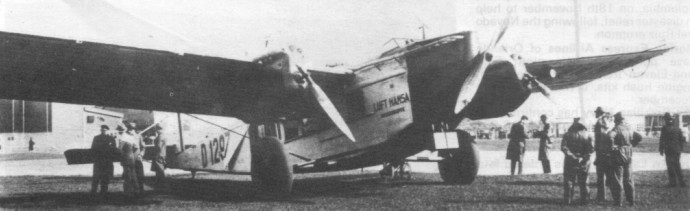
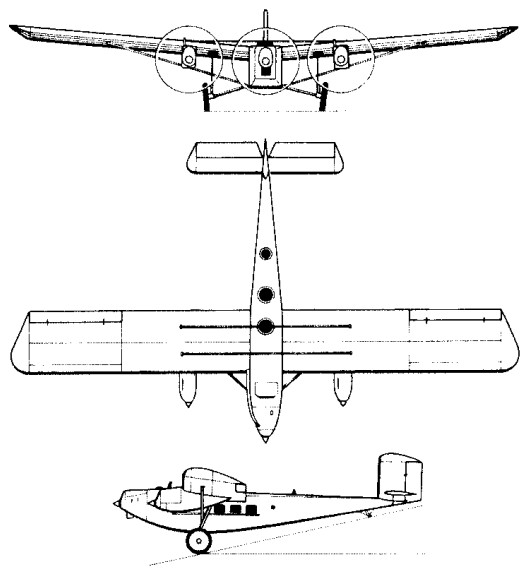
Ro VIII Roland Engine: 3 x BMW IV, 239kW Max take-off weight: 5265 kg / 11607 lb Wingspan: 26.0 m / 85 ft 4 in Length: 16.3 m / 54 ft 6 in Height: 4.5 m / 15 ft 9 in Wing area: 88.0 sq.m / 947.22 sq ft Max. speed: 195 km/h / 121 mph Ceiling: 4600m Range w/max.payload: 925 km / 575 miles Crew: 2 Passengers: 10
Werk Nr 26 was flown by Severa GmbH for comparison flights with the Dornier Super Wal, then latter as a seaplane trainer.
The one aircraft was built in 1927, and was used by Lufthansa between 21st May and 15th June 1928 for 47 flights between Travemunde and Oslo via Copenhagen and Gothenburg after this it was delivered to the Erpobungstelle at Travemunde.
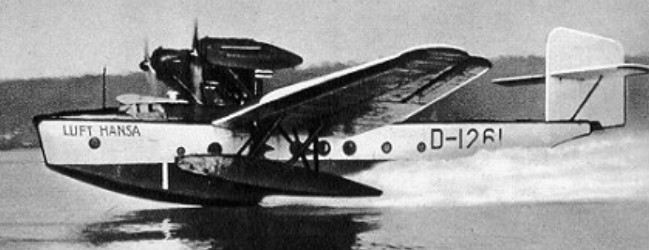
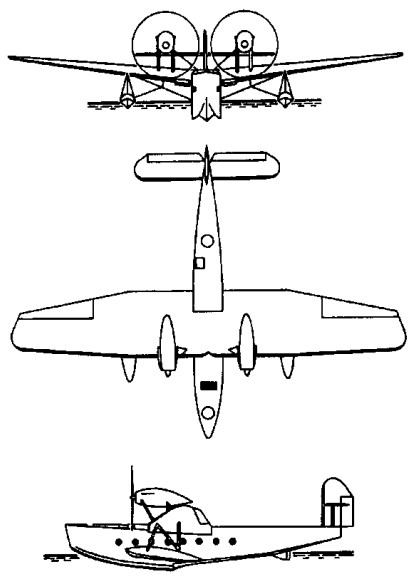
Ro V Rocco Engines: 2 x Rolls-Royce Condor, 480kW Wingspan: 26.0 m / 85 ft 4 in Length: 19.3 m / 63 ft 4 in Height: 6.7 m / 22 ft 0 in Wing area: 94.0 sq.m / 1011.81 sq ft Max take-off weight: 9600 kg / 21164 lb Empty weight: 5990 kg / 13206 lb Max. speed: 220 km/h / 137 mph Cruise speed: 168 km/h / 104 mph Ceiling: 3150 m / 10350 ft Range w/max.fuel: 2400 km / 1491 miles Crew: 3 Passengers: 10
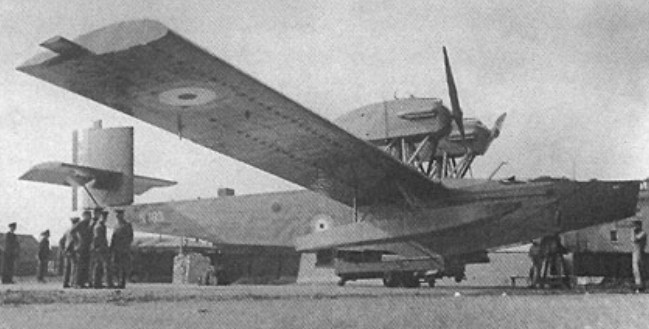
The Rohrbach RoIV was designed by Adolf Rohrbach. The first aircraft (N183) was built in the Rohrbach factory in Denmark from parts manufactured in Berlin before being sent to Beardmore. The second aircraft (N184) was built by Beardmore. Both aircraft had short lives and were scrapped in 1925.
In connection with the growing danger of war in the second half of the thirties Yugoslavia started to carry out intensive work on designing new types of modern combat aircraft. Specifically, multi-purpose aircraft, which can be used as a light bomber, ground-attack aircraft and tactical explorer. Work to meet these requirements was begun by Ikarus and Rogožarskij.
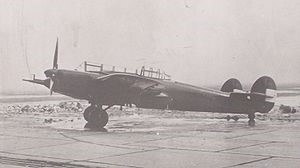
In 1937 Rogožarski (Prva srpska fabrika aeroplana Rogožarski – Прва српска фабрика аероплана Живојин Рогожарски А. Д.) established a working group of engineer to proceed the project of a light twin-engine battle aircraft, designated R-313.
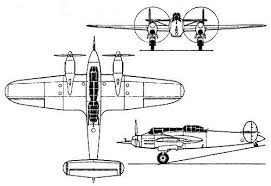
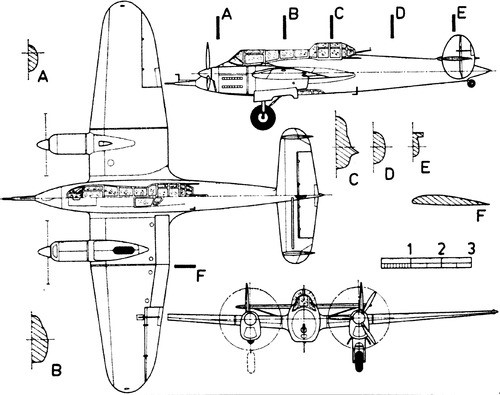
The Rogozarski R-313 (Рогожарски Р-313 in Serbian), originally called SIM-XV, was a two-seater twin-engined monoplane fighter/light bomber/reconnaissance aircraft. It was powered by two in-line Walter Sagitta IIR engines, both fitted with a compressor; each was capable of 493 hp. The inner fuel tank held 680 litres. The elliptical, wooden fuselage was covered in plywood which was also used to ‘skin’ the round-tipped, trapezoidal wings. The engine nacelles also housed the landing gear. The tail-wheel was, like the main landing gear, retractable. The fuel tank was located in the centre section between the wings. The reconnaissance variant of this aircraft was due to be equipped with a camera, a radio, a fixed 20mm cannon and a single FN 7.9mm machine gun, flexibly mounted. As a light bomber, the plane would carry four 106 kg ‘Stankovic’ bombs inside the fuselage. It was designed and built at the Rogozarski factory in Belgrade.
Construction of the prototype began in 1938 and completed at the end of next year. According to various sources, the first flight of the R-313 took place either at the end of 1939 or in July 1940. A total of 25 aircraft were planned, both reconnaissance and light bomber versions. In any case, the Sturmovik for the most part justified the hopes of the Air Force, whose specialists noted only the insufficient power of the engines. The engineers responded to the military’s wishes, presenting soon the variants of the R-313 with Daimler-Benz DB-601 and Rolls-Royce Merlin engines. Both versions brought the aircraft to the level of foreign aircraft, but because of the German invasion of a number of European countries, deliveries of foreign-made engines became not possible.
The prototype became part of 603 training squadron which was located at Grab, near Trebinje during the April war. It was damaged and abandoned attempting to take-off from Grab on 12 April 1941. A month later, the Germans took control and sold the machine to the Croats who had taken over the ‘Ikarus’ factory. They renamed the aircraft “Независни” (“Independent”); after repairs, a test flight was carried out on 19 May 1942. Sabotage was then detected, so serious that further repairs could not be carried out. Thus ended the plane which was popular in literature as the “Yugoslav moskito” Although it was designed and built long before its legendary counterpart.
Crew: 2 Engines: 2 × Walter Sagitta I-SR, 368 kW (493 hp) each Propellers: 3-bladed Ratier Wingspan: 13.00 m (42 ft 8 in) Wing area: 26.40 m2 (284.2 sq ft) Length: 11.00 m (36 ft 1 in) Height: 2.68 m (8 ft 10 in) Empty weight: 2,950 kg (6,504 lb) Gross weight: 4,270 kg (9,414 lb) Maximum speed SL: 376 km/h (234 mph; 203 kn) Maximum speed 4000m/13,123ft: 460 km/h / 286 mph Range: 1,000 km (621 mi; 540 nmi) Service ceiling: 8,000 m (26,000 ft) Rate of climb: 8.33 m/s (1,640 ft/min) Time to 3000m / 10,000 ft: 5,7 min Armament: 1x 20 mm (Oerlikon FF) HS-404 cannon, 1x flexible 7,92 mm Browning FN machine gun Bombload: 400 kg / 882 lb
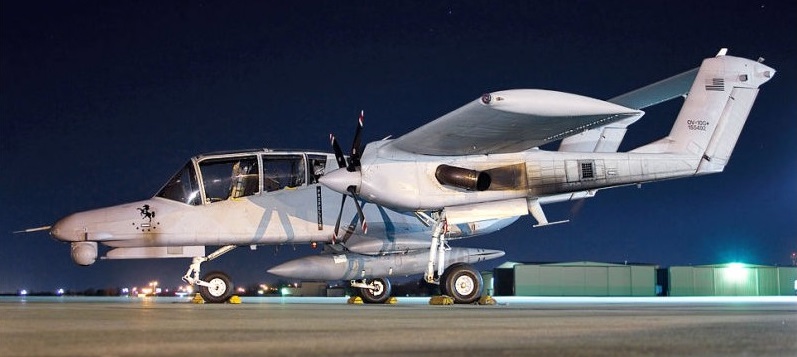
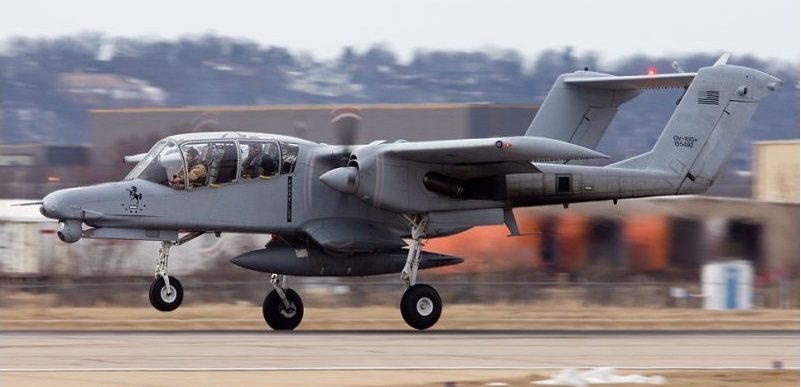
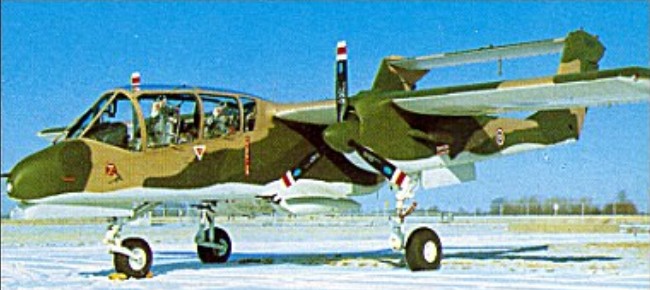
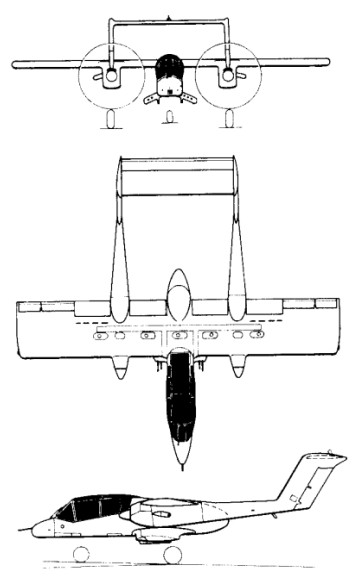
To meet a US Navy requirement for a light armed recon¬naissance aircraft, North American Rockwell produced their NA-300 design submission for the OV 10A Bronco. A contract for seven YOV-10A prototypes was placed in 1964, the first of them flying on 16 July 1965.
With a two-seat fuselage nacelle mounting a high-set monoplane wing, the aircraft had twin tailbooms extending aft from the nacelles of the two turboprop engines, each with a fin and rudder, and interconnected by a tailplane/elevator assembly. The main units of the tricycle landing gear retracted into the engine nacelles.
Six of the prototypes were powered by 447kW Garrett T76-G-6/8 engines, but had one Pratt & Whitney YT74-CP-8/10 turboprops for comparative evaluation.
The OV-10A Bronco production version had a 3.05m increase in wing span and more powerful T76-G-10/12 engines, the first flown on 6 August 1967, and 114 were built for the US Marine Corps.
These were followed by 157 similar OV-10As for the US Air Force, these entering operational service in Vietnam in 1968. Under the US ‘Pave Nail’ programme, 15 were provided with special equipment for the location and illumination of targets by night. Other versions have included six OV-10B aircraft supplied to Germany as target tugs, followed by 18 turbojet-boosted OV-10B(Z) aircraft for the same role. Versions similar to the OV-10A have been supplied to Indonesia (16), Thailand (40) and Venezuela (16), under the respective designations OV-10F, OV-10C and OV-10E, and six US OV-10As have been transferred to the Royal Moroccan air force.
Two OV-10As were modified under a US Navy contract of 1970 to YOV-10D NOGS (Night Observation/Gunship System) aircraft to provide the US Marines with advanced night operational capability. Since evaluation of these aircraft, 17 US Marine Corps OV-10As have been converted to OV-10D NOS (Night Observation Surveillance) configuration, now equipped with a FLIR (forward-looking infra-red) turret in the nose linked to an underfuselage 20mm cannon turret, and a laser target illuminator.
Production of the Bronco for the USMC, USAF, and four export customers was completed in 1980.
Able to carry a maximum weapon load of 3,600 lb (1,633 kg), the Bronco has proved valuable for Forward Air Control (FAC) operations in South East Asia.
Of the seven prototype North American Rockwell OV 10 Broncos built, No.3 on the line was heavily modified and was the only short-wing example of the aircraft ever built. YOV 10A 152881 (N718NA) has a wingspan of only 32ft (9.75m), whereas standard production aircraft had 40ft (12m) of wing. From 1966 to 1972 the aircraft was used as a demonstration airframe and was used to take Admirals, Generals and Congressmen for flights to extol the virtues of the twin engined observation and forward air controller design. The Bronco was also assigned to train new pilots on the gunnery ranges, using its machine guns and rockets. During the spring of 1972 it was assigned to NASA under the Department of the Army, for STOL flight testing. This was carried out at the Ames Flight Test Center in California, with the aircraft being allocated a civilian registration.
During its time at Ames, the Bronco was heavily modified, the aircraft’s Garrett T 76 turboprops were removed and replaced by Lycoming T 54s. Three blade 7ft (2.1m) Hamilton Standard propellers were replaced with 10ft (3m) four bladed Curtiss Electric composite propellers, and the engines were interconnected by a single solid shaft in the leading edge of the wing. With this system in operation, the aircraft flew at 47 knots and NASA was working toward getting the minimum speed down to 30 knots. The Bronco became unstable, and the programme was stopped. The aircraft was with NASA until it was sold to the Detroit Institute of Aeronautics in 1979.
OV-10A Engines: 2 x Garrett AiResearch T76-G-416/417, 715 shp Wing span: 40 ft 0 in (12.19 m) Wing area: 290.951 sqft / 27.03 sq.m Length: 41 ft 7 in (12.67 m) Height: 15 ft 2 in (4.62 m) Max TO wt: 14,446 lb (6563 kg) Weight empty: 6892.8 lb / 3126.0 kg Max level speed: 281 mph (452 kph) Cruising speed: 168 kts / 312 km/h Service ceiling : 27001 ft / 8230 m Maximum range: 1199 nm / 2220 km Range (max. weight): 410 nm / 760 km Crew: 2 Armament: 4x MG 7,62mm M60C/500rds., 1633kg ext. 5pts.
OV-10B Engines: 2 x Garrett T76-G-418
OV-10D Engines: 2 x Garrett T76-G-420/421 turbo-prop, 776kW / 1040 shp Max take-off weight: 6552 kg / 14445 lb Empty weight: 3127 kg / 6894 lb Wingspan: 12.19 m / 39 ft 12 in Length: 13.41 m / 43 ft 12 in Height: 4.62 m / 15 ft 2 in Wing area: 27.03 sq.m / 290.95 sq ft Ceiling: 9145 m / 30000 ft Range w/max.payload: 740 km / 460 miles Bombload: 2000kg Crew: 2
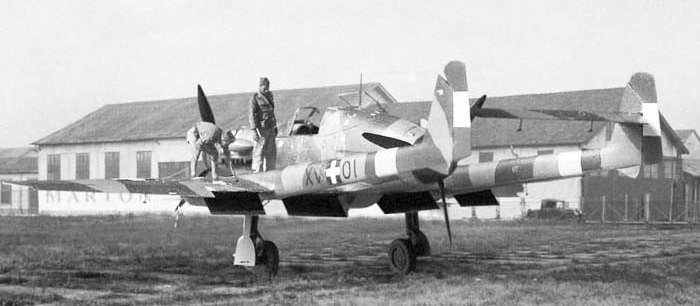
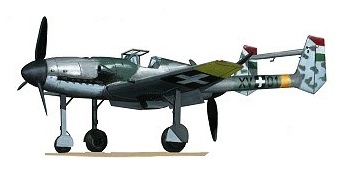
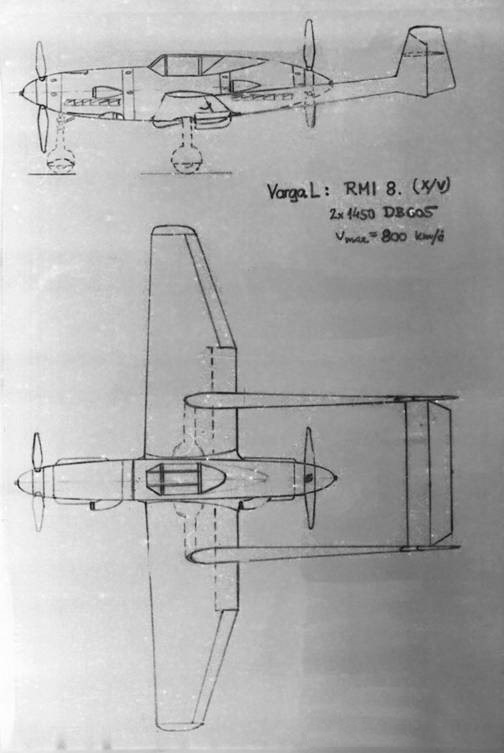
The RMI-8 X/V twin-boom, twin DB605 fighter was designed by Vilmos and Dezso Marton (assisted by László Varga), was also called the Marton X/V after the designers.
The two wings joined to the tail section, which is designed to incorporate the connection points of the high-powered MK-108 (30mm) deck gun.
The prototype (X/V-01) was said to have been destroyed by bombing while the airframe was still incomplete in April 1944.
Engines: 2 x DB-605, 1475 hp Wing span: 11.8m Length: 10.2m Height: 3.5m Empty weight: 2,850 kg T/O weight: 3,800 kg Maximum speed: 800 km/h Range: 1,000 km Ceiling: 11,500 m Armaments: 2 x 8 mm machine guns, 2 x 30mm MK-108 machine guns.
The Riley Super 340 is a conversion from a stan¬dard Cessna 340. The 285 hp engines in a standard Cessna 340 and the 310 hp en¬gines in the Cessna 414 are basically the same. Some additions and changes in the area of the induction air intercooler, oil cooler and intake manifold elbows make it possible to extract more power from the 414 engine, through the use of three inches more manifold pressure. Fuel injection, cyl¬inder baffles and other modifications are also necessary. Riley does all this to the en¬gines in a 340 to convert it to a “Super.” When Riley finishes, the engine is just like the 310 hp engines built by Continental and installed in the 414 by Cessna. Even the data plate on the engine is changed to reflect the change. The airplane then be¬comes a 340 with the 414 powerplants. Weight increase is minimum, at 22 pounds.
Additional horsepower helps rate of climb more than anything else, and in the Super 340 conversion, there’s a bonus over and above the apparent simple increase in horsepower. The 285 engines have a mani-fold pressure restriction starting at 16,000 feet; the 310 hp engines are unrestricted to 20,000 feet and can pull 285 hp to 22,000 feet, for a 6,000 foot advantage over the straight 285 engine.
There is one qualification to the Riley Super 340 package. Even after conversion, the engines are “flat rated” at 285 hp, meaning that you aren’t supposed to use the full 310, even though it is there and the engine is built for it. This is because Riley would have to do time consuming certifica¬tion work, such as developing figures for a higher engine out minimum control speed to reflect the higher horsepower. It will come in time; in the interim, Super 340 pi¬lots are told to mind the 33 inch (which means 285 hp) redline on the manifold pressure on takeoff. That’s no problem, but I’d imagine that in an engine out situation, it would be tempting to go for the extra three inches for extra single engine rate of climb, even acknowledging that Vmc would be a little higher. When climbing and cruising, you can get full benefit from the conversion by using 75 percent of the 310 hp for cruise climb. Again, the benefit is most no-ticeable at altitude: The 285 engine is good for 75 percent climb or cruise power to 20,000 feet; converted, it will deliver 75 percent of 310 hp to about 25,000 feet and 75 percent of 285 to about 27,000 feet. So you can see that the Super 340 really pays powerful dividends up high.
Riley Super 340 / Cessna 340 Engines: 2 x Continental TSIO-520-J, 310 hp Seats: 6 Wing loading: 32.47 lb/sq.ft Pwr loading: 9.63 lb/hp Max TO wt: 5975 lb Empty wt: 3745 lb Equipped useful load: 2131 lb Payload max fuel: 715 lb Range max fuel/ 75% cruise: 1420 nm/6 hr Range max fuel / 55% cruise: 1732 nm/ 8.5 hr Service ceiling: 32,000 ft 75% cruise: 235 kt 55% cruise: 205 kt Vmc: 86 kt Stall: 71-79 kt 1.3 Vso: 92 kt ROC: 1800 fpm SE ROC: 350 fpm @ 100 kt SE ceiling: 16,000 ft Min field length: 2130 ft Cabin press: 4.2 psi Fuel cap: 840/1416 lb
Riley Super 340-8 / Cessna 340 Engines: 2 x Lycoming IO-720-B1B, 400 hp Seats: 6 Wing loading: 32.47 lb/sq.ft Pwr loading: 9.63 lb/hp Max TO wt: 6600 lb Empty wt: 4525 lb Equipped useful load: 1976 lb Payload max fuel: 560 lb Range max fuel/ 75% cruise: 1238 nm/4.4 hr Range max fuel / 55% cruise: 1716 nm/ 7.2 hr Service ceiling: 45,000 ft 75% cruise: 276 kt 55% cruise: 240 kt ROC: 2500 fpm SE ROC: 600 fpm SE ceiling: 30,000 ft Min field length: 1600 ft Cabin press: 4.2 psi Fuel cap: 840/1416 lb

 All Aero