The two seat Shenyang development of the MiG-19SF, the FT 6, is not widely known, despite service with Egypt as well as Pakistan.
Although the Soviet Union built a small number of MiG¬-19UTI two seat trainers, the V VS concluded that a two seat MiG 19 conversion trainer was unnecessary for transitioning and production was terminated, and the Shenyang built FT 6 appears to owe little or nothing to its Soviet predecessor.
Whereas the Russian tandem two seat modification was accommodated within the existing fuselage, the forward section of the FT 6 was lengthened by some 33 in (84 cm) over the original 41 ft 4 in (12,6 m), (without the long nose pitot) by the Shenyang design team to allow room for the second occupant.
This necessitated the addition of two more ventral strakes beneath the rear fuselage as compensatory side area to prevent snaking, giving the FT 6 a total of three strakes in all.
Other differences from the standard F 6 are few, although, in view of the already very limited endurance, to make up for the loss of fuel capacity resulting from the second cockpit, extra tankage had to be provided. A prototype two seater appeared with small tip tanks to rectify this deficiency, but these apparently proved unacceptable on a 58 deg (leading edge) swept wing. The solution adopted on production FT 6s was to remove the two 30 mm NR 30 wing root cannon and insert extra fuel tanks in their bays, leaving only the single similar weapon under the nose for armament training. This leaves the FT 6 with only 150 or so litres (33 Imp gal) less fuel than the single seat version and allows a safe average training sortie time of about 45 minutes.
With the same twin Tumansky RD 911 811 (WP 6) axial flow turbojets as the single seat F 6, with a military rating of 5,732 lb (2600 kg) each, or 7,165 lb (3 250 kg) with reheat, the FT 6 offers virtually identical performance and handling to the F 6, with a maximum limit speed of around Mach 1.25 1.4, and a nominal low level supersonic capability in the clean configuration of some 723 knots (1340 km/h). At a gross weight of around 19,274 lb (8 742,5 kg), with two 167 Imp gal (760 lt) drop tanks, the F 6 has a thrust/weight ratio of 0.86:1. The F 6’s low speed stability and handling are somewhat critical, particularly for inexperienced pilots, and the requirement for a two seat version for conversion training is therefore logical.
Pakistan received its first FT 6s in September 1980. Transitioning pilots complete 20 dual landings in the FT 6 before going solo, plus about 66 sorties in the F 6 to complete the OCU course.
In the opinion of the PAF, the F 6 is probably the cheapest combat aircraft to operate of any in its class, and costs about one sixth as much as the Mirage III or 5 per flying hour. Both types have about the same manpower requirements, at around 50 60 maintenance man hours per flying hour, but spares for the F 6 from China are very considerably cheaper. The F 6 has suffered from the limitations of very short component lives engine TBO, for example, is only 100 flying hours, and 600 hours for the airframe.
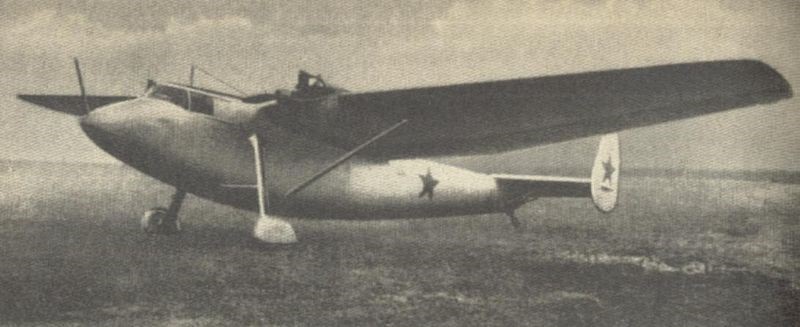
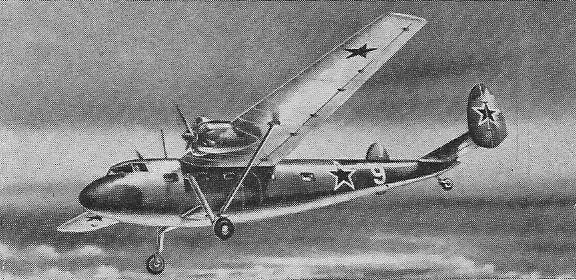
A twin engine, pod and boom transport, powered with two 160 hp M-11FR engines. The wings are Vee braced and the tailplane lacks dihedral. It carries 4 passengers or equivalent freight and has sideways opening loading doors at the rear of the cabin.
Almost identical to the Czech Aero 45, twin engined light transport, except it has a stepped windscreen and conventional nose. It carries a pilot and either 4 passengers or 1400 lb of freight. Construction of the prototype was completed at the Kharbin Engineering Works in 81 days in 1958.
This aircraft carries a crew of 2 and 8 assengers. Power is by a Chinese built 260 hp AI-14 radial. It is a conventional all-metal low-wing monoplane, with retractable tricycle undercarriage. Full span slots are fitted. The Peking No.1 was built in 100 days at the Institue of Aeronautical Engineering in Peking. It flew for the first time on September 24, 1958, and was handed over formally to the national civil aviation authorities a week later, on October 1. Since then, little has been heard of it.
Span: 57 ft 5 in Length: 42 ft 8 in Max speed: 186 mph Service ceiling: 15,750 ft Range: 670 miles
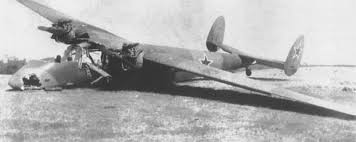
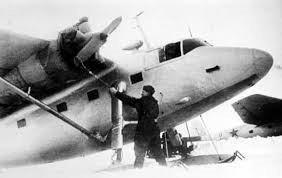
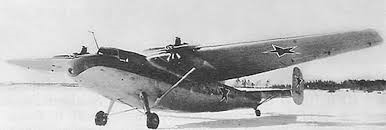
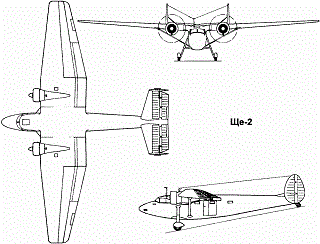
The Shcherbakov Shche-2 (Russian: Ще-2), also known as the TS-1 and nicknamed “Pike”, was a twin-engined utility aircraft manufactured in the Soviet Union, designed by Alexei Shcherbakov for construction by OKB-47, to meet an urgent requirement for a light transport and liaison aircraft for operation by the Soviet Air Force during the Second World War.
The German invasion of the USSR revealed that there was an urgent requirement for a light transport and utility aircraft for use by the Soviet Air Force at the front. To meet this requirement, Aleksei Shcherbakov, who had previously worked at the Kalinin design bureau, and who had also heavily influenced the design of the Polikarpov I-153 fighter before conducting work on pressure cabins and gliders, was directed to design and develop an aircraft that received the designation “TS-1” in the autumn of 1941.
A cabin monoplane of semi-cantilever, high-wing configuration, the TS-1 was designed to minimise the use of strategic materials, utilising mostly wood in the construction of its remarkably streamlined airframe, and being powered by two readily available Shvetsov M-11 radial engines. Parts of the Lavochkin La-5 aircraft were also used, along with undercarriage parts from the Ilyushin Il-2. The aircraft was equipped with a fixed, conventional taildragger undercarriage, and a twin-fin tail from the Petlyakov Pe-2 was also utilised.
Test-flown in early February 1942 and early 1943, the aircraft, by now having been re-designated Shche-2, proved to be capable of meeting the requirement, and production began in October 1943 at OKB-47, the bureaux being established at Chkalov (Orenburg) for use by Yakovlev, but being transferred to Shcherbakov’s control for the manufacture of his type. The first machine was ready in the summer of 1944. In total, up to the beginning of 1946, several hundreds of aircraft were built.
The Shche-2 was capable of transporting up to 16 troops, with an alternative air ambulance configuration for up to 11 wounded, or cargo up to 1.43 metres (4 ft 8 in) by 1.64 metres (5 ft 5 in) in size. Alternatively, the aircraft could be used as an aircrew and navigational trainer. It was extensively used in the transport and communications roles on the Eastern Front, providing essential, if unglamorous, service.
The power of two engines of 100 hp to carry a cargo weighing about 1000 kg was not enough. The Shche-2 required engines of 150-200 hp. Because of the installation of M-11 engines, the aircraft had very long take-off run, sluggish acceleration, and low rate of climb. Front pilots negatively reacted to the new aircraft.
In 1945, the improved Shche-2TM variant entered flight test, powered by uprated M-11FM engines of 108 kilowatts (145 hp) each, and fitted with a modified wing. Despite the improvements in the design, the decision was made not to produce the aircraft due to a reduction in requirements for the type with the end of the war in May of that year. A proposed diesel-engined version, which began flight tests in July 1945, met the same fate.
Proving in service to be underpowered yet still easy to fly, and establishing a reputation for reliability and ease of maintenance, the Shche-2 was widely used by Soviet forces during the war. Seeing extensive service supplying guerrilla and partisan forces, the Shche-2 also proved to be useful for the delivery of paratroopers.
In 1945 a single copy of an agricultural variant was created. This aircraft had a lightweight design with a reduced wing. It was installed GMC diesel engines from an American tank. Also, the design of a two-body Shche-2 with three M-11D engines was developed, but not implemented.
In May 1945, a newsreel of the latest street battles in Berlin was delivered to one of the Shche-2 aircraft in Moscow.
It is estimated that at least 550 Shche-2 aircraft were completed before the close of production in 1946, the OKB-47 factory being closed down at the conclusion of production. After the end of the war, the aircraft remained in service for several years, with the air forces of Yugoslavia (5 aircraft, delivered in 1945, used through 1952) and Poland (5 aircraft, used 1945–1947) making use of the type, in addition to the aircraft being extensively utilised in transport and air ambulance duties in civilian service within the Soviet Union. In addition, the Shche-2 was operated by Aeroflot on several local airline routes within the Soviet Union for several years after the end of the war, before its replacement by the Antonov An-2.
Shche-2 Engines: 2 × Shvetsov M-11d, 86 kW (115 hp) each Propellers: 2-bladed Wingspan: 20.54 m (67 ft 5 in) Wing area: 63.90 m2 (690 sq ft) Length: 14.27 m (46 ft 10 in) Height: 3.80 m Empty weight: 2,235 kg (4,927 lb) Normal takeoff: 3400 kg Max takeoff weight: 3,700 kg (8,157 lb) Fuel: 370 kg Maximum speed: 155 km/h (96 mph, 84 kn) Cruising speed: 140 km / h Range: 980 km (610 mi, 530 nmi) Service ceiling: 3,000 m (9,800 ft) Rate of climb avg: 1.20 m/s (236 ft/min) Max ROC: 72 m / min Wing loading: 53 kg/m2 (11 lb/sq ft) Power/mass: 0.05 kW/kg (0.03 hp/lb) Crew: two Capacity: up to 16 troops, 9 paratroopers or 11 stretcher / 1000-1330 kg TO run: 275 m Ldg roll: 160 m
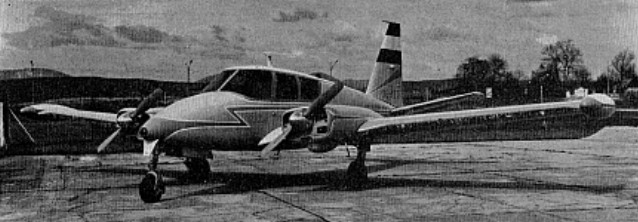
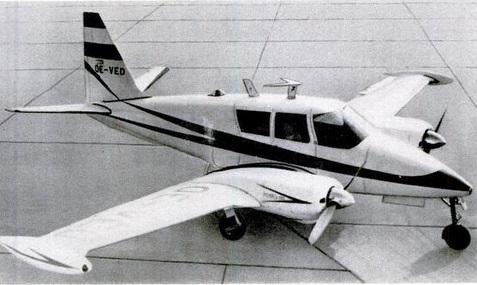
The SGP M-222 Flamingo was an Austrian twin engine, four seat light aircraft, developed with a series of prototypes into the early 1960s. There was no series production.
In the 1950s Simmering-Graz-Pauker A.G. (SGP) was a large manufacturing concern but the M-222 Flamingo was their first aircraft. Designed by Erich Meindl, it was a conventional twin engine monoplane, smaller than many but seating four in two rows.
The wings of the Flamingo had a laminar flow airfoil and were made entirely of wood. The first prototype was powered by 150 hp (112 kW) Lycoming O-320 flat-four engines but later aircraft had 200 hp (150 kW) Lycoming IO-360 flat-fours. These were conventionally mounted ahead of the leading edge in long cowlings with their propeller shafts, driving two-blade airscrews, centred above the wing upper surface. There were fuel tanks in the thin wings, with more fuel in wing tip tanks.
The Flamingo was fitted with both flaps and airbrakes. The flaps were of the camber changing type, to increase lift at low speed; they were split into three sections on each wing and slid rearwards and downwards on concealed rails. The airbrakes were wing mounted spoilers for losing speed. Like the wings the empennage was all-wood; the cantilever tailplane was set low on the fuselage.
The Flamingo’s fuselage had a welded steel tube structure, skinned forward with light alloy and aft with laminated plastic. Its two rows of seats were enclosed under a three part canopy which merged at the rear into the raised fuselage. There was a wide door on either side for cabin access and a separate baggage space behind the seats. It had a retractable tricycle undercarriage with the mainwheels, fitted with brakes, behind the engines. The nosewheel was steerable. The undercarriage, like the flaps and airbrakes, were hydraulically powered. The M.222 was aerobatic when carrying a pilot and one passenger.
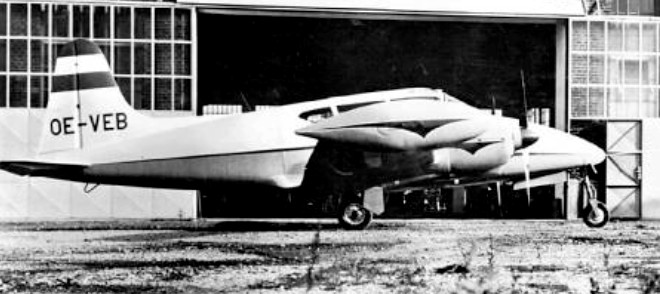
The first prototype M.222V1, registered OE-VEA c/n 1, flew for the first time on 15 May 1959 but was lost in a crash during single engine tests on 2 August 1959, the pilot Eduard Stefl and flight engineer Leopold Schwingenschlögl were killed instantly. Development work in the Rax-Werke in Wiener Neustadt continued on a second aircraft, OE-VEB, which first flew in 1960 and a third M.222V3 c/n 3, followed in 1962. The fourth aircraft, now renamed the Simmering-Graz-Pauker SGP.222 was intended as a production prototype and demonstrator and appeared at the 1964 Hamburg show, though it turned out to be the last of the line. It incorporated several changes in response to the lengthy development trials. The wing leading edges had breaker strips added and there were new fillets in this edge at the root and on the outboard side of the engine cowlings. The ailerons were mass balanced and fitted with ground adjustable trim tabs, and the upper hinge gaps sealed with fabric. The most obvious external changes were to the empennage where the horizontal tail now had positive dihedral and the previously rounded vertical tail had been enlarged and given severe straight taper, assisted by a ventral fin to improve low speed handling. Both elevators and the rudder had trim tabs. One independent report of this fourth aircraft’s handling found it well behaved, stable but responsive with a docile stall and brisk climb.
The type was redesigned by the glider designer Ruediger Kunz, in order to build the machine in compliance to USA regulations, and hence the fourth prototype was designated SGP.222VS (VS for Vereinigte Staaten, German for United States) briefly used but this was later changed to SGP.222A. Initially registered OE-VED, the aircraft was reregistered OE-FEC after it received its Austrian and FAA Type Certificates on respectively February 15 and March 3, 1964, where after it was also redesignated SGP.222A. However, at the end of 1964 the program was cancelled and the prototypes were scrapped.
Second prototype Powerplant: 2 x Lycoming IO-360, 150 kW (200 hp) Propellers: 2-bladed Length: 8.80 m (28 ft 10 in) Wingspan: 11.90 m (39 ft 1 in) Height: 3.05 m (10 ft 0 in) Wing area: 18.38 sq.m (197.8 sq ft) Aspect ratio: 7.68 Empty weight: 1,250 kg (2,756 lb) equipped Max takeoff weight: 1,900 kg (4,189 lb) Fuel capacity: 380 L (100.4 US gal, 83.6 Imp gal) Maximum speed: 330 km/h (205 mph; 178 kn) at sea level Cruising speed: 280 km/h (174 mph; 151 kn) economical, 65% power Range: 1,650 km (1,025 mi; 891 nmi) Service ceiling: 6,100 m (20,013 ft) service Rate of climb: 7.5 m/s (1,480 ft/min) at sea level Wing loading: 103 kg/m2 (21 lb/sq ft) Power/mass: 160 W/kg (0.096 hp/lb) Landing speed: 105 km/h (65 mph; 57 kn) Landing run: 135 m (443 ft) using brakes Take-off run: 300 m (985 ft) to 15 m (50 ft) Crew: One Capacity: Three passengers
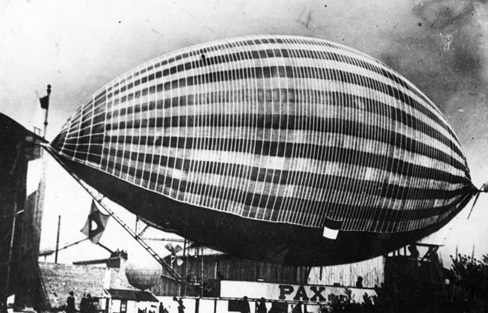
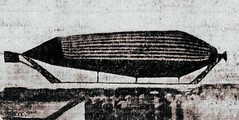
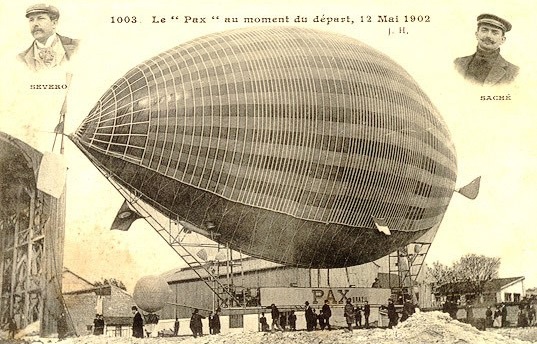
At the end of 1901 Brazilian inventor Augusto Severo de Albuquerque Maranhão travelled to France to build an airship, the semi-rigid “Pax”. It had no directional rudder but seven propellers, one at the stern, one at the bow, another at the nacelle and four at the sides. He had intended to use electric motors, but the lack of resources and time made him opt for two Buchet-type engines, one of 24 hp and the other of 16 hp. The envelope had a capacity of 2,500 cu.m, 30 m long and 12 m at the largest diameter.
Two pusher propellers set at 50 rpm drove the aircraft. The forward and aft propeller diameters were 5 and 6m, respectively. in addition, two other propellers were placed parallel to the machine’s longitudinal axis for lateral control, only. a further propeller was placed below the deck and was employed to control the pitch movement of the 30-m-long aircraft. Maranhão had some insights in designing the Pax, which were not taken into account by his predecessors. one of them was the placement of the traction line coincident with the drag one to better control and handling of the aircraft.
The trials were successfully performed on May 4 and 7, 1902. At 5 am on May 12, 1902, Severo and his mechanic, Georges Saché, set off, intending to fly from Vaugirard in Paris to Issy-les-Moulineaux. It rose quickly, but at about 400 meters’ altitude it exploded, crashing on Avenue du Maine. Both Severo and Saché were killed.
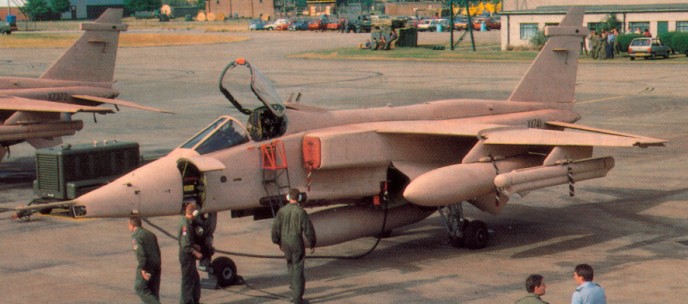
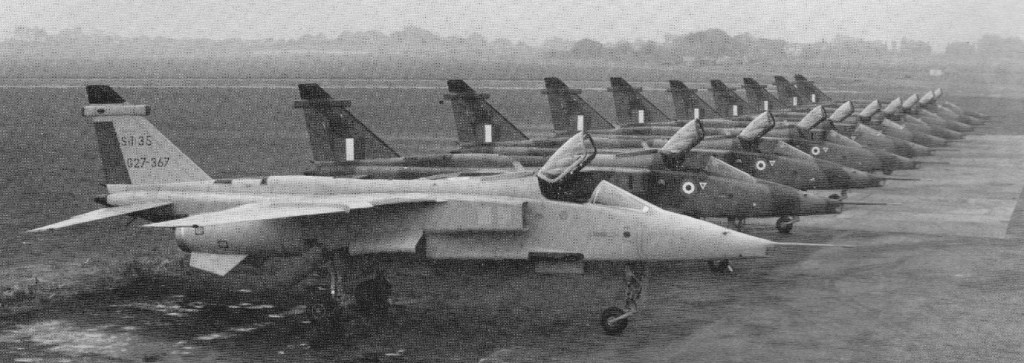
Bréguet 121 is the prototype, on which the SEPECAT (acronym for Société Européenne de Production de l’Avion d’Ecole de Combat et d’Appui Tactique) Jaguar is based. The Sepecat Jaguar, an Anglo-French joint venture by the British Aircraft Corporation and Breguet Aviation for a supersonic strike-attack and reconnaissance aircraft, plus a two-seat operational trainer, first flew on 12 October 1969.
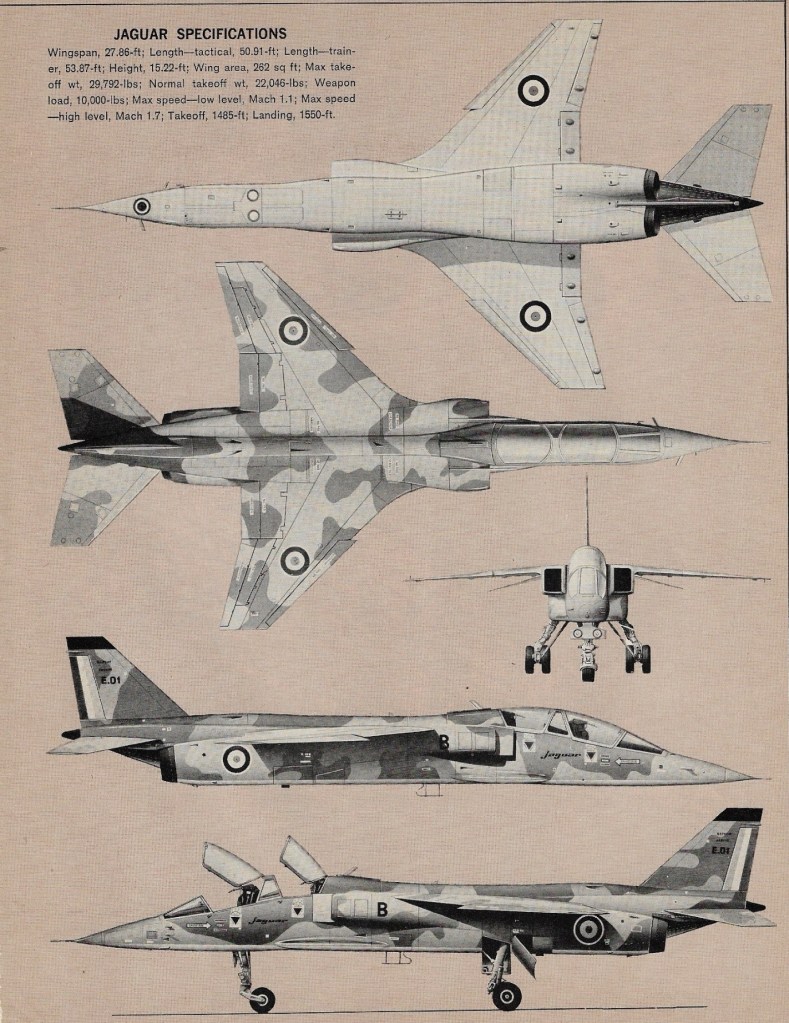
Developed cooperatively by the United Kingdom and France, the Jaguar. The Jaguar is a light but capable strike aircraft, having two afterburning turbofan engines. It is used in the reconnaissance, advanced training, close air support, maritime attack as well as in the strike and interdiction role. Powered by two Rolls-Royce Turbomeca Adour turbofan engines of, according to engine mark, these aircraft have a maximum speed of Mach 1.5 at optimum altitude, and Mach 1.1 at sea level. A maximum external load of 10,000 lb (4,500 kg) of stores which can include nuclear and conventional weapons can be carried.
There followed a production of some 203 examples for the Royal Air Force, which included 38 two-seat variants, and 200 for the French Air Force. The Armee de l’Air’s first SEPECAT Jaguars became operational in January 1975. They had been modified to carry the French AN 52 tactical nuclear weapon.
Jaguar A is the original prototype and the French single-seat attack version. Jaguar E is the French tandem two-seat trainer variant with dual controls. Both were equipped with Adour Mk 101 engines of 7,305 lb thrust (with afterburning), although they were quickly replaced by the Adour Mk 102 of 8,600 lb thrust (with afterburning). The French Jaguars saw combat in Africa and the Balkans, before the last squadron (EC.01.007) retired its final examples from operational use on July 1, 2005.
Jaguar S designated GR.Mk1 (GR.1) by the Royal Air Force is the British equivalent of the Jaguar A with a laser in the nose. The Jaguar B is the RAF’s advanced trainer designated T.Mk2 (T.2) and has a more advanced full suite nav/attack system. Although originally delivered with the Adour Mk 102 engines, they were quickly retrofitted with the more powerful Rolls-Royce/Turbomeca Adour Mk 104 turbofans. GR.1A is an upgraded GR.1 aircraft with the nav/attack system from the T.2 and self defense systems, which were also added to the T.2A upgrade. Reconnainssance aircraft are equipped with a centre-line pod housing five cameras and an IR linescan.
Armament of the A and S versions consists of two 30 mm cannon, and, rockets and missiles. Jaguar A and S production aircraft entered service with the Armee de l’Air and the RAF respectively in 1973.
Entering RAF service with No 226 Operational Conversion Unit on 13 September 1973, and front-line service with No 54 Squadron since 29 March 1974, the Jaguar has at one stage equipped eight RAF front-line squadrons based in the UK and, the then, West Germany.
Only the Royal Air Force employed the type in the reconnaissance role, equipped with the Jaguar GR.Mk 1 carrying a large pod on the centreline stores station, containing cameras and infra-red linescan equipment. Reconnaissance cameras are located in a pair of rotating drums within the pod, swivelling to expose the camera ports during photography. Two side-mounted and one forward-looking camera are positioned in the forward drum whilst the second can contain a pair of oblique cameras for low-level work or a solitary vertical camera best suited for photography from medium altitudes. This combination offers quite comprehensive coverage, one particularly useful facility being a data conversion unit which automatically annotates the aircraft’s position on the film, details of this being obtained from the onboard navigation computer. IR-linescan film is similarly marked.The type is being continually upgraded into variants as the GR. 1A and lB. These upgrades, known as Jaguar ‘96 and ‘97, include the ability to carry the TIALD pod (thermal imaging and laser designator), new-generation reconnaissance equipment, an improved cockpit lay-out and an enhanced mission planning system and terrain reference navigation equipment.
The GR.3 and T.4 are the last RAF standards of RAF GR.1s and T.2s respectively. The upgrade program included new cockpit displays, helmet-mounted sights, the ability to carry the new Advanced Short Range Air-to-Air Missile (ASRAAM) and other system improvements to further extend the life of the aircraft into the 21st century. Finally, in the twilight of their career with the RAF, 60 GR.3/T.4 aircraft were fitted with the Adour Mk 106 engine, a rebuild and enhanced version of the Mk 104 offering better reliability, maintainability and slightly more thrust.
Despite the upgrades, it was decided the Jaguar would ultimately leave RAF service in 2007. The last RAF Jaguar squadron, 6 Sqn, was planned to disband in October 2007, retiring its aircraft. However the date was brought forward by some six months to 30 April 2007, a decision which had been announced only six days earlier by the UK MOD. Only one GR.3A and one T.4 aircraft remained active for trials with QinetiQ at Boscombe Down, Wiltshire, UK.
The Jaguar had somewhat limited export success, but the international variant was sold to the Ecuadorean Air Force (12), India, Nigeria, and the Royal Air Force Oman (24), as well as the Nigerian Air Force (18 these are currently (1999) stored and have not been operational for many years). The first of 10 SEPECAT Jaguar International fighters (the export version) was delivered to the Sultan of Oman’s air force in March 1977. All export Jaguar Internationals are based on the RAF’s Jaguar B/S airframe.
In March 1969, the Indian Minister of Defence Production stated in Parliament that BAC had proposed collaboration in the manufacture of the Jaguar in India, but did not elaborate. Ten days earlier, the first strike Jaguar prototype (A-03) had flown. By the autumn of 1971, eight development Jaguars in France and Britain were going flight tests and armament trials.
Although the Jaguar flew well, the dry thrust of its Adour Mk 101s was considered inadequate. Also at this stage of development, the part-throttle reheat system for the engine was being developed to provide for smooth augmentation and making it possible to select any thrust from minimum dry to maximum reheat. Subsequently, BAC offered the Adour Mk 102 with the PTR system, the engine now developing a dry thrust of 5,165 lb / 2343 kgp, increasing to 7379 lb / 3347 kgp with reheat, a 50% increase over the Mk 101.
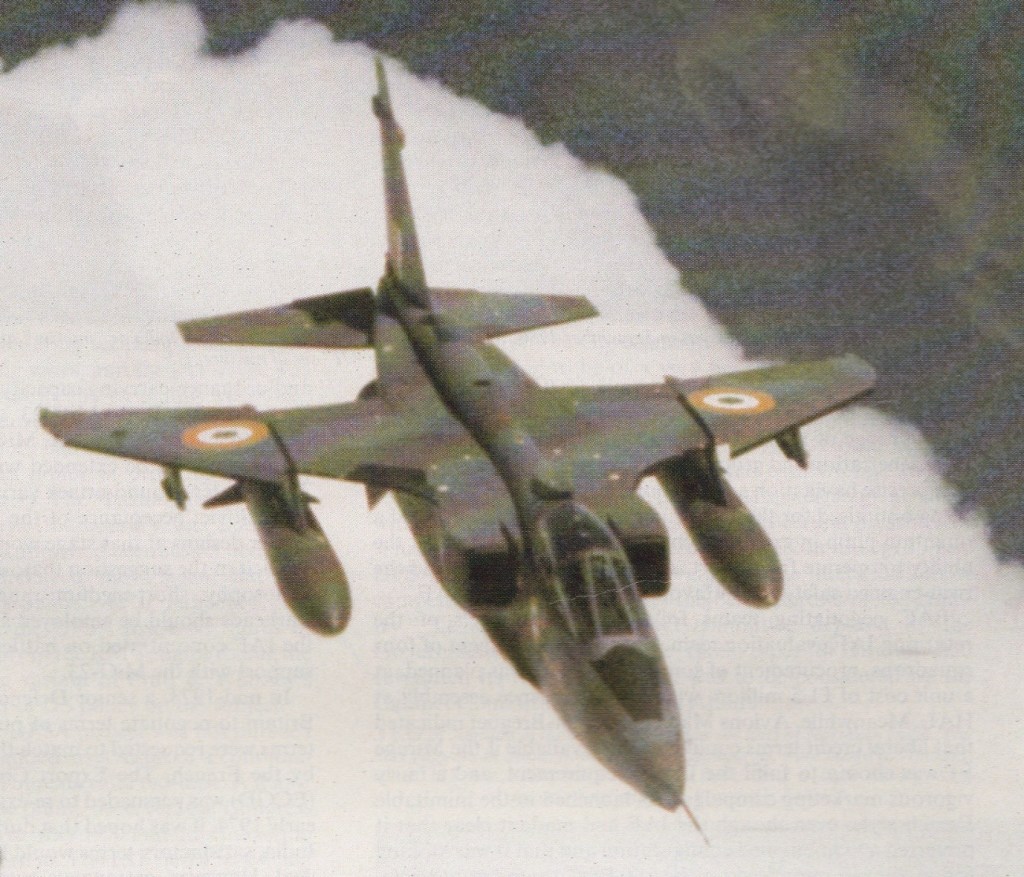
The 18 Jaguars from RAF reserve stocks were from various units, but largely ex-No 6 Sqn, and BAe Warton prepared the aircraft to the “interim” standard. The first two aircraft were two-seaters XX138(RAF)=B 3(BAe)=J1001I(IAF) and XX720(RAF)=B 8(BAe)=J1002(IAF), followed by the single-seaters including ex-No 6 Sqn RAF Nos XX738, XX729 and XX734. The “interim” Jaguars were painted in the standard RAF camouflage scheme but with IAF roundels and fin flashes. The first two were formally handed over at Warton on 19 July 1979.
The Indian Air Force received 40, where the type is known as the Shamsher (assault sword). An additional 45 were supplied and assembled in India and a further 46 followed, being produced in India by Hindustan Aeronautics. The first of 45 HAL-assembled Jaguars flew in March 1982, and production ended in 1998. India was the biggest Jaguar operator today, with Jaguar IS strike , IT trainer and IM maritime strike aircraft. The latter have the Agave radar in a reprofiled nose and are armed with BAe Sea Eagle anti-ship missiles. While the original manufacturing countries of the Jaguar, France and the United Kingdom, had retired the Jaguar from air force service, India was still producing new aircraft of the type for the Indian Air Force (IAF). HAL’s Bangalore production line assembled the last batch of 20 single-seat Jaguars complete with the DARIN (Display Attack Ranging Inertial Navigation) II upgrade, including HOTAS, MFD, and new INS/GPS nagivation system. At Aero India 2007, February 2007, it was revealed that five of the 20 new Jaguars were ready for delivery with another three in final assembly. The eight were scheduled for delivery to the IAF before March 31, 2007, with the remaining 12 aircraft to be delivered within a year.
Latest versions have uprated Adour Mk.811 engines and overwing air-to-air missiles, while optional equipment includes multipurpose radar, Sea Eagle, Harpoon, Exocet, or Kormoran anti-shipping missiles, and a system such as low-light TV for enhanced night oper¬ations.
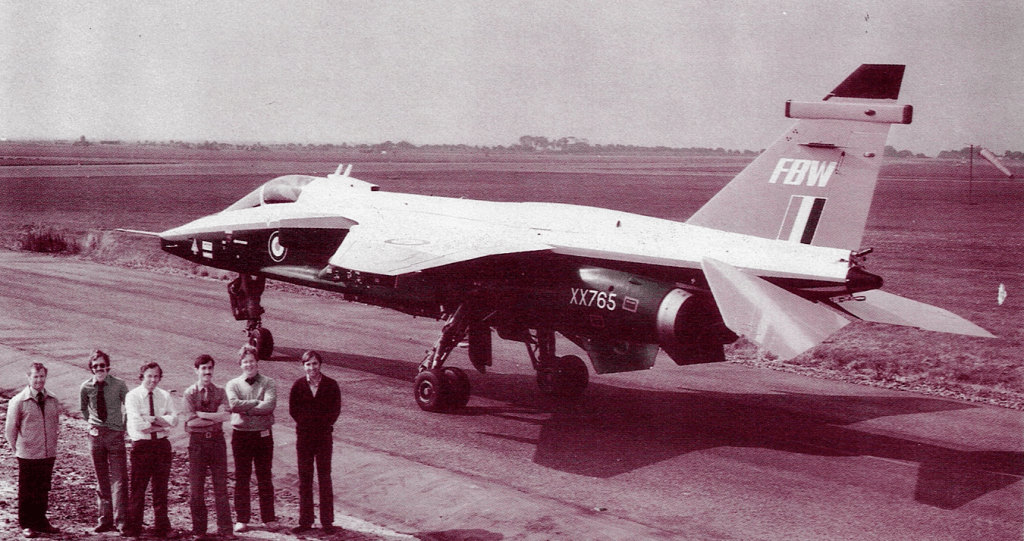
During the 1970s and early 1980s considerable research was undertaken into a host of aeronautical fields but this was generally performed with conversions of existing aircraft such as the SEPECAT Jaguar converted by British Aerospace for fly-by- wire control development.
Jaguar Engine: 2 x R-R / Turbomeca Adour. Installed thrust (dry / reheat): 50 / 75 kN Span: 8.7 m Length: 15.5 m Wing area: 24.2 sq.m Empty wt: 7700 kg MTOW: 15,430 kg Warload: 4760 kg Max speed: 1350 kph, M1.4 Initial ROC: 1.5 min to 9150 m Ceiling: 14,000 m T/O run: 880 m Ldg run: 470 m Combat radius lo-lo-lo: 535 km Fuel internal: 4200 lt Air refuel: Yes Armament: 2 x 30 mm Hard points: 5
Jaguar GR.Mk.1 Powerplant: two Rolls-Royce/ Turbomeca Adour Mk 104 turbofans, 3647-kg (8,040-1b) afterburning Maximum speed at 10.975m (36,000 ft) 1700 km/h (1,055 mph) or Mach 1.6 Service ceiling 14,020m (46,000 ft) Ferry range 4205 km (2,614 miles) Weight empty about 7000 kg (15,432 lb) Maximum take-off 15700 kg (34,612 lb) Span 8.69 m (28 ft 6 in) Length 15.52 m (50 ft 11 in) Height 4.89 m (16 ft ½ in) Wing area 24.18 sq.m (260.27 sq.ft) Armament: two 30mm Aden Mk.4 cannons / 150 rounds per gun External load: 4763 kg (10,500 lb) Hardpoints: five + wingtips
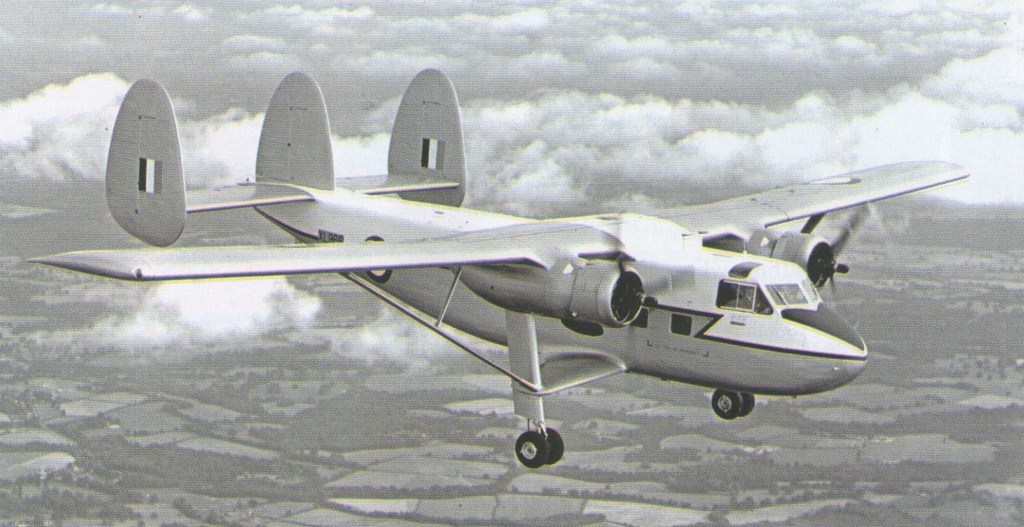
The 16-passenger civil Twin Pioneer prototype, G-ANTP, made its first flight on June 25, 1955 ass a 16-passenger civil type, powered by two 550 h.p. Alvis Leonides engines, and the first military version made its maiden flight on August 29, 1957.
Deliveries to the RAF began in early 1958, the Service making good use of the type’s impressive STOL characteristics – the aircraft only needed 300yd by 100ft to operate – while carrying out important supply and relief work in Aden, Kuwait, Kenya, Borneo and Singapore, as well as at home.
The Twin Pioneer saw considerable service in the utility role during the late fifties and through most of the sixties. 87 were built, including 39 for the RAF.
In the mid-1990s the Coast Guard decided that the RG-8 aircraft would be more useful if their capabilities were improved to include night operations by the addition of more mission sensor equipment. Discussions with Schweizer Aircraft resulted in a plan to upgrade two RG-8As and build one new aircraft to provide a total of three.
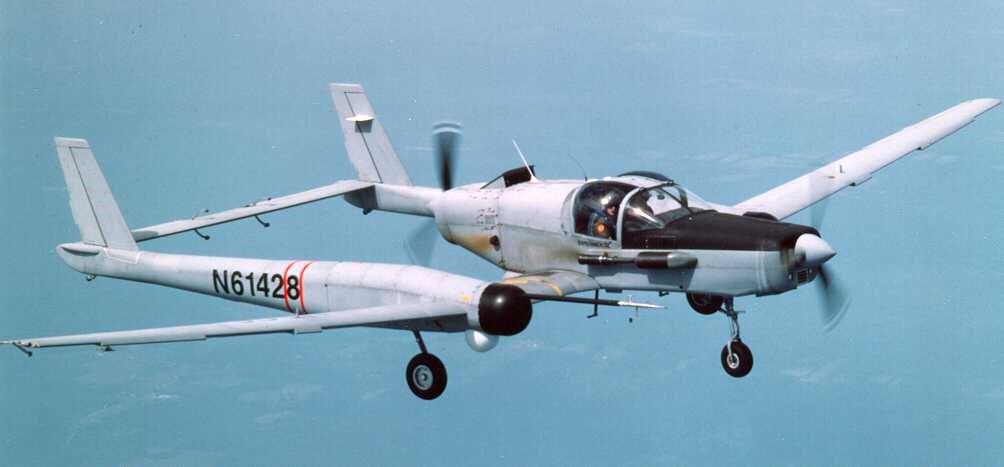
The RU-38 was intended to fulfill both the low altitude, quiet, over water/hostile terrain reconnaissance role and also the high altitude standoff surveillance role. Based on the Schweizer SGM 2-37 motor glider, a total of five RU-38s were produced between 1995 and 2005.
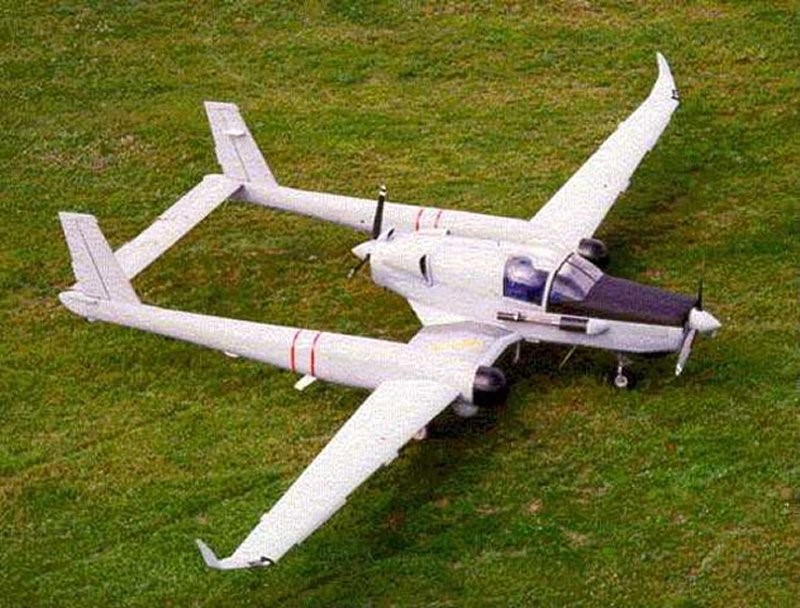
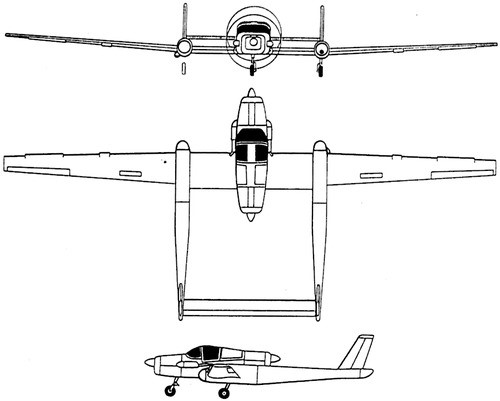
In converting to the new RU-38A configuration, the conventional RG-8A airframe was greatly modified by: Removing the single 235 hp (175 kW) Lycoming O-540-B powerplant Installing two Teledyne Continental Motors GIO-550A engines with a 3:2 gear reduction to 2267 operating rpm. The engines are mounted one in the nose and the other in the rear of the fuselage. Enlarging the crew compartment Improving the engine mufflers Increasing the wingspan from 56.5 ft (17.22m) to 84.13 ft (25.65 m) Changing the single tail fin to a twin-boom configuration with two fins Greatly enlarged sensor bays Improved noise signature reduction Tricycle landing gear replacing the conventional landing gear
The resulting aircraft bears little resemblance to the original TG-8. Installation of the twin-boom pods permits the carriage of more sensors. The left-hand pod houses an AN/APN-215(V) color multi-function X-band sea search radar with mapping capabilities. The right-hand pod houses the AN/AAQ-15 forward looking infrared (FLIR) and Low-Light TV enhanced vision systems.
Schweizer RU-38A
For navigation the RU-38A originally carried both OMEGA and GPS receivers, although the Omega has since been removed with that system’s withdrawal from service in 1997. The aircraft also has HF, VHF and UHF radios for voice and encrypted voice communications, plus direction finding. The crew may also use night vision goggles.
The aircraft has no flaps and instead retains the top and bottom surface divebrakes of its sailplane ancestors.
The RU-38A is designed to transit to its operational area with both engines operating. Once in the surveillance area the rear engine would normally be shut down and the aircraft operated in “quiet surveillance mode”. The second engine would be available for use in an emergency and for return to base at faster speed.
The first Coast Guard RG-8A was returned to Schweizer for conversion to RU-38A status on 24 January 1994. The initial plan called for the conversion of two RG-8As and then fabrication of one new RU-38A.
The first flight of the converted aircraft took place on 31 May 1995. The second USCG RG-8A aircraft that was earmarked for RU-38A upgrade crashed near Puerto Rico in 1996. As a result, the program was reduced to provide only two RU-38As to the USCG. The loss of the RG-8A delayed the program for many months and it was not completed until May 1997.
The first RU-38 was tested by the Air Force 445th Flight Test Squadron at Edwards AFB on behalf of the Coast Guard, starting in July 1998. The airplane flew some 100 test flights during the four-month program.
By September 1999 the two converted RU-38As had been delivered to the Coast Guard in Miami, Florida for operational employment. The RU-38As were flown in drug interdiction missions over the Gulf of Mexico and the Caribbean Sea, but they were reportedly grounded during 2000, due to problems with the aircraft meeting mission requirements or serviceability.
The company further improved the aircraft by replacing the two piston engines with two Rolls Royce Allison 250-B17F turboprop engines which allowed raising the gross weight to 7200 lbs (3265 kg). The new aircraft carries the military designation of RU-38B.
The RU-38B has 140 cubic feet (4.0 cu m) of payload space with a payload weight of 800 lbs (363 kg) available. The payload bays all have large access doors and are located both in the tailbooms and also behind the pilot and co-pilot seats in the fuselage. The latter space can also accommodate a third crew member, if required. Using pallet-mounted sensor packages the aircraft can be quickly changed from one mission to another.
The RU-38B is able to achieve quiet operation while loitering by using a propeller speed as low as 1000 rpm. This is possible because the sailplane-derived wing is efficient and flight at low airspeed can be sustained with low power. Exhaust from the front engine is routed overwing, reducing the noise footprint.
Two RU-38Bs were delivered to the US Department of Justice, one in 2004 and one in 2005.
The aircraft remains in production by Sikorsky Aircraft after acquiring Schweizer and was still being actively marketed by Schweizer in 2011. Neither the RU-38A or B was certified by the Federal Aviation Administration. Instead all aircraft operate as experimental aircraft in the Research and Development category.
RU-38 is the US military designation for the aircraft, indicating Utility, Reconnaissance. The Schweizer company model number is Schweizer SA 2-38A Condor and, in its three-seat configuration, Schweizer SA 3-38A Condor
RU-38A Maximum take-off weight: 5300 lb (2404 kg) Number built: 2
RU-38B Engines: 2 × Rolls Royce Allison 250-B17F Props: Constant Speed, Full Feather Wingspan: 84.13 ft (25.64 m) Wing area: 334.2 ft2 (31.05 m2) Airfoil: Wortmann Fx 61-163 Length: 35.1 ft (10.7 m) Empty weight: 4265 lb (1934 kg) Useful load: 2935 lb (1331 kg) Loaded weight: 7200 lb (3265 kg) Max. takeoff weight: 7200 lb (3265 kg) Maximum speed: 168 knots (312 km/h) Cruise speed: 83 knots (mission speed) (155 km/h) Stall speed: 62 knots with divebrakes closed (116 km/h) Never exceed speed: 168 knots (312 km/h) Service ceiling: 30,000 ft (9144 m) Wing loading: 21.5 lb/ft2 (105.1 kg/m2) Crew: two in side-by-side or three, with two pilots side-by-side and one sensor operator in the rear Number built: 3




 All Aero