
1930
1930

1921
Cromarty
Crew: 4
Engines: 2 x 600hp Rolls-Royce Condor I
Max take-off weight: 8165 kg / 18001 lb
Empty weight: 5543 kg / 12220 lb
Wingspan: 34.59 m / 114 ft 6 in
Length: 17.98 m / 59 ft 0 in
Wing area: 208.38 sq.m / 2242.98 sq ft
Max. speed: 153 km/h / 95 mph
Cruise speed: 131 km/h / 81 mph
Ceiling: 4800 m / 15750 ft
Range: 1500 km / 932 miles
Armament: 1 x 37mm, 1 x 7.9mm
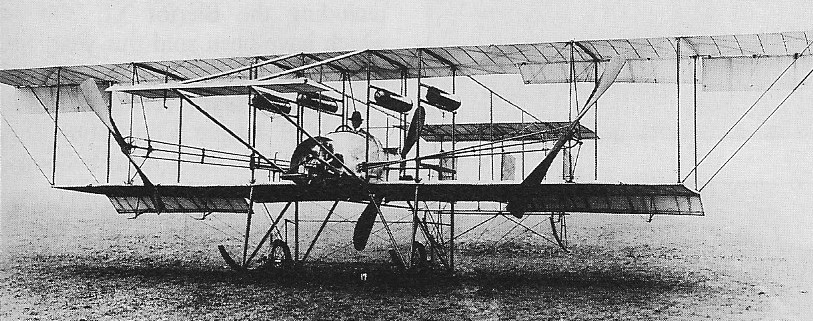
The Short Brothers designed and built a variant of the S.27-type with two engines which could be shut down independently; this biplane, S.39, could maintain flight on either one of its two engines and was thus the first example in the world of twin engines being used to enhance safety.
The S.39 was structurally the same as the improved Farman-Sommer-type Short biplane of 1911 apart from the nacelle and power plant arrangement; it had a stronger chassis laterally braced by struts, three rudders below the tailplane and a front elevator carried on inset pivots by booms pitched closer together than normal. The nacelle contained a cockpit with two seats side-by-side and carried a 50 hp Gnome engine and propeller on a standard overhung pusher mounting at the back; another 50 hp Gnome was mounted at the front, rotating in the opposite direction so that gyroscopic moments cancelled out when both engines were running. The forward engine drove two wing-mounted tractor airscrews through Wright-type Renold chain gears, the port chain being crossed to obtain counter-rotation, and the ‘bent-end’ airscrews were exactly like those made for the Short-Wright biplanes.
S.39, known as the Triple-Twin, was first flown on 18 September, 1911, by Frank McClean; he made a brief solo flight, then, with Samson as passenger, flew eight wide circuits of Eastchurch aerodrome, throttling back each engine in turn and experiencing for the first time the luxury of an ample speed range while flying a level course. The effect of the outboard slipstream on lateral control was not up to Horace Short’s expectations, but he was pleased with the Triple-Twin’s overall performance and next decided to try the effect of co-axial counter-rotation on stability. The first step was to convert Cecil Grace’s old S.27 to a similar twin-engined layout, but with the front engine direct-coupled to an airscrew, as shown in patent No. 22,675 of 1911.
This version was called the Tandem-Twin, or, less formally, the Gnome Sandwich, and retained the original S.27 wings and cambered tail unit unchanged except for the addition of two extra top rudders. The chassis was strengthened in the same way as for S.39, and the existing front elevator and booms were retained, since they allowed adequate clearance for the central airscrew. The Tandem-Twin was flown by McClean on 29 October, 1911, without any preliminary taxying; after a short flight at 100 ft he landed and expressed even more satisfaction than with the Triple-Twin; he spent the rest of the day taking up various passengers to test their reactions to the slipstream and to the location of the rear propeller only 10 in behind their heads. The draught in the cockpit was quite powerful and the Tandem-Twin soon acquired yet another soubriquet – The Vacuum Cleaner – and was credited with the ability ‘to pull the hairs out of a fur coat’; this was mainly due to the open hole in the floor, which was the only means of access. The Tandem-Twin could maintain height with either engine throttled back, but was unstable in every direction, due to insufficient aileron power and to unpredictable variations in torque reaction with the rear propeller working in the wake of the front one. Horace Short investigated this effect very thoroughly and deduced design rules for the relative diameters and pitches of tandem airscrews which were still valid 20 years later.
He also designed a larger biplane with two central engines of 120 hp each, driving four propellers arranged in tandem pairs in the wings, with independent chain gears for the front and rear engines. He obtained a number of patents (Nos. 8,108, 8,394 and 22,750 of 1911) for co-axial and interconnected airscrews, but the four-screw aeroplane was never built; however, Maurice Egerton apparently had his S.35 biplane converted into a Triple-Twin and flew it regularly from April 1912 onwards. Both S.39 and S.27 were flown at first without wing extensions, and on 21 November, 1911, they were raced by Longmore and Gerrard respectively; both did better than 55 mph, but S.39 seemed to have the edge over S.27. In December, S.39 was fitted with extensions and double fuel capacity; in February 1912, S.39’s extensions were removed and fitted to S.27, and in October 1912, S.39 was temporarily given equally extended upper and lower wings of 50 ft span, which further top extensions later increased to 64 ft. S.39 was purchased by the Admiralty in June 1912 and given serial T3, later simplified to 3; in the spring of 1913 it was returned to the works for overhaul and completely remodelled as a two-seat tandem pusher with new wings and no front elevator, as already described. The Admiralty declined to buy the Tandem-Twin, which remained McClean’s property (it was No. 11 in his private fleet list), but he lent it to the Naval Flying School without charge, and it was eventually crashed by Samson; Egerton’s S.35 appears to have been dismantled and probably formed the basis of one of the Sociables of early 1914. The final development of the triple-twin theme was the Triple-Tractor S.47.
Two other types of pusher biplane deserve notice. One was a startling metamorphosis of the original Triple-Twin, S.39, which reappeared on test by Sydney Pickles on 24 July, 1913, as a neat two-seat tandem pusher without a front elevator. It had constant-chord wings of improved profile with struts of oval steel tube and the landing gear and tail unit of a late production S.38-type, with balanced rounded rudders; it still retained its original serial 3, which was almost its only link with the past. Lighter in weight than a standard S.38-type, it had a very lively performance, with a top speed of 65 mph and the then exceptional rate of climb of over 600 ft/min; its ceiling was better than 9,000 ft. It was a favourite mount of Samson’s, and he used to fly it at night; he took Winston Churchill up in it during his visit to Eastchurch on 24-25 October, 1913. Finally, it joined the scratch squadron which Samson took to Flanders early in the war and was based at Poperinghe in October 1914, but was never armed and only used as a communications hack.
Triple-Twin
Span 34 ft (103 m), later 50 ft (15-3 m)
Length 45 ft (13-7 m)
Wing area 435 sq ft (40-4 sq,m), later 500 sq ft (46-5 sq.m)
Empty weight 1,800 lb (816 kg)
Loaded weight 2,100 lb (953 kg)
Speed 55 mph (88-6 km/h).
Tandem-Twin
Span 34 ft 2 in (10-4 m), later 50 ft (15-3 m)
Wing area 480 sq ft (44-6 sq.m), later 517 sq ft (48 sq.m)
S.39 (rebuilt)
Span 52 ft (15-84 m)
Length 29 ft (8-85 m)
Wing area 500 sq ft (46-5 sq.m)
Empty weight 1,000 lb (454 kg)
Loaded weight 1,500 lb (680 kg)
Speed 65 mph (104-6 km/h).
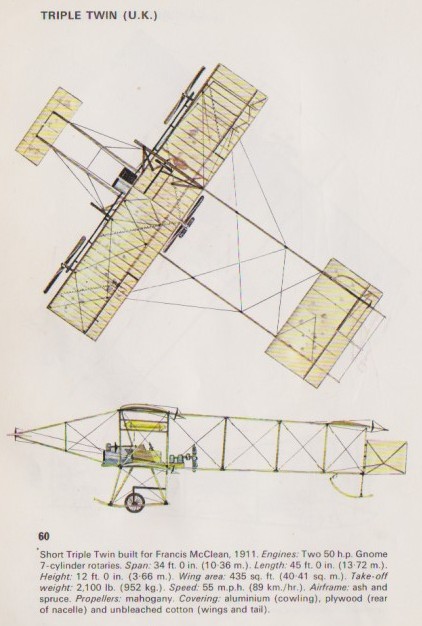
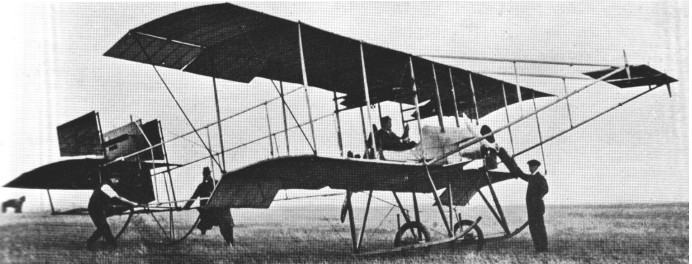
The first ever twin-engined aeroplane. The pilot sitting between the two engines. Built for Frank McLean in 1911.
Engines: 2 x Gnome, 50 hp

The second product of the J-XX program to be revealed to the public was the J-31. Revealed to the public in 2012, it clearly incorporates some stealth aspects, especially towards the front of the aircraft.
Testing began in October 2012, and in late 2014, the J-31 was displayed publicly at an airshow for the first time. The prototype mounts two Russian-designed RD-93 turbofans (the same engines as the MiG-29). The mockup shown at that same event seems to show that several changes to the design are in store. While the intended role of the J-31 within China is unclear, it does seem to be slated for export, with Pakistan reportedly planning to purchase up to 40 J-31s.
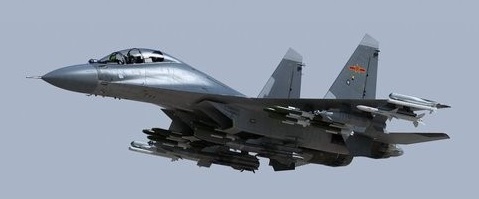
In 2000, China purchased an Su-30MKK from Russia, which formed the basis for development of two-seat J-11 variants. The Chinese developed the two-seat J-11BS into a dedicated strike fighter under the designation J-16.
Just as its predecessor, it extensively employs composites to lower airframe weight, while new materials and design elements were used to lower RCS. The J-16 first took flight in 2011 and was accepted into service two years later.
A small production of only 25 aircraft built. While still in production, priority seems to be placed on development and production of the fifth-generation J-20 and J-31 fighters.

Soon after development of the J-11B began, Shenyang began to develop a navalized version of the aircraft to operate from the recently purchased carrier Varyag. In 2001, China purchased an unfinished Su-33 prototype from the Ukraine, allowing Shenyang to work with the design to develop a carrier aircraft. Meanwhile, the Chinese government made repeated attempts to acquire Su-33s directly from Russia. Negotiations fell apart in 2006 when the J-11B was revealed, and thus Shenyang was forced to develop a domestic solution. The resulting aircraft was almost identical in appearance to the Su-33, but is considerably lighter and more capable thanks to extensive use of composites and newer onboard systems.
The J-15 first flew in 2009, powered by the same AL-31F turbofans that powered the Su-33. Carrier trials began in late 2012, and as of late 2013 the J-15 has began operational testing.
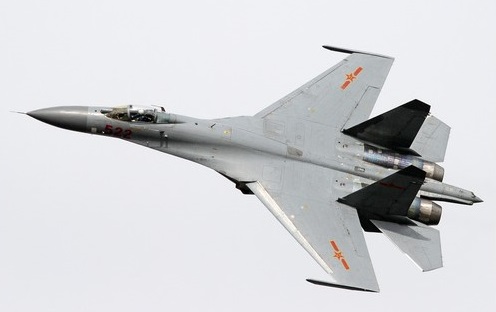
In 1995, China secured the rights for domestic production of the Su-27SK by Shenyang under the designation J-11. As originally conceived, the J-11 was to be merely a Chinese-built Su-27SK – complete with Russian engines and systems. While the J-11 took flight in 1998 and quickly entered service alongside Russian-production Su-27s, Shenyang went to work on the development of an indigenous improvement to the design. Designated the J-11B, the new aircraft used domestically-designed WS-10 engines, domestically-designed onboard systems, and extensively employed composites to lower the empty weight by 700kg. The J-11B added the capability to mount a variety of Chinese-designed ordnance, including anti-ship missiles.

The J-11B has had its share of controversy. Its legitimacy has been called into question, as concerns have been raised over unlicensed production of the Su-27 design. Production has stopped of the original J-11s, apparently shifting to J-11B production, but, as is common with the Chinese, the domestically designed WS-10 engine has had many teething issues. Shenyang has looked to Russia for alternatives – the AL-31 series engines used on SU-30MKIs were a top choice for an alternative powerplant. At least one squadron did operate WS-10-powered J-11Bs briefly, but the aircraft were quickly grounded after the engines proved to have impractically short lives (30 hours compared to 400 for Russian engines). In spite of the issues, however, the J-11B has gone on to form the basis for further Chinese Flanker variants.
By 1975 preliminary reports had reached the West of a considerably modified version of the F 6, the MiG-19SF and PF built under licence in China. (Unlike the MiG 21, built in as small numbers as the Shenyang F 8, the earlier F 6 continued in production and proved useful by China and various export customers.)
The Shenyang complex of the Chinese aerospace industry has long been known for painstaking quality and attention to detail, but also for a lack of original design experience. It cannot have been easy to derive a largely new twin engined fighter from the F-6, differing in such respects as generally increased size, a large nose radar and lateral engine inlets.
First announced in the West by US Defense Secretary Rumsfeld in 1976, when it was described as the Fantan A fighter-bomber, the F 9 was originally powered by Tumansky RD 913 engines, each rated at 3250 kg (7164 1b) thrust with maximum afterburner.

The J-8 began development in the mid 1960s as a fairly late response to new high-speed, high-altitude threats from NATO aircraft. The J-8 was an entirely new design, developed from the J-7 (itself a MiG-21 copy). The basic configuration of the MiG-21 was carried over, while a second Chinese-built Tumansky R-11 engine was mounted in the airframe. Initial variants would retain the nose-mounted intake, giving the J-8 the appearance of a larger, fatter MiG-21. Despite the design calling for a solid nose to house a radar, Shenyang’s unfamiliarity with such designs meant that these initial J-8s would be vastly less capable than what was required.
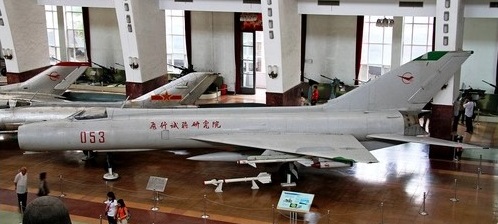
The first J-8 took flight on 5 July 1969, demonstrating performance similar to the Su-15. While the initial J-8 design continued testing and prepared for production, Shenyang continued to develop the design into the more capable interceptor China was in need of.

Developments eventually led to the J-8II, with a nose-mounted radar and side-mounted intakes, giving the design an appearance nearly identical to the Su-15. Meanwhile, the J-8I, the initial variant, entered service in 1980, with disappointing performance. It was limited to short-ranged IR missiles, and demonstrated performance comparable to decade-old Soviet designs. Production of the J-8I was cut short, and the aircraft were replaced as soon as the newer J-8IIs became available. About 200 were built before attention switched to the more capable J-8-II.
Early in 1986 US Government approval was given to an unprecedented agreement, under which $500m worth of modern avionics would be sold to China for use in its next-generation interceptor, the J-8-II. Fifty-five sets of equipment will be supplied, each including an interception radar, an inertial navigation system, a headup display, and mission and air data computers.
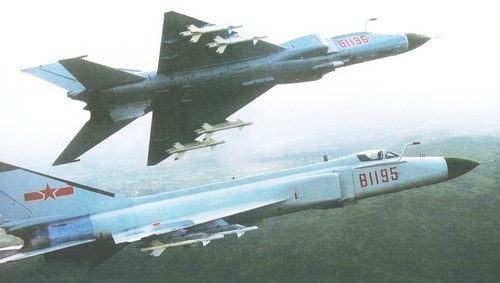
In May 1984, the first J-8II took flight, marking a major improvement over the J-8I. Changes to the forward fuselage not only included radars and intakes, but also the cannon armament and weapon systems. It has relocated fuselage intakes, a ventral fin which folds to starboard for landing, and twin Wopen 13A-II powerplants probably developed from the Soviet Tumansky R-13-300 engine. Systems aboard the J-8II provided the PLAAF with a much more capable interceptor, while it still lagged behind contemporary western designs. The J-8II was rushed into service as soon as possible, replacing the obsolete J-8I. Shenyang continued to develop the systems of the J-8II, with hopes of eventually mounting an American AN/APG-66 radar on the design. However, when the backlash from the 1989 Tiananmen Square incident hurt Sino-American relations, less capable domestic systems were used.

The J-8II fully replaced the J-8I by the 1990s with a production run of over 300 aircraft. While performance leaves much to be desired, it has proved more than capable for the few interceptions they have had to make since the end of the Cold War. Shenyang has continued to upgrade the J-8II’s systems, attempting to make the design as competitive as possible. However, fire control systems and radars still seem to lag behind the West. The only notable incident involving the J-8 was the 2001 Hainan Island incident, where a J-8II intercepted a US EP-3 just outside Chinese airspace, colliding with the aircraft. While the Chinese pilot was killed, the EP-3 survived the collision, and was forced to make an emergency landing in China. The J-8II was slated to be replaced by the more modern J-10 and J-11 fighters.

J-8-I
Engines: 2 x Liyang Wopen-7B turbojet, 13448 lb st
J-8-II
Engines: 2 x Liyang Wopen-13A II turbojet, 9500/14815 lb st
 All Aero