Airbus Racer

The Airbus Racer is an experimental airframe.

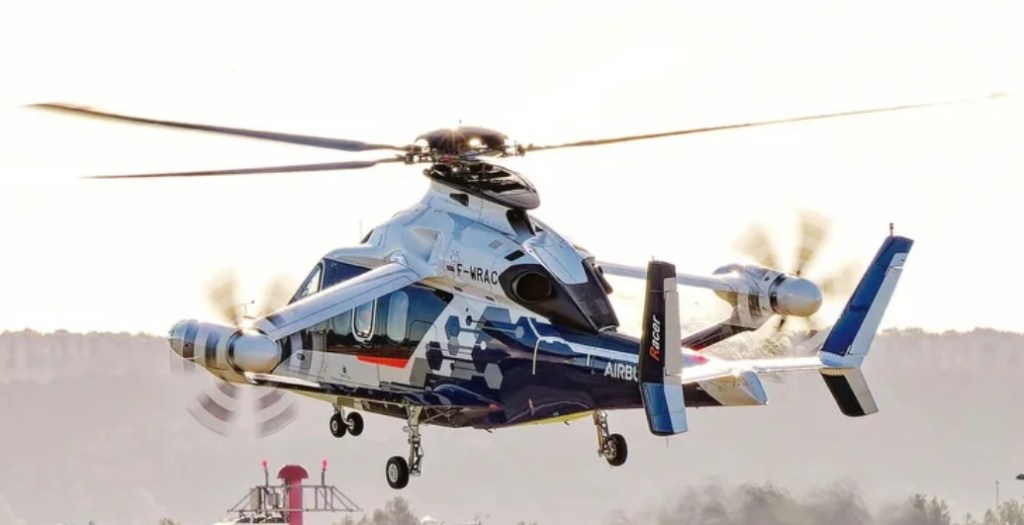
Airbus uses the Racer as a testbed for technology, one of its main focuses is developing an aerodynamic airframe. Aside from a sleek design, it features a pair of box-wing outriggers equipped with additional rotors and a twin-boom tail that forgoes the typical rear rotor setup.

The Airbus team set a goal of reaching a fast cruise speed of 253 mph, which it achieved within two months of the Racer’s first flight. Test pilot Hervé Jammayrac later pushed it up to 260 mph. It achieved its speed in part due to a design that produces a drag coefficient in the same range as Airbus’s smallest models despite its larger size.

A pair of Safran Aneto-1X engines each make 2,500 shp.

Bombardier Global 8000

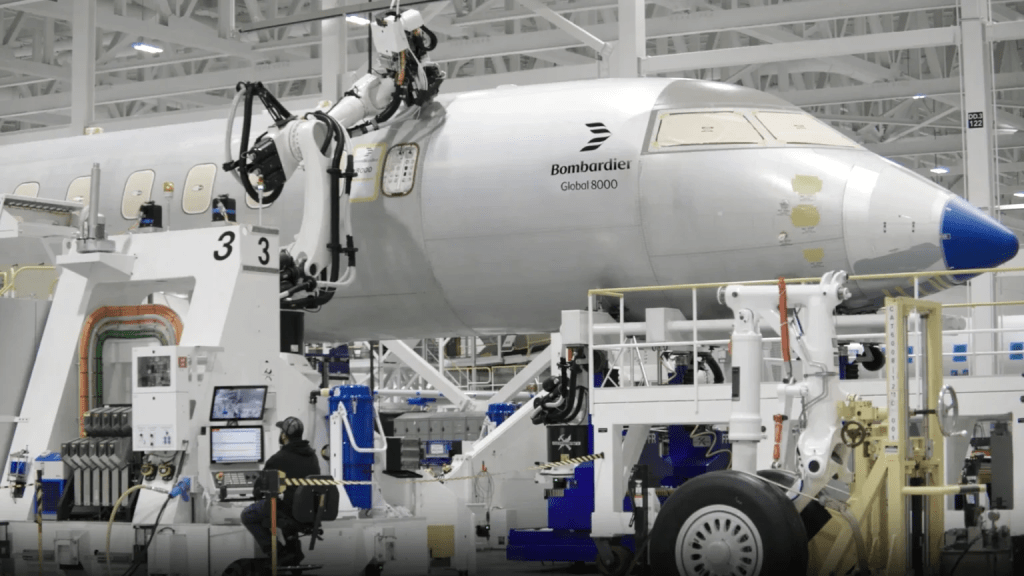
Canadian Aerospace company Bombardier has achieved a major milestone as the first production Global 8000 business jet completed its inaugural flight from Toronto Pearson International Airport (YYZ).

The flight, which took place on May 16, 2025, tested key systems as part of Bombardier’s production flight test protocol. The aircraft took off under the command of pilot Sandro Novelli, with co-pilot Charlie Honey and flight engineer Bhargav Bhavsar. The Global 8000, the fastest business jet in the world.

The Global 8000 represents Bombardier’s next-generation advancement, evolving from the proven performance of the Global 7500. With a top speed of Mach 0.94, it is the fastest civil aircraft since the Concorde. Designed for a range of up to 8,000 nautical miles nonstop.

The Global 8000 is not only fast—it is smooth. Bombardier’s patented Smooth Flex Wing technology reduces turbulence impact.

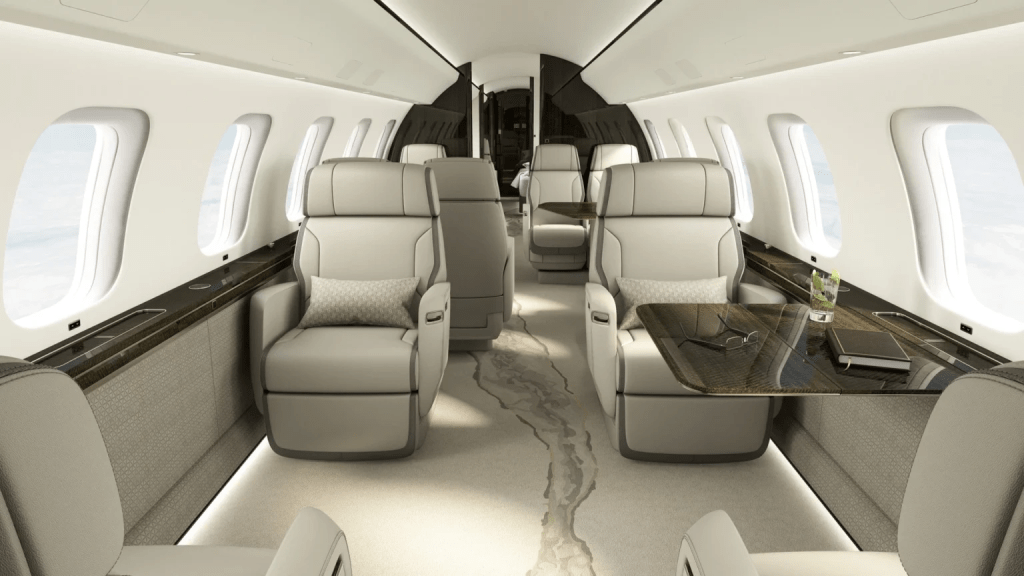
The cabin design of the Global 8000 includes four true living zones, a private crew rest area, and the longest seated length in its class.

Cabin altitude is held at 2,900 feet while cruising at 41,000 feet—ensuring less fatigue and greater well-being for passengers.

Bell V-280 / MV-75 Valor

The V-280 Valor first took to the sky in 2017, and logged over 200 hours of flight time before the prototype was grounded in 2021. Bell has claimed that the aircraft is capable of top speeds of up to 280 knots with a range of up to 800 nautical miles, double the top speed and operational range of the Black Hawk. The Valor can also reportedly carry 23% more troops and 25% more cargo than the Black Hawk.

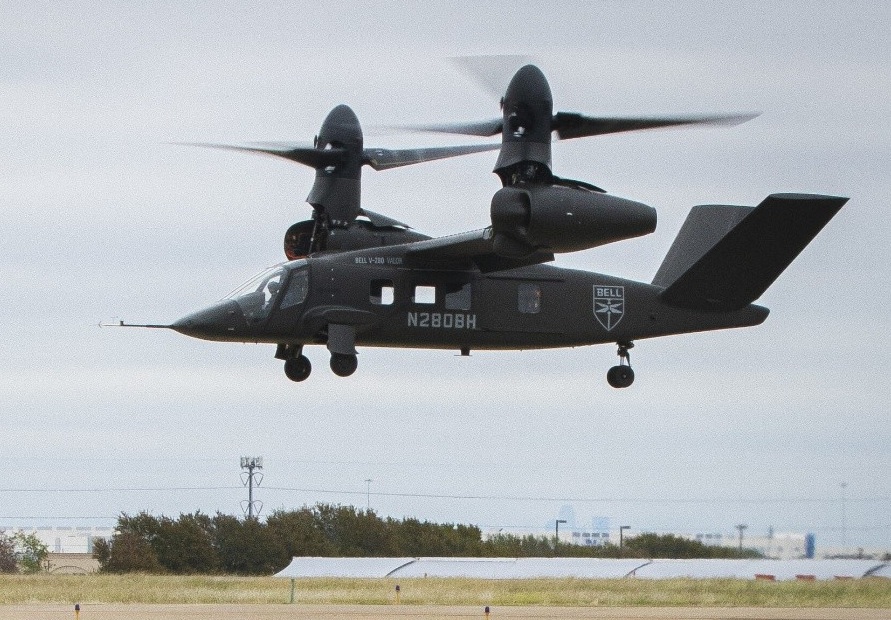
The biggest difference between the Black Hawk and the Valor is, of course, the tiltrotors. While it looks similar to the V-22 Osprey, the Valor works somewhat differently. The engines remain in place in nacelles, streamlined containers, on the wing — it’s the rotors themselves that tilt up and down. They’re also what give the aircraft its high speed, which is more than 100 miles per hour faster than the Black Hawk’s top speed of 222 miles per hour.

With a crew of four, along with up to 14 passengers, the Valor would replace the Black Hawk in its myriad of missions, from carrying supplies to air assault missions to medical evacuation. The more than three years of flight testing, which included Army test pilots, with the Valor prototype demonstrated its flight capabilities, survivability, and sling loading ability, according to Bell.

The Valor has a wider footprint than the Black Hawk, but is 20% shorter, which Bell said gives it greater flexibility in landing.

U.S. Special Operations Command said that the V-280 was changed in development to allow it to carry more weight, with the intention of making it more easily convertible for use by special operations units. The Army’s 160th Special Operations Aviation Regiment currently uses MH-60M variants of Black Hawks, which require extensive modifications to be mission ready.

Bell’s V-280 Valor, was selected in 2022 as the winner of the Army’s Future Long-Range Assault Aircraft competition. The vertical take off and landing craft has two engines and is designed for both assault and transport purposes. The newly designated MV-75 is meant to eventually replace the Army’s H-60 Black Hawk helicopters, including in special operations missions.

The initial contract, for $232 million, is to continue development of the aircraft, but then expands to $1.2 billion and then perhaps as much as $7 billion to begin building the new fleet of Valor aircraft that will begin replacing the Black Hawk in the mid-2030s. The Army operates roughly 2,000 Black Hawk helicopters, which have been in use since the 1970s. The Army previously said it expects to field the MV-75 by 2030. The MV-75 designation is an homage to the year 1775, the birth year of the U.S. Army.

The initial testing by the 101st Airborne Division will be used to shape MV-75 tactics and doctrine.

Shenyang FC-31 Gyrfalcon / J-35

Shenyang FC-31

The Shenyang FC-31 Gyrfalcon (also referred to as the J-35 in its naval variant) represents China’s second stealth fighter program and its first carrier-capable fifth-generation aircraft.

The FC-31 features a conventional twin-engine layout with canted vertical stabilisers similar to the F-22.
The aircraft incorporates internal weapons bays to preserve stealth characteristics and uses advanced composite materials to reduce weight and radar signature.

Powered by Russian-designed RD-93 derivatives (the Chinese WS-13 engines), production variants are expected to receive the more powerful WS-19 engines currently under development. These will enable the FC-31 to reach speeds of Mach 1.8 (2,205 km/h) and achieve supercruise capability.

With an estimated unit cost of $70 million, the FC-31/J-35 represents China’s strategic push to modernise its naval air arm. Initial operational capability on China’s newest carriers is expected by 2026, potentially altering the balance of power in the Western Pacific.

Boeing 417

Boeing’s vision of a futuristic regional airliner, the model 417, emerged in the years following WWII.
Boeing took a fresh look at the travel requirements of a postwar populace and identified a need for a smaller airliner to serve regional routes. In 1946, it came up with the 417, an 18,365-pound, twin-engine aircraft designed to carry 20-24 passengers at a speed of 200 mph.

Boeing chose the 800 hp Wright Cyclone C7BA1, essentially the same powerplant as the R-1300 used by the North American T-28 Trojan trainer.

The Boeing appeared more advanced than the competing DC-5, but the performance numbers were nearly an exact match with the exception of the 417’s short-field performance, which was notably optimistic. The 417 was claimed to require only 1,200 feet to clear a 50-foot obstacle and 1,735 feet very impressive performance for its size and weight.

Proposed performance on the ground was similarly impressive, with features that were said to enable turnaround times of six minutes or less.

Boeing claimed this was achievable through the aircraft’s independence from ground equipment. The airstair door enabled boarding without the need for separate stairs, and the height of the cargo hold floor was said to match the height of truck beds, eliminating the need for ramps or hoists. In this diagram, we see the aircraft being refueled with the right engine running as cargo is loaded and passengers begin to board.

Presenting the concept to potential customers like Pan Am was one thing. Boeing also released data and artists’ renderings to the media, and it became prominently featured on magazine covers.

Boeing even ran its own ads in various publications.

Boeing did secure at least one order for the 417 when Empire Airlines ordered three of them to replace their Boeing 247s. In the September 1946 issue of Boeing Magazine, the 417 was said to provide a 57 percent greater break-even load factor than the 247D, promising greater profitability with fewer seats filled.

Just as Boeing was presenting the 417 to customers, Convair was doing the same with its 107, albeit without such a strong marketing and promotional effort.

While both concepts were forward-thinking solutions to shorter, lower-capacity routes, their roles would ultimately be filled with the glut of surplus aircraft from the war effort—namely, the DC-3, which provided similar performance for pennies on the dollar.
Zodiac X / Capitaine Ferber

The third and final configuration of the non-rigid French military airship first flown on December 6, 1911 named in honour of pioneer aviator Capitaine Ferdinand Ferber. Of 76 meters length and of 12.4 meters maximum diameter, the 6000 m³ Zodiac X, here shown in its hangar at Epinal, had a maximum speed of 60 km/h powered by two Dansette-Gillet engines of 100 hp, each driving two propellers. Perhaps the most successful French airship of 1912-13, “Capitaine Ferber” was dismantled in 1914 prior to the outbreak of WWI.

Zodiac Spiess

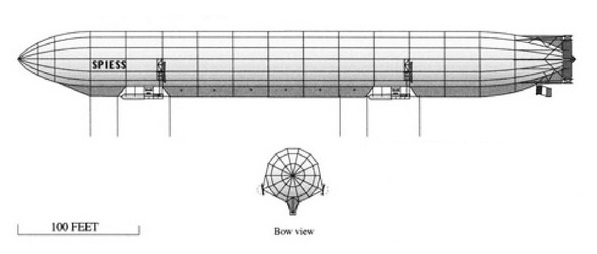
The French military authorities were able to examine the German ZIV and accumulated data was passed to the Zodiac company where the information was utilised by them in the Spiess wooden-framed rigid they were then building.

The Spiess-Zodiac No.XIII was already far advanced in its construction at this time but was now modified, to an extant, in light of the new information. It was lengthened for instance. Being of wooden construction it could have benefited little from the technological windfall obtained from the aluminium-framed ZIV.

The Spiess dirigible was completed within six months, flying in late 1913 and immediately entering army service.

Engines: 2 x Chenu AE 6, 210 hp
Capacity: 580,000 cu.ft / 16450 cu.m
Length: 460 ft / 140.0 m
Width: 44 ft 6 in / 13.5 m
Height: 61 ft 6 in
Gross lift: 16.9 tons
Useful lift: 1.2 tons
Max speed: 42 mph / 38 kt / 70 km/h
Range at cruise: 975 miles
Ceiling: 4000 ft
Crew: 8

Zmaj R-1

In the first half of the 1930s. In Yugoslavia, the development of aircraft of its own design has become more active. The activities of Yugoslav designers could be seen in 1938 at the Belgrade Aviation Exhibition. Among the other planes there was a prototype of the R-1 bomber from Zmaj.

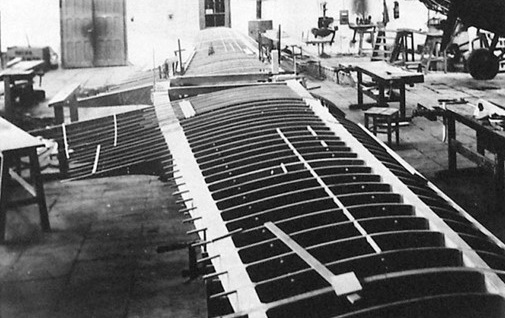
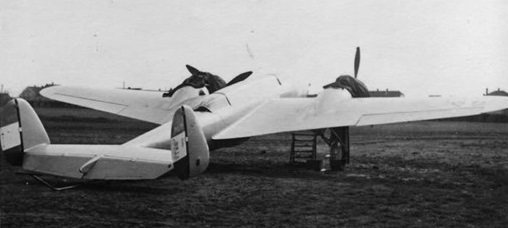
During 1936 at the Zmaj factory, Dušan Stankov, then technical manager, and George Dukic initiated the design and construction of a reconnaissance-bomber. After tests in the wind tunnel at Warsaw and acceptance by the Yugoslavian Air Force, the project was designated Zmaj R-1 (Serbian Cyrillic: Змај Р-1). The contract for the construction of the prototype was signed in 1937. The team of designers joining Eng. Djordje Ducić and a few young engineers who worked on the design completed the prototype before the beginning of a large aerospace workers strike in April 1940, with final assembly at the military part of the airport in Zemun.

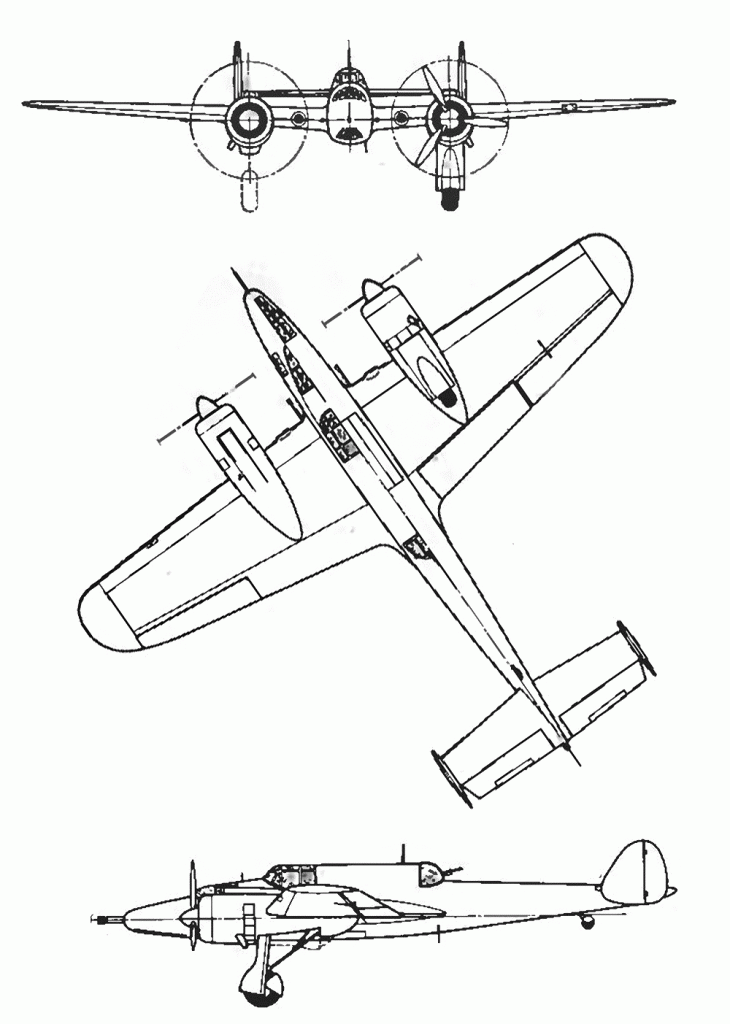
Its design was mixed – Alclad monocoque fuselage and wooden wings and tail, metal construction rudders with fabric cover. The R-1 was equipped with Hispano-Suiza 14AB engines of French production, placed in gondolas under the wing. Flaps and landing gear was hydraulically operated. The composition of the crew varied depending on the purpose of the aircraft. In the version of the bomber R-1, the crew consisted of 4 people, in the variant of the attack aircraft – 3 people. The crew of three was accommodated in separate cockpits. Aiming and firing of the armament was made from the top cockpit while the bombing were performing from the front cockpit. The plane could take on board up to 1600 kg of bombs, and one large-caliber bomb could be placed on a special device in the fuselage for attack from a dive. The attack aircraft carried a smaller bomb load, but its small arms of two 20-mm guns and two 12.7-mm machine guns were much better suited for storming enemy troops. The two Oerlikon 20 mm cannon were in the fuselage sides but this was later changed and repositioned in to the wing roots. Two more 7.9 mm machine guns were placed in the nose top and one machine gun was placed in the rear fuselage for the defense.

The first flight was on 24 April 1940, pilotted by reserve Lieutenant Đura E. Đaković, a transport pilot with Aeroput. The initial testing justified all expectations in terms of aerodynamic characteristics and performance, unfortunately on the third flight the pilot was unable to lower the landing gear and had to land with the undercarriage extended, damaging the propellers and engines. Replacement parts for the propeller and landing gear were imported from Germany and France delaying repairs considerably.

The aircraft was rebuilt so that testing could be resumed at the end of March 1941, but in early April the bombing of Zemun airport damaged the prototype Zmaj R-1 again. In late June 1941 the Germans scrapped the aircraft.

Gallery

Enngines: 2 × Hispano-Suiza 14AB, 552 kW (740 hp) each
Propellers: 3-bladed
Wingspan: 14.40 m (47 ft 3 in)
Wing area: 33.80 sq.m (363.8 sq ft)
Height: 2.50 m (8 ft 2 in)
Length: 12.78 m (41 ft 11 in)
Empty weight: 2,600 kg (5,732 lb)
Gross weight: 5,094 kg (11,230 lb)
Max takeoff weight: 5,664 kg (12,487 lb)
Maximum speed: 450 km/h (280 mph; 243 kn)
Cruise speed: 320 km/h (199 mph; 173 kn)
Range: 1,000 km (621 mi; 540 nmi)
Service ceiling: 10,000 m (33,000 ft)
Rate of climb: 5.55 m/s (1,093 ft/min)
Guns: 2x 20 mm (0.787 in) Oerlikon cannon, and 4x 7.9 mm (0.311 in) machine guns
Bombload: 1,600 kg (3,500 lb) of bombs carried internally
Crew: 3-4

Zimmerman Flying Pancake

Wind tunnel testing (NACA)

The 1935 single place low-aspect-ratio “flying pancake” developed in off-times by C H Zimmerman, John McKellar, and Richard Noyes, then with NACA, for design competition with Ercoupe and Stearman- Hammond. US patent #2,108,093 was issued to Zimmerman in 1938. Although rejected by NACA at too radical, despite its potential as a stall-proof airplane, elements of the design surfaced later in Vought V-173 and Vought-Sikorsky XF5U-1.

Unable to synchronize the motors, rather than risk an accident the project was abandoned and it never flew.

Engines: 2 x 25hp Cleone
Wingspan: 7’0″
Seats: 1